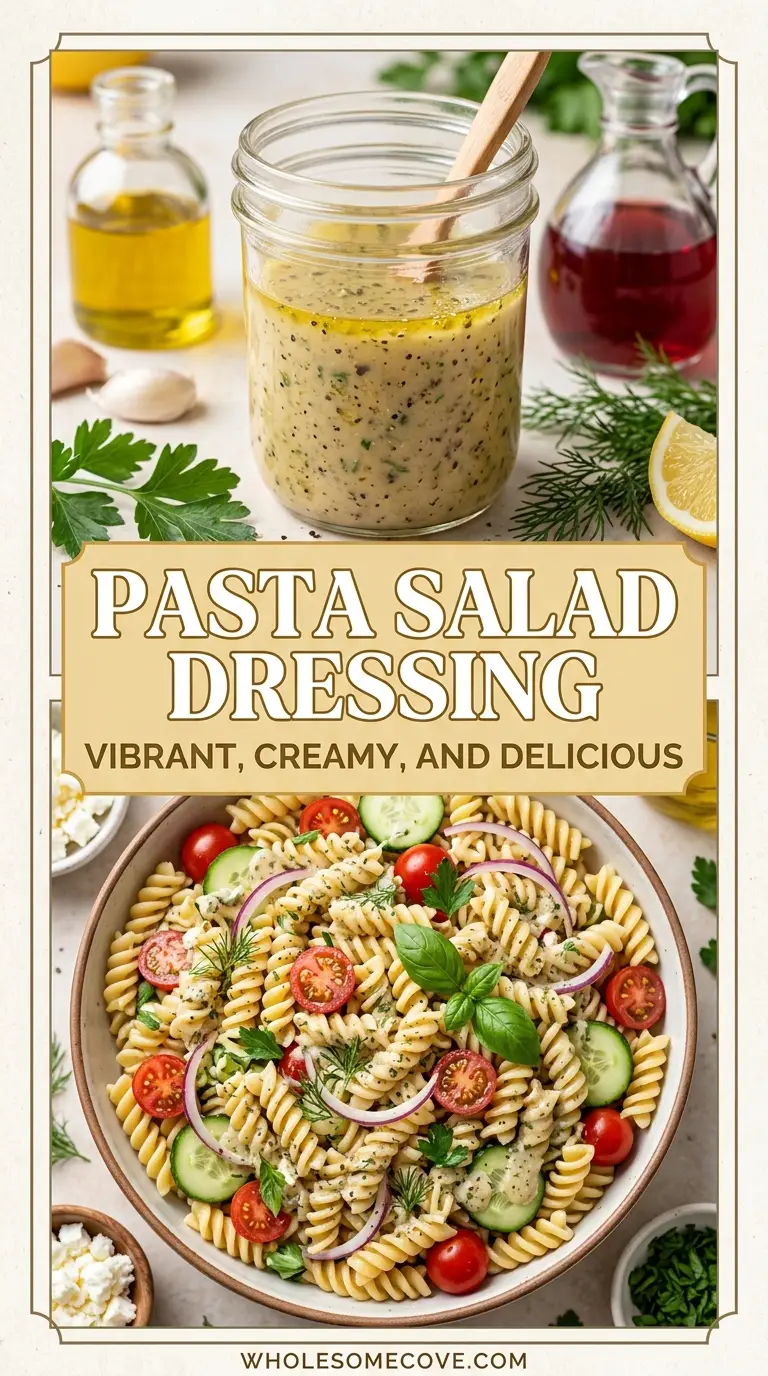
This pasta salad dressing recipe uses nine main ingredients, plus salt, pepper, and a pinch of chili flakes, and about ten minutes of whisking to replace a store-bought bottle.
Dijon mustard is the ingredient that makes the difference here. It emulsifies the olive oil and red wine vinegar into a dressing that clings to every piece of rotini instead of pooling at the bottom of the bowl.
Most bottled Italian dressings taste flat by the time a pasta salad has chilled overnight, because the noodles keep absorbing liquid as they sit. This version is concentrated enough that a spoonful stirred in right before serving brings the whole bowl back to life.
| Quick Recipe Summary | |
|---|---|
| Prep Time | 10 minutes |
| Cook Time | 0 minutes |
| Total Time | 10 minutes |
| Servings | 1½ cups (about 12 servings) |
| Difficulty Level | Easy |
Read Also: Classic Pasta Salad Recipe
Why You’ll Love This Pasta Salad Dressing Recipe
This dressing comes together in one jar with no cooking and no special equipment. It has enough acid and seasoning to stand up to a full pound of pasta and several cups of mixed vegetables without going bland.
It also keeps well, so you can make it a day or two ahead and let the flavors settle before tossing it with anything.
- One jar, no stovetop: Everything gets whisked or shaken together cold, so there’s nothing to simmer or reduce.
- Balanced acidity: The ratio of oil to red wine vinegar is closer to 2:1 than the typical 3:1, which keeps the dressing bright even after the pasta absorbs some of it overnight.
- Dijon mustard for emulsification: The mustard binds the oil and vinegar together so the dressing coats the pasta evenly instead of separating in the fridge.
- Parmesan built in: Grated parmesan dissolves slightly into the dressing itself, adding a savory backbone you don’t get from a plain vinaigrette.
- Adjustable heat and sweetness: Honey and red pepper flakes are both easy to scale up or down depending on who’s eating.
- Doubles or triples cleanly: Because it’s a ratio-based dressing, you can multiply every ingredient for a large batch without adjusting technique.
- Works cold or at room temperature: Unlike creamy dressings, this one doesn’t need to come to room temperature before it tastes right.
Wholesome Cove also has a full Pasta House Salad Recipe if you want to see this dressing in a classic pasta and veggie combination.
Ingredients
You need nine main ingredients for the dressing itself, plus kosher salt, black pepper, and a small pinch of crushed red pepper flakes. Everything is measured cold and whisked by hand, so precision matters more than technique here.
- ¾ cup (180 ml) extra virgin olive oil: The base of the dressing. A fruity, mild olive oil works better here than a sharp, peppery one, since the vinegar and mustard already bring plenty of bite.
- ⅓ cup (80 ml) red wine vinegar: Provides the primary acidity. White wine vinegar or a mix of red wine vinegar and apple cider vinegar also works if that’s what’s on hand.
- 2 teaspoons (10 ml) Dijon mustard: Acts as the emulsifier and adds a subtle tang.
- 2 teaspoons (10 ml) honey: Balances the vinegar’s sharpness. Granulated sugar can replace it in equal amount if you prefer.
- 3 cloves garlic, minced: Fresh garlic gives a sharper bite than jarred minced garlic, though jarred works in a pinch.
- 2 teaspoons dried oregano: The dominant herb note in a classic Italian-style dressing.
- 1 teaspoon dried basil: Rounds out the oregano with a slightly sweeter, greener flavor.
- ⅓ cup (30 g) finely grated Parmesan cheese: Use the fine, powdery grate rather than shredded, so it disperses into the dressing instead of clumping.
- 1 tablespoon (15 ml) fresh lemon juice: Adds a brighter top note than vinegar alone. Bottled lemon juice works, but fresh has noticeably more punch.
- 1 teaspoon kosher salt: Adjust to taste depending on how salty your parmesan and any add-ins are.
- ½ teaspoon black pepper, freshly ground
- ¼ teaspoon crushed red pepper flakes: Optional, but it’s what keeps the dressing from tasting one-note sweet.
Kitchen Equipment Needed
None of this requires specialty equipment. A jar with a tight lid is genuinely the fastest way to make this dressing, since shaking emulsifies it almost as well as whisking.
- Mason jar with lid: For mixing by shaking and for storing the dressing afterward.
- Stainless steel whisk: If you prefer whisking in a bowl instead of shaking in a jar.
- Small mixing bowl: Needed only if you’re whisking instead of shaking.
- Garlic press: Speeds up mincing the garlic finely and evenly.
- Citrus juicer: Makes quick work of the lemon juice without seeds ending up in the dressing.
- Measuring cups and spoons: Standard set for both liquid and dry measurements.
- Rubber spatula: Useful for scraping every bit of dressing out of the jar or bowl when you pour it over pasta.
Recommended Products for This Recipe
These are products I reach for specifically because of problems they solve when making this dressing repeatedly. None of these are required, but each one addresses something that goes wrong with cheaper alternatives.
1. Wide-Mouth Glass Mason Jars with Airtight Lids
Cheap jars with thin plastic lids tend to leak oil at the seams once you start shaking, which means dressing on the counter and in the fridge. Wide-mouth jars with a rubber gasket seal completely and are also easier to pour from without dripping down the side.
2. Microplane Zester and Garlic Press Combo
Pre-minced jarred garlic loses its sharpness fast, and finely grating a garlic clove with a microplane gives a smoother, more evenly distributed flavor than rough chopping. It also works for zesting the lemon if you want to add zest to a variation.
3. Cold-Pressed Extra Virgin Olive Oil
A mild, fruity cold-pressed oil keeps the dressing from tasting bitter, which is a common problem with the cheapest bulk olive oils once vinegar and mustard are added. I’ve found a milder Californian or Spanish oil balances better here than a robust Tuscan one.
4. Parmigiano Reggiano Wedge
Pre-shredded parmesan is coated in anti-caking starch that keeps it from dissolving smoothly into a cold dressing, leaving small dry clumps. Grating a wedge fresh gives a finer, powdery texture that disperses evenly when shaken.
5. Glass Salad Dressing Cruet with Shaker Lid
A dedicated cruet with a built-in emulsifying insert saves you from dirtying a jar every time, and the narrow spout controls the pour so you don’t accidentally drown the pasta. It also looks better on the table if you’re serving the dressing on the side.
You might also enjoy: Texas Roadhouse Ranch Salad Dressing Recipe
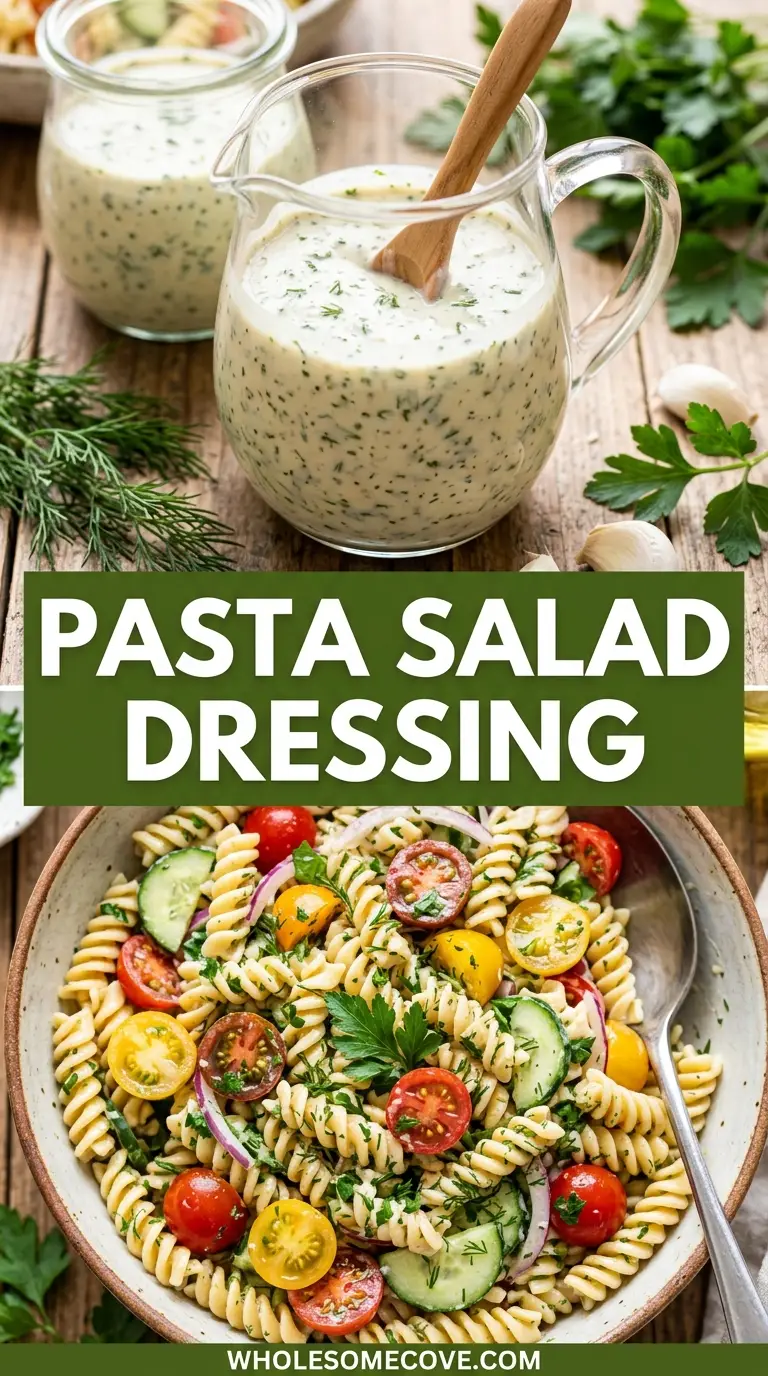
Step-by-Step Instructions: How to Make Pasta Salad Dressing
Follow these steps and you’ll have a balanced, restaurant-quality pasta salad dressing ready in about ten minutes.
1. Mince the Garlic and Juice the Lemon
- Peel and mince 3 garlic cloves as finely as possible, or run them through a garlic press for a smoother result.
- Juice 1 lemon, straining out any seeds, until you have 1 tablespoon of juice.
- Set both aside near your mixing jar or bowl so they’re ready to add.
2. Combine the Liquid Ingredients
- Pour ¾ cup olive oil, ⅓ cup red wine vinegar, and the tablespoon of fresh lemon juice into a wide-mouth mason jar or mixing bowl.
- Add 2 teaspoons Dijon mustard and 2 teaspoons honey.
- If using a jar, keep the lid off for now so you can add the remaining ingredients without spilling.
3. Add the Garlic and Dry Seasonings
- Add the minced garlic, 2 teaspoons dried oregano, 1 teaspoon dried basil, ¼ teaspoon crushed red pepper flakes, 1 teaspoon kosher salt, and ½ teaspoon black pepper.
- Add the ⅓ cup grated Parmesan cheese last, since it settles at the bottom quickly if added too early.
4. Emulsify the Dressing
- If using a jar, screw the lid on tightly and shake vigorously for 30 to 45 seconds, until the mixture looks uniformly opaque and slightly thickened.
- If using a bowl, whisk continuously for about 1 minute, drizzling nothing extra in, just working the existing ingredients until they come together into one consistent liquid.
- The dressing is properly emulsified when you can’t see separate streaks of oil or vinegar floating on top.
5. Taste and Adjust
- Dip a piece of pasta or a spoon into the dressing and taste it directly, since flavors read differently once it’s diluted by pasta and vegetables.
- Add more salt if it tastes flat, more honey if it tastes too sharp, or an extra pinch of red pepper flakes if you want more heat.
- Re-shake or re-whisk after any adjustment to keep the emulsion smooth.
6. Use Immediately or Store for Later
- If using right away, pour the dressing directly over warm, drained pasta and toss so the noodles absorb some flavor while they’re still warm.
- If storing for later, transfer the dressing to an airtight jar and refrigerate until ready to use.
- Always give the dressing a final shake or stir right before pouring, since the oil separates slightly even after a strong emulsion.
Read Also: Pesto Recipe
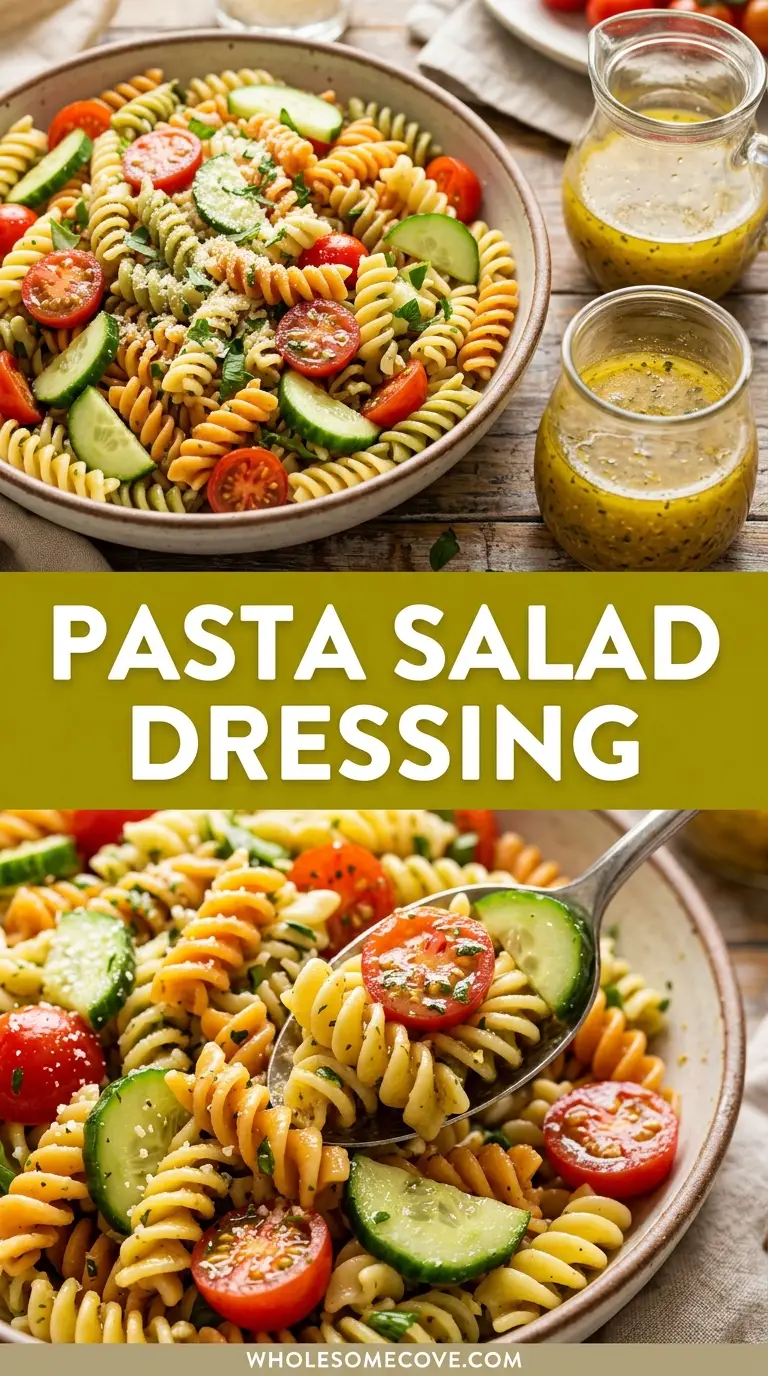
Tips for The Best Pasta Salad Dressing
A few small adjustments make a noticeable difference between an average batch and one that actually holds up over a few days in the fridge.
- Salt the pasta water heavily, not the dressing alone. If the pasta itself is under-seasoned, no amount of dressing on top will fix it evenly.
- Dress the pasta while it’s still warm. Warm noodles absorb more of the dressing’s flavor than cold ones, even if you plan to chill the salad afterward.
- Reserve a few tablespoons of dressing. Pasta keeps drinking up liquid in the fridge, so holding some back to stir in right before serving keeps the salad from tasting dry.
- Let the dressing sit for at least 15 minutes before using it if time allows. The garlic and dried herbs soften and release more flavor the longer they sit in the acid and oil.
- Use freshly grated Parmesan, not the pre-shredded kind. Pre-shredded cheese is coated in starch to prevent clumping in the bag, and that same starch keeps it from dissolving smoothly into a cold dressing.
- Whisk or shake again right before every use. Even a well-emulsified dressing separates slightly after sitting in the fridge for a few hours.
- Taste after chilling, not just right after mixing. Cold temperatures mute salt and sweetness, so a dressing that tasted perfect warm can taste flat once refrigerated.
What to Make with Pasta Salad Dressing
This dressing isn’t meant to be eaten on its own. It’s built specifically to coat pasta and vegetables, which means its best use is as the finishing element in a variety of cold pasta salads and a few dishes outside the pasta aisle entirely.
- Classic Pasta Salad: Rotini, cherry tomatoes, cucumber, and red onion tossed in this dressing is the most straightforward use.
- Italian Pasta Salad: Add salami, mozzarella pearls, and black olives for a more antipasto-style version.
- Greek Pasta Salad: Swap in feta, kalamata olives, and cucumber for a Mediterranean twist that pairs naturally with the oregano already in the dressing.
- Tortellini Pasta Salad: Cheese tortellini holds this dressing especially well in its folds.
- Orzo Pasta Salad: The small pasta shape means the dressing coats every grain rather than pooling at the bottom.
- Caprese Pasta Salad: Fresh mozzarella, basil, and tomatoes work well with the lighter vinaigrette base instead of a heavier balsamic glaze.
- Chicken Pasta Salad: Shredded or grilled chicken turns this into a full lunch instead of a side dish.
- BLT Pasta Salad: Bacon, lettuce, and tomato tossed with pasta and this dressing makes a heartier, smokier variation.
- Broccoli Salad: Even outside of pasta, this dressing works as a lighter alternative to a mayo-heavy broccoli salad dressing.
- Marinade for grilled vegetables or chicken: The oil, acid, and herb combination doubles as a quick marinade for skewers or chicken breasts before grilling.
- Drizzle over a simple caprese platter: Sliced tomatoes and fresh mozzarella only need a spoonful of this dressing instead of a separate vinaigrette.
- Grain bowl finisher: A spoonful stirred into a quinoa or farro bowl adds the same herby, tangy finish it gives pasta.
Read Also: Easy Alfredo Sauce Recipe
Variations of Pasta Salad Dressing
The base ratio of oil to vinegar to mustard stays the same across these variations. Only the seasoning profile changes.
- Creamy pasta salad dressing: Whisk in ¼ cup mayonnaise or sour cream after emulsifying the base dressing for a richer, less acidic version.
- Greek-style dressing: Replace the Parmesan with crumbled feta and add 1 teaspoon dried dill.
- Balsamic version: Swap the red wine vinegar for balsamic vinegar and reduce the honey to 1 teaspoon, since balsamic is already sweeter.
- Lemon-herb dressing: Double the lemon juice to 2 tablespoons and add 1 tablespoon of fresh chopped parsley for a brighter, less garlicky profile.
- Spicy version: Increase the crushed red pepper flakes to ½ teaspoon and add a small pinch of smoked paprika.
- Dairy-free version: Omit the Parmesan entirely and add an extra ¼ teaspoon salt to compensate for the lost savoriness.
- Herb-forward version: Add 1 tablespoon each of fresh chopped basil and parsley in addition to the dried herbs for a more vibrant green flecked dressing.
You might also enjoy: Marinara Sauce Recipe
Storage and Reheating
This dressing is never reheated, since heat breaks the emulsion and dulls the fresh garlic and herbs. Storage is simple as long as the container seals tightly.
- Refrigerator storage: Keep the dressing in an airtight jar in the refrigerator for up to 1 week.
- Re-emulsifying before use: The oil will separate and rise to the top after a few hours in the fridge. Shake or whisk vigorously for 15 to 20 seconds before every use.
- Bringing it back to room temperature: Cold olive oil can turn slightly cloudy or thick in the fridge. Let the jar sit on the counter for 10 minutes before shaking if this happens.
- Freezing is not recommended: The emulsion breaks permanently once frozen and thawed, leaving an oily, separated texture that won’t come back together.
- Storing dressed pasta salad separately: If you’re making pasta salad ahead of time for a party, store the dressing and the cooked pasta separately and combine them within a few hours of serving for the best texture.
- Discard after a week: Fresh garlic in oil-based dressings has a limited shelf life even refrigerated, so don’t push past 7 days.
Nutritional Facts
| Nutrition (per 2 tablespoon serving) | |
|---|---|
| Calories | 140 |
| Total Fat | 14g |
| Saturated Fat | 2.5g |
| Cholesterol | 2mg |
| Sodium | 230mg |
| Total Carbohydrates | 2g |
| Sugars | 1.5g |
| Protein | 1g |
Values are estimates based on standard ingredient databases and will vary depending on specific brands used.
Read Also: Vodka Sauce Recipe
Tips for Using Pasta Salad Dressing Like a Pro
Because this dressing is a component rather than a finished dish, how you apply it matters as much as how you make it. These are the practical habits that make the biggest difference.
- Dress in stages, not all at once. Toss the pasta with about two-thirds of the dressing first, then add the rest closer to serving time so the salad doesn’t look dry after chilling.
- Match the pasta shape to the dressing’s thickness. Shapes with ridges or spirals, like rotini or fusilli, hold a thin vinaigrette better than smooth shapes like penne.
- Cool the pasta before adding delicate mix-ins. Add fresh herbs, cheese cubes, or delicate greens only after the pasta has cooled slightly, so they don’t wilt from residual heat.
- Use it as a marinade base. Because the dressing already has oil, acid, garlic, and herbs, it doubles as a 30-minute marinade for chicken thighs or shrimp before grilling.
- Scale it by the batch, not by eyeballing. If you’re making a large pasta salad for a party, multiply the entire dressing recipe rather than guessing an extra glug of oil and vinegar, since the ratios are what keep it balanced.
- Keep a backup jar in the fridge during summer. I keep a second batch on hand during grilling season since it gets used on more than just pasta salad once it’s already made.
- Strain it if using on a delicate salad. For a smoother, restaurant-style finish on something like a caprese platter, pour the dressing through a fine mesh strainer to remove the garlic and herb bits.
Read Also: Best Pasta Sauce Recipes
FAQs About Pasta Salad Dressing
1. Can I make this dressing ahead of time?
Yes, and it actually improves after sitting for a few hours or overnight. The garlic and dried herbs need time to soften and release their flavor into the oil and vinegar.
Just give it a good shake or whisk before using it, since the ingredients settle and separate in the fridge.
2. Why did my dressing separate after I made it?
Separation happens when the emulsion breaks, usually because the mustard wasn’t fully whisked in or the oil was added too quickly. This is normal and not a sign that anything is wrong with the dressing.
Simply shake or whisk it again vigorously right before pouring it over your pasta.
3. Can I use a different vinegar if I don’t have red wine vinegar?
White wine vinegar, champagne vinegar, or a mix of apple cider vinegar and a little extra lemon juice all work as substitutes. Balsamic vinegar also works, though it will make the dressing noticeably sweeter and darker in color.
Avoid plain white distilled vinegar, since it tends to taste sharper and less rounded than wine-based vinegars.
4. How much dressing do I need for one pound of pasta?
This recipe makes about 1½ cups, which is enough to generously coat 1 pound of cooked pasta along with 2 to 3 cups of mixed vegetables. If you’re adding meat or extra cheese, consider making 1.5 times the recipe.
Start with about two-thirds of the dressing, then add more to taste after the pasta has cooled slightly.
5. Is this dressing gluten-free?
Yes, every ingredient in this recipe is naturally gluten-free, including the Dijon mustard, as long as you check that your specific mustard brand doesn’t add any gluten-containing thickeners. Always double check individual product labels if you’re cooking for someone with celiac disease.
The dressing itself contains no wheat, flour, or gluten-based thickeners in this formulation.
Read Also: Best Sauce Recipes
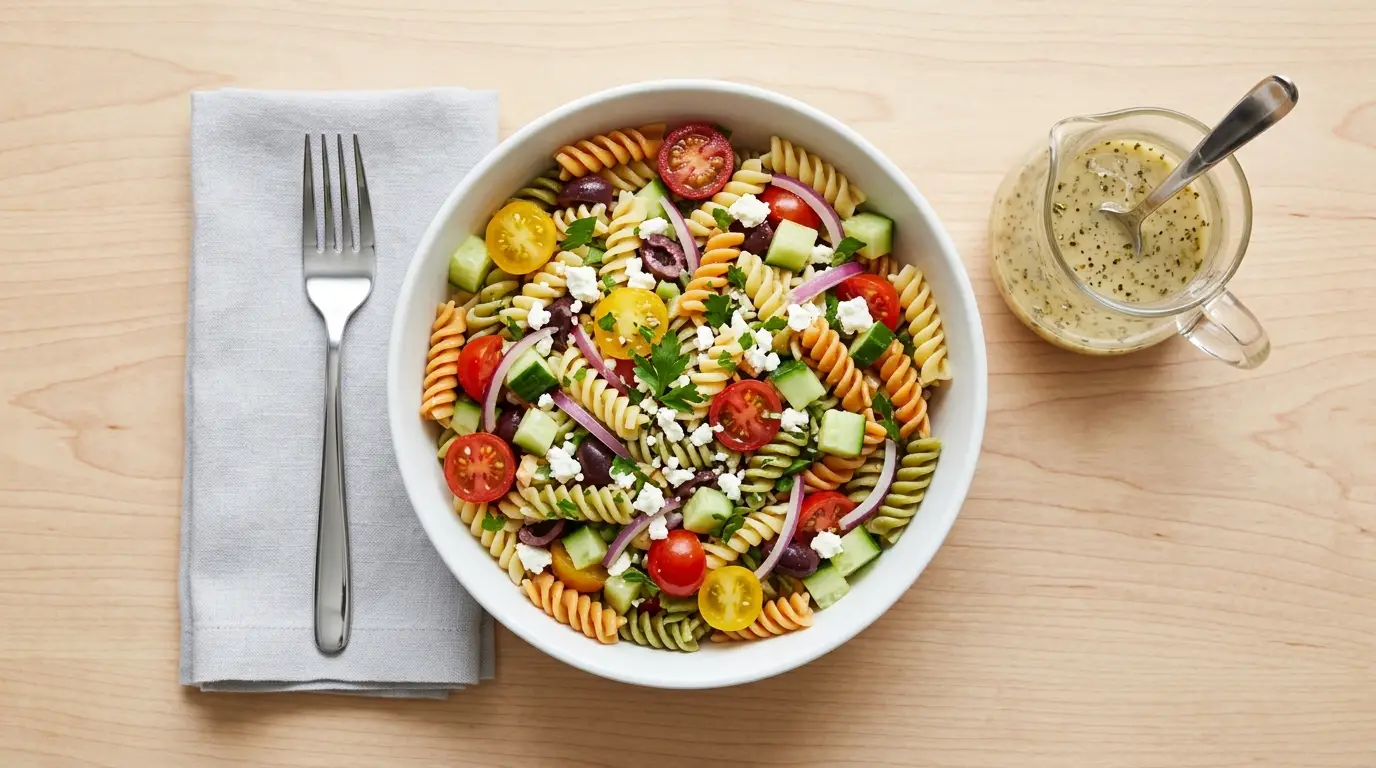
Zesty Italian Pasta Salad Dressing
Ingredients
- ¾ cup extra virgin olive oil - 180 ml, a fruity, mild olive oil works best
- ⅓ cup red wine vinegar - 80 ml, white wine vinegar or apple cider vinegar also work
- 2 teaspoons Dijon mustard - 10 ml, acts as the emulsifier
- 2 teaspoons honey - 10 ml, balances the vinegar’s sharpness; granulated sugar can replace
- 3 cloves garlic - minced; jarred garlic works in a pinch but fresh is preferred
- 2 teaspoons dried oregano - the dominant herb note
- 1 teaspoon dried basil - rounds out the oregano with a sweeter, greener flavor
- ⅓ cup Parmesan cheese - 30 g, finely grated; use the fine, powdery grate
- 1 tablespoon fresh lemon juice - 15 ml, bottled works but fresh is preferred
- 1 teaspoon kosher salt - adjust to taste depending on the saltiness of the parmesan
- ½ teaspoon black pepper - freshly ground
- ¼ teaspoon crushed red pepper flakes - optional, adds a subtle heat
Equipment
- Mason jar with lid - For mixing by shaking and storing the dressing
- Stainless steel whisk - Optional: use if whisking in a bowl instead of shaking
- Small mixing bowl - Optional: needed only if whisking instead of shaking
- Garlic press - Speeds up mincing the garlic finely and evenly
- Citrus juicer - Makes quick work of the lemon juice without seeds
- Measuring cups and spoons - Standard set for both liquid and dry measurements
- Rubber spatula - Useful for scraping every bit of dressing out of the jar or bowl
Method
- Mince the 3 garlic cloves and juice the lemon to get 1 tablespoon of juice; set both aside.
- In a wide-mouth mason jar or mixing bowl, combine ¾ cup olive oil, ⅓ cup red wine vinegar, 1 tablespoon lemon juice, 2 teaspoons Dijon mustard, and 2 teaspoons honey.
- Add the minced garlic, 2 teaspoons dried oregano, 1 teaspoon dried basil, ¼ teaspoon crushed red pepper flakes, 1 teaspoon kosher salt, and ½ teaspoon black pepper. Add the ⅓ cup grated Parmesan cheese last.
- If using a jar, seal the lid and shake vigorously for 30-45 seconds until opaque and thickened. If using a bowl, whisk continuously for about 1 minute until fully emulsified.
- Taste the dressing and adjust with more salt, honey, or red pepper flakes as desired. Re-shake or re-whisk after any adjustments.
- Use immediately over warm pasta or store in an airtight jar in the refrigerator. Always shake well before pouring, as the oil may separate.
Nutrition
Notes
- Salt the pasta water heavily, not just the dressing. Properly seasoned pasta is key to a balanced final dish.
- Dress the pasta while it’s still warm for better flavor absorption, even if you plan to chill the salad.
- Reserve a few tablespoons of dressing to stir in right before serving, as pasta absorbs liquid over time.
- Let the dressing sit for at least 15 minutes before using if time allows; the garlic and herbs soften and release more flavor.
- Use freshly grated Parmesan for the best texture. Pre-shredded cheese contains starch that prevents it from dissolving smoothly in cold dressing.
- Always shake or whisk the dressing again immediately before every use, as it separates in the fridge.
- Taste the dressing after chilling, not just after mixing, because cold temperatures mute salt and sweetness.
- Store the dressing in an airtight jar in the refrigerator for up to 1 week. It is not suitable for freezing.
- To make a creamy version, whisk in ¼ cup mayonnaise or sour cream after emulsifying the base dressing.
Private Notes
Tried this recipe?
Let us know how it was!Final Thoughts
A homemade pasta salad dressing takes about the same ten minutes as opening a bottle, and it holds up better in the fridge over a few days of leftovers. Once you have the ratio down, it’s easy to shift the flavor toward Greek, spicy, or creamy depending on what you’re serving it with.
Give this dressing a try the next time you’re making pasta salad for a potluck or a weeknight side. If you tweak it into your own version, leave a comment below or share a photo, since I’m always curious what combinations other home cooks land on.
Recommended:
- Tuna Pasta Salad Recipe
- Dill Pickle Pasta Salad Recipe
- Shrimp Macaroni Salad Recipe
- Ono Hawaiian Macaroni Salad Recipe
- Chicken Caesar Pasta Salad Recipe
- Cacio E Pepe Recipe
- Carbonara Recipe
- Bolognese Recipe
- Creamy Avocado Pasta Recipe