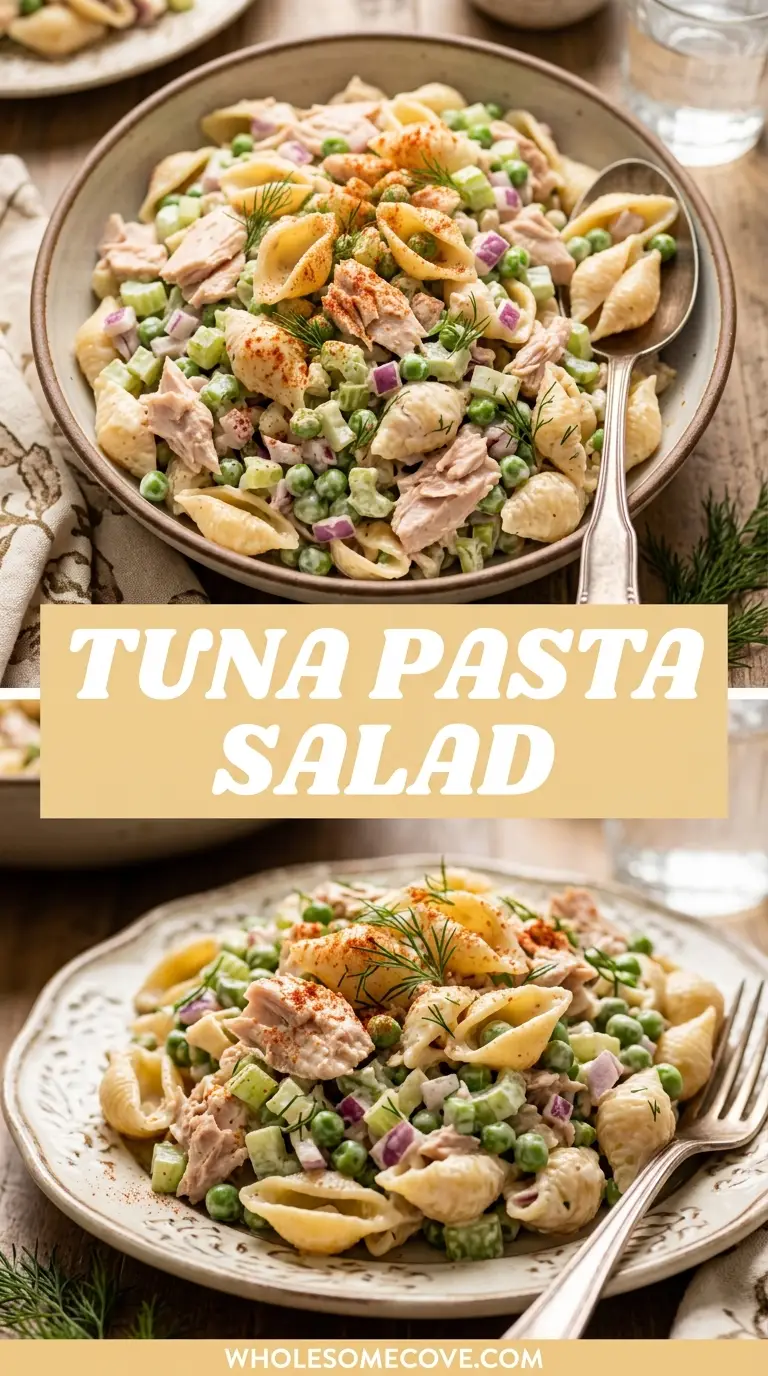
A good tuna pasta salad recipe comes down to two things: pasta that’s actually well-drained, and a dressing thick enough to cling to every shell instead of pooling at the bottom of the bowl.
This one uses two cans of tuna, a half-and-half blend of mayonnaise and Greek yogurt, and crisp celery for the crunch that keeps each bite from feeling heavy.
Most versions turn watery within an hour of sitting because the pasta goes into the bowl still damp or the tuna isn’t pressed dry first.
Ten main ingredients and thirty minutes total, that’s the target here, and the dressing holds its shape even after a day in the fridge.
| Quick Recipe Summary | |
|---|---|
| Prep Time | 20 minutes |
| Cook Time | 10 minutes |
| Total Time | 30 minutes |
| Servings | 6 servings |
| Difficulty Level | Easy |
Read Also: Classic Pasta Salad Recipe
Why You’ll Love This Tuna Pasta Salad Recipe
This recipe earns a permanent spot in the lunch rotation because it holds up in the fridge for days without turning mushy. It also uses pantry staples you likely already have, aside from the tuna and celery.
- Ready in about 30 minutes with no oven required
- Protein-packed thanks to two cans of tuna in every batch
- Make-ahead friendly, since the flavor improves after a few hours in the fridge
- Mild and creamy enough for picky eaters, with room to add spice if you want it
- Easily doubled for potlucks, picnics, and packed lunches
- Naturally adaptable for gluten-free or dairy-free diets with a couple of simple swaps
- Uses canned tuna, so there’s no cooking of the protein involved at all
This same balance of creamy dressing and crunchy vegetables shows up in my Italian Pasta Salad, which leans on a vinaigrette instead of mayonnaise for a lighter finish.
Ingredients
Every ingredient here has a job, from the pasta shape that holds the dressing to the acid that keeps the mayo from tasting flat. Small ridged shapes like shells trap more dressing per bite than smooth pasta, which is part of why this recipe leans on them instead of something like penne.
Here’s the full lineup with both US and metric measurements.
- 12 oz (340g) medium pasta shells, or elbow macaroni
- 2 cans (5 oz/142g each) tuna packed in water, drained well (10 oz/280g total)
- 1 cup (225g) mayonnaise
- 1/2 cup (115g) plain Greek yogurt
- 2 tablespoons (30ml) fresh lemon juice, about 1 lemon
- 1 tablespoon (15g) Dijon mustard
- 3 celery stalks, diced, about 3/4 cup (90g)
- 1/2 cup (75g) red onion, finely diced
- 1 cup (150g) frozen peas, thawed
- 2 tablespoons (8g) fresh dill, chopped, or 2 teaspoons dried dill
- 1/2 teaspoon (3g) salt, plus more to taste
- 1/4 teaspoon (1g) black pepper
- Paprika, for garnish, optional
I’ve found that pressing the tuna dry in a fine-mesh strainer instead of just tilting the can matters more than any other single step. It’s the difference between a creamy salad and one that separates into a puddle by the next day.
You might also enjoy: Potato Salad
Kitchen Equipment Needed
You don’t need anything fancy for this one, just the basics for boiling pasta and mixing a dressing. Here’s what keeps the process quick and mostly hands-off.
- Large stockpot, for boiling the pasta
- Colander, for draining and rinsing
- Large mixing bowl, for tossing everything together
- Cutting board
- Sharp chef’s knife, for dicing the celery and onion
- Measuring cups and spoons
- Mixing spoon or silicone spatula
- Airtight storage containers, for leftovers
- Fine-mesh strainer, for draining the tuna and thawing the peas
I use the same stockpot setup when I make Coleslaw for a matching side dish, since both start with the same drain-and-rinse routine.
Recommended Products for This Recipe
These are the products I actually reach for when I make this recipe, based on what’s made the biggest difference in texture and flavor over repeated batches. None of these are required, but each one solves a specific problem I ran into while testing this salad.
1. Genova Yellowfin Tuna in Olive Oil
Water-packed tuna is the standard choice for this recipe because it keeps the dressing from getting greasy, but I sometimes swap in a can of olive-oil-packed yellowfin for a richer, less fishy flavor. Just drain it a little more thoroughly than you would the water-packed kind, since the oil clings longer.
2. OXO Good Grips Salad Spinner
I started using a salad spinner to dry the peas and, oddly enough, the pasta after rinsing, and it cut my prep time down noticeably. Wet pasta dilutes the dressing fast, and a few spins gets rid of the surface water a colander alone leaves behind.
3. Rubbermaid Brilliance Glass Meal Prep Containers
Plastic containers hold onto the smell of tuna no matter how many times you wash them, which is why I switched to glass ones specifically for this recipe. The airtight seal also keeps the dressing from drying out at the edges the way it does in a loosely covered bowl.
4. OXO Citrus Juicer
A hand-held citrus juicer gets more juice out of a lemon than squeezing it by hand, and it catches the seeds automatically. That extra tablespoon of juice is often the difference between a dressing that tastes bright and one that tastes flat once it’s chilled.
You might also enjoy: Broccoli Salad
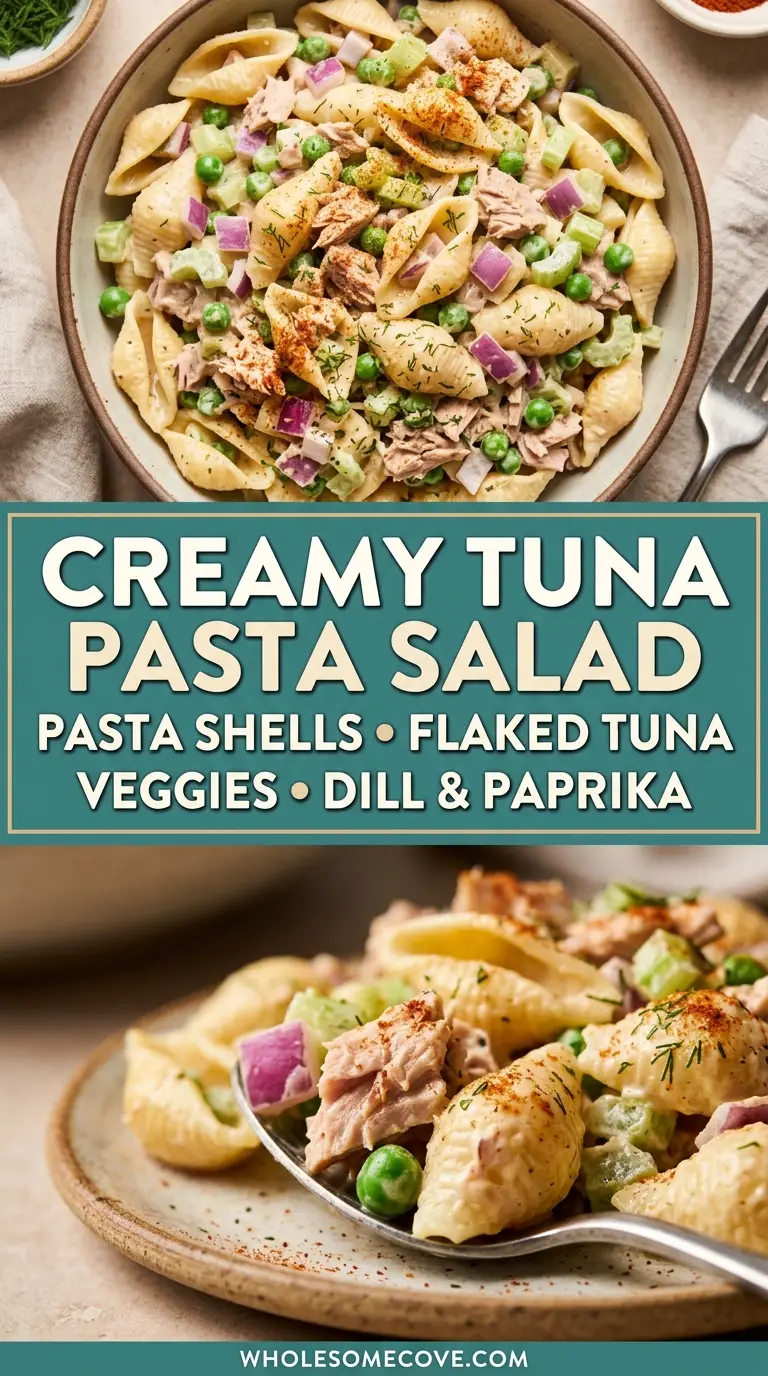
Step-by-Step Instructions: How to Make Tuna Pasta Salad
Follow these simple steps and you’ll have a creamy, crunchy tuna pasta salad ready to chill or serve right away.
1. Cook the Pasta
- Bring a large pot of generously salted water to a rolling boil, using about 1 tablespoon of salt per gallon of water.
- Add the pasta shells and cook according to the package directions until al dente, usually about 9 to 11 minutes.
- Stir occasionally during the first few minutes so the shells don’t stick to each other or the bottom of the pot.
- Drain the pasta in a colander, then rinse immediately under cold running water until it’s fully cooled, tossing gently to rinse away the surface starch and stop the cooking.
- Let the pasta sit in the colander for a few extra minutes to drain off any remaining water before it goes into the bowl.
2. Drain the Tuna
- Open both cans of tuna and tip them into a fine-mesh strainer set over the sink.
- Press firmly with the back of a spoon to squeeze out as much liquid as possible, since wet tuna is the fastest way to end up with a watery salad.
- Transfer the drained tuna to a small bowl and flake it apart with a fork so there are no large clumps left.
3. Prep the Vegetables
- Dice the celery into small, even pieces so every bite gets some crunch.
- Finely dice the red onion; if you find raw onion too sharp, soak it in a bowl of ice water for 10 minutes, then drain and pat it dry.
- Thaw the frozen peas by running them under cool water in a strainer for about a minute, then shake off the excess water or blot them with a paper towel.
4. Make the Dressing
- In a medium bowl, whisk together the mayonnaise, Greek yogurt, lemon juice, and Dijon mustard until smooth and no streaks remain.
- Stir in the chopped dill, salt, and black pepper.
- Taste the dressing and adjust it, adding more lemon juice for brightness or a touch more salt if the tuna you used was very lean.
5. Combine Everything
- Add the cooled pasta, drained and flaked tuna, diced celery, diced red onion, and thawed peas to a large mixing bowl.
- Pour the dressing over the top in two additions rather than all at once, so you can check the consistency as you go.
- Fold everything together gently with a silicone spatula until every piece of pasta is coated, being careful not to mash the tuna or peas.
6. Chill and Serve
- Cover the bowl and refrigerate for at least 30 minutes if you have time, which lets the dressing settle into the pasta.
- Give the salad a final stir right before serving, since the dressing tends to settle toward the bottom of the bowl.
- Sprinkle with paprika or a little extra dill just before bringing it to the table.
I picked up the two-addition dressing trick while testing my Chickpea Tuna Salad, where soggy chickpeas caused the exact same over-dressed, watery problem.
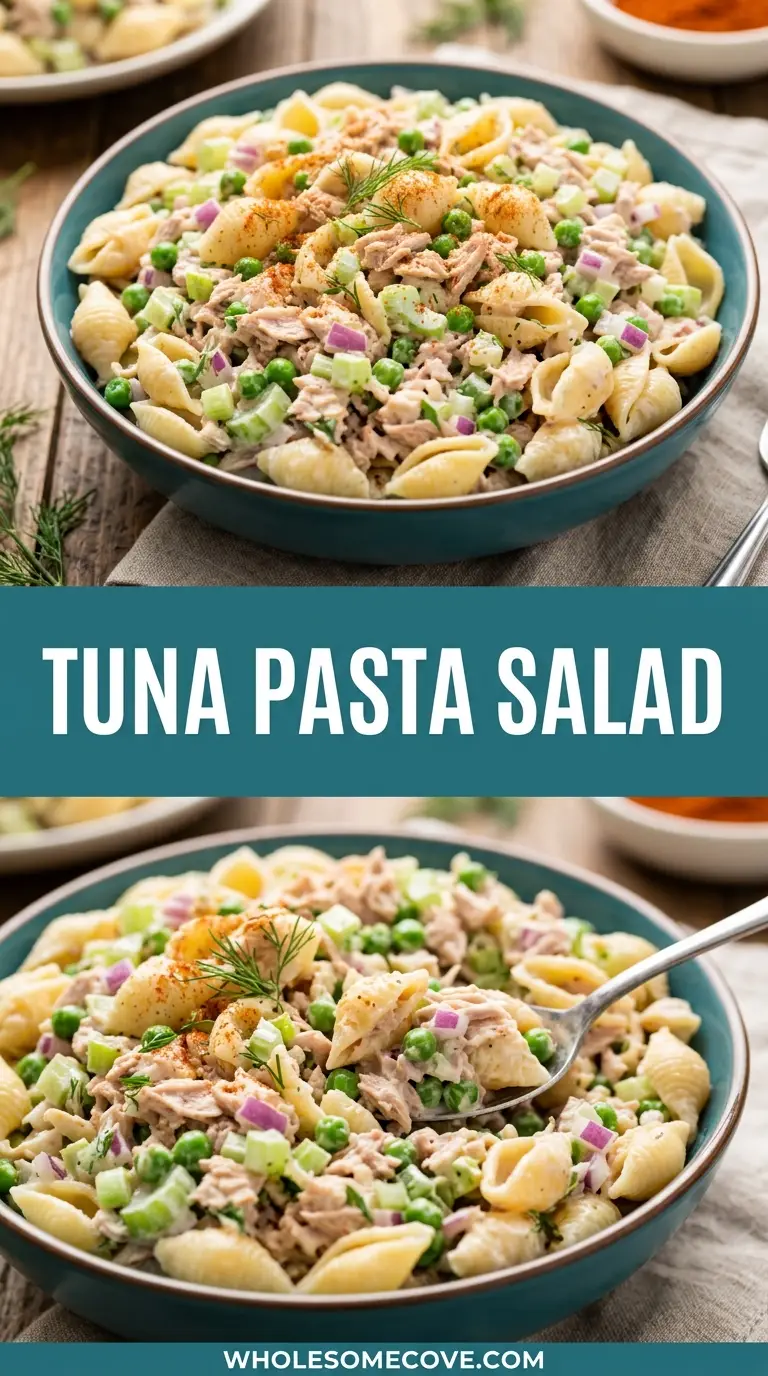
Tips for The Best Tuna Pasta Salad
A few small adjustments make the difference between a good batch and a great one. These are the details that matter most after making this more times than I can count.
- Salt the pasta water generously; it’s the only real chance you get to season the pasta itself.
- Rinse the pasta under cold water immediately after draining to stop the carryover cooking and prevent mushiness.
- Press the tuna dry before adding it, since excess liquid thins the dressing within an hour.
- Dice the celery and onion small and uniform so the texture stays balanced in every bite.
- Let the salad rest for at least 30 minutes before serving so the dressing has time to soak into the pasta.
- Taste right before serving and add a splash more lemon juice if the dressing tastes flat, since cold temperatures mute flavor.
- Use a light hand when folding everything together to keep the tuna flakes and peas intact instead of turning to mush.
- If you’re making this for a picnic, keep it in a cooler and pull it out only when you’re ready to eat.
- Hold back a small amount of dressing and stir it in right before serving if you’re making the salad more than a day ahead, since the pasta continues to absorb liquid as it sits.
- Chop the dill fine and add it toward the end of mixing the dressing, since it can turn bitter if it sits too long in the acidic lemon juice before use.
Read Also: Tuna And White Bean Salad Recipe
What to Serve with Tuna Pasta Salad
This salad is filling enough to be a light lunch on its own, but it also works well as part of a bigger spread. Here are a few pairings that round out the meal without competing with the creamy dressing.
- Grilled Lemon Herb Chicken for a heartier, protein-forward plate
- Air Fryer Corn on the Cob for a quick, no-fuss side
- Watermelon Feta Salad with Mint for something sweet and cold alongside it
- Deviled Eggs if you’re setting out a full picnic or potluck spread
- Healthy Cornbread for a slightly sweet, crumbly contrast
- Sliced fresh tomatoes and cucumbers with a little salt, for something raw and crisp
- Iced tea or lemonade, since the acidity echoes the lemon juice already in the dressing
This same spread works well alongside my Greek Pasta Salad if you want two pasta salads on the table for a bigger crowd.
Variations of Tuna Pasta Salad
Once you’ve made the classic version a few times, these swaps are worth trying. None of them require changing the base method, just the ingredient list.
- Swap the tuna for canned salmon for a milder, richer flavor.
- Add two chopped hard-boiled eggs, folded in at the very end, for extra protein.
- Stir in 2 tablespoons of sweet pickle relish for a tangier, Southern-style version.
- Use 1 teaspoon of Old Bay seasoning instead of the dill for a more assertive, briny flavor.
- Make it dairy-free by using all mayonnaise instead of the mayo-yogurt blend.
- Add diced bell pepper or shredded carrot for more color and crunch.
- Swap the peas for an equal amount of corn kernels if peas aren’t your thing.
- Stir in a small handful of capers for a briny, Mediterranean twist.
- Toss in a cup of halved cherry tomatoes right before serving for a burst of acidity and color.
- Add a diced avocado just before serving if you like a richer, creamier bite, though it’s best added at the last minute so it doesn’t brown.
- Use smoked paprika instead of regular in the garnish for a subtle smoky note that pairs well with the tuna.
For a heartier version, try: Tortellini Pasta Salad
Storage and Reheating
This salad is meant to be served cold, so there’s no reheating involved at any point. Storage is simple as long as you keep it sealed and chilled.
There’s no way to warm this dish back up without ruining the texture of the mayo-based dressing, so plan to eat it straight from the fridge.
- Refrigerate in an airtight container for up to 4 days.
- Give it a stir before each serving, since the dressing settles and separates slightly over time.
- Add a splash of milk or a spoonful of mayonnaise if it looks dry after a day or two in the fridge.
- Freezing is not recommended, since the mayonnaise-based dressing separates and turns grainy once thawed and reheated.
- Keep it out of the danger zone by not leaving it at room temperature for more than 2 hours total, especially outdoors at a picnic.
- Pack individual portions in smaller containers if you’re planning to grab lunches throughout the week.
This same cold-storage rule applies to my Chicken Caesar Pasta Salad, which also relies on a mayonnaise-based dressing that doesn’t hold up to freezing.
Nutritional Facts
| Nutrient | Amount per Serving |
|---|---|
| Calories | 410 kcal |
| Protein | 19g |
| Carbohydrates | 34g |
| Fat | 22g |
| Saturated Fat | 4g |
| Fiber | 3g |
| Sugar | 4g |
| Sodium | 620mg |
Values are estimates based on 6 servings and will vary depending on the specific brands used.
Read Also: BLT Pasta Salad Recipe
Health Benefits of Key Ingredients
Beyond being a crowd-pleaser, this salad offers real nutritional value from a handful of key ingredients. Here’s what each one contributes to the plate.
- Tuna: High in lean protein and omega-3 fatty acids, which support heart and brain health.
- Greek yogurt: Adds protein and probiotics while cutting some of the saturated fat found in straight mayonnaise.
- Celery: Low in calories and a good source of vitamin K and fiber.
- Peas: Contribute plant-based protein, fiber, and a solid dose of vitamin C.
- Red onion: Contains antioxidant compounds called flavonoids, along with a mild amount of vitamin C.
- Lemon juice: Provides vitamin C and helps the other flavors stay bright instead of muted.
- Dijon mustard: Adds flavor without much sodium or sugar compared to sweeter condiments.
You might also enjoy: Shrimp Macaroni Salad
FAQs About Tuna Pasta Salad
1. Can I make tuna pasta salad ahead of time?
Yes, this salad actually tastes better after a few hours in the fridge. Make it up to a day ahead and store it covered until you’re ready to serve.
2. Why is my tuna pasta salad watery?
The most common cause is pasta or tuna that wasn’t drained well enough before mixing. Press the tuna dry and rinse the pasta under cold water so it isn’t carrying extra moisture into the bowl.
3. Can I use a different type of pasta?
Yes, any short pasta shape works here, including elbow macaroni, farfalle, or rotini. Just avoid long noodles like spaghetti, since they don’t hold the dressing or mix in as evenly.
Whatever shape you pick, slightly undercook it by a minute so it stays firm after chilling. Pasta continues to soften slightly as it sits in the dressing overnight.
4. Is tuna pasta salad served hot or cold?
It’s served cold or at room temperature, never hot. Chilling it for at least 30 minutes before serving helps the dressing set and the flavors combine.
5. Can I make this recipe gluten-free?
Yes, swap in your favorite gluten-free short pasta and the rest of the recipe stays exactly the same. Check that your mayonnaise and mustard are labeled gluten-free too, since some brands add wheat-based thickeners.
This gluten-free swap is the same one I use in my Caprese Pasta Salad, which comes together just as easily with a few ingredient changes.
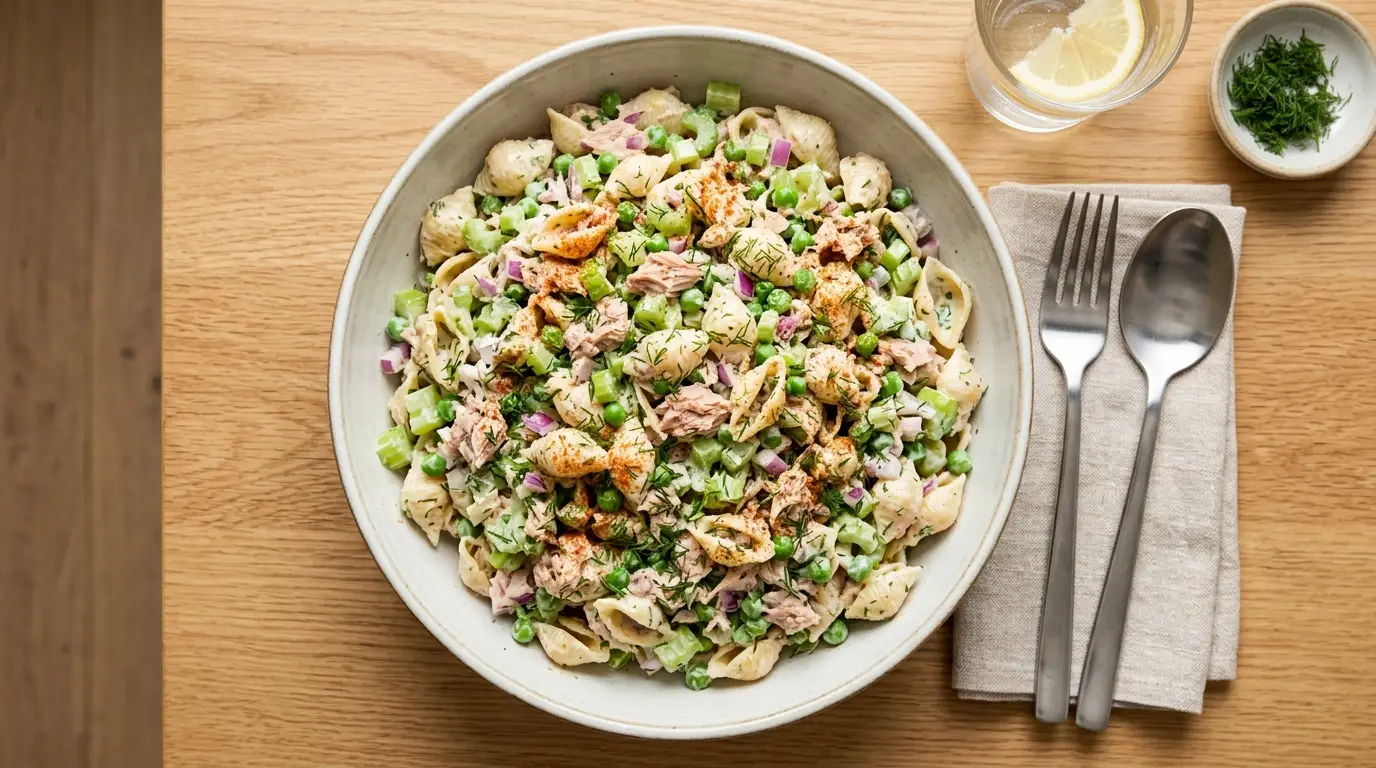
Tuna Pasta Salad
Ingredients
- 12 oz medium pasta shells - 340g, or elbow macaroni
- 2 cans tuna packed in water - 5oz/142g each, drained well (10oz/280g total)
- 1 cup mayonnaise - 225g
- 1/2 cup plain Greek yogurt - 115g
- 2 tablespoons fresh lemon juice - 30ml, about 1 lemon
- 1 tablespoon Dijon mustard - 15g
- 3 celery stalks - diced, about 3/4 cup or 90g
- 1/2 cup red onion - 75g, finely diced
- 1 cup frozen peas - 150g, thawed
- 2 tablespoons fresh dill - 8g, chopped, or 2 teaspoons dried dill
- 1/2 teaspoon salt - 3g, plus more to taste
- 1/4 teaspoon black pepper - 1g
- paprika - for garnish, optional
Equipment
- Mixing Spoon or Silicone Spatula
- Airtight storage containers - For leftovers
Method
- Bring a large pot of generously salted water to a rolling boil. Add the pasta shells and cook according to package directions until al dente. Stir occasionally.
- Drain the pasta in a colander and rinse immediately under cold running water until fully cooled. Let it sit in the colander to drain off any remaining water.
- Open the tuna cans and tip them into a fine-mesh strainer. Press firmly with the back of a spoon to squeeze out as much liquid as possible. Flake the tuna apart with a fork.
- Dice the celery and red onion into small, even pieces. Thaw the frozen peas by running them under cool water in a strainer for about a minute, then shake off excess water.
- In a medium bowl, whisk together the mayonnaise, Greek yogurt, lemon juice, and Dijon mustard until smooth. Stir in the dill, salt, and pepper. Taste and adjust seasoning.
- Add the cooled pasta, drained tuna, diced celery, diced red onion, and thawed peas to a large mixing bowl. Pour the dressing over in two additions and fold gently with a spatula until fully coated.
- Cover the bowl and refrigerate for at least 30 minutes. Give the salad a final stir before serving. Sprinkle with paprika or extra dill if desired.
Nutrition
Notes
- Salt the pasta water generously; it’s the only real chance you get to season the pasta itself.
- Rinse the pasta under cold water immediately after draining to stop the carryover cooking and prevent mushiness.
- Press the tuna dry before adding it, since excess liquid thins the dressing within an hour.
- Dice the celery and onion small and uniform so the texture stays balanced in every bite.
- Let the salad rest for at least 30 minutes before serving so the dressing has time to soak into the pasta.
- Taste right before serving and add a splash more lemon juice if the dressing tastes flat, since cold temperatures mute flavor.
- Use a light hand when folding everything together to keep the tuna flakes and peas intact instead of turning to mush.
- If you’re making this for a picnic, keep it in a cooler and pull it out only when you’re ready to eat.
- Hold back a small amount of dressing and stir it in right before serving if you’re making the salad more than a day ahead, since the pasta continues to absorb liquid as it sits.
- Chop the dill fine and add it toward the end of mixing the dressing, since it can turn bitter if it sits too long in the acidic lemon juice before use.
- Refrigerate in an airtight container for up to 4 days. Give it a stir before each serving.
- Add a splash of milk or a spoonful of mayonnaise if it looks dry after a day or two in the fridge.
- Freezing is not recommended, since the mayonnaise-based dressing separates and turns grainy once thawed.
- For a dairy-free version, use all mayonnaise instead of the mayo-yogurt blend.
- For a gluten-free version, swap in your favorite gluten-free short pasta.
Private Notes
Tried this recipe?
Let us know how it was!Final Thoughts
This tuna pasta salad recipe earns its spot at potlucks and weeknight tables alike because it’s simple, forgiving, and ready in about half an hour.
Give it a try this week and adjust the dill, onion, or mustard to match what you like best.
If you make it, I’d love to hear how it turned out. Leave a comment below or share a photo so I can see your version.
Recommended:
- Mediterranean Chickpea Salad
- Curried Chickpea Salad
- Quinoa Chickpea Salad
- Cucumber Chickpea Feta Salad
- Healthy Egg Salad
- Chicken And Egg Salad
- Pasta House Salad
- Ono Hawaiian Macaroni Salad
- BJ’s Tomato Mozzarella Salad
- Chickpea Salad Sandwich