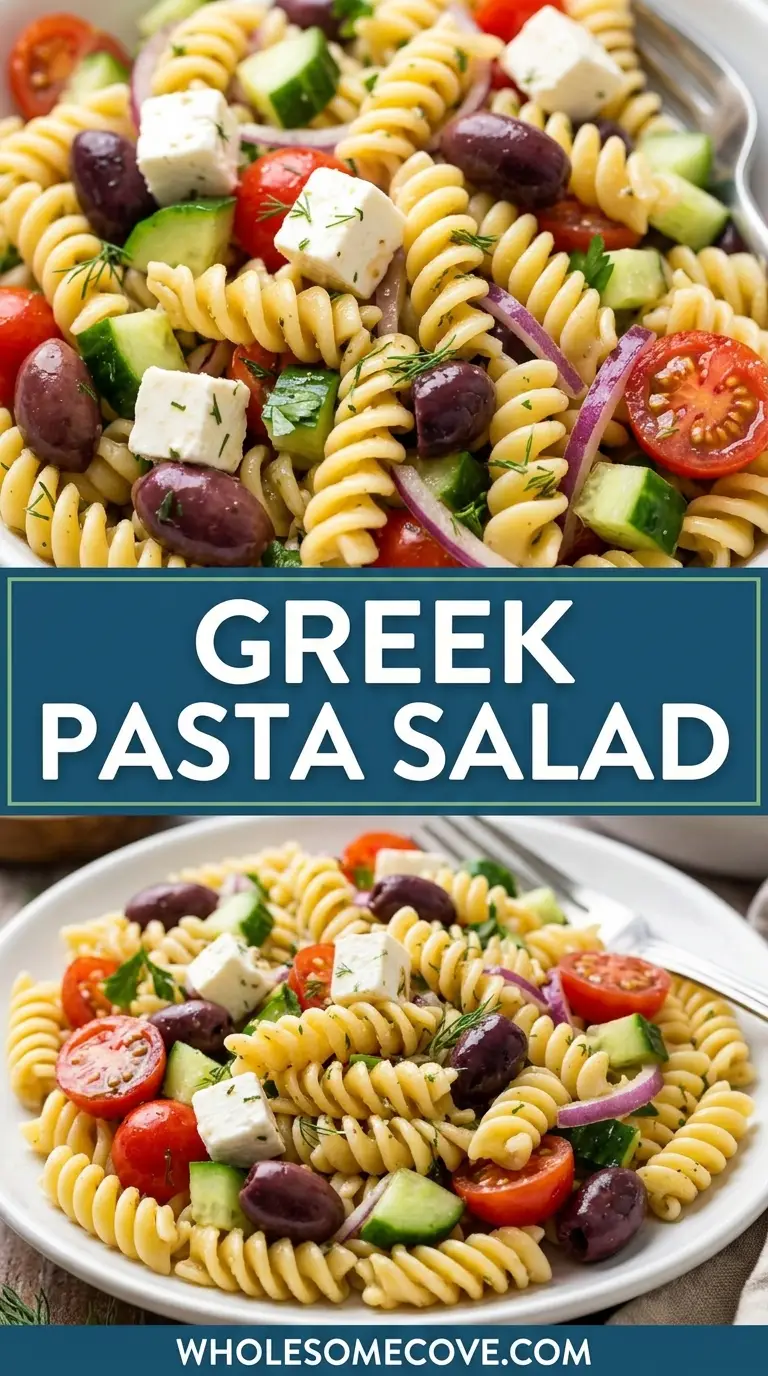
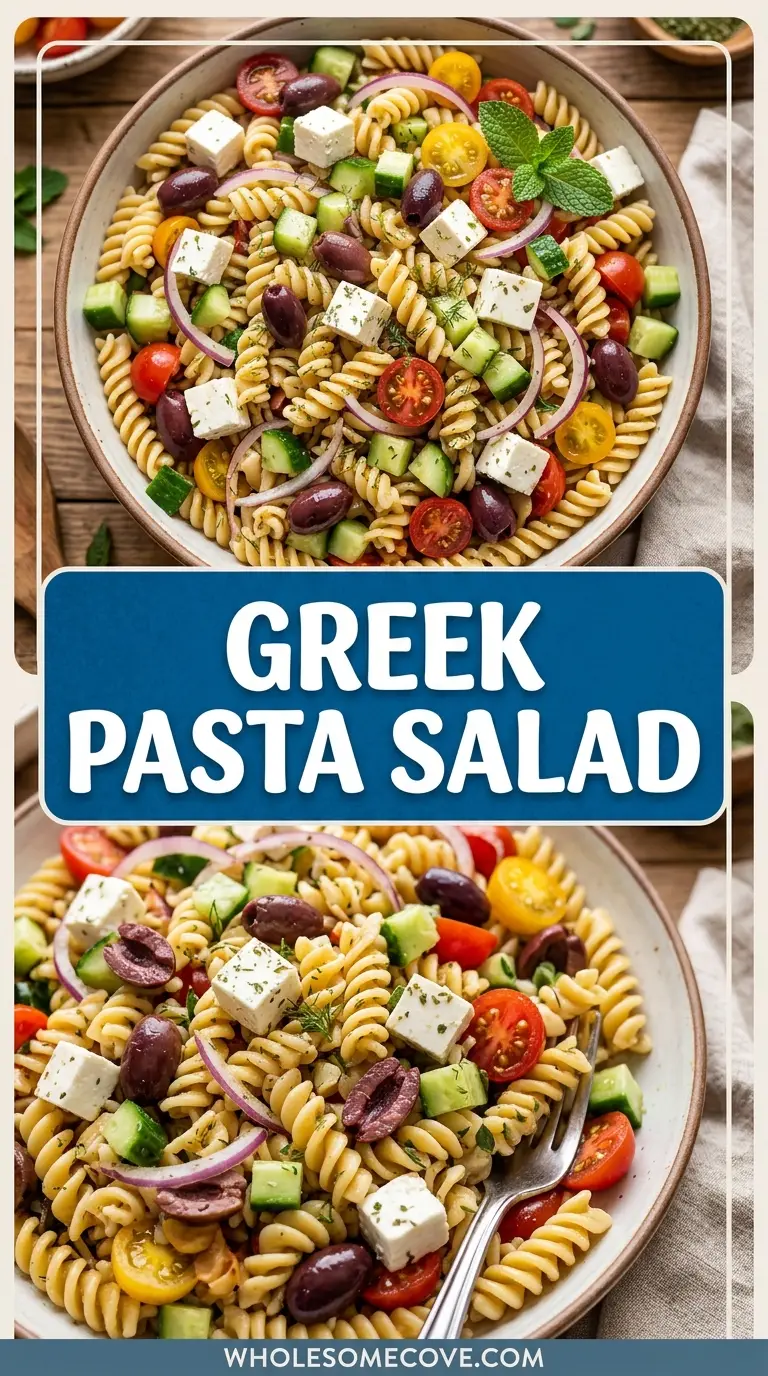
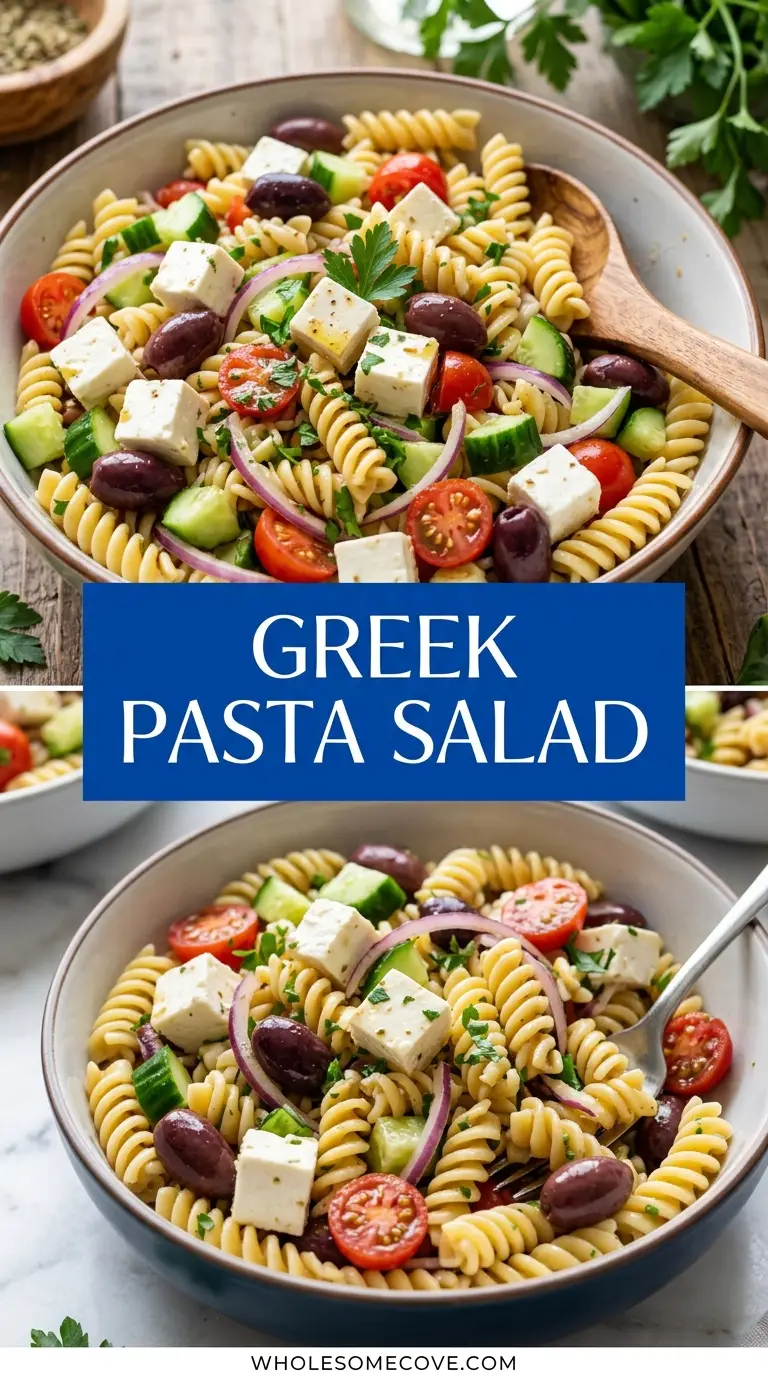
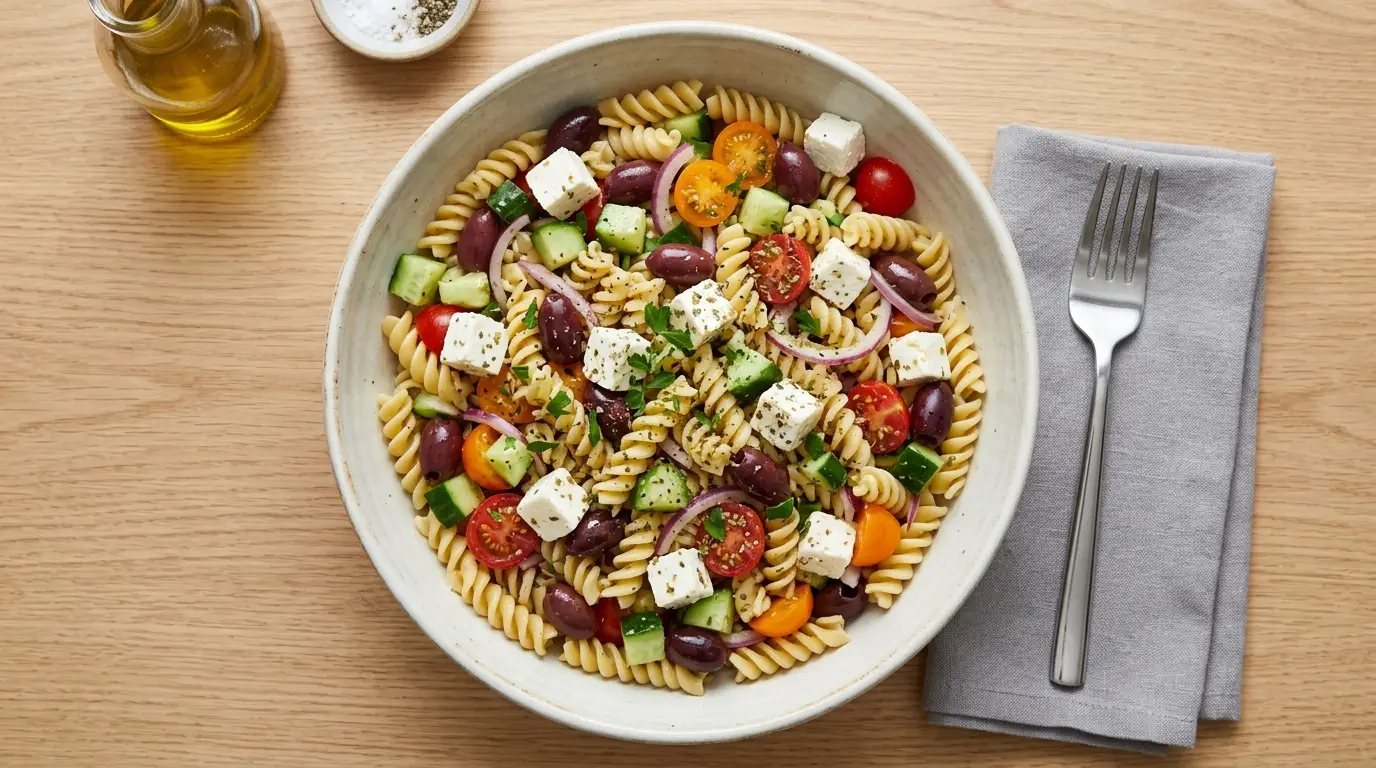
This Greek pasta salad recipe combines rotini, crisp cucumber, cherry tomatoes, kalamata olives, and a block of feta cheese in a red wine vinegar dressing.
The dressing is built on a 3-to-1 ratio of olive oil to vinegar, which keeps the pasta coated without pooling at the bottom of the bowl.
It comes together with eight ingredients beyond the pantry basics, and the whole thing sits together in the fridge for at least thirty minutes before serving so the flavors have time to settle into the noodles.
The feta stays in cubes rather than crumbles here, which is the detail that separates a good Greek pasta salad from a soggy one.
Crumbled feta breaks down fast once it hits an acidic dressing and turns the whole bowl chalky within an hour. Cubed feta holds its shape through a full day in the fridge, so leftovers taste as clean as the first serving.
| Quick Recipe Summary | |
|---|---|
| Prep Time | 20 minutes |
| Cook Time | 10 minutes |
| Total Time | 30 minutes, plus 30 minutes chilling |
| Servings | 8 servings |
| Difficulty Level | Easy |
This pairs well with my Italian Pasta Salad if you want two cold pasta options on the same table for a potluck.
Why You’ll Love This Greek Pasta Salad Recipe
This dish holds up in the fridge for days without turning mushy, which makes it one of the few pasta salads worth making ahead of time. It also uses one bowl and one pot, so cleanup stays simple.
- Ready in 30 minutes of hands-on time, no oven needed
- Feeds a crowd, easily doubled for potlucks or barbecues
- Holds up well for meal prep since the vegetables stay crisp for days
- Naturally vegetarian, and easy to make gluten free with a swap in pasta
- Balanced acidity from red wine vinegar and lemon juice keeps it from tasting flat
- Cubed feta instead of crumbled means less breakdown over time
- No mayonnaise, so it travels well to outdoor gatherings
You might also enjoy: Classic Pasta Salad
Ingredients
Gather everything below before you start boiling water. Nothing here needs special ordering online except the feta and olives, which are worth buying whole rather than pre-crumbled or pre-sliced.
- 1 lb (450g) rotini pasta
- 1 English cucumber, diced
- 1 pint (300g) cherry tomatoes, halved
- 1/2 medium red onion, thinly sliced
- 1 cup (150g) kalamata olives, pitted and halved
- 8 oz (225g) block feta cheese, cut into cubes
- 1/2 cup (75g) pepperoncini, sliced, plus 1 tablespoon brine
- 1 red bell pepper, diced
- 2 cloves garlic, minced
- 1/3 cup (80ml) extra virgin olive oil
- 3 tbsp (45ml) red wine vinegar
- 1 tbsp (15ml) fresh lemon juice
- 1 tsp dried oregano
- 1/2 tsp salt
- 1/4 tsp black pepper
Read Also: Mediterranean Chickpea Salad Recipe
Kitchen Equipment Needed
You do not need anything specialized for this recipe, but a few tools make the process faster and the results more consistent.
- Large stockpot for boiling the pasta
- Colander for draining
- Large mixing bowl with enough room to toss everything without spilling
- Cutting board and a sharp chef’s knife for the vegetables
- Small whisk or jar with a lid for the dressing
- Salad servers or large tongs for tossing
- Airtight storage container for leftovers
For a lighter option, try: Cucumber Chickpea Feta Salad
Recommended Products for This Recipe
These are products I reach for specifically because of problems they solve in this recipe, not just general kitchen favorites.
1. Greek Extra Virgin Olive Oil
A mild supermarket olive oil gets lost next to red wine vinegar, feta, and olives, which are all strong flavors on their own. A robust, peppery Greek extra virgin olive oil holds its own in the dressing instead of disappearing into the bowl.
2. Block Feta Cheese in Brine
Pre-crumbled feta is coated with anti-caking starch that keeps it from creaming into the dressing properly, and it breaks down within an hour of tossing. A block stored in its own brine cuts cleanly into cubes that hold their shape through a full day of storage.
3. Pitted Kalamata Olives
Pitting olives by hand slows down prep and risks leaving a pit behind in the bowl. Pre-pitted kalamata olives from a reputable brand save time and come packed in real brine instead of the vinegar-heavy liquid used in cheaper jarred olives.
4. Glass Meal Prep Containers with Lids
Plastic containers absorb the color and smell of the vinegar dressing after a few uses, and lids can warp from the oil. Glass containers with silicone-sealed lids keep the salad fresh for the full four days it lasts in the fridge without staining or odor transfer.
5. Wide Salad Tongs
Regular tongs are too narrow to lift chunky ingredients like feta cubes and pasta at the same time, so the dressing ends up unevenly distributed. Wide, flat salad tongs scoop from the bottom of the bowl in one motion and coat everything at once.
I learned this technique while perfecting my Tomato Basil Mozzarella Flatbread Pizza, where the same rule about cubed versus crumbled cheese applies.
Step-by-Step Instructions: How to Make Greek Pasta Salad
Follow these simple steps and you will have a Greek pasta salad ready to chill in about 30 minutes.
1. Cook the Pasta
- Bring a large pot of generously salted water to a rolling boil.
- Add the rotini and cook according to the package instructions until just al dente, usually 9 to 11 minutes.
- Reserve nothing extra; drain the pasta fully in a colander.
- Rinse the pasta under cold running water for about 30 seconds to stop the cooking and cool it down quickly.
- Shake the colander well to remove excess water, then set the pasta aside to drain further while you prep the vegetables.
2. Prep the Vegetables
- Dice the English cucumber into bite-sized half-moons or cubes, leaving the skin on for texture.
- Halve the cherry tomatoes.
- Thinly slice the red onion, then run your knife through the slices once or twice to shorten them.
- Dice the red bell pepper into pieces roughly the same size as the cucumber.
- Slice the pepperoncini into thin rings, reserving 1 tablespoon of the brine from the jar.
- Halve the pitted kalamata olives.
- Cube the feta into roughly 1/2-inch pieces, keeping the cubes as uniform as possible so they distribute evenly.
3. Make the Dressing
- In a small jar or bowl, combine the extra virgin olive oil, red wine vinegar, fresh lemon juice, and reserved pepperoncini brine.
- Add the minced garlic, dried oregano, salt, and black pepper.
- Whisk vigorously, or seal the jar and shake for about 20 seconds, until the dressing looks fully combined and slightly thickened.
- Taste and adjust salt if needed, keeping in mind the feta and olives will add more salt to the finished salad.
4. Combine the Salad
- Add the cooled, drained pasta to a large mixing bowl.
- Pour about two-thirds of the dressing over the pasta and toss well so the noodles absorb the dressing before the other ingredients go in.
- Add the cucumber, tomatoes, red onion, bell pepper, pepperoncini, and olives to the bowl.
- Toss everything together gently but thoroughly using tongs or two large spoons.
5. Add the Feta and Chill
- Add the cubed feta last, folding it in gently so the cubes stay intact rather than crumbling.
- Pour the remaining dressing over the top and give the salad one final light toss.
- Cover the bowl and refrigerate for at least 30 minutes before serving, which gives the flavors time to meld.
- Give the salad a final toss just before serving, since some dressing will settle at the bottom.
Read Also: Italian Pasta Salad Recipe
Tips for The Best Greek Pasta Salad
A few small adjustments make a noticeable difference in how this salad holds up and tastes.
- Salt the pasta water generously; it is the only chance the noodles themselves get seasoned.
- Rinse the pasta in cold water after draining to stop residual cooking and prevent mushiness.
- Add the dressing to the warm pasta first so the noodles absorb more flavor before the vegetables go in.
- Cut the cucumber and tomatoes just before mixing so they do not release excess water into the bowl.
- Keep feta in cubes rather than crumbles for a cleaner texture that survives longer in the fridge.
- If making ahead, hold back a small amount of dressing and add it right before serving to refresh the flavor.
- Use a short pasta shape with ridges, like rotini or fusilli, since the grooves hold onto the dressing better than smooth shapes.
- Taste before adding extra salt, since feta, olives, and pepperoncini brine all contribute sodium.
This pairs beautifully with my Grilled Lemon Herb Chicken when I want a full Mediterranean-style dinner spread.
What to Serve with Greek Pasta Salad
This salad works as a side dish at a cookout or as a light lunch on its own with some crusty bread. It pairs especially well with grilled proteins, since the acidity in the dressing cuts through richer, smokier flavors.
- Grilled proteins like Teriyaki Grilled Chicken or Grilled Salmon with Dill Sauce
- A whole Roast Chicken for a simple Sunday dinner
- Grilled vegetables, including Grilled Portobello Mushrooms, for a vegetarian spread
- Air Fryer Corn on the Cob as an easy warm side
- Deviled Eggs for a potluck-style spread
- Warm pita bread with a drizzle of olive oil
- A pitcher of iced tea or sparkling lemonade for a warm-weather lunch
- Grilled shrimp skewers seasoned simply with lemon and garlic
You might also enjoy: Chicken Caesar Pasta Salad
Variations of Greek Pasta Salad
Once the base recipe is down, there is plenty of room to adjust it depending on what is in the fridge or what the occasion calls for.
- Swap rotini for orzo for a more traditional Greek texture
- Add chickpeas for extra protein and fiber
- Toss in grilled chicken or shrimp to turn it into a full meal
- Use grape tomatoes instead of cherry tomatoes if that is what is available
- Add a handful of fresh chopped parsley or dill for a brighter, herbier finish
- Swap red wine vinegar for white wine vinegar for a slightly softer tang
- Use a gluten-free pasta shape to make the whole dish gluten free
- Add artichoke hearts, quartered, for extra Mediterranean flavor
- Stir in baby spinach right before serving for added greens
This pairs beautifully with my BLT Pasta Salad if you want to offer two different pasta salad styles at the same event.
Storage and Reheating
This salad is meant to be served cold or at room temperature, so there is no reheating step involved, only proper storage.
- Store leftovers in an airtight container in the refrigerator for up to 4 days
- Keep the salad covered to prevent it from absorbing other odors in the fridge
- Give it a toss before serving again, since the dressing settles at the bottom over time
- Add a small splash of olive oil or red wine vinegar if the salad seems dry after a day or two
- Avoid freezing, since the cucumber and tomatoes turn watery and limp once thawed
- If prepping ahead for a party, assemble everything except the feta and add the cheese within a few hours of serving for the best texture
You might also enjoy: Healthy Coleslaw
Nutritional Facts
| Nutrition Per Serving (of 8) | |
|---|---|
| Calories | 310 |
| Total Fat | 16g |
| Saturated Fat | 5g |
| Carbohydrates | 32g |
| Fiber | 3g |
| Sugar | 4g |
| Protein | 10g |
| Sodium | 620mg |
Read Also: Pasta House Salad Recipe
Health Benefits of Key Ingredients
Beyond flavor, several ingredients in this salad carry real nutritional value worth knowing about.
- Cucumber is over 95 percent water, which helps with hydration and adds volume with very few calories
- Cherry tomatoes are a good source of vitamin C and lycopene, an antioxidant linked to heart health
- Extra virgin olive oil provides monounsaturated fats associated with lower inflammation and better cholesterol levels
- Feta cheese delivers calcium and protein, along with probiotics from the brine fermentation process
- Kalamata olives contain healthy fats and polyphenols, plant compounds tied to reduced oxidative stress
- Red bell pepper is exceptionally high in vitamin C, even more so than citrus fruit by weight
- Garlic has compounds studied for potential immune-supporting and anti-inflammatory effects
This pairs beautifully with my Shrimp and Avocado Salad when I want another vegetable-forward dish on the table.
FAQs About Greek Pasta Salad
1. Can I make Greek pasta salad ahead of time?
Yes, this salad actually improves with a few hours in the fridge as the dressing soaks into the pasta.
For best texture, add the feta cubes closer to serving time rather than the night before.
2. What pasta shape works best for Greek pasta salad?
Short shapes with ridges or curves, like rotini, fusilli, or orzo, work best because they hold onto the dressing.
Smooth shapes like penne tend to let the dressing slide off and pool at the bottom of the bowl.
3. Why is my pasta salad dressing not sticking to the noodles?
This usually happens when the pasta is dressed after it has fully cooled instead of while it is still warm.
Toss the pasta with most of the dressing right after draining, then add the remaining dressing with the vegetables.
4. Can I use crumbled feta instead of a block?
You can, but the texture will be noticeably softer and the cheese will break down faster in the acidic dressing.
A block cut into cubes holds its shape through several days of storage, which crumbled feta usually cannot do.
5. Is Greek pasta salad served warm or cold?
It is traditionally served cold or at room temperature, never hot.
Letting it chill for at least 30 minutes before serving helps the flavors come together fully.
The same shape and dressing techniques come up again in my Grilled Vegetable Skewers, if you are looking for another cold-weather-friendly side.
Greek Pasta Salad
Ingredients
- 1 lb rotini pasta - 450g
- 1 English cucumber - diced
- 1 pint cherry tomatoes - 300g, halved
- 1/2 red onion - medium, thinly sliced
- 1 cup kalamata olives - 150g, pitted and halved
- 8 oz block feta cheese - 225g, cut into cubes
- 1/2 cup pepperoncini - 75g, sliced, plus 1 tablespoon brine
- 1 red bell pepper - diced
- 2 cloves garlic - minced
- 1/3 cup extra virgin olive oil - 80ml
- 3 tbsp red wine vinegar - 45ml
- 1 tbsp fresh lemon juice - 15ml
- 1 tsp dried oregano
- 1/2 tsp salt
- 1/4 tsp black pepper
Equipment
- Large stockpot - for boiling the pasta
- Large mixing bowl - with enough room to toss everything without spilling
- Chef’s knife - sharp
- Small whisk - or jar with a lid for the dressing
- Salad Servers - or large tongs for tossing
- Airtight storage container - for leftovers
Method
- Bring a large pot of generously salted water to a rolling boil. Add the rotini and cook until just al dente, usually 9 to 11 minutes.
- Drain the pasta fully in a colander. Rinse under cold running water for 30 seconds to stop the cooking, then shake well to remove excess water.
- Dice the cucumber, halve the tomatoes, thinly slice the onion, dice the bell pepper, slice the pepperoncini, and halve the olives. Cube the feta into uniform 1/2-inch pieces.
- In a small jar or bowl, combine the olive oil, red wine vinegar, lemon juice, pepperoncini brine, garlic, oregano, salt, and pepper. Whisk or shake until fully combined.
- Add the cooled pasta to a large bowl. Pour two-thirds of the dressing over the pasta and toss well to coat the noodles.
- Add the cucumber, tomatoes, onion, bell pepper, pepperoncini, and olives. Toss everything together gently but thoroughly.
- Add the cubed feta last, folding it in gently so the cubes stay intact. Pour the remaining dressing over the top and give the salad one final light toss.
- Cover the bowl and refrigerate for at least 30 minutes before serving. Give it a final toss just before serving.
Nutrition
Notes
- Salt the pasta water generously; it is the only chance the noodles themselves get seasoned.
- Rinse the pasta in cold water after draining to stop residual cooking and prevent mushiness.
- Add the dressing to the warm pasta first so the noodles absorb more flavor before the vegetables go in.
- Cut the cucumber and tomatoes just before mixing so they do not release excess water into the bowl.
- Keep feta in cubes rather than crumbles for a cleaner texture that survives longer in the fridge.
- If making ahead, hold back a small amount of dressing and add it right before serving to refresh the flavor.
- Use a short pasta shape with ridges, like rotini or fusilli, since the grooves hold onto the dressing better than smooth shapes.
- Taste before adding extra salt, since feta, olives, and pepperoncini brine all contribute sodium.
- Store leftovers in an airtight container in the refrigerator for up to 4 days.
- Avoid freezing, since the cucumber and tomatoes turn watery and limp once thawed.
Private Notes
Tried this recipe?
Let us know how it was!Final Thoughts
This Greek pasta salad recipe holds up better than most cold pasta dishes, thanks to the cubed feta and a dressing built to actually cling to the noodles.
It travels well, keeps for days, and works equally well as a side dish or a light meal on its own.
Give it a try for your next cookout or weeknight dinner, and let me know in the comments how you customized it or what you served alongside it.
Recommended:
- Pesto Recipe
- Carbonara Recipe
- Bolognese Recipe
- Cacio e Pepe Recipe
- Chickpea Salad Recipe
- Tuna and White Bean Salad Recipe
- 7-Layer Taco Salad Recipe
- Healthy Guacamole Recipe
- Healthy Bruschetta Recipe