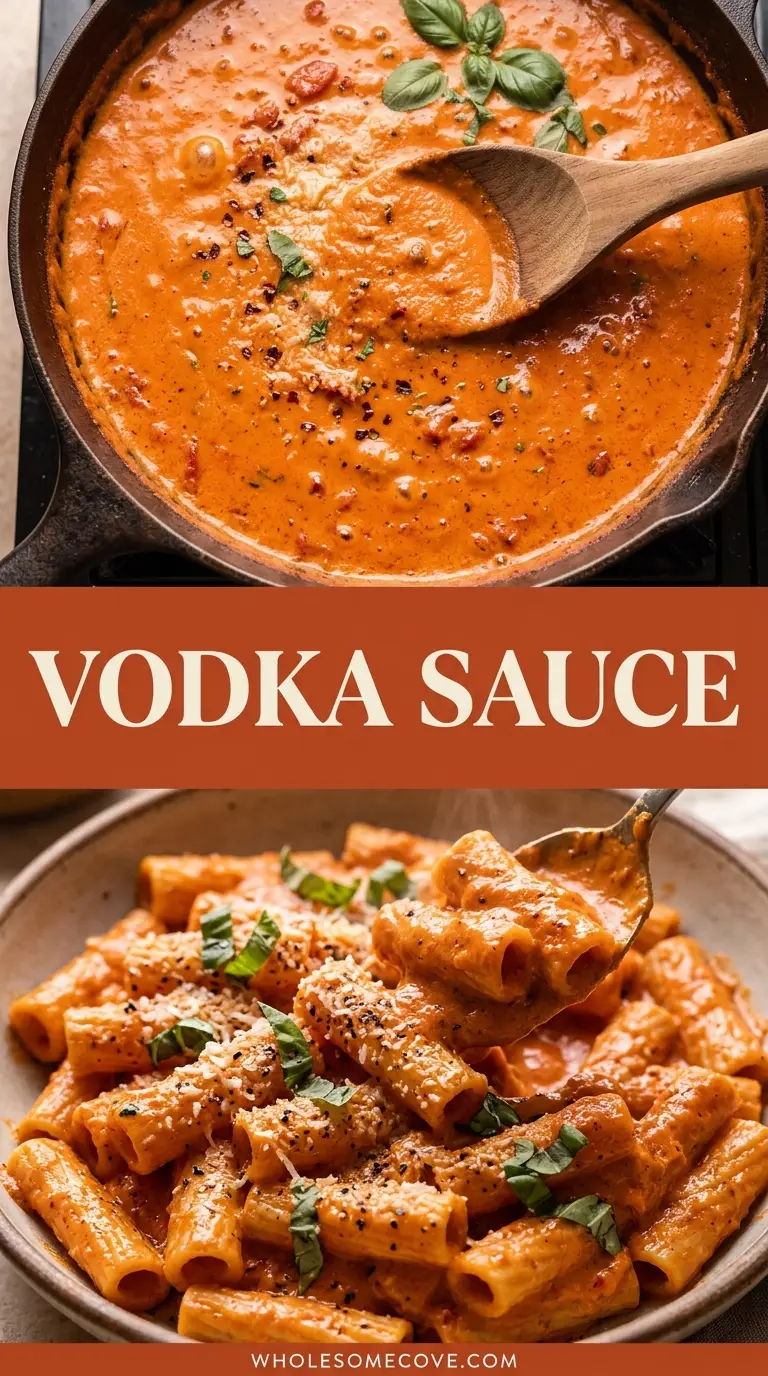
This vodka sauce recipe turns a 28-ounce can of tomatoes, one cup of heavy cream, and ⅓ cup of vodka into a blush-pink sauce that fills every ridge of a rigatoni tube.
Many homemade versions taste harshly of alcohol because the vodka never gets enough time to simmer. Here it cooks alongside the tomatoes for about 15 minutes before any cream goes in.
Tomato paste toasted until it turns brick red supplies a deep, sweet backbone that canned tomatoes alone cannot.
The whole pot takes about 40 minutes and serves six with a full pound of pasta.
| Quick Recipe Summary | |
|---|---|
| Prep Time | 10 minutes |
| Cook Time | 30 minutes |
| Total Time | 40 minutes |
| Servings | 6 servings (about 4 cups of sauce) |
| Difficulty Level | Easy |
More sauces to rotate through pasta night are collected in Best Pasta Sauce Recipes.
Why You’ll Love This Vodka Sauce Recipe
This vodka sauce recipe relies on pantry staples and a single skillet. It tastes like a restaurant plate without the restaurant price.
- Ready in 40 minutes. You need 10 minutes of prep and 30 minutes at the stove, with the pasta boiling while the sauce simmers.
- One skillet for the sauce. Onion, garlic, tomato paste, vodka, tomatoes, and cream all cook in the same pan, so cleanup stays short.
- Creamy, not heavy. Only 1 cup of cream goes into 28 ounces of tomatoes, which keeps the tomato flavor in front.
- A sauce that clings. Toasted tomato paste and a splash of starchy pasta water help the sauce coat the noodles instead of pooling at the bottom of the bowl.
- Plenty to go around. The recipe makes about 4 cups of sauce, enough for 1 pound of pasta and 6 servings.
- Easy to adjust. The heat level, the vodka, and the cream can all be changed without ruining the sauce, as the Variations section explains.
You might also enjoy: Easy Alfredo Sauce
Ingredients
The list is short, so the quality of the tomatoes and Parmesan shows up in the finished sauce. Everything here makes about 4 cups of sauce and a full pound of pasta.
For the sauce
- 2 tablespoons (28 g) unsalted butter
- 1 tablespoon (15 ml) extra virgin olive oil
- 1 medium yellow onion (about 1 cup or 150 g), finely diced
- 4 garlic cloves (about 12 g), minced
- ½ teaspoon crushed red pepper flakes
- 3 tablespoons (50 g) tomato paste
- ⅓ cup (80 ml) plain, unflavored vodka
- 1 can (28 ounces or 800 g) whole peeled tomatoes with their juice, crushed by hand
- 1 cup (240 ml) heavy cream, at room temperature
- ½ cup (40 g) finely grated Parmesan cheese, plus more for serving
- 1 teaspoon kosher salt, divided
- ¼ teaspoon freshly ground black pepper
- ¼ cup (10 g) fresh basil leaves, torn, for serving
For the pasta
- 1 pound (450 g) penne rigate or rigatoni
- 4 quarts (3.8 liters) water
- 2 tablespoons kosher salt, for the pasta water
- 1 cup (240 ml) reserved starchy pasta water, scooped out before draining
Most of the staples above keep for months, so the only fresh items to buy are the onion, garlic, cream, Parmesan, and basil.
Read Also: Marinara Sauce
Kitchen Equipment Needed
A wide, straight-sided pan gives the tomatoes room to reduce, and a heavy bottom keeps the tomato paste from scorching. Nothing here is specialized, and most kitchens already have all of it.
- A 12-inch stainless steel skillet or sauté pan, at least 2½ inches deep, for the sauce
- A large stockpot with a lid, 6 to 8 quarts, for the pasta
- A fine grater for the Parmesan
- A wooden spoon for scraping up browned bits
- A stainless steel colander for draining
- A heatproof liquid measuring cup for scooping out pasta water
- Measuring cups and measuring spoons
- A chef’s knife and cutting board
- A can opener
- Glass food storage containers with airtight lids for leftovers
For another dish built on a tomato base finished with cream, see Creamy Tomato Basil Soup.
Recommended Products for This Recipe
These are the items I recommend for this recipe, chosen because each one solves a specific problem that tends to show up in homemade vodka sauce.
1. San Marzano DOP Whole Peeled Tomatoes
Cheap canned tomatoes can taste tinny and acidic, and cream only covers so much of that. San Marzano tomatoes are naturally sweeter and lower in acid, so the sauce needs no sugar to balance it.
2. Double-Concentrated Tomato Paste in a Tube
A can of paste usually leaves a few unused spoonfuls that go moldy in the fridge. Double-concentrated paste in a tube is thicker and darker, so it toasts faster, and the leftover stays fresh for weeks.
3. Parmigiano Reggiano Wedge
Pre-grated Parmesan often contains anti-caking starch that leaves cream sauces slightly grainy. A real wedge melts smoothly, and the rind can be saved to simmer in soups and sauces.
4. Microplane Premium Classic Zester Grater
Coarse shreds of cheese clump when they hit the hot sauce. A Microplane turns the wedge into a fluffy snow that disappears into the cream in seconds.
5. All-Clad D3 Stainless Steel Sauté Pan
Thin pans scorch tomato paste before it has a chance to darken evenly. A tri-ply sauté pan with straight sides holds steady heat and has enough room to toss a full pound of pasta right in the sauce.
Also worth a look: Bolognese
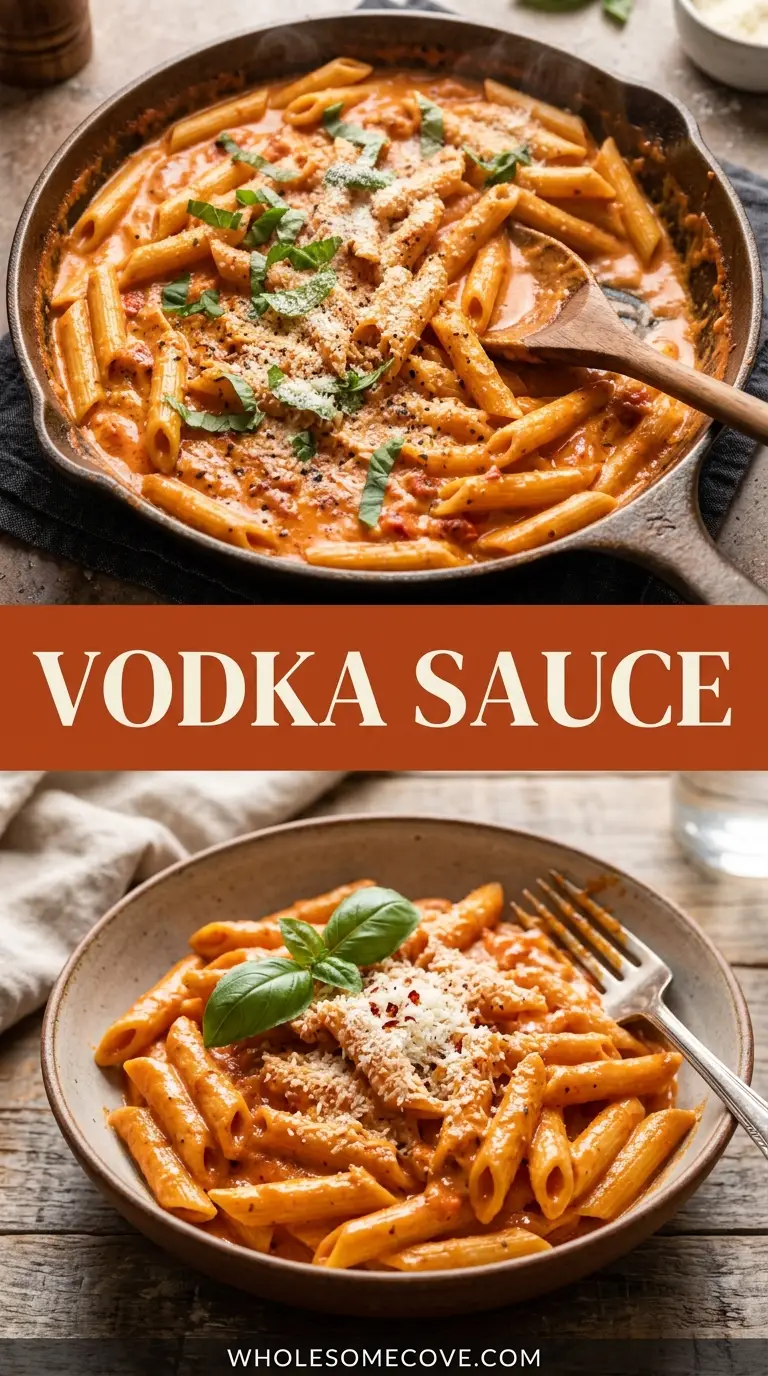
Step-by-Step Instructions: How to Make Vodka Sauce
Follow these steps and you’ll have a silky pot of vodka sauce on the table in about 40 minutes.
1. Prep Everything and Start the Pasta Water
- Fill the stockpot with 4 quarts (3.8 liters) of water, cover it, and set it over high heat so it reaches a boil by the time the sauce is simmering.
- Dice the onion into small, even pieces about ¼ inch (6 mm) wide so they melt into the sauce.
- Mince the garlic and finely grate the Parmesan until you have ½ cup (40 g).
- Tear the basil leaves by hand and set them aside for serving.
- Pour the whole peeled tomatoes and their juice into a bowl, then crush them with your hands until no pieces are larger than a walnut. Cut away any tough white cores as you go.
- Leave the cream on the counter while you work so it loses its chill.
2. Soften the Onion
- Place the skillet over medium heat and add the 2 tablespoons of butter and 1 tablespoon of olive oil.
- When the butter has melted and stops foaming, add the diced onion and ½ teaspoon of the kosher salt.
- Cook for 5 to 6 minutes, stirring often, until the onion is soft and translucent with no brown edges.
3. Add the Garlic and Red Pepper Flakes
- Stir in the minced garlic and ½ teaspoon of crushed red pepper flakes.
- Cook for 30 to 60 seconds, stirring constantly, until the garlic smells fragrant but has not browned. Burnt garlic turns bitter and will carry through the whole sauce.
4. Toast the Tomato Paste
- Add the 3 tablespoons of tomato paste and spread it across the bottom of the pan.
- Cook for about 3 minutes, stirring frequently, until the paste darkens from bright red to a deep brick color and starts to stick to the pan.
- Expect a few browned bits on the bottom. They dissolve in the next step and add flavor.
5. Add the Vodka
- Remove the skillet from the heat before pouring in the ⅓ cup of vodka, especially if you cook over a gas flame, because alcohol vapors can ignite.
- Return the pan to medium heat and stir, scraping up the browned bits with the wooden spoon.
- Let the vodka bubble for 1 to 2 minutes, until it has almost completely evaporated and the paste looks glossy.
6. Simmer the Tomatoes
- Pour in the crushed tomatoes and all of their juice, then stir to combine.
- Bring the sauce to a gentle bubble, then lower the heat to medium-low.
- Simmer uncovered for 15 minutes, stirring every few minutes, until the sauce thickens and darkens and thin streaks of orange oil appear around the edges.
- Keep the heat low enough that the sauce bubbles lazily. A hard boil will spatter the stove.
7. Cook the Pasta
- About 5 minutes into the tomato simmer, add the 2 tablespoons of kosher salt to the boiling water and stir in the pasta.
- Cook for 1 minute less than the package directions, usually 9 to 10 minutes, so the pasta stays slightly firm and finishes in the sauce.
- Scoop out 1 cup (240 ml) of the starchy pasta water with the heatproof measuring cup, then drain the pasta in the colander.
8. Stir in the Cream and Parmesan
- Reduce the heat to low and pour in the room-temperature cream in a slow stream, stirring as you go.
- Add the remaining ½ teaspoon of kosher salt and the ¼ teaspoon of black pepper.
- Simmer gently for 3 to 4 minutes, until the sauce turns a blush pink and coats the back of a spoon.
- Remove the pan from the heat and stir in the ½ cup of grated Parmesan until it melts completely. Taste and add a pinch more salt if needed.
9. Toss the Pasta with the Sauce
- Add the drained pasta to the skillet, or move both to the empty stockpot if your pan is too small.
- Pour in ¼ cup (60 ml) of the reserved pasta water and toss over low heat for 1 to 2 minutes.
- Add more pasta water a splash at a time, up to the full cup, until the sauce looks glossy and loosens enough to cling to each noodle.
10. Garnish and Serve
- Divide the pasta among six warm bowls.
- Top with the torn basil, extra grated Parmesan, and a crack of black pepper.
- Serve right away, since the sauce tightens as it cools.
Read Also: Tomato Sauce
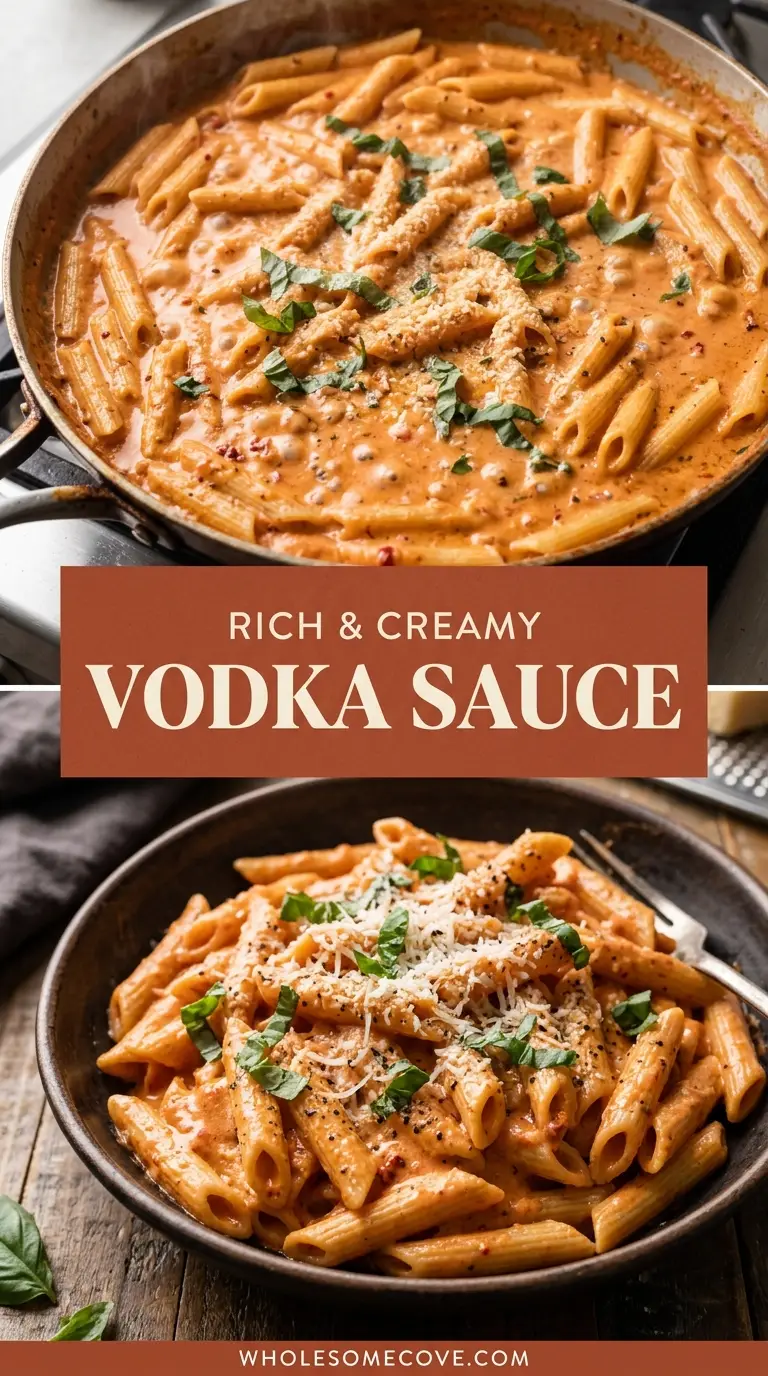
Tips for The Best Vodka Sauce
Vodka sauce has only a few moving parts, and nearly every failure traces back to heat, timing, or temperature. These habits cover the most common problems.
- Toast the paste until it is brick red. The color change signals that the sugars have caramelized and the raw, metallic edge is gone. Tube tomato paste works better than canned in this dish because you can squeeze out exactly 3 tablespoons and refrigerate the rest for weeks.
- Give the vodka time. Pouring in vodka and adding cream a minute later leaves a sharp, boozy taste. The 15-minute simmer in Step 6 is what mellows it.
- Use plain vodka. Flavored vodkas add sweetness or spice that clashes with the tomatoes. A mid-priced bottle is fine, since the sauce uses only a small amount.
- Warm the cream first. My first batch broke into orange streaks because I poured cold cream straight from the fridge into a bubbling sauce. Room-temperature cream blends in smoothly.
- Keep the heat low after the cream goes in. A hard boil can split the sauce and leave a greasy film on top. Small, slow bubbles are enough to thicken it.
- Grate the Parmesan yourself. Pre-grated cheese is coated to prevent clumping, and that coating keeps it from melting evenly into the sauce.
- Stir in the cheese off the heat. Residual warmth is enough to melt it, and it avoids the stringy, grainy texture that comes from overheating.
- Save pasta water before draining. The starch in it helps the cream and tomato bind, and it loosens a sauce that thickened while the pasta finished cooking.
- Undercook the pasta by a minute. The noodles finish in the sauce, where they absorb flavor instead of turning soft.
- Match the shape to the sauce. I’ve found that rigatoni holds more sauce than penne because the wider tube and deep ridges trap it. Shells and cavatappi do the same job.
- Save your Parmesan rinds. I keep a bag of rinds in the freezer specifically for this sauce, because one rind dropped into the simmering tomatoes in Step 6 adds savory depth. Remove it before the cream goes in.
- Season at the end. Parmesan and canned tomatoes both bring salt, so taste the finished sauce before adding more.
Another take on a cream-based sauce is Gorgonzola Cream Sauce.
What to Serve with Vodka Sauce
Vodka sauce is rich, so the best sides bring crunch, acidity, or something green to balance each forkful. A crusty bread for mopping up the bowl never hurts either.
- Bread: Warm Dinner Rolls or a slab of Sourdough Focaccia are ideal for wiping the bowl clean. Garlic bread works just as well.
- Salad: A Pasta House Salad adds crisp lettuce, tangy dressing, and a sharp contrast to the creamy sauce. A plain arugula salad with lemon and olive oil does the same job in less time.
- Roasted vegetables: Roasted Brussels Sprouts with Bacon bring caramelized edges and a salty crunch. Roasted broccoli or asparagus fit the same role.
- Protein: Slice Grilled Lemon Herb Chicken over the pasta for a heartier dinner. Sautéed shrimp or Italian sausage are also natural partners.
- Appetizer: Spoon Healthy Bruschetta onto toasted bread while the pasta cooks. Burrata with olive oil and cracked pepper also works.
- Wine: A dry Italian white such as Pinot Grigio cuts through the cream. A light red such as Chianti suits the tomato side.
- Non-alcoholic drinks: Sparkling water with lemon or a chilled iced tea clears the palate between bites.
- Dessert: Finish the meal with Authentic Italian Tiramisu or a scoop of lemon sorbet.
Also worth a look: Marry Me Chicken Pasta
Variations of Vodka Sauce
The base sauce is flexible, and small changes turn it into a different dinner. Each variation below keeps the core method from the step-by-step instructions.
- Spicy vodka sauce: Raise the red pepper flakes from ½ teaspoon to 1 teaspoon, or stir in 1 tablespoon of chili paste with the tomato paste.
- Prosciutto or pancetta: Cook 3 ounces (85 g) of chopped prosciutto or pancetta in the butter and oil for 3 to 4 minutes before adding the onion. Reduce the added salt slightly, since cured meat is salty.
- Italian sausage: Brown 1 pound (450 g) of sausage in the skillet, break it into small pieces, and drain most of the fat before adding the onion.
- Chicken: Season 1 pound (450 g) of thinly sliced chicken breast, sear it for 3 to 4 minutes per side in a separate pan, and fold it into the finished sauce.
- Shrimp: Add 1 pound (450 g) of peeled large shrimp to the simmering sauce after the cream, and cook for 3 to 4 minutes until pink and curled.
- Mushroom and spinach: Brown 8 ounces (225 g) of sliced mushrooms before the onion, then wilt 5 ounces (140 g) of baby spinach into the finished sauce.
- No-alcohol version: Replace the vodka with ⅓ cup (80 ml) of chicken or vegetable broth plus 1 teaspoon of lemon juice, and simmer for the same amount of time.
- Lighter sauce: Swap the heavy cream for half-and-half and keep the heat low. The sauce will be thinner and less rich, and milk is not a good substitute because it curdles.
- Dairy-free sauce: Use olive oil in place of butter, full-fat coconut milk or cashew cream in place of heavy cream, and a few spoonfuls of nutritional yeast in place of the Parmesan.
- Baked pasta: Toss the sauced pasta with 8 ounces (225 g) of shredded mozzarella, spread it in a baking dish, and bake at 400°F (200°C) for 15 minutes until bubbly.
- Vodka sauce pizza: Use the sauce in place of red sauce, and cut back the cream slightly so the crust does not turn soggy.
Read Also: Arrabbiata Sauce
Storage and Reheating
Vodka sauce keeps well, and the flavors deepen after a night in the fridge. Store the sauce and pasta separately when you can, since noodles soak up sauce as they sit.
- Refrigerator: Cool the sauce for no more than 2 hours, then keep it in an airtight container for up to 4 days.
- Dressed pasta: Leftover pasta that is already tossed with sauce also keeps for up to 4 days in an airtight container.
- Freezer: Freeze the sauce without pasta in freezer-safe containers for up to 3 months, leaving ½ inch (1 cm) of headspace for expansion.
- Thawing: Move frozen sauce to the refrigerator the night before using it. Thawing slowly protects the texture of the cream.
- Stovetop reheating: Warm the sauce in a saucepan over low heat, stirring often, and add 2 to 3 tablespoons of water or cream if it looks thick. Do not let it boil.
- Fixing a split sauce: If the sauce separates after freezing, whisk it vigorously over low heat with a splash of warm water until it smooths out.
- Microwave reheating: Use 50 percent power in 60-second bursts, stirring between each, until the sauce is steaming hot. Add a spoonful of water to leftover pasta first.
- Make ahead: Cook the sauce through Step 6 and refrigerate it for up to 4 days. Reheat it, then add the cream and Parmesan fresh.
Leftovers also work well in Baked Ziti.
Nutritional Facts
Each serving is one-sixth of the recipe, which is about 1½ cups of pasta with sauce. Values are estimates and will shift with the brands you use.
| Nutrition Per Serving | |
|---|---|
| Calories | 540 kcal |
| Carbohydrates | 66 g |
| Protein | 15 g |
| Total Fat | 24 g |
| Saturated Fat | 13 g |
| Cholesterol | 70 mg |
| Sodium | 480 mg |
| Fiber | 4 g |
| Sugar | 7 g |
For a lighter pasta dinner, try: Healthy Chicken Parmesan
Health Benefits of Key Ingredients
Most of the nutrition in this sauce comes from tomatoes, aromatics, and olive oil, with cream and Parmesan adding richness. Here is what each main ingredient contributes.
- Tomatoes: They are a rich source of lycopene, the pigment that gives them their red color. Cooking breaks down the cell walls, and the butter, olive oil, and cream in the pot help the body absorb lycopene because it dissolves in fat. Canned tomatoes also provide vitamin C and potassium.
- Tomato paste: Cooking out the water concentrates the lycopene, so a few spoonfuls deliver a large amount of the pigment and a lot of flavor.
- Garlic: It contains sulfur compounds that give garlic its aroma and have been studied for effects on cholesterol and blood pressure. The amounts in a single dinner are modest.
- Onion: Onions supply quercetin, an antioxidant, along with fibers that feed beneficial gut bacteria.
- Olive oil: It is high in monounsaturated fat and contains polyphenols that give good oil its peppery finish.
- Parmesan: The aged cheese is a concentrated source of protein and calcium, and it is naturally very low in lactose.
- Heavy cream: It contributes vitamin A, but it is also high in saturated fat. One cup spread across six servings keeps the portion reasonable.
- Basil: The fresh leaves add vitamin K and a bright, peppery aroma at the end.
- Pasta: It provides slow-burning carbohydrates for energy. Swapping in whole wheat penne raises the fiber.
- Vodka: It adds no nutrition, and some alcohol remains after cooking, so anyone avoiding it entirely should use the no-alcohol variation.
Read Also: Tomato Soup
FAQs About Vodka Sauce
1. Does the alcohol cook off in vodka sauce?
Some of it does, but not all of it. USDA retention figures put the amount left near 40 percent after 15 minutes of simmering.
Spread across six servings, the remainder is small. Anyone who avoids alcohol completely should use the broth swap in the Variations section.
2. What does vodka actually do in vodka sauce?
Many flavor compounds in tomatoes dissolve in alcohol rather than water, so the vodka pulls out aromas that would otherwise stay locked in.
The effect is subtle, and some tasters barely notice it. Without vodka the sauce still tastes good, just slightly flatter.
3. Can I make vodka sauce without vodka?
Yes. Replace the vodka with the same amount of chicken or vegetable broth and a teaspoon of lemon juice.
The sauce loses a little brightness, but the tomato and cream flavors stay intact.
4. What pasta goes best with vodka sauce?
Penne and rigatoni are the classics because their tubes trap sauce inside. Shells and cavatappi work for the same reason.
Long noodles such as spaghetti work too, though the sauce slides off more easily.
5. Why did my vodka sauce curdle or turn greasy?
Cold cream hitting a boiling, acidic sauce is the usual cause. Let the cream sit out while you cook and keep the heat low once it goes in.
A hard boil after the cream goes in can also split the sauce. Stirring in a splash of warm pasta water often brings it back together.
6. Can I use half-and-half or milk instead of heavy cream?
Half-and-half works if you simmer gently, though the sauce will be thinner and less rich. Milk is risky because it curdles easily in acidic tomatoes.
For the silkiest result, stick with heavy cream.
7. Where does vodka sauce come from?
Vodka sauce is an Italian-American creation from the 1970s or 1980s. Its exact origin, likely in the New York and New Jersey area, remains disputed.
8. Can I freeze vodka sauce?
Yes. Freeze the sauce without pasta for up to 3 months.
Thaw it in the fridge overnight, then whisk it over low heat with a splash of water.
Next up for pasta night: Stuffed Shells
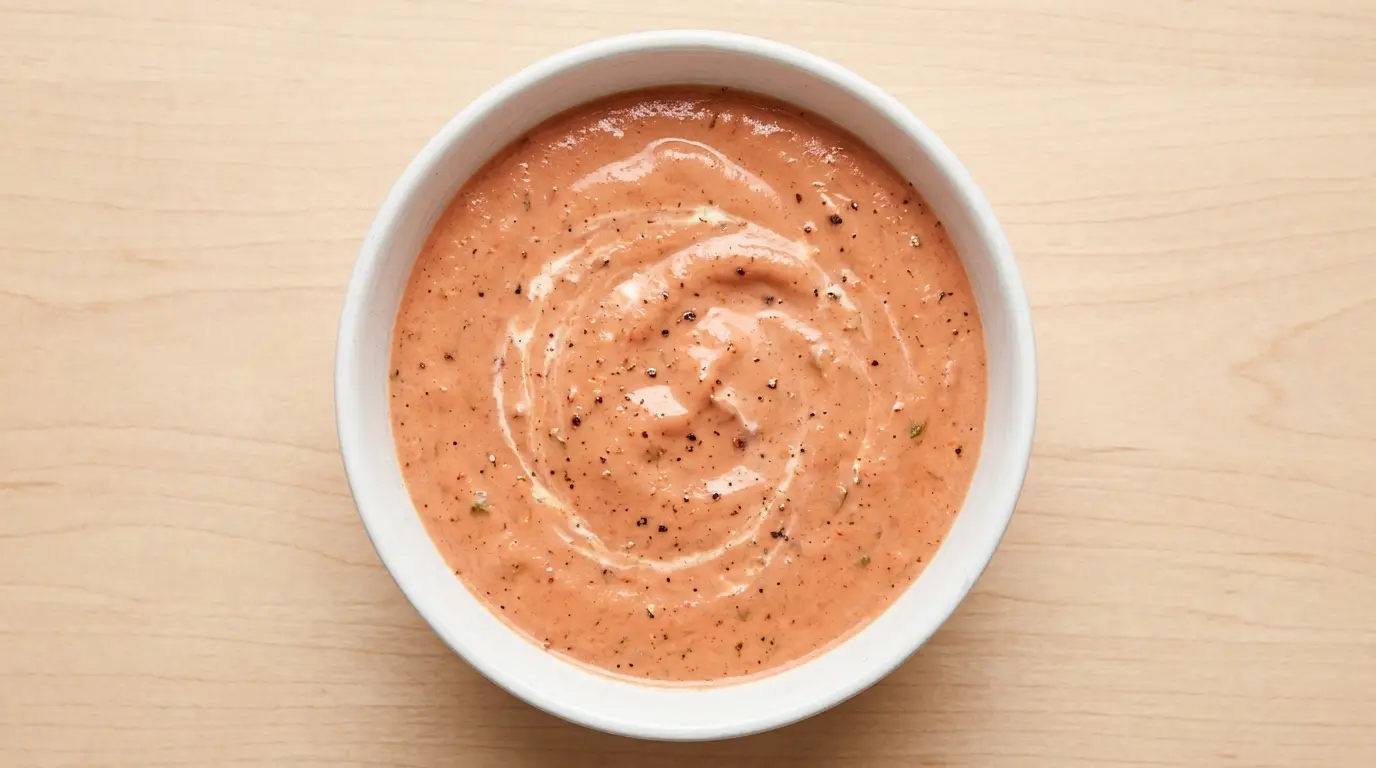
Vodka Sauce
Ingredients
- 2 tablespoons unsalted butter - 28 g
- 1 tablespoon extra virgin olive oil - 15 ml
- 1 medium yellow onion - about 1 cup or 150 g, finely diced
- 4 cloves garlic - about 12 g, minced
- ½ teaspoon crushed red pepper flakes
- 3 tablespoons tomato paste - 50 g
- ⅓ cup plain unflavored vodka - 80 ml
- 1 can whole peeled tomatoes - 28 ounces or 800 g, with their juice, crushed by hand
- 1 cup heavy cream - 240 ml, at room temperature
- ½ cup Parmesan cheese - 40 g, finely grated, plus more for serving
- 1 teaspoon kosher salt - divided
- ¼ teaspoon freshly ground black pepper
- ¼ cup fresh basil leaves - 10 g, torn, for serving
- 1 pound penne rigate or rigatoni - 450 g
- 4 quarts water - 3.8 liters
- 2 tablespoons kosher salt - for the pasta water
- 1 cup reserved starchy pasta water - 240 ml, scooped out before draining
Equipment
- 12-inch stainless steel skillet or sauté pan - at least 2½ inches deep, for the sauce
- Large stockpot with lid - 6 to 8 quarts, for the pasta
- Fine grater - for the Parmesan
- Wooden spoon - for scraping up browned bits
- Stainless steel colander - for draining
- Heatproof liquid measuring cup - for scooping out pasta water
- Measuring cups and measuring spoons
- Glass food storage containers with airtight lids - for leftovers
Method
- Fill the stockpot with 4 quarts of water, cover, and set over high heat. Dice the onion, mince the garlic, grate the Parmesan, tear the basil, and crush the tomatoes by hand, removing tough white cores. Leave the cream on the counter to lose its chill.
- Place the skillet over medium heat and add the butter and olive oil. When the butter stops foaming, add the onion and ½ teaspoon kosher salt and cook 5 to 6 minutes, stirring often, until soft and translucent with no browning.
- Stir in the garlic and crushed red pepper flakes and cook 30 to 60 seconds, stirring constantly, until fragrant but not browned.
- Add the tomato paste and spread it across the pan. Cook about 3 minutes, stirring frequently, until it darkens to a deep brick red and starts to stick to the pan.
- Remove the skillet from the heat before pouring in the vodka. Return to medium heat and stir, scraping up browned bits, until the vodka bubbles for 1 to 2 minutes and has almost completely evaporated.
- Pour in the crushed tomatoes and their juice, bring to a gentle bubble, then lower the heat to medium-low. Simmer uncovered for 15 minutes, stirring every few minutes, until thickened and orange oil appears at the edges.
- About 5 minutes into the simmer, salt the boiling water and add the pasta. Cook 1 minute less than package directions, scoop out 1 cup of pasta water, then drain.
- Reduce the heat to low and pour in the room-temperature cream in a slow stream, stirring. Add the remaining ½ teaspoon salt and the black pepper and simmer gently 3 to 4 minutes until blush pink. Off the heat, stir in the Parmesan until melted.
- Add the drained pasta to the skillet with ¼ cup reserved pasta water and toss over low heat for 1 to 2 minutes, adding more pasta water a splash at a time until the sauce is glossy and clings to each noodle.
- Divide among six warm bowls and top with torn basil, extra Parmesan, and a crack of black pepper. Serve right away.
Nutrition
Notes
- Toast the tomato paste until it turns brick red; the color change signals the sugars have caramelized and the raw, metallic edge is gone.
- Give the vodka the full 15-minute simmer with the tomatoes before adding cream, or the sauce will taste sharply boozy.
- Use plain, unflavored vodka; flavored vodkas clash with the tomatoes.
- Let the cream come to room temperature first, and keep the heat low once it goes in, or the sauce can split and turn greasy.
- Grate the Parmesan yourself and stir it in off the heat to avoid a grainy texture.
- Save pasta water before draining; its starch helps the cream and tomato bind and loosens a thick sauce.
- Undercook the pasta by a minute so it finishes in the sauce and absorbs flavor.
- No-alcohol version: replace the vodka with ⅓ cup chicken or vegetable broth plus 1 teaspoon lemon juice.
- Make ahead: cook the sauce through the tomato simmer and refrigerate up to 4 days, then reheat and add cream and Parmesan fresh.
- Storage: refrigerate sauce up to 4 days or freeze without pasta up to 3 months; thaw overnight in the fridge and reheat gently over low heat.
Private Notes
Tried this recipe?
Let us know how it was!Final Thoughts
Vodka sauce rewards a little patience at the stove, mainly in toasting the paste and giving the vodka time to simmer.
Once you have the rhythm, it becomes a 40-minute dinner you can repeat with any pasta shape.
Try the recipe and tell me how it turned out in the comments below. If you enjoyed it, share it with a friend who loves pasta night.
Recommended:
- Chicken Alfredo
- Lasagna
- Chicken Spaghetti
- Pesto
- Carbonara
- Puttanesca Sauce
- Amatriciana Sauce
- Marry Me Chicken Pasta Bake
- Garlic Parmesan Sauce