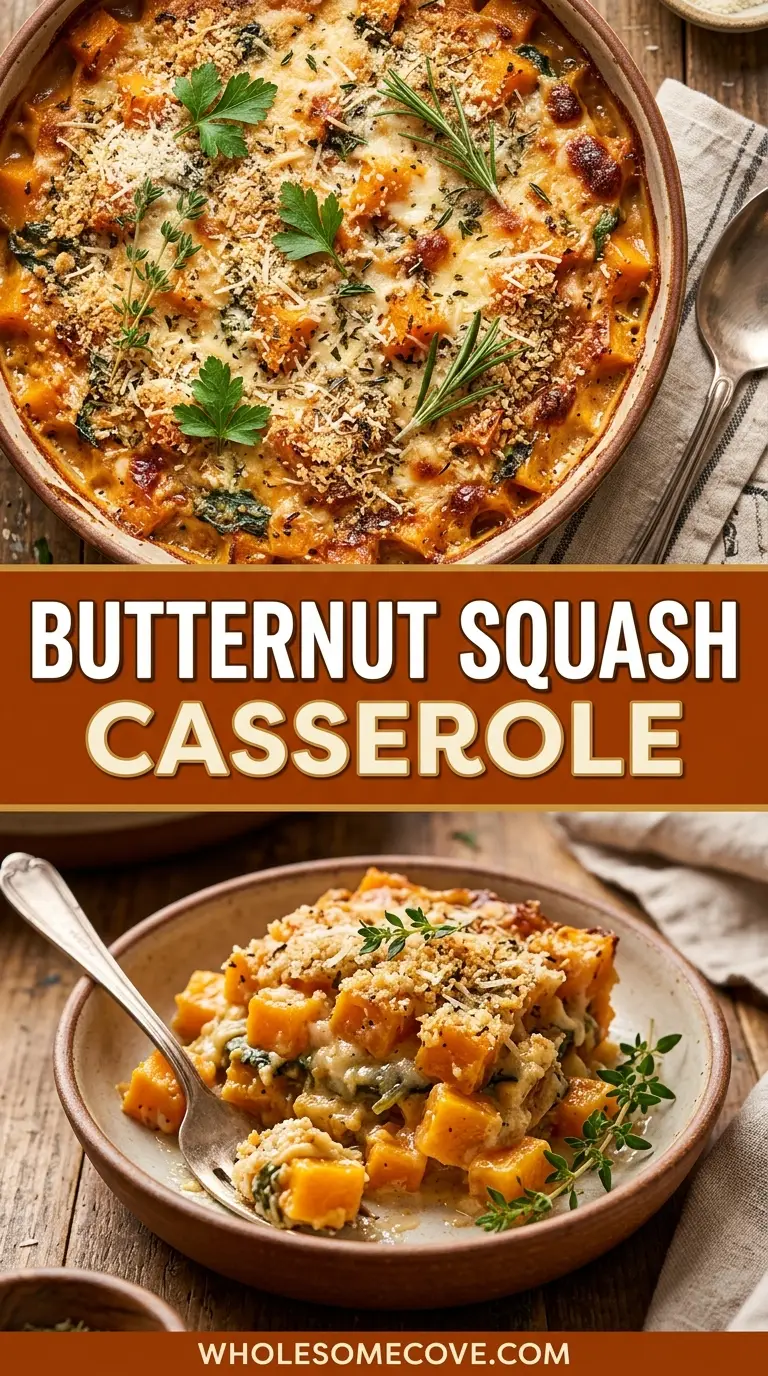
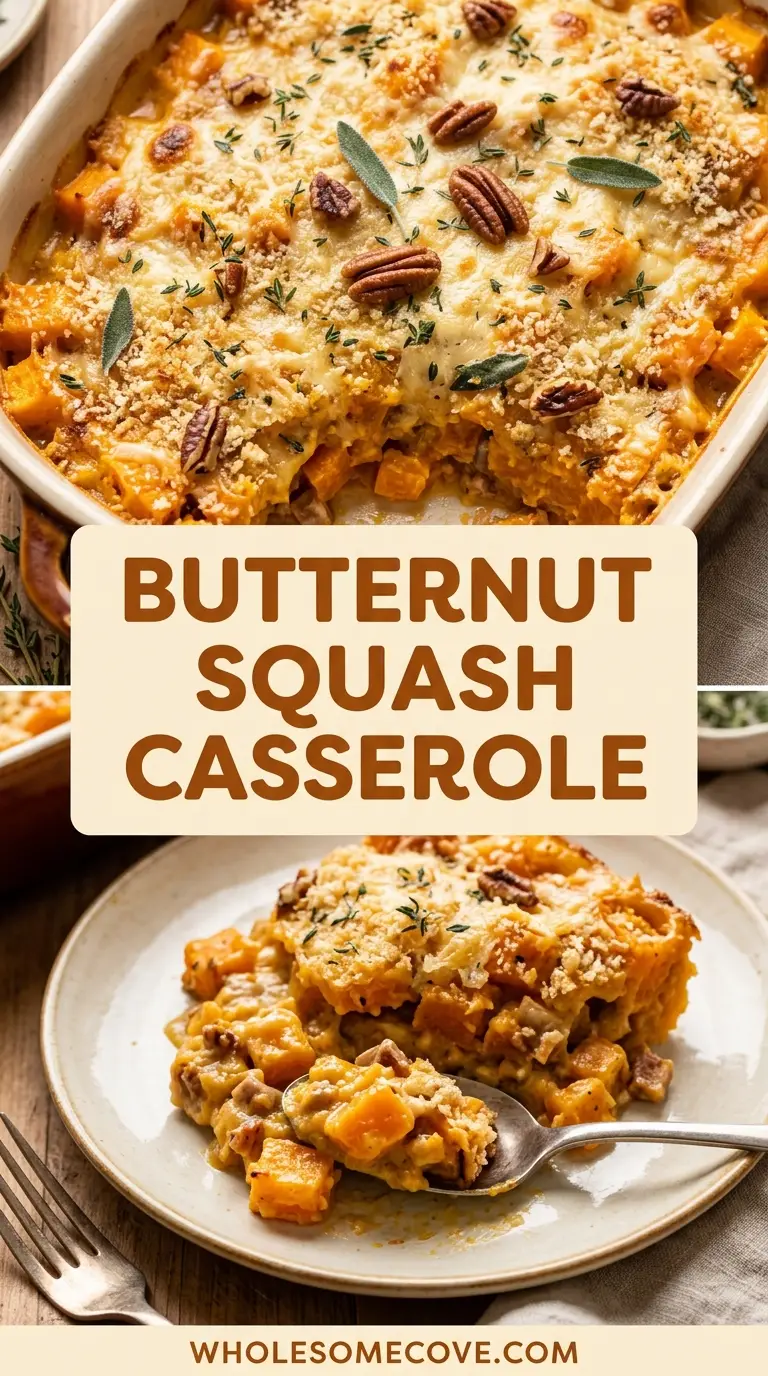
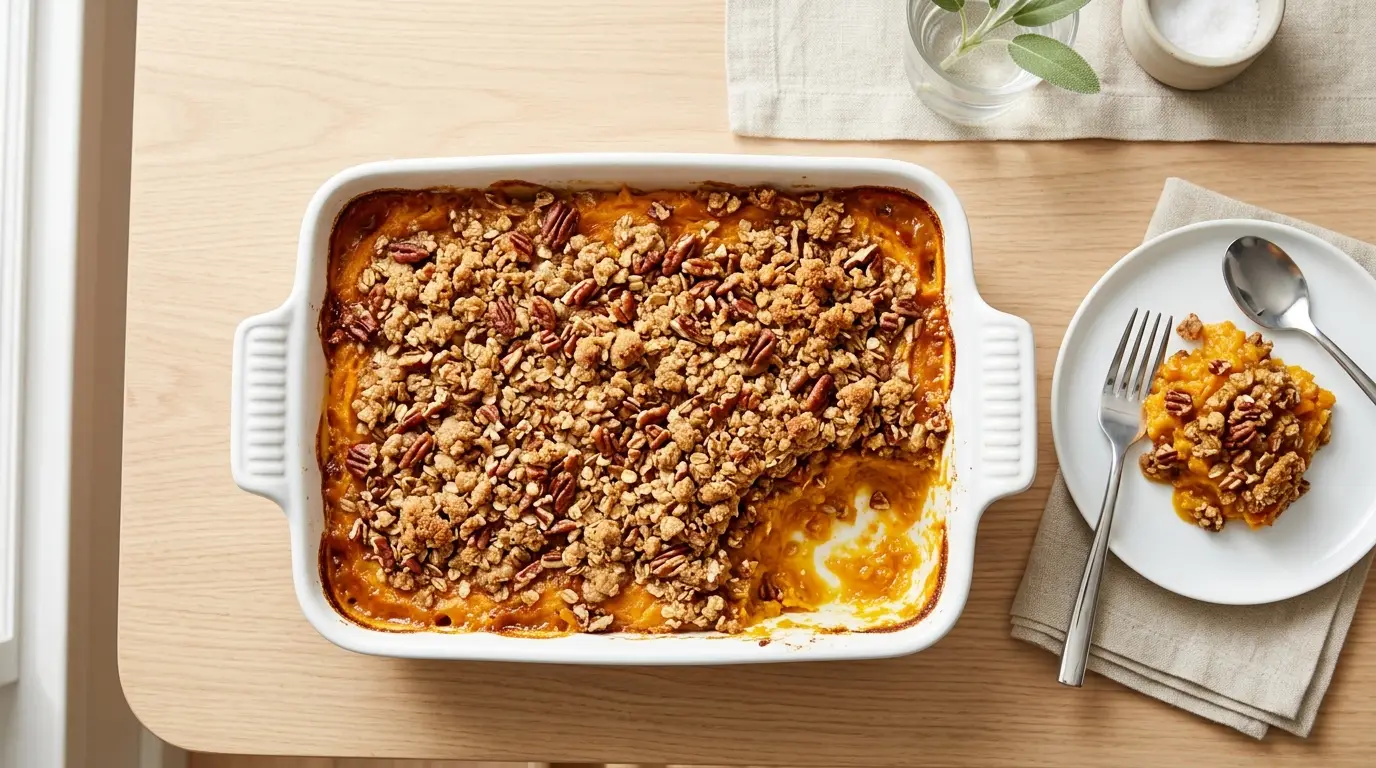
A good butternut squash casserole recipe turns one humble vegetable into the side dish everyone fights over at the holiday table. This version mashes roasted butternut squash with butter, sugar, and a splash of vanilla, then tops it with a crunchy brown sugar pecan topping that bakes up golden and crisp.
It sits somewhere between a side dish and dessert, which is exactly why it disappears so fast. The squash itself is naturally sweet and creamy once roasted, so it needs very little help to taste incredible.
This is the classic, most requested version of butternut squash casserole, the kind you’ll find passed around at Thanksgiving and Christmas dinners across the country. It comes together with simple pantry staples and a baking dish, no fancy equipment required.
The recipe shares a lot of similarities with a traditional sweet potato casserole, since both rely on the same basic structure of mashed vegetable, butter, sugar, and a crunchy topping.
Butternut squash brings its own slightly nuttier, less sugary flavor to that familiar format, which is part of why it has become such a popular alternative on so many holiday tables.
| Quick Recipe Summary | |
|---|---|
| Prep Time | 20 minutes |
| Cook Time | 50 minutes |
| Total Time | 1 hour 10 minutes |
| Servings | 10 servings |
| Difficulty Level | Easy |
This casserole pairs especially well with a holiday spread built around roasted meats and warm spices. If you’re planning a full menu, my squash casserole recipe is another great savory option to have in your back pocket for the same table.
Why You’ll Love This Butternut Squash Casserole Recipe
This dish hits that sweet spot between comfort food and something a little special. The texture is silky and smooth underneath, with a topping that stays crunchy even after a second helping.
It’s also incredibly forgiving for a holiday recipe. You can prep most of it a day ahead, which frees up oven space and your sanity when the rest of the meal is in full swing.
Once you’ve made it through a full holiday season with this dish in rotation, it tends to earn a permanent spot on the menu. People who think they don’t like squash often change their minds after one bite of the crisp pecan topping against the soft, sweet filling underneath.
Here’s what makes this recipe a keeper:
- Naturally sweet base. Roasted butternut squash brings deep, caramelized flavor without needing much added sugar.
- That topping. Brown sugar, butter, and pecans bake into a crisp, almost praline-like layer that contrasts beautifully with the soft filling underneath.
- Make-ahead friendly. Assemble the filling a day in advance and add the topping right before baking.
- Crowd-pleasing. Even people who claim not to like squash tend to go back for seconds.
- Simple ingredients. Nothing here is hard to find, and most of it is probably already in your pantry.
- Naturally gluten free filling. The base of this casserole contains no flour, so it’s an easy dish to adapt for guests avoiding gluten, with only the topping needing a swap.
- Versatile. It works for Thanksgiving, Christmas, Easter, or just a cozy fall Sunday dinner.
You might also enjoy: Sweet Potato Casserole
Ingredients
You’ll need just a handful of ingredients split between the squash filling and the crumb topping. Use both imperial and metric measurements below depending on what you have on hand.
If you’ve roasted butternut squash before for soup or risotto, you already have most of the technique down for this recipe. The main difference here is mashing the cooked squash instead of pureeing or cubing it, which gives the casserole its smooth, custard-like base.
For the filling:
- 4 cups mashed cooked butternut squash (about 2 medium squash, roughly 3 lbs / 1.4kg before cooking)
- ½ cup (115g) unsalted butter, melted
- 1 cup (200g) granulated sugar
- 2 large eggs, beaten
- ⅓ cup (80ml) evaporated milk
- 1 teaspoon vanilla extract
- ½ teaspoon ground cinnamon
- ½ teaspoon salt
For the topping:
- 1 cup (110g) chopped pecans
- ½ cup (100g) packed brown sugar
- ⅓ cup (40g) all-purpose flour
- ⅓ cup (75g) unsalted butter, melted
I always buy raw pecans in bulk for the fall baking season since I go through so many of them between this casserole and pie season. The fresher the pecans, the less bitter the topping tastes once it’s baked.
Read Also: Mashed Sweet Potato
Kitchen Equipment Needed
Nothing in this recipe requires anything beyond a standard kitchen setup, though a few tools make the process noticeably easier. Most of what you need is probably already sitting in your kitchen drawers from other baking projects.
- Large rimmed baking sheet (for roasting the squash)
- Sharp chef’s knife
- Cutting board
- Large mixing bowl
- Electric hand mixer or potato masher
- Measuring cups and spoons
- Small mixing bowl for the topping
- 9×13 inch baking dish
- Spoon or rubber spatula
I used to mash my squash with a fork because I figured it was good enough. It’s not. An electric hand mixer gets the texture genuinely silky in about 30 seconds, and it’s worth pulling out for this one dish alone.
This pairs beautifully with my green bean casserole for a complete holiday side dish lineup.
Recommended Products for This Recipe
These are products I’ve personally used while making this casserole over the years, and they’re the ones I keep reaching for every fall. None of these are required, but they each solve a specific problem I ran into early on.
1. Pyrex Easy Grab 9×13 Glass Baking Dish
I switched to glass for this recipe years ago after my metal pan gave the edges an odd tinny taste against the sweet filling. Glass also lets you see when the bottom edges are browning, which helps you know exactly when to pull the casserole out.
2. Cuisinart Power Advantage Hand Mixer
This is the tool that finally got rid of the stringy bits in my mashed squash. It whips the filling smooth in under a minute, which matters a lot when you’re trying to get a silky, custard-like texture rather than something chunky.
3. Diamond of California Pecan Halves
I learned the hard way that pre-chopped grocery store pecans are often stale by the time you buy them, and stale pecans turn this topping bitter instead of nutty. Buying whole halves and chopping them myself right before baking makes a noticeable difference in flavor.
4. OXO Good Grips Potato Masher
For anyone who doesn’t want to dig out an electric mixer, this masher gets you most of the way to smooth with a fraction of the cleanup. I use it for a quick first pass before finishing with the hand mixer if I want a completely silky result.
For a lighter option, try: Hashbrown Casserole
Step-by-Step Instructions: How to Make Butternut Squash Casserole
Follow these simple steps and you’ll have a delicious butternut squash casserole ready for the table in just over an hour.
1. Roast the Squash
- Preheat your oven to 400°F (200°C).
- Cut each butternut squash in half lengthwise and scoop out the seeds with a spoon, discarding the seeds or saving them to toast separately.
- Place the halves cut side down on a large rimmed baking sheet lined with parchment paper, which helps prevent sticking and makes cleanup much easier.
- Roast for 45 to 50 minutes, or until the flesh is completely tender when pierced with a fork.
- Let the squash cool for about 10 minutes, until it’s comfortable to handle.
- Scoop the flesh out of the skins into a large mixing bowl and discard the skins.
2. Mash the Squash
- Use an electric hand mixer or potato masher to mash the squash until smooth.
- Work out any large lumps so the final texture is creamy and even.
- Lower the oven temperature to 350°F (175°C) for the baking stage.
3. Mix the Filling
- Add the melted butter, granulated sugar, beaten eggs, evaporated milk, vanilla extract, cinnamon, and salt to the mashed squash.
- Mix everything together until fully combined and smooth.
- The mixture will be loose and pourable at this stage, which is normal.
4. Transfer to the Baking Dish
- Lightly grease a 9×13 inch baking dish with butter or nonstick spray.
- Pour the squash mixture into the prepared dish and spread it into an even layer with a spatula.
5. Make the Topping
- In a small bowl, combine the chopped pecans, brown sugar, and flour.
- Pour in the melted butter and stir until the mixture looks like wet sand and clumps together slightly.
- Sprinkle the topping evenly over the squash mixture, covering it from edge to edge.
6. Bake the Casserole
- Place the dish in the preheated 350°F (175°C) oven, uncovered.
- Bake for 40 to 45 minutes, until the filling is set and the topping is golden brown.
- If the topping starts browning too quickly, loosely tent the dish with foil for the last 10 minutes.
7. Cool and Serve
- Remove the casserole from the oven and let it rest for 10 minutes before serving.
- This resting time helps the filling firm up slightly so it holds its shape when scooped.
I once skipped the resting step because I was rushing to get dinner on the table, and the first few scoops were practically soup. Ten minutes makes all the difference.
Read Also: Thanksgiving Stuffing
Tips for The Best Butternut Squash Casserole
A few small adjustments take this casserole from good to the dish people ask you to bring every year.
- Roast, don’t boil, the squash. Boiling adds extra water that waters down the flavor and texture. Roasting concentrates the natural sweetness instead.
- Salt the filling properly. Squash needs more salt than people expect, since its sweetness can mask under-seasoning until it’s too late to fix easily.
- Toast the pecans first. A quick 5-minute toast in a dry skillet before chopping deepens their flavor before they go into the topping.
- Use room temperature eggs. Cold eggs straight from the fridge can make the melted butter seize up slightly when mixed in.
- Don’t overbake. Pull the casserole as soon as the topping turns golden brown, since the center will continue to firm up as it cools.
- Make the filling ahead. Mix the squash filling up to a day in advance and refrigerate it, then add the topping right before baking.
- Check your squash size. A 3-pound squash typically yields close to 4 cups mashed, but weigh after roasting if you want to be precise.
- Pat the squash dry if needed. If your roasted squash looks especially watery once mashed, let it sit in a fine mesh strainer for a few minutes to drain off excess liquid before mixing in the other ingredients.
- Taste before topping. The filling should taste good enough to eat on its own before you add the crumb topping, since the topping only enhances flavors that are already there.
This pairs beautifully with my maple glazed carrots for another easy, naturally sweet side dish on the same table.
What to Serve with Butternut Squash Casserole
This casserole leans sweet, which makes it an ideal counterpoint to rich, savory mains. I usually plan my holiday plate around one or two savory anchors and let this casserole add the sweeter note.
- Roasted or smoked turkey
- Honey baked ham
- Prime rib or roast beef
- Buttery mashed potatoes
- Cranberry sauce
- Dinner rolls or biscuits
- Roasted Brussels sprouts with bacon
- Sautéed green beans
- A simple side salad with vinaigrette
You might also enjoy: Thanksgiving Turkey
Variations of Butternut Squash Casserole
Once you’ve made the classic version a few times, it’s easy to start playing around with it. Here are some of the swaps and additions I’ve tried over the years.
- Marshmallow topping: Skip the pecan crumble and top the casserole with mini marshmallows during the last 10 minutes of baking until golden.
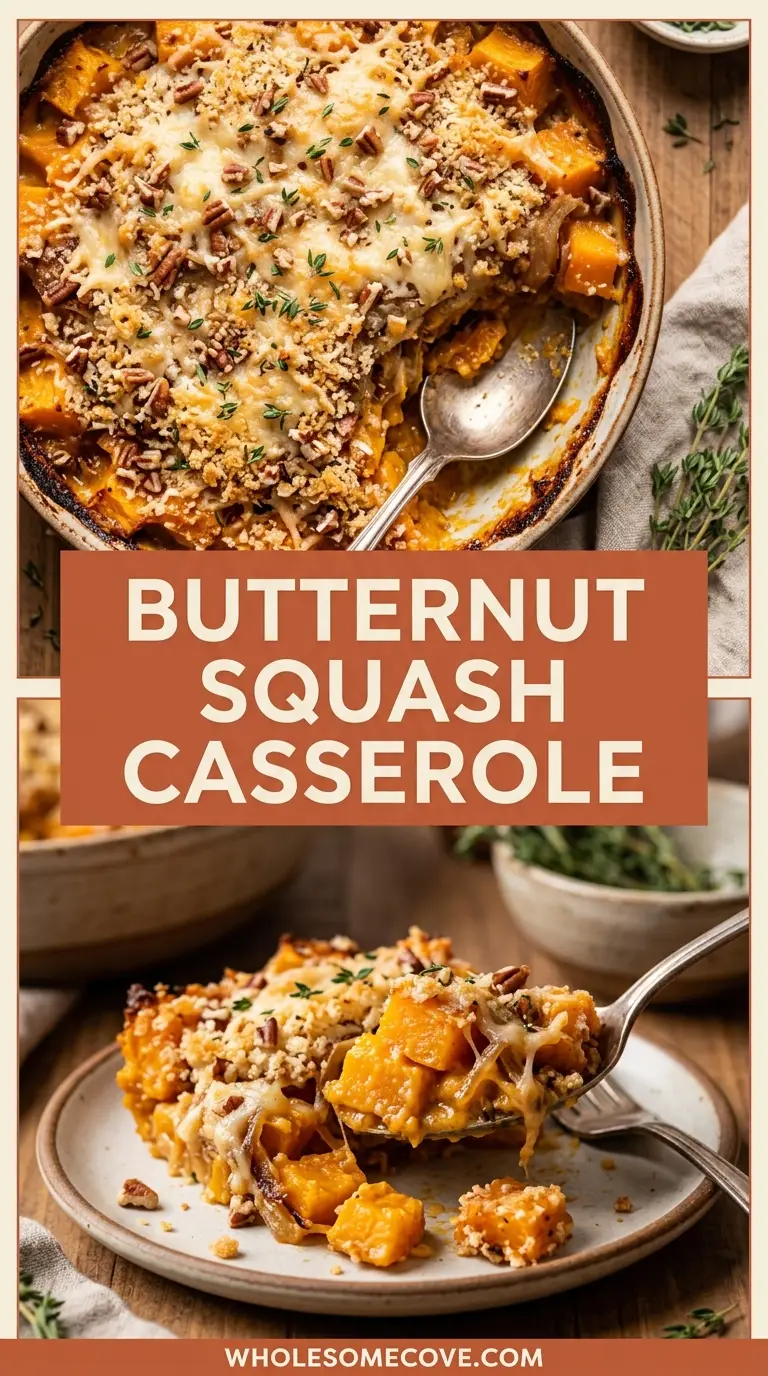
- Savory version: Cut the sugar in half, add sautéed onions and fresh sage, and top with Gruyère and breadcrumbs instead of the sweet crumble.
- Sweet potato swap: Replace the butternut squash with an equal amount of mashed sweet potato for a different but equally classic flavor.
- Maple instead of brown sugar: Swap the brown sugar in the filling for maple syrup for a deeper, more complex sweetness.
- Added spice: Stir in a pinch of nutmeg or ground ginger along with the cinnamon for a more pronounced warm spice flavor.
- Bacon bits: For a sweet and salty contrast, sprinkle crumbled bacon over the topping before the final bake.
- Walnut swap: Use chopped walnuts instead of pecans if that’s what you have on hand.
- Citrus twist: Add a teaspoon of orange zest to the filling for a bright, slightly tangy note that cuts through the sweetness.
My zucchini and squash casserole was actually born out of one of these experiments, when I had leftover squash and decided to combine two vegetables into one dish.
Read Also: Zucchini And Squash Casserole
Storage and Reheating
This casserole holds up well in the fridge, which makes it a great make-ahead option for busy holiday weeks.
- Refrigerator: Store leftovers in an airtight container for up to 4 days.
- Freezer: Freeze the baked casserole, well wrapped, for up to 2 months. Thaw overnight in the fridge before reheating.
- Reheating in the oven: Cover with foil and warm at 350°F (175°C) for 15 to 20 minutes, until heated through.
- Reheating in the microwave: Heat individual portions in 30-second bursts, stirring gently between intervals.
- Topping texture: The topping will soften slightly after refrigeration, but a quick stint under the broiler for a minute or two will crisp it back up.
- Make-ahead tip: Prepare the filling and topping separately up to a day ahead, storing each in its own container, then assemble and bake fresh.
On especially cold nights, I’ll often start the meal with a bowl of my roasted butternut squash soup before bringing this casserole out as the showstopper side.
Nutritional Facts
Approximate values per serving, based on 10 servings per casserole.
| Nutrient | Amount per Serving |
|---|---|
| Calories | 225 kcal |
| Total Fat | 10g |
| Saturated Fat | 5g |
| Cholesterol | 45mg |
| Sodium | 140mg |
| Total Carbohydrates | 32g |
| Dietary Fiber | 3g |
| Sugars | 22g |
| Protein | 3g |
You might also enjoy: Pumpkin Pie
Health Benefits of Key Ingredients
Despite its dessert-like topping, the base of this casserole is built on a genuinely nutritious vegetable. Butternut squash alone brings a solid dose of vitamins and fiber to a meal that’s otherwise full of richer, heavier dishes.
- Butternut squash: Rich in vitamin A and beta carotene, which support eye health and immune function.
- Eggs: Provide complete protein along with choline, which supports brain and liver health.
- Pecans: A good source of healthy monounsaturated fats and fiber, along with antioxidants.
- Cinnamon: Contains compounds that may help support healthy blood sugar regulation in moderate amounts.
- Evaporated milk: Offers calcium and vitamin D in a concentrated, shelf-stable form.
Read Also: Stuffed Acorn Squash
FAQs About Butternut Squash Casserole
1. Can I use frozen butternut squash for this casserole?
Yes, frozen pureed or cubed butternut squash works well in a pinch. Thaw it completely and drain off any excess liquid before mixing it into the filling, since extra moisture can make the casserole watery.
2. Can I make butternut squash casserole ahead of time?
Absolutely, and it’s one of the easiest make-ahead sides for the holidays. Prepare the filling up to a day in advance and refrigerate it, then add the topping and bake just before serving.
3. What’s the difference between butternut squash casserole and sweet potato casserole?
They’re built almost identically, with butter, sugar, eggs, and a pecan topping, but the flavor profile differs slightly. Butternut squash tends to taste a bit more earthy and less sweet than sweet potato straight out of the oven.
4. Can I leave out the eggs?
The eggs help the filling set into a firmer, custard-like texture as it bakes. Leaving them out will result in a softer, more pudding-like casserole, which still tastes good but won’t hold its shape as cleanly when scooped.
5. How do I keep the topping from getting soggy?
Add the topping right before baking rather than letting it sit on top of the wet filling for too long beforehand. If you’re making the casserole ahead, store the topping separately and add it just before the dish goes in the oven.
You might also enjoy: Cranberry Sauce
Butternut Squash Casserole
Ingredients
- 4 cups mashed cooked butternut squash - about 2 medium squash, roughly 3 lbs or 1.4kg before cooking
- ½ cup unsalted butter - 115g, melted
- 1 cup granulated sugar - 200g
- 2 large eggs - beaten, room temperature
- ⅓ cup evaporated milk - 80ml
- 1 teaspoon vanilla extract
- ½ teaspoon ground cinnamon
- ½ teaspoon salt
- 1 cup chopped pecans - 110g, raw pecan halves recommended
- ½ cup packed brown sugar - 100g
- ⅓ cup all-purpose flour - 40g
- ⅓ cup unsalted butter - 75g, melted
Equipment
- Large rimmed baking sheet - for roasting the squash
- Electric hand mixer - or potato masher
- Small mixing bowl - for the topping
- 9×13 inch baking dish - glass recommended
- Spoon or rubber spatula
Method
- Preheat oven to 400°F (200°C). Cut each butternut squash in half lengthwise and scoop out the seeds. Place halves cut side down on a large rimmed baking sheet lined with parchment paper.
- Roast for 45 to 50 minutes, until completely tender when pierced with a fork. Let cool for 10 minutes, then scoop flesh into a large mixing bowl and discard skins.
- Use an electric hand mixer or potato masher to mash the squash until smooth, working out any large lumps. Lower oven temperature to 350°F (175°C).
- Add melted butter, granulated sugar, beaten eggs, evaporated milk, vanilla, cinnamon, and salt to the mashed squash. Mix until fully combined and smooth.
- Lightly grease a 9×13 inch baking dish with butter or nonstick spray. Pour the squash mixture into the dish and spread into an even layer with a spatula.
- In a small bowl, combine chopped pecans, brown sugar, and flour. Pour in melted butter and stir until mixture resembles wet sand and clumps together slightly. Sprinkle evenly over the squash mixture.
- Place dish in the preheated 350°F (175°C) oven, uncovered. Bake for 40 to 45 minutes, until the filling is set and the topping is golden brown. Tent with foil if topping browns too quickly.
- Remove from oven and let rest for 10 minutes before serving to allow the filling to firm up slightly and hold its shape when scooped.
Nutrition
Notes
- Roast, don’t boil: Roasting concentrates the natural sweetness of the squash instead of adding extra water that dilutes flavor.
- Salt properly: Squash needs more salt than expected since its sweetness can mask under-seasoning.
- Toast the pecans: A quick 5-minute toast in a dry skillet before chopping deepens their flavor.
- Room temperature eggs: Cold eggs can cause melted butter to seize up slightly when mixed in.
- Don’t overbake: Remove as soon as the topping turns golden brown; the center will continue to firm up as it cools.
- Make ahead: Prepare the filling up to a day in advance and refrigerate, then add topping right before baking.
- Check squash size: A 3-pound squash typically yields close to 4 cups mashed, but weigh after roasting to be precise.
- Pat dry if needed: If roasted squash looks watery, let it sit in a fine mesh strainer for a few minutes to drain before mixing.
- Taste before topping: The filling should taste good enough to eat on its own before adding the crumb topping.
- Storage: Refrigerate leftovers in an airtight container for up to 4 days, or freeze for up to 2 months. Reheat at 350°F covered with foil.
Private Notes
Tried this recipe?
Let us know how it was!Final Thoughts
This butternut squash casserole has earned a permanent spot on my holiday table, and I think it deserves one on yours too. It’s simple enough for a weeknight but special enough for a crowd.
Give it a try this season and see for yourself why it disappears so quickly. Once you’ve made it once, you’ll likely find yourself reaching for this recipe every fall without needing to look it up again.
If you make it, I’d love to hear how it turned out, so drop a comment below or share a photo when you do.
Recommended:
- Butternut Squash Gnocchi
- Butternut Squash Risotto
- Mashed Potatoes
- Dinner Rolls
- Honey Baked Ham
- Prime Rib
- Apple Crisp
- Roasted Brussels Sprouts with Bacon
- Fall Dinner Recipes
- Pecan Pie