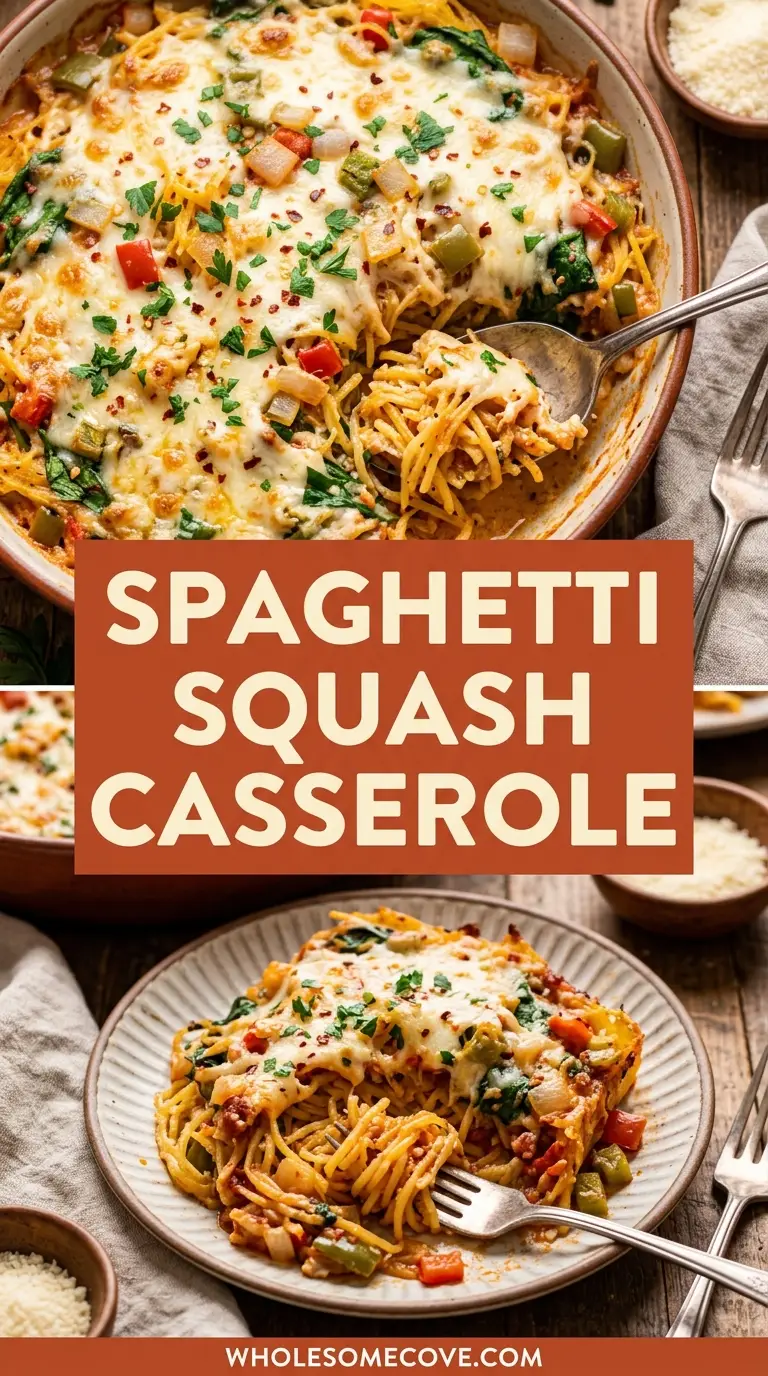
This spaghetti squash casserole recipe turns a humble winter vegetable into a hearty, cheesy baked dinner. Roasted spaghetti squash strands stand in for noodles, layered with a savory beef and marinara sauce, then finished under a blanket of melted mozzarella and parmesan.
It’s a lower carb take on baked spaghetti that still lands on rich, Italian style comfort food flavor. The squash bakes up tender, the sauce simmers down thick, and the cheese turns golden and bubbly on top.
This version sticks close to the classic preparation found in home kitchens across the country: roasted squash, a simple meat sauce, and a generous layer of cheese.
| Quick Recipe Summary | |
|---|---|
| Prep Time | 20 minutes |
| Cook Time | 50 minutes |
| Total Time | 1 hour 10 minutes |
| Servings | 6 servings |
| Difficulty Level | Easy |
If you’re new to cooking with this vegetable, my squash casserole recipe is a good place to see how versatile squash can be in a baked dish.
Why You’ll Love This Spaghetti Squash Casserole Recipe
This casserole gives you everything you want from a baked pasta dinner, minus most of the carbs and with a lot more vegetables hiding in plain sight. It comes together with a handful of pantry staples and bakes in one dish, so cleanup stays simple.
- Lower in carbs than traditional baked spaghetti, since the squash replaces the noodles entirely
- One dish, minimal cleanup, with everything baking together in a single casserole dish
- Freezer friendly, so you can make a double batch and tuck one away for later
- Naturally gluten free, which makes it easy to serve to guests with different dietary needs
- Kid approved, since the cheese and tomato sauce taste familiar even to picky eaters
- Meal prep friendly, with leftovers that reheat well for lunches throughout the week
- Flexible with proteins, so ground turkey, Italian sausage, or a vegetarian swap all work well
I started making this on weeknights when I had a spaghetti squash sitting on the counter and no real plan for it. It turned into one of those recipes that stuck around because it reheats so well for lunch the next day.
You might also enjoy: Butternut Squash Casserole
Ingredients
You only need a handful of ingredients for this casserole, and most of them are things you likely already keep stocked. A few specialty picks, like a good jarred marinara and real parmesan, make a noticeable difference in the final flavor.
- 1 large spaghetti squash (about 3 to 4 lbs / 1.4 to 1.8 kg)
- 2 tablespoons extra virgin olive oil, divided
- 1 lb (450 g) lean ground beef (85/15 works well)
- 1 small yellow onion, diced
- 3 cloves garlic, minced
- 1 jar (24 oz / 680 g) marinara sauce
- 1 can (14.5 oz / 411 g) San Marzano diced tomatoes
- 1 tablespoon Italian seasoning
- ½ teaspoon crushed red pepper flakes (optional)
- Salt and black pepper, to taste
- ½ cup (115 g) ricotta cheese
- 1 cup (90 g) grated Parmesan cheese, divided
- 1½ cups (170 g) shredded mozzarella cheese
- 2 tablespoons fresh basil, chopped, plus more for garnish
- 2 tablespoons fresh parsley, chopped
I learned the hard way that a thin, watery marinara makes the whole casserole soupy once the squash releases its own moisture. A thicker, richer sauce holds up much better in the oven.
For another approach to building flavor from scratch, my Marinara Sauce recipe walks through how to make your own from canned tomatoes if you’d rather skip the jar.
Kitchen Equipment Needed
Nothing here is overly specialized, but a few pieces of equipment make the process smoother. A sturdy skillet and a reliable baking dish matter most for getting even cooking throughout.
- Sharp chef’s knife, for cutting the squash in half safely
- Large rimmed baking sheet, for roasting the squash halves
- Large oven-safe skillet or sauté pan, for browning the beef and building the sauce
- 9×13 inch baking dish, for assembling and baking the casserole
- Large mixing bowl, for combining the squash strands with the sauce
- Two forks, for shredding the squash into strands
- Instant-read meat thermometer, to confirm the beef is fully cooked
- Aluminum foil, for covering the dish during the first stretch of baking
Cutting a raw spaghetti squash in half is the part most people dread. A sharp knife and a steady hand make it far less stressful than it looks.
Read Also: Cheese Sauce Recipe
Recommended Products for This Recipe
These are products I personally reach for when I make this casserole, based on what has actually made a difference in my kitchen. None of these are required to make a good casserole, but each one solves a small, real pain point.
1. Lodge Cast Iron Skillet
I use this skillet to brown the ground beef because cast iron holds heat so evenly that the meat browns instead of steaming. That deeper browning adds real flavor to the sauce before the tomatoes even go in. It also moves straight from stovetop to oven if you want to build the whole casserole in one pan.
2. Rao’s Homemade Marinara Sauce
This is the jarred marinara I keep coming back to because it is thick enough that it never waters down the casserole. The flavor is closer to a slow simmered, homemade sauce than most jarred options on the shelf. It saves a real chunk of time on a weeknight without sacrificing taste.
3. Microplane Premium Cheese Grater
Freshly grated parmesan melts so much better than the pre-shredded bagged kind, which is often coated in anti-caking starch. This grater makes quick work of a wedge of parmesan, and the texture it produces helps the cheese melt into the casserole instead of sitting in clumps on top. It is also great for garlic and citrus zest.
4. OXO Good Grips Meat Claws
Shredding a hot spaghetti squash by hand can burn your fingers more than once. These claws let you pull the strands apart quickly while the squash is still warm enough to shred cleanly. I also use them for pulling pork and shredding rotisserie chicken.
5. Lodge Enameled Cast Iron Casserole Dish
This dish goes straight from the oven to the table and keeps the casserole warm much longer than glass or ceramic. The enameled coating means cleanup is easy, even with melted cheese baked onto the surface. It is a nicer way to serve the casserole if you have guests over.
For a side dish that pairs naturally with this Italian flavor profile, check out my Baked Ziti recipe for another comforting, cheese topped bake.
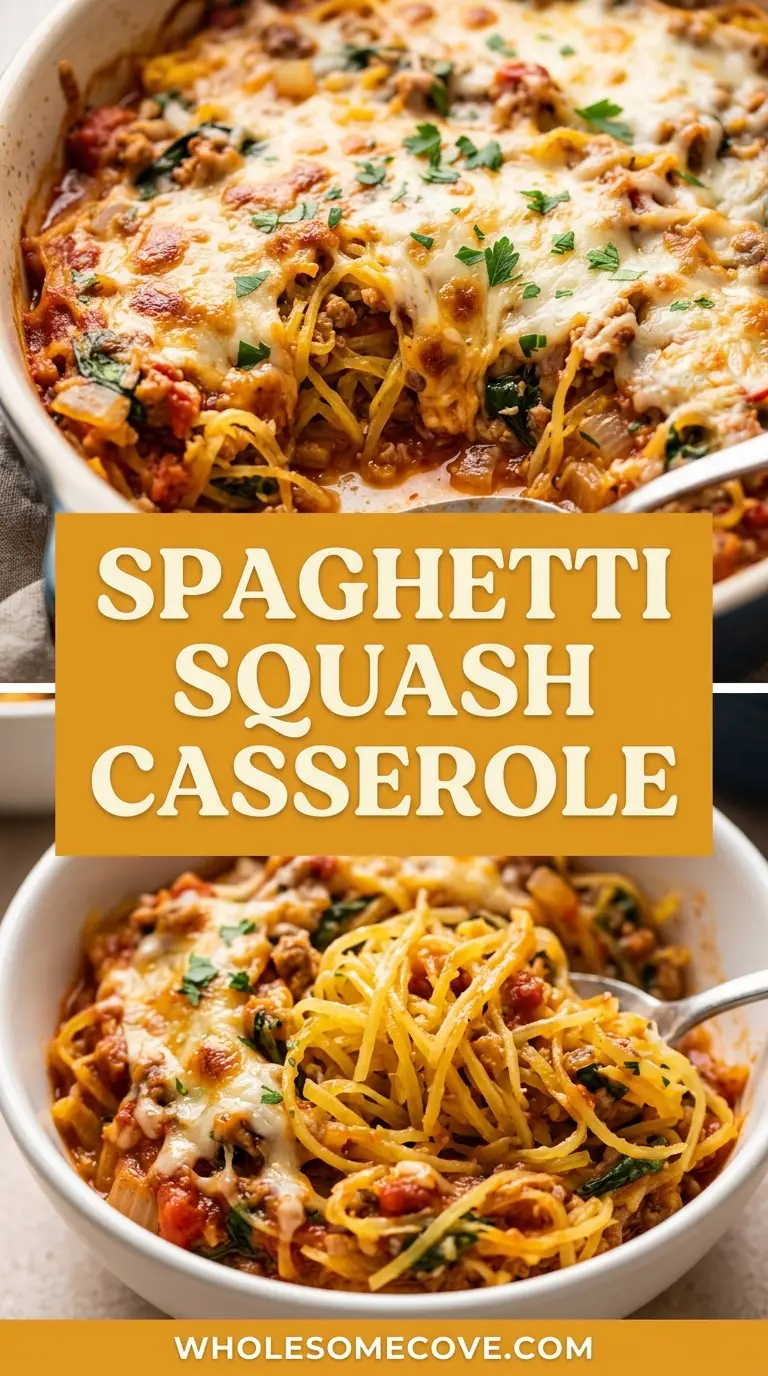
Step-by-Step Instructions: How to Make Spaghetti Squash Casserole
Follow these simple steps and you’ll have a hearty spaghetti squash casserole ready to pull from the oven in just over an hour.
1. Roast the Spaghetti Squash
- Preheat your oven to 400°F (200°C).
- Carefully slice the spaghetti squash in half lengthwise using a sharp chef’s knife.
- Scoop out the seeds and stringy center with a spoon, similar to cleaning out a pumpkin.
- Drizzle the cut sides with 1 tablespoon of the olive oil and season generously with salt and pepper.
- Place both halves cut side down on a large rimmed baking sheet.
- Roast for 35 to 45 minutes, until the flesh is easily pierced with a fork and the skin has softened.
- Remove from the oven and let the squash cool for about 10 minutes before handling.
- Once cool enough to touch, use a fork to scrape the flesh into long strands, working from the edges toward the center, and transfer the strands to a large mixing bowl.
2. Make the Meat Sauce
- While the squash roasts, heat the remaining 1 tablespoon of olive oil in a large oven-safe skillet over medium heat.
- Add the diced onion and cook for 3 to 4 minutes, stirring occasionally, until softened and translucent.
- Stir in the minced garlic and cook for about 30 seconds, until fragrant.
- Add the ground beef to the skillet, breaking it up with a spoon as it cooks.
- Continue cooking for 6 to 8 minutes, until no pink remains and an instant-read meat thermometer reads at least 160°F (71°C).
- Drain any excess fat from the skillet.
- Stir in the marinara sauce, diced tomatoes, Italian seasoning, red pepper flakes, and a pinch of salt and pepper.
- Reduce the heat to low and simmer the sauce for 10 minutes, stirring occasionally, until slightly thickened.
3. Combine the Squash and Sauce
- Reduce your oven temperature to 375°F (190°C).
- In the large bowl with the shredded squash strands, add half of the meat sauce, the ricotta cheese, and half of the grated parmesan.
- Stir everything together gently until evenly combined, making sure the ricotta is distributed throughout rather than sitting in clumps.
4. Assemble the Casserole
- Lightly grease your 9×13 inch baking dish.
- Spread the squash and sauce mixture in an even layer across the bottom of the dish.
- Spoon the remaining meat sauce over the top, spreading it out so it covers the squash layer evenly.
- Sprinkle the shredded mozzarella cheese over the top, followed by the remaining grated parmesan.
5. Bake and Finish
- Cover the dish tightly with aluminum foil.
- Bake for 20 minutes, covered, to let the flavors meld and the cheese begin to melt.
- Remove the foil and bake for an additional 15 to 20 minutes, until the cheese is melted and turning golden in spots and the sauce is bubbling at the edges.
- Remove from the oven and let the casserole rest for 10 minutes before serving.
- Garnish with the chopped fresh basil and parsley just before serving.
For a similar layered casserole that swaps in chicken, try: Chicken Spaghetti
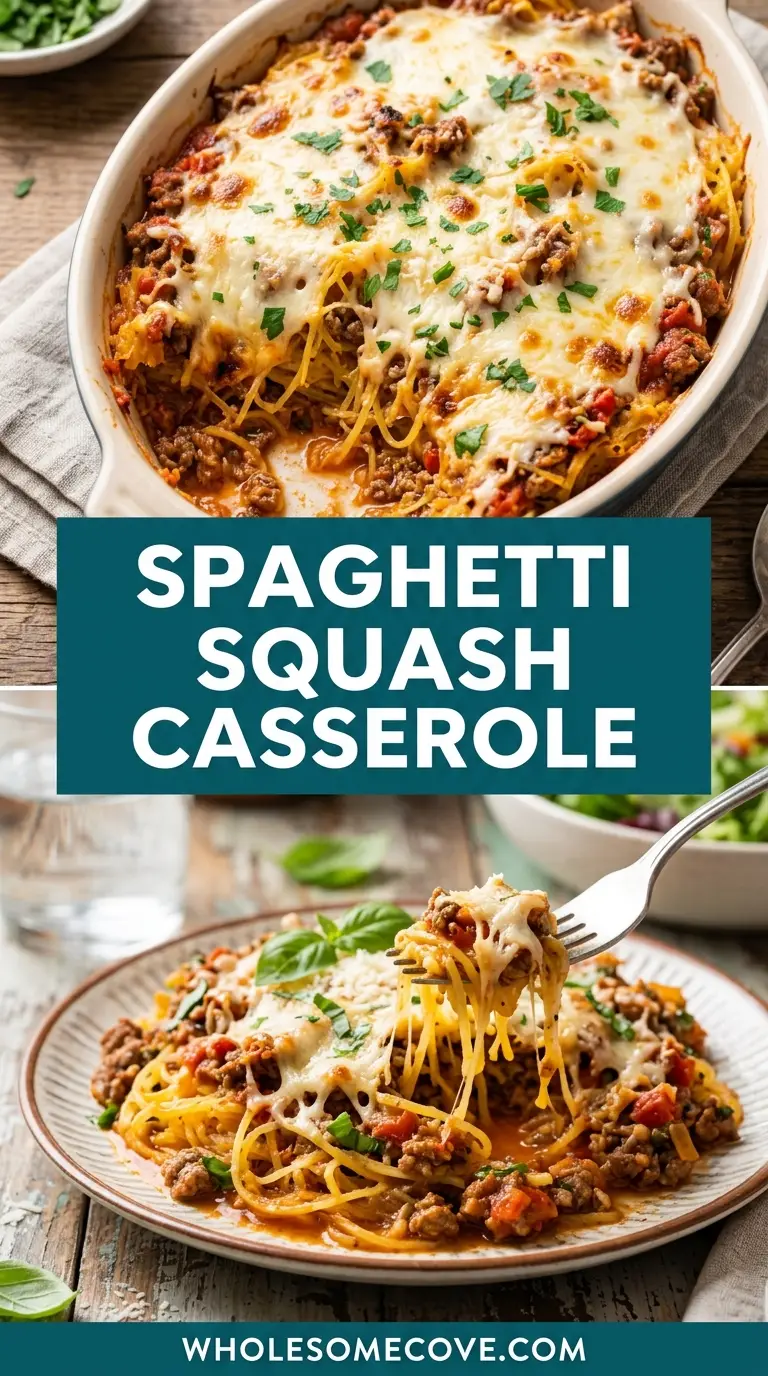
Tips for The Best Spaghetti Squash Casserole
A few small details make the difference between a casserole that holds its shape and one that turns out watery. Most of these come down to managing moisture and giving the squash enough time to roast properly.
- Salt the squash before roasting. This draws out a little extra moisture before the squash ever meets the sauce.
- Don’t rush the roasting time. Squash that isn’t fully tender will be harder to shred and will taste starchy instead of pasta-like.
- Let the squash cool before shredding. Working with it too hot makes the strands mushy instead of distinct.
- Use a thick marinara, not a thin one. A watery sauce combined with the squash’s natural moisture can make the casserole soupy.
- Drain the beef well. Extra grease left in the pan adds unwanted liquid to the finished dish.
- Let the casserole rest before slicing. Ten minutes out of the oven helps everything set so it holds together when served.
- Pat the squash strands dry with paper towels if they seem especially wet after roasting, especially if your squash was on the larger side.
I once skipped the resting step because I was hungry and in a hurry, and the first slice fell apart into more of a stew than a casserole. Patience really does pay off here.
A creamy alternative worth trying is my garlic parmesan sauce, which works well in place of marinara if you want a different flavor direction for this casserole.
What to Serve with Spaghetti Squash Casserole
This casserole is rich and a little indulgent on its own, so I like to balance the plate with something lighter or crisp. A simple side or two rounds out the meal without much extra effort.
- A crisp green salad with a light vinaigrette to cut through the richness of the cheese
- Garlic bread or warm rolls, for anyone who wants something to scoop up extra sauce
- Roasted vegetables, like green beans or broccoli, for a simple low-effort side
- A light soup starter, such as a tomato or vegetable based soup
- A glass of dry red wine, like Chianti, which pairs naturally with the tomato and beef flavors
- Lemon dressed asparagus, for a bright, acidic contrast on the plate
For something green and crisp on the side, try: Broccoli Salad
Variations of Spaghetti Squash Casserole
This casserole is easy to adjust based on what you have on hand or what your household prefers. I have tried several versions over the years, and most of them came from simply using up what was left in the fridge.
- Swap the protein. Ground turkey, Italian sausage, or shredded rotisserie chicken all work in place of ground beef.
- Go vegetarian. Skip the meat and add extra vegetables like mushrooms, zucchini, or bell peppers to the sauce instead.
- Try a different cheese blend. Smoked gouda, provolone, or sharp cheddar can replace the mozzarella for a different flavor profile.
- Add greens. Stir a few handfuls of fresh spinach into the sauce while it simmers for extra color and nutrients.
- Make it spicier. Increase the red pepper flakes or add a few dashes of hot sauce to the meat sauce.
- Use a white sauce instead. Swap the marinara for a béchamel or alfredo style sauce for a completely different flavor base.
- Top it with breadcrumbs. A layer of seasoned breadcrumbs under the cheese adds a crunchy texture contrast.
My butternut squash meatball bake came from a similar swap, and it might be worth trying if you want to explore squash and meat together in a different format. Take a look at my Baked Chicken Meatballs With Spaghetti Squash recipe for that version.
Storage and Reheating
This casserole holds up well in the refrigerator and reheats easily, which makes it a solid option for meal prep. Just keep in mind that spaghetti squash can release a little extra moisture as it sits.
- Refrigerate leftovers in an airtight container for up to 4 days.
- Reheat individual portions in the microwave in 60-second intervals until warmed through.
- Reheat the full dish covered with foil in a 350°F (175°C) oven for about 20 minutes, until heated through.
- Drain any excess liquid that pools at the bottom of the container before reheating, since the squash continues to release moisture in storage.
- Freeze before baking by assembling the casserole, covering tightly, and freezing for up to 2 months, then bake from frozen with extra covered time.
- Freeze after baking by letting the casserole cool completely, then wrapping tightly and freezing for up to 2 months.
- Thaw overnight in the refrigerator before reheating for the best texture.
Read Also: Hashbrown Casserole Recipe
Nutritional Facts
| Nutrition Per Serving (1 of 6) | |
|---|---|
| Calories | 365 kcal |
| Protein | 27 g |
| Carbohydrates | 16 g |
| Fiber | 3 g |
| Sugar | 8 g |
| Fat | 23 g |
| Saturated Fat | 10 g |
| Sodium | 720 mg |
Nutrition values are estimates based on standard ingredient databases and will vary depending on the specific brands and portion sizes used.
If you’re tracking carbs closely, you might also like browsing my Roasted Butternut Squash Soup recipe for another lower-carb squash based option.
Health Benefits of Key Ingredients
Beyond being a satisfying dinner, this casserole brings a few genuinely useful nutrients to the table. The squash itself does a lot of the heavy lifting here.
- Spaghetti squash is naturally low in calories and carbohydrates while providing fiber, vitamin C, and B vitamins that support energy metabolism.
- Lean ground beef contributes a strong source of protein along with iron and vitamin B12, both important for energy and red blood cell production.
- Tomatoes, whether in the marinara or the diced can, provide lycopene, an antioxidant linked to heart health.
- Garlic and onion contain compounds that have been studied for their potential anti-inflammatory and immune supporting properties.
- Parmesan and mozzarella add calcium and protein, supporting bone health alongside the meal’s overall protein content.
- Fresh basil and parsley contribute small amounts of vitamin K and antioxidants, along with a fresh, herbal lift to the finished dish.
You might also enjoy: Creamy Tomato Basil Soup
FAQs About Spaghetti Squash Casserole
1. Can I make this casserole ahead of time?
Yes, you can assemble the entire casserole up to a day in advance and refrigerate it, covered, before baking. Add about 10 extra minutes to the covered baking time if baking it cold from the fridge.
2. Why is my spaghetti squash watery?
Spaghetti squash naturally holds a lot of water, and undercooked squash holds even more. Roasting it fully and salting it before adding the sauce both help reduce excess moisture in the finished casserole.
3. Can I use a different squash for this recipe?
Spaghetti squash is what gives this casserole its noodle-like texture, so it’s the best choice for this particular dish. Butternut or acorn squash will taste good but will produce a much softer, mashed texture instead of strands.
4. Is this recipe gluten free?
Yes, as written, this recipe is naturally gluten free since spaghetti squash replaces traditional pasta. Just double check that your marinara sauce and any added ingredients don’t contain hidden gluten.
5. Can I make this casserole vegetarian?
Absolutely, simply omit the ground beef and add extra vegetables like mushrooms, zucchini, or spinach to the sauce instead. You may want to add a bit more seasoning since the meat normally contributes some of the savory depth.
Read Also: Chicken Parmesan Recipe
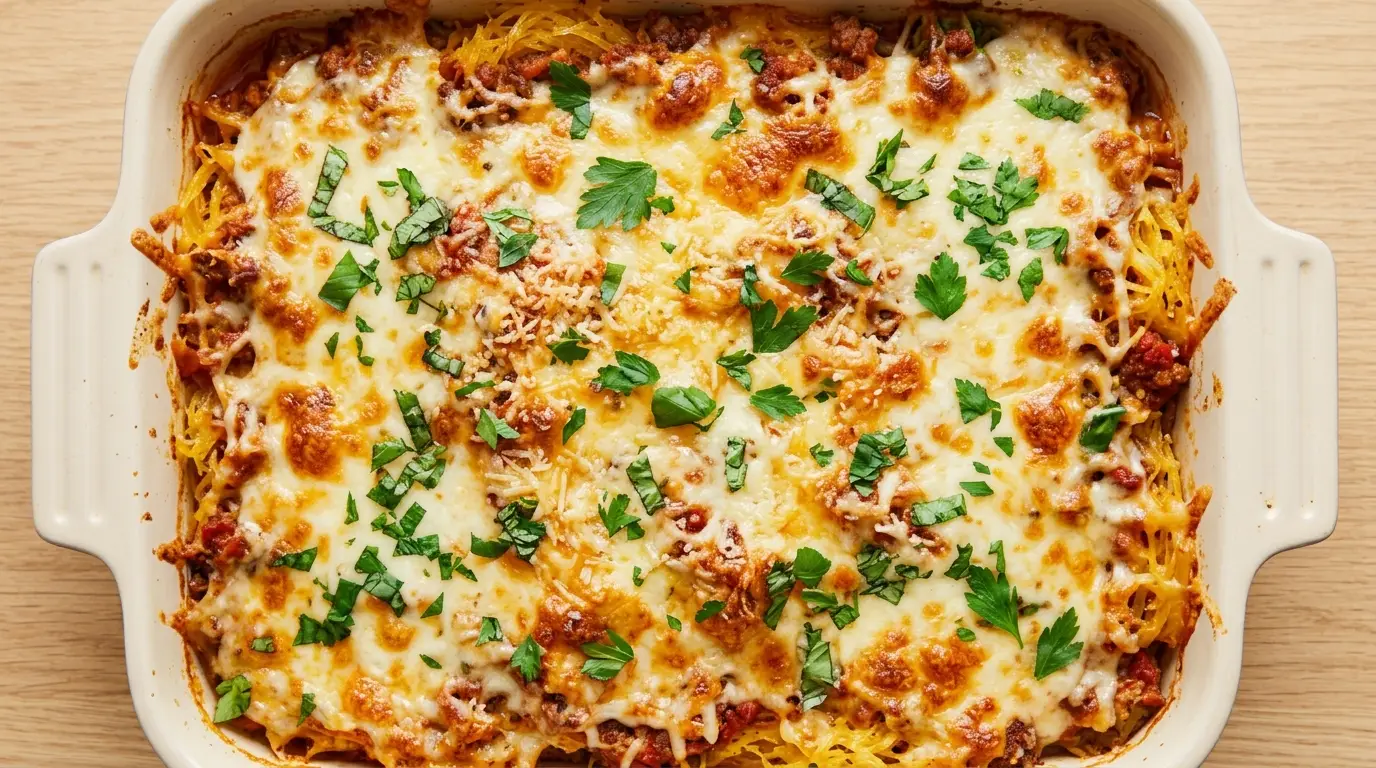
Spaghetti Squash Casserole
Ingredients
- 1 large spaghetti squash - about 3 to 4 lbs / 1.4 to 1.8 kg
- 2 tablespoons extra virgin olive oil - divided
- 1 lb lean ground beef - 450g, 85/15 works well
- 1 small yellow onion - diced
- 3 cloves garlic - minced
- 1 jar marinara sauce - 24 oz / 680g, preferably a thick variety
- 1 can San Marzano diced tomatoes - 14.5 oz / 411g
- 1 tablespoon Italian seasoning
- ½ teaspoon crushed red pepper flakes - optional
- Salt and black pepper - to taste
- ½ cup ricotta cheese - 115g
- 1 cup grated Parmesan cheese - 90g, divided
- 1½ cups shredded mozzarella cheese - 170g
- 2 tablespoons fresh basil - chopped, plus more for garnish
- 2 tablespoons fresh parsley - chopped
Equipment
- Sharp chef’s knife - for cutting the squash in half safely
- Large rimmed baking sheet - for roasting the squash halves
- Large oven-safe skillet or sauté pan - for browning the beef and building the sauce
- 9×13 inch baking dish - for assembling and baking the casserole
- Large mixing bowl - for combining the squash strands with the sauce
- Two forks - for shredding the squash into strands
- Instant-read meat thermometer - to confirm the beef is fully cooked
- Aluminum foil - for covering the dish during baking
Method
- Preheat oven to 400°F (200°C). Cut spaghetti squash in half lengthwise, scoop out seeds, drizzle cut sides with 1 tablespoon olive oil, and season with salt and pepper.
- Place squash cut side down on a baking sheet and roast for 35-45 minutes until tender. Let cool for 10 minutes, then scrape flesh into strands with a fork and transfer to a large bowl.
- While squash roasts, heat remaining 1 tablespoon olive oil in a large skillet over medium heat. Cook onion for 3-4 minutes until softened, then add garlic and cook for 30 seconds until fragrant.
- Add ground beef to the skillet, breaking it up as it cooks. Cook for 6-8 minutes until no pink remains and internal temperature reaches 160°F (71°C). Drain excess fat.
- Stir in marinara sauce, diced tomatoes, Italian seasoning, red pepper flakes, salt, and pepper. Reduce heat to low and simmer for 10 minutes until slightly thickened.
- Reduce oven temperature to 375°F (190°C). In the bowl with shredded squash, combine half the meat sauce, ricotta, and half the Parmesan. Stir until evenly combined.
- Grease a 9×13 inch baking dish. Spread the squash mixture evenly in the dish. Top with remaining meat sauce, then sprinkle with mozzarella and remaining Parmesan.
- Cover tightly with foil and bake for 20 minutes. Remove foil and bake for 15-20 minutes more until cheese is melted and golden in spots and sauce is bubbling.
- Let rest for 10 minutes before serving. Garnish with fresh basil and parsley.
Nutrition
Notes
- Salt the squash before roasting: This draws out a little extra moisture before the squash ever meets the sauce.
- Don’t rush the roasting time: Squash that isn’t fully tender will be harder to shred and will taste starchy instead of pasta-like.
- Let the squash cool before shredding: Working with it too hot makes the strands mushy instead of distinct.
- Use a thick marinara, not a thin one: A watery sauce combined with the squash’s natural moisture can make the casserole soupy.
- Drain the beef well: Extra grease left in the pan adds unwanted liquid to the finished dish.
- Let the casserole rest before slicing: Ten minutes out of the oven helps everything set so it holds together when served.
- Pat the squash strands dry: If they seem especially wet after roasting, pat them with paper towels, especially if your squash was on the larger side.
- Make ahead: Assemble the entire casserole up to a day in advance and refrigerate before baking. Add about 10 extra minutes to the covered baking time if baking cold.
- Freezer friendly: Freeze before baking for up to 2 months, or freeze after baking and cooling completely. Thaw overnight in the refrigerator before reheating.
- Vegetarian option: Omit the ground beef and add extra vegetables like mushrooms, zucchini, or spinach to the sauce instead.
Private Notes
Tried this recipe?
Let us know how it was!Final Thoughts
This spaghetti squash casserole is the kind of dinner that feels indulgent while still leaving you with a lighter, vegetable-forward meal. It holds up well for leftovers and works just as easily for a weeknight dinner as it does for a casual dinner with guests.
Give it a try this week, and don’t be afraid to make it your own with a different cheese or protein. If you make this recipe, I’d love to hear how it turned out in the comments below, and feel free to share it with anyone who could use a new way to cook with spaghetti squash.
Recommended:
- Green Bean Casserole Recipe
- Sweet Potato Casserole Recipe
- Taco Casserole Recipe
- Eggplant Parmesan With Zucchini Recipe
- Bolognese Recipe
- Stuffed Shells Recipe
- Meatloaf Recipe
- Creamed Spinach Recipe
- Roasted Brussels Sprouts With Bacon Recipe
- Zucchini and Squash Casserole Recipe