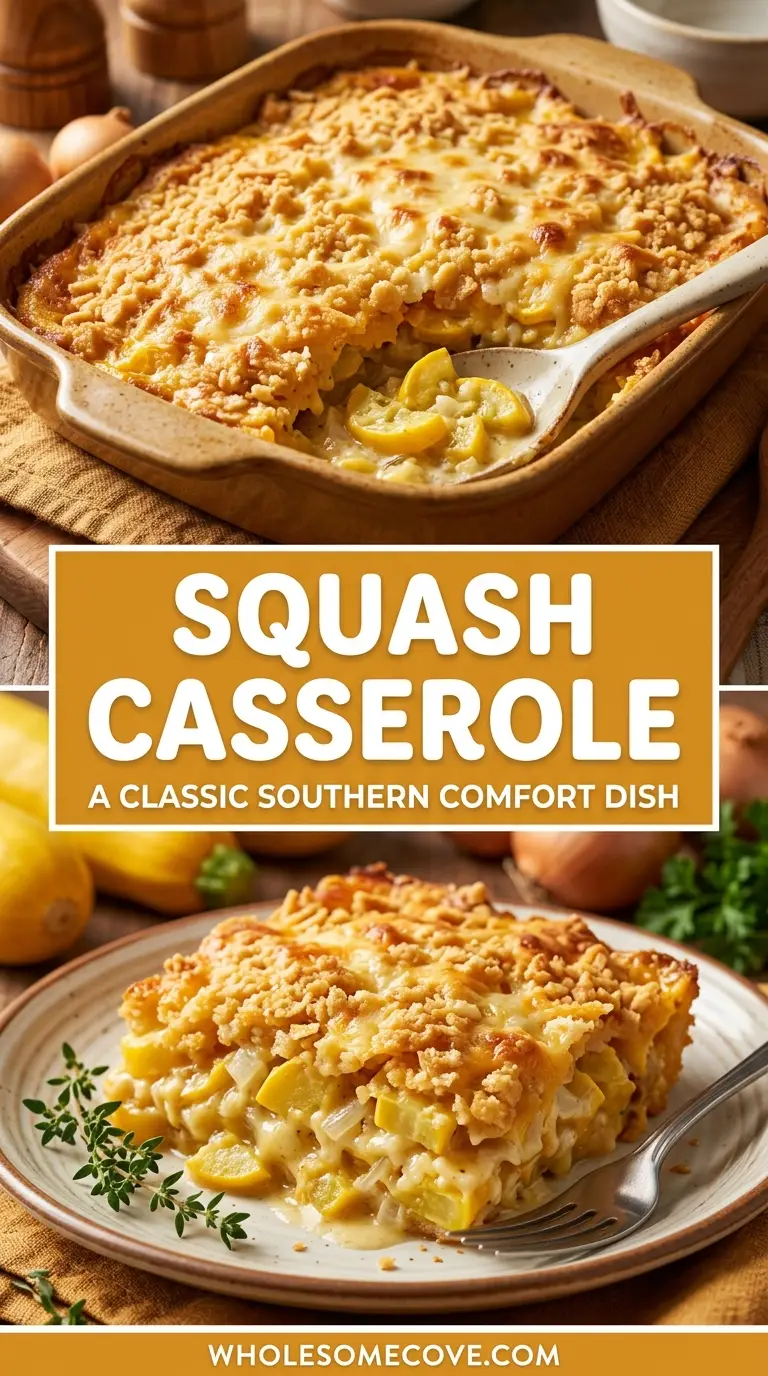
This squash casserole recipe turns a pile of summer squash into one of the most requested side dishes at any potluck table. It pairs tender yellow squash with a creamy, cheesy filling and a buttery cracker topping that bakes up golden and crisp.
This dish has roots in Southern home cooking, where summer gardens often produce more squash than anyone knows what to do with.
It works just as well on a Tuesday night as it does next to a holiday turkey.
| Quick Recipe Summary | |
|---|---|
| Prep Time | 20 minutes |
| Cook Time | 35 minutes |
| Total Time | 55 minutes |
| Servings | 8 servings |
| Difficulty Level | Easy |
You might also enjoy: Sweet Potato Casserole
Why You’ll Love This Squash Casserole Recipe
I make this casserole at least twice a month once squash season hits, and it disappears every single time. It’s the kind of side dish that gets requested by name at family dinners.
Here’s why it earns a permanent spot on your table:
- Uses up garden squash fast. If you grow your own yellow squash, this is the best way to put a big harvest to good use before it goes soft.
- Creamy without being heavy. The sour cream and mayo base keeps the filling rich but not dense.
- Crowd-pleasing crunch. The buttery cracker topping gives every bite a contrast of soft and crisp.
- Make-ahead friendly. You can assemble it the day before and bake it fresh when you need it.
- Naturally adaptable. Swap the cheese, the topping, or the seasoning and it still turns out great.
- Beginner-proof. There’s no tricky technique here, just sautéing, mixing, and baking.
Green Bean Casserole is another classic side that follows the same easy formula.
Ingredients
Most of what you need for this squash casserole recipe is probably already in your kitchen, aside from the fresh squash itself. Here’s the full list with both imperial and metric measurements.
- 3 pounds (1.4 kg) yellow squash, sliced into half-moons
- 1 medium yellow onion, diced
- 3 tablespoons unsalted butter, divided
- 2 cloves garlic, minced
- 2 large eggs, beaten
- 1/2 cup (115 g) sour cream
- 1/4 cup (55 g) mayonnaise
- 1 1/2 cups (170 g) shredded sharp cheddar cheese, divided
- 1 teaspoon salt, plus more to taste
- 1/2 teaspoon black pepper
- 1/4 teaspoon ground thyme
- 1 sleeve (about 35) buttery round crackers, crushed
- 1/3 cup (35 g) grated parmesan cheese
- 2 tablespoons melted butter, for the topping
I always reach for smaller squash when I’m shopping, since the bigger ones tend to carry more seeds and a slightly bitter edge. It’s a small detail but it makes a real difference in the final texture.
Read Also: Au Gratin Potatoes
Kitchen Equipment Needed
You don’t need anything fancy to put this together. A few solid basics will get the job done well.
- Large skillet
- 9×13 inch baking dish
- Mixing bowls
- Box grater (for shredding your own cheddar)
- Colander
- Sharp chef’s knife
- Cutting board
- Measuring cups and spoons
- Rubber spatula
- Cast iron baking dish, if you prefer baking in something heavier than glass
I switched to shredding my own cheddar a few years back after one too many casseroles turned out grainy from pre-shredded bags. The anti-caking coating on those bags keeps cheese from melting smoothly, and it shows in the final bake.
Read Also: Funeral Potatoes
Recommended Products for This Recipe
These are products I’ve actually used while testing and remaking this squash casserole recipe over the years, not just a generic list. Each one solves a specific problem I ran into in my own kitchen.
1. OXO Good Grips Mandoline Slicer
Slicing three pounds of squash by hand takes forever and the pieces never come out even. A mandoline gets every slice the same thickness, which means the squash cooks evenly instead of some pieces turning mushy while others stay firm.
2. Lodge Cast Iron Skillet
I sauté the squash and onion in a cast iron skillet because it holds heat steadily and helps the moisture cook off instead of just steaming the vegetables. It also gives a nicer bit of color to the onions.
3. Pyrex 9×13 Baking Dish
A glass baking dish lets you see how the bottom of the casserole is browning without having to pull it out of the oven. I’ve used the same one for years and it still bakes evenly.
4. Microplane Grater
For the parmesan in the topping, a fine grater gives you a light, fluffy texture that melts into the crackers instead of clumping. It makes a noticeably better crust than coarsely shredded parmesan.
5. Salad Spinner
This sounds unusual for a casserole recipe, but I use a salad spinner to dry the sautéed squash after draining it in the colander. It pulls out extra moisture in seconds and noticeably cuts down on a watery casserole.
For a heartier pairing, try: Honey Baked Ham
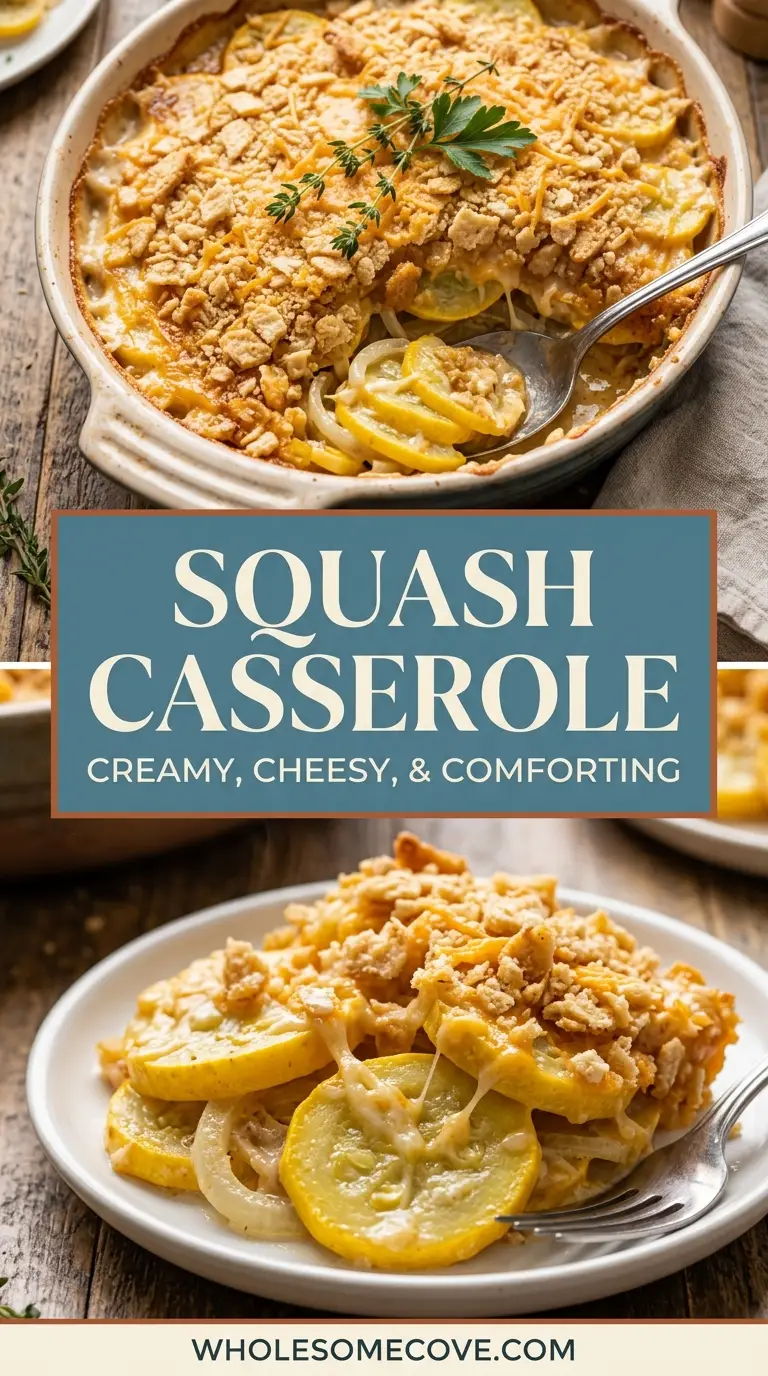
Step-by-Step Instructions: How to Make Squash Casserole
Follow these simple steps and you’ll have a creamy, golden squash casserole ready to serve in under an hour.
1. Preheat the Oven and Prep the Dish
- Preheat your oven to 350°F (175°C).
- Lightly grease a 9×13 inch baking dish with butter or nonstick spray.
- Set the dish aside while you prepare the filling.
2. Sauté the Squash and Onion
- Melt 2 tablespoons of butter in a large skillet over medium heat.
- Add the diced onion and cook for about 3 minutes, stirring occasionally, until it starts to soften.
- Add the sliced squash, salt, pepper, and ground thyme.
- Cook for 8 to 10 minutes, stirring every couple of minutes, until the squash is tender but not falling apart.
- Add the minced garlic during the last minute of cooking so it doesn’t burn.
3. Drain the Squash Thoroughly
- Pour the cooked squash and onion into a colander set over the sink or a bowl.
- Let it drain for 5 minutes, pressing gently with a spatula to release extra liquid.
- Pat the mixture with paper towels if it still feels wet.
- Skipping this step is the number one reason squash casseroles turn out watery, so don’t rush it.
4. Mix the Creamy Base
- In a large mixing bowl, whisk together the beaten eggs, sour cream, and mayonnaise until smooth.
- Stir in 1 cup of the shredded cheddar cheese.
- Taste and adjust the salt and pepper if needed before adding the squash.
5. Combine the Filling
- Add the drained squash and onion mixture to the bowl with the egg and cheese mixture.
- Fold gently with a rubber spatula until everything is evenly coated.
- Avoid overmixing, since you want the squash pieces to stay mostly intact.
6. Transfer to the Baking Dish
- Pour the squash mixture into the prepared 9×13 inch baking dish.
- Spread it into an even layer using the back of a spoon or spatula.
- Sprinkle the remaining 1/2 cup of shredded cheddar cheese evenly over the top.
7. Make the Cracker Topping
- In a small bowl, combine the crushed buttery crackers, grated parmesan cheese, and 2 tablespoons of melted butter.
- Stir until all the cracker crumbs are coated in butter.
- Sprinkle the topping evenly over the casserole, covering it from edge to edge.
8. Bake Until Golden
- Place the casserole in the preheated oven and bake for 30 to 35 minutes.
- Look for a bubbling filling and a deep golden brown topping as your cue that it’s done.
- Let the casserole rest for 5 to 10 minutes before serving so it sets up and is easier to scoop.
Maple Glazed Carrots makes a colorful, simple side to round out the meal alongside this casserole.
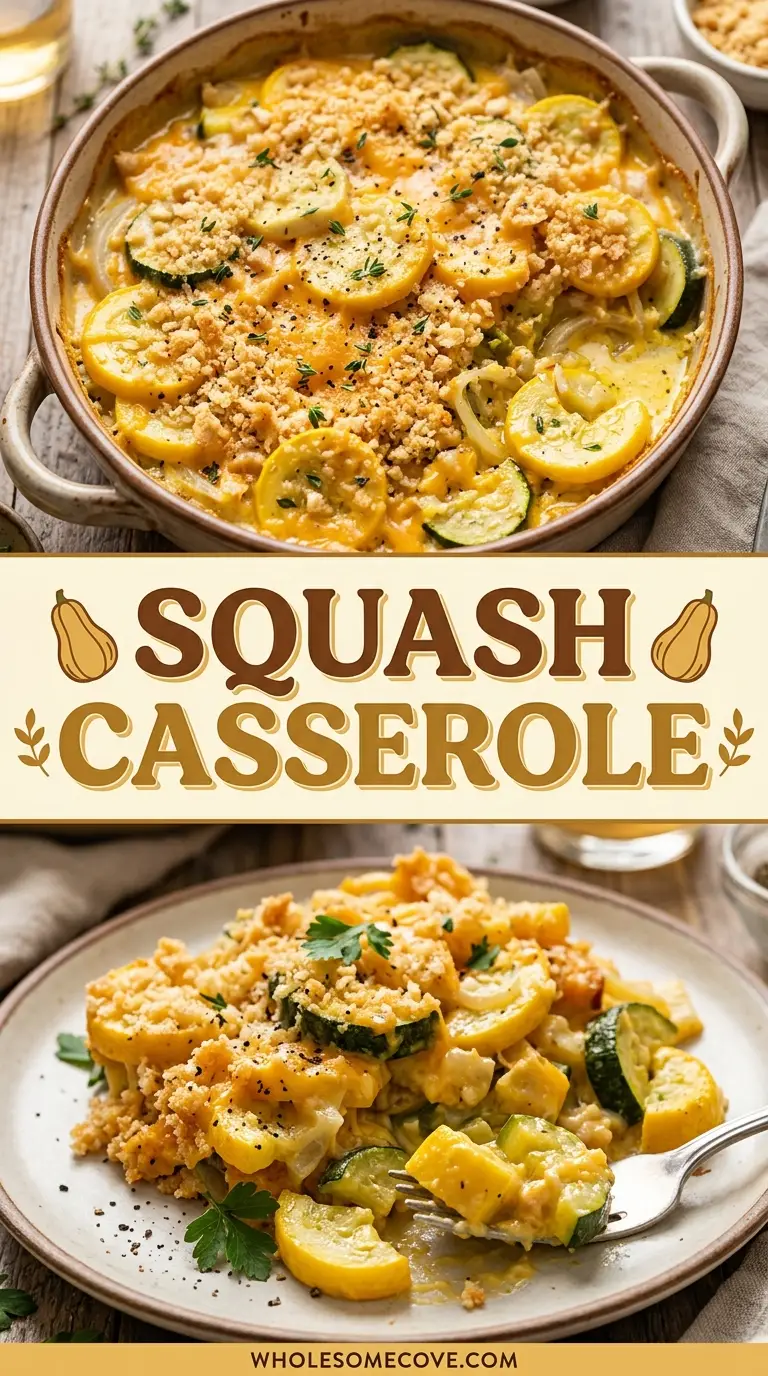
Tips for The Best Squash Casserole
A few small adjustments make a big difference between an average squash casserole and a great one. These are the lessons I’ve picked up from making this recipe more times than I can count.
- Salt the squash before cooking. A light salt on the raw squash draws out moisture early, which means less liquid to deal with later.
- Don’t skip the draining step. It’s tempting to go straight from the skillet to the mixing bowl, but that extra five minutes in the colander really does matter.
- Use a mix of cheeses if you have them. I once ran out of cheddar halfway through and added some Monterey jack, and it turned out so good I do it on purpose now.
- Toast the cracker topping separately if you like extra crunch. A quick five minutes in a dry skillet before mixing with butter gives an even crispier finish.
- Let it rest before cutting. Squash casserole is loose right out of the oven and firms up significantly as it cools for a few minutes.
- Use a light hand with the thyme. It’s easy to add too much and overpower the squash’s natural sweetness.
- Bake on the center rack. This keeps the topping from browning too fast before the inside is fully heated through.
Read Also: Cheesy Potatoes
What to Serve with Squash Casserole
Squash casserole is rich and a little sweet, so it pairs best with something savory or smoky to balance it out. It also shows up often on holiday tables next to other classic sides.
- Roast chicken or fried chicken
- Grilled pork chops or pork tenderloin
- Baked or smoked ham
- Meatloaf
- Pulled pork sandwiches
- Cornbread or dinner rolls
- A simple green salad with vinaigrette
- Smoked brisket or barbecue ribs
You might also enjoy: Roast Chicken
Variations of Squash Casserole
Once you’ve made the base squash casserole recipe a couple of times, it’s easy to start customizing it to your taste. Here are a few directions worth trying.
- Zucchini blend: Swap half the yellow squash for zucchini for a slightly different texture and color.
- Spicy version: Add a diced jalapeño or a pinch of cayenne to the filling for some heat.
- Bacon squash casserole: Stir in 4 to 6 slices of cooked, crumbled bacon for a smoky, savory twist.
- Cornbread topping: Replace the cracker topping with crumbled cornbread for a more rustic, Southern feel.
- Gluten-free version: Use gluten-free buttery crackers in place of regular ones.
- Extra veggie version: Mix in a cup of fresh corn kernels or diced bell pepper along with the squash.
- Lighter version: Use light sour cream and reduced-fat mayonnaise to cut down on richness without losing the creamy texture.
Hashbrown Casserole is another comforting baked dish that’s easy to riff on once you know the basics.
Storage and Reheating
This squash casserole keeps well, which makes it a great option for meal prepping ahead of a big dinner. Here’s how to store and reheat it properly.
- Refrigerator: Store leftovers in an airtight container for up to 4 days.
- Freezer: Squash casserole can be frozen for up to 2 months, though the texture softens slightly once thawed.
- Reheating in the oven: Cover with foil and bake at 350°F (175°C) for 15 to 20 minutes, or until heated through.
- Reheating in the microwave: Heat individual portions in 30-second intervals until warm.
- Make-ahead tip: Assemble the casserole without the cracker topping, cover, and refrigerate for up to 1 day. Add the topping right before baking.
- Thawing: If frozen, thaw overnight in the refrigerator before reheating for the best texture.
You might also enjoy: Scalloped Potatoes
Nutritional Facts
| Nutrition (Per Serving) | |
|---|---|
| Calories | 310 kcal |
| Carbohydrates | 14 g |
| Protein | 10 g |
| Fat | 24 g |
| Saturated Fat | 11 g |
| Cholesterol | 85 mg |
| Sodium | 490 mg |
| Fiber | 2 g |
| Sugar | 5 g |
Nutritional values are estimates and can vary based on specific ingredients and brands used.
Mashed Potatoes makes another easy side dish to round out the nutrition on your plate.
Health Benefits of Key Ingredients
Squash casserole leans indulgent, but the star ingredient still brings real nutritional value to the table. Here’s a quick look at what’s working in your favor.
- Yellow squash: Low in calories and a good source of vitamin C, potassium, and antioxidants that support immune health.
- Onion: Contains compounds linked to heart health and provides a natural source of fiber.
- Eggs: Offer high-quality protein along with choline, which supports brain function.
- Cheddar cheese: Provides calcium and protein, supporting bone strength.
- Garlic: Contains allicin, a compound studied for its potential anti-inflammatory properties.
- Parmesan cheese: Adds protein and calcium in a relatively small amount per serving.
You might also enjoy: Creamed Spinach
FAQs About Squash Casserole
1. Can I use frozen squash instead of fresh?
Yes, frozen squash works, though it releases more water during cooking. Thaw it completely and drain it very well before adding it to the filling.
2. Why is my squash casserole watery?
This usually happens when the squash isn’t drained well enough after sautéing. Letting it sit in a colander for a full 5 minutes and patting it dry makes a noticeable difference.
3. Can I make this casserole ahead of time?
Yes, you can assemble it a day in advance and refrigerate it without the cracker topping. Add the topping just before baking so it stays crisp.
4. What can I use instead of buttery round crackers?
Panko breadcrumbs, crushed saltines, or even crushed cornflakes all work as substitutes. Each one gives a slightly different texture, but all of them crisp up nicely.
5. Can I substitute zucchini for yellow squash?
Zucchini can absolutely be used in place of some or all of the yellow squash. It has a slightly higher water content, so be sure to drain it thoroughly after cooking.
Read Also: Thanksgiving Stuffing

Squash Casserole
Ingredients
- 3 pounds yellow squash - 1.4 kg, sliced into half-moons
- 1 medium yellow onion - diced
- 3 tablespoons unsalted butter - divided
- 2 cloves garlic - minced
- 2 large eggs - beaten
- 1/2 cup sour cream - 115 g
- 1/4 cup mayonnaise - 55 g
- 1 1/2 cups sharp cheddar cheese - 170 g, shredded, divided
- 1 teaspoon salt - plus more to taste
- 1/2 teaspoon black pepper
- 1/4 teaspoon ground thyme
- 1 sleeve buttery round crackers - about 35 crackers, crushed
- 1/3 cup grated parmesan cheese - 35 g
- 2 tablespoons melted butter - for the topping
Equipment
- Box grater - for shredding your own cheddar
- Cast iron baking dish - optional, if you prefer baking in something heavier than glass
- OXO Good Grips Mandoline Slicer - optional, for even slicing
- Lodge Cast Iron Skillet - optional, for sautéeing
- Pyrex 9×13 Baking Dish - optional, glass allows you to see bottom browning
- Microplane grater - optional, for fine parmesan
- Salad spinner - optional, for drying sautéed squash
Method
- Preheat oven to 350°F (175°C) and lightly grease a 9×13 inch baking dish.
- Melt 2 tablespoons of butter in a large skillet over medium heat. Cook onion for 3 minutes until soft. Add squash, salt, pepper, and thyme. Cook 8-10 minutes until tender. Add garlic for the last minute.
- Pour cooked squash into a colander and drain for 5 minutes, pressing gently. Pat dry with paper towels if needed.
- In a large bowl, whisk together eggs, sour cream, and mayonnaise until smooth. Stir in 1 cup of shredded cheddar. Adjust salt and pepper.
- Add drained squash to the bowl and fold gently until evenly coated.
- Pour mixture into prepared dish and spread evenly. Sprinkle remaining 1/2 cup cheddar over the top.
- In a small bowl, combine crushed crackers, parmesan, and melted butter. Sprinkle evenly over the casserole.
- Bake for 30-35 minutes until filling bubbles and topping is golden brown. Let rest 5-10 minutes before serving.
Nutrition
Notes
- Salt the squash before cooking: A light salt on the raw squash draws out moisture early, which means less liquid to deal with later.
- Don’t skip the draining step: It’s tempting to go straight from the skillet to the mixing bowl, but that extra five minutes in the colander really does matter.
- Use a mix of cheeses: A combination of cheddar and Monterey jack adds great flavor.
- Toast the cracker topping separately: A quick five minutes in a dry skillet before mixing with butter gives an even crispier finish.
- Let it rest before cutting: Squash casserole is loose right out of the oven and firms up significantly as it cools for a few minutes.
- Use a light hand with the thyme: It’s easy to add too much and overpower the squash’s natural sweetness.
- Bake on the center rack: This keeps the topping from browning too fast before the inside is fully heated through.
- Make-ahead tip: Assemble the casserole without the cracker topping, cover, and refrigerate for up to 1 day. Add the topping right before baking.
- Storage: Store leftovers in an airtight container in the refrigerator for up to 4 days.
- Freezing: Squash casserole can be frozen for up to 2 months, though the texture softens slightly once thawed. Thaw overnight in the refrigerator before reheating.
Private Notes
Tried this recipe?
Let us know how it was!Final Thoughts
This squash casserole recipe has earned its place as one of those dishes people ask for by name. It’s simple enough for a weeknight but still feels like something special on a holiday table.
Give it a try the next time you’ve got squash on hand. I’d love to hear how it turns out for you, so drop a comment below and let me know what variations you tried.
Recommended:
- Twice Baked Potatoes
- Roasted Potatoes
- Swamp Potatoes
- Cranberry Sauce
- Dinner Rolls
- Prime Rib
- Thanksgiving Turkey
- Roasted Brussels Sprouts with Bacon
- Baked Ham
- Potato Side Dish Recipes