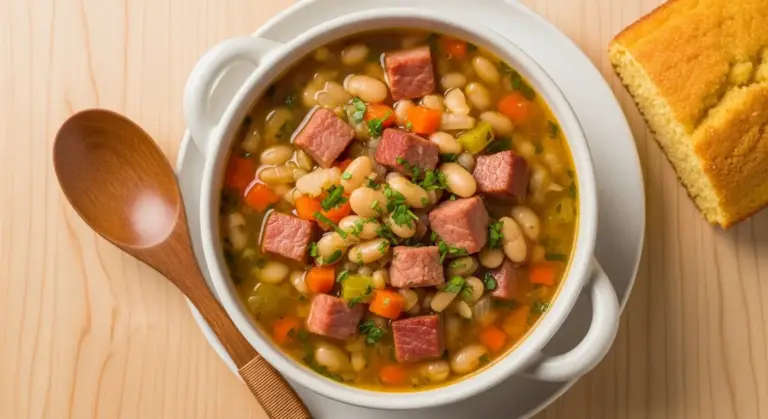
Every holiday table deserves a showstopping centerpiece, and this honey glazed ham recipe is exactly that. It’s the kind of dish that fills your kitchen with the most incredible sweet, savory aroma and somehow makes everyone wander in from the living room before dinner is even ready.
I’ve been making this for our family’s Easter and Christmas dinners for years now, and it’s the one recipe people always ask me to bring. The glaze is simple — just a few pantry staples — but the result is this gorgeous, lacquered, caramelized ham that tastes like it came from a fancy holiday restaurant.
The first time I made it, I honestly overcomplicated things. I thought I needed some elaborate spice rub, a complicated sauce, the works. Turns out, the magic is in keeping it simple and letting the quality of the ham and the honey do the talking.
This recipe is based on a bone-in, pre-cooked spiral-sliced ham, which is the most widely available and popular version for home cooks. It’s forgiving, feeds a crowd, and the results are absolutely stunning every single time.
| Quick Recipe Summary | |
|---|---|
| Prep Time | 15 minutes |
| Cook Time | 2 hours 30 minutes |
| Total Time | 2 hours 45 minutes |
| Servings | 12–14 servings |
| Difficulty Level | Easy |
If you love ham recipes, you’ll definitely want to check out my Spiral Ham Recipe for another crowd-pleasing holiday option.
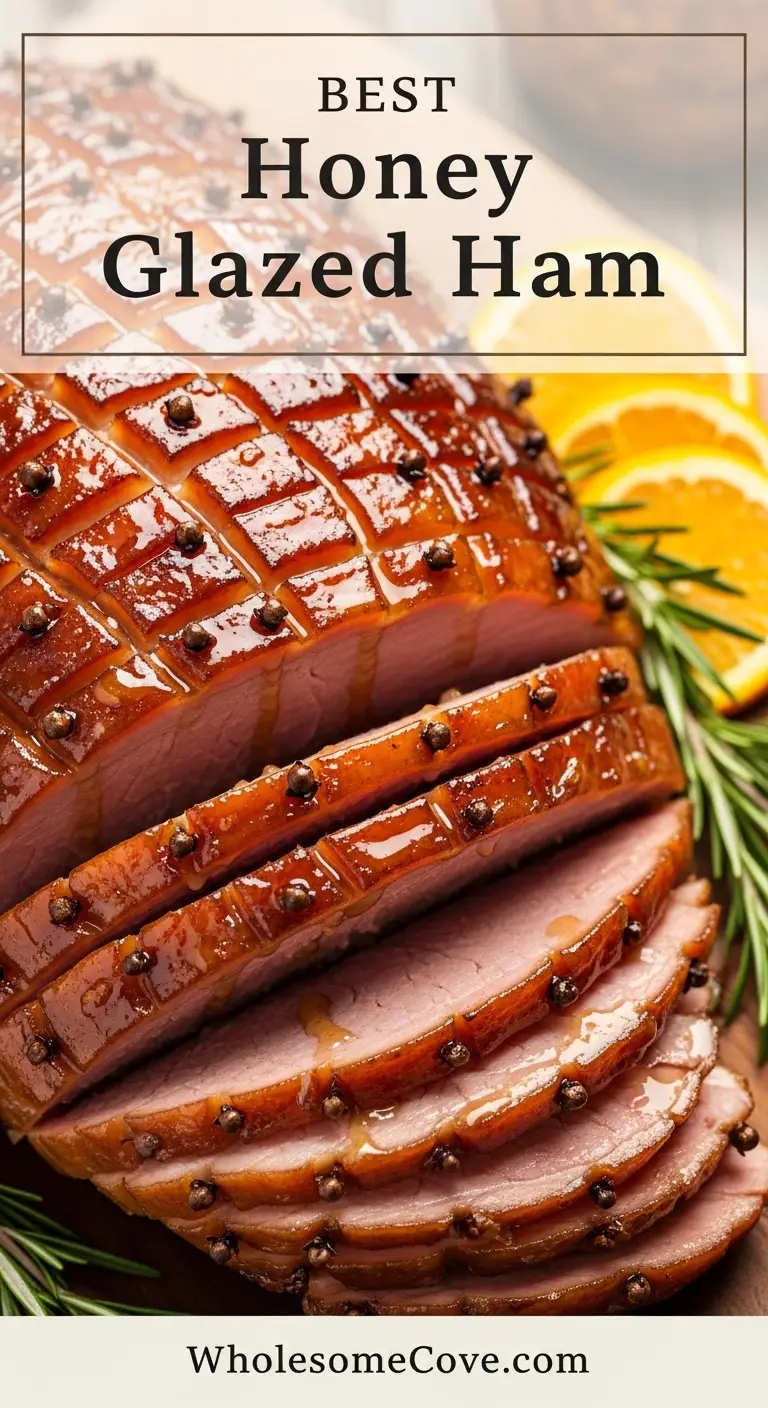
Why You’ll Love This Honey Glazed Ham Recipe
This honey glazed ham recipe checks every single box for a holiday main dish. It’s impressive enough to wow guests but relaxed enough that you won’t be stressed out all day.
The glaze is sweet, sticky, and deeply savory all at once. Brown sugar and honey caramelize into this beautiful lacquered coating that gets slightly crispy at the edges of each spiral slice.
It’s made with a pre-cooked ham, which means you’re really just heating it through and building flavor. No raw meat anxiety, no complicated food safety calculations.
The recipe is endlessly flexible. You can swap in maple syrup for the honey, add a splash of bourbon, or throw in some Dijon mustard for a little kick.
Even reheated leftovers the next day are something to look forward to. Ham sandwiches, ham and eggs, ham and potato soup — the possibilities are genuinely exciting.
Ingredients
The glaze comes together with simple pantry ingredients, but the quality of each one really does make a difference here. I always use a good local honey when I can find it — the flavor is so much richer than the generic stuff.
- 1 bone-in, pre-cooked spiral-sliced ham (8–10 lbs / 3.6–4.5 kg)
- ¾ cup (255 g) pure honey
- ½ cup (110 g) packed brown sugar (light or dark)
- 3 tablespoons (42 g) unsalted butter
- 2 tablespoons (30 ml) Dijon mustard
- 1 tablespoon (15 ml) apple cider vinegar
- 1 teaspoon ground cinnamon
- ½ teaspoon ground cloves
- ½ teaspoon garlic powder
- ¼ teaspoon black pepper
- ¼ teaspoon kosher salt
Read Also: Honey Baked Ham Recipe
Kitchen Equipment Needed
You don’t need much special equipment for this recipe, but a good roasting pan really does make a difference. A flimsy disposable pan can cause hot spots and uneven cooking, so it’s worth investing in something sturdy.
- Large roasting pan with rack (at least 15×12 inches / 38×30 cm)
- Heavy-duty aluminum foil
- Instant-read meat thermometer
- Pastry brush or basting brush
- Small saucepan
- Wooden spoon or heat-safe spatula
- Sharp carving knife
- Large cutting board
- Ladle (for basting)
- Oven mitts
Another favorite for holiday cooking: Slow Cooker Ham Recipe
Recommended Products for This Recipe
These are products I personally use and genuinely recommend after years of making this ham for holiday gatherings. They make the process smoother and the results even better.
1. Nordicware Pro Cast Aluminum Roaster with Rack
This roasting pan distributes heat incredibly evenly, which means your ham heats through without drying out on the edges. The included rack keeps the ham elevated so heat circulates all around it, and cleanup is surprisingly easy with a good soak. It’s heavy-duty enough to handle even the largest holiday ham without buckling.
2. ThermoWorks Thermapen ONE Instant-Read Thermometer
Knowing the exact internal temperature of your ham is the single biggest factor in avoiding a dry, overcooked result. The Thermapen ONE reads in under a second and is accurate to within 0.7°F (0.4°C). I’ve used mine for everything from ham to steak to baked goods and it has never let me down.
3. Raw Unfiltered Local Honey
The glaze is the star of this recipe, and using a high-quality, unfiltered honey makes a noticeable difference in depth of flavor. Look for local varietal honeys like wildflower or orange blossom, which have a more complex, floral sweetness compared to generic processed honey.
4. OXO Good Grips Silicone Basting Brush
A silicone basting brush is so much better than the old-fashioned bristle kind for this recipe. The bristles don’t fall off into your glaze, it’s dishwasher safe, and it holds a generous amount of glaze for even coating. It’s a small thing that makes the whole basting process much more satisfying.
You might also enjoy: Baked Ham Recipe
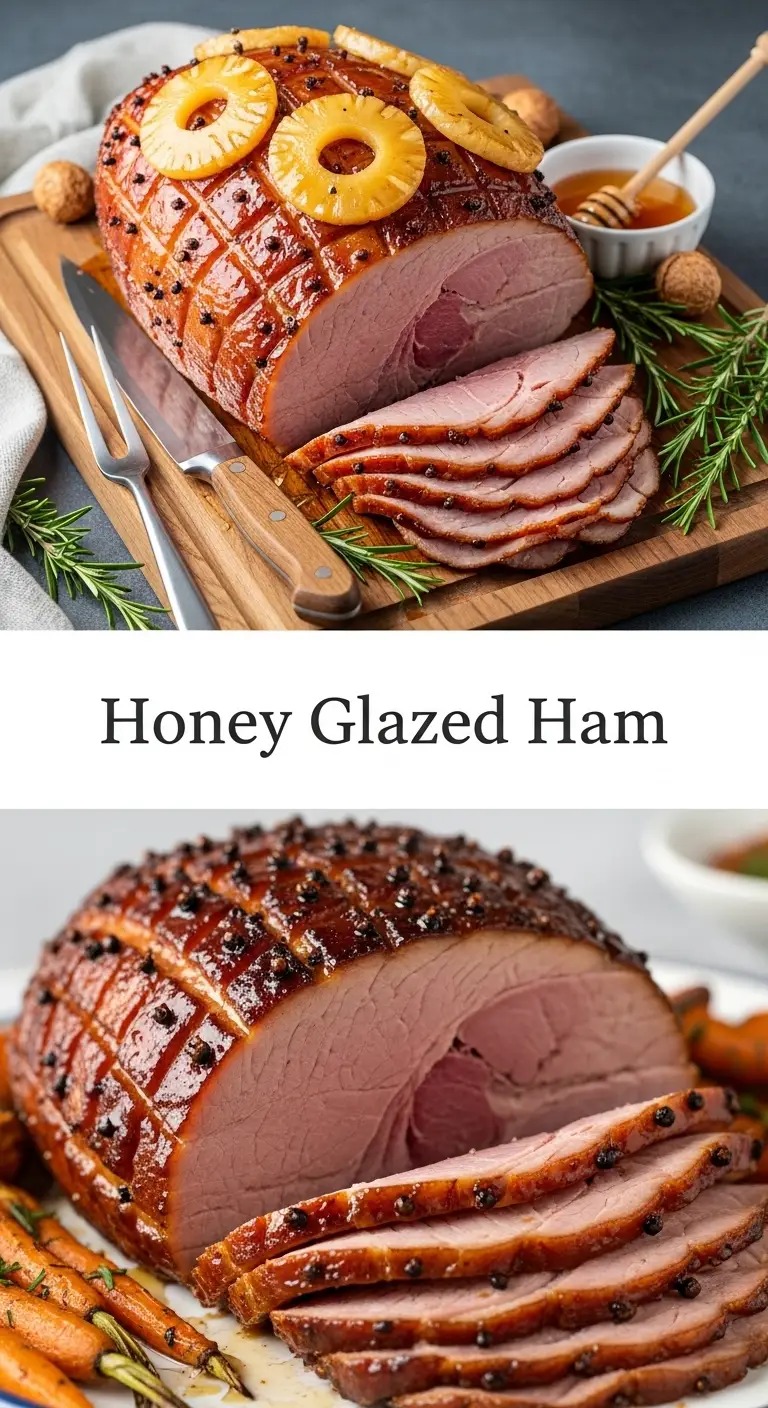
Step-by-Step Instructions: How to Make Honey Glazed Ham
Step 1: Take the Ham Out of the Refrigerator
- Remove your spiral ham from the refrigerator about 30–45 minutes before you plan to put it in the oven.
- Letting it come closer to room temperature helps it heat more evenly so the center doesn’t lag behind the outside.
- While you’re waiting, preheat your oven to 325°F (163°C) and position the oven rack in the lower third of the oven.
- Remove all packaging from the ham, including any plastic disk covering the bone end — that piece is not oven-safe.
- If your ham came with a glaze packet, set it aside. You won’t be using it with this recipe.
Step 2: Prepare the Ham for Roasting
- Place the roasting rack inside your roasting pan.
- Set the ham cut-side down on the rack. This helps keep the slices from drying out and allows the glaze to coat the exterior more evenly.
- Tent the ham loosely with heavy-duty aluminum foil, crimping it around the edges of the pan to seal in steam and moisture.
- The foil tent is important — it traps steam during the first phase of cooking, keeping the meat juicy.
- Transfer the pan to the preheated oven.
Step 3: Begin the Initial Roast
- Roast the foil-covered ham for approximately 12–15 minutes per pound (26–33 minutes per kg).
- For an 8 lb (3.6 kg) ham, that means about 1 hour and 40 minutes to 2 hours of covered cooking.
- For a 10 lb (4.5 kg) ham, plan for about 2 hours to 2 hours and 30 minutes covered.
- The goal during this phase is simply to heat the ham through to about 120–125°F (49–52°C) internally before you start glazing.
- Check the internal temperature using your instant-read thermometer inserted into the thickest part of the meat, away from the bone.
Step 4: Make the Honey Glaze
- About 30 minutes before the ham should finish its covered cooking time, make the glaze.
- In a small saucepan over medium heat, combine the honey (¾ cup / 255 g), brown sugar (½ cup / 110 g), and butter (3 tablespoons / 42 g).
- Stir constantly until the butter melts and the sugar fully dissolves — this takes about 2–3 minutes.
- Add the Dijon mustard (2 tablespoons / 30 ml), apple cider vinegar (1 tablespoon / 15 ml), cinnamon (1 teaspoon), cloves (½ teaspoon), garlic powder (½ teaspoon), black pepper (¼ teaspoon), and kosher salt (¼ teaspoon).
- Stir everything together and bring the mixture to a gentle simmer for 1–2 minutes, stirring constantly until it thickens slightly and looks glossy.
- Remove from heat. The glaze will continue to thicken as it cools slightly — you want it pourable but not watery.
Step 5: Glaze and Finish the Ham
- Remove the roasting pan from the oven and carefully peel back the foil tent.
- Use your basting brush to apply a generous layer of the warm glaze all over the surface of the ham, making sure to get it down into the spiral slices.
- Return the ham to the oven — this time uncovered — and roast for an additional 20 minutes.
- Pull the ham out and apply another layer of glaze, again working it into the spiral cuts.
- Return uncovered to the oven for another 15–20 minutes, until the glaze is caramelized, sticky, and deep amber in color.
- The internal temperature should now read between 140–145°F (60–63°C) — this is the USDA-recommended safe serving temperature for pre-cooked ham.
- If you want extra caramelization, you can switch the oven to broil for 2–3 minutes at the very end, watching carefully so the glaze doesn’t burn.
Step 6: Rest and Carve the Ham
- Remove the ham from the oven and let it rest, loosely tented with foil, for at least 15–20 minutes before carving.
- Resting allows the juices to redistribute through the meat so they don’t all run out the moment you start slicing.
- Transfer the ham to a large cutting board.
- For a spiral ham, the slices are already pre-cut — you can simply run your knife along the bone to release them in sections.
- Arrange the slices on a platter and drizzle any remaining glaze or pan juices over the top before serving.
Read Also: Ham Glaze Recipe
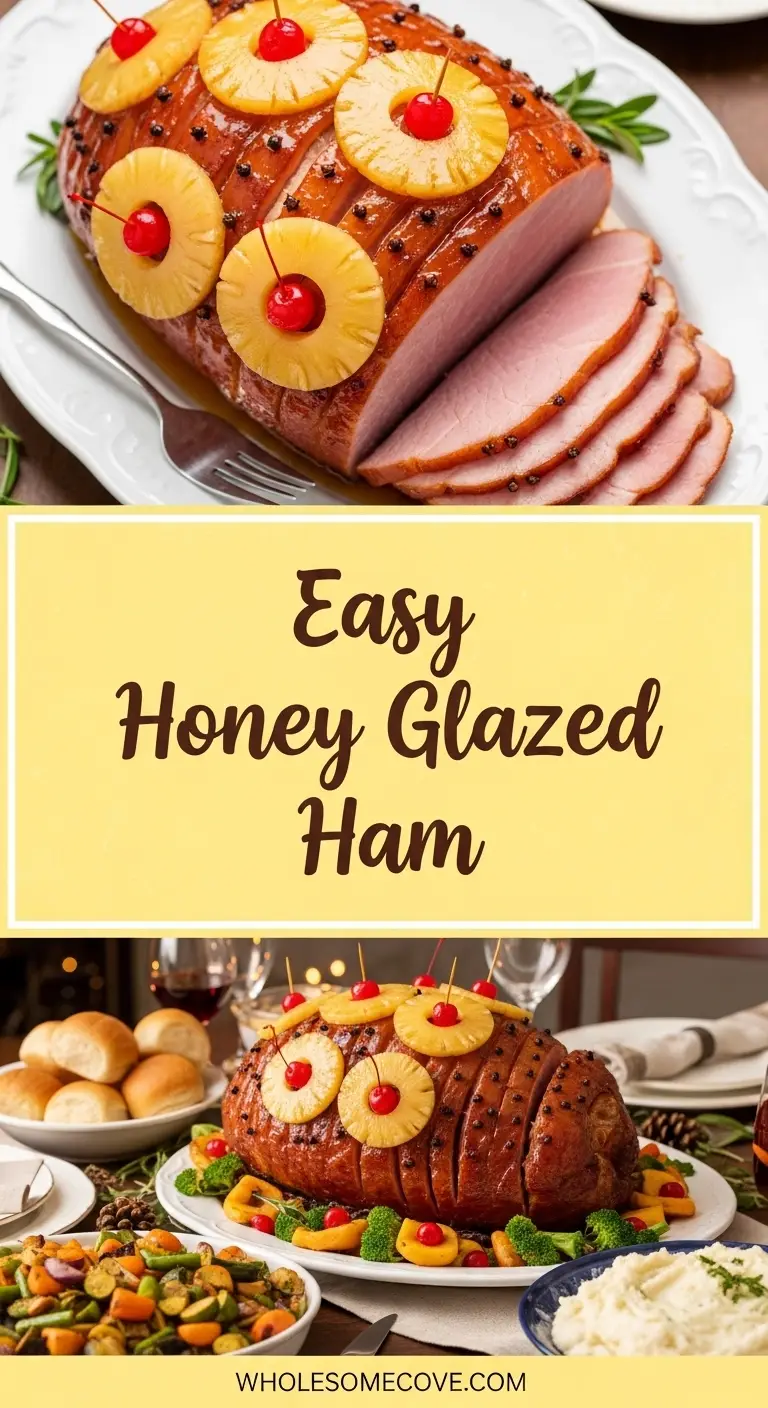
Tips for The Best Honey Glazed Ham
Getting this ham right comes down to a few key details that make the difference between good and unforgettable. I learned most of these the hard way, so hopefully you don’t have to.
- Don’t skip the foil tent. Roasting uncovered the entire time leads to a dried-out ham. The foil traps steam and keeps the meat moist during the long initial cooking phase.
- Use a bone-in ham. Bone-in hams have more flavor and stay juicier than boneless. The bone also helps conduct heat through the center of the meat.
- Apply the glaze in layers. One thick coat of glaze is more likely to burn before it caramelizes properly. Multiple thin coats, applied in the last 30–40 minutes of cooking, build depth and that gorgeous lacquered finish.
- Don’t rush the glaze making. If you skip the simmering step, the sugar won’t dissolve properly and the glaze will be grainy rather than smooth and glossy.
- Watch the broil setting closely. If you use the broiler for extra caramelization, don’t walk away. The glaze can go from perfect to burned in under a minute.
- Use a real thermometer. Guessing doneness by time alone is unreliable because ham sizes vary. An instant-read thermometer is the only way to know for sure.
- Save the pan drippings. The liquid left in the roasting pan is pure gold — it’s sweet, salty, and smoky. Spoon it over the ham slices when serving or use it as a base for a pan sauce.
- Let the ham come to room temperature first. This is the step most people skip, and it genuinely matters for even heating.
- Score the fat cap if your ham has one. Diamond scoring allows the glaze to penetrate deeper into the meat rather than just sitting on the surface.
- Double the glaze if you love extra caramelization. I always make extra and keep it warm on the stove so I can do additional coats during the final roasting phase.
For a similar low-and-slow approach, try this Smoked Ham Recipe for your next cookout.
What to Serve with Honey Glazed Ham
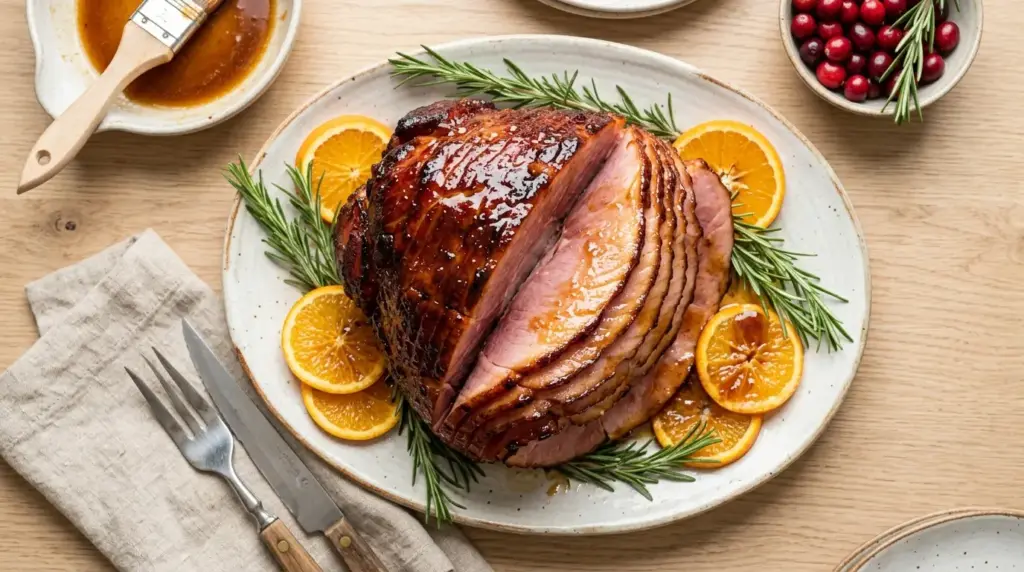
A honey glazed ham this good deserves sides that can keep up with it. I always try to balance the sweetness of the glaze with savory, starchy, and bright sides.
The goal is a spread that feels festive and complete without requiring you to spend the whole day in the kitchen on six different dishes at once.
- Scalloped Potatoes — creamy, cheesy, and the ultimate pairing with sweet ham
- Mashed Potatoes — fluffy and buttery, perfect for soaking up the pan juices
- Green Bean Casserole — a classic holiday side that complements the sweet glaze perfectly
- Dinner Rolls — soft, pillowy rolls for making little ham sandwiches right at the table
- Au Gratin Potatoes — rich and indulgent, an elevated alternative to mashed
- Broccoli Salad — a bright, crunchy contrast to all the richness on the table
- Deviled Eggs — a classic appetizer that doubles as a side and always disappears first
- Cranberry Sauce — the tartness cuts through the sweetness of the glaze beautifully
- Roasted Brussels Sprouts with Bacon — earthy, slightly bitter, and a lovely contrast to sweet ham
- Coleslaw — cool, crisp, and refreshing alongside the warm glazed ham
- Healthy Cornbread — slightly sweet cornbread is a natural match for honey-glazed pork
You might also enjoy: Sweet Potato Pie Recipe
Variations of Honey Glazed Ham
The base recipe is a classic, but there are so many easy ways to put your own spin on it. These are all tried-and-tested variations that still deliver that gorgeous caramelized crust.
Here are my favorite ways to customize this honey glazed ham:
- Maple Glazed Ham: Swap out the honey for pure maple syrup (same quantity) for a deeper, woodsy sweetness. This version is especially great paired with roasted sweet potatoes.
- Brown Sugar and Mustard Ham: Skip the honey entirely and double the brown sugar. Add an extra tablespoon of whole-grain Dijon for a more pungent, tangy glaze that’s less sweet.
- Bourbon Honey Glazed Ham: Add 2 tablespoons of bourbon to the glaze when you add the apple cider vinegar. The alcohol burns off during cooking and leaves behind a rich, smoky undertone.
- Pineapple Glazed Ham: Add ¼ cup (60 ml) of pineapple juice to the glaze and stud the surface of the ham with whole cloves and maraschino cherries for a retro presentation.
- Spicy Honey Glazed Ham: Add 1 teaspoon of sriracha or ½ teaspoon of cayenne pepper to the glaze for a sweet-heat combination that’s absolutely addictive.
- Orange Honey Glazed Ham: Replace the apple cider vinegar with the zest and juice of one large orange. The citrus brightens the entire flavor profile and makes the kitchen smell incredible.
- Slow Cooker Version: Place the ham in a large slow cooker, pour half the glaze over it, and cook on low for 4–6 hours, basting every hour. Finish under the broiler for caramelization.
- Smaller Ham (Half Ham): This recipe works perfectly with a 4–5 lb (1.8–2.3 kg) half ham — just halve the glaze recipe and reduce cooking time proportionally.
Read Also: Apple Cider Glazed Pork Chops Recipe
Storage and Reheating
One of the best things about making a whole glazed ham is the incredible leftovers you get for the rest of the week. Stored properly, this ham stays juicy and delicious for days.
Follow these tips to store and reheat your honey glazed ham without drying it out:
- Refrigerator storage: Wrap leftover ham tightly in plastic wrap or store it in an airtight container in the refrigerator for up to 4–5 days.
- Freezer storage: Slice or cube the leftover ham, portion it into freezer bags, and freeze for up to 2–3 months. Label with the date so you remember what it is.
- Thawing: Thaw frozen ham slices overnight in the refrigerator. Never thaw at room temperature.
- Reheating slices in the oven: Place slices in a baking dish, add a splash of water or chicken broth, cover tightly with foil, and heat at 300°F (149°C) for 10–15 minutes until warmed through.
- Reheating in the microwave: Place slices on a microwave-safe plate, cover with a damp paper towel, and heat on 60% power in 30-second intervals to avoid drying them out.
- Reheating the whole ham: If you have a large portion remaining, place it in a roasting pan with ¼ cup (60 ml) of water or apple juice, cover tightly with foil, and reheat at 275°F (135°C) for about 15 minutes per pound.
- Using leftovers: Leftover ham is perfect for omelets, sandwiches, fried rice, pasta, ham and potato soup, and split pea soup.
Another option for holiday leftovers: Pork and Sweet Potato Stew Recipe
Nutritional Facts
The following is an estimate per serving (based on 12 servings from an 8–10 lb bone-in ham with glaze). Values will vary based on the specific ham brand and exact portion size.
| Nutrient | Per Serving (approx. 5 oz / 140 g with glaze) |
|---|---|
| Calories | 380 kcal |
| Total Fat | 14 g |
| Saturated Fat | 5 g |
| Cholesterol | 100 mg |
| Sodium | 1,450 mg |
| Total Carbohydrates | 28 g |
| Sugars | 26 g |
| Protein | 32 g |
| Iron | 1.5 mg |
Note: Ham is naturally high in sodium due to the curing process. If you’re watching sodium intake, look for “low-sodium” or “natural” ham options at your grocery store, and reduce or omit the added salt in the glaze.
You might also enjoy: Potato Salad Recipe
Health Benefits of Key Ingredients
This isn’t the lightest dish on the holiday table, but a few of its key ingredients do offer some genuinely worthwhile nutritional benefits worth knowing about.
Here’s a closer look at what some of the star ingredients bring to the table:
- Ham (pork): A good source of complete protein, containing all essential amino acids. It’s also rich in B vitamins — particularly thiamine (B1), niacin (B3), and B12 — which are essential for energy metabolism and nervous system health.
- Honey: Raw honey contains antioxidants, including flavonoids and phenolic acids, which have been studied for their potential anti-inflammatory properties. It also has a lower glycemic index than refined white sugar, meaning it raises blood sugar more gradually.
- Dijon mustard: Made from mustard seeds, which are a source of selenium, magnesium, and omega-3 fatty acids. Mustard has been linked in some research to antioxidant and anti-inflammatory benefits.
- Apple cider vinegar: Contains acetic acid and trace amounts of potassium, magnesium, and amino acids. Some studies suggest it may support healthy blood sugar regulation when consumed with a meal.
- Cinnamon: One of the most antioxidant-rich spices available. Ceylon cinnamon in particular has been associated in multiple studies with improved blood sugar sensitivity.
- Garlic powder: Even in powdered form, garlic retains some of its allicin-derived compounds, which have been widely studied for cardiovascular and immune-supporting properties.
- Brown sugar: Provides quick energy and adds flavor, but nutritionally it is very close to white sugar and should be enjoyed in moderation.
- Butter: Contains fat-soluble vitamins A, D, E, and K2. When consumed in moderate amounts as part of a balanced diet, these vitamins support bone health and immune function.
Read Also: Honey Mustard Sauce Recipe
FAQs About Honey Glazed Ham
1. What type of ham should I use for honey glazed ham?
The best option for this recipe is a bone-in, pre-cooked spiral-sliced ham, typically sold at grocery stores year-round and always available around holidays. Pre-cooked ham means you’re just heating it through and adding flavor, which is much more forgiving than working with a raw ham.
Bone-in hams have better flavor than boneless, and the spiral slicing makes it easy to serve and allows the glaze to penetrate the meat more deeply.
2. Can I use a boneless ham instead?
Yes, you absolutely can. A boneless ham will work with this exact recipe and the same glaze. Just keep in mind that boneless hams tend to dry out slightly faster, so keep a close eye on the internal temperature and don’t overshoot 145°F (63°C).
Boneless hams are also easier to carve and serve, which makes them a practical choice for large gatherings.
3. How do I keep honey glazed ham from drying out?
The foil tent during the initial roasting phase is the most important tool for keeping the ham moist. It traps steam around the ham as it heats through, which prevents moisture from evaporating out of the meat.
After removing the foil for glazing, work quickly and don’t leave the ham uncovered in the oven longer than necessary to caramelize the glaze.
4. Can I make this honey glazed ham ahead of time?
You can absolutely make this in advance. Roast and glaze the ham fully, let it cool completely, then wrap it tightly and refrigerate for up to 2 days before serving.
To reheat, place it in a roasting pan with a splash of water or broth, cover tightly with foil, and warm at 300°F (149°C) for about 15 minutes per pound until heated through.
5. What do I do with leftover honey glazed ham?
Leftover honey glazed ham is incredibly versatile and arguably one of the best things about making a whole ham. Slice it for sandwiches, dice it for scrambled eggs or frittatas, or cube it for fried rice.
It’s also perfect stirred into a creamy pasta, layered on homemade pizza, or added to a pot of ham and potato soup — which is honestly one of the best ways to use up the bone too.
Read Also: Smoked Ham Recipe
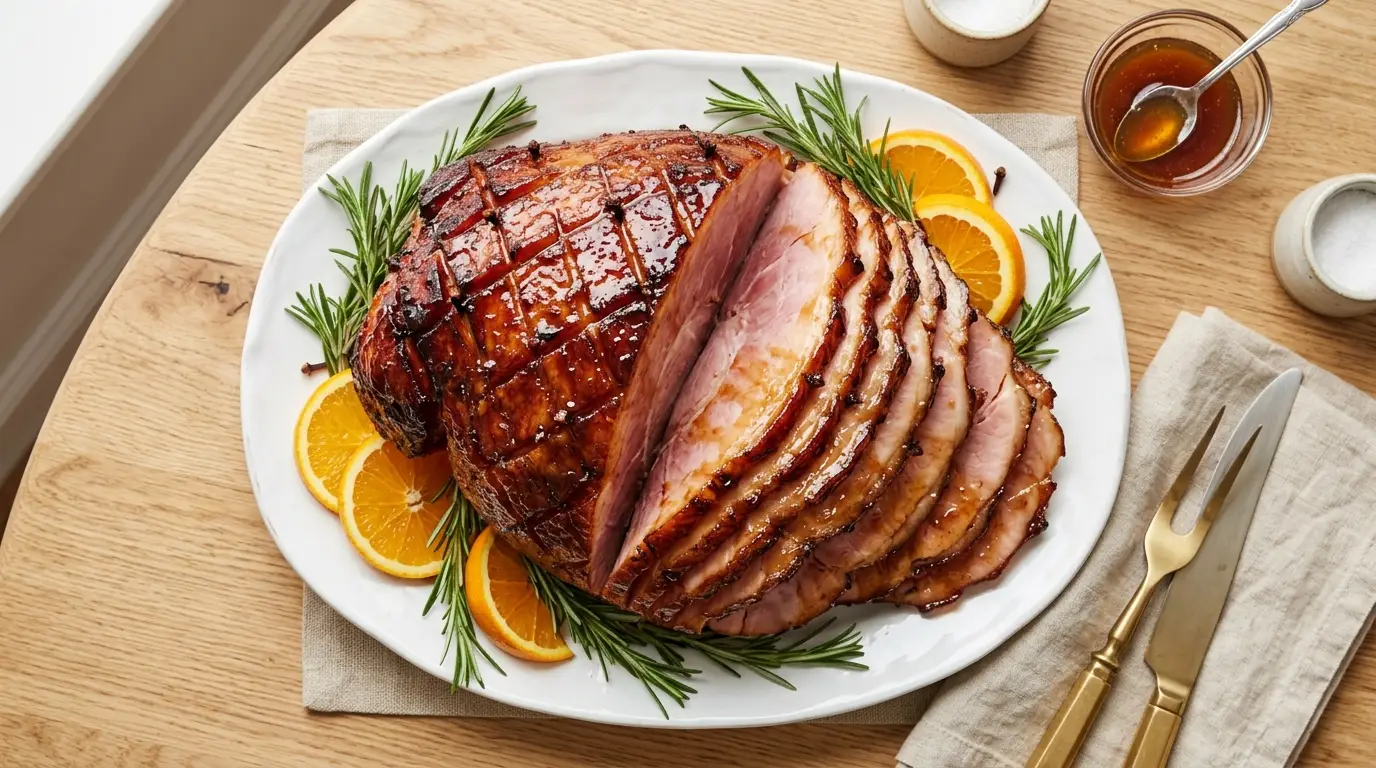
Honey Glazed Ham
Ingredients
- 1 bone-in pre-cooked spiral-sliced ham - 8–10 lbs (3.6–4.5 kg)
- 3/4 cup pure honey - 255 g; use raw or unfiltered honey for best flavor
- 1/2 cup packed brown sugar - 110 g; light or dark brown sugar both work
- 3 tablespoons unsalted butter - 42 g
- 2 tablespoons Dijon mustard - 30 ml
- 1 tablespoon apple cider vinegar - 15 ml
- 1 teaspoon ground cinnamon
- 1/2 teaspoon ground cloves
- 1/2 teaspoon garlic powder
- 1/4 teaspoon black pepper
- 1/4 teaspoon kosher salt
Equipment
- Large roasting pan with rack - At least 15×12 inches (38×30 cm); rack keeps ham elevated for even heat circulation
- Heavy-duty aluminum foil - For tenting the ham during the initial roasting phase
- Instant-read meat thermometer - Essential for checking internal temperature accurately
- Pastry brush or basting brush - Silicone recommended; for applying glaze layers
- Small saucepan - For making the honey glaze on the stovetop
- Wooden spoon or heat-safe spatula - For stirring the glaze
- Sharp carving knife - For releasing spiral slices from the bone
- Large cutting board - For resting and carving the ham
- Ladle - For basting with pan drippings
- Oven mitts - For safely handling the hot roasting pan
Method
- Remove the spiral ham from the refrigerator 30–45 minutes before baking and unwrap all packaging, including any plastic disk covering the bone end. Preheat your oven to 325°F (163°C) and position the rack in the lower third of the oven.
- Place the roasting rack inside the pan and set the ham cut-side down on the rack. Tent the ham loosely with heavy-duty aluminum foil, crimping the edges around the pan to seal in steam and moisture.
- Roast the foil-covered ham for 12–15 minutes per pound (26–33 min per kg) until the internal temperature reaches 120–125°F (49–52°C). Check the temperature with an instant-read thermometer inserted into the thickest part, away from the bone.
- In a small saucepan over medium heat, combine the honey, brown sugar, and butter, stirring until the butter melts and sugar dissolves, about 2–3 minutes. Add the Dijon mustard, apple cider vinegar, cinnamon, cloves, garlic powder, black pepper, and kosher salt, then simmer for 1–2 minutes until the glaze thickens slightly and turns glossy. Remove from heat.
- Remove the ham from the oven and carefully peel back the foil. Use a basting brush to apply a generous layer of the warm glaze all over the surface, working it down into the spiral slices.
- Return the ham uncovered to the oven for 20 minutes, then apply a second generous layer of glaze and roast uncovered for another 15–20 minutes until the glaze is caramelized, sticky, and deep amber in color, and the internal temperature reaches 140–145°F (60–63°C). For extra caramelization, broil for 2–3 minutes, watching closely to prevent burning.
- Remove the ham from the oven and let it rest, loosely tented with foil, for 15–20 minutes before carving. Run a sharp knife along the bone to release the spiral slices, arrange on a platter, and drizzle with any remaining glaze or pan juices before serving.
Nutrition
Notes
- Don’t skip the foil tent during the initial roast — it traps steam and keeps the ham moist throughout the long heating phase.
- Apply the glaze in multiple thin layers during the last 30–40 minutes of cooking for the best lacquered, caramelized finish. One thick coat is more likely to burn.
- Use a bone-in ham whenever possible — the bone adds flavor and helps conduct heat evenly through the center of the meat.
- Save every drop of the pan drippings to spoon over the sliced ham when serving, or use as a base for a simple pan sauce.
- For a bourbon variation, add 2 tablespoons of bourbon to the glaze when you add the apple cider vinegar — the alcohol cooks off and leaves a rich, smoky depth.
- For a maple version, swap the honey for an equal amount of pure maple syrup for a woodsy, caramel-forward glaze.
- Store leftover ham wrapped tightly in the refrigerator for up to 4–5 days, or freeze sliced portions in freezer bags for up to 3 months.
- To reheat, place slices in a covered baking dish with a splash of broth or water and warm at 300°F (149°C) for 10–15 minutes until heated through.
- If you want extra glaze penetration, score the fat cap in a diamond pattern before applying the glaze — this allows it to seep deeper into the meat.
- Leftover ham is perfect for ham and potato soup, fried rice, scrambled eggs, pasta, or sandwiches — the bone also makes an excellent stock base.
Private Notes
Tried this recipe?
Let us know how it was!Final Thoughts
A honey glazed ham this good has a way of becoming a family tradition all on its own. Once you make it, it becomes the dish people request by name every single holiday.
I hope this recipe gives you the confidence to make it your own — whether that’s adding a splash of bourbon, leaning into the maple syrup variation, or just following the classic version exactly as written.
Try it out this holiday season and let me know how it turns out in the comments below. I’d love to hear if you made any fun swaps or served it alongside a new side dish.
Recommended:
- Baked Ham Recipe
- Slow Cooker Ham Recipe
- Ham Glaze Recipe
- Honey Baked Ham Recipe
- Thanksgiving Stuffing Recipe
- Funeral Potatoes Recipe
- Mashed Potatoes Recipe
- Roasted Potatoes Recipe
- Twice Baked Potatoes Recipe
- Turkey Gravy Recipe