My first attempt at a Bolognese recipe was, to put it kindly, a disaster.

I dumped a pound of ground beef into a pan, threw in a jar of marinara sauce, let it bubble for twenty minutes, and called it done.
It tasted fine. But my Italian neighbor, who watched me eat it with an expression I can only describe as quiet devastation, gently told me I had made “pasta with meat in it.” Not Bolognese.
That conversation sent me down a rabbit hole. I started reading, testing, failing, and trying again.
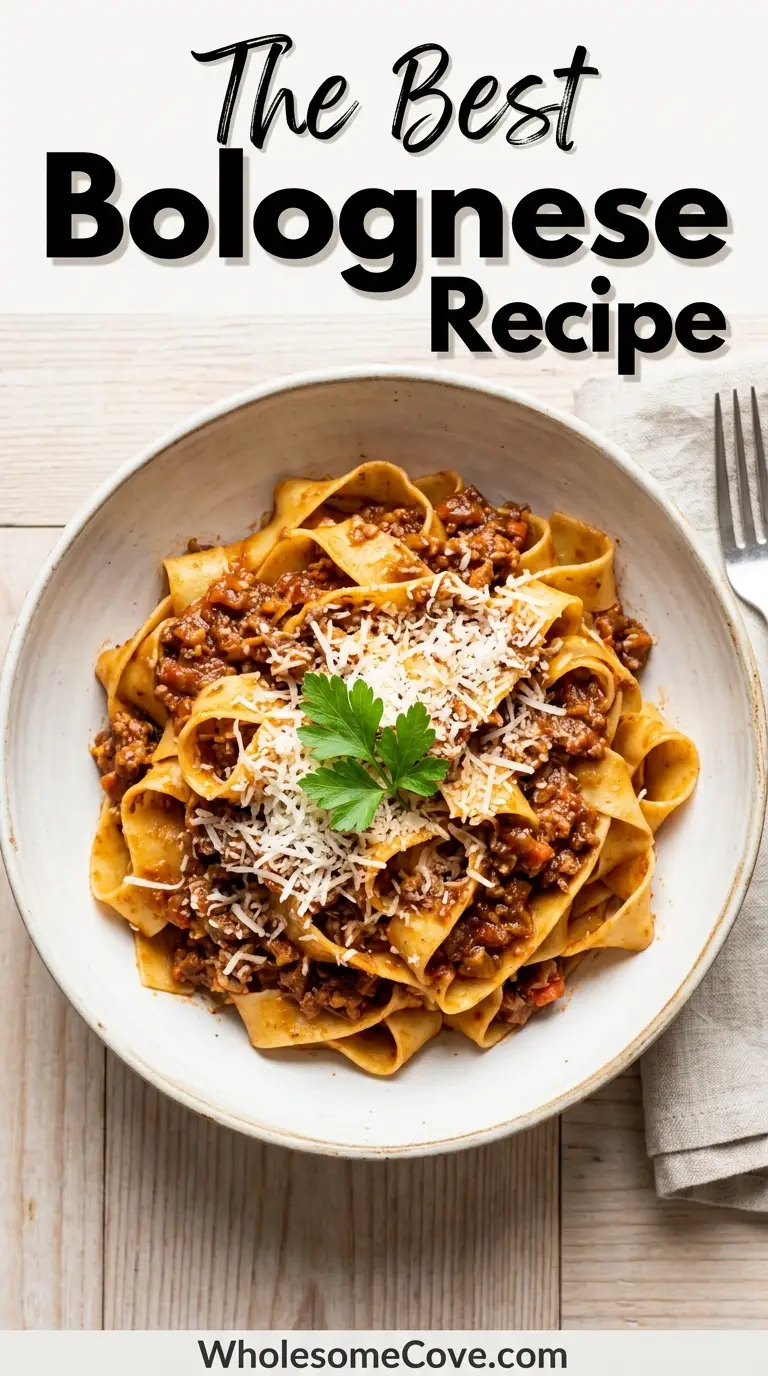
What I eventually landed on is this recipe. It uses a soffritto of onion, carrot, and celery, a mix of ground beef and pork, a splash of white wine, tomato paste, crushed tomatoes, and a finish of whole milk that makes the sauce silky and just slightly sweet. And it simmers low and slow for at least three hours.
It is nothing like that first attempt. And it is absolutely worth every minute on the stove.
| Quick Recipe Summary | |
|---|---|
| Prep Time | 20 minutes |
| Cook Time | 3 hours 15 minutes |
| Total Time | 3 hours 35 minutes |
| Servings | 6 servings |
| Difficulty Level | Easy (but patient) |
If you love rich Italian meat sauces, you’ll also want to try this Spaghetti Sauce Recipe that’s perfect for a quicker weeknight version.
Why You’ll Love This Bolognese Recipe
This sauce is the kind of thing that makes your whole house smell incredible for hours.
Your family will start wandering into the kitchen with hopeful expressions about two hours into the cook time, and you’ll feel unreasonably smug about it.
It’s a true low-effort, high-reward recipe. Most of the time is completely hands-off while the pot does all the work.
The combination of beef and pork gives the sauce a depth and richness that straight ground beef simply can’t match.
And that splash of whole milk at the end? It was the detail I skipped for years, and it makes a remarkable difference. The milk rounds out the acidity from the tomatoes and gives the sauce a gentle creaminess.
This also freezes beautifully. I always make a double batch so I have portions tucked away for busy weeknights when I need something that tastes like it took all day.
- Deep, complex flavor: The slow simmer develops layers of savory, slightly sweet, and umami-rich flavor that’s completely different from a quick meat sauce.
- Incredibly versatile: Use it over pappardelle, tagliatelle, rigatoni, or spoon it into a lasagna or stuffed shells. It works on everything.
- Make-ahead friendly: Bolognese genuinely tastes better the next day as the flavors continue to meld overnight.
- Feeds a crowd: A single batch makes six generous servings, and it scales up effortlessly.
- Freezer gold: Freeze in portions for up to 3 months and have a restaurant-quality dinner ready on any night.
- No special skills required: The techniques are simple. The only requirement is patience with the simmering time.
- Classic and crowd-pleasing: Adults and kids both love it, making it one of the most reliable dinner recipes in my rotation.
Another favorite for an Italian-inspired night: Lasagna Recipe.
Ingredients
You don’t need a long list of exotic items to make a great Bolognese. What you need is good-quality basics and the willingness to let them cook slowly.
- 2 tbsp (30 ml) extra-virgin olive oil
- 1 tbsp (14 g) unsalted butter
- 1 medium yellow onion, finely diced (about 1 cup / 150 g)
- 2 medium carrots, peeled and finely diced (about ¾ cup / 90 g)
- 2 stalks celery, finely diced (about ½ cup / 60 g)
- 3 cloves garlic, minced
- 1 lb (450 g) ground beef (80/20 blend preferred)
- ½ lb (225 g) ground pork
- 1 tsp kosher salt, plus more to taste
- ½ tsp freshly ground black pepper
- 2 oz (56 g) pancetta, finely diced (optional but recommended)
- ½ cup (120 ml) dry white wine (Pinot Grigio or Sauvignon Blanc)
- 2 tbsp (32 g) tomato paste
- 1 can (28 oz / 800 g) crushed San Marzano tomatoes
- 1 cup (240 ml) beef broth or chicken broth
- 1 bay leaf
- ¼ tsp ground nutmeg
- ½ cup (120 ml) whole milk
- Fresh Parmesan cheese, for serving
- 1 lb (450 g) pappardelle or tagliatelle pasta, for serving
Read Also: Marinara Sauce Recipe
Kitchen Equipment Needed
You don’t need anything fancy, but a few key tools will make this recipe much easier and produce better results.
- Dutch oven or heavy-bottomed pot (at least 5 qt / 4.7 L): This is the single most important piece of equipment. The heavy base distributes heat evenly and prevents scorching during the long simmer.
- Sharp chef’s knife: For finely dicing the soffritto vegetables. Size and uniformity matter here for even cooking.
- Cutting board: A large, stable surface makes prepping the vegetables much easier.
- Wooden spoon or silicone spatula: For breaking up the meat and stirring.
- Meat chopper/masher tool: This inexpensive tool breaks ground meat into fine, even crumbles and is genuinely worth every cent.
- Large pot: For boiling the pasta separately.
- Colander: For draining the pasta.
- Ladle: For serving.
- Measuring cups and spoons: For accurate ingredient amounts.
You might also enjoy: Pasta Fagioli Recipe
Recommended Products for This Recipe
These are the products I personally reach for every time I make this Bolognese, and they genuinely make a difference in the final result.
1. San Marzano Crushed Tomatoes
San Marzano tomatoes are sweeter, less acidic, and have a denser flesh than regular canned tomatoes, which makes a noticeable difference in the final sauce. I switched to them a few years ago and never looked back. The depth of flavor they add is worth the slightly higher price tag.
2. Le Creuset Dutch Oven
I’ve cooked this Bolognese in everything from a thin stainless skillet to this enameled cast iron Dutch oven, and the Dutch oven wins by a wide margin. The heat retention means a more even, gentle simmer, which is exactly what this sauce needs. It’s an investment, but it will outlast everything else in your kitchen.
3. Double Concentrated Tomato Paste
Regular tomato paste is fine, but double concentrated tomato paste packs twice the punch in the same amount, giving the sauce a more intense, deeper tomato flavor without adding extra liquid. It comes in a tube so you can use just what you need without wasting the rest of a can.
4. Pappardelle Pasta
Bolognese traditionally pairs with wide, flat noodles. Dried pappardelle works well, but a high-quality bronze-die cut version has a rougher texture that holds onto the sauce beautifully. It’s the pasta I use every single time I make this recipe.
Read Also: Sunday Gravy Recipe
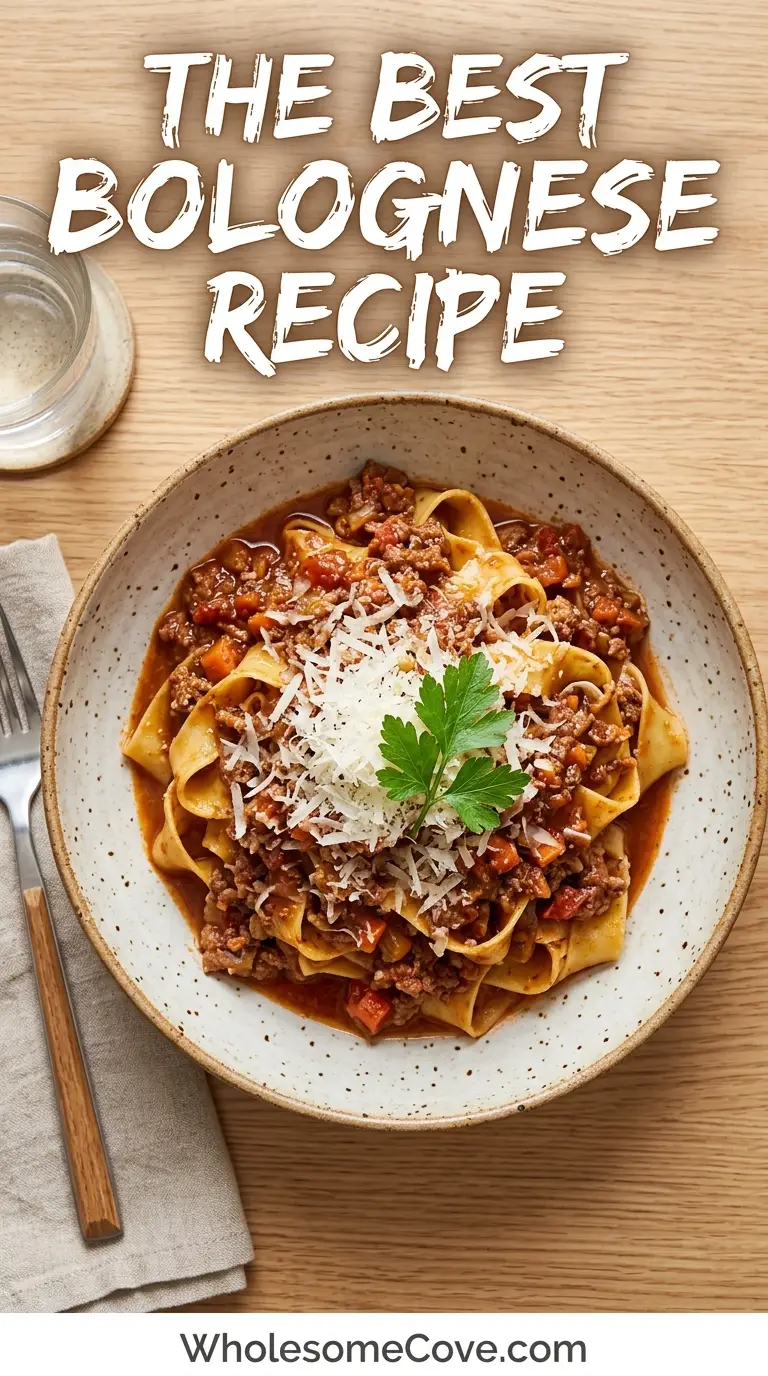
Step-by-Step Instructions: How to Make Bolognese Sauce
Step 1: Prepare Your Vegetables (The Soffritto)
- Peel and finely dice the carrots into pieces no larger than ¼ inch (0.5 cm). Consistency in size matters because it ensures everything cooks evenly.
- Finely dice the celery stalks to match the size of the carrot pieces.
- Finely dice the yellow onion. The goal is a small, uniform dice. You want the vegetables to melt into the sauce during the long cook, not remain chunky.
- Mince the garlic cloves finely and set aside separately from the other vegetables. Garlic goes in a bit later so it doesn’t burn.
- If using pancetta, finely dice it as well. Set everything aside and have it ready before you start cooking.
Step 2: Cook the Pancetta
- Place your Dutch oven or heavy pot over medium heat.
- Add the diced pancetta and cook, stirring occasionally, for about 5 minutes until the fat renders out and the pancetta begins to turn golden.
- You don’t need to drain the fat. That rendered pork fat is your cooking base and adds enormous flavor to the finished sauce.
- If you’re skipping the pancetta, move directly to Step 3 with your olive oil and butter.
Step 3: Soften the Soffritto
- Add the olive oil and butter to the pot (with or without the pancetta fat, depending on whether you used pancetta).
- Add the diced onion, carrot, and celery. Stir to combine and coat everything in the fat.
- Cook over medium-low heat, stirring occasionally, for 8 to 10 minutes until the vegetables are very soft and the onion is translucent and beginning to turn golden at the edges.
- Do not rush this step. Properly softened soffritto is the flavor foundation of the entire sauce. If you cook it too fast on high heat, you’ll get unevenly cooked vegetables with raw centers.
- Add the minced garlic and stir to combine. Cook for 1 to 2 minutes until fragrant, stirring constantly so the garlic doesn’t burn.
Step 4: Brown the Meat
- Increase the heat to medium-high.
- Add the ground beef and ground pork directly to the pot with the soffritto.
- Season immediately with 1 tsp kosher salt and ½ tsp black pepper.
- Using a meat chopper or the back of your wooden spoon, break the meat into very fine crumbles as it cooks. The goal is small, uniform pieces that integrate with the sauce, not large chunks.
- Cook the meat, stirring and breaking it up frequently, for about 10 to 12 minutes. You want it fully browned with no pink remaining. More importantly, you want the moisture that the meat releases to evaporate completely. If the meat looks like it’s steaming in liquid rather than browning, that’s fine. Just keep cooking until the liquid evaporates and the meat starts to actually fry and brown in the fat.
Step 5: Deglaze with White Wine
- Once the meat is fully browned and any liquid has evaporated, increase the heat to high.
- Pour in the ½ cup (120 ml) of dry white wine. You’ll hear a satisfying sizzle and see the liquid bubble up rapidly.
- Use your wooden spoon to scrape up any browned bits stuck to the bottom of the pot. Those browned bits are concentrated flavor, and they’ll dissolve into the sauce.
- Cook over high heat for about 2 to 3 minutes until the wine has almost completely evaporated and you can no longer smell the sharp alcohol aroma. You’ll notice the steam smells more savory and mellow when the alcohol has cooked off.
Step 6: Add the Tomato Paste and Tomatoes
- Reduce the heat back to medium.
- Add the 2 tbsp (32 g) of tomato paste directly to the meat and soffritto mixture.
- Stir continuously and cook the tomato paste for 2 to 3 minutes, letting it toast slightly in the fat. This step caramelizes the tomato paste and deepens its flavor considerably. You’ll notice it darkens slightly in color.
- Pour in the entire can of crushed San Marzano tomatoes and stir everything together thoroughly.
- Add the cup (240 ml) of beef or chicken broth and stir to combine.
- Add the bay leaf and the ¼ tsp of ground nutmeg. Stir to incorporate.
Step 7: Simmer Low and Slow
- Bring the sauce to a gentle boil, then immediately reduce the heat to the lowest setting your stove allows.
- Place the lid on the pot, tilted slightly to allow a little steam to escape.
- Let the sauce simmer on the lowest possible heat for a minimum of 2.5 to 3 hours, stirring every 20 to 30 minutes to prevent any sticking at the bottom.
- The sauce should be barely bubbling during this time. If it’s bubbling vigorously, it’s too hot. Lower the heat or use a heat diffuser under the pot.
- As it cooks, the sauce will thicken and deepen in color. The fat from the meat may separate to the top, which is completely normal. Stir it back in each time you check on the sauce.
- If the sauce looks too thick at any point before the simmer time is up, add a small splash of broth or water to loosen it. If it looks thin after the full simmer, remove the lid for the last 20 to 30 minutes to allow more liquid to evaporate.
Step 8: Finish with Milk and Adjust Seasoning
- After the sauce has simmered for the full time, remove and discard the bay leaf.
- Pour in the ½ cup (120 ml) of whole milk. Stir it in thoroughly and let the sauce cook for another 5 to 10 minutes over low heat. You’ll notice the color of the sauce lighten slightly and the overall texture become silkier.
- Taste the sauce and adjust the seasoning with salt and pepper as needed.
- At this point, the sauce is done and ready to serve. If you’re not serving it immediately, remove it from the heat and cover.
Step 9: Cook the Pasta and Serve
- Bring a large pot of generously salted water to a rolling boil. Use about 1 tablespoon of salt per gallon (4 L) of water. Properly salted pasta water makes a real difference.
- Add the pappardelle or tagliatelle and cook according to the package directions until al dente (just barely tender with a slight bite in the center).
- Reserve about 1 cup (240 ml) of the starchy pasta water before draining. This is your insurance policy. If the sauce needs loosening when you toss the pasta, a splash of pasta water will bring it all together without diluting the flavor.
- Drain the pasta, return it to the pot, and add several large ladles of Bolognese. Toss gently to coat. Add a splash of reserved pasta water if needed.
- Serve immediately in warm bowls with a generous grating of fresh Parmesan cheese over the top.
For another showstopping pasta night, try making this Baked Ziti Recipe with any leftover sauce.
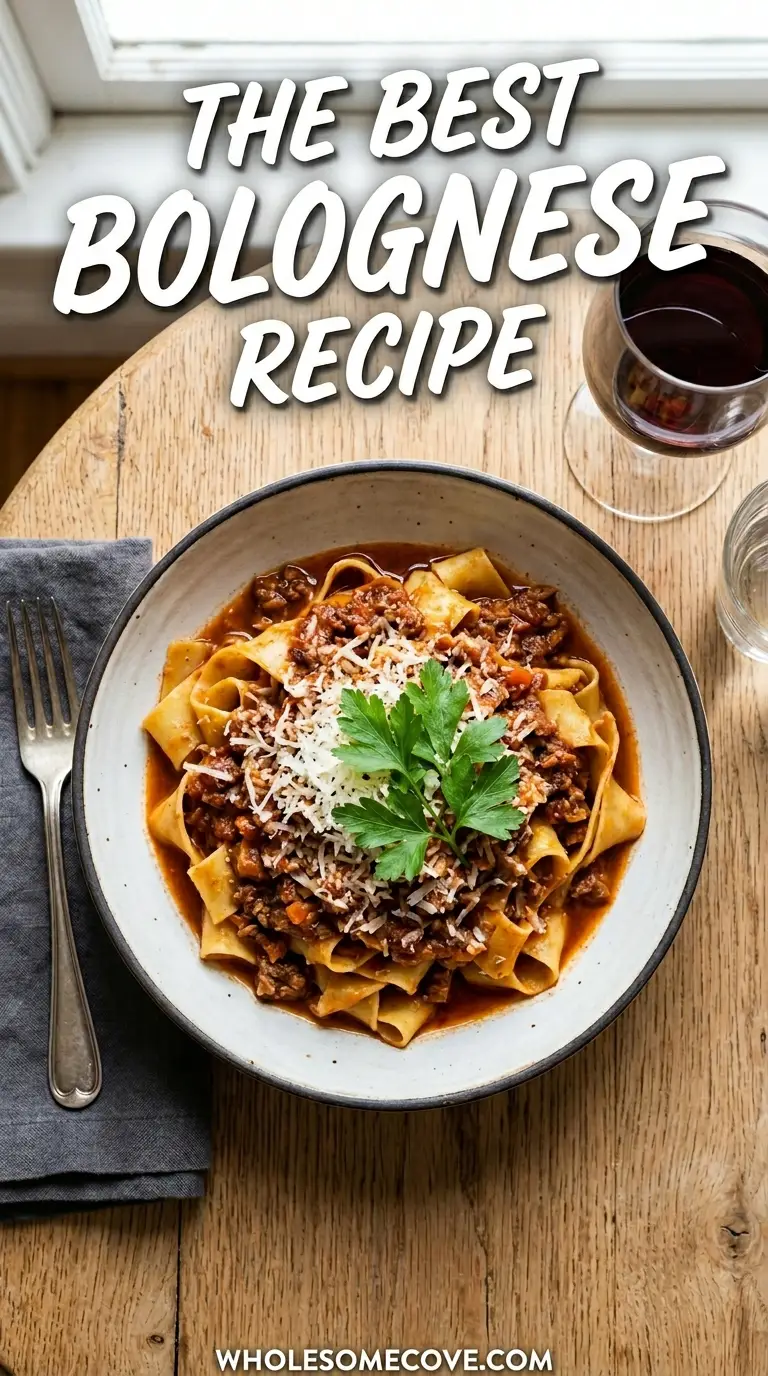
Tips for The Best Bolognese Sauce
The difference between a good Bolognese and a great one comes down to a handful of small, intentional choices.
- Use a mix of beef and pork: Ground pork has a higher fat content and a slightly sweeter flavor than beef, which balances the sauce and gives it incredible richness. Using only beef produces a leaner, slightly one-dimensional result. If you want to go further, adding a small amount of ground veal (about ¼ lb / 115 g) in place of some pork makes the sauce even more silky and delicate.
- Don’t skip the soffritto cook time: Those 8 to 10 minutes of cooking the vegetables low and slow are not negotiable. Rushing this step means the vegetables retain too much moisture and raw flavor, which shows up in the finished sauce.
- Get the meat genuinely browned: A lot of home cooks stop browning the meat too early. You want the moisture completely evaporated and the meat starting to fry in the fat. This browning develops deep savory flavor through the Maillard reaction.
- Let the wine fully cook off: Pour off the wine on high heat and wait until the sharp alcohol smell is completely gone before moving on. Residual alcohol leaves an unpleasant edge in the finished sauce.
- Toast the tomato paste: Cooking the tomato paste in the fat for 2 to 3 minutes before adding the crushed tomatoes caramelizes its natural sugars and removes the raw, slightly tinny flavor. Never skip this step.
- Low and slow is the only way: Three hours of gentle simmering is not optional. It’s how the flavors meld, the meat becomes tender, and the sauce develops that characteristic rich depth. High-heat shortcuts don’t produce the same result.
- The milk really matters: Don’t substitute with cream or skip it entirely. Whole milk gently tenderizes the meat protein and neutralizes the tomato’s acidity, producing a more rounded, less sharp flavor profile. Add it at the very end and give it a few minutes to fully incorporate.
- Taste and season generously at the end: The sauce should be rich and savory. If it tastes flat, it likely needs more salt. Add it in small increments and taste after each addition.
- Make it the day before: I genuinely believe Bolognese tastes better the next day. The flavors have more time to settle and deepen. Reheat it gently over low heat with a small splash of broth to loosen it if needed.
Read Also: Tomato Sauce Recipe
What to Serve with Bolognese Sauce
Bolognese is a hearty, filling sauce that really only needs a few simple things alongside it to make a complete and satisfying meal.
The most natural pairing is always fresh, crusty bread to mop up every last bit of sauce from the bowl. A simple, lightly dressed green salad cuts through the richness and refreshes the palate between bites.
- Garlic Parmesan Sauce drizzled over toasted ciabatta makes a perfect side starter alongside the pasta.
- Roasted Potatoes work surprisingly well as an alternative starch if you want to skip pasta entirely.
- Creamed Spinach is a rich, classic Italian-American side that pairs beautifully with the meaty sauce.
- Broccoli Salad adds freshness and crunch to balance the heavy sauce.
- Healthy Bruschetta on grilled bread makes an easy starter to serve before the main course arrives.
- Dinner Rolls straight from the oven are pure comfort alongside a bowl of this sauce.
- Authentic Italian Tiramisu is the ideal dessert to finish the meal and keep the Italian theme going.
Another great Italian dinner option: Chicken Parmesan Recipe
Variations of Bolognese Sauce
The traditional recipe is my favorite, but Bolognese is actually quite adaptable once you understand the fundamentals.
- All-beef Bolognese: If pork isn’t an option for dietary or personal reasons, you can make the sauce with 1.5 lbs (680 g) of ground beef instead. Use an 80/20 blend for the best flavor. The sauce will be slightly less sweet and a touch leaner, but still deeply flavorful.
- Beef and veal Bolognese: Replacing the pork with an equal amount of ground veal produces a more delicate, refined sauce that’s closer to the traditional Bolognese registered in Bologna in 1982. Veal is milder and more tender than pork, giving the sauce a silkier texture.
- Pork and sausage Bolognese: Swap the ground pork for mild Italian sausage (casings removed) for a more assertive, herb-forward flavor. This version has a slightly spicier, more complex profile that many people prefer.
- Slow cooker Bolognese: Complete all the stovetop steps through adding the crushed tomatoes, then transfer everything to a slow cooker. Cook on Low for 6 to 8 hours or on High for 4 to 5 hours. Add the milk in the last 30 minutes.
- Bolognese for lasagna: Make the sauce with slightly less broth (about ¾ cup / 180 ml) so it’s thicker and more concentrated. Layer it with béchamel sauce and lasagna noodles for a truly classic Italian lasagna.
- Vegetarian Bolognese: Replace the meat with a combination of finely chopped mushrooms (about 1 lb / 450 g), walnuts, and lentils. The soffritto, wine, tomatoes, and milk all remain the same. The result is surprisingly hearty and satisfying.
- White Bolognese (Bolognese Bianco): Omit the tomatoes and tomato paste entirely. Increase the wine to ¾ cup (180 ml) and add an extra ¼ cup (60 ml) of milk. The result is a creamier, milder sauce with a completely different character.
Read Also: Stuffed Shells Recipe
Storage and Reheating
One of the best things about this recipe is that it stores and reheats extremely well, often tasting even better as leftovers.
- Refrigerator: Allow the sauce to cool completely to room temperature before transferring it to an airtight container. It will keep in the refrigerator for up to 4 to 5 days.
- Freezer: Bolognese freezes beautifully. Portion cooled sauce into airtight freezer containers or heavy-duty zip-lock freezer bags, leaving about an inch of space at the top for expansion. Label with the date. It will keep for up to 3 months in the freezer.
- Thawing: Transfer frozen Bolognese to the refrigerator the night before you plan to use it. Allow it to thaw fully in the refrigerator rather than on the countertop.
- Reheating on the stovetop: Pour the sauce into a saucepan and reheat over low to medium-low heat, stirring occasionally. The sauce will have thickened significantly in the refrigerator or freezer. Add a splash of beef broth, pasta water, or plain water to loosen it to your preferred consistency as it heats.
- Reheating in the microwave: Transfer a portion to a microwave-safe bowl, cover loosely with a damp paper towel to prevent splattering, and microwave in 60-second intervals, stirring between each, until heated through.
- Important reheating tip: Never bring leftover Bolognese to a rolling boil when reheating. A gentle, low simmer preserves the texture of the meat and keeps the sauce from becoming grainy.
- Do not freeze sauce that has already been tossed with pasta. Freeze only the sauce on its own, and cook fresh pasta when you’re ready to serve.
You might also enjoy: Beef Stew Recipe
Nutritional Facts
The following nutritional information is an estimate per serving (sauce only, without pasta), based on a yield of 6 servings.
| Nutrient | Per Serving | ||| | Calories | ~420 kcal | | Total Fat | 26 g | | Saturated Fat | 10 g | | Cholesterol | 90 mg | | Sodium | 510 mg | | Total Carbohydrates | 14 g | | Dietary Fiber | 3 g | | Sugars | 7 g | | Protein | 30 g | | Iron | 3.5 mg | | Calcium | 80 mg |
Nutritional values are estimates and may vary depending on specific brands and ingredients used.
Read Also: Lasagna Soup Recipe
Health Benefits of Key Ingredients
Bolognese is a rich, indulgent sauce, but many of its core ingredients carry real nutritional value worth acknowledging.
The soffritto base alone delivers a significant dose of vitamins, antioxidants, and plant compounds that support overall health, making this a more nutritious choice than it might appear at first glance.
- Ground beef: A rich source of complete protein, providing all essential amino acids. It also delivers significant amounts of iron (supporting red blood cell production), zinc (supporting immune function), and B vitamins including B12, which is essential for neurological health.
- Ground pork: Pork is high in thiamine (vitamin B1), which is critical for energy metabolism. It also provides selenium, an important antioxidant mineral, and a complete amino acid profile comparable to beef.
- Carrots: Loaded with beta-carotene, which the body converts to vitamin A. Vitamin A supports vision health, immune function, and skin integrity. Carrots also provide dietary fiber and potassium.
- Celery: Low in calories but a solid source of vitamin K, which plays a key role in blood clotting and bone health. Celery also contains antioxidants including apigenin and luteolin.
- Onion: Onions are rich in quercetin, a flavonoid with anti-inflammatory and antioxidant properties. They also provide prebiotic fiber that supports gut health.
- Garlic: One of the most studied functional foods in the world. Garlic contains allicin, a sulfur compound associated with cardiovascular benefits, antimicrobial properties, and immune support.
- Tomatoes: San Marzano tomatoes are an excellent source of lycopene, a powerful antioxidant associated with reduced risk of certain cancers and cardiovascular disease. Cooking tomatoes actually increases lycopene bioavailability compared to raw tomatoes.
- Olive oil: A cornerstone of the Mediterranean diet, extra-virgin olive oil is rich in monounsaturated fatty acids and polyphenols associated with reduced inflammation and improved heart health.
Another comforting Italian dish to love: Italian Wedding Soup Recipe
FAQs About Bolognese Sauce
1. What is the difference between Bolognese and regular meat sauce?
Regular meat sauce (often called marinara with meat, or spaghetti sauce) is primarily a tomato-based sauce with ground meat added. Bolognese, by contrast, is a meat-centric sauce where tomato plays a secondary supporting role.
The other key differences are the soffritto base of carrot, celery, and onion, the use of wine to deglaze, and the finish of whole milk, which gives Bolognese its characteristic silkiness and slightly sweet richness that regular meat sauce doesn’t have.
2. Do I really need to simmer Bolognese for 3 hours?
Yes, and this is genuinely non-negotiable for the real thing. The extended simmer is what breaks down the connective tissue in the meat, develops the complex layered flavor, and allows the sauce to thicken to its signature consistency.
You can technically eat the sauce after 1.5 hours and it will taste good, but it won’t have that same depth and richness. Three hours is the minimum for the best result.
3. Why do you add milk to Bolognese?
The milk serves two purposes. First, it tenderizes the meat proteins, making the texture of the finished sauce softer and more refined.
Second, the milk’s fat and natural sugars neutralize the acidity from the crushed tomatoes, rounding out the flavor and giving the sauce a slightly sweet, creamy character that separates it from other Italian meat sauces.
4. What pasta is best for Bolognese?
Traditionally, Bolognese is served with wide, flat noodles like tagliatelle or pappardelle. The broad surface area allows the sauce to cling to the pasta rather than sliding off.
In Italy, you would almost never see it served with spaghetti, but here in the United States “spaghetti Bolognese” is widely popular and completely acceptable for home cooking. Rigatoni and penne also work well because the ridges and tube shape catch the sauce.
5. Can I make Bolognese ahead of time?
Bolognese is one of the best make-ahead sauces in Italian cooking. It actually tastes better the next day as the flavors continue to develop and deepen overnight.
Make the sauce up to 3 days ahead and store it covered in the refrigerator. Reheat gently over low heat with a splash of broth to loosen it, then cook fresh pasta when you’re ready to serve.
Read Also: Zuppa Toscana Recipe
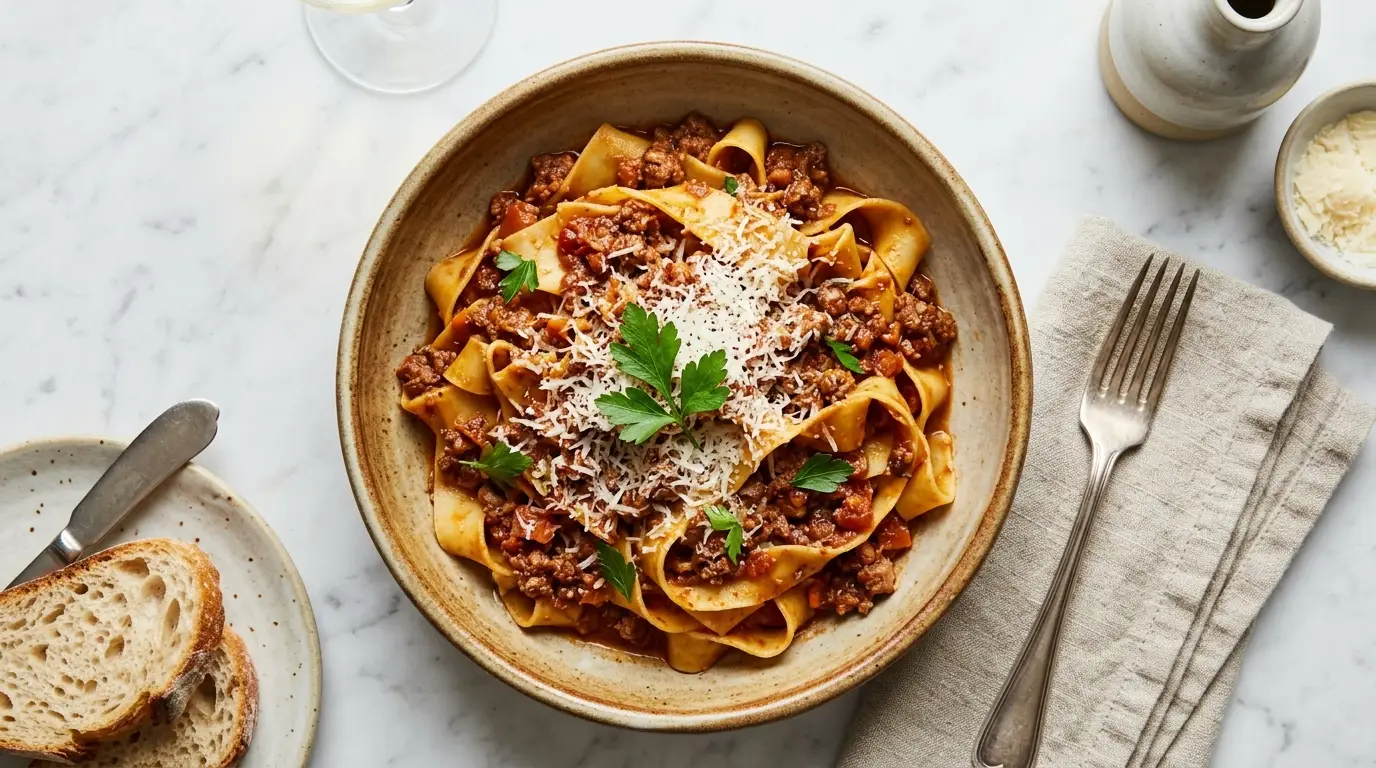
Bolognese Sauce
Ingredients
- 2 tbsp extra-virgin olive oil - 30 ml
- 1 tbsp unsalted butter - 14 g
- 1 medium yellow onion - about 1 cup or 150 g, finely diced
- 2 medium carrots - about 3/4 cup or 90 g, peeled and finely diced
- 2 stalks celery - about 1/2 cup or 60 g, finely diced
- 3 cloves garlic - minced
- 1 lb ground beef - 450 g, 80/20 blend preferred
- 1/2 lb ground pork - 225 g
- 1 tsp kosher salt - plus more to taste
- 1/2 tsp freshly ground black pepper
- 2 oz pancetta - 56 g, finely diced; optional but recommended
- 1/2 cup dry white wine - 120 ml; Pinot Grigio or Sauvignon Blanc recommended
- 2 tbsp tomato paste - 32 g; double concentrated preferred
- 28 oz crushed San Marzano tomatoes - 1 can, 800 g
- 1 cup beef broth or chicken broth - 240 ml
- 1 bay leaf
- 1/4 tsp ground nutmeg
- 1/2 cup whole milk - 120 ml; added at the end
- 1 lb pappardelle or tagliatelle pasta - 450 g
- fresh Parmesan cheese - freshly grated, to taste
Equipment
- Dutch oven or heavy-bottomed pot (5 qt / 4.7 L) - Essential for even heat distribution during the long simmer
- Chef’s knife - For finely dicing the soffritto vegetables
- Cutting board
- Wooden spoon or silicone spatula - For breaking up the meat and stirring
- Meat chopper/masher tool - Optional; helps break ground meat into fine, even crumbles
- Large pot - For boiling pasta separately
- Colander - For draining pasta
- Ladle - For serving
- Measuring cups and spoons
Method
- Finely dice the onion, carrots, and celery into pieces no larger than 1/4 inch (0.5 cm). Mince the garlic and set it aside separately; if using pancetta, finely dice it as well.
- Place a Dutch oven over medium heat, add the diced pancetta, and cook for about 5 minutes until the fat renders and the pancetta turns golden. If skipping pancetta, proceed directly to the next step.
- Add the olive oil and butter to the pot, then add the onion, carrot, and celery. Cook over medium-low heat for 8 to 10 minutes until the vegetables are very soft and the onion is translucent, then add the garlic and cook for 1 to 2 minutes until fragrant.
- Increase heat to medium-high, add the ground beef and pork, and season with salt and pepper. Cook for 10 to 12 minutes, breaking the meat into very fine crumbles, until fully browned and all moisture has evaporated.
- Increase heat to high, pour in the white wine, and scrape up any browned bits from the bottom of the pot. Cook for 2 to 3 minutes until the wine has almost completely evaporated and the alcohol smell is gone.
- Reduce heat to medium, add the tomato paste and stir constantly for 2 to 3 minutes to toast it lightly, then pour in the crushed tomatoes, broth, bay leaf, and nutmeg and stir to combine.
- Bring the sauce to a gentle boil, then reduce heat to the lowest setting, partially cover, and simmer for 2.5 to 3 hours, stirring every 20 to 30 minutes, until the sauce is thick, rich, and deeply flavored.
- Remove the bay leaf, stir in the whole milk, and simmer for another 5 to 10 minutes over low heat. Taste and adjust salt and pepper as needed.
- Boil the pappardelle in generously salted water until al dente, reserve 1 cup (240 ml) of pasta water, drain, and toss with several ladles of Bolognese, adding pasta water as needed to loosen the sauce. Serve immediately with freshly grated Parmesan.
Nutrition
Notes
- Use a beef and pork blend: The combination gives the sauce more fat, sweetness, and depth than beef alone. Ground veal can replace the pork for a more traditional, delicate result.
- Don’t rush the soffritto: Cooking the onion, carrot, and celery low and slow for the full 8 to 10 minutes is the flavor foundation of the entire sauce. High heat will unevenly cook the vegetables.
- Fully brown the meat: Cook until all moisture evaporates and the meat is actually frying in the fat. Stopping too early produces a steamed, gray result rather than a browned, flavorful one.
- Toast the tomato paste: Stirring the tomato paste in the fat for 2 to 3 minutes before adding the tomatoes caramelizes its natural sugars and removes the raw, tinny flavor.
- The milk is essential: Whole milk added at the end tenderizes the meat proteins and neutralizes the tomato’s acidity, giving the sauce its characteristic silkiness. Do not skip or substitute with cream.
- Simmer time matters: Three hours is the minimum for authentic depth of flavor. The sauce can technically be eaten after 1.5 hours but will lack the same complexity and richness.
- Make it ahead: Bolognese tastes noticeably better the next day. Make it up to 3 days ahead, refrigerate, and reheat gently over low heat with a splash of broth to loosen.
- Freezer friendly: Cool completely and freeze in airtight containers for up to 3 months. Thaw overnight in the refrigerator before reheating. Freeze sauce only, never with cooked pasta.
- Pasta pairing: Wide, flat noodles like pappardelle or tagliatelle are traditional and ideal. Rigatoni and penne also work well. Spaghetti is popular but not traditional.
- Slow cooker option: Complete all stovetop steps through adding the tomatoes, then transfer to a slow cooker and cook on Low for 6 to 8 hours or High for 4 to 5 hours. Stir in the milk during the last 30 minutes.
Private Notes
Tried this recipe?
Let us know how it was!Final Thoughts
If there is one recipe worth spending an afternoon in the kitchen on, this is it.
The process of making Bolognese is as satisfying as eating it: the smell as the soffritto softens, the sound of the wine hitting the hot pan, the way the sauce slowly deepens in color and aroma over those long hours.
It taught me that slow cooking is not about effort. It’s about patience.
And the payoff is completely worth it.
Give this recipe a try this weekend, and I’d genuinely love to hear how it turns out for you. Drop a comment below, share a photo, or let me know if you made any variations. Your feedback makes this little corner of the internet better for everyone.
Recommended:
- Best Sauce Recipes
- Vodka Sauce Recipe
- Pesto Recipe
- Roasted Tomato Soup Recipe
- Chicken Spaghetti Recipe
- Shepherd’s Pie Recipe
- Meatloaf Recipe
- Swedish Meatball Recipe
- Beef and Broccoli Stir Fry Recipe
- Crockpot Beef Stew Recipe