I still remember the first time I tackled a beef tenderloin recipe for Christmas dinner. I had a beautiful 4-pound center-cut roast sitting on my counter, and I was genuinely terrified of ruining it.
That roast cost more than my grocery budget for the whole week, and I’d never cooked anything so elegant at home before.
Fast-forward a few years, and this roast has become my most-requested holiday dish without fail. My method uses a simple herb-and-garlic butter rub, a quick stovetop sear for a gorgeous crust, and a hot oven finish that gets the interior to a silky, blushing medium-rare every single time.
If you’ve been putting off cooking beef tenderloin because it feels too fancy or too risky, I promise you it’s more forgiving than you think. Once you learn the temperature tricks, this becomes one of the most impressive yet stress-free meals you can put on the table.
| Quick Recipe Summary | |
|---|---|
| Prep Time | 20 minutes (plus 1 hour resting at room temperature) |
| Cook Time | 40-45 minutes |
| Total Time | About 2 hours (including rest time) |
| Servings | 8-10 servings |
| Difficulty Level | Intermediate |
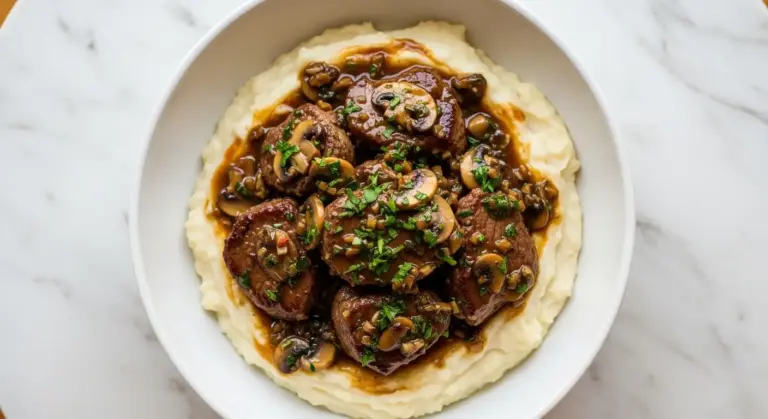
If you love impressive beef roasts for special occasions, you’ll also want to check out my Prime Rib Recipe — it’s another holiday showstopper that follows a similar technique.
Why You’ll Love This Beef Tenderloin Recipe
This recipe consistently delivers restaurant-quality results right in your home kitchen, and it doesn’t require any fancy equipment beyond a good meat thermometer.
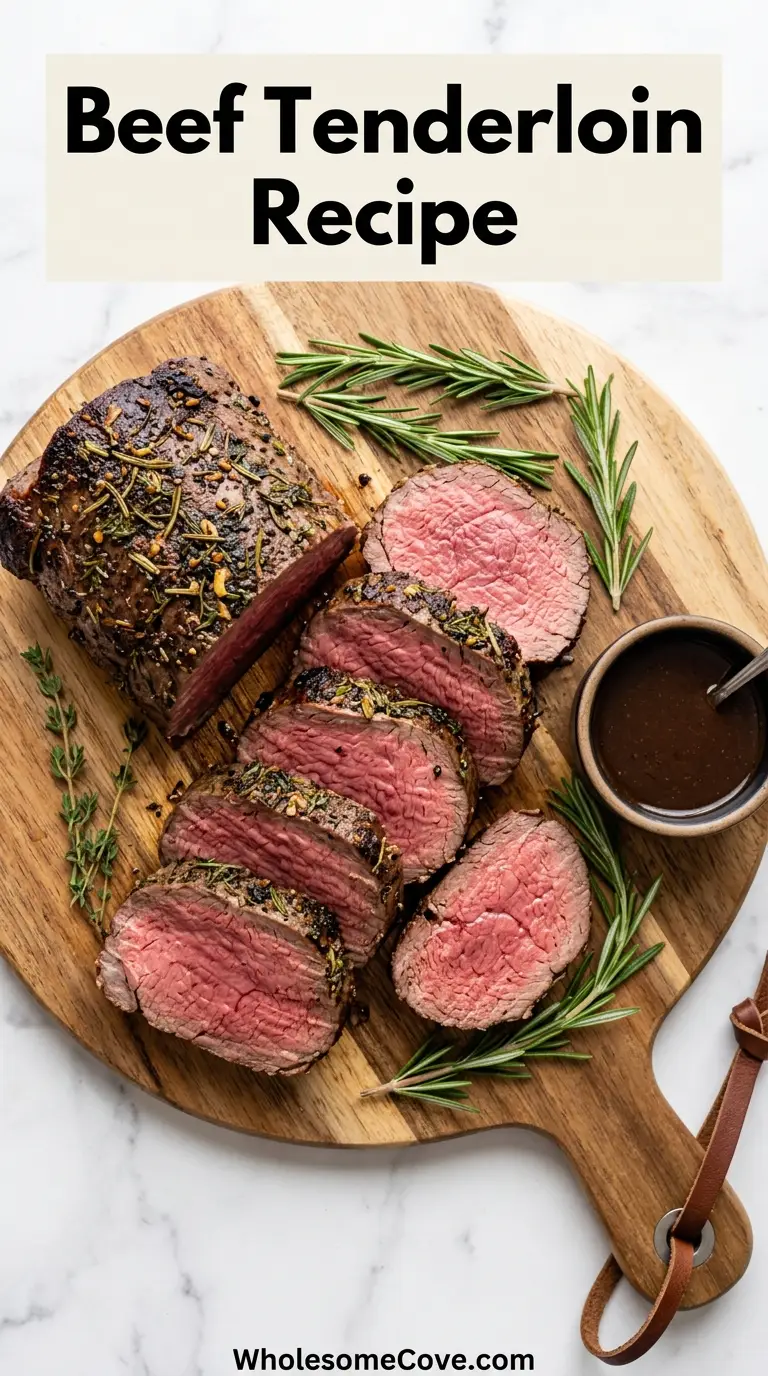
The combination of herb butter, a stovetop sear, and high-heat oven roasting creates a crust that crackles slightly when you slice through it, giving way to tender, juicy, rosy-pink beef underneath.
Because beef tenderloin is a naturally lean cut, it cooks faster than other large roasts and doesn’t require hours of braising or babysitting. That means you can focus on your side dishes and guests while it handles itself in the oven.
The flavor profile is bold but elegant — garlic, fresh rosemary, fresh thyme, and buttery richness that complements the beef without overpowering it. These are the same herbs you’d find in a classic French preparation, and they work for good reason.
This roast is also effortlessly scalable. A 2-pound tenderloin feeds 4-5 people comfortably, while a 4-pounder handles a crowd of 8-10 without issue.
Leftovers (if you have any!) are outstanding sliced thin over sandwiches, tossed into a quick beef stroganoff, or served cold with mustard and crusty bread.
Read Also: Filet Mignon Recipe
Ingredients
You only need a handful of quality ingredients for this recipe — the beef does most of the talking. I always splurge on fresh herbs rather than dried here because the difference in flavor is genuinely noticeable on a roast this special.
- 3-4 lbs (1.3-1.8 kg) center-cut beef tenderloin roast, trimmed of silver skin and excess fat, tied with butcher’s twine at 1-inch intervals
- 2 tablespoons (30 ml) extra-virgin olive oil, divided
- 1 teaspoon (5 g) kosher salt, plus more for seasoning
- 1 teaspoon (2 g) freshly cracked black pepper
- 4 tablespoons (56 g) unsalted butter, softened to room temperature
- 4 cloves garlic, minced (about 1½ teaspoons)
- 1 tablespoon fresh rosemary leaves, finely chopped
- 1 tablespoon fresh thyme leaves, finely chopped
- 1 tablespoon fresh flat-leaf parsley, finely chopped
- 1 teaspoon Dijon mustard (optional but adds depth)
- Flaky finishing salt for serving (such as Maldon)
For the Optional Pan Sauce:
- 1 cup (240 ml) beef broth
- ½ cup (120 ml) dry red wine (like Cabernet Sauvignon or Merlot)
- 1 tablespoon (14 g) cold unsalted butter, cut into small pieces
- 1 teaspoon fresh thyme leaves
- Salt and pepper to taste
For a side dish idea that pairs perfectly with this roast, my Creamed Spinach Recipe is an absolute classic steakhouse pairing you won’t want to skip.
Kitchen Equipment Needed
Having the right tools makes all the difference with a recipe like this. The single most important piece of equipment on this list is a reliable instant-read or probe thermometer — without it, you’re cooking blind on an expensive piece of meat.
- Instant-read meat thermometer (essential — do not skip this)
- Oven-safe cast iron skillet or heavy oven-safe stainless skillet (12-inch/30 cm)
- Roasting rack and roasting pan (optional but helps with even browning)
- Butcher’s twine for trussing
- Large cutting board
- Sharp chef’s knife for slicing
- Small mixing bowl for the herb butter
- Aluminum foil for tenting
- Tongs for turning the roast while searing
- Basting brush
- Paper towels for drying the meat
Read Also: Beef Tips and Gravy Recipe
Recommended Products for This Recipe
These are products I genuinely use and stand behind for making this recipe come out perfectly.
1. ThermoWorks Thermapen ONE Instant-Read Thermometer
This is hands-down the most important tool for cooking beef tenderloin at home. It reads temperature in about one second, which means you can check doneness quickly without losing heat from your oven or pan. I’ve overcooked roasts using slow thermometers, and I’ve never had a problem since switching to a fast-reading model. A quality thermometer is the single best investment you can make in your cooking.
2. Lodge 12-Inch Cast Iron Skillet
I use cast iron for searing beef tenderloin because it holds heat incredibly evenly and goes from stovetop to oven without missing a beat. The natural surface develops a beautiful, even crust on all sides of the roast. This is the same skillet I use for everything from searing steaks to finishing chicken thighs, and it’s built to last forever.
3. Maldon Sea Salt Flakes
Finishing salt is something I used to skip, and then I tried it and never went back. A pinch of Maldon flakes over freshly sliced beef tenderloin adds a subtle crunch and a burst of clean, mineral saltiness that elevates every single bite. A small box lasts a long time, and it’s worth every penny on a roast this special.
4. Premium Center-Cut Beef Tenderloin Roast
The quality of your beef is everything in this recipe. If your grocery store’s meat counter is limited, look for USDA Choice or USDA Prime center-cut tenderloin, ideally already trimmed and tied. Ordering online from a reputable butcher can also be a game-changer for getting a truly uniform, properly trimmed roast.
Another great beef pairing for your table: Mushroom Gravy Recipe — it makes a silky, earthy sauce that’s absolutely dreamy over sliced tenderloin.
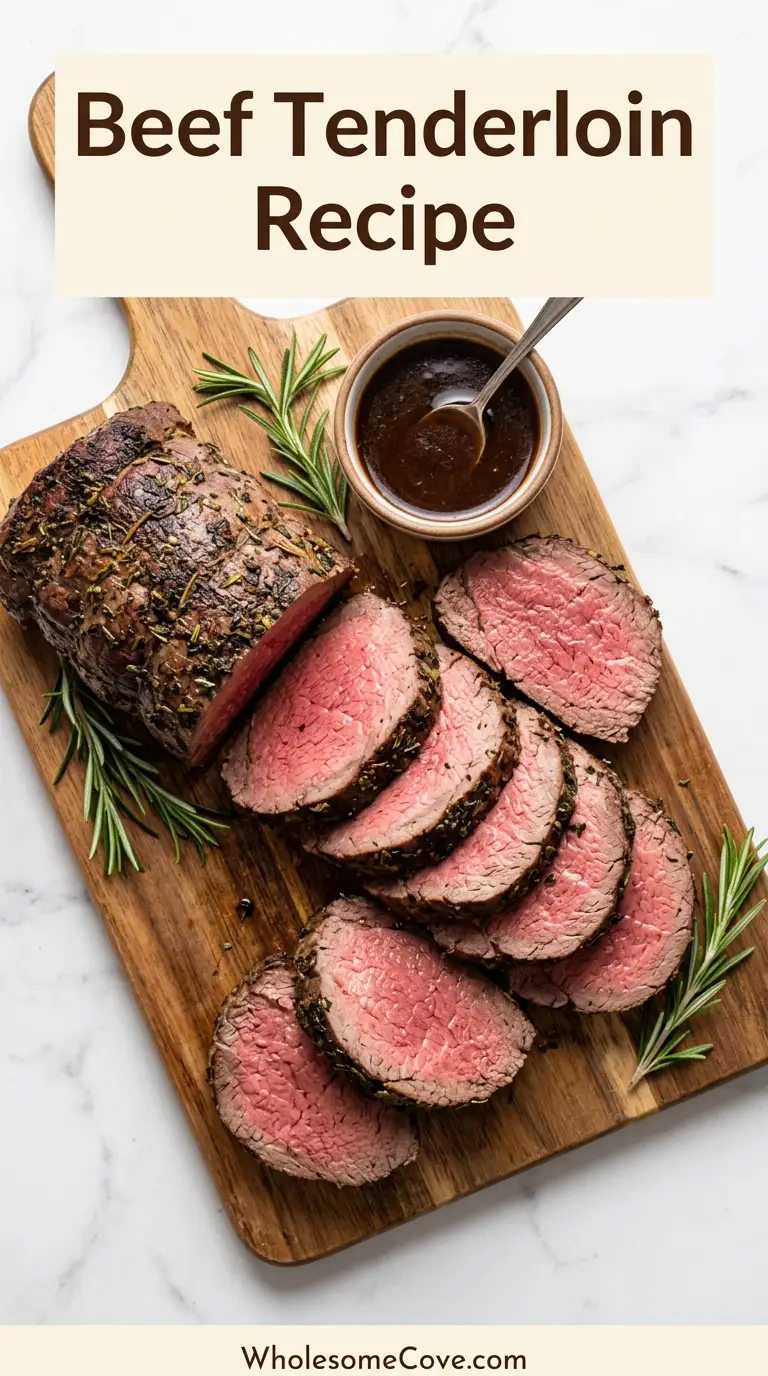
Step-by-Step Instructions: How to Make Beef Tenderloin
Step 1: Prepare and Temper the Beef Tenderloin
- Remove the beef tenderloin from the refrigerator at least 1 hour (and up to 2 hours) before cooking. This allows the meat to come closer to room temperature, which promotes even cooking from edge to center.
- Place the tenderloin on a clean cutting board and inspect it for any remaining silver skin (the tough, shiny connective tissue that runs along one side of the roast). Use a sharp boning or paring knife to slide beneath the silver skin at one end, grip it firmly, and slice it away in long, shallow strokes. Remove as much as possible without removing too much meat.
- Pat the tenderloin completely dry with paper towels on all sides. This step is critical — moisture on the surface will steam the meat rather than sear it, preventing that beautiful brown crust.
- If your tenderloin has a thinner “tail” end, fold it underneath the roast and secure it with butcher’s twine to create a uniform thickness. Then tie the roast at 1-inch (2.5 cm) intervals along its entire length to help it hold its shape.
- Season the tenderloin generously all over with kosher salt and cracked black pepper, pressing the seasoning into the surface of the meat with your hands.
Step 2: Make the Herb Butter Rub
- In a small bowl, combine the softened unsalted butter, minced garlic, chopped rosemary, chopped thyme, and chopped parsley.
- If using, add the teaspoon of Dijon mustard to the bowl. The mustard adds a subtle tang and helps the butter cling to the surface of the roast.
- Mix everything together with a fork until fully combined and the herbs are evenly distributed throughout the butter.
- Set the herb butter aside at room temperature until ready to use. It should remain soft and spreadable.
Step 3: Preheat the Oven and Sear the Tenderloin
- Preheat your oven to 425°F (220°C). Make sure the oven is fully preheated before the tenderloin goes in — an oven that hasn’t come fully to temperature will affect your cooking time significantly.
- Place your 12-inch cast iron skillet or heavy oven-safe skillet over medium-high heat and let it get very hot, about 2-3 minutes. The pan should feel radiantly hot when you hold your hand about 2 inches above it.
- Add 1 tablespoon (15 ml) of the olive oil to the hot pan and swirl it around to coat.
- Using tongs, carefully place the seasoned tenderloin into the hot skillet. You should hear an aggressive sizzle immediately — if you don’t, the pan isn’t hot enough.
- Sear the tenderloin on all sides — including both ends — turning every 2-3 minutes until a deep golden-brown crust forms on every surface. This searing step takes about 10-12 minutes total.
- Use tongs to hold the roast upright and sear the ends for 1-2 minutes each as well. Every surface should have that beautiful, caramelized brown color before going into the oven.
Step 4: Apply the Herb Butter and Roast
- Remove the skillet from the heat briefly and use a basting brush or spoon to coat the entire surface of the seared tenderloin with the herb butter rub. Work quickly and press the butter into any crevices — you want full coverage.
- If you have an instant-read probe thermometer that can stay in the oven, insert it into the thickest part of the tenderloin now, making sure the probe tip is in the very center of the meat and not touching any fat or the pan.
- Transfer the skillet directly to the preheated oven (or transfer the roast to a rack set in a roasting pan).
- Roast at 425°F (220°C) until the internal temperature reads 120-125°F (49-52°C) for medium-rare, or 130-135°F (54-57°C) for medium. For a 3-4 pound (1.3-1.8 kg) roast, this typically takes 20-30 minutes, but always go by temperature rather than time.
- Begin checking the temperature at around 18-20 minutes for a smaller roast.
Step 5: Rest the Tenderloin
- Remove the tenderloin from the oven when it hits your target temperature. Remember that carryover cooking will raise the internal temperature by about 5-10°F (3-6°C) as it rests, so pulling it slightly early is the right call.
- Transfer the roast to a cutting board. Loosely tent it with a sheet of aluminum foil, pressing it gently against the sides of the roast but leaving the top slightly open so steam doesn’t build up and soften the crust.
- Let the tenderloin rest for 10-15 minutes before slicing. Do not skip this step — resting allows the juices to redistribute throughout the meat. Cut too early, and those flavorful juices will run out onto the cutting board instead of staying in the meat.
Step 6: Make the Optional Pan Sauce
- While the tenderloin rests, place the skillet over medium heat on the stovetop. Pour in the red wine and use a wooden spoon or spatula to scrape up all the browned bits from the bottom of the pan — those bits are pure flavor.
- Let the wine reduce by about half, 2-3 minutes, then pour in the beef broth.
- Simmer the sauce for 5-7 minutes, or until it has reduced and thickened slightly to a sauce consistency.
- Add the fresh thyme leaves and taste for seasoning, adjusting with salt and pepper as needed.
- Remove from heat and swirl in the cold butter pieces one at a time, stirring constantly until the butter is fully melted and the sauce is glossy and smooth.
- Strain the sauce through a fine-mesh strainer if desired for a cleaner presentation.
Step 7: Slice and Serve
- Remove the butcher’s twine from the rested tenderloin by snipping each piece with kitchen scissors and pulling it away carefully.
- Using a sharp chef’s knife, slice the tenderloin into 1-inch to 1½-inch (2.5-3.8 cm) thick rounds. Use long, smooth strokes rather than sawing back and forth to keep the slices clean.
- Arrange the sliced tenderloin on a warm serving platter.
- Finish with a light sprinkle of flaky sea salt over each slice for that final pop of flavor.
- Drizzle the pan sauce over or alongside the beef, or serve it in a small pitcher on the side. Serve immediately while hot.
Read Also: Beef Stew Recipe
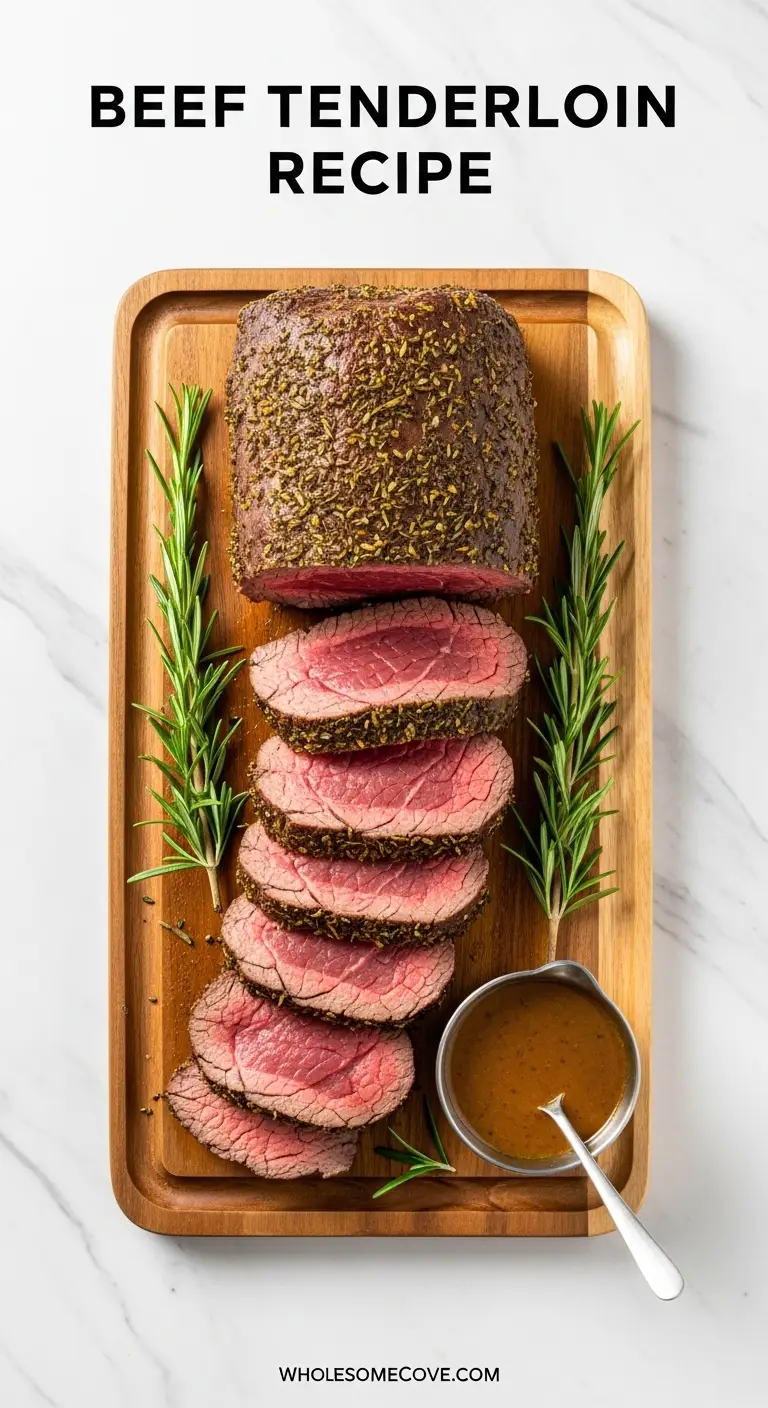
Tips for The Best Beef Tenderloin
Getting a perfect beef tenderloin every time comes down to a few key principles that I’ve learned through trial, error, and a couple of honest mistakes over the years.
The biggest mistake I made early on was not letting the meat rest long enough — I cut into it too soon and watched all those gorgeous juices pool onto the cutting board. Heartbreaking. Now I set a 12-minute timer and don’t touch it.
- Always use a meat thermometer: This is non-negotiable. Guessing by time alone leads to overcooked, dry beef. Target 120-125°F (49-52°C) for medium-rare, pulling it from the oven at that temp and letting carryover heat finish the job.
- Dry the meat thoroughly: Wet meat steams instead of sears. Pat it completely dry with paper towels right before it goes into the hot pan.
- Let it come to room temperature: Cold meat straight from the fridge cooks unevenly. Always give it at least an hour on the counter before searing.
- Don’t skip the sear: That golden-brown crust from searing locks in incredible flavor through the Maillard reaction. Don’t be tempted to skip straight to the oven — the crust is part of what makes this dish so special.
- Tie the roast evenly: Uneven thickness means uneven cooking. Trussing the roast at 1-inch intervals ensures consistent doneness throughout.
- Get the pan screaming hot: Use a cast iron or heavy stainless skillet and heat it for at least 2-3 minutes before adding the oil. A hot pan means a fast, effective sear without the meat stewing in its own juices.
- Use fresh herbs: Dried herbs work in a pinch, but fresh rosemary, thyme, and parsley have a vibrancy that dried simply can’t replicate on a roast this special.
- Rest under loose foil: Tight foil traps steam and softens your crust. Keep the tent loose so the exterior stays crisp while the interior relaxes.
- Choose center-cut: Center-cut tenderloin is uniform in thickness from end to end, which means even cooking. Avoid the pointed tail end if you can, or fold and tie it under if you end up with it.
- Season generously: Beef tenderloin is a thick piece of meat. Don’t be shy with the salt and pepper — season all surfaces thoroughly, including the ends.
You might also enjoy: Brown Gravy Recipe — an easy, rich gravy that’s another excellent sauce option for serving alongside this roast.
What to Serve with Beef Tenderloin
Beef tenderloin is a naturally elegant centerpiece, so the sides should feel equally polished without requiring too much of your attention while the roast is in the oven.
My go-to holiday menu pairs this roast with a creamy starch, a bright vegetable, and a simple sauce — it’s a combination that never fails to impress.
- Mashed Potatoes — the ultimate classic pairing, rich and buttery to complement the lean beef
- Au Gratin Potatoes — a show-stopping potato side with layers of cheese and cream
- Roasted Potatoes — crispy and golden, perfect for catching the pan juices
- Scalloped Potatoes — tender sliced potatoes baked in a creamy sauce
- Green Bean Casserole — a beloved holiday classic with creamy mushroom sauce and crispy onions
- Roasted Brussels Sprouts with Bacon — slightly caramelized with a savory smokiness that pairs beautifully with beef
- Maple Glazed Carrots — a touch of sweetness and color on the plate
- Dinner Rolls — soft, fluffy rolls for soaking up every bit of that pan sauce
- Cranberry Sauce — a bright, slightly tart condiment that cuts through the richness of the beef beautifully
- Sweet Potato Casserole — a slightly sweet, deeply savory side that rounds out the holiday table
Read Also: Thanksgiving Stuffing Recipe
Variations of Beef Tenderloin
The classic herb-butter roast is genuinely hard to improve upon, but there are plenty of delicious directions to take this cut depending on the occasion or your mood. The most important thing is to always keep the cooking technique the same — sear, then roast to temperature.
- Peppercorn Crust: Coat the tenderloin in coarsely crushed mixed peppercorns (black, pink, white, and green) before searing for a bold, spicy crust that’s reminiscent of a classic au poivre preparation. The peppercorns form a fragrant shell around the rosy meat.
- Beef Wellington: Wrap the seared tenderloin in a layer of mushroom duxelles (finely chopped mushrooms cooked down with shallots and herbs), then wrap it in puff pastry and bake until golden. This is the ultimate dinner party showpiece.
- Chimichurri Beef Tenderloin: Skip the herb butter and instead serve the roast with a bold, herby chimichurri sauce made from fresh parsley, cilantro, garlic, olive oil, and red wine vinegar. This Argentinian-inspired approach is vibrant and absolutely delicious.
- Horseradish-Crusted Tenderloin: Mix 3 tablespoons of prepared horseradish into the herb butter for a pungent, earthy crust that goes beautifully with the beef’s natural sweetness.
- Smoked Beef Tenderloin: Instead of the oven, smoke the tenderloin at 225°F (107°C) over applewood or cherry wood chips until it reaches an internal temperature of 120°F (49°C), then sear it quickly in a hot cast iron skillet to finish.
- Red Wine Braised Variation: For a completely different preparation, slice the tenderloin into thick medallions, pan-sear them, and finish them in a red wine reduction sauce with shallots, thyme, and beef stock — this gives you an individual-serving presentation perfect for dinner parties.
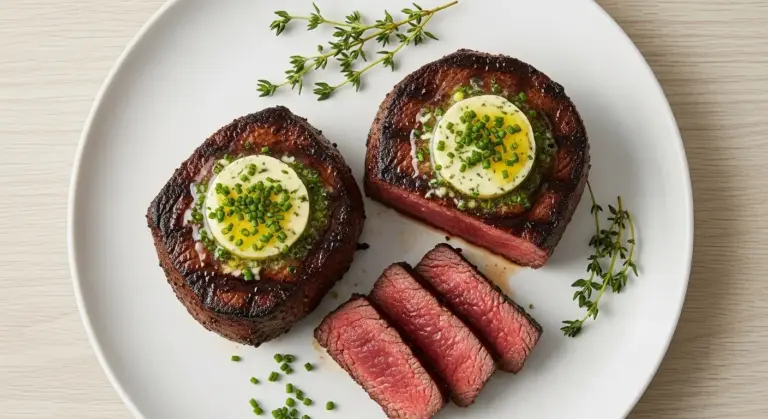
- Garlic-Herb Compound Butter Finish: Make extra herb butter, roll it into a log in plastic wrap, and refrigerate. Place a round of cold compound butter on top of each freshly sliced medallion right before serving — it melts over the hot beef for an indulgent finishing touch.
Another fantastic beef dish worth trying: Mississippi Pot Roast Recipe
Storage and Reheating
Leftover beef tenderloin is genuinely one of the best things in your refrigerator, and it can be repurposed in so many delicious ways the next day. The key to reheating is low and slow — high heat will turn your perfectly cooked medium-rare into a grey, tough disappointment.
- Refrigerator storage: Store leftover beef tenderloin in an airtight container or tightly wrapped in plastic wrap. It will keep well in the refrigerator for up to 3-4 days.
- Freezer storage: For longer storage, wrap individual slices tightly in plastic wrap, then in a layer of aluminum foil. Place in a freezer-safe bag and freeze for up to 2-3 months. Thaw overnight in the refrigerator before reheating.
- Reheating in the oven: Place sliced tenderloin in a small baking dish, add a splash (about 2 tablespoons) of beef broth or water, cover tightly with foil, and warm in a 250°F (120°C) oven for 15-20 minutes. Check with a thermometer and remove once the internal temperature hits 110-120°F (43-49°C) — just warm, not fully recooked.
- Reheating on the stovetop: Place slices in a skillet over medium-low heat with a tablespoon of butter. Cover and warm gently for 2-3 minutes per side, just until heated through. Do not let it sizzle aggressively.
- Serving cold: Honestly, cold sliced beef tenderloin with Dijon mustard on a good crusty roll might be the best leftover experience you’ll have. It’s phenomenal served at room temperature or cold without any reheating at all.
- Creative leftover uses: Slice thin and add to a Caesar salad; chop and stir into a quick beef stroganoff with egg noodles, sour cream, and mushrooms; pile onto slider rolls with horseradish cream; or toss into a warm pasta with wilted spinach and garlic butter.
Read Also: Crockpot Beef Stew Recipe
Nutritional Facts
The following estimates are based on one serving of approximately 4-5 oz (115-140 g) of roasted beef tenderloin (without pan sauce) from a 3-4 lb roast serving 8-10 people.
| Nutrient | Per Serving (approx.) | ||| | Calories | 280-320 kcal | | Protein | 32-35 g | | Total Fat | 15-18 g | | Saturated Fat | 6-8 g | | Carbohydrates | 1 g | | Fiber | 0 g | | Sodium | 280-350 mg | | Cholesterol | 95-105 mg | | Iron | 3-4 mg |
Note: Nutritional values are estimates based on a 3.5 lb center-cut beef tenderloin with herb butter rub. Values will vary depending on exact portion size, the amount of butter used, and any additional sauces or sides served alongside.
You might also enjoy: Beef Barley Soup Recipe — a wonderful way to use any leftover beef trimmings.
Health Benefits of Key Ingredients
Beef tenderloin isn’t just delicious — the key ingredients in this recipe offer a range of genuine nutritional benefits when enjoyed as part of a balanced diet.
It’s one of the leanest cuts of beef available, which means you’re getting substantial protein and essential nutrients without the saturated fat load of fattier cuts like ribeye or short rib.
- Beef tenderloin (lean protein source): Beef tenderloin is remarkably lean compared to other premium cuts. A single serving delivers 32-35 grams of complete protein, providing all nine essential amino acids your body needs for muscle repair, immune function, and enzyme production.
- Beef tenderloin (iron and zinc): Red meat is one of the richest dietary sources of heme iron, the form of iron most readily absorbed by the human body. Adequate iron supports red blood cell production and prevents fatigue. Zinc from beef supports immune function and wound healing.
- Beef tenderloin (B vitamins): Beef is an excellent source of B12, B6, and niacin, which support nervous system health, energy metabolism, and healthy red blood cell formation. B12 in particular is primarily found in animal-based foods.
- Garlic (allicin): Fresh garlic contains allicin, a sulfur compound with well-documented antimicrobial and anti-inflammatory properties. Regular garlic consumption has been linked to improved cardiovascular health and reduced blood pressure.
- Fresh rosemary (antioxidants): Rosemary contains rosmarinic acid and carnosic acid, potent antioxidants that help protect cells from oxidative stress. It also contains small amounts of iron, calcium, and vitamin B6.
- Fresh thyme (antimicrobial properties): Thyme contains thymol, a naturally occurring compound with antibacterial and antifungal properties. It’s also a source of vitamin C, vitamin A, and iron.
- Fresh parsley (vitamin K): Parsley is one of the richest herb sources of vitamin K, which is essential for proper blood clotting and bone metabolism. It also provides vitamin C and folate.
- Olive oil (heart-healthy fats): Extra-virgin olive oil is rich in monounsaturated fatty acids and polyphenols. Regular consumption is associated with reduced inflammation and improved cardiovascular health, hallmarks of the Mediterranean diet.
- Butter (fat-soluble vitamins): Quality butter provides small but meaningful amounts of vitamins A, D, E, and K2, all of which are fat-soluble and important for bone health, immune function, and vision.
For another hearty, nutritious beef dish: Beef and Broccoli Stir Fry Recipe
FAQs About Beef Tenderloin
1. What is the best internal temperature for beef tenderloin?
For medium-rare, pull the tenderloin from the oven at 120-125°F (49-52°C) — it will rise to 130-135°F (54-57°C) as it rests, which is the ideal range. For medium, remove it at 130-135°F (54-57°C) and allow it to reach 140-145°F (60-63°C) after resting.
Anything above 145°F (63°C) starts to become medium-well, and beef tenderloin beyond that temperature loses much of its tenderness and moisture. Since it’s such a lean cut, overcooking is the most common and most disappointing mistake.
2. Should I sear beef tenderloin before or after roasting?
Searing before roasting is the classic and most widely recommended method for home cooks, and it’s what this recipe uses. Searing first builds a flavorful brown crust and gives you more control when moving to the oven.
Some chefs prefer the “reverse sear” method — roasting low and slow first, then searing at the end — which produces an exceptionally even edge-to-edge cook. Both methods work beautifully, but for most home ovens, searing first is simpler and more reliable.
3. How long should beef tenderloin rest before slicing?
Rest your beef tenderloin for at least 10 minutes and up to 15 minutes under a loose foil tent. Cutting into the roast too early is one of the most common mistakes with premium beef — the juices haven’t had time to redistribute and will pour out onto the cutting board rather than staying in the meat.
A properly rested tenderloin will be visibly juicier when sliced, with a beautiful pink interior rather than gray edges.
4. Can I prepare beef tenderloin in advance?
You can season and truss the tenderloin up to 24 hours ahead of cooking — in fact, salting it overnight and leaving it uncovered in the refrigerator actually improves the crust because the surface dries out further. The herb butter can also be made 1-2 days ahead and kept refrigerated; just soften it at room temperature before using.
However, the actual cooking and resting should happen right before serving. Beef tenderloin is best enjoyed immediately after resting, as reheating fully cooked tenderloin never quite recaptures the original texture.
5. What is the difference between beef tenderloin and filet mignon?
Beef tenderloin refers to the whole muscle — a long, tapered cut from the loin section of the cow, typically weighing between 4 and 6 pounds whole. Filet mignon is what you get when you cut individual steaks from that same muscle, specifically from the thicker center portion.
So when you’re buying a “beef tenderloin roast,” you’re buying the whole muscle to cook as a roast. When a restaurant serves “filet mignon,” they’ve cut that same muscle into individual 2-inch-thick steaks and cooked them individually. Same beef, two different presentations.
Read Also: Roast Chicken Recipe
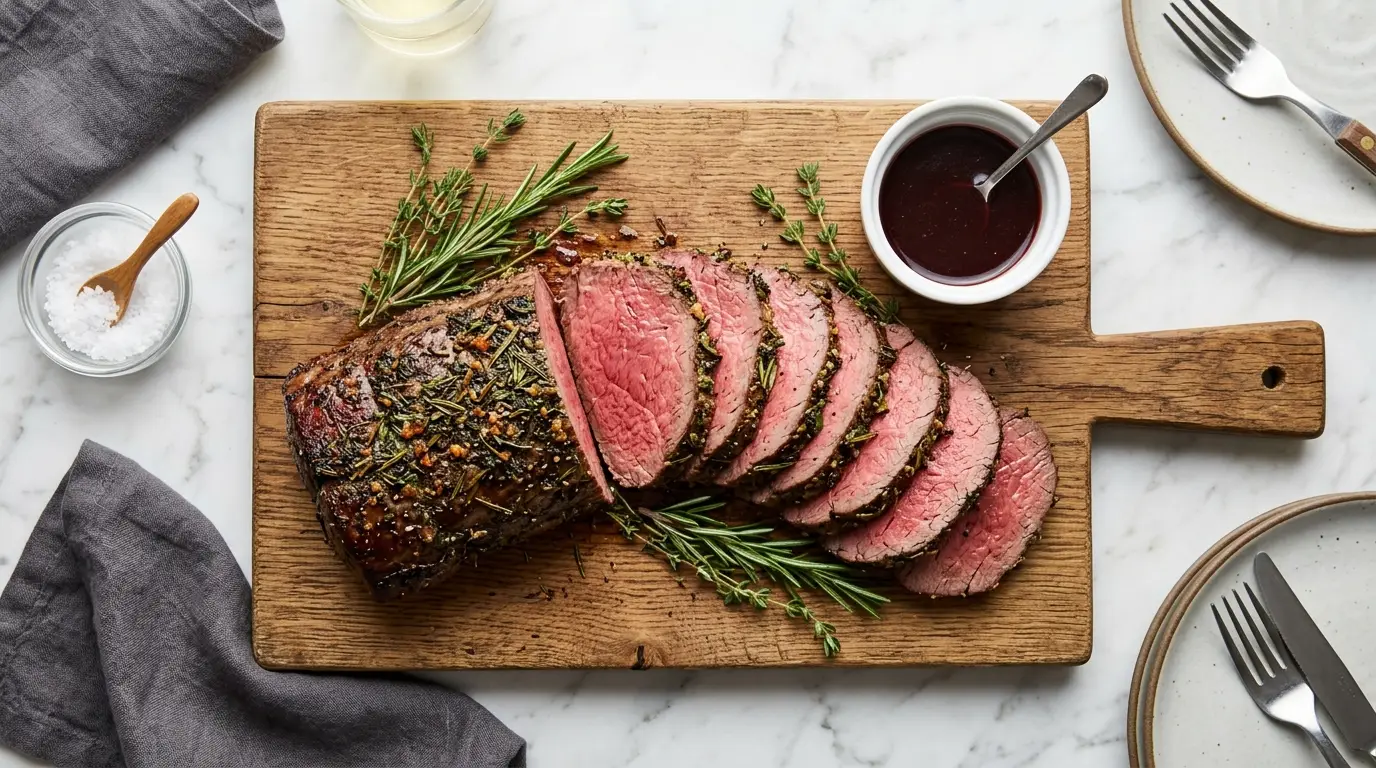
Beef Tenderloin
Ingredients
- 3-4 lbs center-cut beef tenderloin roast - 1.3–1.8 kg; trimmed of silver skin and excess fat, tied with butcher’s twine at 1-inch intervals
- 2 tbsp extra-virgin olive oil - 30 ml, divided
- 1 tsp kosher salt - 5 g, plus more for seasoning all surfaces
- 1 tsp freshly cracked black pepper - 2 g
- 4 tbsp unsalted butter - 56 g, softened to room temperature
- 4 cloves garlic - about 1½ tsp when minced
- 1 tbsp fresh rosemary leaves - finely chopped
- 1 tbsp fresh thyme leaves - finely chopped
- 1 tbsp fresh flat-leaf parsley - finely chopped
- 1 tsp Dijon mustard - optional; adds depth and helps butter adhere to the roast
- flaky sea salt - such as Maldon; for finishing just before serving
- 1 cup beef broth - 240 ml
- ½ cup dry red wine - 120 ml; Cabernet Sauvignon or Merlot recommended
- 1 tbsp cold unsalted butter - 14 g, cut into small pieces; for finishing the sauce
- 1 tsp fresh thyme leaves - for the pan sauce
- salt and pepper - to taste, for seasoning the pan sauce
Equipment
- Instant-read meat thermometer - Essential for accurate doneness — do not skip
- 12-inch oven-safe cast iron skillet - Or heavy oven-safe stainless steel skillet
- Roasting rack and roasting pan - (optional) Helps promote even browning
- Butcher’s twine - For trussing the roast at 1-inch intervals
- Large cutting board
- Sharp chef’s knife - For slicing the finished roast
- Small mixing bowl - For making the herb butter rub
- Aluminum foil - For tenting the roast during resting
- Tongs - For turning the roast while searing
- Basting brush - For applying the herb butter to the seared roast
- Paper towels - For drying the meat before searing
- Fine-mesh strainer - (optional) For straining the pan sauce
Method
- Remove the beef tenderloin from the refrigerator at least 1 hour before cooking and let it rest at room temperature. Pat it completely dry with paper towels on all sides, then season generously all over with kosher salt and cracked black pepper.
- Use a sharp knife to remove any remaining silver skin from the surface of the roast. Fold the thinner tail end underneath the roast and tie the entire length with butcher’s twine at 1-inch (2.5 cm) intervals to create an even thickness.
- In a small bowl, combine the softened butter, minced garlic, chopped rosemary, thyme, parsley, and Dijon mustard (if using). Mix with a fork until fully combined and set aside at room temperature.
- Preheat your oven to 425°F (220°C). Place a 12-inch cast iron or heavy oven-safe skillet over medium-high heat for 2–3 minutes until very hot, then add 1 tablespoon of olive oil and swirl to coat.
- Place the seasoned tenderloin into the hot skillet and sear on all sides — including both ends — turning every 2–3 minutes until a deep golden-brown crust forms on every surface, about 10–12 minutes total.
- Remove the skillet from heat and coat the entire surface of the seared tenderloin with the herb butter rub. Transfer to the preheated oven and roast until the internal temperature reaches 120–125°F (49–52°C) for medium-rare, about 20–30 minutes depending on roast size.
- Transfer the roast to a cutting board and loosely tent with aluminum foil. Let it rest for 10–15 minutes — the internal temperature will rise 5–10°F (3–6°C) during this time through carryover cooking.
- Place the skillet over medium heat, pour in the red wine, and scrape up all the browned bits from the bottom. Add the beef broth and simmer 5–7 minutes until reduced, then stir in the thyme, season with salt and pepper, and swirl in the cold butter pieces off heat until glossy.
- Remove the twine, slice the rested tenderloin into 1–1½ inch (2.5–3.8 cm) rounds using long, smooth strokes. Finish with a sprinkle of flaky sea salt and serve immediately with pan sauce on the side.
Nutrition
Notes
- Always use a meat thermometer — pull the roast at 120–125°F (49–52°C) for medium-rare; it will rise to 130–135°F (54–57°C) as it rests.
- Pat the meat completely dry before searing — surface moisture causes steaming instead of browning and prevents a good crust from forming.
- Let the tenderloin sit at room temperature for at least 1 hour before cooking for even cooking from edge to center.
- Choose a center-cut roast for the most uniform thickness; if the tail end is thin, fold it under and tie it to avoid overcooking.
- Get the pan screaming hot before adding the oil — at least 2–3 minutes of preheating ensures a fast, effective sear.
- Tent the resting roast loosely with foil; a tight tent traps steam and softens the crust you worked hard to build.
- The tenderloin can be seasoned and trussed up to 24 hours ahead; salting overnight and leaving it uncovered in the refrigerator actually improves the crust.
- Store leftover slices in an airtight container in the refrigerator for up to 3–4 days. Reheat gently in a 250°F (120°C) oven with a splash of broth, covered with foil, until warmed to 110–120°F (43–49°C).
- For a peppercorn crust variation, coat the roast in coarsely crushed mixed peppercorns before searing in place of the herb butter.
- Leftover tenderloin is outstanding served cold with Dijon mustard on a crusty roll, or sliced thin and added to pasta with garlic butter and wilted spinach.
Private Notes
Tried this recipe?
Let us know how it was!Final Thoughts
A beef tenderloin recipe might feel like it belongs in a restaurant kitchen, but I truly believe it’s one of those dishes that every home cook should try at least once. The process is straightforward once you understand the core technique, and the results are genuinely breathtaking.
What makes this recipe so special to me isn’t just how it tastes — it’s the way it brings people together around the table.
If you try this recipe, I’d love to hear how it turned out! Drop a comment below and let me know if you went classic herb butter or ventured into peppercorn crust territory.
And if you snap a photo of that gorgeous roast, share it — there is nothing more satisfying than seeing a perfectly rosy, seared slice of beef tenderloin that someone made at home for the first time.
Recommended:
- Prime Rib Recipe
- Filet Mignon Recipe
- Healthy Mashed Potatoes Recipe
- Mashed Potatoes Recipe
- Scalloped Potatoes Recipe
- Swedish Meatball Recipe
- Slow Cooker Pot Roast Recipe
- Beef Barley Soup Recipe
- Roasted Brussels Sprouts with Bacon Recipe
- Maple Glazed Carrots Recipe