I’ll be upfront: I resisted making an air fryer salmon recipe for way too long. I was convinced that salmon needed a hot skillet or a proper oven to develop those gorgeous caramelized edges. I was wrong, and it took a weeknight dinner disaster to prove it.
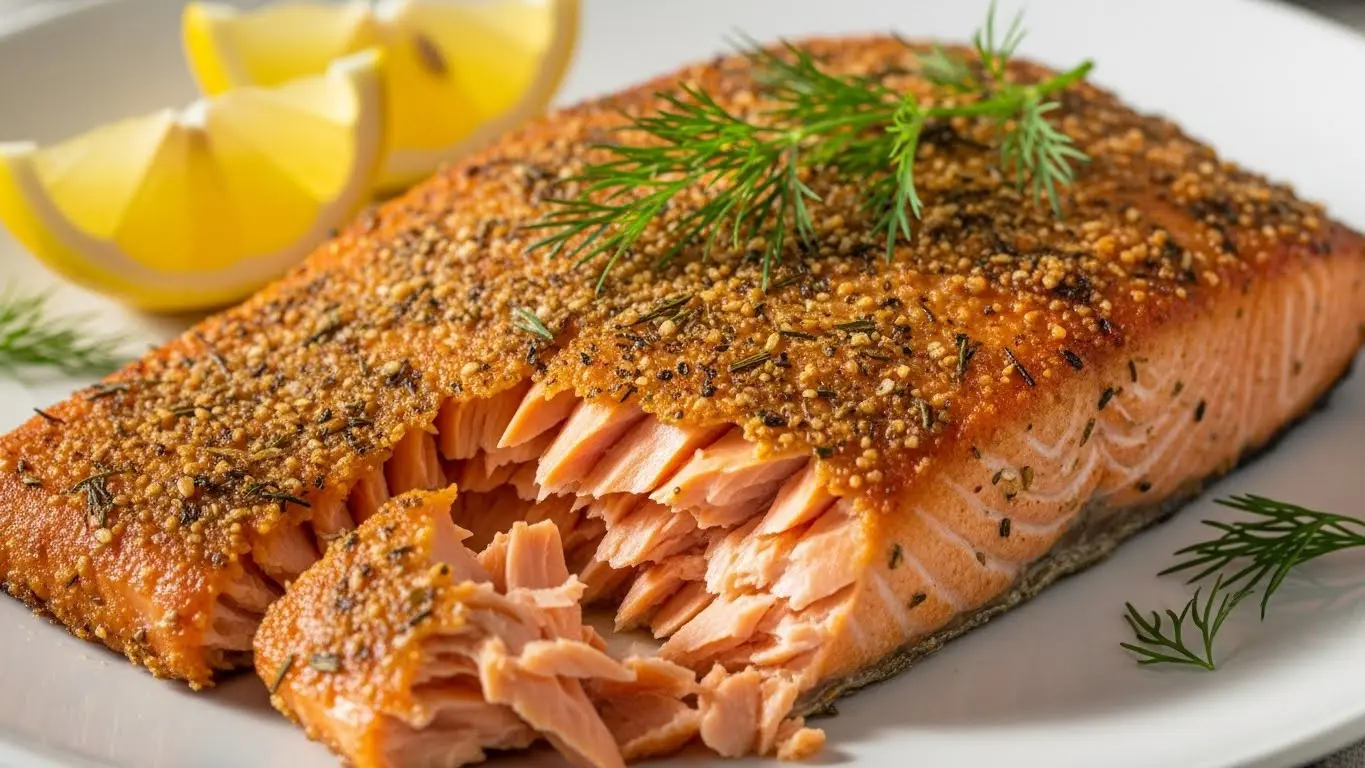
One evening, I had a beautiful piece of Atlantic salmon sitting in my fridge and absolutely no patience. I threw it in the air fryer mostly out of desperation, seasoned simply with garlic, olive oil, and a squeeze of lemon. What came out was shockingly good: a crispy, lightly charred exterior, a center that was still impossibly moist and flaky.
That was over a year ago, and now it’s my most-made weeknight protein. This air fryer salmon recipe comes together in under 15 minutes, needs zero fancy techniques, and delivers results that honestly rival anything you’d get in a restaurant.
| Quick Recipe Summary | |
|---|---|
| Prep Time | 5 minutes |
| Cook Time | 10 minutes |
| Total Time | 15 minutes |
| Servings | 4 fillets |
| Difficulty Level | Easy |
If you love easy, healthy seafood dinners, you’ll also want to check out my Grilled Salmon with Dill Sauce Recipe for another simple weeknight winner.
Why You’ll Love This Air Fryer Salmon Recipe
The speed alone is reason enough. From fridge to plate in 15 minutes means this is genuinely faster than ordering delivery.
The texture is something special. The air fryer creates a lightly crispy exterior while keeping the inside buttery and tender in a way that’s hard to replicate without a very hot pan and a lot of attention.
Cleanup is basically nothing. One air fryer basket, one bowl for the marinade, and you’re done.
It works with almost any salmon. Wild-caught sockeye, farm-raised Atlantic, skin-on or skinless — the air fryer handles all of them beautifully.
The seasoning is flexible. The base recipe is simple and universally loved, but it takes to almost any spice blend or marinade you throw at it.
It’s naturally high in protein and omega-3s. This isn’t just a delicious dinner; it’s genuinely good for you without tasting like “healthy food.”
Leftovers are incredibly versatile. Cold air fryer salmon flakes beautifully over salads, into grain bowls, or stirred into pasta the next day.
You might also enjoy: Baked Salmon with Asparagus and Lemon Recipe
Ingredients
The beauty of this recipe is in how simple the ingredient list is. You don’t need anything exotic; you just need good salmon and pantry staples that come together into something genuinely craveable.
- 4 salmon fillets (about 6 oz / 170 g each, skin-on or skinless, 1 inch / 2.5 cm thick) — Atlantic or sockeye both work wonderfully; I personally love skin-on because the skin crisps up like a chip
- 2 tablespoons extra virgin olive oil — coating the fish helps the seasoning stick and promotes that beautiful caramelized crust
- 3 cloves garlic, minced (about 1 tablespoon) — fresh garlic adds depth that garlic powder just can’t replicate
- 1 teaspoon smoked paprika — gives a subtle smoky warmth and a gorgeous reddish color; regular paprika works but smoked is preferred
- 1 teaspoon garlic powder — doubles down on the garlic flavor and helps the crust form evenly
- ½ teaspoon onion powder — a quiet background note that rounds out the savory flavor
- ½ teaspoon dried Italian seasoning (or a mix of dried oregano and thyme) — adds herbaceous brightness
- ½ teaspoon kosher salt — or to taste; don’t skip this, it’s what brings all the flavors forward
- ¼ teaspoon black pepper, freshly ground — freshly ground makes a real difference here
- ¼ teaspoon cayenne pepper (optional) — for a very gentle background heat; omit if cooking for kids
- 1 tablespoon low-sodium soy sauce — adds a savory umami depth and helps the glaze caramelize
- 1 tablespoon honey — balances the saltiness and helps create that sticky, slightly sweet glaze
- 1 lemon — half for juice in the marinade, half sliced into rounds for serving
- Fresh parsley or dill, chopped — for garnish; adds a fresh, bright finish
Read Also: Old Fashioned Salmon Patties Recipe
Kitchen Equipment Needed
You don’t need a lot of gear for this recipe, but having the right tools makes the process even smoother. The most important piece is obviously the air fryer itself, and the size matters more than you’d think when you’re cooking multiple fillets at once.
- Air fryer (at least 5-quart / 4.7-liter capacity) — you need enough basket space to lay the fillets in a single layer with some room between them; overcrowding leads to steaming rather than crisping
- Small mixing bowl — for whisking together the marinade
- Pastry brush or spoon — for coating the salmon evenly with the marinade
- Tongs or a fish spatula — a fish spatula is ideal here; its thin, flexible blade slides under delicate salmon without breaking it apart
- Instant-read meat thermometer — a digital instant-read thermometer removes all the guesswork; salmon is done at 125–130°F (52–54°C) for medium or 145°F (63°C) for fully cooked
- Citrus juicer or reamer — for squeezing the lemon; a fork works in a pinch
- Cutting board and knife — for mincing garlic and slicing lemon
- Air fryer parchment paper liners (optional but recommended) — perforated parchment liners prevent sticking and make cleanup almost effortless; make sure they’re designed for air fryers with holes for airflow
- Serving platter — for presenting the finished salmon beautifully
You might also enjoy: Air Fryer Chicken Breast Recipe
Recommended Products for This Recipe
After making this air fryer salmon more times than I can count, I’ve landed on a few products that genuinely make the process better. These are things I use regularly in my own kitchen, and I think they’ll help you get the best results too.
1. COSORI 5.8-Quart Air Fryer
The basket size is what makes this one stand out — you can fit four full salmon fillets in a single layer without crowding, which is the key to getting that crispy edge instead of a steamed texture. The temperature control is reliable and consistent, which means no more guessing whether your air fryer runs hot. It’s one of the most used appliances in my kitchen at this point.
2. Wild-Caught Sockeye Salmon Fillets
Wild-caught sockeye has a deeper, richer flavor than farmed Atlantic salmon, and its higher fat content means it stays incredibly moist in the air fryer even if you cook it a minute or two longer than planned. I order these online when my local store doesn’t have fresh wild-caught options, and the quality is consistently excellent. Good salmon makes a dramatically better finished dish.
3. ThermoPro Digital Instant-Read Thermometer
I overcooked so many salmon fillets before I started using a thermometer, because the visual cues are genuinely misleading. This thermometer reads in under 3 seconds and has saved my dinner more times than I care to admit. Salmon at 125°F (52°C) in the thickest part is perfectly cooked; anything above 145°F (63°C) starts to go dry and chalky.
4. OXO Good Grips Fish Spatula
A regular spatula will break apart a delicate salmon fillet the moment you try to flip or lift it. The thin, angled blade on a fish spatula slides underneath without disturbing the flesh, and it makes plating look effortless. This is one of those tools that feels unnecessary until you use it once and then wonder how you lived without it.
Read Also: Salmon Croquettes Soul Food Recipe
Step-by-Step Instructions: How to Make Air Fryer Salmon
Step 1: Pat the Salmon Dry
- Remove the salmon fillets from the refrigerator about 10 minutes before cooking to take the chill off — this helps them cook more evenly from edge to center.
- Use paper towels to thoroughly pat each fillet dry on all sides, including the skin side if skin-on.
- This step is critical. Moisture on the surface of the fish creates steam in the air fryer, which works against you — you want the hot air to make contact directly with the flesh to develop that lightly crispy crust.
- Don’t skip this even if your fillets look dry; salmon releases quite a bit of moisture as it warms up.
Step 2: Make the Marinade
- In a small bowl, combine the olive oil, minced garlic, smoked paprika, garlic powder, onion powder, Italian seasoning, salt, black pepper, and cayenne pepper (if using).
- Add the soy sauce and honey to the bowl.
- Squeeze in the juice of half a lemon — about 1 to 1.5 tablespoons (15–22 ml).
- Whisk everything together until the honey is fully incorporated and you have a smooth, fragrant paste-like marinade. It should smell incredible at this point.
- Taste the marinade and adjust if needed — a little more honey if you want it sweeter, a pinch more salt if it needs depth.
Step 3: Coat the Salmon
- Place the patted-dry salmon fillets on a clean cutting board or a plate.
- Using a pastry brush or the back of a spoon, coat each fillet generously with the marinade on all sides.
- Make sure to get into the edges and, if skin-on, brush a light layer on the skin side as well — the skin will crisp up and the seasoning adds a great flavor.
- Don’t be shy with the coating; a thicker layer of the marinade creates more of a glaze as it cooks.
- Let the coated salmon sit for 5 minutes while you preheat the air fryer. This brief rest helps the marinade begin to penetrate the fish slightly.
Step 4: Preheat the Air Fryer
- Preheat your air fryer to 400°F (200°C) for 3 to 5 minutes.
- Preheating is important — placing salmon in a cold air fryer basket leads to uneven cooking, where the outside may be done before the interior has cooked through properly.
- If your air fryer doesn’t have a preheat function, simply run it at 400°F (200°C) for 3 minutes with the empty basket inside before adding the fish.
- If using perforated parchment paper liners, place one in the basket now, after preheating — adding it during preheat can cause it to fly around and hit the heating element.
Step 5: Arrange the Salmon in the Basket
- Carefully place the marinated salmon fillets in the air fryer basket in a single layer, skin side down if skin-on.
- Leave at least half an inch (about 1.5 cm) of space between each fillet — the air needs to circulate freely around every piece to cook them evenly.
- If your air fryer is smaller and you can’t fit all four fillets at once, cook in two batches rather than overcrowding. The results will be much better.
- Do not stack the fillets or let them overlap at any point during cooking.
Step 6: Air Fry the Salmon
- Air fry at 400°F (200°C) for 8 to 10 minutes, depending on the thickness of your fillets.
- As a general guide: fillets that are about ½ inch (1.3 cm) thick need about 7 to 8 minutes; fillets that are 1 inch (2.5 cm) thick need about 10 to 11 minutes.
- For most air fryers, you do not need to flip the salmon — the hot air circulates around it on all sides. However, if your air fryer tends to cook more intensely from the bottom, you can carefully flip the fillets at the 5-minute mark using a fish spatula.
- Keep an eye on the surface of the salmon in the last 2 minutes of cooking — you want to see the glaze starting to caramelize and turn a slightly deeper color, but you don’t want it to burn. If it looks like it’s darkening too fast, reduce the temperature to 375°F (190°C).
Step 7: Check for Doneness
- At the 8-minute mark, insert an instant-read thermometer into the thickest part of one fillet. Push it in horizontally from the side rather than straight down for the most accurate reading.
- For medium doneness (slightly translucent in the very center, still very moist): aim for an internal temperature of 125–130°F (52–54°C). This is how most seafood-forward restaurants serve salmon.
- For fully cooked and opaque throughout: the USDA recommends 145°F (63°C). At this temperature, salmon will be fully set but can still be moist if cooked carefully.
- If you don’t have a thermometer, look for these visual cues: the flesh should be opaque on the outside, the sides of the fillet should look cooked about three-quarters of the way up, and a fork inserted into the thickest part should meet with just slight resistance and allow the fish to flake.
- If the salmon needs more time, return it to the air fryer in 1-minute increments and check again.
Step 8: Rest and Serve
- Transfer the cooked salmon fillets to a serving plate or individual plates using a fish spatula.
- Let them rest for 2 minutes before serving — this brief rest allows the internal temperature to equalize and the juices to redistribute, resulting in a noticeably more moist fillet.
- Squeeze a little fresh lemon juice over each fillet from the remaining lemon half.
- Garnish generously with freshly chopped parsley or dill and arrange the lemon slices alongside for guests to add more as desired.
- Serve immediately — air fryer salmon is at its absolute best when eaten right away while the glaze is still sticky and the texture is at its peak.
For another quick and healthy air fryer meal, try my Air Fryer Sesame Pork Skewers Recipe for a great weeknight rotation option.
_result.jpg "Air Fryer Salmon Recipe – Perfect for Clean Eating and Meal Prep")
Tips for The Best Air Fryer Salmon
These are the lessons I learned the hard way, mostly from batches of salmon that came out overcooked, under-seasoned, or stuck to the basket. Use these to skip ahead to perfect results from your very first attempt.
- Choose fillets of even thickness whenever possible. Thick at one end and thin at the other means one part will be overcooked while the other is still underdone. If you can, ask the fish counter to cut you fillets from the center of the fillet for even thickness, or fold the thin tail end underneath itself before cooking.
- Don’t skip patting the fish dry. It genuinely makes a significant difference to the final texture of the exterior. Moisture is the enemy of a good crust.
- Don’t marinate for longer than 30 minutes. The acid in the lemon juice will start to “cook” the surface of the fish if left too long, making it mushy rather than tender. For this recipe, a quick 5-minute rest after coating is ideal; 30 minutes is the absolute maximum.
- Spray or brush a very light layer of oil directly on the air fryer basket before adding parchment, or spray directly on the liner. Even with parchment, a light coat of cooking spray prevents any chance of the fish sticking.
- Don’t overcrowd the basket. This is probably the most common mistake and the one that makes the biggest difference. If the fillets are touching, the air can’t circulate properly and you’ll end up with steamed rather than air-fried salmon. Go in batches if you need to.
- Know your air fryer. Some air fryers run noticeably hotter than their stated temperature. If your salmon looks done at the 7-minute mark or the glaze looks like it’s burning before the fish is cooked through, your machine might run hot. Keep notes after the first batch and adjust time and temperature accordingly for future batches.
- Let it rest for 2 minutes after cooking. This is not optional if you want the best texture. The carryover cooking from those 2 minutes finishes the center beautifully without drying out the edges.
- Serve skin-on for crispy skin lovers. The skin on air-fried salmon can get genuinely crispy and delicious — almost chip-like. Brush it with a little extra oil before cooking and make sure your basket is properly preheated.
- Use fresh lemon at the very end. The brightness of fresh lemon juice added after cooking cuts through the richness of the salmon in a way that pre-cooked lemon simply doesn’t.
Another favorite: Air Fryer Balsamic Brussels Sprouts Recipe
What to Serve with Air Fryer Salmon
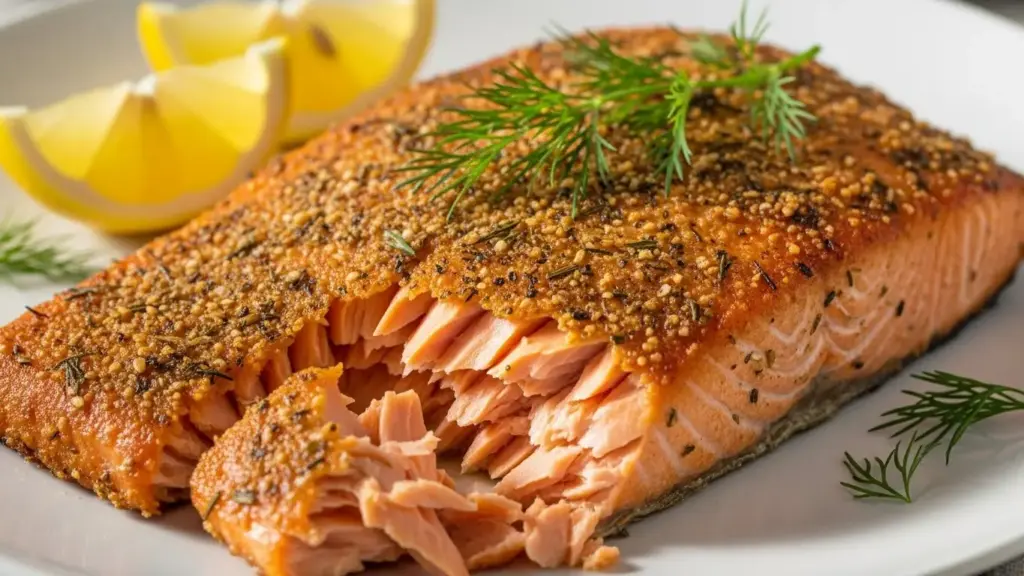
Salmon is one of those proteins that pairs beautifully with a huge range of sides, from light and fresh to warm and comforting. Here are the combinations I keep coming back to.
- Air Fryer Simple Baked Potatoes — Make the potatoes in the air fryer right before the salmon for an almost entirely air fryer meal; the fluffy interior and crispy skin complement the fish perfectly.
- Healthy Mashed Potatoes — Creamy, buttery mashed potatoes are a classic pairing that make this feel like a proper restaurant-style dinner without the effort.
- Healthy Coleslaw — A tangy, crispy slaw cuts through the richness of the salmon beautifully and adds a great textural contrast to the plate.
- Grilled Vegetable Skewers — Charred, smoky vegetables alongside salmon make this feel like a complete Mediterranean-inspired dinner plate.
- Air Fryer Corn on the Cob — Sweet, tender corn is a summer staple side that pairs naturally with salmon; cook it in the air fryer before the fish for a seamless meal.
- Steamed jasmine rice or brown rice — A simple bed of rice absorbs the garlicky, honey-soy glaze that drips from the salmon and makes the plate feel complete and satisfying.
- Simple green salad with lemon vinaigrette — A lightly dressed green salad keeps the meal feeling fresh and light, especially perfect for summer meals.
- Roasted asparagus — Asparagus and salmon are a classic pairing; roast it with olive oil and salt at the same temperature as the salmon for an easy side.
- Shrimp and Avocado Salad — For a full seafood spread, this creamy, fresh salad makes a stunning starter or side alongside the salmon.
Read Also: Salmon Chowder Recipe
Variations of Air Fryer Salmon
Once you’ve mastered the base recipe, this is where the fun really begins. The salmon and the air fryer technique stay the same; only the flavor profile changes. Each of these variations has become a regular in my rotation.
- Teriyaki Air Fryer Salmon: Replace the honey-soy marinade in the base recipe with a generous coat of homemade teriyaki sauce — a blend of soy sauce, mirin, sake, and brown sugar. The sugars caramelize in the air fryer into a glossy, sticky glaze that’s absolutely irresistible. Serve over steamed rice with a sprinkle of sesame seeds and sliced scallions.
- Lemon Herb Air Fryer Salmon: Swap the smoked paprika and soy-honey glaze for a simple mixture of fresh dill, fresh parsley, lemon zest, lemon juice, olive oil, salt, and pepper. This version is brighter, fresher, and feels very Scandinavian. It’s the version I make when I want something clean and light.
- Cajun Spiced Air Fryer Salmon: Replace the seasoning with a bold Cajun spice blend — smoked paprika, cayenne, garlic powder, onion powder, dried thyme, dried oregano, and black pepper. Coat the salmon in olive oil and press the spice rub all over it generously. The air fryer creates a fantastic crust with this blend. Serve with a squeeze of lemon and a side of rice.
- Honey Garlic Air Fryer Salmon: Double down on the honey and garlic in the base marinade and skip the soy sauce. Add a tablespoon of butter dotted on top of each fillet before air frying; it melts and mingles with the honey-garlic coating to create a rich, golden crust. This version is family-friendly and universally loved.
- Dijon Mustard Air Fryer Salmon: Coat the salmon in a mixture of Dijon mustard, olive oil, fresh dill, lemon juice, salt, and pepper. The mustard creates an incredible crust as it cooks and its sharpness pairs beautifully with the rich fish. This one feels fancy enough for a dinner party but comes together in minutes.
- Asian Ginger Soy Air Fryer Salmon: Combine soy sauce, fresh grated ginger, sesame oil, a touch of rice vinegar, and a small amount of honey. The ginger adds a warming, aromatic note that makes this version feel completely different from the base recipe. Top with toasted sesame seeds and serve over rice noodles.
- Blackened Air Fryer Salmon: Use a classic blackening spice mixture — paprika, cayenne, onion powder, garlic powder, dried thyme, dried oregano, salt, and pepper — and press it firmly all over the salmon. The air fryer creates a dramatically dark, intensely spiced crust that looks stunning and tastes incredible. Serve with a cooling side like coleslaw or a yogurt-based sauce.
For another creative way to enjoy seafood, try these Shrimp Tacos with Mango Salsa.
Storage and Reheating
Leftover air fryer salmon stores well and can be repurposed in so many ways — it’s one of my favorite things to have on hand for quick lunches throughout the week.
- Refrigerator storage: Allow the cooked salmon to cool completely to room temperature before storing — this prevents condensation inside the container that would make the fish soggy. Transfer to an airtight container and refrigerate for up to 3 days.
- Freezer storage: For longer storage, wrap each cooled fillet individually in plastic wrap and then place in a zip-top freezer bag, pressing out as much air as possible. Freeze for up to 2 months. Label the bag with the date so you can track freshness.
- Thawing from frozen: Transfer frozen salmon to the refrigerator the night before you plan to eat it and let it thaw slowly overnight. Avoid thawing at room temperature as this can encourage bacterial growth.
- Reheating in the air fryer (best method): Place the leftover salmon fillet in the air fryer basket and reheat at 350°F (175°C) for 3 to 4 minutes. This method gently warms it through without drying it out and brings back some of the crispy edges. Check at the 3-minute mark and add time in 1-minute increments as needed.
- Reheating in the oven: Preheat your oven to 275°F (135°C), place the salmon on a baking sheet, cover loosely with foil, and warm for about 15 minutes. The low temperature and foil cover protect the moisture in the fish and prevent it from drying out.
- Reheating in the microwave (quick method): Place the salmon on a microwave-safe plate, cover with a damp paper towel, and heat in 30-second intervals at 50% power until just warmed through. This is the fastest method but can make the texture slightly less pleasant than the air fryer or oven methods.
- Eating cold: Honestly, cold leftover salmon is one of the best things. Flake it over a salad, stir it into pasta with a bit of cream sauce, or use it in a grain bowl with rice and avocado. No reheating necessary.
You might also enjoy: Air Fryer Pork Bites Recipe
Nutritional Facts
The following nutritional information is an estimate per serving (1 fillet, approximately 6 oz / 170 g), based on the base recipe with the listed marinade ingredients. Values may vary slightly depending on the specific type of salmon and the exact measurements used.
| Nutrition Facts (Per Serving) | |
|---|---|
| Calories | 320 kcal |
| Total Fat | 16 g |
| Saturated Fat | 2.5 g |
| Unsaturated Fat | 12 g |
| Trans Fat | 0 g |
| Cholesterol | 94 mg |
| Sodium | 480 mg |
| Total Carbohydrates | 7 g |
| Dietary Fiber | 0.3 g |
| Total Sugars | 5 g |
| Added Sugars | 4 g |
| Protein | 38 g |
| Vitamin D | 18 mcg (90% DV) |
| Omega-3 Fatty Acids | 2,200 mg |
| Potassium | 890 mg (19% DV) |
| Calcium | 25 mg (2% DV) |
| Iron | 1.1 mg (6% DV) |
| Vitamin B12 | 4.9 mcg (204% DV) |
| Selenium | 48 mcg (87% DV) |
For another light and healthy air fryer option, check out my Air Fryer Bacon Wrapped Chicken Breasts Recipe.
Health Benefits of Key Ingredients
This isn’t just a fast dinner — it’s genuinely one of the most nutritionally dense meals you can put on your table. Here’s what the key ingredients are doing for your body beyond just tasting great.
- Salmon (omega-3 fatty acids): Salmon is one of the richest dietary sources of long-chain omega-3 fatty acids (EPA and DHA), which have been extensively studied for their role in reducing inflammation, supporting cardiovascular health, and promoting brain function. Regular consumption of omega-3-rich fish is associated with lower rates of heart disease, depression, and cognitive decline.
- Salmon (high-quality protein): A 6-ounce serving of salmon provides roughly 38 grams of complete protein — meaning it contains all nine essential amino acids. This level of protein supports muscle maintenance and repair, keeps you feeling full and satisfied for hours, and has a minimal impact on blood sugar.
- Salmon (vitamin D): Salmon is one of the few natural food sources of vitamin D, providing a substantial portion of the daily recommended value in a single serving. Vitamin D is critical for bone health, immune function, and mood regulation, and deficiency is surprisingly common in many populations.
- Salmon (vitamin B12): A single serving of salmon provides more than twice the daily recommended value of vitamin B12, a nutrient essential for nerve function, DNA synthesis, and the production of red blood cells. B12 is found almost exclusively in animal foods, making salmon an especially important source for those who eat limited amounts of meat.
- Garlic: Garlic contains allicin and other sulfur compounds with established antimicrobial and antioxidant properties. Research suggests regular garlic consumption may contribute to modest reductions in blood pressure and LDL cholesterol levels, and supports immune health.
- Extra virgin olive oil: Rich in monounsaturated fats and polyphenol antioxidants, extra virgin olive oil is one of the cornerstones of the Mediterranean diet, which is consistently linked to reduced risk of heart disease, improved metabolic markers, and longevity.
- Lemon juice: Beyond its bright flavor, lemon juice is an excellent source of vitamin C, a powerful antioxidant that supports immune function and enhances the absorption of non-heme iron. The acid in lemon also brightens every flavor around it, meaning you can use less salt overall.
- Smoked paprika: Paprika, made from dried and ground peppers, contains capsanthin and other carotenoids with antioxidant properties. It also provides a modest amount of vitamin A, which supports eye health and immune function.
For another nutritious and easy healthy dinner, check out my Healthy Alfredo Sauce Recipe.
FAQs About Air Fryer Salmon
1. Do I need to flip the salmon in the air fryer?
Generally, no — the air fryer circulates hot air all around the food, so flipping isn’t usually necessary. Most salmon fillets cook beautifully skin-side down the entire time.
That said, if your air fryer tends to brown more intensely from the bottom than the top, a flip at the halfway mark can help. Use a fish spatula to do this carefully to avoid breaking the fillet apart.
2. Can I cook salmon from frozen in the air fryer?
Yes, you can cook salmon from frozen in the air fryer, and the results are surprisingly good. Add about 5 additional minutes to the cook time and start checking the internal temperature at the 13-minute mark.
For best results, rinse the frozen fillets under cold water for 30 seconds before patting dry and seasoning — this helps the marinade adhere better to the surface even when the fish is still partially frozen.
3. What temperature should air fryer salmon reach when done?
For medium-cooked salmon that is still slightly translucent and very moist in the center, aim for an internal temperature of 125–130°F (52–54°C). This is how most restaurants and food professionals prefer salmon.
If you prefer your salmon fully cooked and opaque all the way through, the USDA recommends 145°F (63°C) as the safe minimum internal temperature. Beyond 145°F, salmon can quickly become dry and chalky.
4. Can I use skinless salmon fillets?
Absolutely — skinless fillets work just as well in the air fryer. In fact, skinless fillets are often easier for people who aren’t fans of fish skin.
If using skinless salmon, be extra careful when removing the fillets from the basket, as they can be slightly more fragile without the skin to hold them together. A fish spatula and a gentle hand make a big difference here.
5. Why is my air fryer salmon dry?
Dry salmon almost always means it was overcooked, and the most reliable fix is using an instant-read thermometer rather than relying on visual cues or timing alone. Pull the salmon off at 125–130°F (52–54°C) for a moist result.
Other contributing factors include fillets that were too thin (they cook faster than you expect), an air fryer that runs hot, or fillets that were placed directly from the refrigerator into a cold basket without preheating. Addressing all three of these will transform your results immediately.
Read Also: Air Fryer Mac and Cheese Recipe
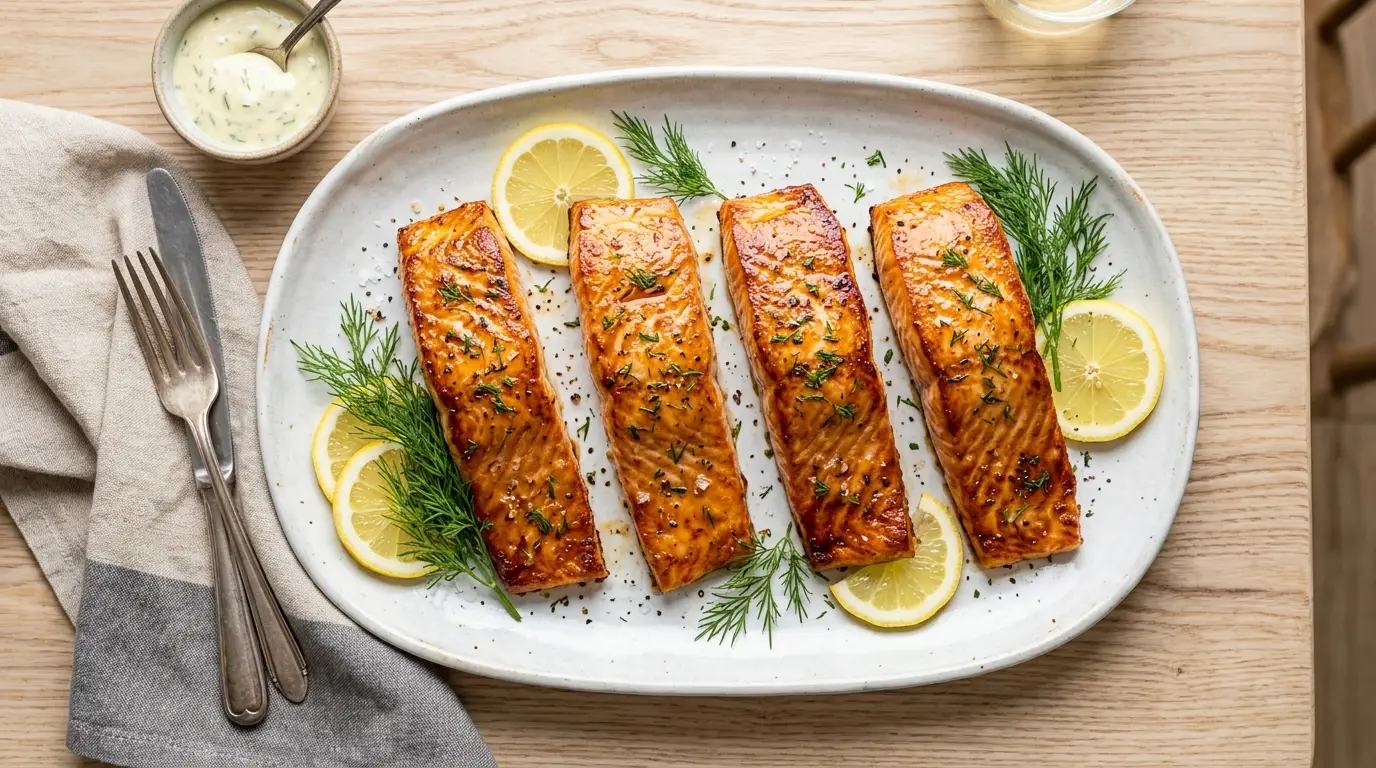
Air Fryer Salmon
Ingredients
- 4 salmon fillets - about 6 oz / 170g each, skin-on or skinless, 1 inch / 2.5cm thick — Atlantic or sockeye both work
- 2 tbsp extra virgin olive oil
- 3 garlic cloves - minced, about 1 tablespoon
- 1 tsp smoked paprika - regular paprika works but smoked is preferred
- 1 tsp garlic powder
- ½ tsp onion powder
- ½ tsp dried Italian seasoning - or a mix of dried oregano and thyme
- ½ tsp kosher salt - or to taste
- ¼ tsp black pepper - freshly ground
- ¼ tsp cayenne pepper - optional; omit if cooking for kids
- 1 tbsp low-sodium soy sauce - adds savory umami depth
- 1 tbsp honey - balances saltiness and helps create a sticky glaze
- 1 lemon - half for juice in the marinade, half sliced into rounds for serving
- fresh parsley or dill - chopped, for garnish
Equipment
- Air fryer - At least 5-quart / 4.7-liter capacity
- Small mixing bowl - For whisking together the marinade
- Pastry brush or spoon - For coating the salmon evenly with the marinade
- Fish spatula - Thin, flexible blade slides under delicate salmon without breaking it
- Instant-read meat thermometer - For checking doneness; salmon is done at 125–130°F (52–54°C) for medium
- Citrus juicer or reamer - For squeezing the lemon; a fork works in a pinch
- Cutting board and knife - For mincing garlic and slicing lemon
- Air fryer parchment paper liners - Perforated liners — optional but recommended to prevent sticking
- Serving platter - For presenting the finished salmon
Method
- Remove salmon from the refrigerator 10 minutes before cooking. Use paper towels to thoroughly pat each fillet dry on all sides — this is critical for achieving a crispy crust rather than steamed fish.
- In a small bowl, whisk together the olive oil, minced garlic, smoked paprika, garlic powder, onion powder, Italian seasoning, salt, pepper, cayenne (if using), soy sauce, honey, and juice of half the lemon until fully combined and smooth.
- Using a pastry brush or spoon, coat each fillet generously with the marinade on all sides including the skin side if skin-on. Let the coated salmon rest for 5 minutes while you preheat the air fryer.
- Preheat your air fryer to 400°F (200°C) for 3 to 5 minutes. If using perforated parchment liners, place one in the basket after preheating — not during — to prevent it from flying into the heating element.
- Place the marinated salmon fillets in the air fryer basket in a single layer, skin side down if skin-on, leaving at least ½ inch (1.5cm) of space between each fillet. Cook in batches if needed — do not overcrowd.
- Air fry at 400°F (200°C) for 8 to 10 minutes depending on thickness — about 7 to 8 minutes for ½-inch fillets and 10 to 11 minutes for 1-inch fillets. Flipping is not usually necessary, but you can flip at the 5-minute mark if your air fryer browns more intensely from the bottom.
- At the 8-minute mark, insert an instant-read thermometer into the thickest part of one fillet — aim for 125–130°F (52–54°C) for medium or 145°F (63°C) for fully cooked. Return to the air fryer in 1-minute increments if more time is needed.
- Transfer the salmon to a serving plate using a fish spatula and let rest for 2 minutes. Squeeze fresh lemon juice over each fillet, garnish with chopped parsley or dill, and serve immediately with lemon slices alongside.
Nutrition
Notes
- Pat the salmon completely dry before coating — moisture on the surface creates steam and prevents a crispy exterior.
- Do not marinate for longer than 30 minutes; the acid in the lemon juice will begin to break down the fish surface and make it mushy.
- Choose fillets of even thickness whenever possible for consistent cooking. Fold the thin tail end underneath itself if your fillet tapers significantly.
- Never overcrowd the basket — if fillets are touching, you’ll steam rather than air-fry the salmon. Cook in two batches if needed.
- Know your air fryer: some models run hotter than stated. If the glaze darkens before the fish is cooked through, reduce temperature to 375°F (190°C).
- For crispy skin, brush the skin side with a little extra oil before cooking and make sure the basket is fully preheated.
- Always let the salmon rest for 2 minutes after cooking — carryover heat finishes the center without drying out the edges.
- To cook from frozen: rinse fillets briefly under cold water, pat dry, season, and add approximately 5 extra minutes to the cook time. Start checking internal temperature at the 13-minute mark.
- Leftovers keep in an airtight container in the refrigerator for up to 3 days. Reheat in the air fryer at 350°F (175°C) for 3 to 4 minutes for best texture.
- Try variations like teriyaki glaze, Cajun spice rub, Dijon mustard and dill, or Asian ginger-soy marinade — the air fryer technique works equally well with all of them.
Private Notes
Tried this recipe?
Let us know how it was!Final Thoughts
This air fryer salmon recipe has genuinely changed the way I eat during the week. It’s the kind of dinner that makes you feel like you have your life together — ready in 15 minutes, deeply satisfying, and nutritious enough to feel good about eating regularly.
Whether you stick with the classic honey-garlic version or venture into the teriyaki or Cajun variations, I promise you won’t be disappointed. The air fryer is truly the best tool for quick, perfect salmon that I’ve ever used.
Give it a try this week — I’d love to know how it turns out for you. Drop a comment below and tell me which variation you tried, or tag me if you share it. Your feedback genuinely helps and I read every single one!
Recommended:
- Air Fryer French Fries Recipe
- Air Fryer Honey Garlic Chicken Wings Recipe
- Air Fryer Corn on the Cob Recipe
- Air Fryer Classic Zucchini Fries Recipe
- Air Fryer Popcorn Chicken Recipe
- Air Fryer Onion Rings Recipe
- Air Fryer Spicy Buffalo Chicken Wings Recipe
- Air Fryer Chicken Drumsticks Recipe
- Air Fryer Zucchini Parmesan Chips Recipe
- Blackened Fish with Pineapple Salsa Recipe