I first made an amatriciana sauce recipe on a rainy Sunday afternoon after watching a travel documentary about Rome — the kind that makes you want to book a flight AND raid the kitchen at the same time.
I had a block of guanciale I’d been saving for a special occasion, a can of San Marzano tomatoes, and a whole lot of curiosity.
The result? An absolutely magnetic sauce that tasted like it came out of a tiny Roman trattoria, not my apartment kitchen. The deep, porky richness of the guanciale, the bright acidity of the tomatoes, the heat from the chili, and the salty punch of Pecorino Romano — it was one of those meals where everyone at the table just went quiet.
I’ve made this sauce dozens of times since, tweaking, adjusting, failing spectacularly a few times (more on that later), and finally landing on what I think is the most satisfying version you can make at home.
This is not a sauce that requires hours on the stove. It’s bold, simple, and ready in about 30 minutes.
| Quick Recipe Summary | |
|---|---|
| Prep Time | 10 minutes |
| Cook Time | 25 minutes |
| Total Time | 35 minutes |
| Servings | 4 servings |
| Difficulty Level | Easy |
If you love bold, tomato-forward Italian sauces, you might also enjoy this Arrabbiata Sauce Recipe — another spicy Roman classic that’s just as quick to pull together.
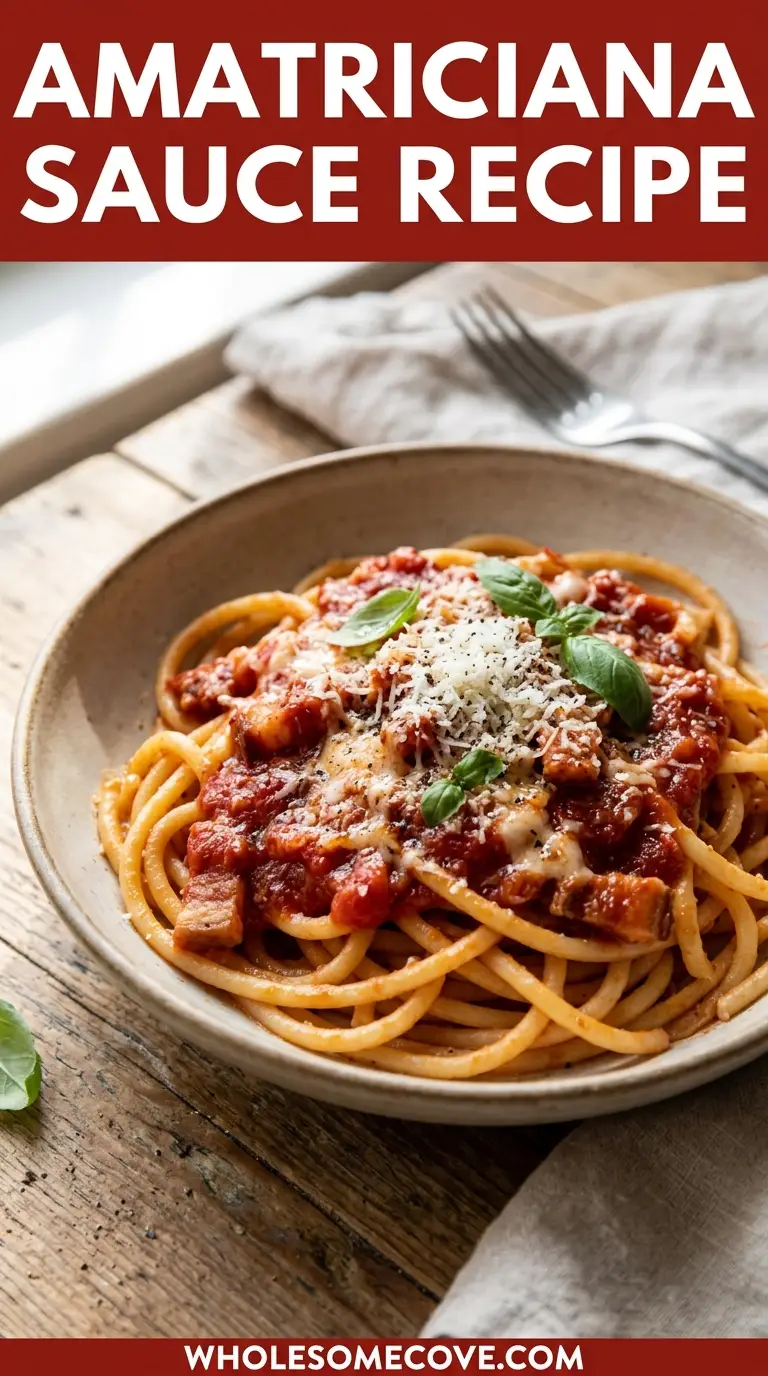
Why You’ll Love This Amatriciana Sauce Recipe
This is Roman food at its most honest: just a handful of quality ingredients doing all the heavy lifting.
The guanciale renders down into something silky and deeply savory, flavoring every drop of that tomato sauce.
No long simmering, no complicated technique, no special equipment.
It’s the kind of recipe that sounds impressive but requires almost no effort — the best kind.
The sauce is also incredibly versatile.
Toss it with bucatini for the classic preparation, or use it with spaghetti, rigatoni, or even penne.
Here’s what makes it so special:
- It’s ready in under 35 minutes. The sauce comes together fast, making it genuinely weeknight-friendly despite its restaurant-quality flavor.
- Only 6 core ingredients. Guanciale, tomatoes, Pecorino Romano, chili, white wine, and pasta water. That’s all you really need.
- The guanciale is irreplaceable (sort of). When you render it slowly, it releases fat that becomes the flavor base for the entire sauce. Nothing else does this the same way.
- It’s authentically Italian. This sauce has protected regional status in Italy, meaning the recipe has been officially codified. You’re making something with real culinary history.
- It scales beautifully. Double or triple the sauce and freeze it. Future-you will be very grateful.
- It pairs with almost anything. Bucatini, spaghetti, rigatoni — they all work. Even a thick pasta like pappardelle is delicious here.
Read Also: Carbonara Recipe
Ingredients
The beauty of this sauce lies entirely in the quality of a very short ingredient list. Use the best you can find, especially for the guanciale and tomatoes — they are the soul of this dish.
Here’s everything you’ll need:
- Guanciale, 125g (4.4 oz) — Cured pork cheek (or jowl). This is the traditional and preferred fat for Amatriciana. Look for it at Italian specialty stores or online. Cut the rind off before slicing.
- Dry white wine, 60ml (¼ cup) — Pinot Grigio or Sauvignon Blanc both work well. This deglazes the pan after the guanciale cooks.
- San Marzano whole peeled tomatoes, 400g (14 oz can) — Hand-crush them before adding to the pan. San Marzano tomatoes have a natural sweetness and lower acidity that makes them ideal here.
- Red chili flakes (peperoncino), ½ teaspoon — Adjust to taste. Traditional Amatriciana has a mild but noticeable heat.
- Pecorino Romano cheese, 60g (½ cup), finely grated — Sharp, salty, and funky in the best way. Reserve extra for serving.
- Bucatini or spaghetti, 400g (14 oz) — Bucatini is the classic Roman pairing, but spaghetti works just as beautifully.
- Pasta water, about 60–120ml (¼ to ½ cup) — Reserved from your pasta pot. The starch helps bind the sauce to the noodles.
- Salt and black pepper, to taste — Go easy on the salt; guanciale and Pecorino are already quite salty.
- Extra virgin olive oil, 1 tablespoon (optional) — Only needed if you’re using pancetta instead of guanciale, which is leaner.
You might also enjoy: Bolognese Recipe
Kitchen Equipment Needed
You don’t need much, but having the right pan size makes a real difference in how evenly the guanciale renders and how efficiently the sauce reduces.
Here’s what to have ready:
- Large deep skillet or braiser, 12-inch — This is key. A wide pan lets the sauce reduce quickly and gives you room to toss the pasta directly in the sauce.
- Large stockpot — For boiling the pasta. Use at least 4–5 quarts of water.
- Sharp chef’s knife — For slicing the guanciale into planks or lardons.
- Cutting board — Keep the guanciale cold for easier slicing.
- Wooden spoon or silicone spatula — For stirring and scraping up the browned bits when you deglaze.
- Fine grater or microplane — For finely grating the Pecorino. Fine grating ensures it melts into the sauce smoothly rather than clumping.
- Measuring cup or ladle — For scooping out pasta water before draining.
- Tongs or pasta fork — For tossing the cooked pasta into the sauce.
- Colander — For draining the pasta (after you’ve reserved your pasta water).
Read Also: Cacio e Pepe Recipe
Recommended Products for This Recipe
These are my personal go-to picks that genuinely make a difference when I’m cooking this sauce at home.
1. Guanciale (Cured Pork Cheek)
Sourcing good guanciale is the single biggest upgrade you can make to this recipe. The flavor difference between quality Italian-style guanciale and a substitute like bacon is dramatic — guanciale is less smoky, fattier, and more delicate. If your local deli doesn’t carry it, ordering online is absolutely worth it.
2. San Marzano DOP Canned Tomatoes
Not all canned tomatoes are equal, and in a sauce this simple, you’ll taste the difference. San Marzano DOP tomatoes are sweeter, less acidic, and have a more complex flavor than standard canned tomatoes. They’re what most Roman cooks reach for when fresh tomatoes aren’t in season.
3. Pecorino Romano (Imported)
Pre-grated cheese won’t cut it here. Buying a block of authentic imported Pecorino Romano and grating it fresh makes all the difference. It melts better, has more flavor, and gives the sauce that signature sharp-salty punch.
4. Lodge Cast Iron Skillet or Enameled Braiser
A heavy-bottomed skillet with good heat retention is your best friend for this recipe. It helps render the guanciale evenly without burning the fat, and keeps the tomato sauce at a steady, controlled simmer.
For another great Italian pasta sauce, try this classic Marinara Sauce Recipe — simple, authentic, and endlessly useful.
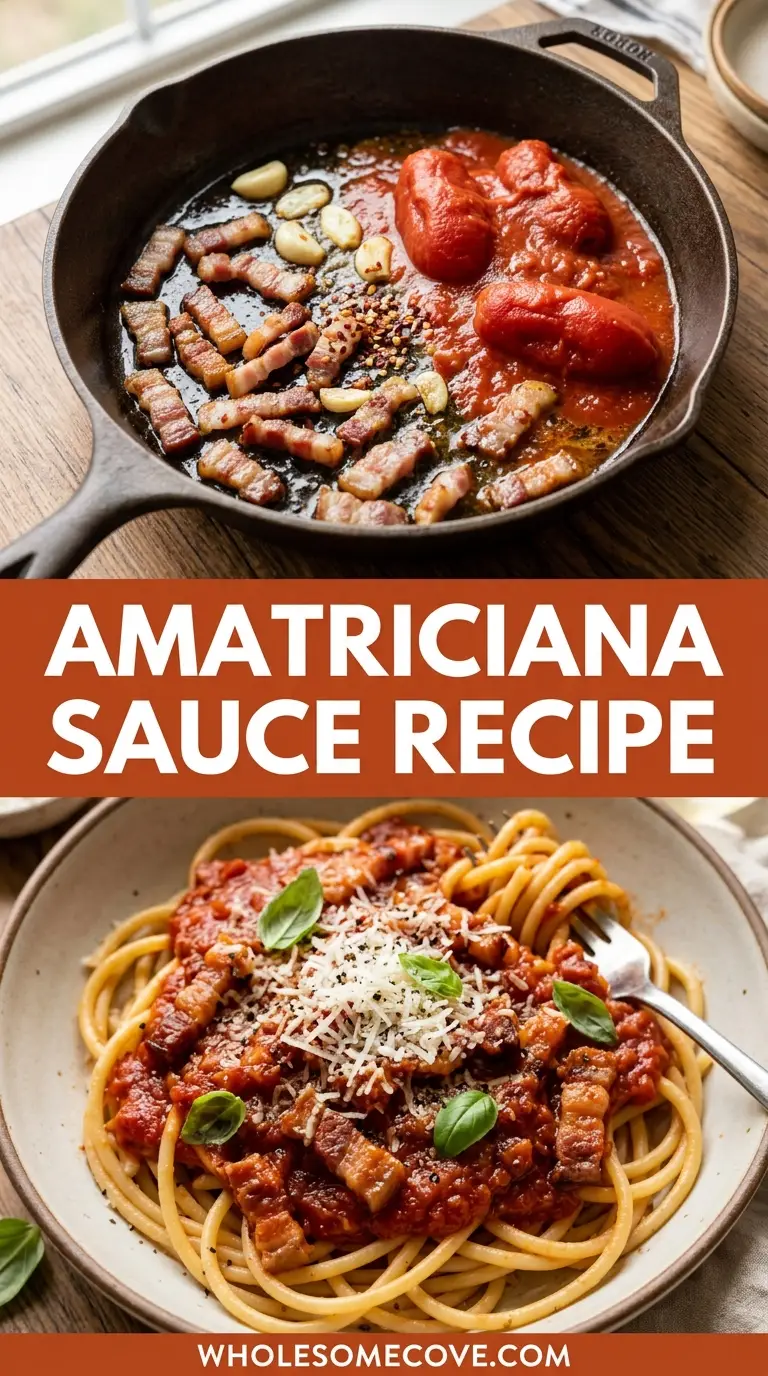
Step-by-Step Instructions: How to Make Amatriciana Sauce
Step 1: Prepare the Guanciale
- Remove the guanciale from the fridge about 10 minutes before cooking so it’s slightly firm but not rock-hard — this makes slicing much easier.
- Using a sharp chef’s knife, trim off the thick outer rind at the bottom of the guanciale. If the seasoned top layer looks excessively coated in spice, you can shave a thin layer off as well.
- Slice the guanciale into planks about 6mm (¼ inch) thick, then cut each plank into strips or small rectangles (lardons). Aim for pieces that are roughly bite-sized — not too small or they’ll disappear into the sauce, not too large or they won’t render properly.
- Set the prepared guanciale aside on your cutting board.
Step 2: Prepare the Tomatoes
- Open the can of San Marzano whole peeled tomatoes and pour the contents into a bowl.
- Using clean hands or a potato masher, crush the tomatoes into a rough, chunky puree. You want texture — not smooth, but not huge chunks either. Leave some pieces intact for body.
- Set the tomatoes aside. This takes about 30 seconds and makes a big difference in the final sauce texture.
Step 3: Boil a Large Pot of Water
- Fill your large stockpot with at least 4–5 quarts (4–5 liters) of water and bring it to a rolling boil over high heat.
- Once boiling, add a generous amount of salt — the water should taste pleasantly salty, like the sea. This is your only opportunity to season the pasta itself.
- Do not add the pasta yet — you’ll time it so the pasta finishes while the sauce is ready.
Step 4: Render the Guanciale
- Place your large 12-inch skillet over medium-low heat. Do not add any oil — the guanciale will release its own fat as it cooks.
- Add the guanciale pieces in a single layer to the cold or barely warm pan. Starting from a cooler temperature helps the fat render slowly and evenly without burning.
- Cook, stirring occasionally, for 8 to 10 minutes, or until the guanciale is golden, lightly crispy on the outside, and has rendered a generous pool of clear fat into the pan. The pieces should be chewy-fatty rather than crunchy all the way through.
- Using a slotted spoon, transfer the guanciale to a paper-towel-lined plate. Leave all of the rendered fat in the pan — this is the flavor base for your entire sauce. Do not discard it.
Step 5: Add the Chili Flakes and Deglaze with Wine
- With the pan still over medium heat, add the red chili flakes to the rendered guanciale fat.
- Stir the chili flakes into the hot fat and let them sizzle for about 30 to 45 seconds — just long enough to bloom the spices and infuse the fat with heat, but not so long that they burn.
- Pour in the dry white wine carefully (it will sizzle and steam). Using your wooden spoon, scrape up any browned bits from the bottom of the pan — those bits are pure flavor.
- Let the wine simmer for about 1 to 2 minutes until the harsh alcohol smell dissipates and the liquid reduces slightly. You’ll know the alcohol has cooked off when the aroma shifts from sharp and pungent to mellow and fruity.
Step 6: Add the Tomatoes and Simmer
- Pour the hand-crushed San Marzano tomatoes into the pan. Stir well to combine with the wine, chili-infused fat, and any remaining pan drippings.
- Season lightly with black pepper. Hold off on salt for now — you’ll adjust at the end after the pasta water and Pecorino are added, since both are quite salty.
- Bring the sauce to a gentle simmer over medium heat, then reduce to medium-low. Let it cook uncovered, stirring occasionally, for about 15 to 18 minutes, until the sauce has darkened slightly in color, reduced, and thickened enough to coat a spoon.
- While the sauce simmers, cook your pasta.
Step 7: Cook the Pasta
- Add your bucatini or spaghetti to the salted boiling water and stir immediately to prevent sticking.
- Cook the pasta according to package directions, but pull it out about 1 to 2 minutes before it’s fully done (it will finish cooking in the sauce). It should be quite firm — you’re aiming for firmly al dente at this stage.
- Before draining, use a ladle or measuring cup to scoop out at least 240ml (1 cup) of pasta cooking water and set it aside.
- Drain the pasta through your colander.
Step 8: Finish the Sauce with Guanciale and Pasta
- Return the reserved crispy guanciale to the tomato sauce and stir it in.
- Add the drained pasta directly to the skillet with the sauce.
- Pour in about 60ml (¼ cup) of the reserved pasta water and toss everything together vigorously over medium-low heat. The starchy pasta water helps the sauce cling to the noodles and creates a silky, emulsified coating.
- Continue tossing for 1 to 2 minutes until the pasta has finished cooking in the sauce and everything is well coated. Add more pasta water if needed to loosen the sauce to your preferred consistency.
Step 9: Add the Pecorino Romano
- Remove the pan from the heat (this is important — adding cheese to an actively boiling pan can cause it to clump and become grainy).
- Add half the finely grated Pecorino Romano and toss quickly to incorporate. The residual heat will melt the cheese into the sauce.
- Taste and adjust seasoning — add more black pepper if needed, and only a pinch of salt if truly necessary.
- Divide the pasta among four warmed bowls, making sure each portion gets plenty of sauce and guanciale pieces.
- Top generously with the remaining Pecorino Romano and serve immediately.
Another Italian pasta bake the whole family will love: Baked Ziti Recipe
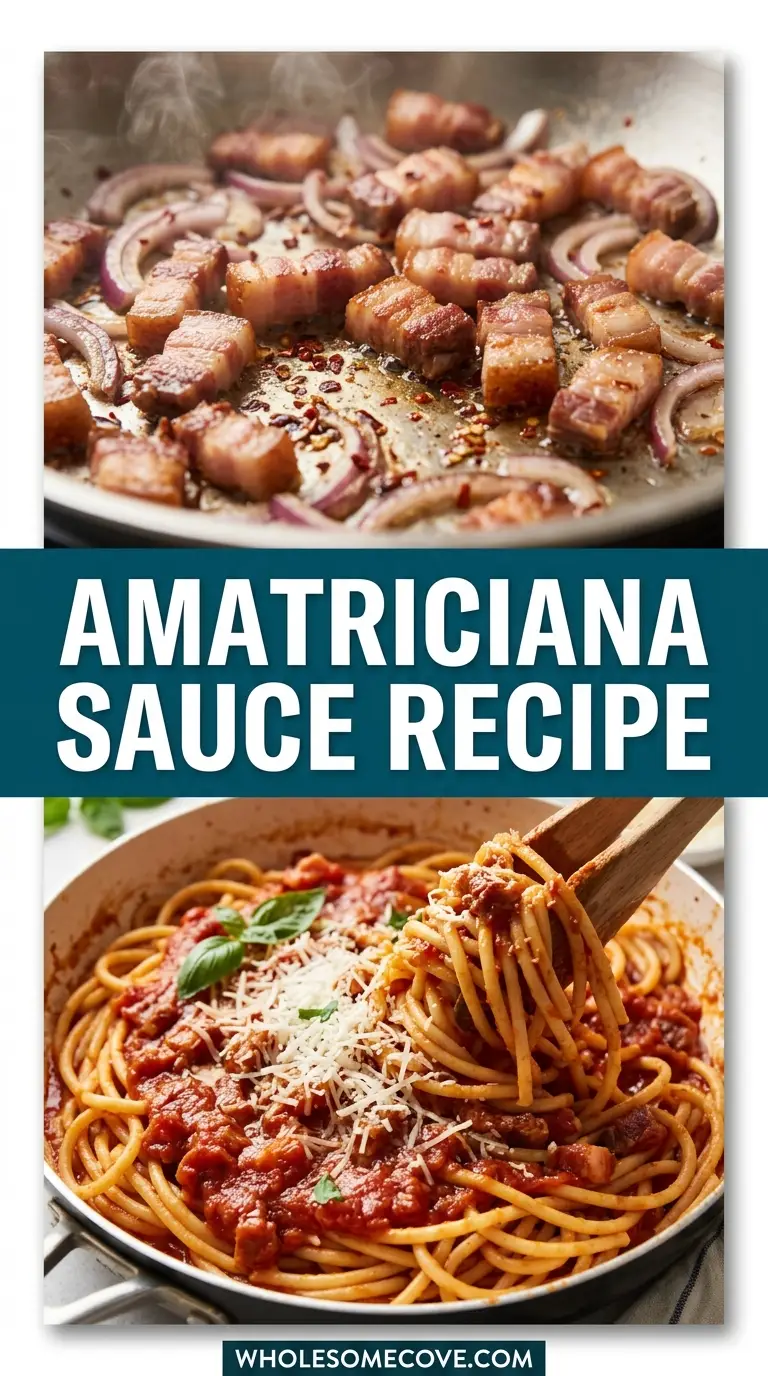
Tips for The Best Amatriciana Sauce
Small details make a huge difference with this sauce. I learned most of these the hard way — through batches that were underseasoned, overcooked, or clumpy with cheese.
Here’s what I know now:
- Don’t skip the guanciale rendering step. Cook it slowly over medium-low heat. Rushing it on high heat will brown the outside before the fat has time to render out, leaving you with tough, dry pieces instead of silky, rich lardons.
- Use whole canned tomatoes and crush them yourself. Pre-crushed or diced tomatoes have added stabilizers and less natural juice. Whole tomatoes, hand-crushed, give you a more vibrant, fresh sauce with better texture.
- Never add cheese to a hot pan. Take the skillet off the heat before adding the Pecorino. If the pan is too hot, the cheese proteins will seize up and you’ll end up with a greasy, clumpy sauce instead of a silky one.
- Salt the pasta water generously. The water should taste distinctly salty — about 1 to 2 tablespoons of salt per 4 quarts of water. This is your only chance to season the pasta from the inside out.
- Reserve more pasta water than you think you need. A full cup, minimum. You may not use it all, but having it available gives you control over the final sauce consistency.
- Don’t overcook the sauce. Amatriciana benefits from a short, bright simmer — not a long, low braise. 15 to 20 minutes is all it needs. Over-simmering dulls the tomato’s freshness, which is a big part of what makes this sauce taste alive.
- Toss the pasta aggressively in the sauce. Vigorous tossing with pasta water is what creates that glossy, restaurant-quality emulsified coating. Don’t just stir — really toss.
- Grate your Pecorino fresh. Pre-grated cheese from a can contains anti-caking agents that prevent it from melting smoothly. Buy a block and grate it on a microplane for the best results.
- Taste before seasoning with salt. Guanciale and Pecorino are both very salty. In many cases, you won’t need any additional salt at all.
For another take on a rich, savory Italian sauce, check out this Sunday Gravy Recipe — it’s slow-cooked, deeply flavorful, and absolutely worth the time.
What to Serve with Amatriciana Sauce
Amatriciana sauce is a full meal on its own when tossed with pasta, but these pairings round out the table beautifully.
A simple green salad and some good crusty bread are really all you need to make it a complete dinner.
Here are some great options to serve alongside:
- Crusty Italian bread or ciabatta — Perfect for scooping up every last drop of sauce from the bowl. Warm it in the oven for a few minutes to get a crisp crust.
- Simple arugula salad with lemon and olive oil — The peppery bitterness of arugula cuts through the richness of the guanciale beautifully. A squeeze of lemon and a good drizzle of olive oil is all it needs.
- Grilled Portobello Mushrooms — Their earthy, meaty flavor pairs really well with the bold tomato sauce.
- Roasted asparagus with Parmesan — Light, elegant, and fast. The nuttiness of the Parmesan echoes the Pecorino in the sauce.
- Sauteed broccolini with garlic and chili — A simple Italian side that mirrors the chili heat in the Amatriciana without competing with it.
- Healthy Bruschetta — A classic Italian appetizer that sets the mood for a Roman-inspired dinner.
- A glass of dry Italian red wine — Montepulciano d’Abruzzo is the traditional regional pairing, but a Chianti or Barbera works beautifully too.
- Italian Wedding Soup — Serve a small bowl before the pasta for a proper Italian-style multi-course dinner.
Variations of Amatriciana Sauce
The traditional recipe is worth knowing and mastering before you start experimenting. Once you’ve made it the classic way a couple of times, these variations are all worth trying.
Here are some popular takes on the sauce:
- Pancetta Amatriciana: The most common substitution when guanciale is unavailable. Use 125g (4.4 oz) of cubed pancetta and add 1 tablespoon of olive oil when cooking, since pancetta is leaner than guanciale. The flavor is a bit milder and slightly saltier.
- Roman-style Amatriciana (with onion): Some Roman versions add a finely sliced white or yellow onion to the pan after rendering the guanciale. Cook it gently until soft and golden before adding the wine and tomatoes. It adds sweetness and body to the sauce — officially frowned upon in Amatrice, but beloved in Rome.
- Spicier Amatriciana: Double the chili flakes or add a whole dried peperoncino to the fat. Remove the whole chili before adding the tomatoes if you want heat without too much burn.
- Fresh tomato version: When summer tomatoes are at their peak, skip the canned tomatoes and use 500g (about 1 lb) of ripe, peeled plum tomatoes or cherry tomatoes, halved. The sauce will be brighter and lighter — less thick, but intensely fresh.
- Rigatoni all’Amatriciana: Substitute rigatoni for bucatini or spaghetti. The ridged surface and hollow center of rigatoni holds onto chunky sauce incredibly well. This is a popular version in modern Roman restaurants.
- Vegetarian Amatriciana: Replace the guanciale with 150g (5 oz) of diced smoked eggplant or smoked paprika-seasoned tempeh to approximate the smoky, fatty qualities of the original. It won’t be traditional, but it captures the spirit of the sauce.
- Amatriciana pizza sauce: Reduce the sauce further until very thick and use it as a pizza base. Top with mozzarella and finish with a scattering of crispy guanciale and grated Pecorino after baking. Incredibly good.
Another classic Italian pasta dish worth exploring: Pasta Fagioli Recipe
Storage and Reheating
Amatriciana sauce stores and reheats well, making it a great option for meal prep — though the pasta itself is always best fresh.
Here’s how to handle leftovers:
- Refrigerating the sauce: Allow the sauce to cool completely before transferring it to an airtight container. Store in the refrigerator for up to 4 to 5 days.
- Freezing the sauce: The sauce (without pasta) freezes beautifully. Store in a freezer-safe container or zip-lock bag with the air squeezed out. Freeze for up to 3 months. Thaw overnight in the refrigerator before reheating.
- Refrigerating pasta with sauce: If you have leftover pasta already tossed with sauce, store it in an airtight container in the fridge for up to 2 to 3 days. The pasta will absorb more sauce as it sits.
- Reheating on the stovetop (best method): Place the sauce or sauced pasta in a skillet over medium-low heat. Add a splash of water or broth to loosen it. Stir and heat gently for 3 to 5 minutes until warmed through. Finish with fresh Pecorino.
- Reheating in the microwave: Transfer to a microwave-safe bowl, add a tablespoon of water, cover loosely, and heat on medium power in 60-second intervals, stirring between each, until hot. The microwave tends to dry out the pasta slightly, so extra water is helpful.
- Do not freeze cooked pasta: Cooked pasta does not freeze well — it becomes mushy when reheated. Always freeze the sauce separately and cook fresh pasta when you’re ready to serve.
For another great Italian pasta comfort food: Stuffed Shells Recipe
Nutritional Facts
The following is an approximate nutritional breakdown per serving (1/4 of the recipe, with bucatini pasta), based on standard ingredient quantities.
| Nutrient | Per Serving |
|---|---|
| Calories | ~580 kcal |
| Total Fat | 22g |
| Saturated Fat | 8g |
| Cholesterol | 40mg |
| Sodium | 890mg |
| Total Carbohydrates | 72g |
| Dietary Fiber | 4g |
| Total Sugars | 6g |
| Protein | 22g |
Note: Nutritional values are estimates and will vary based on specific brands, exact portions, and whether you add extra cheese at serving. The sodium content is naturally higher due to the saltiness of guanciale and Pecorino Romano.
You might also enjoy: Vodka Sauce Recipe
Health Benefits of Key Ingredients
While Amatriciana sauce is certainly an indulgent dish, the core ingredients do bring some genuine nutritional value to the table.
A dish this flavorful, built on real whole ingredients, offers more than just satisfaction — it delivers real nutrition too.
Here’s what each key ingredient contributes:
- Tomatoes (San Marzano): Rich in lycopene, a powerful antioxidant associated with reduced risk of heart disease and certain cancers. Also provide vitamin C, potassium, and folate. Cooking tomatoes actually increases lycopene bioavailability, making cooked tomato sauces nutritionally superior to raw tomatoes in this regard.
- Guanciale (pork cheek): A good source of protein and contains B vitamins including B12, niacin, and thiamine. While it is high in fat, the fat is primarily oleic acid (the same type found in olive oil) and stearic acid, a saturated fat that research suggests has a neutral effect on LDL cholesterol.
- Pecorino Romano: An excellent source of calcium, phosphorus, and protein. Made from sheep’s milk, it contains a higher proportion of short-chain fatty acids compared to cow’s milk cheeses, which some research suggests may be easier to digest.
- Red chili flakes (peperoncino): Contain capsaicin, a compound with anti-inflammatory properties. Regular consumption of capsaicin has been associated with improved metabolism and cardiovascular health in some studies.
- White wine (used in cooking): When wine is cooked, much of the alcohol evaporates. What remains contributes resveratrol (an antioxidant) and helps extract fat-soluble flavor compounds that would otherwise be lost — improving overall flavor without significantly increasing alcohol content in the final dish.
- Extra virgin olive oil (optional): Rich in monounsaturated fats and polyphenols. Associated with reduced inflammation and improved cardiovascular health as part of a Mediterranean-style diet.
Read Also: Best Sauce Recipes
FAQs About Amatriciana Sauce
1. What is the difference between Amatriciana and Arrabbiata?
Both are classic Italian tomato-based pasta sauces, but they’re quite different. Amatriciana is built on rendered guanciale (cured pork cheek), giving it a rich, fatty, deeply savory base. Arrabbiata, on the other hand, is a completely meatless sauce made with olive oil, garlic, and a generous amount of red chili — its name literally means “angry” in Italian, referring to its heat. If you want a vegetarian alternative with similar heat, arrabbiata is your go-to.
2. Can I use bacon instead of guanciale?
You can, but the result will taste quite different. Bacon is smoked, which adds a smokiness that isn’t traditional in Amatriciana. It also has a different fat-to-meat ratio. If guanciale is unavailable, pancetta is the better substitute — it’s unsmoked and closer in flavor and texture to guanciale. If you must use bacon, opt for an unsmoked variety and use it sparingly.
3. Do I have to use wine in this recipe?
The wine deglazes the pan and lifts all the flavorful browned bits left behind by the guanciale. It also adds acidity and complexity to the sauce. That said, if you prefer not to cook with alcohol, you can substitute it with a splash of water, chicken broth, or a small amount of white wine vinegar (diluted with water). The flavor won’t be identical, but the sauce will still be delicious.
4. Why doesn’t the authentic recipe use onion or garlic?
This is one of the most debated questions in Italian culinary culture. The authentic Amatriciana recipe from the town of Amatrice uses only guanciale, tomatoes, Pecorino Romano, chili, and wine — no alliums. The idea is that the guanciale’s fat carries enough flavor on its own, and the simplicity of the sauce is part of its identity. Garlic and onion are sometimes added in Roman-style versions, but in Amatrice, they’re considered a deviation from the original. Italian chef Carlo Cracco was famously criticized on national television in 2015 after adding garlic to his version!
5. What pasta shape is best for Amatriciana?
Bucatini is the traditional Roman choice — it’s a thick, hollow spaghetti-like pasta that holds the sauce in its center and on its surface. Spaghetti is the original choice from Amatrice itself. Both are excellent. Rigatoni is a popular modern alternative, especially in restaurants, because its ridges and hollow core trap the chunky sauce well. Avoid very thin pastas like angel hair, which won’t stand up to the weight of the sauce.
Read Also: Pesto Recipe
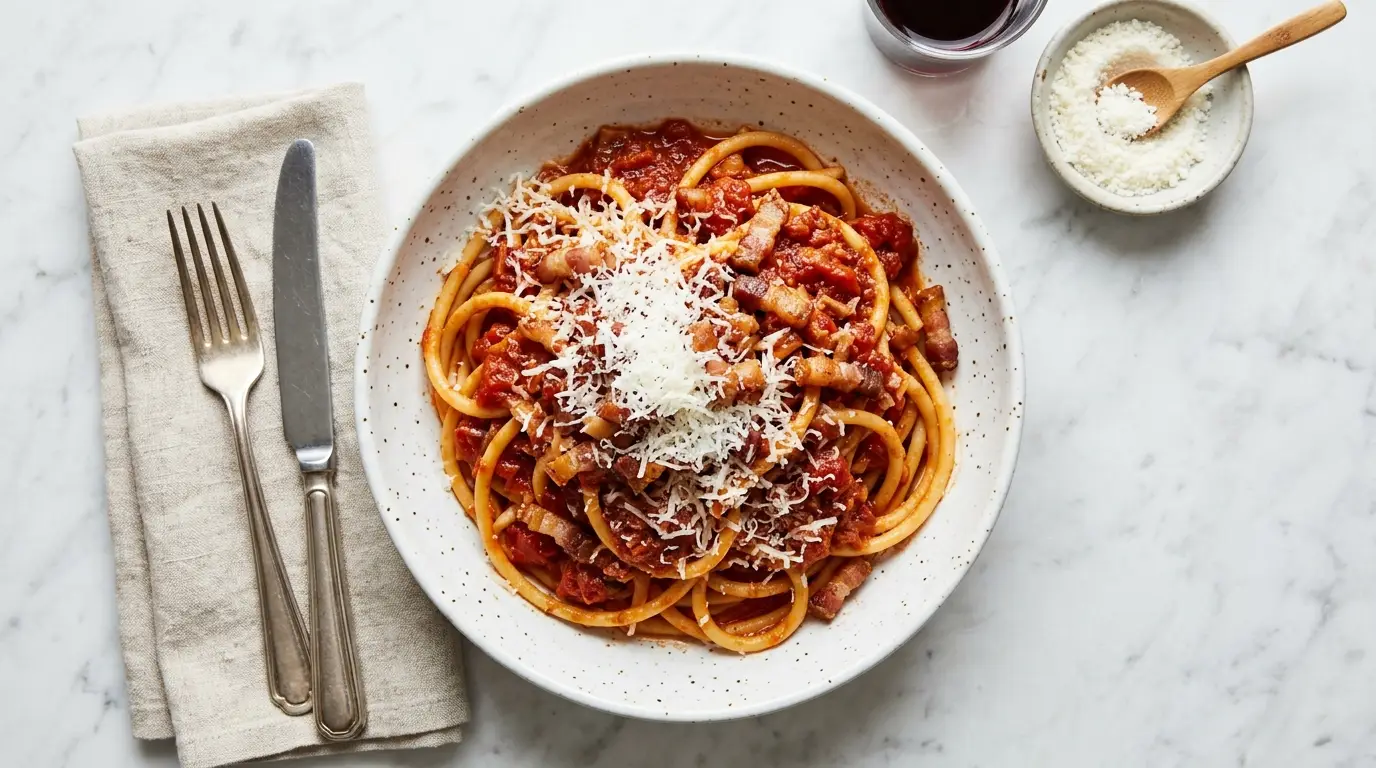
Amatriciana Sauce
Ingredients
- 4.4 oz guanciale - 125g; cured pork cheek — trim rind and slice into ¼-inch planks, then cut into lardons
- ¼ cup dry white wine - 60ml; Pinot Grigio or Sauvignon Blanc recommended
- 14 oz San Marzano whole peeled tomatoes - 400g (1 standard can); hand-crush before adding to pan
- ½ tsp red chili flakes - peperoncino; adjust to taste for desired heat level
- 14 oz bucatini or spaghetti - 400g; bucatini is the traditional Roman choice; spaghetti also works
- ½ cup Pecorino Romano cheese - 60g, finely grated; reserve extra for serving — buy a block and grate fresh
- ¼–½ cup pasta cooking water - 60–120ml; reserved from the pasta pot; starch helps bind sauce to noodles
- salt - to taste; use sparingly — guanciale and Pecorino are already very salty
- black pepper - to taste; freshly cracked preferred
- 1 tbsp extra virgin olive oil - optional — only needed if substituting leaner pancetta for guanciale
Equipment
- Large deep skillet or braiser (12-inch) - Wide pan ensures even rendering and efficient sauce reduction
- Large stockpot - At least 4–5 quart capacity for boiling pasta
- Sharp chef’s knife - For slicing guanciale into lardons
- Cutting board - Keep guanciale cold for easier slicing
- Wooden spoon or silicone spatula - For stirring and deglazing the pan
- Fine grater or microplane - For finely grating Pecorino Romano
- Measuring cup or ladle - For scooping pasta water before draining
- Tongs or pasta fork - For tossing pasta into the sauce
- Colander - For draining cooked pasta
Method
- Trim the rind from the guanciale and slice into ¼-inch (6mm) planks, then cut into small lardons (bite-sized strips). Set aside on the cutting board.
- Pour the canned San Marzano tomatoes into a bowl and crush them by hand into a rough, chunky puree — leave some pieces intact for texture. Set aside.
- Bring a large pot of water to a rolling boil over high heat, then season generously with salt until it tastes pleasantly salty. Do not add pasta yet.
- Add the guanciale to a cold 12-inch skillet and place over medium-low heat. Cook, stirring occasionally, for 8–10 minutes until golden and crispy, then transfer with a slotted spoon to a paper-towel-lined plate — leaving all rendered fat in the pan.
- Add red chili flakes to the hot guanciale fat and sizzle for 30–45 seconds, then pour in the white wine and scrape up any browned bits. Simmer for 1–2 minutes until the alcohol smell dissipates.
- Pour the hand-crushed tomatoes into the pan, season with black pepper, and bring to a gentle simmer over medium heat. Cook uncovered for 15–18 minutes, stirring occasionally, until the sauce thickens and darkens slightly.
- Cook the bucatini or spaghetti in the salted boiling water until 1–2 minutes shy of al dente, then scoop out at least 1 cup (240ml) of pasta water before draining.
- Return the crispy guanciale to the sauce, add the drained pasta, and pour in ¼ cup (60ml) of pasta water. Toss vigorously over medium-low heat for 1–2 minutes until the pasta finishes cooking and is fully coated, adding more pasta water as needed.
- Remove the pan from heat and toss in half the grated Pecorino Romano until melted into the sauce. Divide among four warmed bowls and top with the remaining Pecorino before serving immediately.
Nutrition
Notes
- Render guanciale slowly: Cook over medium-low heat from a cold pan — rushing on high heat will leave you with tough, dry pieces instead of silky lardons.
- Best guanciale substitute: Use cubed pancetta (unsmoked) as the closest alternative. Add 1 tbsp olive oil since pancetta is leaner. Avoid smoked bacon — the smokiness is not traditional.
- Crush tomatoes by hand: Always buy whole canned tomatoes and crush them yourself. Pre-crushed tomatoes contain stabilizers and produce a less vibrant sauce.
- Add cheese off the heat: Remove the skillet from heat before stirring in Pecorino. Adding cheese to a boiling pan causes it to clump and turn grainy.
- Grate cheese fresh: Pre-grated cheese contains anti-caking agents that prevent smooth melting. Buy a block of Pecorino Romano and grate it on a microplane.
- Salt carefully: Guanciale and Pecorino Romano are both very salty. Taste before adding any extra salt — in many cases none is needed at all.
- No garlic or onion in the authentic version: The traditional Amatriciana from Amatrice uses no alliums. Onion is sometimes added in Roman-style versions, but is not required.
- Storage: Store sauce (without pasta) in an airtight container in the refrigerator for up to 5 days, or freeze for up to 3 months. Always cook fresh pasta when reheating.
- Reheat gently: Warm leftover sauce in a skillet over medium-low heat with a splash of water or broth to restore consistency before tossing with fresh pasta.
- Best pasta shapes: Bucatini (traditional Roman) and spaghetti (traditional Amatrice) are classic choices. Rigatoni also works beautifully — its ridges and hollow center trap the chunky sauce.
Private Notes
Tried this recipe?
Let us know how it was!Final Thoughts
Amatriciana sauce is proof that Italian cooking at its finest is really about restraint and quality, not complexity.
A handful of the right ingredients, cooked with a little patience, produces something far greater than the sum of its parts.
I’ve made this sauce on weeknights when I needed dinner in 30 minutes and on Sundays when I wanted something that felt celebratory.
It always delivers.
If you’ve been curious about classic Roman pasta dishes but haven’t tried Amatriciana yet, this is the one to start with.
It’s approachable, fast, and deeply satisfying in a way that few sauces manage to be.
Give it a try — and if you do, I’d love to hear how it went!
Leave a comment below, let me know what pasta shape you used, and don’t forget to share it with someone who loves good Italian food.
Recommended:
- Spaghetti Sauce Recipe
- Tomato Sauce Recipe
- Lasagna Recipe
- Chicken Parmesan Recipe
- Easy Alfredo Sauce Recipe
- Zuppa Toscana Recipe
- Creamy Tomato Basil Soup Recipe
- Healthy Alfredo Sauce Recipe
- Lasagna Soup Recipe
- Tomato Basil Mozzarella Flatbread Pizza Recipe