I fell completely in love with a proper carbonara recipe after a trip where a friend dragged me into her tiny kitchen and promptly confiscated the cream I had in my grocery bag.
“That’s not how you do it,” she told me. She was right.
What she made me instead was transformative. Just eggs, aged cheese, cured pork, black pepper, and pasta — yet the result was the richest, most luxurious thing I’d put in my mouth in years.
It took me a few embarrassing attempts at home to nail that silky, clinging sauce without ending up with what I can only describe as cheesy scrambled egg pasta. Once I cracked it (no pun intended), I made it every single week for a month straight.
This carbonara sauce is firmly in my weeknight rotation now, and I genuinely believe it’s one of the most impressive meals you can put on a table in under 30 minutes.
| Quick Recipe Summary | |
|---|---|
| Prep Time | 10 minutes |
| Cook Time | 15 minutes |
| Total Time | 25 minutes |
| Servings | 4 servings |
| Difficulty Level | Intermediate |
If you love Italian pasta dishes, you’ll also want to explore this Bolognese Recipe for another classic Roman-inspired weeknight dinner.
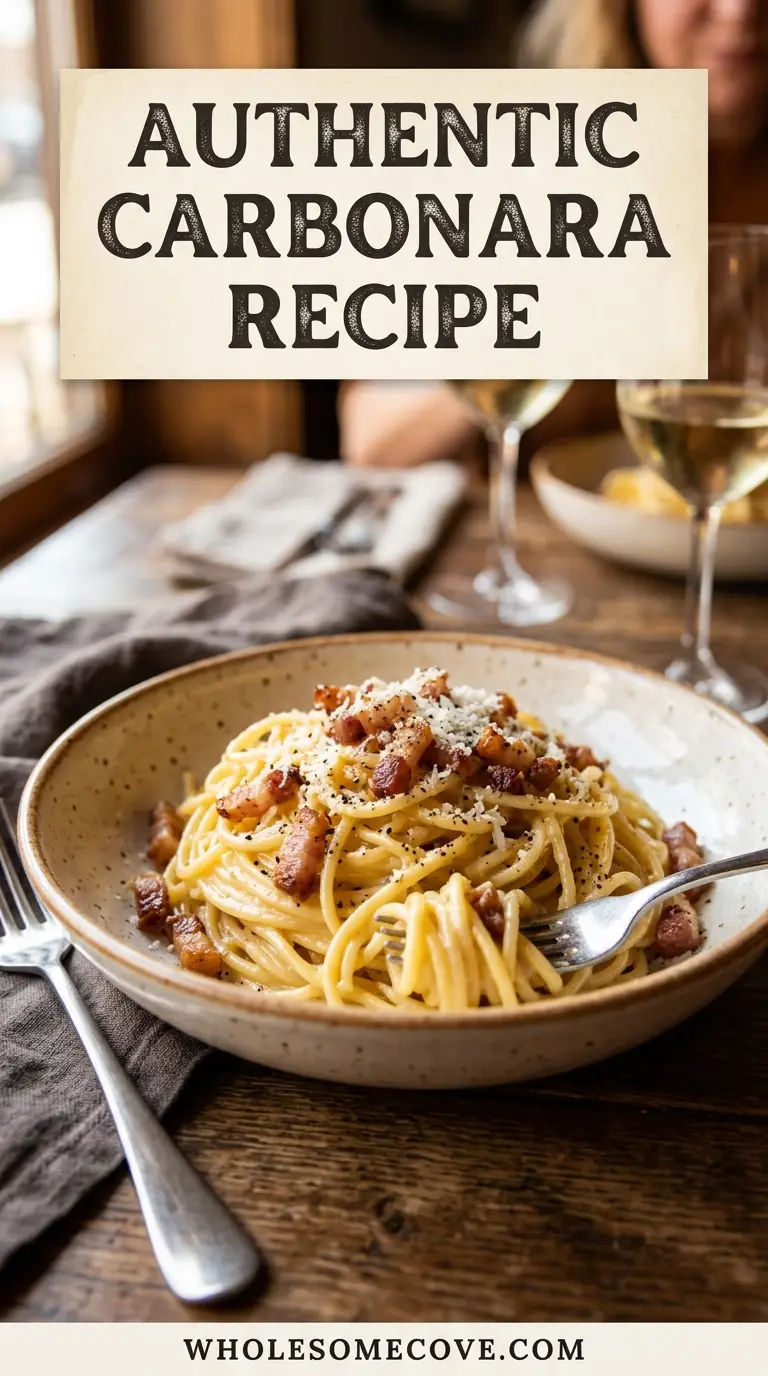
Why You’ll Love This Carbonara Recipe
This carbonara is one of those dishes that seems like it belongs in a restaurant but comes together on a regular Tuesday night.
It uses no cream whatsoever, which is the authentic way and, honestly, the tastier way.
The sauce is made entirely from egg yolks, cheese, and starchy pasta water — a technique that feels like magic the first time you see it work.
You get this glossy, impossibly rich coating on every strand of spaghetti without a drop of dairy going near the pan.
- Fast and weeknight-friendly: From start to finish, this carbonara is on the table in about 25 minutes.
- Five key ingredients: Spaghetti, guanciale (or pancetta), egg yolks, Pecorino Romano, and black pepper. That’s the whole list.
- No cream needed: The silky sauce comes entirely from the emulsion of eggs, cheese, fat, and pasta water. It’s richer than cream-based versions and lighter on your stomach.
- Restaurant-worthy results: Once you master the technique of tempering the eggs off the heat, you’ll have a dish that genuinely impresses.
- Endlessly satisfying: The combination of salty cured pork, nutty aged cheese, and silky egg sauce is deeply comforting.
- Budget-friendly: Aside from the guanciale, all the ingredients are kitchen staples that don’t cost much at all.
Another creamy pasta favorite in my house is this Easy Alfredo Sauce Recipe — perfect for nights when you want something a little more mild.
Ingredients
Getting the ingredients right is everything with carbonara. This is a dish that has nowhere to hide, so quality matters. Guanciale is the traditional choice and gives the most authentic flavor, but good pancetta works beautifully too. Don’t substitute the Pecorino Romano — it has a sharpness and saltiness that Parmesan alone can’t replicate, though you can use a blend if needed.
- 400g (14 oz) spaghetti — dried, not fresh; the starchy cooking water from dried pasta is essential
- 200g (7 oz) guanciale — sliced into small strips or cubes; sub with pancetta if unavailable
- 4 large egg yolks — plus 1 whole egg (room temperature)
- 100g (3.5 oz) Pecorino Romano cheese, finely grated — plus extra for serving
- 1 tsp freshly cracked black pepper — generous, freshly ground is non-negotiable
- Salt — for pasta water only; the guanciale and cheese provide plenty of salt to the sauce
Optional (for those who like it):
- 1 small clove of garlic — not traditional, but adds a subtle background note if you enjoy it
For a deeper Italian pasta experience, check out this Spaghetti Sauce Recipe to have another classic in your back pocket.
Kitchen Equipment Needed
Carbonara doesn’t require any fancy equipment, but a few key pieces will make the whole process much smoother. The large pot is non-negotiable — you need plenty of water to cook the pasta properly and generate enough starchy cooking liquid. A wide skillet or sauté pan lets you toss the pasta efficiently when the crucial off-heat moment arrives.
- Large pasta pot (at least 6 quarts / 5.7 liters) — for boiling the spaghetti
- Large skillet or sauté pan (12-inch / 30cm) — for rendering the guanciale and tossing the finished pasta
- Medium mixing bowl — for whisking together the egg yolk and cheese mixture
- Fine grater or Microplane grater — for finely grating the Pecorino Romano; chunky grated cheese won’t melt smoothly into the sauce
- Tongs or pasta fork — for tossing the pasta efficiently when combining with the sauce
- Ladle or heatproof measuring cup — for scooping the pasta cooking water
- Colander — for draining the pasta (though you can also use tongs to transfer directly)
Read Also: Garlic Parmesan Sauce Recipe
Recommended Products for This Recipe
These are the products I personally reach for when making carbonara at home, and each one makes a genuine difference in the final dish.
1. Guanciale (Italian Cured Pork Jowl)
Authentic guanciale is genuinely hard to find at a regular grocery store, and it makes such a difference in the flavor of carbonara compared to pancetta or bacon. The fat renders differently — more silky and rich — and the taste is deeper and more complex. If you want to experience real Roman carbonara, hunting down actual guanciale is worth every bit of effort.
2. Pecorino Romano DOP (Aged Sheep’s Milk Cheese)
An imported, aged Pecorino Romano DOP is a completely different ingredient from the pre-grated stuff in a plastic tub. It’s sharper, saltier, and has a complexity that transforms the sauce from good to extraordinary. Grate it fresh at home right before using it for the best result.
3. Bronze-Die Extruded Spaghetti
The texture of the pasta matters more in carbonara than in almost any other dish because the sauce clings to the noodles. Bronze-die extruded spaghetti has a slightly rough surface that holds the silky egg sauce far better than smooth, factory-polished pasta. It’s a small upgrade that makes a real difference.
4. Microplane Fine Grater
Finely grating the Pecorino Romano is essential for getting a smooth, lump-free sauce. A good Microplane creates a snow-like pile of cheese that melts almost instantly when it hits the warm pasta. A box grater just doesn’t produce the same results here.
5. Large Stainless Steel Skillet
You need a wide, heavy-bottomed pan to toss the pasta properly off the heat without it cooling down too fast or the sauce scrambling. A good stainless steel skillet retains heat well and gives you the control you need for that crucial final toss.
For another classic Italian comfort dish to add to your weeknight lineup, try this Baked Ziti Recipe.
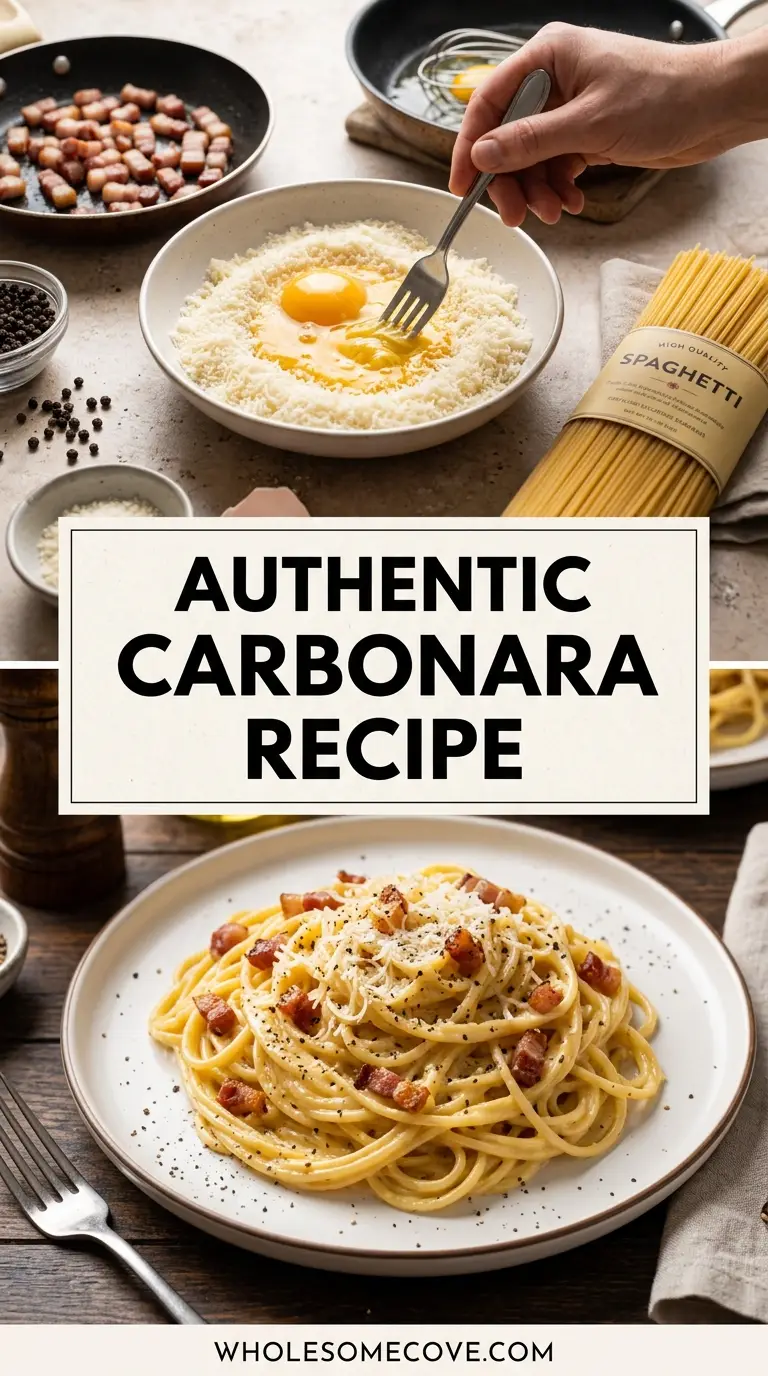
Step-by-Step Instructions: How to Make Carbonara Sauce
Step 1: Prepare the Egg and Cheese Mixture
- Separate 4 large egg yolks into a medium mixing bowl, keeping 1 whole egg as well — add that to the bowl too.
- Using a fine Microplane or box grater, finely grate 100g (3.5 oz) of Pecorino Romano directly into the bowl with the eggs.
- Add a generous amount of freshly cracked black pepper — at least ½ teaspoon, though I usually do a full teaspoon.
- Whisk everything together vigorously with a fork until you have a thick, pale yellow paste. It will look almost like a very thick aioli.
- Set this mixture aside at room temperature. Do not put it in the fridge — cold eggs will seize when they hit the hot pasta.
Step 2: Boil the Pasta Water
- Fill your large pot with at least 4 liters (about 1 gallon) of cold water and place it over high heat.
- Once the water reaches a full rolling boil, add a generous pinch of salt — about 1 tablespoon. Taste the water: it should be pleasantly salty, like mild seawater.
- Add 400g (14 oz) of dried spaghetti and stir immediately to prevent sticking.
- Cook the spaghetti according to the package instructions, but aim for just short of al dente — about 1-2 minutes less than the recommended time. It will finish cooking off the heat with the sauce.
- Before draining, use a ladle or heatproof measuring cup to scoop out at least 240ml (1 cup) of starchy pasta cooking water. Set this aside. This liquid is the magic ingredient that transforms the egg mixture into a creamy sauce.
Step 3: Render the Guanciale
- While the pasta is cooking, place your large skillet over medium heat — no oil needed, as the guanciale will render its own fat.
- Add the 200g (7 oz) of guanciale pieces to the cold pan. Starting from cold helps the fat render out slowly and evenly.
- Cook for about 5-7 minutes, stirring occasionally, until the guanciale is golden brown and crispy on the edges but still slightly soft in the middle.
- If you’re using the optional garlic clove, add it now (whole or lightly crushed) for the last minute of cooking, then remove and discard it before adding the pasta.
- Remove the pan from the heat. Leave all the rendered fat in the pan — that golden, porky fat is part of the sauce.
Step 4: Temper the Egg Mixture with Pasta Water
- This step is the key to avoiding scrambled eggs. Work quickly here.
- Add about 60ml (¼ cup) of the hot pasta cooking water to the egg and cheese mixture while whisking constantly. The hot water gently warms the eggs and begins to loosen the thick paste into something saucier.
- Whisk vigorously until the mixture is smooth, glossy, and pourable. It should look like a thin, creamy sauce at this point.
- If it still looks very thick, add another splash of pasta water and whisk again.
Step 5: Combine the Pasta with the Guanciale
- Return the skillet with the guanciale and rendered fat to medium-low heat.
- Using tongs, transfer the spaghetti directly from the pot to the skillet — a little pasta water clinging to the noodles is totally fine and actually helpful.
- Toss the pasta in the pan with the guanciale for about 1 minute, letting it soak up all that rendered fat.
- Remove the pan completely from the heat. This step is critical — the eggs must never hit direct high heat or they will scramble.
Step 6: Add the Egg and Cheese Sauce
- With the pan off the heat, pour the tempered egg and cheese mixture over the pasta.
- Immediately start tossing and stirring quickly using tongs or a pasta fork. Move fast — you want the residual heat of the pasta and pan to cook the eggs gently into a sauce without curdling them.
- If the sauce looks too thick after 30 seconds of tossing, add a splash (about 2 tablespoons at a time) of the reserved pasta cooking water and keep tossing.
- Keep going until every strand of spaghetti is coated in a glossy, creamy sauce. The sauce should be silky and cling to the pasta, not pooled at the bottom of the pan.
- Taste and adjust with a tiny pinch of salt if needed, keeping in mind the guanciale and cheese are already quite salty.
Step 7: Serve Immediately
- Plate the carbonara right away — this dish does not wait well.
- Divide into warm bowls or onto warm plates (run hot water over them and dry quickly if needed).
- Finish each serving with an extra grating of Pecorino Romano and another crack of black pepper.
- Serve with nothing else — no parsley, no lemon, no drizzle of oil. Just the pasta as it is.
Read Also: Marry Me Chicken Pasta Recipe
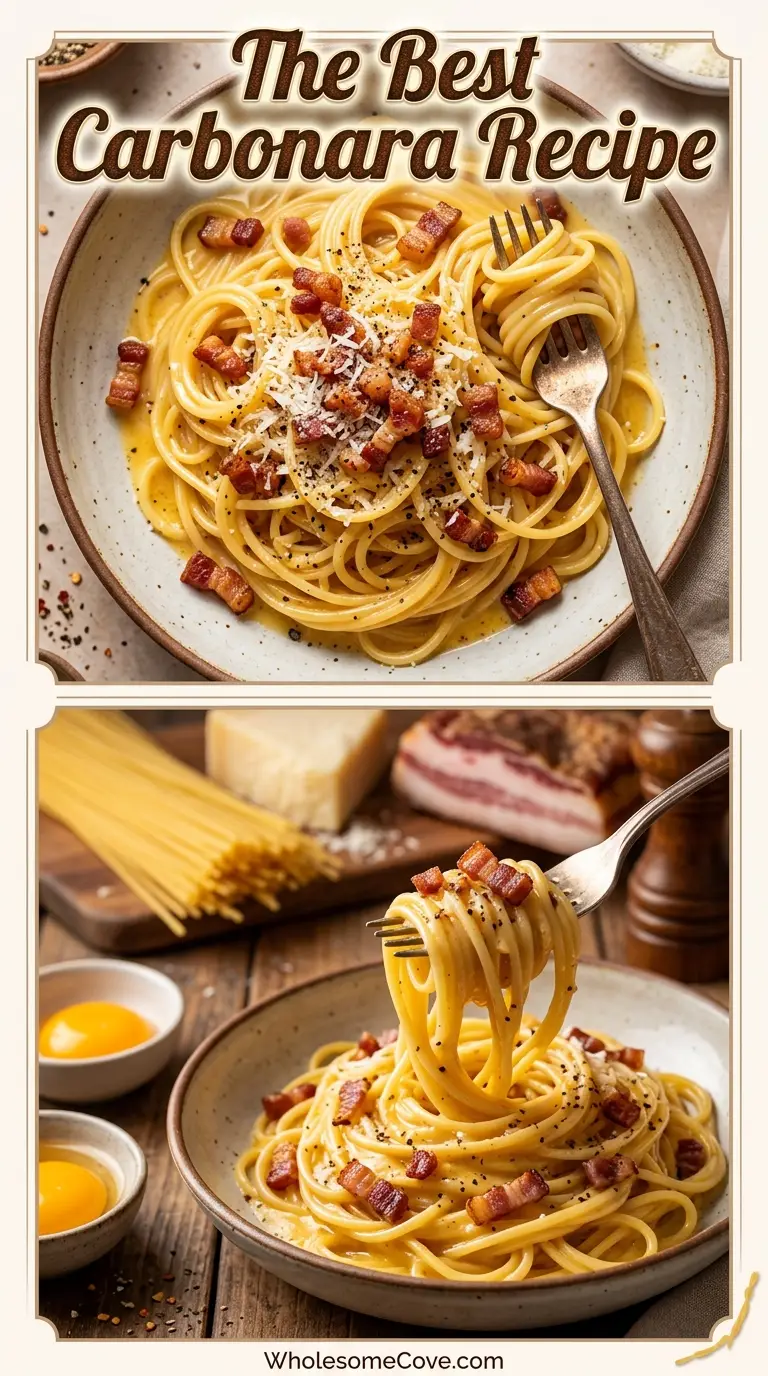
Tips for The Best Carbonara Sauce
Getting carbonara right is about understanding a few key techniques rather than following any single trick. Once these click, the dish becomes second nature. The most important one: never, ever add the egg mixture to a hot pan over direct heat. Take the skillet off the burner first, every single time.
- Never use cream. This is not just about tradition — cream actually changes the mouthfeel and dilutes the richness of the egg emulsion. The real thing is better.
- Reserve more pasta water than you think you need. I always save a full cup because if the sauce seizes up, you’ll need it quickly and won’t have time to look for it.
- Use room temperature eggs. Cold eggs out of the fridge will start to set the moment they hit the warm pasta. Let your eggs sit at room temperature for at least 30 minutes before you begin.
- Grate the cheese very finely. Chunky pieces of Pecorino won’t melt smoothly. A Microplane grater is the best tool here.
- Start the guanciale in a cold pan. This renders the fat out slowly and gives you a much better, more flavorful base for the sauce than throwing it into a hot pan.
- Move fast when adding the egg mixture. The window for perfect carbonara sauce is short — once you take the pan off the heat, toss continuously and don’t stop.
- Warm your bowls. Carbonara cools quickly, and a cold bowl will make the sauce thicken and seize. Running hot water over your bowls right before plating makes a difference.
- Don’t rinse the pasta. Rinsing removes the surface starch that helps the sauce cling to every strand.
- Add pasta water in small amounts. It’s much easier to add more liquid than to deal with a watery sauce. Start with a tablespoon at a time when adjusting.
- Serve immediately. Carbonara is a right-now dish. It does not hold, it does not reheat well, and it is at its absolute peak the moment it leaves the pan.
If you’re a fan of rich, creamy pasta sauces, you’ll love this Healthy Alfredo Sauce Recipe as a lighter weeknight option.
What to Serve with Carbonara Sauce
Carbonara is rich, filling, and deeply satisfying on its own, so the best accompaniments are either light and fresh or simple enough not to compete. A crisp green salad is my go-to — the acidity cuts right through all that egg and pork fat. Garlic bread is also a natural fit for mopping up any sauce left in the bowl.
- A simple arugula or mixed green salad with a sharp lemon vinaigrette — the bitterness and acidity are a perfect contrast to the richness of the pasta.
- Crusty Italian bread or garlic bread — to catch every last bit of sauce in the bowl.
- Deviled Eggs — a surprisingly good pairing at a dinner party, since both dishes celebrate the egg in a rich, savory way.
- Roasted asparagus with a little olive oil and flaky salt — the slight char and earthiness work beautifully alongside the pasta.
- Sautéed broccolini or broccoli rabe with garlic — slightly bitter greens cut the richness beautifully.
- A light, dry white wine — think a crisp Pinot Grigio or Frascati from the Lazio region to keep things authentically Roman.
- Grilled Portobello Mushrooms — earthy and meaty, they make an excellent vegetable side that doesn’t get lost next to the bold carbonara flavors.
Variations of Carbonara Sauce
The following are some variations worth knowing about — though I want to be clear that the recipe above is the real thing. These are departures from tradition, but some of them are delicious in their own right.
Traditional carbonara has very few ingredients, which means any substitution or addition technically makes it a different dish. That said, cooking is about joy, and some of these tweaks produce results worth trying.
- Pancetta carbonara: Swap guanciale for the same weight of diced pancetta. It’s leaner, so you may want to add a small splash of olive oil to the pan to compensate for the lower fat content. The flavor is a little milder but still very good.
- Bacon carbonara: Good-quality smoked bacon is the most common substitution outside of Italy. Use unsmoked if you want to keep the flavor profile closer to the original. Add a tablespoon of olive oil to supplement the fat.
- Rigatoni carbonara: Rigatoni is actually the second most popular pasta shape in Rome for carbonara. The ridges and hollow center trap the egg sauce beautifully, making it arguably even more satisfying than spaghetti.
- Bucatini carbonara: Bucatini is thick, hollow spaghetti and gives a slightly chewier, more substantial bite. Great for those who want a heartier texture.
- Parmesan blend: Many home cooks outside of Italy use half Pecorino Romano and half Parmigiano Reggiano for a slightly milder, less aggressively salty sauce. This is totally valid and produces a very creamy result.
- Mushroom carbonara (vegetarian): Replace the guanciale with finely sliced, well-browned cremini or shiitake mushrooms cooked in olive oil. Add a little extra black pepper to compensate for the missing pork richness. It’s not carbonara by Roman standards but it’s delicious.
- Zucchini carbonara: A popular Italian summer variation that adds thin rounds of sautéed zucchini to the pan along with the guanciale. The zucchini adds a fresh, slightly sweet note and makes the dish feel lighter.
You might also enjoy: Pumpkin Sage Pasta Recipe
Storage and Reheating
Carbonara is one of those dishes that is genuinely best eaten the moment it’s made. The egg-based sauce does not hold well and the texture changes significantly as it cools and the eggs continue to set. That said, if you have leftovers, here’s how to handle them with the best possible outcome.
- Refrigerate promptly: If you have leftover carbonara, let it cool for no more than 20-30 minutes at room temperature, then transfer it to an airtight container. Store in the fridge for up to 2 days.
- Do not freeze: Freezing carbonara will completely destroy the texture of the egg sauce. It becomes grainy and watery upon thawing. Freezing is not recommended under any circumstances.
- Stovetop reheating (best method): Place the leftover carbonara in a skillet over the lowest heat possible. Add a splash of water or chicken broth (about 2 tablespoons per serving) and toss constantly until warmed through. The added liquid helps loosen the sauce as the eggs re-melt slightly. Watch it closely — high heat will scramble the eggs.
- Microwave reheating (not ideal, but quick): Place in a microwave-safe bowl with a splash of water. Cover loosely and microwave on 50% power in 30-second intervals, tossing between each. This method tends to create uneven texture but works in a pinch.
- Fresh pasta water trick: If you’re smart enough to save extra pasta cooking water before eating, it’s the absolute best liquid for reheating carbonara because the starch helps re-emulsify the sauce.
- Prevent it in the first place: The easiest solution is simply to make only as much as you’ll eat. Given that it takes under 30 minutes, there’s not much need for big batches.
Another great pasta dish to make ahead and store well is this Stuffed Shells Recipe — it reheats beautifully unlike carbonara.
Nutritional Facts
The following nutritional estimates are based on a serving size of approximately ¼ of the full recipe (roughly 350g of finished pasta with sauce), using guanciale and full Pecorino Romano. Exact values will vary based on your specific ingredients and portions.
| Nutrient | Per Serving (approx.) |
|---|---|
| Calories | ~620 kcal |
| Total Fat | ~26g |
| Saturated Fat | ~10g |
| Cholesterol | ~230mg |
| Sodium | ~680mg |
| Total Carbohydrates | ~70g |
| Dietary Fiber | ~3g |
| Sugars | ~2g |
| Protein | ~25g |
Carbonara is calorie-dense and rich in protein and fat — it’s a genuinely filling meal. A single serving of this pasta is substantial enough that most people won’t need anything else beyond a simple salad.
Read Also: Lasagna Recipe
Health Benefits of Key Ingredients
Carbonara isn’t typically thought of as a “health food,” but its core ingredients each bring something nutritionally meaningful to the table. This is not a dish you’d eat every night, but as a satisfying, wholesome meal made from real, whole ingredients, it has more going for it than you might expect.
- Eggs are one of the most nutrient-dense foods on the planet. They provide complete protein, choline for brain health, fat-soluble vitamins A, D, E and K, plus lutein and zeaxanthin, which support eye health.
- Pecorino Romano is a good source of calcium and protein. Made from sheep’s milk, it contains conjugated linoleic acid (CLA), a fatty acid associated with various health benefits including immune support.
- Guanciale provides fat-soluble vitamins and minerals. Pork jowl contains vitamin B1 (thiamine), vitamin B12, zinc, and selenium — all important for energy metabolism and immune function.
- Spaghetti (semolina pasta) provides sustained energy. Dried pasta made from durum wheat semolina has a lower glycemic index than many other refined carbohydrates, offering a more gradual energy release.
- Black pepper contains piperine, a bioactive compound with antioxidant and anti-inflammatory properties. It also enhances the absorption of certain nutrients.
- The egg yolk fat supports vitamin absorption. The fat in carbonara actually helps your body absorb the fat-soluble vitamins from all the other ingredients in the meal more effectively.
For a lighter way to enjoy egg-based dishes, check out these Scrambled Eggs with Cheese — a simple, protein-packed weeknight option.
FAQs About Carbonara Sauce
1. Is it safe to eat the eggs in carbonara?
The eggs in carbonara are not fully raw — they are gently cooked by the residual heat of the hot pasta and rendered pork fat. The technique reaches a temperature sufficient to cook the proteins without scrambling them. If you are immunocompromised, pregnant, or serving young children, you may want to use pasteurized eggs, which are widely available.
2. Why did my carbonara turn into scrambled eggs?
This is the most common mistake, and it almost always comes down to adding the egg mixture to a pan that is still over direct heat. The eggs cook too fast and seize. Always take the pan off the heat completely before adding the egg and cheese mixture, and toss quickly and continuously to distribute the heat evenly.
3. Can I make carbonara without guanciale?
Absolutely. Good-quality pancetta is the most common substitute and produces a slightly milder but still excellent result. Thick-cut smoked bacon also works, though it will add a smoky flavor that shifts the dish away from the traditional Roman profile. Whatever you use, render it well so you get plenty of flavorful fat in the pan.
4. What is the best pasta shape for carbonara?
Spaghetti is the traditional and most widely used choice. Rigatoni is the second most popular in Rome, and many people actually prefer it because the ridged tubes trap the sauce beautifully. Bucatini (thick hollow spaghetti), linguine, and fettuccine all work well. Avoid very thin pasta like angel hair, which won’t hold up to the rich sauce.
5. Why is my carbonara sauce too thick or too dry?
This typically happens when not enough pasta water is incorporated into the sauce, or when the pasta has cooled too much before adding the egg mixture. If the sauce seizes up, add a tablespoon of hot pasta water at a time and toss quickly over the lowest possible heat. The starch in the pasta water helps loosen and re-emulsify the sauce almost instantly.
For another Italian classic to complement your cooking repertoire, try this Authentic Italian Tiramisu Recipe as a stunning finish to any carbonara dinner.
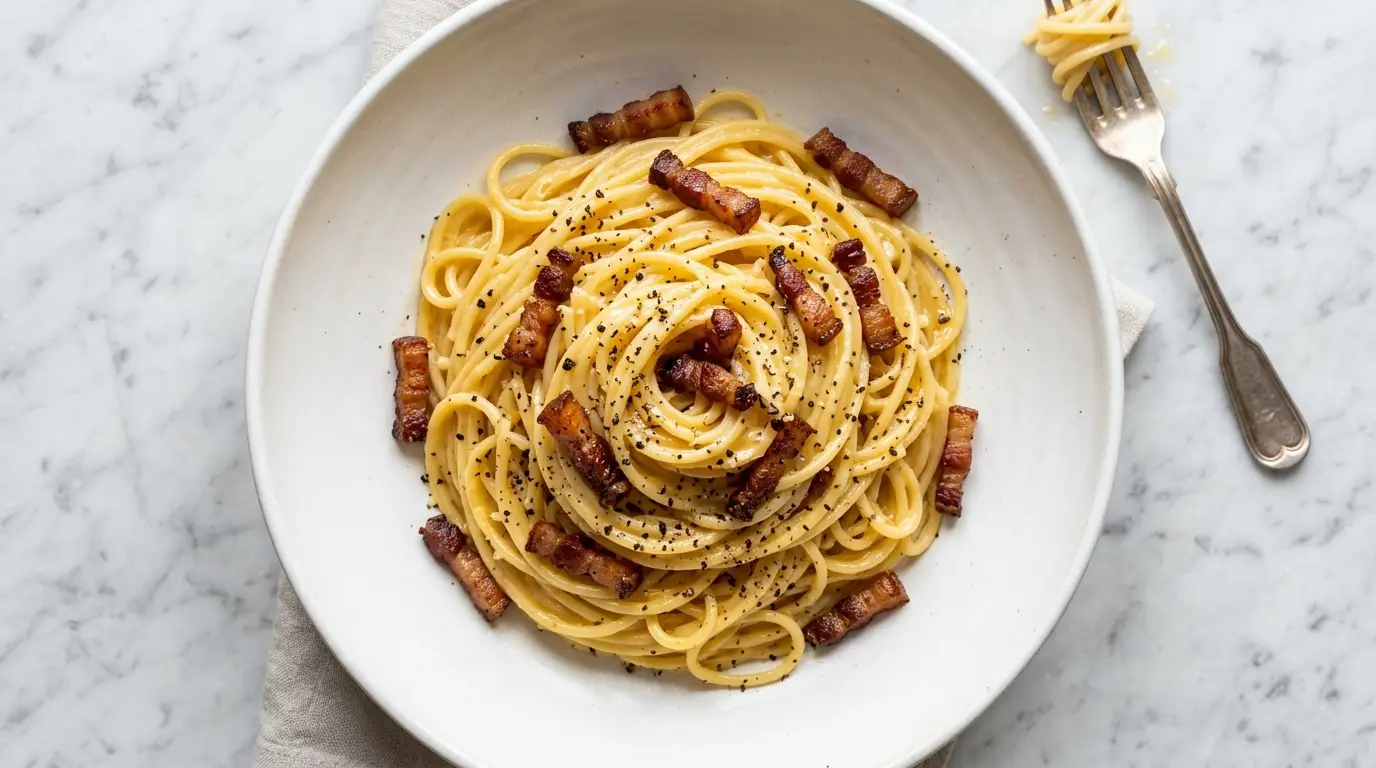
Authentic Carbonara Sauce
Ingredients
- 14 oz spaghetti - 400g; dried, not fresh — the starchy cooking water from dried pasta is essential
- salt - For pasta water only; about 1 tablespoon once water is boiling
- 7 oz guanciale - 200g; sliced into small strips or cubes; substitute with pancetta if unavailable
- 4 large egg yolks - Room temperature
- 1 whole egg - Large, room temperature
- 3.5 oz Pecorino Romano cheese - 100g; finely grated; plus extra for serving
- 1 tsp freshly cracked black pepper - Freshly ground is non-negotiable; increase to taste
- 1 small garlic clove - Not traditional; adds a subtle background note if desired — remove and discard before serving
Equipment
- Large pasta pot (at least 6 quarts / 5.7 liters) - For boiling the spaghetti with enough water to generate starchy cooking liquid
- Large skillet or sauté pan (12-inch / 30cm) - For rendering the guanciale and tossing the finished pasta
- Medium mixing bowl - For whisking together the egg yolk and cheese mixture
- Microplane fine grater - For finely grating Pecorino Romano; chunky grated cheese will not melt smoothly into the sauce
- Tongs or pasta fork - For tossing the pasta efficiently when combining with the sauce
- Ladle or heatproof measuring cup - For scooping and reserving pasta cooking water
- Colander - For draining the pasta; optional if using tongs to transfer directly
Method
- Whisk 4 egg yolks and 1 whole egg together with 100g (3.5 oz) finely grated Pecorino Romano and 1 teaspoon freshly cracked black pepper until you have a thick, pale yellow paste. Set aside at room temperature — do not refrigerate.
- Bring a large pot of water to a full rolling boil, salt generously, then add 400g (14 oz) spaghetti and cook until just short of al dente (1-2 minutes less than package instructions). Before draining, reserve at least 240ml (1 cup) of starchy pasta cooking water.
- Add 200g (7 oz) guanciale pieces to a cold large skillet, then place over medium heat and cook 5–7 minutes until golden and crispy on the edges. Remove the pan from heat, leaving all rendered fat in the pan.
- Whisk 60ml (¼ cup) of the hot pasta cooking water into the egg and cheese mixture gradually, whisking constantly until the mixture is smooth, glossy, and pourable.
- Return the skillet with guanciale to medium-low heat, then add the drained spaghetti using tongs and toss for about 1 minute until the pasta absorbs the rendered fat. Remove the pan completely from heat.
- With the pan off the heat, pour the tempered egg and cheese mixture over the pasta and toss immediately and continuously until every strand is coated in a glossy, creamy sauce, adding pasta water a tablespoon at a time if the sauce is too thick.
- Plate the carbonara right away into warm bowls and finish each serving with extra finely grated Pecorino Romano and a generous crack of fresh black pepper.
Nutrition
Notes
- Never add the egg mixture to the pan while it is still over direct heat — remove the skillet from the burner completely before adding the sauce to prevent scrambled eggs.
- Use room temperature eggs. Cold eggs straight from the fridge will begin to set too quickly when they hit the warm pasta.
- Reserve at least 240ml (1 cup) of pasta cooking water before draining — this starchy liquid is essential for adjusting the sauce consistency and is the single most important insurance policy against a dry or seized carbonara.
- Grate the Pecorino Romano as finely as possible using a Microplane. Coarsely grated cheese will not melt smoothly into the sauce and will leave lumps.
- Guanciale substitutes: pancetta is the closest substitute and widely available. Thick-cut unsmoked bacon also works but adds a smoky note that shifts the flavor profile away from the traditional Roman original.
- For a milder sauce, use half Pecorino Romano and half finely grated Parmigiano Reggiano. The result is slightly less sharp but still wonderfully creamy.
- Do not rinse the pasta after draining — rinsing removes surface starch that helps the sauce cling to every strand.
- Storage: Carbonara is best eaten immediately. If you have leftovers, refrigerate in an airtight container for up to 2 days. Do not freeze.
- Reheating: Reheat gently in a skillet over the lowest possible heat with a splash of water or broth, tossing constantly. Microwave on 50% power in 30-second intervals as a backup option.
- Pasta shape variations: Rigatoni and bucatini are excellent alternatives to spaghetti. Rigatoni in particular is widely used in Rome and its ridges trap the sauce beautifully.
Private Notes
Tried this recipe?
Let us know how it was!Final Thoughts
Carbonara is proof that the most extraordinary food often comes from the fewest ingredients.
Once you understand the technique — off the heat, tempered eggs, constant tossing — this dish becomes one of the most reliable and rewarding things in your repertoire.
I hope you give this recipe a real go, even if your first attempt produces something a little more scrambled than silky.
Mine did too, and now I make it without even thinking.
If you try this carbonara sauce, leave a comment below and tell me how it went — and share any tweaks that worked for you!
Recommended:
- Bolognese Recipe
- Pesto Recipe
- Pasta Fagioli Recipe
- Italian Wedding Soup Recipe
- Vodka Sauce Recipe
- Marinara Sauce Recipe
- Chicken Parmesan Recipe
- Chicken Spaghetti Recipe
- BLT Pasta Salad Recipe
- Bechamel Sauce Recipe