
Spring asparagus has always held a special place in my kitchen. The first time I made this asparagus soup recipe was during a rainy April afternoon when my local farmers market had just gotten their first shipment of vibrant green spears.
I had bought way too much asparagus (as I often do when I get excited about seasonal produce), and rather than let it wilt in my crisper drawer, I decided to turn it into soup. That experiment turned into one of my most cherished spring recipes.
What I love most about this soup is how it captures the pure, grassy flavor of fresh asparagus without drowning it in cream or heavy seasonings. The color alone is enough to make you smile on a gloomy day.
It’s velvety smooth, surprisingly filling, and comes together in under 30 minutes from start to finish.
| Quick Recipe Summary | |
|---|---|
| Prep Time | 10 minutes |
| Cook Time | 20 minutes |
| Total Time | 30 minutes |
| Servings | 6 servings |
| Difficulty Level | Easy |
I’ve made countless variations over the years, but this version strikes the perfect balance between simple and sophisticated. If you’re looking for more spring-inspired soups, my Potato Leek Soup also celebrates seasonal vegetables beautifully.

Why You’ll Love This Asparagus Soup Recipe
This soup truly shines because it lets the asparagus be the star. The bright green color stays intact thanks to a quick blanching technique I learned from a French cookbook years ago.
You’ll appreciate how quickly it comes together, making it perfect for busy weeknights. The texture is incredibly smooth without needing excessive amounts of cream, which means you can actually taste the vegetable rather than just dairy.
One of my favorite things is how versatile this recipe is. You can serve it hot on a chilly spring evening or chilled for a refreshing lunch on warmer days.
- Fresh and vibrant: The soup maintains that gorgeous bright green color that makes it as beautiful as it is delicious
- Naturally creamy: Just a touch of cream creates a luxurious texture without overwhelming the delicate asparagus flavor
- Quick weeknight meal: From chopping to serving in 30 minutes, this is faster than most takeout
- Customizable richness: Adjust the cream to suit your preferences, from light and brothy to rich and indulgent
- Impressive but easy: This soup looks and tastes restaurant-quality but requires only basic cooking skills
- Freezer-friendly: Make a double batch and freeze portions for quick lunches later
Ingredients
The beauty of this soup lies in its simplicity. I use just a handful of quality ingredients that work together to highlight the asparagus rather than compete with it.
For the best results, choose asparagus with tight, compact tips and firm stalks. Avoid any bunches with slimy or wrinkled stems.
- 2 pounds (900g) fresh asparagus, woody ends trimmed and cut into 2-inch pieces
- 2 tablespoons (28g) unsalted butter
- 1 tablespoon (15ml) olive oil
- 1 medium yellow onion (about 8 oz/225g), diced
- 3 cloves garlic, minced
- 4 cups (950ml) vegetable broth or chicken broth
- 1 medium Yukon Gold potato (about 6 oz/170g), peeled and diced
- 1 teaspoon (6g) sea salt, plus more to taste
- 1/2 teaspoon (1g) freshly ground black pepper
- 1/2 cup (120ml) heavy cream or half-and-half
- 2 tablespoons (30ml) fresh lemon juice
- 1/4 cup (10g) fresh parsley leaves (optional, for garnish)
- Crème fraîche or sour cream for serving (optional)
Kitchen Equipment Needed
Having the right tools makes this recipe come together smoothly. I’ve learned that investing in a few quality pieces really does make a difference, especially when it comes to achieving that silky smooth texture.
The immersion blender is my secret weapon here, though a regular blender works too.
- Large Dutch oven or heavy-bottomed pot (at least 5-quart capacity)
- Immersion blender or regular blender
- Sharp chef’s knife
- Cutting board
- Wooden spoon or silicone spatula for stirring
- Measuring cups and spoons
- Ladle for serving
- Fine-mesh strainer (optional, for extra-smooth texture)
You might also enjoy: Roasted Tomato Soup Recipe
Recommended Products for This Recipe
After making this soup dozens of times, I’ve found that a few specific products really elevate the final result. These aren’t necessary, but they do make a noticeable difference.
I wouldn’t recommend them if I hadn’t used them myself and genuinely loved the results.
1. Breville Control Grip Immersion Blender
This immersion blender changed my soup-making life completely. The ergonomic grip makes it easy to control, and it purees the asparagus into the silkiest texture without any stringy bits. I use mine at least twice a week for soups, sauces, and smoothies.
2. Le Creuset Enameled Cast Iron Dutch Oven
I’ve been using my Le Creuset for over a decade, and it distributes heat so evenly that the asparagus cooks perfectly without any scorching. The enameled interior makes cleanup incredibly easy, even with the butter and cream. It’s pricey, but it’ll last you a lifetime.
3. Premium Asparagus (Fresh or Frozen)
When asparagus isn’t in season locally, I turn to high-quality frozen asparagus that’s been flash-frozen at peak freshness. It actually works beautifully in this soup and is available year-round. Look for packages with uniform, unbroken spears.
4. Organic Vegetable Broth
The broth forms the base of this soup, so quality matters. I love Pacific Foods organic vegetable broth because it has a clean, balanced flavor that doesn’t overpower the asparagus. It’s also low in sodium, which gives you better control over seasoning.
Another favorite: Panera Broccoli Cheddar Soup Recipe
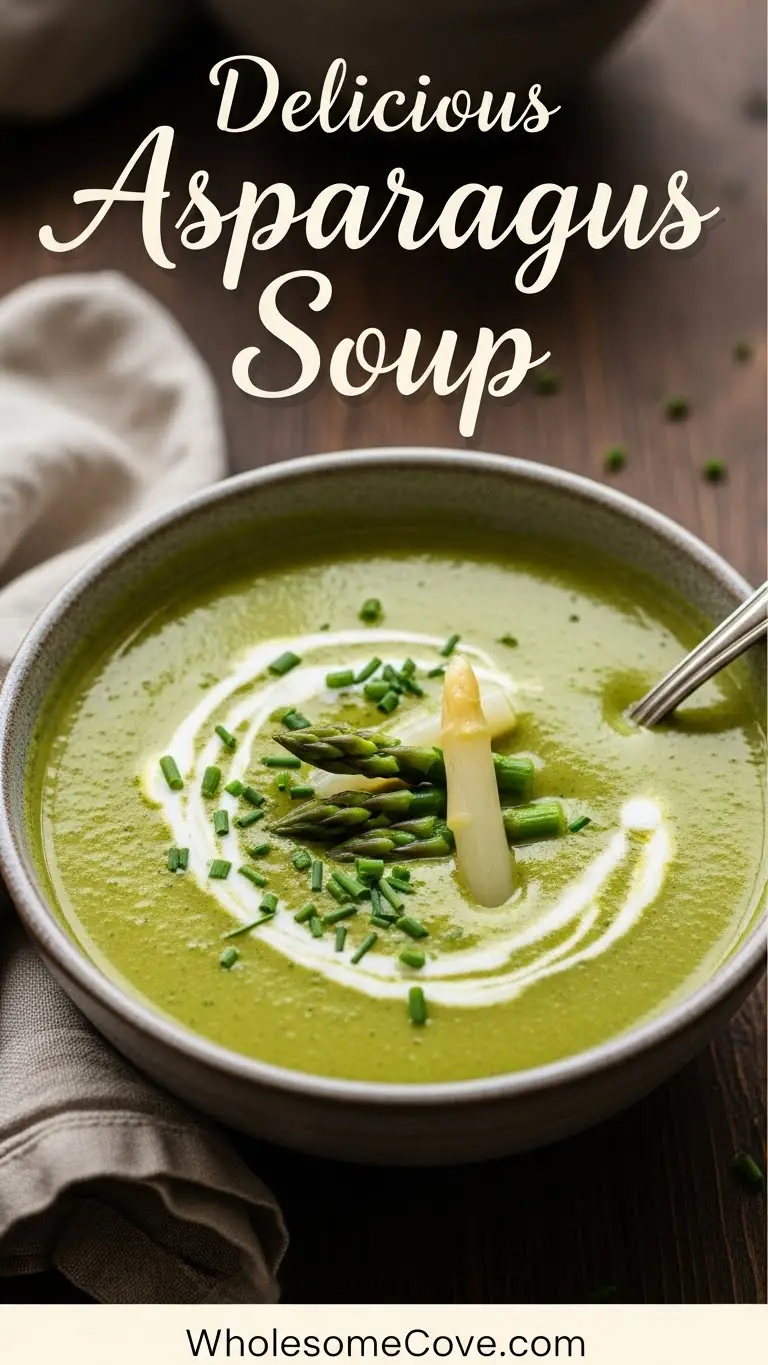
Step-by-Step Instructions: How to Make Asparagus Soup
Follow these detailed steps for the smoothest, most flavorful asparagus soup. I’ve included all the little tricks I’ve picked up over the years to help you avoid the common pitfalls I encountered when I first started making this.
Take your time with the sautéing step, as that’s where you build the foundational flavors.
1. Prepare the Asparagus
- Rinse the 2 pounds (900g) of fresh asparagus under cold water to remove any dirt or grit.
- Hold each spear at both ends and bend it gently until it snaps naturally at the point where the tender part meets the woody end. Discard the woody ends (or save them for making vegetable stock).
- Cut the trimmed asparagus into 2-inch (5cm) pieces. I like to keep the tips separate and set aside about 1/2 cup of them to use as a garnish later.
- If using the tips for garnish, blanch them in boiling salted water for 2-3 minutes until bright green and tender-crisp, then immediately plunge them into ice water to stop the cooking. Drain and set aside.
2. Sauté the Aromatics
- Heat 2 tablespoons (28g) of unsalted butter and 1 tablespoon (15ml) of olive oil in your large Dutch oven or heavy-bottomed pot over medium heat. I use both butter and oil because the butter adds richness while the oil prevents it from burning.
- Add the diced yellow onion (about 8 oz/225g) and cook, stirring occasionally, for 5-6 minutes until the onion becomes translucent and starts to soften. You don’t want any color on it, just gentle softening.
- Add the 3 cloves of minced garlic and stir constantly for about 1 minute, just until fragrant. Be careful not to let it brown or it will taste bitter.
- Season with 1 teaspoon (6g) of sea salt and 1/2 teaspoon (1g) of freshly ground black pepper at this stage to help draw out moisture from the vegetables.
3. Add Vegetables and Broth
- Add the diced Yukon Gold potato (about 6 oz/170g) to the pot and stir to coat it with the butter and aromatics. The potato will help thicken the soup naturally and give it body without needing a lot of cream.
- Pour in 4 cups (950ml) of vegetable broth or chicken broth, scraping up any browned bits from the bottom of the pot with your wooden spoon. These bits add wonderful flavor.
- Add all the cut asparagus pieces (except for the blanched tips you set aside for garnish, if using). Make sure the asparagus is fully submerged in the liquid.
- Bring the mixture to a boil over high heat, then immediately reduce the heat to medium-low to maintain a gentle simmer.
4. Simmer Until Tender
- Let the soup simmer uncovered for 12-15 minutes, stirring occasionally, until both the asparagus and potato are completely tender when pierced with a fork.
- You’ll know it’s ready when a piece of asparagus practically falls apart when you press it against the side of the pot. This is crucial for getting that ultra-smooth texture.
- Taste the broth at this point and adjust the seasoning if needed. Remember that blending will concentrate the flavors slightly.
5. Blend the Soup
- Remove the pot from the heat and let it cool for 2-3 minutes. This brief cooling period makes blending safer and prevents hot soup from splattering.
- If using an immersion blender, carefully insert it into the pot and blend on high speed for 2-3 minutes, moving it around to catch all the vegetables, until the soup is completely smooth and no chunks remain.
- If using a regular blender, work in batches. Fill the blender only halfway, hold the lid down with a kitchen towel (hot liquids expand), and start on low speed before increasing to high. Blend each batch for about 1 minute until silky smooth, then transfer to a clean pot.
- For an even silkier texture, you can strain the blended soup through a fine-mesh strainer to remove any fibrous bits, though I usually skip this step.
6. Finish and Serve
- Return the blended soup to medium-low heat (if you transferred it to another pot during blending).
- Stir in 1/2 cup (120ml) of heavy cream or half-and-half and warm through for 2-3 minutes. Don’t let it boil after adding the cream, as it can curdle.
- Add 2 tablespoons (30ml) of fresh lemon juice and stir well. The lemon brightens the entire soup and really makes the asparagus flavor pop.
- Taste and adjust the seasoning with more salt, pepper, or lemon juice as needed. I usually add an extra pinch of salt at this stage.
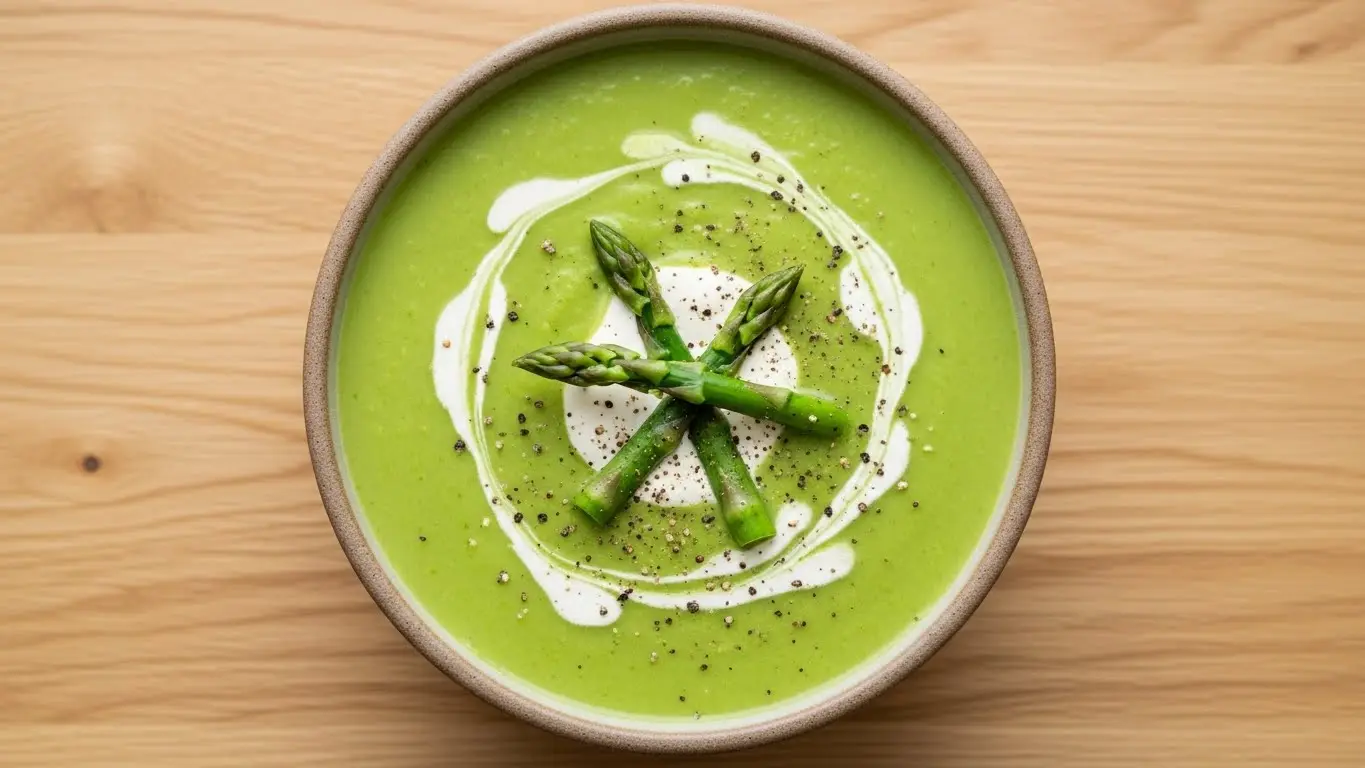
- Ladle the soup into bowls and garnish with the reserved blanched asparagus tips, a drizzle of crème fraîche or sour cream, and some fresh parsley leaves if desired.
- For an extra touch of elegance, I sometimes drizzle a bit of high-quality olive oil on top and add a crack of fresh black pepper.
Read Also: Tomato Soup Recipe
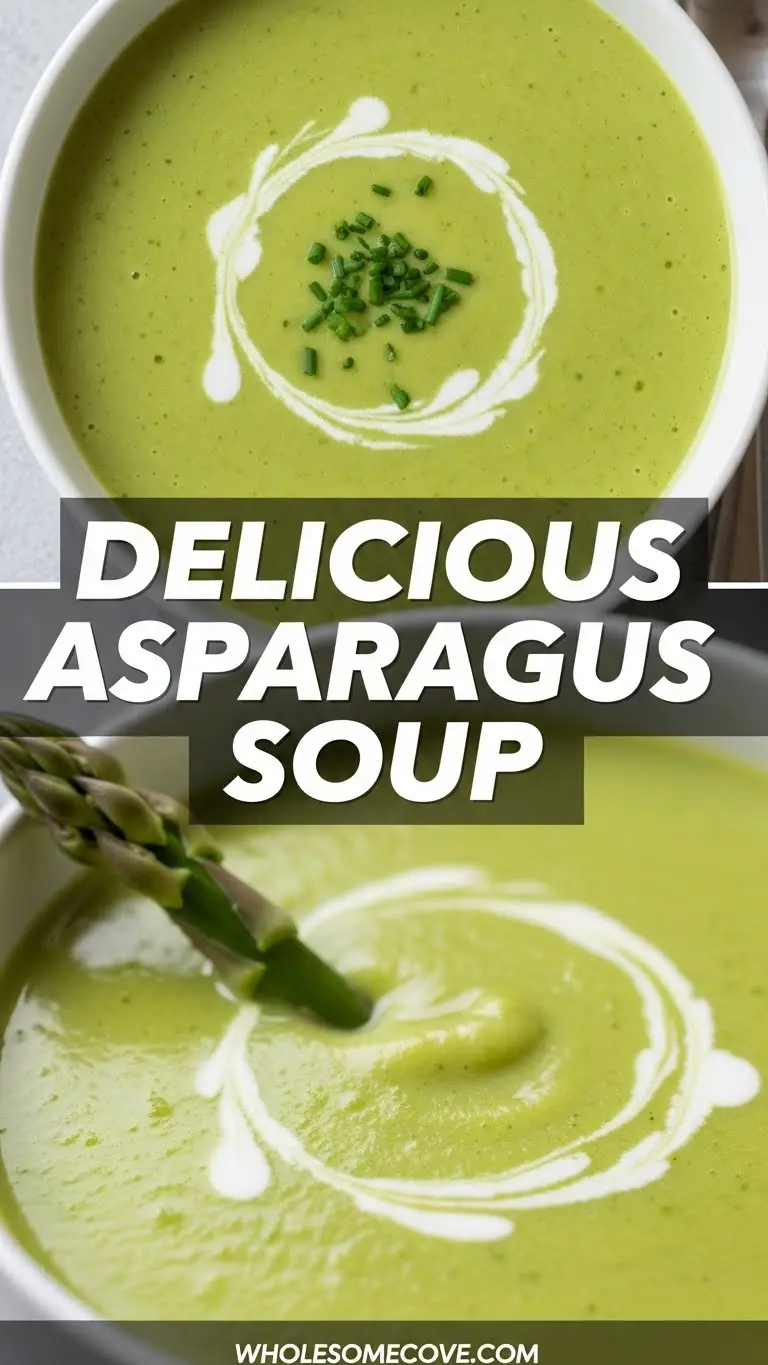
Tips for The Best Asparagus Soup
Over the years of making this soup, I’ve discovered several tricks that make a real difference in the final result. These tips come from both my successes and a few memorable failures that taught me what not to do.
Pay special attention to the blanching tip if you want to maintain that gorgeous green color.
- Choose the right asparagus: Medium-thickness spears work best. Super thin asparagus can get mushy, while very thick ones may have tough, fibrous outer layers. Look for firm spears with tight, compact tips.
- Don’t skip the potato: I learned this the hard way when I first tried to make this soup “lighter” by omitting the potato. It was watery and thin. The potato adds body and helps create that creamy texture without needing excessive cream.
- Blanch for bright color: If you want that restaurant-quality vibrant green color, blanch the asparagus in boiling water for 3-4 minutes before adding it to the soup base, then shock it in ice water. This sets the chlorophyll and prevents the soup from turning olive-drab.
- Don’t overcook the garlic: Burned garlic will make the entire soup taste bitter. Add it after the onions have softened and only cook it for about a minute, just until fragrant.
- Blend while hot for smoothness: Hot liquids blend more smoothly than cooled ones. The heat helps break down the fibers more completely, resulting in a silkier texture.
- Save those asparagus tips: Reserve some of the prettiest tips for garnish. They add visual appeal and give you little bursts of pure asparagus flavor in each bite.
- Add acid at the end: Lemon juice added too early can discolor the soup. Stir it in just before serving to preserve the bright color and fresh flavor.
- Taste before serving: Asparagus can vary in natural saltiness depending on where it’s grown and the time of year. Always taste and adjust seasoning right before serving.
- Use quality broth: Since broth makes up most of the liquid in this soup, its quality really shows through. I prefer low-sodium broth so I can control the salt level myself.
- Reheat gently: If reheating, do so over low heat and avoid boiling, which can make the soup grainy and cause the cream to separate.
What to Serve with Asparagus Soup
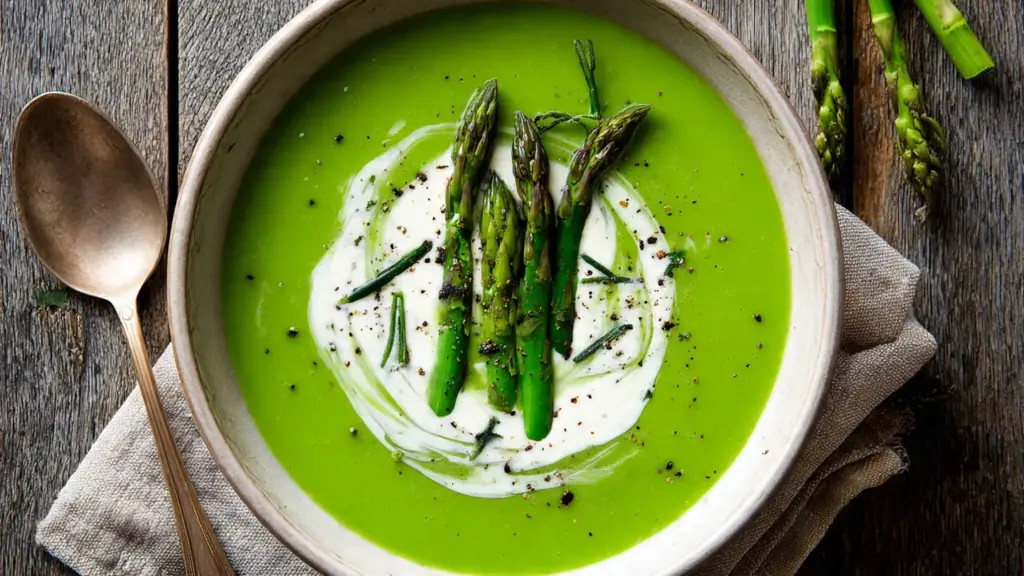
This soup is substantial enough to be a light meal on its own, but I usually serve it as a first course or pair it with something simple that doesn’t compete with its delicate flavor. Here are my favorite accompaniments.
The combination with a fresh salad and crusty bread makes for a perfect spring lunch.
- Crusty bread: A warm baguette or sourdough is perfect for dipping. I particularly love serving this with my homemade Dinner Rolls for a more substantial meal.
- Simple green salad: A light salad with lemon vinaigrette complements the soup beautifully without overwhelming it. Try my Broccoli Salad for a crunchy contrast.
- Grilled cheese sandwich: The classic tomato soup pairing works equally well here. Keep it simple with good cheddar or gruyere.
- Quiche: This soup makes an elegant first course before a slice of quiche for lunch or brunch.
- Roasted chicken: For a more complete dinner, serve this soup before or alongside simple roasted chicken with herbs.
- Spring vegetable tart: Another vegetable-forward option that celebrates the season alongside the soup.
- Poached salmon: The light, fresh flavors of both dishes work wonderfully together for a sophisticated dinner.
This pairs beautifully with my Grilled Salmon with Dill Sauce for an elegant spring dinner.
Variations of Asparagus Soup
One of the things I love about this recipe is how easily it adapts to different preferences and dietary needs. I’ve made all of these variations at various times, and each brings something special to the table.
My personal favorite is the chilled version on hot summer days.
- Dairy-free version: Replace the butter with olive oil and the cream with full-fat coconut milk or cashew cream. The soup will be slightly less rich but still delicious and perfectly smooth.
- Vegan asparagus soup: Use vegetable broth, replace butter with olive oil, and use coconut cream or blended soaked cashews instead of dairy cream. I add a splash of white wine for extra depth.
- Chilled asparagus soup: This soup is wonderful served cold in warm weather. After blending, chill it completely in the refrigerator for at least 4 hours. You may need to thin it slightly with extra broth when serving cold.
- With white wine: Add 1/2 cup (120ml) of dry white wine after sautéing the aromatics and let it reduce by half before adding the broth. This adds a sophisticated depth of flavor.
- Pea and asparagus soup: Add 1 cup (150g) of fresh or frozen peas during the last 5 minutes of simmering. The peas add sweetness and make the color even more vibrant.
- With herbs: Stir in fresh tarragon, chervil, or basil just before blending for an herbal twist. I particularly love tarragon with asparagus.
- Chunky style: Don’t blend all the soup. Reserve about 2 cups of the cooked vegetables, blend the rest, then stir the reserved vegetables back in for texture.
- With parmesan: Stir in 1/2 cup (50g) of freshly grated parmesan cheese after blending for a richer, more savory soup.
- Thai-inspired: Replace the cream with coconut milk, add a tablespoon of curry paste with the aromatics, and finish with fresh cilantro and lime juice instead of parsley and lemon.
Read Also: Egg Drop Soup Recipe
Storage and Reheating
This soup stores beautifully, which makes it perfect for meal prep. I often make a double batch on Sunday and have lunch sorted for half the week.
Just be aware that the color may dull slightly over time, though the flavor remains excellent.
- Refrigerator storage: Transfer cooled soup to an airtight container and refrigerate for up to 4 days. The soup may thicken as it sits, so you may need to add a splash of broth when reheating to return it to your desired consistency.
- Freezer storage: This soup freezes well for up to 3 months. I recommend freezing it in individual portions for easy reheating. Use freezer-safe containers or heavy-duty freezer bags, leaving about an inch of headspace for expansion.
- Freezing tip: If possible, freeze the soup before adding the cream. Add the cream when you reheat it for the best texture and color. The cream can sometimes separate slightly when frozen, though whisking during reheating usually fixes this.
- Thawing: Transfer frozen soup to the refrigerator to thaw overnight. You can also reheat it directly from frozen over low heat, stirring frequently, though this takes longer.
- Reheating on the stovetop: Place the soup in a pot over medium-low heat, stirring occasionally, until heated through. Add a splash of broth if it seems too thick. Don’t let it boil, as this can affect the texture and color.
- Reheating in the microwave: Transfer individual portions to a microwave-safe bowl and heat in 1-minute intervals, stirring between each, until hot throughout. Cover loosely to prevent splattering.
- Refreshing leftovers: When reheating, a fresh squeeze of lemon juice and a grind of black pepper can really brighten up the flavors and make day-old soup taste freshly made.
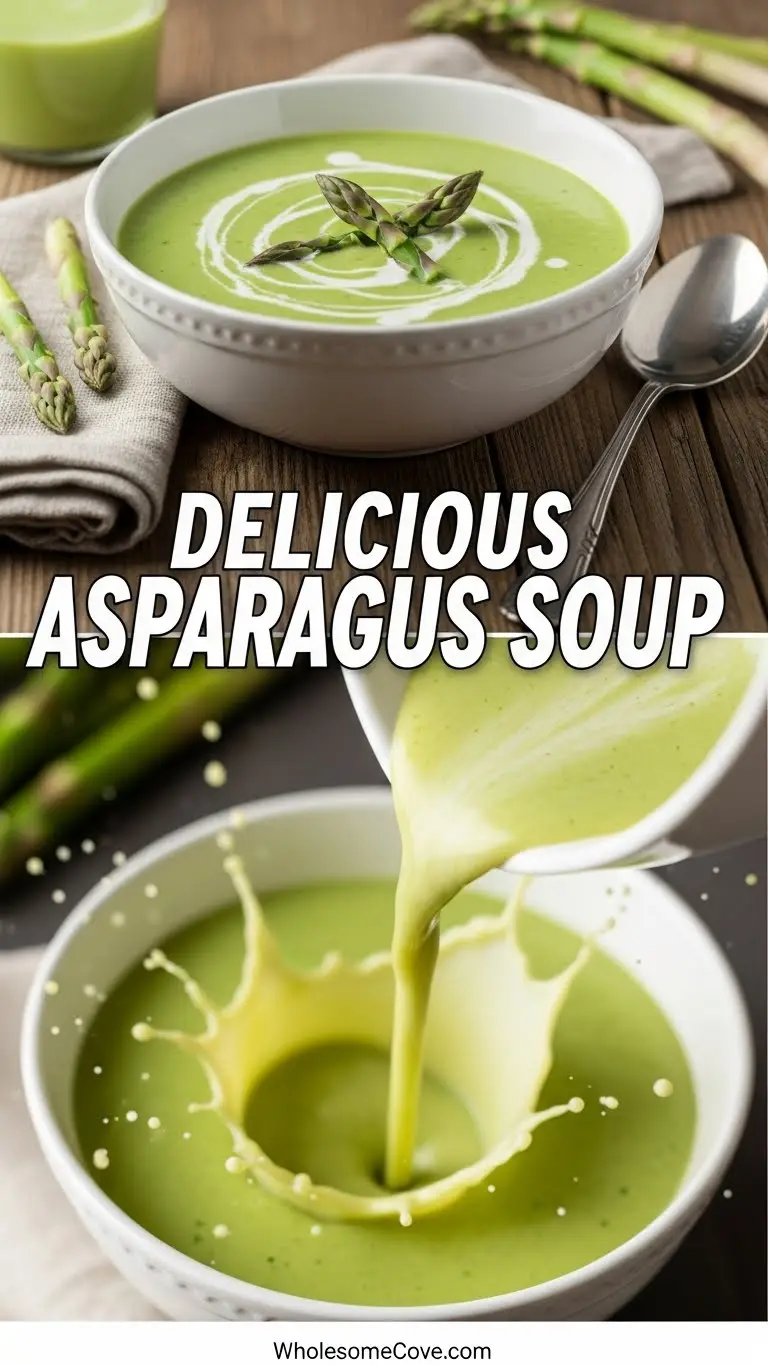
Nutritional Facts
This nutritional information is approximate and based on one serving (about 1 1/2 cups) of soup as written, which includes the cream. The exact values will vary depending on the specific brands and quantities you use.
If you use half-and-half instead of heavy cream, you’ll reduce the calories and fat content.
Per Serving (1/6 of recipe):
- Calories: 145
- Total Fat: 9g
- Saturated Fat: 5g
- Cholesterol: 25mg
- Sodium: 680mg
- Total Carbohydrates: 13g
- Dietary Fiber: 3g
- Sugars: 4g
- Protein: 4g
- Vitamin A: 15% DV
- Vitamin C: 12% DV
- Vitamin K: 45% DV
- Folate: 25% DV
- Iron: 8% DV
- Potassium: 320mg
Another favorite: Zuppa Toscana Recipe
Health Benefits of Key Ingredients
Beyond being delicious, this soup is genuinely nutritious. Asparagus is one of those vegetables that’s packed with good stuff, and transforming it into soup is an easy way to enjoy a bigger serving than you might eat raw or simply roasted.
I feel good about serving this to my family knowing they’re getting real nutritional benefits.
- Asparagus: This spring vegetable is incredibly nutrient-dense. It’s an excellent source of folate, which is crucial for cell growth and DNA formation. It’s also loaded with vitamin K for bone health, and contains high levels of antioxidants that help fight inflammation. The natural diuretic properties can help reduce bloating.
- Garlic and onions: These aromatics contain compounds that support immune function and heart health. They’re rich in antioxidants and have natural anti-inflammatory properties. The sulfur compounds in both have been linked to reduced blood pressure and improved cholesterol levels.
- Potato: The Yukon Gold potato adds fiber, potassium, and vitamin C to the soup. Potatoes are often unfairly maligned, but they’re actually quite nutritious when prepared simply. The potassium helps regulate blood pressure.
- Olive oil: Contains heart-healthy monounsaturated fats and powerful antioxidants. The polyphenols in olive oil have anti-inflammatory effects throughout the body.
- Lemon juice: Adds a boost of vitamin C and helps with iron absorption from the other vegetables. The citric acid also aids digestion.
FAQs About Asparagus Soup
Over the years, I’ve received quite a few questions about this recipe from friends and family. Here are the ones that come up most frequently, along with the answers I’ve learned through trial and error.
1. Can I use frozen asparagus instead of fresh?
Yes, frozen asparagus works well in this soup. In fact, I keep a few bags in my freezer for those times when I’m craving this soup but fresh asparagus isn’t available or is too expensive.
Use about 20-24 ounces (565-680g) of frozen asparagus to replace the 2 pounds of fresh. There’s no need to thaw it first, just add it directly to the pot and it may need an extra minute or two of cooking time.
2. Why did my soup turn brown or olive-colored instead of bright green?
This usually happens when the asparagus is overcooked or if you let the soup simmer for too long. The chlorophyll in the asparagus breaks down with extended heat exposure, which dulls the color.
To prevent this, cook the asparagus just until tender and blend while the soup is still hot. The blanching technique I mentioned in the tips section (blanching in boiling water, then shocking in ice water before adding to the soup) will give you the brightest possible color.
3. Can I make this soup ahead of time for a dinner party?
Absolutely, and I do this often when I’m entertaining. Make the soup up to 2 days ahead and store it in the refrigerator.
On the day of your party, gently reheat it over low heat, stirring occasionally. I sometimes wait to add the cream until I’m reheating it, which helps maintain the best texture and color. Have your garnishes prepared separately and add them just before serving.
4. My soup is too thick. How do I fix it?
Soup often thickens as it sits because the potato continues to absorb liquid. This is easily fixed by stirring in additional broth, a quarter cup at a time, until you reach your desired consistency.
Heat the soup gently while adding the extra liquid so everything incorporates smoothly. You can also thin it with a bit of cream or milk if you want to maintain the richness.
5. What can I do with leftover asparagus stems that are too woody for the soup?
Don’t throw them away! I save them in a bag in my freezer along with other vegetable scraps (onion ends, carrot peels, celery leaves) to make homemade vegetable broth.
The woody asparagus stems still have plenty of flavor even though they’re too tough to eat directly. Just simmer them with other veggie scraps, herbs, and water for about an hour, then strain. You can also compost them if you have a compost bin.
You might also enjoy: Italian Wedding Soup Recipe
Asparagus Soup
Ingredients
- 2 lbs fresh asparagus - 900g, woody ends trimmed and cut into 2-inch pieces; reserve some tips for garnish
- 2 tbsp unsalted butter - 28g
- 1 tbsp olive oil - 15ml
- 1 medium yellow onion - about 8 oz / 225g, diced
- 3 cloves garlic - minced
- 4 cups vegetable broth or chicken broth - 950ml; low-sodium preferred
- 1 medium Yukon Gold potato - about 6 oz / 170g, peeled and diced
- 1 tsp sea salt - 6g, plus more to taste
- 1/2 tsp freshly ground black pepper - 1g
- 1/2 cup heavy cream or half-and-half - 120ml
- 2 tbsp fresh lemon juice - 30ml; add at the end
- 1/4 cup fresh parsley leaves - 10g, optional
- crème fraîche or sour cream - optional, for serving; drizzle over each bowl
Equipment
- Large Dutch oven or heavy-bottomed pot - At least 5-quart capacity
- Immersion blender - A regular blender works as an alternative
- Regular blender - (optional) Use if immersion blender is unavailable; work in batches
- Ladle - For serving
- Fine-mesh strainer - (optional) For extra-smooth texture
Method
- Rinse asparagus, snap off woody ends, and cut into 2-inch pieces. Set aside about ½ cup of the prettiest tips; blanch them in boiling salted water for 2–3 minutes, then shock in ice water and drain.
- Heat butter and olive oil in a large pot over medium heat. Add diced onion and cook 5–6 minutes until translucent, then stir in minced garlic for 1 minute until fragrant. Season with salt and pepper.
- Add diced potato and stir to coat, then pour in broth, scraping up any browned bits. Add the asparagus pieces, bring to a boil, then reduce to a gentle simmer.
- Simmer uncovered for 12–15 minutes, until asparagus and potato are completely tender when pierced with a fork. Taste the broth and adjust seasoning.
- Remove from heat and let cool 2–3 minutes. Blend with an immersion blender until completely smooth, or carefully blend in batches in a regular blender. Strain through a fine-mesh strainer for extra silkiness if desired.
- Return soup to medium-low heat, stir in cream, and warm through 2–3 minutes without boiling. Stir in lemon juice, adjust seasoning, and ladle into bowls topped with reserved asparagus tips, crème fraîche, and fresh parsley.
Nutrition
Notes
- Choose medium-thickness asparagus spears with tight, compact tips for the best texture — very thin spears go mushy and very thick ones can be fibrous.
- Don’t skip the potato: it thickens the soup naturally and gives it a creamy body without excessive cream.
- For the brightest green color, blanch the asparagus before simmering and avoid overcooking. Add lemon juice only at the very end.
- Don’t let the garlic brown — add it after the onions have softened and cook for just 1 minute until fragrant.
- Frozen asparagus works well year-round. Use 20–24 oz (565–680g) and add directly to the pot without thawing.
- For a dairy-free version, replace butter with olive oil and cream with full-fat coconut milk or cashew cream.
- For a white wine variation, add ½ cup (120ml) dry white wine after sautéing the aromatics and reduce by half before adding broth.
- Make-ahead tip: Prepare the soup up to 2 days ahead and refrigerate. Add the cream only when reheating for best texture and color.
- Refrigerate leftovers in an airtight container for up to 4 days, or freeze (without cream) for up to 3 months.
- When reheating, use low heat and avoid boiling. Stir in a splash of broth if too thick and a fresh squeeze of lemon to brighten flavors.
Private Notes
Tried this recipe?
Let us know how it was!Final Thoughts
This asparagus soup has earned its place as a springtime staple in my kitchen, and I hope it becomes one of yours too. The combination of fresh, vibrant flavors and silky-smooth texture makes it feel special enough for company but easy enough for a regular Tuesday dinner.
I love how it transforms humble asparagus into something that feels like a warm hug in a bowl. Give this recipe a try and let me know what you think in the comments below, I’d love to hear about your own variations or what you served alongside it!
Recommended:
- Chicken Gnocchi Soup Recipe
- Pasta Fagioli Recipe
- Taco Soup Recipe
- Creamed Spinach Recipe
- Baked Salmon with Asparagus and Lemon Recipe
- Green Bean Casserole Recipe
- Mashed Potatoes Recipe
- Avgolemono Soup Recipe
- Matzo Ball Soup Recipe
- Instant Pot Chicken Noodle Soup Recipe