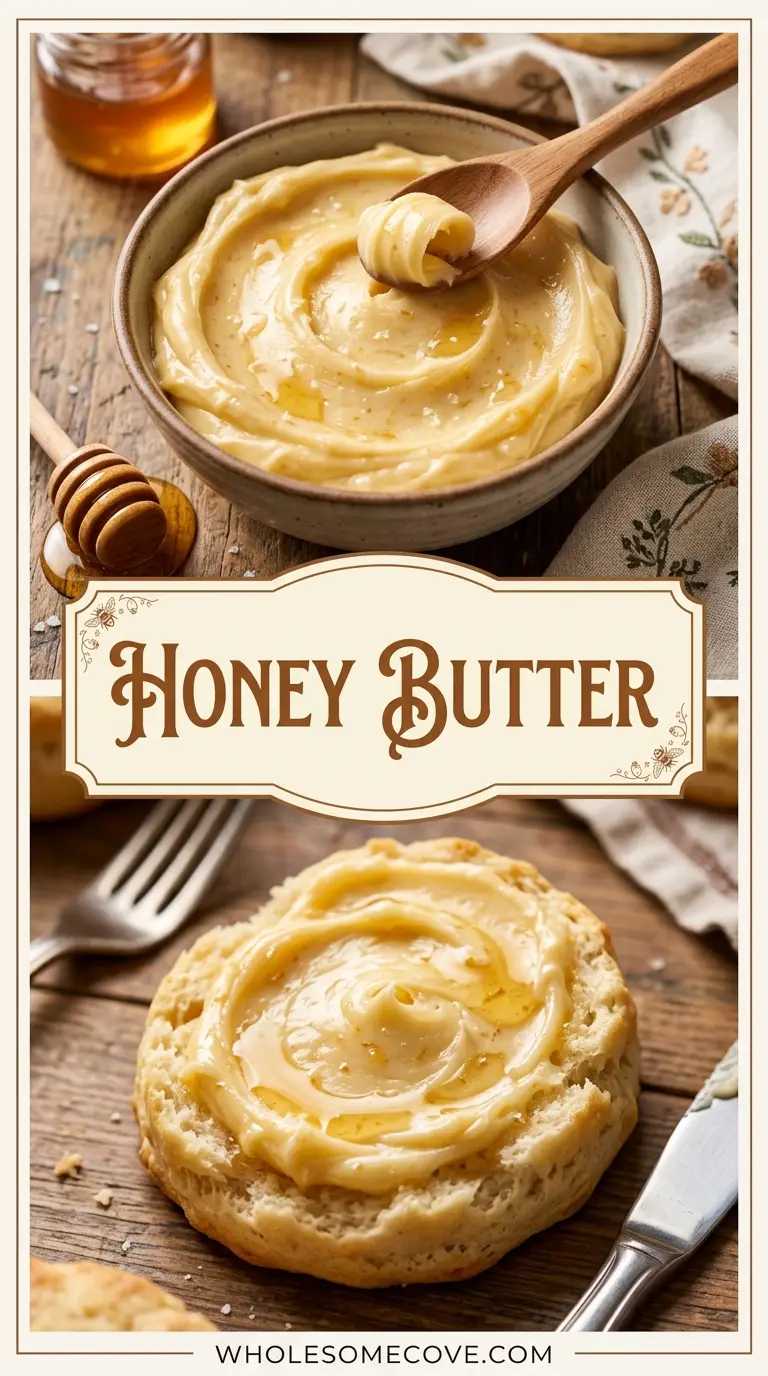
This honey butter recipe takes two ingredients most kitchens already have and whips them into a soft, spreadable spread with the color of pale gold. It comes together with just five ingredients and about 10 minutes of hands-on work, no cooking required.
The trick that sets this version apart is a spoonful of confectioners’ sugar, which melts into the butter without the grit that granulated sugar leaves behind. That small addition keeps the texture silky even after a night in the fridge.
Most first attempts go wrong for one reason: cold butter refuses to whip and leaves streaks of unmixed honey running through it. Starting with properly softened butter fixes that instantly, giving you a spread light enough to hold a soft peak on the spoon.
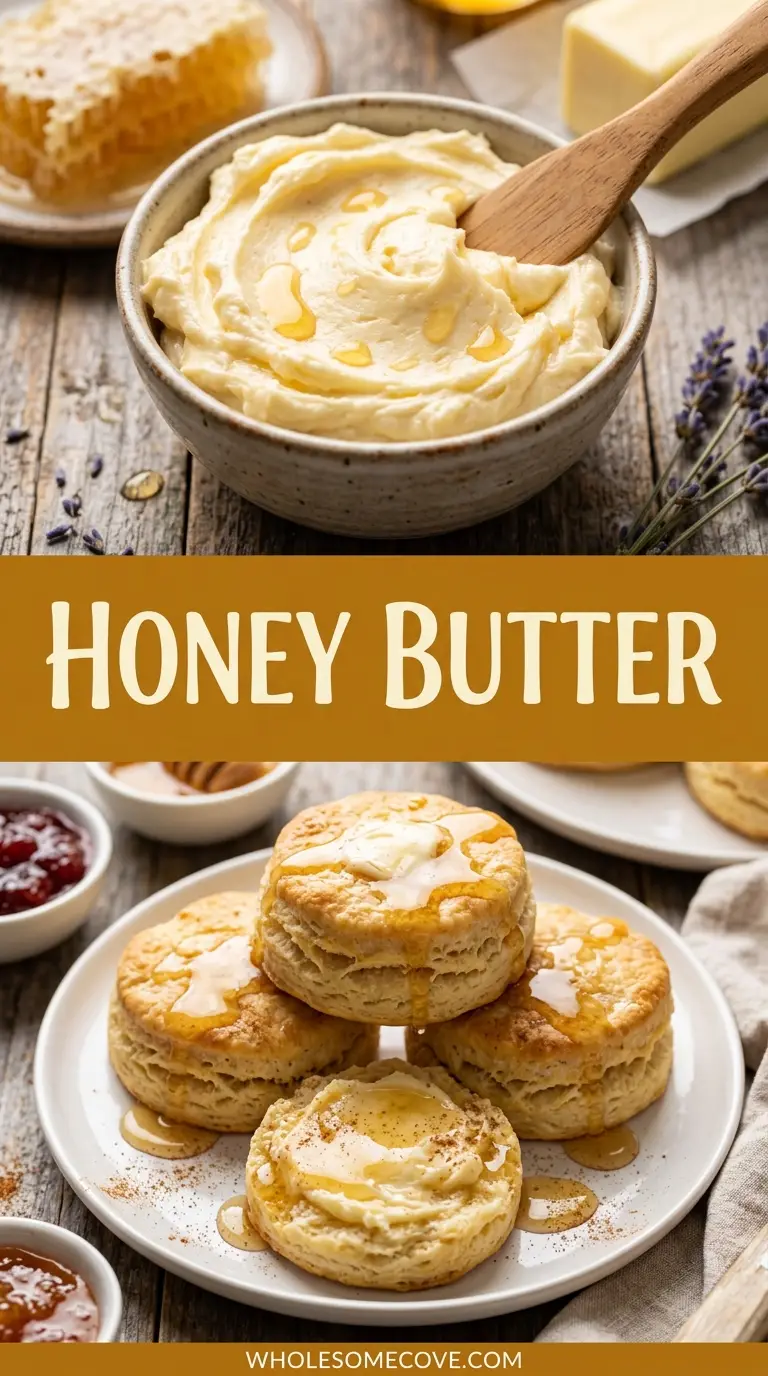
It clings to warm cornbread, soaks into split biscuits, and melts across a stack of pancakes in seconds. Once you have a jar in the fridge, you will reach for it far more often than you expect.
| Quick Recipe Summary | |
|---|---|
| Prep Time | 10 minutes |
| Cook Time | 0 minutes |
| Total Time | 10 minutes |
| Servings | About 1½ cups (24 tablespoons) |
| Difficulty Level | Easy |
Read Also: Honey Butter Chicken
Why You’ll Love This Honey Butter Recipe
Homemade honey butter costs a fraction of the small tubs sold at bakeries and tastes noticeably fresher. You control the sweetness, the salt, and the texture, which no store-bought version lets you do.
Here is what makes it worth keeping on hand:
- Five ingredients, no cooking. Butter, honey, confectioners’ sugar, vanilla, and salt are all you need, and nothing goes near the stove.
- Ready in about 10 minutes. From soft butter to finished jar is a single mixing session, start to finish.
- Genuinely versatile. It works as a sweet spread for bread and a savory finish for corn, carrots, and pork chops.
- Make-ahead friendly. It keeps for weeks in the fridge and months in the freezer, so a double batch is never wasted.
- Fully adjustable. More honey for sweetness, a pinch of cayenne for heat, or a dash of cinnamon for warmth, all from the same base.
- Crowd-friendly for gatherings. A jar on the table next to a basket of warm rolls disappears fast at holiday meals.
- Better texture than the stir-together kind. Whipping folds in air, so it stays soft and spreadable straight from the fridge.
For another spreadable classic worth making from scratch, see Apple Butter.
Ingredients
The ingredient list is short, so quality matters more than usual here. Good butter and real honey are what you taste, since there is nothing else to hide behind. Both imperial and metric measurements are listed below.
- 1 cup (2 sticks / 227 g) unsalted butter, softened to room temperature. Softened means it dents easily when pressed but still holds its shape. Try European-style butter for a richer result thanks to its higher butterfat.
- ⅓ cup (113 g) honey, at room temperature. A mild wildflower or clover raw honey keeps the flavor balanced rather than sharp.
- 2 tablespoons (15 g) confectioners’ sugar, sifted. This is the secret to a creamy, grit-free texture and adds only gentle sweetness.
- ½ teaspoon pure vanilla extract. It rounds out the honey and adds a soft background warmth.
- ¼ teaspoon fine sea salt, or a pinch of flaky sea salt for finishing. Salt sharpens the sweetness and keeps it from tasting flat.
- ⅛ teaspoon ground cinnamon (optional). A small amount adds a cozy note that pairs well with fall breads.
Confectioners’ sugar dissolves into the butter without the grit you get from granulated, which is why I never swap the two here.
You might also enjoy: Peach Butter
Kitchen Equipment Needed
Nothing specialized is required, though a mixer makes the job faster and the result fluffier. A bowl and a sturdy fork will still get you there with a little effort.
- Stand mixer with paddle attachment, for the smoothest, airiest texture with the least effort.
- Electric hand mixer, a compact alternative that whips the butter just as well.
- Glass mixing bowls, roomy enough to keep the honey from splattering as it blends.
- Silicone spatula, for scraping down the sides so no butter stays unmixed.
- Measuring cups and spoons, for keeping the butter-to-honey ratio consistent.
- Glass storage jars with lids, to pack and store the finished butter.
- Butter crock, if you like keeping a serving soft and ready on the counter.
For a bread that begs for a smear of this, take a look at Cracklin Bread.
Recommended Products for This Recipe
These are the items I reach for when making honey butter, chosen because each one solved a specific problem in my own kitchen. They are worth considering if you plan to make this often.
1. Kerrygold Pure Irish Butter
Standard supermarket butter can taste watery once it is whipped, which leaves the honey doing all the work. Kerrygold’s higher butterfat gives the finished spread a deeper, creamier flavor that holds up against the honey instead of disappearing under it.
2. Local Hive Raw Honey
Thin, heavily processed honey can make the butter loose and one-note. A thicker raw honey brings floral depth and helps the spread hold its shape, so it does not run off a warm biscuit.
3. KitchenAid Stand Mixer
Whipping soft butter by hand works, but it never quite reaches the same cloud-like lift. A stand mixer with the paddle attachment incorporates air steadily and frees your hands to drizzle the honey in slowly, which is the key to a smooth blend.
4. Maldon Flaky Sea Salt
Fine salt seasons the butter, but a few flakes pressed on top just before serving add tiny bursts of crunch and brightness. That contrast is what turns a simple spread into something people notice.
5. Weck Glass Jars
Honey butter picks up fridge odors quickly in a loosely covered dish. A sealed glass jar keeps it fresh and makes it easy to portion, plus it looks tidy enough to set right on the table.
For a savory main that loves a glossy sweet glaze, try: Honey Glazed Ham
Step-by-Step Instructions: How to Make Honey Butter
Follow these simple steps and you’ll have a creamy honey butter ready in about 10 minutes.
1. Soften the Butter Properly
- Leave the butter at room temperature until it gives easily when pressed, usually 30 to 60 minutes depending on your kitchen.
- The butter should be soft all the way through, not just at the edges, so it whips evenly.
- Avoid microwaving it, since melted butter will not hold air and turns the spread greasy instead of fluffy.
I keep my butter out on the counter the night before specifically for this, because even 30 minutes of softening often isn’t enough to get it truly creamy in a cool kitchen.
2. Whip the Butter Alone First
- Place the softened butter in the bowl of your stand mixer or a large bowl if using a hand mixer.
- Beat on medium speed for about 1 minute until it looks pale, smooth, and slightly lightened.
- Scrape down the sides with a silicone spatula so no firm butter clings to the bowl.
3. Add the Sugar, Vanilla, and Salt
- Add the sifted confectioners’ sugar, vanilla extract, and fine sea salt to the whipped butter.
- Start the mixer on low so the sugar does not puff up into a cloud, then raise to medium.
- Beat for about 30 seconds until the sugar is fully absorbed and no white streaks remain.
4. Drizzle in the Honey Slowly
- With the mixer running on medium, pour the room-temperature honey in a slow, steady stream.
- Adding it gradually lets the honey emulsify into the butter rather than pooling at the bottom.
- If using cinnamon, add it now so it distributes evenly through the mixture.
I ruined my first batch by pouring cold honey straight from the fridge into the butter, which seized it into little beads that never fully smoothed out.
5. Beat Until Light and Fluffy
- Increase the speed to medium-high and whip for 1 to 2 minutes more.
- The butter should look pale, airy, and hold a soft peak when you lift the paddle.
- Stop and scrape the bowl once during this step to catch any honey stuck to the sides.
6. Taste and Adjust
- Taste a small amount on a piece of bread or a spoon.
- Add a little more honey for sweetness or an extra pinch of salt for balance, beating briefly to combine.
- Once it tastes right, pack it into a jar or shape it into a log in parchment paper.
For a make-ahead breakfast this pairs with beautifully, see Pumpkin French Toast.
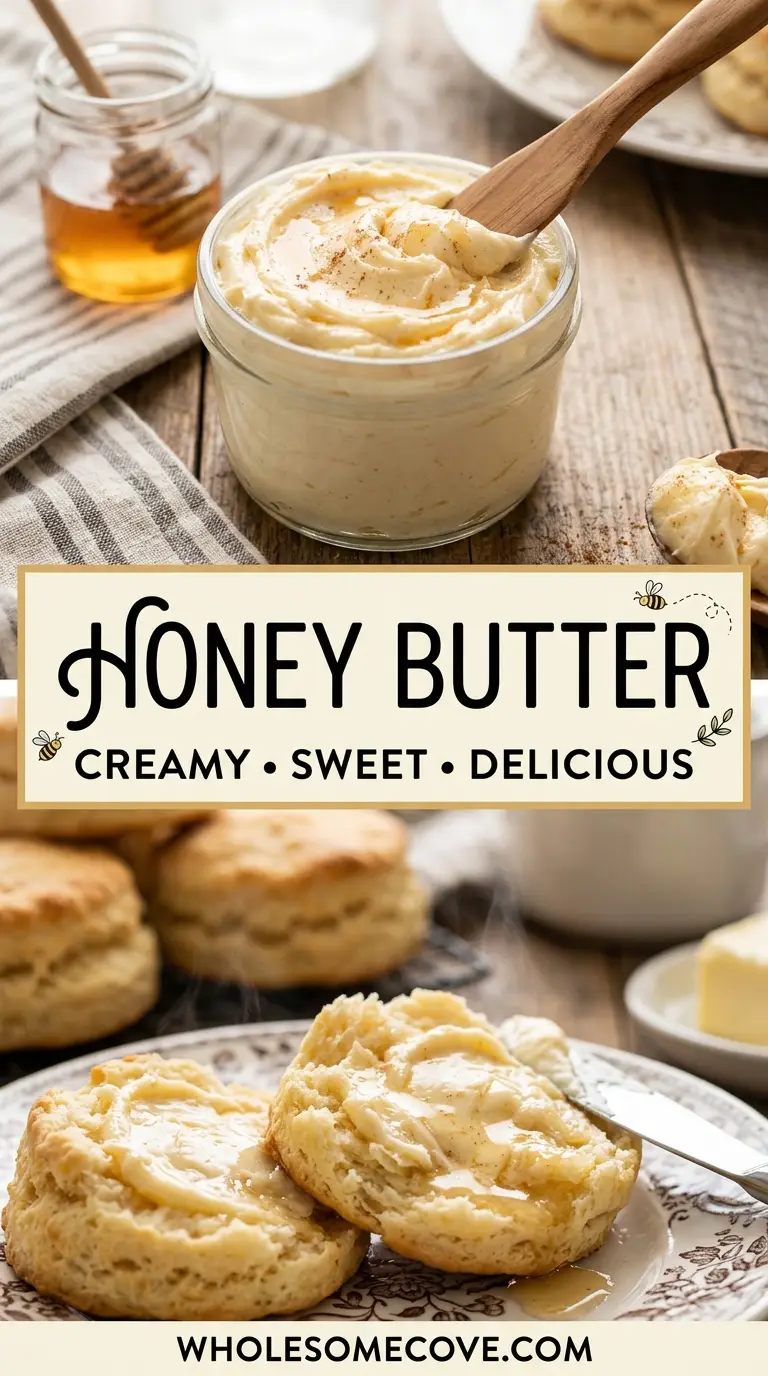
Tips for The Best Honey Butter
Small details make the difference between a spread that is merely fine and one you cannot stop eating. These are the habits worth building.
- Use truly soft butter. This is the single biggest factor in a smooth, lump-free result.
- Keep the honey at room temperature. Cold honey seizes the butter and creates hard little beads.
- Whip the butter before anything else. Air folded in early is what gives the spread its light body.
- Sift the confectioners’ sugar. A quick sift prevents small lumps that will not blend out later.
- Do not overheat. If the butter starts looking greasy or separated, it was too warm, so chill it briefly and re-whip.
- Season to taste. Honey sweetness varies by variety, so adjust salt and honey at the end rather than by the recipe alone.
- Let flavors settle. A rest of 30 minutes lets the salt and vanilla bloom before serving.
I’ve found whipped honey butter spreads far better on warm cornbread than the stir-together kind, since the folded-in air keeps it soft even straight from the fridge.
You might also enjoy: Overnight Oats
What to Make with Honey Butter
Honey butter is a finishing spread, so it shines on top of or alongside other foods rather than on its own. It bridges sweet and savory easily, which is why it turns up on breakfast tables and holiday spreads alike. Here are the dishes it complements best.
- Slathered on warm Cornbread straight from the oven, where it melts into every crack.
- Spread across split Homemade Biscuits for a sweet-salty bite.
- Melting into fluffy Dinner Rolls at a holiday table.
- Stacked on a plate of Pancakes in place of plain syrup.
- Dotted over crisp Waffles so it seeps into the pockets.
- Swept across thick slices of French Toast before the syrup goes on.
- Brushed onto hot Corn on the Cob for a sweet, glossy finish.
- Melted into a split Baked Sweet Potato with a pinch of salt.
- Stirred into a warm bowl of Baked Oatmeal for richness.
- Spread on a slice of Banana Bread still warm from the pan.
- Tossed with Maple Glazed Carrots as a quick glaze.
- Served with tender Spoon Bread for a Southern-style side.
- Melted over grilled pork chops or roasted root vegetables just before serving.
A related savory-sweet side to serve nearby is Roasted Brussels Sprouts with Bacon.
Variations of Honey Butter
The base recipe is a starting point, and small swaps take it in very different directions. Keep the butter-to-honey ratio steady and adjust the add-ins to taste.
- Cinnamon Honey Butter: Add ½ teaspoon ground cinnamon for a warm, bakery-style spread perfect on toast.
- Spicy Honey Butter: Stir in a pinch of cayenne or a few drops of hot sauce for a sweet-heat finish on cornbread.
- Maple Honey Butter: Replace half the honey with pure maple syrup for a deeper, autumn flavor.
- Whipped Vanilla Bean Butter: Swap the extract for the scraped seeds of half a vanilla bean for visible flecks and stronger aroma.
- Orange Honey Butter: Add 1 teaspoon of orange zest for a bright citrus lift alongside pancakes.
- Pecan Honey Butter: Fold in 2 tablespoons of finely chopped toasted pecans for texture and nutty depth.
- Brown Butter Honey Butter: Brown the butter first, chill it until soft again, then whip with honey for a richer, caramelized taste.
- Salted Honey Butter: Finish with extra flaky sea salt for a bolder sweet-salty contrast.
For another cozy homemade spread to try, a similar approach works in Homemade Cinnamon Applesauce.
Storage and Reheating
Honey butter stores beautifully, which makes it easy to keep a batch ready for whenever warm bread appears. Because there is nothing perishable beyond the butter itself, it holds up well.
- Room temperature: Keep in a covered butter crock or sealed dish for up to 2 days if your kitchen is cool.
- Refrigerator: Store in an airtight jar for up to 3 weeks, pressing plastic wrap against the surface to limit odor pickup.
- Freezer: Freeze in a sealed container or shaped into a wrapped log for up to 6 months.
- Thawing: Move frozen honey butter to the fridge overnight, then let it sit at room temperature before spreading.
- Re-softening: If it firms up in the fridge, leave it out for 15 to 20 minutes, or re-whip briefly to restore the fluffy texture.
- Avoid the microwave: Melting it changes the texture permanently, so always soften by resting at room temperature.
For a make-ahead holiday centerpiece to serve it with, see Thanksgiving Turkey.
Nutritional Facts
Values below are estimates for a 1 tablespoon serving, based on a yield of about 24 tablespoons. Actual numbers will vary with the specific butter and honey used.
| Nutrient | Amount per 1 Tbsp |
|---|---|
| Calories | 90 kcal |
| Total Fat | 8 g |
| Saturated Fat | 5 g |
| Cholesterol | 21 mg |
| Sodium | 30 mg |
| Total Carbohydrates | 5 g |
| Sugars | 5 g |
| Protein | 0 g |
For a naturally sweet side that leans on the same fall flavors, try: Roasted Sweet Potato
Tips for Using Honey Butter Like a Pro
Once you have a jar made, a few professional habits help you get the most out of it and avoid the small frustrations that come up. These cover consistency, serving, and troubleshooting.
- Serving temperature is everything. Set it out 15 minutes before the meal so it spreads without tearing soft bread.
- Fixing a grainy batch: If the honey seized, warm the bowl gently over warm water and re-whip until smooth.
- Thinning it out: For a drizzle-style honey butter, warm a spoonful briefly and stir before pouring over waffles.
- Thickening a loose batch: Chill it for 20 minutes, then whip again to firm it back up.
- Shaping for gifts: Roll firm honey butter in parchment into a log, twist the ends, and chill until sliceable.
- Portioning ahead: Scoop into an ice cube tray and freeze so you can pull single servings as needed.
- Balancing sweetness: If a batch tastes too sweet, whip in an extra tablespoon of plain softened butter to mellow it.
- Layering flavor: Brush melted honey butter over baked goods in the last minutes of baking for a glossy top.
A pinch of salt at the end makes the biggest difference, since the butter can taste flat without it even when the honey is generous.
Read Also: Thanksgiving Stuffing
FAQs About Honey Butter
1. Should I use salted or unsalted butter for honey butter?
Unsalted butter is the better choice because it lets you control the salt precisely. You can add a measured pinch and taste as you go, which matters in a spread this simple.
If you only have salted butter, skip the added salt and adjust at the end. The flavor still works, it just needs a lighter hand.
2. Why is my honey butter grainy or separated?
The most common cause is butter that was too warm or partly melted before whipping. Melted butter cannot hold air, so it separates into a greasy layer instead of staying creamy.
Cold honey can also seize the mixture into tiny beads. Bringing both the butter and honey to room temperature usually solves the problem.
3. Can I make honey butter without a mixer?
Yes, a bowl and a sturdy fork or spoon will work with a little more effort. The key is starting with very soft butter so you can mash and stir it smooth.
The texture will be slightly denser than the whipped version. It still tastes just as good on warm bread.
4. How long does homemade honey butter last?
Stored in an airtight container in the refrigerator, it keeps well for up to 3 weeks. Pressing wrap against the surface helps it stay fresh and odor-free.
For longer storage, freeze it for up to 6 months. Thaw it in the fridge overnight before using.
5. Is honey butter meant to be sweet or savory?
It sits comfortably in both worlds, which is part of its appeal. On biscuits and pancakes it reads as sweet, while on corn or pork chops it turns savory.
Adjusting the honey and salt shifts it in either direction. A pinch of cayenne even pushes it toward sweet-and-spicy.
6. Can I use maple syrup instead of honey?
You can, though it changes both the flavor and the texture slightly. Maple syrup is thinner than honey, so the spread will be a touch softer.
Try replacing half the honey with maple syrup first. That balance keeps the structure while adding maple depth.
A similar make-ahead spread worth bookmarking is Mashed Sweet Potato.
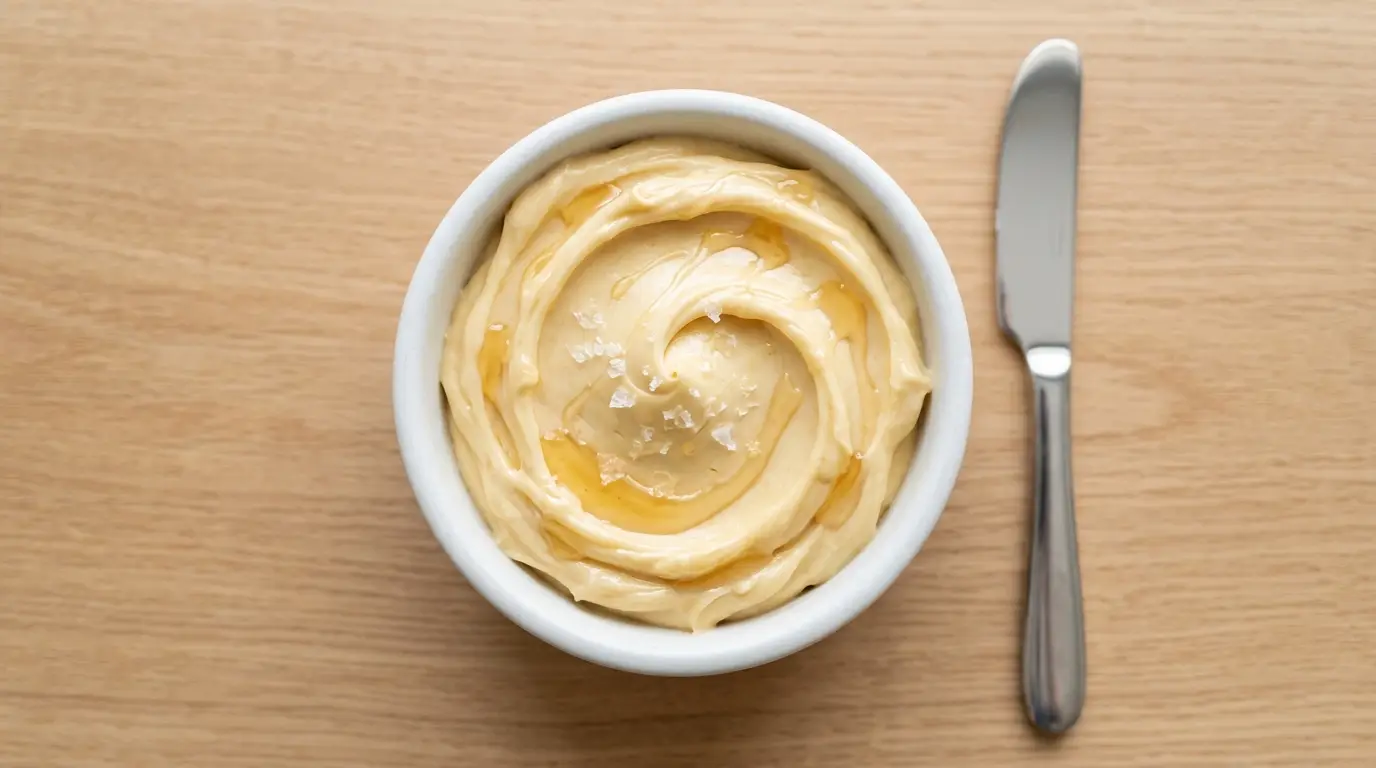
Honey Butter
Ingredients
- 1 cup unsalted butter - 2 sticks or 227g, softened to room temperature; European-style recommended for richer result
- 1/3 cup honey - 113g, at room temperature; mild wildflower or clover raw honey recommended
- 2 tablespoons confectioners’ sugar - 15g, sifted; secret to creamy, grit-free texture
- 1/2 teaspoon pure vanilla extract - rounds out the honey and adds soft background warmth
- 1/4 teaspoon fine sea salt - or a pinch of flaky sea salt for finishing; salt sharpens sweetness
- 1/8 teaspoon ground cinnamon - optional; adds a cozy note that pairs well with fall breads
Equipment
- Stand mixer - with paddle attachment, for the smoothest, airiest texture
- Electric hand mixer - compact alternative (optional)
- Glass mixing bowls - roomy enough to keep honey from splattering
- Silicone spatula - for scraping down the sides
- Measuring cups and spoons - for consistent butter-to-honey ratio
- Glass storage jars with lids - to pack and store the finished butter
- Butter crock - optional, for keeping a serving soft on the counter
Method
- Leave the butter at room temperature until it gives easily when pressed, usually 30 to 60 minutes. The butter should be soft all the way through, not just at the edges, so it whips evenly. Avoid microwaving it, since melted butter will not hold air and turns the spread greasy instead of fluffy.
- Place the softened butter in the bowl of your stand mixer or a large bowl if using a hand mixer. Beat on medium speed for about 1 minute until it looks pale, smooth, and slightly lightened. Scrape down the sides with a silicone spatula so no firm butter clings to the bowl.
- Add the sifted confectioners’ sugar, vanilla extract, and fine sea salt to the whipped butter. Start the mixer on low so the sugar does not puff up into a cloud, then raise to medium. Beat for about 30 seconds until the sugar is fully absorbed and no white streaks remain.
- With the mixer running on medium, pour the room-temperature honey in a slow, steady stream. Adding it gradually lets the honey emulsify into the butter rather than pooling at the bottom. If using cinnamon, add it now so it distributes evenly through the mixture.
- Increase the speed to medium-high and whip for 1 to 2 minutes more. The butter should look pale, airy, and hold a soft peak when you lift the paddle. Stop and scrape the bowl once during this step to catch any honey stuck to the sides.
- Taste a small amount on a piece of bread or a spoon. Add a little more honey for sweetness or an extra pinch of salt for balance, beating briefly to combine. Once it tastes right, pack it into a jar or shape it into a log in parchment paper.
Nutrition
Notes
- Use truly soft butter. This is the single biggest factor in a smooth, lump-free result. Let it sit out for 30-60 minutes, or overnight in a cool kitchen.
- Keep the honey at room temperature. Cold honey seizes the butter and creates hard little beads that never fully smooth out.
- Whip the butter before anything else. Air folded in early is what gives the spread its light, fluffy body.
- Sift the confectioners’ sugar. A quick sift prevents small lumps that will not blend out later.
- Do not overheat. If the butter starts looking greasy or separated, it was too warm; chill it briefly and re-whip.
- Storage: Room temperature for up to 2 days in a covered crock; refrigerator for up to 3 weeks in an airtight jar; freezer for up to 6 months.
- Re-softening: If firm from the fridge, leave out 15-20 minutes or re-whip briefly. Avoid the microwave, as melting changes the texture permanently.
- Fixing a grainy batch: Warm the bowl gently over warm water and re-whip until smooth.
- Variations: Add cinnamon, cayenne, maple syrup, orange zest, vanilla bean, or toasted pecans to change the flavor profile.
- Gift idea: Roll firm honey butter in parchment into a log, twist the ends, and chill until sliceable.
Private Notes
Tried this recipe?
Let us know how it was!Final Thoughts
Honey butter proves that the simplest recipes are often the ones you make again and again. With soft butter, good honey, and a few minutes, you have a spread that lifts everything it touches.
Keep a jar in the fridge and you will find excuses to use it, from morning toast to holiday rolls. Once you taste the homemade version, the store-bought tubs lose their appeal for good.
Give it a try this week and see how quickly it disappears. If you make it, leave a comment below with your favorite variation and share the recipe with a friend who loves warm bread.
Recommended:
- Sweet Potato Casserole
- Old Fashioned Pumpkin Bread
- Buttermilk Waffle
- Air Fryer Pancake
- Apple Crisp
- Mulled Apple Cider
- Roasted Butternut Squash Soup
- Sweet Potato Bread
- Honey Baked Ham