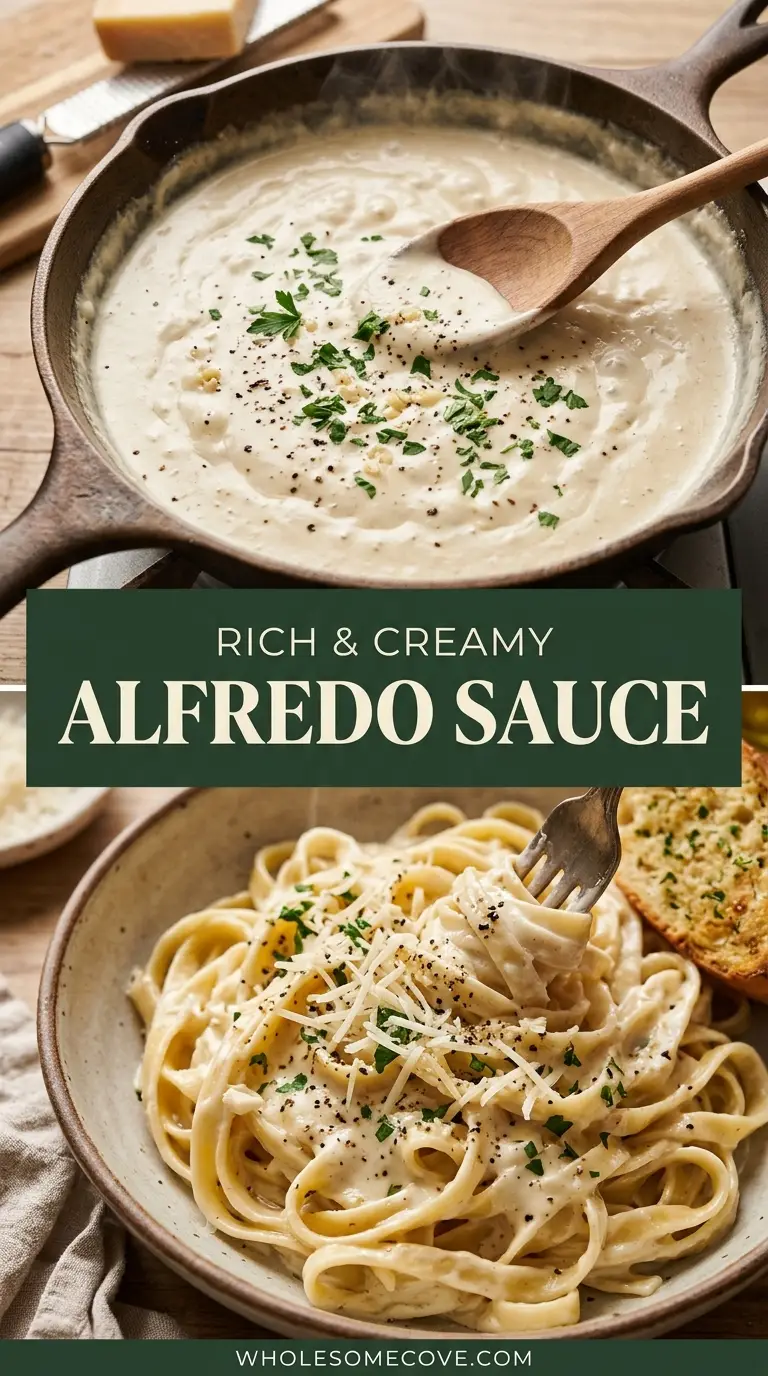
This easy Alfredo sauce recipe relies on butter, garlic, heavy cream, and freshly grated Parmesan. The sauce takes about 12 minutes at the stove, roughly the time the fettuccine needs to cook.
Most grainy Alfredo comes from pre-shredded Parmesan, which is coated with anti-caking agents that stop it from melting smoothly. A block of Parmesan grated fine and stirred in over low heat dissolves straight into the cream.
One batch makes about 2 1/2 cups, enough to coat 1 pound (450 g) of fettuccine.
| Quick Recipe Summary | |
|---|---|
| Prep Time | 10 minutes |
| Cook Time | 15 minutes |
| Total Time | 25 minutes |
| Servings | 4 servings (about 2 1/2 cups of sauce) |
| Difficulty Level | Easy |
For a lighter option, try: Healthy Alfredo Sauce Recipe
Why You’ll Love This Easy Alfredo Sauce Recipe
This sauce skips the flour, the roux, and the jar. Everything happens in one saucepan while the pasta boils.
- Fast: The sauce needs about 12 minutes at the stove, and the whole dinner is on the table in 25 minutes.
- Smooth, not grainy: Grating a block of Parmesan and adding it a handful at a time over low heat keeps the cheese from clumping.
- One saucepan: Butter, garlic, cream, and cheese all go into a single medium saucepan, so cleanup is a pot, a whisk, and a grater.
- Controlled seasoning: Unsalted butter lets you season at the end, which matters because the Parmesan carries most of the salt.
- Right-sized batch: The 2 1/2 cups of sauce coats 1 pound (450 g) of pasta and serves four.
- Flexible base: Chicken, shrimp, broccoli, or mushrooms stir in without changing a thing about the sauce.
For a restaurant-style take on the same idea, see Olive Garden Alfredo Sauce Recipe.
Ingredients
Everything below is a pantry or dairy-aisle staple, and the cheese is the only item worth shopping carefully for. Buy a wedge of Parmesan rather than a tub of pre-grated cheese.
For the sauce:
- 1/2 cup (115 g) unsalted butter
- 3 cloves garlic, minced (about 1 tablespoon or 9 g)
- 1 1/2 cups (360 ml) heavy cream
- 1 1/2 cups (about 125 g) finely grated Parmigiano-Reggiano, from a 4.5-ounce (125 g) block, plus extra for serving
- 1/4 teaspoon kosher salt, plus more to taste
- 1/4 teaspoon freshly ground black pepper
- 1/8 teaspoon freshly grated or ground nutmeg, optional
- 2 tablespoons (8 g) fresh parsley, finely chopped, for garnish
For the pasta:
- 1 pound (450 g) fettuccine
- 4 quarts (4 L) water
- 1 tablespoon kosher salt (about 15 g), for the pasta water
- 1/2 cup (120 ml) reserved pasta water, scooped out before draining
Read Also: Chicken Alfredo Recipe With Jar Sauce
Kitchen Equipment Needed
This recipe needs one saucepan and one stockpot, plus a grater fine enough to turn hard cheese into fluffy strands. Everything else is a small tool you probably own.
- Medium stainless steel saucepan, 3 quarts (2.8 L), for the sauce
- Large stockpot, 6 quarts (5.7 L) or larger, for boiling and tossing the pasta
- Microplane grater for the Parmesan
- Balloon whisk to keep the cream and cheese moving
- Pasta tongs for tossing the fettuccine in the sauce
- Colander for draining the pasta
- Digital kitchen scale for weighing the butter, cheese, and pasta
- Airtight glass storage containers for leftovers
- Heatproof liquid measuring cup for scooping out pasta water
- Chef’s knife and cutting board for the garlic and parsley
- Four warmed pasta bowls for serving
Also worth a look: Garlic Parmesan Sauce Recipe
Recommended Products for This Recipe
These are my personal recommendations, chosen because each one fixes a specific problem that shows up when you make Alfredo at home.
1. Parmigiano-Reggiano 24-Month Wedge
Pre-grated Parmesan is the biggest reason homemade Alfredo turns gritty. I’ve found that a wedge of aged Parmigiano-Reggiano grates into drier, finer strands that melt into hot cream without clumping, and its savory depth means the sauce needs very little added salt.
2. Microplane Premium Classic Zester and Grater
A box grater leaves thick shreds that take longer to melt, which tempts you to keep the sauce hot for longer than it should be. This grater turns the same cheese into a fluffy pile that dissolves in under two minutes, and the blade is sharp enough that you never have to press hard.
3. All-Clad Stainless Steel 3-Quart Saucepan
Thin saucepans scorch butter and garlic in seconds, and a burnt garlic note ruins a sauce this simple. A heavy, fully clad base spreads the heat evenly, so the cream can simmer gently without a hot spot catching the bottom.
4. Kerrygold Pure Irish Unsalted Butter
With only four main ingredients in the pot, the butter shows up clearly in the finished flavor. Kerrygold has a higher butterfat content than standard American butter, which gives the sauce a richer, rounder taste and a slightly glossier finish.
A tangier cream sauce is Gorgonzola Cream Sauce Recipe.
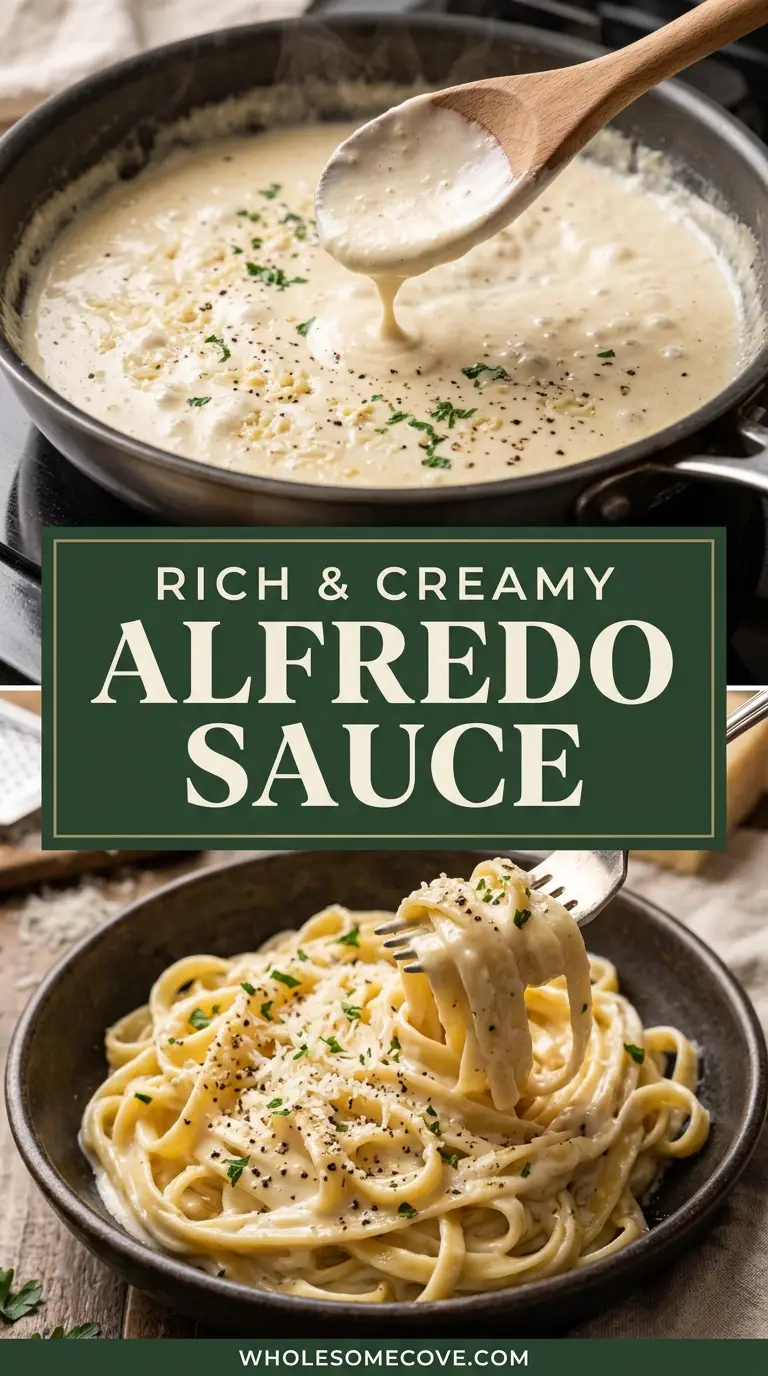
Step-by-Step Instructions: How to Make Alfredo Sauce
Follow these steps and the sauce will be ready right as the pasta finishes cooking.
1. Start the Water and Prep Everything
- Fill a large stockpot with 4 quarts (4 L) of water, stir in 1 tablespoon of kosher salt, cover, and set it over high heat so it heats while you prep.
- Grate the 4.5-ounce (125 g) block of Parmigiano-Reggiano on the fine side of your grater until you have about 1 1/2 cups.
- Mince the 3 garlic cloves and finely chop 2 tablespoons of parsley.
- Measure 1 1/2 cups (360 ml) of heavy cream into a liquid measuring cup so it is ready to pour.
- Set the pepper, nutmeg, and 1/4 teaspoon of kosher salt in a small dish beside the stove.
- I grate the cheese before the pasta water even boils, because once the cream is simmering there is no spare minute for it.
2. Cook the Fettuccine
- When the water reaches a rolling boil, add the 1 pound (450 g) of fettuccine and stir for the first 30 seconds so the strands do not stick together.
- Set a timer for 1 minute less than the package directions, which is usually 9 to 11 minutes, because the pasta finishes in the sauce.
- Start the sauce right away so both finish at the same time.
3. Melt the Butter
- Set a medium saucepan over medium-low heat and add the 1/2 cup (115 g) of unsalted butter.
- Let it melt completely, 1 to 2 minutes, swirling the pan once or twice.
- Keep the butter from browning so the finished sauce stays pale and creamy.
4. Cook the Garlic
- Add the minced garlic to the melted butter and stir constantly for 30 to 60 seconds, just until it smells fragrant.
- Do not let the garlic take on color, because browned garlic turns bitter and it will flavor the whole pot.
5. Simmer the Cream
- Pour in the 1 1/2 cups (360 ml) of heavy cream slowly while whisking, then raise the heat to medium.
- When small bubbles appear around the edge of the pan, lower the heat to low.
- Simmer gently for 5 minutes, whisking often, until the cream thickens slightly and coats the back of a spoon.
- Keep it at a gentle simmer and never let it come to a hard boil.
6. Whisk in the Parmesan
- With the heat on low, add the grated cheese a small handful at a time, whisking until each addition melts before adding the next.
- This takes 1 to 2 minutes, and the sauce should turn smooth and glossy.
- Stir in the black pepper and the optional nutmeg, then taste.
- Add the 1/4 teaspoon of kosher salt, taste again, and add more only if the sauce needs it.
- Turn off the heat and keep the saucepan covered while you finish the pasta.
7. Reserve Pasta Water and Drain
- About 1 minute before the timer goes off, scoop 1/2 cup (120 ml) of the starchy pasta water into a heatproof measuring cup.
- Drain the fettuccine in a colander without rinsing it, because the surface starch helps the sauce cling.
8. Toss the Pasta in the Sauce
- Return the drained fettuccine to the empty stockpot, off the heat, and pour the sauce over it.
- Toss with tongs for about 1 minute so every strand is coated.
- Add the reserved pasta water 1 tablespoon at a time until the sauce turns glossy and loose, since it tightens quickly as it cools.
9. Garnish and Serve Immediately
- Divide the pasta among four warmed bowls.
- Sprinkle each bowl with chopped parsley, a little extra grated Parmesan, and a few turns of black pepper.
- Serve right away while the sauce is at its silkiest.
Next on the pasta list: Pumpkin Sage Pasta Recipe
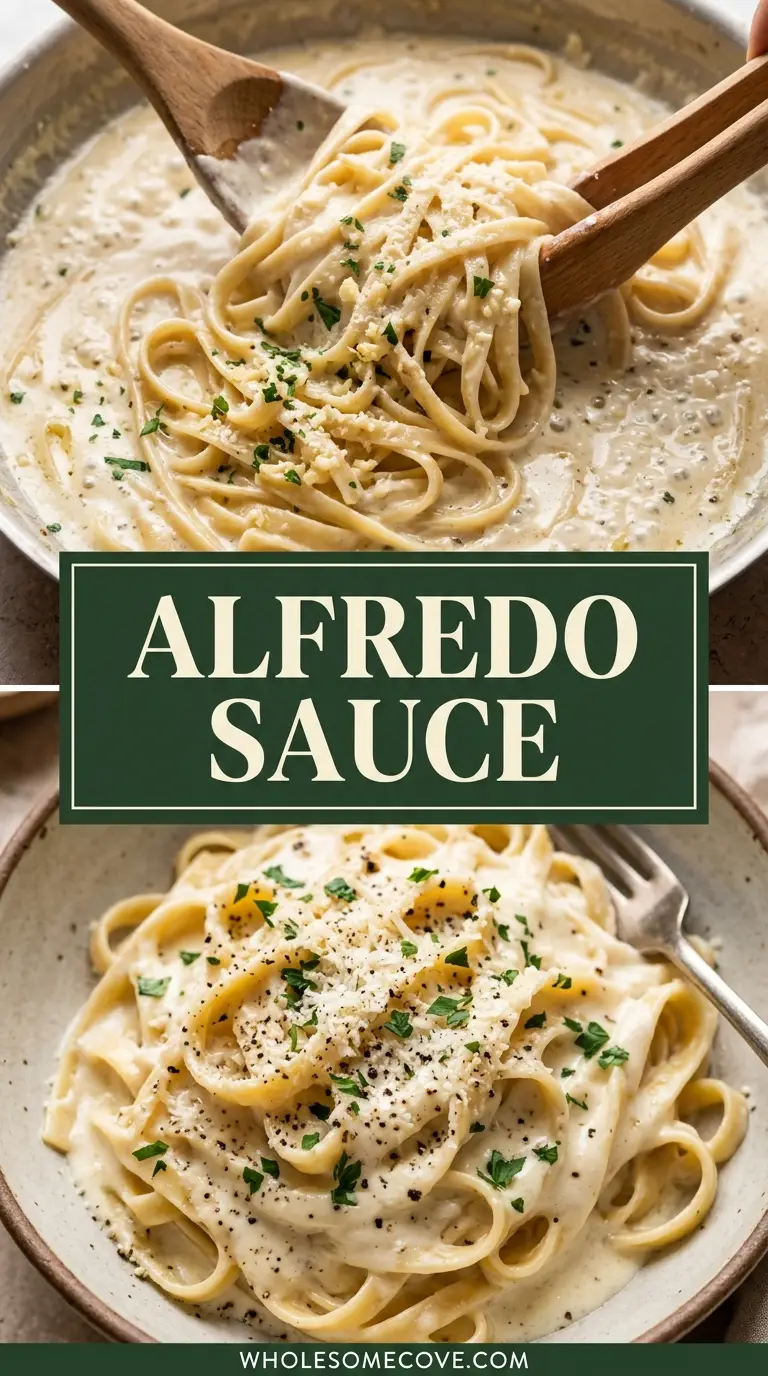
Tips for The Best Alfredo Sauce
With so few ingredients, small technique choices decide if the sauce turns out silky or split. These are the details that matter most.
- Grate the cheese yourself. Pre-shredded Parmesan carries anti-caking agents that keep it from melting cleanly into the cream.
- Choose real Parmigiano-Reggiano when you can. Domestic Parmesan works, but it is usually milder and wetter, so the sauce tastes flatter.
- Keep the cream below a boil. I ruined my first batch by letting the cream boil hard while I finished grating, and the butter slicked across the surface and never blended back in.
- Add the cheese gradually. Dumping it all in at once drops the temperature and forms a rubbery clump at the bottom of the pan.
- Salt at the end. The Parmesan is salty enough that seasoning early almost always overshoots.
- Loosen with pasta water instead of milk. Pasta water works better than milk here because its starch helps the sauce cling to each noodle.
- Pull the pasta 1 minute early. It keeps cooking when you toss it with the hot sauce, so slightly firm noodles finish perfectly.
- Warm the bowls. A 1-minute rinse with hot tap water keeps the sauce from tightening the moment it hits the bowl.
- Rescue a greasy sauce quickly. If the butterfat starts to pool, pull the pan off the heat and whisk in 1 tablespoon of warm cream or pasta water until it smooths out.
- Weigh the cheese. A scale gives 125 g every time, while a measuring cup can vary depending on how finely you grate.
- Serve right away. This sauce thickens within minutes, so plate it as soon as it is tossed.
Read Also: Cheese Sauce Recipe
What to Make with Alfredo Sauce
This sauce is a base rather than a finished dish, so it shows up in far more than a bowl of pasta. Fettuccine is the classic partner, but the sauce also works in bakes, over proteins, and on pizza.
- Fettuccine Alfredo: The classic version, made exactly as written above.
- Chicken Alfredo: Stir sliced or cubed cooked chicken breast into the finished pasta.
- Baked Chicken with Alfredo Sauce: Spoon the sauce over chicken breasts for the last few minutes in the oven.
- Shrimp Alfredo: Sear 1 pound (450 g) of peeled shrimp for 2 minutes per side, then fold them into the pasta and sauce.
- Stuffed Shells: Spread a layer of sauce in the baking dish and spoon more over the filled shells.
- Baked Ziti: Swap the marinara for Alfredo to make a white baked ziti with mozzarella on top.
- Lasagna: Use the sauce in place of béchamel between the noodle layers for a white lasagna.
- Alfredo pizza: Spread about 1/3 cup of thick sauce over pizza dough in place of tomato sauce, then add mozzarella and chicken.
- Broccoli Alfredo: Add small broccoli florets to the pasta water for the last 3 minutes of cooking, then toss everything together.
- Gnocchi with Alfredo: Pan-sear store-bought gnocchi until golden, then coat them in the sauce.
Sun-dried tomatoes and cream show up together in Marry Me Chicken Pasta Recipe.
Variations of Easy Alfredo Sauce
The base sauce takes well to small changes. Make each of these on top of the original recipe and adjust the seasoning after tasting.
- Cream cheese Alfredo: Replace 1/2 cup (120 ml) of the cream with 4 ounces (115 g) of softened cream cheese, whisked in until melted, for a thicker and slightly tangier sauce.
- Lighter Alfredo: Whisk 1 tablespoon of all-purpose flour into the melted butter and cook for 1 minute, then use 1 1/2 cups (360 ml) of half-and-half in place of the cream.
- Extra garlic Alfredo: Double the garlic to 6 cloves and keep the cooking time the same.
- Lemon Alfredo: Stir in the zest of 1 lemon and 1 teaspoon of lemon juice after the cheese melts to cut through the richness.
- Spicy Alfredo: Add 1/4 teaspoon of red pepper flakes to the butter along with the garlic.
- Mushroom Alfredo: Brown 8 ounces (225 g) of sliced mushrooms in the butter until golden, then add the garlic and continue as written.
- Spinach Alfredo: Stir 2 cups of baby spinach into the finished sauce until it wilts, about 1 minute.
- Pecorino Alfredo: Replace half the Parmigiano-Reggiano with Pecorino Romano for a sharper flavor, and leave out the added salt.
- Rosé Alfredo: Whisk 1/2 cup (120 ml) of marinara into the finished sauce for a pink, tomato-tinged version.
Another white sauce to try: Bechamel Sauce Recipe
Storage and Reheating
Alfredo is best the day it is made, but leftovers hold up well if you cool and store them correctly. Reheating gently is what keeps the sauce from splitting.
- Refrigerator: Cool the sauce within 2 hours, then store it in an airtight container for up to 3 to 4 days.
- Texture: The sauce will turn very thick and almost solid when cold, which is normal.
- Stovetop reheating: Warm the sauce in a saucepan over low heat, whisking in 1 tablespoon of milk or cream at a time until it loosens, about 3 to 5 minutes.
- Microwave reheating: Heat in 30-second bursts at 50 percent power, stirring between each one, and add a splash of milk if it looks thick.
- Leftover pasta and sauce together: Warm them in a skillet over low heat with a splash of milk, tossing gently until hot.
- Freezing: Freezing is not recommended, because the butterfat and cheese separate as the sauce thaws.
- Fixing a split sauce: Take it off the heat and whisk in 1 to 2 tablespoons of warm cream until it comes back together.
- Make-ahead: Grate the Parmesan up to 3 days ahead and keep it in an airtight container in the refrigerator.
Baked pasta dishes such as Creamy Mac and Cheese Recipe also reheat best with a splash of milk.
Nutritional Facts
These values are estimates for the sauce only, based on 4 servings of about 2/3 cup each. Fettuccine adds roughly 400 calories per serving when you use 4 ounces (115 g) of dry pasta.
| Nutrition per Serving (Sauce Only) | |
|---|---|
| Calories | 650 kcal |
| Total Fat | 64 g |
| Saturated Fat | 40 g |
| Carbohydrates | 4 g |
| Fiber | 0 g |
| Sugar | 3 g |
| Protein | 14 g |
| Cholesterol | 210 mg |
| Sodium | 700 mg |
| Calcium | 440 mg |
Read Also: Best Pasta Sauce Recipes
Tips for Using Easy Alfredo Sauce Like a Pro
Once the sauce is made, how you use it matters as much as how you cook it. These are the adjustments that make it work across different dishes.
- Match the pasta to the sauce. Flat, wide noodles like fettuccine, tagliatelle, and pappardelle hold the sauce best, while rigatoni and penne trap it inside their ridges and tubes.
- Use the right amount. Plan on about 1/2 to 2/3 cup of sauce per 4 ounces (115 g) of dry pasta, and scale the batch up or down from there.
- Thin it for baked dishes. Pasta soaks up liquid in the oven, so stir 1/4 cup (60 ml) of milk into the sauce before baking and cover the dish with foil for the first half of the bake.
- Keep it thick for pizza. Simmer the sauce for 2 extra minutes so it spreads without running off the crust.
- Hold it warm without scorching. Set the saucepan on the lowest heat or in a larger pan of hot water, and stir every few minutes until you are ready to serve.
- Finish with acid or pepper. A few drops of lemon juice or a generous turn of black pepper right before serving brightens a sauce this rich.
- Balance the richness on the plate. Serve it next to something bitter or sharp, such as an arugula salad dressed with lemon, or roasted broccoli.
- Scale up carefully. When you double the batch, use a wider pan and add 1 to 2 extra minutes of simmering time so the cream reduces to the same thickness.
- Fix thin sauce without flour. Simmer another 2 to 3 minutes on low, or whisk in one more small handful of grated cheese.
- Fix thick sauce with warm liquid. Add warm milk or pasta water 1 tablespoon at a time, because cold liquid can make the sauce seize.
More sauce ideas: Best Sauce Recipes
FAQs About Easy Alfredo Sauce
1. Is Alfredo sauce the same as white sauce?
No, the two are built differently.
Alfredo is an emulsion of butter, cream, and Parmesan, while white sauce is milk thickened with a flour and butter roux.
Béchamel suits baked casseroles, and Alfredo suits pasta tossed in the pan.
2. Why is my Alfredo sauce grainy?
Grainy sauce almost always traces back to the cheese or the heat. Pre-shredded Parmesan resists melting, and a sauce held at a hard boil tightens the cheese proteins into clumps.
Grate a fresh block, keep the heat low, and add the cheese a handful at a time.
To rescue a grainy batch, remove it from the heat and use an immersion blender for about 20 seconds.
3. How do I thicken Alfredo sauce?
Simmer it over low heat for another 2 to 3 minutes, stirring often. The sauce also tightens on its own as it cools, so stop when it coats the back of a spoon.
Stirring in another small handful of grated Parmesan also adds body.
Avoid thickening with flour unless you build a roux first, since raw flour leaves a pasty taste.
4. Can I make Alfredo sauce without heavy cream?
Yes, but the texture changes.
Half-and-half works if you whisk 1 tablespoon of flour into the melted butter first, and softened cream cheese plus milk gives a thicker, tangier result.
Milk on its own gives a thin sauce without an added thickener.
5. Can you freeze Alfredo sauce?
Freezing is not recommended. The butterfat and cheese separate as the sauce thaws, leaving it grainy and greasy.
Leftovers keep better in the refrigerator for 3 to 4 days.
If you do freeze it, thaw it overnight in the refrigerator and rewarm it slowly while whisking in a little warm cream.
6. How much Alfredo sauce do I need for 1 pound of pasta?
This recipe makes about 2 1/2 cups, which coats 1 pound (450 g) of dried fettuccine well.
Use about 1/2 to 2/3 cup per 4 ounces (115 g) of dry pasta if you are scaling up or down.
7. What can I use instead of Parmesan?
Grana Padano is the closest substitute and melts almost identically. Pecorino Romano also works, but it is saltier and sharper, so skip the added salt.
Whichever cheese you choose, grate it fresh from a block.
A tangier tomato-and-cream sauce is Vodka Sauce Recipe.
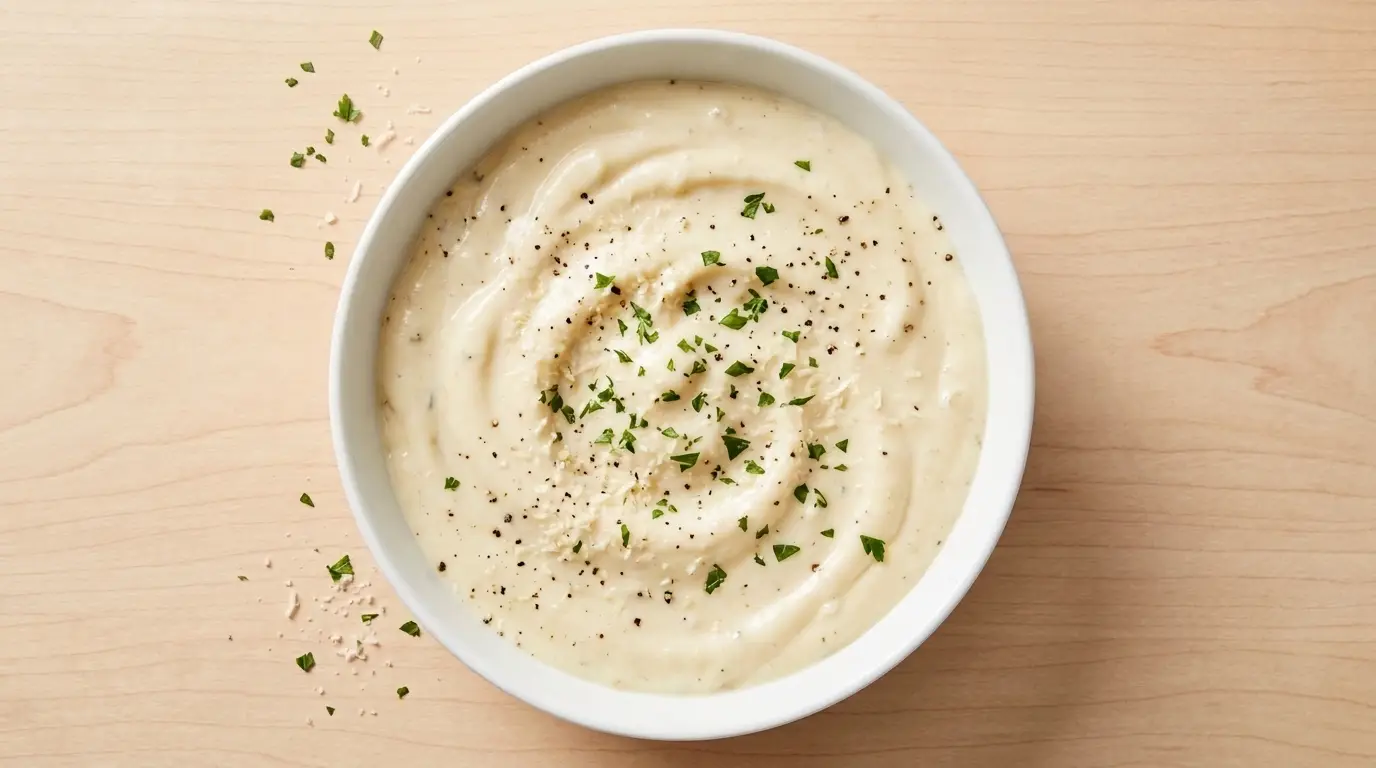
Easy Alfredo Sauce
Ingredients
- 1/2 cup unsalted butter - 115 g
- 3 cloves garlic - minced; about 1 tablespoon or 9 g
- 1 1/2 cups heavy cream - 360 ml
- 1 1/2 cups Parmigiano-Reggiano - about 125 g, finely grated, from a 4.5-ounce (125 g) block, plus extra for serving
- 1/4 teaspoon kosher salt - plus more to taste
- 1/4 teaspoon black pepper - freshly ground
- 1/8 teaspoon nutmeg - freshly grated or ground, optional
- 2 tablespoons fresh parsley - 8 g, finely chopped, for garnish
- 1 pound fettuccine - 450 g
- 4 quarts water - 4 L
- 1 tablespoon kosher salt - about 15 g, for the pasta water
- 1/2 cup reserved pasta water - 120 ml, scooped out before draining
Equipment
- Medium stainless steel saucepan - 3 quarts (2.8 L), for the sauce
- Large stockpot - 6 quarts (5.7 L) or larger, for boiling and tossing the pasta
- Microplane grater - for the Parmesan
- Balloon whisk - to keep the cream and cheese moving
- Pasta tongs - for tossing the fettuccine in the sauce
- Colander - for draining the pasta
- Digital kitchen scale - for weighing the butter, cheese, and pasta
- Airtight glass storage containers - for leftovers
- Heatproof liquid measuring cup - for scooping out pasta water
- Chef’s knife and cutting board - for the garlic and parsley
- Four warmed pasta bowls - for serving
Method
- Fill a large stockpot with 4 quarts (4 L) of water, stir in 1 tablespoon of kosher salt, cover, and set over high heat. Grate the Parmigiano-Reggiano, mince the garlic, chop the parsley, and measure the cream.
- When the water boils, add the fettuccine and stir for the first 30 seconds. Cook for 1 minute less than the package directions, usually 9 to 11 minutes.
- Set a medium saucepan over medium-low heat and melt the unsalted butter completely, 1 to 2 minutes, swirling the pan once or twice. Keep it from browning.
- Add the minced garlic and stir constantly for 30 to 60 seconds, just until fragrant. Do not let the garlic take on color.
- Pour in the heavy cream slowly while whisking, then raise the heat to medium. When small bubbles appear at the edge, lower the heat to low and simmer gently for 5 minutes, whisking often, until the cream thickens slightly.
- With the heat on low, add the grated cheese a small handful at a time, whisking until each addition melts. Stir in the black pepper and optional nutmeg, then taste and add salt only if needed. Turn off the heat and cover.
- About 1 minute before the pasta is done, scoop 1/2 cup (120 ml) of the starchy pasta water into a heatproof measuring cup. Drain the fettuccine in a colander without rinsing.
- Return the drained fettuccine to the empty stockpot off the heat and pour the sauce over it. Toss with tongs for about 1 minute, adding reserved pasta water 1 tablespoon at a time until the sauce turns glossy and loose.
- Divide the pasta among four warmed bowls. Sprinkle each with chopped parsley, extra grated Parmesan, and a few turns of black pepper, then serve right away.
Nutrition
Notes
- Grate the cheese yourself: pre-shredded Parmesan carries anti-caking agents that keep it from melting cleanly into the cream.
- Choose real Parmigiano-Reggiano when you can; domestic Parmesan is usually milder and wetter, so the sauce tastes flatter.
- Keep the cream below a boil. If it boils hard, the butter can slick across the surface and never blend back in.
- Add the cheese gradually; dumping it all in at once drops the temperature and forms a rubbery clump.
- Salt at the end, since the Parmesan is salty enough that seasoning early almost always overshoots.
- Loosen with pasta water instead of milk—its starch helps the sauce cling to each noodle.
- Pull the pasta 1 minute early; it keeps cooking when tossed with the hot sauce.
- Rescue a greasy sauce by pulling the pan off the heat and whisking in 1 tablespoon of warm cream or pasta water.
- Storage: cool within 2 hours and refrigerate in an airtight container for up to 3 to 4 days. Reheat gently over low heat with a splash of milk or cream.
- Freezing is not recommended because the butterfat and cheese separate as the sauce thaws.
- Make-ahead: grate the Parmesan up to 3 days ahead and keep it in an airtight container in the refrigerator.
Private Notes
Tried this recipe?
Let us know how it was!Final Thoughts
Once you have made Alfredo from scratch, the jar stops making sense. Four main ingredients and about 12 minutes at the stove is all it takes.
Grate the cheese fresh, keep the heat low, and the sauce will come out silky every time.
Try it with your favorite pasta, then leave a comment and tell me how it turned out. If you share the recipe with a friend, I would love to hear what they paired it with.
Recommended:
- Chicken Parmesan Recipe
- Healthy Chicken Parmesan Recipe
- Carbonara Recipe
- Cacio e Pepe Recipe
- Pesto Recipe
- Marinara Sauce Recipe
- Tomato Sauce Recipe
- Creamy Avocado Pasta Recipe
- Chicken Spaghetti Recipe