I stumbled upon the magic of zucchini noodles quite by accident during a particularly hectic week when I’d run out of pasta but had a fridge full of zucchini from my neighbor’s garden.
That desperate dinner experiment turned into one of my most-requested meals, and now these Zucchini Noodles with Pesto and Shrimp Bowls are my go-to whenever I want something that feels indulgent but keeps me energized. The best part is how quickly everything comes together, and I love that I can have this gorgeous bowl on the table faster than ordering takeout.
| Quick Recipe Summary | |
|---|---|
| Prep Time | 15 minutes |
| Cook Time | 8 minutes |
| Total Time | 23 minutes |
| Servings | 4 bowls |
| Difficulty Level | Easy |

Why You’ll Love This Zucchini Noodles with Pesto and Shrimp Bowls Recipe
This dish has become my weeknight hero for so many reasons. The flavors are bright and fresh, with that herbaceous pesto coating every strand of zucchini noodle, while the shrimp adds a satisfying protein punch that keeps you full for hours.
I love how adaptable this recipe is to whatever’s happening in my life. On busy evenings, I use store-bought pesto and pre-spiralized zucchini, and dinner is ready in under 15 minutes.
Here’s what makes this bowl so special:
- Lightning-fast preparation: From start to finish, you’re looking at about 23 minutes, and most of that is hands-off cooking time
- Naturally low-carb and gluten-free: Perfect for anyone watching their carb intake or dealing with dietary restrictions, without sacrificing flavor or satisfaction
- Packed with vegetables: Each bowl contains at least two medium zucchini worth of vegetables, which means you’re getting tons of nutrients without even thinking about it
- Customizable to your taste: Love things spicy? Add red pepper flakes. Want it creamier? Stir in some ricotta. The base recipe is endlessly adaptable.
- Meal prep friendly: The components store beautifully separately, so you can make a big batch on Sunday and assemble fresh bowls all week long
- Restaurant-quality presentation: These bowls look so impressive that guests always assume I spent hours in the kitchen
Another favorite of mine that comes together just as quickly is this sweet potato and black bean bowls recipe.
Ingredients
This recipe relies on simple, fresh ingredients that let each component shine. I’ve learned through trial and error that quality matters here, especially with the shrimp and pesto.
For the Zucchini Noodles:
- 4 medium zucchini (about 2 lbs or 900g), spiralized
- 1 tablespoon olive oil
- Salt and pepper to taste
For the Shrimp:
- 1.5 lbs (680g) large raw shrimp, peeled and deveined
- 2 tablespoons olive oil
- 3 cloves garlic, minced
- 1 teaspoon lemon zest
- 2 tablespoons fresh lemon juice
- 1/2 teaspoon salt
- 1/4 teaspoon black pepper
- 1/4 teaspoon red pepper flakes (optional)
For the Pesto:
- 2 cups fresh basil leaves, packed
- 1/2 cup pine nuts (or walnuts as a budget-friendly alternative)
- 3 cloves garlic
- 1/2 cup Parmesan cheese, freshly grated
- 1/2 cup extra virgin olive oil
- 2 tablespoons fresh lemon juice
- Salt and pepper to taste
For Serving:
- Cherry tomatoes, halved
- Extra Parmesan cheese, shaved
- Fresh basil leaves
- Lemon wedges
Kitchen Equipment Needed
Having the right tools makes this recipe infinitely easier. I resisted getting a spiralizer for years, thinking it was just another kitchen gadget that would collect dust, but it’s honestly transformed how I cook vegetables.
Here’s what you’ll need:
- Spiralizer: Essential for creating those beautiful zucchini noodles; both handheld and countertop models work great
- Large skillet or sauté pan: I prefer a 12-inch (30cm) pan to give the shrimp plenty of room to cook evenly without steaming
- Food processor or blender: For making the pesto; a food processor gives you better control over the texture
- Colander: To drain excess moisture from the zucchini noodles after spiralizing
- Clean kitchen towels or paper towels: Crucial for removing moisture from the zucchini
- Sharp chef’s knife: For mincing garlic and chopping herbs
- Cutting board: Preferably a large one with a groove to catch any juices
- Measuring cups and spoons: For precise ingredient measurements
- Large mixing bowls: At least two medium to large bowls for tossing the noodles with pesto and holding prepped ingredients
- Tongs: For easily tossing the zucchini noodles and flipping the shrimp
For something equally delicious with similar equipment needs, I highly recommend my lemon garlic shrimp over couscous.
Recommended Products for This Recipe
After making this dish countless times, I’ve found a few products that genuinely make a difference in the final result.
1. OXO Good Grips Spiralizer
This countertop spiralizer is sturdy, creates consistent noodles, and has suction feet that actually stay put on your counter. I used to struggle with handheld spiralizers that would slip around, and this one changed everything. The different blade options also let you vary the thickness of your noodles depending on your mood.
2. Wild-Caught Gulf Shrimp
The quality of your shrimp matters tremendously in this recipe since it’s such a prominent component. Wild-caught shrimp have a firmer texture and sweeter flavor than farm-raised varieties. I look for 16-20 count shrimp, which are large enough to stay juicy but cook quickly.
3. Italian Pine Nuts
Traditional pesto calls for pine nuts, and while they’re pricey, they give the sauce that authentic buttery, subtle flavor that’s hard to replicate. These Italian-sourced pine nuts are less bitter than cheaper varieties and make your pesto taste restaurant-quality.
4. Parmigiano Reggiano DOP
Real Parmigiano Reggiano makes a world of difference in pesto. The aged, nutty complexity you get from authentic Italian parmesan can’t be matched by pre-grated cheese in a plastic container. Buy a wedge and grate it fresh for the best flavor.

Step-by-Step Instructions: How to Make Zucchini Noodles with Pesto and Shrimp Bowls
I’ve broken this down into super detailed steps because I remember how intimidated I felt the first time I tried to spiralize zucchini. Trust me, once you get the hang of it, this becomes second nature.
1. Prepare the Zucchini Noodles
- Wash the zucchini thoroughly under cold running water and pat them completely dry with a clean kitchen towel, as any moisture will make your noodles soggy later.
- Trim off both ends of each zucchini, cutting about 1/2 inch (1.3cm) from the top and bottom to create flat, stable surfaces.
- Spiralize each zucchini using your spiralizer according to the manufacturer’s directions, creating long, spaghetti-like strands that should pile up beautifully in your bowl.
- Place all the spiralized zucchini in a colander set over a bowl and sprinkle with 1 teaspoon of salt, tossing gently to distribute the salt evenly throughout the noodles.
- Let the salted zucchini sit for 10-15 minutes to allow the salt to draw out excess moisture, which is the key to preventing watery bowls later.
- After the resting period, gently squeeze handfuls of zucchini noodles over the sink to remove as much liquid as possible, then spread them out on clean kitchen towels or several layers of paper towels and pat them thoroughly dry.
2. Make the Fresh Basil Pesto
- Toast the pine nuts in a dry skillet over medium heat for 3-4 minutes, stirring constantly, until they’re fragrant and just beginning to turn golden at the edges, being careful not to burn them as they can go from perfect to bitter in seconds.
- Transfer the toasted pine nuts to your food processor along with the fresh basil leaves, making sure the basil is thoroughly washed and dried to prevent watery pesto.
- Add the garlic cloves, freshly grated Parmesan cheese, lemon juice, and a generous pinch of salt and pepper to the food processor.
- Pulse the mixture 8-10 times until everything is roughly chopped and well combined, scraping down the sides of the bowl as needed to ensure even processing.
- With the food processor running, slowly drizzle in the olive oil through the feed tube in a steady stream, allowing it to emulsify with the other ingredients and create a smooth, creamy sauce.
- Taste the pesto and adjust seasoning with additional salt, pepper, or lemon juice as needed, keeping in mind that it should taste slightly more intense than you want the final dish since it will be diluted by the zucchini and shrimp.
- Transfer the pesto to a bowl and press plastic wrap directly onto the surface to prevent oxidation and browning, then set aside until ready to use.
3. Cook the Shrimp
- Pat the shrimp completely dry with paper towels, as any moisture on their surface will prevent them from getting that beautiful golden sear we’re looking for.
- In a small bowl, combine the minced garlic, lemon zest, lemon juice, salt, black pepper, and red pepper flakes if using, whisking them together to create a simple marinade.
- Toss the dried shrimp with the marinade mixture, making sure each piece is evenly coated, then let them sit at room temperature for 5 minutes while you heat your pan.
- Heat 2 tablespoons of olive oil in your large skillet over medium-high heat until it shimmers and easily slides across the pan, which should take about 2 minutes.
- Add the marinated shrimp to the hot pan in a single layer, making sure not to overcrowd them, working in batches if necessary to avoid steaming instead of searing.
- Cook the shrimp for 2-3 minutes on the first side without moving them, allowing them to develop a beautiful golden-pink color and slight caramelization.
- Flip each shrimp using tongs and cook for another 1-2 minutes on the second side until they’re just cooked through and opaque in the center, remembering that they’ll continue cooking slightly from residual heat after you remove them from the pan.
- Transfer the cooked shrimp to a plate and tent loosely with foil to keep warm while you quickly sauté the zucchini noodles.
4. Sauté the Zucchini Noodles
- Using the same skillet you cooked the shrimp in (don’t wash it, those flavorful browned bits are delicious), add 1 tablespoon of olive oil over medium heat.
- Once the oil is heated, add the dried zucchini noodles to the pan, tossing them gently with tongs to coat them evenly in the oil.
- Sauté the zucchini noodles for just 2-3 minutes, tossing frequently, until they’re slightly softened but still have a pleasant al dente bite and haven’t released too much additional moisture.
- Remove the pan from heat immediately, as overcooking zucchini noodles will make them mushy and watery, which is one of the most common mistakes people make with this dish.
5. Assemble the Bowls
- Add about three-quarters of the prepared pesto to the warm zucchini noodles in the skillet, tossing thoroughly with tongs until every strand is evenly coated in that gorgeous green sauce.
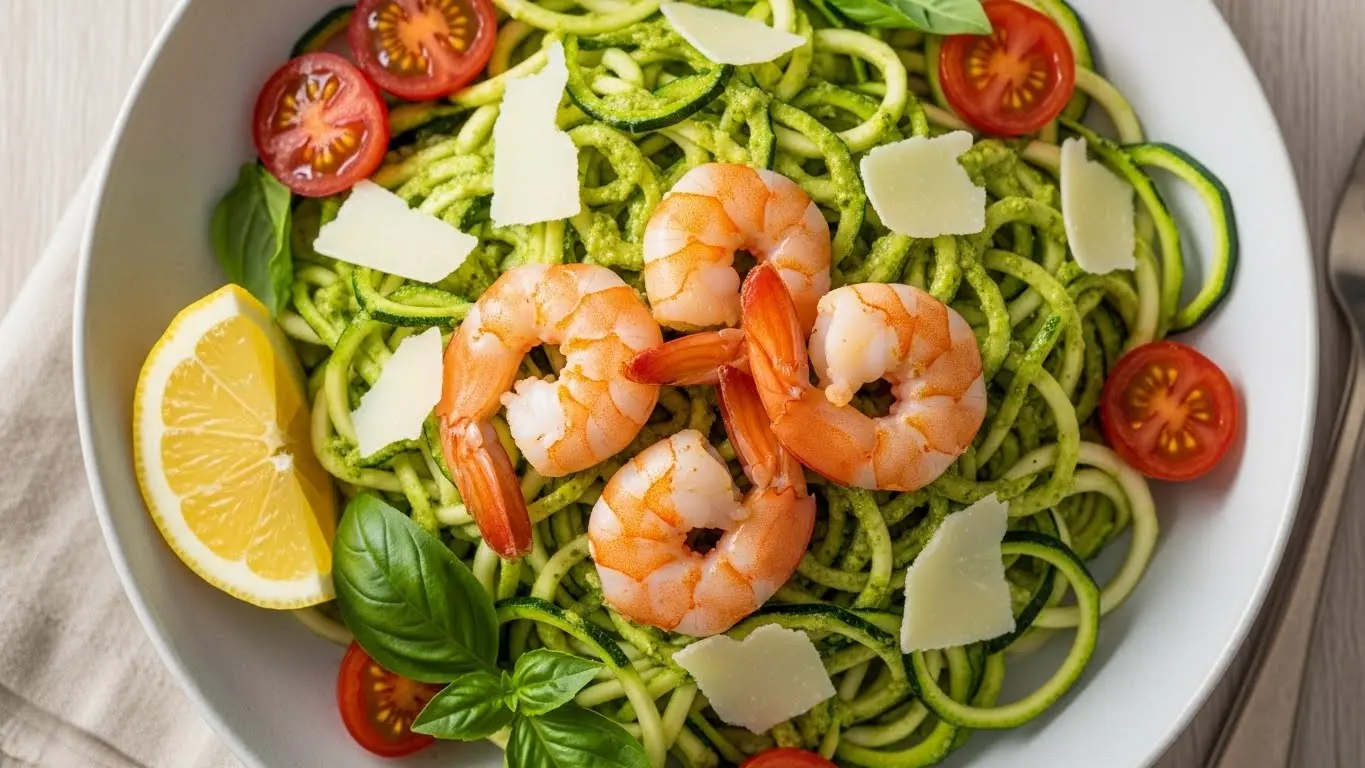
- Divide the pesto-coated zucchini noodles among four serving bowls, twirling them with tongs as you transfer them to create an attractive nest shape in each bowl.
- Arrange the cooked shrimp on top of the zucchini noodles in each bowl, distributing them evenly so everyone gets an equal amount of that beautiful protein.
- Drizzle the remaining pesto over the shrimp and noodles for extra flavor and visual appeal, creating attractive drizzle patterns if you’re feeling fancy.
- Garnish each bowl with halved cherry tomatoes, fresh basil leaves, shaved Parmesan cheese, and a lemon wedge on the side for squeezing over the top just before eating.
- Serve immediately while everything is still warm and the zucchini noodles haven’t had time to release additional moisture onto the plate.
Tips for The Best Zucchini Noodles with Pesto and Shrimp Bowls
I’ve made this recipe at least fifty times, and these tips come from all the lessons I learned along the way, including a few disasters that taught me what NOT to do.
Here are my tried-and-true secrets for perfect bowls every time:
- Remove excess moisture from zucchini: This is the single most important step. Salting and thoroughly drying your zucchini noodles prevents that sad pool of water that can accumulate at the bottom of your bowl. I can’t stress this enough.
- Don’t overcook the zucchini: Zucchini noodles only need 2-3 minutes of cooking to become tender. Any longer and they turn to mush. I set a timer now because I used to overcook them constantly.
- Use fresh, high-quality shrimp: Frozen shrimp are fine, but make sure they’re properly thawed and thoroughly dried before cooking. The difference in flavor between fresh wild-caught shrimp and old freezer-burned shrimp is dramatic.
- Make your pesto in advance: Pesto actually tastes better after sitting for an hour or two as the flavors meld together. I often make a double batch on Sunday and use it throughout the week.
- Don’t skip the lemon: The bright acidity from lemon juice in both the pesto and the shrimp marinade is what keeps this dish from feeling heavy, despite the oil content.
- Toast your nuts: Whether you’re using pine nuts or walnuts, toasting them first amplifies their flavor exponentially and adds a deeper, nuttier dimension to your pesto.
- Add the pesto to hot noodles off heat: If you toss the pesto with the noodles while the pan is still on the burner, the pesto can break and become oily. Remove from heat first.
- Use room temperature ingredients for pesto: Cold basil and cold olive oil don’t emulsify as well in the food processor, resulting in a grainier, less smooth sauce.
- Adjust pesto consistency with pasta water or extra oil: If your pesto seems too thick, add a tablespoon of reserved pasta cooking water or additional olive oil to loosen it up to your desired consistency.
- Serve immediately: These bowls are best enjoyed right away, as the zucchini noodles will continue to release moisture the longer they sit.
You might also enjoy: Mediterranean quinoa salad with grilled chicken
Serving Suggestions
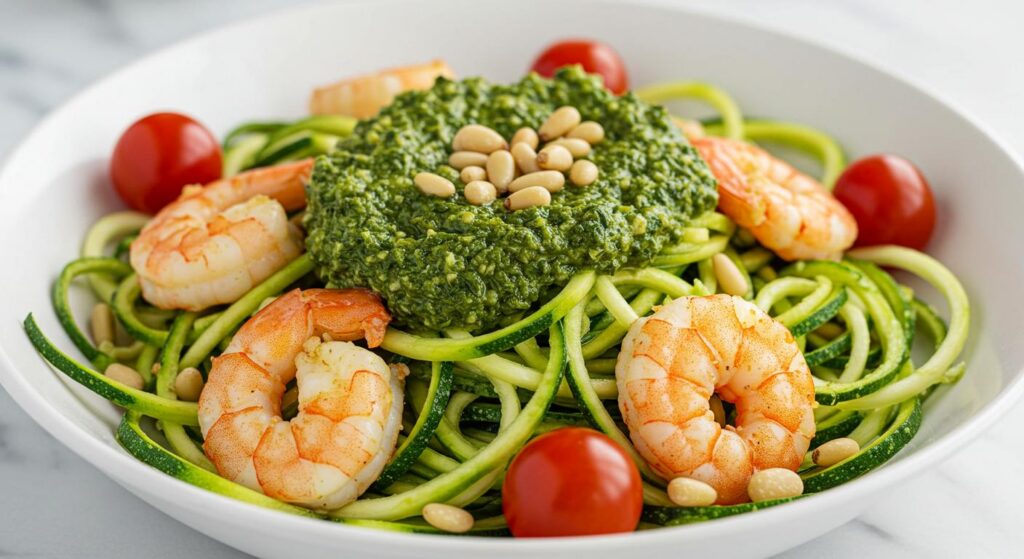
These zucchini noodle bowls are incredibly versatile and can be served in so many different ways depending on the occasion and your mood. I love how they work for everything from quick weeknight dinners to impressive weekend entertaining.
Here’s how I like to serve them:
For a Complete Meal:
- Pair with crusty garlic bread or my homemade biscuits for something heartier
- Serve alongside a simple arugula salad with lemon vinaigrette to add more greens
- Add a bowl of roasted butternut squash soup for a cozy, satisfying dinner spread
Fresh Additions:
- Top with additional cherry tomatoes, sliced avocado, or grilled vegetables for extra nutrition and color
- Sprinkle with toasted pine nuts or slivered almonds for additional crunch and texture
- Add a dollop of ricotta or burrata cheese for extra creaminess and protein
Lighter Options:
- Serve the bowls over a bed of mixed greens instead of alone for an even more vegetable-forward meal
- Pair with my watermelon feta salad with mint for a refreshing summer combination
- Accompany with grilled vegetable skewers for a complete garden-fresh feast
Beverage Pairings:
- A crisp Pinot Grigio or Sauvignon Blanc complements the basil and lemon flavors beautifully
- For non-alcoholic options, try sparkling water with fresh lemon and basil or iced green tea
- A light rosé also works wonderfully with the shrimp and herb combinations
Variations of Zucchini Noodles with Pesto and Shrimp Bowls
One of the things I love most about this recipe is how adaptable it is to different dietary needs, taste preferences, and whatever ingredients you happen to have on hand. I’ve played around with countless variations over the years.
Try these delicious twists:
- Protein swaps: Replace shrimp with grilled chicken breast, seared scallops, baked salmon, or crispy tofu for vegetarian eaters. I’ve even made this with leftover rotisserie chicken when I needed dinner in a flash.
- Different nut pestos: Make your pesto with walnuts, almonds, or cashews instead of pine nuts. Each gives a slightly different flavor profile, and they’re all delicious. Walnuts are my budget-friendly go-to.
- Dairy-free version: Use nutritional yeast instead of Parmesan in the pesto for a vegan-friendly option that still has that umami, cheesy flavor. You can also add a tablespoon of white miso paste for extra depth.
- Spicy version: Double the red pepper flakes in the shrimp marinade, add fresh sliced jalapeños to the bowls, or swirl in some calabrian chili paste with the pesto for serious heat.
- Creamy pesto: Stir 2-3 tablespoons of heavy cream, Greek yogurt, or cashew cream into the pesto for a richer, more indulgent sauce that coats the noodles even better.
- Sun-dried tomato pesto: Replace half the basil with sun-dried tomatoes packed in oil for a deeper, more intense tomato flavor that pairs amazingly with the shrimp.
- Arugula pesto: Swap out the basil for peppery arugula or use a combination of both for a more robust, slightly spicy pesto that adds great contrast.
- Add vegetables: Toss in sautéed mushrooms, roasted red peppers, blanched asparagus, or wilted spinach for even more vegetables and nutrients in your bowl.
- Asian-inspired twist: Replace the pesto with a sesame-ginger sauce made from tahini, soy sauce, rice vinegar, honey, and fresh ginger for a completely different but equally delicious flavor profile.
- Lemon herb variation: Skip the pesto entirely and toss the zucchini noodles with lemon juice, olive oil, fresh herbs (parsley, dill, chives), and plenty of garlic for a lighter, brighter version.
Read Also: Cauliflower Fried Rice With Tofu Recipe
Storage and Reheating
These bowls are best enjoyed fresh, but life happens, and sometimes you need to meal prep or store leftovers. Here’s what I’ve learned about keeping this dish as delicious as possible when making it ahead.
Follow these storage guidelines for best results:
- Store components separately: This is crucial. Keep the cooked shrimp, pesto, and zucchini noodles in separate airtight containers in the refrigerator to prevent the noodles from becoming waterlogged.
- Zucchini noodles: Store raw, spiralized, and thoroughly dried zucchini noodles in an airtight container lined with paper towels for up to 3 days. Change the paper towels daily as they absorb moisture.
- Cooked shrimp: Keep cooked shrimp in an airtight container in the refrigerator for up to 3 days. They’re also delicious served cold or at room temperature.
- Pesto: Store pesto in a small container with plastic wrap pressed directly onto the surface to prevent browning, then cover with a lid. It will keep for up to 5 days in the refrigerator.
- Freezing pesto: Pesto freezes beautifully for up to 3 months. I pour it into ice cube trays, freeze until solid, then transfer the cubes to a freezer bag for easy portioning.
- Don’t freeze zucchini noodles: Unfortunately, zucchini noodles don’t freeze well at all. They become mushy and release tons of water when thawed, so it’s best to spiralize fresh as needed.
- Reheating instructions: If you must reheat, warm the shrimp gently in a skillet over low heat for 1-2 minutes. For the zucchini noodles, either eat them cold (which is actually quite refreshing) or give them a very brief 30-second toss in a hot pan.
- Meal prep strategy: My preferred method is to prep all components on Sunday, store them separately, then quickly assemble and warm individual bowls throughout the week for the freshest results.
- Leftover pesto uses: If you have extra pesto, use it as a sandwich spread, pizza sauce, salad dressing base, or stir it into scrambled eggs for a flavor boost.
Nutritional Facts
These zucchini noodle bowls are not only delicious but also incredibly nutritious, packing a serious punch of vitamins, minerals, and lean protein without the heavy carb load of traditional pasta. Each serving (1 bowl) contains approximately:
- Calories: 385
- Protein: 28g
- Carbohydrates: 12g
- Dietary Fiber: 3g
- Net Carbs: 9g
- Total Fat: 27g
- Saturated Fat: 5g
- Cholesterol: 220mg
- Sodium: 680mg
- Potassium: 780mg
- Vitamin A: 18% DV
- Vitamin C: 68% DV
- Calcium: 22% DV
- Iron: 15% DV
Note: Nutritional values are approximate and will vary based on specific ingredients used and portion sizes. These calculations are based on the full recipe divided into 4 equal servings.
Another favorite of mine is this tofu and veggie stir fry with brown rice.
Health Benefits of Key Ingredients
Every component of these bowls brings something valuable to the table nutritionally, which is why I feel so good about serving this to my family multiple times a month. This isn’t just delicious food, it’s genuinely nourishing.
Here’s what makes this dish so nutritious:
Zucchini:
- Extremely low in calories but high in essential nutrients, making it perfect for weight management without sacrificing nutrition
- Rich in antioxidants including vitamin C, beta-carotene, and lutein that support eye health and immune function
- Contains significant amounts of potassium, which helps regulate blood pressure and supports heart health
- High water content keeps you hydrated and helps with digestive regularity
Shrimp:
- Excellent source of complete protein containing all nine essential amino acids your body needs
- Low in calories and fat, especially saturated fat, while being incredibly filling and satisfying
- Rich in selenium, which supports thyroid function and acts as a powerful antioxidant protecting cells from damage
- Contains astaxanthin, a potent antioxidant that gives shrimp their pink color and provides anti-inflammatory benefits
- Good source of omega-3 fatty acids that support brain health and reduce inflammation throughout the body
Fresh Basil:
- Packed with vitamin K, which is essential for blood clotting and bone health
- Contains powerful anti-inflammatory compounds including eugenol, which can help reduce inflammation and fight bacterial growth
- Rich in antioxidants that protect your cells from free radical damage and may help prevent chronic diseases
- May help reduce stress and anxiety through its adaptogenic properties
Garlic:
- Contains allicin, a compound with powerful medicinal properties including antibacterial and antiviral effects
- May help lower blood pressure and improve cholesterol levels, supporting overall cardiovascular health
- Supports immune system function, helping your body fight off infections and illness
- Has anti-inflammatory properties that can help reduce chronic inflammation in the body
Extra Virgin Olive Oil:
- Heart-healthy monounsaturated fats that can help reduce bad cholesterol levels while maintaining good cholesterol
- High in antioxidants and anti-inflammatory compounds that protect against chronic diseases
- May help reduce the risk of stroke and heart disease when used regularly as part of a healthy diet
- Supports brain health and may help protect against age-related cognitive decline
FAQs About Zucchini Noodles with Pesto and Shrimp Bowls
1. Can I use store-bought pesto instead of making it from scratch?
Absolutely, and there’s no shame in that. I use store-bought pesto when I’m crunched for time, and the recipe still turns out delicious. Just look for high-quality pesto with recognizable ingredients and adjust the seasoning to your taste, as some brands can be quite salty or lack that fresh basil brightness.
2. How do I prevent my zucchini noodles from getting watery?
The key is removing as much moisture as possible before cooking. Salt your spiralized zucchini and let it sit for 10-15 minutes, then squeeze out the liquid and pat dry thoroughly with towels. Cook the noodles briefly over high heat and serve immediately, as they’ll continue releasing moisture the longer they sit.
3. Can I make this recipe ahead of time for meal prep?
Yes, but store all the components separately. Keep the cooked shrimp, prepared pesto, and dried raw zucchini noodles in separate airtight containers in the fridge. When you’re ready to eat, quickly sauté the zucchini noodles, warm the shrimp, and toss everything together fresh.
4. What’s the best substitute for shrimp in this recipe?
Grilled chicken breast, seared scallops, or baked salmon all work beautifully with the pesto and zucchini noodles. For a vegetarian version, I love using crispy pan-fried tofu or white beans for protein. The cooking method stays basically the same regardless of which protein you choose.
5. My pesto turned out bitter. What went wrong?
Bitter pesto usually comes from over-processing the basil or using burnt garlic or nuts. Make sure to toast your pine nuts carefully without burning them, use fresh basil that isn’t wilted, and pulse rather than continuously blend your pesto. Adding a bit more lemon juice or Parmesan can also help balance any bitterness.
For another delicious healthy meal option, try my chickpea and spinach curry.
Final Thoughts
These Zucchini Noodles with Pesto and Shrimp Bowls have earned their place in my regular dinner rotation, and I think they’ll do the same for you. The combination of fresh, vibrant flavors with the satisfying protein from the shrimp creates a meal that feels indulgent without being heavy.
I love how this recipe proves that healthy eating doesn’t have to be boring or feel like a sacrifice. Give these bowls a try, and I’d love to hear how they turn out for you! Drop a comment below with your variations or any questions you might have about making this dish.
Recommended:
- Baked Cod With Mango Salsa Recipe
- Grilled Chicken and Veggie Skewers Recipe
- Lentil and Vegetable Soup Recipe
- Eggplant Parmesan With Zucchini Recipe
- Beef and Broccoli Stir Fry Recipe
- Turkey and Quinoa Stuffed Peppers Recipe
- Healthy Homemade Pesto Recipe
- Air Fryer Salmon Recipe
- Pork and Apple Skillet Recipe
- Kale and Sweet Potato Soup Recipe