Every fall, when those tiny crab apples start dropping from my neighbor’s tree, I used to just sweep them away without a second thought. Then one year, my grandmother handed me her handwritten Crab Apple Jelly Recipe, and everything changed.
I was skeptical at first. Could something so small and tart really make delicious jelly?
My first batch was a disaster. I didn’t strain the mixture long enough, and the jelly turned cloudy. But I learned from that mistake, and now this recipe has become my favorite fall tradition.
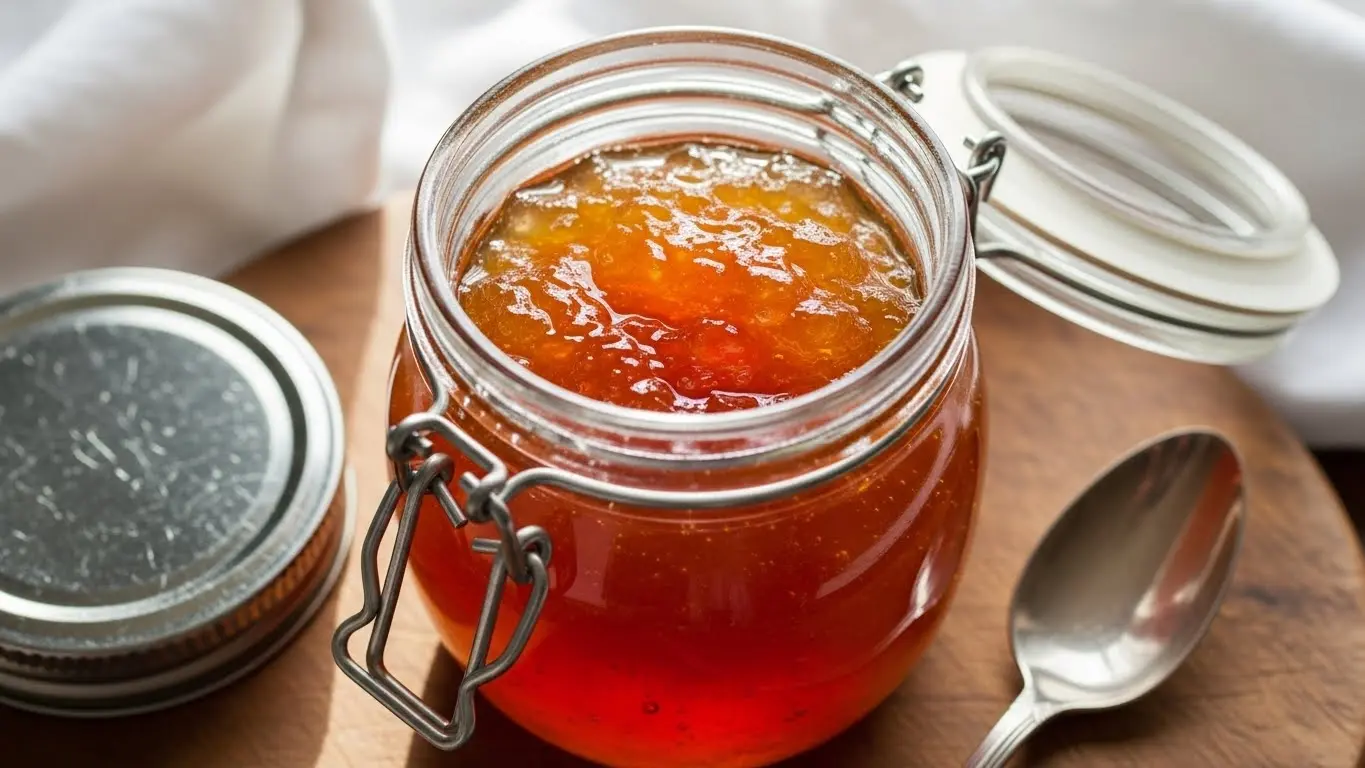
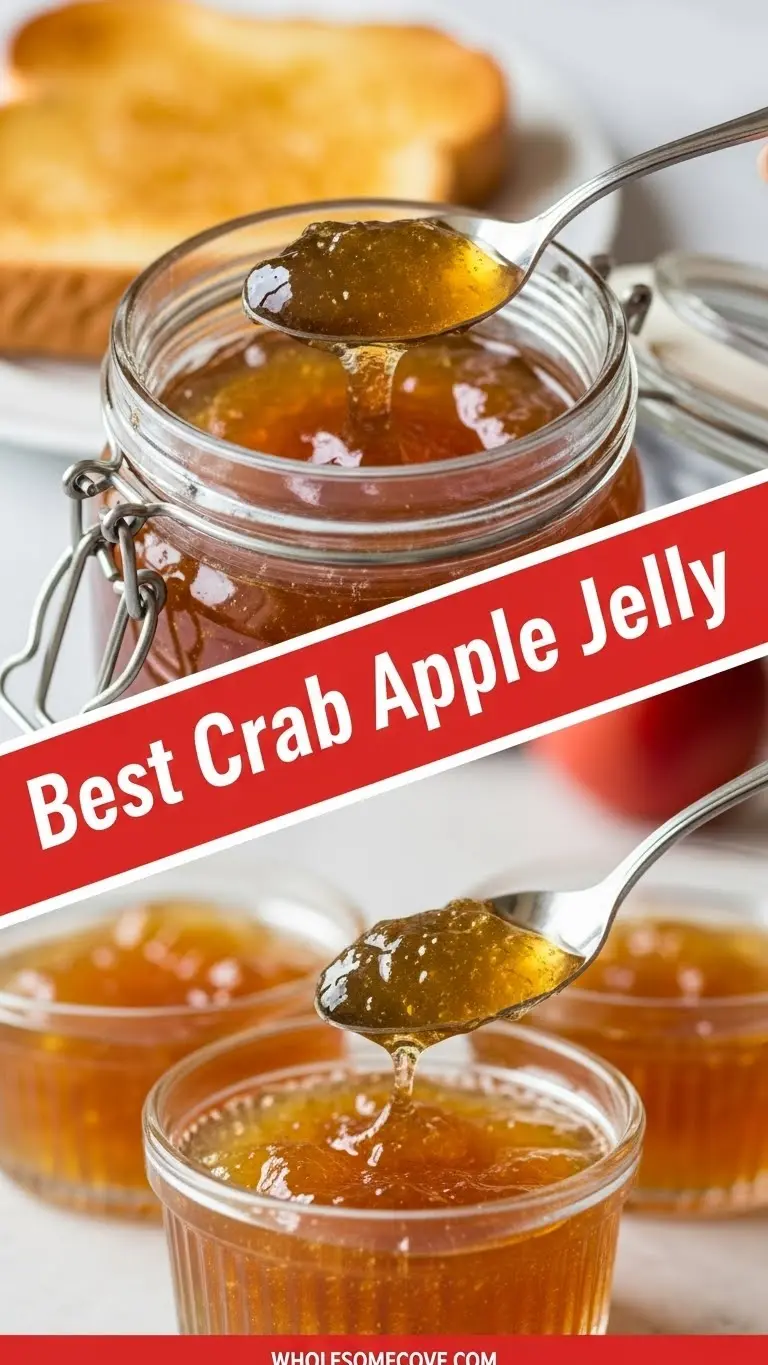
This jewel-toned jelly captures autumn in a jar. The natural pectin in crab apples means you don’t need store-bought pectin, and the flavor is far superior to anything you’ll find at the grocery store.
| Quick Recipe Summary | |
|---|---|
| Prep Time | 30 minutes |
| Cook Time | 45 minutes |
| Total Time | 1 hour 15 minutes (plus overnight straining) |
| Servings | 6-8 half-pint jars |
| Difficulty Level | Intermediate |
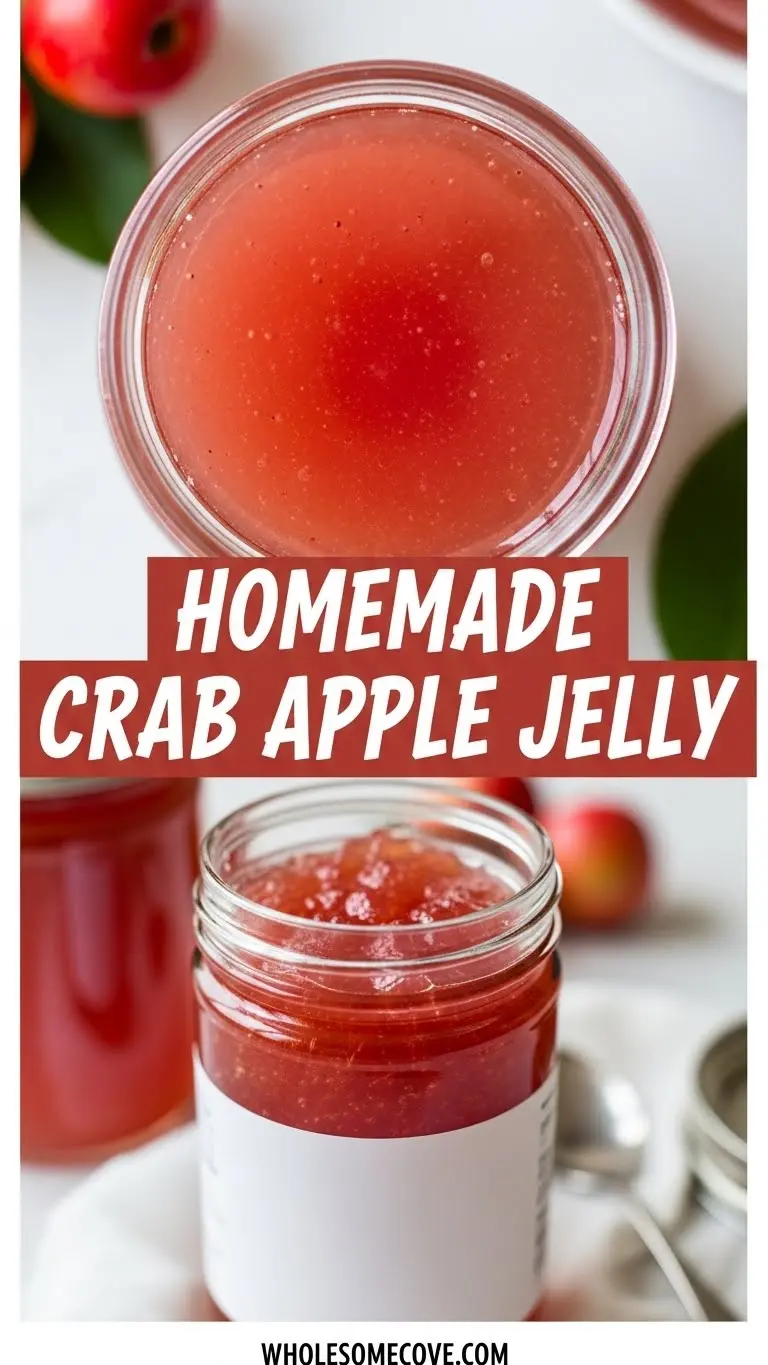
Why You’ll Love This Crab Apple Jelly Recipe
This isn’t your average preserve recipe. Crab apples contain more natural pectin than regular apples, which means your jelly sets beautifully without any artificial additives.
The flavor is complex and balanced. It has a tartness that cuts through the sweetness, making it perfect for both sweet and savory applications.
Here’s what makes this recipe special:
- Natural pectin: No need for store-bought pectin or additives
- Gorgeous color: The jelly turns a beautiful amber or rosy hue depending on your crab apple variety
- Versatile uses: Perfect on toast, paired with cheese, or glazed on meats
- Cost-effective: Uses fruit that often goes to waste
- Gift-worthy: Homemade jars make thoughtful presents
- Long shelf life: Properly canned jelly lasts up to a year
If you’re looking for more fall preserves, try my cranberry sauce recipe for another seasonal favorite.
Ingredients
This recipe keeps things simple, letting the crab apples shine. The beauty of crab apple jelly is that it requires minimal ingredients while delivering maximum flavor.
- 4 lbs (1.8 kg) crab apples: Choose firm, ripe apples without bruises
- 4 cups (950 ml) water: For extracting the juice
- 3-4 cups (600-800g) granulated sugar: The exact amount depends on your juice yield (use ¾ cup sugar per 1 cup juice)
- 2 tablespoons (30 ml) fresh lemon juice: Helps with pectin activation and adds brightness
- Optional: 1 cinnamon stick or 2-3 whole cloves: For spiced variation
Kitchen Equipment Needed
Having the right tools makes the jelly-making process much smoother. I learned this the hard way after my first attempt with inadequate equipment resulted in burned fingers and a messy kitchen.
- Large stockpot (8-quart): For cooking the crab apples
- Jelly bag or cheesecloth: Essential for straining the juice
- Large bowl: To collect the strained juice
- Candy thermometer: For checking the gel point
- Water bath canner or large pot with rack: For processing jars
- Half-pint canning jars with lids and bands: 6-8 jars needed
- Wooden spoon: For stirring
- Ladle: For filling jars
- Jar lifter: Safety first when handling hot jars
- Funnel: Makes jar filling cleaner
- Potato masher: For crushing the apples
Recommended Products for This Recipe
After making countless batches of crab apple jelly, these are the products that have genuinely improved my results and made the process more enjoyable.
1. Norpro Jelly Strainer Stand with Bag
This stand changed everything for me. Before I had it, I was trying to rig up makeshift straining systems with upturned stools and string. This professional strainer bag allows the juice to drip naturally overnight without any squeezing, which keeps your jelly crystal clear. The sturdy stand holds everything securely, and the fine mesh bag catches all the pulp while letting pure juice flow through.
2. Ball Complete Canning Kit
If you’re new to canning, this kit includes everything you need: jar lifter, funnel, bubble remover, and more. I wish I’d bought this when I first started instead of assembling tools piecemeal. The jar lifter alone has saved me from countless near-burns, and having dedicated canning tools keeps everything organized.
3. Polder Candy and Deep Fry Thermometer
The gel point for jelly is precise, 220°F (104°C), and guessing doesn’t work. This thermometer clips onto your pot and gives you an accurate reading so you know exactly when your jelly is ready. It has saved me from both undercooked runny jelly and overcooked rubber.
4. Granite Ware Water Bath Canner
This is the workhorse of my canning setup. It’s large enough to process seven jars at once, comes with a jar rack that keeps your jars from touching the bottom, and the enamel coating makes cleanup easy. Proper water bath canning ensures your jelly is shelf-stable and safe to store.
5. Organic Cane Sugar
Since jelly is primarily fruit and sugar, the quality of your sugar matters. I’ve found that organic cane sugar gives a cleaner, purer sweetness that doesn’t compete with the delicate crab apple flavor. It dissolves beautifully and creates that perfect jewel-like clarity in the finished jelly.
Another favorite: apple crisp recipe is perfect for using those regular-sized apples.
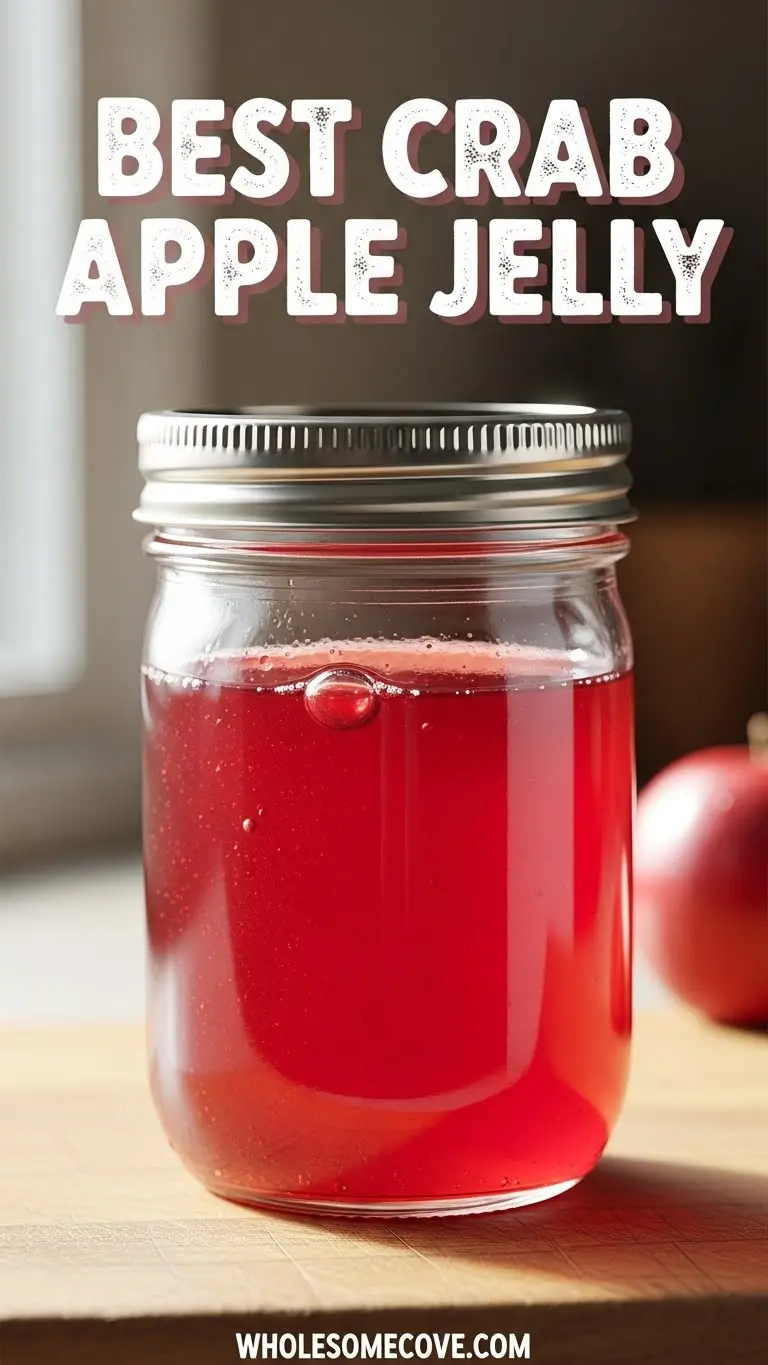
Step-by-Step Instructions: How to Make Crab Apple Jelly
Follow these detailed steps for perfect, crystal-clear jelly every time. Don’t rush the process, especially the straining step.
1. Prepare the Crab Apples
- Rinse the crab apples thoroughly under cold running water to remove any dirt, leaves, or debris
- Remove any stems and leaves, but leave the apples whole (don’t core or peel them)
- Cut out any obviously damaged or bruised spots, but otherwise keep them intact
- The skins, cores, and seeds contain pectin, so you want to keep everything
- Place the cleaned crab apples in your large stockpot
2. Cook the Crab Apples
- Add 4 cups of water to the pot with the crab apples
- Bring the mixture to a boil over high heat, then reduce to medium-low
- Simmer uncovered for 30-40 minutes, stirring occasionally
- Use a potato masher to crush the apples as they soften, breaking them down to release more juice
- The apples should be completely soft and mushy when done
- The water will turn a beautiful pinkish or amber color depending on your apple variety
3. Strain the Juice Overnight
- Line a colander with several layers of cheesecloth or set up your jelly bag over a large bowl
- Carefully pour the hot apple mixture into the strainer
- Do not squeeze or press the fruit (this makes cloudy jelly)
- Let the juice drip naturally for at least 8 hours or overnight at room temperature
- You should end up with 4-5 cups of clear, gorgeous juice
- Discard the pulp or compost it
You might also enjoy: homemade cinnamon applesauce recipe
4. Prepare Your Canning Equipment
- Wash jars, lids, and bands in hot soapy water and rinse well
- Place jars in your water bath canner or large pot and cover with water
- Bring to a simmer (180°F/82°C) and keep hot until ready to fill
- Place lids in a small saucepan with water and heat to 180°F (don’t boil)
- Keep everything hot until you’re ready to fill the jars
5. Cook the Jelly
- Measure your strained crab apple juice (you should have 4-5 cups)
- Pour the juice into a large, clean pot
- Add ¾ cup of sugar for every 1 cup of juice (so 3 cups sugar for 4 cups juice)
- Add the lemon juice
- Stir constantly over medium-high heat until the sugar completely dissolves
- Bring the mixture to a hard boil that cannot be stirred down
- Continue boiling, stirring frequently, until the mixture reaches 220°F (104°C) on your candy thermometer
- This usually takes 15-20 minutes from when it starts boiling
6. Test for Gel Point
- Once your thermometer reads 220°F (104°C), do a gel test to be sure
- Place a small plate in the freezer for a few minutes to chill
- Drop a small spoonful of jelly onto the cold plate
- Let it sit for 30 seconds, then push it with your finger
- If it wrinkles and holds its shape, it’s ready
- If it’s still liquid, continue cooking and test again in 2-3 minutes
Read Also: Apple Pie Recipe
7. Fill and Process the Jars
- Remove the pot from heat and skim off any foam from the surface with a spoon
- Remove hot jars from the canner one at a time using your jar lifter
- Place the funnel in the jar and ladle hot jelly into each jar, leaving ¼ inch headspace
- Wipe the rim of each jar with a clean, damp cloth to remove any drips
- Place a hot lid on each jar and screw on the band until fingertip-tight (don’t overtighten)
- Place filled jars back in the water bath canner, ensuring water covers jars by at least 1 inch
- Bring water to a full rolling boil and process for 10 minutes (adjust for altitude if needed)
- Turn off heat, remove lid, and let jars sit in canner for 5 minutes
- Remove jars and place on a towel-lined counter to cool completely
8. Check Seals and Store
- Let jars cool undisturbed for 12-24 hours
- Check that lids have sealed by pressing the center (it shouldn’t flex up and down)
- Any unsealed jars should be refrigerated and used within 3 weeks
- Label sealed jars with the date and contents
- Store in a cool, dark place for up to 1 year
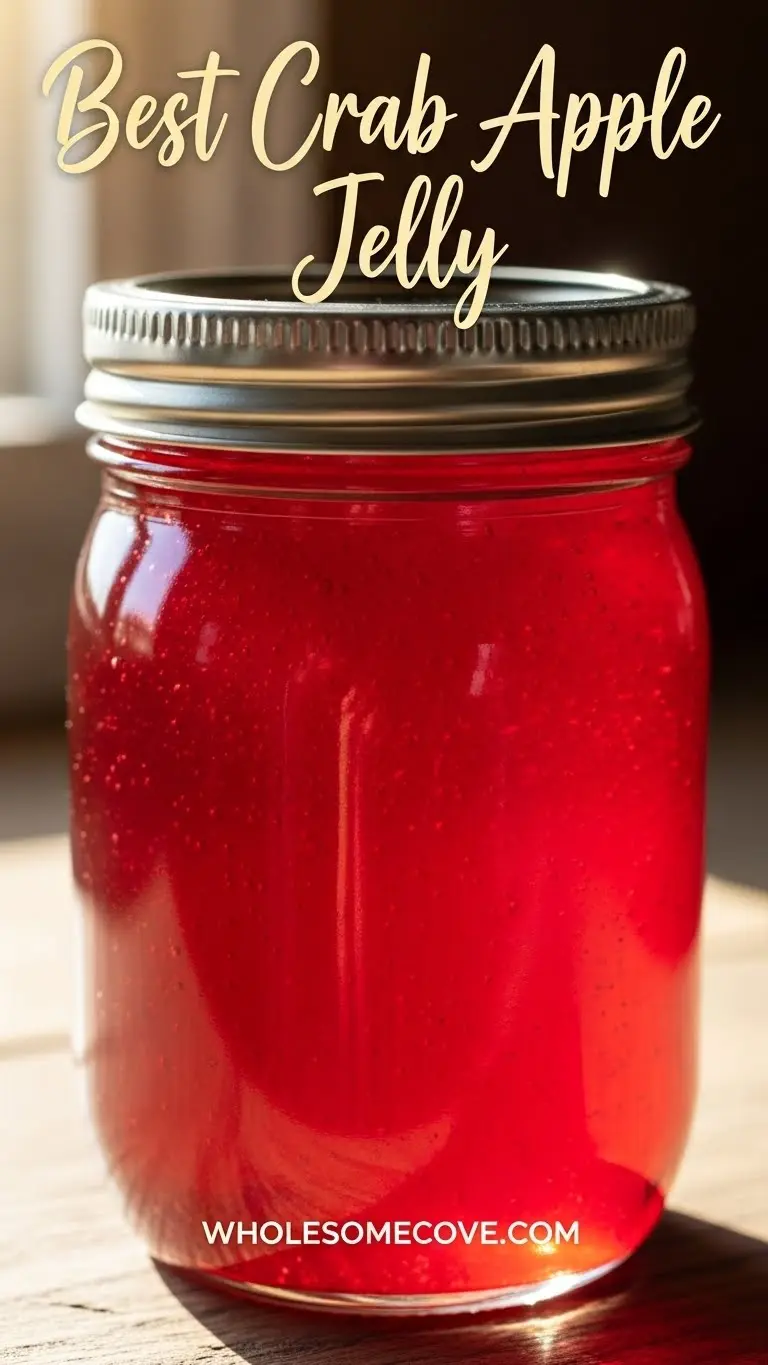
Tips for The Best Crab Apple Jelly
These tips come from years of trial and error, plus some wisdom passed down from my grandmother who made this jelly for five decades.
- Don’t skip the overnight straining: Patience here is crucial for crystal-clear jelly
- Never squeeze the jelly bag: Squeezing extracts cloudy sediment that ruins the appearance
- Use a mix of ripe and slightly underripe apples: This gives you the perfect balance of pectin and flavor
- Watch your thermometer carefully: Even a few degrees over 220°F can make your jelly too thick
- Sterilize everything: Clean equipment prevents spoilage and ensures safe canning
- Remove all foam: That foam on top contains impurities that can make jelly cloudy
- Leave proper headspace: Too much or too little prevents proper sealing
- Don’t double the batch: Jelly recipes are finicky, and larger batches often don’t set properly
- Test the gel point: Don’t rely solely on time, always verify the consistency
- Cool jars undisturbed: Moving them can prevent proper sealing
Another favorite: pumpkin pie recipe is perfect for fall gatherings.
Serving Suggestions
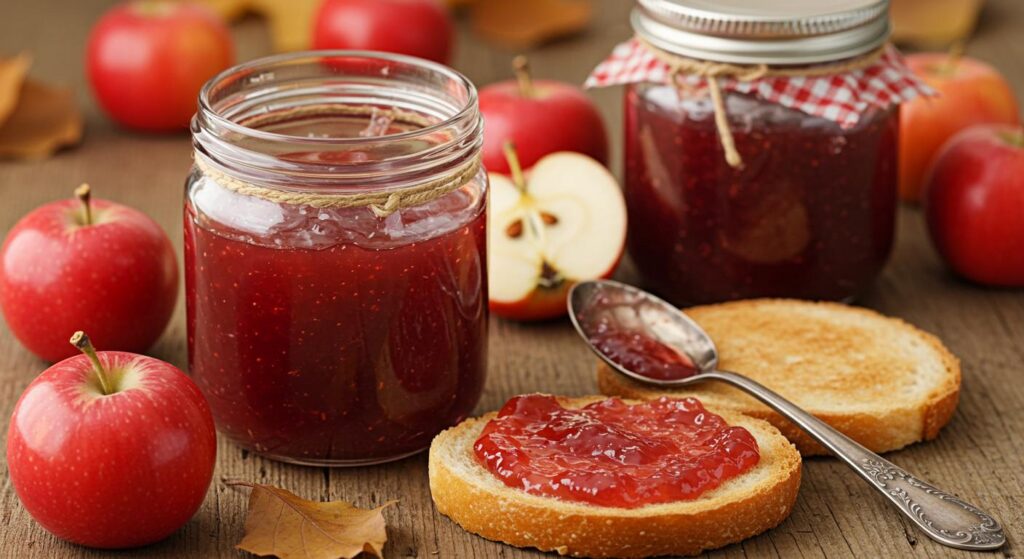
Crab apple jelly is incredibly versatile and works beautifully in both sweet and savory applications. Here are my favorite ways to enjoy it.
This jelly is a natural with breakfast foods. Spread it on warm toast, English muffins, or homemade biscuits. I love it swirled into oatmeal or yogurt for a touch of sweetness.
It’s also fantastic with cheese. The tartness cuts through rich, creamy cheeses beautifully.
Here are more serving ideas:
- Pair with sharp cheddar or brie on a cheese board
- Glaze roasted pork chops or thanksgiving turkey during the last few minutes of cooking
- Stir into plain yogurt with granola for breakfast
- Use as a filling between cake layers
- Serve alongside sausage balls as an appetizer
- Mix with Dijon mustard for a sophisticated sandwich spread
- Dollop on french toast
- Use as a glaze for roasted root vegetables
Variations of Crab Apple Jelly
Once you master the basic recipe, these variations add new dimensions of flavor. Each one transforms the jelly into something entirely different.
- Spiced Crab Apple Jelly: Add 2 cinnamon sticks and 4-5 whole cloves to the apples while they cook, then strain them out with the pulp
- Rose Crab Apple Jelly: Add 2 tablespoons of rose water to the finished jelly just before ladling into jars
- Mint Crab Apple Jelly: Steep ½ cup fresh mint leaves in the hot juice for 15 minutes, then strain before adding sugar
- Ginger Crab Apple Jelly: Add 2 tablespoons grated fresh ginger to the apples during cooking
- Vanilla Crab Apple Jelly: Split a vanilla bean and add it to the juice while cooking, remove before canning
- Hot Pepper Jelly: Add 2-3 seeded and finely minced jalapeños to the juice before cooking
- Apple Pie Jelly: Add 1 teaspoon cinnamon, ½ teaspoon nutmeg, and ¼ teaspoon allspice with the sugar
- Herb-Infused Jelly: Try rosemary, thyme, or sage for savory applications
Read Also: Pecan Pie Recipe
Storage and Reheating
Proper storage ensures your beautiful jelly stays perfect for months. Here’s everything you need to know about keeping it fresh.
- Unopened sealed jars: Store in a cool, dark pantry for up to 12 months
- Opened jars: Refrigerate and use within 3-4 weeks
- Freezer storage: Jelly can be frozen for up to 1 year, thaw in the refrigerator overnight
- Avoid temperature fluctuations: Don’t store near stoves or in direct sunlight
- Check seals regularly: If a lid pops or bulges, discard the jar
- Label everything: Include the date and flavor variation for easy identification
- Store upside down myth: Actually, store jars upright to protect the seal
- Never reprocess: If a jar doesn’t seal, refrigerate it and use within 3 weeks
- Gift packaging: Tie a fabric circle over the lid with ribbon for a beautiful presentation
Nutritional Facts
Per 1 tablespoon (20g) serving:
- Calories: 50
- Total Fat: 0g
- Sodium: 0mg
- Total Carbohydrates: 13g
- Sugars: 12g
- Protein: 0g
- Vitamin C: 2% DV
- Potassium: 1% DV
Note: Nutritional values are approximate and vary based on the exact ratio of fruit to sugar used.
Health Benefits of Key Ingredients
While jelly is primarily a treat, crab apples do offer some nutritional benefits. The fruit itself is packed with antioxidants and vitamin C before processing.
Crab apples contain powerful antioxidants called polyphenols that support heart health and may reduce inflammation. They’re particularly rich in quercetin, which has anti-inflammatory properties.
Additional benefits include:
- High pectin content: Supports digestive health and may help regulate cholesterol
- Vitamin C: Boosts immune function, though some is lost during cooking
- Malic acid: Aids in digestion and energy production
- Low sodium: Makes it suitable for low-sodium diets
- Fat-free: Provides sweetness without added fats
- Antioxidants: Even after cooking, some beneficial compounds remain
You might also enjoy: poached pear recipe
FAQs About Crab Apple Jelly
1. Can I make this jelly without a candy thermometer?
Yes, but it’s trickier to get right. Use the plate test I described in the instructions: put a small plate in the freezer, then drop a spoonful of hot jelly on it. If it wrinkles when you push it after 30 seconds, it’s ready. You can also look for the “sheeting” method where jelly runs off a spoon in a sheet rather than individual drops.
2. Why is my crab apple jelly cloudy?
Cloudy jelly usually results from squeezing the jelly bag during straining, which forces pulp and sediment into the juice. It can also happen if you rushed the straining process or if the mixture boiled too vigorously. While cloudy jelly doesn’t taste different, letting it strain naturally overnight produces that beautiful, clear appearance.
3. What if my jelly doesn’t set properly?
If your jelly is too runny after 24 hours, you can reprocess it. Pour the jelly back into a pot, add 2 tablespoons of lemon juice per 4 cups of jelly, and boil it again to 220°F. Sometimes insufficient cooking time or not enough pectin causes this issue.
4. Can I reduce the sugar in this recipe?
Reducing sugar significantly affects both the set and the preservation of the jelly. Sugar isn’t just for sweetness; it works with pectin to create the gel and acts as a preservative. You can reduce it slightly (by about 10-15%), but expect a softer set and shorter shelf life.
5. How do I know if my crab apples have enough pectin?
Crab apples are naturally very high in pectin, especially when slightly underripe. To test your fruit’s pectin level, mix 1 tablespoon of the cooked juice with 1 tablespoon of rubbing alcohol in a small bowl. If it forms a solid clump, your pectin level is good. If it forms several small clumps, you may need to add commercial pectin.
Read Also: Mulled Apple Cider Recipe
Final Thoughts
Making crab apple jelly from scratch is one of those old-fashioned kitchen projects that connects us to traditions of preserving and self-sufficiency. There’s something deeply satisfying about transforming those tiny, tart fruits into gleaming jars of jewel-toned jelly.
Yes, it takes time and patience, especially that overnight straining process. But when you spread that first spoonful on your morning toast and taste the concentrated essence of autumn, you’ll understand why this recipe has been passed down through generations.
I hope this Crab Apple Jelly Recipe becomes a fall tradition in your kitchen too. If you try it, I’d love to hear how it turns out! Leave a comment below with your results, and don’t hesitate to ask questions if you run into any issues along the way.
Recommended:
- Sweet Potato Casserole Recipe
- Dinner Rolls Recipe
- Green Bean Casserole Recipe
- Mashed Potatoes Recipe
- Pumpkin Bar Recipe
- Coconut Cream Pie Recipe
- Maple Glazed Carrots Recipe
- Honey Butter Recipe
- Fall Muffin Recipes
- Roasted Brussels Sprouts with Bacon Recipe