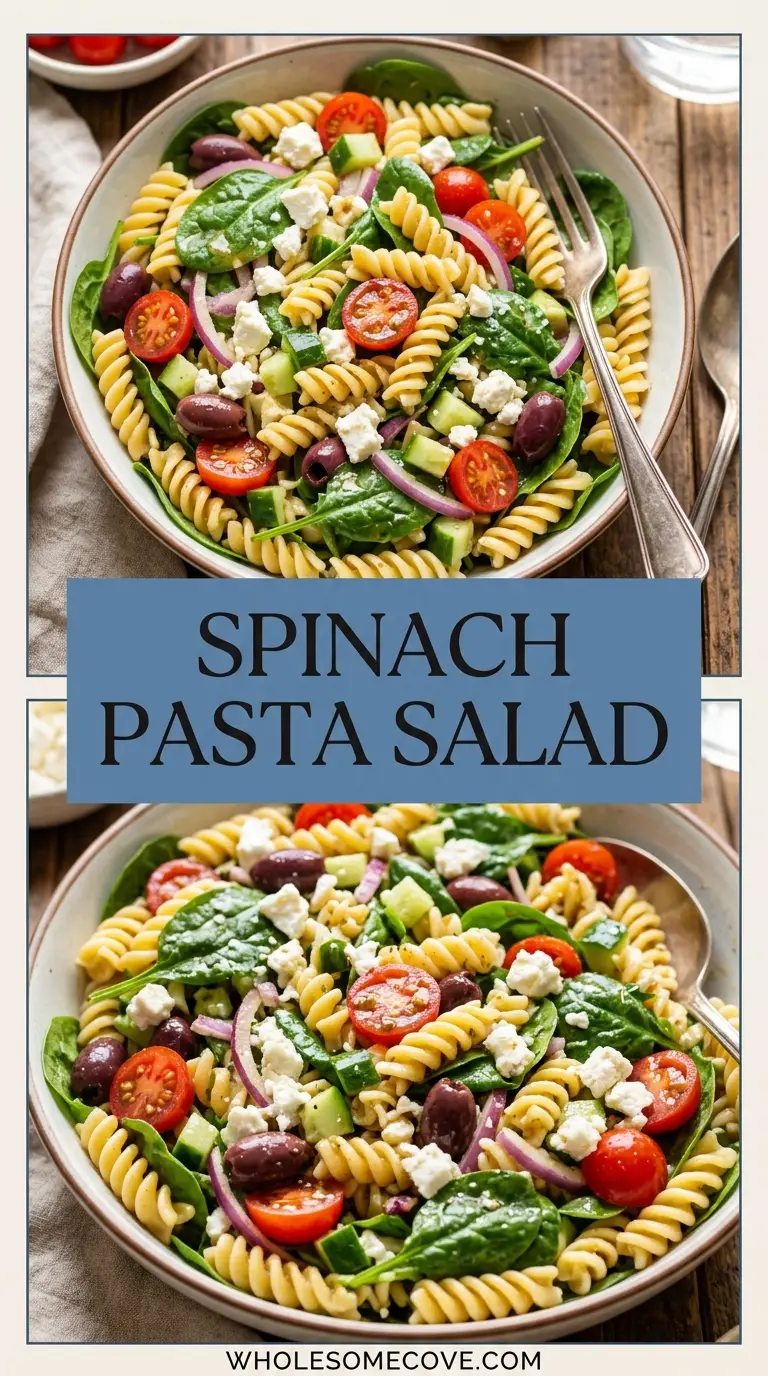
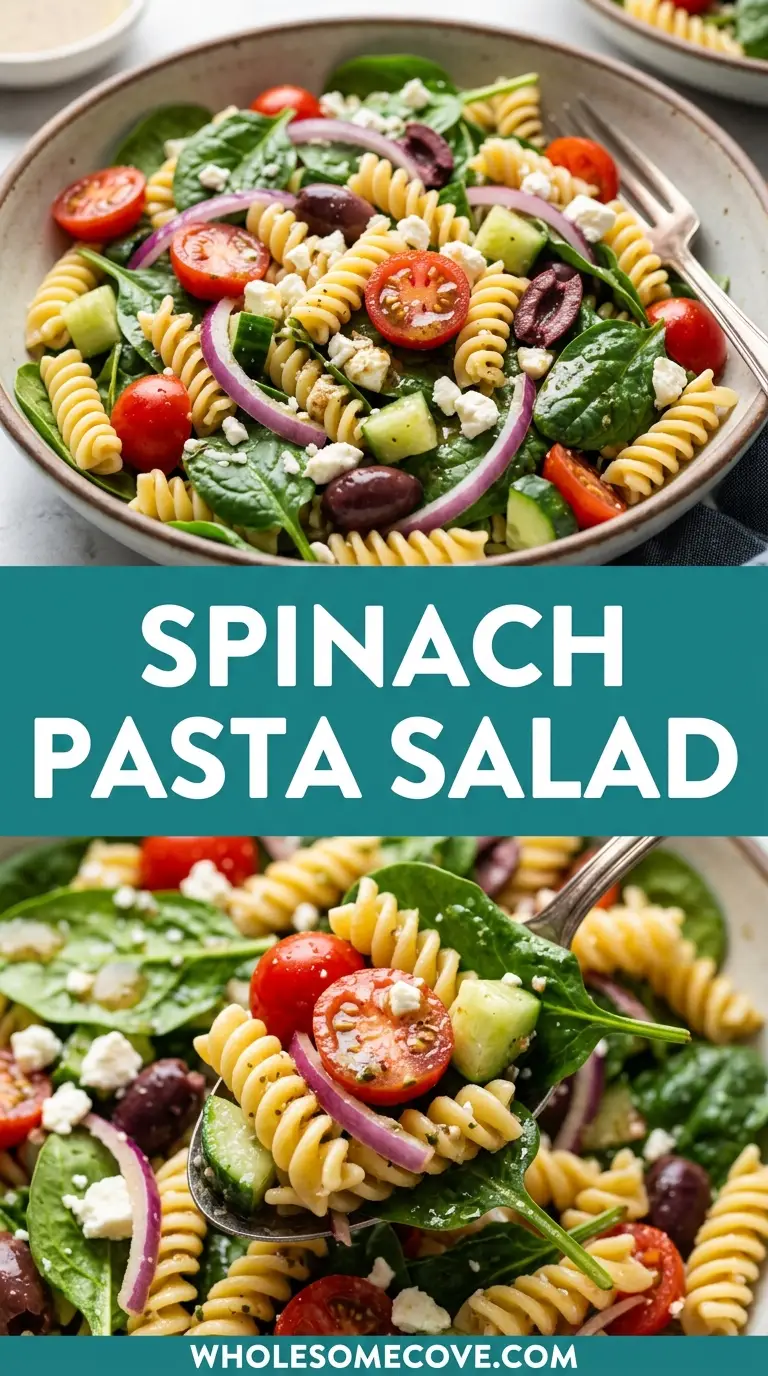
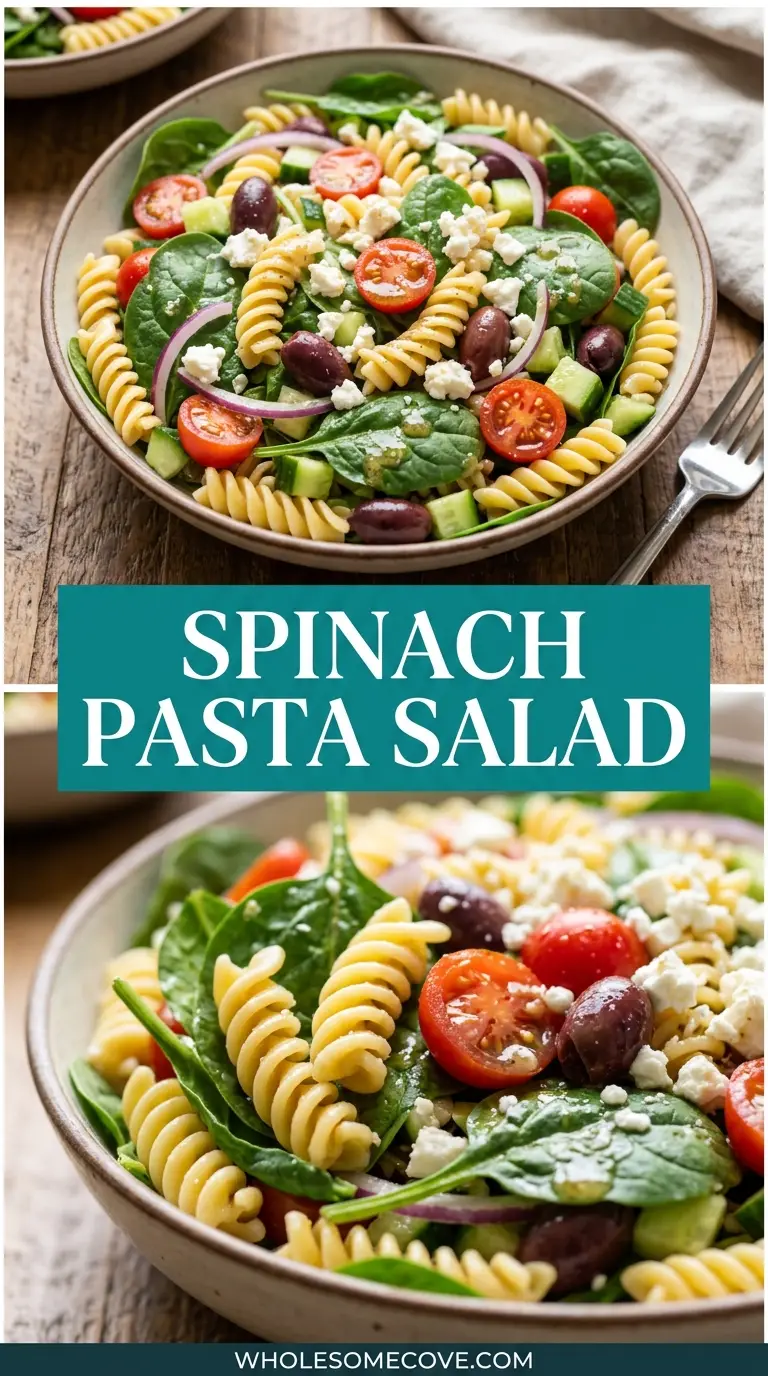
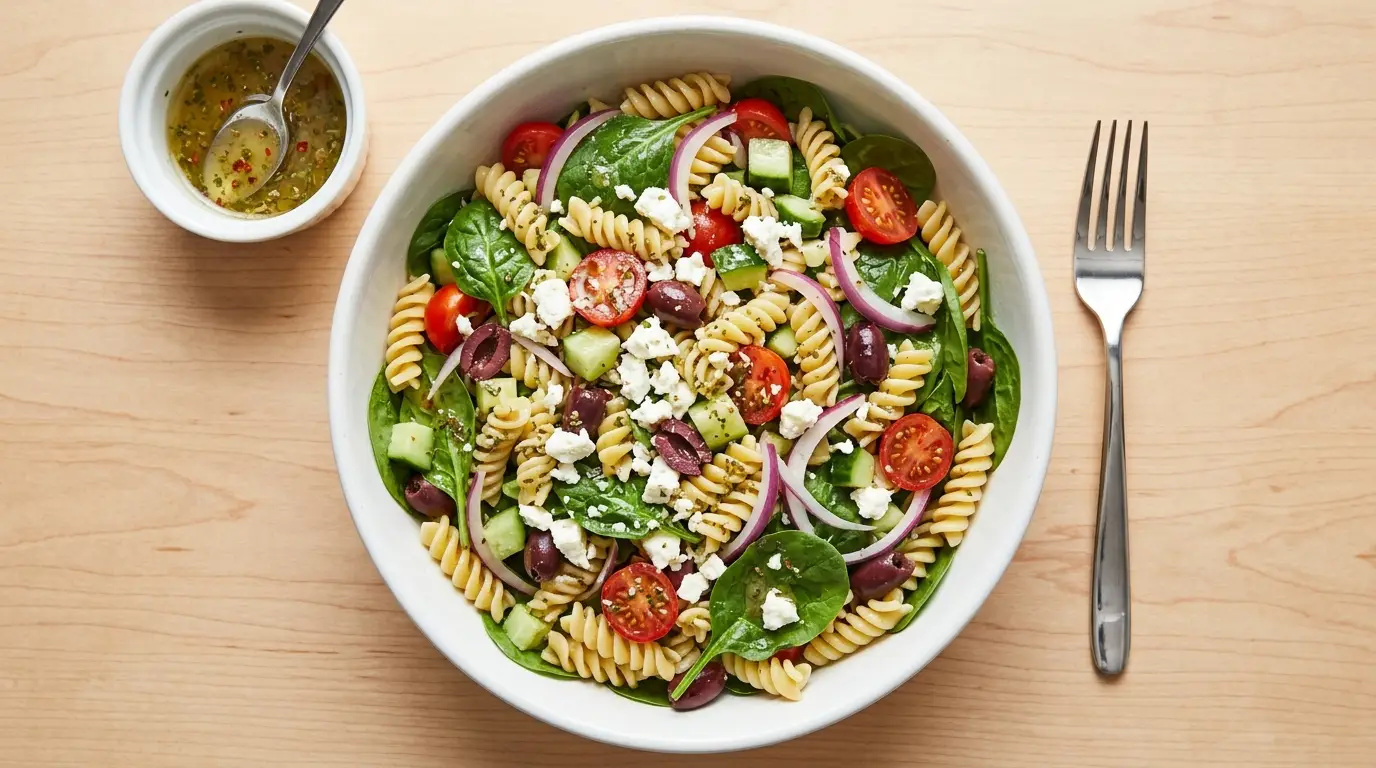
This spinach pasta salad recipe leans Mediterranean, built on rotini, baby spinach, feta, and kalamata olives tossed in a red wine vinaigrette. The pasta gets dressed while it’s still warm, so it absorbs the vinaigrette instead of just wearing it on the surface, and the spinach only goes in once everything else has cooled.
It comes together with a dozen ingredients, plus salt and pepper, in about thirty minutes from start to finish.
That timing matters here because the order of operations is what keeps the spinach from turning into a wilted, watery mess by the time you serve it.
| Quick Recipe Summary | |
|---|---|
| Prep Time | 20 minutes |
| Cook Time | 10 minutes |
| Total Time | 30 minutes |
| Servings | 8 servings |
| Difficulty Level | Easy |
Why You’ll Love This Spinach Pasta Salad Recipe
This salad holds up in the fridge for days without turning soggy, since the spinach is folded in cold instead of cooked down.
It also travels well for potlucks and lunches, since the vinaigrette base doesn’t separate or spoil the way a mayonnaise-based dressing can in the heat.
- Make-ahead friendly: the pasta and dressing can be combined a day in advance, with the spinach added right before serving.
- No mayo, no dairy-based dressing: the red wine vinaigrette means it holds up better at room temperature for outdoor gatherings.
- Balanced textures: chewy rotini, crisp cucumber, briny olives, and creamy feta all in the same bite.
- Naturally vegetarian: every ingredient in the base recipe is meat-free, with an easy path to add protein if you want it.
- Uses a full bag of spinach: this is a practical way to use up spinach before it wilts in the crisper drawer.
- Scales easily: double the batch for a crowd using the same ratios.
For a completely different flavor profile using the same base technique, see Greek Pasta Salad.
Ingredients
Everything here is easy to find at a standard grocery store, and most of it can be prepped while the pasta water comes to a boil.
For the Salad
- 1 pound (454g) rotini pasta
- 5 ounces (142g) baby spinach, roughly chopped if the leaves are large
- 1½ cups (255g) cherry tomatoes, halved
- ½ cup (75g) red onion, thinly sliced
- 1 cup (120g) English cucumber, diced
- ½ cup (75g) pitted kalamata olives, halved
- ¾ cup (115g) crumbled feta cheese
- ¼ cup (25g) grated Parmesan cheese
For the Red Wine Vinaigrette
- ½ cup (120ml) extra virgin olive oil
- 3 tablespoons (45ml) red wine vinegar
- 2 cloves garlic, minced
- 1 teaspoon dried oregano
- ½ teaspoon salt
- ¼ teaspoon black pepper
For another dressing option that works well on any pasta salad base, see Pasta Salad Dressing.
Kitchen Equipment Needed
None of this requires anything specialized. A well-stocked kitchen already has most of it, and nothing on this list needs to be brand new or expensive to work well for this recipe.
- Large stockpot
- Colander
- Large mixing bowl
- Small bowl or jar with a lid, for the dressing
- Whisk
- Cutting board and chef’s knife
- Measuring cups and spoons
- Salad tongs
- Airtight storage containers
For another classic base recipe worth having on hand, see Classic Pasta Salad.
Recommended Products for This Recipe
These are products I reach for specifically because of problems they’ve solved while making this salad repeatedly. None of these are required, but they make a noticeable difference in the final texture.
1. Block Feta Cheese
Block feta holds its shape far better than pre-crumbled feta in this salad, since the pre-crumbled kind is coated with anti-caking starch that turns the dressing chalky instead of clean and tangy. Crumbling it yourself by hand also gives larger, creamier pieces that don’t disappear into the pasta.
2. Pitted Kalamata Olives
Buying these already pitted saves a genuinely annoying amount of prep time, and the brine-packed jars tend to have a rounder, less bitter flavor than the vacuum-sealed pouches. A good jar goes a long way since a little of this olive brine can also be whisked into the vinaigrette for extra depth.
3. Cold-Pressed Extra Virgin Olive Oil
Since the olive oil is half the dressing by volume, a mild or rancid one is impossible to hide in a recipe this simple. A fresh, robust cold-pressed oil carries the garlic and oregano instead of tasting flat or greasy.
4. OXO Good Grips Salad Spinner
Wet spinach dilutes the vinaigrette and waters down the whole salad within an hour. Spinning the leaves dry after washing solves that problem in about thirty seconds and works just as well for the fresh herbs if you add any.
5. Glass Meal Prep Containers with Lids
Since this salad is meant to be made ahead, storing it in individual glass containers keeps portions from drying out at the edges the way a single large bowl covered in plastic wrap tends to. The lids also seal tightly enough to toss the container straight into a lunch bag.
You might also enjoy: Caprese Pasta Salad
Step-by-Step Instructions: How to Make Spinach Pasta Salad
Follow these steps in order and the pasta will hold onto the dressing properly instead of tasting bland by the time it’s chilled.
1. Cook the Rotini Pasta
- Bring a large stockpot of generously salted water to a rolling boil.
- Add the rotini pasta and cook according to the package directions until al dente, usually 9 to 11 minutes.
- Stir occasionally in the first few minutes to keep the pieces from sticking together.
- Reserve ¼ cup (60ml) of the pasta water before draining, in case the salad needs loosening later.
2. Cool and Drain the Pasta
- Drain the pasta in a colander and rinse it under cold running water for about 30 seconds.
- Shake the colander well to remove excess water, since standing water dilutes the dressing.
- Spread the drained pasta out on a sheet pan for 5 minutes to speed up cooling if you’re short on time.
3. Make the Red Wine Vinaigrette
- In a small bowl or jar, combine the extra virgin olive oil, red wine vinegar, minced garlic, dried oregano, salt, and black pepper.
- Whisk vigorously for about 30 seconds, or seal the jar and shake it, until the mixture looks slightly thickened and no longer separated.
- Taste and adjust the salt if needed, keeping in mind the feta and olives will add more saltiness later.
4. Prep the Vegetables
- Halve the cherry tomatoes and set them aside in a small bowl.
- Thinly slice the red onion; if the flavor feels too sharp, soak the slices in cold water for 10 minutes and drain before using.
- Dice the English cucumber into ½-inch (1cm) pieces.
- Halve the pitted kalamata olives.
- Wash and dry the baby spinach if it isn’t pre-washed, and roughly chop any leaves that are noticeably larger than the rest so every bite is easy to eat.
5. Combine the Pasta and Dressing
- Transfer the cooled pasta to a large mixing bowl.
- Pour about two-thirds of the vinaigrette over the pasta and toss well with tongs, making sure every piece gets coated.
- Let the dressed pasta sit for 5 minutes so it can absorb the vinaigrette before the other ingredients go in.
6. Fold in the Spinach and Cheese
- Add the cherry tomatoes, red onion, cucumber, and olives to the bowl and toss gently to combine.
- Add the baby spinach last, folding it in with tongs rather than stirring vigorously, since spinach bruises easily.
- Sprinkle in the crumbled feta cheese and grated Parmesan cheese, then toss one more time.
- Drizzle in the remaining vinaigrette if the salad looks dry, along with a splash of the reserved pasta water if needed.
7. Chill and Serve
- Cover the bowl and refrigerate for at least 20 minutes before serving, which gives the flavors time to settle.
- Taste before serving and adjust with a pinch of salt or a squeeze of lemon if it needs brightening.
- Toss once more just before bringing it to the table, since some dressing will pool at the bottom of the bowl.
For another red wine vinaigrette-style base worth trying, see Italian Pasta Salad.
Tips for The Best Spinach Pasta Salad
A few small habits make the difference between a salad that’s good right away and one that’s still good on day three.
- Salt the pasta water generously. This is the only chance to season the pasta itself, and skipping it makes the whole salad taste flat no matter how much dressing you add.
- Dress the pasta while it’s still warm, not hot. Warm pasta absorbs the vinaigrette; hot pasta cooks the garlic and dulls the dressing’s flavor.
- Add the spinach last, and only right before serving if you’re prepping more than a few hours ahead. Spinach wilts under dressing and salt over time.
- Don’t skip drying the spinach. I ruined my first batch by dressing the pasta straight out of the pot without cooling it first, and the spinach wilted into mush within twenty minutes because I’d also skipped drying the leaves after washing them.
- Use block feta over pre-crumbled. It holds its shape and doesn’t add a chalky film to the dressing.
- Taste before serving, every time. Chilled food needs slightly more salt and acid than food tasted warm, since cold temporarily mutes flavor.
- Pat the cucumber dry before adding it. I’ve found that patting the cucumber dry with a paper towel before adding it keeps the dressing from turning watery by day two, since diced cucumber releases a surprising amount of liquid as it sits.
- Slice the red onion thin, not thick. Thick slices can overpower the rest of the salad, while thin slices distribute more evenly and mellow out faster once dressed.
For a version that swaps the pasta shape entirely, see Tortellini Pasta Salad.
What to Serve with Spinach Pasta Salad
This salad works as a side dish next to something simply grilled, or as a light main course on its own with a piece of crusty bread.
- Grilled Lemon Herb Chicken: the bright, herby flavors mirror the vinaigrette in the salad without competing with it.
- Grilled Salmon with Dill Sauce: the richness of the salmon balances the tang of the feta and olives.
- BBQ Pulled Pork Sandwiches: the acidity in the salad cuts through the sweetness of a smoky pulled pork sauce.
- Chimichurri Steak Tacos: two garlicky, herb-forward dishes that pair naturally on the same plate.
- Greek Chicken Gyros: an obvious pairing given the shared Mediterranean flavor base.
- Crusty bread and olive oil: for scooping up any leftover dressing at the bottom of the bowl.
- Sparkling lemonade or unsweetened iced tea: a light, non-alcoholic option that won’t clash with the vinegar in the dressing.
- A backyard barbecue or potluck spread: since the salad holds up well at room temperature for a couple of hours.
For a heavier, chicken-forward version of this same concept, see Orzo Pasta Salad.
Variations of Spinach Pasta Salad
The base recipe is easy to adjust depending on what’s in the fridge or what the occasion calls for, and none of the swaps below require changing the cooking method or the timing.
- Add protein: shredded rotisserie chicken, grilled shrimp, or chickpeas all work well and turn this into a full meal.
- Swap the cheese: goat cheese or fresh mozzarella pearls both work in place of feta for a milder flavor.
- Change the pasta shape: orzo, bowtie, or penne all hold the dressing just as well as rotini.
- Make it nut-forward: toasted pine nuts or slivered almonds add crunch and a little richness.
- Add sun-dried tomatoes: they bring a more concentrated, chewy tomato flavor than fresh cherry tomatoes alone.
- Swap the vinegar: balsamic or white wine vinegar both work if red wine vinegar isn’t on hand.
- Make it dairy-free: omit the feta and Parmesan, and add a pinch of nutritional yeast to the dressing for a savory note.
- Add heat: a pinch of crushed red pepper flakes in the dressing wakes up the whole salad.
- Add capers: a tablespoon of drained capers adds a briny, salty punch similar to the olives, without changing the texture much.
- Bulk it up with grains: cooked farro or quinoa can be folded in alongside the pasta to stretch the salad for a larger crowd.
For a similarly customizable chickpea-based salad, see Chickpea Salad.
Storage and Reheating
This salad is meant to be served cold, so there’s no reheating step involved, only proper storage.
- Refrigerator: store in an airtight container for up to 4 days. The flavor actually improves after the first few hours as the dressing settles into the pasta.
- Make-ahead option: combine everything except the spinach up to 2 days in advance, then fold in the spinach within an hour of serving.
- Freezing: this salad does not freeze well, since the spinach and cucumber both turn watery and limp once thawed.
- Refreshing leftovers: I keep a small jar of extra vinaigrette in the fridge specifically for refreshing leftovers, since the pasta soaks up most of the dressing overnight and can taste dry by day two.
- Serving cold from the fridge: let the salad sit at room temperature for 10 minutes before serving, since very cold olive oil can taste muted and slightly waxy.
For another make-ahead salad that holds up well over several days, see BLT Pasta Salad.
Nutritional Facts
| Nutrient | Amount Per Serving |
|---|---|
| Calories | 310 kcal |
| Protein | 8g |
| Carbohydrates | 33g |
| Fat | 16g |
| Saturated Fat | 4g |
| Fiber | 2g |
| Sugar | 3g |
| Sodium | 420mg |
Values are estimates based on standard ingredient databases and will vary depending on brands used and portion size.
For another salad with a full nutritional breakdown, see Broccoli Salad.
Health Benefits of Key Ingredients
Beyond flavor, most of what’s in this bowl is doing some nutritional work too, since almost every ingredient here is a whole food rather than a processed one.
- Spinach: a strong source of vitamin K, vitamin A, and folate, with very few calories per cup.
- Olive oil: provides monounsaturated fats, which are linked to heart health when used in place of saturated fats.
- Tomatoes: contain lycopene, an antioxidant that becomes more available to the body once the tomatoes are cut or lightly processed.
- Cucumber: mostly water, which helps keep the dish light while adding fiber and a small amount of vitamin K.
- Garlic: contains allicin, a compound studied for its potential role in supporting immune function.
- Feta cheese: lower in fat than many aged cheeses, while still providing calcium and protein.
- Kalamata olives: a source of healthy fats and antioxidants, though they are higher in sodium, so portion matters.
For another dish built around leafy greens, see Creamed Spinach.
FAQs About Spinach Pasta Salad
1. Can I make spinach pasta salad ahead of time?
Yes, and it actually tastes better after a few hours in the fridge. Just hold off on adding the spinach until closer to serving time, since it wilts the longer it sits in the dressing.
2. Why did my spinach turn slimy in the salad?
This usually happens when the spinach isn’t dried thoroughly after washing, or when it’s added to hot pasta instead of cooled pasta. Excess water combined with warmth speeds up wilting significantly.
3. Can I use frozen spinach instead of fresh?
Frozen spinach isn’t a good substitute here, since it has a soft, cooked texture once thawed rather than the crisp bite fresh baby spinach provides. Fresh spinach is the better choice for a cold salad like this one.
4. What’s the best pasta shape for this recipe?
Rotini works well because its ridges hold onto the vinaigrette, but bowtie, penne, or orzo are all reasonable substitutes. Avoid very thin pasta shapes, since they tend to clump once chilled.
5. How do I keep the salad from getting watery?
Dry the spinach and cucumber thoroughly before adding them, and drain the pasta well after rinsing. Most watery pasta salads come down to excess moisture from produce rather than the dressing itself.
For a pasta salad built around a similar creamy, tangy profile, see Chicken Caesar Pasta Salad.
Spinach Pasta Salad
Ingredients
- 1 pound rotini pasta - 454g
- 5 ounces baby spinach - 142g, roughly chopped if the leaves are large
- 1 ½ cups cherry tomatoes - 255g, halved
- ½ cup red onion - 75g, thinly sliced
- 1 cup English cucumber - 120g, diced
- ½ cup pitted kalamata olives - 75g, halved
- ¾ cup crumbled feta cheese - 115g, preferably from a block
- ¼ cup grated Parmesan cheese - 25g
- ½ cup extra virgin olive oil - 120ml
- 3 tablespoons red wine vinegar - 45ml
- 2 cloves garlic - minced
- 1 teaspoon dried oregano
- ½ teaspoon salt
- ¼ teaspoon black pepper
Equipment
- Small bowl or jar with a lid - for the dressing
- Cutting board and chef’s knife
- Salad Tongs
- Airtight storage containers
- OXO Good Grips Salad Spinner - optional, for drying spinach
- Sheet Pan - optional, for cooling pasta
Method
- Bring a large stockpot of generously salted water to a rolling boil. Add the rotini pasta and cook according to package directions until al dente, usually 9 to 11 minutes.
- Reserve ¼ cup of the pasta water before draining. Drain the pasta in a colander and rinse it under cold running water for about 30 seconds. Spread on a sheet pan for 5 minutes to cool if desired.
- In a small bowl or jar, combine the extra virgin olive oil, red wine vinegar, minced garlic, dried oregano, salt, and black pepper. Whisk or shake vigorously for about 30 seconds until thickened and emulsified.
- Halve the cherry tomatoes. Thinly slice the red onion, soak in cold water for 10 minutes if sharp, then drain. Dice the English cucumber. Halve the kalamata olives. Wash and dry the spinach, chopping any large leaves.
- Transfer cooled pasta to a large mixing bowl. Pour about two-thirds of the vinaigrette over the pasta and toss well with tongs. Let sit for 5 minutes to absorb the dressing.
- Add the cherry tomatoes, red onion, cucumber, and olives; toss gently. Add the baby spinach last, folding it in with tongs. Sprinkle with feta and Parmesan, then toss one more time.
- Cover and refrigerate for at least 20 minutes before serving. Taste and adjust with salt or a squeeze of lemon if needed. Toss once more before serving.
Nutrition
Notes
- Salt the pasta water generously. This is the only chance to season the pasta itself, and skipping it makes the whole salad taste flat.
- Dress the pasta while it’s still warm, not hot. Warm pasta absorbs the vinaigrette; hot pasta cooks the garlic and dulls the dressing’s flavor.
- Don’t skip drying the spinach. Wet spinach dilutes the vinaigrette and waters down the whole salad. Use a salad spinner or pat dry with paper towels.
- Use block feta over pre-crumbled. It holds its shape and doesn’t add a chalky film to the dressing from anti-caking agents.
- Pat the cucumber dry before adding it. Diced cucumber releases a surprising amount of liquid as it sits, which can make the dressing watery by day two.
- Add the spinach last. Fold it in right before serving if you’re prepping more than a few hours ahead, as it wilts under dressing and salt over time.
- Make-ahead option: Combine everything except the spinach up to 2 days in advance, then fold in the spinach within an hour of serving.
- Refreshing leftovers: Keep a small jar of extra vinaigrette in the fridge to refresh leftovers, as the pasta soaks up most of the dressing overnight.
- Swap the cheese: Goat cheese or fresh mozzarella pearls both work in place of feta for a milder flavor.
- Add protein: Shredded rotisserie chicken, grilled shrimp, or chickpeas all work well to turn this into a full meal.
Private Notes
Tried this recipe?
Let us know how it was!Final Thoughts
This spinach pasta salad recipe earns its spot in a regular rotation because it’s genuinely better the second day, not just tolerable.
It travels well, feeds a crowd, and doesn’t rely on mayonnaise to hold together, which makes it a safe pick for warm-weather gatherings.
Give it a try the next time you need something to bring to a potluck or pack for lunch, and let me know in the comments if you swap in a different cheese or pasta shape.
Recommended:
- Bacon Ranch Pasta Salad
- Antipasto Pasta Salad
- Tuna Pasta Salad
- Shrimp Pasta Salad
- Artichoke Pasta Salad
- Ranch Pasta Salad
- Rotini Pasta Salad
- Dill Pickle Pasta Salad
- Chicken Pasta Salad
- Pesto Pasta Salad