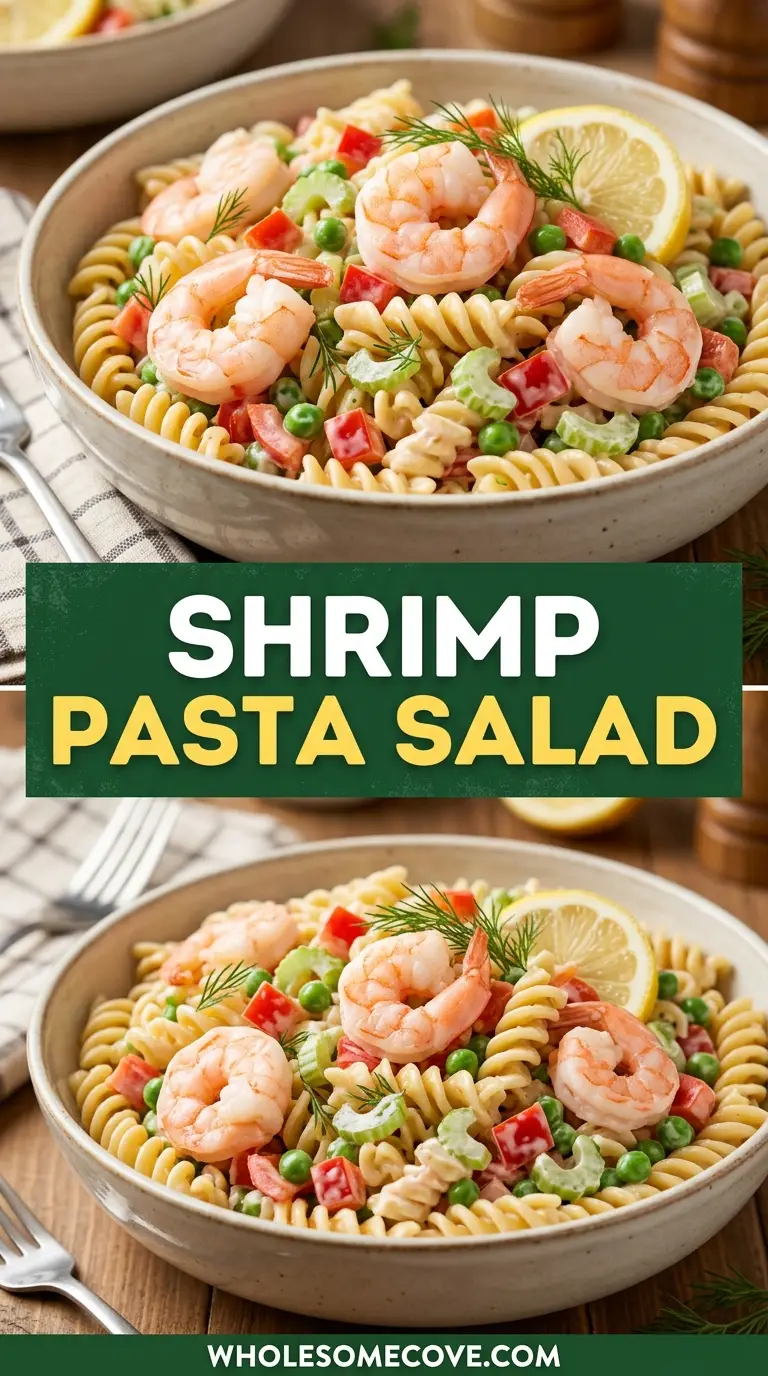
This shrimp pasta salad recipe pairs cold rotini with tender shrimp, crunchy celery, and a lemon-dill mayo dressing thick enough to coat every ridge of the pasta without pooling at the bottom of the bowl.
Most versions turn rubbery because the shrimp gets boiled too long or gets tossed into the mayo while it’s still warm, which breaks the dressing down into something thin and greasy.
Cooking the shrimp just until it turns pink and the tails curl, then chilling it fully before mixing, keeps the texture snappy and the dressing intact.
From boiling the pasta to pulling the finished salad out of the fridge, the whole process takes about an hour, most of which is hands-off chilling time.
| Quick Recipe Summary | |
|---|---|
| Prep Time | 20 minutes |
| Cook Time | 12 minutes |
| Chill Time | 30 minutes |
| Total Time | 1 hour 2 minutes |
| Servings | 6 servings |
| Difficulty Level | Easy |
This same lemon-forward mayo base is what makes my Classic Pasta Salad Recipe such a reliable side, and it works just as well with shrimp folded in.
Why You’ll Love This Shrimp Pasta Salad Recipe
This isn’t a thrown-together macaroni salad with a few shrimp on top. The dressing is built to actually taste like something, and the shrimp gets cooked with enough seasoning that it holds its own against the mayo.
- Comes together in about an hour. Most of that time is hands-off chilling, not active cooking.
- Feeds a crowd. Six generous servings, easy to double for a potluck or cookout.
- Make-ahead friendly. It actually tastes better the next day once the dressing has time to settle into the pasta.
- Uses one pot and one pan. The pasta and shrimp can be cooked back-to-back in the same water.
- Balanced texture in every bite. Crisp celery and bell pepper against soft pasta and shrimp keeps it from feeling one-note.
- Easy to scale down. Halve the recipe for a smaller batch without changing the ratios.
- Naturally gluten-free adaptable. Swap in a gluten-free rotini and the rest of the recipe stays exactly the same.
You might also enjoy: Shrimp Macaroni Salad Recipe
Ingredients
Nothing here is hard to find. Most of it is already in a well-stocked kitchen, and the shrimp and dill are the only two items you’ll likely make a special trip for.
- 12 oz (340g) rotini pasta
- 1 lb (450g) large shrimp, peeled and deveined, tails removed
- 1 tablespoon (15ml) olive oil, for cooking the shrimp
- 1 cup (240g) mayonnaise
- 1 large lemon, juiced and zested (about 2 tablespoons/30ml juice and 1 teaspoon zest)
- 1 tablespoon (3g) fresh dill, chopped (or 1 teaspoon dried dill)
- 1 teaspoon (2g) Old Bay seasoning
- 1/2 cup (60g) celery, finely diced
- 1/2 cup (75g) red bell pepper, finely diced
- 1/3 cup (50g) red onion, finely diced
- 1/2 cup (75g) frozen peas, thawed
- Salt and black pepper, to taste
Read Also: Pasta Salad Dressing Recipe
Kitchen Equipment Needed
None of this requires anything specialized. A basic pasta setup and a couple of mixing bowls will get you through the whole recipe.
- Large stockpot, for boiling the pasta and cooking the shrimp
- Colander, for draining pasta and shrimp
- Large mixing bowl, for tossing the finished salad
- Small mixing bowl, for whisking the dressing
- Cutting board
- Chef’s knife, for dicing the vegetables and shrimp cleanup
- Measuring cups and spoons
- Whisk or fork
- Airtight storage container, for chilling and storing leftovers
The same chilled-component approach shows up in my Tortellini Pasta Salad Recipe, where warm cheese-filled pasta can turn a mayo dressing greasy just as fast as warm shrimp can.
Recommended Products for This Recipe
These are products I’ve actually used while testing this recipe, not a generic list. Each one solves a specific problem that comes up when you’re making a shrimp-based pasta salad.
1. Old Bay Seasoning (Large Container)
A small tin of Old Bay runs out fast once you start using it on shrimp regularly, and buying the larger container is cheaper per ounce than restocking the small one every few months. It’s also the fastest way to get that Chesapeake-style flavor into the shrimp without measuring out five different spices.
2. Microplane Zester
A box grater mangles lemon zest and pulls up bitter white pith along with it. A Microplane takes off only the fragrant yellow layer, which is the difference between a dressing that tastes bright and one that tastes flat.
3. Rubbermaid Brilliance Airtight Storage Containers
Mayo-based salads pick up smells from anything else in the fridge if the lid isn’t fully sealed, and this salad also weeps a bit of liquid as it sits. These containers seal tightly enough to prevent both problems and stack cleanly if you’re making a double batch for a party.
4. OXO Good Grips Large Colander
A flimsy colander tips over in the sink the second you dump a full pot of pasta water into it, which is exactly when you don’t want a colander tipping over. The wide, stable base on this one holds steady, and the handles stay cool enough to grip right after draining.
5. Glass Mixing Bowl Set
Plastic bowls hold onto the smell of shrimp and mayo dressing no matter how many times you wash them. Glass bowls don’t absorb odors, and having a few sizes on hand means the dressing, the shrimp, and the finished salad can all chill separately until you’re ready to combine them.
For another cold pasta salad built around a cooked protein, try: Chicken Pasta Salad Recipe
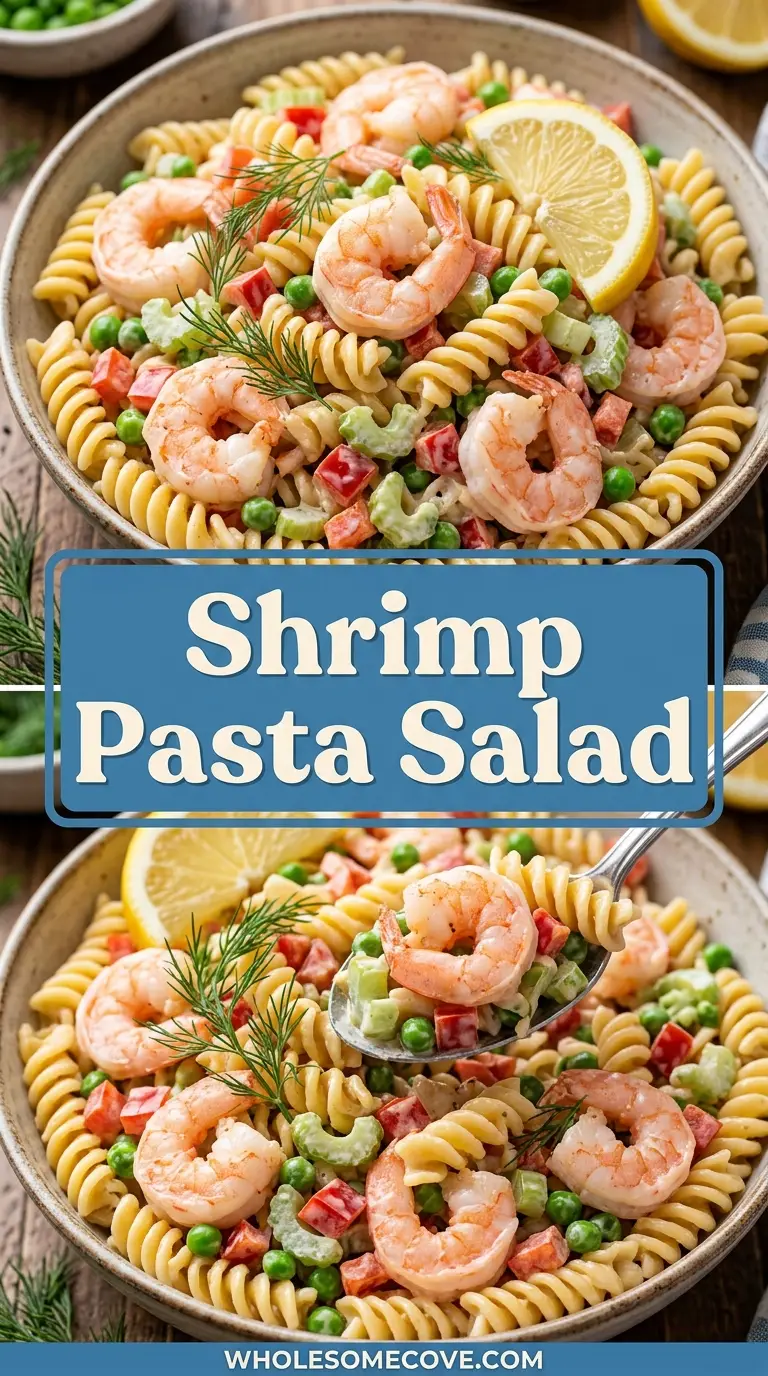
Step-by-Step Instructions: How to Make Shrimp Pasta Salad
Follow these steps in order and you’ll have a shrimp pasta salad ready to chill in under 35 minutes of active work.
1. Cook the Pasta
- Bring a large pot of salted water to a rolling boil.
- Add the rotini pasta and cook according to the package directions until al dente, usually 9 to 11 minutes.
- Drain the pasta in a colander and rinse it under cold running water until it’s completely cool. This stops the cooking and washes off excess starch so the pasta doesn’t clump.
- Shake off the excess water and set the pasta aside in the large mixing bowl.
2. Cook the Shrimp
- Pat the shrimp dry with a paper towel so it sears instead of steams.
- Heat the olive oil in a large skillet or the same stockpot over medium-high heat.
- Season the shrimp with half the Old Bay seasoning, plus a pinch of salt and pepper.
- Cook the shrimp for 2 to 3 minutes per side, until it turns opaque pink and the tails curl inward. Don’t walk away here, since shrimp goes from perfectly cooked to rubbery in under a minute.
- Transfer the cooked shrimp to a plate and let it cool for 5 to 10 minutes, then refrigerate it until fully chilled.
- Once cool, roughly chop any large shrimp into bite-sized pieces, leaving smaller ones whole.
3. Prep the Vegetables
- Dice the celery, red bell pepper, and red onion into small, even pieces so they distribute through every bite.
- Thaw the frozen peas under cool running water and pat them dry.
- Zest the lemon before juicing it, then set the zest and juice aside separately.
- Chop the fresh dill if you’re using fresh instead of dried.
4. Make the Dressing
- In the small mixing bowl, whisk together the mayonnaise, lemon juice, lemon zest, chopped dill, and the remaining Old Bay seasoning.
- Whisk until the dressing is smooth and evenly speckled with dill and zest.
- Taste and adjust with salt and pepper. The dressing should taste slightly bold on its own, since the pasta will mellow it once everything is combined.
5. Combine the Salad
- Add the chilled shrimp, celery, red bell pepper, red onion, and peas to the bowl with the cooled pasta.
- Pour the dressing over the top.
- Fold everything together gently with a large spoon or spatula until the pasta and shrimp are evenly coated. Avoid stirring too hard, which can break the shrimp apart.
- Taste one more time and adjust the salt, pepper, or lemon juice as needed.
6. Chill and Serve
- Cover the bowl tightly or transfer the salad to an airtight storage container.
- Refrigerate for at least 30 minutes before serving to let the flavors settle into the pasta.
- Give it a gentle stir right before serving, since the dressing can settle toward the bottom while it chills.
Feta and olives play a similar role to shrimp here, brightening every bite, which is exactly what happens in my Mediterranean Pasta Salad Recipe.
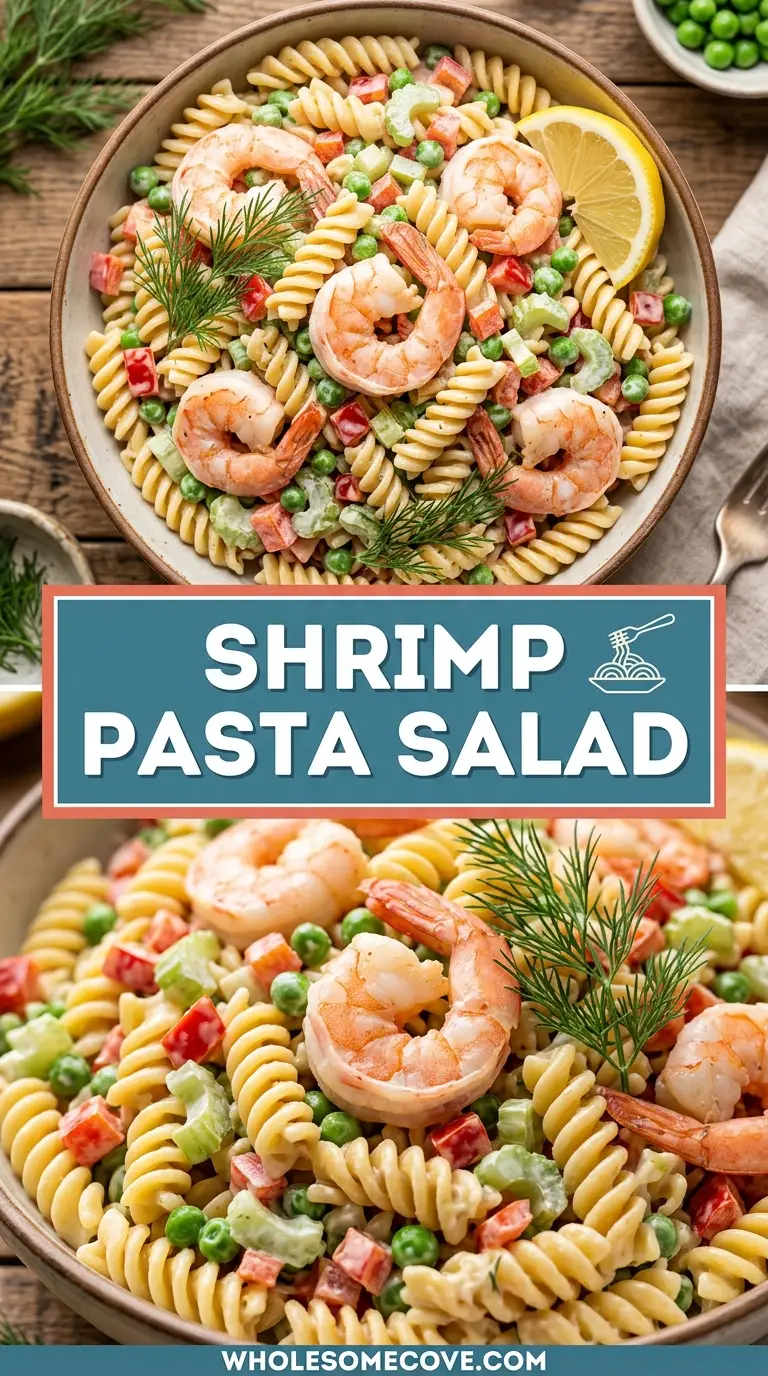
Tips for The Best Shrimp Pasta Salad
A few small habits separate a shrimp pasta salad that tastes like it came from a good deli counter from one that just tastes like mayo and noodles.
- Cool every component separately before combining. Warm pasta or warm shrimp will thin out the mayo dressing and make the whole salad watery.
- Don’t overcook the shrimp. Pull it from the heat the moment it turns pink and opaque, since it keeps cooking slightly from residual heat even off the stove.
- Salt the pasta water generously. It’s the only chance the pasta itself gets to pick up seasoning.
- Use fresh dill if you can. Dried dill works in a pinch, but fresh dill has a brighter, grassier flavor that suits cold seafood dishes better.
- Dice the vegetables small and even. Large chunks of celery or bell pepper throw off the balance of a bite that should mostly taste like shrimp and dressing.
- Let it chill the full 30 minutes. The flavors genuinely taste different, and better, after resting than they do immediately after mixing.
- Add a splash of pickle juice or extra lemon juice if the dressing tastes flat. Acid is what keeps a mayo-based salad from tasting heavy.
- I ruined my first batch by adding the shrimp to the bowl while it was still warm from the pan, which turned the dressing thin and separated within an hour. Chilling the shrimp fully first fixed it completely.
Read Also: Italian Pasta Salad Recipe
What to Serve with Shrimp Pasta Salad
Because this salad is rich and creamy, it pairs best with sides that bring some crunch, acidity, or char to balance it out. It also works well as a light main dish on its own for lunch.
- Mexican Street Corn for a smoky, charred contrast to the cold, creamy pasta.
- Deviled Eggs since the tangy filling echoes the lemon and mayo in the salad without competing with it.
- Coleslaw if you want another cold, crunchy side for a cookout spread.
- Watermelon Feta Salad with Mint for something sweet and refreshing next to the savory shrimp.
- Cranberry Jello Salad for a classic potluck pairing with a totally different texture.
- Grilled chicken skewers, for a heartier spread when the pasta salad is served as a side rather than the main dish.
- Garlic bread or a crusty baguette, for scooping up any extra dressing left in the bowl.
- Iced tea or a chilled white wine, both of which cut through the richness of the mayo dressing.
Feta, olives, and cucumber bring the same cool crunch that shrimp brings to this one, which is exactly the balance I aim for in my Greek Pasta Salad Recipe.
Variations of Shrimp Pasta Salad
Once you’ve made the base recipe a couple of times, it’s easy to riff on it depending on what’s in the fridge or what the occasion calls for.
- Old Bay Deviled Egg Version: Add 2 chopped hard-boiled eggs for extra richness and protein.
- Spicy Cajun Shrimp Pasta Salad: Swap the Old Bay for Cajun seasoning and add a diced jalapeño for heat.
- Avocado Shrimp Pasta Salad: Fold in diced avocado right before serving for extra creaminess.
- Greek Yogurt Version: Replace half the mayonnaise with plain Greek yogurt for a lighter, tangier dressing.
- Bacon Shrimp Pasta Salad: Stir in crumbled cooked bacon for a smoky, salty contrast.
- Corn and Black Bean Version: Add a cup of grilled corn and black beans for a Tex-Mex spin.
- Caprese-Style Shrimp Pasta Salad: Add halved cherry tomatoes and mini mozzarella balls, and swap the dill for fresh basil.
- Gluten-Free Version: Use a gluten-free rotini or chickpea pasta in place of regular rotini.
For a lighter, herb-forward take on the same idea, try: Pesto Pasta Salad Recipe
Storage and Reheating
This salad is meant to be served cold, so there’s no reheating involved, just proper storage to keep it fresh and safe to eat.
- Store leftovers in an airtight container in the refrigerator for up to 3 days.
- Keep the salad chilled at all times, since it contains mayonnaise and cooked shrimp, both of which spoil quickly at room temperature.
- Don’t leave the salad out for more than 2 hours total, including serving time at a picnic or cookout.
- Stir in a spoonful of extra mayonnaise or a splash of lemon juice before serving leftovers, since the dressing tends to thicken and cling to the pasta overnight.
- This salad does not freeze well. The mayonnaise separates and the shrimp turns mushy once thawed.
- If packing for lunch, use an insulated bag with an ice pack to keep it at a safe temperature until you’re ready to eat.
The fresh dill in this dressing is the same flavor I lean on heavily in my Dill Pickle Pasta Salad Recipe, just in a tangier, crunchier form.
Nutritional Facts
| Nutrient | Amount Per Serving |
|---|---|
| Calories | 410 kcal |
| Protein | 22g |
| Carbohydrates | 32g |
| Total Fat | 22g |
| Saturated Fat | 4g |
| Cholesterol | 140mg |
| Sodium | 520mg |
| Fiber | 2g |
| Sugar | 3g |
Nutritional values are estimates based on standard ingredients and may vary depending on specific brands and portion sizes.
Read Also: Tuna Pasta Salad Recipe
Health Benefits of Key Ingredients
Beyond tasting good, several ingredients in this salad bring real nutritional value to the table, especially the shrimp and vegetables.
- Shrimp is a lean source of protein and provides selenium and vitamin B12, both of which support metabolism and nerve function.
- Celery adds fiber and water content, which helps with hydration and digestion.
- Red bell pepper is high in vitamin C, often providing more per ounce than citrus fruit.
- Peas contribute plant-based protein and fiber, along with vitamin K.
- Lemon juice and zest provide vitamin C and a dose of antioxidants called flavonoids.
- Red onion contains quercetin, a compound associated with reduced inflammation.
- Fresh dill provides small amounts of vitamin A and manganese, along with antioxidant compounds.
Tomatoes and mozzarella bring the same cool, juicy contrast that shrimp brings here, something I lean on heavily in my Caprese Pasta Salad Recipe.
FAQs About Shrimp Pasta Salad
1. Can I use frozen shrimp for this shrimp pasta salad recipe?
Yes, frozen shrimp works well as long as it’s fully thawed before cooking. Thaw it overnight in the refrigerator, or run it under cold water in a colander for 10 to 15 minutes if you’re short on time.
Pat it completely dry before cooking, since wet shrimp will steam instead of sear.
2. Can I make this shrimp pasta salad ahead of time?
This salad actually improves after a few hours in the fridge, so making it a day ahead is a good idea. Store it in an airtight container and give it a stir before serving.
If the dressing looks a little dry after sitting overnight, mix in an extra spoonful of mayonnaise or a splash of lemon juice.
3. What’s the best pasta shape for shrimp pasta salad?
Rotini is the most common choice because its ridges hold onto the dressing well. Small shells, farfalle, or elbow macaroni also work fine if that’s what you have on hand.
Avoid long noodles like spaghetti, since they don’t hold the dressing or mix evenly with the diced vegetables.
4. Can I substitute Greek yogurt for the mayonnaise?
You can replace up to half the mayonnaise with plain Greek yogurt for a lighter, tangier dressing. Replacing all of it tends to make the salad taste more like a yogurt dip than a classic pasta salad.
Start with half and adjust to taste from there.
5. Why did my shrimp pasta salad turn watery?
The most common cause is warm pasta or warm shrimp going straight into the dressing before it’s had time to cool. The heat thins out the mayonnaise and pulls extra moisture from the vegetables.
Rinsing the pasta under cold water and fully chilling the shrimp before combining everything solves this in almost every case.
For a smaller-grain version of this same idea, try: Orzo Pasta Salad Recipe
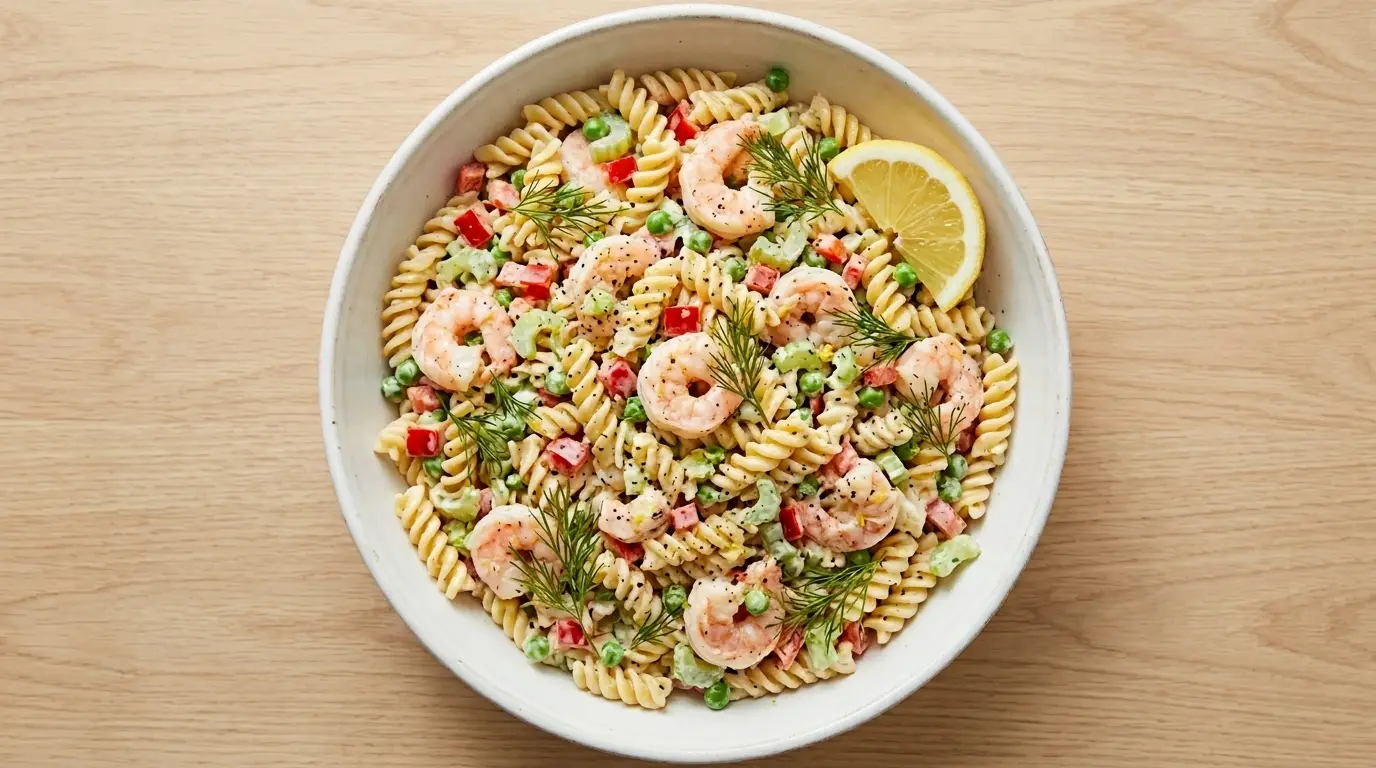
Shrimp Pasta Salad
Ingredients
- 12 oz rotini pasta - 340g
- 1 lb large shrimp - 450g, peeled and deveined, tails removed
- 1 tablespoon olive oil - 15ml, for cooking the shrimp
- 1 cup mayonnaise - 240g
- 1 large lemon - juiced and zested (about 2 tablespoons/30ml juice and 1 teaspoon zest)
- 1 tablespoon fresh dill - 3g, chopped (or 1 teaspoon dried dill)
- 1 teaspoon Old Bay seasoning - 2g, divided
- salt and black pepper - to taste
- 1/2 cup celery - 60g, finely diced
- 1/2 cup red bell pepper - 75g, finely diced
- 1/3 cup red onion - 50g, finely diced
- 1/2 cup frozen peas - 75g, thawed
Equipment
- Large stockpot - for boiling pasta and cooking shrimp
- Colander - for draining pasta and shrimp
- Large mixing bowl - for tossing the finished salad
- Small mixing bowl - for whisking the dressing
- Chef’s knife - for dicing vegetables
- Airtight storage container - for chilling and storing leftovers
Method
- Bring a large pot of salted water to a rolling boil. Add the rotini and cook according to package directions until al dente, 9 to 11 minutes. Drain in a colander and rinse under cold running water until cool. Shake off excess water and set aside in a large mixing bowl.
- Pat the shrimp dry with a paper towel. Heat olive oil in a large skillet or the stockpot over medium-high heat. Season with half the Old Bay, salt, and pepper. Cook for 2 to 3 minutes per side until opaque pink and curled. Transfer to a plate, cool for 5-10 minutes, then refrigerate until fully chilled. Roughly chop any large shrimp, leaving smaller ones whole.
- Dice the celery, red bell pepper, and red onion into small, even pieces. Thaw the peas under cool running water and pat dry. Zest the lemon before juicing it, then set both aside separately. Chop the fresh dill if using.
- In a small mixing bowl, whisk together the mayonnaise, lemon juice, lemon zest, chopped dill, and remaining Old Bay seasoning until smooth. Taste and adjust with salt and pepper.
- Add the chilled shrimp, celery, red bell pepper, red onion, and peas to the bowl with the cooled pasta. Pour the dressing over the top and fold gently with a large spoon or spatula until evenly coated. Taste and adjust seasoning as needed.
- Cover the bowl tightly or transfer to an airtight storage container. Refrigerate for at least 30 minutes before serving to let the flavors settle. Give it a gentle stir right before serving.
Nutrition
Notes
- Cool every component separately before combining — warm pasta or warm shrimp will thin out the mayo dressing and make the whole salad watery.
- Don’t overcook the shrimp. Pull it from the heat the moment it turns pink and opaque, since it keeps cooking slightly from residual heat.
- Salt the pasta water generously — it’s the only chance the pasta itself gets to pick up seasoning.
- Use fresh dill if you can — it has a brighter, grassier flavor that suits cold seafood dishes better than dried dill.
- Dice the vegetables small and even to ensure a balanced bite in every forkful.
- Let it chill the full 30 minutes — the flavors genuinely taste different and better after resting.
- If the dressing tastes flat, add a splash of pickle juice or extra lemon juice to brighten it up.
- This salad is meant to be served cold. Store leftovers in an airtight container in the refrigerator for up to 3 days.
- This salad does not freeze well — the mayonnaise separates and the shrimp turns mushy once thawed.
- For a lighter version, replace up to half the mayonnaise with plain Greek yogurt.
Private Notes
Tried this recipe?
Let us know how it was!Final Thoughts
This shrimp pasta salad recipe is one worth keeping on hand for the entire warm-weather season, from summer potlucks to an easy weeknight dinner.
The lemon-dill dressing and quick-seared shrimp make it feel more special than a typical macaroni salad without adding much extra work.
Give it a try this week, and let me know in the comments how you served it or which variation you went with.
If you make this recipe, I’d love to see it. Snap a photo and tag it, or leave a star rating below to help other readers find it.
Recommended:
- BLT Pasta Salad Recipe
- Chicken Caesar Pasta Salad Recipe
- Pasta House Salad Recipe
- Ono Hawaiian Macaroni Salad Recipe
- Shrimp and Avocado Salad Recipe
- Shrimp Quesadilla Recipe
- Lemon Garlic Shrimp over Couscous Recipe
- Seafood Chowder Recipe
- Broccoli Salad Recipe
- Potato Salad Recipe