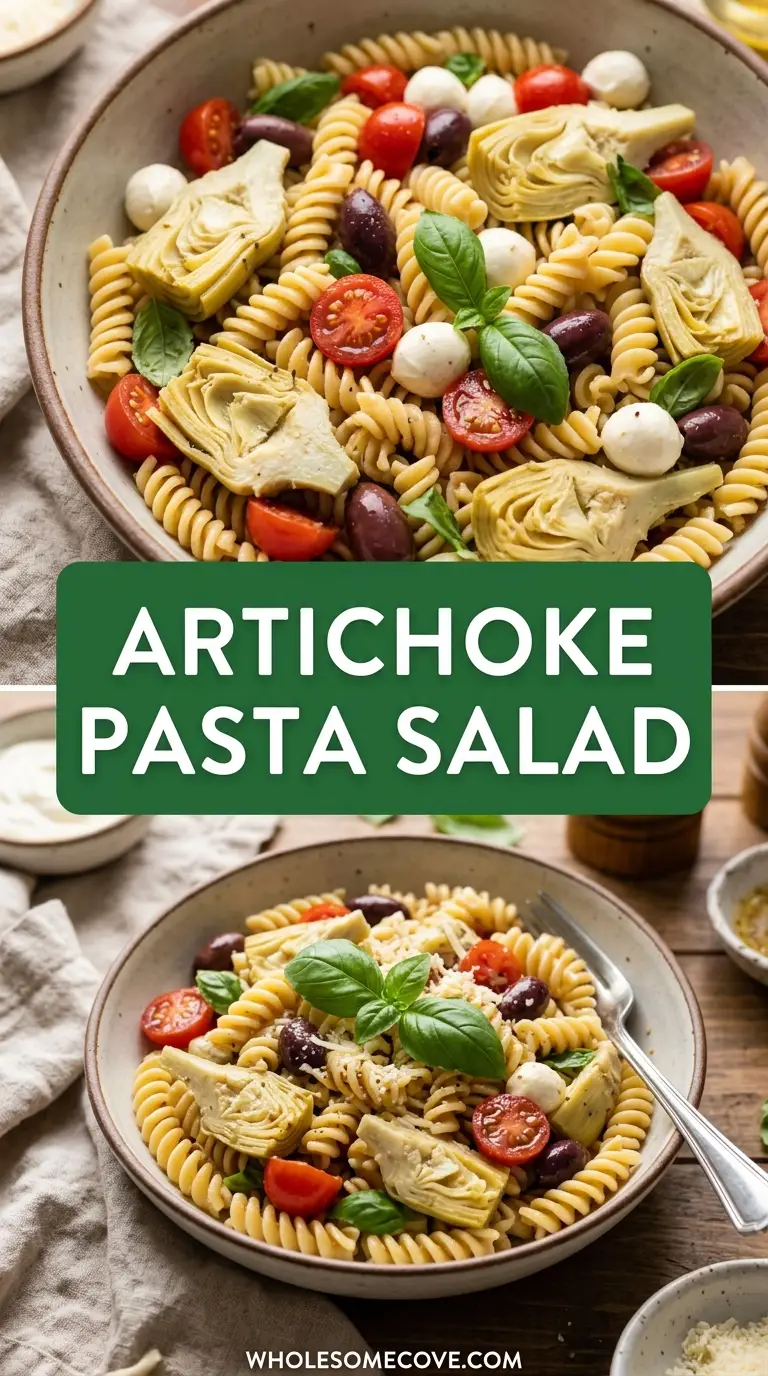
This artichoke pasta salad recipe uses the oil straight out of the artichoke jar as part of the dressing, which is what keeps the dish from tasting like plain vinaigrette poured over pasta and vegetables. Marinated artichoke hearts already carry garlic, herbs, and a bit of acidity, so the dressing only needs a few additions to round it out.
The whole dish comes together with 17 ingredients and about 32 minutes of hands-on prep and cooking, plus a short chill before serving. It’s built on rotini, kalamata olives, mozzarella pearls, and a red wine vinaigrette, which is the combination most home cooks mean when they ask for artichoke pasta salad.
| Quick Recipe Summary | |
|---|---|
| Prep Time | 20 minutes |
| Cook Time | 12 minutes |
| Total Time | 62 minutes (includes chilling) |
| Servings | 8 servings |
| Difficulty Level | Easy |
For another cold pasta option built around a similar pantry-friendly approach, see Italian Pasta Salad.
Why You’ll Love This Artichoke Pasta Salad Recipe
This salad holds up well at room temperature for a few hours, which makes it useful for potlucks and packed lunches alike. It also uses jarred and canned ingredients almost entirely, so there’s very little produce to track down.
- No last-minute cooking: everything except the pasta is ready to use straight from the jar or fridge.
- Make-ahead friendly: the flavor improves after a few hours in the fridge as the dressing soaks in.
- Budget-conscious: rotini, canned olives, and jarred artichokes cost less than most fresh produce-heavy salads.
- Naturally vegetarian: no meat is required, and it’s easy to make dairy-free by skipping the cheese.
- Feeds a crowd: one batch serves eight as a side, or fewer as a main dish with added protein.
- Holds its texture: rotini’s ridges catch the dressing without the pasta turning mushy the way delicate shapes can.
You might also enjoy: Mediterranean Pasta Salad
Ingredients
Most of these ingredients come from a jar, can, or the cheese case, which keeps prep short. Measurements are listed in both imperial and metric so the recipe works whichever system is more familiar.
A few notes before shopping: marinated artichoke hearts are sold packed in oil, not water, since the oil is where most of the flavor lives and it gets reused in the dressing. Fresh mozzarella pearls, sometimes labeled bocconcini or ciliegine, sit near the deli cheese rather than the shredded cheese aisle. Kalamata olives can be bought pitted or whole; whole olives generally taste sharper but need a few extra minutes to pit and halve.
For the Pasta Salad:
- 1 lb (450g) rotini pasta
- 2 (12 oz/340g) jars marinated artichoke hearts, drained and quartered, oil reserved
- 2 cups (300g) cherry tomatoes, halved
- 1 cup (150g) kalamata olives, pitted and halved
- 1/2 small red onion (50g), finely diced
- 8 oz (225g) fresh mozzarella pearls
- 1/2 cup (50g) grated parmesan cheese
- 1/4 cup (15g) fresh parsley, chopped
- 1/4 cup (10g) fresh basil, thinly sliced
For the Dressing:
- 1/4 cup (60ml) extra virgin olive oil, plus the reserved artichoke oil
- 3 tablespoons (45ml) red wine vinegar
- 2 cloves garlic, minced
- 1 teaspoon (5ml) dijon mustard
- 1 teaspoon (2g) dried oregano
- 1/2 teaspoon salt
- 1/4 teaspoon black pepper
- 1 tablespoon (15ml) lemon juice (optional)
For a different approach to the dressing itself, see Pasta Salad Dressing.
Kitchen Equipment Needed
None of this equipment is specialized. A basic pasta setup and a large bowl cover most of it.
The one piece of equipment worth calling out is the mason jar for the dressing. Shaking oil and vinegar together in a sealed jar emulsifies the mixture far more evenly than whisking it in a bowl, and it also doubles as the storage container for any leftover dressing.
- Large stockpot for boiling the pasta
- Colander for draining and rinsing
- Large glass mixing bowl for tossing everything together
- Mason jar with a tight lid, for shaking the dressing
- Cutting board
- Chef’s knife
- Measuring cups and spoons
- Airtight storage containers for leftovers
For a comparison of dressing styles across similar recipes, see Greek Pasta Salad.
Recommended Products for This Recipe
These are products I reach for specifically because of problems they solve in this recipe, not generic upgrades.
1. OXO Salad Spinner
Wet parsley and basil dilute the dressing and make the finished salad watery by the second day. A salad spinner gets the herbs properly dry before they’re chopped, so the dressing stays concentrated instead of sliding off the pasta.
2. Microplane Fine Grater
Pre-shredded parmesan is coated in anti-caking starch that keeps it from melting smoothly into a cold dressing. Grating a wedge fresh with a microplane produces fine shreds that coat the pasta evenly instead of clumping in one spot.
3. Imported Italian Extra Virgin Olive Oil
Cheaper blended oils taste flat once they’re mixed with vinegar and garlic, since the olive flavor gets diluted fast. A robust, fresher-pressed Italian oil holds its own against the acidity and gives the dressing more backbone.
4. Jarred Kalamata Olives in Brine
Pitted black olives from a can taste mostly of the can, with almost no brine flavor left. Kalamata olives packed in brine bring a sharper, saltier bite that stands up to the artichokes instead of disappearing next to them.
5. Glass Meal Prep Containers with Lids
Plastic containers pick up the smell of vinegar and garlic and hold onto it through the dishwasher. Glass containers with snap lids rinse clean and don’t carry old dressing smell into the next thing stored in them.
You’ll find more inspiration for cold pasta mains in Caprese Pasta Salad.
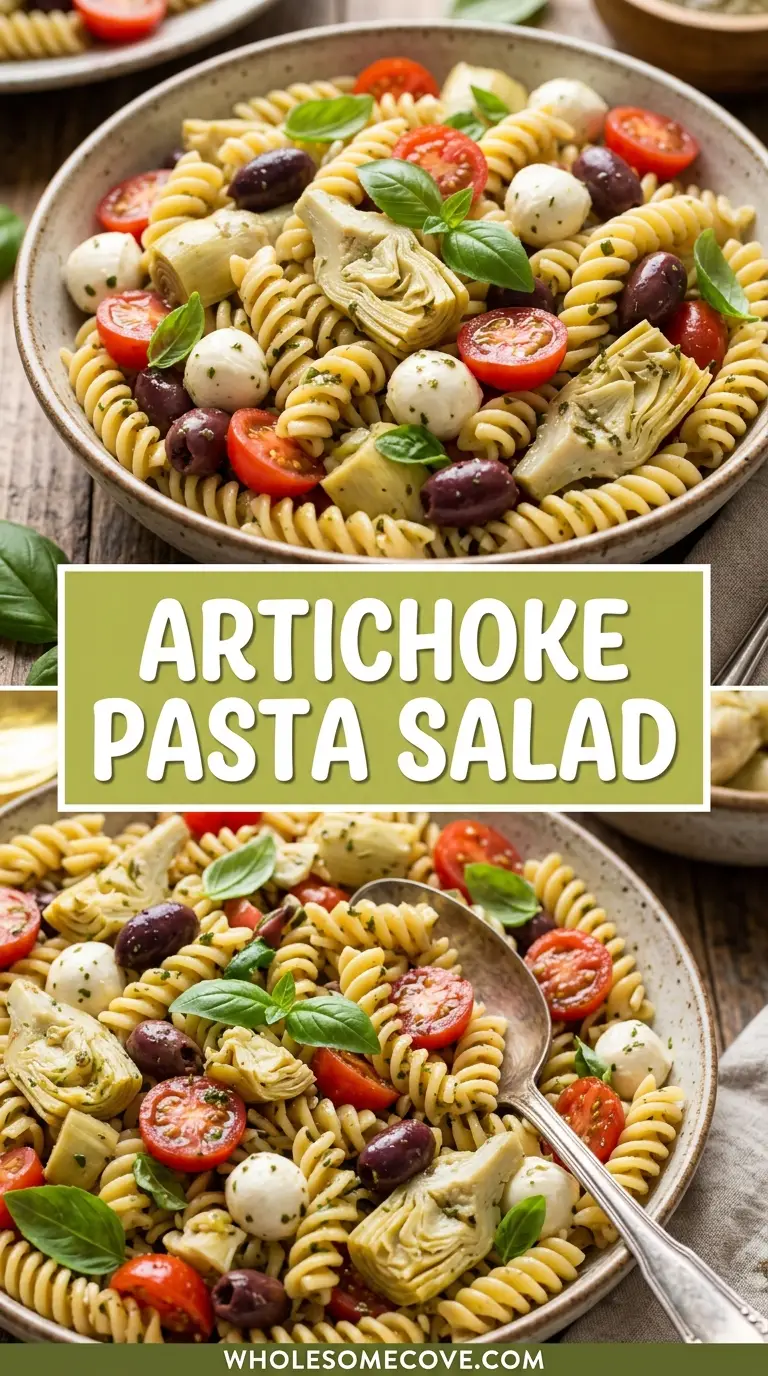
Step-by-Step Instructions: How to Make Artichoke Pasta Salad
Follow these steps and the salad will be ready to chill in well under 30 minutes of active work.
1. Cook the Pasta
- Bring a large stockpot of generously salted water to a rolling boil. The water should taste noticeably salty, since this is the only opportunity to season the pasta itself.
- Add 1 lb (450g) rotini and cook according to package directions until al dente, usually 9 to 11 minutes. Start checking a minute or two before the package time, since overcooked pasta turns mushy once it’s coated in dressing and chilled.
- Drain the pasta in a colander and rinse under cold water until it’s no longer warm to the touch, tossing it with a spoon as you rinse so every piece cools evenly and stops cooking.
- Shake the colander to remove excess water, then transfer the pasta to the large mixing bowl and set it aside while prepping the rest of the ingredients.
2. Prepare the Artichokes and Vegetables
- Drain the 2 jars of marinated artichoke hearts over a small bowl or measuring cup, reserving about 2 tablespoons of the oil for the dressing.
- Quarter any large artichoke pieces on a cutting board so they’re roughly bite-sized, then add them to the bowl with the pasta.
- Halve the cherry tomatoes and add them to the bowl along with the artichokes.
- Pit and halve the kalamata olives if they aren’t pre-pitted, then add them along with the finely diced red onion.
- Give everything a light toss at this stage so the vegetables distribute evenly through the pasta before the dressing goes in.
3. Make the Dressing
- In the mason jar, combine the extra virgin olive oil, reserved artichoke oil, red wine vinegar, minced garlic, dijon mustard, dried oregano, salt, and black pepper.
- Add the lemon juice if using, for a slightly brighter finish.
- Close the lid tightly and shake vigorously for about 20 seconds, until the dressing looks combined, slightly cloudy, and lightly thickened.
- Taste the dressing directly from the jar and adjust salt, pepper, or vinegar before pouring it over the salad.
4. Combine the Pasta Salad
- Pour about three-quarters of the dressing over the pasta, artichokes, tomatoes, olives, and onion.
- Add the mozzarella pearls, grated parmesan, chopped parsley, and sliced basil.
- Toss everything together with tongs or two large spoons, lifting from the bottom of the bowl, until the dressing coats every piece evenly.
- Taste and adjust seasoning with additional salt, pepper, lemon juice, or the remaining dressing as needed.
5. Chill and Serve
- Cover the bowl tightly with plastic wrap or a lid and refrigerate for at least 30 minutes, or up to overnight for deeper flavor.
- Give the salad a final toss before serving, since the dressing tends to settle and pool at the bottom of the bowl.
- Serve cold or at cool room temperature, straight from the mixing bowl or transferred to a serving dish.
For a version that swaps in a different pasta shape entirely, check out Classic Pasta Salad.
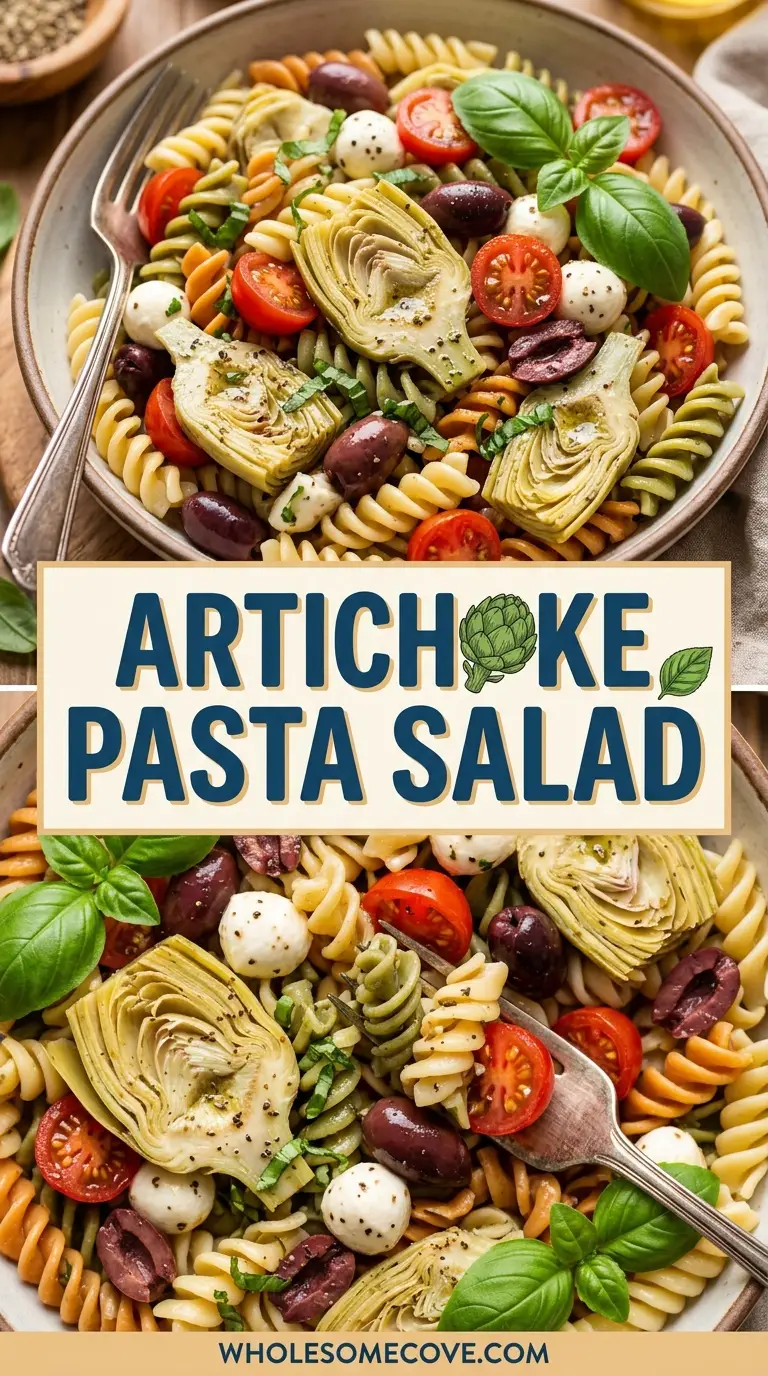
Tips for The Best Artichoke Pasta Salad
A few small adjustments make a noticeable difference in how this salad holds up over a few days.
- Rinse the pasta under cold water right after draining so it stops cooking and doesn’t turn starchy in the bowl.
- Mozzarella pearls hold their shape far better than shredded mozzarella in this salad, since shredded cheese melts into the warm pasta and turns the whole bowl gummy.
- Salt the pasta water generously, since it’s the only chance the noodles themselves get seasoned.
- Use the artichoke marinade oil in the dressing instead of discarding it, since it already carries garlic and herb flavor.
- I ruined my first batch by tossing the dressing with pasta that was still slightly warm, which wilted the basil within minutes.
- Add delicate herbs like basil closer to serving time if making the salad more than a day ahead, so they stay bright rather than darkening.
- If the salad looks dry after chilling, the pasta has absorbed some dressing. A small drizzle of olive oil and a splash of vinegar brings it back.
- Taste the marinated artichokes before adding extra salt, since brands vary widely in how heavily seasoned the marinade already is.
- Cut the cherry tomatoes just before mixing rather than hours ahead, since sitting cut-side up releases juice that can water down the dressing.
For more tips on getting a similar dressing right every time, see: Antipasto Pasta Salad
What to Serve with Artichoke Pasta Salad
This salad works as a side dish for grilled proteins or as part of a larger spread of Mediterranean-style dishes. It’s rich enough on its own to also stand in as a light lunch.
- Grilled Lemon Herb Chicken, for a straightforward protein pairing
- Grilled Salmon with Dill Sauce, for a lighter seafood option
- Caprese Stuffed Avocados, to keep the meal vegetarian
- Healthy Bruschetta, served as a starter before the main course
- Tomato Basil Mozzarella Flatbread Pizza, for a casual dinner spread
- Grilled Chicken and Veggie Skewers, for outdoor gatherings
- Watermelon Feta Salad with Mint, for a cooling contrast on hot days
- crusty garlic bread, for scooping up any extra dressing
- a pitcher of iced tea or lemonade, for a casual backyard lunch
- grilled or rotisserie chicken breast sliced on top, to turn the side into a full meal
A related recipe worth trying alongside this spread is Chicken Caesar Pasta Salad.
Variations of Artichoke Pasta Salad
The base recipe is flexible enough to adjust for different diets or whatever is already in the fridge. None of the swaps below require changing the dressing, since the vinaigrette is neutral enough to work with most add-ins.
- Add protein: stir in cubed rotisserie chicken, grilled shrimp, or white beans to turn it into a main dish.
- Make it dairy-free: skip the mozzarella and parmesan, or substitute a plant-based feta.
- Swap the pasta shape: bowtie, penne, or orzo all work in place of rotini.
- Add greens: toss in a couple handfuls of baby spinach or arugula right before serving.
- Go spicier: add a pinch of crushed red pepper flakes to the dressing.
- Add roasted vegetables: roasted red peppers or sun-dried tomatoes both pair well with the existing flavors.
- Make it nut-forward: a handful of toasted pine nuts adds crunch and a slightly buttery note.
Read Also: Tortellini Pasta Salad
Storage and Reheating
This salad is meant to be served cold, so there’s no reheating step involved, only proper storage.
- Store leftovers in an airtight container in the refrigerator for up to 4 days.
- Give the salad a toss before serving again, since the dressing settles and pools at the bottom.
- If the pasta has absorbed most of the dressing, refresh it with a small drizzle of olive oil and a splash of vinegar.
- This salad is not recommended for freezing, since the mozzarella and vegetables turn watery and mushy after thawing.
- I keep a spare jar of marinated artichokes in the pantry specifically for this recipe, since the leftover oil doubles as an instant dressing base if I run short on olive oil.
For another make-ahead option that holds up just as well in the fridge, see BLT Pasta Salad.
Nutritional Facts
| Nutrition (per serving, 8 servings total) | |
|---|---|
| Calories | 320 kcal |
| Total Fat | 22g |
| Saturated Fat | 6g |
| Cholesterol | 20mg |
| Sodium | 540mg |
| Total Carbohydrates | 24g |
| Dietary Fiber | 2g |
| Sugars | 3g |
| Protein | 9g |
Nutritional values are estimates and will vary based on specific brands and portion sizes used.
For a lighter side dish with a similar grain base, see Orzo Pasta Salad.
Health Benefits of Key Ingredients
A few of the core ingredients here carry more nutritional value than a typical pasta salad, mostly thanks to the artichokes and olive oil. None of these benefits require any changes to the recipe as written, since the ingredients responsible for them are already part of the base version.
- Artichoke hearts: a good source of dietary fiber and antioxidants, and naturally low in calories.
- Extra virgin olive oil: provides monounsaturated fats associated with heart health when used in place of more processed oils.
- Kalamata olives: contain healthy fats along with vitamin E and iron in small amounts.
- Cherry tomatoes: provide vitamin C and lycopene, an antioxidant linked to several health benefits.
- Parsley and basil: both contribute vitamin K and small amounts of additional antioxidants.
- Garlic: has been studied for potential immune-supporting and anti-inflammatory properties.
- Parmesan cheese: offers calcium and protein, though it should be used in moderation due to sodium content.
For another vegetable-forward salad built around similar Mediterranean ingredients, see Cucumber Chickpea Feta Salad.
FAQs About Artichoke Pasta Salad
1. Can I make artichoke pasta salad ahead of time?
Yes, this salad actually improves after a few hours in the fridge as the dressing has time to fully soak into the pasta and vegetables. It can be made up to a day in advance, though delicate herbs like basil are best added closer to serving time so they don’t darken.
2. What’s the best pasta shape for artichoke pasta salad?
Rotini is the most common choice because its ridges and curves hold onto the dressing well instead of letting it slide to the bottom of the bowl. Bowtie, penne, or fusilli all work as substitutes if that’s what’s already on hand in the pantry.
3. Can I use fresh artichokes instead of jarred?
Fresh artichokes can be used, but they need to be trimmed, boiled or steamed, and fully cooled before adding to the salad, which adds significant time to the recipe. Jarred marinated artichokes are far faster and already carry built-in flavor from the marinade, which is why most versions of this recipe rely on them.
4. How long does artichoke pasta salad last in the fridge?
Stored in an airtight container, it keeps well for up to 4 days without the ingredients breaking down. The texture is best within the first two days, before the pasta starts absorbing more of the dressing and the vegetables soften further.
5. Can I make this dish vegan?
Yes, simply omit the mozzarella and parmesan or substitute plant-based versions of each. Everything else in the recipe, including the dressing, is already dairy-free and vegan-friendly as written.
For another approach to a similar flavor profile, see Broccoli Salad
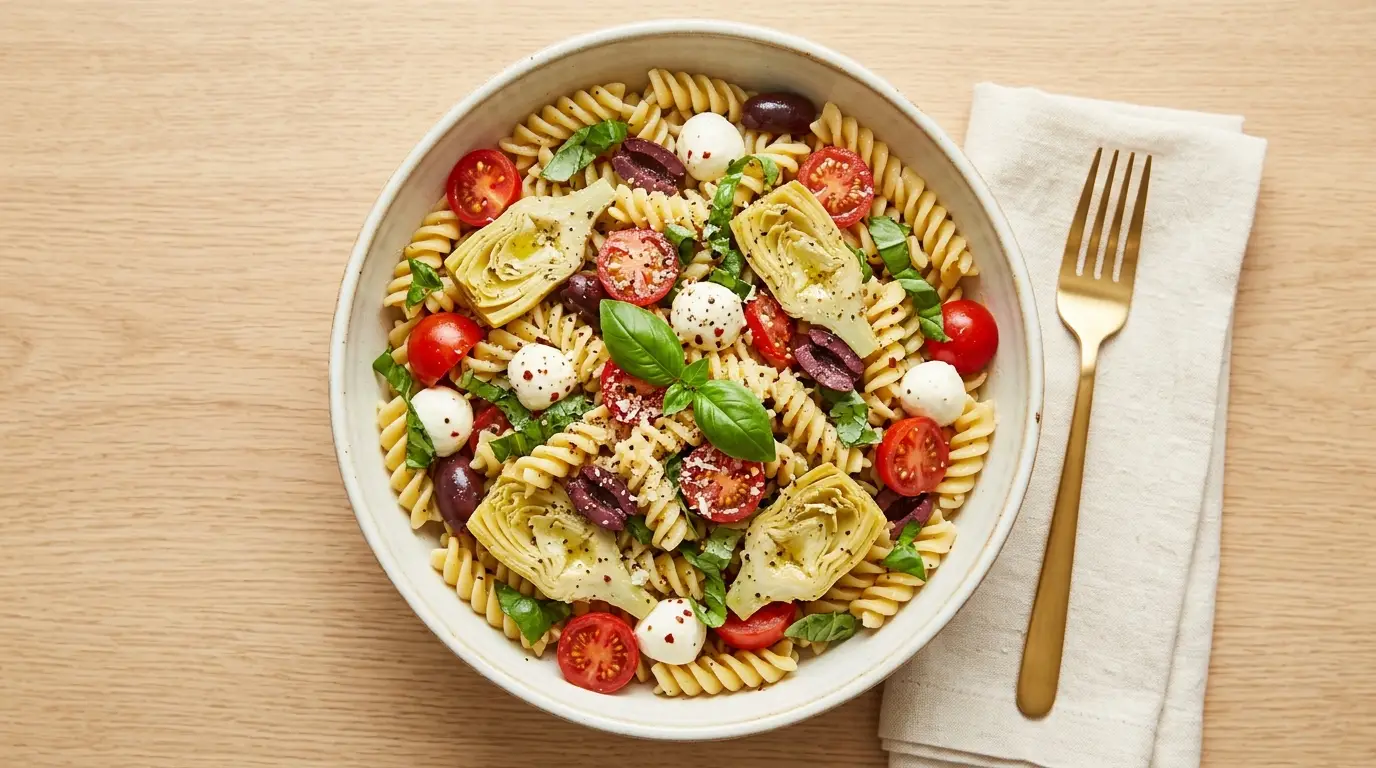
Artichoke Pasta Salad
Ingredients
- 1 lb rotini pasta - 450g
- 2 jars marinated artichoke hearts - 12 oz / 340g each, drained and quartered, oil reserved
- 2 cups cherry tomatoes - 300g, halved
- 1 cup kalamata olives - 150g, pitted and halved
- 1/2 small red onion - 50g, finely diced
- 8 oz fresh mozzarella pearls - 225g
- 1/2 cup grated parmesan cheese - 50g
- 1/4 cup fresh parsley - 15g, chopped
- 1/4 cup fresh basil - 10g, thinly sliced
- 1/4 cup extra virgin olive oil - 60ml, plus reserved artichoke oil
- 3 tablespoons red wine vinegar - 45ml
- 2 cloves garlic - minced
- 1 teaspoon dijon mustard - 5ml
- 1 teaspoon dried oregano - 2g
- 1/2 teaspoon salt
- 1/4 teaspoon black pepper
- 1 tablespoon lemon juice - 15ml, optional
Equipment
- Large stockpot - For boiling pasta
- Colander - For draining and rinsing
- Large glass mixing bowl - For tossing everything together
- Mason Jar - With tight lid, for shaking dressing
- Airtight storage containers - For leftovers
- OXO Salad Spinner - For drying herbs, optional but recommended
- Microplane fine grater - For grating Parmesan, optional but recommended
Method
- Bring a large stockpot of generously salted water to a rolling boil. Add rotini and cook according to package directions until al dente.
- Drain pasta in a colander and rinse under cold water until cool to the touch. Shake to remove excess water and transfer to a large mixing bowl.
- Drain artichoke hearts, reserving about 2 tablespoons of oil for the dressing. Quarter large pieces and add to the bowl with pasta.
- Halve cherry tomatoes, pit and halve olives if needed, and finely dice red onion. Add all to the bowl with pasta and toss lightly.
- In a mason jar, combine olive oil, reserved artichoke oil, red wine vinegar, minced garlic, dijon mustard, oregano, salt, and pepper. Add lemon juice if using.
- Close lid tightly and shake vigorously for about 20 seconds until combined and lightly thickened. Taste and adjust seasoning.
- Pour three-quarters of dressing over pasta mixture. Add mozzarella pearls, parmesan, parsley, and basil.
- Toss everything together with tongs until evenly coated. Taste and adjust seasoning with remaining dressing if needed.
- Cover bowl and refrigerate for at least 30 minutes, or up to overnight for deeper flavor. Toss again before serving.
Nutrition
Notes
- Pasta: Rinse pasta under cold water right after draining to stop cooking and prevent starchiness.
- Cheese: Use fresh mozzarella pearls (not shredded) to avoid a gummy texture. Grate Parmesan fresh for best melting.
- Seasoning: Salt pasta water generously, and taste marinated artichokes before adding extra salt to the salad.
- Herbs: Add delicate herbs like basil closer to serving time if making the salad more than a day ahead to keep them bright.
- Refreshing: If salad looks dry after chilling, refresh with a drizzle of olive oil and splash of vinegar.
- Storage: Store in an airtight container in the refrigerator for up to 4 days. Not suitable for freezing.
- Make-Ahead: This salad improves after a few hours as the dressing soaks in. Can be made up to a day in advance.
- Variations: Add grilled chicken, shrimp, or white beans for extra protein. Omit cheese or use plant-based alternatives for dairy-free.
- Pasta shapes: Bowtie, penne, fusilli, or orzo all work well as substitutes for rotini.
Private Notes
Tried this recipe?
Let us know how it was!Final Thoughts
This artichoke pasta salad recipe earns its spot at a potluck table because it holds up for hours without wilting or drying out, unlike leafy salads that start looking tired within the first thirty minutes. It’s a good one to keep in rotation whenever a cold side dish needs to travel well and still taste fresh by the time it’s served.
Give it a try the next time you need something make-ahead friendly. Let me know in the comments how it turns out, and feel free to share the recipe with anyone who could use a new potluck staple.
Recommended:
- Bacon Ranch Pasta Salad
- Rotini Pasta Salad
- Pesto Pasta Salad
- Tuna Pasta Salad
- Shrimp Pasta Salad
- Chicken Pasta Salad
- Dill Pickle Pasta Salad
- Coleslaw
- Potato Salad