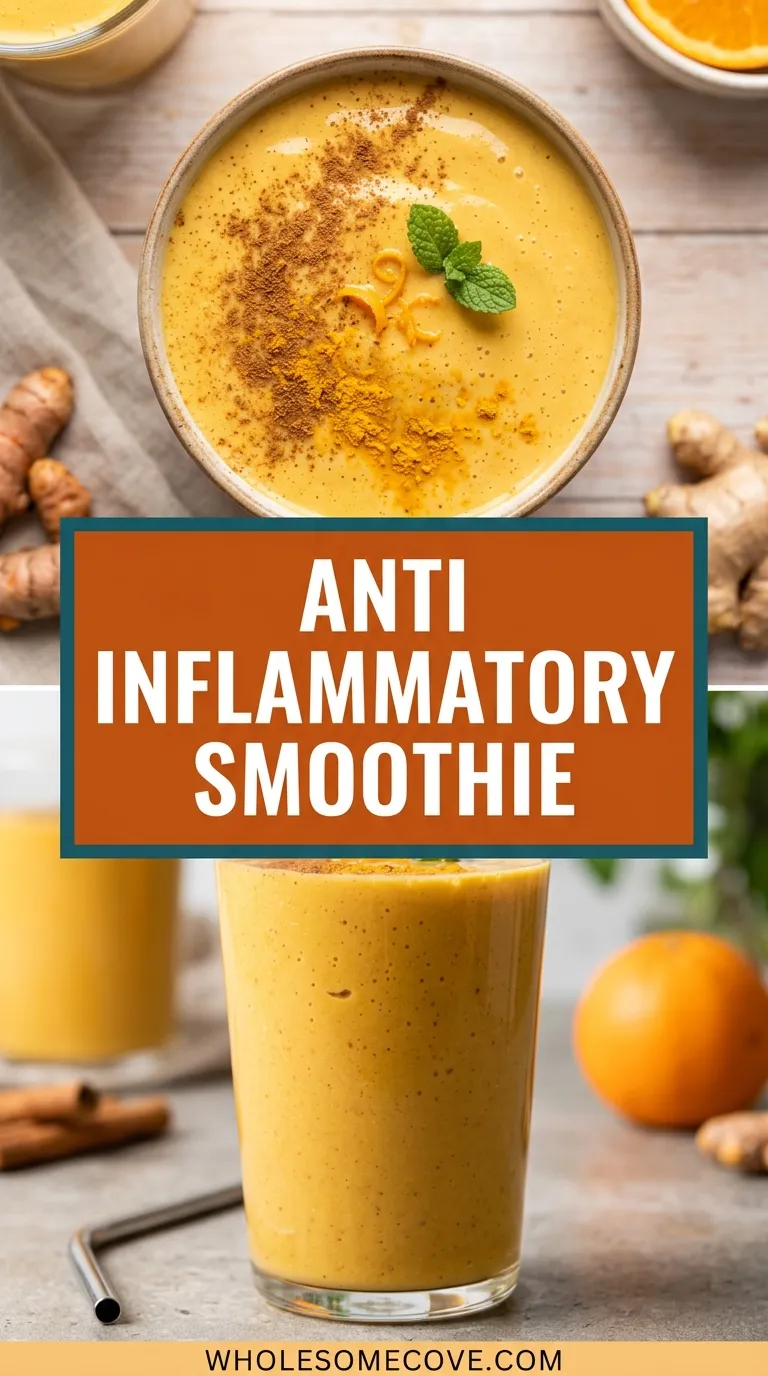
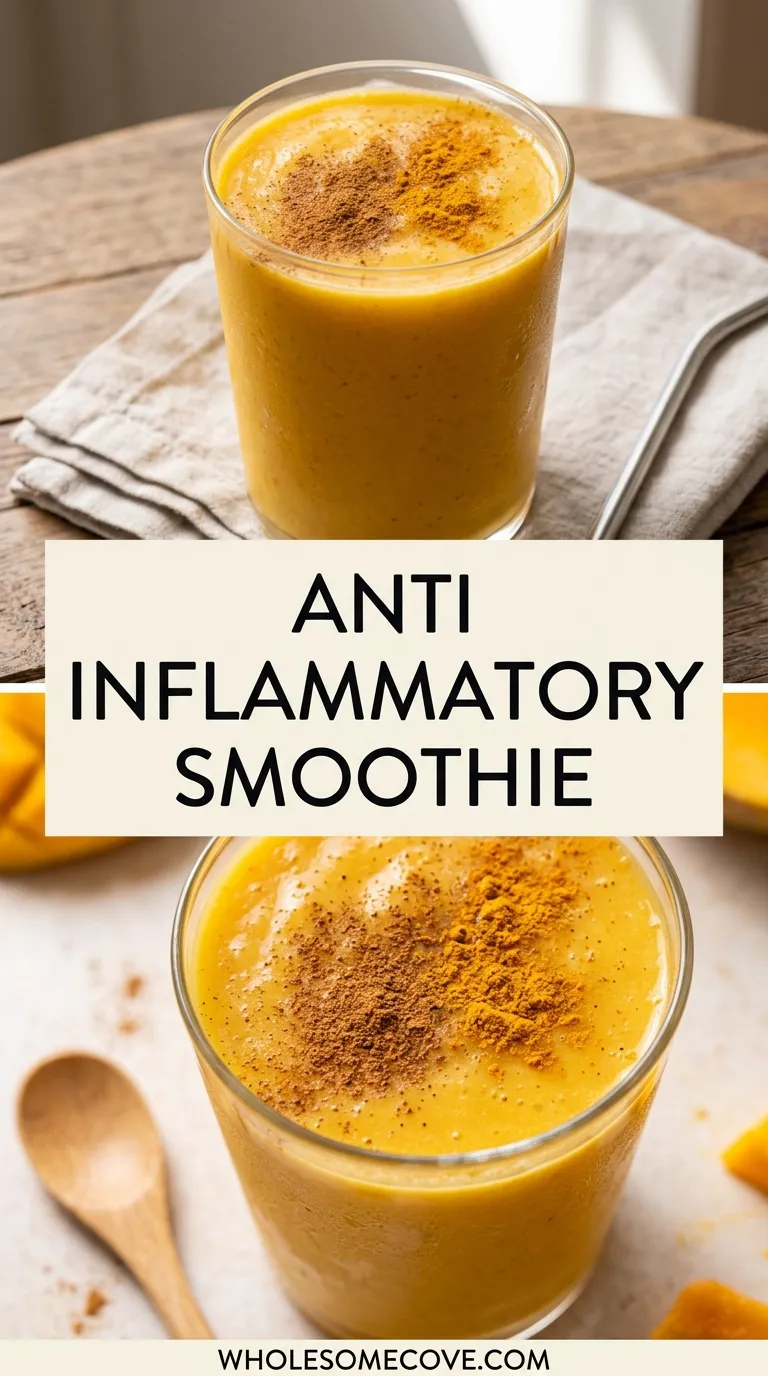
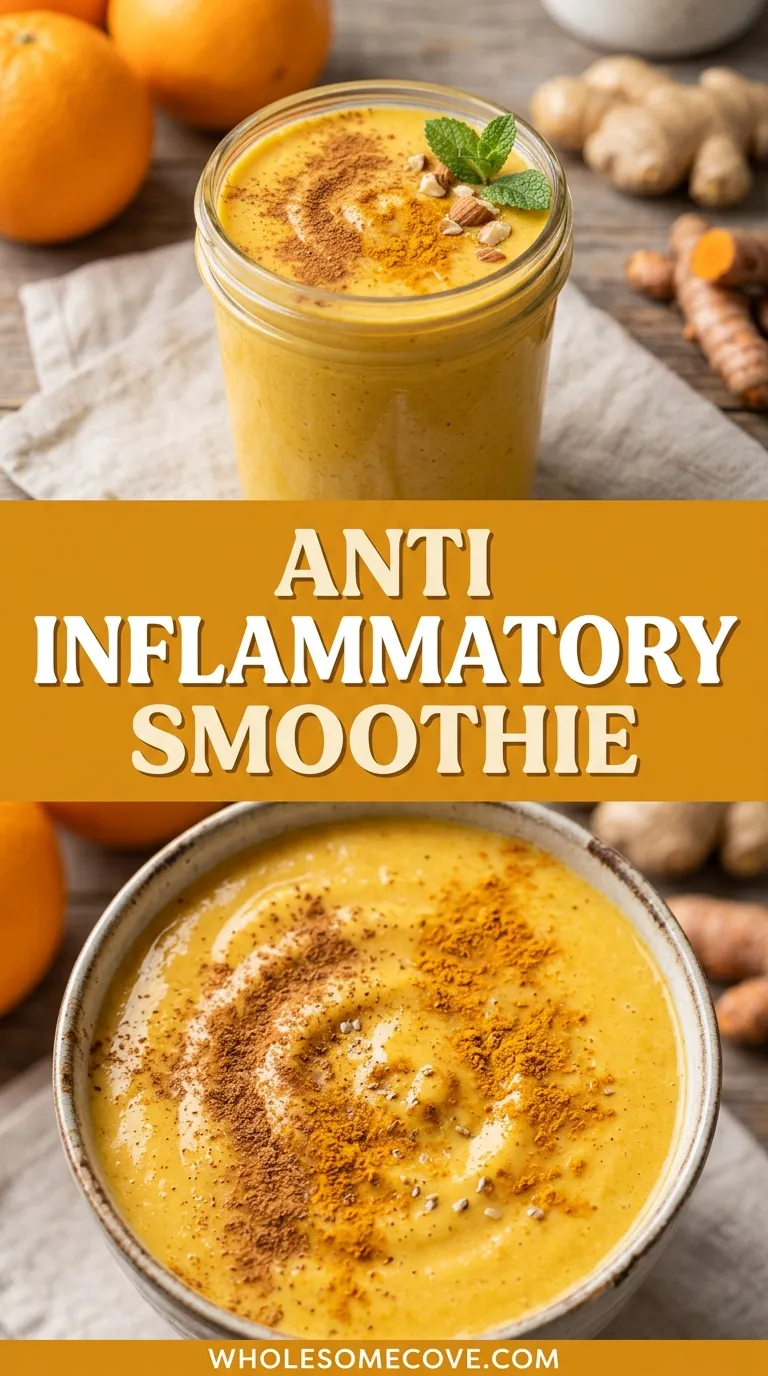
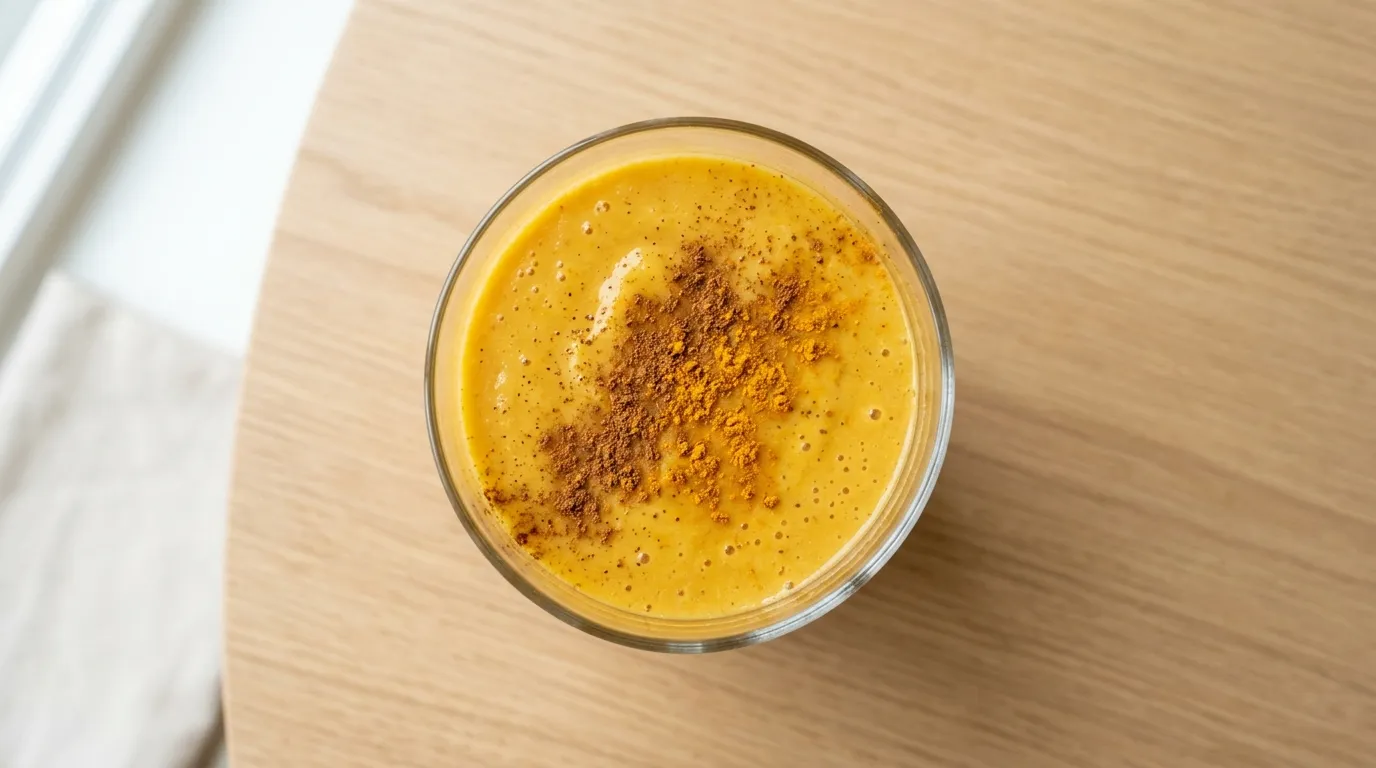
This anti inflammatory smoothie recipe leans on frozen mango, pineapple, and a full teaspoon of grated ginger to build flavor without any refined sugar. Turmeric and cinnamon turn the color a warm golden orange, and the frozen banana keeps the texture thick enough to eat with a spoon rather than sip through a straw.
Turmeric gets most of the credit in recipes like this one, but black pepper’s piperine is what actually helps your body absorb more of turmeric’s curcumin. That is why a small pinch shows up in the ingredient list even though it seems like an odd thing to add to a smoothie.
This one comes together in ten minutes with a single blender jar, and every ingredient earns its place instead of just padding out the color.
| Quick Recipe Summary | |
|---|---|
| Prep Time | 10 minutes |
| Cook Time | 0 minutes |
| Total Time | 10 minutes |
| Servings | 2 smoothies (about 16 oz / 470 ml each) |
| Difficulty Level | Easy |
I lean on this same golden spice combination anytime I want a smoothie that tastes like more than fruit. If mango and turmeric are your thing, my green smoothie recipe uses a similar spinach base with a different fruit lineup.
Why You’ll Love This Anti Inflammatory Smoothie Recipe
This smoothie earns its name honestly instead of just borrowing a trendy word. Every ingredient in it is here because it does something specific, whether that is fighting oxidative stress, adding fiber, or helping your body use the turmeric more effectively.
- Ten minutes, start to finish. No cooking, no soaking, just a blender and a glass.
- Built around real anti-inflammatory research. Turmeric, ginger, spinach, and chia seeds all show up in clinical nutrition literature on inflammation, not just food blog trend pieces.
- Naturally thick without added thickeners. The frozen banana and mango do the work that ice cream or protein powder usually does in other smoothies.
- Only one added sweetener, and it’s optional. A tablespoon of raw honey rounds out the ginger’s heat, but you can leave it out entirely.
- Dairy-free as written. Unsweetened almond milk keeps this friendly for anyone avoiding cow’s milk, and it swaps easily for oat or coconut milk.
- Meal-prep friendly. You can freeze pre-portioned bags of the fruit and greens ahead of time so morning prep is just dump and blend.
- Balanced macros for a snack or light breakfast. It has fiber from chia and spinach, natural sugars from the fruit, and a small amount of plant fat.
- Kid-friendly despite the greens. The mango and pineapple dominate the flavor enough that the spinach mostly just adds color, not a vegetable taste.
- Easy to scale. Doubling or tripling the recipe works cleanly since every ingredient scales in a simple ratio.
You might also enjoy: Breakfast Smoothie Recipe
Ingredients
Everything here is easy to find at a regular grocery store, and most of it keeps well in the freezer or pantry for the next batch. Nothing on this list requires a specialty health food shop, which is part of why this recipe is easy to repeat weekly.
- 1 cup / 240 ml unsweetened almond milk
- 1 cup / 30 g packed baby spinach
- 1 tablespoon / 15 ml fresh lemon juice
- 1 tablespoon / 21 g raw honey, optional, to taste
- 1/2 teaspoon ground turmeric
- 1/4 teaspoon ground cinnamon
- 1 teaspoon / 5 g fresh ginger root, peeled and grated
- 1 small pinch ground black pepper
- 1 cup / 150 g frozen mango chunks
- 1 cup / 150 g frozen pineapple chunks
- 1 medium banana, sliced and frozen at least 2 hours ahead (or use a pre-frozen banana)
- 1 tablespoon / 10 g chia seeds
I’ve swapped the pineapple for extra mango on weeks when it’s not in season, and the smoothie still turns out well since mango carries most of the sweetness on its own.
Read Also: Frozen Fruit Smoothie Recipe
Kitchen Equipment Needed
You don’t need anything fancy for this one, just a blender strong enough to break down frozen fruit without leaving chunks. Everything else on this list is standard kitchen gear that most people already own.
- A high-speed blender capable of crushing frozen fruit smoothly
- A microplane grater for the fresh ginger
- Measuring cups and spoons
- A citrus juicer for the lemon
- Glass mason jars or a travel cup for storing or serving
- A rubber spatula for scraping down the blender sides
This same setup covers just about any smoothie I make, so it’s worth having on hand even beyond this recipe. I picked up reusable silicone straws a while back, and I’ve used them daily since since they don’t go soggy in thick smoothies the way paper ones do.
Read Also: Protein Smoothie Recipe
Recommended Products for This Recipe
These are products I’ve actually used while testing this recipe, and each one solves a specific problem I ran into along the way.
1. Vitamix Explorian Blender
Cheaper blenders leave stringy bits of ginger and mango skin behind no matter how long you run them, which means the smoothie ends up gritty instead of silky. A high-torque blender like this one breaks down frozen fruit and fibrous ginger completely in under a minute, so you get a smooth drink instead of one with fibrous flecks throughout.
2. Organic Ceylon Cinnamon
Most grocery store cinnamon is cassia, which has a sharper, more one-note flavor. Ceylon cinnamon is milder and slightly citrusy, and it pairs better with the ginger and turmeric here instead of overpowering them.
3. Bamboo Lid Glass Smoothie Cups
Plastic cups pick up turmeric stains after a few uses and never fully come clean. Glass cups with bamboo lids don’t stain, and the wide mouth makes them easy to fill straight from the blender without a funnel.
4. Stainless Steel Citrus Reamer
A hand-held reamer gets more juice out of a single lemon than squeezing by hand, which matters when the recipe only calls for one tablespoon and you don’t want to waste the rest of the lemon. It also catches seeds automatically, so nothing goes into the blender by accident.
You might also enjoy: Almond Milk Smoothie Recipe
Step-by-Step Instructions: How to Make Anti Inflammatory Smoothie
Follow these steps in order and you’ll have a smooth, evenly blended drink without any chunks of ginger or spinach stem.
1. Prep the fresh ingredients
- Peel and grate the fresh ginger with a microplane, measuring out 1 teaspoon.
- Juice the lemon, straining out any seeds.
- Rinse the baby spinach if it isn’t pre-washed and shake off excess water.
- Confirm your banana is already sliced and frozen. If it isn’t, this recipe needs at least 2 hours of freezer time before you can start.
2. Add the liquid and soft ingredients first
- Pour the unsweetened almond milk into the blender jar.
- Add the packed baby spinach on top of the liquid.
- Add the fresh lemon juice and raw honey, if using.
3. Add the spices
- Sprinkle in the ground turmeric, ground cinnamon, and grated ginger.
- Add the small pinch of ground black pepper.
- Add the chia seeds so they have time to hydrate slightly while you finish adding the fruit.
4. Add the frozen fruit
- Add the frozen mango chunks and frozen pineapple chunks.
- Add the frozen banana slices last, since they sit closest to the blades and blend most easily from that position.
5. Blend until completely smooth
- Start the blender on low speed for 10 to 15 seconds to break up the largest frozen pieces.
- Increase to high speed and blend for 45 to 60 seconds, or until no chunks remain and the mixture looks glossy.
- Stop and scrape down the sides with a spatula halfway through if your blender is on the smaller side.
6. Taste, adjust, and serve
- Taste the smoothie and add more honey, a teaspoon at a time, if you want it sweeter.
- If it’s too thick to pour easily, add a splash more almond milk and blend again for 5 seconds.
- Pour into two glasses or travel cups and serve immediately.
Tips for The Best Anti Inflammatory Smoothie
A few small habits make the difference between a smoothie that separates in the glass and one that stays smooth until the last sip.
- Freeze your banana slices in a single layer on a baking sheet before transferring them to a bag, so they don’t clump into one solid mass.
- Grate the ginger instead of chopping it. Chopped ginger tends to leave stringy fibers even in a strong blender.
- Add the liquid before the greens and frozen fruit so the blades have something to grip immediately instead of spinning against dry ingredients.
- I ruined my first few batches by adding the frozen fruit before the almond milk, which left the blender motor straining and the bottom half unblended. Liquid first solved it completely.
- If your blender struggles with frozen fruit, let the mango and pineapple sit at room temperature for 5 minutes before blending.
- Use full-fat coconut milk instead of almond milk if you want a creamier, richer texture.
- Keep a small jar of pre-grated ginger in the freezer so you can skip the grating step on rushed mornings.
- Rinse the blender jar immediately after use, since turmeric stains plastic and silicone gaskets if it sits for more than an hour.
- If you’re sensitive to ginger’s heat, start with half a teaspoon and increase gradually in future batches once you know your tolerance.
- A wide-mouth blender jar makes it easier to add frozen fruit without knocking pieces onto the counter.
Read Also: Beet Smoothie Recipe
What to Serve with Anti Inflammatory Smoothie
This smoothie works well on its own, but it also pairs nicely with something more substantial if you need a full breakfast instead of a snack.
- Overnight Oats for a fiber-heavy breakfast that keeps you full longer
- Baked Oatmeal if you want something warm alongside the cold smoothie
- Avocado Toast for healthy fats and a savory contrast to the sweet fruit
- A Breakfast Burrito on mornings when you need more protein
- Homemade Granola sprinkled on top for crunch
- A soft-boiled or scrambled egg on the side for extra protein without changing the smoothie itself
- Plain Greek yogurt served alongside for a thicker, more filling combination
For a lighter option, try: Papaya Smoothie Recipe
Variations of Anti Inflammatory Smoothie
Once you’ve made the base recipe a few times, it’s easy to adjust it based on what’s in your kitchen or what you’re craving that day.
- Green version: Swap the spinach for kale and add an extra 1/4 cup of water to loosen the texture, since kale is denser than spinach.
- Protein-boosted version: Blend in a scoop of unflavored or vanilla protein powder along with the almond milk.
- Tropical version: Add 1/4 cup of coconut milk in place of half the almond milk for a richer, more tropical flavor.
- Berry version: Replace the mango with frozen blueberries, which bring their own set of antioxidants along with a deeper color.
- Avocado version: Add half a small avocado for extra creaminess and healthy fats, and reduce the banana to keep the texture from getting too thick.
- Extra-spicy ginger version: Double the fresh ginger if you like a stronger bite, which also intensifies the anti-inflammatory properties.
- Golden milk version: Add 1/4 teaspoon of ground cardamom along with the turmeric and cinnamon for a chai-like warmth.
- Low-sugar version: Skip the honey entirely and add an extra handful of spinach, which barely changes the flavor but lowers the total sugar per serving.
- Nutty version: Blend in a tablespoon of almond butter or peanut butter for added protein and a slightly nutty aftertaste that pairs surprisingly well with the ginger.
This pairs beautifully with my coconut milk smoothie recipe if you want to explore the tropical variation further with a full separate recipe.
Storage and Reheating
Smoothies are always best fresh, but this one holds up reasonably well if you need to prep ahead.
- Store leftovers in an airtight glass jar in the refrigerator for up to 24 hours.
- Expect some natural separation after a few hours. Shake or stir well before drinking.
- Do not freeze the finished smoothie, since the texture turns icy and grainy once thawed.
- For make-ahead convenience, pack the spinach, mango, pineapple, and frozen banana into a labeled freezer bag so you only need to add liquid and spices in the morning.
- Freezer bags of pre-portioned ingredients keep well for up to 3 months.
- Avoid microwaving leftovers to “warm up” the smoothie, since the fruit and spinach both turn unpleasantly bitter when heated this way.
- Fill jars only about three-quarters full before refrigerating, since the mixture can expand slightly overnight and push against a tight lid.
- Label freezer bags with the date, since pre-portioned smoothie packs are easy to forget about once they’re stacked in the freezer door.
You might also enjoy: Keto Smoothie Recipe
Nutritional Facts
| Nutrition Per Serving (1 of 2) | |
|---|---|
| Calories | 182 kcal |
| Protein | 3 g |
| Carbohydrates | 41 g |
| Fiber | 6 g |
| Sugars | 29 g |
| Fat | 3 g |
| Sodium | 95 mg |
| Vitamin C | 65% DV |
Values are estimates and will vary based on specific brands and substitutions used.
For a lighter option, try: Weight Loss Smoothie Recipe
Health Benefits of Key Ingredients
Every ingredient in this smoothie was chosen for a reason beyond flavor, and most of them show up repeatedly in nutrition research on inflammation.
- Turmeric: Contains curcumin, a compound studied for its role in reducing markers of inflammation in the body.
- Fresh ginger: Contains gingerol, which has been linked to reduced inflammation and improved digestion.
- Black pepper: The piperine in black pepper significantly increases how much curcumin your body can actually absorb from turmeric.
- Baby spinach: A source of vitamin K, folate, and antioxidants that support overall cellular health.
- Frozen mango and pineapple: Both provide vitamin C, and pineapple contains bromelain, an enzyme associated with reduced swelling.
- Chia seeds: Provide plant-based omega-3 fatty acids and fiber, both linked to lower inflammatory markers.
- Cinnamon: Contains antioxidant compounds and has been studied for its role in supporting healthy blood sugar levels.
- Banana: Adds potassium and a naturally creamy texture without needing added sugar.
- Raw honey: Contains trace antioxidant compounds, though it should still be treated as an added sugar and used sparingly.
- Lemon juice: Provides vitamin C and a bright acidity that balances the earthiness of the turmeric and ginger.
Read Also: Diabetic Smoothie Recipe
FAQs About Anti Inflammatory Smoothie
1. Can I use ground ginger instead of fresh ginger?
Yes, but the flavor will be noticeably milder and slightly more one-dimensional. Use 1/4 teaspoon of ground ginger in place of the tablespoon of fresh, and expect less of the sharp, peppery bite that fresh ginger brings.
2. Is this smoothie safe to drink every day?
For most healthy adults, drinking this smoothie daily is fine since it’s built from whole fruits, vegetables, and spices in reasonable amounts. If you’re managing a specific health condition or take medication, it’s worth checking with a doctor before making any food a daily habit.
3. Can I make this without a banana?
Yes, though the texture will be thinner and less creamy. Try adding an extra 1/4 cup of frozen mango or a couple of ice cubes to keep the thickness similar.
Frozen avocado also works well as a banana substitute if you want to keep the same thick consistency without the extra sweetness.
4. Why does the recipe call for black pepper in a smoothie?
Black pepper’s piperine compound has been shown to significantly increase how much curcumin the body absorbs from turmeric. Without it, most of the turmeric’s benefit simply passes through the digestive system unused.
5. Can I substitute the almond milk with a different milk?
Yes, oat milk, coconut milk, and regular dairy milk all work in place of almond milk. Keep in mind that coconut milk will make the smoothie noticeably richer and higher in fat than the almond milk version.
Read Also: Matcha Green Tea Smoothie Recipe
Anti Inflammatory Smoothie
Ingredients
- 1 cup unsweetened almond milk - 240ml
- 1 cup baby spinach - 30g, packed
- 1 tablespoon fresh lemon juice - 15ml
- 1 tablespoon raw honey - 21g, optional, to taste
- 1/2 teaspoon ground turmeric
- 1/4 teaspoon ground cinnamon
- 1 teaspoon fresh ginger root - 5g, peeled and grated
- 1 small pinch ground black pepper
- 1 cup frozen mango chunks - 150g
- 1 cup frozen pineapple chunks - 150g
- 1 medium banana - sliced and frozen at least 2 hours ahead, or use a pre-frozen banana
- 1 tablespoon chia seeds - 10g
Equipment
- High-speed blender - capable of crushing frozen fruit smoothly
- Microplane grater - for fresh ginger
- Citrus juicer - for lemon
- Glass mason jars - with lids, for storing or serving
- Rubber spatula - for scraping down the blender sides
Method
- Peel and grate the fresh ginger, juice the lemon, rinse the spinach, and confirm your banana is frozen.
- Pour the unsweetened almond milk into the blender jar, then add the packed baby spinach, fresh lemon juice, and raw honey if using.
- Sprinkle in the ground turmeric, ground cinnamon, grated ginger, black pepper, and chia seeds.
- Add the frozen mango chunks, frozen pineapple chunks, and frozen banana slices last.
- Start on low speed for 10-15 seconds, then increase to high and blend for 45-60 seconds until completely smooth and glossy. Scrape down the sides halfway if needed.
- Taste and add more honey if desired. If too thick, add a splash more almond milk and blend for 5 seconds. Pour into two glasses and serve immediately.
Nutrition
Notes
- Freeze banana slices in a single layer before transferring to a bag to prevent clumping.
- Grate the ginger instead of chopping to avoid stringy fibers in the smoothie.
- Add liquid before greens and frozen fruit so the blades have something to grip immediately.
- If your blender struggles, let frozen fruit sit at room temperature for 5 minutes before blending.
- Use full-fat coconut milk instead of almond milk for a creamier, richer texture.
- Keep pre-grated ginger in the freezer to skip the grating step on busy mornings.
- Rinse the blender jar immediately after use to prevent turmeric from staining plastic and silicone.
- Start with half a teaspoon of ginger if you’re sensitive to heat, then increase gradually.
- Store leftovers in an airtight glass jar in the refrigerator for up to 24 hours; shake well before drinking.
- For make-ahead convenience, pack spinach, mango, pineapple, and banana into labeled freezer bags for up to 3 months.
Private Notes
Tried this recipe?
Let us know how it was!Final Thoughts
This anti inflammatory smoothie recipe earns its spot in a regular breakfast rotation because it actually delivers on what the name promises. It takes ten minutes, uses ingredients most people already have on hand, and tastes bright instead of medicinal.
Give it a try this week and see how the ginger and turmeric combination works for you. If you make it, I’d love to hear how you tweaked it in the comments below, or see your version tagged on social media.
Recommended:
- Blueberry Smoothie Recipe
- Strawberry Banana Smoothie Recipe
- Avocado Smoothie Recipe
- Kale and Fruit Smoothie Recipe
- Greek Yogurt Smoothie Recipe
- Yogurt Smoothie Recipe
- Berry Smoothie Recipe
- Watermelon Smoothie Recipe
- Coconut Smoothie Recipe