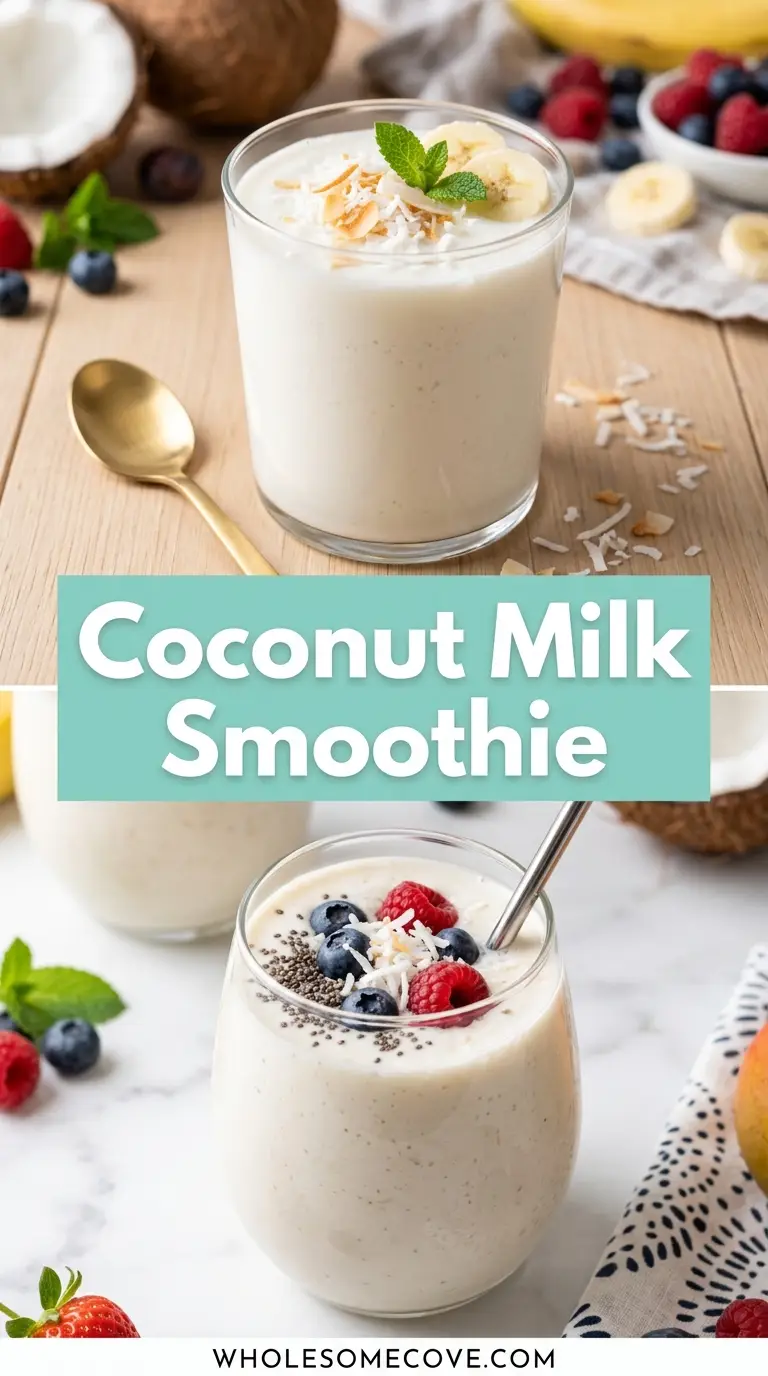
A good coconut milk smoothie recipe starts with one simple truth: coconut milk makes smoothies taste like dessert while still being good for you. This version blends frozen banana, pineapple, and full fat coconut milk into a thick, dairy free drink that tastes like a vacation in a glass.
It comes together in one blender and takes less than ten minutes from start to finish.
Coconut milk has become a favorite smoothie base for anyone avoiding dairy or just looking for extra richness without extra effort. It blends into a thick, almost milkshake like texture that holds frozen fruit beautifully.
This recipe keeps things simple with pantry staple ingredients so you can make it any morning of the week.
| Quick Recipe Summary | |
|---|---|
| Prep Time | 10 minutes |
| Cook Time | 0 minutes |
| Total Time | 10 minutes |
| Servings | 2 smoothies |
| Difficulty Level | Easy |
If you love building a smoothie rotation, my Greek Yogurt Smoothie is another creamy favorite worth trying.
Why You’ll Love This Coconut Milk Smoothie Recipe
This recipe earns a permanent spot in your weekly routine because it is fast, flexible, and genuinely satisfying. It tastes indulgent without any added cream or ice cream.
Here is what makes it a standout:
- Naturally dairy free. Full fat coconut milk gives you that thick, creamy texture without a drop of dairy.
- Ready in 10 minutes. No cooking, no prep work beyond freezing your fruit ahead of time.
- Tropical flavor in every sip. Pineapple and banana balance the richness of the coconut milk perfectly.
- Endlessly customizable. Swap fruits, add protein powder, or toss in greens without losing the creamy base.
- Great make ahead option. Freeze portioned smoothie packs so all you have to do is blend.
- Kid friendly. The natural sweetness means you rarely need to add extra sugar.
- Budget friendly. Built from a handful of affordable, easy to find ingredients.
I started making this coconut milk smoothie recipe years ago when I went through a phase of trying to cut back on dairy. For another dairy free favorite, try: Yogurt Smoothie
Ingredients
You only need a handful of ingredients for this smoothie, and most of them are pantry or freezer staples. Here is exactly what you will need and why each one matters.
- 1 cup (240ml) full fat coconut milk, canned, well shaken. This is the creamy base of the entire smoothie.
- 1 medium frozen banana, sliced before freezing. This adds natural sweetness and a thick, milkshake like texture.
- 1 cup (165g) frozen pineapple chunks. This brings bright, tropical flavor and balances the richness of the coconut milk.
- 1/2 cup (75g) frozen mango chunks. This adds extra sweetness and a smooth, velvety consistency.
- 1 tablespoon honey or pure maple syrup (optional). Add this if your fruit isn’t quite ripe enough or you prefer a sweeter smoothie.
- 1/2 teaspoon pure vanilla extract (optional). This rounds out the flavor and adds warmth.
- 2 to 4 ice cubes, only if you want an extra thick, frosty texture.
- 2 tablespoons unsweetened shredded coconut (optional, for topping). This adds texture and reinforces the coconut flavor.
A note on the coconut milk: canned full fat coconut milk gives you the thickest, creamiest result, similar to the richness you get in a mango smoothie made with full fat coconut milk. Carton coconut milk works too, but your smoothie will be noticeably thinner since it has a lower fat content.
Kitchen Equipment Needed
You don’t need much specialty equipment to make this smoothie, but a few key tools make a real difference in texture and ease of cleanup.
- High powered blender. A strong motor is essential for breaking down frozen fruit into a silky smooth texture without leaving chunks.
- Measuring cups and spoons. For accurate ingredient ratios so your smoothie consistency stays consistent every time.
- Rubber spatula. Useful for scraping down the sides of the blender between blends.
- Glass smoothie tumblers. For serving, though any glass will do in a pinch.
- Reusable stainless steel straws. A small touch that makes smoothie time feel a little more special.
- Freezer safe silicone bags. For pre-portioning your fruit if you like to prep smoothie packs ahead of time.
I learned the hard way that a weak blender just can’t handle frozen banana and pineapple together. My old blender used to stall out halfway through, leaving icy chunks at the bottom no matter how long I blended.
Read Also: Avocado Smoothie Recipe
Recommended Products for This Recipe
These are products I genuinely use and recommend after years of making smoothies at home. Each one solves a specific problem that comes up again and again when blending frozen fruit and thick liquids like coconut milk.
1. Vitamix High-Performance Blender
A high powered blender is the single biggest factor in getting that ultra smooth, creamy texture this recipe is known for. Vitamix blenders chew through frozen banana and pineapple without leaving icy bits, even with thick coconut milk in the mix. It’s an investment, but it pays off every single morning.
2. Canned Full-Fat Coconut Milk
Not all coconut milk is created equal, and the canned full fat version makes a noticeably richer, creamier smoothie than the carton kind. I always keep a few cans in my pantry specifically for smoothies. It separates a bit in the can, so give it a good shake before measuring.
3. Silicone Freezer Tray with Lid
These trays are perfect for freezing banana slices, pineapple chunks, or even pre-measured coconut milk in individual portions. It keeps my freezer organized and makes assembling a smoothie almost instant on busy mornings. The flexible silicone also makes popping out frozen pieces effortless.
4. Glass Smoothie Tumblers with Straws
I switched to glass tumblers a while back, and they keep smoothies colder for longer compared to regular cups. The wide mouth makes them easy to clean, and the reusable straws cut down on plastic waste. They also just make smoothie time feel a little more intentional.
5. Unsweetened Shredded Coconut
This is my go to topping for adding texture and reinforcing that coconut flavor without adding extra sugar. A small sprinkle on top turns a simple smoothie into something that feels a little more special. It also works wonderfully stirred into oatmeal or yogurt.
For a lighter option, try: Strawberry Banana Smoothie
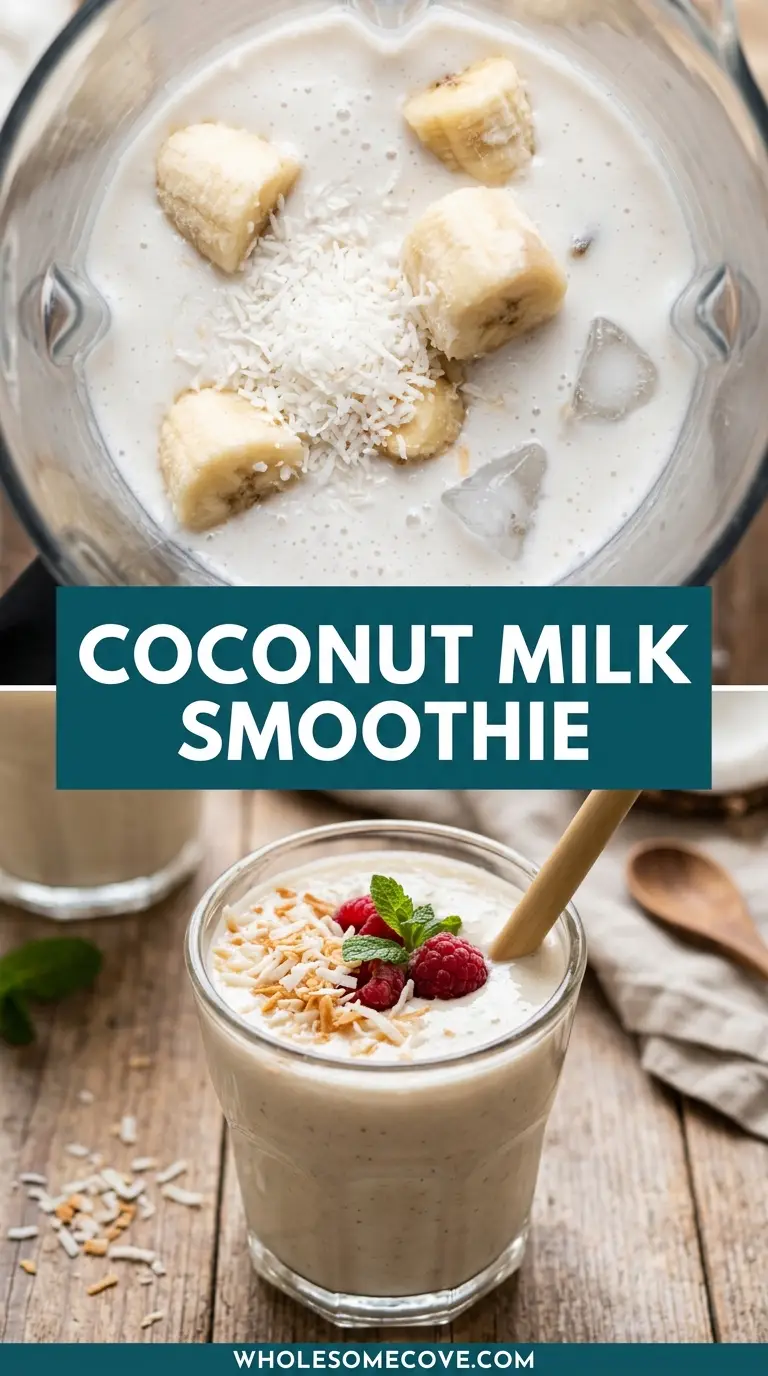
Step-by-Step Instructions: How to Make Coconut Milk Smoothie
Follow these simple steps and you’ll have a delicious coconut milk smoothie ready in no time.
1. Prep Your Frozen Fruit
- If your banana and pineapple aren’t already frozen, slice the banana into coins and cut the pineapple into chunks.
- Spread the pieces out on a baking sheet lined with parchment paper so they don’t clump together.
- Freeze for at least 2 hours, or until completely solid.
- This step can be done up to a week in advance for faster smoothie mornings.
2. Measure the Coconut Milk
- Shake the can of coconut milk vigorously before opening, since the cream and liquid naturally separate during storage.
- Open the can and stir briefly to fully recombine the contents.
- Measure out 1 cup (240ml) and pour it directly into the blender jar first.
- Adding the liquid first helps the blades catch the frozen fruit more easily once it’s added.
3. Add the Frozen Fruit
- Add the frozen banana slices to the blender on top of the coconut milk.
- Add the frozen pineapple chunks and frozen mango chunks.
- Keep the fruit roughly the same size so it blends evenly without large chunks getting stuck.
- Avoid overfilling the blender jar past the max fill line to leave room for proper blending.
4. Add Optional Sweeteners and Flavorings
- If using, drizzle in 1 tablespoon of honey or maple syrup.
- Add 1/2 teaspoon of vanilla extract if you want a warmer, rounder flavor.
- Skip both if your fruit is very ripe, since it likely won’t need extra sweetness.
- Taste and adjust after the first blend if needed.
5. Blend Until Smooth
- Secure the lid tightly and start blending on low speed for about 10 seconds to break up the frozen pieces.
- Gradually increase to high speed and blend for 30 to 45 seconds, until the mixture is completely smooth and creamy.
- Stop and scrape down the sides with a rubber spatula if the fruit isn’t incorporating evenly.
- Blend again for another 10 to 15 seconds after scraping.
6. Adjust the Consistency
- If the smoothie is too thick to blend smoothly, add a splash more coconut milk, 1 tablespoon at a time.
- If you prefer it extra frosty and thick, add 2 to 4 ice cubes and blend again until fully incorporated.
- The final texture should be thick enough to coat the back of a spoon but still pourable.
- Avoid adding too much liquid at once, since it’s easier to thin a smoothie than to thicken it.
7. Serve and Garnish
- Pour the smoothie evenly into two tall glasses.
- Top with a sprinkle of unsweetened shredded coconut if desired.
- Add a reusable straw and serve immediately for the best texture.
- Smoothies are best enjoyed right after blending, since they start to separate if left sitting too long.
Read Also: Breakfast Smoothie Recipe
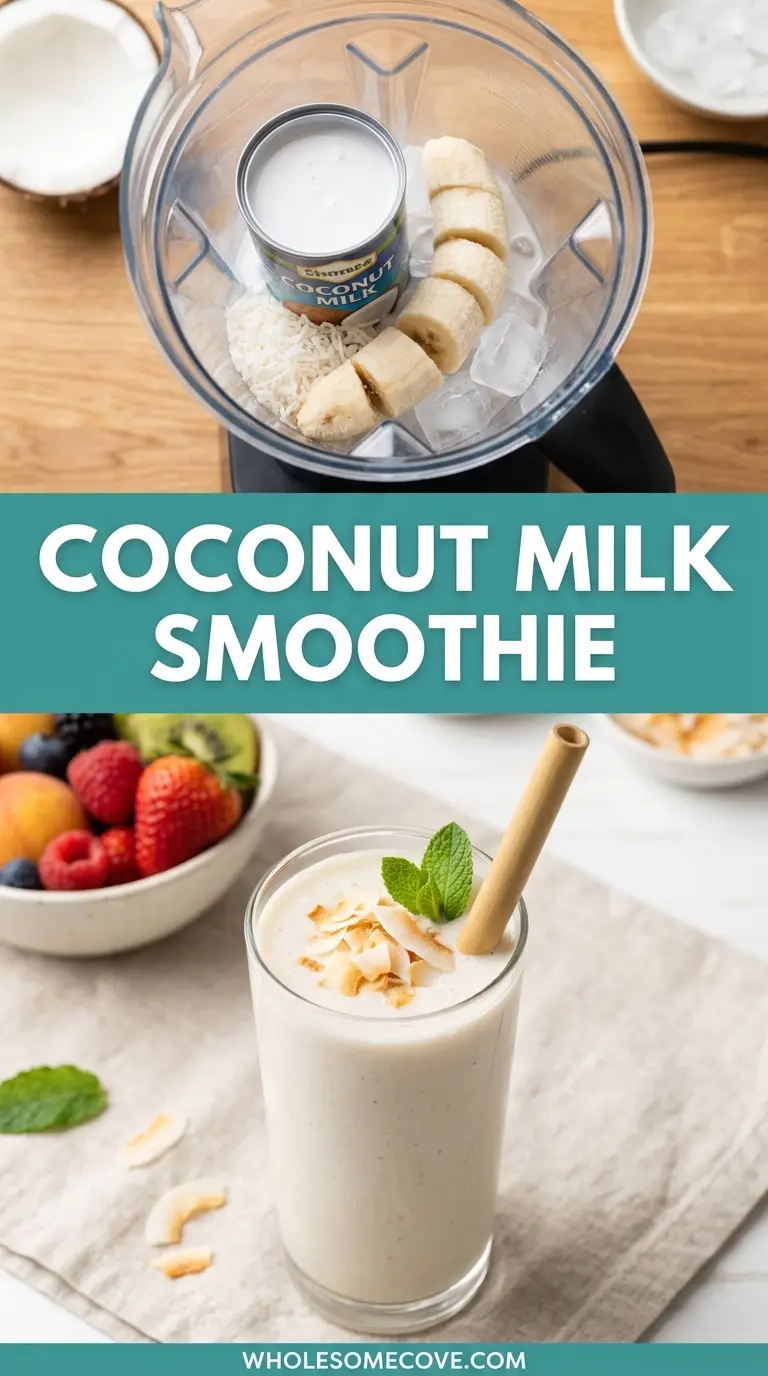
Tips for The Best Coconut Milk Smoothie
A few small adjustments can make a big difference between an average smoothie and a genuinely great one. Here are the tips I have picked up after making this recipe more times than I can count.
- Always freeze your banana ahead of time. A fresh banana will give you a thin, watery smoothie instead of that thick, milkshake like texture.
- Shake the coconut milk can well. The cream rises to the top during storage, and skipping this step gives you an unevenly blended smoothie.
- Don’t skip the liquid first rule. Adding coconut milk before the frozen fruit helps your blender blades engage properly instead of spinning uselessly on top of solid chunks.
- Use a tamper if your blender has one. This helps push stubborn frozen fruit down toward the blades without needing to add extra liquid.
- Taste before adding sweetener. Ripe, well frozen fruit is often sweet enough on its own.
- Blend in short bursts if your motor struggles. This prevents overheating and gives the fruit time to break down gradually.
- Keep portions of frozen fruit pre-bagged. This turns a 10 minute smoothie into more of a 5 minute one on busy mornings.
- Avoid letting the smoothie sit too long before drinking. Coconut milk smoothies separate faster than dairy based ones once they start to warm up.
One mistake I made early on was using coconut milk straight from the fridge without shaking it first. I ended up with a smoothie that was watery on one side of the glass and overly rich on the other, which taught me to always shake the can well before measuring, a lesson I now apply to every berry smoothie and tropical blend I make.
What to Serve with Coconut Milk Smoothie
A coconut milk smoothie makes a satisfying breakfast on its own, but pairing it with something light and complementary turns it into a more complete meal. Here are some ideas that work especially well alongside it.
- Granola. A handful of crunchy granola on the side adds texture and a bit of fiber.
- Toast with nut butter. Whole grain toast spread with almond or peanut butter rounds out the meal with protein and healthy fats.
- Hard boiled eggs. A simple, protein packed addition if you need something more filling.
- Fresh fruit salad. Doubling up on fruit keeps the meal light and refreshing, especially in warmer months.
- Overnight oats. A small jar of overnight oats pairs nicely if you want a heartier breakfast spread.
- Coconut yogurt parfait. Layered yogurt, fruit, and granola complement the tropical flavors in the smoothie.
- Iced coffee. For anyone who needs caffeine alongside their breakfast, a cold brew pairs surprisingly well with coconut flavors.
For breakfast inspiration beyond smoothies, try: Avocado Toast Recipe
Variations of Coconut Milk Smoothie
One of the best things about this recipe is how easily it adapts to whatever you have on hand or whatever flavor you are craving. Here are some variations I have tried and loved over the years.
- Green coconut smoothie. Add a handful of spinach for extra nutrients without changing the flavor much.
- Chocolate coconut smoothie. Stir in 1 tablespoon of cocoa powder for a chocolate forward twist.
- Berry coconut smoothie. Swap the pineapple and mango for frozen mixed berries for a tangier flavor.
- Protein boosted version. Add a scoop of vanilla or unflavored protein powder for a post workout option.
- Piña colada smoothie. Add a splash of pineapple juice and a pinch of coconut extract for a more dessert like flavor.
- Keto friendly version. Skip the honey and mango, and use a low sugar berry mix instead.
- Matcha coconut smoothie. Whisk in 1/2 teaspoon of matcha powder for an earthy, energizing variation.
- Spiced coconut smoothie. A pinch of cinnamon or cardamom adds warmth, especially nice in cooler months.
When I’m craving something a little different, I usually turn to my Strawberry Smoothie recipe instead, which uses a similar method with a completely different flavor profile.
Storage and Reheating
Smoothies are best enjoyed fresh, but there are ways to store extra portions or prep components ahead of time without sacrificing quality. Here is how I handle leftovers and meal prep for this recipe.
- Refrigerator storage. Store leftover smoothie in an airtight container or mason jar for up to 24 hours, though texture is best within the first few hours.
- Shake or stir before drinking. Coconut milk smoothies separate as they sit, so give it a good shake before serving again.
- Freezer storage for smoothie packs. Pre-portion the fruit (without the liquid) into freezer bags so all you need to do is add coconut milk and blend.
- Avoid freezing the finished smoothie. Freezing the blended smoothie changes the texture significantly once thawed and often turns grainy.
- Label your smoothie packs. Note the date and contents on each bag so you can rotate through your freezer stash efficiently.
- Use within 3 months for frozen fruit packs. This keeps the fruit tasting fresh and prevents freezer burn.
- No reheating necessary. This is a cold smoothie meant to be enjoyed chilled straight from the blender.
I always keep a few pre-portioned smoothie packs in my freezer for mornings when I’m short on time, and it’s genuinely cut my prep time down to almost nothing.
You might also enjoy: Dragon Fruit Smoothie
Nutritional Facts
| Nutrition (Per Serving) | |
|---|---|
| Calories | 285 kcal |
| Total Fat | 19g |
| Saturated Fat | 16g |
| Carbohydrates | 30g |
| Fiber | 3g |
| Sugars | 21g |
| Protein | 2g |
| Sodium | 15mg |
Nutritional values are estimates and will vary based on specific brands and substitutions used.
Read Also: Papaya Smoothie Recipe
Health Benefits of Key Ingredients
This smoothie isn’t just delicious, it also delivers real nutritional value from a handful of whole food ingredients. Here is a closer look at what each key ingredient brings to the table.
- Coconut milk is rich in medium chain triglycerides, a type of fat the body can use for quick energy, and it’s naturally dairy free.
- Banana provides potassium, which supports healthy muscle and nerve function, along with natural sweetness that reduces the need for added sugar.
- Pineapple contains bromelain, an enzyme known to support digestion, along with a solid dose of vitamin C.
- Mango is packed with vitamin A and antioxidants that support skin and eye health.
- Vanilla extract adds flavor depth without contributing meaningful calories or sugar.
- Shredded coconut adds a small amount of fiber along with healthy fats when used as a topping.
I started paying more attention to ingredients like bromelain in pineapple after dealing with some digestive discomfort, and this smoothie became a regular part of my routine after that.
You might also enjoy: Smoothie Recipe with Protein Powder
FAQs About Coconut Milk Smoothie
1. Can I use coconut milk from a carton instead of canned?
Yes, you can use carton coconut milk, but expect a noticeably thinner smoothie. Canned full fat coconut milk has a much higher fat content, which is what gives this recipe its thick, creamy texture.
2. Why is my smoothie too thick to blend?
This usually happens when there’s too much frozen fruit relative to liquid. Add a tablespoon of coconut milk at a time and blend until your blender can move the mixture freely.
3. Can I make this smoothie without a high powered blender?
You can, but you may need to thaw the fruit slightly first to avoid straining a weaker motor. A regular blender will still work, it just may need a bit more time and occasional stirring between blends.
4. Is this coconut milk smoothie recipe vegan?
Yes, as written this recipe is fully vegan as long as you use maple syrup instead of honey. All other ingredients are naturally plant based.
5. Can I add protein powder to this smoothie?
Absolutely, a scoop of vanilla or unflavored protein powder blends in seamlessly without changing the texture much, much like the protein boost you’d get from a keto smoothie made with similar add-ins. Just add an extra splash of coconut milk if the smoothie becomes too thick after adding it.
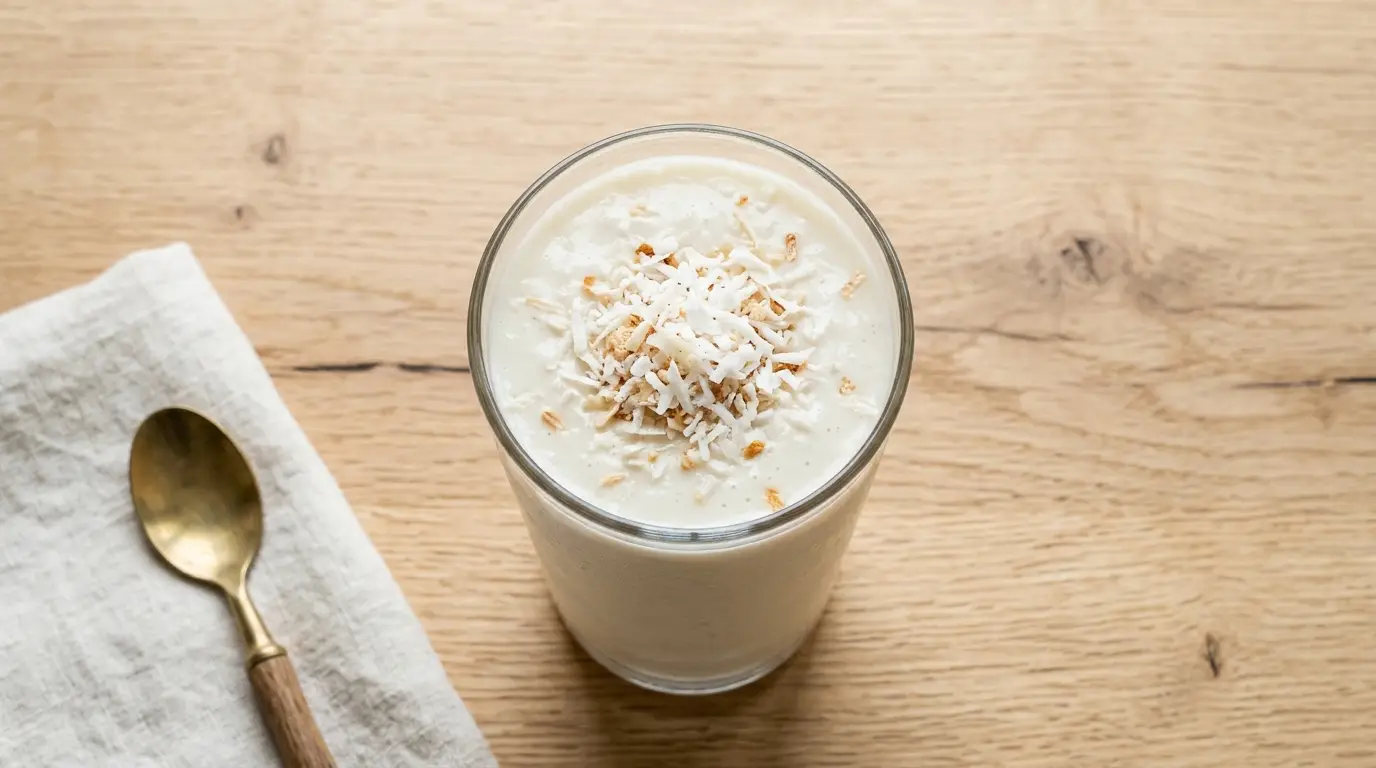
Coconut Milk Smoothie
Ingredients
- 1 cup full fat coconut milk - 240ml, canned, well shaken
- 1 frozen banana - medium, sliced before freezing
- 1 cup frozen pineapple chunks - 165g
- 1/2 cup frozen mango chunks - 75g
- 1 tbsp honey or maple syrup - optional, add if fruit isn’t ripe enough or for a sweeter smoothie
- 1/2 tsp pure vanilla extract - optional
- 2 ice cubes - optional, 2 to 4 cubes, only if you want an extra thick, frosty texture
- 2 tbsp unsweetened shredded coconut - optional, for garnish
Equipment
- Glass smoothie tumblers
- Reusable straws - (optional)
- Freezer-safe bags or containers - (optional) for pre-portioning fruit
- Baking sheet - (optional) for freezing fruit pieces individually
- Parchment paper - (optional) for lining baking sheet when freezing fruit
Method
- Slice the banana into coins and cut the pineapple into chunks if not already frozen. Spread on a parchment lined baking sheet and freeze for at least 2 hours, until completely solid.
- Shake the can of coconut milk vigorously, then stir to recombine. Measure 1 cup and pour it into the blender jar first.
- Add the frozen banana, pineapple, and mango to the blender on top of the coconut milk.
- Drizzle in honey or maple syrup and vanilla extract if using. Skip both if your fruit is very ripe.
- Blend on low for 10 seconds, then increase to high speed for 30 to 45 seconds until completely smooth. Scrape down the sides and blend again if needed.
- Add a splash more coconut milk if too thick, or add ice cubes for an extra frosty texture and blend again.
- Pour into two tall glasses, top with shredded coconut if desired, and serve immediately with a straw.
Nutrition
Notes
- Always freeze your banana ahead of time for the thickest, creamiest texture.
- Shake the coconut milk can well before measuring, since the cream separates during storage.
- Add the liquid to the blender before the frozen fruit so the blades engage properly.
- Carton coconut milk can be used instead of canned, but the smoothie will be noticeably thinner.
- For a vegan version, use maple syrup instead of honey.
- Add a scoop of vanilla or unflavored protein powder for a post workout boost.
- Store leftovers in an airtight container in the fridge for up to 24 hours; shake well before drinking again.
- Pre-portion frozen fruit into freezer bags for faster smoothie assembly on busy mornings.
- Do not freeze the finished blended smoothie, as it turns grainy once thawed.
- Swap the pineapple and mango for frozen mixed berries for a tangier variation.
Private Notes
Tried this recipe?
Let us know how it was!Final Thoughts
This coconut milk smoothie recipe has earned its place as one of my go to breakfasts for good reason. It’s quick, naturally sweet, and endlessly adaptable to whatever fruit you have in the freezer.
Give it a try this week and see how it fits into your morning routine. If you make it, I’d love to hear how it turned out, so feel free to leave a comment or share a photo below.
Recommended:
- Spinach Smoothie Recipe
- Watermelon Smoothie Recipe
- Peach Smoothie Recipe
- Blueberry Smoothie Recipe
- Passion Fruit Smoothie Recipe
- Protein Smoothie Recipe
- Green Smoothie Recipe
- Pineapple Smoothie Recipe
- Easy Healthy Homemade Granola Recipe