
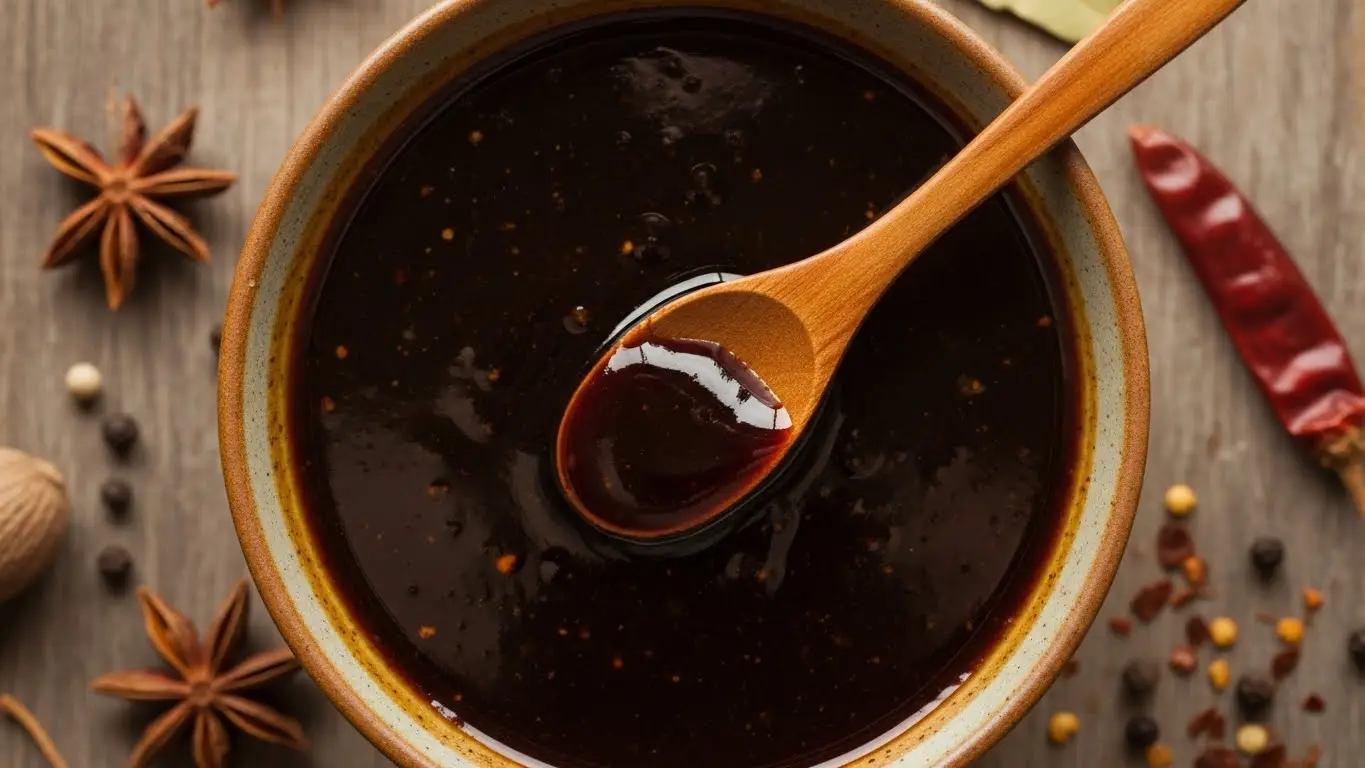
Making your own worcestershire sauce at home might sound intimidating, but I promise you it’s one of the most rewarding kitchen projects you can tackle. The first time I attempted this worcestershire sauce recipe, I was blown away by how much depth and complexity you can achieve with ingredients you probably already have in your pantry.
I stumbled into making homemade Worcestershire sauce almost by accident. My husband had just grilled the most beautiful steaks for our anniversary dinner, and I reached for the Worcestershire sauce only to find we were completely out.
Instead of running to the store, I decided to see if I could recreate it. What started as a dinner emergency became an obsession.
After dozens of batches and plenty of taste-testing (my family was very patient with me), I finally nailed a version that’s become our household staple. The best part? You know exactly what’s going into your sauce, no mysterious additives or high-fructose corn syrup here.
| Quick Recipe Summary | |
|---|---|
| Prep Time | 10 minutes |
| Cook Time | 45 minutes |
| Total Time | 55 minutes (plus 2 weeks aging time) |
| Servings | 2 cups (475 ml) |
| Difficulty Level | Easy |
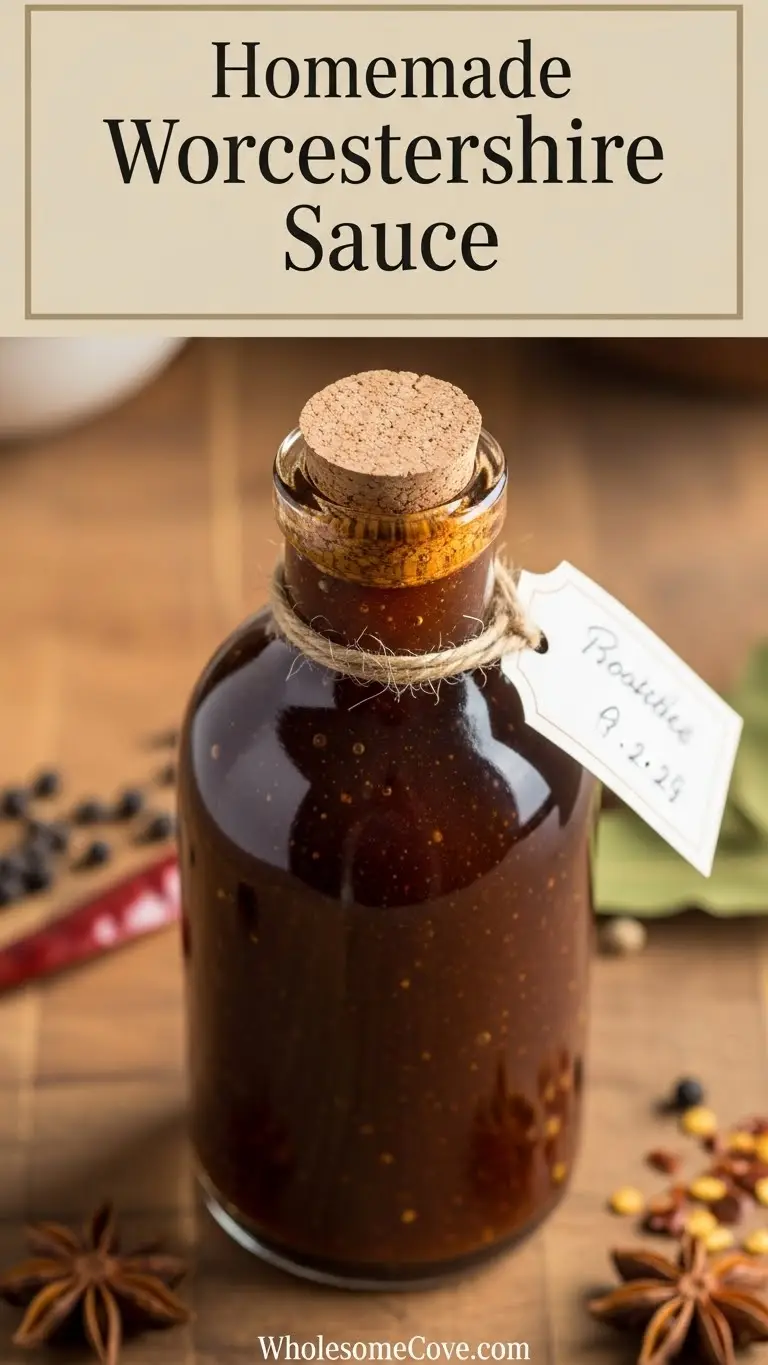
Why You’ll Love This Worcestershire Sauce Recipe
Once you make your own Worcestershire sauce, you’ll never look at the bottled stuff the same way. This homemade version has a freshness and vibrancy that store-bought versions simply can’t match.
The flavors are more pronounced, the umami is deeper, and you can actually taste each individual ingredient working together in perfect harmony. Plus, you can adjust the sweetness, tanginess, or spiciness to suit your exact preferences.
- Complete control over ingredients: No artificial flavors, colors, or preservatives. You decide exactly what goes into your sauce, which is especially important if you have dietary restrictions or preferences.
- Customizable flavor profile: Want it spicier? Add more cayenne. Prefer it sweeter? Increase the molasses. This recipe is incredibly forgiving and adaptable to your taste.
- Cost-effective: Making a batch costs about half what you’d pay for a premium bottle at the store, and it tastes even better.
- Impressive homemade gift: Bottle this up in decorative containers, and you’ve got a thoughtful gift that actually gets used. My sister still raves about the batch I gave her last Christmas.
- Perfect for marinating and cooking: The fresh, complex flavors make everything from burgers to stews taste absolutely incredible. I use it in my Sloppy Joe and it takes them to another level.
You may also like: Homemade Hoisin Sauce Recipe
Ingredients
This worcestershire sauce recipe uses simple pantry staples combined with a few special ingredients that create that signature tangy, savory depth. I’ve tested this recipe with various substitutions, but these specific ingredients give the best results.
- 2 cups (475 ml) apple cider vinegar: The foundation of the sauce, providing acidity and helping to marry all the flavors together
- 1/2 cup (120 ml) dark molasses: This is crucial for that deep, complex sweetness and dark color characteristic of Worcestershire sauce
- 1/4 cup (60 ml) soy sauce or tamari: Adds the essential umami depth and saltiness
- 1/4 cup (50 g) packed brown sugar: Balances the acidity with a rich sweetness
- 2 tablespoons (30 ml) tamarind paste or concentrate: The secret ingredient that gives Worcestershire its distinctive tangy complexity
- 1 tablespoon fresh lemon juice (about 1/2 lemon): Brightens all the flavors and adds citrus notes
- 1 tablespoon Dijon mustard: Provides sharpness and helps emulsify the sauce
- 2 cloves garlic, minced: Fresh garlic adds aromatic depth
- 1 small onion, finely chopped (about 1/2 cup or 75 g): Creates a savory base
- 1 teaspoon ground ginger: Adds warmth and subtle spice
- 1/2 teaspoon ground cinnamon: A surprising ingredient that adds depth
- 1/2 teaspoon black pepper: For gentle heat
- 1/4 teaspoon cayenne pepper: Adjust to taste for heat level
- 1/4 teaspoon ground cloves: Provides aromatic complexity
- 1/4 teaspoon ground cardamom: An optional but wonderful addition for exotic warmth
- 4-6 anchovy fillets, minced, or 1 tablespoon anchovy paste: Essential for authentic umami flavor (trust me on this, you won’t taste “fish”)
Kitchen Equipment Needed
Having the right tools makes this process much smoother. You don’t need any specialized equipment, just standard kitchen essentials that you probably already own.
- Medium saucepan (2-3 quarts or 2-3 liters): For simmering and reducing the sauce
- Wooden spoon or silicone spatula: For stirring without scratching your pan
- Fine-mesh strainer or cheesecloth: Essential for achieving a smooth, professional finish
- Large bowl: For straining the sauce into
- Measuring cups and spoons: For accurate measurements
- Funnel: Makes bottling much easier and less messy
- Glass bottles or jars with tight-fitting lids: For storing your finished sauce
- Cutting board and knife: For prepping aromatics
Another favorite: Stir Fry Sauce Recipe
Recommended Products for This Recipe
After making countless batches of Worcestershire sauce, I’ve found a few products that genuinely make a difference in the final result. These aren’t necessary, but they’ll elevate your sauce from good to exceptional.
1. Authentic Tamarind Paste
The quality of your tamarind paste dramatically affects the final flavor. I’ve tried many brands, and Thai tamarind paste consistently delivers the best tangy, fruity complexity that makes Worcestershire sauce distinctive. The seedless versions save you straining time and give you a smoother consistency from the start.
2. Premium Dark Molasses
Not all molasses is created equal. Blackstrap molasses provides the deepest, most robust flavor that commercial Worcestershire sauce is known for. It’s less sweet than regular molasses but has incredible complexity with hints of licorice and caramel that you just can’t get from lighter varieties.
3. High-Quality Anchovy Paste
Fresh anchovies are wonderful, but Italian anchovy paste in a tube is far more convenient and provides consistent umami flavor every time. A single tube lasts for months in the fridge, and it’s perfect for adding depth to sauces, dressings, and marinades beyond just this recipe.
4. Fine-Mesh Strainer Set
Achieving that signature smooth consistency requires excellent straining. I invested in a professional-grade fine-mesh strainer set, and it’s been a total revelation. The ultra-fine mesh catches every bit of sediment while allowing the sauce to flow through quickly, giving you that crystal-clear finish you see in premium bottles.
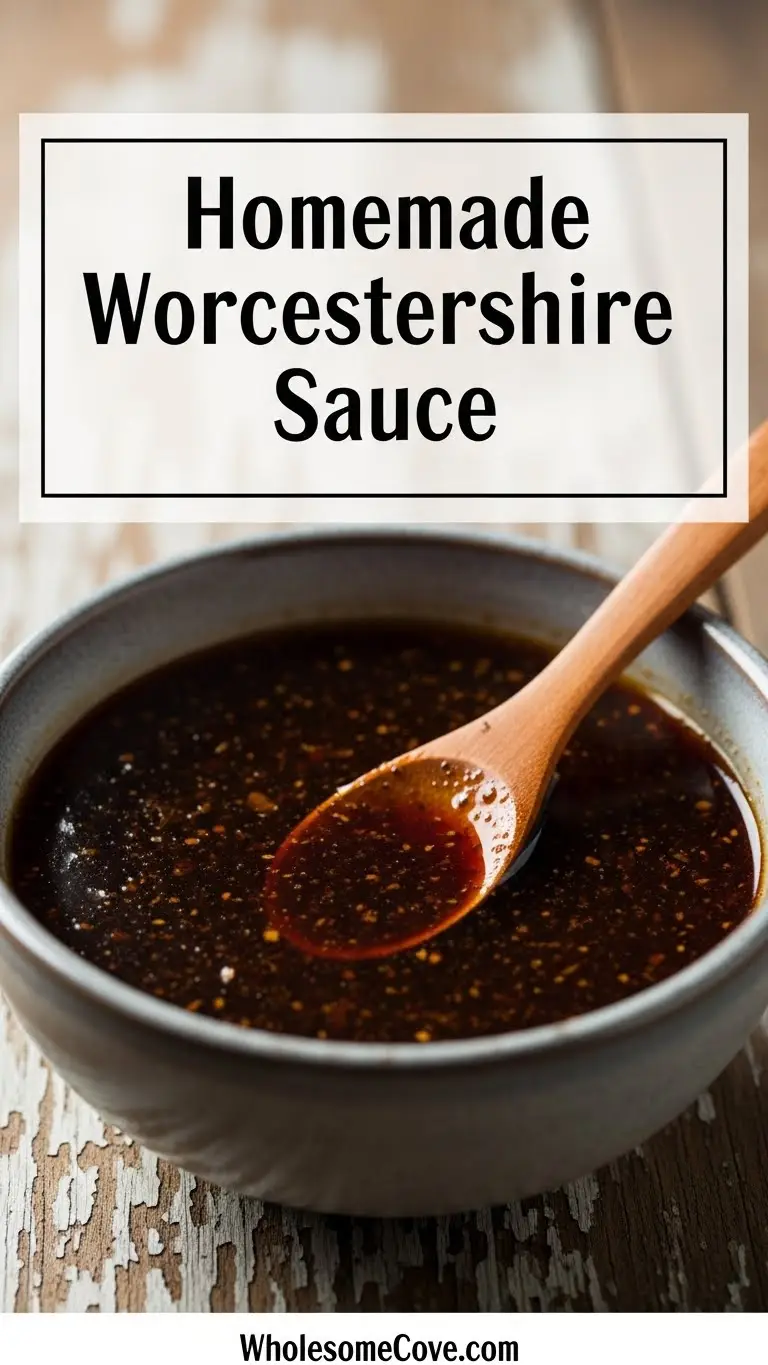
Step-by-Step Instructions: How to Make Worcestershire Sauce
Making Worcestershire sauce is a straightforward process, but attention to detail makes all the difference. Take your time with each step, especially the simmering and straining, to achieve the best results.
1. Prepare Your Aromatics
- Finely chop your onion into pieces no larger than 1/4 inch (6 mm). Smaller pieces release more flavor during cooking.
- Mince the garlic cloves as finely as possible, or use a garlic press for an even finer texture that will integrate seamlessly into the sauce.
- If using whole anchovy fillets, mince them finely with a sharp knife. The finer you mince them, the better they’ll dissolve into the sauce.
- Measure out all your spices and have them ready in small bowls. This makes the cooking process much smoother.
2. Combine All Ingredients
- Pour the apple cider vinegar into your medium saucepan and place it over medium heat.
- Add the chopped onion and minced garlic to the vinegar. The acidity will start breaking down the aromatics immediately.
- Stir in the dark molasses, brown sugar, soy sauce, and tamarind paste until the molasses and sugar begin to dissolve. Don’t worry if they don’t dissolve completely yet.
- Add the minced anchovies or anchovy paste, stirring to break them up and distribute them throughout the liquid.
- Squeeze in the fresh lemon juice, making sure to catch any seeds with your hand or a small strainer.
- Mix in the Dijon mustard, ground ginger, cinnamon, black pepper, cayenne pepper, ground cloves, and cardamom if using.
- Whisk everything together thoroughly to ensure all ingredients are well combined and the spices are evenly distributed throughout the liquid.
3. Bring to a Boil
- Increase the heat to medium-high and bring the mixture to a rolling boil, stirring occasionally to prevent any ingredients from sticking to the bottom of the pan.
- Watch carefully as the mixture heats up, as it can foam and bubble vigorously once it reaches a boil.
- Once you see large bubbles breaking the surface consistently across the entire pan, you’ve reached a proper boil.
- Let it boil for 2-3 minutes to ensure all the sugar and molasses are fully dissolved.
4. Reduce Heat and Simmer
- Lower the heat to medium-low so the sauce maintains a gentle, steady simmer. You should see small bubbles breaking the surface regularly but not violently.
- Simmer uncovered for 40-45 minutes, stirring every 8-10 minutes to prevent sticking and ensure even reduction.
- As the sauce simmers, you’ll notice it darkening and thickening considerably. The volume should reduce by about one-third, concentrating all those beautiful flavors.
- The aroma should become rich and complex, with notes of tang, spice, and sweetness filling your kitchen.
- If the sauce seems to be reducing too quickly or sticking to the pan, lower the heat slightly and stir more frequently.
5. Test for Desired Consistency
- After 40 minutes, dip a clean spoon into the sauce and let it cool for 10 seconds.
- The sauce should coat the back of the spoon and have a syrupy consistency, similar to commercial Worcestershire sauce.
- Run your finger through the sauce on the spoon. It should leave a clean line that doesn’t immediately run back together.
- Remember that the sauce will thicken further as it cools, so aim for a consistency slightly thinner than your final desired thickness.
- Taste the sauce carefully (it will be hot!) and adjust seasonings if needed. This is your last chance to add more sweetness, tang, or spice before straining.
6. Strain the Sauce
- Remove the saucepan from heat and let it cool for 5 minutes. This prevents the hot liquid from splashing and makes handling safer.
- Place your fine-mesh strainer over a large bowl or measuring cup with a pour spout.
- Slowly pour the sauce through the strainer, allowing the liquid to filter through naturally. Don’t press on the solids yet.
- Once most of the liquid has passed through, use the back of a spoon to gently press the solids against the strainer, extracting as much flavored liquid as possible.
- For an ultra-smooth sauce, line your strainer with two layers of cheesecloth and strain a second time.
- Discard the solids left in the strainer. They’ve given up all their flavor to the sauce.
7. Cool and Bottle
- Let the strained sauce cool to room temperature, about 30-45 minutes. Stir it occasionally to release heat evenly.
- While the sauce cools, sterilize your glass bottles by running them through the dishwasher or boiling them in water for 10 minutes.
- Once both the sauce and bottles are at room temperature, use a funnel to carefully pour the sauce into the bottles.
- Fill the bottles to within 1/2 inch (1 cm) of the top to allow for expansion.
- Seal the bottles tightly with their lids, making sure they’re completely secure.
- Wipe down the outside of the bottles to remove any drips or spills.
8. Age for Best Flavor
- Store the bottles in the refrigerator for at least 2 weeks before using. This aging period is crucial for the flavors to meld and mellow.
- During the first few days, shake the bottles gently once a day to help integrate all the flavors.
- After 2 weeks, the sauce will have developed that characteristic Worcestershire complexity and depth.
- While you can use it immediately if you’re impatient, I promise the wait is worth it. The difference between fresh sauce and properly aged sauce is remarkable.
Read also: Homemade Strawberry Sauce Recipe

Tips for The Best Worcestershire Sauce
After making this recipe more times than I can count, I’ve learned several tricks that consistently produce superior results. These tips address common issues and help you achieve professional-quality sauce every time.
- Don’t skip the anchovies: I know they seem intimidating, but they’re absolutely essential for authentic Worcestershire flavor. You won’t taste “fish” in the final product, I promise. They simply add incredible umami depth that can’t be replicated with any other ingredient.
- Use real tamarind paste: Tamarind concentrate or paste is sold in most international food sections. Don’t substitute with lemon or lime juice, they simply don’t provide the same complex, fruity tanginess that defines Worcestershire sauce.
- Low and slow wins the race: Resist the urge to crank up the heat to speed things along. A gentle simmer over 45 minutes develops far better flavor than a rapid boil for 20 minutes. The slower reduction allows flavors to concentrate gradually without becoming bitter.
- Strain thoroughly: Taking the time to strain your sauce properly makes an enormous difference in the final product. A smooth sauce not only looks more professional but also has a better mouthfeel and distributes flavor more evenly.
- Patience with aging: This is perhaps the hardest tip to follow, but the aging process truly transforms the sauce. Those first two weeks allow harsh edges to smooth out and all the flavors to become harmonious. Mark your calendar so you don’t forget when it’s ready!
- Adjust to your taste: Use this recipe as a baseline, but don’t be afraid to customize. Want more heat? Double the cayenne. Prefer it sweeter? Add an extra tablespoon of molasses. I’ve found that adding a 1/4 teaspoon of smoked paprika creates a wonderful depth.
- Watch the temperature carefully: If your sauce is bubbling too vigorously, it can reduce too quickly and become too thick or even burn. Maintain that gentle simmer where you see consistent small bubbles.
- Test the consistency: Remember that the sauce thickens as it cools, so don’t reduce it too much. If you accidentally make it too thick, you can thin it with a tablespoon of water or vinegar after it cools.
- Use quality spices: Fresh, aromatic spices make a noticeable difference. If your ground ginger or cinnamon has been sitting in your cabinet for years, this is a great excuse to replace them.
- Clean your bottles well: Any residue in your storage bottles can affect the flavor and shelf life of your sauce. Sterilize them properly before filling.
Try my Homemade Tartar Sauce Recipe.
What to Serve with Worcestershire Sauce
Homemade Worcestershire sauce is incredibly versatile and elevates so many dishes. Once you have a bottle in your fridge, you’ll find yourself reaching for it constantly to add depth and complexity to both simple and sophisticated recipes.
- Steaks and burgers: Brush it on Filet Mignon before grilling or mix it into your Crack Burger patties for incredible savory depth. A few dashes on a finished steak bring all the flavors together beautifully.
- Bloody Marys and cocktails: This is a must-have ingredient for the perfect brunch cocktail. The complex savory notes add dimension that bottled sauce just can’t match.
- Marinades: Combine with olive oil, garlic, and herbs to create outstanding marinades for chicken, pork, or beef. I use it in my marinade for Tandoori Chicken and it adds wonderful complexity.
- Soups and stews: A tablespoon stirred into Irish Stew or Venison Stew adds incredible depth. It’s especially good in tomato-based soups.
- Meatloaf and meatballs: Mix a few tablespoons into your meat mixture for added moisture and flavor. Works beautifully in Swedish Meatballs too.
- Caesar salad: The traditional Caesar dressing calls for Worcestershire, and homemade sauce takes it to another level entirely.
- Deviled eggs: Add a 1/2 teaspoon to your filling for Deviled Eggs for a subtle umami boost that guests always notice but can’t quite identify.
- Roasted vegetables: Toss root vegetables with olive oil and a tablespoon of Worcestershire before roasting for incredible caramelization and flavor.
Variations of Worcestershire Sauce
Once you’ve mastered the classic recipe, experimenting with variations is incredibly fun and allows you to create signature sauces tailored to specific dishes or preferences. These variations have all been tested in my kitchen with delicious results.
- Spicy Worcestershire: Double the cayenne pepper and add 1/2 teaspoon of red pepper flakes. For even more heat, include 1 minced jalapeño with the seeds in step 2. This version is phenomenal on grilled meats and in spicy cocktails.
- Smoky Worcestershire: Add 1 teaspoon of liquid smoke and 1/2 teaspoon of smoked paprika to the base recipe. This creates a sauce that’s perfect for BBQ applications and gives an outdoor grilled flavor even to stovetop-cooked meats.
- Asian-inspired Worcestershire: Replace 2 tablespoons of the apple cider vinegar with rice vinegar, and add 1 teaspoon of sesame oil and 1/2 teaspoon of Chinese five-spice powder. This variation is incredible in Stir Fry Sauce or drizzled over grilled fish.
- Sweet Worcestershire: Increase the molasses to 3/4 cup and add 2 tablespoons of honey. This sweeter version works beautifully as a glaze for roasted pork or chicken wings.
- Garlic-heavy Worcestershire: Triple the garlic (use 6 cloves instead of 2) and add 1/2 teaspoon of garlic powder as well. Garlic lovers will go crazy for this version on steaks and in marinades.
- Citrus Worcestershire: Add the zest of one lemon and one orange along with the juice. This bright, zesty version is wonderful in seafood dishes and salad dressings.
- Herb-infused Worcestershire: Add 2 sprigs of fresh thyme and 1 bay leaf during the simmering process, removing them before straining. This creates a more sophisticated, herbaceous sauce perfect for elegant dinner parties.
- Reduced-sodium version: Use low-sodium soy sauce and reduce the anchovies to 2-3 fillets. The flavor will be slightly milder but still delicious and much friendlier for those watching sodium intake.
You might also enjoy: Hoisin Sauce
Storage and Reheating
Proper storage is key to maintaining the quality and safety of your homemade Worcestershire sauce. Because this recipe doesn’t contain the same preservatives as commercial versions, following these guidelines carefully ensures the best flavor and longest shelf life.
- Refrigerator storage: Store your Worcestershire sauce in clean, airtight glass bottles in the refrigerator at all times. Properly stored, it will maintain peak quality for up to 6 months. I like to date my bottles so I know exactly how long they’ve been in there.
- Freezer storage: You can freeze Worcestershire sauce for up to 1 year. Pour it into ice cube trays for convenient single-serving portions, then transfer the frozen cubes to a freezer bag. Each cube is about 2 tablespoons, perfect for adding to recipes.
- Room temperature warning: Never store homemade Worcestershire sauce at room temperature, unlike some commercial versions. Without preservatives, it can spoil quickly outside the refrigerator.
- Check for spoilage: Before using sauce that’s been stored for a while, always check for signs of spoilage including off odors, mold growth, or significant changes in color or consistency. If anything seems off, discard it.
- Thawing frozen sauce: Move frozen cubes or bottles to the refrigerator to thaw overnight. Shake well before using, as some separation is normal after freezing.
- No reheating needed: Worcestershire sauce is used cold or at room temperature in most applications. If you need it for a hot dish, simply add it directly during cooking. There’s no need to pre-heat the sauce.
- Bottle maintenance: Keep the bottle neck and cap clean by wiping them down after each use. Dried sauce on the rim can affect the seal and potentially introduce bacteria.
- Shake before using: Natural settling can occur during storage. Give the bottle a good shake before each use to redistribute any settled spices or ingredients.
Nutritional Facts
Per 1 tablespoon (15 ml) serving:
- Calories: 25
- Total Fat: 0g
- Saturated Fat: 0g
- Cholesterol: 1mg
- Sodium: 180mg
- Total Carbohydrates: 6g
- Dietary Fiber: 0g
- Sugars: 5g
- Protein: 0.5g
- Vitamin C: 2% DV
- Iron: 4% DV
- Calcium: 2% DV
Note: Nutritional information is approximate and will vary based on specific ingredients used. Values are based on one serving from a recipe that yields 32 tablespoons (2 cups).
Read Also: Teriyaki Sauce Recipe
Health Benefits of Key Ingredients
While Worcestershire sauce isn’t exactly a health food, several of its key ingredients offer surprising nutritional benefits. Using it in moderation can actually contribute positively to your diet beyond just making food taste incredible.
- Apple cider vinegar: Contains acetic acid which may help regulate blood sugar levels and support healthy digestion. Many people find that small amounts of vinegar before meals help with appetite control and nutrient absorption.
- Garlic: Packed with antioxidants and compounds that support heart health, boost immune function, and have natural antibacterial properties. Fresh garlic is particularly potent and maintains more of these beneficial compounds than powdered versions.
- Molasses: Unlike refined sugar, molasses contains significant amounts of iron, calcium, magnesium, and B vitamins. Blackstrap molasses in particular is considered one of the most nutrient-dense sweeteners available.
- Ginger: Well-known for its anti-inflammatory properties and ability to ease nausea and digestive discomfort. It also contains antioxidants that support overall health and may help reduce muscle pain.
- Anchovies: These tiny fish are nutritional powerhouses packed with omega-3 fatty acids, which support heart and brain health. They’re also excellent sources of protein, calcium, selenium, and vitamin B12.
- Tamarind: Rich in antioxidants and polyphenols that may help reduce inflammation. It’s also a good source of magnesium and potassium, minerals essential for heart health and muscle function.
- Spices (cinnamon, cloves, cardamom): All contain powerful antioxidants and anti-inflammatory compounds. Cinnamon in particular has been studied for its potential to help regulate blood sugar levels.
Another favorite: BBQ Sauce
FAQs About Worcestershire Sauce
1. Can I make Worcestershire sauce without anchovies?
While anchovies are traditional and provide crucial umami depth, you can create a vegetarian version. Replace the anchovies with 2 tablespoons of miso paste and add 1 teaspoon of soy sauce or tamari for extra savory depth.
The flavor will be different but still delicious. Some people also use 1 tablespoon of liquid aminos as a substitute, though it won’t have quite the same complexity as the fish-based version.
2. Why does my Worcestershire sauce need to age for 2 weeks?
The aging process allows all the diverse flavors to meld together and mellow out any harsh edges. Fresh Worcestershire sauce can taste sharp and one-dimensional, with the vinegar and spices dominating.
After 2 weeks of refrigeration, those individual flavors marry into the complex, balanced sauce we associate with Worcestershire. Think of it like making wine or cheese, the patience pays off in the final product.
3. Can I use this Worcestershire sauce in place of store-bought in recipes?
Absolutely! You can use this homemade version as a 1:1 substitute in any recipe calling for Worcestershire sauce.
In fact, I think it performs even better than store-bought versions because the flavors are more vibrant and complex. You might find you want to use slightly less than the recipe calls for since homemade tends to be more potent and flavorful.
4. What if I don’t have tamarind paste?
Tamarind is really the magic ingredient that makes Worcestershire sauce distinctive, but if you absolutely can’t find it, you can substitute with 2 tablespoons of lemon juice mixed with 1 tablespoon of brown sugar. This won’t replicate tamarind’s unique fruity-sour flavor exactly, but it will provide the necessary tartness and sweetness.
Pomegranate molasses is another alternative that comes closer to tamarind’s flavor profile.
5. Why is my sauce too thick or too thin?
Thickness depends primarily on how long you simmer the sauce. If it’s too thick, you reduced it too much, simply stir in a tablespoon of water or apple cider vinegar at a time until you reach your desired consistency.
If it’s too thin, return it to the stove and simmer for another 5-10 minutes until it reduces further. Remember that the sauce thickens as it cools, so always test consistency at room temperature before making adjustments.
Final Thoughts
Making your own Worcestershire sauce is one of those kitchen projects that seems complicated but is actually quite simple once you dive in. The satisfaction of pulling out your homemade bottle to season a steak or mix into a Bloody Mary is absolutely worth the minimal effort involved.
This worcestershire sauce recipe has become such a staple in my kitchen that I can’t imagine buying the store-bought version anymore. The depth of flavor, the control over ingredients, and the pure joy of serving something you made completely from scratch makes this one of my favorite condiments to prepare.
I’d love to hear how your Worcestershire sauce turns out! Drop a comment below with your results, or let me know if you tried any of the variations. Did you discover any creative ways to use it? Share your experiences so we can all learn from each other’s kitchen adventures.
Recommended:
- Cocktail Sauce Recipe
- Buffalo Sauce Recipe
- Marinara Sauce Recipe
- Peanut Sauce Recipe
- Vodka Sauce Recipe
- Cheese Sauce Recipe
- Bang Bang Sauce Recipe
- Burger Sauce Recipe
- Tomato Sauce Recipe
- Alabama White Sauce Recipe