The first time I had a proper street tacos recipe, I was standing outside a taco truck in San Diego, juggling a paper plate and trying not to drip lime juice on my shirt. I remember thinking, “Why does this taste so much better than anything I’ve ever made at home?”
It took me a few tries, a lot of reading, and one slightly overcooked skirt steak to figure it out.
The magic isn’t some complicated technique. It’s the marinade, the cut of meat, and that stack of two warm corn tortillas holding everything together.
What you get is a taco that’s small, punchy, and deeply satisfying in a way that a big flour-tortilla wrap just isn’t.
These carne asada street tacos come together in under an hour of active time, and the marinade does all the heavy lifting while you relax.
If you’re planning a Taco Tuesday, a casual backyard cookout, or just need dinner on the table fast, this recipe is it.
| Quick Recipe Summary | |
|---|---|
| Prep Time | 15 minutes (plus 1–4 hours marinating) |
| Cook Time | 10 minutes |
| Total Time | 25 minutes active (plus marinating) |
| Servings | 12 street tacos (serves 4) |
| Difficulty Level | Easy |
If you love bold Mexican flavors, you might also want to check out these Chimichurri Steak Tacos for another incredible steak taco variation worth bookmarking.
Why You’ll Love This Street Tacos Recipe
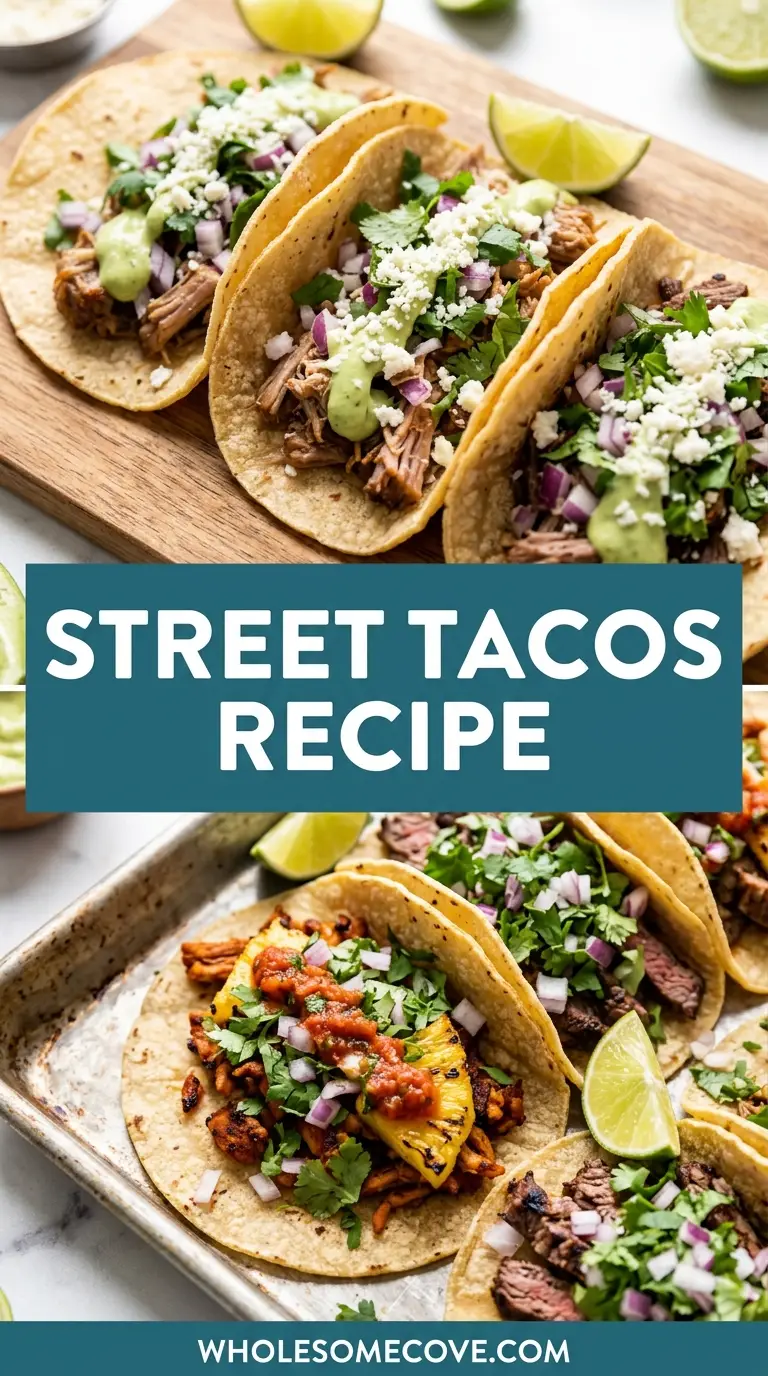
This recipe hits every note you want from a street taco: tender, well-seasoned meat, fresh toppings, and a satisfying handheld size that’s perfect for feeding a crowd.
You don’t need a grill to make them, though grilling is always the dream. A cast iron skillet on high heat gets you that seared crust and incredible flavor.
- Fast weeknight dinner: After marinating, these tacos cook in about 10 minutes. The marinade is mostly pantry staples you already have.
- Crowd-friendly: Set out the toppings and let everyone build their own. It turns dinner into an event, and cleanup is easy.
- Make-ahead friendly: The steak can marinate overnight, so all you do at dinnertime is cook and assemble.
- Authentic flavors at home: The combination of citrus, cumin, garlic, and chili powder creates that distinctive street taco taste without any hard-to-find ingredients.
- Customizable: Swap the carne asada for chicken, shrimp, or pork and the formula still works perfectly.
- Kid-friendly size: The small tortillas are perfect for little hands and even picky eaters tend to love assembling their own.
For a lighter seafood option, these Baja Fish Tacos use the same street taco spirit with a crispy fish filling.
Ingredients
These ingredients are divided into the marinade, the meat, and the toppings. Keep the toppings simple and fresh — the meat is the star here and you don’t want to overwhelm it.
For the Marinade and Steak
- 1.5 lbs (680g) skirt steak (or flank steak)
- 3 tablespoons fresh lime juice (about 2 limes)
- 2 tablespoons fresh orange juice
- 2 tablespoons soy sauce
- 2 tablespoons olive oil
- 4 cloves garlic, minced
- 1 teaspoon ground cumin
- 1 teaspoon chili powder
- 1/2 teaspoon smoked paprika
- 1/2 teaspoon dried oregano (Mexican oregano preferred)
- 1/2 teaspoon salt
- 1/4 teaspoon black pepper
- 1 tablespoon canola or vegetable oil (for cooking)
For the Tortillas
- 24 small corn tortillas (4–5 inch / 10–12cm), street taco size
Toppings
- 1/2 white onion, finely diced
- 1 cup (30g) fresh cilantro leaves, roughly chopped
- 2 limes, cut into wedges
- 1/2 cup (60g) cotija cheese, crumbled (optional but highly recommended)
- Salsa verde or red salsa, for serving
- Sliced radishes, for garnish (optional)
- Fresh jalapeño slices, for heat (optional)
Another great pairing to round out your taco night: a bowl of this fresh Guacamole served on the side for dipping and spreading.
Kitchen Equipment Needed
You don’t need anything fancy here. A heavy skillet and a sharp knife are your two most important tools, and you probably already have them.
- 12-inch cast iron skillet (preferred) or a heavy stainless steel skillet
- Large zip-lock bag or shallow dish (for marinating)
- Sharp chef’s knife
- Cutting board
- Mixing bowl (for the marinade)
- Tongs
- Measuring spoons
- Citrus juicer or reamer
- Small dry skillet or griddle (for warming tortillas)
- Meat thermometer (optional but helpful)
- Aluminum foil (for resting the steak)
You might also enjoy: Taco Casserole — a great way to use taco-seasoned beef in a crowd-feeding baked format.
Recommended Products for This Recipe
These are the products I personally reach for every time I make these tacos. They make a genuine difference in the final result, and I’d feel weird not mentioning them.
1. Lodge 12-Inch Cast Iron Skillet
I burned through two nonstick pans trying to get a good sear on carne asada before I finally bought a cast iron skillet, and I haven’t looked back since. The heat retention on cast iron is unmatched — you get that caramelized, slightly crispy exterior on the steak that makes these tacos so special. It’ll last you a lifetime with minimal care.
2. Cotija Cheese
Cotija is the crumbly, salty Mexican cheese that elevates street tacos from good to exceptional. It doesn’t melt the way cheddar does — instead it adds a punchy, savory bite to every mouthful. If your local grocery store stocks it near the specialty cheeses or in the Mexican food aisle, grab it. If not, Amazon carries it too.
3. Street Taco Size Corn Tortillas
The small 4–5 inch corn tortillas are non-negotiable for authentic street tacos. Regular-size tortillas give you a burrito vibe, not a street taco vibe. Mission and La Banderita both make street taco size corn tortillas that char beautifully in a dry skillet.
4. Meat Thermometer
I used to guess when the steak was done, and I’d either overcook it out of nerves or undercook it. A simple instant-read meat thermometer takes the guesswork out completely. Pull the steak at 130°F (54°C) for medium-rare — it’ll carry over a few more degrees while resting.
5. Mexican Oregano
Regular Mediterranean oregano works in a pinch, but Mexican oregano has a slightly citrusy, more floral flavor that pairs perfectly with the other spices in this marinade. It’s inexpensive and keeps for months in the pantry.
Read Also: Shrimp Tacos with Mango Salsa Recipe
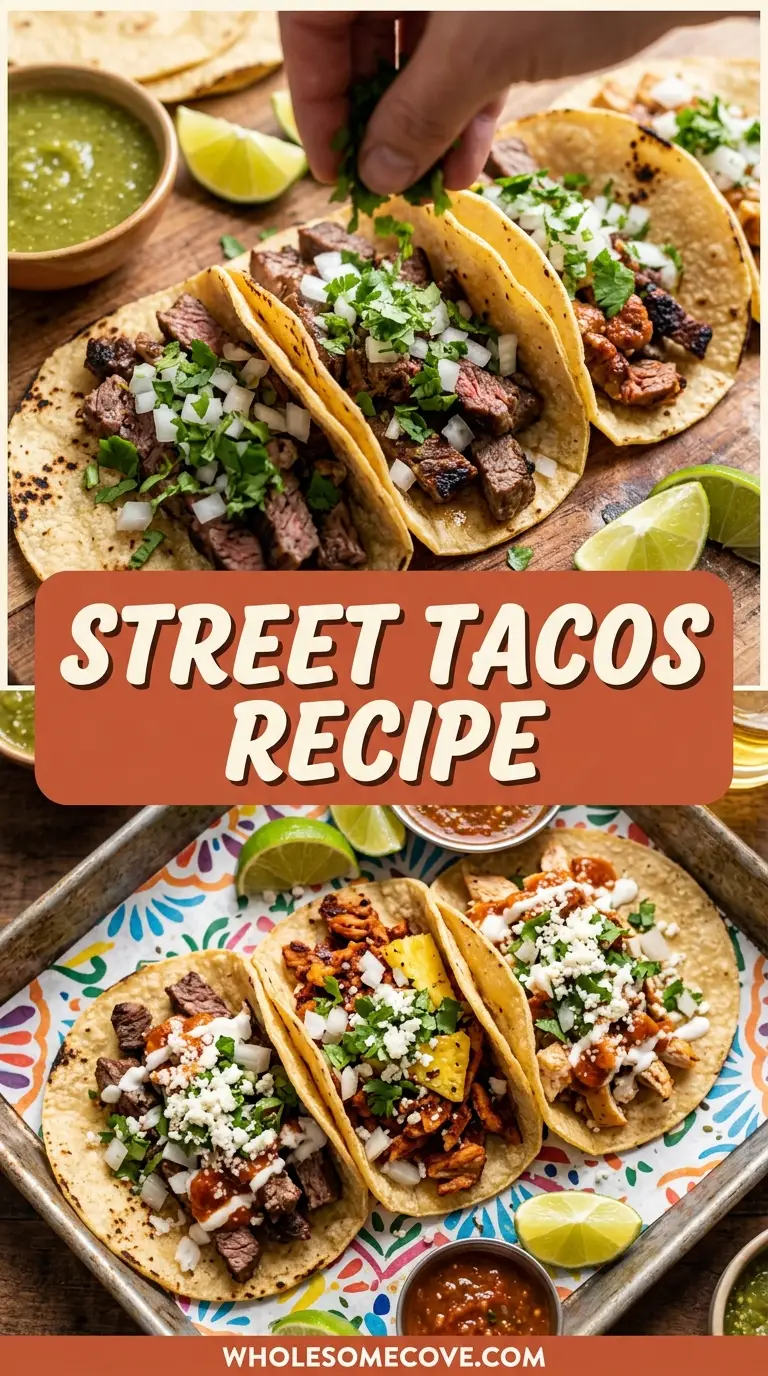
Step-by-Step Instructions: How to Make Street Tacos
Step 1: Make the Marinade
- In a medium mixing bowl, combine 3 tablespoons of fresh lime juice, 2 tablespoons of fresh orange juice, and 2 tablespoons of soy sauce. Whisk them together briefly.
- Add 2 tablespoons of olive oil, 4 minced garlic cloves, 1 teaspoon cumin, 1 teaspoon chili powder, 1/2 teaspoon smoked paprika, 1/2 teaspoon dried oregano, 1/2 teaspoon salt, and 1/4 teaspoon black pepper.
- Whisk the marinade until fully combined. You’ll have a dark, aromatic liquid — it should smell deeply savory with a bright citrus note. Taste a tiny amount on your fingertip and adjust salt if needed.
Step 2: Prepare and Marinate the Steak
- Remove the skirt steak from the packaging and pat it dry with paper towels. Drying the surface helps the marinade stick and prevents the steak from steaming instead of searing during cooking.
- If your skirt steak is in one long piece, cut it into 2–3 smaller sections that will fit easily into a zip-lock bag or your marinating dish. This also helps the marinade penetrate faster.
- Place the steak into a large zip-lock bag or a shallow baking dish. Pour the marinade over the top and use your hands (or tongs) to massage it into the meat on all sides.
- Seal the bag, removing as much air as possible, or cover the dish tightly with plastic wrap. Refrigerate for at least 1 hour, ideally 2–4 hours. Do not marinate longer than 8 hours — the citrus will begin to break down the texture of the meat too aggressively and make it slightly mushy.
- If you only have 30 minutes, marinate at room temperature. Otherwise, refrigerate and take the steak out 30 minutes before cooking so it comes to room temperature.
Step 3: Prep Your Toppings
- Finely dice 1/2 a white onion and place it in a small bowl. White onion is traditional — the sharp, slightly pungent flavor cuts through the richness of the meat beautifully. Rinse the diced onion under cold water if you find raw onion too harsh; it tones down the intensity slightly.
- Roughly chop 1 cup of fresh cilantro leaves. Don’t include too much of the thick stems — the tender upper stems are fine.
- Cut 2 limes into wedges and arrange them on a small plate.
- Crumble the cotija cheese into a small bowl if you’re using it.
- Slice any optional toppings — radishes, jalapeños — and set everything out in individual small bowls for easy assembly.
Step 4: Cook the Steak
- Heat your cast iron skillet over medium-high heat for about 2 minutes, until it’s very hot. This is important — a properly preheated pan is what gives you that gorgeous sear instead of a sad, gray boiled-looking steak.
- Add 1 tablespoon of canola or vegetable oil to the hot pan and swirl to coat. Canola has a high smoke point and won’t add any competing flavor, which is what you want here.
- Remove the steak from the marinade and let any excess drip off. Add the steak to the pan in a single layer. If cooking indoors, turn on your exhaust fan — this step creates some smoke, and that smoke means flavor.
- Cook without moving for 3–4 minutes to build a proper crust. Resist the urge to poke or press down on the steak.
- Flip the steak and cook for another 2–4 minutes on the second side, depending on thickness. For medium, you’re looking for an internal temperature of 140–145°F (60–63°C). For medium-rare, pull it at 130°F (54°C).
- If you added the marinade to the pan, it will sizzle and reduce into a thick, caramelized coating on the steak — that’s perfectly fine and actually adds great flavor.
Step 5: Rest and Slice the Steak
- Transfer the cooked steak to a cutting board and tent it loosely with a piece of aluminum foil. Let it rest for 5 minutes. This step is not optional — resting allows the juices to redistribute back through the meat instead of running out all over your cutting board the moment you slice.
- After resting, slice the steak thinly against the grain. “Against the grain” means perpendicular to the direction the muscle fibers run — look for the lines running through the meat and cut across them, not parallel to them. This shortens the muscle fibers and makes every bite dramatically more tender.
- For the best street taco texture, cut the slices into small, bite-size pieces — about 1/2 inch (1.25cm) chunks. This makes the tacos easier to eat and ensures the filling doesn’t all slide out in one mouthful.
Step 6: Warm the Tortillas
- Heat a dry skillet or griddle over medium-high heat. You’re not adding any oil here — you want the tortillas to develop a few light char spots, which adds flavor and keeps them pliable.
- Add tortillas one at a time (or two at once if your pan allows) and warm for about 30–45 seconds per side, until they’re hot and slightly charred in spots. They should be flexible, not crispy.
- As each tortilla comes off the heat, stack them in a clean kitchen towel or a tortilla warmer to keep them soft and warm until you’re ready to assemble.
- For each street taco, layer two tortillas together before adding the filling. This is the traditional street taco approach — the double tortilla provides structure and acts as a backup if the outer tortilla tears.
Step 7: Assemble and Serve
- Place a generous spoonful of the sliced carne asada onto the center of two stacked, warm tortillas. Don’t overfill — street tacos are meant to be manageable in one or two bites, not overstuffed like a burrito.
- Top with a pinch of diced white onion and a small handful of fresh cilantro.
- If using, crumble a little cotija cheese over the top.
- Squeeze a wedge of fresh lime juice directly over each assembled taco right before eating. The acid from the lime brightens everything and is part of what makes this taste so vibrant.
- Add a spoonful of salsa verde or red salsa on top, or serve the salsas on the side for dipping.
- Serve immediately — street tacos are best eaten fresh off the heat.
For a taco night that covers all the bases, these Chicken Taco Soup make a fantastic companion dish when you want something warm and saucy alongside your tacos.
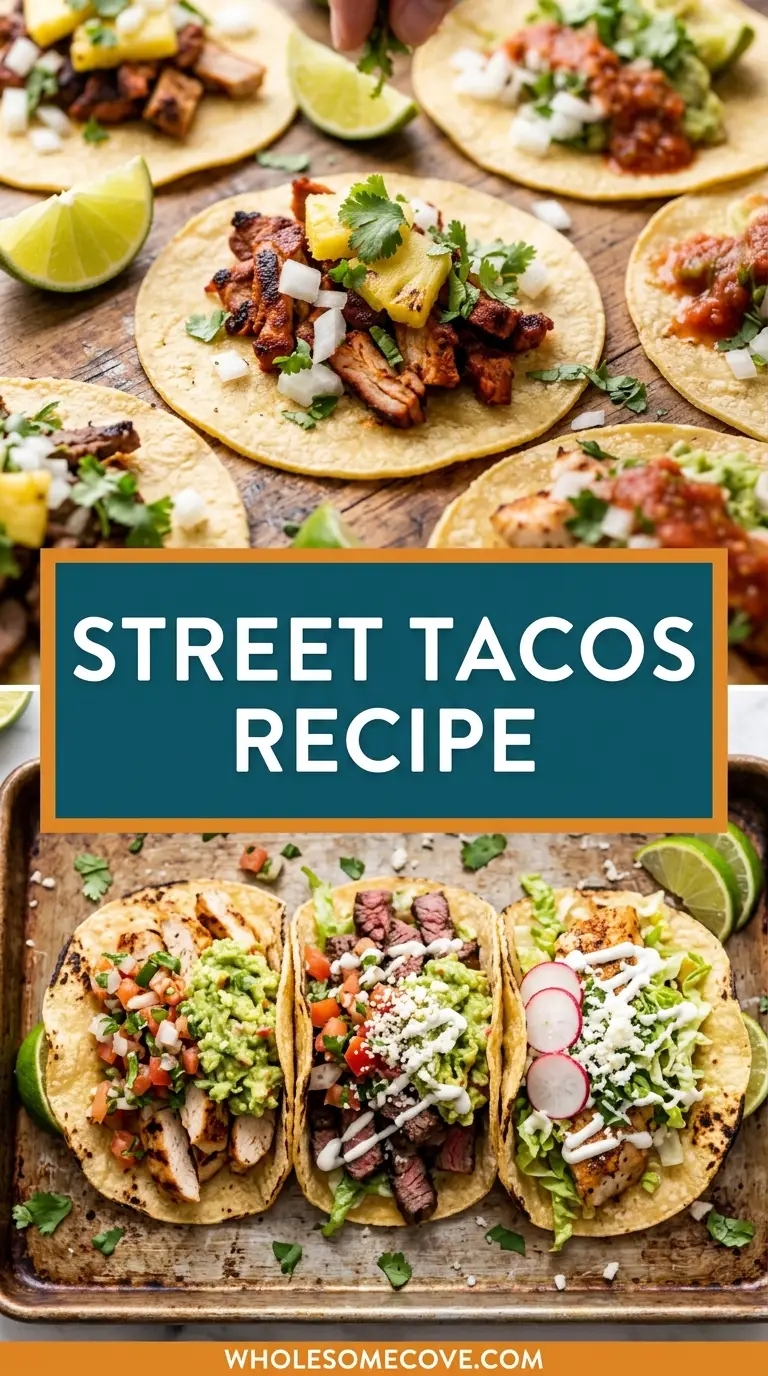
Tips for The Best Street Tacos
These are the things I wish someone had told me before my first few attempts. Each tip here came from a mistake I made in real life, so learn from my errors.
- Don’t skip the marinade time: Even 1 hour makes a massive difference in flavor. The citrus tenderizes and the spices penetrate the meat. Thirty minutes feels like enough but it isn’t — aim for at least 60 minutes.
- Use skirt steak over flank when possible: Skirt steak has more fat marbling than flank, which means more flavor and a more forgiving cook time. Flank is leaner and can get tough if overcooked by even a minute. Both work, but skirt is my go-to.
- Get the pan screaming hot: A lukewarm pan steams the meat instead of searing it. You want a proper sizzle the moment the steak hits the oil. Cast iron is the best tool for this — it holds heat better than any nonstick pan.
- Always slice against the grain: This is non-negotiable. Skirt steak has very visible muscle fibers. Cutting parallel to them gives you chewy, tough pieces. Cutting perpendicular shortens those fibers and makes the steak melt-in-your-mouth tender.
- Double up the tortillas: Street taco stands serve every taco on two tortillas, stacked together. This isn’t just tradition — it’s practical. One tortilla soaks through and tears. Two hold up perfectly.
- Warm the tortillas properly: Cold tortillas from the fridge taste nothing like warm, lightly charred ones. The 30 seconds in a dry pan transforms the texture and brings out the corn flavor. Don’t skip this step.
- Keep the toppings simple: The temptation to pile on sour cream, shredded cheese, tomatoes, and lettuce is real. Resist it. Classic street tacos have onion, cilantro, and lime. Maybe cotija. The minimalism is the point — it lets the meat shine.
- Rest the meat before cutting: Five minutes of resting is the difference between juicy and dry. Cover it loosely with foil and walk away. You’ll be rewarded.
- Taste the meat before assembling: Every marinade is slightly different depending on your citrus and garlic. Take a little nibble of the cooked steak before building the tacos and add a pinch of salt if needed.
- Make extra steak: Leftover carne asada is excellent in breakfast burritos, rice bowls, quesadillas, or sliced over a salad the next day. I always make 20–30% more than I think I need.
Read Also: Mexican Street Corn Recipe
What to Serve with Street Tacos
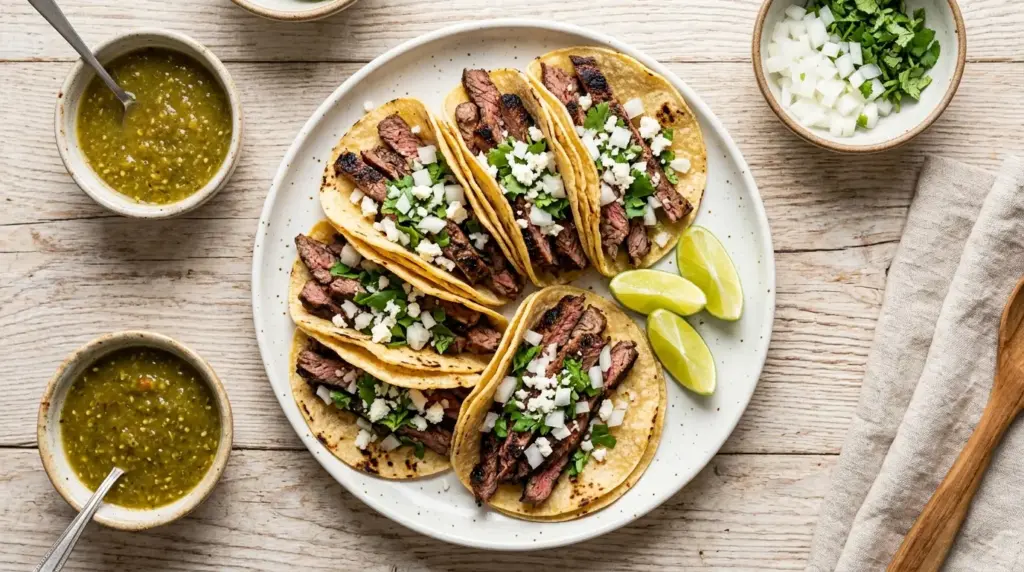
Street tacos are complete on their own, but a few good sides turn taco night into a full-blown feast that keeps everyone at the table longer.
- Mexican Street Corn: Elote is practically obligatory at a street taco spread. The creamy, cheesy, smoky corn is a natural match for carne asada and it looks beautiful on the table.
- Guacamole: Creamy, bright guacamole is essentially a condiment with street tacos. Make a big batch and put it in the center of the table for spreading and dipping.
- Healthy Nachos: If you’re feeding a crowd, nachos as a starter while the steak marinates keeps everyone happy and snacking.
- 7 Layer Taco Salad: A vibrant, layered salad with beans, cheese, and all the classic Mexican flavors complements the tacos without competing with them.
- Deviled Eggs: A bit unexpected alongside tacos, but deviled eggs are always a crowd-pleaser at any casual gathering and they disappear fast.
- Mexican rice: Fluffy, tomato-seasoned rice is a classic pairing that stretches your taco night and satisfies bigger appetites.
- Refried beans: Creamy, smoky refried beans — especially with a little cotija crumbled on top — are the most comforting side you can add to this spread.
- Pico de gallo: Fresh salsa made with tomatoes, onion, jalapeño, cilantro, and lime juice adds brightness and a little heat to each taco.
Another favorite for taco night: Taco Soup — warm, hearty, and ready in one pot, it’s the perfect companion to a platter of street tacos.
Variations of Street Tacos
The carne asada version is the classic, but street tacos are famously flexible. Here are some of the most popular and delicious filling swaps — all using the same double-tortilla, simple-toppings approach.
- Chicken street tacos (Pollo Asado): Marinate boneless chicken thighs in the same marinade used here, then cook them in the skillet until cooked through and slightly charred. Slice or shred before loading into tortillas. Thighs stay juicier than breasts and are more forgiving to cook.
- Al Pastor street tacos: Al Pastor uses pork marinated with guajillo chilies, achiote paste, and pineapple, then cooked on a vertical spit or in a skillet. The sweet-savory-smoky combo is one of Mexico’s most iconic taco fillings. Top with fresh pineapple chunks, cilantro, and onion.
- Carnitas street tacos: Slow-braised pulled pork that’s crisped up in the oven or a hot pan after cooking. Rich, tender, and slightly caramelized at the edges — carnitas are a crowd favorite and great for feeding a large group since they can be made well in advance.
- Shrimp street tacos: Season large shrimp with cumin, chili powder, garlic, and lime juice, then sauté in a hot pan for 2–3 minutes per side. Top with a quick cabbage slaw and a drizzle of chipotle crema. Fast, fresh, and light.
- Birria street tacos: This style has become massively popular. Beef is slow-braised in a deeply spiced red chili broth, shredded, loaded into tortillas, then dipped in the consommé (braising broth) and crisped up in a pan. The result is a cheesy, smoky, impossibly flavorful taco. Dipping before eating is not optional.
- Mushroom and black bean (vegetarian): Sauté sliced portobello mushrooms with the same marinade spices, then toss in a can of drained black beans. Hearty, satisfying, and loaded with flavor — even dedicated carnivores will love this version.
- Breakfast street tacos: Scrambled eggs with chorizo, or just chorizo on its own, make incredible morning tacos. Add a little salsa and crumbled cotija and you have a breakfast that beats any drive-through by miles.
You might also enjoy: Chipotle Burrito Recipe — another Mexican-inspired classic that uses many of the same flavors and techniques you’ll know from making these tacos.
Storage and Reheating
Street tacos are absolutely best eaten fresh, but the components store well individually and make excellent leftovers for the next day or two.
- Storing the steak: Transfer leftover cooked carne asada to an airtight container and refrigerate for up to 4 days. Keep it stored separately from the tortillas and toppings — assembling fresh is always better than storing fully assembled tacos, which get soggy.
- Storing tortillas: Leftover tortillas can be stored in their original packaging or in a zip-lock bag at room temperature for up to 2 days, or in the refrigerator for up to a week.
- Storing toppings: Diced onion and cilantro can be refrigerated in separate small containers for up to 2 days. Lime wedges can be stored cut-side down on a plate covered with plastic wrap for a day.
- Reheating the steak: The best way to reheat carne asada is in a hot dry skillet for 1–2 minutes, tossing occasionally. This revives the seared exterior. Microwaving works if you’re in a hurry, but do it in 30-second bursts and stop as soon as it’s warm — overheating in the microwave toughens the meat quickly.
- Freezing the steak: Cooked carne asada freezes well for up to 2 months in a freezer-safe bag or container. Thaw overnight in the refrigerator and reheat in a skillet as described above.
- Marinated raw steak: If you want to prep even further ahead, the raw steak can be frozen in its marinade. Place the marinating bag directly in the freezer for up to 3 months. Thaw in the refrigerator overnight — by the time it’s thawed, it will have marinated as it defrosts.
For another make-ahead-friendly Mexican meal that stores beautifully, try this Slow Cooker Taco Soup — it’s even better the next day.
Nutritional Facts
Nutritional information is per serving of 3 street tacos (using 6 stacked corn tortillas, approximately 4 oz / 113g of cooked carne asada, onion, cilantro, and lime juice). Values are estimates.
| Nutritional Information (Per Serving — 3 Tacos) | |
|---|---|
| Calories | 420 kcal |
| Total Fat | 18g |
| Saturated Fat | 5g |
| Unsaturated Fat | 11g |
| Cholesterol | 80mg |
| Sodium | 620mg |
| Total Carbohydrates | 34g |
| Dietary Fiber | 4g |
| Total Sugars | 3g |
| Protein | 32g |
| Vitamin C | 12mg (13% DV) |
| Calcium | 80mg (6% DV) |
| Iron | 3.5mg (19% DV) |
| Potassium | 520mg (11% DV) |
Nutritional values are estimates and will vary based on specific ingredients, portion sizes, and toppings used.
For a fun variation on taco night, this Taco Soup with Ranch Dressing is a crowd-pleasing bowl that uses similar seasoning profiles and comes together in one pot.
Health Benefits of Key Ingredients
This street taco recipe isn’t just delicious — the core ingredients bring some genuinely good nutrition to the table, especially when you load up on the fresh toppings.
- Skirt steak: Beef is an excellent source of high-quality complete protein, iron (particularly heme iron, which is the most bioavailable form), zinc, and B vitamins including B12. Iron from red meat supports energy production and oxygen transport in the blood, and zinc plays an important role in immune function and wound healing.
- Lime juice: Fresh lime juice is rich in vitamin C, which serves as an antioxidant, supports collagen production, and actually enhances the absorption of non-heme iron from plant foods. Squeezing lime over your tacos is flavorful and functional.
- Garlic: Garlic contains allicin and other organosulfur compounds that have well-documented antimicrobial and anti-inflammatory properties. Regular garlic consumption has been linked to modest reductions in blood pressure and LDL cholesterol in multiple studies.
- Cilantro: Fresh cilantro provides vitamins A, C, and K, along with small amounts of folate and potassium. It’s also been studied for its potential to support heavy metal detoxification — though you’d need a lot more than a taco-sized portion for significant effect. Its real value here is flavor, but the nutritional bonus is real.
- Corn tortillas: Corn tortillas are naturally gluten-free and lower in calories and fat than flour tortillas. Traditional corn tortillas are made from masa harina — nixtamalized corn — which increases the bioavailability of niacin (vitamin B3) and adds calcium to the corn through the lime processing used in nixtamalization.
- Olive oil: Used in the marinade, olive oil provides heart-healthy monounsaturated fats, particularly oleic acid, along with vitamin E and polyphenol antioxidants associated with reduced inflammation.
- Cumin: Cumin is more than a flavoring agent — it contains thymoquinone and other antioxidant compounds. It has traditionally been used to support digestion and has demonstrated antimicrobial properties in laboratory studies.
If you’re looking for more healthy Mexican-inspired eating, this Healthy Guacamole is a nutrient-dense, avocado-based side that pairs perfectly with these tacos.
FAQs About Street Tacos
1. What is the difference between street tacos and regular tacos?
Street tacos are smaller, typically served on double-stacked small corn tortillas (about 4–5 inches), and topped simply with diced onion, cilantro, and a squeeze of lime. Regular American-style tacos tend to be larger, served in a single hard or soft shell, and piled with shredded cheese, lettuce, tomato, sour cream, and other toppings. The street taco philosophy is meat-forward and minimalist.
2. What is the best cut of meat for street tacos?
Skirt steak is the most traditional choice for carne asada street tacos — it’s flavorful, relatively affordable, and cooks quickly. Flank steak is a close second and works beautifully. For chicken, boneless thighs are far superior to breasts since they stay moist under high heat. For pork, shoulder (butt) is ideal for carnitas and al pastor.
3. Do I need to use corn tortillas, or can I use flour?
Corn tortillas are traditional and most people agree they taste better with carne asada — the slightly earthy, toasted corn flavor complements the meat in a way flour tortillas don’t. That said, small flour tortillas work perfectly fine if you prefer them or have texture sensitivity with corn. The key is using the small street taco size (4–5 inches) regardless of which you choose.
4. Can I make these street tacos on a grill instead of a skillet?
Yes, and honestly grilling is the preferred method if you have access to one. Grill the skirt steak over high direct heat for 3–5 minutes per side, depending on thickness. The open flame adds a smoky char that you simply cannot replicate with a skillet. Rest and slice the same way — it’s the same process, just with better weather involved.
5. How do I warm corn tortillas without drying them out?
The best methods are a dry cast iron or nonstick skillet over medium-high heat (30–45 seconds per side), directly over a gas burner flame for 10–15 seconds per side using tongs (gets beautiful char marks), or wrapped in a damp paper towel and microwaved in 30-second bursts. The microwave is the least preferred method since it can make them slightly gummy — the skillet method takes 2 extra minutes and produces dramatically better results.
For another fantastic taco night side dish, this Mexican Chicken Salad brings bold, vibrant flavor and works beautifully alongside a platter of street tacos.
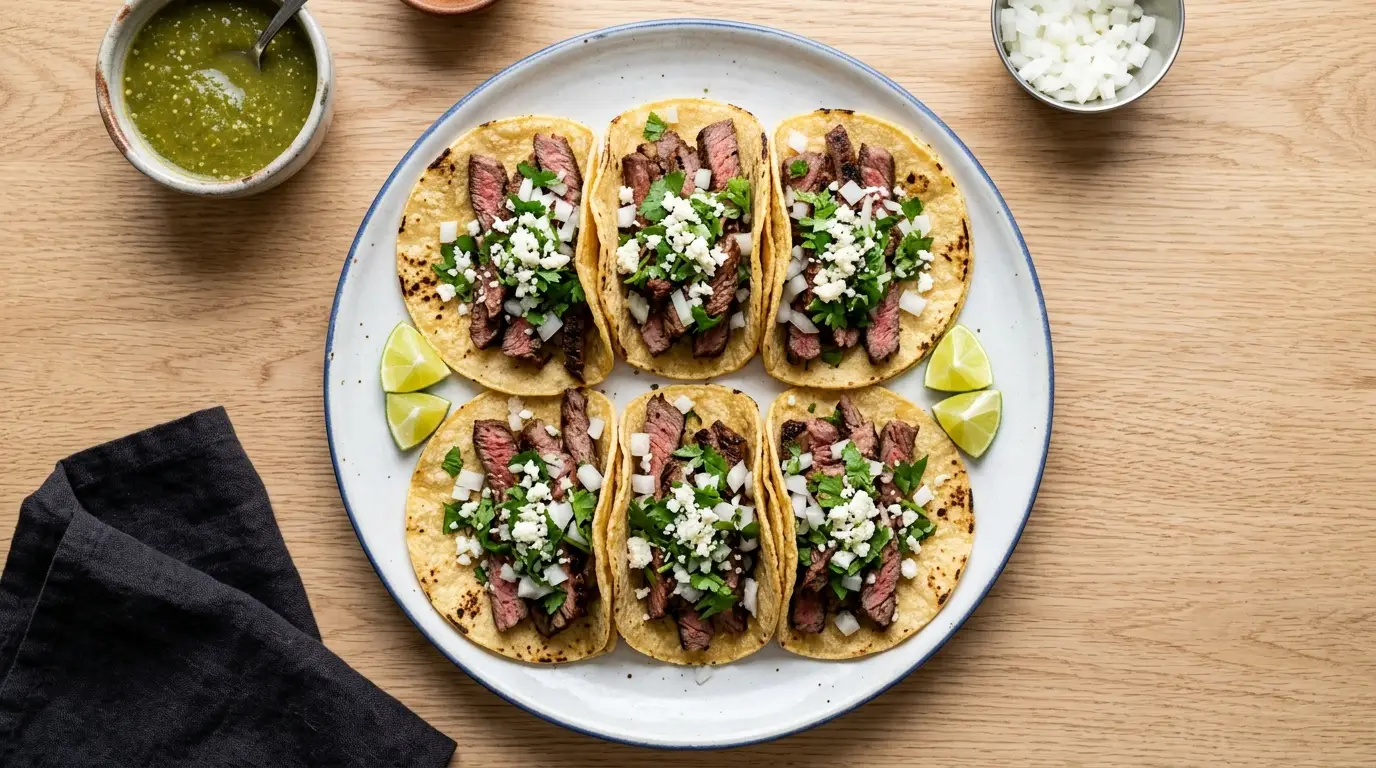
Street Tacos Recipe: Juicy Carne Asada Tacos
Ingredients
- 1.5 lbs skirt steak - 680g; or flank steak
- 3 tbsp fresh lime juice - about 2 limes
- 2 tbsp fresh orange juice
- 2 tbsp soy sauce
- 2 tbsp olive oil
- 4 garlic cloves, minced
- 1 tsp ground cumin
- 1 tsp chili powder
- 0.5 tsp smoked paprika
- 0.5 tsp dried oregano - Mexican oregano preferred
- 0.5 tsp salt
- 0.25 tsp black pepper
- 1 tbsp canola or vegetable oil - for cooking
- 24 small corn tortillas - 4–5 inch / 10–12cm, street taco size
- 0.5 white onion, finely diced
- 1 cup fresh cilantro leaves, roughly chopped - 30g
- 2 limes, cut into wedges - for serving
- 0.5 cup cotija cheese, crumbled - 60g; optional but highly recommended
- salsa verde or red salsa - for serving
- sliced radishes - optional, for garnish
- fresh jalapeño slices - optional, for heat
Equipment
- 12-inch cast iron skillet - Preferred; or heavy stainless steel skillet
- Large zip-lock bag - Or shallow dish for marinating
- Mixing bowl - For the marinade
- Small dry skillet or griddle - For warming tortillas
- Meat thermometer - Optional but helpful
- Aluminum foil - For resting the steak
Method
- In a medium bowl, whisk together lime juice, orange juice, soy sauce, olive oil, minced garlic, cumin, chili powder, smoked paprika, oregano, salt, and black pepper until fully combined.
- Pat the skirt steak dry, cut into 2–3 sections if needed, then place in a zip-lock bag or shallow dish. Pour the marinade over the steak, massage to coat, seal, and refrigerate for 1–4 hours (do not exceed 8 hours). Remove from the fridge 30 minutes before cooking.
- Finely dice the white onion (rinse under cold water if desired for milder flavor), roughly chop the cilantro, cut limes into wedges, crumble the cotija cheese, and slice any optional toppings. Arrange everything in small bowls for easy assembly.
- Heat a cast iron skillet over medium-high heat for 2 minutes until very hot, then add 1 tablespoon of oil. Remove steak from marinade, let excess drip off, and sear without moving for 3–4 minutes per side until internal temperature reaches 130°F (54°C) for medium-rare or 140–145°F (60–63°C) for medium.
- Transfer steak to a cutting board, tent loosely with foil, and rest for 5 minutes. Slice thinly against the grain, then cut into bite-size ½-inch pieces.
- Heat a dry skillet over medium-high heat and warm tortillas one or two at a time for 30–45 seconds per side until hot and lightly charred in spots. Stack in a clean kitchen towel or tortilla warmer to keep soft. Double up two tortillas per taco before filling.
- Spoon a generous amount of carne asada onto two stacked warm tortillas, then top with diced white onion, cilantro, and cotija cheese. Squeeze fresh lime juice over each taco, add salsa, and serve immediately.
Nutrition
Notes
- Marinate for at least 60 minutes — even 1 hour makes a dramatic difference in flavor and tenderness. Do not exceed 8 hours or the citrus will break down the meat’s texture.
- Skirt steak is preferred over flank for its higher fat marbling and more forgiving cook time. Flank steak can turn tough if overcooked by even a minute.
- Get the pan screaming hot before adding the steak. A properly preheated cast iron pan gives you a seared crust rather than a steamed, gray exterior.
- Always slice against the grain — look for the visible muscle fibers running through the steak and cut perpendicular to them for maximum tenderness.
- Always double up the corn tortillas. This is traditional and practical: two tortillas provide structure and a backup if the outer one tears.
- Keep toppings simple — onion, cilantro, lime, and cotija is all you need. Restraint is the point; it lets the meat shine.
- Leftover cooked carne asada stores in an airtight container in the refrigerator for up to 4 days. Reheat in a hot dry skillet for 1–2 minutes for best results.
- Cooked carne asada freezes well for up to 2 months. Raw marinating steak can be frozen in its bag for up to 3 months — thaw overnight and it marinates as it defrosts.
- If grilling instead of using a skillet, cook over high direct heat for 3–5 minutes per side. The open flame adds smoky char that can’t be replicated indoors.
- Make extra steak — leftovers are excellent in breakfast burritos, rice bowls, quesadillas, or sliced over salad the next day.
Private Notes
Tried this recipe?
Let us know how it was!Final Thoughts
These street tacos have become one of my most-requested dinners, and for good reason. The marinade takes 5 minutes to throw together, the cook time is under 15 minutes, and the end result tastes like something from an actual taco truck.
Once you make them once, you’ll understand why the minimalist approach is everything.
Less really is more when the meat is this good and the tortillas are properly warm.
I’d love to know how yours turned out — drop a comment below and let me know what variation you tried, what toppings you added, or if you have any questions about the recipe. Happy taco-making!
Recommended:
- Chicken Quesadilla Recipe
- Buffalo Chicken Quesadilla Recipe
- Steak Quesadilla Recipe
- Enchilada Sauce Recipe
- Chicken Enchilada Casserole Recipe
- Mexican Pork Stew Recipe
- Chipotle Guacamole Recipe
- Mexican Chicken Soup Recipe
- Healthy Coleslaw Recipe
- BBQ Sauce Recipe