I made my first pesto recipe on a hot July afternoon when my basil plant had completely taken over the kitchen windowsill. I had way more fresh basil than I could ever use in salads or pasta garnishes, and I remembered my Italian neighbor always talking about making sauce from scratch.

I grabbed what I had, threw it all in my food processor, and ended up with the greenest, most fragrant sauce I had ever tasted. It was nothing like the jarred stuff at the grocery store.
That batch turned into a weekly ritual every summer. I’ve tweaked ratios, tried toasting the pine nuts, forgotten the lemon, added too much garlic — you name it, I’ve done it. This recipe right here is the version I keep coming back to, the one I make on autopilot now.
If you have fresh basil sitting on your counter and a food processor, you’re already most of the way there. This homemade pesto comes together in under 15 minutes and tastes like something you’d get at a nice Italian restaurant.
| Quick Recipe Summary | |
|---|---|
| Prep Time | 10 minutes |
| Cook Time | 5 minutes (toasting pine nuts) |
| Total Time | 15 minutes |
| Servings | 8 servings (about 1 cup / 240 ml total) |
| Difficulty Level | Easy |
If you love pesto-forward dishes, you’ll definitely want to check out these Zucchini Noodles with Pesto and Shrimp Bowls next — they’re one of my favorite ways to use a fresh batch.
Why You’ll Love This Pesto Recipe
Homemade pesto is one of those things that sounds impressive but is genuinely effortless. You don’t need any cooking skills beyond the ability to turn on a food processor.
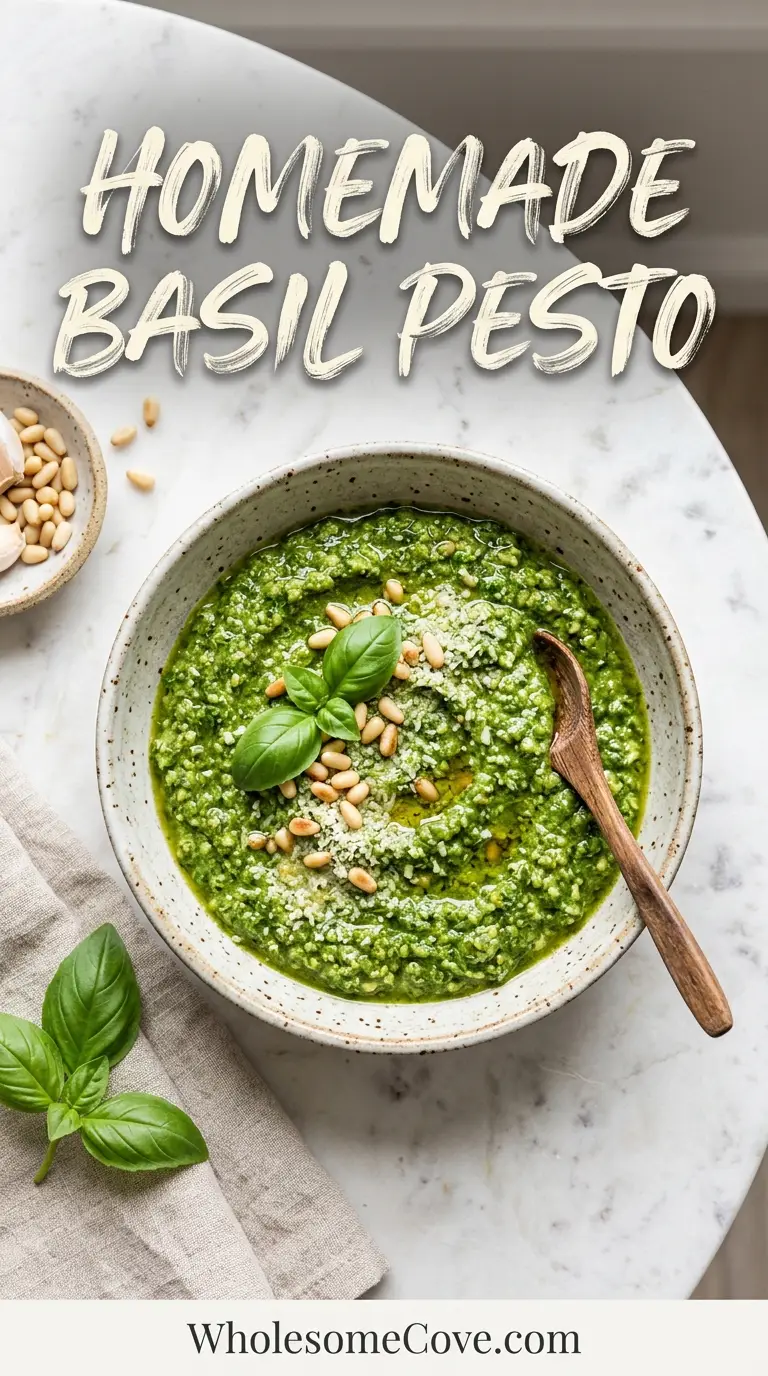
The flavor is worlds apart from anything that comes in a jar. Fresh basil, real Parmesan, good olive oil, and toasted pine nuts create a sauce that is bright, nutty, and deeply satisfying.
It’s incredibly versatile. You can toss it with pasta, spread it on sandwiches, swirl it into soup, or use it as a pizza base.
It takes less than 15 minutes from start to finish. That’s faster than ordering takeout and about one hundred times more delicious.
It stores well in the fridge for up to a week and freezes beautifully. Making a double batch and stashing half in the freezer is honestly one of the best meal prep moves you can make.
The recipe requires only six core ingredients. There’s a good chance you already have most of them in your kitchen right now.
You can customize it endlessly. Swap the nuts, try different cheeses, add a pinch of red pepper flakes — the base is solid and welcomes experimentation.
For a lighter take on the same flavors, my Healthy Homemade Pesto Recipe is a great variation to bookmark too.
Ingredients
Fresh, high-quality ingredients are everything in a recipe this simple. There’s nowhere for a mediocre olive oil or sad, wilting basil to hide.
- 2 cups (50 g) fresh basil leaves, tightly packed, stems removed
- 1/3 cup (45 g) pine nuts
- 3 cloves fresh garlic, peeled
- 1/2 cup (50 g) Parmigiano-Reggiano cheese, freshly grated
- 1/2 cup (120 ml) extra-virgin olive oil, plus more as needed
- 1 tablespoon fresh lemon juice (from about half a lemon)
- 1/2 teaspoon kosher salt, plus more to taste
- 1/4 teaspoon freshly ground black pepper
Read Also: Marinara Sauce Recipe
Kitchen Equipment Needed
You don’t need much to pull this off, and the food processor does most of the heavy lifting for you.
- Food processor (a 7-cup or larger capacity works best)
- Small skillet (for toasting the pine nuts)
- Cutting board and chef’s knife (for prepping garlic and stripping basil leaves)
- Microplane or fine grater (for grating Parmesan freshly — please don’t use pre-grated)
- Spatula (for scraping down the sides of the food processor)
- Glass jar with tight lid (for storing the finished pesto)
- Measuring cups and spoons
- Citrus juicer or fork (for squeezing the lemon)
You might also enjoy: Garlic Parmesan Sauce Recipe
Recommended Products for This Recipe
These are products I personally reach for every single time I make this pesto — they genuinely make a difference in the final result.
1. Cuisinart 7-Cup Food Processor
I’ve owned this food processor for years and it handles pesto beautifully every single time. The blade size and bowl shape are ideal for small-batch sauces like this, giving you a consistent texture without over-processing. It’s compact enough to stay on the counter and powerful enough to blitz through pine nuts and garlic in seconds.
2. Parmigiano-Reggiano Wedge
Pre-grated Parmesan from a green can is the single biggest mistake people make when making pesto at home. A real Parmigiano-Reggiano wedge, freshly grated, gives you deep umami flavor and a creamy texture that pre-grated just cannot replicate. Buy a wedge, use your microplane, and you’ll never go back.
3. Premium Extra Virgin Olive Oil
The olive oil is not a background player in pesto — it IS the sauce. A good-quality, mild-flavored extra virgin olive oil brings everything together with a buttery richness that cheaper oils just don’t have. I always reach for an Italian-sourced EVOO for this recipe.
4. OXO Good Grips Microplane Grater
This is the tool that changed my pesto forever. A microplane grates Parmesan into a fine, fluffy powder that blends seamlessly into the sauce — no gritty chunks. It also works perfectly for zesting lemons and garlic if needed.
I learned a lot of sauce-making fundamentals while perfecting my Spaghetti Sauce Recipe — many of the same quality-ingredient principles apply here.
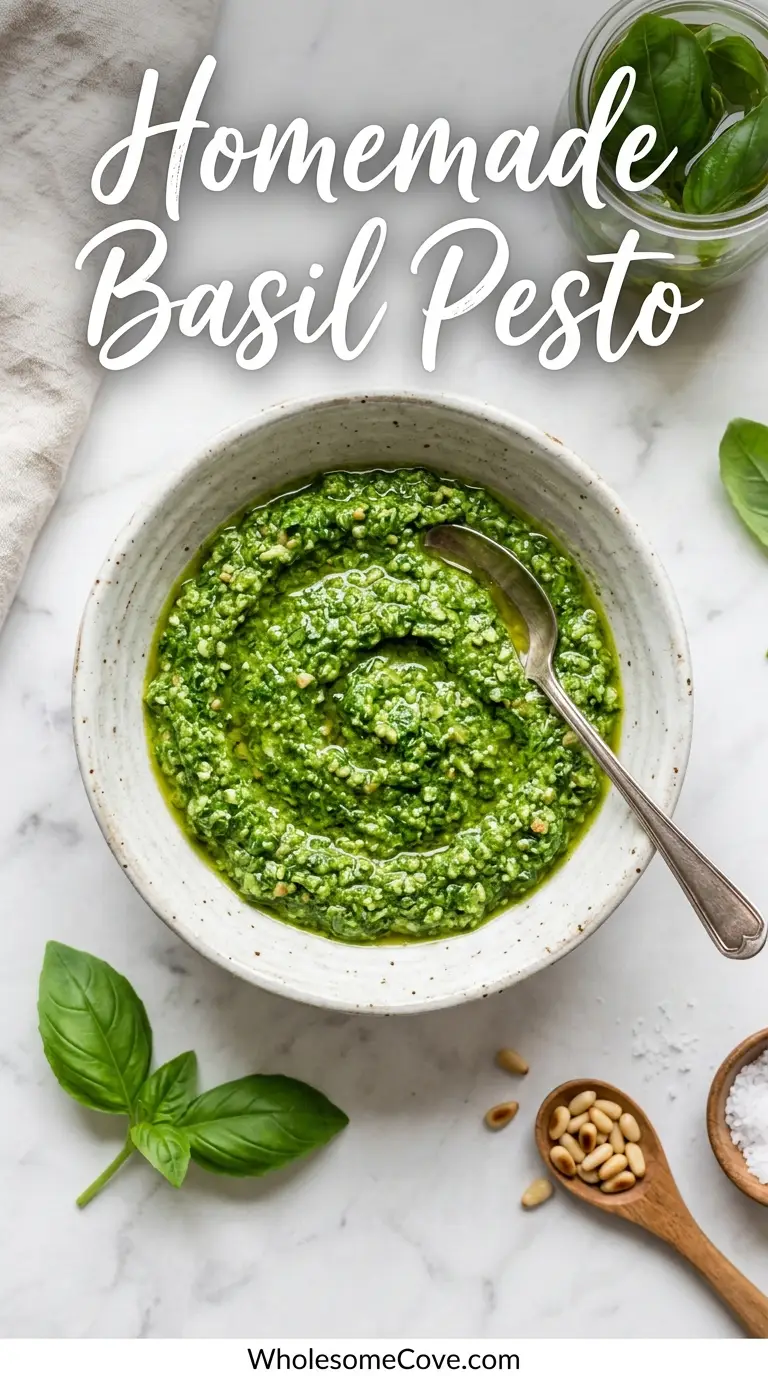
Step-by-Step Instructions: How to Make Pesto
Step 1: Toast the Pine Nuts
- Place a small, dry skillet over medium-low heat. No oil needed — you’re dry-toasting.
- Add the 1/3 cup (45 g) of pine nuts to the cold pan before the heat comes up. This gives them a gentler, more even toast.
- Stir or swirl the pan every 30 seconds or so. Pine nuts go from perfectly golden to burnt very quickly, so keep your eyes on them the whole time.
- After about 3 to 4 minutes, the pine nuts should be lightly golden and smelling nutty and warm. Pull them off the heat immediately.
- Transfer the toasted pine nuts to a small plate or bowl and let them cool for at least 5 minutes before adding to the food processor. Adding hot nuts can cause the basil to wilt and turn dark.
Step 2: Prep the Basil and Garlic
- Rinse the 2 cups (50 g) of fresh basil leaves under cold water in a colander.
- Gently pat the leaves completely dry with paper towels, or spin them in a salad spinner if you have one. Wet basil adds excess moisture to the pesto and can water down the flavor.
- Pull the basil leaves off the stems and discard the stems (or save them for a tomato sauce — they add great flavor there).
- Peel the 3 garlic cloves. If the cloves are especially large, you can cut them in half so they blend more evenly.
Step 3: Grate the Parmesan
- Using a microplane grater or the fine side of a box grater, grate the 1/2 cup (50 g) of Parmigiano-Reggiano.
- Grate it directly into a small bowl and set aside. Freshly grated cheese is airier and blends more smoothly than anything from a bag.
- If you don’t have a microplane, you can pulse the chunk of Parmesan in the food processor first (before adding anything else), then remove it and set aside. Process it until it looks like fine crumbs.
Step 4: Process the Base
- Add the cooled toasted pine nuts and the 3 peeled garlic cloves to the bowl of your food processor.
- Pulse about 8 to 10 times until the pine nuts and garlic are broken down into a coarse, crumbly mixture. You don’t want them completely smooth yet — some texture is good at this stage.
- Scrape down the sides of the food processor bowl with a spatula to make sure everything is evenly processed.
Step 5: Add the Basil
- Add all of the dry, prepped basil leaves to the food processor on top of the pine nut and garlic mixture.
- Pulse another 8 to 10 times until the basil is broken down and combined with the nuts and garlic. The mixture will look rough and chunky — that’s totally fine.
- Scrape down the sides of the bowl again with your spatula. Basil leaves like to climb up the walls of the processor and avoid the blade, so don’t skip this step.
Step 6: Stream in the Olive Oil
- With the food processor running on low, slowly pour the 1/2 cup (120 ml) of extra-virgin olive oil in through the feed tube in a thin, steady stream.
- This slow stream helps emulsify the oil into the pesto, giving you a smoother, more cohesive sauce rather than a greasy, separated one.
- Once all the oil is added, stop the processor and scrape down the sides one more time.
- Pulse a few more times until the pesto reaches your desired consistency. If you prefer a looser, more drizzleable sauce, add another tablespoon or two of olive oil and pulse again.
Step 7: Add Parmesan, Lemon, and Seasoning
- Add the freshly grated Parmesan cheese, 1 tablespoon of fresh lemon juice, 1/2 teaspoon of kosher salt, and 1/4 teaspoon of black pepper to the food processor.
- Pulse 5 to 6 times, just until the cheese is incorporated. You don’t want to over-process at this stage — the cheese should blend in without turning the pesto into a completely smooth paste. A little bit of texture makes it feel more homemade and rustic.
- Taste the pesto carefully. Does it need more salt? More lemon? Another pinch of black pepper? Adjust and pulse once or twice more.
Step 8: Transfer and Store
- Spoon the finished pesto into a clean glass jar or airtight container.
- Use a spoon or spatula to press the pesto down firmly and eliminate any air pockets.
- Pour a thin layer of extra-virgin olive oil (about 1 to 2 teaspoons) over the top of the pesto. This layer of oil seals out the air and keeps the pesto bright green and fresh.
- Seal the jar tightly and refrigerate until ready to use.
Read Also: Best Sauce Recipes
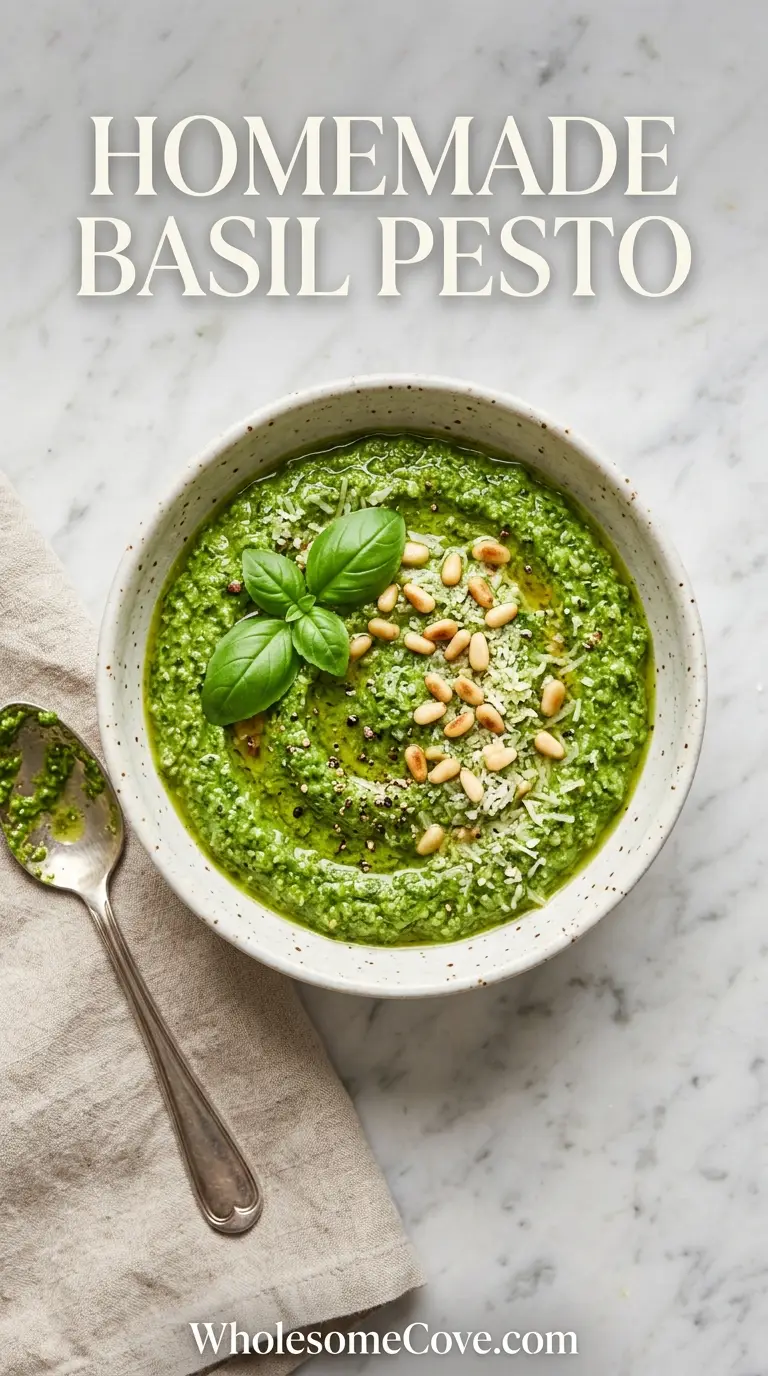
Tips for The Best Pesto
A few small techniques make a big difference in the final flavor and color of your pesto. These are the lessons I learned the hard way so you don’t have to.
- Always toast your pine nuts. Raw pine nuts work, but toasting them for a few minutes in a dry pan adds a deeper, nuttier flavor that’s really worth the extra step. Just don’t walk away from the pan — they burn fast.
- Dry the basil completely before processing. Wet basil dilutes the flavor and makes the pesto watery. Spin it dry in a salad spinner or pat it down firmly with paper towels.
- Use room-temperature olive oil. Cold oil can cause the emulsion to break and leave you with a greasy-looking pesto. Room temperature oil blends in much more smoothly.
- Don’t over-process. Pesto should have a little texture and body. If you blend it until completely smooth, you lose that rustic, handmade quality. Pulse, don’t run continuously.
- Grate the Parmesan yourself. Pre-grated cheese contains anti-caking agents that prevent it from melting and blending properly. A hand-grated or microplaned Parmesan makes a noticeably creamier, more cohesive pesto.
- Add the lemon juice. I skipped it for years thinking it wasn’t necessary. I was wrong. The lemon brightens all the other flavors and also helps the pesto stay green longer in the fridge.
- Keep everything cool. If your food processor has been sitting in a hot kitchen, the friction of processing can warm the basil and dull its color. Pop the processor bowl and blade in the freezer for 10 minutes before you start for the most vibrant green pesto.
- Taste and adjust before serving. Pesto is very forgiving — a little more salt, an extra squeeze of lemon, or a touch more cheese can completely transform it. Taste as you go.
- Cover the surface with olive oil when storing. That thin layer of oil on top is your best defense against the pesto turning brown in the fridge. Don’t skip it.
Another fantastic sauce to add to your repertoire is this Healthy Alfredo Sauce Recipe — it’s just as quick to make and equally versatile.
What to Serve with Pesto
Pesto is one of the most generous, go-anywhere sauces in the kitchen. The list of what it can’t go on is honestly shorter than what it can.
Toss it with pasta for a dinner that comes together in the time it takes to boil the water. Linguine, spaghetti, and penne all work beautifully.
- Classic Pasta — Cook your favorite pasta, reserve a cup of pasta water, and toss with a few generous spoonfuls of pesto. The starchy pasta water helps loosen the sauce and helps it cling to every strand. Finish with extra Parmesan and a drizzle of olive oil.
- Tomato Basil Mozzarella Flatbread Pizza — Pesto makes an incredible pizza base instead of tomato sauce. Slather it on flatbread, top with fresh mozzarella and tomato slices, and bake until bubbly.
- Grilled Salmon — A spoonful of pesto on top of a freshly grilled salmon fillet is one of the best quick dinners I know. The richness of the fish and the brightness of the pesto are a perfect match.
- Grilled Lemon Herb Chicken — Marinate chicken breasts in pesto for an hour before grilling, or just spoon it over the top after cooking. Either way, it’s outstanding.
- Caprese Stuffed Avocados — Drizzle pesto over these for a stunning appetizer or light lunch that’s ready in minutes.
- Grilled Portobello Mushrooms — Pesto and mushrooms are made for each other. Brush the mushrooms with pesto before grilling and serve them as a side or a vegetarian main.
- Soups and Stews — Stir a spoonful of pesto into tomato soup, minestrone, or bean soup just before serving. It adds incredible depth.
- Sandwiches and Wraps — Spread pesto on bread instead of mayo or mustard. It works on everything from a simple turkey sandwich to a grilled cheese.
- Scrambled Eggs — Add a small dollop of pesto to your scrambled eggs right at the end of cooking. It sounds odd but tastes absolutely amazing.
- Dipping Sauce — Serve pesto alongside crusty bread, sliced focaccia, or fresh vegetable crudités as an appetizer dip.
Read Also: Chicken Caprese Skillet Recipe
Variations of Pesto
Classic basil pesto is the gold standard, but once you understand the formula, you can play around endlessly. The basic ratio stays the same: greens + nuts + hard cheese + olive oil + garlic + salt.
- Walnut Pesto — Swap the pine nuts for walnuts for a deeper, slightly bitter flavor that pairs especially well with pasta dishes. Walnuts are also considerably cheaper and easier to find, which makes this a great everyday version.
- Arugula Pesto — Replace the basil with fresh arugula (or use half basil, half arugula) for a peppery, slightly spicy pesto that’s fantastic on pizza or bruschetta. It also stays brighter green in the fridge longer than pure basil pesto.
- Kale Pesto — Blanch the kale for 30 seconds in boiling water and then plunge it into ice water before blending. The resulting pesto is earthy and hearty with a deeper green color. Use it on roasted vegetables or grain bowls.
- Sun-Dried Tomato Pesto (Red Pesto) — Substitute the basil with oil-packed sun-dried tomatoes and add a handful of fresh basil for brightness. This variation — sometimes called pesto rosso — is richer and more intensely flavored. Try it on chicken or mixed into cream sauces.
- Pistachio Pesto — Use unsalted shelled pistachios in place of pine nuts for a slightly sweeter, more vibrant green pesto. This one is gorgeous on bruschetta or swirled into ricotta for a quick appetizer.
- Vegan Pesto — Omit the Parmesan and add 3 tablespoons of nutritional yeast instead. It provides that savory, cheesy depth without any dairy. Use a little extra salt and a squeeze more lemon to compensate.
- Mint and Almond Pesto — Replace the basil with fresh mint and the pine nuts with blanched almonds for a bright, fresh sauce that’s incredible with lamb or over a simple salad.
- Spinach and Basil Pesto — Mix equal parts fresh spinach and basil for a milder, slightly sweeter pesto that’s gentler in flavor. This is a great option if you find pure basil pesto a little too intense.
You might also enjoy: Creamy Avocado Pasta Recipe
Storage and Reheating
Pesto stores incredibly well, both in the fridge and the freezer, making it ideal for batch cooking. The key is protecting it from air exposure, which is what causes that unappetizing brown color.
- Refrigerator storage: Transfer pesto to a small, clean glass jar or airtight container. Press the pesto down firmly with a spoon to eliminate any air pockets below the surface, then pour a thin layer of extra-virgin olive oil (about 1 to 2 teaspoons) directly over the top. The oil creates a seal that keeps the pesto bright green and fresh. Seal the container and refrigerate for up to 5 to 7 days. Each time you use some, re-smooth the surface and add a fresh drizzle of oil.
- Freezer storage: Pesto freezes beautifully for up to 3 months. The easiest method is to spoon it into ice cube trays, freeze until solid (about 4 hours), and then pop the cubes out and transfer them to a zip-lock freezer bag. Each cube is roughly 2 tablespoons — perfect for adding to a single bowl of pasta or soup without thawing the whole batch.
- Freezing in jars: If you’d rather freeze it in bulk, fill a small jar leaving about 1/2 inch of headspace at the top (the pesto will expand slightly as it freezes), add a thin layer of olive oil on top, and seal tightly. Thaw overnight in the refrigerator.
- Reheating or using from cold: Pesto should never be cooked directly over high heat — it will turn brown and bitter. Instead, stir it into hot pasta off the heat, or add it to a warm sauce at the last minute. If you’re using it as a warm topping or sauce, let it come to room temperature first rather than microwaving it.
- Reviving leftover pesto: If your pesto has thickened in the fridge, stir in a splash of warm water, a little extra olive oil, or a tablespoon of pasta cooking water to loosen it back up.
Another Italian classic worth making from scratch is this Pasta Fagioli Recipe — it’s deeply comforting and comes together in about an hour.
Nutritional Facts
The following is an approximate breakdown per serving (about 2 tablespoons / 30 ml), based on 8 servings per batch.
| Nutrient | Per Serving | ||| | Calories | ~185 kcal | | Total Fat | 19 g | | Saturated Fat | 3 g | | Cholesterol | 5 mg | | Sodium | 150 mg | | Total Carbohydrates | 2 g | | Dietary Fiber | 0.5 g | | Sugars | 0.3 g | | Protein | 3 g | | Vitamin A | 8% DV | | Vitamin C | 3% DV | | Calcium | 8% DV | | Iron | 4% DV |
Note: Nutritional values are estimates and will vary depending on the exact brands and quantities of ingredients used.
For more Italian-inspired pasta meals, this Baked Ziti Recipe is a crowd-pleasing dinner that’s perfect for feeding a family.
Health Benefits of Key Ingredients
Homemade pesto isn’t just delicious — it’s packed with genuinely good-for-you ingredients that do real work in your body. Here’s a quick look at what you’re getting with every spoonful.
- Fresh Basil: Basil is loaded with antioxidants, particularly flavonoids and polyphenols, that help protect cells from damage. It also has natural anti-inflammatory properties and is a good source of vitamin K, which supports bone health and blood clotting.
- Extra-Virgin Olive Oil: This is one of the most studied and celebrated healthy fats on the planet. EVOO is rich in monounsaturated fatty acids and oleocanthal, a compound with anti-inflammatory effects similar to ibuprofen. Regular consumption is associated with reduced cardiovascular risk and better cholesterol profiles.
- Pine Nuts: Pine nuts are a source of healthy unsaturated fats, magnesium, zinc, and iron. They also contain pinolenic acid, a fatty acid that has been studied for its potential role in appetite regulation and heart health.
- Garlic: Garlic contains allicin, a sulfur compound released when garlic is crushed or chopped. Allicin has antibacterial, antiviral, and anti-inflammatory properties. Regular garlic consumption is linked to improved immune function and cardiovascular health.
- Parmigiano-Reggiano Cheese: While pesto uses a modest amount of Parmesan, what’s there provides a meaningful source of calcium for bone health, as well as protein and vitamin B12. Aged hard cheeses are also lower in lactose than soft cheeses, making them easier to digest for many people.
- Lemon Juice: The lemon juice in pesto adds more than just flavor — it provides vitamin C, which supports immune function, enhances iron absorption from plant-based foods, and acts as an antioxidant that helps preserve the color of the basil.
Read Also: Healthy Bruschetta Recipe
FAQs About Pesto
1. Why is my pesto turning brown?
Pesto browns because of oxidation — the basil is exposed to air and reacts with oxygen, turning the sauce from bright green to a dull, darker color. This is completely safe to eat but not the most appealing. To prevent it, always cover the surface of your pesto with a thin layer of olive oil before storing it in the fridge. Keeping the pesto in a small, tightly sealed container that minimizes air exposure also helps a lot. Working quickly during blending and keeping your ingredients cold can reduce browning too.
2. Can I make pesto without a food processor?
Yes, you absolutely can. The traditional method uses a mortar and pestle, which actually produces a slightly more complex, aromatic pesto because the grinding action releases the oils in the basil differently than machine blending. It takes a bit more elbow grease — roughly 10 to 15 minutes of pounding and grinding — but the results are worth it if you have the time. Start with the garlic and salt, then add the pine nuts, then the basil in batches, and finally work in the olive oil and cheese.
3. Can I use dried basil instead of fresh?
Technically you can, but the result won’t be what most people would call pesto. Dried basil is far more concentrated and lacks the fresh, herbaceous quality that makes pesto so distinctive. The color will also be a dull green-grey rather than vibrant emerald. For a jar of what is essentially dried herb paste, it’s not really worth it. Fresh basil is key here — it’s the whole point of the sauce.
4. How much pesto do I need per serving of pasta?
A good rule of thumb is about 2 to 3 tablespoons of pesto per serving of pasta. This batch yields approximately 1 cup (240 ml) of pesto, which is enough to dress pasta for 4 people as a main course. Remember to reserve some of the starchy pasta cooking water before draining — a splash of that water helps loosen the pesto and helps it coat the pasta evenly without the sauce feeling too thick or heavy.
5. Can I freeze pesto with the Parmesan cheese already in it?
Yes, you can freeze pesto with the cheese already mixed in, and it works great. The texture may be very slightly different after thawing (sometimes a little grainier), but the flavor remains excellent. If you want the best possible texture after freezing, some people prefer to freeze the pesto without the cheese and stir in freshly grated Parmesan after thawing. Either method works well — it really comes down to personal preference and convenience.
For another versatile pasta sauce to add to your rotation, this Easy Alfredo Sauce Recipe is a quick weeknight winner.
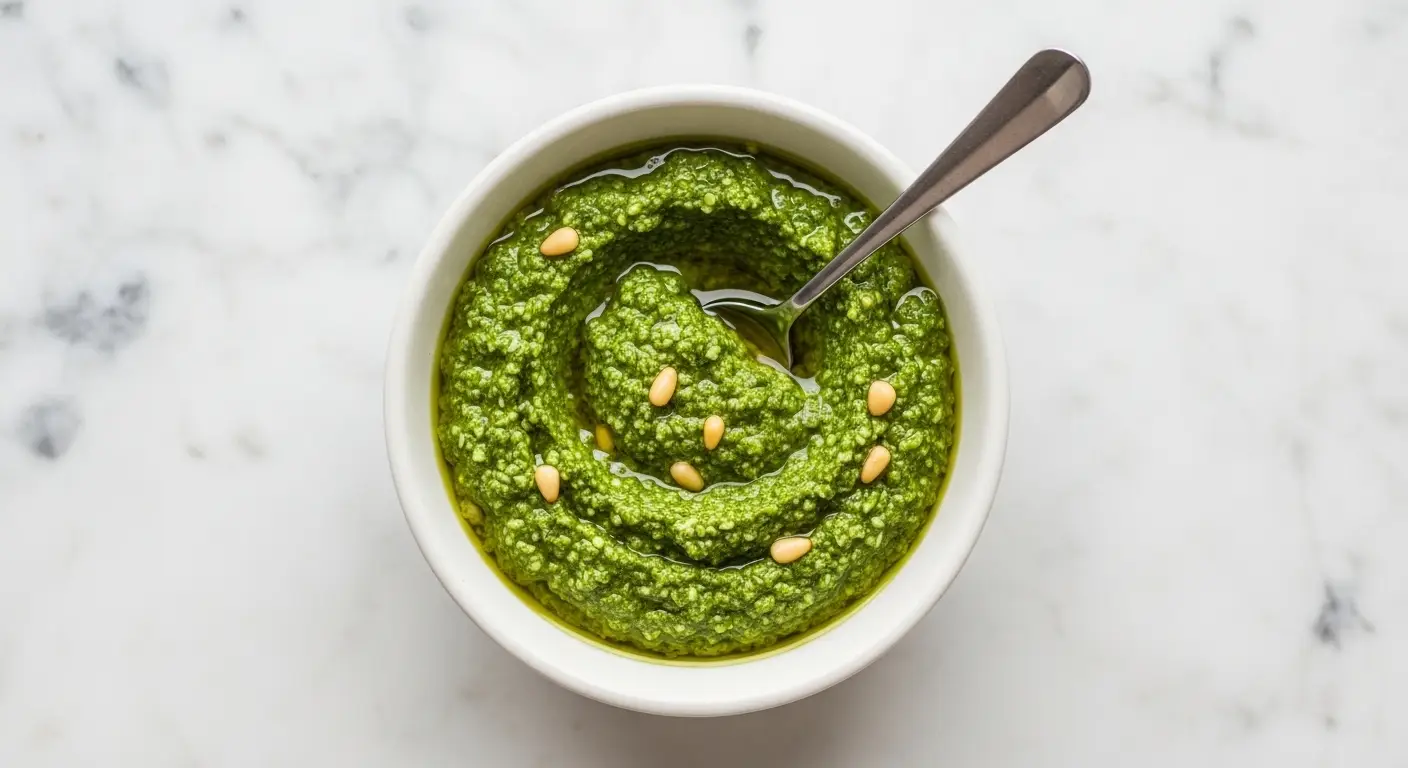
Basil Pesto Recipe
Ingredients
- 2 cups fresh basil leaves - 50g, tightly packed, stems removed
- 1/3 cup pine nuts - 45g
- 3 garlic cloves - fresh, peeled
- 1/2 cup Parmigiano-Reggiano cheese - 50g, freshly grated
- 1/2 cup extra-virgin olive oil - 120ml, plus more as needed
- 1 tbsp fresh lemon juice - from about half a lemon
- 1/2 tsp kosher salt - plus more to taste
- 1/4 tsp freshly ground black pepper
Equipment
- Food processor - 7-cup capacity or larger recommended
- Small skillet - For dry-toasting the pine nuts
- Cutting board and chef’s knife - For prepping garlic and stripping basil leaves
- Microplane or fine grater - For freshly grating the Parmesan
- Spatula - For scraping down the sides of the food processor
- Glass jar with tight lid - For storing the finished pesto
- Measuring cups and spoons
- Citrus juicer or fork - For squeezing the lemon
- Salad spinner - For drying basil leaves (optional)
- Small bowl - For holding the grated Parmesan and toasted pine nuts
Method
- Place a small dry skillet over medium-low heat and add the pine nuts to the cold pan. Stir or swirl every 30 seconds for 3 to 4 minutes until lightly golden and fragrant, then immediately transfer to a plate and cool for at least 5 minutes.
- Rinse the basil leaves under cold water and pat completely dry with paper towels or a salad spinner — wet basil will water down the pesto. Pull the leaves off the stems and discard the stems; peel the garlic cloves.
- Using a microplane or the fine side of a box grater, grate the Parmigiano-Reggiano into a small bowl and set aside. Freshly grated cheese blends more smoothly than pre-grated.
- Add the cooled pine nuts and peeled garlic cloves to the food processor and pulse 8 to 10 times until broken down into a coarse, crumbly mixture. Scrape down the sides with a spatula.
- Add all the dry basil leaves to the food processor and pulse another 8 to 10 times until combined with the nut mixture. Scrape down the sides of the bowl again to ensure even blending.
- With the processor running on low, slowly pour in the olive oil through the feed tube in a thin, steady stream. Once all the oil is added, scrape down the sides and pulse a few more times until you reach your desired consistency.
- Add the grated Parmesan, lemon juice, salt, and black pepper, then pulse 5 to 6 times just until the cheese is incorporated. Taste and adjust seasoning as needed.
- Spoon the finished pesto into a clean glass jar, press it down to eliminate air pockets, and pour a thin layer of olive oil over the top to seal. Refrigerate until ready to use.
Nutrition
Notes
- Always toast pine nuts before blending — it takes just 3 to 4 minutes in a dry skillet and adds a deeper, nuttier flavor to the finished pesto.
- Dry basil thoroughly before processing. Wet leaves dilute the flavor and make the pesto watery. A salad spinner works best, or pat firmly with paper towels.
- Use room-temperature olive oil for a smoother emulsion. Cold oil can cause the sauce to look greasy or separated.
- Do not over-process — pulse rather than running the machine continuously. A little texture is what makes homemade pesto taste homemade.
- Always grate your own Parmesan. Pre-grated cheese contains anti-caking agents that prevent it from blending properly into a creamy sauce.
- Refrigerator storage: cover the surface with a thin layer of olive oil before sealing to keep the pesto bright green. Stores for up to 5 to 7 days.
- Freezer storage: spoon pesto into ice cube trays, freeze solid, then transfer cubes to a zip-lock bag. Keeps for up to 3 months — each cube is about 2 tablespoons.
- Never heat pesto over high heat — it will turn brown and bitter. Stir it into hot pasta off the heat or add to warm sauces at the last moment.
- Substitutions: walnuts, almonds, or pistachios can replace pine nuts; Pecorino Romano can replace or supplement the Parmesan; arugula or kale can partially or fully replace the basil.
- For a vegan version, omit the Parmesan and use 3 tablespoons of nutritional yeast instead, adding a little extra salt and lemon juice to compensate.
Private Notes
Tried this recipe?
Let us know how it was!Final Thoughts
Homemade pesto is the kind of recipe that changes the way you cook. Once you realize how fast and easy it is, you’ll never look at a jar of store-bought the same way again.
Every time I make a batch, I think of that first summer afternoon at my kitchen windowsill with an overgrown basil plant and zero expectations. The simplest recipes are often the ones that stick with you forever.
Give this pesto recipe a try this week — even if it’s just to toss with a bowl of pasta for a quick dinner. I promise you won’t regret it.
I’d love to hear how it turns out! Drop a comment below and let me know what you served it with, or share a photo on social media and tag me — seeing your kitchen wins genuinely makes my day.
Recommended:
- Zucchini Noodles with Pesto and Shrimp Bowls
- Stuffed Shells Recipe
- Tomato Sauce Recipe
- Chicken Parmesan Recipe
- Lasagna Recipe
- Pizza Sauce Recipe
- Baked Salmon with Asparagus and Lemon Recipe
- Healthy Chicken Parmesan Recipe
- Vodka Sauce Recipe
- Italian Wedding Soup Recipe