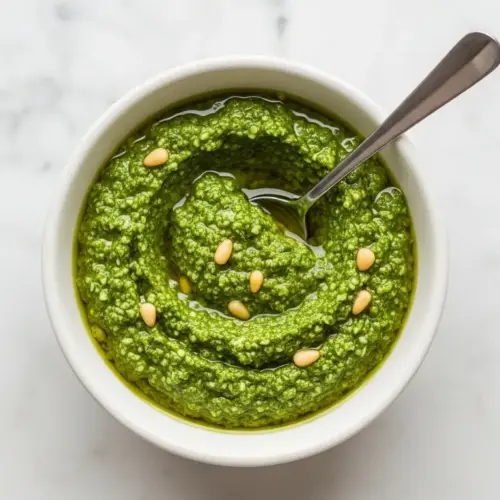
Basil Pesto Recipe

This classic homemade basil pesto comes together in just 15 minutes using six simple ingredients: fresh basil, toasted pine nuts, garlic, Parmigiano-Reggiano, extra-virgin olive oil, and a squeeze of lemon. Blended in a food processor, it delivers a vibrant, nutty, deeply aromatic sauce that's worlds apart from anything in a jar. Toss it with pasta, spread it on sandwiches, swirl it into soup, or use it as a pizza base — this is the kind of versatile, make-ahead sauce that transforms everyday meals effortlessly.
Equipment
- Food processor - 7-cup capacity or larger recommended
- Small skillet - For dry-toasting the pine nuts
- Cutting board and chef's knife - For prepping garlic and stripping basil leaves
- Microplane or fine grater - For freshly grating the Parmesan
- Spatula - For scraping down the sides of the food processor
- Glass jar with tight lid - For storing the finished pesto
- Citrus juicer or fork - For squeezing the lemon
- Salad spinner - For drying basil leaves (optional)
- Small bowl - For holding the grated Parmesan and toasted pine nuts
Ingredients
- 2 cups fresh basil leaves - 50g, tightly packed, stems removed
- 1/3 cup pine nuts - 45g
- 3 garlic cloves - fresh, peeled
- 1/2 cup Parmigiano-Reggiano cheese - 50g, freshly grated
- 1/2 cup extra-virgin olive oil - 120ml, plus more as needed
- 1 tbsp fresh lemon juice - from about half a lemon
- 1/2 tsp kosher salt - plus more to taste
- 1/4 tsp freshly ground black pepper
Instructions
- Place a small dry skillet over medium-low heat and add the pine nuts to the cold pan. Stir or swirl every 30 seconds for 3 to 4 minutes until lightly golden and fragrant, then immediately transfer to a plate and cool for at least 5 minutes.
- Rinse the basil leaves under cold water and pat completely dry with paper towels or a salad spinner — wet basil will water down the pesto. Pull the leaves off the stems and discard the stems; peel the garlic cloves.
- Using a microplane or the fine side of a box grater, grate the Parmigiano-Reggiano into a small bowl and set aside. Freshly grated cheese blends more smoothly than pre-grated.
- Add the cooled pine nuts and peeled garlic cloves to the food processor and pulse 8 to 10 times until broken down into a coarse, crumbly mixture. Scrape down the sides with a spatula.
- Add all the dry basil leaves to the food processor and pulse another 8 to 10 times until combined with the nut mixture. Scrape down the sides of the bowl again to ensure even blending.
- With the processor running on low, slowly pour in the olive oil through the feed tube in a thin, steady stream. Once all the oil is added, scrape down the sides and pulse a few more times until you reach your desired consistency.
- Add the grated Parmesan, lemon juice, salt, and black pepper, then pulse 5 to 6 times just until the cheese is incorporated. Taste and adjust seasoning as needed.
- Spoon the finished pesto into a clean glass jar, press it down to eliminate air pockets, and pour a thin layer of olive oil over the top to seal. Refrigerate until ready to use.
Notes
- Always toast pine nuts before blending — it takes just 3 to 4 minutes in a dry skillet and adds a deeper, nuttier flavor to the finished pesto.
- Dry basil thoroughly before processing. Wet leaves dilute the flavor and make the pesto watery. A salad spinner works best, or pat firmly with paper towels.
- Use room-temperature olive oil for a smoother emulsion. Cold oil can cause the sauce to look greasy or separated.
- Do not over-process — pulse rather than running the machine continuously. A little texture is what makes homemade pesto taste homemade.
- Always grate your own Parmesan. Pre-grated cheese contains anti-caking agents that prevent it from blending properly into a creamy sauce.
- Refrigerator storage: cover the surface with a thin layer of olive oil before sealing to keep the pesto bright green. Stores for up to 5 to 7 days.
- Freezer storage: spoon pesto into ice cube trays, freeze solid, then transfer cubes to a zip-lock bag. Keeps for up to 3 months — each cube is about 2 tablespoons.
- Never heat pesto over high heat — it will turn brown and bitter. Stir it into hot pasta off the heat or add to warm sauces at the last moment.
- Substitutions: walnuts, almonds, or pistachios can replace pine nuts; Pecorino Romano can replace or supplement the Parmesan; arugula or kale can partially or fully replace the basil.
- For a vegan version, omit the Parmesan and use 3 tablespoons of nutritional yeast instead, adding a little extra salt and lemon juice to compensate.
Nutrition
Serving: 2tablespoonsCalories: 185kcalCarbohydrates: 2gProtein: 3gFat: 19gSaturated Fat: 3gPolyunsaturated Fat: 3gMonounsaturated Fat: 12gCholesterol: 5mgSodium: 150mgPotassium: 60mgFiber: 0.5gSugar: 0.3gVitamin A: 8IUVitamin C: 3mgCalcium: 8mgIron: 4mg
Tried this recipe?Let us know how it was!