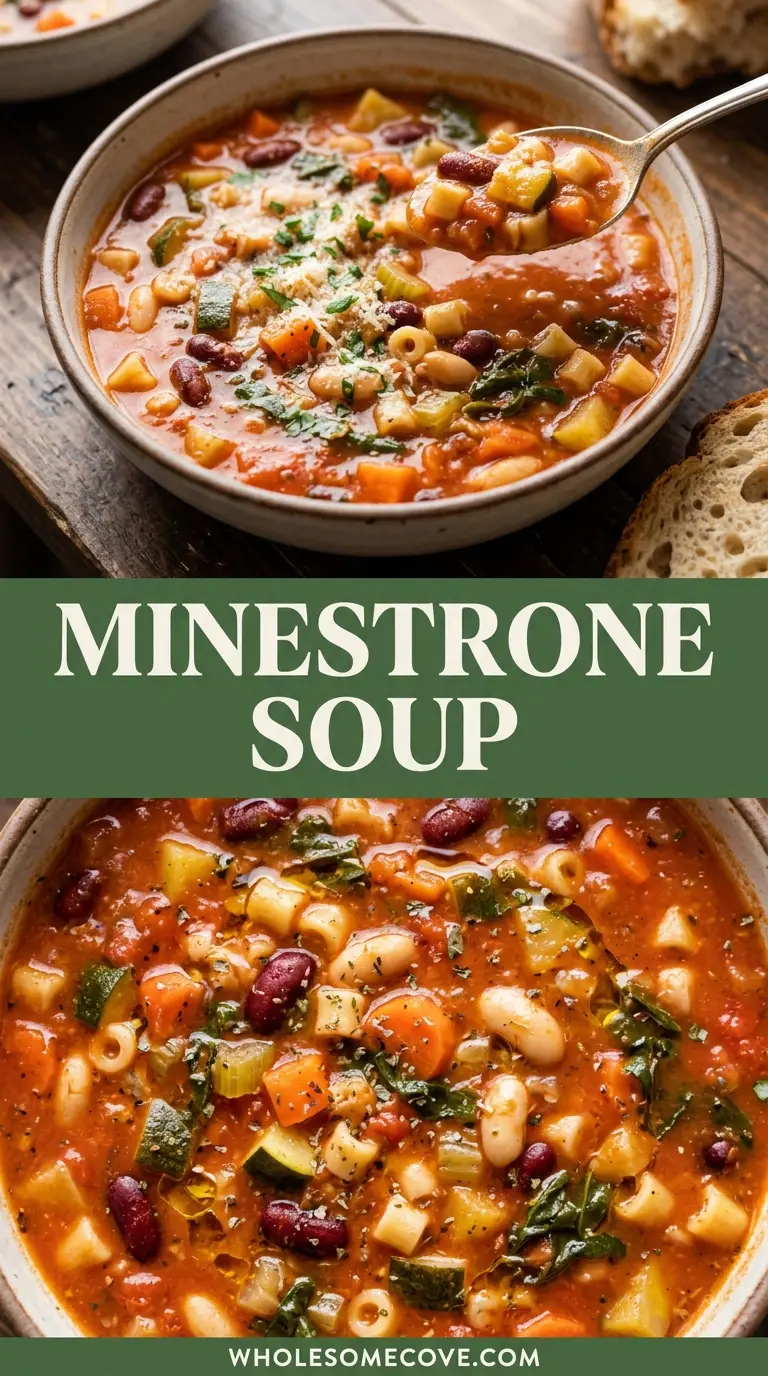
This minestrone soup recipe builds a tomato broth from onion, carrot, celery, and a Parmesan rind. Two kinds of beans and ditalini pasta turn it into a full meal.
Most versions go wrong at the pasta stage. Pasta left to sit in the pot keeps drinking broth, so leftovers turn thick and soft overnight.
Here the ditalini goes in last, and the storage section shows how to keep every bowl brothy. The potatoes get a head start, while the zucchini and green beans join later so nothing turns to mush.
The pot serves eight and is ready in 65 minutes.
| Quick Recipe Summary | |
|---|---|
| Prep Time | 20 minutes |
| Cook Time | 45 minutes |
| Total Time | 65 minutes |
| Servings | 8 servings (about 1½ cups each) |
| Difficulty Level | Easy |
Read Also: Pasta Fagioli Recipe
Why You’ll Love This Minestrone Soup Recipe
This pot gives you a full dinner for eight from about 20 minutes of chopping. The flavor comes from slow-cooked vegetables rather than a seasoning packet.
- Real tomato depth. Tomato paste is cooked until it darkens, then crushed tomatoes and a Parmesan rind build a broth that tastes simmered for hours, even though the pot is done in 65 minutes.
- Two kinds of beans. Cannellini beans turn creamy and thicken the broth slightly, while red kidney beans add a firmer bite and a more robust texture.
- Vegetables that stay distinct. Potatoes cook first, then green beans and zucchini join, and spinach wilts in at the very end, so each vegetable keeps its own texture.
- One pot, simple cleanup. Everything cooks in a single Dutch oven, including the pasta, so there is no separate colander and no extra pan.
- Better on day two. The flavors settle overnight, which makes this a dependable soup to cook on Sunday and reheat through the week.
- Easy to adapt. Swap in whatever vegetables are in season, change the pasta shape, or leave out the rind, and the soup still holds together.
- Budget friendly. Pantry cans, a few vegetables, and a small amount of pasta stretch into eight generous bowls.
For another Italian soup built on small pasta, see Italian Wedding Soup Recipe.
Ingredients
Minestrone has no single fixed formula, but most traditional versions share a soffritto base, beans, tomatoes, a small pasta, and a Parmesan rind. Measurements below are given in both US and metric units.
For the Soup
- 3 tablespoons (45 ml) extra virgin olive oil
- 1 large yellow onion, diced (about 1½ cups or 200 g)
- 2 medium carrots, peeled and diced into ½-inch (1.25 cm) pieces (about 1 cup or 130 g)
- 2 celery stalks, diced (about ¾ cup or 75 g)
- 4 garlic cloves, minced
- 2 tablespoons (32 g) tomato paste in a tube
- 1 medium Yukon Gold potato, peeled and diced into ½-inch (1.25 cm) pieces (about 1 cup or 150 g)
- 1 can (28 oz or 794 g) crushed tomatoes
- 6 cups (1.4 L) low-sodium vegetable broth
- 1 Parmesan rind, about 2 inches (5 cm) long, optional but recommended
- 2 bay leaves
- 1 teaspoon dried oregano
- ½ teaspoon dried thyme
- 1½ teaspoons kosher salt, divided (½ teaspoon for the vegetables and 1 teaspoon for the broth), plus more to taste
- 1 cup (115 g) green beans, trimmed and cut into 1-inch (2.5 cm) pieces
- 1 medium zucchini (about 8 oz or 225 g), diced into ½-inch (1.25 cm) pieces
- 1 can (15 oz or 425 g) cannellini beans, drained and rinsed
- 1 can (15 oz or 425 g) red kidney beans, drained and rinsed
- 1 cup (115 g) ditalini pasta
- 3 cups (90 g) baby spinach, loosely packed
- ½ teaspoon freshly ground black pepper
For Serving
- ½ cup (50 g) freshly grated Parmesan cheese, about 1 tablespoon per bowl
- ¼ cup (10 g) chopped fresh basil or flat-leaf parsley
You might also enjoy: Lentil and Vegetable Soup Recipe
Kitchen Equipment Needed
This soup needs very little gear, but a heavy pot makes a real difference to how evenly the vegetables soften. Everything below is standard kitchen equipment.
- Large pot: A 5 to 6 quart (4.7 to 5.7 L) Dutch oven or heavy-bottomed soup pot holds the full batch with room to stir.
- Knife: A sharp chef’s knife makes uniform ½-inch (1.25 cm) cuts quick work.
- Board: A large cutting board with a juice groove keeps tomato and vegetable liquid off the counter.
- Stirring spoon: A wooden spoon is gentle on the pot and good for scraping up browned bits.
- Ladle: A soup ladle portions out even bowls without drips.
- Colander: A colander is useful for rinsing the canned beans.
- Vegetable peeler: For the carrots and potato.
- Measuring cups and spoons: For the broth, pasta, and herbs.
- Storage containers: Airtight soup storage containers keep leftovers fresh in the fridge or freezer.
Read Also: Creamy Tomato Basil Soup Recipe
Recommended Products for This Recipe
These are the items I recommend after making minestrone many times, because each one fixes a specific problem. None are required, but they make the soup noticeably easier or better.
1. Enameled Cast Iron Dutch Oven
Thin pots scorch the tomato paste and onions before the vegetables soften, which leaves a bitter edge in the broth. A heavy enameled Dutch oven holds steady heat, so the soffritto sweats gently and the soup simmers without hot spots.
2. Parmigiano Reggiano Wedge
Pre-grated Parmesan in a shaker will not melt into the broth and contains anti-caking starch. A real wedge gives you both a rind to simmer in the soup and fresh cheese to grate over each bowl, and the flavor difference is easy to taste.
3. San Marzano Crushed Tomatoes
I’ve found crushed San Marzano tomatoes give a rounder, less acidic broth than generic crushed tomatoes, which often need a pinch of sugar to balance. They also have a thicker body, so the soup tastes fuller without extra simmering.
4. Silicone Freezer Soup Tray
Freezing soup in one big container means thawing the whole batch even when you want a single bowl. A tray with lidded portions lets you freeze individual servings of the soup base and pop out only what you need.
Another hearty soup with a similar vegetable base is Zuppa Toscana Recipe.
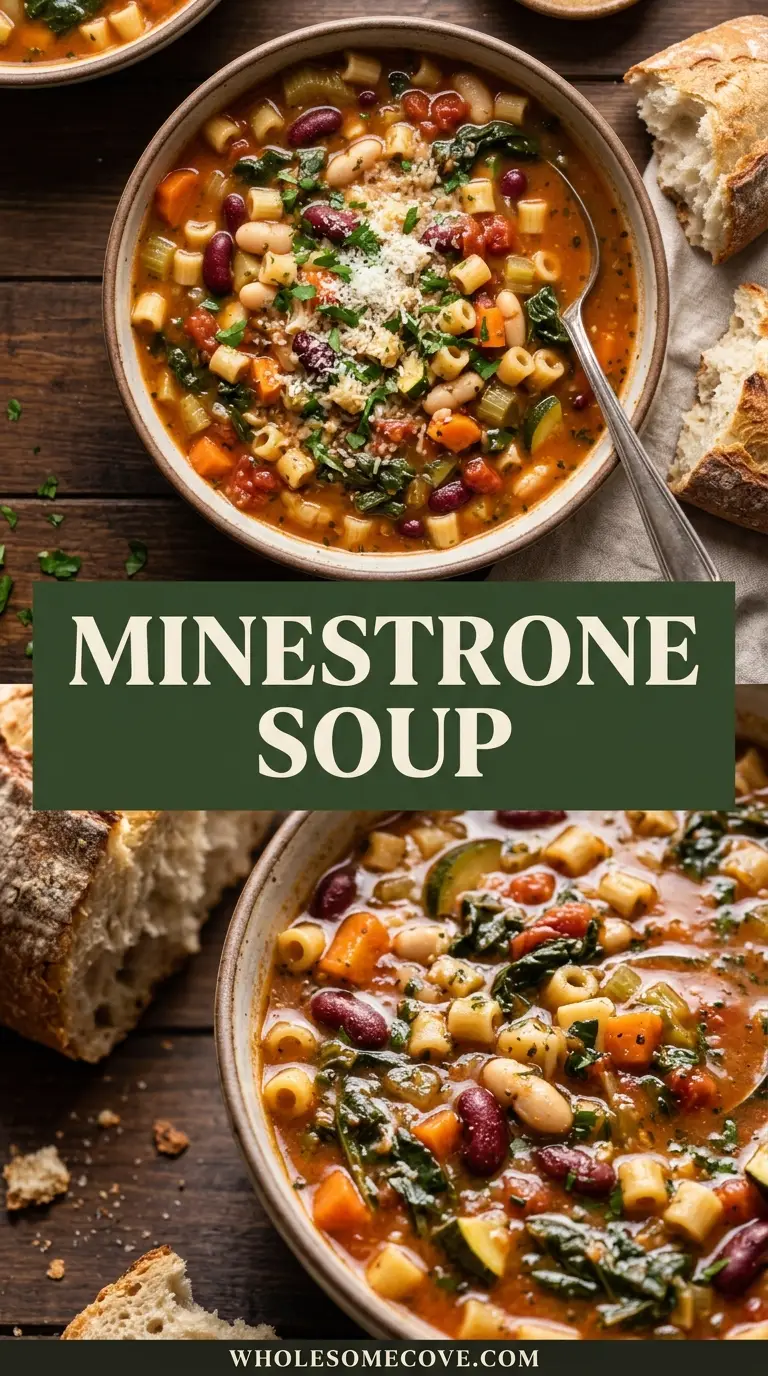
Step-by-Step Instructions: How to Make Minestrone Soup
Follow these steps and you will have a full pot of minestrone ready in about an hour.
1. Prep the Vegetables and Beans
- Dice the onion, carrots, celery, potato, and zucchini into pieces about ½ inch (1.25 cm) wide so they cook at the same pace.
- Trim the green beans and cut them into 1-inch (2.5 cm) pieces.
- Mince the 4 garlic cloves.
- Drain and rinse both cans of beans in a colander until the water runs clear, then set them aside.
- Measure out the 6 cups (1.4 L) of broth, the 3 cups (90 g) of baby spinach, and the 1 cup (115 g) of ditalini so everything is ready to go in.
2. Build the Flavor Base
- Heat the 3 tablespoons (45 ml) of olive oil in a large Dutch oven or soup pot over medium heat for about 1 minute, until it shimmers.
- Add the diced onion, carrots, and celery along with ½ teaspoon of the kosher salt.
- Cook for 7 to 8 minutes, stirring often, until the onion turns translucent and the carrots begin to soften. Do not let the vegetables brown.
- Stir in the minced garlic and the 2 tablespoons (32 g) of tomato paste.
- Cook for 1 to 2 minutes, stirring constantly, until the paste turns a deeper brick red and smells sweet rather than raw.
3. Start the Broth
- Add the diced potato, the can of crushed tomatoes, and the 6 cups (1.4 L) of vegetable broth.
- Drop in the Parmesan rind, the 2 bay leaves, the 1 teaspoon of dried oregano, and the ½ teaspoon of dried thyme.
- Stir in the remaining 1 teaspoon of kosher salt.
- Raise the heat to high and bring the pot to a boil, then reduce the heat to medium-low.
- Partially cover the pot and simmer for 15 minutes, until the potato pieces are almost tender.
4. Add the Remaining Vegetables and Beans
- Stir in the green beans, the diced zucchini, the drained cannellini beans, and the drained kidney beans.
- Return the soup to a gentle simmer and cook, partially covered, for 10 minutes.
- The green beans should be crisp-tender and the zucchini should be soft but still holding its shape.
5. Cook the Pasta
- Stir the 1 cup (115 g) of ditalini into the simmering soup.
- Cook for 8 to 10 minutes, stirring every couple of minutes so the pasta does not stick to the bottom of the pot.
- Start tasting at 8 minutes. The pasta is done when it is al dente, meaning tender with a slight bite in the center.
- If the soup looks too thick as the pasta absorbs liquid, add up to 1 cup (240 ml) of hot water or extra broth.
6. Finish and Season
- Turn off the heat. Fish out the Parmesan rind and the 2 bay leaves and discard them.
- Stir in the 3 cups (90 g) of baby spinach and let it wilt in the hot soup for 1 to 2 minutes.
- Add the ½ teaspoon of freshly ground black pepper.
- Taste and add more kosher salt a pinch at a time. The rind and canned beans add salt, so always taste first.
7. Serve
- Ladle the soup into warmed bowls, about 1½ cups each.
- Top each bowl with about 1 tablespoon of the freshly grated Parmesan, using the ½ cup (50 g) in total.
- Scatter the ¼ cup (10 g) of chopped fresh basil or parsley evenly over the bowls.
- Serve right away while the pasta is at its best.
For a heartier option, try: Beef Barley Soup Recipe
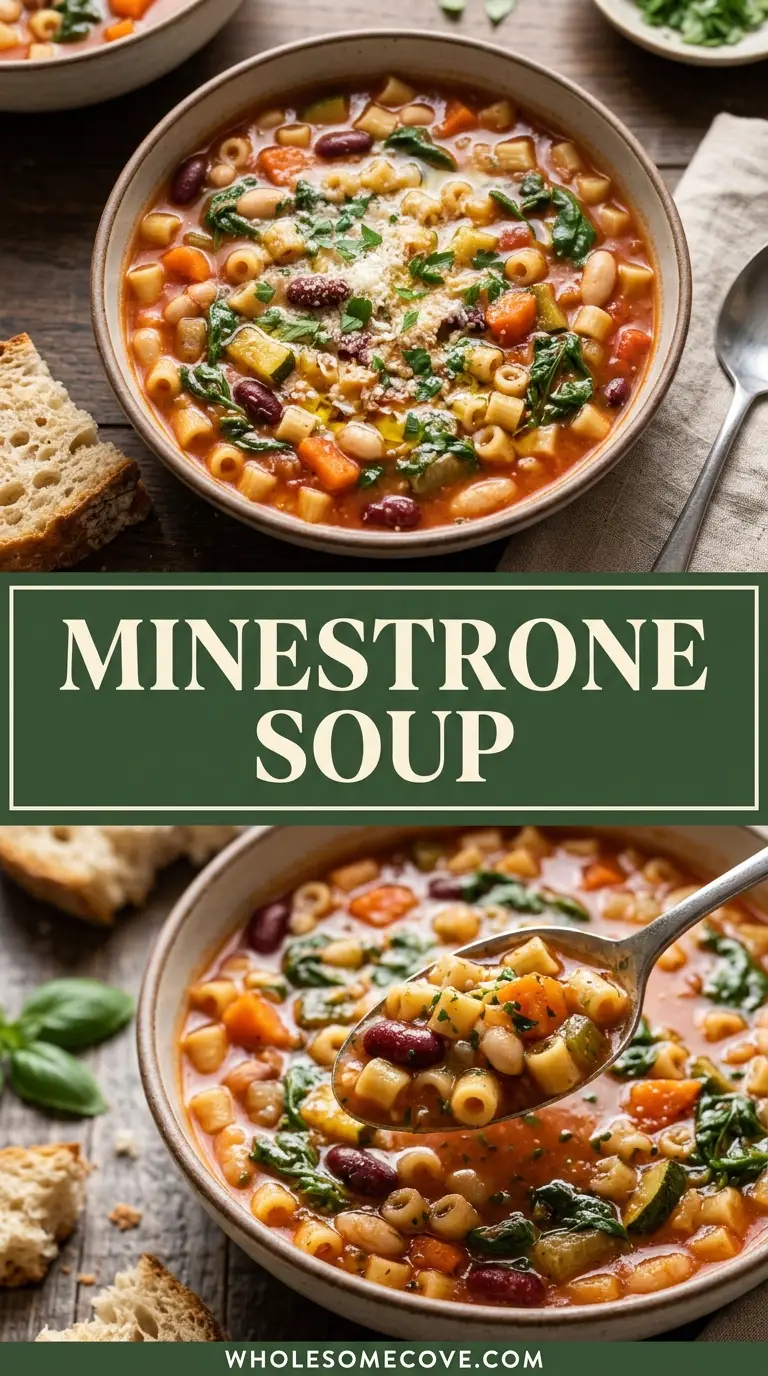
Tips for The Best Minestrone Soup
Minestrone is forgiving, but a few small habits separate a flat vegetable soup from one with real depth. These tips cover the choices that matter most.
- Cut everything to a similar size. Keeping the vegetables near ½ inch (1.25 cm) means each spoonful has a bit of everything and nothing is raw or overcooked.
- Sweat the soffritto slowly. Seven to eight minutes over medium heat softens the onion, carrot, and celery without browning them, which keeps the broth sweet instead of bitter.
- Cook the tomato paste. A minute or two in the hot oil removes the raw, metallic taste and adds a roasted tomato flavor to the whole pot.
- Add vegetables in stages. Potatoes need the longest, green beans and zucchini need about 10 minutes, and spinach needs only a minute of residual heat.
- Freeze your rinds. I keep a zip bag of Parmesan rinds in the freezer specifically for soups like this, because a single rind costs nothing and adds the savory depth that broth alone lacks.
- Choose cannellini for the main beans. Cannellini hold their shape better than kidney beans on day two, and their pale skins keep the broth red instead of muddy.
- Add the pasta last. I ruined my first pot by stirring the ditalini in with the beans, and by dinner the soup had thickened into something closer to a stew.
- Cook pasta separately for leftovers. If you expect to have leftovers, boil the ditalini in salted water until al dente, drain it, and add it to each bowl as you serve.
- Make it a day ahead. The flavors blend and deepen overnight, so the soup tastes rounder after a night in the fridge.
- Season at the end. The Parmesan rind, canned beans, and broth all contribute salt, so wait until the soup is finished before adding more.
- Use low-sodium broth. It gives you control over the final seasoning, especially if you plan to reduce or reheat the soup.
- Adjust the thickness. Thin the soup with a splash of broth or hot water when reheating, or mash a few beans against the pot wall for a thicker body.
A similar one-pot approach works in Slow Cooker Chili Recipe.
What to Serve with Minestrone Soup
Minestrone is filling enough to be the main course, so the best pairings are simple and built for dipping or soaking up broth. A fresh, acidic side also balances the richness of the Parmesan and olive oil.
- Crusty bread or Sourdough Focaccia for dipping into the tomato broth
- Soft Dinner Rolls with butter for a more casual meal
- Garlic bread brushed with olive oil and toasted until the edges turn golden
- Healthy Bruschetta as a bright, fresh starter on the side
- A simple green salad dressed with lemon juice, olive oil, and a pinch of salt
- Grilled cheese sandwiches cut into strips, which pair well with tomato-based soup
- Chicken Parmesan when you want to turn the soup into a larger Italian-style dinner
- Eggplant Parmesan with Zucchini for a vegetarian pairing with the same flavors
- A spoonful of Pesto stirred into each bowl for a Genoese-style finish
- A glass of Chianti or another medium-bodied red wine, or sparkling water with a squeeze of lemon
Also worth a try: Lemon Chicken Soup Recipe
Variations of Minestrone Soup
Because minestrone is built around what is in season, it adapts easily. Each change below keeps the same basic method.
- Vegan minestrone: Leave out the Parmesan rind and the grated cheese, and finish each bowl with olive oil and a little nutritional yeast.
- Pancetta minestrone: Render 4 ounces (115 g) of diced pancetta in the pot before adding the vegetables, a common addition in northern Italian versions.
- Pesto minestrone: Stir a spoonful of basil pesto into each bowl, which follows the style of Genoa.
- Spring minestrone: Replace the potato and green beans with fresh peas and chopped asparagus, and add them in the last 5 minutes.
- Hearty greens minestrone: Use chopped kale, Swiss chard, or escarole instead of spinach, and add them 5 minutes before the pasta finishes.
- Rice instead of pasta: Stir in ½ cup (95 g) of Arborio rice in place of the ditalini and simmer for about 15 minutes, until tender.
- Gluten-free minestrone: Use gluten-free small pasta and cook it separately to keep it from breaking down in the broth.
- Sausage minestrone: Brown ½ pound (225 g) of Italian sausage first, drain the excess fat, and then continue with the soffritto.
- Slow cooker minestrone: Combine everything except the pasta, spinach, and zucchini, cook on low for 6 to 8 hours, then add the rest in the final 30 minutes.
Read Also: Ham and Bean Soup Recipe
Storage and Reheating
Minestrone stores well, but the pasta changes the rules. Plan for leftovers before you start and the soup will taste almost as fresh on day three.
- Cool before storing. Let the soup cool for no more than 2 hours at room temperature, then transfer it to airtight containers.
- Refrigerator: Store for up to 4 days. The soup will thicken as the pasta absorbs broth.
- Freezer: Freeze the soup without the pasta for up to 3 months. Leave about 1 inch (2.5 cm) of space at the top of the container for expansion.
- Freezing with pasta: It is safe, but the ditalini turns soft and mushy after thawing.
- Thawing: Move frozen soup to the refrigerator the night before, or heat it directly from frozen in a covered pot over low heat.
- Stovetop reheating: Warm the soup over medium-low heat, stirring occasionally, until it is steaming hot throughout. Add a splash of broth or water to loosen it.
- Microwave reheating: Heat a single serving in a covered bowl for 2 to 3 minutes, stirring halfway through.
- Adding fresh pasta: If the soup was frozen without pasta, cook a handful of fresh ditalini separately and stir it in once the soup is hot.
- Fresh herbs: Wait to add basil or parsley until the soup is in the bowl, because heat dulls their color and aroma.
Another soup that reheats well is Split Pea and Ham Soup Recipe.
Nutritional Facts
The numbers below are estimates for one serving, about 1½ cups, based on a batch that makes 8 servings. Brands of broth, beans, and pasta will shift the totals slightly.
| Nutrition per Serving (approximate) | |
|---|---|
| Calories | 285 kcal |
| Carbohydrates | 41 g |
| Protein | 11 g |
| Total Fat | 8 g |
| Saturated Fat | 2 g |
| Fiber | 9 g |
| Sugar | 8 g |
| Sodium | 780 mg |
For more vegetable-forward soups, try: Kale and Sweet Potato Soup Recipe
Health Benefits of Key Ingredients
Minestrone combines vegetables, legumes, whole-food fats, and a small amount of pasta in one bowl. Here is what the main ingredients bring.
- Cannellini and kidney beans: Both are good sources of plant protein and dietary fiber, which help the soup feel filling and support steady digestion.
- Tomatoes: They provide vitamin C and lycopene, a pigment that is more easily absorbed from cooked tomatoes and tomato paste.
- Carrots: Carrots supply beta-carotene, which the body converts to vitamin A.
- Celery and onion: They add fiber and a range of plant compounds, and they build the base flavor with very few calories.
- Garlic: Garlic contributes allicin-related compounds and a strong savory flavor, so you need less salt.
- Zucchini and green beans: Both are low in calories and offer potassium and vitamin C.
- Spinach: Spinach provides vitamin K, folate, and iron, and it wilts into the broth in just a minute or two.
- Extra virgin olive oil: It is a source of monounsaturated fat and vitamin E, and it helps the body absorb the fat-soluble vitamins in the carrots and tomatoes.
- Potato: Potato adds potassium and a gentle natural thickness to the broth.
- Parmesan: A small amount adds calcium, protein, and a savory depth that makes a modest portion go a long way.
- Ditalini pasta: It supplies carbohydrates for energy, and a modest portion keeps the bowl balanced instead of starchy.
Read Also: Carrot Ginger Soup Recipe
FAQs About Minestrone Soup
1. What is minestrone soup made of?
Minestrone is an Italian soup made from vegetables, beans, and a small pasta or rice in a tomato-based broth. Most versions start with onion, carrot, and celery.
The exact vegetables change with the season, so there is no single official recipe. The word comes from the Italian “minestra,” which means soup.
2. Is minestrone soup vegetarian or vegan?
Traditional minestrone is built around vegetables and beans, so it can easily be vegetarian. It becomes vegan when you skip the Parmesan rind and the cheese garnish.
Check the label on your broth as well. Some store-bought broths contain animal products.
3. Can you freeze minestrone soup?
Yes, minestrone freezes well for up to 3 months. The best method is to freeze it without the pasta.
Pasta turns mushy once it is thawed and reheated. Cook fresh ditalini and add it when you warm the soup.
4. How do you keep the pasta from getting mushy?
Add the pasta near the end and stop cooking when it is just al dente. It continues to soften in the hot broth.
For leftovers, cook the pasta separately and add it to each bowl. That keeps the broth clear and the pasta firm.
5. What is the difference between minestrone and vegetable soup?
Minestrone is tomato-based and almost always includes beans and pasta or rice. Vegetable soup is usually broth-based and does not always contain pasta.
Minestrone also tends to be thicker. The starch from the pasta, beans, and potatoes gives it more body.
6. What is the best pasta for minestrone?
Small shapes work best because they fit on a spoon with the vegetables. Ditalini, small shells, and elbow macaroni are the most common choices.
Avoid large pasta like penne or rigatoni. It overwhelms the vegetables and soaks up too much broth.
7. How long does minestrone last in the fridge?
Minestrone keeps for up to 4 days in an airtight container in the refrigerator. Expect it to thicken as it sits.
Loosen it with broth or water when you reheat it. Make sure it is steaming hot all the way through before serving.
You might also enjoy: Potato Leek Soup Recipe
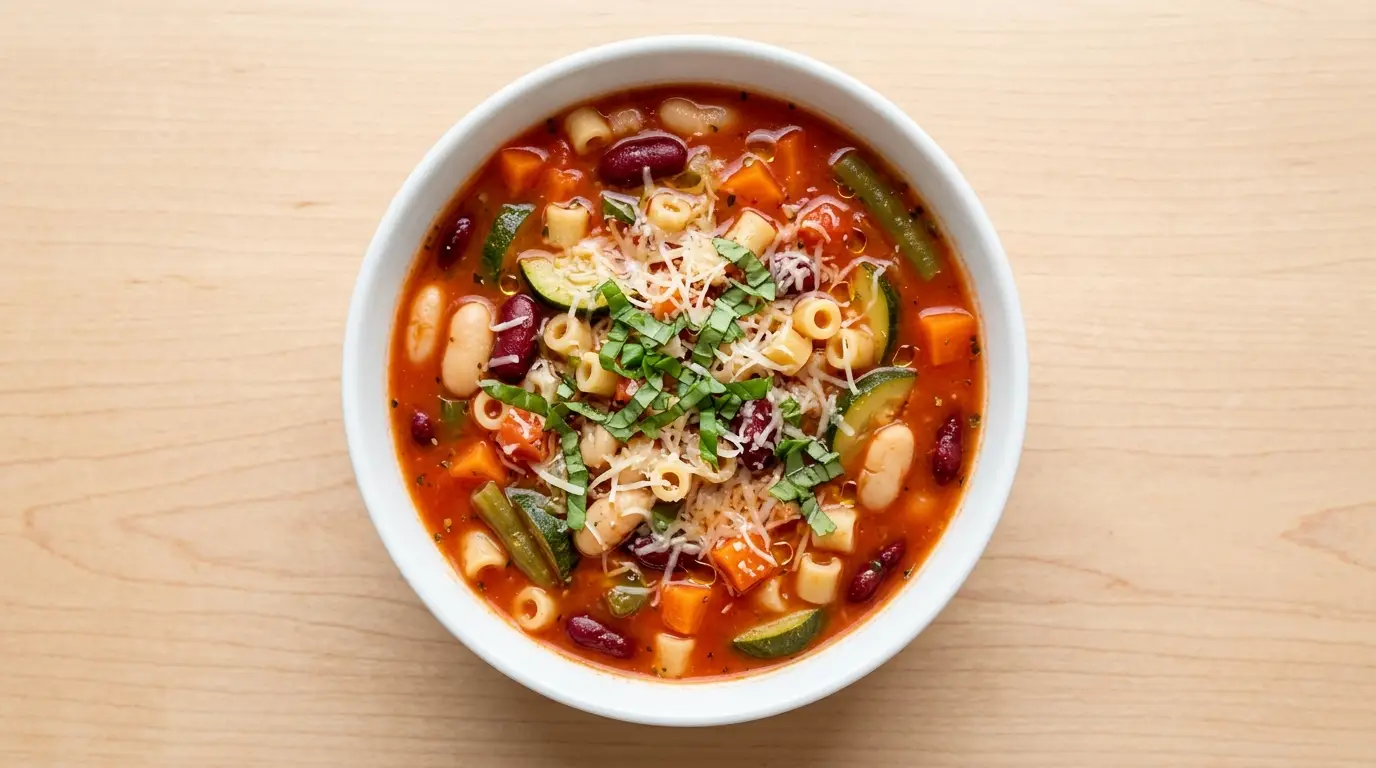
Minestrone Soup
Ingredients
- 3 tablespoons extra virgin olive oil - 45 ml
- 1 large yellow onion - about 1½ cups or 200 g, diced
- 2 medium carrots - about 1 cup or 130 g, peeled and diced into ½-inch (1.25 cm) pieces
- 2 stalks celery - about ¾ cup or 75 g, diced
- 4 cloves garlic - minced
- 2 tablespoons tomato paste - 32 g, preferably from a tube
- 1 medium Yukon Gold potato - about 1 cup or 150 g, peeled and diced into ½-inch (1.25 cm) pieces
- 1 can (28 oz) crushed tomatoes - 794 g
- 6 cups low-sodium vegetable broth - 1.4 L
- 1 Parmesan rind - about 2 inches (5 cm) long, optional but recommended
- 2 bay leaves
- 1 teaspoon dried oregano
- ½ teaspoon dried thyme
- 1½ teaspoons kosher salt - divided (½ teaspoon for the vegetables and 1 teaspoon for the broth), plus more to taste
- 1 cup green beans - 115 g, trimmed and cut into 1-inch (2.5 cm) pieces
- 1 medium zucchini - about 8 oz or 225 g, diced into ½-inch (1.25 cm) pieces
- 1 can (15 oz) cannellini beans - 425 g, drained and rinsed
- 1 can (15 oz) red kidney beans - 425 g, drained and rinsed
- 1 cup ditalini pasta - 115 g
- 3 cups baby spinach - 90 g, loosely packed
- ½ teaspoon freshly ground black pepper
- ½ cup freshly grated Parmesan cheese - 50 g, about 1 tablespoon per bowl
- ¼ cup chopped fresh basil or flat-leaf parsley - 10 g
Equipment
- Large pot - 5 to 6 quart (4.7 to 5.7 L) Dutch oven or heavy-bottomed soup pot
- Chef’s knife - Sharp, for uniform ½-inch cuts
- Cutting board - Large board with a juice groove
- Wooden spoon - For stirring and scraping up browned bits
- Soup Ladle - For portioning even bowls
- Colander - For rinsing the canned beans
- Vegetable peeler - For the carrots and potato
- Measuring cups and spoons - For broth, pasta, and herbs
- Storage containers - Airtight containers for fridge or freezer leftovers
Method
- Dice the onion, carrots, celery, potato, and zucchini into ½-inch pieces, trim and cut the green beans into 1-inch pieces, mince the garlic, and drain and rinse both cans of beans.
- Heat the olive oil in a Dutch oven over medium heat, then cook the onion, carrots, and celery with ½ teaspoon salt for 7 to 8 minutes until softened. Stir in the garlic and tomato paste and cook 1 to 2 minutes until the paste darkens.
- Add the potato, crushed tomatoes, broth, Parmesan rind, bay leaves, oregano, thyme, and remaining 1 teaspoon salt. Boil, then reduce to medium-low, partially cover, and simmer 15 minutes until the potato is almost tender.
- Stir in the green beans, zucchini, cannellini beans, and kidney beans, and simmer partially covered for 10 minutes until the green beans are crisp-tender.
- Stir in the ditalini and cook 8 to 10 minutes, stirring often, until al dente. Add up to 1 cup hot water or broth if the soup looks too thick.
- Remove the Parmesan rind and bay leaves, stir in the spinach until wilted, add the black pepper, and taste and adjust the salt.
- Ladle into warmed bowls and top each with about 1 tablespoon grated Parmesan and a scattering of chopped basil or parsley.
Nutrition
Notes
- Cut all vegetables to a similar ½-inch size so every spoonful has a bit of everything and nothing is raw or overcooked.
- Sweat the soffritto slowly over medium heat without browning so the broth stays sweet rather than bitter.
- Cook the tomato paste for a minute or two in the hot oil to remove the raw, metallic taste and add roasted tomato flavor.
- Add vegetables in stages: potatoes first, green beans and zucchini later, and spinach at the very end with residual heat.
- Keep a zip bag of Parmesan rinds in the freezer for soups like this; a single rind adds savory depth that broth alone lacks.
- For leftovers, cook the ditalini separately in salted water and add it to each bowl so the soup stays brothy and the pasta firm.
- Make it a day ahead — the flavors blend and deepen overnight, so the soup tastes rounder after a night in the fridge.
- Season at the end, since the Parmesan rind, canned beans, and broth all contribute salt.
- Freeze the soup without the pasta for up to 3 months, leaving about 1 inch of space at the top of the container for expansion.
- Thin reheated soup with a splash of broth or hot water, or mash a few beans against the pot wall for a thicker body.
Private Notes
Tried this recipe?
Let us know how it was!Final Thoughts
Minestrone rewards a little patience at the start.
Sweating the vegetables, toasting the tomato paste, and adding the pasta last are small steps that make a big difference.
Make a pot this weekend and keep the leftovers for lunch. Tell me in the comments which vegetables you used, and share the recipe with a friend.
Recommended:
- Tomato Soup Recipe
- Roasted Tomato Soup Recipe
- Chicken Gnocchi Soup Recipe
- Best Sausage Tortellini Soup Recipe
- Lasagna Soup Recipe
- Lentil Soup Recipe
- Roasted Butternut Squash Soup Recipe
- French Onion Soup Recipe
- Easy Chicken Noodle Soup Recipe