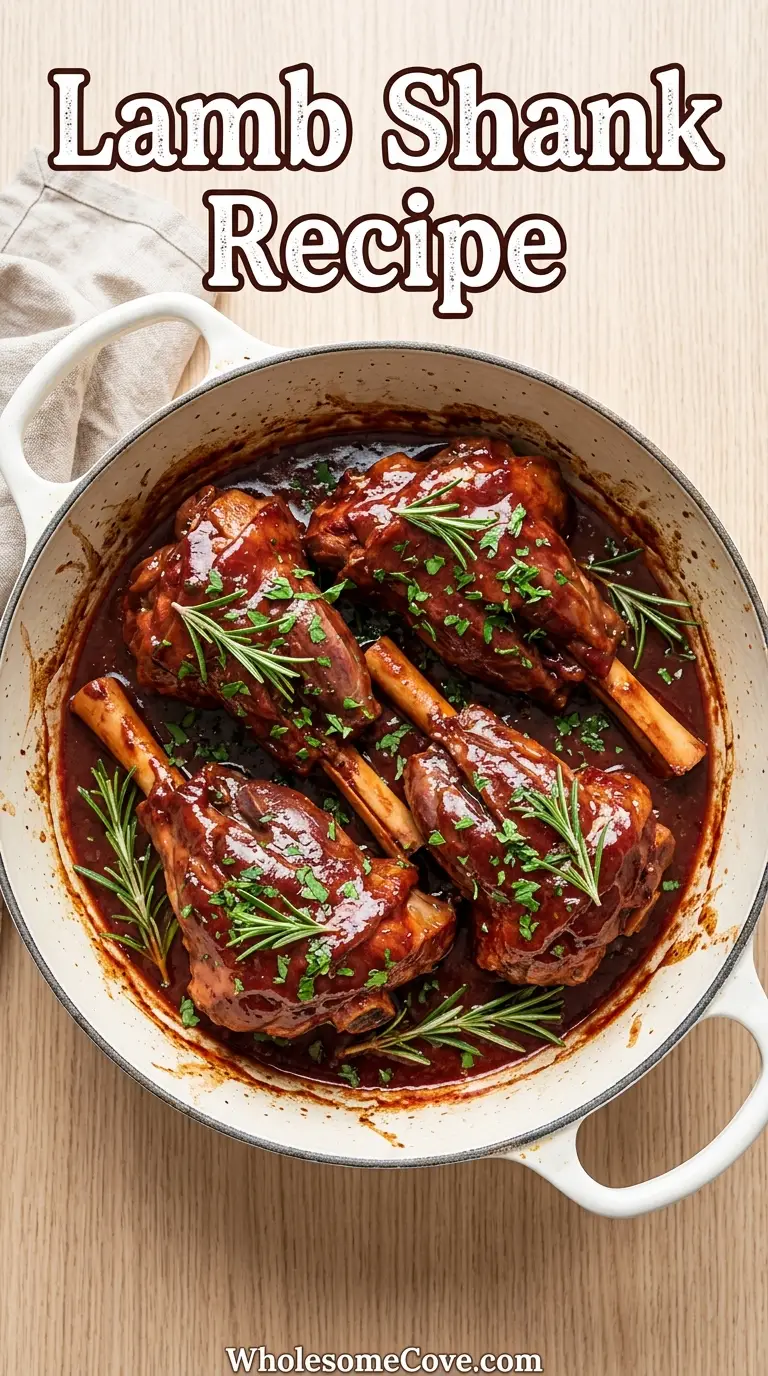
If you’ve never made a lamb shank recipe at home before, I need you to know that it’s one of the most rewarding things you’ll ever pull out of your oven. The first time I attempted it, I was honestly a little intimidated by the size of the shanks sitting in my cart at the butcher counter.
But a few hours later, I had the most tender, deeply flavored meat I’d ever cooked in my own kitchen, surrounded by a rich, glossy red wine sauce that made my whole house smell like a French countryside bistro.
I’ve made this recipe dozens of times now, and every single time it disappears fast. The secret is nothing complicated. It’s just patience, a good sear, the right aromatics, and time in the oven.
That long, slow braise turns what is actually a pretty tough cut of meat into something magical. The collagen in the shank breaks down slowly, making the sauce silky and the meat so tender it practically falls off the bone on its own.
This is the kind of dish you make when you want to really impress someone, or when you just want to treat yourself to something extraordinary on a slow Sunday afternoon.
| Quick Recipe Summary | |
|---|---|
| Prep Time | 20 minutes |
| Cook Time | 2 hours 45 minutes |
| Total Time | 3 hours 5 minutes |
| Servings | 4 servings |
| Difficulty Level | Medium |
If you love slow-cooked lamb dishes, you might also enjoy my Lamb Stew Recipe for another hearty, comforting option.
Why You’ll Love This Lamb Shank Recipe
This is the kind of recipe that does most of the work for you.
Once everything is in the pot and the lid goes on, the oven handles the rest while you go about your day.
The braising liquid transforms into an incredibly rich red wine sauce that you’ll want to pour over everything on your plate.
It’s made with simple, wholesome ingredients that you can find at any grocery store or butcher.
Lamb shanks are surprisingly budget-friendly for how luxurious they taste.
This recipe is also perfect for making a day ahead, and it genuinely tastes better the next day once all the flavors have had time to meld.
You only need one pot, which means less cleanup at the end of the night.
It’s naturally gluten-free and packed with protein, making it a satisfying and nourishing meal.
Read Also: Rack of Lamb Recipe
Ingredients
The ingredient list for braised lamb shanks is classic and straightforward. Every element in this recipe serves a purpose, from the aromatics that build the flavor base to the red wine and stock that create the braising liquid.
- 4 lamb shanks (about 1 lb / 450g each)
- 2 teaspoons kosher salt, plus more to taste
- 1 teaspoon freshly ground black pepper
- 3 tablespoons extra virgin olive oil, divided
- 1 large yellow onion, diced
- 2 large carrots, peeled and cut into 1-inch / 2.5cm chunks
- 3 stalks celery, sliced into 1-inch / 2.5cm pieces
- 8 cloves garlic, minced
- 3 tablespoons tomato paste
- 2 cups / 480ml dry red wine (such as Cabernet Sauvignon, Merlot, or Shiraz)
- 2 cups / 480ml beef stock
- 1 can (14 oz / 400g) whole peeled tomatoes, crushed by hand
- 3 sprigs fresh rosemary
- 4 sprigs fresh thyme
- 2 dried bay leaves
- Fresh flat-leaf parsley, chopped, for garnish
If you enjoy hearty stews and braised dishes, take a look at my Boneless Leg of Lamb Recipe for another impressive lamb dinner.
Kitchen Equipment Needed
You don’t need any special equipment to make this recipe, but a few key pieces will make the process much easier and produce better results.
- Large Dutch oven or heavy-bottomed pot (at least 6-quart / 5.7L capacity with a tight-fitting lid)
- Kitchen tongs for turning and handling the shanks
- Sharp chef’s knife and cutting board
- Wooden spoon or heat-safe spatula
- Measuring cups and spoons
- Ladle for serving
- Fine mesh strainer (optional, for straining the sauce)
- Aluminum foil (as a backup if your pot doesn’t have a lid)
- Oven mitts
Another favorite slow-cooked dinner: Mississippi Pot Roast Recipe
Recommended Products for This Recipe
These are the products I personally use and reach for whenever I make braised lamb shanks. They make a noticeable difference in the quality of the final dish.
1. Le Creuset Enameled Cast Iron Dutch Oven
A proper Dutch oven is hands-down the most important piece of equipment for this recipe. The cast iron holds heat incredibly evenly, giving you that deep, even sear on the lamb shanks and maintaining a steady, low heat throughout the long braise. I’ve used mine for years and it still looks brand new.
2. San Marzano Whole Peeled Tomatoes
Not all canned tomatoes are created equal, and this is a recipe where quality really matters. San Marzano tomatoes have a sweeter, less acidic flavor that makes the braising sauce noticeably richer and more balanced. Once I switched to these, I never went back.
3. Kirkland Signature Beef Stock
A good quality beef stock gives the braising liquid a depth and body that water or a weak stock simply cannot replicate. I like using a stock with no added MSG and minimal sodium so I can control the seasoning myself. This one is consistently rich, flavorful, and great for braising.
4. OXO Good Grips Stainless Steel Tongs
Good tongs are essential for searing the lamb shanks without losing that beautiful crust. The locking mechanism on these is solid, the grip is comfortable, and they give you excellent control when you’re maneuvering heavy shanks around a hot pot.
You might also enjoy: Leg of Lamb Recipe
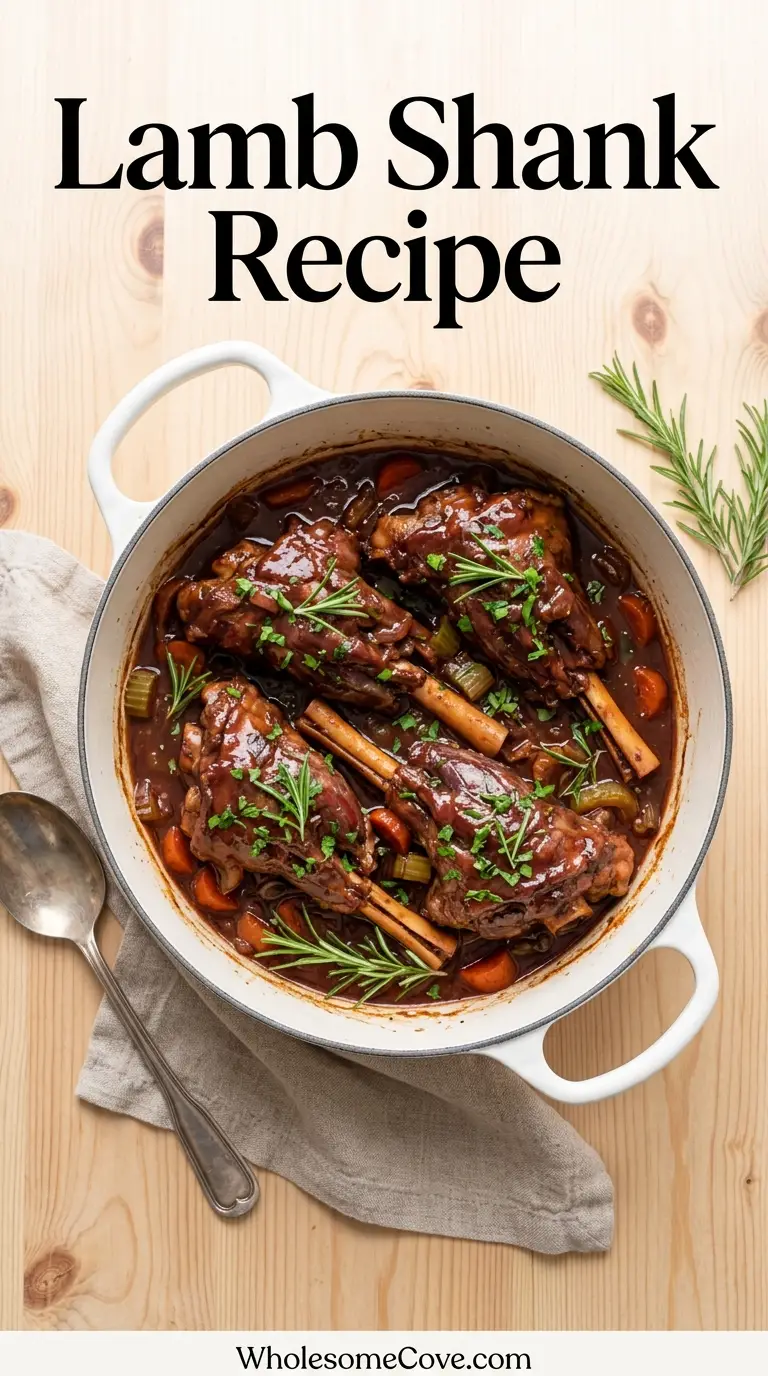
Step-by-Step Instructions: How to Make Lamb Shank
Step 1: Preheat the Oven and Season the Lamb
- Preheat your oven to 325°F (165°C). You want a low, steady heat for the braise, so give your oven plenty of time to come up to temperature before the pot goes in.
- Remove the lamb shanks from the refrigerator about 20-30 minutes before cooking. Letting them come closer to room temperature helps them sear more evenly.
- Pat each lamb shank completely dry with paper towels on all sides. This is one of the most important steps — any moisture on the surface will cause the lamb to steam in the pan instead of sear, and you’ll miss out on that beautiful brown crust.
- Season all sides of each shank generously with 2 teaspoons of kosher salt and 1 teaspoon of freshly ground black pepper. Press the seasoning into the meat with your hands so it adheres well.
Step 2: Sear the Lamb Shanks
- Place your Dutch oven over medium-high heat and add 2 tablespoons of olive oil. Let the oil heat up until it just starts to shimmer. You want the pan very hot before the lamb goes in.
- Add two lamb shanks to the pot (do not overcrowd — work in batches if needed). Sear on all sides, turning with tongs every 3-4 minutes, until a deep, golden-brown crust forms all over. This will take about 10-12 minutes per batch.
- The key here is patience. Don’t move the shanks around while they’re searing — let them sit undisturbed so the crust can properly develop. If they’re sticking, they need more time before you flip them.
- Once browned, transfer the shanks to a plate and set aside. They won’t be fully cooked at this point, which is totally fine.
- Carefully pour off any excess fat from the pot, leaving just a thin layer at the bottom along with all those flavorful browned bits.
Step 3: Build the Aromatic Base
- Reduce the heat to medium and add the remaining 1 tablespoon of olive oil to the same pot.
- Add the diced onion, carrot chunks, and celery pieces. Season with a pinch of salt and stir everything together.
- Cook the vegetables, stirring occasionally, for about 8-10 minutes until they’re softened and starting to turn golden at the edges. Don’t rush this step — properly cooked aromatics are the backbone of a great braising sauce.
- Add the minced garlic and stir for 1-2 minutes until fragrant. You’ll smell it right away, and it should smell incredible.
- Push the vegetables to the sides of the pot to create a clear space in the center. Add the tomato paste to the center and cook it, stirring constantly, for about 2 minutes. You’ll notice the paste darkens slightly and becomes more fragrant. This step caramelizes the tomato paste and adds a deep, savory richness to the final sauce.
Step 4: Deglaze with Red Wine and Add Braising Liquid
- Pour the red wine into the pot and use a wooden spoon to scrape up all the browned bits stuck to the bottom of the pot. Those bits are called “fond,” and they are pure concentrated flavor. Don’t skip this step.
- Increase the heat to medium-high and let the wine come to a vigorous simmer. Cook for about 5-6 minutes until the wine has reduced by roughly half. You’ll notice the sharp smell of alcohol mellow and transform into something richer and more complex.
- Add the beef stock and the crushed whole peeled tomatoes (with their juices). Stir everything together well to combine.
- Nestle the rosemary sprigs, thyme sprigs, and bay leaves into the liquid.
- Taste the braising liquid and adjust salt and pepper as needed before adding the lamb back in.
Step 5: Braise the Lamb Shanks
- Return the seared lamb shanks to the pot, along with any juices that have collected on the plate. Nestle them into the braising liquid so they are mostly submerged. If needed, rearrange the vegetables to make room.
- Bring the braising liquid up to a gentle simmer over medium heat on the stovetop.
- Place the lid on the Dutch oven and carefully transfer it to the preheated 325°F (165°C) oven.
- Braise for 2 hours to 2.5 hours. At the halfway point, carefully open the oven, remove the lid, and use tongs to gently turn each shank over. Spoon some of the braising liquid over the tops of the shanks to keep them moist, then replace the lid and continue cooking.
- The lamb shanks are done when the meat is completely fork-tender and starting to pull away from the bone on its own. If you see the bone starting to peek out of the meat, that’s a great sign.
Step 6: Reduce the Sauce and Serve
- Carefully remove the pot from the oven. Use tongs to lift the lamb shanks out of the braising liquid and set them aside on a plate, tented loosely with foil to keep warm.
- Fish out and discard the rosemary sprigs, thyme sprigs, and bay leaves.
- Place the pot on the stovetop over medium-high heat. Bring the braising liquid to a boil, then reduce the heat to maintain a steady simmer. Cook uncovered for 10-15 minutes, stirring occasionally, until the sauce has reduced by about a third and thickened to a glossy, spoonable consistency.
- Taste the sauce one more time and adjust salt and pepper if needed.
- Return the lamb shanks to the pot and spoon the sauce over them generously.
- Serve each shank in a shallow bowl or on a deep plate over mashed potatoes, creamy polenta, or buttery couscous. Spoon plenty of that gorgeous sauce on top, then scatter chopped fresh parsley over everything.
Read Also: Lamb Chops Recipe
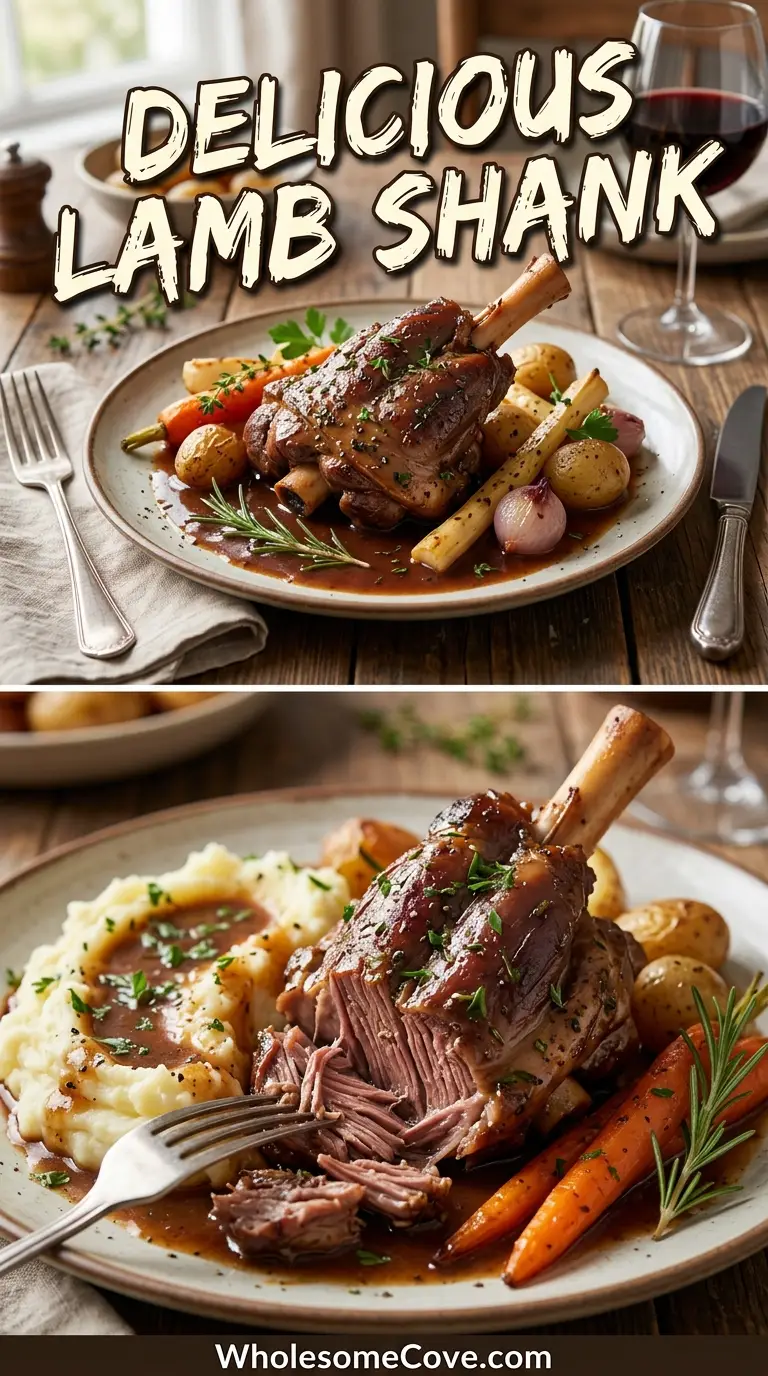
Tips for The Best Lamb Shank
A few well-learned lessons can take your braised lamb shanks from good to unforgettable. These are the things I wish I’d known when I first started making this dish.
- Always dry the meat before searing. Moisture is the enemy of a good sear. Pat those shanks completely dry with paper towels before they hit the hot oil, and you’ll get that deep, gorgeous crust.
- Don’t rush the sear. That brown crust is where a huge portion of your flavor comes from. Let each side sit undisturbed in the hot oil until it releases naturally. If you try to force it up, it will tear and you’ll lose the crust.
- Use a wine you’d actually drink. The wine flavor concentrates significantly during braising, so a better quality wine will make a noticeably better sauce. You don’t need anything expensive, but avoid anything labeled “cooking wine.”
- Cook the tomato paste. Spending a couple of minutes cooking the tomato paste in the pot before adding the liquid caramelizes it and adds an extraordinary depth of flavor you simply won’t get otherwise.
- Low and slow is the law. Braising at too high a temperature will cause the meat to tighten and become tough rather than tender. Stick to 325°F (165°C) and give it the full time it needs.
- Make it the day before. Braised lamb shanks are genuinely better the next day. The flavors deepen overnight, and the solidified fat on the surface is easy to skim off before reheating.
- Deglaze properly. Scraping up every bit of the fond from the bottom of the pot when you add the wine is one of the most flavor-impactful steps in the whole recipe. Take your time with it.
- Let the sauce reduce. Don’t skip the final reduction step after removing the lamb. A properly reduced sauce will be thick, glossy, and intensely flavored, while an unreduced sauce will be thin and watery.
Another beautifully slow-cooked dish to try: Irish Stew Recipe
What to Serve with Lamb Shank
Lamb shanks deserve a side dish that can do justice to that incredible braising sauce. You want something to soak it all up.
The absolute classic pairing is creamy Mashed Potatoes. The richness of the sauce soaking into buttery mashed potatoes is one of the most satisfying bites in all of comfort food.
- Creamy polenta is an outstanding alternative to mashed potatoes, especially if you want something a little more rustic and Italian-inspired.
- Couscous is a wonderful option, particularly if you’re leaning into the Mediterranean or Middle Eastern flavor profile of the lamb.
- Roasted Potatoes are a great choice if you want something with a bit of texture and crispiness alongside the tender meat.
- Crusty bread is essential for mopping up every last drop of sauce from the bowl. Don’t skip it.
- Green Bean Casserole makes a wonderful hearty side that holds up beautifully against the boldness of the braised lamb.
- Roasted root vegetables like parsnips, turnips, and beets complement the earthiness of the lamb and add beautiful color to the plate.
- A simple green salad with a sharp lemon vinaigrette helps cut through the richness of the dish and keeps the meal from feeling too heavy.
- Creamed Spinach adds a luxurious, velvety element that pairs beautifully with the gamey richness of the lamb.
Variations of Lamb Shank
The classic braised lamb shank is endlessly adaptable. Once you’ve mastered the base recipe, these variations are easy and exciting to explore.
- Slow Cooker Lamb Shanks: After searing and building the base on the stovetop, transfer everything to a slow cooker and cook on low for 8-10 hours or on high for 5-6 hours. This is perfect for set-it-and-forget-it cooking on busy days.
- Mediterranean Lamb Shanks: Add a cinnamon stick, a pinch of nutmeg, and a handful of Kalamata olives to the braising liquid. Serve over orzo or rice pilaf for a Greek-inspired feast.
- Moroccan-Style Lamb Shanks: Add ground cumin, coriander, turmeric, and a pinch of cayenne to the seasoning mix. Stir in a handful of dried apricots and a spoonful of honey for a sweet-savory North African twist.
- Tomato-Free Lamb Shanks: Omit the canned tomatoes and tomato paste for a purer red wine sauce. Increase the stock by half a cup and add a tablespoon of Worcestershire sauce to deepen the flavor.
- Beer-Braised Lamb Shanks: Replace the red wine with a dark stout beer like Guinness for a malty, deeply flavored braise. This gives the sauce a slightly different character that is incredible in its own right.
- Herb-Forward Lamb Shanks: Double the fresh herbs and add a bouquet garni of extra parsley stems, tarragon, and sage for a more aromatic, herb-forward sauce.
You might also enjoy: Shepherd’s Pie Recipe
Storage and Reheating
Braised lamb shanks store beautifully and are one of those rare dishes that genuinely improve after a night in the fridge. Here’s how to keep them at their best.
- Refrigerator: Allow the lamb shanks to cool completely, then transfer them to an airtight container with the braising sauce. Store in the refrigerator for up to 3-4 days. The fat will solidify on the surface of the sauce overnight, making it very easy to skim off before reheating for a less greasy result.
- Freezer: Place cooled lamb shanks and sauce in a freezer-safe container or zip-top bag. Freeze for up to 3 months. Thaw overnight in the refrigerator before reheating.
- Reheating on the stovetop: Place the shanks and sauce in a covered pot over medium-low heat. Heat gently for 15-20 minutes, turning the shanks occasionally and basting with the sauce, until heated through. Add a splash of beef stock if the sauce seems too thick.
- Reheating in the oven: Place the shanks in a covered baking dish and reheat at 300°F (150°C) for 20-25 minutes until warmed through.
- Reheating in the microwave: Place one shank in a microwave-safe bowl with some sauce, cover loosely, and heat in 90-second intervals until hot.
- Do not reheat from frozen directly in the oven without thawing first, as this can cause the exterior to dry out before the interior reaches a safe temperature.
Read Also: Beef Stew Recipe
Nutritional Facts
The following nutritional estimates are per serving (one lamb shank with sauce), based on 4 servings. Exact values will vary based on the specific size of the shanks and any substitutions made.
| Nutrient | Per Serving |
|---|---|
| Calories | ~520 kcal |
| Protein | ~55g |
| Total Fat | ~22g |
| Saturated Fat | ~8g |
| Carbohydrates | ~14g |
| Fiber | ~3g |
| Sugar | ~7g |
| Sodium | ~820mg |
| Iron | ~25% DV |
| Zinc | ~40% DV |
These values do not include the side dish (mashed potatoes, polenta, etc.) and are based on a moderate serving of sauce.
Another cozy slow-cooked recipe to try: Venison Stew Recipe
Health Benefits of Key Ingredients
Braised lamb shanks are not just delicious — many of the core ingredients carry real nutritional value.
The combination of lamb, vegetables, garlic, and herbs makes this a genuinely nourishing meal that goes far beyond comfort food.
- Lamb: Lamb is an excellent source of high-quality protein, providing all essential amino acids needed for muscle repair and growth. It’s also one of the best dietary sources of zinc, a mineral critical for immune function, and it contains high levels of vitamin B12, which supports energy metabolism and neurological health.
- Garlic: Fresh garlic contains allicin, a compound with well-documented anti-inflammatory and antimicrobial properties. Regular consumption of garlic has been associated with improved cardiovascular health and reduced blood pressure.
- Carrots: Carrots are rich in beta-carotene, which the body converts to vitamin A. Vitamin A is essential for healthy vision, immune function, and skin health. The slow cooking process actually makes the nutrients in carrots more bioavailable.
- Celery: Celery is a low-calorie vegetable that contributes to the flavor base while providing vitamin K, folate, and potassium. It also has a high water content, which contributes to overall hydration.
- Tomatoes: Canned whole tomatoes are an excellent source of lycopene, a powerful antioxidant that has been linked to reduced risk of certain cancers. Cooking actually increases the bioavailability of lycopene compared to raw tomatoes.
- Rosemary: Fresh rosemary contains rosmarinic acid, which has antioxidant and anti-inflammatory properties. It’s also traditionally used to support digestion.
- Olive oil: Extra virgin olive oil is rich in monounsaturated fats and polyphenols, both of which are associated with heart health and reduced inflammation. It also aids in the absorption of fat-soluble vitamins from the vegetables in this dish.
- Red wine: Used in moderate cooking quantities, red wine contributes resveratrol and other polyphenols to the dish. Most of the alcohol cooks off during braising, leaving behind the complex flavor compounds.
For another nourishing, slow-cooked meal, check out my Slow Cooker Pot Roast Recipe.
FAQs About Lamb Shank
1. What is a lamb shank, and where does it come from on the animal?
A lamb shank is the lower portion of the leg, just above the hoof. It’s a heavily worked muscle, which means it’s packed with connective tissue and collagen that, when braised low and slow, melts into the sauce and creates incredibly silky, rich results. You typically get either a “foreshanks” (from the front legs) or “hindshanks” (from the back legs); both work well for this recipe.
2. Can I make this recipe without red wine?
Absolutely. Simply replace the red wine with an equal amount of additional beef stock. To replicate some of the depth and complexity that wine adds, stir in a tablespoon of Worcestershire sauce and a teaspoon of balsamic vinegar when you add the stock. The sauce will be slightly different but still deeply flavorful.
3. How do I know when the lamb shanks are done?
The lamb shank is ready when the meat is completely tender and a fork or knife slides through it with almost no resistance. You’ll also notice that the meat has begun to pull away from the bone naturally, and in some cases the bone will slide right out when you lift the shank. This typically happens after 2 to 2.5 hours at 325°F (165°C), but larger shanks may need a full 3 hours.
4. Can I make braised lamb shanks ahead of time?
Yes, and I actually encourage it. Braised lamb shanks taste noticeably better the next day after the flavors have had time to develop and deepen overnight. Simply cool the shanks completely in the sauce, transfer to an airtight container, and refrigerate for up to 3 days. Skim the solidified fat from the surface before reheating gently on the stovetop or in the oven.
5. My sauce turned out thin. What should I do?
If your braising sauce is thinner than you’d like after removing the shanks, simply place the pot on the stovetop over medium-high heat and simmer uncovered for an additional 10-20 minutes, stirring occasionally, until it reduces to your desired consistency. Alternatively, you can whisk 1 tablespoon of cornstarch with 2 tablespoons of cold water and stir it into the simmering sauce for a quicker fix.
Read Also: Crockpot Beef Stew Recipe
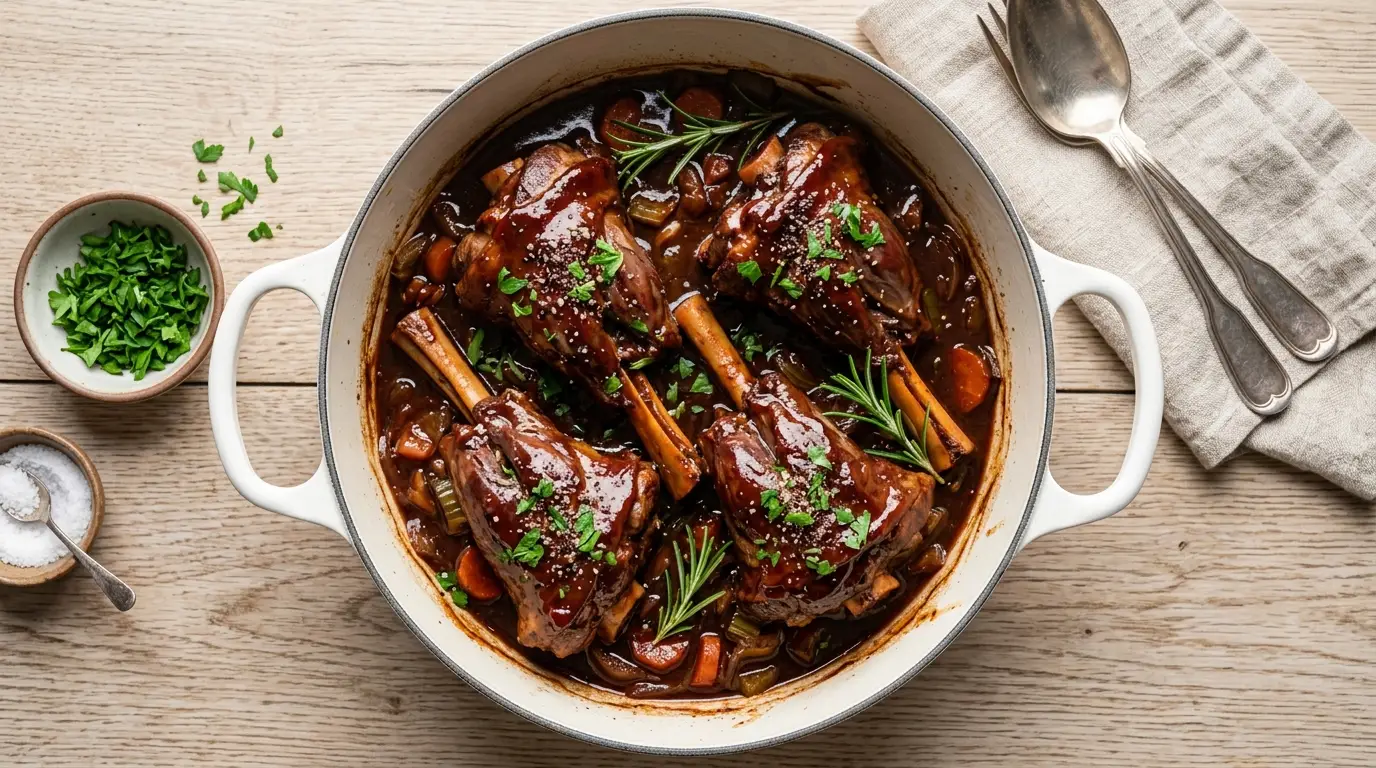
Lamb Shank Recipe
Ingredients
- 4 lamb shanks - about 1 lb / 450g each
- 2 tsp kosher salt - plus more to taste
- 1 tsp freshly ground black pepper
- 3 tbsp extra virgin olive oil - divided
- 1 large yellow onion - diced
- 2 large carrots - peeled and cut into 1-inch / 2.5cm chunks
- 3 stalks celery - sliced into 1-inch / 2.5cm pieces
- 8 cloves garlic - minced
- 3 tbsp tomato paste
- 2 cups dry red wine - 480ml; such as Cabernet Sauvignon, Merlot, or Shiraz
- 2 cups beef stock - 480ml
- 14 oz whole peeled tomatoes - 400g / 1 can, crushed by hand with their juices
- 3 sprigs fresh rosemary
- 4 sprigs fresh thyme
- 2 dried bay leaves
- fresh flat-leaf parsley - chopped, for garnish
Equipment
- Large Dutch oven or heavy-bottomed pot - At least 6-quart / 5.7L capacity with a tight-fitting lid
- Kitchen tongs - For turning and handling the shanks
- Chef’s knife and cutting board
- Wooden spoon or heat-safe spatula
- Measuring cups and spoons
- Ladle - For serving
- Fine-mesh strainer - (optional) For straining the sauce
- Aluminum foil - As a backup if your pot does not have a lid
- Oven mitts
Method
- Preheat your oven to 325°F (165°C). Pat each lamb shank completely dry with paper towels, then season all sides generously with kosher salt and black pepper, pressing the seasoning into the meat with your hands.
- Heat 2 tablespoons of olive oil in a Dutch oven over medium-high heat until shimmering. Sear the lamb shanks in batches for 10–12 minutes per batch, turning every 3–4 minutes, until a deep golden-brown crust forms on all sides, then transfer to a plate.
- Reduce heat to medium, add the remaining 1 tablespoon of olive oil, and cook the onion, carrot, and celery for 8–10 minutes until softened. Stir in the minced garlic for 1–2 minutes, then add the tomato paste to the center of the pot and cook, stirring constantly, for 2 minutes until darkened and fragrant.
- Pour in the red wine and scrape up all the browned bits from the bottom of the pot, then bring to a vigorous simmer and cook for 5–6 minutes until reduced by half. Add the beef stock and crushed tomatoes with their juices, then nestle in the rosemary, thyme, and bay leaves.
- Return the seared lamb shanks and any collected juices to the pot, nestling them into the braising liquid. Cover with the lid, transfer to the preheated oven, and braise for 2 to 2.5 hours, turning the shanks once at the halfway point, until the meat is completely fork-tender and pulling away from the bone.
- Remove the shanks and set aside tented with foil; discard the herb sprigs and bay leaves, then simmer the braising liquid over medium-high heat for 10–15 minutes until reduced to a glossy, thick sauce. Return the shanks to the pot, spoon the sauce over them generously, and serve garnished with chopped fresh parsley.
Nutrition
Notes
- Always pat the lamb shanks completely dry with paper towels before searing — moisture on the surface prevents browning and will cause the meat to steam instead of sear.
- Don’t rush the sear. Let each side sit undisturbed in the hot oil until it releases naturally for the deepest, most flavorful crust.
- Use a wine you’d actually drink. The flavor concentrates during braising, so a decent quality wine makes a noticeably better sauce. Avoid anything labeled “cooking wine.”
- Cooking the tomato paste for 2 minutes before adding liquid caramelizes it and adds a deep, savory richness to the braising sauce that you can’t achieve otherwise.
- Braised lamb shanks taste even better the next day. Cool completely in the sauce, refrigerate overnight, skim the solidified fat from the surface, and reheat gently before serving.
- No red wine? Replace it with an equal amount of beef stock plus 1 tablespoon of Worcestershire sauce and 1 teaspoon of balsamic vinegar for similar depth.
- To make in a slow cooker, complete the sear and aromatic steps on the stovetop, then transfer everything to a slow cooker and cook on low for 8–10 hours or on high for 5–6 hours.
- If the sauce is too thin after removing the shanks, simmer it uncovered for an additional 10–20 minutes, or whisk in 1 tablespoon of cornstarch mixed with 2 tablespoons of cold water.
- Store leftovers in an airtight container with the sauce in the refrigerator for up to 3–4 days, or freeze for up to 3 months. Thaw overnight in the fridge before reheating.
- Serve over mashed potatoes, creamy polenta, buttery couscous, or with crusty bread to soak up the braising sauce.
Private Notes
Tried this recipe?
Let us know how it was!Final Thoughts
If there’s one recipe that I come back to again and again when I really want to cook something memorable, it’s this braised lamb shank.
It’s the kind of dish that looks and tastes like you spent all day fussing in the kitchen, but most of that time the oven is doing all the work for you.
The tender meat, the glossy sauce, the way it makes your house smell — it all comes together into something truly special.
I really hope you give this a try the next time you want to treat yourself or your family to a showstopper dinner.
When you do, come back and drop a comment below and let me know how it turned out. I’d love to hear your experience, and if you tried any of the variations, especially tell me which one was your favorite.
If this recipe hit the spot, please share it with a friend who loves good food as much as you do.
Recommended:
- Boneless Leg of Lamb Recipe
- Rack of Lamb Recipe
- Lamb Chops Recipe
- Healthy Shepherd’s Pie Recipe
- Prime Rib Recipe
- French Onion Beef Short Rib Soup Recipe
- Beef Tips and Gravy Recipe
- Pork and Sweet Potato Stew Recipe
- Mashed Potatoes Recipe
- Roasted Potatoes Recipe