
My mom always said the bone was the best part of the ham. I thought she was just trying to justify all those hours standing over the stove, but she was absolutely right.
The first time I made a proper ham bone soup recipe, I finally understood what she meant. That leftover holiday ham bone transforms into the most deeply flavored, warming soup you can imagine, and it costs almost nothing to make.
We had Easter ham two weekends ago, and I had tucked the bone into a zip-lock bag in the fridge fully intending to use it. I’ll be honest with you, I almost forgot about it.
But on a cold, rainy Tuesday night when no one had any appetite for anything fancy, I pulled it out, threw together some vegetables, and let the whole thing simmer on the stove for an hour and a half. My husband came downstairs asking what smelled so incredible.
That’s the power of ham bone soup. It turns something you might throw away into a bowlful of comfort.
| Quick Recipe Summary | |
|---|---|
| Prep Time | 20 minutes |
| Cook Time | 2 hours |
| Total Time | 2 hours 20 minutes |
| Servings | 6–8 servings |
| Difficulty Level | Easy |
If you love rich, hearty soups made from scratch, you might also love this Ham and Bean Soup — it uses many of the same ingredients and is just as satisfying on a cold night.
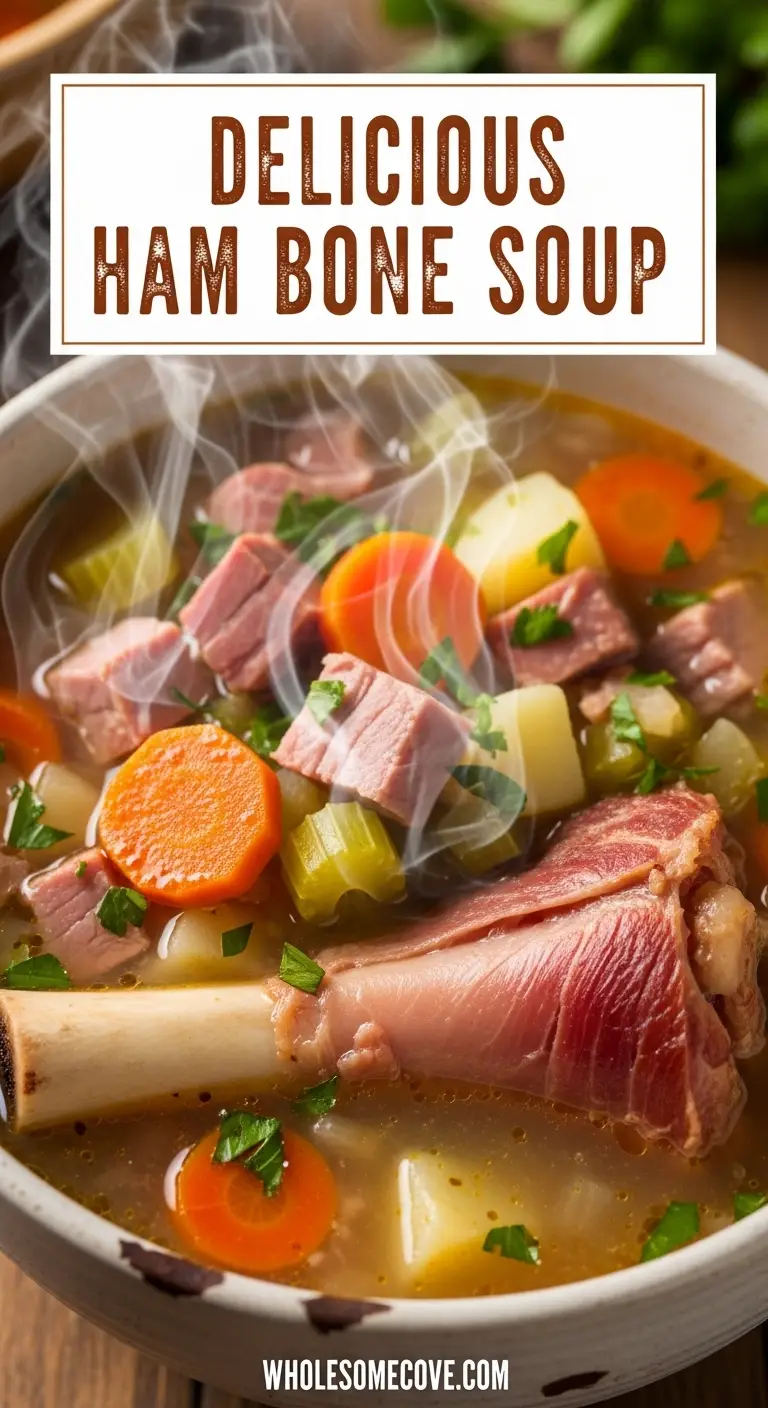
Why You’ll Love This Ham Bone Soup Recipe
This soup is one of those rare recipes where the most humble ingredients produce the most impressive results.
The ham bone does all the heavy lifting, slow-simmering into a broth that tastes like it took days to develop — not hours.
It’s an incredibly economical meal, turning leftovers into a feast that feeds six to eight people.
Every bite is loaded with tender vegetables, juicy bits of ham, and hearty white beans that make the whole soup feel substantial and satisfying.
You can make it on the stovetop with minimal effort, and the whole kitchen smells amazing the entire time it cooks.
It’s one of those soups that actually gets better the next day, which makes it perfect for meal prepping.
You only need one pot, which means cleanup is a breeze even after making a big batch.
For another use of your holiday ham, check out this Ham and Potato Soup recipe — a creamy, comforting bowl that the whole family will love.
Ingredients
You won’t need anything fancy for this soup — just good, simple ingredients that let the ham bone do its magic. The key is using a bone with a fair amount of meat still attached, which gives you both flavor for the broth and extra ham to stir into the finished soup.
- 1 meaty ham bone (leftover from a baked, spiral, or smoked ham)
- 2 tablespoons (30 ml) olive oil
- 1 large yellow onion, diced (about 1½ cups / 240 g)
- 4 cloves garlic, minced
- 3 medium carrots, peeled and sliced into ½-inch (1.25 cm) rounds
- 3 stalks celery, sliced into ½-inch (1.25 cm) pieces
- 3 medium russet potatoes, peeled and cut into 1-inch (2.5 cm) cubes
- 2 cans (15 oz / 425 g each) cannellini or great northern white beans, drained and rinsed
- 8 cups (2 liters) water or low-sodium chicken broth
- 2 bay leaves
- 1 teaspoon (2 g) dried thyme
- 1 teaspoon (2 g) smoked paprika
- ½ teaspoon (1 g) black pepper, plus more to taste
- Salt to taste
- 1–2 cups (140–280 g) diced leftover ham (optional but recommended)
- 2 tablespoons (30 ml) apple cider vinegar (helps draw out flavor from the bone)
- Fresh parsley, chopped, for garnish
You might also enjoy this Bone Broth Soup for another deeply nourishing, from-scratch broth-based recipe.
Kitchen Equipment Needed
Having the right tools on hand makes this recipe a breeze. The most important piece is a large, heavy-bottomed pot — a Dutch oven is ideal because it holds heat so evenly and lets the broth develop beautifully.
- Large Dutch oven or heavy-bottomed stockpot (at least 7–8 quart / 7–8 liter capacity)
- Cutting board
- Sharp chef’s knife
- Wooden spoon or silicone spatula
- Fine mesh strainer (if straining the broth)
- Ladle
- Measuring cups and spoons
- Tongs (for removing the ham bone safely)
- Large mixing bowl (to hold strained broth)
- Immersion blender (optional, if you want a slightly creamier broth)
Read Also: Slow Cooker Ham Recipe
Recommended Products for This Recipe
These are the tools and ingredients I genuinely use and trust when making this soup. A good pot and a quality ham bone make an enormous difference.
1. Large Enameled Cast Iron Dutch Oven
I’ve been making soups in a cast iron Dutch oven for years, and it makes a noticeable difference in how the broth develops. The heavy walls hold heat evenly so the soup simmers gently without scorching, and the wide base gives you plenty of room to sauté the vegetables first. It’s an investment piece, but one that will last decades in your kitchen.
2. Smoked Ham Bone
If you don’t have a leftover bone from a holiday ham, a smoked ham bone from the butcher counter is the next best thing. It’s already packed with flavor, and it produces a broth that tastes like it simmered all day. Look for one with plenty of meat still attached — it makes the finished soup much heartier.
3. Fine Mesh Strainer
Straining the broth after simmering the bone removes any small bone fragments and gives you a silky, clean base for the finished soup. I was skipping this step for years and always wondered why my broth looked cloudy. A fine mesh strainer fixed everything.
4. Immersion Blender
For a slightly creamier, thicker broth, I like to use an immersion blender to blend a small portion of the beans directly in the pot. It takes about 10 seconds and gives the whole soup a luxurious body without adding any cream. Completely optional, but highly recommended if you like a thicker consistency.
Another favorite for cozy cold-weather cooking: Slow Cooker Pork Stew

Step-by-Step Instructions: How to Make Ham Bone Soup
Step 1: Prepare the Ham Bone and Vegetables
- Trim any large, thick pieces of visible meat from the ham bone and set them aside in a bowl — you’ll add them directly to the soup later.
- Don’t worry about getting every last bit of meat off at this stage; anything remaining on the bone will simmer off into the broth and can be removed after cooking.
- Dice the yellow onion into roughly ½-inch (1.25 cm) pieces.
- Peel the carrots and slice them into ½-inch (1.25 cm) rounds. Try to keep them consistent in size so they cook evenly.
- Slice the celery stalks into ½-inch (1.25 cm) pieces at a slight angle for a nicer look.
- Peel the russet potatoes and cut them into 1-inch (2.5 cm) cubes. Place them in a bowl of cold water to prevent browning while you work on the rest.
- Mince the garlic cloves finely. If you prefer, you can use a garlic press instead of mincing by hand.
- Open and drain the canned beans in a colander. Rinse them under cold water to remove the canning liquid, which can add an unpleasant metallic taste.
Step 2: Build the Broth
- Place your Dutch oven or large stockpot over medium-high heat and add the 2 tablespoons (30 ml) of olive oil.
- Once the oil shimmers and is hot, add the diced onion, sliced carrots, and celery to the pot.
- Sauté the vegetables, stirring occasionally, for about 4–5 minutes until the onion becomes translucent and the edges start to take on a little color. This step builds a flavor base that makes the final soup taste much richer.
- Add the minced garlic to the pot and stir constantly for 30–60 seconds until fragrant. Watch it closely — garlic burns quickly and becomes bitter if it over-cooks.
- Add the smoked paprika and dried thyme, stirring everything together for another 30 seconds to bloom the spices in the oil. This is a step most recipes skip, but it makes a real difference in depth of flavor.
Step 3: Add the Ham Bone and Simmer
- Nestle the ham bone into the pot on top of the sautéed vegetables.
- Pour in the 8 cups (2 liters) of water or chicken broth. If using water, the soup may need slightly more seasoning at the end; chicken broth adds an extra layer of savoriness.
- Add the 2 tablespoons (30 ml) of apple cider vinegar. This small splash of acid helps draw the collagen and gelatin out of the ham bone, enriching the broth and giving it a silky body.
- Add the 2 bay leaves and the black pepper.
- Stir everything gently to combine. The ham bone should be mostly submerged; if it’s sticking up above the liquid, add another cup of water.
- Bring the pot to a full boil over high heat, then immediately reduce the heat to low. You want a gentle, steady simmer — small bubbles rising slowly, not a rolling boil.
- Cover the pot partially (leave a small gap for steam to escape) and let the soup simmer for 1½ to 2 hours. The longer it simmers, the richer and more flavorful the broth will be.
Step 4: Remove the Ham Bone and Shred the Meat
- After 1½ to 2 hours, use tongs to carefully lift the ham bone out of the pot and place it on a large cutting board or in a bowl.
- Let the bone cool for about 10 minutes until you can handle it safely.
- Use your hands or two forks to pull any remaining meat off the bone. You may be surprised at how much tender, juicy meat comes off — it falls right apart after all that simmering.
- Discard the bone (do not give cooked bones to pets — they can splinter and cause harm).
- Chop or shred the recovered meat into bite-sized pieces and set it aside.
- Remove and discard the bay leaves from the pot.
- If you want a cleaner broth, pour the soup through a fine mesh strainer into a large mixing bowl, then return the broth and vegetables to the pot. I don’t always do this, but it gives you a much cleaner, clearer result.
Step 5: Add the Beans and Potatoes
- Drain the cubed potatoes from the cold water and add them to the simmering broth.
- Add both cans of drained, rinsed cannellini or great northern beans to the pot.
- Stir in the reserved meat from the bone, plus any additional diced ham you set aside earlier.
- Increase the heat to medium and bring the soup back up to a gentle simmer.
- Cook uncovered for 15–20 minutes, or until the potatoes are completely tender when pierced with a fork.
- If you’d like a creamier, thicker broth, use an immersion blender to briefly blend a small portion of the soup directly in the pot — about 3–4 quick pulses near the edges where the beans are concentrated. This thickens the broth beautifully without any cream.
Step 6: Season and Serve
- Taste the soup and adjust the seasoning. Because ham is naturally salty, you may need very little added salt — taste first before adding any.
- Add additional black pepper if desired. Ham bone soup is one of those recipes that really benefits from a generous amount of black pepper.
- Ladle the soup into large bowls and garnish with freshly chopped parsley for a pop of color and freshness.
- Serve immediately with crusty bread, cornbread, or dinner rolls on the side.
You might also like this cozy Kale and Sweet Potato Soup for another hearty, one-pot winter meal.
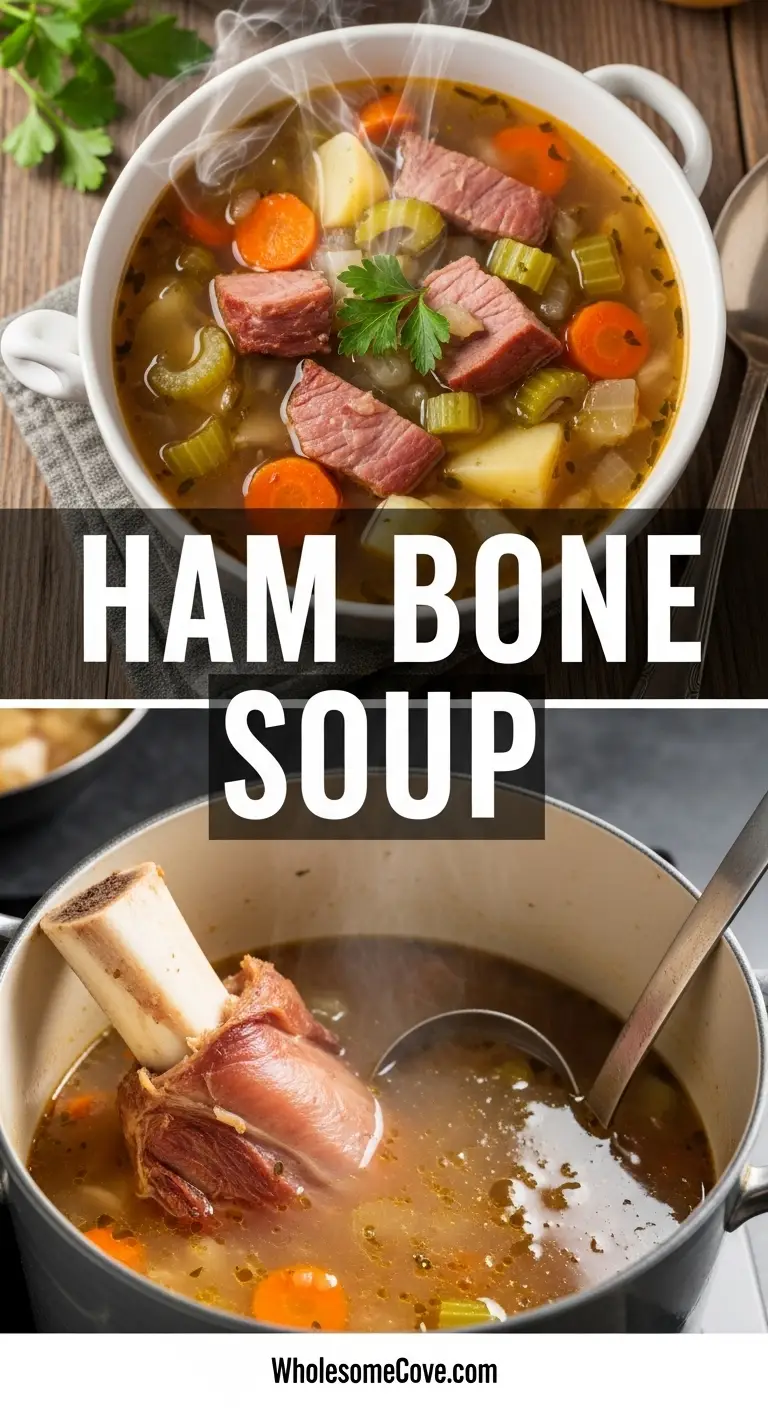
Tips for the Best Ham Bone Soup
A few small details separate a good ham bone soup from a truly incredible one. The most important thing I’ve learned over the years is to never rush the simmering step — time is what turns a simple broth into something deeply flavorful.
- Use a bone with meat on it. A bare ham bone produces broth, but one with meat still attached gives you broth AND extra ham for the soup. Ask for a meaty bone at the butcher counter if your leftover ham bone is mostly stripped.
- Don’t skip the sauté step. Taking a few extra minutes to sauté the onions, carrots, and celery before adding liquid builds a flavor base that makes the finished soup taste far richer than one where everything is just thrown into water.
- Add apple cider vinegar. Just 2 tablespoons in the pot helps extract collagen from the bone, which gives the broth a silky, almost velvety body. You won’t taste it in the finished soup, but you’ll notice the difference in texture.
- Simmer low and slow. A hard boil will make the broth cloudy and can make the meat tough. A gentle simmer — small bubbles lazily breaking the surface — produces a clearer, more flavorful broth.
- Taste before salting. Ham is already very salty, and simmering concentrates that salt. Always taste the finished soup before adding any extra salt; many times you won’t need much or any at all.
- Bloom your spices. Add the thyme and smoked paprika directly to the hot oil with the vegetables and stir for 30 seconds before adding liquid. This unlocks the full flavor of the spices and makes a noticeable difference.
- Save the broth if you have too much. If you end up with more ham broth than you need for the soup, strain it and freeze it in quart-size portions. It’s liquid gold for rice, risotto, or any future soup.
- Let it rest before serving. Like most soups and stews, this one improves significantly after sitting for 20–30 minutes off the heat. The flavors meld together and the broth deepens.
Another great comfort food recipe worth bookmarking: Pork Stew
What to Serve with Ham Bone Soup
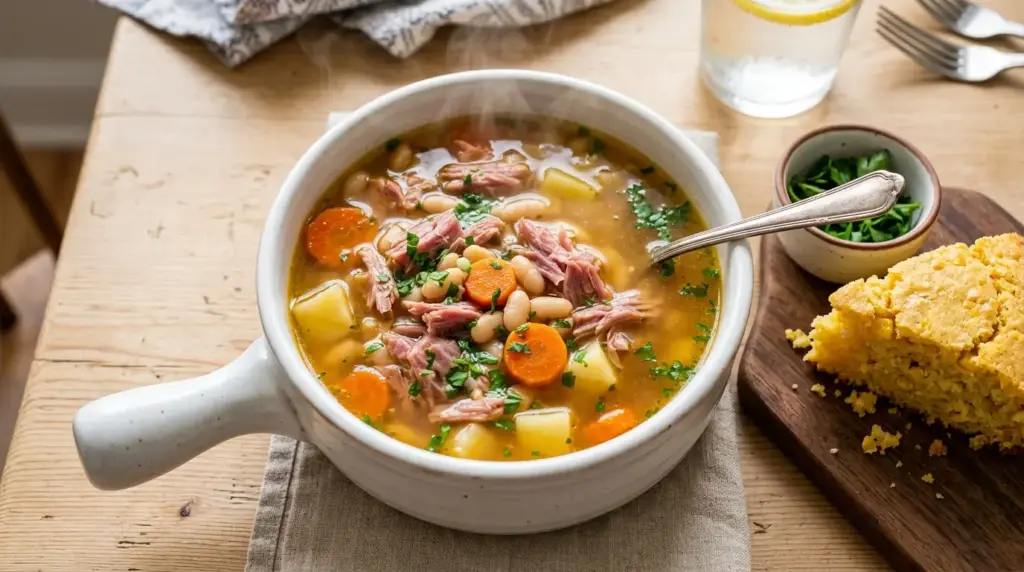
Ham bone soup is hearty enough to be a complete meal on its own, but a few simple sides take it from dinner to a real occasion.
- Dinner Rolls — Soft, pillowy homemade rolls are perfect for soaking up every last drop of that rich broth.
- Healthy Cornbread — A slice of slightly sweet cornbread alongside a savory ham soup is a classic Southern pairing that never gets old.
- Coleslaw — A crisp, tangy coleslaw provides a cool contrast to the warm, hearty soup.
- Biscuits and Gravy — Flaky homemade biscuits on the side are a natural fit with any pork-forward dish.
- Broccoli Salad — The crunchy, slightly sweet flavor of a classic broccoli salad balances the richness of the soup beautifully.
- Deviled Eggs — A platter of deviled eggs makes a wonderful starter to round out a casual family dinner.
- Mashed Potatoes — If you want to double down on comfort, a small side of creamy mashed potatoes alongside the soup is absolutely welcome.
You might also enjoy: Beef Barley Soup
Variations of Ham Bone Soup
This recipe is endlessly adaptable, and I’ve made it dozens of different ways depending on what I have on hand. The base technique — simmering a ham bone into a rich broth — stays the same no matter what direction you take it.
- Split Pea Ham Bone Soup: Replace the white beans and potatoes with 2 cups (400 g) of dried green split peas. They cook down into a thick, creamy soup that’s deeply comforting and even more filling than the original.
- Ham and Lentil Soup: Swap the white beans for 1½ cups (300 g) of brown or green lentils for a protein-packed variation that doesn’t require any soaking and cooks in about 30 minutes.
- Creamy Ham Bone Soup: After the potatoes are tender, stir in ½ cup (120 ml) of heavy cream or whole milk right before serving for a velvety, rich finish. Do not boil after adding dairy.
- Slow Cooker Version: After sautéing the vegetables on the stovetop, transfer everything to a slow cooker. Add the ham bone, water, beans, and seasonings, and cook on LOW for 8–10 hours or HIGH for 4–5 hours. Add the potatoes in the last 2 hours.
- Spicy Ham Bone Soup: Add ½ teaspoon (1 g) of crushed red pepper flakes and a diced jalapeño to the vegetable sauté for a soup with a little kick.
- Ham and Cabbage Soup: Add 2 cups (180 g) of shredded green cabbage along with the potatoes for an Irish-inspired variation that’s incredibly hearty and filling.
- Barley and Ham Bone Soup: Replace the white beans with ¾ cup (150 g) of pearl barley for a chewier texture and a more rustic, old-fashioned feel. Add the barley at the same time as the potatoes and allow an extra 15–20 minutes of simmering time.
Read Also: Ham and Bean Soup Recipe
Storage and Reheating
Ham bone soup stores beautifully, and many people find it tastes even better the second day once the flavors have had time to meld. Keep these tips in mind for the best results.
- Refrigerator: Store leftover soup in an airtight container in the refrigerator for up to 4 days. The broth will gel slightly when cold due to the natural gelatin from the bone — this is completely normal and a sign of a well-made broth.
- Freezer: Cool the soup completely before transferring to freezer-safe containers or zip-lock freezer bags. Leave about 1 inch (2.5 cm) of headspace for expansion. Freeze for up to 3 months. Note: if you added milk or cream to the soup, it may separate when thawed — stir vigorously while reheating and it will generally come back together.
- Reheating on the stovetop: Transfer the soup to a pot and warm over medium-low heat, stirring occasionally, until heated through. Add a small splash of chicken broth or water if the soup has thickened too much.
- Reheating in the microwave: Transfer to a microwave-safe bowl and cover loosely with a paper towel. Heat on medium power in 1-minute increments, stirring between each, until hot throughout.
- Thawing frozen soup: Move frozen soup to the refrigerator the night before you plan to serve it and let it thaw overnight. Reheat as described above.
- Do not refreeze: Once thawed, do not refreeze the soup. Consume within 3–4 days.
For another great make-ahead soup to keep in your freezer: Slow Cooker Beef Barley Soup
Nutritional Facts
The following nutritional information is an estimate per serving, based on 8 servings. Actual values will vary depending on the specific ham bone used, whether you add extra diced ham, and which broth you choose.
| Nutrient | Per Serving (approx.) | ||| | Calories | ~280 kcal | | Protein | ~22 g | | Carbohydrates | ~28 g | | Fat | ~8 g | | Saturated Fat | ~2 g | | Fiber | ~6 g | | Sodium | ~750–950 mg | | Potassium | ~680 mg | | Vitamin A | ~60% DV | | Vitamin C | ~20% DV | | Iron | ~15% DV | | Calcium | ~8% DV |
Note: Sodium content can vary significantly depending on the saltiness of your ham. Using low-sodium chicken broth and tasting before salting will help you keep sodium levels in check.
Another wholesome, nourishing recipe worth trying: Lentil and Vegetable Soup
Health Benefits of Key Ingredients
This soup is deeply comforting, but it’s also surprisingly nutritious thanks to the whole-food ingredients at its core.
The ham bone itself is the unexpected hero here — simmering a bone breaks down collagen into gelatin, which supports joint health and gut lining integrity, while also releasing minerals like calcium, magnesium, and phosphorus directly into the broth.
- Carrots are packed with beta-carotene, which the body converts into vitamin A. Just one serving of this soup provides a significant portion of your daily vitamin A needs, which supports eye health and immune function.
- Celery is rich in antioxidants and has anti-inflammatory properties. It also provides natural sodium, which means you may need to add less salt to the pot.
- Cannellini beans are an excellent source of plant-based protein and dietary fiber. They help stabilize blood sugar levels and contribute to a feeling of fullness that lasts for hours.
- Garlic contains allicin, a potent compound with well-documented antibacterial and immune-boosting properties. It’s most effective when briefly cooked rather than raw.
- Russet potatoes provide resistant starch (especially when cooled), which acts as a prebiotic and feeds beneficial gut bacteria. They are also a good source of potassium and vitamin C.
- Olive oil contributes heart-healthy monounsaturated fats and is the preferred fat for sautéing vegetables at moderate heat.
- Apple cider vinegar contains acetic acid, which supports digestion and may help with blood sugar regulation. Even a small amount in the broth is beneficial.
- Thyme is more than just a flavor enhancer — it contains thymol, a natural antimicrobial compound, and is also rich in vitamin K and manganese.
Read Also: Best Lentil Soup Recipes
FAQs About Ham Bone Soup
1. Can I make ham bone soup without a ham bone?
You can make a ham-based soup without a bone, but the flavor will be noticeably different. The bone is what gives the broth its deep, rich, slightly smoky depth that makes this soup so special. If you don’t have a bone, try using 2–3 smoked ham hocks instead — they’re available at most grocery stores and work almost as well as a traditional ham bone.
2. Can I use chicken broth instead of water?
Absolutely. Chicken broth adds another layer of savory depth to the soup and is especially useful if your ham bone has been stripped of most of its meat. Use a low-sodium version so you can better control the final salt level. The finished soup will be slightly richer and more golden in color.
3. How do I know when the soup is done?
The soup is done when the potatoes are completely tender (a fork should slide in with no resistance), the beans are heated through and starting to break down slightly at the edges, and the broth has turned a deep golden-amber color. Give it a taste — a well-developed ham bone broth has a rich, smoky, savory flavor that doesn’t taste thin or watery at all.
4. Can I freeze ham bone soup?
Yes, ham bone soup freezes extremely well. Let it cool completely, then transfer to freezer-safe containers and freeze for up to 3 months. If your version includes milk or cream, it may separate slightly upon thawing — just stir vigorously while reheating and it will come back together. For best results, freeze the soup before adding any dairy.
5. Can I freeze the ham bone before making soup?
Yes, and this is actually a great idea if you’re not ready to make the soup right after your holiday meal. Wrap the ham bone tightly in plastic wrap, then place it in a zip-lock freezer bag, pressing out as much air as possible. It will keep in the freezer for up to 3 months. Thaw it overnight in the refrigerator before using.
Read Also: Honey Baked Ham Recipe
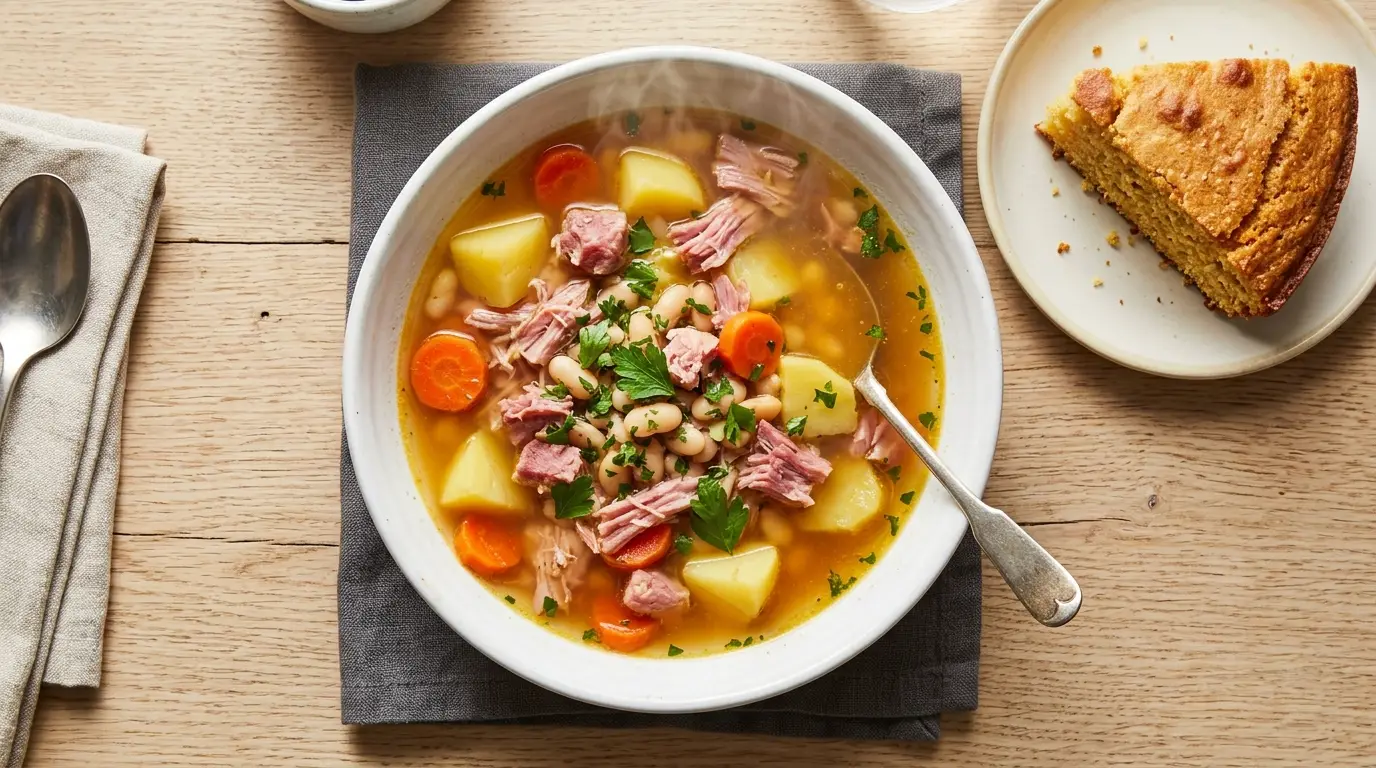
Ham Bone Soup
Ingredients
- 1 meaty ham bone - Leftover from a baked, spiral, or smoked ham
- 2 tbsp olive oil - 30 ml
- 1 large yellow onion - Diced, about 1½ cups or 240g
- 4 cloves garlic - Minced
- 3 medium carrots - Peeled and sliced into ½-inch (1.25 cm) rounds
- 3 stalks celery - Sliced into ½-inch (1.25 cm) pieces
- 3 medium russet potatoes - Peeled and cut into 1-inch (2.5 cm) cubes
- 2 cans (15 oz each) cannellini or great northern white beans - 425g each; drained and rinsed
- 8 cups water or low-sodium chicken broth - 2 liters
- 2 bay leaves
- 1 tsp dried thyme - 2g
- 1 tsp smoked paprika - 2g
- ½ tsp black pepper - 1g, plus more to taste
- salt - To taste; add sparingly as ham is already salty
- 1–2 cups diced leftover ham - 140–280g; optional but recommended for extra heartiness
- 2 tbsp apple cider vinegar - 30 ml; helps draw collagen from the bone
- fresh parsley - Chopped, for garnish
Equipment
- Large Dutch oven or heavy-bottomed stockpot - At least 7–8 quart capacity
- Cutting board
- Sharp chef’s knife
- Wooden spoon or silicone spatula
- Fine-mesh strainer - Optional, for straining broth
- Ladle
- Measuring cups and spoons
- Tongs - For safely removing the ham bone
- Large mixing bowl - To hold strained broth if straining
- Immersion blender - Optional, for a thicker broth
Method
- Trim any large pieces of meat from the ham bone and set aside. Dice the onion, slice the carrots and celery into ½-inch pieces, cube the potatoes and place in cold water, mince the garlic, and drain and rinse the canned beans.
- Heat the olive oil in a large Dutch oven over medium-high heat, then add the onion, carrots, and celery and sauté for 4–5 minutes until softened. Add the garlic, smoked paprika, and dried thyme, stirring for 30–60 seconds until fragrant.
- Nestle the ham bone into the pot, then pour in the water or broth, apple cider vinegar, bay leaves, and black pepper. Bring to a boil, then reduce to a gentle simmer, cover partially, and cook for 1½ to 2 hours.
- Use tongs to lift the ham bone out of the pot and let it cool for 10 minutes, then pull all remaining meat off the bone and set it aside. Discard the bone and bay leaves, and strain the broth through a fine mesh strainer if desired.
- Drain the potatoes and add them to the pot along with the drained beans, shredded bone meat, and any additional diced ham. Simmer over medium heat for 15–20 minutes until the potatoes are completely fork-tender.
- Taste the soup and adjust salt and pepper as needed, keeping in mind the ham is already salty. Ladle into bowls, garnish with fresh chopped parsley, and serve immediately with crusty bread or cornbread on the side.
Nutrition
Notes
- Use a ham bone with plenty of meat still attached — it gives you both a richer broth and extra ham to stir into the finished soup.
- Don’t skip the sauté step. Cooking the vegetables in oil before adding liquid builds a flavor base that makes the broth taste far more developed.
- Add 2 tablespoons of apple cider vinegar to the pot — it draws collagen out of the bone for a silky, full-bodied broth. You won’t taste it in the finished soup.
- Simmer on low, not a rolling boil. A gentle simmer produces a clearer, more flavorful broth and keeps the ham meat tender.
- Always taste before salting. Ham is naturally very salty, and simmering concentrates that salt further — many batches need little to no added salt.
- For a thicker broth, use an immersion blender to blend a small portion of the beans directly in the pot before serving.
- No ham bone? Substitute 2–3 smoked ham hocks, which are widely available at grocery stores and produce nearly identical results.
- Storage: Refrigerate leftovers in an airtight container for up to 4 days. The broth will gel when cold — this is normal and a sign of a well-made soup.
- Freezer: Cool completely and freeze in airtight containers for up to 3 months. Thaw overnight in the refrigerator before reheating on the stovetop.
- Variation: Replace white beans and potatoes with 2 cups of dried split peas for a classic split pea and ham bone soup.
Private Notes
Tried this recipe?
Let us know how it was!Final Thoughts
Ham bone soup is one of those recipes that has stood the test of time for good reason. It transforms something humble into something genuinely remarkable.
Every time I make it, I think about my mom insisting that the bone was the best part of the ham. She was right, and I’m glad I finally listened.
If you’ve been saving a ham bone in your fridge or freezer and wondering what to do with it, this is the answer. Pull it out, get a pot on the stove, and let it work its magic.
I promise you will not be disappointed. And I’d love to hear how yours turned out — drop a comment below and let me know if you added any of the variations, or if your family had any special requests for next time!
Recommended:
- Ham and Bean Soup
- Honey Glazed Ham
- Spiral Ham Recipe
- Smoked Ham Recipe
- Baked Ham Recipe
- Potato Soup Recipe
- Loaded Baked Potato Soup
- Zuppa Toscana
- Italian Wedding Soup
- Creamy Tomato Basil Soup