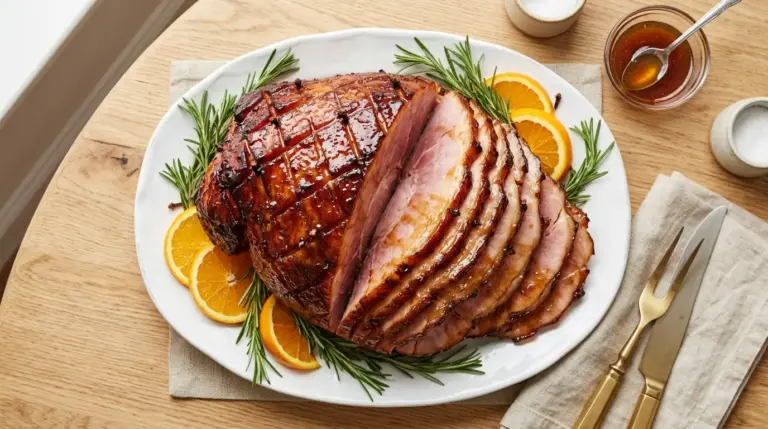
My mom used to make Ham and Bean Soup Recipe every single time we had leftover holiday ham. The big bone would go straight into her largest pot, and by dinnertime the whole house smelled like heaven. I’m talking that deep, smoky, soul-warming kind of smell that makes you want to kick off your shoes and stay in for the night.
I’ve been making this soup for years now, and it’s hands-down one of the most satisfying things to come out of my kitchen, especially on a cold evening when everyone just needs something comforting.
The beauty of this soup is that it’s almost embarrassingly simple. You don’t need fancy ingredients or complicated technique. Just good ham, creamy white beans, aromatics, and a little patience.
| Quick Recipe Summary | |
|---|---|
| Prep Time | 15 minutes |
| Cook Time | 1 hour 30 minutes |
| Total Time | 1 hour 45 minutes |
| Servings | 6 servings |
| Difficulty Level | Easy |
If you love cozy, stick-to-your-ribs soups, you’ll also want to check out this Ham and Potato Soup for another delicious way to use up that leftover ham.

Why You’ll Love This Ham and Bean Soup Recipe
This soup has serious crowd-pleasing power. It’s the kind of meal that makes people ask for the recipe before they’ve even finished their bowl.
- It’s a brilliant use of leftover ham. Instead of picking at a ham bone all week, you get a completely new, hearty meal out of it.
- The beans make it naturally thick and creamy. No cream, no thickener needed. As the beans cook down, they do all the work for you.
- It’s deeply flavorful with minimal effort. The ham bone adds an incredible smokiness that takes the broth from good to outstanding.
- It’s budget-friendly. Dried beans and a leftover ham bone are about as affordable as cooking gets.
- It reheats beautifully. The soup actually tastes even better the next day once the flavors have had time to meld.
- It feeds a crowd. This recipe makes a generous pot that’ll keep everyone happy.
- It’s naturally gluten-free. No special substitutions needed.
One of my favorite tricks is to mash some of the beans right in the pot before serving. It thickens the broth without any extra effort, and it gives the soup that velvety consistency I love.
Read Also: Best Lentil Soup Recipes
Ingredients
You’ll want to start with the best quality ham you can get your hands on. A meaty ham bone from a roasted or smoked ham makes the biggest difference here. If you don’t have a bone, thick-cut diced ham works well too.
- 1 meaty ham bone (or 2 cups / 300g diced cooked ham)
- 1 lb (450g) dried Great Northern beans or navy beans (or 3 cans / 45 oz drained white beans)
- 1 large yellow onion, diced
- 3 stalks celery, diced
- 3 medium carrots, peeled and diced
- 5 cloves garlic, minced
- 2 tablespoons olive oil
- 8 cups (2 liters) low-sodium chicken broth or water
- 2 bay leaves
- 1 teaspoon dried thyme
- 1 teaspoon smoked paprika
- ½ teaspoon black pepper
- ½ teaspoon kosher salt (adjust to taste based on how salty your ham is)
- Fresh parsley, chopped (for garnish)
Note on dried beans: If using dried beans, soak them overnight in cold water (8–12 hours) or do a quick soak: bring to a boil for 2 minutes, remove from heat, and let sit 1 hour. Drain and rinse before using.
You might also enjoy: Lentil and Vegetable Soup
Kitchen Equipment Needed
Nothing special is required here. This is an old-school stovetop soup that just needs basic equipment.
- Large Dutch oven or heavy-bottomed pot (6–8 quart / 5.7–7.5 liter capacity)
- Wooden spoon or silicone spatula
- Sharp chef’s knife and cutting board
- Measuring cups and spoons
- Ladle for serving
- Colander or strainer for draining and rinsing beans
- Tongs for removing the ham bone
- Immersion blender (optional, for partially blending the soup)
A good Dutch oven is truly worth it for this recipe. The thick walls retain heat evenly so the beans cook gently without scorching the bottom.
Read Also: Slow Cooker Potato Soup Recipe
Recommended Products for This Recipe
These are products I’ve personally used and love for making this soup as good as it can possibly be.
1. Le Creuset Enameled Cast Iron Dutch Oven
I’ve been using a cast iron Dutch oven for years and it makes a noticeable difference in how evenly the beans cook. The heavy lid traps steam perfectly and helps develop that deep, rich broth. It’s an investment, but mine has lasted over a decade and still looks brand new.
2. Bob’s Red Mill Navy Beans
I switched to Bob’s Red Mill dried beans a few years ago and I’ve never looked back. They cook evenly, have great flavor, and the texture is wonderfully creamy once they’re fully cooked. Using quality dried beans instead of canned makes this soup taste noticeably more homemade.
3. Cuisinart Immersion Blender
Partially blending the soup with an immersion blender is my favorite trick for getting a thick, creamy broth without any fuss. You just stick it right in the pot, give it a few pulses, and done. No transferring to a blender, no mess.
4. Smoked Paprika (High-Quality Spanish)
A good smoked paprika adds an earthy depth that complements the ham beautifully. I use La Chinata brand specifically because the flavor is noticeably smokier and richer than most grocery store options.
For another hearty bowl of comfort, try this Beef Barley Soup.
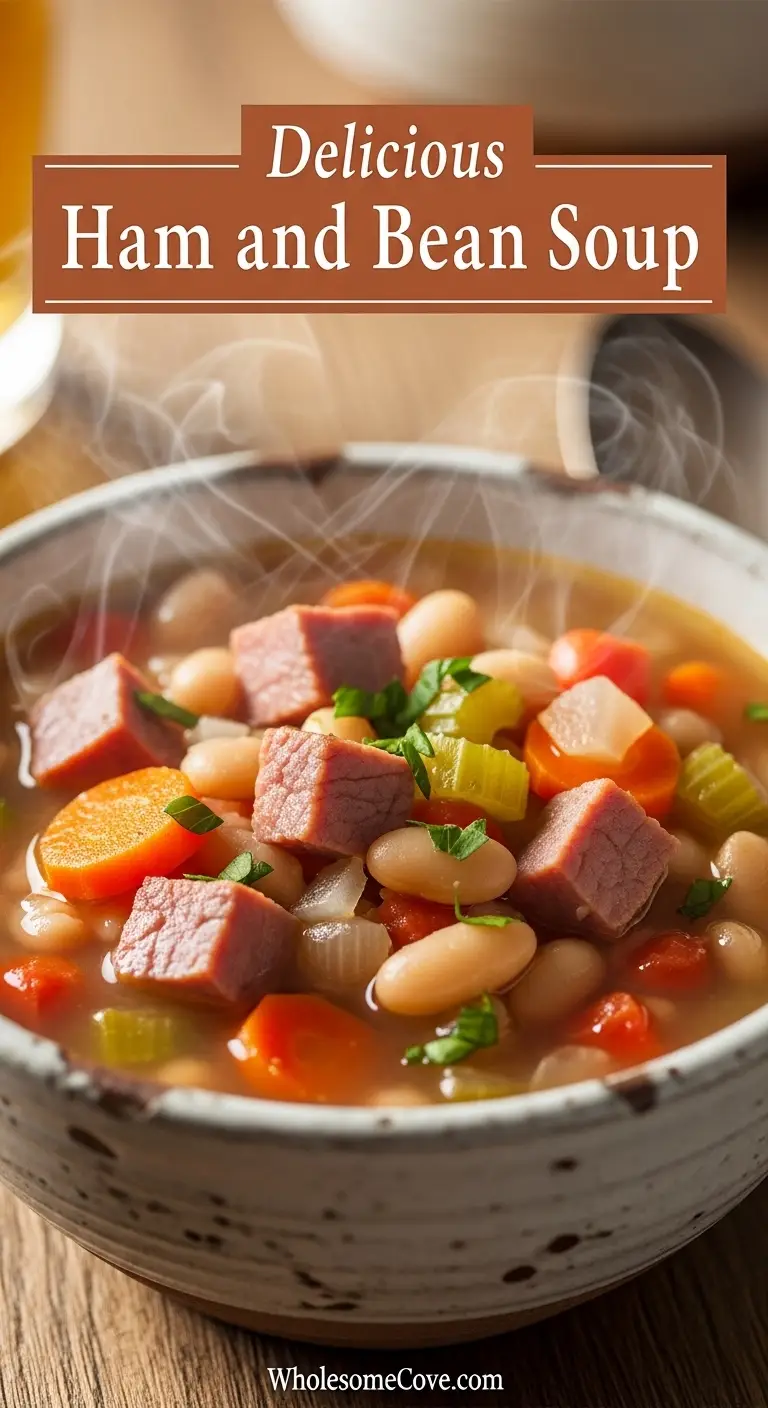
Step-by-Step Instructions: How to Make Ham and Bean Soup
Step 1: Soak and Prepare the Beans
- If using dried beans, place them in a large bowl and cover with at least 3 inches (7.5 cm) of cold water.
- Let them soak overnight (8–12 hours) or use the quick-soak method: bring beans and water to a boil, cook for 2 minutes, remove from heat, and let rest for 1 hour.
- After soaking, drain the beans through a colander and rinse well under cold running water.
- Set aside. If using canned beans, drain and rinse them thoroughly and skip this step entirely.
Step 2: Sauté the Aromatics
- Place your Dutch oven or large pot over medium heat and add 2 tablespoons (30ml) of olive oil.
- Once the oil shimmers, add the diced onion, diced celery, and diced carrots.
- Stir to coat everything in the oil, then cook for 6–8 minutes, stirring occasionally, until the onion is translucent and the vegetables are starting to soften.
- Add the minced garlic and stir constantly for 60 seconds until fragrant. Be careful not to burn the garlic.
Step 3: Add Spices
- Sprinkle in the smoked paprika, dried thyme, and black pepper directly onto the softened vegetables.
- Stir everything together for about 30 seconds to toast the spices lightly in the oil. This step really wakes up the flavors of the dried spices and adds depth to the finished soup.
Step 4: Add Beans, Ham Bone, and Broth
- Add the drained soaked beans (or canned beans) to the pot and stir to combine with the vegetables.
- Nestle the ham bone (or diced ham) right into the middle of the pot.
- Pour in 8 cups (2 liters) of low-sodium chicken broth, making sure the liquid covers everything. If needed, add a splash of water to fully submerge the ham bone.
- Add the 2 bay leaves and stir gently.
Step 5: Simmer the Soup
- Raise the heat to high and bring the soup to a full boil. You may see some foam rise to the top during this time. Skim it off with a large spoon and discard it. This just makes for a cleaner, clearer broth.
- Once boiling, reduce the heat to low, partially cover the pot (leave a small gap for steam to escape), and let the soup simmer gently for 60–90 minutes if using soaked dried beans.
- If using canned beans, simmer for 30–40 minutes to let the flavors meld. Stir occasionally and check that the liquid level stays adequate. Add water or broth if the soup looks too thick before the beans are tender.
Step 6: Remove and Shred the Ham
- After simmering, carefully remove the ham bone from the pot using tongs. Set it on a cutting board and let it cool for 5 minutes until you can handle it safely.
- Use two forks or your fingers to pull any remaining meat off the bone in shreds. You should get a good amount of tender, flavorful ham.
- Discard the bone (and any small bone fragments). Remove and discard the bay leaves from the pot.
- Return the shredded ham to the pot and stir it in.
Step 7: Thicken and Finish the Soup
- Check the bean texture. They should be completely tender and creamy when pressed with a spoon. If they’re still a bit firm, continue simmering for another 15–20 minutes.
- To thicken the soup, use the back of a large spoon to mash some of the beans directly in the pot, about a quarter to a third of the total beans.
- Alternatively, use an immersion blender to pulse the soup a few times. You want a chunky, textured result, not a smooth purée.
- Taste the soup and add kosher salt as needed, keeping in mind that the ham has significant saltiness already.
Step 8: Serve
- Ladle the hot soup into bowls and garnish with a sprinkle of freshly chopped parsley.
- Serve immediately with crusty bread or cornbread on the side.
I learned the hard way that you should always taste for salt at the very end, not during cooking. The ham bone releases a lot of salt as it simmers, so adding salt early often leads to an overly salty finished soup.
Another cozy soup I love for cold nights: Zuppa Toscana.

Tips for The Best Ham and Bean Soup
Getting this soup just right comes down to a few key things. Pay attention to these and you’ll have an extraordinary bowl every time.
- Start with a good ham bone. The bone is where all the flavor lives. If your local butcher or grocery store sells ham hocks, those work fantastically too.
- Don’t skip the overnight soak for dried beans. The soak helps the beans cook evenly and reduces the chances of mushy outsides with hard centers.
- Skim the foam. Those gray foam bubbles that rise to the surface during the initial boil are proteins and impurities from the bone. Skimming them keeps the broth clean-tasting.
- Simmer low and slow. Boiling aggressively will toughen the beans and make the broth cloudy. A gentle, lazy simmer is what you want.
- Taste for salt at the very end. Ham can be extremely salty. Always adjust seasoning once the soup is fully cooked.
- Mash some beans for body. Even if you like a chunky soup, mashing just a small portion of the beans transforms the broth from watery to thick and silky.
- Add a parmesan rind. If you have one lying around, toss it in while the soup simmers. It adds a savory, umami depth that’s truly incredible.
- Use low-sodium broth. This gives you full control over the final saltiness, especially important since the ham contributes its own salt throughout cooking.
For another warming, flavor-packed soup, try this Sausage Lentil Soup.
What to Serve with Ham and Bean Soup
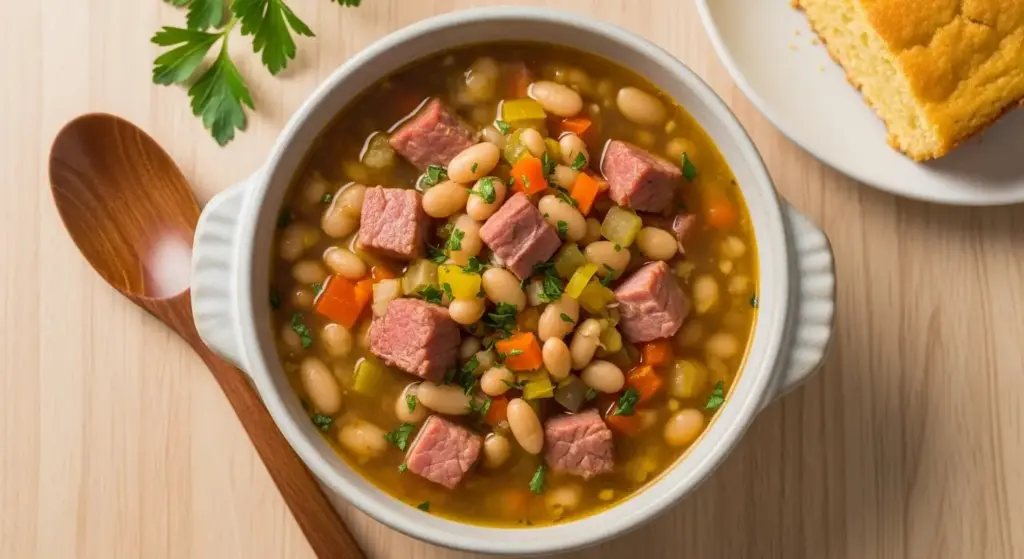
This soup is plenty satisfying on its own, but pairing it with the right sides takes the whole meal to another level.
The best accompaniments are ones that can soak up the broth and add a bit of textural contrast to the creamy beans.
- Cornbread. This is the classic pairing and for good reason. The slightly sweet, crumbly texture is the perfect match for a smoky, savory soup. Try my Healthy Cornbread.
- Crusty bread or dinner rolls. A thick slice of sourdough or a soft dinner roll makes excellent soup-dunking material. These Dinner Rolls are always a hit.
- Homemade biscuits. Warm, flaky biscuits are another Southern-style pairing that works beautifully.
- Coleslaw. A crisp, tangy coleslaw on the side balances the richness of the soup really nicely.
- Broccoli Salad. The crunchy, slightly sweet salad is a great contrast to the hearty, warm soup.
- Deviled Eggs. A classic Southern spread. These are always the first thing to disappear at my table.
- A simple green salad. Something light and fresh, dressed with lemon vinaigrette, rounds out the meal without overpowering the soup.
- Roasted Sweet Potato. The caramelized sweetness plays beautifully against the smoky, salty soup.
Read Also: Potato Salad Recipe
Variations of Ham and Bean Soup
The classic recipe is wonderful, but this soup is also really forgiving and adaptable. Here are some great ways to switch it up.
The base of this soup stays the same no matter which direction you take it. The ham, beans, and broth are the non-negotiables. Everything else is fair game.
- Slow cooker version. Add all the ingredients to a slow cooker after sautéing the aromatics, and cook on low for 7–8 hours or high for 4–5 hours. The beans will be perfectly tender and the flavors even more developed.
- Instant Pot version. Sauté the aromatics in the Instant Pot on the sauté function, add remaining ingredients, seal the lid, and cook on high pressure for 35 minutes. Quick release and shred the ham.
- Smoked sausage addition. Slice up some smoked kielbasa or andouille and add it along with the ham for an even smokier, more filling soup.
- Spicy version. Add a diced jalapeño with the aromatics and a pinch of cayenne pepper along with the other spices for heat.
- Tomato-based version. Add one 14 oz (400g) can of diced tomatoes for a slightly tangy, richer broth.
- Collard greens or kale. Stir in a few big handfuls of chopped collard greens or kale during the last 15 minutes of cooking for extra nutrition and a pop of color.
- Different beans. While Great Northern and navy beans are traditional, cannellini beans, pinto beans, or even a mix of beans all work well here.
- No ham bone version. If you only have diced ham, add an extra teaspoon of smoked paprika and a splash of liquid smoke (about ½ teaspoon) to replicate that deep, smoky flavor.
You might also enjoy: Slow Cooker Pork Stew
Storage and Reheating
This soup stores incredibly well, which means it’s a great meal-prep recipe and leftovers are just as good (if not better) than fresh.
The beans continue to absorb liquid as the soup sits, so you may need to add a splash of broth or water when reheating.
- Refrigerator: Store cooled soup in an airtight container for up to 4–5 days.
- Freezer: This soup freezes beautifully. Portion it into freezer-safe containers or zip-lock bags and freeze for up to 3 months. Leave a little headspace at the top of the container since the soup expands as it freezes.
- Thawing: Move frozen soup to the fridge the night before you plan to eat it for a slow, safe thaw. For a quick thaw, place the sealed container in a bowl of cold water and change the water every 30 minutes.
- Stovetop reheating: Pour the soup into a pot over medium-low heat and stir occasionally until hot, about 10 minutes. Add a splash of broth if the soup has thickened too much.
- Microwave reheating: Place soup in a microwave-safe bowl, cover loosely with a microwave-safe lid or paper towel, and heat in 90-second intervals, stirring between each, until hot throughout.
- Do not refreeze thawed soup. Once defrosted, consume within 3–4 days.
For more ways to use up leftover ham, check out this Honey Glazed Ham Recipe for your next batch.
Nutritional Facts
The values below are approximate and based on one serving (about 1.5 cups / 360ml) out of 6 servings. They will vary depending on the specific ham used and whether you use dried or canned beans.
| Nutrient | Per Serving |
|---|---|
| Calories | 320 kcal |
| Total Fat | 7g |
| Saturated Fat | 2g |
| Cholesterol | 40mg |
| Sodium | 780mg |
| Total Carbohydrates | 40g |
| Dietary Fiber | 12g |
| Sugars | 4g |
| Protein | 26g |
| Iron | 4mg |
| Potassium | 780mg |
Using low-sodium broth and controlling the amount of added salt keeps sodium levels much more manageable. The fiber and protein content from the beans make this soup genuinely filling and nutritious.
Read Also: Best Chicken Soup Recipes
Health Benefits of Key Ingredients
This soup isn’t just comfort food. It’s genuinely nourishing, and the core ingredients each bring something valuable to the table.
The combination of lean protein, fiber-rich beans, and antioxidant-packed vegetables makes Ham and Bean Soup one of the more nutritious hearty meals you can make.
- White beans (Great Northern / navy beans): White beans are one of the best plant-based sources of protein and dietary fiber available. They support digestive health, help regulate blood sugar levels, and provide a sustained feeling of fullness. They’re also an excellent source of folate, iron, magnesium, and potassium.
- Ham (lean cuts): Ham provides a significant amount of complete protein, which supports muscle maintenance and repair. It also contains B vitamins, particularly B1 (thiamine) and B12, which support energy metabolism and nerve function.
- Carrots: Carrots are loaded with beta-carotene, which the body converts to vitamin A. Vitamin A is essential for eye health, immune function, and skin health.
- Celery: Often overlooked, celery is a good source of vitamin K, which plays a critical role in blood clotting and bone health. It also contains anti-inflammatory compounds called phthalides.
- Garlic: Garlic contains allicin, a compound with well-documented antimicrobial and anti-inflammatory properties. Regular consumption has been associated with reduced blood pressure and improved immune response.
- Onion: Onions are rich in quercetin, a powerful antioxidant and anti-inflammatory flavonoid. They also support gut health by acting as a prebiotic, feeding beneficial bacteria in the digestive system.
- Olive oil: A small amount of olive oil provides heart-healthy monounsaturated fats and polyphenols, compounds associated with reduced inflammation and better cardiovascular health.
- Thyme: Beyond its flavor, thyme contains thymol, a natural antimicrobial compound, and it’s a decent source of vitamin C and vitamin A.
For another nutrient-packed bowl, check out this Lentil Soup Recipe.
FAQs About Ham and Bean Soup
1. Can I make Ham and Bean Soup without a ham bone?
Absolutely. If you don’t have a ham bone, use 2 cups of diced cooked ham along with an extra teaspoon of smoked paprika. A small amount of liquid smoke (about ½ teaspoon) added to the broth will help replicate that deep, smoky flavor the bone provides.
2. Do I have to soak the dried beans overnight?
Soaking dried beans isn’t strictly mandatory, but it’s strongly recommended. Unsoaked beans take significantly longer to cook (sometimes 2–3 hours), and they can cook unevenly with tough outer skins. The quick-soak method is a perfectly fine alternative if you forget the overnight soak.
3. Why is my Ham and Bean Soup too salty?
Ham is often quite salty on its own, and this can easily make the finished soup too salty if you’re not careful. Always use low-sodium broth, taste the soup before adding any salt, and wait until the end of cooking to season. If the soup is already too salty, add a peeled raw potato to the pot and simmer for 15 minutes. It absorbs excess salt naturally.
4. Can I use canned beans instead of dried?
Yes, canned beans work very well and save a lot of time. Drain and rinse them thoroughly before adding. With canned beans, the total cooking time drops to about 30–40 minutes since the beans are already cooked. The texture will be slightly softer than dried beans.
5. Can I make this soup in a slow cooker?
Yes, this recipe is ideal for slow cooking. Sauté the aromatics first on the stovetop for the best flavor, then transfer everything to your slow cooker. Cook on low for 7–8 hours or high for 4–5 hours. If using dried beans, make sure they are soaked and rinsed first.
For another slow-cooker favorite, try this Slow Cooker Chili.
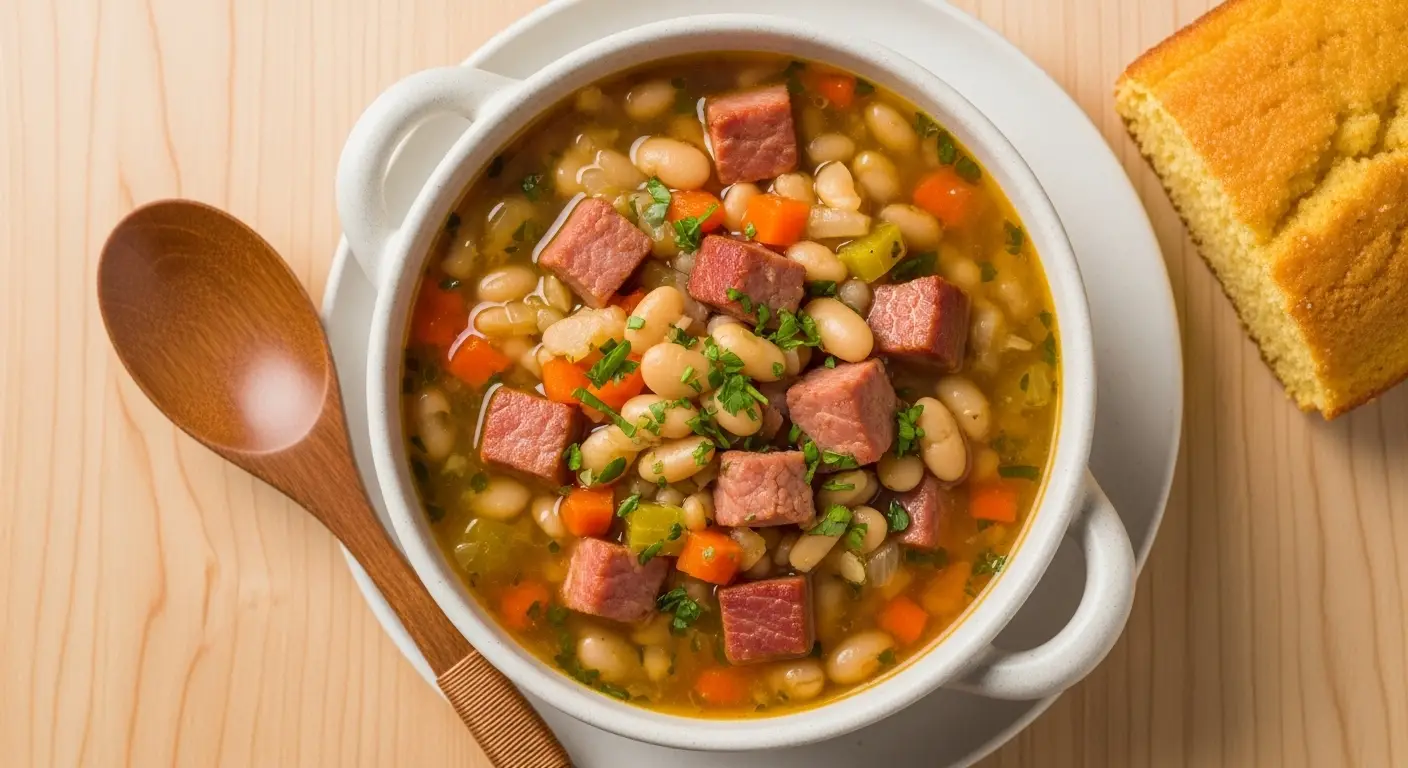
Ham and Bean Soup
Ingredients
- 1 meaty ham bone - or 2 cups / 300g diced cooked ham
- 1 lb dried Great Northern beans or navy beans - 450g; or substitute 3 cans (45 oz total) drained white beans
- 1 large yellow onion - diced
- 3 stalks celery - diced
- 3 medium carrots - peeled and diced
- 5 cloves garlic - minced
- 2 tbsp olive oil - 30ml
- 8 cups low-sodium chicken broth - 2 liters; or water
- 2 bay leaves
- 1 tsp dried thyme
- 1 tsp smoked paprika
- 1/2 tsp black pepper
- 1/2 tsp kosher salt - adjust to taste based on saltiness of ham
- fresh parsley - chopped
Equipment
- Large Dutch oven or heavy-bottomed pot - 6–8 quart / 5.7–7.5 liter capacity
- Wooden spoon or silicone spatula
- Chef’s knife and cutting board
- Measuring cups and spoons
- Ladle - For serving
- Colander or strainer - For draining and rinsing beans
- Tongs - For removing the ham bone
- Immersion blender - (optional) For partially blending the soup to thicken broth
Method
- Place dried beans in a large bowl, cover with at least 3 inches of cold water, and soak overnight (8–12 hours), or quick-soak by boiling for 2 minutes then resting off heat for 1 hour. Drain and rinse well before using. Skip this step if using canned beans.
- Heat olive oil in a large Dutch oven over medium heat, then add the diced onion, celery, and carrots and cook for 6–8 minutes until softened. Add the minced garlic and stir for 60 seconds until fragrant.
- Sprinkle the smoked paprika, dried thyme, and black pepper over the vegetables and stir for about 30 seconds to lightly toast the spices in the oil.
- Add the drained beans and ham bone to the pot, then pour in the chicken broth, ensuring everything is submerged. Add the bay leaves and stir gently to combine.
- Bring the soup to a boil over high heat, skimming any foam from the surface, then reduce to low, partially cover, and simmer for 60–90 minutes (or 30–40 minutes for canned beans) until beans are completely tender.
- Remove the ham bone with tongs, let it cool for 5 minutes, then shred all remaining meat from the bone using two forks. Discard the bone and bay leaves, then return the shredded ham to the pot.
- Mash about one-quarter to one-third of the beans with the back of a spoon (or use an immersion blender for a few pulses) to thicken the broth, then taste and add salt as needed.
- Ladle the soup into bowls, garnish with freshly chopped parsley, and serve hot with cornbread or crusty bread on the side.
Nutrition
Notes
- Always taste for salt at the very end of cooking — the ham bone releases significant saltiness as it simmers, and adding salt early can result in an overly salty soup.
- If you don’t have a ham bone, use 2 cups of diced cooked ham plus an extra teaspoon of smoked paprika and ½ teaspoon of liquid smoke to replicate the smoky depth.
- Don’t skip soaking dried beans — unsoaked beans can take 2–3 hours to cook and may have an uneven texture with tough outer skins.
- Skim the gray foam that rises to the surface during the initial boil. It keeps the broth clean, clear, and better-tasting.
- For an extra layer of umami, add a parmesan rind to the pot while the soup simmers and remove it before serving.
- Slow cooker method: Sauté aromatics on the stovetop first, then transfer everything to a slow cooker and cook on low for 7–8 hours or high for 4–5 hours.
- Store leftovers in an airtight container in the refrigerator for up to 4–5 days. The beans absorb liquid as the soup sits, so add a splash of broth when reheating.
- This soup freezes beautifully for up to 3 months. Portion into freezer-safe containers with a little headspace and thaw overnight in the refrigerator.
- To vary the recipe, stir in chopped kale or collard greens during the last 15 minutes, or add a can of diced tomatoes for a slightly tangy broth.
- Great Northern beans, navy beans, cannellini beans, and pinto beans all work well — use whatever you have on hand or prefer.
Private Notes
Tried this recipe?
Let us know how it was!Final Thoughts
Ham and Bean Soup is one of those recipes that feels like a warm hug in a bowl. It’s humble, honest food at its best, and it makes incredible use of ingredients you might otherwise throw away.
If you have a ham bone in your fridge or freezer, please don’t let it go to waste. This soup is exactly what it was made for.
I hope this becomes a staple in your kitchen the same way it has in mine. Give it a try this week, and leave a comment below to tell me how it went or share your own favorite twist on the recipe!
Recommended:
- Ham and Potato Soup Recipe
- Slow Cooker Ham Recipe
- Honey Baked Ham Recipe
- Pork Stew Recipe
- Chicken Soup Recipe
- Pasta Fagioli Recipe
- Italian Wedding Soup Recipe
- Brunswick Stew Recipe
- Beef Stew Recipe
- Fall Dinner Recipes