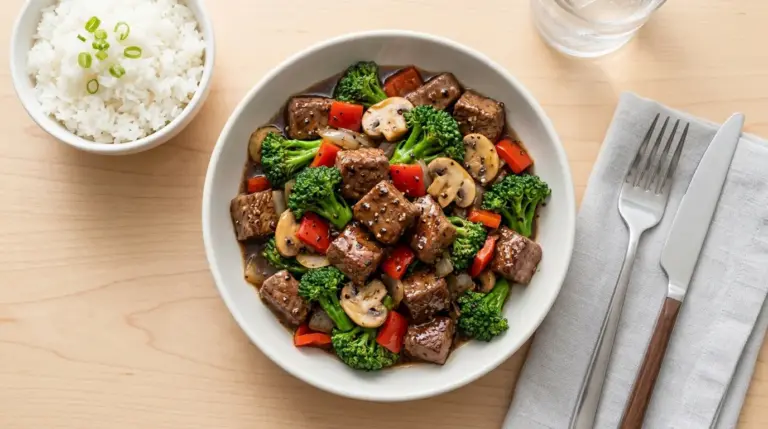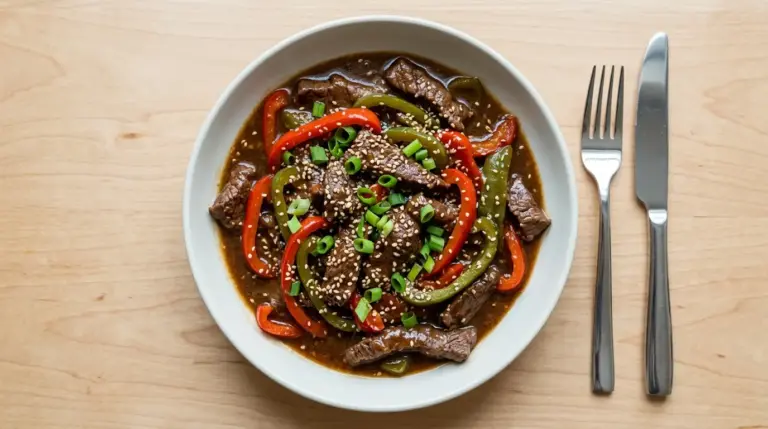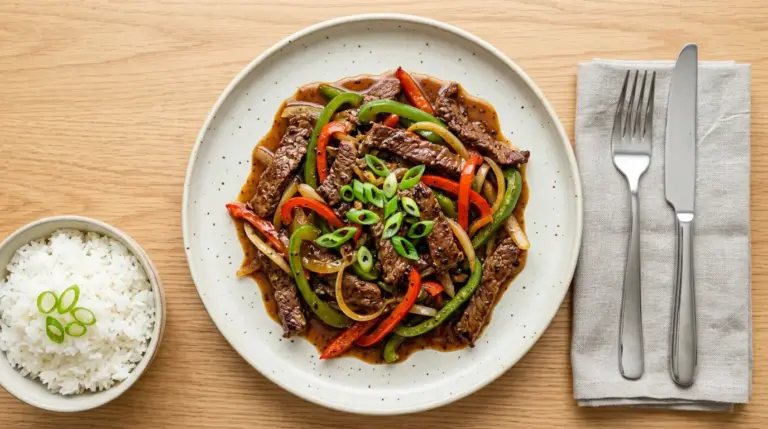
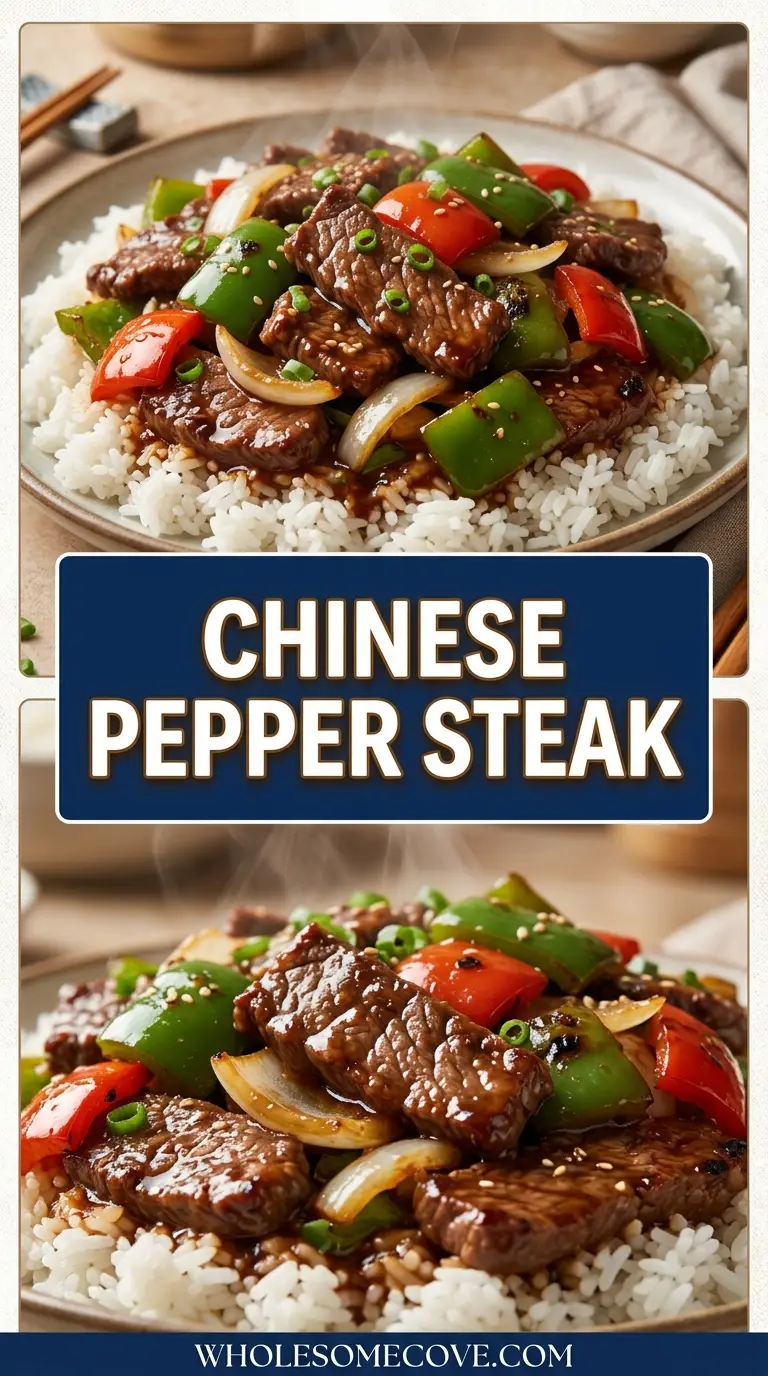
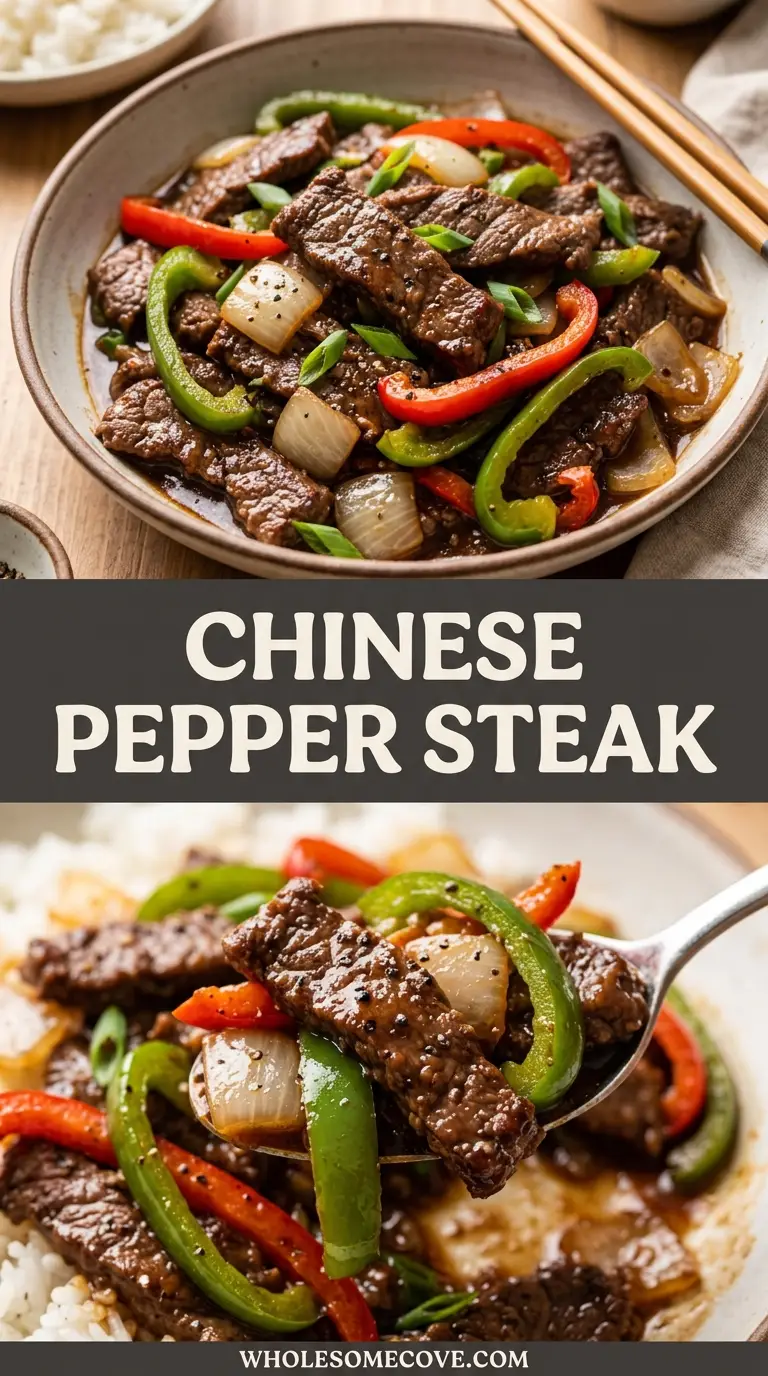
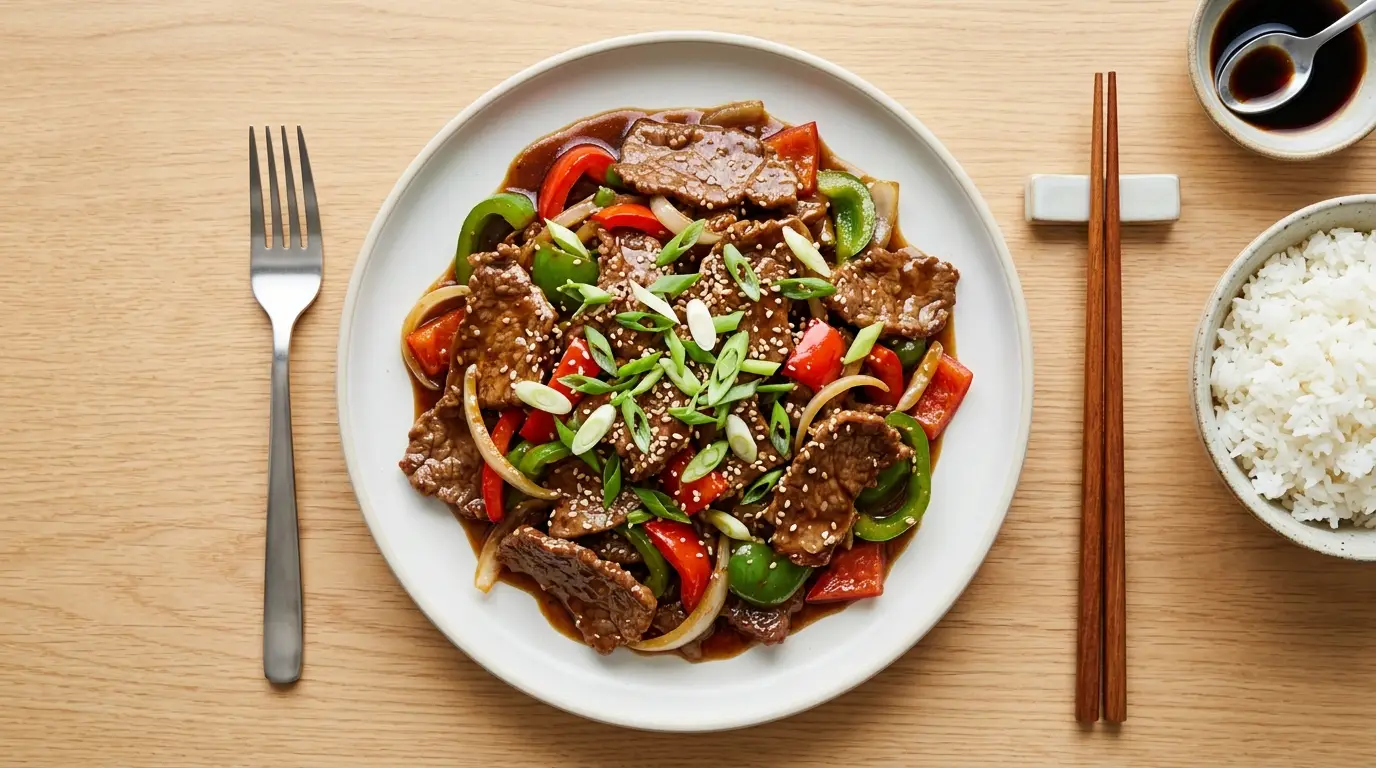
Tender strips of flank steak, crisp bell peppers, and sweet onion get tossed in a glossy brown sauce that clings to every piece instead of pooling at the bottom of the plate. This Chinese pepper steak recipe leans on a quick velveting step, just cornstarch, baking soda, and a splash of Shaoxing wine, so the beef turns out silky and restaurant-tender.
The whole thing cooks in about 12 minutes of active stir-frying once your prep is done.
Most versions go wrong in one of two ways. The beef comes out chewy because the velveting step was skipped, or the sauce turns watery because it never got a chance to reduce and thicken against high heat.
This recipe fixes both. The baking soda in the marinade breaks down the muscle fibers, and a cornstarch slurry pulls the sauce into a shiny glaze in under a minute.
You need one flank steak, two bell peppers, and a handful of pantry sauces you likely already own. Serve it over steamed white rice and you have a takeout classic that costs a fraction of delivery.
| Quick Recipe Summary | |
|---|---|
| Prep Time | 20 minutes |
| Cook Time | 12 minutes |
| Total Time | 32 minutes |
| Servings | 4 servings |
| Difficulty Level | Easy |
For a slow-simmered take on the same flavors, see Slow Cooker Pepper Steak.
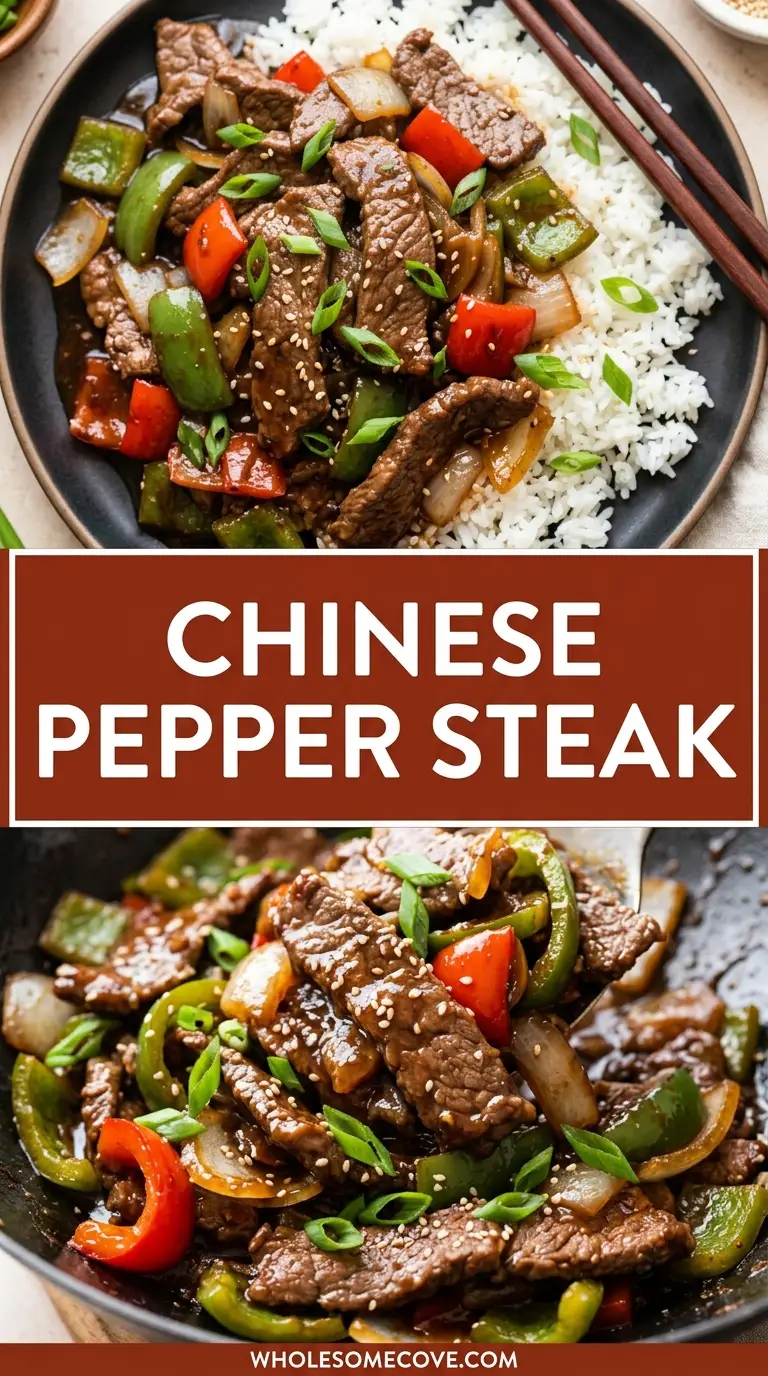
Why You’ll Love This Chinese Pepper Steak Recipe
This is the kind of dinner that makes you cancel the delivery order for good. The payoff is high and the effort is low once you understand the couple of techniques that carry the whole dish.
Here is what sets it apart:
- The beef stays genuinely tender. Velveting with baking soda and cornstarch gives you that melt-in-your-mouth texture Chinese restaurants are known for, even with an affordable cut like flank steak.
- The sauce coats instead of puddles. A proper cornstarch slurry thickens everything into a glossy glaze that sticks to the beef and peppers rather than soaking into your rice.
- It is fast where it counts. The active stir-frying takes about 12 minutes, so most of your time is spent slicing and mixing, not standing over a hot pan.
- It uses pantry staples. Soy sauce, oyster sauce, cornstarch, and sesame oil do the heavy lifting, and none of them are hard to find.
- The peppers keep their bite. Cooking them just until crisp-tender means color and crunch, not the soft, dull vegetables you sometimes get from takeout.
- It scales easily. Doubling the sauce for a bigger crowd or extra gravy over rice takes no additional skill.
You might also enjoy: Panda Express Black Pepper Steak
Ingredients
Everything here is split into three groups: the beef and its marinade, the sauce, and the vegetables. Prepping all three before you turn on the heat makes the actual cooking almost effortless.
For the beef and marinade:
- 1 lb (450 g) flank steak, sliced thin against the grain into ¼-inch (6 mm) strips
- 1 tablespoon (15 ml) Shaoxing wine
- 2 teaspoons (6 g) cornstarch
- 2 teaspoons (10 ml) low-sodium soy sauce
- ¼ teaspoon baking soda
- 1 tablespoon (15 ml) water
For the sauce:
- ½ cup (120 ml) low-sodium beef broth or chicken stock
- 2 tablespoons (30 ml) oyster sauce
- 1 tablespoon (15 ml) low-sodium soy sauce
- 1 teaspoon (5 ml) dark soy sauce for color
- 1 tablespoon (8 g) cornstarch
- 1 teaspoon (4 g) granulated sugar
- ½ teaspoon toasted sesame oil
- ¼ teaspoon ground white pepper
For the stir-fry:
- 2 tablespoons (30 ml) neutral high-heat oil such as avocado or peanut oil
- 1 green bell pepper, cut into 1-inch (2.5 cm) pieces
- 1 red bell pepper, cut into 1-inch (2.5 cm) pieces
- 1 large yellow onion, cut into 1-inch (2.5 cm) wedges
- 3 cloves fresh garlic, minced
- 1 tablespoon (8 g) fresh ginger, minced
- 2 scallions, sliced, for garnish
Read Also: Pepper Steak
Kitchen Equipment Needed
You do not need specialty gear for this, but a couple of the right tools make high-heat stir-frying much smoother. The most important thing is a pan that holds heat and gives you room to toss.
- A carbon steel wok or a large heavy skillet
- A sharp chef’s knife for slicing the beef thin
- A sturdy cutting board
- Two or three mixing bowls for the beef, sauce, and vegetables
- A wok spatula or wooden turner
- Measuring spoons and a liquid measuring cup
- A set of prep bowls to keep everything within reach
For another beef dinner in this style, see Beef Tenderloin Steak.
Recommended Products for This Recipe
These are the tools and ingredients I reach for whenever I make this dish. Each one earned its place by solving a specific problem I kept running into.
1. Carbon Steel Wok
A thin nonstick pan cools down the second you add cold beef, which steams the meat instead of searing it. A carbon steel wok holds fierce heat and recovers fast, so each batch actually browns and you get that faint smoky flavor stir-fries are known for.
2. Shaoxing Wine
I used to skip this and the beef always tasted flatter than takeout. A tablespoon in the marinade adds a savory depth that water and soy sauce alone cannot replicate, and one bottle lasts through dozens of stir-fries.
3. Oyster Sauce
This is the backbone of the brown sauce. It brings a glossy, savory sweetness that ties the soy and broth together, and a good bottle keeps in the fridge for months.
4. Ground White Pepper
Black pepper tastes sharp and looks speckled in the finished glaze. White pepper gives the mellow, slightly fermented warmth that reads as authentically Chinese, and it disappears into the sauce cleanly.
5. Bench Scraper
Slicing a whole flank steak leaves you with a pile of strips to move. A bench scraper lets me sweep them straight into the marinade bowl without dragging a knife edge across the board or losing pieces off the side.
For the sauce on its own, try: Stir Fry Sauce
Step-by-Step Instructions: How to Make Chinese Pepper Steak
Follow these steps in order and you’ll have a tender, glossy pepper steak on the table in about half an hour.
1. Slice and Velvet the Beef
- Place the flank steak in the freezer for 20 to 30 minutes until it is firm but not frozen solid. This makes thin slicing far easier.
- Slice the beef against the grain into strips about ¼ inch (6 mm) thick. Cutting against the grain shortens the muscle fibers, which is what keeps each bite tender.
- Add the sliced beef to a medium bowl along with the Shaoxing wine, 2 teaspoons cornstarch, 2 teaspoons soy sauce, baking soda, and 1 tablespoon water.
- Mix and rub the marinade into the meat with your hand until the liquid is fully absorbed. Set aside for at least 20 minutes while you prep everything else. I ruined an early batch by rushing this to 5 minutes, and the beef never got that signature velvety texture.
2. Mix the Sauce
- In a separate small bowl, whisk together the beef broth, oyster sauce, 1 tablespoon soy sauce, dark soy sauce, 1 tablespoon cornstarch, sugar, sesame oil, and white pepper.
- Whisk until no lumps of cornstarch remain. The slurry needs to be smooth so it thickens evenly later.
- Set the bowl right next to your stove. Once the stir-fry starts moving, you will not have time to hunt for it.
3. Prep the Vegetables
- Cut the green and red bell peppers into 1-inch (2.5 cm) pieces.
- Cut the onion into 1-inch (2.5 cm) wedges and separate the layers.
- Mince the garlic and ginger, and keep them together in one small dish. Slice the scallions and set them aside for garnish.
4. Sear the Beef
- Heat 1 tablespoon of the neutral oil in your wok or skillet over high heat until it just begins to shimmer.
- Add the beef in a single layer and let it sit undisturbed for 30 to 45 seconds to develop a sear.
- Stir-fry for another minute or so until the beef is about 80 percent cooked, then transfer it to a clean plate. It will finish cooking later, so pulling it early keeps it from turning tough.
5. Stir-Fry the Vegetables
- Add the remaining 1 tablespoon oil to the same pan over high heat.
- Add the onion and bell peppers, and stir-fry for 2 to 3 minutes until crisp-tender but still bright and slightly firm.
- Push the vegetables to the side, add the garlic and ginger to the center, and stir for about 30 seconds until fragrant.
6. Combine and Finish
- Give the sauce a quick re-whisk, then pour it into the pan. It will begin to bubble and thicken within seconds.
- Return the beef and any resting juices to the pan and toss everything together for about 1 minute until the sauce turns glossy and coats each piece.
- Remove from the heat, scatter the sliced scallions over the top, and serve immediately over steamed rice.
A similar quick beef and veg skillet is Beef and Broccoli Stir Fry.
Tips for The Best Chinese Pepper Steak
Small choices in prep and heat make the difference between a stir-fry that tastes homemade and one that tastes like the real thing. These are the details worth getting right.
- Slice against the grain, always. Look for the direction the muscle fibers run and cut across them. This one habit does more for tenderness than any marinade.
- Keep the heat high. Stir-frying is a fast, hot process. A cooler pan steams the beef and leaches water out of the peppers, leaving everything soggy.
- Do not crowd the pan. If your wok is small, sear the beef in two batches. Crowding drops the temperature and you lose the sear.
- Cook beef and vegetables separately. I’ve found that searing the beef first, removing it, then cooking the vegetables keeps both at their best texture instead of overcooking one to save the other.
- Have everything ready before you start. Chinese stir-fry moves quickly, and there is no pausing to chop once the oil is hot.
- Taste the sauce before it hits the pan. Soy and oyster sauce vary a lot in saltiness by brand, so adjust the sugar or add a splash of water if yours runs strong.
- Do not skip the baking soda. Even a quarter teaspoon in the marinade noticeably changes how tender the finished beef feels.
Read Also: Tofu and Veggie Stir Fry with Brown Rice
What to Serve with Chinese Pepper Steak
Pepper steak is built to sit on top of something that soaks up the sauce, but it also welcomes a few sides to round out the meal. Here are the pairings I come back to most.
- Steamed white rice or Basmati Rice to catch the glossy sauce
- Healthy Fried Rice for a heartier, all-in-one plate
- Egg Drop Soup as a light, warming starter
- Air Fryer Avocado Egg Rolls for a crunchy appetizer
- Simple steamed broccoli or bok choy for extra greens
- Chilled cucumber salad to cut the richness of the sauce
- Cauliflower Fried Rice with Tofu for a lower-carb swap under the beef
You might also like: Healthy Orange Chicken
Variations of Chinese Pepper Steak
Once you have the base technique down, this dish bends easily to whatever you have on hand or are in the mood for. Here are the swaps I’ve tested and liked.
- Spicy pepper steak: Add a few dried red chilies or a spoonful of chili garlic sauce with the garlic and ginger for a Sichuan-leaning kick.
- Black pepper beef: Swap the white pepper for a heavy hand of coarsely cracked black pepper and add a splash more oyster sauce for a bolder, peppery glaze.
- Different cuts: Sirloin, skirt steak, or ribeye all work in place of flank. For tougher cuts like chuck, marinate a little longer.
- More vegetables: Snow peas, mushrooms, or broccoli florets fold in nicely. Add firmer vegetables earlier so they cook through.
- Gluten-free: Use tamari in place of soy sauce and check that your oyster sauce is certified gluten-free.
- Chicken or tofu: Substitute thinly sliced chicken breast or pressed firm tofu for the beef, keeping the same marinade and sauce.
For a different beef base to build on, see Beef Tenderloin Tips.
Storage and Reheating
This dish keeps well, which makes it a solid candidate for meal prep. The key with leftovers is adding back a little moisture so the beef does not dry out on reheating.
- Refrigerator: Store cooled pepper steak in an airtight container for up to 3 to 4 days.
- Freezer: Freeze in a sealed container for up to 2 months, though the peppers will soften noticeably after thawing.
- Reheating on the stove: Warm in a skillet over medium heat with a splash of water or broth, tossing until heated through.
- Reheating in the microwave: Sprinkle about half a tablespoon of water over the top and heat in 1-minute bursts, stirring between each, until warm.
- Make-ahead tip: Slice and marinate the beef and mix the sauce up to a day in advance, then stir-fry fresh when you are ready to eat.
For another make-ahead friendly dinner, try: French Onion Beef and Noodles
Nutritional Facts
Values are estimates per serving, based on the recipe divided into 4 servings and not including rice. Actual numbers will vary with your specific cuts and brands.
| Nutrient | Amount per Serving |
|---|---|
| Calories | 310 kcal |
| Protein | 27 g |
| Carbohydrates | 13 g |
| Fat | 17 g |
| Saturated Fat | 4 g |
| Fiber | 2 g |
| Sugar | 5 g |
| Sodium | 780 mg |
Read Also: French Onion Beef and Rice Casserole
Health Benefits of Key Ingredients
Beyond tasting good, the core ingredients in this stir-fry bring real nutritional value to the table. Here is what each one contributes.
- Flank steak: A lean cut that delivers high-quality protein, iron, and zinc, all of which support muscle repair and energy.
- Bell peppers: Loaded with vitamin C and antioxidants, with red peppers offering even more vitamin A than green ones.
- Onion: Provides prebiotic fiber and sulfur compounds linked to heart and immune health.
- Garlic: Contains allicin, a compound studied for its anti-inflammatory and immune-supporting properties.
- Ginger: Long used to ease digestion and calm nausea, and it adds warmth without any added fat.
- Sesame oil: Brings heart-friendly unsaturated fats and a concentrated nutty flavor, so a little goes a long way.
For more produce-forward meals, see Lentil and Vegetable Soup.
FAQs About Chinese Pepper Steak
1. What is the best cut of beef for pepper steak?
Flank steak is the classic choice because it is flavorful, lean, and cooks quickly. Skirt steak, sirloin, and ribeye all work well too.
Whatever you choose, slice it thin and against the grain for the most tender result.
2. Why is my pepper steak tough?
The most common reasons are skipping the velveting step, slicing with the grain instead of against it, or overcooking the beef. High heat and a fast sear keep it tender.
Velveting with cornstarch and baking soda is the single biggest fix for chewy beef.
3. Is Chinese pepper steak spicy?
Traditional pepper steak is not spicy at all. The “pepper” refers to the bell peppers and a touch of white pepper in the sauce, not chili heat.
If you want heat, add dried chilies or chili garlic sauce as noted in the variations.
4. Can I make pepper steak ahead of time?
Yes. You can slice and marinate the beef and mix the sauce up to a day in advance, then stir-fry everything fresh in under 15 minutes.
The dish itself also reheats well for 3 to 4 days in the fridge.
5. What does velveting the beef mean?
Velveting is a Chinese technique of marinating meat in cornstarch, a liquid, and often a pinch of baking soda before cooking. It creates a protective coating that keeps the beef silky and moist.
It is the reason restaurant stir-fry beef feels so much more tender than most home versions.
6. Can I use a regular skillet instead of a wok?
Absolutely. A large heavy or cast-iron skillet works well as long as you get it very hot and avoid crowding the pan.
Work in batches if needed so the beef sears rather than steams.
For a stovetop classic to try next, see: Beef Tips and Gravy
Chinese Pepper Steak
Ingredients
- 1 lb flank steak - 450g, sliced thin against the grain into ¼-inch (6 mm) strips
- 1 tablespoon Shaoxing wine - 15 ml
- 2 teaspoons cornstarch - 6 g
- 2 teaspoons low-sodium soy sauce - 10 ml
- ¼ teaspoon baking soda - Do not skip; tenderizes the beef
- 1 tablespoon water - 15 ml
- ½ cup low-sodium beef broth or chicken stock - 120 ml
- 2 tablespoons oyster sauce - 30 ml
- 1 tablespoon low-sodium soy sauce - 15 ml
- 1 teaspoon dark soy sauce - 5 ml, for color
- 1 tablespoon cornstarch - 8 g
- 1 teaspoon granulated sugar - 4 g
- ½ teaspoon toasted sesame oil
- ¼ teaspoon ground white pepper
- 2 tablespoons neutral high-heat oil - 30 ml, such as avocado or peanut oil, divided
- 1 green bell pepper - Cut into 1-inch (2.5 cm) pieces
- 1 red bell pepper - Cut into 1-inch (2.5 cm) pieces
- 1 large yellow onion - Cut into 1-inch (2.5 cm) wedges and separated
- 3 cloves fresh garlic - Minced
- 1 tablespoon fresh ginger - 8 g, minced
- 2 scallions - Sliced, for garnish
- steamed white rice - For serving
Equipment
- Carbon steel wok or large heavy skillet - A pan that holds high heat and gives room to toss
- Sharp chef’s knife - For slicing the beef thin against the grain
- Sturdy cutting board
- Mixing bowls - Two or three for the beef, sauce, and vegetables
- Wok spatula or wooden turner
- Measuring spoons and liquid measuring cup
- Prep bowls - To keep everything within reach before stir-frying
- Bench scraper - (optional) Makes moving the sliced beef strips easier
Method
- Freeze the flank steak for 20 to 30 minutes until firm but not frozen solid, then slice against the grain into ¼-inch (6 mm) strips.
- In a medium bowl, mix the sliced beef with Shaoxing wine, 2 teaspoons cornstarch, 2 teaspoons soy sauce, baking soda, and 1 tablespoon water. Rub the marinade in until absorbed and set aside for at least 20 minutes.
- In a small bowl, whisk together the beef broth, oyster sauce, 1 tablespoon soy sauce, dark soy sauce, 1 tablespoon cornstarch, sugar, sesame oil, and white pepper until smooth and lump-free. Set next to the stove.
- Cut the bell peppers into 1-inch pieces, cut the onion into 1-inch wedges and separate the layers, mince the garlic and ginger together, and slice the scallions for garnish.
- Heat 1 tablespoon oil in a wok or skillet over high heat until shimmering. Add the beef in a single layer, let it sear undisturbed for 30 to 45 seconds, then stir-fry about 1 minute until 80 percent cooked. Transfer to a plate.
- Add the remaining 1 tablespoon oil to the pan over high heat. Stir-fry the onion and bell peppers for 2 to 3 minutes until crisp-tender, then push them to the side and add the garlic and ginger to the center, stirring about 30 seconds until fragrant.
- Re-whisk the sauce and pour it into the pan. Once it bubbles and thickens, return the beef and any resting juices, tossing for about 1 minute until the sauce turns glossy and coats each piece.
- Remove from the heat, scatter the sliced scallions over the top, and serve immediately over steamed white rice.
Nutrition
Notes
- Slice against the grain, always. Look for the direction the muscle fibers run and cut across them. This one habit does more for tenderness than any marinade.
- Keep the heat high. Stir-frying is a fast, hot process. A cooler pan steams the beef and leaches water out of the peppers, leaving everything soggy.
- Do not crowd the pan. If your wok is small, sear the beef in two batches. Crowding drops the temperature and you lose the sear.
- Cook beef and vegetables separately. Searing the beef first, removing it, then cooking the vegetables keeps both at their best texture instead of overcooking one to save the other.
- Have everything ready before you start. Chinese stir-fry moves quickly, and there is no pausing to chop once the oil is hot.
- Taste the sauce before it hits the pan. Soy and oyster sauce vary a lot in saltiness by brand, so adjust the sugar or add a splash of water if yours runs strong.
- Do not skip the baking soda. Even a quarter teaspoon in the marinade noticeably changes how tender the finished beef feels.
- Storage: Store cooled pepper steak in an airtight container in the refrigerator for up to 3 to 4 days, or freeze for up to 2 months (peppers will soften after thawing).
- Reheating: Warm in a skillet over medium heat with a splash of water or broth, or microwave with about half a tablespoon of water per portion in 1-minute bursts, stirring between each.
- Make-ahead: Slice and marinate the beef and mix the sauce up to a day in advance, then stir-fry fresh when ready to eat.
- Variations: Add dried red chilies or chili garlic sauce for a spicy version; swap white pepper for coarsely cracked black pepper for black pepper beef; use sirloin, skirt steak, or ribeye; fold in snow peas, mushrooms, or broccoli; use tamari and gluten-free oyster sauce for a gluten-free version; substitute thinly sliced chicken breast or pressed firm tofu for the beef.
Private Notes
Tried this recipe?
Let us know how it was!Final Thoughts
Once you make this Chinese pepper steak at home, the takeout version starts to feel like a downgrade. The beef is more tender, the peppers keep their snap, and the sauce actually clings where you want it.
Give it a try the next time a craving hits, and lean on the velveting step even when you are tempted to rush it. That small habit is what turns a decent stir-fry into a great one.
If you make it, I’d love to hear how it went. Leave a comment with your favorite variation or share it with someone who has given up on cooking Chinese food at home.
Recommended:
- Chinese Pepper Steak
- Beef Stew
- Beef Barley Soup
- Mississippi Pot Roast
- Filet Mignon
- Beef Tenderloin
- Smoked Beef Tenderloin
- Teriyaki Sauce
- Hoisin Sauce
- French Onion Beef Casserole