A great carrot smoothie recipe starts with grated carrot, not chunks, because grated carrot blends fully smooth in under two minutes while chunks leave gritty flecks even in a high-speed blender.
This one combines carrot with frozen banana, orange juice, and pineapple, so the eight main ingredients turn into a drink thick enough to coat the back of a spoon.
Ready in ten minutes with nothing but pantry-friendly components, it needs no stovetop and no produce that isn’t already common in a well-stocked kitchen.
| Quick Recipe Summary | |
|---|---|
| Prep Time | 10 minutes |
| Cook Time | 0 minutes |
| Total Time | 10 minutes |
| Servings | 2 smoothies (about 16 oz / 473 ml each) |
| Difficulty Level | Easy |
You might also enjoy: Orange Smoothie if citrus is your favorite part of this one.
Why You’ll Love This Carrot Smoothie Recipe
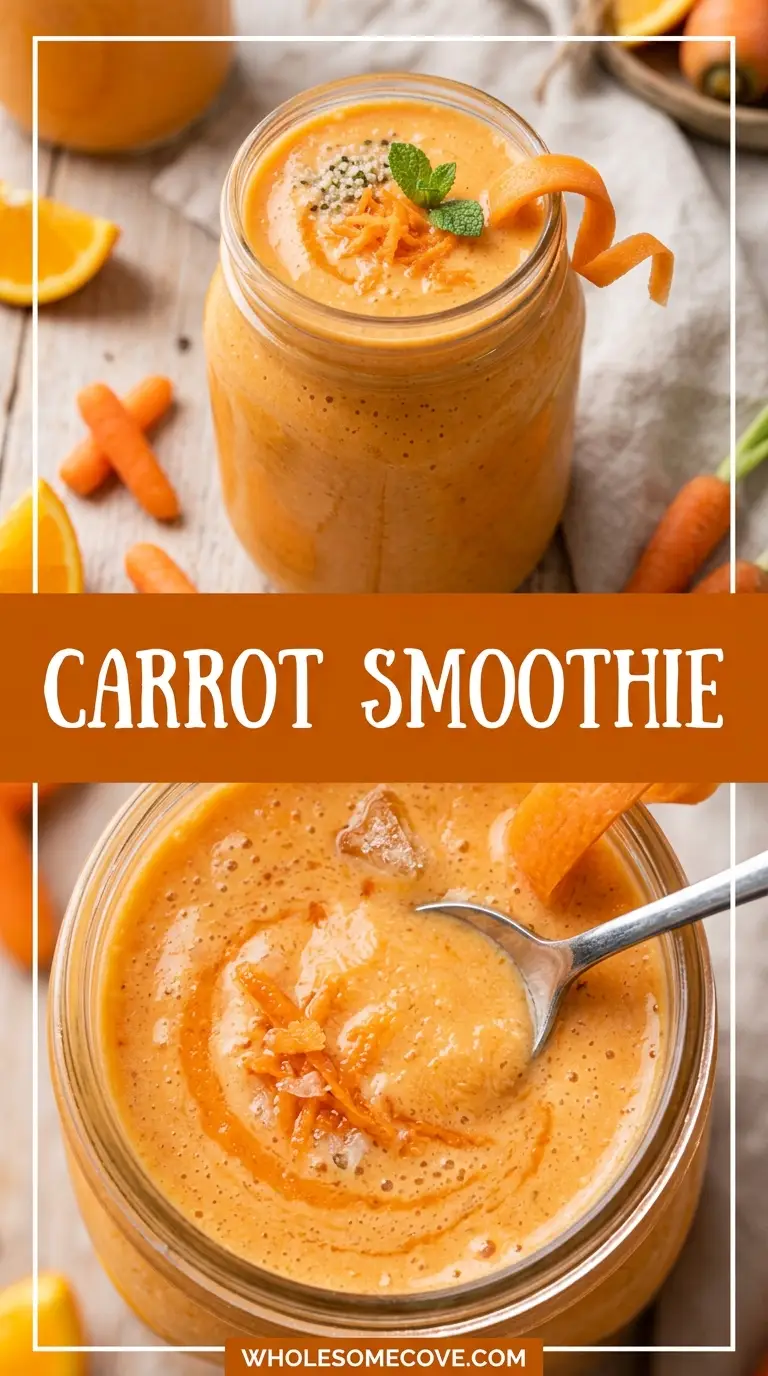
This carrot smoothie recipe turns a vegetable most people only eat cooked into a naturally sweet, creamy drink without any added sugar beyond what’s already in the fruit.
It uses one bowl, one blender, and about ten minutes from start to first sip.
- Naturally sweet: The banana, orange juice, and pineapple provide all the sweetness, so no refined sugar is needed.
- Just 8 main ingredients: Everything comes together with pantry and fridge staples, no specialty grocery run required.
- Ready in 10 minutes: No cooking, no steaming, no waiting on anything except a blender cycle.
- Kid-approved veggie boost: The carrot flavor mellows into the fruit, so it’s an easy way to work a vegetable into breakfast.
- Meal-prep friendly: Freeze portioned bags of the produce ahead of time and blend fresh each morning.
- Nutrient-dense: One glass delivers vitamin A, vitamin C, potassium, and gut-friendly probiotics from the yogurt.
- Easy to customize: Swap the milk, add protein powder, or spice it up with nutmeg for a carrot cake twist.
I’ve found that a smoothie this simple is also one of the most forgiving recipes to adjust for what’s already in the fridge, which is part of why it’s worth having on repeat.
The same base shows up in my beet smoothie whenever I want a different root vegetable in the mix.
Ingredients
Here’s everything you need to make this carrot smoothie recipe, along with a few notes on why each ingredient earns its place in the blender.
- 1 large carrot, peeled and finely grated (about 1 cup / 130g): grating instead of chopping is what keeps this smoothie from turning gritty
- 1 frozen banana, sliced (about 1 medium banana / 120g), frozen at least 2 hours ahead
- 1 cup (240ml) 100% orange juice, not from concentrate
- 1/2 cup (75g) frozen pineapple chunks
- 1/2 cup (120g) plain Greek yogurt, whole milk or 2%
- 1/2 cup (120ml) unsweetened almond milk, plus more to thin as needed
- 1/2 teaspoon ground cinnamon
- 1/2 teaspoon fresh grated ginger (or 1/4 teaspoon ground ginger)
- 1 tablespoon raw honey, optional, to taste
I ruined my first few batches by tossing in raw carrot chunks straight from the fridge, and they left gritty flecks even after two minutes of blending. Grating the carrot first solved the problem completely.
Read Also: Carrot Ginger Soup Recipe
Kitchen Equipment Needed
You don’t need anything fancy for this recipe, just a few reliable tools that make the process faster and the texture smoother.
- High-speed blender: the single biggest factor in how smooth the carrot ends up
- Box grater or food processor, for grating the carrot
- Vegetable peeler
- Cutting board and paring knife
- Measuring cups and spoons
- Citrus juicer, if squeezing fresh orange juice instead of using bottled
- Rubber spatula, for scraping down the blender jar
- Glass mason jars or smoothie cups for serving
- Silicone ice cube trays, useful for freezing extra pineapple or banana in portioned amounts
This pairs well with the same setup I use for my Greek yogurt smoothie, since both rely on a strong blender motor to get a fully smooth result.
Recommended Products for This Recipe
These are five products I genuinely recommend after making carrot smoothies more times than I can count. Each one solves a specific problem that comes up with this particular recipe.
1. Vitamix Explorian Blender
Weaker blenders leave raw carrot fiber in visible strands no matter how long you run them, which is the main complaint people have about carrot smoothies. A motor in the Vitamix range has enough torque to fully break down grated carrot in under a minute, so the texture comes out silky instead of stringy.
2. Microplane Ginger Grater
Regular graters shred fresh ginger into long fibrous strings that end up floating in the finished smoothie. A Microplane turns ginger into a fine paste instead, so the flavor spreads evenly without any stringy bits catching in your teeth.
3. Ball Wide Mouth Mason Jars
Plastic cups can carry a faint plastic taste into a drink this simple, where every flavor note matters. Glass mason jars with tight lids solve that, and they’re wide enough to fit a spoon if you ever want to eat this one more like a smoothie bowl.
4. Breville Citrus Press
Bottled orange juice works fine, but fresh-squeezed juice has noticeably less bitterness from pith, which matters since orange juice makes up a full cup of this recipe. A press like this extracts juice quickly without forcing pith through, which keeps the smoothie from turning bitter.
5. Silicone Ice Cube Tray Set
Buying pineapple or banana pre-frozen in bulk bags is convenient until you need an exact half-cup and end up guessing. Freezing your own portions in a silicone tray means every cube is a known, consistent amount, which keeps the smoothie’s thickness predictable batch after batch.
I borrowed the mason jar habit from perfecting my almond milk smoothie, where the same glass-over-plastic rule applies.
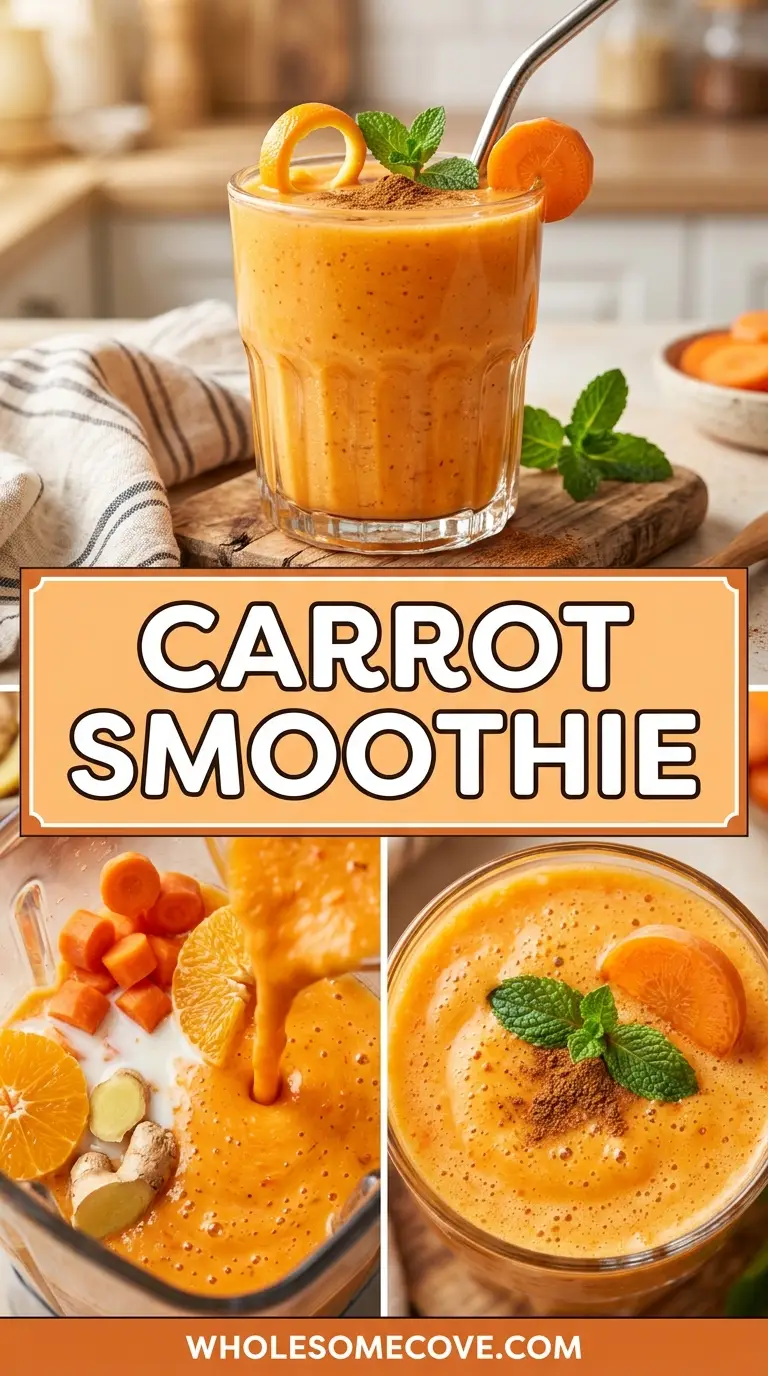
Step-by-Step Instructions: How to Make Carrot Smoothie
Follow these simple steps and you’ll have a smooth, naturally sweet carrot smoothie ready in about ten minutes.
1. Prep the Carrot and Ginger
- Peel 1 large carrot and finely grate it using a box grater or the shredding disc of a food processor.
- Grate 1/2 teaspoon of fresh ginger, or measure out 1/4 teaspoon ground ginger if using that instead.
- Set both aside; grating first (rather than chopping) is what keeps the final texture smooth instead of gritty.
2. Add the Liquids to the Blender First
- Pour 1 cup (240ml) of orange juice into the blender jar.
- Add 1/2 cup (120ml) of almond milk.
- Adding liquids before solids helps the blender blades catch everything evenly instead of spinning around a dry clump.
3. Add the Yogurt, Fruit, and Spices
- Spoon in 1/2 cup (120g) of plain Greek yogurt.
- Add the grated carrot, 1 sliced frozen banana, and 1/2 cup (75g) of frozen pineapple chunks.
- Sprinkle in the grated ginger and 1/2 teaspoon of ground cinnamon.
4. Blend Until Fully Smooth
- Secure the lid and blend on low for 15 seconds to break up the frozen fruit.
- Increase to high speed and blend for 45 to 60 seconds, or until no carrot flecks remain visible.
- Stop once to scrape down the sides with a rubber spatula if needed, then blend again for a final 10 seconds.
5. Taste and Adjust
- Taste the smoothie directly from the blender jar.
- If it needs more sweetness, add 1 tablespoon of raw honey and blend for another 10 seconds to fully incorporate it.
- If the texture is thicker than you’d like, add extra almond milk 2 tablespoons at a time and blend briefly after each addition.
6. Pour and Serve
- Pour the smoothie into two glasses or mason jars.
- Serve immediately for the best texture and coldest temperature.
- Give any leftovers a quick shake or stir before drinking, since natural separation can happen within the first hour.
The same blending order works for my banana smoothie, where liquids-first is just as important for an even blend.
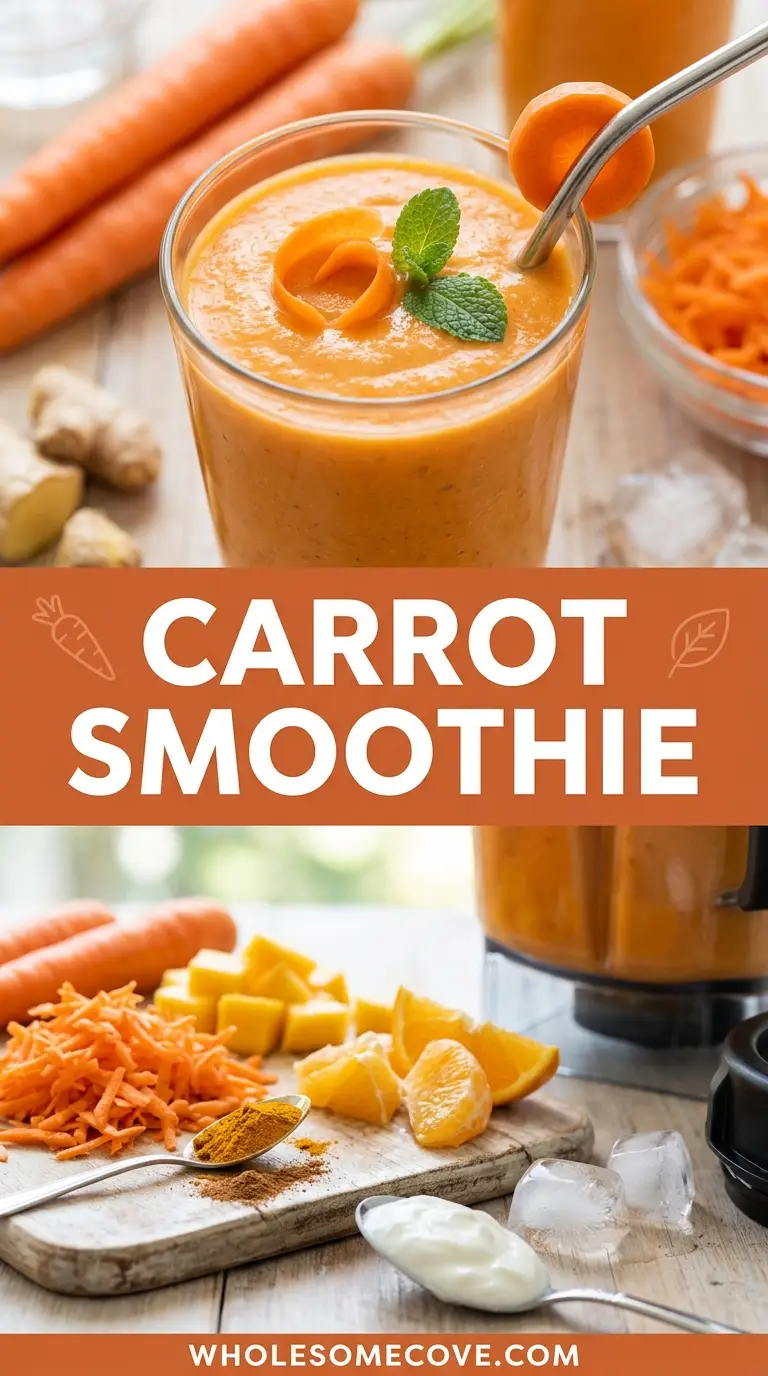
Tips for The Best Carrot Smoothie
A few small adjustments make the difference between a smoothie that tastes gritty and one that tastes like it came from a juice bar.
- Always grate, don’t chop. Grated carrot has far more surface area for the blades to break down than chopped chunks.
- Freeze the banana and pineapple ahead. Frozen fruit gives the smoothie a thick, milkshake-like body without watering it down with ice.
- Use a high-speed blender if you have one. Lower-powered blenders may need an extra 30 to 45 seconds of blending time to fully smooth out the carrot.
- Taste before adding honey. Ripe bananas and pineapple vary in natural sweetness, so the smoothie may not need any at all.
- Add liquid gradually. It’s easier to thin a smoothie than to thicken one, so start with the listed amount and add more only if needed.
- Warm the ginger slightly. If your ginger has been in the fridge, letting it sit at room temperature for a few minutes makes it easier to grate finely.
- Don’t over-blend. Once the mixture looks fully smooth, stop, since extended blending can warm the smoothie and soften its texture.
- Chill your glasses first. Popping the serving glasses in the freezer for ten minutes while you blend keeps the smoothie colder for longer once it’s poured.
- Adjust the ginger to taste. Fresh ginger varies a lot in strength from one root to the next, so start with less and blend in more if you want a sharper bite.
I’ve found that a frozen banana and frozen pineapple together give a noticeably thicker, more milkshake-like texture than adding ice cubes, which just waters the whole thing down.
For a completely different flavor direction using the same frozen-fruit trick, my pineapple smoothie leans much further into the tropical side.
What to Serve with Carrot Smoothie
A carrot smoothie works well as a full breakfast on its own, but pairing it with something to chew makes the meal more filling and balanced.
- Banana Muffins: a soft, naturally sweet pairing that echoes the banana already in the smoothie
- Gingerbread Overnight Oats: the warm spices mirror the cinnamon and ginger in the smoothie itself
- Baked Oatmeal: a heartier, oven-baked option for a bigger appetite
- Scrambled Eggs with Cheese: adds savory protein to balance the smoothie’s sweetness
- Whole grain toast with nut butter: a simple, filling addition if you want something to chew alongside the drink
- A handful of granola: sprinkled directly into the glass or eaten on the side for crunch
- Fall Muffins: a good match when the smoothie’s spices lean toward the cozy end
If a green vegetable smoothie is more your speed some mornings, my green smoothie uses a nearly identical method with leafy greens instead of carrot.
Variations of Carrot Smoothie
Once the base recipe feels familiar, it’s easy to shift the flavor in a few different directions.
- Carrot Cake Smoothie: Add 1 tablespoon of chopped walnuts and 2 tablespoons of cream cheese for a dessert-like version that tastes closer to actual carrot cake. Blend the walnuts in fully rather than leaving them chunky, or the texture will turn uneven.
- Tropical Carrot Smoothie: Swap the almond milk for canned coconut milk and add extra pineapple for a more tropical profile. A splash of lime juice at the end brightens the sweetness nicely.
- Green Carrot Smoothie: Blend in a handful of fresh spinach, which disappears into the color and flavor without changing the taste much. Start with a small handful, since too much spinach can make the smoothie taste grassy.
- Protein Carrot Smoothie: Add one scoop of vanilla protein powder and an extra splash of almond milk to keep the consistency from getting too thick. Vanilla or unflavored protein blends in more smoothly than chocolate versions here.
- Spiced Carrot Smoothie: Add a pinch of ground nutmeg and clove alongside the cinnamon for a more warmly spiced result. This version tastes closest to a liquid spice cake.
- Savory Carrot-Ginger Smoothie: Skip the banana, pineapple, and honey, and use extra ginger with a squeeze of lemon for a lighter, less sweet drink. This version works well as a mid-afternoon refresher rather than a breakfast.
This is essentially the smoothie version of the flavor profile in my healthy carrot cake, just in liquid form.
Storage and Reheating
Carrot smoothies are best enjoyed right after blending, but there are a couple of ways to plan ahead if needed.
- Refrigerator: Store in an airtight jar for up to 24 hours; shake or stir well before drinking, since natural separation is normal.
- Freezer (finished smoothie): Pour into freezer-safe containers and freeze for up to 1 month; thaw in the fridge overnight and blend briefly to restore the texture.
- Freezer (prepped ingredients): Portion the grated carrot, banana, and pineapple into freezer bags so all you have to do each morning is dump and blend.
- Do not reheat. This is a cold drink recipe, and heating it will separate the yogurt and dull the fresh fruit flavor.
- Avoid refreezing a smoothie that’s already been thawed, since the texture becomes watery and grainy on a second freeze.
I keep a bag of pre-grated carrot in the freezer just for this smoothie, so I never have to grate one half-asleep before coffee.
You might also enjoy: Breakfast Smoothie for more make-ahead morning ideas.
Nutritional Facts
| Nutrition Per Serving (1 of 2 smoothies) | |
|---|---|
| Calories | 215 kcal |
| Protein | 8g |
| Carbohydrates | 42g |
| Sugar | 29g |
| Fiber | 4g |
| Fat | 3g |
| Vitamin A | 180% DV |
| Vitamin C | 90% DV |
| Potassium | 620mg |
Values are estimates and will vary based on the specific brands and quantities used.
Read Also: Protein Smoothie Recipe
Health Benefits of Key Ingredients
Beyond tasting good, most of what’s in this glass is doing real nutritional work.
- Carrot: Rich in beta-carotene, which the body converts to vitamin A and supports eye health and immune function. One large carrot alone covers a significant share of a typical day’s vitamin A needs.
- Banana: A good source of potassium, which supports healthy blood pressure and muscle function. It also contributes natural sweetness, which is part of why this recipe doesn’t need much added sugar.
- Orange juice: High in vitamin C, an antioxidant that supports immune health and helps the body absorb iron from other foods. It also adds most of the smoothie’s liquid base without diluting the flavor.
- Pineapple: Contains bromelain, an enzyme associated with reduced inflammation and easier digestion. Its acidity also balances the sweetness from the banana and orange juice.
- Greek yogurt: Provides protein and probiotics, supporting gut health and helping the smoothie keep you full longer. The protein content is also what makes this a reasonable stand-in for a full breakfast.
- Ginger: Commonly used to ease digestive discomfort and nausea. It also adds a subtle warmth that keeps the smoothie from tasting flat.
- Cinnamon: Contains antioxidants and has been studied for its role in supporting stable blood sugar levels. It’s also what gives this smoothie its faint carrot cake aroma.
This same nutrient combination is part of why my spinach smoothie has become a regular in my breakfast rotation too, just with a different vegetable doing the heavy lifting.
FAQs About Carrot Smoothie
1. Can I use baby carrots instead of a whole carrot?
Yes, baby carrots work fine and are already peeled, which saves a step.
Just grate them the same way rather than adding them whole, since whole baby carrots are more likely to leave chunks in the finished smoothie.
2. Do I need to cook the carrot first?
No, this recipe uses raw carrot, and a high-speed blender is enough to fully break it down.
If your blender is on the weaker side, grating the carrot finely before blending will make a bigger difference than cooking it would.
3. Can I make this smoothie ahead of time?
You can prep the grated carrot, banana, and pineapple in the freezer ahead of time, but the finished smoothie is best blended fresh.
If you do need to make it ahead, store it in an airtight jar in the fridge for up to 24 hours and shake well before drinking.
4. What can I use instead of Greek yogurt?
Plain regular yogurt, dairy-free coconut yogurt, or an extra splash of almond milk all work as substitutes.
Keep in mind that removing the yogurt entirely will make the smoothie thinner and lower in protein, so you may want to add a scoop of protein powder to compensate.
5. Why does my smoothie taste chalky or grainy?
This almost always comes down to how the carrot was prepped before blending.
The first time I skipped grating and added carrot chunks straight into the blender, I ended up chewing my smoothie instead of drinking it, and grating it finely first fixed the problem completely.
You might also enjoy: Mango Smoothie if you’re building out a rotation of easy breakfast smoothies.
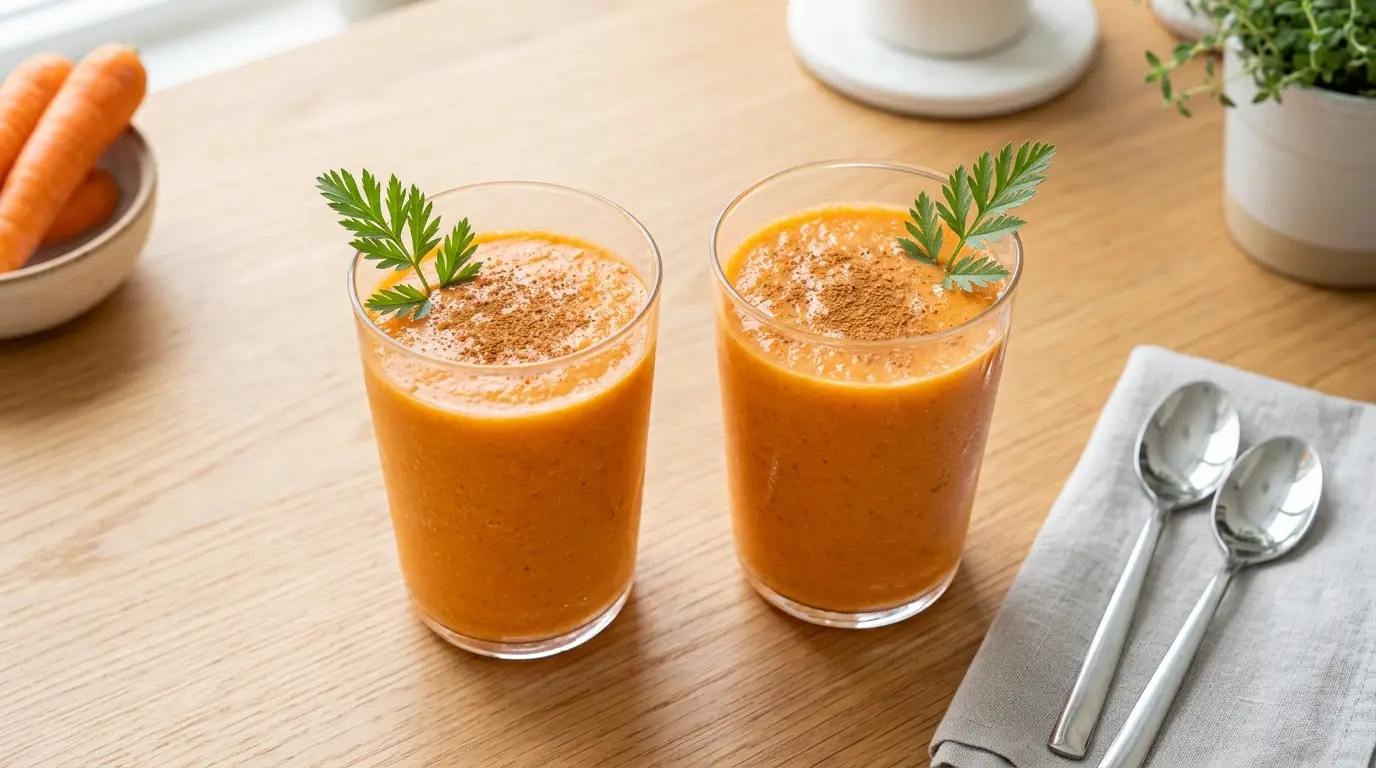
Carrot Smoothie
Ingredients
- 1 large carrot - about 1 cup or 130g, peeled and finely grated
- 1 frozen banana - about 120g, sliced and frozen at least 2 hours ahead
- 1 cup 100% orange juice - 240ml, not from concentrate
- 1/2 cup frozen pineapple chunks - 75g
- 1/2 cup plain Greek yogurt - 120g, whole milk or 2%
- 1/2 cup unsweetened almond milk - 120ml, plus more to thin as needed
- 1/2 teaspoon ground cinnamon
- 1/2 teaspoon fresh grated ginger - or 1/4 teaspoon ground ginger
- 1 tablespoon raw honey - optional, to taste
Equipment
- High-speed blender - The single biggest factor in how smooth the carrot ends up.
- Box grater - or food processor with shredding disc
- Citrus juicer - (optional, if squeezing fresh oranges)
- Glass mason jars or smoothie cups - for serving
- Silicone ice cube trays - (optional, for freezing extra fruit in portioned amounts)
Method
- Peel and finely grate 1 large carrot using a box grater or food processor. Grate 1/2 teaspoon of fresh ginger (or measure 1/4 teaspoon ground ginger). Set both aside.
- Pour 1 cup orange juice and 1/2 cup almond milk into the blender jar. Adding liquids first helps the blades catch everything evenly.
- Spoon in 1/2 cup Greek yogurt. Add the grated carrot, 1 sliced frozen banana, and 1/2 cup frozen pineapple chunks. Sprinkle in the grated ginger and 1/2 teaspoon cinnamon.
- Secure the lid and blend on low for 15 seconds to break up the frozen fruit. Increase to high and blend for 45 to 60 seconds, until no carrot flecks remain. Scrape down sides with a spatula if needed, then blend for 10 more seconds.
- Taste the smoothie. If needed, add 1 tablespoon honey and blend 10 seconds more. If too thick, add extra almond milk 2 tablespoons at a time and blend briefly after each addition.
- Pour the smoothie into two glasses or mason jars. Serve immediately for the best texture and coldest temperature.
Nutrition
Notes
- Always grate the carrot, don’t chop it. Grated carrot blends much more smoothly than chunks.
- Freeze the banana and pineapple ahead of time for a thick, milkshake-like consistency without adding ice.
- Use a high-speed blender for the silkiest texture. Lower-powered blenders may need 30-45 seconds longer.
- Taste before adding honey – ripe bananas and pineapple vary in sweetness and may make added sweetener unnecessary.
- Add liquid gradually. It’s easier to thin a smoothie than to thicken one.
- Don’t over-blend. Stop as soon as it looks smooth, since extended blending can warm and thin the smoothie.
- For a thicker smoothie, use 1/4 cup less orange juice or add an extra half banana.
- To make this dairy-free, substitute coconut yogurt or omit the yogurt and add an extra splash of almond milk.
- Store leftovers in an airtight jar in the fridge for up to 24 hours. Shake or stir well before drinking.
- Prep ahead by freezing portioned bags of grated carrot, banana, and pineapple to blend fresh each morning.
Private Notes
Tried this recipe?
Let us know how it was!Final Thoughts
This carrot smoothie recipe turns a vegetable most people only think to steam or roast into a genuinely good breakfast drink.
Grate the carrot, freeze the fruit ahead of time, and the whole thing comes together in about ten minutes flat.
Give it a try this week, and if you tweak it into your own version, I’d love to hear about it in the comments below.
Recommended:
- Fig Smoothie Recipe
- Kiwi Smoothie Recipe
- Apple Smoothie Recipe
- Blueberry Banana Smoothie Recipe
- Matcha Green Tea Smoothie Recipe
- Coconut Milk Smoothie Recipe
- Watermelon Smoothie Recipe
- Easy Carrot Cake Recipe
- Maple Glazed Carrots Recipe