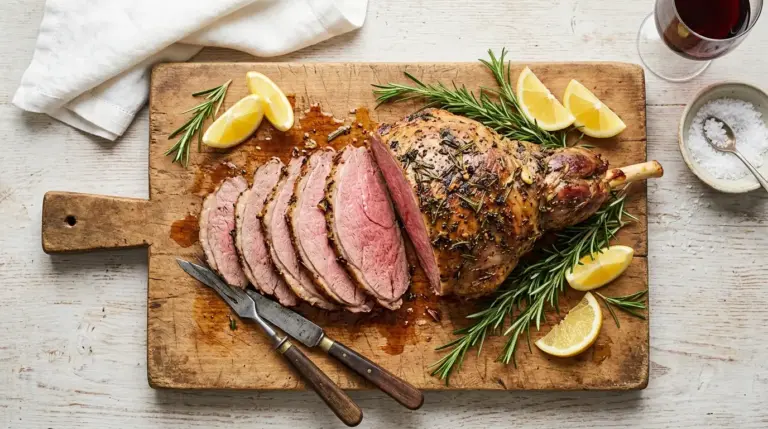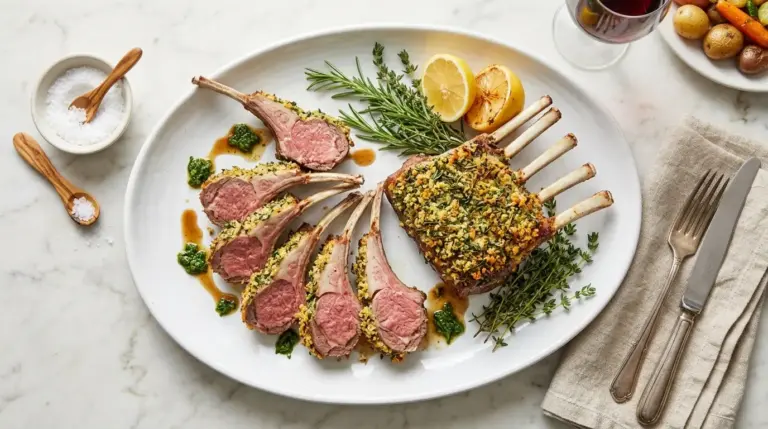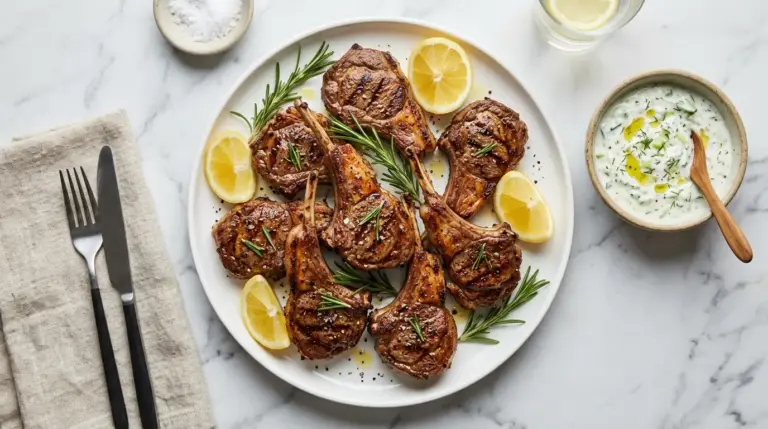
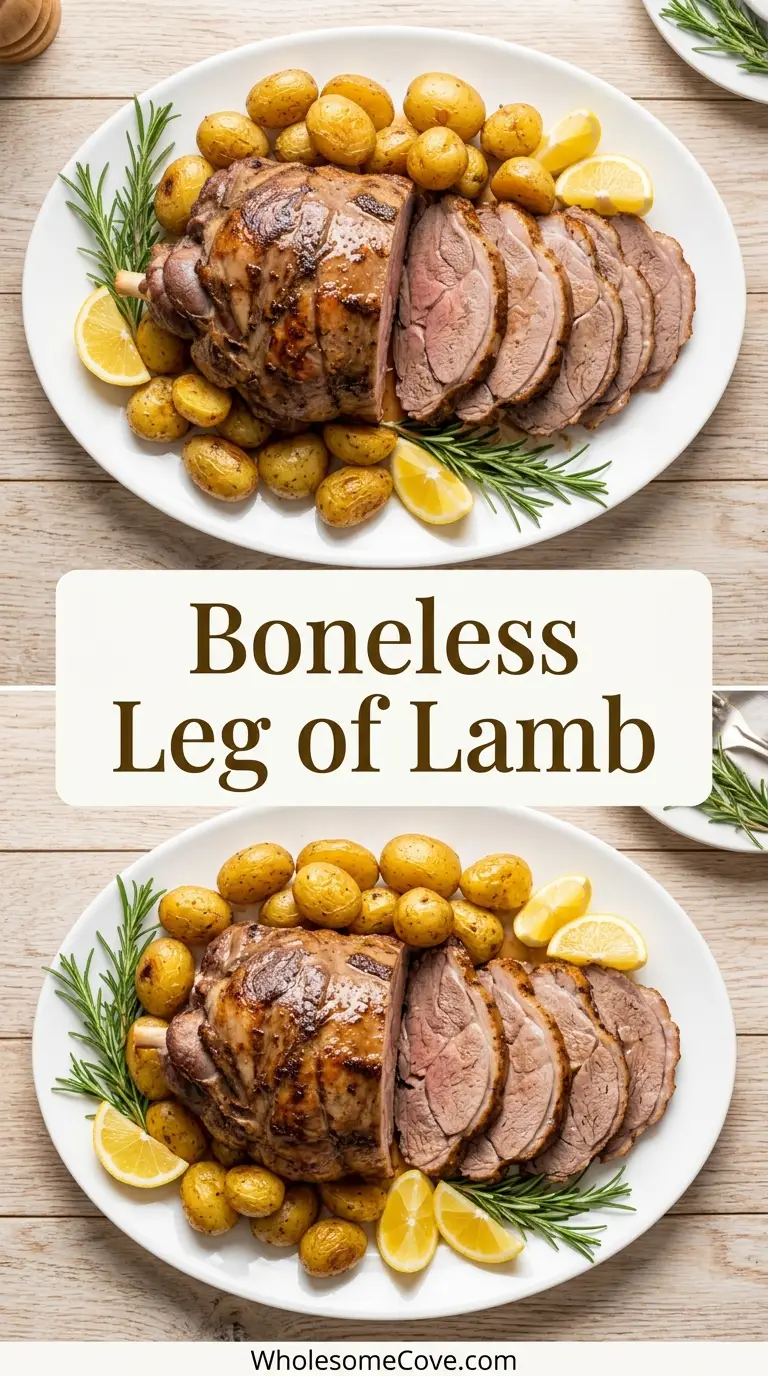
I made my first boneless leg of lamb recipe on Easter Sunday about six years ago, and I was genuinely terrified. Lamb has this reputation for being intimidating, like it’s reserved for professional chefs and fancy dinner parties. But I had a beautiful 4-pound roast, a handful of fresh herbs, and a whole lot of determination.
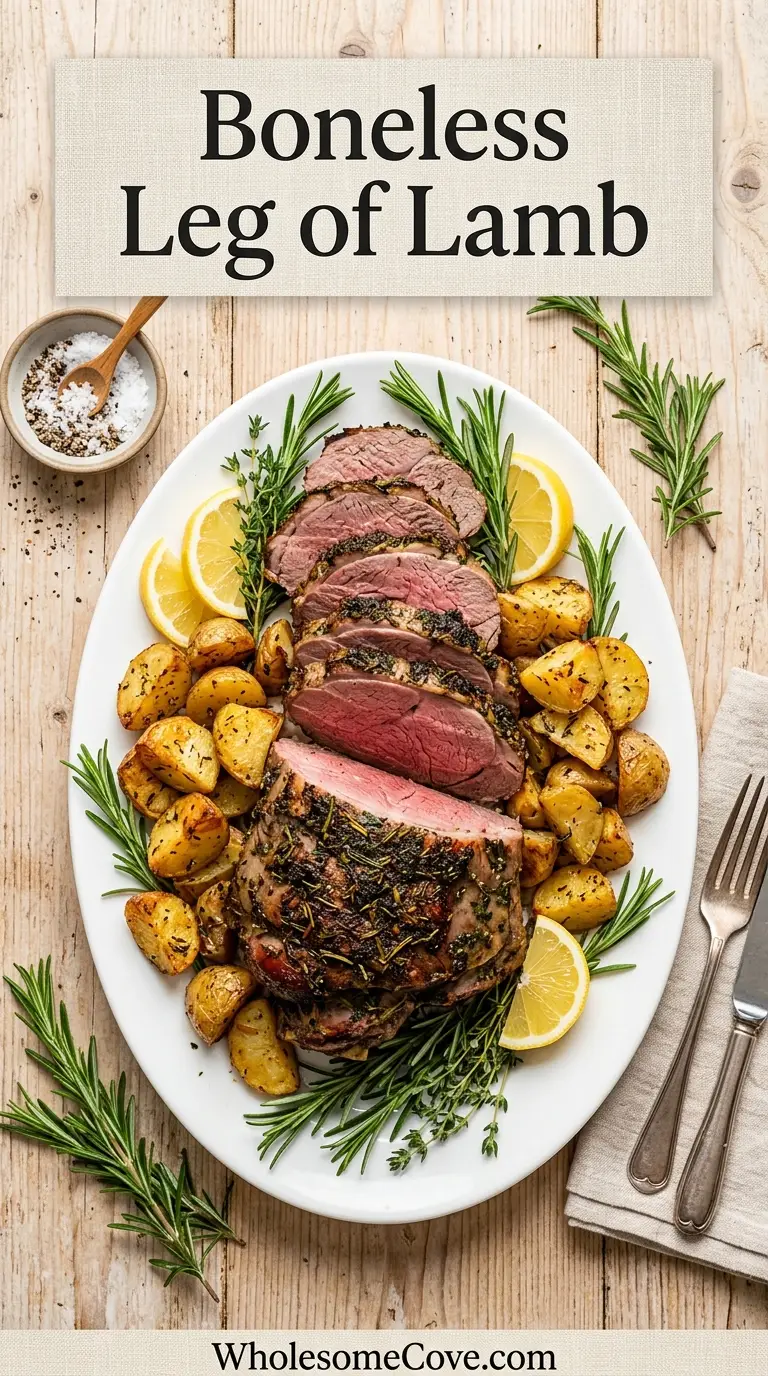
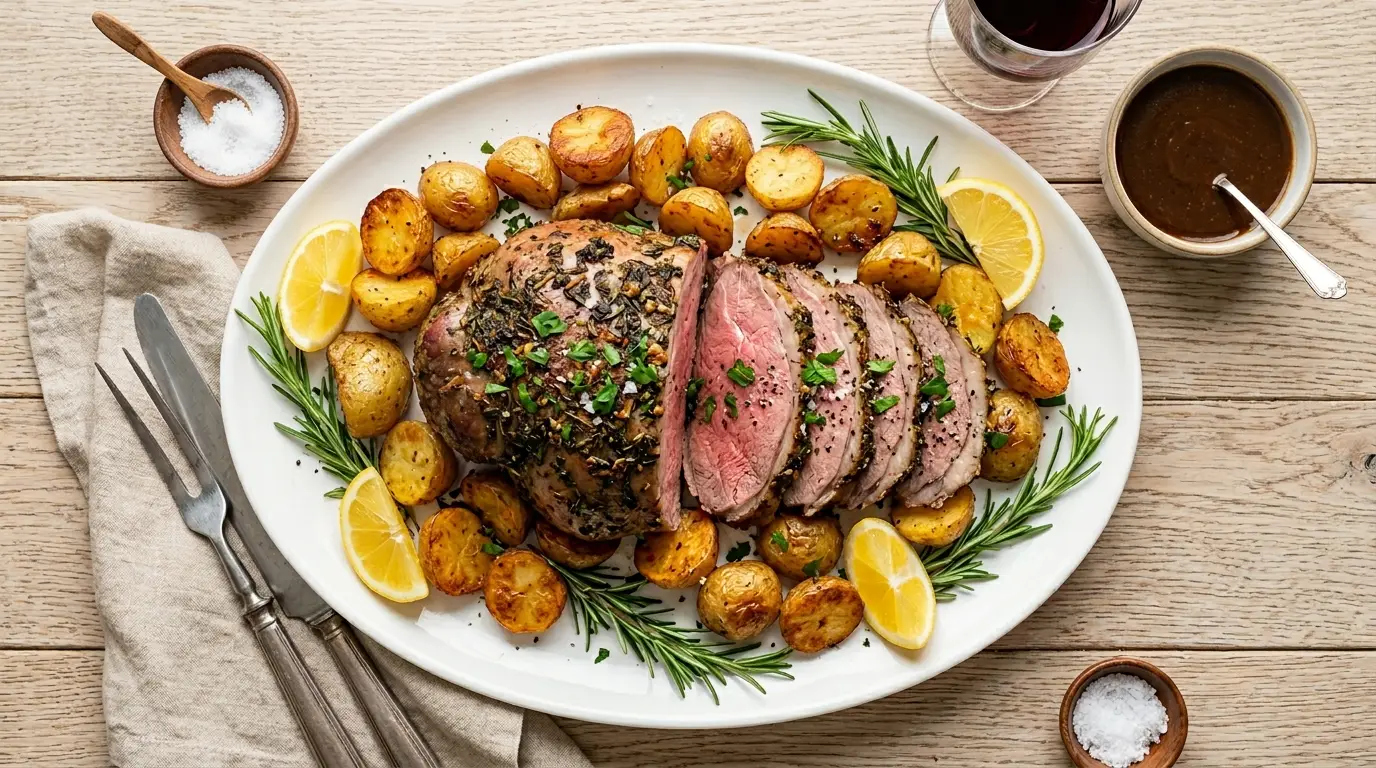
It turned out to be one of the most impressive and delicious things I’d ever pulled out of my oven. The outside was deeply golden with a garlicky, rosemary-flecked crust, and the inside was a gorgeous blush pink, tender enough to slice with almost no effort.
Since that first Easter, this has become my go-to recipe for every holiday and special occasion. I’ve tweaked the herb blend, experimented with resting times, and learned exactly when to pull it from the oven.
This version is my favorite yet, and I’m so glad to finally be sharing it here.
| Quick Recipe Summary | |
|---|---|
| Prep Time | 20 minutes (plus 1 hour resting at room temperature) |
| Cook Time | 1 hour 30 minutes to 2 hours |
| Total Time | Approximately 2 hours 50 minutes |
| Servings | 6 to 8 servings |
| Difficulty Level | Easy to Intermediate |
If you love impressive roasts like this one, you might also enjoy my Leg of Lamb Recipe for a bone-in version that’s equally stunning on the table.
Why You’ll Love This Boneless Leg of Lamb Recipe
This dish checks every single box when it comes to a showstopping main course. It looks like you’ve spent hours in the kitchen, but the actual hands-on time is surprisingly minimal.
- Incredibly easy to carve. Without the bone, slicing is smooth and straightforward, even if you’re not a confident carver. You’ll get clean, elegant slices every time.
- Deeply flavorful. The combination of fresh garlic, rosemary, thyme, lemon zest, and Dijon mustard creates a crust that is aromatic and savory in every bite.
- Perfect for any gathering. It scales beautifully for a small family dinner or a larger holiday spread, and it never fails to impress guests.
- Cooks faster than bone-in. Because the bone is removed, the roast cooks more evenly and hits its target temperature in less time than a traditional bone-in leg.
- Versatile with sides. Lamb plays beautifully with so many accompaniments, from creamy potatoes to bright salads to tangy sauces.
- Leftover magic. The leftover lamb is extraordinary in sandwiches, grain bowls, and even tacos the next day.
- Beginner-friendly. As long as you have a meat thermometer, you truly cannot go wrong. The internal temperature takes all the guesswork out.
Read Also: Rack of Lamb Recipe
Ingredients
This recipe uses classic Mediterranean-inspired flavors that complement lamb beautifully without overpowering its natural taste. I always buy the freshest herbs I can find, because they make a noticeable difference in the finished crust.
- 1 boneless leg of lamb (about 4 to 5 pounds / 1.8 to 2.3 kg), rolled and tied or netted
- 8 cloves garlic, divided (5 minced, 3 cut into thin slivers)
- 3 tablespoons (45 ml) extra virgin olive oil, divided
- 2 tablespoons (30 ml) Dijon mustard
- 2 tablespoons (6 g) fresh rosemary, finely chopped
- 1 tablespoon (3 g) fresh thyme leaves
- 1 tablespoon (6 g) lemon zest (from about 2 lemons)
- 2 tablespoons (30 ml) fresh lemon juice
- 1 teaspoon (5 g) kosher salt (plus more for seasoning the inside)
- 1/2 teaspoon (1 g) freshly ground black pepper (plus more for seasoning the inside)
- 1/2 teaspoon (1 g) dried oregano
- 1.5 pounds (680 g) baby potatoes or fingerling potatoes (optional, for roasting alongside)
- Fresh mint or flat-leaf parsley for garnish (optional)
For a heartier variation, you can serve this alongside a rich Mushroom Gravy made from the pan drippings.
Kitchen Equipment Needed
Having the right tools on hand makes this recipe go so much more smoothly, especially when you’re working with a large roast. I learned the hard way that trying to carve without a proper slicing knife is a messy ordeal.
- Large roasting pan (at least 13 x 9 inches / 33 x 23 cm)
- Roasting rack (to elevate the lamb for even browning)
- Instant-read meat thermometer (absolutely essential for this recipe)
- Sharp paring knife (for making the garlic slits)
- Carving knife and fork (for clean, elegant slices)
- Kitchen twine or butcher’s twine (if the roast isn’t already tied)
- Large cutting board
- Small mixing bowl (for the herb rub)
- Aluminum foil (for tenting during rest)
- Measuring spoons and cups
Read Also: Lamb Chops Recipe
Recommended Products for This Recipe
These are my personal go-to products that have made a genuine difference in how this lamb turns out. I’ve tested a lot of options over the years, and these consistently deliver.
1. ThermoWorks Thermapen or Similar Instant-Read Meat Thermometer
Getting the internal temperature exactly right is the most critical step in this entire recipe. A high-quality instant-read thermometer removes all guesswork and ensures you pull the lamb at exactly the right moment. I ruined two roasts early on because I was relying on timing alone, and I will never go back.
2. Roasting Pan with Rack
A sturdy roasting pan with a fitted rack allows hot air to circulate all around the lamb, which is what creates that beautifully even, golden crust. Without the rack, the underside of the roast just steams against the pan and misses out on all that gorgeous browning.
3. High-Quality Extra Virgin Olive Oil
The olive oil in the herb rub carries the flavors of the garlic and herbs into the crust, so quality matters here. A bright, fruity extra virgin olive oil adds a subtle depth that neutral oils simply cannot replicate. I use it generously, and I never regret it.
4. Fresh Herb Bundle (Rosemary and Thyme)
Dried herbs are fine in a pinch, but fresh rosemary and thyme create a fragrant, vivid crust that takes the recipe to another level entirely. If you can find a fresh herb bundle at your local grocery or farmer’s market, grab it.
You might also like: Lamb Stew Recipe
Step-by-Step Instructions: How to Make Boneless Leg of Lamb
Step 1: Bring the Lamb to Room Temperature
- Remove the boneless leg of lamb from the refrigerator at least 1 full hour before you plan to cook it. This step is one I used to skip, thinking it couldn’t make that much difference, but it absolutely does.
- Allowing the meat to come to room temperature means the roast will cook more evenly from edge to center, giving you a consistent blush of pink throughout rather than overcooked edges and a cold, underdone middle.
- Keep the netting or butcher’s twine in place during this time. Leave the lamb loosely covered with plastic wrap or a clean kitchen towel on your counter.
- While the lamb is resting, use this time to prepare your herb rub and preheat the oven.
Step 2: Preheat the Oven
- Set your oven to 425°F (220°C) and place the rack in the center position. You want the lamb to start at a high temperature to sear and develop a crust.
- Allow the oven to fully preheat for at least 20 minutes before the lamb goes in. A partially preheated oven will affect the initial sear and the overall cook time.
- Place your roasting rack inside the roasting pan and set it aside.
Step 3: Make the Herb Rub
- In a small bowl, combine the 5 minced garlic cloves, 2 tablespoons (30 ml) of the olive oil, Dijon mustard, chopped fresh rosemary, fresh thyme leaves, lemon zest, lemon juice, kosher salt, black pepper, and dried oregano.
- Stir everything together until you have a thick, cohesive paste. The Dijon acts as a binder here, helping the herbs and garlic adhere to the surface of the lamb rather than falling off during cooking.
- Taste a tiny bit of the rub and adjust seasoning if needed. It should taste quite bold and intensely flavored, because once it’s spread on the lamb, that intensity mellows.
Step 4: Make the Garlic Slits and Season the Interior
- Using a sharp paring knife, make 15 to 20 small, deep slits (about 1 inch / 2.5 cm deep) all over the outside surface of the rolled lamb roast.
- Insert a sliver of garlic into each slit, pushing it in so it’s flush with the surface. This technique came straight from watching my neighbor make her mother’s Easter lamb, and it infuses the interior of the roast with incredible garlic flavor as it cooks.
- If your lamb roast is not already tightly rolled and tied, untie it briefly and season the interior with a pinch of kosher salt and black pepper, then re-roll it tightly and retie it with kitchen twine at 1-inch (2.5 cm) intervals.
Step 5: Apply the Herb Rub
- Pat the outside of the lamb dry one more time with paper towels if any moisture has accumulated while it rested. A dry surface will help the rub stick and the crust develop properly.
- Drizzle the remaining 1 tablespoon (15 ml) of olive oil over the entire surface of the roast.
- Spoon and rub the entire herb paste generously over every surface of the lamb, pressing firmly so it adheres well and gets into all the crevices.
- The lamb should be thoroughly coated on all sides. Don’t be shy here; a generous, even coating is the key to that gorgeous, flavorful crust.
Step 6: Prepare the Potatoes (Optional)
- If you’re roasting potatoes alongside the lamb, toss the baby potatoes or fingerling potatoes with a light drizzle of olive oil, a generous pinch of salt and pepper, and a few sprigs of fresh rosemary.
- Scatter the potatoes in the bottom of the roasting pan beneath the rack. As the lamb roasts, its fat and juices will drip down onto the potatoes, making them absolutely extraordinary.
- This is honestly one of my favorite parts of the whole meal. Those potatoes get crispy on the outside and almost creamy inside from soaking up all that lamb-infused goodness.
Step 7: Roast the Lamb
- Place the herb-rubbed lamb roast on the roasting rack, fat side up, inside the prepared roasting pan.
- Roast at 425°F (220°C) for the first 20 minutes. This initial blast of high heat creates the golden, aromatic crust that makes this roast so visually and aromatically stunning.
- After 20 minutes, reduce the oven temperature to 350°F (175°C) without opening the door any more than necessary.
- Continue roasting until the lamb reaches your desired internal temperature. As a general guide, plan for approximately 15 to 18 minutes per pound (450 g) after the initial sear for medium-rare.
- Begin checking the internal temperature at the 1-hour mark (after reducing the heat) by inserting your instant-read thermometer into the thickest part of the roast, avoiding any fat pockets.
Step 8: Know Your Target Temperatures
- For medium-rare (my personal favorite and the most recommended doneness for lamb): remove from the oven at 125°F to 130°F (52°C to 54°C). The temperature will rise to 130°F to 135°F (54°C to 57°C) during resting.
- For medium: remove at 135°F (57°C), which will rise to approximately 140°F to 145°F (60°C to 63°C) during resting.
- For medium-well: remove at 145°F (63°C), rising to 150°F (66°C) after resting.
- I strongly recommend against cooking this cut to well-done, as the meat becomes noticeably tougher and loses much of its natural juiciness and flavor.
Step 9: Rest the Lamb
- Once the lamb reaches your target removal temperature, transfer it to a cutting board and tent it loosely with aluminum foil.
- Allow it to rest for a full 15 to 20 minutes. This resting period is non-negotiable, as it allows the juices to redistribute throughout the meat rather than running out the moment you cut into it.
- While the lamb rests, if you want the potatoes more browned, return the pan to the oven (now turned back up to 425°F / 220°C) and let them roast until the lamb is ready to serve.
Step 10: Carve and Serve
- Remove the kitchen twine or netting from the rested lamb roast using scissors or a knife. Discard the twine.
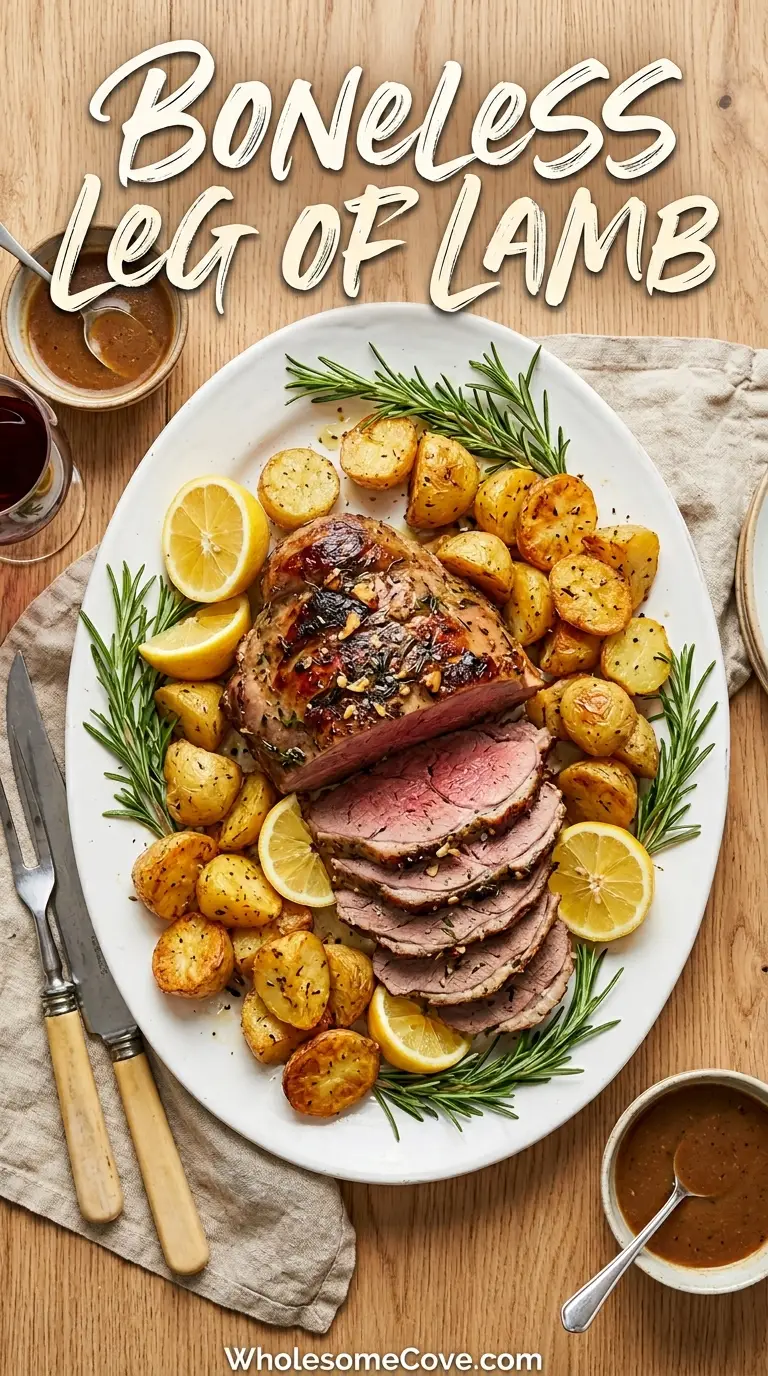
- Using a sharp carving knife, slice the lamb against the grain into slices approximately 1/2 inch (1.25 cm) thick for elegant presentation, or thicker if you prefer heartier portions.
- Arrange the slices on a warmed platter, garnish with fresh mint leaves or flat-leaf parsley, and serve immediately alongside the roasted potatoes and your chosen sauce.
Read Also: Shepherd’s Pie Recipe
Tips for The Best Boneless Leg of Lamb
Getting this roast right every single time comes down to a handful of details that are easy to overlook. These are the lessons I’ve collected through years of making this recipe, including the mistakes that taught me the most.
- Always use a meat thermometer. Cooking time is a guideline, not a guarantee. Every oven is different, and every roast is a slightly different size and shape. The internal temperature is the only reliable measure of doneness.
- Don’t skip the room temperature rest. Cold meat going into a hot oven leads to uneven cooking. An hour at room temperature makes a real and measurable difference.
- Pat the surface dry before applying the rub. Moisture on the surface of the meat creates steam, which prevents proper browning. A quick pat with paper towels solves this immediately.
- Apply the rub the night before for maximum flavor. If you have time, coat the lamb in the herb rub, cover it tightly, and refrigerate it overnight. The flavors penetrate the meat more deeply and the crust becomes more cohesive.
- Rest it long enough. I know it’s tempting to cut into it immediately, but 15 to 20 minutes of resting is what separates a juicy, beautiful roast from a dry, disappointing one.
- Save the drippings for gravy or sauce. The pan drippings from this roast are liquid gold. Even a simple pan sauce made with the drippings, a splash of red wine, and a pat of butter elevates the dish enormously.
- Use fresh herbs whenever possible. Dried rosemary and thyme will work in a pinch, but fresh herbs give the crust a brightness and fragrance that dried simply can’t match.
Another favorite roast: Prime Rib Recipe
What to Serve with Boneless Leg of Lamb
Lamb is such a versatile centerpiece that it pairs beautifully with both classic comfort sides and lighter, fresher accompaniments. Here are my favorite pairings, ranging from rich and indulgent to bright and refreshing.
- Mashed Potatoes are the ultimate comfort pairing. Creamy, buttery mashed potatoes soak up the lamb’s juices beautifully and make for a deeply satisfying plate.
- Roasted Potatoes cooked directly in the lamb drippings are a crowd favorite. The fat and herbs from the lamb make them extraordinary without any extra effort.
- Scalloped Potatoes offer a creamy, cheesy contrast to the savory, herb-crusted lamb and look stunning on a holiday table.
- Creamed Spinach is a classic steakhouse pairing that works just as beautifully with lamb. The richness of the spinach complements the bold herb crust without competing with it.
- Tzatziki Sauce is arguably the single best sauce for lamb. The cool, garlicky yogurt sauce cuts through the richness of the meat and adds a beautiful brightness to each bite.
- Maple Glazed Carrots bring a touch of sweetness that balances the savory, garlicky lamb perfectly and add a gorgeous pop of color to the plate.
- Green Bean Casserole is a wonderful holiday-table companion that adds a comforting, creamy element alongside the roast.
- Dinner Rolls are essential for mopping up the incredible pan juices and herbed drippings left behind.
- Au Gratin Potatoes are a luxurious pairing for a special occasion dinner, with layers of thinly sliced potatoes and melted cheese that complement lamb’s richness.
Read Also: Broccoli Salad Recipe
Variations of Boneless Leg of Lamb
Once you’ve mastered the classic version, it’s fun to experiment with different flavor profiles and cooking methods. Here’s a short paragraph to get you started, followed by the variations list.
This recipe is incredibly adaptable. The core technique stays the same, but swapping out herbs, spices, or cooking methods can take you in wildly different and delicious directions.
- Greek-Style Boneless Leg of Lamb: Replace the Dijon mustard with extra lemon juice and add dried oregano, mint, and a generous sprinkle of sea salt. Roast with quartered potatoes and whole garlic cloves tucked into the pan, and finish with crumbled feta and fresh lemon wedges.
- Moroccan-Spiced Boneless Leg of Lamb: Create a paste with cumin, coriander, smoked paprika, cinnamon, ginger, harissa paste, and olive oil. Marinate the lamb overnight for bold, warming flavors inspired by North African cuisine.
- Slow-Roasted Boneless Leg of Lamb: Cook at 325°F (165°C) for 3 to 4 hours until the internal temperature reaches 175°F (80°C) and the meat is fall-apart tender. This method produces a completely different texture that is shredded rather than sliced, and it’s incredible piled into flatbreads with tzatziki.
- Herb-Crusted with Mint Gremolata: After carving, finish each slice with a vibrant gremolata made from fresh mint, flat-leaf parsley, lemon zest, and a tiny pinch of red pepper flakes. The brightness of the gremolata makes the herb crust come alive.
- Garlic-Studded Classic: Skip the Dijon entirely and focus purely on the garlic and rosemary, making deep slits all over the roast and inserting whole peeled garlic cloves. This is the most traditional and simple version, and it is utterly magnificent.
- Marinated Overnight: Mix olive oil, red wine, rosemary, garlic, and a bay leaf into a marinade and submerge the lamb for 8 to 12 hours before roasting. The wine tenderizes the meat while adding complexity to the final flavor.
You might also enjoy: Irish Stew
Storage and Reheating
Leftover boneless leg of lamb keeps beautifully in the refrigerator and even improves in flavor overnight as the herbs and garlic continue to meld. Here’s how to store and revive it properly.
- Refrigerator: Allow the lamb to cool completely before slicing or keeping it whole. Store in an airtight container in the refrigerator for up to 4 days. Leftover slices are wonderful cold in sandwiches with tzatziki, mustard, and arugula.
- Freezer: Wrap individual slices or chunks tightly in plastic wrap, then place in a freezer-safe bag or airtight container. Frozen lamb keeps well for up to 3 months. Thaw overnight in the refrigerator before reheating.
- Reheating slices: Place lamb slices in a single layer in a skillet over medium-low heat with a splash of beef or chicken broth. Cover and heat for 2 to 3 minutes per side until warmed through. This method preserves moisture far better than the microwave.
- Reheating the whole roast: Place the remaining roast in a baking dish with a splash of broth or pan drippings, cover tightly with foil, and reheat at 300°F (150°C) for 20 to 30 minutes, or until the internal temperature reaches 130°F (54°C).
- Microwave: Use this method only for small portions and heat in 30-second intervals on medium power to avoid drying out the meat. Cover loosely with a damp paper towel to help retain moisture.
- Leftover ideas: Use sliced lamb in grain bowls, flatbreads, lamb tacos, pasta dishes with olive oil and herbs, or folded into eggs for a next-morning hash.
Read Also: Healthy Shepherd’s Pie Recipe
Nutritional Facts
The following nutritional information is an estimate per serving, based on an 8-serving yield from a 4.5-pound (2 kg) boneless leg of lamb without the optional potatoes. Values will vary depending on the size of your roast and the exact amount of fat trimmed.
| Nutrient | Per Serving (approx.) |
|---|---|
| Calories | 310 kcal |
| Protein | 38 g |
| Total Fat | 16 g |
| Saturated Fat | 5 g |
| Cholesterol | 120 mg |
| Sodium | 320 mg |
| Carbohydrates | 2 g |
| Fiber | 0 g |
| Sugar | 0 g |
| Iron | 15% DV |
| Zinc | 35% DV |
| Vitamin B12 | 50% DV |
Nutritional values are estimates only and will vary based on specific ingredients and portions used.
For another high-protein roast that works beautifully as a centerpiece meal, take a look at my Lamb Stew Recipe.
Health Benefits of Key Ingredients
Lamb often gets overlooked as a nutritious protein option, but it brings a genuinely impressive nutritional profile alongside its wonderful flavor. Here’s a closer look at what makes the key ingredients in this recipe particularly beneficial.
- Lamb (Boneless Leg): Lamb is one of the richest naturally occurring food sources of zinc, which supports immune function, wound healing, and metabolism. It is also an excellent source of complete protein, iron (particularly heme iron, which the body absorbs more readily than plant-based iron), and vitamin B12, which is essential for nerve function and red blood cell production.
- Garlic: Fresh garlic is loaded with allicin, an organosulfur compound that has been extensively studied for its antimicrobial, anti-inflammatory, and cardiovascular benefits. Using both minced garlic in the rub and slivered garlic inserted into the roast maximizes this benefit.
- Fresh Rosemary: Rosemary contains rosmarinic acid and carnosic acid, both of which are potent antioxidants. Research suggests these compounds may help reduce inflammation and support digestive health.
- Fresh Thyme: Thyme is an excellent source of thymol, a natural antiseptic and antifungal compound. It also provides a meaningful amount of vitamin C and manganese.
- Lemon Zest and Lemon Juice: Fresh lemon brings vitamin C and a range of flavonoids that support collagen production and immune health. The acidity also helps tenderize the surface of the meat and brightens the overall flavor of the dish.
- Extra Virgin Olive Oil: Rich in monounsaturated fats and polyphenols, extra virgin olive oil is one of the most well-researched foods associated with heart health. It also helps the body absorb fat-soluble vitamins from the herbs and vegetables in this dish.
- Dijon Mustard: Made from mustard seeds, which contain glucosinolates linked to anti-inflammatory properties. It also adds a small amount of selenium, a mineral important for thyroid function.
Another favorite lamb dish on the blog: Rack of Lamb Recipe
FAQs About Boneless Leg of Lamb
1. How long does it take to cook a boneless leg of lamb?
A 4 to 5-pound (1.8 to 2.3 kg) boneless leg of lamb typically takes about 1.5 to 2 hours total in the oven using the high-start, then low-roast method described in this recipe. The initial 20 minutes at 425°F (220°C) sears and builds the crust, and the remaining roasting time at 350°F (175°C) brings the meat to the desired internal temperature.
The most reliable approach is to start checking the internal temperature at the 1-hour mark and remove the lamb when it’s 5 to 10 degrees below your target doneness, since it will continue cooking as it rests.
2. What internal temperature should boneless leg of lamb reach?
For medium-rare (the most recommended doneness), remove the lamb from the oven when the thickest part reads 125°F to 130°F (52°C to 54°C). After a 15 to 20-minute rest under foil, it will climb to the ideal 130°F to 135°F (54°C to 57°C).
For medium doneness, pull it at 135°F (57°C), and for medium-well, pull it at 145°F (63°C). Always use an instant-read thermometer for accuracy, as timing alone is not reliable enough with a cut this important.
3. Should I cover the lamb while it roasts?
No, you should not cover the boneless leg of lamb while it roasts. Keeping it uncovered allows the surface to brown and develop that gorgeous, flavorful herb crust that makes this dish so special.
If you notice the herb coating starting to get too dark before the internal temperature is reached, you can loosely drape a small piece of foil over just the top of the roast without sealing it around the pan. After the lamb comes out of the oven, that’s when you tent it with foil to rest.
4. Can I make this recipe ahead of time?
Yes, and in fact making it partially ahead is one of the best things you can do. You can apply the herb rub up to 24 hours in advance, cover the lamb tightly, and refrigerate it overnight. The flavors will penetrate much more deeply, and the next day you simply bring the lamb to room temperature for an hour before roasting.
If you want to fully cook it ahead, the lamb can be roasted, rested, sliced, and stored in the refrigerator for up to 2 days. Reheat gently in a covered pan with a splash of broth to keep it moist.
5. Can I use dried herbs instead of fresh?
Yes, you can substitute dried herbs in this recipe, though the crust will have a slightly less vibrant, green appearance and a more muted fragrance. Use roughly one-third of the amount called for in the recipe, since dried herbs are significantly more concentrated than fresh.
For example, use 2 teaspoons (2 g) of dried rosemary in place of 2 tablespoons (6 g) of fresh rosemary, and 1 teaspoon (1 g) of dried thyme in place of 1 tablespoon (3 g) fresh. The flavor will still be excellent, just a touch different in character.
Read Also: Lamb Chops Recipe
Boneless Leg of Lamb
Ingredients
- 1 boneless leg of lamb - about 4 to 5 pounds / 1.8 to 2.3 kg, rolled and tied or netted
- 8 cloves garlic - divided: 5 cloves minced, 3 cloves cut into thin slivers
- 3 tbsp extra virgin olive oil - 45 ml, divided
- 2 tbsp Dijon mustard - 30 ml
- 2 tbsp fresh rosemary - 6 g, finely chopped
- 1 tbsp fresh thyme leaves - 3 g
- 1 tbsp lemon zest - 6 g, from about 2 lemons
- 2 tbsp fresh lemon juice - 30 ml
- 1 tsp kosher salt - 5 g, plus more for seasoning the inside of the roast
- 1/2 tsp freshly ground black pepper - 1 g, plus more for seasoning the inside of the roast
- 1/2 tsp dried oregano - 1 g
- 1.5 lbs baby potatoes or fingerling potatoes - 680 g, optional, for roasting alongside the lamb
- fresh mint or flat-leaf parsley - for garnish, optional
Equipment
- Large roasting pan - At least 13 x 9 inches / 33 x 23 cm
- Roasting rack - To elevate the lamb for even browning
- Instant-read meat thermometer - Essential for checking doneness accurately
- Sharp paring knife - For making garlic slits in the roast
- Carving knife and fork - For clean, elegant slices
- Kitchen twine - Butcher’s twine, if the roast is not already tied
- Large cutting board - For resting and carving the roast
- Small mixing bowl - For preparing the herb rub
- Aluminum foil - For tenting the lamb during resting
- Measuring spoons and cups
Method
- Remove the boneless leg of lamb from the refrigerator at least 1 full hour before cooking, keeping the netting or twine in place. This allows the meat to cook more evenly from edge to center.
- Set your oven to 425°F (220°C) with the rack in the center position and allow it to fully preheat for at least 20 minutes. Place the roasting rack inside the roasting pan and set aside.
- In a small bowl, combine the 5 minced garlic cloves, 2 tablespoons of olive oil, Dijon mustard, rosemary, thyme, lemon zest, lemon juice, salt, pepper, and oregano; stir into a thick paste. Taste and adjust seasoning as needed.
- Using a sharp paring knife, make 15 to 20 small, deep slits (about 1 inch / 2.5 cm) all over the outside of the lamb and insert a garlic sliver into each one. If the roast is not pre-tied, open it briefly, season the interior with salt and pepper, re-roll tightly, and tie with kitchen twine at 1-inch intervals.
- Pat the outside of the lamb dry with paper towels, drizzle with the remaining 1 tablespoon of olive oil, then press the entire herb paste firmly and evenly over every surface of the roast.
- If roasting potatoes, toss the baby or fingerling potatoes with a drizzle of olive oil, salt, pepper, and rosemary, then scatter them in the bottom of the roasting pan beneath the rack. The lamb drippings will baste the potatoes as it cooks.
- Place the herb-rubbed lamb fat side up on the roasting rack and roast at 425°F (220°C) for 20 minutes to develop a golden, aromatic crust. Do not open the oven door more than necessary.
- Reduce the oven temperature to 350°F (175°C) and continue roasting until the lamb reaches your desired internal temperature, starting to check with an instant-read thermometer at the 1-hour mark. For medium-rare, remove at 125°F to 130°F (52°C to 54°C); for medium, remove at 135°F (57°C).
- Transfer the lamb to a cutting board and tent loosely with aluminum foil; rest for 15 to 20 minutes. The internal temperature will rise by 5 to 10 degrees during this time.
- Remove and discard the kitchen twine, then slice the lamb against the grain into approximately 1/2-inch (1.25 cm) slices using a sharp carving knife. Arrange on a warmed platter, garnish with fresh mint or parsley, and serve immediately.
Nutrition
Notes
- Always use an instant-read meat thermometer to check doneness. Oven temperatures and roast sizes vary, and timing alone is not reliable enough for a cut this important.
- Do not skip the 1-hour room temperature rest before roasting. Cold meat going directly into a hot oven leads to unevenly cooked results with overcooked edges and an underdone center.
- Pat the surface of the lamb completely dry before applying the herb rub. Moisture prevents proper browning and can cause the rub to slide off during roasting.
- For maximum flavor, apply the herb rub up to 24 hours in advance, cover tightly, and refrigerate overnight. Bring to room temperature for 1 hour before roasting.
- Save all pan drippings for a quick pan sauce or gravy. Deglaze the roasting pan with a splash of red wine or broth and whisk in a pat of cold butter for a simple, silky sauce.
- Dried herbs can substitute for fresh: use 2 teaspoons (2 g) dried rosemary in place of 2 tablespoons fresh, and 1 teaspoon (1 g) dried thyme in place of 1 tablespoon fresh.
- Leftover lamb keeps in an airtight container in the refrigerator for up to 4 days or frozen for up to 3 months. Reheat slices gently in a covered skillet with a splash of broth to preserve moisture.
- To reheat the whole roast, place in a baking dish with pan drippings or broth, cover tightly with foil, and warm at 300°F (150°C) for 20 to 30 minutes until the internal temperature reaches 130°F (54°C).
- Leftover lamb is exceptional in flatbreads with tzatziki, grain bowls, lamb tacos, or folded into eggs for a next-morning hash.
- Do not cook this cut to well-done, as the meat becomes noticeably tougher and loses much of its natural juiciness and delicate flavor.
Private Notes
Tried this recipe?
Let us know how it was!Final Thoughts
This boneless leg of lamb recipe is the kind of dish that makes people feel genuinely celebrated at the table. It’s beautiful, aromatic, and far less complicated than it looks once you’ve done it even once.
If this is your first time roasting lamb, I want you to know that it’s going to be wonderful. Trust your thermometer, give the meat time to rest, and don’t be afraid to season boldly.
I’d love to know how it turns out for you! Drop a comment below to share your experience, any variations you tried, or the sides you served it with. And if you made it for a special occasion, I’d especially love to hear about it.
Recommended:
- Leg of Lamb Recipe
- Lamb Stew Recipe
- Irish Stew
- Beef Stew Recipe
- Shepherd’s Pie Recipe
- Filet Mignon Recipe
- Mississippi Pot Roast Recipe
- Swedish Meatball Recipe
- Mashed Potatoes Recipe
- Cranberry Sauce Recipe