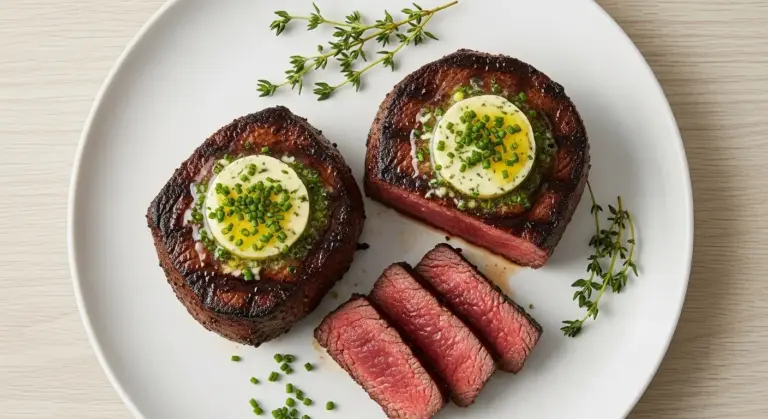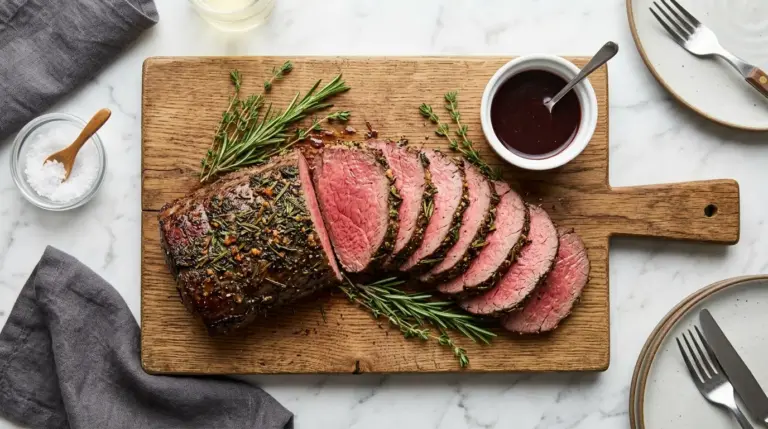
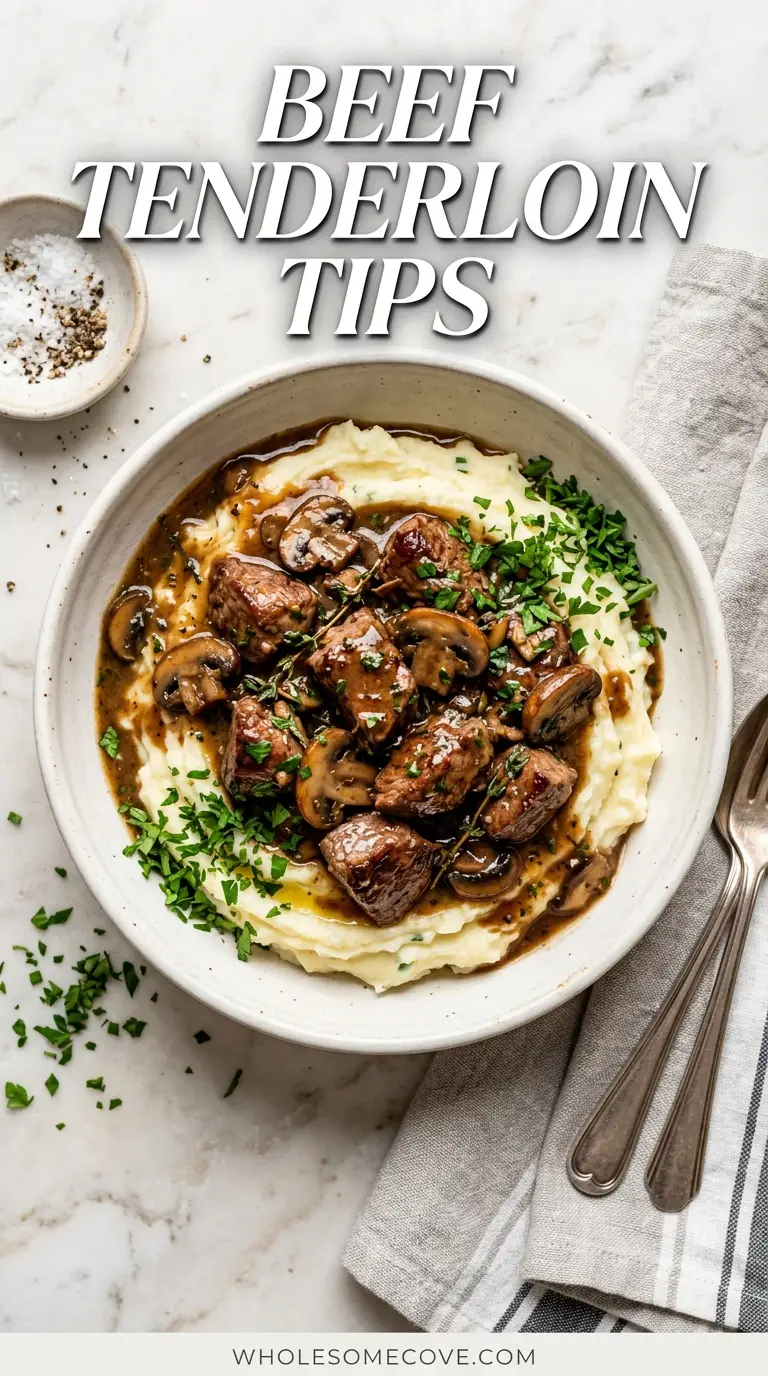
My beef tenderloin tips recipe has been the most-requested dinner at my house since the first time I made it on a cold January evening. I had picked up a whole tenderloin roast from the butcher, trimmed the tail end into bite-sized pieces, and ended up with these gloriously seared, buttery steak bites swimming in a savory mushroom and herb sauce that made everyone at the table go completely silent.
That silence was the best compliment I’d ever received in the kitchen.
I’ll be honest: the first time I tried to make this, I totally overcrowded the pan and ended up steaming the beef instead of searing it. The color was grey, the crust was non-existent, and I was embarrassed. But once I figured out to sear in batches and get the pan ripping hot, everything changed. The crust on these tips is absolutely stunning.
This is one of those recipes that feels like fine dining but comes together in under 30 minutes on a weeknight. If you’re new to cooking beef tenderloin, don’t be intimidated. The technique is simple, and I’m going to walk you through every detail.
| Quick Recipe Summary | |
|---|---|
| Prep Time | 15 minutes |
| Cook Time | 20 minutes |
| Total Time | 35 minutes |
| Servings | 4 servings |
| Difficulty Level | Easy |
If you love tender beef dishes, you’ll also want to check out my Beef Tips and Gravy Recipe for another weeknight classic.
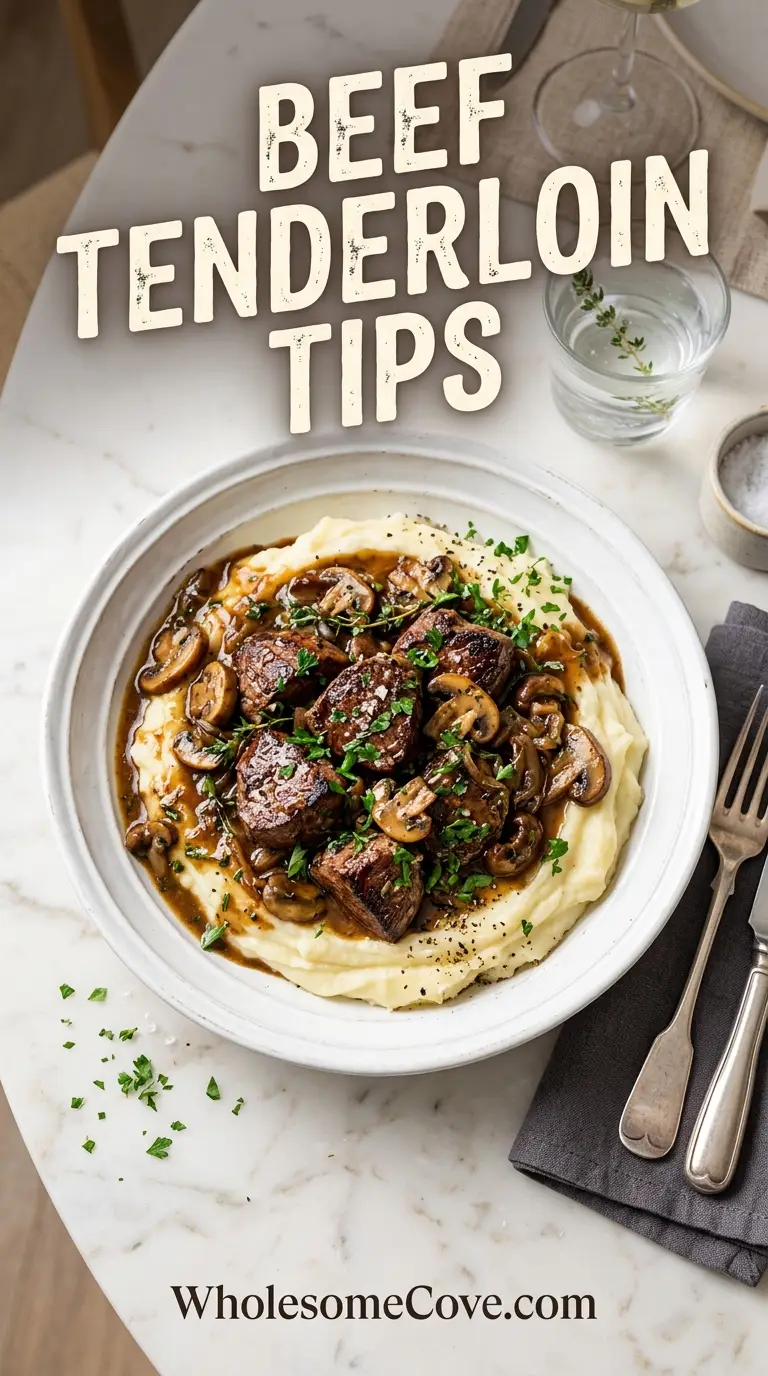
Why You’ll Love This Beef Tenderloin Tips Recipe
This dish is built for people who want restaurant-quality beef at home without spending an hour in the kitchen. The tenderloin tips cook in just minutes, which means dinner is on the table fast on any night of the week.
The rich mushroom herb sauce does double duty here. It coats every piece of beef AND doubles as the most incredible pan sauce to spoon over mashed potatoes or egg noodles.
- Incredibly tender beef: Tenderloin is the most tender cut of beef you can buy, and cutting it into tips only speeds up the cooking time while keeping every bite melt-in-your-mouth soft.
- One-pan meal: The entire recipe comes together in a single cast iron skillet, which means less cleanup and more time to enjoy dinner.
- Ready in 35 minutes: From the moment you pat the beef dry to the moment you’re plating, the whole process takes less than 40 minutes, making this perfect for weeknights.
- Works for special occasions too: The presentation looks impressive enough for date night or a dinner party. Nobody will guess how easy it was.
- Beginner-friendly technique: If you can heat a pan and season meat, you can make this dish. I’ll walk you through every step so you don’t end up with the grey, steamed beef I made on my first attempt.
- Flexible and customizable: Add cream for a richer sauce, swap mushrooms for onions, or serve over egg noodles instead of mashed potatoes. The base recipe is forgiving and easy to tweak.
You might also enjoy: Beef Tenderloin Steak Recipe
Ingredients
These ingredients are straightforward and most of them are pantry staples. The star of the show is obviously the beef, so spend a little extra on quality tenderloin and the rest will follow. I always recommend buying a whole tenderloin if you can, trimming the center for steaks, and using the tail end for this recipe.
- 2 lbs (900g) beef tenderloin tips, cut into 1-inch (2.5cm) pieces (from the tail end of a whole tenderloin, or pre-cut from a butcher)
- 1 teaspoon kosher salt, plus more to taste
- ½ teaspoon freshly ground black pepper
- ½ teaspoon garlic powder
- 2 tablespoons olive oil, divided
- 3 tablespoons unsalted butter, divided
- 8 oz (225g) cremini or baby bella mushrooms, sliced
- 1 small yellow onion, finely diced
- 4 cloves garlic, minced
- 1 tablespoon Worcestershire sauce
- 1 cup (240ml) beef broth, low-sodium preferred
- ¼ cup (60ml) heavy cream (optional, for a richer sauce)
- 1 teaspoon fresh thyme leaves (or ½ teaspoon dried thyme)
- 1 tablespoon fresh rosemary, finely chopped (or ½ teaspoon dried rosemary)
- 1 tablespoon cornstarch mixed with 2 tablespoons cold water (slurry, for thickening)
- Fresh parsley, chopped, for garnish
Read Also: Beef Tenderloin Recipe
Kitchen Equipment Needed
You don’t need a lot of fancy tools for this recipe, but a few key pieces of equipment will make the whole process smoother and give you a better sear on the beef. A good cast iron skillet is honestly the most important piece here.
- 12-inch cast iron skillet — this is essential for getting a proper, high-heat sear. A heavy stainless steel pan works as a substitute, but cast iron retains heat better.
- Sharp chef’s knife — for cutting the tenderloin into uniform pieces so they cook evenly.
- Cutting board
- Paper towels — for patting the beef completely dry before searing. Moisture is the enemy of a good crust.
- Instant-read meat thermometer — I cannot stress this enough. Tenderloin is best at medium-rare (130°F / 54°C) and overcooking it is a tragedy. A thermometer eliminates guesswork.
- Tongs — for turning the beef tips and getting sear on all sides without piercing the meat.
- Small bowl — for mixing the cornstarch slurry.
- Wooden spoon or silicone spatula — for stirring the sauce and scraping up all those beautiful browned bits from the bottom of the pan.
- Measuring cups and spoons
- Plate or tray — to rest the seared beef while you build the sauce.
Another favorite: Mushroom Gravy Recipe
Recommended Products for This Recipe
Over the years I’ve found a handful of specific products that genuinely make a difference in this recipe. These are things I’ve actually tested in my kitchen and keep coming back to every single time I make beef tenderloin tips.
1. Lodge 12-Inch Cast Iron Skillet
I’ve tried a lot of pans, and nothing gives beef tenderloin tips a crust like a well-seasoned cast iron skillet. The Lodge 12-inch holds heat exceptionally well, which means when you lay those tips down in the pan, the temperature doesn’t drop and you get that gorgeous brown sear instead of grey, steamed meat. It’s also the most durable piece of cookware I own.
2. Thermapen ONE Instant-Read Thermometer
Beef tenderloin is too expensive and too delicious to cook to the wrong temperature. The Thermapen ONE reads in about one second and is accurate to within 0.7°F (0.4°C), which means you’ll nail medium-rare every single time. I ruined a batch of tenderloin tips before I started using an instant-read thermometer, and I’ll never go back.
3. Lea & Perrins Worcestershire Sauce
The Worcestershire sauce in this recipe adds a depth of umami flavor that you simply can’t get from broth alone. Lea & Perrins is the original and, in my opinion, the best version on the market. Just a tablespoon transforms the mushroom sauce from good to genuinely craveable.
4. Miyabi Birchwood Chef’s Knife
Cutting tenderloin into uniform 1-inch pieces is so much easier with a sharp, high-quality chef’s knife. The Miyabi Birchwood holds its edge beautifully and makes clean cuts through the beef without tearing the muscle fibers. Clean cuts mean better searing surfaces and more even cooking throughout each piece.
Read Also: Filet Mignon Recipe
Step-by-Step Instructions: How to Make Beef Tenderloin Tips
Step 1: Prepare and Season the Beef
- Remove the beef tenderloin tips from the refrigerator about 20 minutes before you plan to cook them. Letting the beef come closer to room temperature promotes more even cooking from edge to center.
- Use a sharp knife to cut the tenderloin tips into uniform 1-inch (2.5cm) cubes if they are not already pre-cut. Try to make the pieces as even as possible so they all reach the same internal temperature at the same time.
- Place all the beef pieces on a clean cutting board or baking sheet lined with paper towels. Use additional paper towels to pat every surface of the beef completely dry. This step is non-negotiable: moisture on the surface of the meat will create steam in the pan instead of a sear, and you’ll end up with grey, rubbery tips instead of a caramelized brown crust.
- In a small bowl, combine 1 teaspoon kosher salt, ½ teaspoon freshly ground black pepper, and ½ teaspoon garlic powder. Stir the mixture together.
- Sprinkle the seasoning blend evenly over all sides of the beef tips, pressing gently to help it adhere. Set the seasoned beef aside on a clean plate.
Step 2: Get the Pan Ripping Hot
- Place your 12-inch cast iron skillet on the stovetop over medium-high heat. Let it heat up for at least 2 full minutes before adding any oil. The pan needs to be very hot to achieve a proper sear.
- Add 1 tablespoon of olive oil to the hot pan and swirl to coat the bottom. The oil should shimmer immediately. If it doesn’t look shimmery and hot, wait another 30 seconds before adding the beef.
- You can test if the pan is ready by flicking a tiny drop of water onto the surface. If it sizzles and evaporates instantly, you’re good to go. If it just sits there, the pan isn’t hot enough yet.
Step 3: Sear the Beef Tips in Batches
- Add only half the beef tips to the pan in a single layer. Do not pile them on top of each other and do not crowd the pan. Crowding drops the pan temperature and causes steaming instead of searing. If your pan isn’t large enough to give each piece at least ½ inch of space around it, work in three batches instead of two.
- Let the beef tips cook, completely undisturbed, for 1.5 to 2 minutes per side. Resist the urge to move them around. They are done on the first side when they release easily from the pan and have a deep brown crust.
- Use tongs to flip each piece and sear the other side for another 1.5 minutes. For medium-rare, which is ideal for tenderloin, you’re aiming for an internal temperature of 125-130°F (52-54°C) at this point — the beef will continue to cook slightly as it rests and again when it goes back into the sauce.
- Transfer the seared beef tips to a clean plate. They do not need to be cooked all the way through at this stage. Tent the plate loosely with foil to keep them warm while you build the sauce.
- Add the remaining tablespoon of olive oil to the pan and repeat the searing process with the second batch of beef. Transfer the second batch to the plate when done.
Step 4: Build the Mushroom and Herb Sauce
- Reduce the heat to medium. There should be browned bits stuck to the bottom of the pan — those are pure flavor and you want them. Do not wipe the pan out.
- Add 2 tablespoons of butter to the pan and let it melt. Add the finely diced yellow onion to the pan and sauté, stirring occasionally, for about 3 minutes until the onion becomes translucent and soft.
- Add the sliced cremini mushrooms to the pan with the onion. Stir to combine and spread into an even layer. Let the mushrooms cook undisturbed for 2 minutes so they can start to brown on the bottom, then stir and cook for another 2-3 minutes until they are wilted, golden, and have released most of their moisture.
- Add the minced garlic, fresh thyme leaves, and fresh rosemary to the pan. Stir everything together and cook for about 60 seconds, just until the garlic is fragrant. Be careful not to let the garlic burn.
- Add the tablespoon of Worcestershire sauce and stir it into the mushroom mixture. The sauce will sizzle and the bottom of the pan will lift easily now.
- Pour in the 1 cup (240ml) of beef broth. Use your wooden spoon to scrape up all of the browned bits stuck to the bottom of the pan — this is called deglazing and it adds tremendous depth of flavor to the sauce.
- Bring the sauce to a gentle simmer and let it cook for about 3 minutes, reducing slightly.
- If you want a richer, creamier sauce, add the ¼ cup (60ml) of heavy cream now and stir to combine. Let it simmer for another 1-2 minutes.
- In a small bowl, whisk together 1 tablespoon cornstarch with 2 tablespoons cold water until completely smooth with no lumps. Pour this slurry slowly into the simmering sauce while stirring constantly. The sauce will begin to thicken within about 60 seconds. Add only as much of the slurry as needed to reach your preferred thickness — some people like a thin, glossy sauce and others prefer it thicker.
Step 5: Return the Beef to the Sauce and Finish
- Reduce the heat to low. Nestle all of the seared beef tenderloin tips back into the pan, along with any juices that collected on the resting plate. Those juices are packed with flavor.
- Add the remaining 1 tablespoon of butter to the pan and stir gently to coat everything in the sauce. The butter adds a final richness and gives the sauce a gorgeous glossy finish.
- Cook on low heat for just 1-2 minutes, stirring gently, until the beef tips are heated through and have absorbed some of the sauce. Check the internal temperature with your meat thermometer. For medium-rare, you want 130-135°F (54-57°C). For medium, aim for 140-145°F (60-63°C). Pull them off the heat before you think they’re done, as they’ll continue to carry over cook slightly.
- Taste the sauce and adjust seasoning with additional salt and pepper as needed. Garnish generously with freshly chopped parsley.
Step 6: Serve Immediately
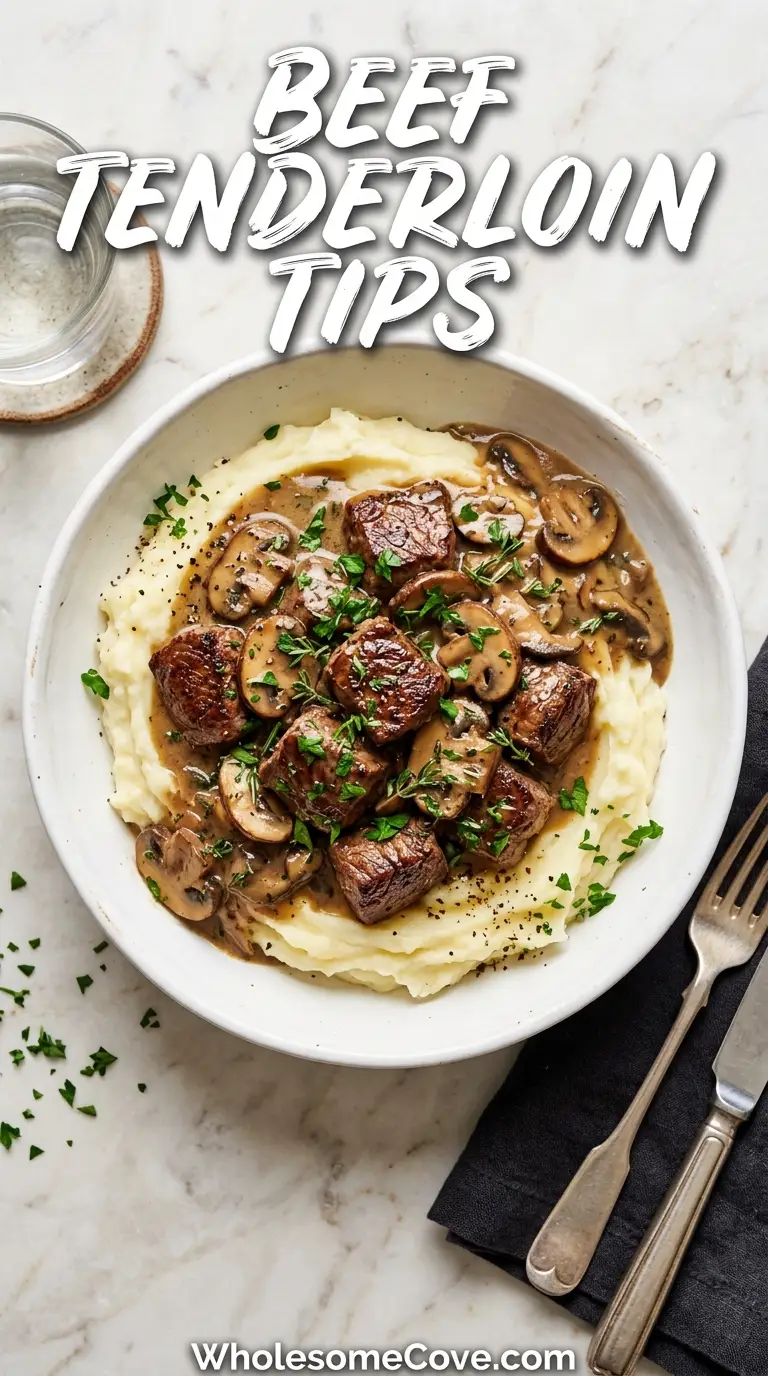
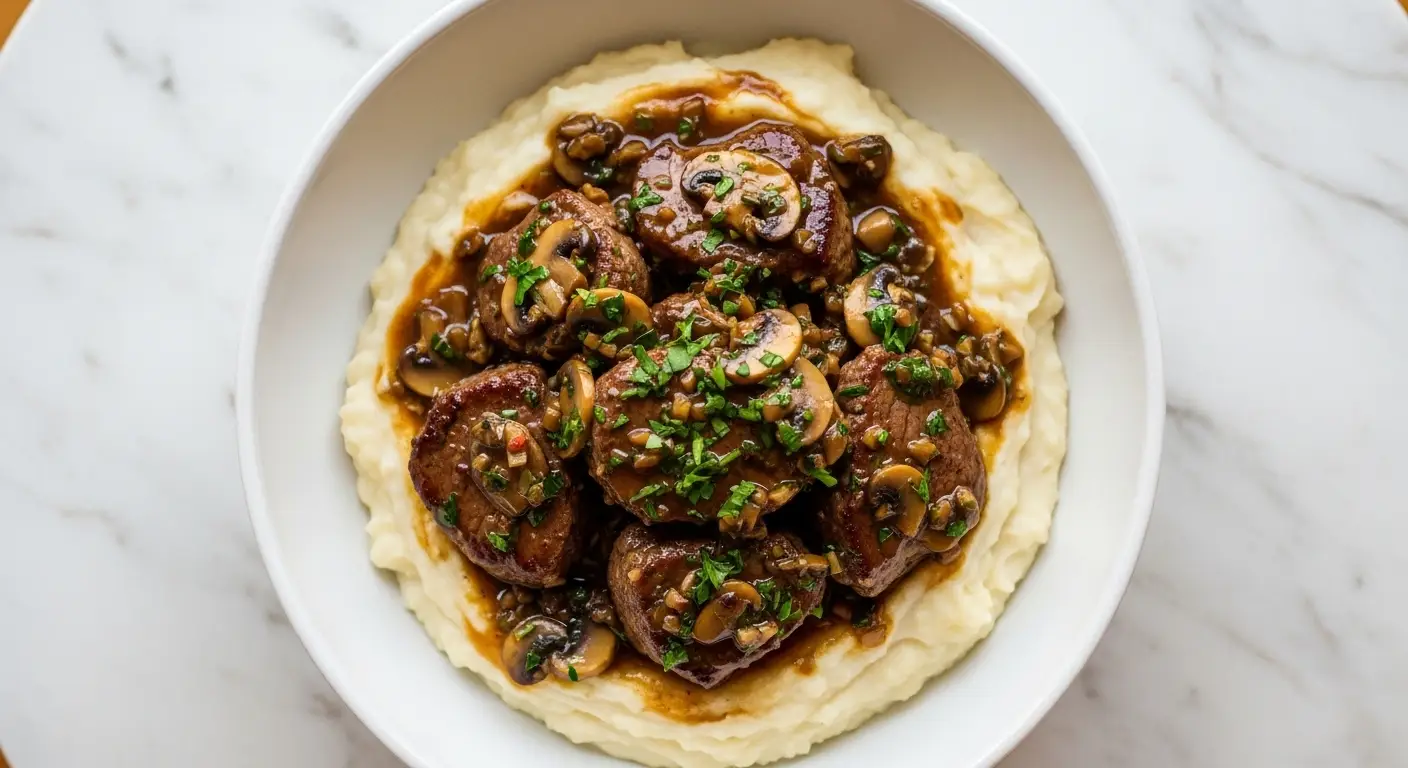
- Spoon the beef tenderloin tips and mushroom sauce generously over a bed of creamy mashed potatoes, buttered egg noodles, or steamed white rice. The starchy base will soak up the sauce beautifully.
- Serve immediately while the tips are still hot and the sauce is glossy. Beef tenderloin is at its absolute best right out of the pan.
I learned a lot of the technique behind building this kind of pan sauce from making my Beef Stew Recipe, which uses the same deglazing principle to build incredible depth of flavor.
Tips for The Best Beef Tenderloin Tips
A handful of small details separate a good batch of tenderloin tips from a truly exceptional one. These are the lessons I’ve learned after making this dish more times than I can count.
- Pat the beef completely dry before searing. I mentioned this in the instructions but it bears repeating. Surface moisture creates steam, and steam prevents browning. Use paper towels and be thorough. Even a damp surface will significantly reduce the quality of your crust.
- Cut the pieces as uniform as possible. If you have pieces that vary wildly in size, the smaller ones will be overcooked by the time the larger ones are done. Try to keep everything between ¾ inch and 1 inch (2-2.5cm).
- Never crowd the pan. Two or three batches of properly seared beef is infinitely better than one batch of steamed, grey meat. Give each piece room to breathe.
- Use a meat thermometer. Tenderloin is expensive. Respect it. An instant-read thermometer takes the guesswork entirely out of the equation and saves you from overcooking the most tender cut of beef you can buy.
- Don’t skip the resting phase. Even a brief 5-minute rest while you build the sauce lets the juices redistribute throughout the beef, making every bite juicier.
- Build in stages. Sear the beef first, then build the sauce in the same pan. Don’t shortcut this by adding everything at once. The layered approach is what makes the sauce so complex.
- Use low-sodium beef broth. Regular beef broth combined with Worcestershire sauce can push the saltiness of the sauce over the edge. Low-sodium broth gives you control.
- Fresh herbs make a difference. Dried thyme and rosemary work fine in a pinch, but fresh herbs add a brightness and fragrance that’s noticeably better in the finished dish.
- Add the cornstarch slurry slowly. You may not need all of it. Start with half, stir, assess the thickness, and add more as needed. Overshooting on thickening agent can make the sauce gummy.
- Chill the beef briefly before cutting. If you’re starting with a whole tenderloin rather than pre-cut tips, pop it in the freezer for 10-15 minutes first. Cold beef is firmer and much easier to cut into uniform pieces.
Read Also: Prime Rib Recipe
What to Serve with Beef Tenderloin Tips
The mushroom herb sauce in this recipe is rich and savory, so the best sides are ones that either soak it up or provide a bright, fresh contrast to balance the richness of the beef.
- Mashed Potatoes — the classic pairing for a reason. Creamy, buttery mashed potatoes soak up the mushroom sauce like a dream and make every bite complete. This is my personal go-to serving base.
- Roasted Potatoes — if you want a little more texture on the side, crispy roasted potatoes are a perfect match. The contrast of the crunchy exterior and soft interior works beautifully with the tender beef.
- Green Bean Casserole — the creamy, savory notes in a good green bean casserole complement the mushroom sauce without competing with it.
- Creamed Spinach — a steakhouse classic that pairs naturally with any tenderloin preparation. The richness works and the green color on the plate is beautiful.
- Roasted Sweet Potato — the natural sweetness of roasted sweet potato offers a nice counterpoint to the deep savory flavor of the beef and mushroom sauce.
- Au Gratin Potatoes — if you’re serving this for a dinner party or special occasion, cheesy au gratin potatoes take the whole meal to a special occasion level.
- Dinner Rolls — soft, buttery dinner rolls for sopping up every last drop of sauce from the plate. Always popular at the table.
- Egg noodles or buttered pasta — a lighter alternative to mashed potatoes that still provides a lovely base for the sauce. Toss with a little butter and parsley before plating the tips on top.
For another incredible beef dinner pairing, check out my Beef Barley Soup Recipe — a great starter course when you’re making a full spread.
Variations of Beef Tenderloin Tips
The base recipe is wonderful as-is, but there are a few ways to take it in a different direction depending on what you’re in the mood for or what’s in your pantry.
- Red Wine Sauce Variation: Replace half the beef broth with a dry red wine like Cabernet Sauvignon or Merlot. Add the wine to the pan right after sautéing the garlic and let it reduce by half before adding the broth. The result is a deeper, more complex sauce with a beautiful ruby color and slight acidity that cuts through the richness of the beef.
- Bourbon Sauce Variation: Add 2 tablespoons of bourbon to the pan when you add the Worcestershire sauce. Let it cook for 30 seconds before adding the broth. The bourbon adds a slightly sweet, smoky depth that pairs incredibly well with the mushrooms and herbs.
- Stroganoff-Style: Increase the heavy cream to ½ cup (120ml) and add a tablespoon of Dijon mustard to the sauce. Serve over egg noodles for a luxurious, fork-tender version of a classic beef stroganoff.
- Herb Butter Finish: Skip the sauce entirely and instead finish the seared beef tips in a pan of clarified butter with whole garlic cloves, fresh rosemary, and thyme. Baste constantly for 1-2 minutes. This technique, called beurre monté, gives you simple, pure tenderloin flavor with no sauce involved.
- Spicy Version: Add ½ teaspoon of crushed red pepper flakes when you add the garlic, and swap the Worcestershire for a tablespoon of chili garlic sauce. The heat plays off the rich, buttery sauce beautifully.
- Budget-Friendly Swap: If tenderloin is outside the budget, sirloin steak tips will work in this recipe with great results. They’re slightly less tender but still produce a delicious finished dish with the same technique and sauce.
You might also like my Slow Cooker Pot Roast Recipe for another deeply satisfying beef dinner that practically makes itself.
Storage and Reheating
Beef tenderloin tips are best enjoyed immediately, but leftovers store well and reheat without too much loss of quality if you’re careful with the temperature.
- Refrigerator storage: Transfer the cooled beef tips and sauce into an airtight container. Store in the refrigerator for up to 4 days. The sauce will thicken considerably as it chills — this is normal and expected.
- Freezer storage: The beef tips can be frozen with or without the sauce for up to 3 months. If you’re planning to freeze, I recommend leaving out the heavy cream before freezing and adding it fresh when you reheat. Cream-based sauces can separate slightly upon thawing, and adding it fresh solves that issue entirely.
- Thawing: Thaw frozen beef tips overnight in the refrigerator, never at room temperature. This preserves both food safety and texture.
- Reheating on the stovetop (recommended): Place the refrigerated or thawed beef tips and sauce into a skillet over low to medium-low heat. Add a splash of beef broth or water to loosen the sauce, which will have thickened in the fridge. Stir gently and heat just until warmed through, about 4-5 minutes. Do not let it boil — high heat will continue cooking the beef and push it past medium doneness.
- Reheating in the microwave: Place in a microwave-safe dish and cover loosely. Heat in 30-second intervals, stirring between each, until just warmed through. Low power settings work best to avoid rubbery beef.
- What to avoid: Never reheat beef tenderloin on high heat or for too long. It is already cooked to a perfect medium-rare, and aggressive reheating will take it to well-done, making it significantly less tender and enjoyable.
For another great make-ahead beef dish, check out my Crockpot Beef Stew Recipe, which reheats beautifully over multiple days.
Nutritional Facts
The following nutritional information is an estimate per serving, based on 4 servings and including the mushroom herb sauce. Values will vary based on the exact size and trim of the tenderloin used, whether heavy cream is included, and what you serve it over.
- Calories: approximately 420 kcal per serving
- Protein: 38g
- Total Fat: 27g
- Saturated Fat: 11g
- Carbohydrates: 6g
- Fiber: 1g
- Sugar: 2g
- Sodium: 480mg (using low-sodium beef broth)
- Cholesterol: 135mg
- Iron: 4mg (approximately 22% of daily value)
- Potassium: 720mg
Nutritional values are estimates only and will vary based on specific ingredients and brands used.
Read Also: Mississippi Pot Roast Recipe
Health Benefits of Key Ingredients
Beyond being absolutely delicious, this beef tenderloin tips recipe features several ingredients with notable nutritional value worth highlighting.
- Beef tenderloin: One of the leanest cuts of beef, tenderloin is a rich source of high-quality complete protein, which supports muscle repair and maintenance. It also delivers significant amounts of zinc, which supports immune function, and iron, which is essential for healthy red blood cell production. Because it’s so lean, it’s lower in saturated fat than ribeye or brisket while still delivering exceptional flavor.
- Cremini mushrooms: Mushrooms are one of the few non-animal food sources of vitamin D, which plays a critical role in bone health and immune support. They’re also rich in B vitamins including riboflavin and niacin, and provide a good amount of selenium, a powerful antioxidant mineral.
- Garlic: Fresh garlic contains allicin, a compound with well-documented antimicrobial and anti-inflammatory properties. Regular consumption of garlic has been associated with cardiovascular benefits including reduced blood pressure and improved cholesterol levels.
- Fresh thyme: Thyme is rich in vitamin C and vitamin A, and contains thymol, a natural compound with antifungal and antibacterial properties. As an herb, it adds enormous flavor for essentially zero calories.
- Olive oil: Used for searing, olive oil contributes heart-healthy monounsaturated fats, particularly oleic acid. It’s also a source of polyphenols, which function as antioxidants in the body.
- Onion: Yellow onion contains quercetin, a flavonoid with anti-inflammatory properties. Onions also provide prebiotic fiber that supports a healthy gut microbiome.
Another protein-packed weeknight dinner worth trying is my Lamb Chops Recipe, which is ready just as quickly and has a similarly impressive nutritional profile.
FAQs About Beef Tenderloin Tips
1. What exactly are beef tenderloin tips?
Beef tenderloin tips are the tapered tail end and trimmings of a whole beef tenderloin roast. Since that end isn’t thick or uniform enough to be cut into filet mignon steaks, it gets portioned into smaller, irregular bite-sized pieces instead. They’re from exactly the same muscle as a filet mignon, which means they’re just as tender, but often sold at a lower price per pound.
You can buy them pre-cut from many butchers or larger grocery stores, or purchase a whole tenderloin and cut the tail end yourself.
2. What is the best internal temperature for beef tenderloin tips?
For the most tender, juicy result, cook beef tenderloin tips to medium-rare, which is an internal temperature of 130-135°F (54-57°C). Because tenderloin is so lean, it dries out and becomes less pleasant when cooked past medium (145°F / 63°C).
Use an instant-read thermometer and pull the tips from the heat when they’re about 5 degrees below your target — they’ll continue to rise in temperature as they rest.
3. Can I use a different cut of beef if I can’t find tenderloin tips?
Yes, sirloin steak tips are the best substitute and are widely available. They’re slightly firmer in texture but still produce a wonderful result with the same technique and sauce. Avoid using pre-packaged “stew meat” for this recipe — that typically comes from tougher cuts that require long, slow cooking to become tender.
Ribeye steak cut into cubes also works well and brings more marbled fat for richer flavor, though the texture will be slightly different from tenderloin.
4. Why did my beef tips turn grey instead of brown?
This almost always comes down to two things: the pan wasn’t hot enough, or the pan was too crowded. Both issues cause the beef to steam rather than sear, and steamed beef turns grey instead of developing that caramelized brown crust.
Make sure the pan is properly preheated before adding oil, the oil is shimmering before adding the beef, and you’re working in batches small enough that no pieces are touching. Patting the beef completely dry before seasoning is also essential for browning.
5. Can I make this dish ahead of time for a dinner party?
You can make the mushroom sauce fully ahead of time and refrigerate it for up to 2 days. On the day of serving, sear the beef fresh — tenderloin tips really only take about 5-6 minutes to cook, so this is very manageable even right before guests eat.
If you must make the whole dish ahead, slightly undercook the beef tips so they don’t overcook when reheated. Reheat gently in the sauce over low heat just until warmed through, and you’ll still have a fantastic result.
For a show-stopping beef dinner for a crowd, you might also want to explore my Beef Tenderloin Recipe — a full whole-roast preparation perfect for the holidays.
Beef Tenderloin Tips
Ingredients
- 2 lbs beef tenderloin tips - 900g; cut into 1-inch (2.5cm) pieces from the tail end of a whole tenderloin, or pre-cut from a butcher
- 1 tsp kosher salt - plus more to taste
- 1/2 tsp freshly ground black pepper
- 1/2 tsp garlic powder
- 2 tbsp olive oil - divided
- 3 tbsp unsalted butter - divided
- 8 oz cremini or baby bella mushrooms - 225g; sliced
- 1 small yellow onion - finely diced
- 4 cloves garlic - minced
- 1 tbsp Worcestershire sauce
- 1 cup beef broth - 240ml; low-sodium preferred
- 1/4 cup heavy cream - 60ml; optional, for a richer sauce
- 1 tsp fresh thyme leaves - or 1/2 tsp dried thyme
- 1 tbsp fresh rosemary - finely chopped; or 1/2 tsp dried rosemary
- 1 tbsp cornstarch - mixed with 2 tablespoons cold water to form a slurry
- fresh parsley - chopped, for garnish
Equipment
- 12-inch cast iron skillet - Essential for high-heat searing; a heavy stainless steel pan may be substituted
- Sharp chef’s knife - For cutting tenderloin into uniform 1-inch pieces
- Cutting board
- Paper towels - For patting beef completely dry before searing
- Instant-read meat thermometer - Highly recommended to avoid overcooking the tenderloin
- Tongs - For turning beef tips without piercing the meat
- Small bowl - For mixing the cornstarch slurry
- Wooden spoon or silicone spatula - For stirring sauce and scraping up browned bits
- Measuring cups and spoons
- Plate or tray - For resting seared beef while building the sauce
Method
- Remove the beef tenderloin tips from the refrigerator 20 minutes before cooking to promote even cooking. Cut into uniform 1-inch (2.5cm) pieces if needed, then pat every surface completely dry with paper towels.
- Mix together the kosher salt, black pepper, and garlic powder in a small bowl, then sprinkle evenly over all sides of the beef tips, pressing gently to adhere. Set aside on a clean plate.
- Place a 12-inch cast iron skillet over medium-high heat and let it preheat for at least 2 full minutes. Add 1 tablespoon of olive oil and swirl to coat — it should shimmer immediately.
- Add half the beef tips in a single layer without crowding and sear undisturbed for 1.5 to 2 minutes per side until a deep brown crust forms. Transfer to a plate, tent with foil, then repeat with the remaining tablespoon of oil and the second batch.
- Reduce heat to medium. Add 2 tablespoons of butter to the pan with all its drippings, then add the diced yellow onion and sauté, stirring occasionally, for about 3 minutes until translucent and soft.
- Add the sliced mushrooms to the pan and spread into an even layer. Let cook undisturbed for 2 minutes to brown, then stir and cook for another 2 to 3 minutes until golden and most of their moisture has evaporated.
- Add the minced garlic, fresh thyme, and fresh rosemary to the pan and stir for about 60 seconds until fragrant. Add the Worcestershire sauce and stir to combine.
- Pour in the beef broth and use a wooden spoon to scrape up all the browned bits from the bottom of the pan. Bring to a gentle simmer and cook for 3 minutes, then stir in the heavy cream if using.
- Slowly pour the cornstarch slurry into the simmering sauce while stirring constantly, adding only as much as needed to reach your desired thickness. The sauce will thicken within about 60 seconds.
- Reduce heat to low and nestle the seared beef tips back into the sauce along with any resting juices. Add the remaining tablespoon of butter, stir gently to coat, and cook for 1 to 2 minutes until heated through to 130-135°F (54-57°C) for medium-rare.
- Taste the sauce and adjust seasoning with additional salt and pepper as needed. Garnish generously with freshly chopped parsley and serve immediately over mashed potatoes, buttered egg noodles, or steamed rice.
Nutrition
Notes
- Pat the beef completely dry: Surface moisture creates steam and prevents browning. Use paper towels thoroughly on every side before seasoning.
- Never crowd the pan: Work in two or three batches if needed. Crowding drops the pan temperature and turns the beef grey instead of brown.
- Use a meat thermometer: Pull the tips at 130-135°F (54-57°C) for medium-rare. Tenderloin dries out quickly past medium (145°F/63°C).
- Sirloin tips substitute: If beef tenderloin tips are unavailable or outside budget, sirloin steak tips work well with the same technique and sauce.
- Red wine variation: Replace half the beef broth with a dry red wine like Cabernet Sauvignon and let it reduce by half before adding the broth for a deeper, more complex sauce.
- Stroganoff-style: Increase heavy cream to 1/2 cup (120ml) and add 1 tablespoon of Dijon mustard to the sauce, then serve over egg noodles.
- Make-ahead tip: The mushroom sauce can be made up to 2 days ahead and refrigerated. Sear the beef fresh on the day of serving for best results.
- Storage: Store leftovers in an airtight container in the refrigerator for up to 4 days, or freeze for up to 3 months. If freezing, omit the heavy cream and add it fresh when reheating.
- Reheating: Reheat gently over low heat in a skillet with a splash of beef broth to loosen the sauce. Avoid high heat, which will overcook the beef.
- Chill before cutting: If starting with a whole tenderloin, place it in the freezer for 10 to 15 minutes before cutting for cleaner, more uniform pieces.
Private Notes
Tried this recipe?
Let us know how it was!Final Thoughts
This beef tenderloin tips recipe has become one of the most reliable, impressive dishes in my cooking rotation. Every time I make it, I’m reminded how something this simple and fast can taste so deeply satisfying.
The key is treating the beef with respect: dry it off, get the pan hot, sear in batches, and build your sauce in the same pan. Those basic fundamentals make all the difference.
If you’re cooking this for someone special, I promise it’ll land. And if you’re making it just for yourself on a Tuesday night, honestly, you deserve it.
I’d love to hear how it went for you! Drop a comment below and let me know if you tried the red wine variation or kept it classic. And if you snapped a photo, share it — there’s nothing better than seeing your beef tips looking glossy and gorgeous.
Recommended:
- Swedish Meatball Recipe
- Meatloaf Recipe
- Lamb Shank Recipe
- Maple Glazed Carrots Recipe
- Scalloped Potatoes Recipe
- Beef and Broccoli Stir Fry Recipe
- Brown Gravy Recipe
- Twice Baked Potatoes Recipe
- Beef Barley Soup Recipe
- Roasted Brussels Sprouts With Bacon Recipe