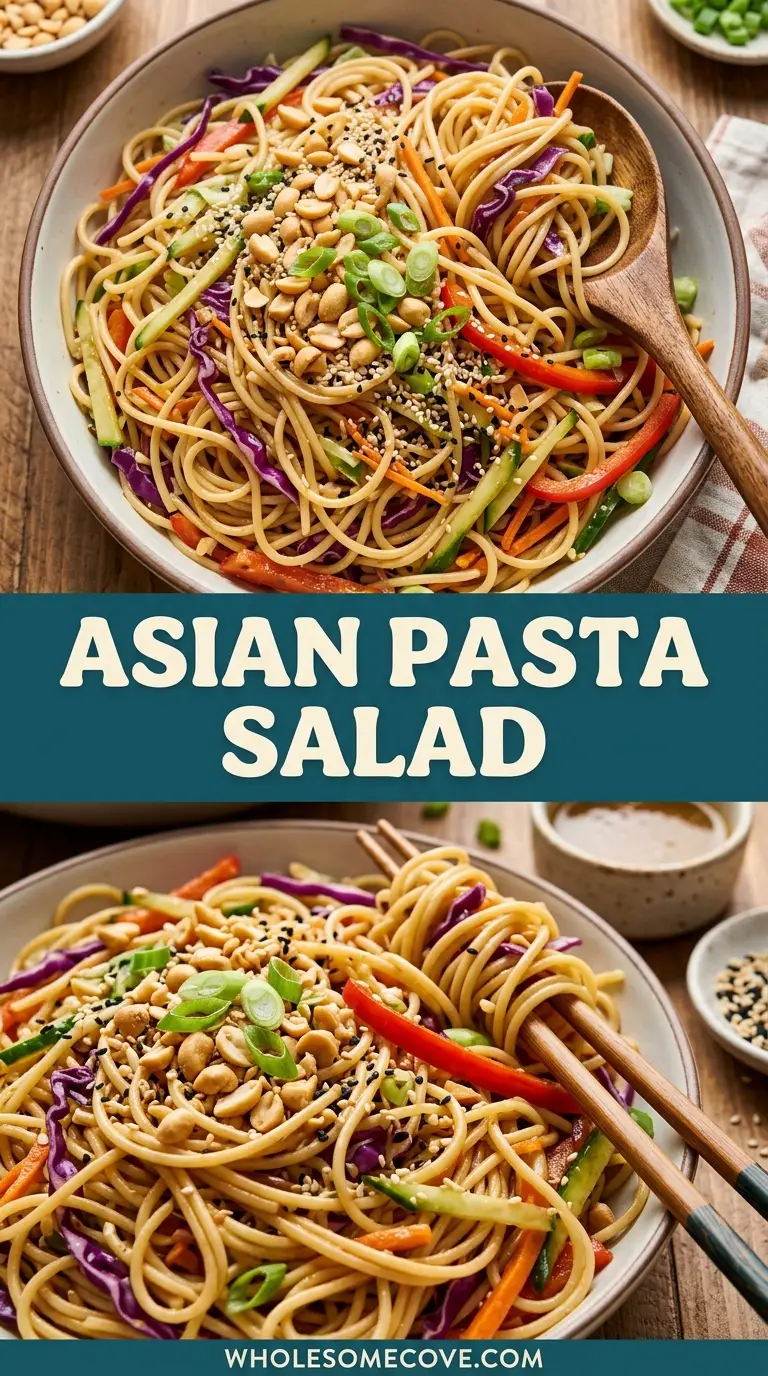
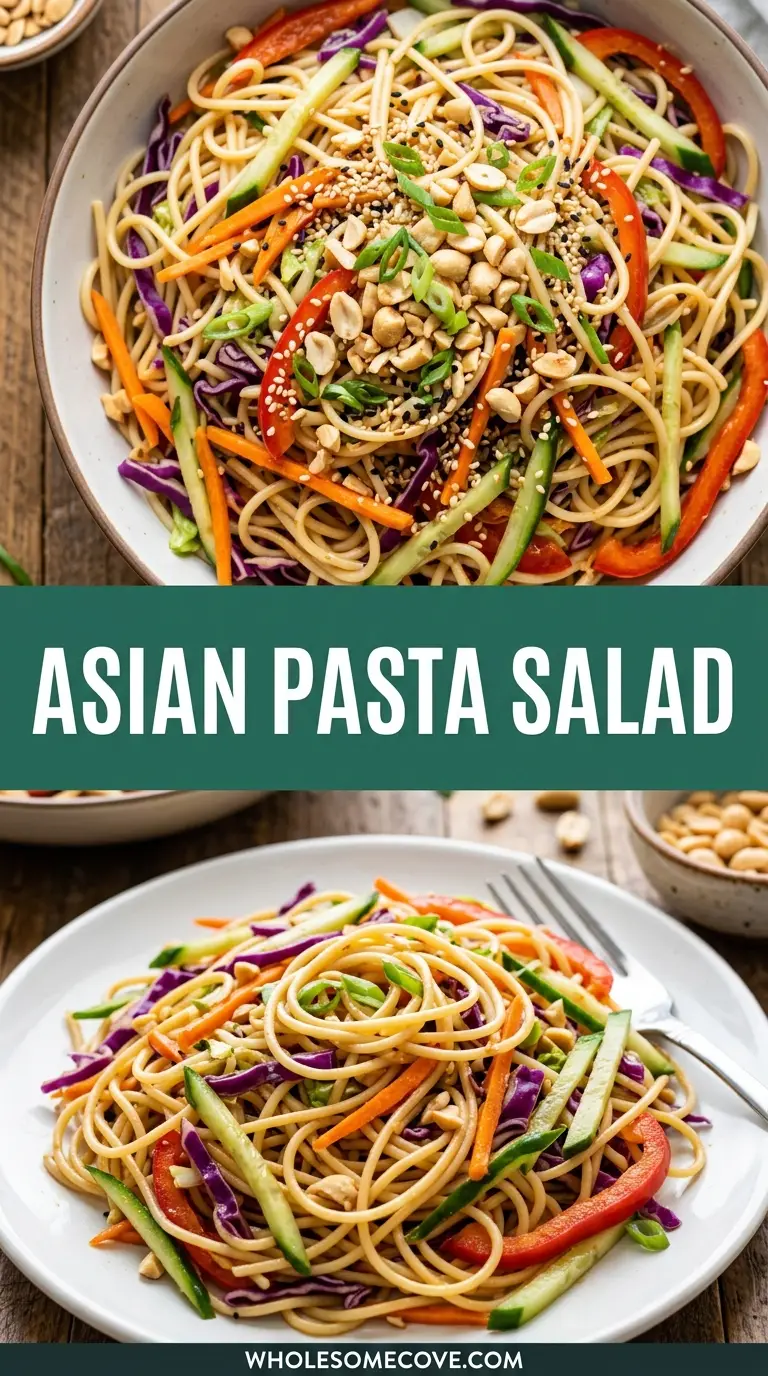
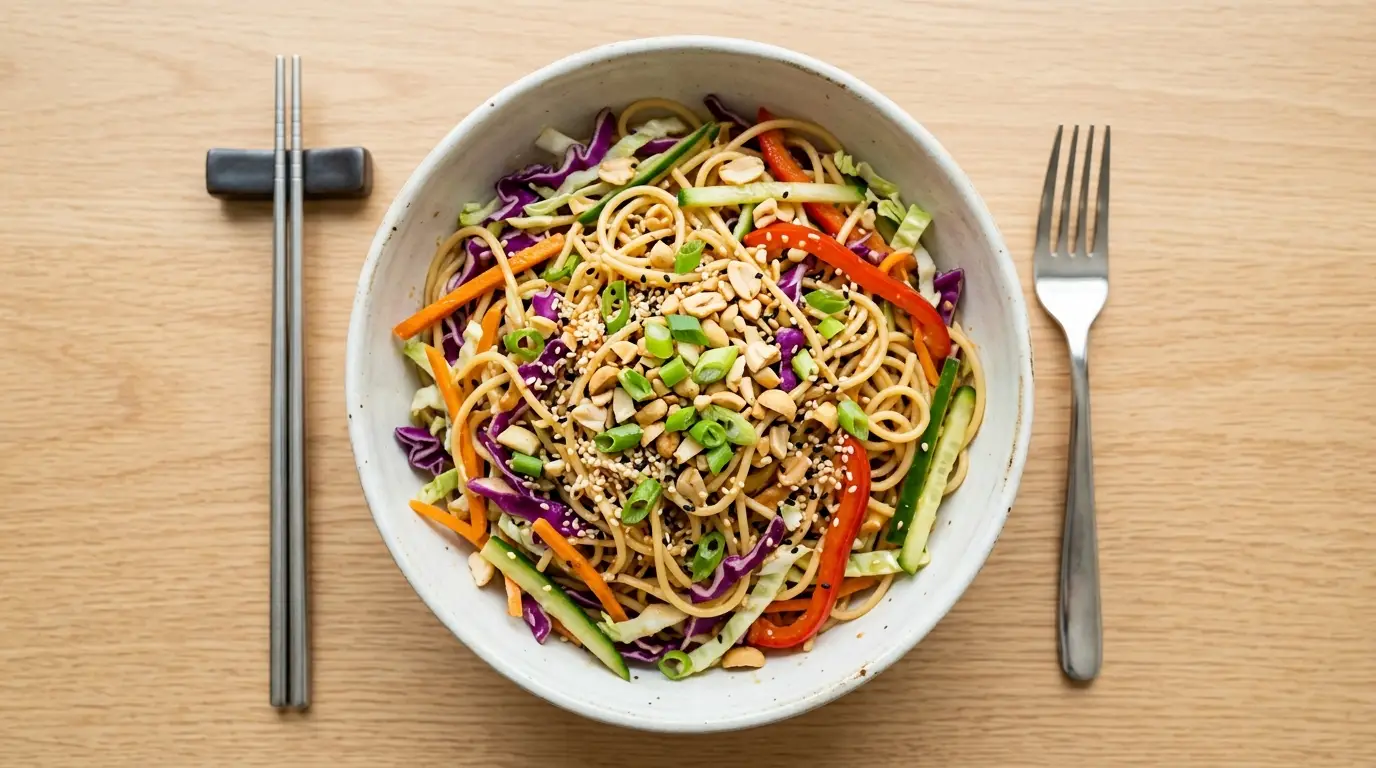
This Asian Pasta Salad recipe swaps a heavy mayo dressing for a sesame-soy vinaigrette, so the noodles stay glossy instead of clumping together in the fridge. The base is spaghetti tossed with shredded cabbage, julienned carrots, and cucumber, all cut thin enough to catch the dressing in every bite.
Ready in about 30 minutes, it holds up well for two to three days in the fridge, which is rare for a pasta salad. Toasted sesame oil and fresh ginger in the dressing are what set it apart from a standard vinaigrette, since both ingredients bring a sharpness that plain oil and vinegar can’t match.
| Quick Recipe Summary | |
|---|---|
| Prep Time | 20 minutes |
| Cook Time | 10 minutes |
| Total Time | 30 minutes |
| Servings | 6 servings |
| Difficulty Level | Easy |
Why You’ll Love This Asian Pasta Salad Recipe
This isn’t a salad you build around whatever vegetables happen to be in the crisper. Every ingredient here has a job, from the cabbage’s crunch to the peanut butter that thickens the dressing just enough to coat the noodles.
It’s also one of the few pasta salads that tastes better the next day, since the dressing has more time to soak into the noodles.
- No mayo, no dairy. The dressing is soy sauce, rice vinegar, sesame oil, and peanut butter, so there’s nothing to separate or go warm at a picnic.
- Make-ahead friendly. It keeps well for up to three days, and the flavor actually improves on day two.
- Built for crunch. Cabbage, carrots, and cucumber stay crisp for days because they’re raw, not cooked down like many pasta salad mix-ins.
- One dressing, no shortcuts. Every ingredient in the dressing is something you’d recognize on a label, no bottled Asian dressing required.
- Easy to scale. Doubling the recipe for a potluck just means doubling the noodles, vegetables, and dressing in the same ratios.
- Naturally dairy-free and easy to make vegan by swapping honey for maple syrup.
Read Also: Classic Pasta Salad
Ingredients
Everything in this list is either already in a well-stocked pantry or easy to find in the international aisle of a regular grocery store. The full ingredient breakdown, including exact amounts in both US and metric measurements, is below.
For the Salad:
- 12 oz (340 g) spaghetti or thin egg noodles
- 2 cups (140 g) shredded red cabbage
- 2 cups (140 g) shredded green cabbage
- 2 medium carrots, julienned (about 1 cup / 110 g)
- 1 red bell pepper, thinly sliced
- 1 English cucumber, julienned (about 1 cup / 120 g)
- 4 green onions, thinly sliced
- 1/2 cup (30 g) fresh cilantro, roughly chopped
- 1/2 cup (75 g) shelled edamame, cooked and cooled (optional)
- 1/3 cup (45 g) roasted peanuts, roughly chopped
- 2 tablespoons (18 g) toasted sesame seeds
For the Sesame-Soy Dressing:
- 1/3 cup (80 ml) low-sodium soy sauce
- 3 tablespoons (45 ml) rice vinegar
- 2 tablespoons (30 ml) toasted sesame oil
- 2 tablespoons (40 g) honey
- 1 tablespoon (15 g) creamy peanut butter
- 2 garlic cloves, minced
- 1 tablespoon (8 g) fresh ginger, grated
- 1 teaspoon (5 ml) sriracha or chili garlic sauce (optional, for heat)
- Juice of 1 lime
You may also like: Pasta Salad Dressing
Kitchen Equipment Needed
Nothing here is specialized. A sharp knife makes the julienned vegetables faster to prep, but a box grater works too.
- Large stockpot for boiling pasta
- Colander for draining and rinsing
- Julienne peeler or mandoline (for quick carrot and cucumber strips)
- Sharp chef’s knife and cutting board
- Large mixing bowl
- Small bowl or jar with a lid for the dressing
- Whisk
- Measuring cups and spoons
- Salad tongs or two large spoons for tossing
- Airtight storage containers for leftovers
Read also: Hoisin Sauce
Recommended Products for This Recipe
These are products I reach for specifically because they solved a repeat problem while testing this recipe, not a general “buy nice things” list.
1. Kikkoman Naturally Brewed Soy Sauce
Cheaper soy sauces taste flat and one-note next to a naturally brewed one, which matters in a dressing with only a handful of ingredients. This brand also has a lower sodium version, which keeps the dressing from turning salty once it’s tossed with the noodles.
2. Kadoya Toasted Sesame Oil
Regular sesame oil is pale and mild, but toasted sesame oil is what gives this dressing its actual flavor. A little goes a long way, so a small bottle lasts through several batches.
3. OXO Good Grips Julienne Peeler
Hand-slicing carrots and cucumbers into matchsticks takes forever and rarely comes out even. This peeler turns both into thin, uniform strips in under a minute each, which also helps them coat evenly in the dressing.
4. Marukan Rice Vinegar
Some rice vinegars are sweetened, which throws off the balance of a dressing that already has honey in it. This one is unseasoned, so I can control the sweetness myself.
5. Rubbermaid Brilliance Storage Containers
This salad holds up in the fridge better than most, but only if it’s sealed properly. These containers are airtight enough that the noodles don’t dry out or pick up other fridge smells over three days.
Try this: Teriyaki Sauce
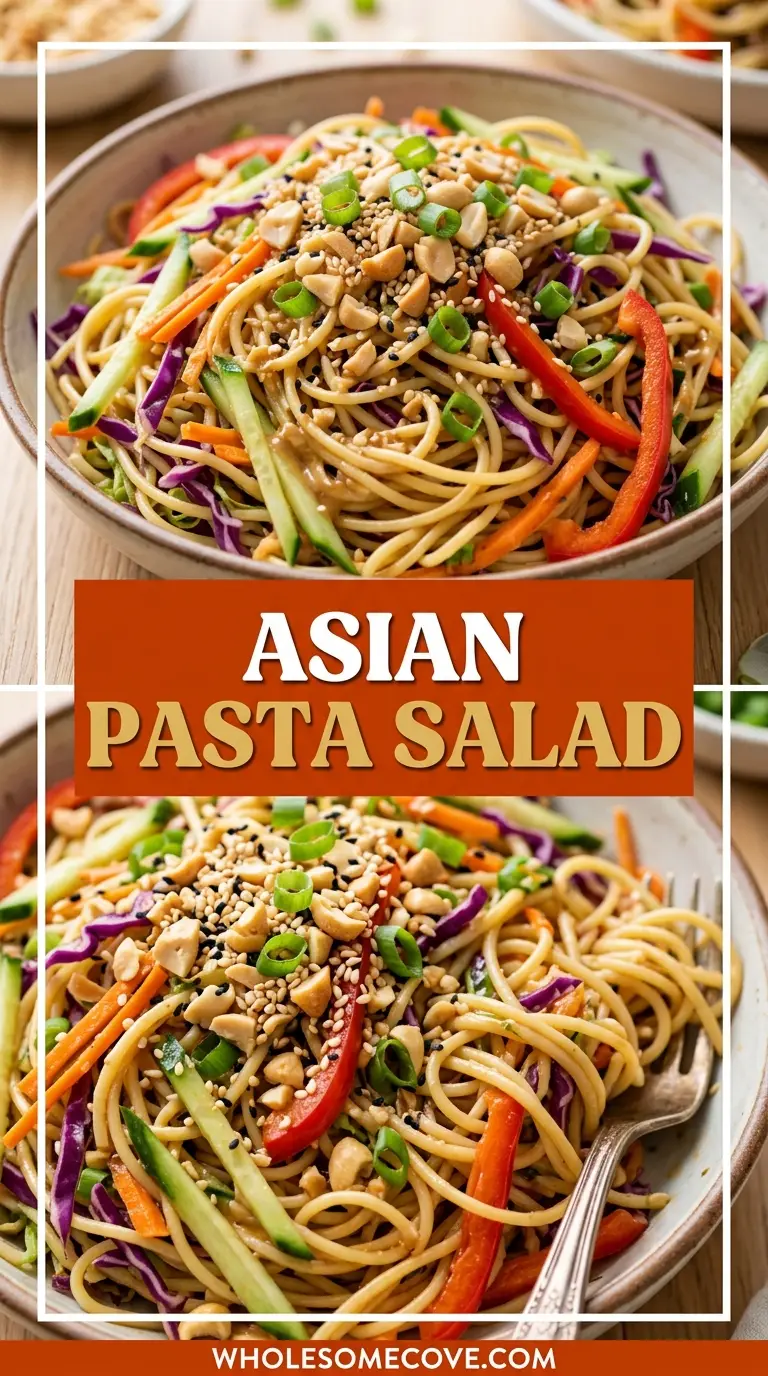
Step-by-Step Instructions: How to Make Asian Pasta Salad
Follow these steps in order and the noodles won’t clump, the vegetables stay crisp, and the dressing coats everything evenly.
1. Cook the Pasta
- Bring a large pot of generously salted water to a rolling boil.
- Add the spaghetti and cook according to the package directions until al dente, usually 8 to 10 minutes.
- Drain the pasta in a colander and rinse immediately under cold water for about 30 seconds. This stops the cooking and washes off excess surface starch, which is what keeps the noodles from sticking together once they’re cold.
- Shake off as much excess water as possible, then transfer the pasta to a large mixing bowl.
2. Prep the Vegetables
- While the pasta water heats, shred the red and green cabbage thinly with a sharp knife or a mandoline.
- Julienne the carrots and cucumber into thin matchsticks using a julienne peeler or a box grater’s largest holes.
- Thinly slice the red bell pepper into strips about 2 inches long.
- Slice the green onions on a diagonal, keeping the white and green parts separate if you want to reserve some green for garnish.
- Roughly chop the cilantro and the roasted peanuts.
3. Make the Dressing
- In a small bowl or jar, combine the soy sauce, rice vinegar, toasted sesame oil, honey, peanut butter, minced garlic, grated ginger, sriracha, and lime juice.
- Whisk vigorously, or seal the jar and shake, until the peanut butter is fully incorporated and the dressing looks smooth rather than separated.
- Taste and adjust: add more honey for sweetness, more lime juice for brightness, or more sriracha for heat.
4. Combine the Salad
- Add the shredded cabbage, carrots, cucumber, bell pepper, green onions, cilantro, and edamame (if using) to the bowl with the cooled pasta.
- Pour about three-quarters of the dressing over the top.
- Toss everything together using tongs or two large spoons, lifting from the bottom of the bowl so the noodles and vegetables mix evenly rather than sitting in layers.
5. Finish and Chill
- Taste the salad and add the remaining dressing if the noodles look dry or under-seasoned.
- Sprinkle the chopped peanuts and toasted sesame seeds over the top.
- Cover and refrigerate for at least 20 minutes before serving, which gives the dressing time to settle into the noodles.
You may also like: Asian Chicken Lettuce Cups
Tips for The Best Asian Pasta Salad
A few small habits make the difference between a salad that tastes sharp on day one and mushy by day two, and one that holds up the whole time.
- Rinse the pasta under cold water immediately after draining. Skipping this step is the most common reason the noodles clump.
- Cut all the vegetables to a similar thickness so every bite has a mix of textures instead of one giant chunk of pepper.
- Toast the sesame seeds in a dry skillet for 2 to 3 minutes if the package isn’t pre-toasted. Raw sesame seeds taste noticeably flatter.
- Hold back a portion of the dressing and add it just before serving if you’re making this more than a few hours ahead, since noodles keep absorbing liquid in the fridge.
- Add the peanuts and sesame seeds right before serving rather than mixing them in early, so they stay crunchy instead of softening in the dressing.
- If the salad tastes flat after chilling, a fresh squeeze of lime wakes the flavors back up better than more soy sauce does.
- Use a mandoline for the cabbage if you’re making a large batch. Hand-shredding two heads of cabbage takes far longer than it looks like it should.
I ruined my first batch by adding the peanuts straight into the fridge with everything else, and by the next day they’d gone completely soft. Now I store them separately and toss them in right before serving.
Read also: Sweet and Sour Sauce
What to Serve with Asian Pasta Salad
This salad is substantial enough to eat on its own for lunch, but it also works well as a side next to grilled or pan-seared protein. Because the dressing is already bold, it pairs best with mains that aren’t competing with too many strong sauces of their own.
- Grilled or baked protein: Teriyaki Grilled Chicken is a natural match since the flavors overlap without clashing.
- Wings for a party spread: Honey Garlic Chicken Wings work well on the same table for a potluck or backyard gathering.
- Skewers for a summer dinner: Grilled Chicken and Veggie Skewers keep the meal light and mostly hands-off on the grill.
- A warm soup starter: Egg Drop Soup is a light, savory way to start the meal before the cold salad.
- A heartier main: Beef and Broccoli Stir Fry turns this into a full spread with something warm and something cold.
- A rice side for bigger appetites: Healthy Fried Rice rounds out the table if the salad alone won’t be enough.
- Spring rolls with a peanut dipping sauce, served cold alongside the salad.
- Iced green tea or a light lager, both of which cut through the sesame oil.
Try this: Chicken Caesar Pasta Salad
Variations of Asian Pasta Salad
The base recipe is intentionally simple, which makes it easy to adjust depending on what’s in the fridge or who’s eating it.
- Add protein: Shredded rotisserie chicken, grilled shrimp, or cubed baked tofu all work well folded in after the dressing.
- Swap the noodles: Soba noodles or rice noodles both hold the dressing well if you want something less starchy than spaghetti.
- Make it spicier: Double the sriracha in the dressing, or add thinly sliced fresh jalapeño to the vegetable mix.
- Add fruit: Mandarin orange segments or thin apple slices add a sweet contrast to the savory dressing.
- Go nut-free: Swap the peanut butter for tahini and the peanuts for extra sesame seeds or sunflower seeds.
- Make it low-carb: Replace the pasta with spiralized zucchini noodles, added raw right before serving so they don’t release too much water.
- Add crunch: Crushed wonton strips or chow mein noodles sprinkled on top add texture beyond the peanuts.
You may also like: Greek Pasta Salad
Storage and Reheating
This salad is meant to be served cold, so there’s no reheating step involved, just proper storage to keep the vegetables from going limp.
- Store leftovers in an airtight container in the refrigerator for up to 3 days.
- If making ahead, keep the peanuts and sesame seeds in a separate small container and add them just before eating.
- For longer storage, keep the dressing separate from the noodles and vegetables until the day you plan to serve it.
- Do not freeze this salad. The cabbage and cucumber lose their crunch and turn watery once thawed.
- Give the salad a quick toss before serving leftovers, since the dressing tends to settle at the bottom of the container.
- If the noodles look dry after a day or two in the fridge, a small splash of soy sauce and sesame oil freshens it back up.
Read also: Mediterranean Pasta Salad
Nutritional Facts
| Nutrition Per Serving (1 of 6) | |
|---|---|
| Calories | 310 |
| Total Fat | 11 g |
| Saturated Fat | 2 g |
| Cholesterol | 0 mg |
| Sodium | 640 mg |
| Total Carbohydrates | 44 g |
| Dietary Fiber | 4 g |
| Sugars | 10 g |
| Protein | 11 g |
Nutrition values are estimates based on standard ingredient data and will vary depending on exact brands and portion sizes used.
You may also like: Tortellini Pasta Salad
Health Benefits of Key Ingredients
Beyond flavor, most of what’s in this salad is doing real nutritional work, especially the raw vegetables that make up close to half the volume of the dish.
- Cabbage: High in vitamin C and fiber, and it stays crunchy raw, which preserves more of its nutrients than cooking would.
- Carrots: A strong source of beta-carotene, which the body converts to vitamin A for eye and skin health.
- Cucumber: Mostly water, which helps keep the dish light while adding volume without many calories.
- Edamame: A complete plant protein, meaning it contains all nine essential amino acids, which is uncommon for a vegetable-based ingredient.
- Ginger: Contains gingerol, a compound linked to reduced inflammation and easier digestion.
- Garlic: Contains allicin, a compound studied for supporting immune function.
- Peanuts: Provide healthy monounsaturated fats along with protein, which helps this salad feel more filling than a typical vegetable side.
- Sesame seeds: A good source of calcium and healthy fats, particularly when toasted, which also deepens their flavor.
Read also: Healthy Orange Chicken
FAQs About Asian Pasta Salad
1. Can I make Asian Pasta Salad ahead of time?
Yes, and it actually tastes better after a few hours in the fridge once the dressing has time to soak in.
For best texture, hold back the peanuts and sesame seeds until just before serving.
2. What noodles work best for this recipe?
Spaghetti or thin egg noodles are the most common choice because their shape holds the dressing well.
Soba or rice noodles are good substitutes if you want a slightly different texture or a gluten-free option.
3. Is this recipe gluten-free?
Not as written, since regular soy sauce and spaghetti both contain wheat.
Swap in gluten-free tamari and gluten-free pasta, and the rest of the recipe stays exactly the same.
4. Why is my pasta salad mushy the next day?
This usually happens when the pasta isn’t rinsed with cold water right after draining, so it keeps cooking from residual heat.
It can also happen if the vegetables are cut too thin or added too far in advance, since they release water as they sit.
5. Can I make this salad vegan?
Yes, the only non-vegan ingredient is the honey in the dressing.
Swap it for an equal amount of maple syrup or agave, and double-check that any added protein, like tofu, fits your preference.
Try this: Orzo Pasta Salad
Asian Pasta Salad
Ingredients
- 12 oz spaghetti or thin egg noodles - 340 g
- 2 cups shredded red cabbage - 140 g
- 2 cups shredded green cabbage - 140 g
- 2 medium carrots - julienned (about 1 cup or 110 g)
- 1 red bell pepper - thinly sliced
- 1 English cucumber - julienned (about 1 cup or 120 g)
- 4 green onions - thinly sliced
- 1/2 cup fresh cilantro - 30 g, roughly chopped
- 1/2 cup shelled edamame - 75 g, cooked and cooled (optional)
- 1/3 cup roasted peanuts - 45 g, roughly chopped
- 2 tablespoons toasted sesame seeds - 18 g
- 1/3 cup low-sodium soy sauce - 80 ml
- 3 tablespoons rice vinegar - 45 ml
- 2 tablespoons toasted sesame oil - 30 ml
- 2 tablespoons honey - 40 g
- 1 tablespoon creamy peanut butter - 15 g
- 2 garlic cloves - minced
- 1 tablespoon fresh ginger - 8 g, grated
- 1 teaspoon sriracha or chili garlic sauce - 5 ml (optional, for heat)
- 1 lime - juice of
Equipment
- Large stockpot - for boiling pasta
- Colander - for draining and rinsing
- Julienne peeler or mandoline - for quick carrot and cucumber strips (optional)
- Small bowl or jar with a lid - for the dressing
- Salad tongs or two large spoons - for tossing
- Airtight storage containers - for leftovers
Method
- Bring a large pot of generously salted water to a rolling boil. Add the spaghetti and cook according to package directions until al dente.
- Drain the pasta in a colander and rinse immediately under cold water for about 30 seconds. Shake off excess water, then transfer to a large mixing bowl.
- While the pasta water heats, shred the red and green cabbage thinly. Julienne the carrots and cucumber into thin matchsticks. Thinly slice the red bell pepper and green onions. Roughly chop the cilantro and roasted peanuts.
- In a small bowl or jar, combine the soy sauce, rice vinegar, toasted sesame oil, honey, peanut butter, minced garlic, grated ginger, sriracha, and lime juice. Whisk or shake until smooth and fully incorporated.
- Add the shredded cabbage, carrots, cucumber, bell pepper, green onions, cilantro, and edamame (if using) to the bowl with the cooled pasta. Pour about three-quarters of the dressing over the top.
- Toss everything together using tongs or two large spoons, lifting from the bottom of the bowl so the noodles and vegetables mix evenly.
- Taste the salad and add the remaining dressing if needed. Sprinkle the chopped peanuts and toasted sesame seeds over the top.
- Cover and refrigerate for at least 20 minutes before serving to allow the flavors to meld.
Nutrition
Notes
- Rinse the pasta under cold water immediately after draining to prevent clumping and stop the cooking process.
- Cut all the vegetables to a similar thickness so every bite has a mix of textures.
- Toast the sesame seeds in a dry skillet for 2 to 3 minutes if not pre-toasted to deepen their flavor.
- Hold back a portion of the dressing and add it just before serving if making this more than a few hours ahead, since noodles keep absorbing liquid.
- Add the peanuts and sesame seeds right before serving rather than mixing them in early, so they stay crunchy.
- If the salad tastes flat after chilling, a fresh squeeze of lime wakes the flavors back up better than more soy sauce does.
- Use a mandoline for the cabbage if you’re making a large batch to save time.
- To make this vegan, swap the honey for an equal amount of maple syrup or agave.
- For a gluten-free version, use gluten-free tamari and gluten-free pasta.
- Store leftovers in an airtight container in the refrigerator for up to 3 days. Do not freeze as the vegetables will lose their crunch.
Private Notes
Tried this recipe?
Let us know how it was!Final Thoughts
This Asian Pasta Salad recipe earns its spot in a regular rotation because it holds up better than most cold pasta dishes and doesn’t rely on mayo to taste good.
Give it a try for your next potluck or weekday lunch prep.
If you make it, leave a comment below and let me know what you added or swapped.
Recommended:
- Buffalo Chicken Pasta Salad
- Ranch Pasta Salad
- Shrimp Pasta Salad
- Dill Pickle Pasta Salad
- Pesto Pasta Salad
- Caprese Pasta Salad
- Chicken Pasta Salad
- BLT Pasta Salad
- Peanut Sauce
- Mexican Pasta Salad