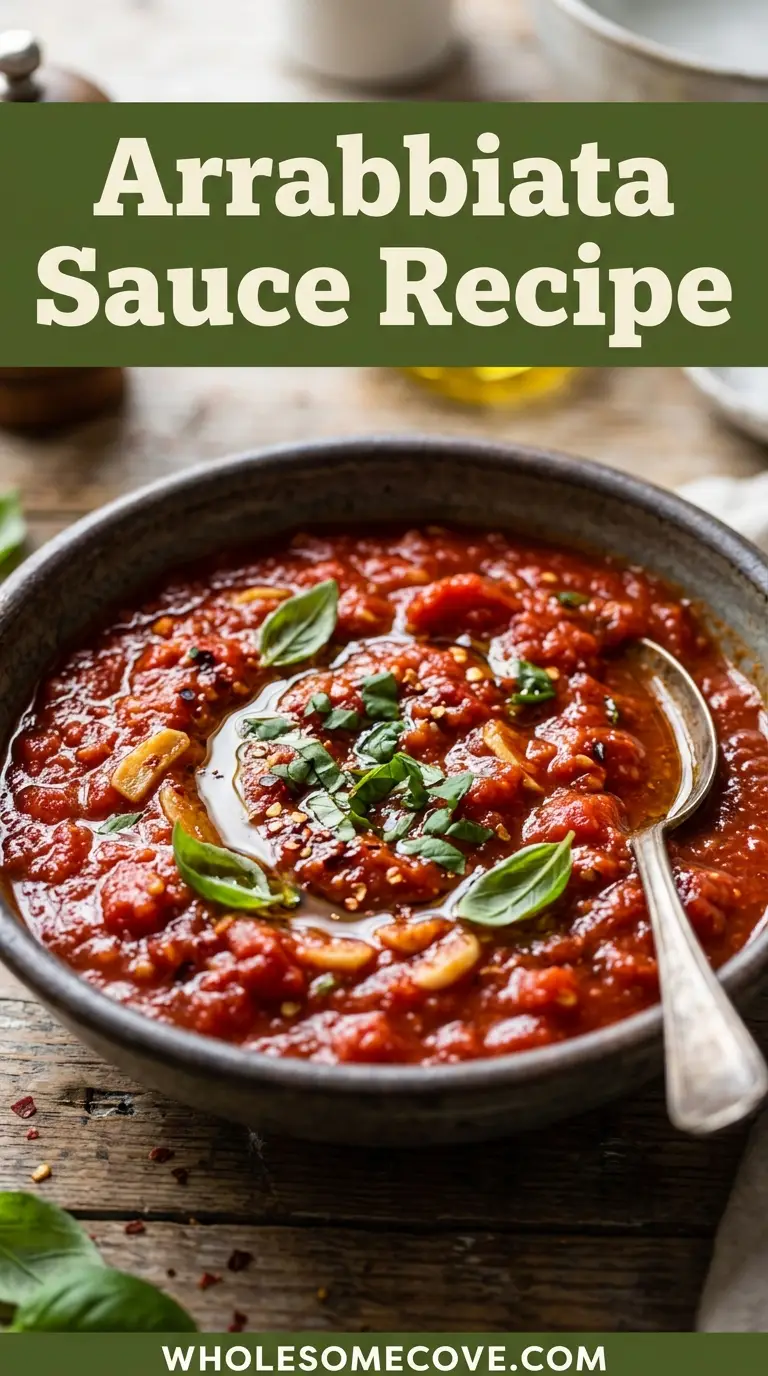
I first made this arrabbiata sauce recipe on a cold Wednesday night when I had nothing but a can of San Marzano tomatoes, a head of garlic, and a serious craving for something with a kick.
I had made marinara a hundred times, but that night I wanted heat, real heat, the kind that warms your chest and makes you reach for a second bowl of pasta anyway.
The result was this fiery, deeply savory sauce that I have been making on repeat ever since.
If you have never tried sugo all’arrabbiata, which literally translates to “angry sauce” in Italian, you are seriously missing out on one of the simplest and most satisfying pasta sauces in the Italian repertoire.
It is Roman in origin, made with nothing more than good tomatoes, garlic, olive oil, and crushed red pepper flakes, and it is ready in about 30 minutes flat.
| Quick Recipe Summary | |
|---|---|
| Prep Time | 5 minutes |
| Cook Time | 30 minutes |
| Total Time | 35 minutes |
| Servings | 4 servings (about 2 cups sauce) |
| Difficulty Level | Easy |
If you love bold Italian flavors, you will also want to check out my Marinara Sauce Recipe for a milder tomato sauce option to keep in your rotation.
Why You’ll Love This Arrabbiata Sauce Recipe
You only need one pan and about five pantry staples to pull this off.
That alone should be enough to convince you, but there is more.
The flavor is genuinely extraordinary for how little effort goes into it.
The heat from the red pepper flakes blooms beautifully in the olive oil, which gives the entire sauce this toasted, slightly smoky backbone you simply do not get by sprinkling chili on top after the fact.
Every bite hits with layers of sweetness from the tomatoes, sharpness from the garlic, and that satisfying slow burn.
It is naturally vegan and gluten-free, which means it works for almost anyone at the table.
It also doubles and freezes beautifully, so making a big batch on Sunday sets you up for fast weeknight meals all week long.
- Quick and weeknight-friendly: From pantry to table in 35 minutes with minimal prep.
- Deep, complex flavor: Slow-bloomed pepper flakes and fresh garlic create a sauce that tastes like it simmered all day.
- Naturally vegan and gluten-free: No dairy, no meat, no fuss.
- Incredibly versatile: Use it on pasta, pizza, chicken, meatballs, or as a dipping sauce for bread.
- Budget-friendly: Made almost entirely from pantry staples you likely already have.
- Freezer-friendly: Make a double batch and freeze half for those nights you need dinner on the table fast.
For another bold, crave-worthy Italian pasta sauce, you might also enjoy: Bolognese Recipe
Ingredients
You do not need much here, which is exactly why the quality of each ingredient matters. Do not skimp on the tomatoes or the olive oil. This is a sauce where every single component has to carry its weight.
- Extra-virgin olive oil: 3 tablespoons (45 ml) — use the good stuff; it is the fat base that everything else cooks in
- Garlic cloves: 6 large cloves, thinly sliced or minced (about 2 tablespoons)
- Crushed red pepper flakes: 1 to 1½ teaspoons (adjust to your heat preference)
- Canned whole San Marzano tomatoes: 1 can (28 oz / 794 g), crushed by hand
- Tomato paste: 1 tablespoon (15 g) — adds depth and body
- Kosher salt: 1 teaspoon, plus more to taste
- Black pepper: ¼ teaspoon, freshly ground
- Fresh flat-leaf parsley: a small handful, roughly chopped, for finishing
- Fresh basil leaves: 6 to 8 leaves, torn, optional but wonderful
- Pecorino Romano or Parmesan cheese: for serving, finely grated (optional)
For serving:
- Penne pasta: 12 to 16 oz (340 to 450 g) — penne rigate is traditional and highly recommended
You might also love this Spaghetti Sauce Recipe if you want another rich, slow-cooked tomato option.
Kitchen Equipment Needed
Nothing fancy required here. This is a true stovetop sauce that comes together in one pan.
- Large skillet or sauté pan: A wide, heavy-bottomed pan (at least 10 to 12 inches / 25 to 30 cm) gives the sauce room to reduce and develop flavor properly
- Wooden spoon or silicone spatula: For stirring and breaking up the tomatoes as they cook
- Chef’s knife: For slicing the garlic thinly and evenly
- Cutting board: Any sturdy surface for prep
- Can opener: To open the San Marzano tomatoes
- Box grater: For grating Pecorino Romano or Parmesan over finished bowls
- Immersion blender: Optional, but useful if you prefer a smooth rather than chunky sauce
- Large pot: For cooking the pasta alongside the sauce
- Colander: For draining the pasta
Read Also: Best Sauce Recipes
Recommended Products for This Recipe
These are my personal go-to products based on years of making this sauce. They genuinely make a difference in the final result.
1. San Marzano Whole Peeled Tomatoes (DOP-Certified)
San Marzano tomatoes are sweeter, less acidic, and more flavorful than standard canned tomatoes, and in a sauce this simple, the tomato quality makes or breaks the dish. I always look for the DOP certification on the label to make sure they are the real thing from the Campania region of Italy. One can is all you need for this recipe, but I always stock up.
2. High-Quality Extra-Virgin Olive Oil
Because olive oil is the very foundation of this sauce, using a cold-pressed, single-origin extra-virgin olive oil will give you noticeably better flavor than a standard grocery store bottle. It has a fruity, peppery quality that rounds out the garlic and heat beautifully.
3. Heavy-Bottomed Stainless Steel Sauté Pan
A wide, heavy-bottomed pan distributes heat evenly so the garlic and pepper flakes toast gently without burning. Thin, cheap pans create hot spots that can scorch the garlic in seconds, which will make the entire sauce bitter. This is one tool worth investing in.
4. Pecorino Romano Cheese Wedge
Authentic arrabbiata is traditionally finished with Pecorino Romano, not Parmesan. It has a sharper, saltier flavor that cuts through the heat of the sauce beautifully. Buying a wedge and grating it fresh makes a world of difference compared to the pre-grated stuff in a green shaker can.
Another favorite Italian pasta dish to explore: Cacio e Pepe Recipe
Step-by-Step Instructions: How to Make Arrabbiata Sauce
1. Prepare Your Ingredients
- Open the can of San Marzano tomatoes and pour them into a large bowl.
- Using your clean hands, crush the tomatoes one by one, squeezing them through your fingers until you have a rough, chunky pulp with all the juices.
- Keep all the tomato liquid from the can — that liquid is full of flavor and goes into the sauce.
- Peel all six garlic cloves and slice them very thinly, about 1/16 of an inch thick. Thin slices melt more gently into the oil and create a milder garlic flavor than minced. If you prefer a stronger garlic hit, mince it instead.
- Measure out your crushed red pepper flakes and set them next to the stove. Having everything ready before you start cooking is essential because this sauce moves quickly at the beginning.
- Roughly chop the parsley and tear any fresh basil leaves. Set them aside for finishing the sauce at the end.
2. Bloom the Garlic and Red Pepper Flakes
- Pour the extra-virgin olive oil into your large skillet and set it over medium-low heat.
- Let the oil warm gently for about 60 seconds. You want it warm but not hot — the goal is a very gentle sizzle, not a fry.
- Add the sliced garlic to the warm oil and cook slowly, stirring occasionally, for 2 to 3 minutes.
- The garlic should turn pale golden and become very fragrant. Watch it carefully and do not let it brown or it will turn bitter and ruin the sauce.
- Add the crushed red pepper flakes directly to the garlic oil and stir to combine.
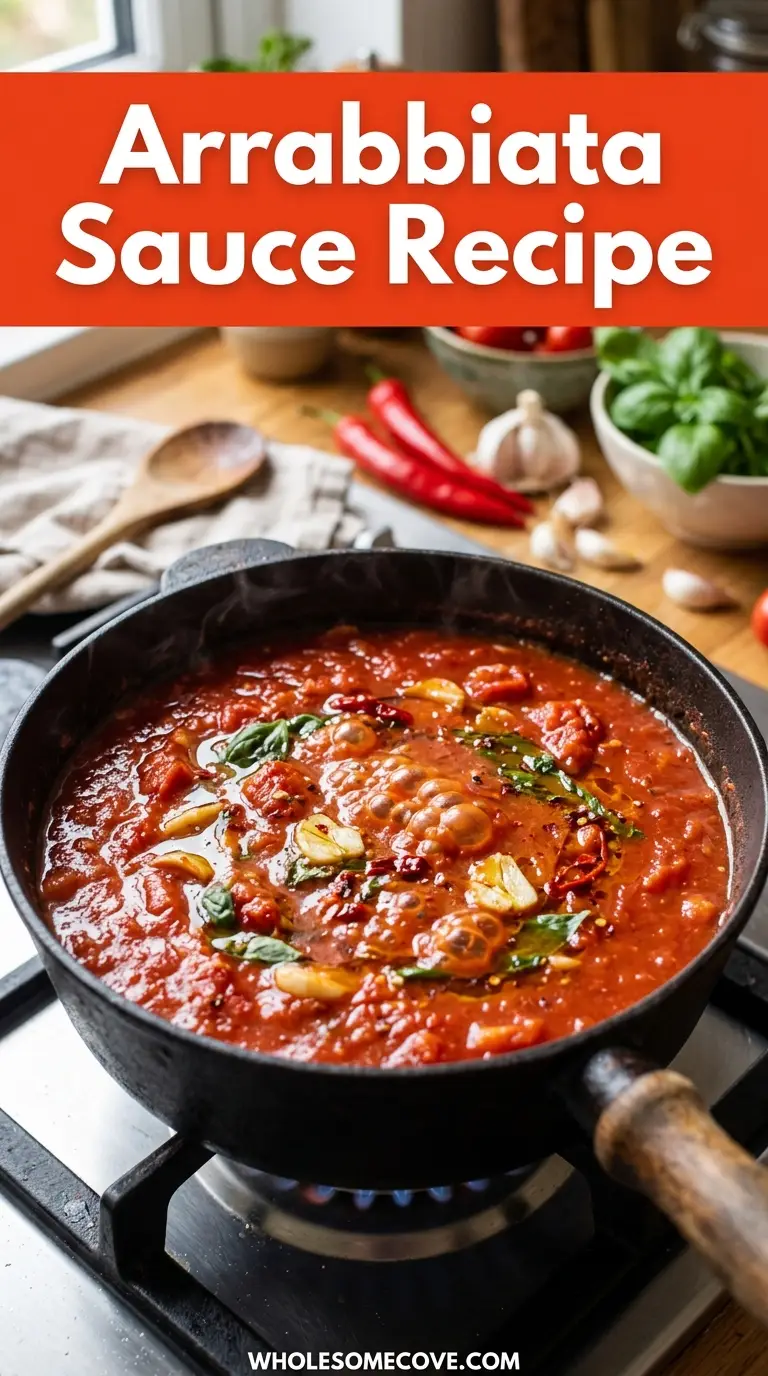
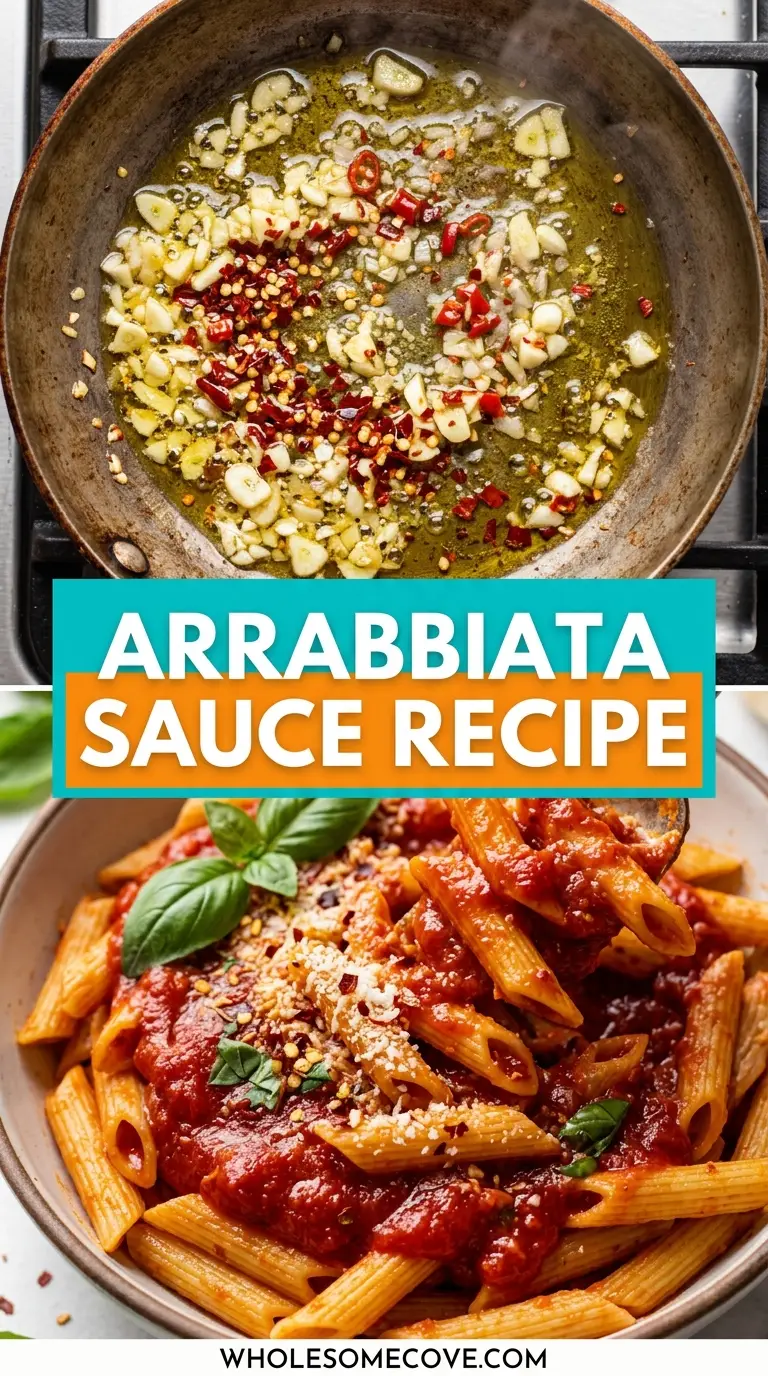
- Let the pepper flakes toast in the oil for 30 to 60 seconds, stirring constantly. You will see the oil turn a gorgeous reddish-orange color as the capsaicin and flavor compounds release into the fat. This step is the secret to arrabbiata’s signature depth — do not skip it.
3. Add the Tomatoes and Tomato Paste
- Carefully add the hand-crushed tomatoes and all their juices to the pan. Stand back slightly, as the tomatoes will splatter when they hit the hot oil.
- Add the tablespoon of tomato paste and stir everything together vigorously to incorporate the paste and distribute the oil evenly throughout the sauce.
- The sauce will come to a fast bubble quickly. This is normal — let it bubble for about 30 seconds.
- Add the kosher salt and freshly ground black pepper, stir to combine.
4. Simmer the Sauce
- Reduce the heat to medium-low and adjust so the sauce maintains a steady, gentle simmer — you want small bubbles breaking the surface regularly, not a rolling boil.
- Cook the sauce uncovered for 25 to 30 minutes, stirring every 5 minutes or so to make sure nothing is sticking to the bottom.
- As the sauce simmers, you will notice it darkening slightly in color and reducing in volume. This concentration is what builds the deep, rich flavor.
- After about 20 minutes, use the back of your wooden spoon to break up any remaining large tomato chunks to your preferred texture. If you like a completely smooth sauce, use an immersion blender directly in the pan (carefully, off the heat) or transfer to a blender.
- The sauce is ready when it has thickened to a consistency that coats the back of a spoon and the oil has just begun to separate and pool slightly at the edges — this is a sign the water has cooked off and the flavors have concentrated beautifully.
5. Cook the Pasta
- While the sauce is in its final 10 minutes of simmering, bring a large pot of water to a rolling boil.
- Add a generous amount of salt — the water should taste pleasantly salty, like mild seawater. This is the only chance you have to season the pasta itself.
- Add the penne and cook according to package directions until al dente, usually 9 to 11 minutes for dried penne.
- Before draining, scoop out about ½ cup (120 ml) of the starchy pasta cooking water and set it aside. This is liquid gold for adjusting sauce consistency.
- Drain the pasta well.
6. Finish and Serve
- Taste the arrabbiata sauce and adjust seasoning — add more salt if needed, or more red pepper flakes if you want a fiercer heat level.
- Add the chopped parsley and torn basil leaves to the sauce and stir to wilt them in.
- Add the drained penne directly to the skillet with the sauce.
- Toss everything together over medium heat for 1 to 2 minutes, adding splashes of the reserved pasta water as needed to help the sauce cling to the pasta and achieve a silky, glossy consistency.
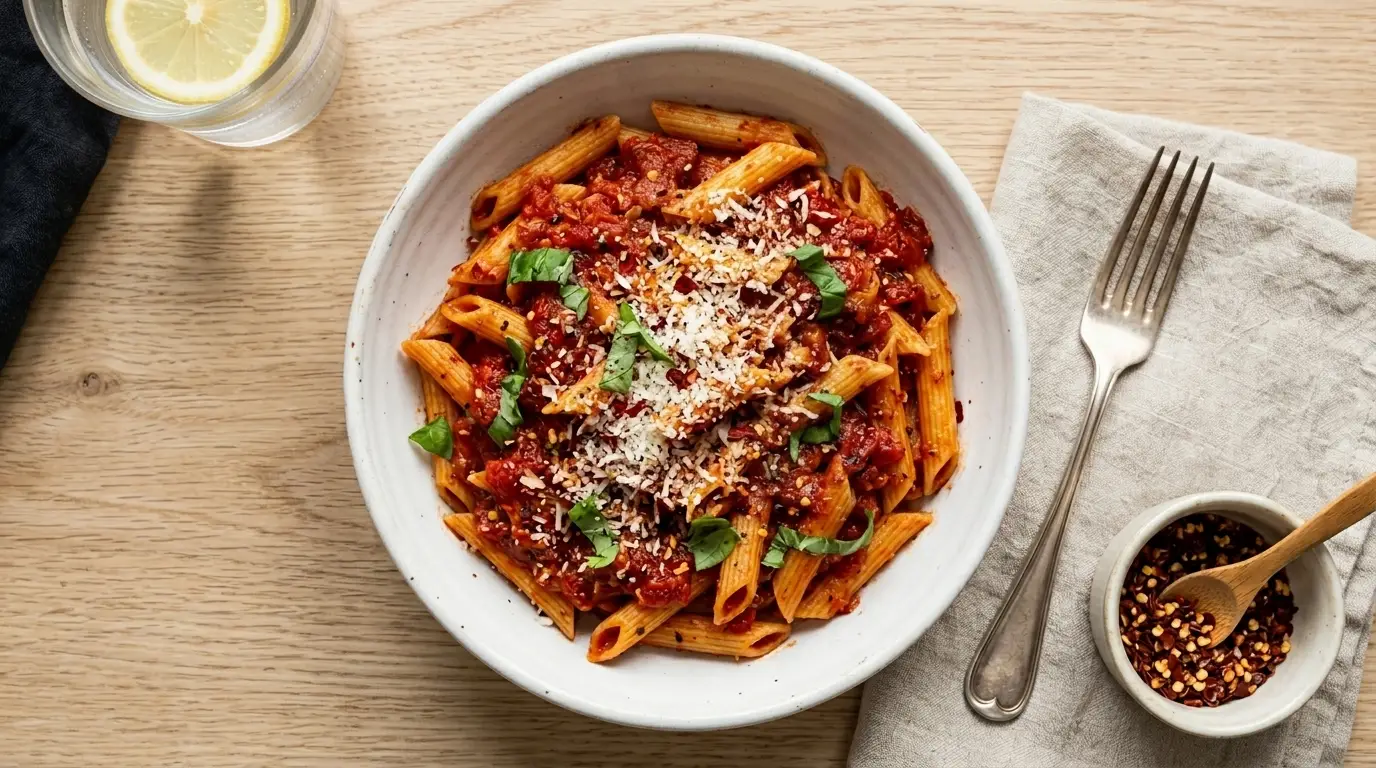
- Serve immediately in warm bowls, topped with a generous amount of freshly grated Pecorino Romano or Parmesan and a few extra torn basil leaves if you like.
For a hearty Italian pasta bake that also uses a punchy tomato sauce, you might love this Baked Ziti Recipe.
Tips for The Best Arrabbiata Sauce
Making arrabbiata is simple, but a few key details separate a good sauce from a truly great one. These are the lessons I learned the hard way so you do not have to.
- Never rush the garlic: Low and slow is the only way to go. Burnt garlic means a bitter sauce that cannot be saved — when in doubt, pull the pan off the heat for a moment.
- Use whole San Marzano tomatoes and crush them by hand: Pre-crushed tomatoes are often more acidic and lack the sweetness of whole plum tomatoes. Crushing them yourself gives you more control over the final texture too.
- Bloom the pepper flakes in the oil, always: This single step transforms the heat from flat and sharp to deep, rounded, and complex. Do not add the flakes with the tomatoes — they must go in the oil.
- Season the pasta water generously: Properly salted pasta water is the foundation of any great pasta dish. Use about 1 to 2 tablespoons of salt per gallon (3.8 L) of water.
- Save the pasta water: That starchy, salty water is the best sauce thinner and emulsifier you will ever use. A few splashes turn a too-thick sauce into something silky and perfectly coating.
- Let the sauce reduce fully: Do not cut the simmering time short. The 25 to 30 minutes is there for a reason — it concentrates sweetness, mellows the acid, and deepens every flavor.
- Finish with fresh herbs at the end only: Parsley and basil added at the end retain their freshness and brightness. Add them too early and you lose that vibrant, herby lift.
- Adjust heat level at the end: Start conservatively with the pepper flakes, then taste and add more near the end. It is easy to add heat, impossible to remove it.
- Use the best olive oil you own: In a five-ingredient sauce, there is nowhere for mediocre olive oil to hide. Splurge on the good bottle for this one.
Read Also: Vodka Sauce Recipe
What to Serve with Arrabbiata Sauce
Arrabbiata sauce is endlessly versatile, but it has a few especially natural pairings that make it shine.
The classic is penne pasta — specifically penne rigate, whose ridged surface grabs and holds the chunky sauce in every bite. Beyond pasta, this sauce works beautifully as a base for baked dishes, a pizza sauce, a dipping sauce, and a braising liquid for proteins.
- Chicken Parmesan: Swap the standard marinara for arrabbiata and the result is absolutely electric — the heat pairs brilliantly with the crispy chicken and melted mozzarella.
- Stuffed Shells: Spoon arrabbiata over ricotta-stuffed pasta shells before baking for a boldly flavored twist on a classic comfort dish.
- Healthy Bruschetta: Use arrabbiata as a saucy base on toasted bread for a spicy, satisfying appetizer.
- Eggplant Parmesan with Zucchini: The smoky, tender eggplant and the fiery sauce are a match made in Italian heaven.
- Mozzarella sticks or garlic bread: Keep it simple and use arrabbiata as a dipping sauce for crispy fried cheese or golden garlic bread.
- Lasagna: Layer arrabbiata between pasta sheets and béchamel for a spicier, bolder version of classic lasagna.
- Grilled chicken or sausage: Spoon the sauce over grilled Italian sausages or chicken thighs for an incredibly easy, flavor-packed dinner.
- Italian Wedding Soup: Round out an Italian-themed meal by starting with a warm bowl before the arrabbiata pasta course.
You might also enjoy: Pesto Recipe
Variations of Arrabbiata Sauce
The classic recipe is perfect as written, but this sauce is also a wonderful base to riff on once you have made it a few times and understand its personality.
The core — tomatoes, garlic, olive oil, and heat — stays the same. What changes is the depth, the add-ins, and the finishing touches.
- Spicy arrabbiata with anchovies: Add 2 to 3 oil-packed anchovy fillets to the oil along with the garlic. They melt into the sauce completely and add a savory, umami backbone without any fishy flavor.
- Arrabbiata with capers and olives: Stir in 2 tablespoons each of rinsed capers and roughly chopped Kalamata olives for a briny, Mediterranean twist.
- Chunky arrabbiata with onion: Dice one small red or yellow onion very finely and cook it in the oil for 5 minutes before adding the garlic. It adds a subtle sweetness that rounds out the heat.
- Smoky arrabbiata: Replace half the crushed red pepper flakes with smoked paprika for a sauce with a deeper, more complex heat that pairs especially well with chicken and sausage.
- Arrabbiata with white wine: Deglaze the pan with ¼ cup (60 ml) of dry white wine after blooming the garlic and pepper flakes, letting it reduce for a minute before adding the tomatoes. It adds brightness and complexity.
- Arrabbiata alla vodka: Stir in ¼ cup (60 ml) of heavy cream at the end of cooking for a spicy pink sauce that bridges the gap between arrabbiata and Vodka Sauce.
- Fire-roasted arrabbiata: Use fire-roasted canned tomatoes instead of standard San Marzanos for a smokier, slightly char-kissed flavor.
- Extra-garlicky arrabbiata: Double the garlic to 12 cloves for a version that would make any vampire retreat for good.
Read Also: Sunday Gravy Recipe
Storage and Reheating
Arrabbiata sauce stores beautifully, which makes it a fantastic meal prep project. Making a big batch on the weekend pays dividends all week long.
- Refrigerator: Store cooled sauce in an airtight container for up to 5 to 7 days.
- Freezer: Pour cooled sauce into freezer-safe containers or zip-top freezer bags in 1-cup (240 ml) portions and freeze for up to 3 months. The portioning makes it easy to thaw only what you need.
- Thawing: Transfer frozen sauce from the freezer to the refrigerator the night before you plan to use it, or thaw in a sealed bag under cold running water for about 30 minutes.
- Reheating on the stovetop: Pour the sauce into a small saucepan over medium-low heat and warm, stirring occasionally, for 5 to 8 minutes until heated through. Add a splash of water if the sauce has thickened during storage.
- Reheating in the microwave: Transfer to a microwave-safe bowl, cover loosely with a paper towel to prevent splattering, and microwave in 60-second intervals, stirring between each, until hot.
- Do not reheat pasta and sauce together if storing separately: Cook fresh pasta and combine with reheated sauce right before serving for the best texture.
- Label your containers: Always mark the date on stored sauce so you know exactly how long it has been in the fridge or freezer.
For another great make-ahead Italian sauce to add to your weekly rotation: Tomato Sauce Recipe
Nutritional Facts
The following nutritional information is an estimate per serving of sauce (approximately ½ cup / 120 ml), without pasta or cheese topping.
| Nutrient | Per Serving |
|---|---|
| Calories | ~120 kcal |
| Total Fat | 9g |
| Saturated Fat | 1.3g |
| Carbohydrates | 9g |
| Dietary Fiber | 2g |
| Sugars | 5g |
| Protein | 2g |
| Sodium | ~380mg |
| Vitamin C | 20% DV |
| Iron | 10% DV |
Nutritional values are approximate and will vary based on exact ingredients and portion sizes.
Read Also: Garlic Parmesan Sauce Recipe
Health Benefits of Key Ingredients
Arrabbiata sauce is not just delicious — its short, clean ingredient list means you are getting real, whole-food nutrition in every serving.
This is a sauce that has been part of Mediterranean eating for centuries, and modern research keeps affirming what Italian grandmothers already knew.
- Tomatoes: Rich in lycopene, a powerful antioxidant linked to reduced risk of heart disease and certain cancers. Cooked tomatoes actually release more lycopene than raw ones, making this sauce a genuinely health-supportive food.
- Extra-virgin olive oil: The cornerstone of Mediterranean cooking, packed with monounsaturated fats and polyphenols that support heart health, reduce inflammation, and may lower LDL cholesterol.
- Garlic: Contains allicin and other sulfur compounds with well-documented antibacterial and immune-boosting properties. Regular garlic consumption has been linked to lower blood pressure and improved cardiovascular health.
- Crushed red pepper flakes: The capsaicin in chili peppers is a natural metabolism booster and has anti-inflammatory properties. Some research also suggests it helps with appetite regulation.
- Fresh parsley: A surprisingly good source of vitamin K, vitamin C, and folate. It also contains flavonoids and antioxidants that support overall cellular health.
- Fresh basil: Contains essential oils with anti-inflammatory and antimicrobial properties. It also provides vitamin K, manganese, and vitamin A.
For another nutrient-rich Italian pasta dish that uses wholesome ingredients: Healthy Chicken Parmesan Recipe
FAQs About Arrabbiata Sauce
1. What is the difference between arrabbiata sauce and marinara sauce?
Both sauces are tomato-based Italian classics, but the key difference is heat. Arrabbiata always contains crushed red pepper flakes as a defining ingredient, which gives it its signature spicy kick. Marinara is typically milder and often includes dried herbs like oregano.
2. Is arrabbiata sauce supposed to be very spicy?
Arrabbiata translates to “angry” in Italian, so it is meant to have heat, but the level is completely adjustable. Starting with 1 teaspoon of red pepper flakes gives a moderate, pleasant warmth, while 1½ teaspoons or more delivers genuine heat. Always taste and adjust at the end of cooking.
3. What pasta goes best with arrabbiata sauce?
Penne rigate is the most traditional and highly recommended pairing. The ridged, tubular shape traps the sauce in every bite and holds up beautifully to the bold flavor. Rigatoni, spaghetti, and bucatini are also excellent options.
4. Can I make arrabbiata sauce ahead of time?
Absolutely, and it actually gets better overnight as the flavors continue to meld. Make the sauce up to 3 days ahead, refrigerate in an airtight container, and reheat gently on the stovetop before serving. It also freezes perfectly for up to 3 months.
5. Can I use fresh tomatoes instead of canned?
Yes, you can use fresh plum tomatoes when they are at peak season. Blanch them briefly, peel the skins, then crush and use them in the same quantity. That said, good quality canned San Marzano tomatoes are reliable year-round and often produce a more consistent, deeply flavored sauce than out-of-season fresh tomatoes.
For even more spicy Italian pasta inspiration, check out my Carbonara Recipe for a rich, creamy contrast.
Arrabbiata Sauce
Ingredients
- 3 tbsp extra-virgin olive oil - 45ml; use good quality cold-pressed
- 6 garlic cloves - large cloves, about 2 tbsp once sliced; thinly sliced or minced
- 1 tsp crushed red pepper flakes - use up to 1½ tsp for more heat; adjust to taste
- 28 oz canned whole San Marzano tomatoes - 794g, DOP-certified preferred; crushed by hand
- 1 tbsp tomato paste - 15g; adds depth and body
- 1 tsp kosher salt - plus more to taste
- ¼ tsp black pepper - freshly ground
- fresh flat-leaf parsley - small handful, roughly chopped; for finishing
- 6 fresh basil leaves - to 8 leaves, torn; optional but recommended
- 12 oz penne pasta - 340–450g (12–16 oz); penne rigate is traditional
- Pecorino Romano or Parmesan cheese - finely grated; optional topping
Equipment
- Large skillet or sauté pan (10–12 inch) - Heavy-bottomed preferred for even heat distribution
- Chef’s knife - For thinly slicing the garlic
- Box grater - For grating Pecorino Romano or Parmesan at serving
- Immersion blender - (optional) Use for a smoother sauce texture
- Large pot - For cooking the pasta
- Colander - For draining the pasta
Method
- Pour canned San Marzano tomatoes into a large bowl and crush them by hand until you have a rough, chunky pulp — keep all the juices. Thinly slice the garlic cloves, chop the parsley, and tear the basil leaves; set aside.
- Warm the olive oil in a large skillet over medium-low heat, add the sliced garlic, and cook gently for 2–3 minutes until pale golden and fragrant — do not let it brown. Add the crushed red pepper flakes and stir constantly for 30–60 seconds until the oil turns reddish-orange.
- Carefully add the crushed tomatoes and all their juices to the skillet, then stir in the tomato paste, kosher salt, and black pepper until fully combined. The sauce will come to a fast bubble — let it bubble for 30 seconds.
- Reduce heat to medium-low and simmer the sauce uncovered for 25–30 minutes, stirring every 5 minutes, until thickened and the oil just begins to separate at the edges. Break up any remaining large tomato chunks with a spoon, or blend for a smoother texture.
- Bring a large pot of generously salted water to a rolling boil and cook the penne until al dente according to package directions, about 9–11 minutes. Before draining, reserve ½ cup (120ml) of starchy pasta cooking water, then drain the pasta.
- Stir the chopped parsley and torn basil into the sauce, then add the drained penne and toss over medium heat for 1–2 minutes, adding splashes of reserved pasta water as needed for a silky, glossy consistency. Serve immediately topped with freshly grated Pecorino Romano or Parmesan.
Nutrition
Notes
- Never rush the garlic — keep the heat at medium-low and pull the pan off the heat momentarily if needed. Burnt garlic will make the entire sauce bitter and cannot be fixed.
- Blooming the red pepper flakes in the oil is non-negotiable for authentic arrabbiata flavor. Adding them with the tomatoes produces flat, sharp heat rather than the deep, rounded warmth this sauce is known for.
- Use DOP-certified whole San Marzano tomatoes and crush them by hand for the best texture and sweetness. Pre-crushed canned tomatoes tend to be more acidic and less flavorful.
- Save the pasta cooking water before draining — the starchy, salty liquid is the best tool for adjusting sauce consistency and helping the sauce cling beautifully to the pasta.
- Start with 1 teaspoon of red pepper flakes and taste at the end of cooking before adding more. It is easy to increase heat but impossible to reduce it.
- Refrigerate cooled sauce in an airtight container for up to 5–7 days, or freeze in 1-cup (240ml) portions for up to 3 months.
- To reheat, warm gently in a saucepan over medium-low heat with a splash of water, or microwave in 60-second intervals, stirring between each.
- For extra umami depth, add 2–3 oil-packed anchovy fillets to the oil along with the garlic — they melt in completely and add savory complexity without any fishy flavor.
- Penne rigate (ridged penne) is the most traditional pasta pairing because its ridges trap the chunky sauce. Rigatoni, spaghetti, and bucatini are also excellent options.
- This sauce also works beautifully as a pizza sauce, a braising liquid for chicken or sausage, or a spicy dipping sauce for garlic bread and mozzarella sticks.
Private Notes
Tried this recipe?
Let us know how it was!Final Thoughts
If you have been sleeping on homemade arrabbiata sauce, I hope this recipe wakes you right up.
It is the kind of dish that proves simple cooking is often the best cooking.
Five ingredients, one pan, thirty minutes, and you have something that genuinely tastes like it came out of a Roman trattoria.
The first time you make it and taste that garlicky, spicy, tomato-rich sauce coating a bowl of perfectly cooked penne, you will understand why this has been a staple of Italian kitchens for generations.
I would love to know how your arrabbiata sauce turns out — drop a comment below and tell me your spice level, any variations you tried, or what you served it with.
If this recipe made it into your regular dinner rotation, please share it with a friend who loves bold, unfussy cooking!
Recommended:
- Pizza Sauce Recipe
- Pasta Fagioli Recipe
- Healthy Alfredo Sauce Recipe
- Zuppa Toscana Recipe
- Authentic Italian Tiramisu Recipe
- Chicken Spaghetti Recipe
- Shakshuka Recipe
- Creamy Tomato Basil Soup Recipe
- Roasted Tomato Soup Recipe
- Healthy Homemade Pesto Recipe