My grandmother used to say that a good scalloped potatoes recipe could make even the grumpiest dinner guest smile. She was right.
I’ve been making this scalloped potatoes recipe for over a decade now, and it’s become my go-to side dish for everything from Sunday dinners to holiday gatherings.
The first time I attempted it, I was a nervous college student trying to impress my boyfriend’s parents. I sliced the potatoes too thick, didn’t season the cream sauce enough, and ended up with a watery mess. But after plenty of trial and error (and a few more watery messes), I finally cracked the code.
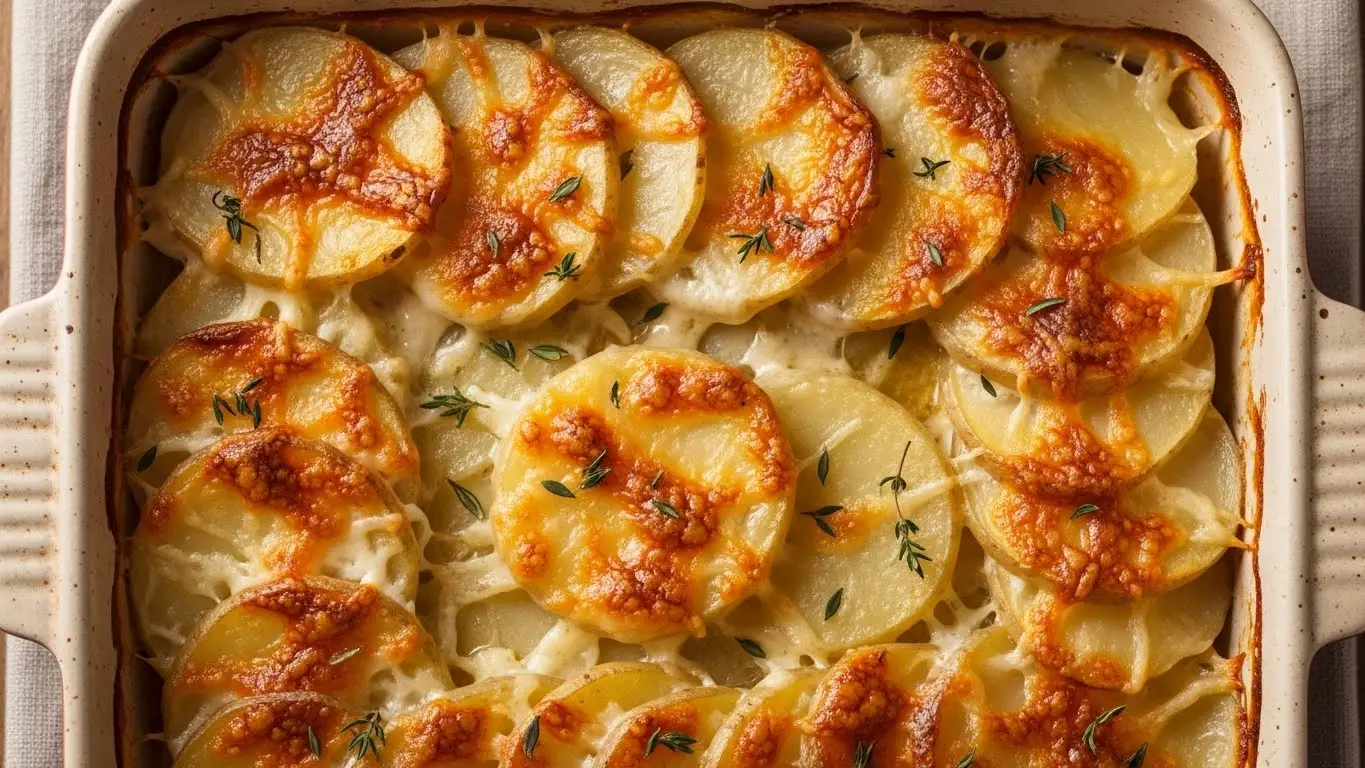
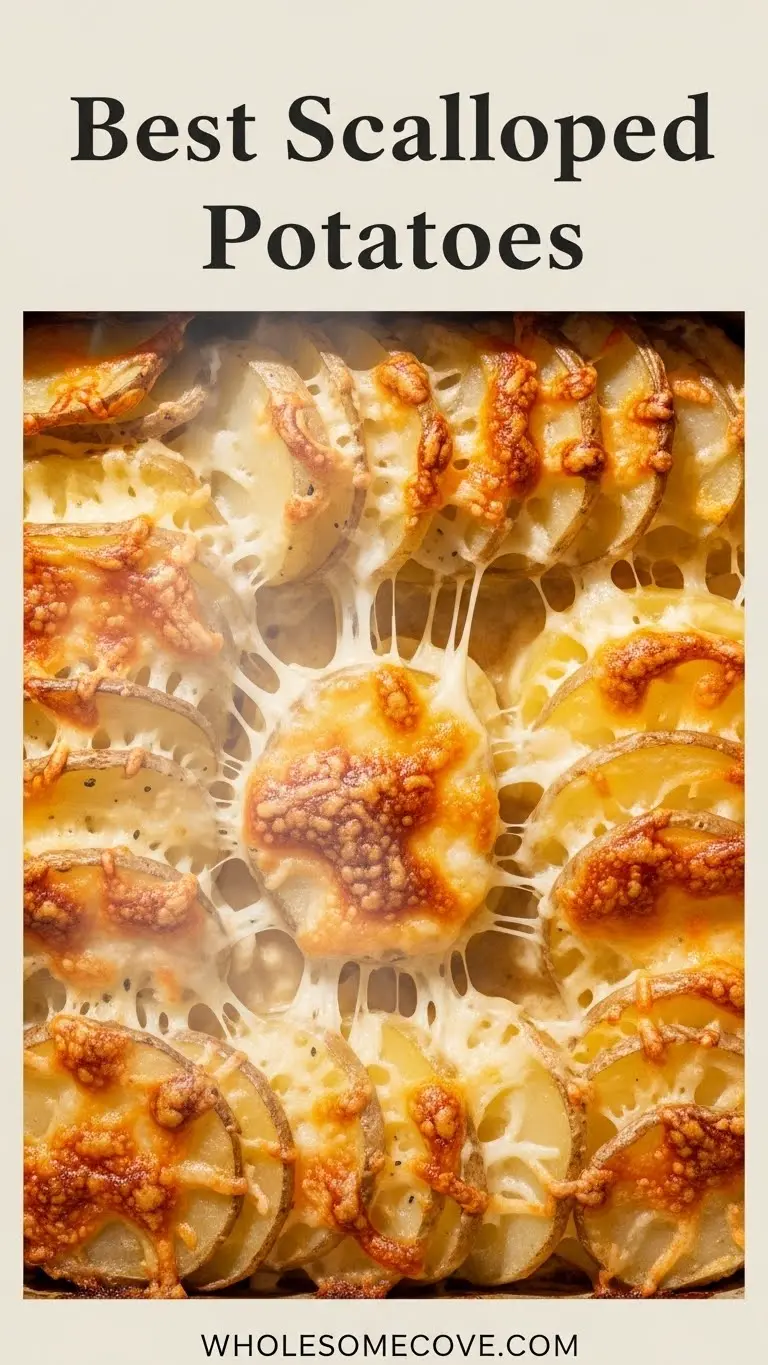
This recipe combines thinly sliced potatoes with a rich, garlicky cream sauce and just the right amount of cheese. The result is tender layers of potato heaven with a golden, bubbly top that makes everyone at the table reach for seconds.
| Quick Recipe Summary | |
|---|---|
| Prep Time | 20 minutes |
| Cook Time | 75 minutes |
| Total Time | 95 minutes |
| Servings | 8 servings |
| Difficulty Level | Medium |
Why You’ll Love This Scalloped Potatoes Recipe
This isn’t just any potato dish. This is the kind of comfort food that brings people together around the table and keeps them there long after the plates are empty.
The beauty of this scalloped potatoes recipe is in its simplicity. You don’t need fancy ingredients or complicated techniques, just good quality potatoes, cream, and a little patience. The thin slices create these delicate layers that soak up all that creamy, garlicky goodness, while the cheese on top gets golden and crispy in all the right spots.
Here’s what makes this recipe special:
- Perfectly tender potatoes that aren’t mushy or undercooked, just melt-in-your-mouth soft
- Rich, flavorful sauce made with heavy cream, garlic, and just a hint of nutmeg for warmth
- Golden, bubbly cheese topping that adds texture and extra richness
- Make-ahead friendly so you can prep it the night before and pop it in the oven when needed
- Crowd-pleaser guarantee because I’ve never met anyone who doesn’t love these potatoes
- Versatile enough to pair with everything from roasted chicken to prime rib to simple weeknight dinners
Ingredients
The secret to amazing scalloped potatoes starts with choosing the right ingredients. I always use Yukon Gold potatoes because they have this perfect balance of starch and creaminess that holds up beautifully during baking.
- 3 pounds (1.4 kg) Yukon Gold potatoes, peeled and sliced 1/8-inch (3 mm) thick
- 2 cups (480 ml) heavy cream
- 1 cup (240 ml) whole milk
- 4 cloves garlic, minced
- 3 tablespoons (43 g) unsalted butter, plus more for greasing
- 3 tablespoons (24 g) all-purpose flour
- 1 1/2 cups (150 g) Gruyere cheese, shredded and divided
- 1/2 cup (50 g) Parmesan cheese, freshly grated
- 1 1/2 teaspoons (9 g) salt
- 1/2 teaspoon (1 g) black pepper, freshly ground
- 1/4 teaspoon (0.5 g) nutmeg, freshly grated
- 2 tablespoons (8 g) fresh thyme leaves, or 1 teaspoon dried thyme
- 1 tablespoon (15 g) Dijon mustard
Kitchen Equipment Needed
Having the right tools makes this recipe so much easier. I learned this the hard way when I tried slicing potatoes with a dull knife and ended up with uneven pieces that cooked at different rates.
- Mandoline slicer for perfectly uniform potato slices (a sharp knife works too, but takes longer)
- 9×13-inch (23×33 cm) baking dish for even cooking and beautiful presentation
- Large saucepan for making the cream sauce
- Whisk for smooth, lump-free sauce
- Box grater or food processor for shredding cheese
- Measuring cups and spoons for precise ingredient amounts
- Sharp knife and cutting board for prep work
- Aluminum foil for covering during initial baking
Recommended Products for This Recipe
After making this recipe countless times, I’ve found a few products that really make a difference in the final result. These aren’t necessary, but they definitely elevate the dish.
1. OXO Good Grips Adjustable Mandoline Slicer
I resisted buying a mandoline for years, thinking I could just use my knife. But once I got this one, it completely changed how I make scalloped potatoes. The uniform slices mean every potato piece cooks at exactly the same rate, and what used to take me 20 minutes of careful knife work now takes about 5. The adjustable thickness settings are perfect, and the hand guard keeps your fingers safe.
2. Le Creuset Stoneware Rectangular Baking Dish
This baking dish distributes heat so evenly that you get perfectly cooked potatoes throughout, with none of those annoying burnt edges or undercooked centers. The stoneware holds heat beautifully too, so your potatoes stay warm at the table. It’s gorgeous enough to go straight from oven to table, which means one less dish to wash.
3. Emile Henry Flame Top Ceramic Baking Dish
If Le Creuset isn’t in your budget, this is an excellent alternative. I use this when I’m making scalloped potatoes for larger gatherings. The ceramic construction gives you that same even heat distribution, and it’s safe under the broiler if you want to get extra color on top at the end.
4. Premium Gruyere Cheese
The cheese makes such a difference in this recipe. I splurge on good quality Gruyere because its nutty, slightly sweet flavor is what takes these potatoes from good to absolutely incredible. Pre-shredded cheese has anti-caking agents that prevent it from melting smoothly, so always buy a block and shred it yourself.
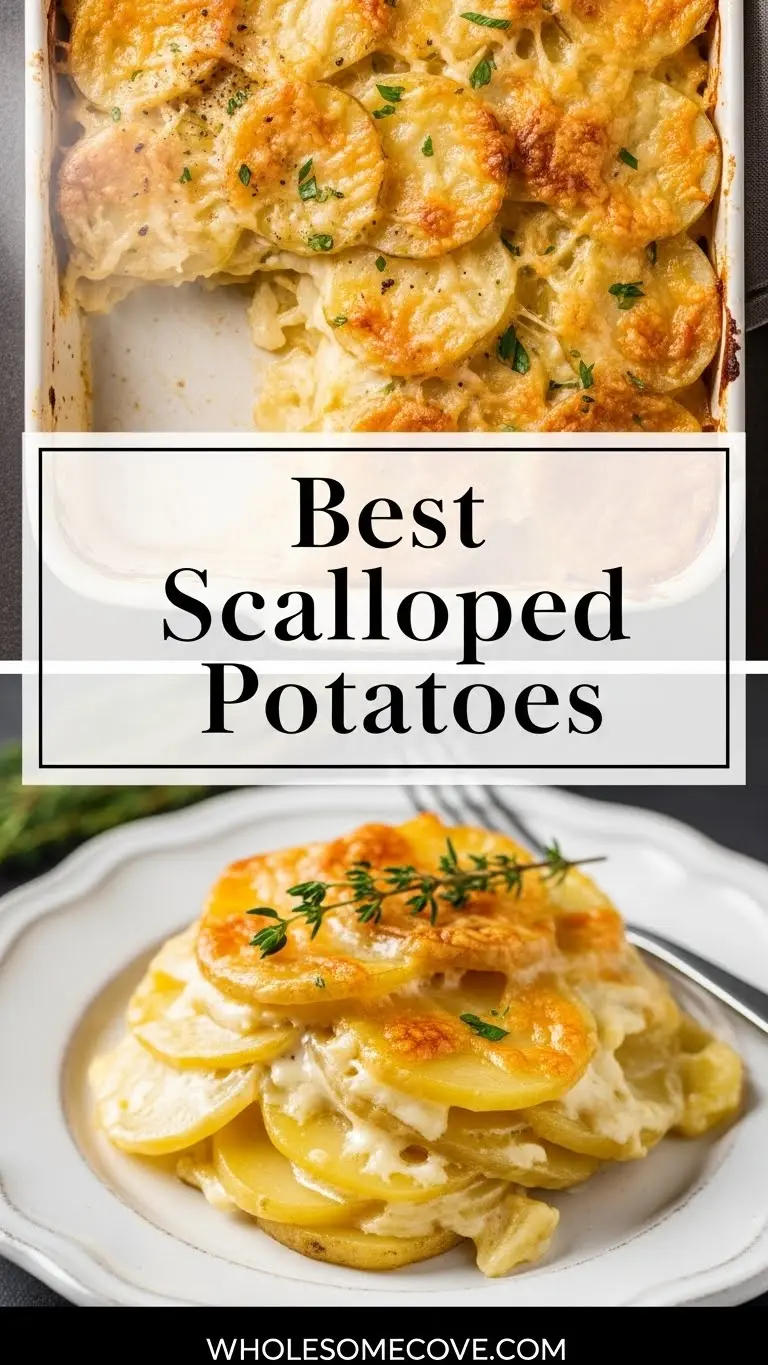
Step-by-Step Instructions: How to Make Scalloped Potatoes
Making scalloped potatoes is easier than you might think. The key is taking your time with the prep work and building those beautiful layers. Here’s exactly how to do it.
1. Prepare Your Potatoes and Preheat the Oven
- Preheat your oven to 375°F (190°C) and position the rack in the center.
- Generously butter your 9×13-inch baking dish, making sure to coat the bottom and sides well. This prevents sticking and adds flavor.
- Peel the potatoes using a vegetable peeler, then slice them 1/8-inch (3 mm) thick using a mandoline or sharp knife. The thinner and more uniform your slices, the better they’ll cook. Try to keep them all the same thickness.
- Place the sliced potatoes in a large bowl of cold water as you work. This prevents them from browning and removes excess starch, which helps the sauce stay creamy instead of gummy.
2. Make the Cream Sauce
- In a large saucepan, melt the butter over medium heat, swirling the pan to coat the bottom.
- Add the minced garlic and cook for about 1 minute, stirring constantly, until it becomes fragrant but not browned. Browned garlic tastes bitter, so watch it carefully.
- Sprinkle the flour over the garlic butter and whisk constantly for 2 minutes. This is your roux, and cooking it removes that raw flour taste.
- Slowly pour in the heavy cream and milk while whisking continuously. Start with just a little liquid, whisking until smooth, then gradually add the rest. This prevents lumps from forming.
- Add the Dijon mustard, thyme, salt, pepper, and nutmeg to the sauce. Whisk everything together until well combined.
- Continue cooking over medium heat, stirring frequently, until the sauce thickens enough to coat the back of a spoon, about 5 to 7 minutes. It should be thick but pourable.
- Stir in 1 cup of the shredded Gruyere and all of the Parmesan cheese. Keep stirring until the cheese melts completely and the sauce is smooth. Remove from heat.
Another favorite: Cheese Sauce Recipe
3. Assemble the Layers
- Drain the potato slices thoroughly and pat them dry with a clean kitchen towel or paper towels. Excess water will make your dish watery.
- Arrange one-third of the potato slices in the buttered baking dish, overlapping them slightly in an even layer. Don’t worry about making it perfect, just aim for relatively even coverage.
- Pour one-third of the cream sauce over the potato layer, using a spoon to spread it evenly and making sure it gets between the slices.
- Repeat this layering process two more times, ending with the cream sauce on top. Make sure the top layer of potatoes is well covered with sauce so they don’t dry out during baking.
- Sprinkle the remaining 1/2 cup of Gruyere cheese evenly over the top layer.
4. Bake the Scalloped Potatoes
- Cover the baking dish tightly with aluminum foil. Make sure the foil doesn’t touch the cheese by tenting it slightly.
- Place the dish in the preheated oven and bake for 45 minutes. The foil traps steam and helps the potatoes cook through without the top browning too quickly.
- After 45 minutes, carefully remove the foil. The potatoes should be starting to get tender when you insert a knife.
- Continue baking uncovered for another 25 to 30 minutes, until the top is golden brown and bubbly, and a knife inserted in the center goes through the potatoes easily without resistance.
- If you want an extra crispy, golden top, turn on the broiler for the last 2 to 3 minutes of cooking. Watch it closely because it can burn quickly under the broiler.
5. Rest and Serve
- Remove the baking dish from the oven and let it rest for 15 minutes before serving. This is crucial because it allows the sauce to thicken and set. If you skip this step, the potatoes will be soupy.
- The potatoes will continue to cook slightly during this resting time, and the flavors will meld together beautifully.
- Garnish with fresh thyme leaves if desired, then serve hot directly from the baking dish.
Read Also: Sweet Potato Casserole Recipe
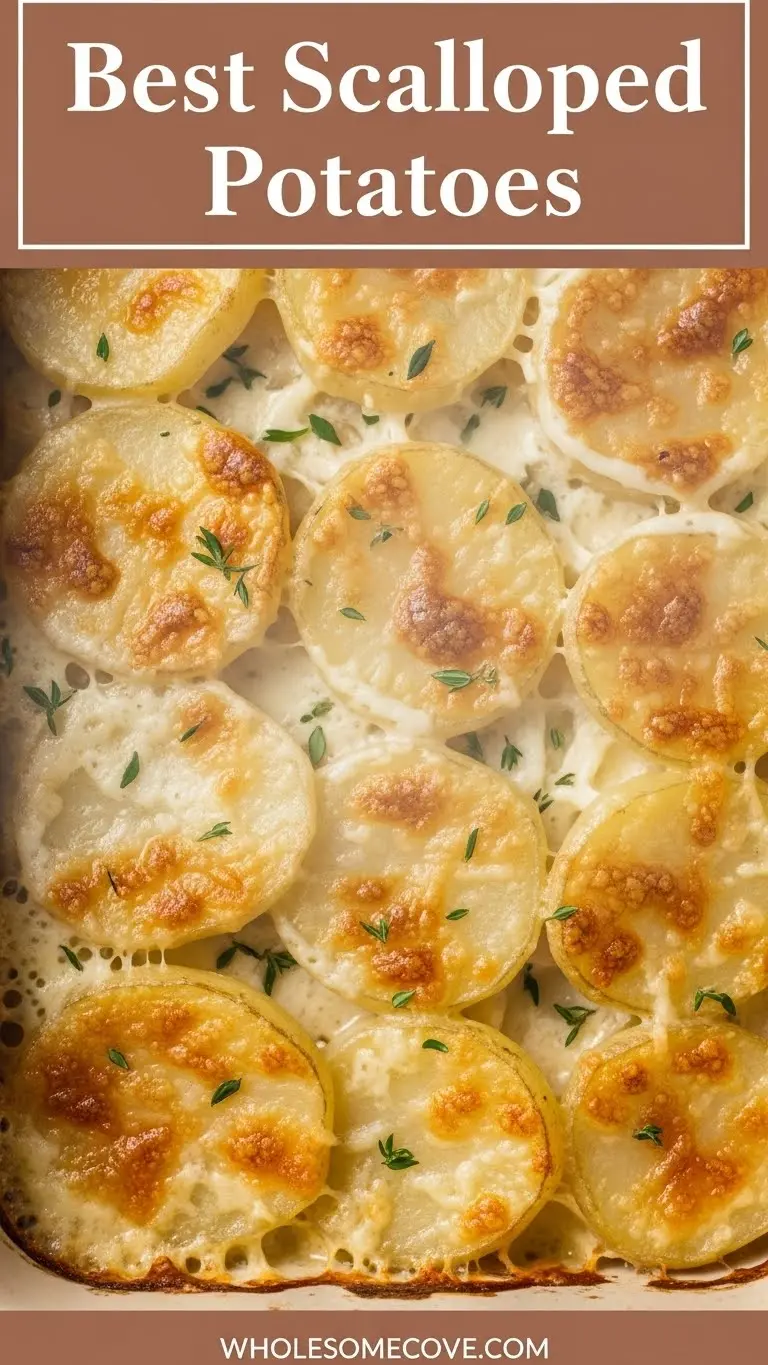
Tips for The Best Scalloped Potatoes
After making this recipe more times than I can count, I’ve learned a few tricks that take these potatoes from good to absolutely outstanding.
- Slice consistently: Use a mandoline if you have one. Uniform slices are the single most important factor for evenly cooked potatoes. I learned this after serving potatoes that were mushy on the edges and crunchy in the middle.
- Don’t skip the roux: Cooking the flour in butter before adding the liquid is what gives you a thick, creamy sauce that clings to the potatoes instead of pooling at the bottom of the dish.
- Season generously: Potatoes need more salt than you think. Taste your sauce before assembling and adjust the seasoning. It should taste slightly overseasoned on its own because the potatoes will absorb a lot of that flavor.
- Use freshly grated cheese: Pre-shredded cheese contains cellulose to prevent clumping, which also prevents it from melting smoothly. Shred your own for the creamiest results.
- Let it rest: This is the hardest part because the potatoes smell amazing and everyone wants to dig in. But waiting 15 minutes makes a huge difference in texture.
- Choose the right potato: Yukon Golds are ideal because they’re creamy but hold their shape. Russets are too starchy and fall apart. Red potatoes are too waxy and don’t absorb the sauce well.
- Cover then uncover: Covering for the first part of baking steams the potatoes so they cook through. Uncovering allows the top to brown and crisp up.
- Add flavor layers: The Dijon mustard adds a subtle tanginess that brightens the rich cream. The nutmeg adds warmth without being identifiable. Don’t skip these small additions.
Serving Suggestions
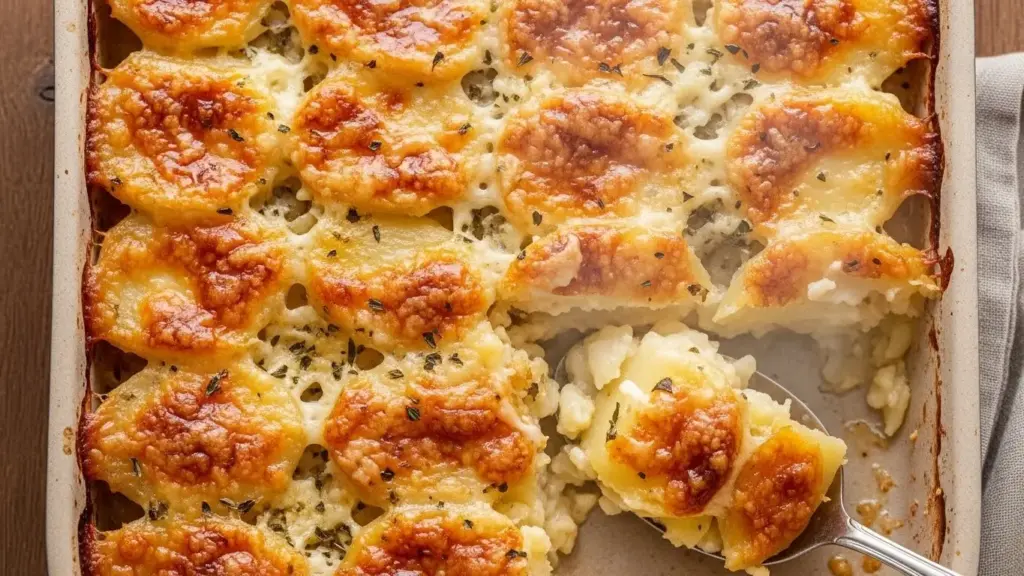
Scalloped potatoes are incredibly versatile and pair beautifully with so many main dishes. I love serving them alongside thanksgiving turkey during the holidays, but they work just as well for a simple weeknight dinner.
These potatoes are perfect with:
- Roasted or grilled meats like prime rib, roast chicken, pork chops, or steak. The creamy potatoes balance the richness of the meat perfectly.
- Holiday dinners alongside glazed ham, turkey, or filet mignon. They’re fancy enough for special occasions.
- Simple proteins like baked salmon, grilled chicken breasts, or pan-seared pork tenderloin when you want to elevate a basic weeknight meal.
- Green vegetables such as roasted asparagus, steamed green beans, or sautéed spinach for a complete dinner.
- Fresh salads like arugula with lemon vinaigrette or a simple mixed green salad to add brightness and cut through the richness.
Variations of Scalloped Potatoes
One of the things I love most about this recipe is how easily you can customize it. Once you’ve mastered the basic technique, try some of these delicious variations.
- Au Gratin style: Increase the cheese to 2 1/2 cups total and add a layer of cheese between each potato layer. Use a mix of sharp cheddar and Gruyere for extra cheesy goodness.
- Add bacon: Cook 6 slices of bacon until crispy, crumble it, and layer it between the potatoes. Reserve some for sprinkling on top. The smoky, salty bacon is incredible with the creamy potatoes.
- Caramelized onions: Slowly caramelize 2 thinly sliced onions in butter until golden and sweet, then layer them with the potatoes. This adds a wonderful depth of sweetness.
- Ham and potato: Dice 1 cup of leftover ham and layer it with the potatoes for a complete meal. This is my favorite way to use up Easter or Christmas ham.
- Herbed version: Add 2 tablespoons of mixed fresh herbs like rosemary, sage, and parsley to the cream sauce for a more herbaceous flavor profile.
- Lighter version: Replace half the heavy cream with chicken or vegetable broth, and use half the cheese. It won’t be as rich, but it’s still delicious.
- Garlic lovers: Triple the garlic and add roasted garlic cloves throughout the layers. My husband requests this version constantly.
- Spicy kick: Add 1/4 teaspoon of cayenne pepper to the sauce and sprinkle sliced jalapeños between the layers.
You might also enjoy: Hashbrown Casserole Recipe
Storage and Reheating
Scalloped potatoes actually keep really well, which makes them perfect for meal prep or using up leftovers.
Storing leftovers:
- Let the potatoes cool to room temperature before storing, but don’t leave them out for more than 2 hours.
- Transfer to an airtight container or cover the baking dish tightly with plastic wrap or aluminum foil.
- Store in the refrigerator for up to 4 days. The sauce will thicken as it sits, which is normal.
- Don’t freeze these potatoes. The dairy sauce separates and becomes grainy when frozen and thawed.
Reheating instructions:
- In the oven: This is my preferred method. Preheat to 350°F (175°C), cover the dish with foil, and bake for 20 to 25 minutes until heated through. Remove the foil for the last 5 minutes to crisp up the top.
- In the microwave: Place a portion on a microwave-safe plate, cover with a damp paper towel, and heat in 1-minute intervals, stirring between each interval, until hot. The texture won’t be as crispy, but it works for quick lunches.
- Individual portions: Cut into squares, place in individual ramekins, top with extra cheese, and reheat at 375°F (190°C) for 15 minutes. This is great for meal prep.
Make-ahead option:
- Assemble the entire dish up to 24 hours in advance, cover tightly with plastic wrap, and refrigerate.
- When ready to bake, remove from the fridge 30 minutes before baking to take the chill off.
- Add an extra 10 to 15 minutes to the covered baking time since you’re starting with cold potatoes.
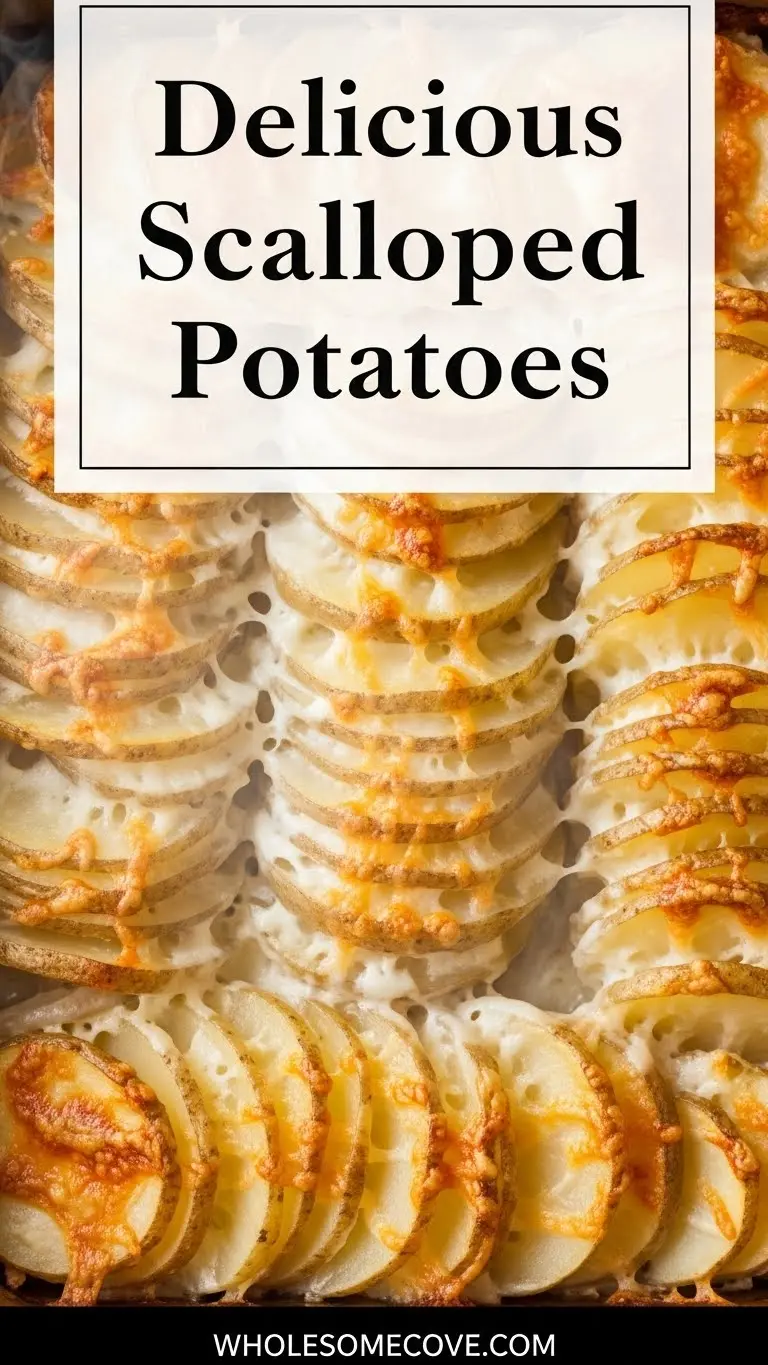
Nutritional Facts
This recipe makes 8 generous servings. Here’s the approximate nutritional information per serving:
- Calories: 385
- Total Fat: 24g
- Saturated Fat: 15g
- Cholesterol: 75mg
- Sodium: 520mg
- Total Carbohydrates: 32g
- Dietary Fiber: 3g
- Sugars: 4g
- Protein: 10g
- Calcium: 260mg
- Iron: 1mg
Note that these values are estimates and can vary based on the specific ingredients and brands you use. If you use different types of cheese or adjust the cream-to-milk ratio, the nutritional values will change accordingly.
Read Also: Mashed Potatoes Recipe
Health Benefits of Key Ingredients
While scalloped potatoes are definitely a comfort food indulgence, the ingredients do offer some nutritional benefits.
Potatoes:
Yukon Gold potatoes are more than just a delicious vehicle for cream and cheese. They’re packed with vitamin C, which supports immune function, and potassium, which helps regulate blood pressure and supports heart health. The skin (if you choose to leave it on) contains fiber that aids digestion. Potatoes also provide vitamin B6, which is important for brain development and function.
Garlic:
Beyond making everything taste better, garlic contains allicin, a compound with powerful antibacterial and antiviral properties. It supports heart health by helping to lower blood pressure and cholesterol levels. Garlic is also rich in antioxidants that protect against cell damage and may reduce the risk of certain diseases. Even the small amount in this recipe contributes to overall health.
Dairy (cream and milk):
The dairy products in this recipe provide calcium for strong bones and teeth, along with protein for muscle maintenance and repair. They also contain vitamin D, which helps your body absorb calcium more effectively. The fat in cream and cheese helps your body absorb fat-soluble vitamins A, D, E, and K from other foods you eat with the meal.
Cheese:
Both Gruyere and Parmesan are excellent sources of protein and calcium. They also contain conjugated linoleic acid (CLA), which may have anti-inflammatory properties. Cheese provides vitamin B12, essential for nerve function and red blood cell formation, and zinc, which supports immune function. Aged cheeses like Parmesan are naturally low in lactose, making them easier to digest for some people.
Thyme:
This herb isn’t just for flavor. Thyme contains thymol, a compound with antiseptic and antibacterial properties. It’s been used traditionally to support respiratory health and may help reduce inflammation in the body.
Of course, this is a rich dish best enjoyed in moderation as part of a balanced diet. But knowing that your comfort food has some nutritional value makes it taste even better.
FAQs About Scalloped Potatoes
1. What’s the difference between scalloped potatoes and au gratin potatoes?
The main difference is the cheese. Scalloped potatoes traditionally have little to no cheese and focus on the creamy sauce, while au gratin potatoes have generous amounts of cheese throughout the layers and on top. Both use thinly sliced potatoes and cream, but au gratin is cheesier and often has a thicker cheese crust. This recipe is technically a hybrid since it includes cheese but isn’t loaded with it.
2. Why did my scalloped potatoes turn out watery?
Watery scalloped potatoes usually happen for a few reasons. You might have skipped the roux (flour and butter mixture) that thickens the sauce, or you didn’t cook the roux long enough before adding the liquid. Another common cause is not letting the dish rest after baking – those 15 minutes allow the sauce to thicken and set. Also, if your potato slices weren’t dried properly after soaking, that excess water dilutes the sauce.
3. Can I make scalloped potatoes ahead of time?
Absolutely, and they’re perfect for this. Assemble the entire dish up to 24 hours before you plan to bake it, cover it tightly with plastic wrap, and refrigerate. When you’re ready to cook, let it sit at room temperature for 30 minutes, then bake as directed, adding an extra 10 to 15 minutes to the initial covered baking time. This is one of my favorite tricks for holiday meal prep.
4. Do I need to peel the potatoes for scalloped potatoes?
You can leave the skins on if you prefer a more rustic look and extra fiber, but I recommend peeling them. The skins can become tough and chewy during baking, and they prevent the potatoes from fully absorbing that creamy, garlicky sauce. If you do keep the skins, scrub the potatoes very well and choose organic if possible.
5. What can I substitute for heavy cream in this recipe?
You can use half-and-half for a lighter version, though the sauce won’t be quite as rich and thick. For an even lighter option, use a combination of whole milk and chicken broth (equal parts), but add an extra tablespoon of flour to help thicken the sauce. I don’t recommend using only milk as it results in a thin, runny sauce that doesn’t coat the potatoes properly.
Final Thoughts
Scalloped potatoes hold a special place in my heart because they represent comfort, tradition, and the kind of food that brings people together. Every time I make them, I’m reminded of my grandmother’s kitchen and the way she could turn simple ingredients into something magical.
This recipe might seem intimidating at first, but I promise it’s more forgiving than you think. Yes, you need to take your time slicing the potatoes evenly and building those layers, but the payoff is absolutely worth it. That first bite of creamy, tender potato with that crispy, cheesy top is pure bliss.
I’d love to hear how this scalloped potatoes recipe turns out for you. Do you add any special ingredients or make any tweaks to suit your family’s tastes? Drop a comment below and let me know, or share a photo of your finished dish on social media and tag me so I can see your creation.
Recommended:
- Green Bean Casserole Recipe
- Creamed Spinach Recipe
- Thanksgiving Stuffing Recipe
- Dinner Rolls Recipe
- Maple Glazed Carrots Recipe
- Grilled Vegetable Skewers Recipe
- Healthy Mashed Potatoes Recipe
- Air Fryer Simple Baked Potatoes Recipe
- Coleslaw Recipe
- Onion Rings Recipe