Most homemade cheese sauce turns grainy or oily because the cheese goes in while the pan is still too hot. This cheese sauce recipe avoids that by taking the saucepan off the burner before any cheddar goes in.
A simple butter and flour roux thickens one cup of whole milk until it coats the back of a spoon. Eight ounces of freshly shredded sharp cheddar then melts into it using only the leftover heat.
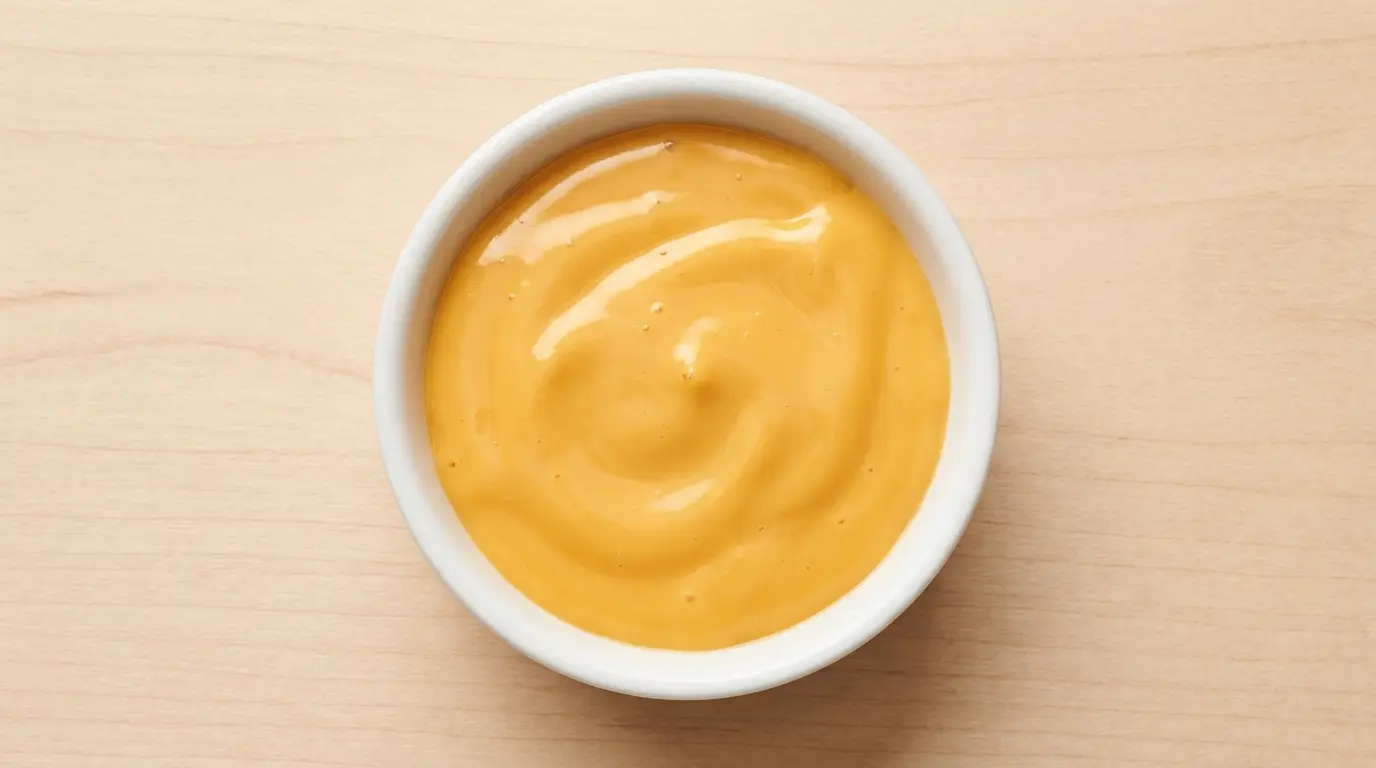
The result is a smooth, glossy sauce that clings to broccoli florets, fries, and soft pretzels. It takes one saucepan and about 15 minutes from start to finish.
| Quick Recipe Summary | |
|---|---|
| Prep Time | 5 minutes |
| Cook Time | 10 minutes |
| Total Time | 15 minutes |
| Servings | 4 servings (about 1½ cups / 360 ml) |
| Difficulty Level | Easy |
A related recipe is Bechamel Sauce.

Why You’ll Love This Cheese Sauce Recipe
This cheese sauce recipe does one job and does it well. It turns a few pantry staples into a smooth sauce in about 15 minutes.
- One saucepan: Everything happens in a single pot, so cleanup is a whisk, a pan, and a grater.
- Real cheese flavor: Sharp cheddar gives the sauce a tangy edge that jarred and powdered versions rarely match.
- Silky texture: Adding the cheese off the heat keeps the proteins relaxed, so the sauce stays smooth instead of stringy.
- Flexible thickness: Thin it with a splash of milk for drizzling or leave it thick for dipping.
- Easy to customize: Swap the cheese, add spices, or stir in beer or green chiles without changing the method.
- Quick scaling: Double the batch for a casserole or halve it for a single baked potato.
- Works with almost anything: Vegetables, potatoes, pasta, nachos, burgers, and pretzels all take to it.
You might also enjoy: Garlic Parmesan Sauce
Ingredients
Every ingredient here is simple, but the quality of the cheese matters most. Shred it yourself from a block, and the sauce will melt smoother and taste sharper.
- 2 tablespoons (28 g) unsalted butter
- 2 tablespoons (16 g) all-purpose flour
- 1 cup (240 ml) whole milk, cold or at room temperature
- 2 cups (225 g, about 8 oz) freshly shredded sharp cheddar cheese, from a block
- ¼ teaspoon (1.5 g) salt, plus more to taste
- ⅛ teaspoon (0.3 g) freshly ground black pepper
- ½ teaspoon (1 g) dry mustard, optional, whisked into the roux in Step 3
- ⅛ teaspoon (0.3 g) cayenne pepper, optional, whisked into the roux in Step 3
Read Also: Easy Alfredo Sauce Recipe
Kitchen Equipment Needed
You do not need anything fancy for this sauce. A whisk and a saucepan with a heavy base are the two tools that make the biggest difference.
- Medium stainless steel saucepan (2 quart / 1.9 liter): A heavy base spreads the heat evenly and helps prevent scorching.
- Balloon whisk: The wires break up flour lumps faster than a spoon can.
- Box grater: Use it to shred the cheese from a block.
- Silicone spatula: It scrapes the corners of the pan so nothing sticks and scorches.
- Measuring cups and spoons: The roux ratio is small, so accurate measuring keeps the thickness consistent.
- Glass storage containers with lids: They hold leftovers and can go straight into the microwave for reheating.
- Cutting board: A board under the grater keeps shredded cheese from scattering across the counter.
For another sauce that comes together in one saucepan, see Brown Gravy.
Recommended Products for This Recipe
These are personal recommendations aimed at the specific things that go wrong with homemade cheese sauce: dull flavor, lumps, scorching, and grainy texture. None of them are required, but each one solves a real problem.
1. Cabot Seriously Sharp Cheddar
Mild cheddar tends to disappear once it is melted into milk, leaving a sauce that tastes flat. A well-aged block like this one keeps its tang after melting, and because it comes as a block, you can shred it fresh and avoid the anti-caking coating found on bagged cheese.
2. Microplane Box Grater
Cheap graters snag, slip, and leave thick shreds that take longer to melt. A sharp, stable grater produces fine, even shreds that dissolve into the sauce within a minute of stirring.
3. All-Clad Stainless Steel Saucepan
Thin pans create hot spots that scorch milk before the roux has thickened. A bonded, heavy-bottomed pan like this heats evenly, so the sauce thickens at a steady pace and the bottom stays clean.
4. OXO Good Grips Balloon Whisk
Stirring with a spoon leaves tiny flour lumps that never smooth out once the milk is in. A balloon whisk reaches the corners of the pan and breaks up clumps as they form, which gives a velvety finish.
5. Pyrex Glass Storage Containers
Cheese sauce picks up odors and stains from plastic, and it can burn on the edges when reheated in a thin container. Glass keeps the flavor clean and tolerates gentle reheating, so leftovers taste like the first batch.
For a different sauce, try: Honey Mustard Sauce

Step-by-Step Instructions: How to Make Cheese Sauce
Follow these steps and you will have smooth cheese sauce on the stove in about 15 minutes.
1. Shred the Cheese
- Cut 8 ounces (225 g) of sharp cheddar from the block.
- Shred it on the box grater into a bowl until you have about 2 cups, lightly packed.
- Set the bowl next to the stove so you can add the cheese quickly once the sauce is ready.
- Measure the milk, salt, pepper, and optional spices ahead of time so nothing delays you once the butter is melted.
2. Melt the Butter
- Place a medium saucepan over medium heat.
- Add the 2 tablespoons (28 g) of unsalted butter.
- Let it melt completely, swirling the pan, about 1 minute.
- Do not let the butter brown, since browned butter would change the color and flavor of the sauce.
3. Cook the Roux
- Sprinkle the 2 tablespoons (16 g) of flour over the melted butter.
- Add the optional ½ teaspoon of dry mustard and ⅛ teaspoon of cayenne pepper at the same time, if using.
- Whisk constantly for 1 to 2 minutes, until the mixture looks thick, pale, and slightly bubbly.
- Cooking the flour at this stage removes the raw taste that otherwise lingers in the finished sauce.
4. Whisk in the Milk
- Pour in about ¼ cup (60 ml) of the milk and whisk hard until the mixture is smooth and thick.
- Add the rest of the milk gradually, a splash at a time, whisking constantly.
- Scrape the corners of the pan with the whisk or spatula so no flour hides there.
- Adding the milk slowly lets the roux dissolve evenly, which is how you avoid lumps.
5. Thicken the Sauce
- Keep the heat at medium and keep whisking as the sauce warms.
- Cook for 3 to 5 minutes, until small bubbles appear at the edges and the sauce coats the back of a spoon.
- Run a finger across the spoon. If the line stays clean, the sauce is thick enough.
- Never let the sauce boil hard, because that sets up the cheese to turn grainy later.
6. Take the Pan Off the Heat
- Slide the saucepan off the burner, or turn the burner off completely.
- Wait about 30 seconds and keep stirring so the temperature drops a little.
- The sauce should look like a thick, smooth white sauce with no bubbles.
- This short pause is the single most important step for a silky finish.
7. Melt in the Cheese
- Add the shredded cheddar in three or four handfuls.
- Whisk or stir until each handful is fully melted before adding the next.
- If the sauce cools too much to melt the last of the cheese, return the pan to very low heat for 15 to 20 seconds, stirring constantly.
- Stop as soon as the sauce is smooth and glossy.
8. Season, Taste, and Serve
- Stir in the ¼ teaspoon of salt and the ⅛ teaspoon of black pepper.
- Taste the sauce and add a pinch more salt if it needs it, remembering that cheddar is already salty.
- If the sauce is thicker than you like, whisk in a tablespoon of milk at a time until it flows the way you want.
- Serve right away while the sauce is warm and fluid.
Read Also: Gorgonzola Cream Sauce Recipe

Tips for The Best Cheese Sauce
A few small habits decide whether this sauce turns out velvety or broken. These are the ones that matter most.
- Shred the cheese yourself. Bagged shreds are coated with starch or cellulose to keep them from sticking, and that coating stops them from melting smoothly.
- Add the cheese off the heat. I ruined my first batch by dropping cheese into a bubbling pan, and it split into oily threads; pulling the pan off the burner for a full 30 seconds fixed it.
- Use sharp or extra sharp cheddar. Aged cheddar has more flavor per ounce, so it still tastes like cheddar after being diluted with milk.
- Choose whole milk. I’ve found that whole milk gives a creamier body than 2% because the extra fat helps the sauce emulsify.
- Cook the roux for at least a minute. The flour needs time in the butter to lose its raw taste and to thicken the milk properly.
- Add the milk gradually. A big pour of cold milk onto a hot roux makes lumps that are hard to whisk out.
- Keep the heat moderate. Medium heat thickens the sauce without scorching the bottom of the pan.
- Use the fine side of the grater when you can. Thin shreds melt faster than thick ones, so they need less time on the stove.
- Keep dry mustard nearby. I keep a small jar next to the stove because a half teaspoon sharpens the cheddar flavor without making the sauce taste like mustard.
- Season last. Cheese brings its own salt, so taste before adding more.
Another option worth trying is Mushroom Gravy.
What to Make with Cheese Sauce
This cheese sauce is a base more than a finished dish. It is meant to be poured, dipped, or stirred into other recipes.
These are the best ways to use it.
- Steamed broccoli or cauliflower: Spoon the warm sauce over the florets for the classic vegetable side.
- Baked Mac and Cheese: Double the batch and stir it into cooked macaroni before baking.
- Healthy Nachos: Drizzle the sauce over baked chips and toppings for a smoother result than melted shredded cheese.
- Air Fryer French Fries: Pour it over hot fries for a quick loaded-fry plate.
- Air Fryer Simple Baked Potatoes: Split the potato open and ladle the sauce into the center.
- Roasted Potatoes: Use the sauce as a dip for crisp-edged roasted potato wedges.
- Onion Rings: The sharp, creamy sauce balances the sweetness of fried onion.
- Pigs in a Blanket: Serve a small bowl alongside as a dipping sauce.
- Roasted Brussels Sprouts with Bacon: A spoonful over the sprouts mellows their bitterness.
- Breakfast Burritos: Drizzle some over the filling before rolling or on top after.
- Soft pretzels: Warm pretzel bites and a bowl of cheese sauce make an easy snack plate.
- Hot dogs and bratwurst: Spoon the sauce over grilled sausages in toasted buns.
For a pasta pairing, try: Creamy Mac and Cheese
Variations of Cheese Sauce
The base method stays the same for every version below. Change the cheese, the liquid, or the seasonings and keep the technique.
- Beer cheese sauce: Replace ¼ cup (60 ml) of the milk with a light lager, added with the rest of the milk.
- Smoked cheddar and Gouda: Replace ½ cup (about 55 g) of the cheddar with shredded smoked Gouda.
- Fast-food style: Swap ¼ cup (about 28 g) of the cheddar for 2 slices of white American cheese, torn into small pieces.
- Jalapeño cheese sauce: Stir in 2 tablespoons of diced pickled jalapeños after the cheese has melted.
- Nacho cheese sauce: Add ¼ teaspoon ground cumin to the roux and 2 tablespoons of canned diced green chiles at the end.
- Smoky cheese sauce: Whisk ¼ teaspoon smoked paprika into the roux with the dry mustard.
- Garlic cheese sauce: Whisk ¼ teaspoon garlic powder into the roux.
- Extra creamy sauce: Whisk 2 ounces (56 g) of softened cream cheese into the sauce along with the cheddar.
- Gluten-free sauce: Use a 1:1 gluten-free flour blend in place of the all-purpose flour.
- Lighter sauce: Use 2% milk, and expect a slightly thinner and less rich sauce.
Read Also: Taco Bell Quesadilla Sauce Recipe
Storage and Reheating
Cheese sauce thickens as it cools, so leftovers need a little care to return to their original texture. Gentle heat and a splash of milk do most of the work.
- Refrigerator: Store the sauce in an airtight container for up to 4 days.
- Prevent a skin: Press a piece of plastic wrap or parchment directly onto the surface before sealing the container.
- Freezer: Freeze in a sealed container for up to 2 months, though the texture may be slightly less smooth after thawing.
- Thawing: Move the frozen sauce to the refrigerator overnight before reheating.
- Stovetop reheating: Warm the sauce over low heat, whisking often, and add 1 to 2 tablespoons of milk to loosen it.
- Microwave reheating: Heat at 50 percent power in 20-second bursts, stirring between each, until warm and smooth.
- Keeping warm for serving: Hold the sauce in a small slow cooker set to warm, and stir every 15 minutes or so.
- Avoid high heat: Rapid reheating can make the sauce separate and turn oily.
A different approach to a creamy stovetop sauce is Vodka Sauce.
Nutritional Facts
The values below are estimates for one serving, which is about ⅓ cup (80 ml) of sauce, based on a batch that makes 4 servings.
| Nutrition Per Serving (Estimated) | |
|---|---|
| Calories | 330 kcal |
| Total Fat | 27 g |
| Saturated Fat | 16 g |
| Cholesterol | 80 mg |
| Sodium | 530 mg |
| Total Carbohydrates | 7 g |
| Dietary Fiber | 0 g |
| Sugars | 3 g |
| Protein | 16 g |
| Calcium | 470 mg |
For a lighter option, try: Healthy Alfredo Sauce
Tips for Using Cheese Sauce Like a Pro
Making the sauce is only half the job. Getting the right thickness and keeping it smooth while you serve it is what makes it work with different dishes.
- Match the thickness to the dish: Keep the sauce thick for dipping, and thin it with milk, one tablespoon at a time, for pouring over vegetables or fries.
- Thin with the right liquid: Warm milk keeps the flavor rich, while a little chicken or vegetable stock thins the sauce without making it heavier.
- Thicken without flour: Simmer the base a minute longer before adding the cheese, or stir in an extra handful of cheddar off the heat.
- Rescue a broken sauce: If it looks oily or curdled, take it off the heat, whisk in a tablespoon of warm milk, and whisk briskly until it comes back together.
- Use an immersion blender for stubborn graininess: Blending for about 30 seconds can smooth a sauce that has begun to separate.
- Scale up for pasta: Double the recipe to coat 8 ounces (225 g) of dry macaroni, and add extra milk if it tightens when mixed.
- Try sodium citrate for ultra-smooth sauces: This food-grade emulsifier, sold as sodium citrate, lets cheese melt smoothly with milk or water, and you should follow the package directions for the ratio.
- Pour, do not pile: Serve the sauce over hot food, because warm vegetables and potatoes keep it fluid longer than cold ones.
- Serve it in a warm bowl: A bowl rinsed with hot water slows the sauce from setting at the table.
- Dress the plate, not the whole dish: Sauce on the side lets everyone control how much they add, which keeps crisp foods like fries from going soft.
Read Also: Cheesy Potatoes Recipe
FAQs About Cheese Sauce
1. Why is my cheese sauce grainy?
Graininess usually comes from too much heat. Cheese proteins tighten and clump when the sauce is boiling or very hot.
Remove the pan from the burner before adding the cheese. Stir gently until each handful melts.
Pre-shredded cheese can also cause a gritty texture. Shredding a block yourself is the easiest fix.
2. Can I use pre-shredded cheese for cheese sauce?
You can, but the result is usually less smooth. Bagged cheese is coated with anti-caking agents like cellulose or potato starch.
Those coatings keep the shreds from melting fully. A block of cheese shredded at home melts more evenly and tastes sharper.
3. What is the best cheese for cheese sauce?
Sharp cheddar is the classic choice because it is flavorful and melts well. Aged versions taste stronger, which helps once the cheese is blended with milk.
Monterey Jack, Colby, Gouda, and Gruyère also melt smoothly. A mix of cheddar and a milder melting cheese gives balanced flavor and texture.
4. How do I thicken cheese sauce?
Simmer the milk and roux a minute or two longer before adding the cheese. The sauce thickens as the flour cooks and as it cools.
You can also stir in a little more shredded cheese off the heat. Do not return the sauce to a rolling boil.
5. How do I thin cheese sauce that is too thick?
Whisk in warm milk, one tablespoon at a time. Stop as soon as the sauce reaches the pourable consistency you want.
For reheated sauce, a small splash of milk is usually enough. Chicken or vegetable stock also works if you prefer a lighter flavor.
6. Can I make cheese sauce without flour?
Yes, a cornstarch slurry can replace the roux.
Stir 1 tablespoon (8 g) of cornstarch into 2 tablespoons of cold milk, then whisk it into the simmering milk until thickened.
Add the cheese off the heat as usual. The sauce will be a little glossier and less rich than one made with butter and flour.
7. Can I freeze cheese sauce?
You can freeze it for up to 2 months in a sealed container. Thaw it overnight in the refrigerator before reheating.
The texture may come back slightly less smooth. Reheat slowly with a splash of milk and whisk well.
8. How do I fix cheese sauce that has separated?
Take the pan off the heat and whisk in a tablespoon of warm milk. Keep whisking quickly until the sauce looks creamy again.
For a stubborn case, use an immersion blender for about 30 seconds. Avoid reheating it over high heat afterward.
For more sauces, try: Best Sauce Recipes
Cheese Sauce
Ingredients
- 2 tablespoons unsalted butter - 28 g
- 2 tablespoons all-purpose flour - 16 g
- 1 cup whole milk - 240 ml, cold or at room temperature
- 2 cups sharp cheddar cheese - 225 g, about 8 oz, freshly shredded from a block
- ¼ teaspoon salt - 1.5 g, plus more to taste
- ⅛ teaspoon freshly ground black pepper - 0.3 g
- ½ teaspoon dry mustard - 1 g, optional, whisked into the roux in Step 3
- ⅛ teaspoon cayenne pepper - 0.3 g, optional, whisked into the roux in Step 3
Equipment
- Medium stainless steel saucepan (2 quart / 1.9 liter) - A heavy base spreads the heat evenly and helps prevent scorching.
- Balloon whisk - The wires break up flour lumps faster than a spoon can.
- Box grater - Use it to shred the cheese from a block.
- Silicone spatula - Scrapes the corners of the pan so nothing sticks and scorches.
- Measuring cups and spoons - The roux ratio is small, so accurate measuring keeps the thickness consistent.
- Glass Storage Containers with Lids - Hold leftovers and can go straight into the microwave for reheating.
- Cutting board - A board under the grater keeps shredded cheese from scattering across the counter.
Method
- Shred 8 ounces of sharp cheddar from the block on a box grater into a bowl until you have about 2 cups, lightly packed. Set it next to the stove and measure the milk, salt, pepper, and optional spices ahead of time.
- Place a medium saucepan over medium heat and add the butter. Let it melt completely, swirling the pan, about 1 minute, without letting it brown.
- Sprinkle the flour over the melted butter, adding the optional dry mustard and cayenne if using. Whisk constantly for 1 to 2 minutes until thick, pale, and slightly bubbly.
- Pour in about ¼ cup of the milk and whisk hard until smooth and thick, then gradually add the rest of the milk a splash at a time, whisking constantly and scraping the corners of the pan.
- Keep the heat at medium and whisk for 3 to 5 minutes until small bubbles appear at the edges and the sauce coats the back of a spoon. Never let it boil hard.
- Slide the saucepan off the burner or turn the burner off completely. Wait about 30 seconds, stirring, so the temperature drops and the sauce looks like a thick, smooth white sauce.
- Add the shredded cheddar in three or four handfuls, stirring until each is fully melted before adding the next. If needed, return to very low heat for 15 to 20 seconds, stirring constantly.
- Stir in the salt and black pepper, taste and adjust seasoning, and thin with a tablespoon of milk at a time if desired. Serve right away while warm and fluid.
Nutrition
Notes
- Shred the cheese yourself—bagged shreds are coated with starch or cellulose that prevents smooth melting.
- Always add the cheese off the heat; a full 30-second pause is the single most important step for a silky finish.
- Use sharp or extra sharp cheddar so the flavor survives being diluted with milk.
- Whole milk gives a creamier body than 2% because the extra fat helps the sauce emulsify.
- Cook the roux for at least a minute to remove the raw flour taste and thicken the milk properly.
- Add the milk gradually—a big pour of cold milk onto a hot roux makes lumps that are hard to whisk out.
- Store leftovers in an airtight container in the refrigerator for up to 4 days; press plastic wrap onto the surface to prevent a skin.
- Freeze for up to 2 months, thaw overnight in the refrigerator, and reheat gently with a splash of milk.
- Rescue a broken or oily sauce by taking it off the heat and whisking in a tablespoon of warm milk, or blend for 30 seconds with an immersion blender.
- For variations: swap ¼ cup milk for light lager (beer cheese), add cumin and green chiles (nacho), or use a 1:1 gluten-free flour blend for a gluten-free version.
Private Notes
Tried this recipe?
Let us know how it was!Final Thoughts
A few simple ingredients and a short pause off the heat are all this sauce needs. Once you have the method down, you can pour it over almost anything.
Give this cheese sauce recipe a try on your next batch of broccoli, fries, or baked potatoes. Leave a comment to tell me how it turned out, and share it with a fellow cheese lover.
Recommended:
- Cheese Quesadilla Recipe
- Cheese Ball Recipe
- Velveeta Mac and Cheese Recipe
- Best Gravy Recipes
- Chicken Alfredo Recipe
- Broccoli Cheese Potato Soup Recipe
- Panera Broccoli Cheddar Soup Recipe
- Hashbrown Casserole Recipe
- Potato Cheese Soup Recipe