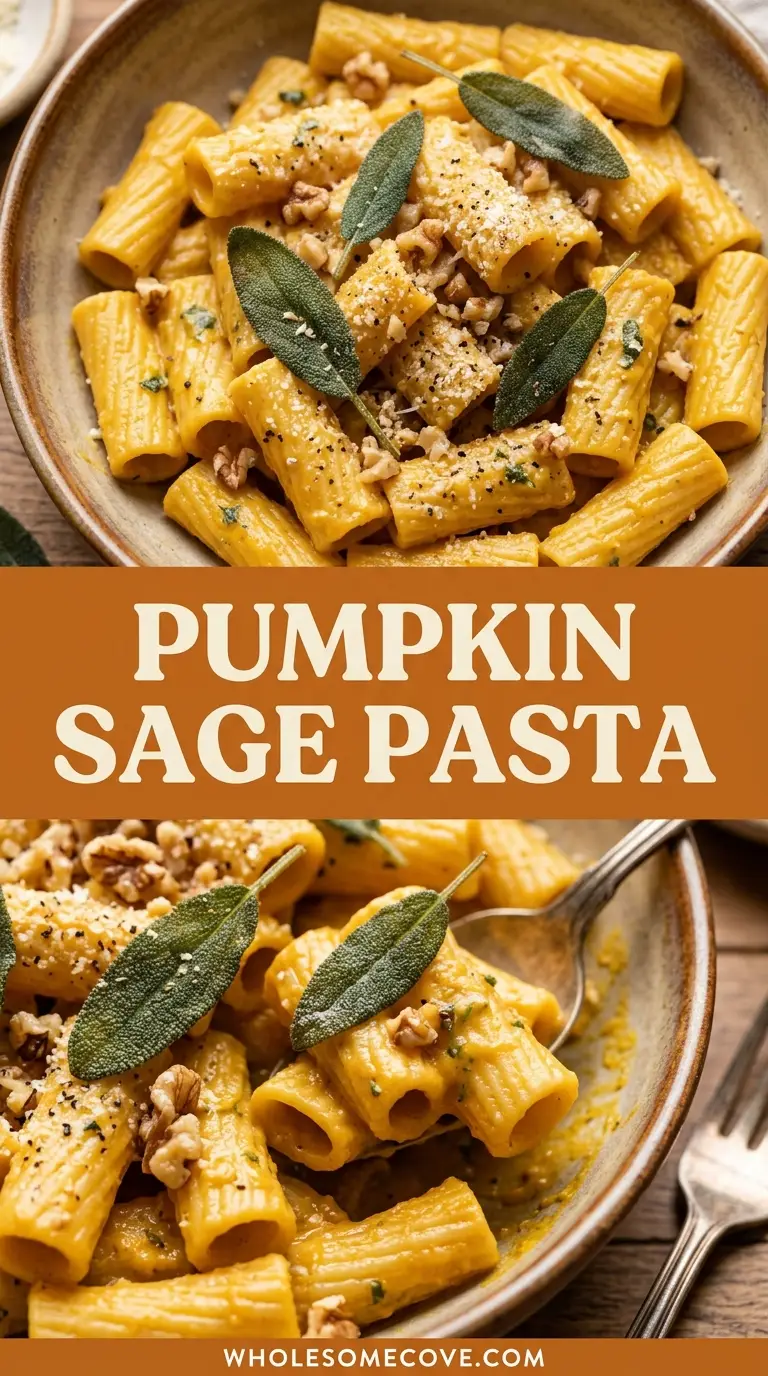
This pumpkin sage pasta recipe leans on canned pumpkin puree and a nutty brown butter sauce, the combination Italian home cooks have paired with squash-filled pasta for generations.
The sauce clings to the noodles in a matte, custard-thick layer rather than pooling at the bottom of the bowl, because pumpkin puree emulsifies with brown butter and starchy pasta water instead of separating into oil and liquid.
Most homemade versions turn out either too sweet or too thin, and that usually comes down to using pumpkin pie filling instead of plain puree, or skipping the reserved pasta water that ties the sauce to the noodles. This version uses six main ingredients plus pantry staples, and it’s on the table in under thirty minutes.
| Quick Recipe Summary | |
|---|---|
| Prep Time | 10 minutes |
| Cook Time | 20 minutes |
| Total Time | 30 minutes |
| Servings | 4 |
| Difficulty Level | Easy |
For another fall pasta built on a squash base, see Butternut Squash Risotto.
Why You’ll Love This Pumpkin Sage Pasta Recipe
This dish takes the flavors people already associate with fall, pumpkin, brown butter, and crisped sage, and turns them into a weeknight dinner instead of a holiday side. It uses one pot and one pan, so cleanup is minimal.
- Ready in 30 minutes: From boiling water to plated pasta, the entire process takes half an hour.
- Pantry-friendly: Canned pumpkin, butter, garlic, and parmesan are ingredients most kitchens already have during fall and winter months.
- Balanced flavor: The pumpkin adds body without turning the sauce sweet, since it’s paired with savory garlic, salty parmesan, and earthy sage.
- Vegetarian: No meat is required, though it takes well to add-ins like sausage or bacon.
- Kid-friendly texture: The sauce is smooth and mild, closer to alfredo than to a pumpkin spice flavor profile.
- One-pan sauce: The brown butter, sage, and pumpkin sauce all come together in a single skillet.
You might also enjoy: Pesto Recipe
Ingredients
Everything below serves four people generously, with quantities listed in both imperial and metric measurements.
- Rigatoni or penne pasta: 12 oz (340g), a ridged shape that holds onto the sauce well
- Canned pumpkin puree: 1 cup (240g), not pumpkin pie filling
- Unsalted butter: 6 tablespoons (85g)
- Fresh sage leaves: 15 to 20 leaves, roughly the amount from one small bunch
- Garlic: 3 cloves, minced
- Grated parmesan cheese: 1/2 cup (50g), plus more for serving
- Reserved pasta water: 1/2 cup (120ml), starchy water saved before draining
- Ground nutmeg: 1/4 teaspoon
- Salt and black pepper: to taste
- Heavy cream (optional): 1/4 cup (60ml), for an extra-silky sauce
- Toasted pine nuts or pepitas (optional garnish): 1/4 cup (35g)
I’ve found that reduced-sodium canned pumpkin gives more control over the final seasoning than the pre-spiced pie-mix blends some stores stock right next to it.
For a lighter option, try: Healthy Alfredo Sauce
Kitchen Equipment Needed
Nothing here is specialized. A standard home kitchen already has most of it.
- Large stockpot for boiling the pasta
- Stainless steel skillet or sauté pan for the brown butter and sauce
- Colander for draining the pasta
- Wooden spoon for stirring the sauce
- Measuring cups and spoons
- Tongs, for tossing the pasta into the sauce
Read Also: Cacio E Pepe Recipe
Recommended Products for This Recipe
These are products I reach for specifically because of problems they solve in this recipe, not general kitchen favorites.
1. Microplane Nutmeg Grater
Pre-ground nutmeg loses its aroma within a few months of opening the jar, which flattens the sauce’s background warmth. A microplane lets you grate whole nutmeg straight into the pan in seconds, and the difference in fragrance is noticeable immediately.
2. Le Creuset Enameled Skillet
Thin, lightweight pans heat unevenly, which makes butter brown in spots before the rest catches up and often leads to scorched sage. An enameled cast iron skillet holds steady heat across the surface, so the butter browns evenly and the sage crisps instead of burning at the edges.
3. OXO Wooden Pasta Fork
A standard spoon doesn’t grip ridged pasta shapes well, so sauce ends up unevenly distributed once it’s plated. The notched head of a wooden pasta fork catches rigatoni and lifts it directly into the sauce, which coats every piece more evenly.
4. Libbey Pasta Serving Bowls
Flat dinner plates let a loose sauce spread out and cool fast, which is a common complaint with cream-based pasta sauces. Shallow, wide-rimmed pasta bowls keep the sauce pooled around the noodles instead of running to the edges, so the dish stays warm longer.
For a different approach, see Bolognese Recipe.
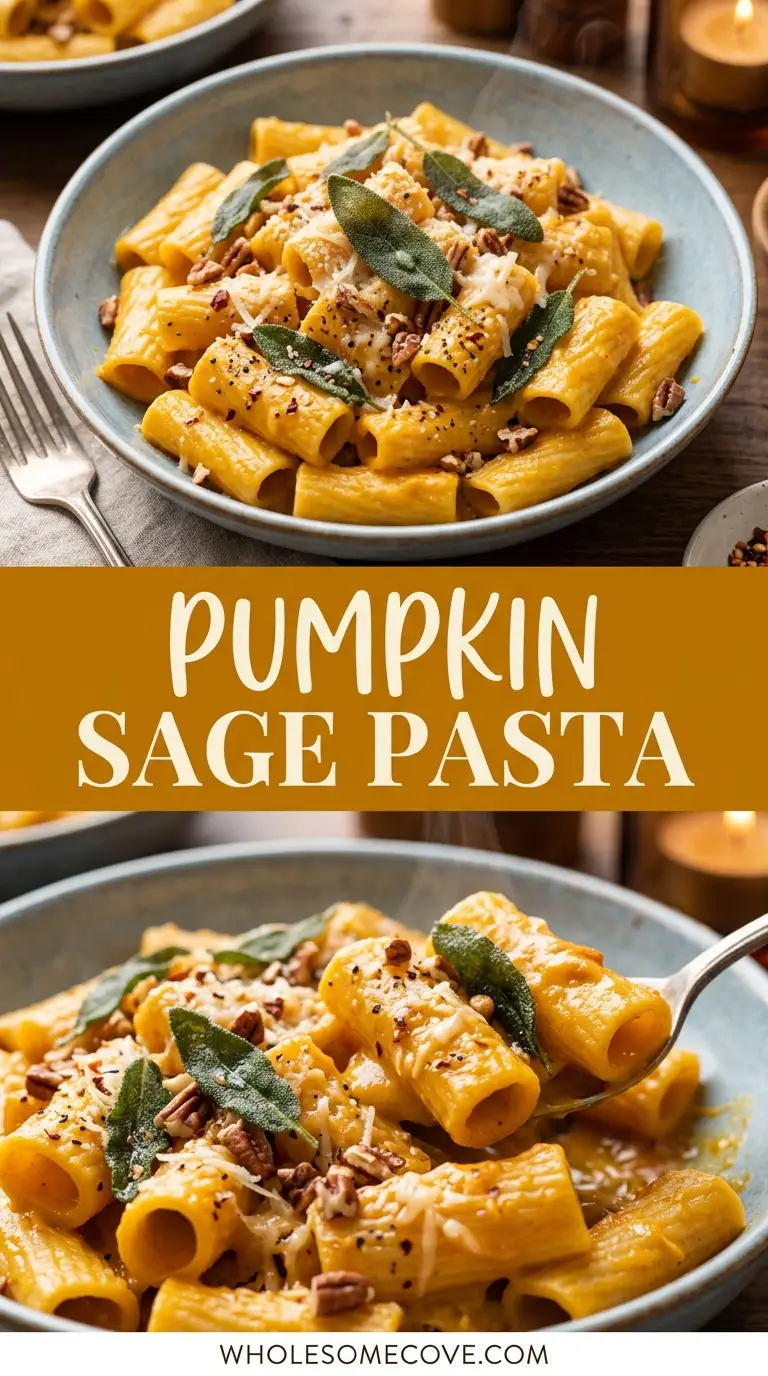
Step-by-Step Instructions: How to Make Pumpkin Sage Pasta
Follow these steps and you’ll have this pumpkin sage pasta ready in about thirty minutes.
1. Boil the Pasta
- Bring a large stockpot of generously salted water to a rolling boil.
- Add the rigatoni or penne and cook according to package directions until al dente.
- Reserve 1/2 cup (120ml) of the starchy pasta water in a measuring cup before draining.
- Drain the pasta in a colander and set it aside.
2. Make the Brown Butter and Crispy Sage
- Melt the butter in a large skillet over medium heat.
- Once the butter foams and the foam begins to subside, add the sage leaves.
- Cook for 2 to 3 minutes, swirling the pan often, until the butter turns golden brown and smells nutty and the sage leaves crisp at the edges.
- Use a slotted spoon to remove the sage leaves to a paper towel-lined plate, leaving the browned butter in the pan.
I’ve scorched the butter more than once by walking away right as it started to smell nutty, so now I keep a spoon in hand for the entire two to three minutes this step takes.
3. Build the Pumpkin Sauce
- Reduce the heat to medium-low and add the minced garlic to the browned butter.
- Cook for 30 seconds, stirring constantly, until fragrant but not browned.
- Whisk in the canned pumpkin puree until smooth.
- Add the reserved pasta water, nutmeg, salt, and pepper, whisking until the sauce is uniform.
- If using heavy cream, stir it in now and simmer for 1 to 2 minutes until the sauce thickens slightly.
4. Combine Pasta and Sauce
- Add the drained pasta directly to the skillet with the sauce.
- Toss with tongs until every piece is coated.
- Stir in the grated parmesan cheese and toss again until melted and glossy.
- Taste and adjust salt, pepper, or nutmeg as needed.
5. Serve
- Divide the pasta among four bowls.
- Top each bowl with the crispy sage leaves and toasted pine nuts or pepitas, if using.
- Finish with an extra grating of parmesan cheese.
For more recipes in this style, check out Marry Me Chicken Pasta.
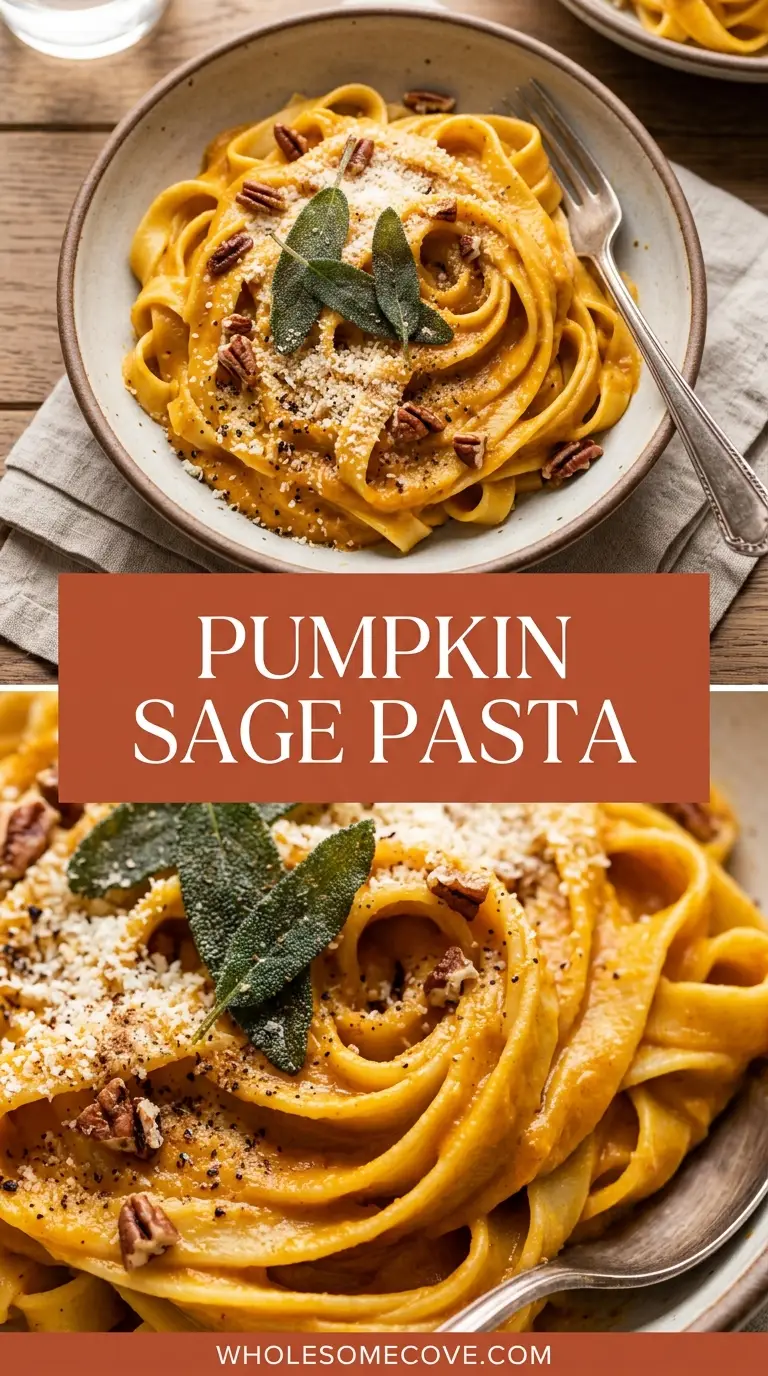
Tips for The Best Pumpkin Sage Pasta
A few small adjustments make a noticeable difference in the final texture and flavor.
- Use plain pumpkin puree, not pie filling: Pie filling already contains sugar and spices that throw off the savory balance of this sauce.
- Don’t skip the pasta water: The starch in it helps the sauce bind to the pasta instead of sliding off.
- Watch the butter closely: Browned butter can go from golden to burnt in under thirty seconds once the color starts turning.
- Grate cheese fresh: Pre-shredded parmesan contains anti-caking agents that keep it from melting smoothly into the sauce.
- Add cream for richness, not necessity: The sauce works without it, but cream rounds out the sharper edges of the pumpkin.
- Salt in stages: Add a little salt to the pasta water, a little to the sauce, and taste again at the end before adding more.
I keep an extra splash of reserved pasta water on the counter even after draining, because this sauce tightens up fast once it sits for a few minutes off the heat.
Another option worth trying is Creamy Avocado Pasta.
What to Serve with Pumpkin Sage Pasta
This pasta is rich enough to serve as a full meal on its own, but a few sides round it out for a larger dinner.
- A simple green salad with a light vinaigarette to cut through the richness of the sauce
- Warm, crusty garlic bread for scooping up extra sauce
- Roasted Brussels Sprouts with Bacon for a smoky, savory contrast
- A cup of Creamy Tomato Basil Soup as a starter
- A dry white wine, such as a Pinot Grigio, to balance the buttery sauce
- Apple Crisp for a fall-themed dessert to close out the meal
You’ll find more inspiration in Butternut Squash Gnocchi.
Variations of Pumpkin Sage Pasta
The base sauce adapts easily to different proteins, textures, and dietary needs.
- Add sausage: Brown crumbled Italian sausage in the skillet before starting the butter step for a heartier meal.
- Make it spicy: Add a pinch of red pepper flakes with the garlic for background heat.
- Go vegan: Swap the butter for a plant-based alternative, use full-fat coconut cream instead of heavy cream, and use nutritional yeast in place of parmesan.
- Use ravioli or tortellini instead of a long pasta shape: Cheese-filled pasta adds another layer of richness to the sauce.
- Add greens: Stir in a handful of baby spinach or chopped kale at the end of step three until wilted.
- Swap the cheese: Goat cheese or pecorino romano both work well in place of parmesan for a sharper finish.
- Use fresh roasted pumpkin: Roast and puree fresh sugar pumpkin instead of canned for a slightly less sweet, more vegetal flavor.
Crumbled Italian sausage browned in the same skillet before the butter step holds its shape better than ground turkey does in this particular sauce, which tends to break apart into smaller pieces.
Read Also: Stuffed Acorn Squash Recipe
Storage and Reheating
This pasta holds up reasonably well in the fridge, though the sauce firms up as it chills.
- Refrigerate: Store leftovers in an airtight container for up to 4 days.
- Reheat on the stovetop: Warm gently over medium-low heat with a splash of milk or reserved pasta water to loosen the sauce.
- Reheat in the microwave: Heat in 30-second increments, stirring between each, and add a splash of milk if the sauce looks dry.
- Freezing: The sauce freezes well on its own for up to 2 months, though freezing the pasta already mixed in can make the noodles mushy once thawed.
- Thawing: Move frozen sauce to the fridge the night before reheating for the most even texture.
For another take on a squash-forward dish, see Roasted Butternut Squash Soup.
Nutritional Facts
| Nutrition (Per Serving) | |
|---|---|
| Calories | 420 |
| Protein | 13g |
| Carbohydrates | 52g |
| Fat | 18g |
| Saturated Fat | 10g |
| Fiber | 4g |
| Sugar | 4g |
| Sodium | 380mg |
Nutritional values are estimates and will vary based on specific brands and portion sizes used.
You might also enjoy: Maple Glazed Carrots
Health Benefits of Key Ingredients
Beyond flavor, several ingredients in this dish carry real nutritional value.
- Pumpkin: High in vitamin A and fiber, and naturally low in calories relative to cream-based sauce bases.
- Sage: Contains antioxidant compounds and has traditionally been used to support digestion.
- Garlic: Provides allicin, a compound studied for its potential cardiovascular and immune-supporting properties.
- Parmesan cheese: A good source of calcium and protein, and lower in lactose than many other cheeses due to its aging process.
- Nutmeg: Contains small amounts of manganese and copper, though it’s used here in quantities too small to be a meaningful nutrition source.
For a different approach, see Apple Cider Glazed Pork Chops.
FAQs About Pumpkin Sage Pasta
1. Can I use fresh pumpkin instead of canned?
Yes, roasted and pureed sugar pumpkin works in place of canned puree. It tends to be slightly thinner and less sweet, so you may need less pasta water to reach the same consistency.
2. Why is my pumpkin pasta sauce too thick or too thin?
A too-thick sauce usually needs more reserved pasta water whisked in a tablespoon at a time. A too-thin sauce needs a few extra minutes of simmering, or a small amount of additional parmesan to help it bind.
3. Can I make the sauce ahead of time?
The sauce can be made up to 2 days in advance and stored in the fridge in an airtight container. Reheat it gently on the stovetop before tossing with freshly cooked pasta.
4. Is pumpkin sage pasta vegetarian?
As written, yes, since it contains no meat. It is not vegan due to the butter, parmesan, and optional cream, though a vegan version is possible with the substitutions listed in the Variations section.
5. What pasta shape works best for this recipe?
Rigatoni and penne are both good choices because their ridges and hollow centers hold onto the sauce. Fettuccine or tagliatelle also work well if you prefer a long noodle.
6. Can I freeze pumpkin sage pasta?
The sauce freezes better on its own than fully assembled with the pasta. Freeze the sauce in an airtight container for up to 2 months and cook fresh pasta when you’re ready to serve it.
Read Also: Apple Cider Glazed Pork Chops Recipe
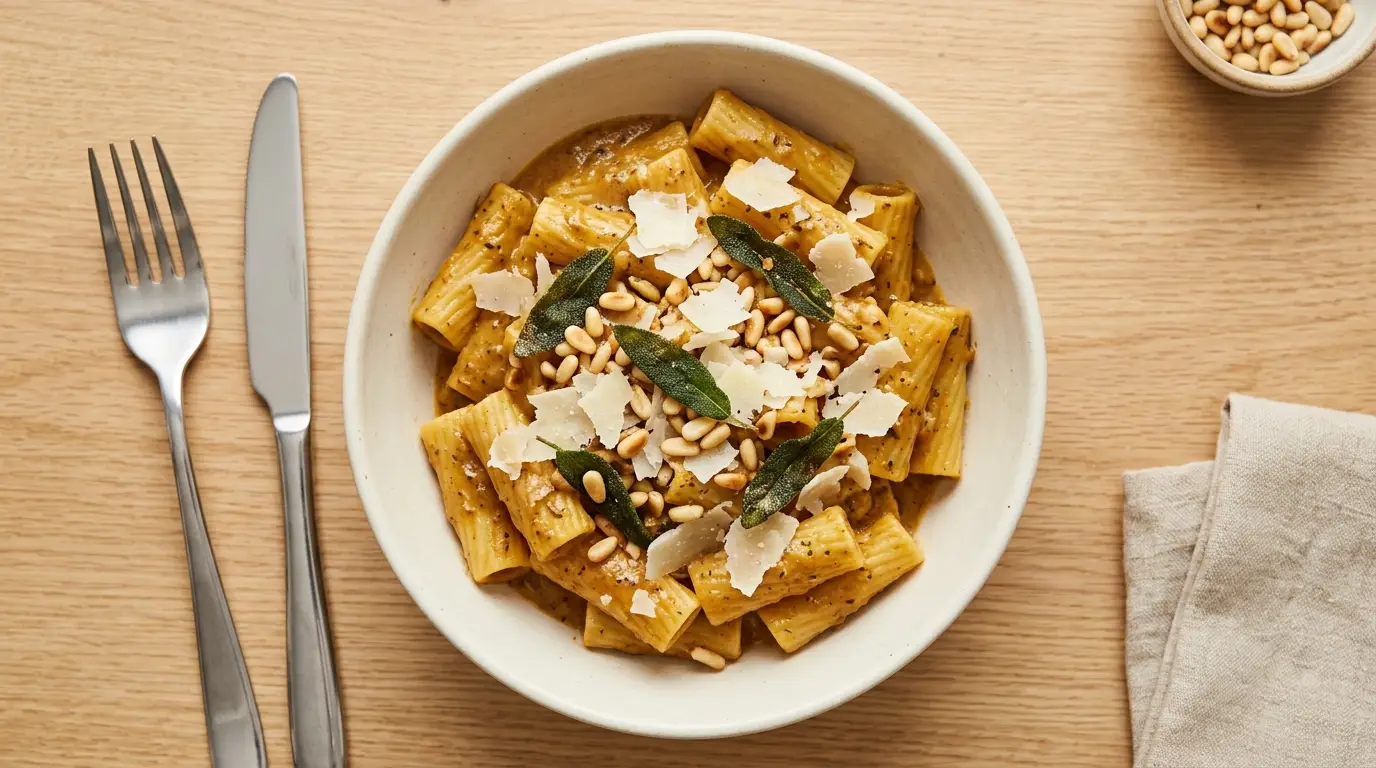
Pumpkin Sage Pasta
Ingredients
- 12 oz rigatoni or penne pasta - 340g; ridged shape holds sauce well
- 1 cup canned pumpkin puree - 240g; not pumpkin pie filling
- 6 tablespoons unsalted butter - 85g
- 15 leaves fresh sage leaves - 15 to 20 leaves; roughly one small bunch
- 3 cloves garlic - minced
- 1/2 cup grated parmesan cheese - 50g; plus more for serving
- 1/2 cup reserved pasta water - 120ml; starchy water saved before draining
- 1/4 teaspoon ground nutmeg
- salt and black pepper - to taste
- 1/4 cup heavy cream - 60ml; optional, for an extra-silky sauce
- 1/4 cup toasted pine nuts or pepitas - 35g; optional garnish
Equipment
- Large stockpot - For boiling the pasta
- Stainless steel skillet or sauté pan - For the brown butter and sauce
- Colander - For draining the pasta
- Wooden spoon - For stirring the sauce
- Tongs - For tossing the pasta into the sauce
Method
- Bring a large stockpot of generously salted water to a rolling boil. Add the rigatoni or penne and cook according to package directions until al dente.
- Reserve 1/2 cup (120ml) of the starchy pasta water before draining. Drain the pasta in a colander and set aside.
- Melt the butter in a large skillet over medium heat. Once the foam begins to subside, add the sage leaves and cook for 2 to 3 minutes, swirling often, until the butter turns golden brown and the sage crisps.
- Use a slotted spoon to remove the sage leaves to a paper towel-lined plate, leaving the browned butter in the pan.
- Reduce the heat to medium-low and add the minced garlic to the browned butter. Cook for 30 seconds, stirring constantly, until fragrant but not browned.
- Whisk in the canned pumpkin puree until smooth. Add the reserved pasta water, nutmeg, salt, and pepper, whisking until the sauce is uniform.
- If using heavy cream, stir it in now and simmer for 1 to 2 minutes until the sauce thickens slightly.
- Add the drained pasta directly to the skillet with the sauce. Toss with tongs until every piece is coated.
- Stir in the grated parmesan cheese and toss again until melted and glossy. Taste and adjust salt, pepper, or nutmeg as needed.
- Divide the pasta among four bowls. Top each bowl with the crispy sage leaves and toasted pine nuts or pepitas, if using. Finish with an extra grating of parmesan cheese.
Nutrition
Notes
- Use plain pumpkin puree, not pie filling. Pie filling already contains sugar and spices that throw off the savory balance of this sauce.
- Don’t skip the pasta water. The starch in it helps the sauce bind to the pasta instead of sliding off.
- Watch the butter closely. Browned butter can go from golden to burnt in under thirty seconds once the color starts turning.
- Grate cheese fresh. Pre-shredded parmesan contains anti-caking agents that keep it from melting smoothly into the sauce.
- Add cream for richness, not necessity. The sauce works without it, but cream rounds out the sharper edges of the pumpkin.
- Salt in stages. Add a little salt to the pasta water, a little to the sauce, and taste again at the end before adding more.
- Keep an extra splash of reserved pasta water on the counter even after draining, because this sauce tightens up fast once it sits for a few minutes off the heat.
- Store leftovers in an airtight container in the refrigerator for up to 4 days. Reheat gently on the stovetop with a splash of milk or reserved pasta water to loosen the sauce.
- The sauce freezes well on its own for up to 2 months, though freezing the pasta already mixed in can make the noodles mushy once thawed.
- For a vegan version, swap the butter for a plant-based alternative, use full-fat coconut cream instead of heavy cream, and use nutritional yeast in place of parmesan.
Private Notes
Tried this recipe?
Let us know how it was!Final Thoughts
Pumpkin sage pasta is one of those dishes that feels more involved than it actually is. Thirty minutes and one skillet is all it takes to get a warm, savory dinner on the table.
Give it a try this week while sage and canned pumpkin are easy to find. If you make it, leave a comment below and let me know what you served alongside it.
Recommended:
- Pumpkin Pie Recipe
- Pumpkin Cheesecake Recipe
- Pumpkin Roll Recipe
- Pumpkin Spice Latte Recipe
- Best Sausage Tortellini Soup Recipe
- Stuffed Shells Recipe
- Baked Ziti Recipe
- Chicken Parmesan Recipe
- Lasagna Recipe
- Vegan Fall Recipes