

I used to think carrot soup was bland and boring until one chilly October evening when I had a pile of farmers market carrots that were about to go bad.
I tossed them in a pot with some fresh ginger I’d been hoarding, and the result was nothing short of magical. The natural sweetness of the carrots combined with the zingy warmth of ginger created this velvety, aromatic Carrot Ginger Soup Recipe that my family now asks for constantly.
What I love most about this soup is how it transforms simple ingredients into something that feels restaurant-quality. The ginger adds this bright, spicy kick that cuts through the earthiness of the carrots, while a splash of coconut milk at the end gives it an incredible silky texture.
I’ve made this soup countless times now, tweaking it here and there. Once I added way too much ginger and nearly burned our tongues off (lesson learned: start with less and add more to taste). Another time I forgot to peel the carrots properly and ended up with a slightly bitter batch.
But that’s the beauty of home cooking. You learn, you adjust, and eventually you land on something perfect.
| Quick Recipe Summary | |
|---|---|
| Prep Time | 15 minutes |
| Cook Time | 30 minutes |
| Total Time | 45 minutes |
| Servings | 6 servings |
| Difficulty Level | Easy |
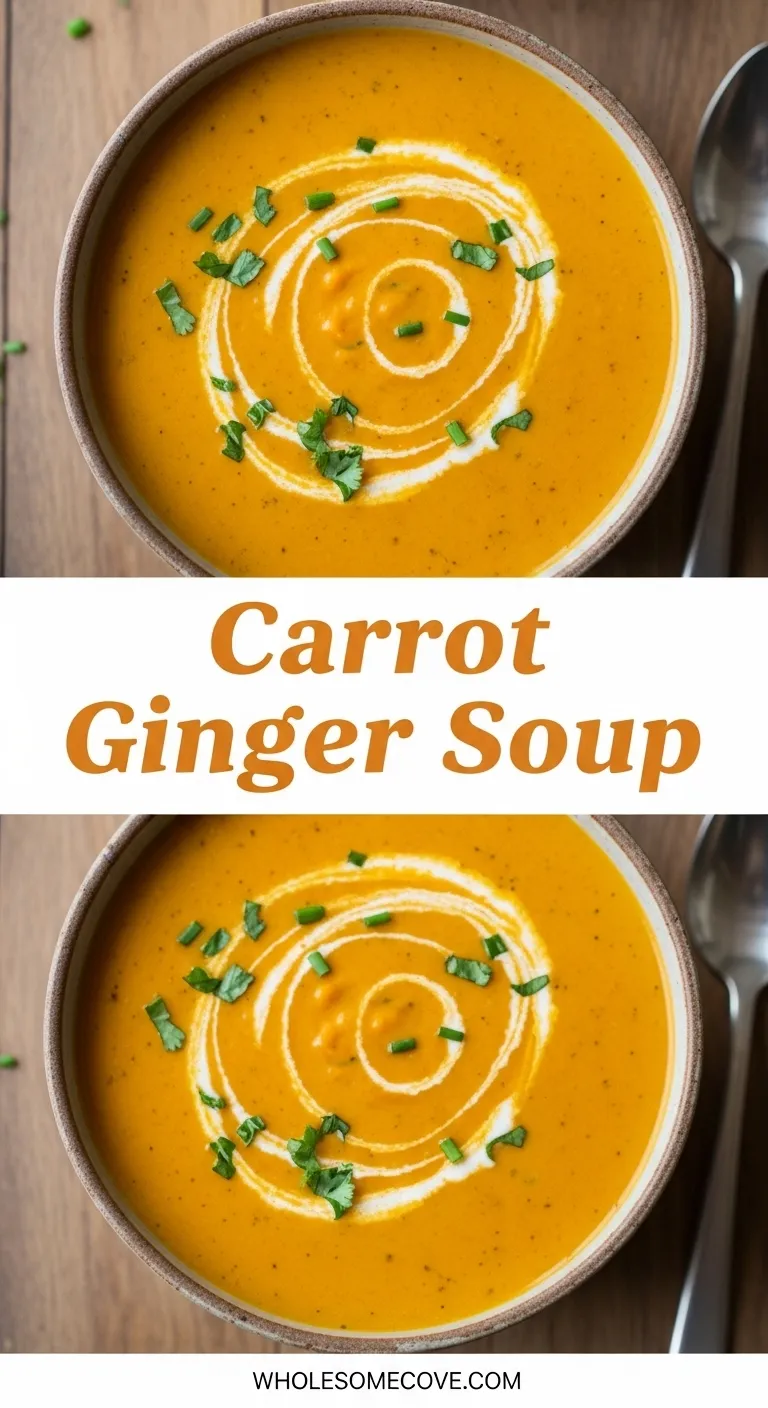
Why You’ll Love This Carrot Ginger Soup Recipe
This soup is a total comfort food winner without being heavy or overly rich. It’s naturally vegan and gluten-free, which means you can serve it to just about anyone without worrying about dietary restrictions.
The prep work is minimal, mostly just chopping vegetables. And unlike some soups that require hours of simmering, this one comes together in under an hour from start to finish.
Here’s what makes this carrot ginger soup stand out:
- Naturally sweet and aromatic: The carrots caramelize slightly during cooking, bringing out their natural sugars, while the ginger adds warmth and depth
- Incredibly smooth and creamy: Thanks to the immersion blender (or regular blender) and a touch of coconut milk, you get a velvety texture without any dairy
- Budget-friendly: Carrots are inexpensive year-round, and you probably already have most of the other ingredients in your pantry
- Meal-prep friendly: This soup actually tastes better the next day as the flavors meld together, making it perfect for batch cooking
- Immune-boosting: Both carrots and ginger are packed with vitamins and antioxidants, making this a great choice when you’re feeling under the weather
If you enjoy warming soups, you might also love Potato Leek Soup.
Ingredients
This carrot ginger soup uses simple, wholesome ingredients that you can find at any grocery store. I prefer using fresh ginger root because it has so much more flavor than the dried powder, but if you’re in a pinch, ground ginger works too (just use about 1 teaspoon instead).
- 2 lbs (900g) carrots, peeled and roughly chopped
- 3 tablespoons olive oil or coconut oil
- 1 large yellow onion (about 1½ cups/200g), diced
- 3 cloves garlic, minced
- 2 tablespoons fresh ginger root, peeled and finely grated (or 1 teaspoon ground ginger)
- 4 cups (960ml) vegetable broth (low-sodium works best)
- 1 cup (240ml) coconut milk (full-fat for creamier soup)
- 1 teaspoon ground cumin
- ½ teaspoon ground coriander
- 1 teaspoon salt (plus more to taste)
- ½ teaspoon black pepper
- 1 tablespoon maple syrup or honey (optional, to balance acidity)
- Fresh cilantro or parsley, chopped (for garnish)
- Toasted pumpkin seeds (optional, for garnish)
- Squeeze of fresh lime juice (about 1 tablespoon)
Kitchen Equipment Needed
Having the right tools makes this soup come together smoothly. The most important piece of equipment is definitely a good blender or immersion blender since you want that perfectly smooth, creamy texture.
- Large heavy-bottomed pot or Dutch oven (5-6 quart capacity)
- Immersion blender (or regular blender)
- Cutting board and sharp chef’s knife
- Vegetable peeler
- Box grater or microplane (for grating ginger)
- Wooden spoon for stirring
- Measuring cups and spoons
- Ladle for serving
Recommended Products for This Recipe
After making this soup more times than I can count, I’ve found a few products that genuinely make the process easier and the results better. These aren’t essential, but they’re investments that’ll serve you well beyond just this recipe.
1. Vitamix Immersion Blender
This immersion blender has changed my soup game completely. It’s powerful enough to create that restaurant-quality silky texture without having to transfer hot soup to a countertop blender (which is messy and potentially dangerous). The variable speed control lets you start slow and increase gradually to avoid splattering.
2. Le Creuset Enameled Cast Iron Dutch Oven
I use my Le Creuset for this soup every single time because it distributes heat so evenly. The carrots cook uniformly without any burning or sticking, and the heavy lid traps steam perfectly for tender vegetables. Plus, it’s gorgeous enough to serve directly at the table.
3. Organic Fresh Ginger Root
I know this seems basic, but fresh ginger makes such a difference in this recipe. I buy organic ginger from brands that source from sustainable farms because the flavor is noticeably more vibrant and aromatic. Look for pieces that are firm and not wrinkled.
4. Thai Kitchen Full-Fat Coconut Milk
Not all coconut milk is created equal. I’ve tried dozens of brands, and Thai Kitchen consistently gives me the creamiest results without any weird aftertaste. The full-fat version is essential for that luxurious texture.
Another favorite: Taco Soup.

Step-by-Step Instructions: How to Make Carrot Ginger Soup
The key to amazing carrot ginger soup is letting the vegetables soften completely before blending. Don’t rush this step, even though it’s tempting to speed things up. The carrots need time to break down and become tender, which develops their sweetness and makes blending easier.
1. Prepare the Vegetables
- Peel the carrots using a vegetable peeler and chop them into roughly 1-inch (2.5cm) pieces (they don’t need to be perfect since you’ll be blending everything later)
- Dice the onion into small pieces, about ¼-inch (0.6cm) cubes
- Mince the garlic cloves finely, or use a garlic press if you have one
- Peel the ginger root with the back of a spoon (this is easier than using a peeler and wastes less) and grate it using a box grater or microplane until you have about 2 tablespoons
2. Sauté the Aromatics
- Heat the olive oil in your large pot over medium heat until it shimmers slightly
- Add the diced onion and cook for 5-6 minutes, stirring occasionally, until it becomes translucent and starts to soften
- Add the minced garlic and grated ginger, stirring constantly for about 1 minute until fragrant (be careful not to let the garlic burn, as it can turn bitter)
- Add the cumin and coriander, stirring for another 30 seconds to toast the spices and release their oils
3. Cook the Carrots
- Add the chopped carrots to the pot and stir everything together so the carrots are coated with the aromatic mixture
- Pour in the vegetable broth, making sure all the carrots are submerged (add a bit more broth or water if needed)
- Bring the mixture to a boil over high heat, then reduce to a gentle simmer
- Cover the pot with a lid and let it simmer for 20-25 minutes, stirring occasionally, until the carrots are very tender and easily pierced with a fork
4. Blend Until Smooth
- Remove the pot from heat and let it cool for 5 minutes (this prevents steam burns when blending)
- If using an immersion blender, insert it into the pot and blend on low speed at first, then increase to high, moving it around to catch all the vegetables until the soup is completely smooth and creamy (this takes about 2-3 minutes)
- If using a regular blender, carefully transfer the soup in batches (filling the blender only halfway to avoid overflow), hold the lid down with a kitchen towel, and blend on high until smooth, then return to the pot
5. Add the Finishing Touches
- Stir in the coconut milk, combining it thoroughly with the blended soup
- Add the salt, black pepper, and maple syrup (if using), stirring well
- Taste the soup and adjust the seasoning as needed (I often add an extra pinch of salt and more ginger if I want it spicier)
- Squeeze in the fresh lime juice, which brightens all the flavors and adds a subtle tang
- If the soup is too thick for your liking, thin it out with additional vegetable broth or coconut milk until you reach your desired consistency
- Reheat gently over low heat for 2-3 minutes if needed, stirring occasionally
6. Serve and Garnish
- Ladle the hot soup into bowls
- Garnish each serving with a sprinkle of fresh chopped cilantro or parsley
- Add a small handful of toasted pumpkin seeds for crunch and visual appeal
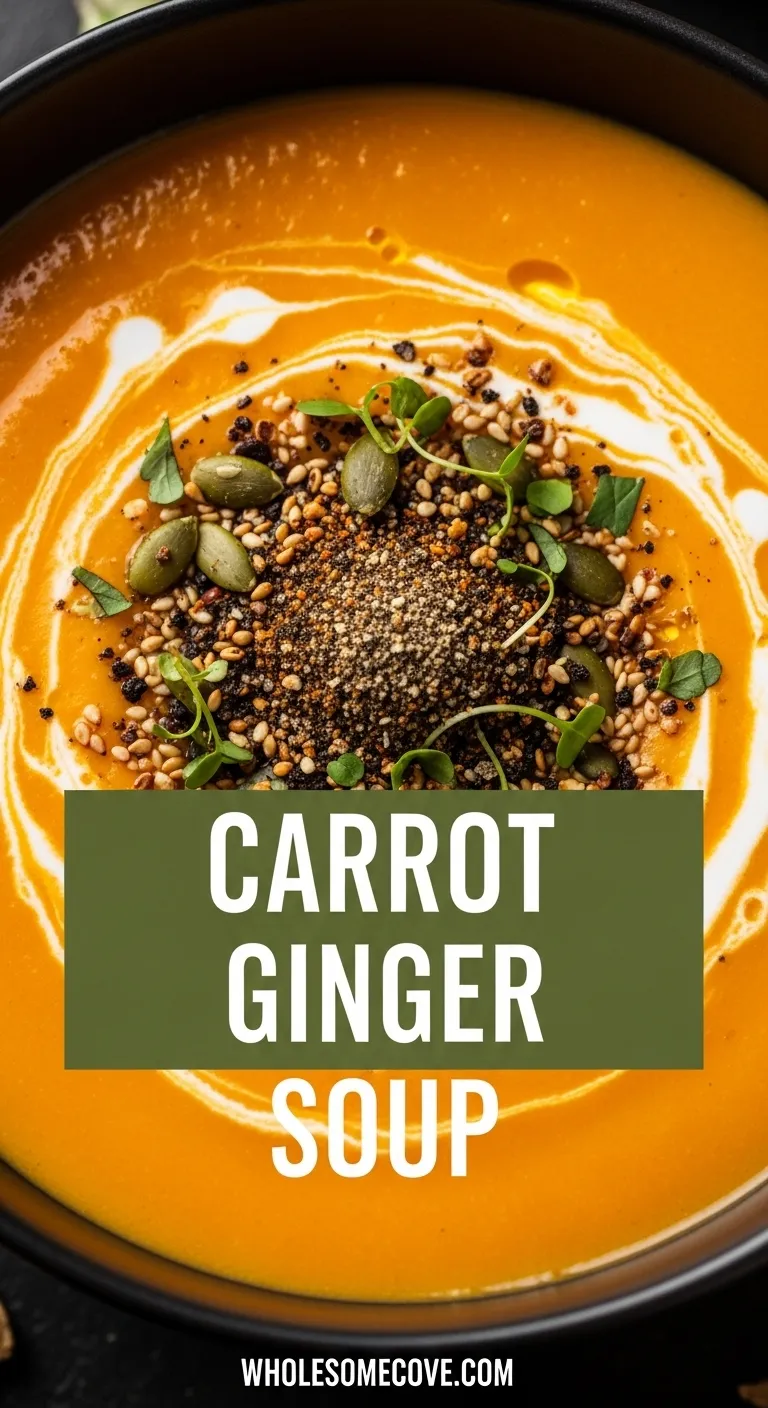
- Drizzle a tiny bit of extra coconut milk on top for an elegant presentation (optional)
- Serve immediately while hot
Read Also: Zuppa Toscana

Tips for The Best Carrot Ginger Soup
I’ve learned these tips through trial and error, and they make a noticeable difference in the final result. Pay attention to the ginger especially, since its flavor can be overpowering if you’re not careful.
- Use fresh ginger, not powdered: Fresh ginger root has a bright, zingy flavor that ground ginger just can’t match. If you absolutely must substitute, use only 1 teaspoon of ground ginger and add it with the other spices.
- Don’t skip sautéing the aromatics: This step builds the flavor foundation. The onions, garlic, and ginger need that time in hot oil to release their essential oils and develop sweetness.
- Choose sweet, fresh carrots: Look for carrots that are firm, bright orange, and smooth. Older carrots can be woody and bitter. I prefer buying whole carrots over baby carrots because they have better flavor.
- Blend thoroughly for smoothness: Take your time blending and blend longer than you think you need to. The soup should be completely smooth with no chunks or fibrous bits remaining.
- Add acid at the end: The lime juice (or lemon juice if you prefer) should go in after blending. It brightens the flavors and balances the sweetness of the carrots.
- Adjust thickness to your preference: Some people love thick, creamy soup while others prefer it thinner. Add more broth or coconut milk to thin, or simmer uncovered for 10 minutes to thicken.
- Taste and adjust seasonings: Every batch needs different amounts of salt depending on your broth. Always taste before serving and adjust the salt, pepper, and ginger to your liking.
- Let it rest before serving: If you have time, let the soup sit for 15-20 minutes after cooking. The flavors meld together beautifully during this resting period.
- Toast your spices: For even deeper flavor, toast the cumin and coriander in a dry pan for 30 seconds before adding them to the soup. This intensifies their aromatic qualities.
What to Serve with Carrot Ginger Soup

This soup is hearty enough to be a meal on its own, but I usually serve it with something on the side to make it more substantial. The crusty bread is essential for soaking up every last drop.
Here are my favorite accompaniments:
- Crusty sourdough bread or homemade biscuits: Perfect for dipping and adds a satisfying texture contrast to the smooth soup
- Grilled cheese sandwiches: A classic pairing that turns this into a complete comfort food meal
- Simple green salad: Something light and fresh with a tangy vinaigrette balances the richness of the soup
- Avocado Toast: Adds healthy fats and makes it feel more like brunch
- Naan bread: Especially good if you want to play up the soup’s warm, spicy notes
- Chickpea Salad: Adds protein and makes the meal more filling
- Crackers and cheese: Set out a board with assorted crackers and cheeses for a casual, help-yourself style meal
- Roasted vegetables: Serve alongside for extra nutrition and variety
You might also enjoy: Cheeseburger Soup
Variations of Carrot Ginger Soup
Once you master the basic recipe, there are so many ways to change it up and make it your own. I love experimenting with different spice combinations depending on my mood and what I have on hand.
- Curried Carrot Ginger Soup: Add 2 tablespoons of curry powder along with the cumin and coriander for a warming, Indian-inspired version. Top with a dollop of plain yogurt.
- Thai-Style Coconut Carrot Soup: Use 2 cups of coconut milk instead of 1 cup, add 1 tablespoon of red curry paste, and finish with fresh Thai basil and a squeeze of lime.
- Spicy Version: Add a diced jalapeño or serrano pepper when you sauté the onions, or stir in ½ teaspoon of cayenne pepper with the other spices.
- Carrot Apple Ginger Soup: Add 2 peeled and chopped apples along with the carrots. The apple adds natural sweetness and a slightly different flavor profile.
- Orange Carrot Ginger Soup: Replace ½ cup of the vegetable broth with fresh orange juice and add 1 tablespoon of orange zest for a citrusy twist.
- Turmeric Golden Soup: Add 1 teaspoon of ground turmeric along with the other spices for anti-inflammatory benefits and a gorgeous golden color.
- Creamy Cashew Version: Instead of coconut milk, blend in ½ cup of soaked raw cashews for a nut-based creamy texture (soak cashews in hot water for 30 minutes first).
- Roasted Carrot Version: Roast the carrots at 425°F (220°C) for 25-30 minutes before adding them to the soup. This adds a deeper, caramelized flavor.
- Herb-Infused: Add fresh thyme or rosemary sprigs while the soup simmers, then remove them before blending.
Another option: Pasta Fagioli.
Storage and Reheating
One of my favorite things about this carrot ginger soup is how well it stores. I usually make a double batch and freeze half for those nights when I don’t feel like cooking.
Refrigerator Storage:
- Let the soup cool completely to room temperature before storing (hot soup in the fridge can raise the internal temperature and affect other foods)
- Transfer to airtight containers or mason jars, leaving about 1 inch of space at the top for expansion
- Store in the refrigerator for up to 5 days
- The soup may thicken as it sits, so you might need to add a splash of broth or water when reheating
Freezer Storage:
- Cool the soup completely before freezing
- Pour into freezer-safe containers or heavy-duty freezer bags, leaving room for expansion
- Label with the date and contents (trust me, you’ll forget what’s in there otherwise)
- Freeze for up to 3 months
- Thaw overnight in the refrigerator before reheating
Reheating Instructions:
- Stovetop method (best): Pour the soup into a pot and heat over medium-low heat, stirring occasionally, until heated through (about 10 minutes)
- Microwave method: Heat in a microwave-safe bowl in 1-minute intervals, stirring between each interval, until hot
- Add a splash of vegetable broth or coconut milk if the soup has become too thick during storage
- Taste and adjust seasonings after reheating, as flavors can mellow during storage
Pro tip: I like to freeze soup in individual portions using wide-mouth mason jars. This way, I can defrost just what I need for lunch without having to thaw the entire batch.
Read Also: Chicken Gnocchi Soup
Nutritional Facts
Per serving (based on 6 servings, approximately 1½ cups each):
- Calories: 185
- Total Fat: 11g
- Saturated Fat: 6g
- Trans Fat: 0g
- Cholesterol: 0mg
- Sodium: 520mg
- Total Carbohydrates: 21g
- Dietary Fiber: 5g
- Sugars: 10g
- Protein: 2g
- Vitamin A: 380% DV
- Vitamin C: 15% DV
- Calcium: 6% DV
- Iron: 8% DV
- Potassium: 520mg
Note: Nutritional information is approximate and will vary based on specific ingredients used and portion sizes.
Health Benefits of Key Ingredients
I started making this soup more frequently after learning about all the nutritional benefits packed into these simple ingredients. It’s amazing how something so delicious can also be so good for you.
Carrots are nutritional powerhouses loaded with beta-carotene, which your body converts into vitamin A for eye health and immune function. They’re also rich in antioxidants that may help reduce the risk of certain cancers and support heart health. The natural fiber in carrots aids digestion and helps you feel full and satisfied.
Here are the standout health benefits:
- Beta-carotene and vitamin A: One serving provides over 300% of your daily vitamin A needs, supporting vision health and immune function
- Antioxidants: Carrots contain several antioxidants including lutein and zeaxanthin that protect against cellular damage
- Anti-inflammatory properties: Ginger contains gingerol, a powerful anti-inflammatory compound that can help reduce pain and inflammation in the body
- Digestive support: Ginger has been used for centuries to soothe upset stomachs, reduce nausea, and improve overall digestion
- Immune boosting: Both carrots and ginger contain immune-supporting nutrients that help your body fight off illness
- Heart health: The potassium in carrots helps regulate blood pressure, while coconut milk provides healthy medium-chain fatty acids
- Blood sugar regulation: The fiber in carrots helps slow sugar absorption, preventing blood sugar spikes
- Low in calories: Despite being creamy and satisfying, this soup is relatively low in calories while being nutrient-dense
You might also like: Healthy Coleslaw
FAQs About Carrot Ginger Soup
1. Can I make this soup without coconut milk?
Absolutely! You can substitute the coconut milk with heavy cream, half-and-half, or cashew cream for a different flavor profile. For a completely dairy-free and nut-free option, use additional vegetable broth and add 2 tablespoons of olive oil for richness. The soup won’t be quite as creamy, but it’ll still be delicious.
2. How can I make this soup spicier?
If you love heat like I do, there are several ways to add spice. Add fresh minced jalapeño or serrano peppers when sautéing the onions, stir in ¼ teaspoon of cayenne pepper with the other spices, or add a few dashes of hot sauce at the end. You can also garnish with red pepper flakes when serving. Start with less and add more to taste.
3. Why is my soup bitter?
Bitterness usually comes from burnt garlic or ginger, or from old, woody carrots. Make sure to cook the garlic only until fragrant (about 1 minute) and don’t let it brown. Also, choose fresh, sweet carrots rather than older ones. If your soup tastes bitter, try adding an extra tablespoon of maple syrup or honey to balance it out.
4. Can I use carrot juice instead of whole carrots?
While carrot juice will technically work, I don’t recommend it. You’ll miss out on the fiber and texture that whole carrots provide, and the soup will be much thinner. If you do use carrot juice, reduce the amount of vegetable broth significantly and add some cooked sweet potato or butternut squash for body and texture.
5. Do I need to peel the carrots?
Yes, I always peel carrots for this soup. The peels can be tough and slightly bitter, which affects the final smooth texture you’re going for. If you’re using organic carrots and they’re very fresh, you could technically skip peeling, but I find the soup tastes cleaner and looks more vibrant when the carrots are peeled.
Another comforting option: Italian Wedding Soup.
Final Thoughts
This Carrot Ginger Soup Recipe has become one of those recipes I turn to again and again, especially during the colder months. It’s comforting without being heavy, flavorful without being complicated, and healthy without tasting like diet food.
I hope you give it a try and love it as much as my family does. Drop a comment below and let me know how yours turns out, or share any variations you come up with!
Recommended:
- Avgolemono Soup
- Matzo Ball Soup
- Panera Broccoli Cheddar Soup
- Easy Chicken Noodle Soup
- Instant Pot Chicken Noodle Soup
- French Onion Beef Short Rib Soup
- Lasagna Soup
- Crockpot Beef Stew
- Brunswick Stew
- Seafood Stew