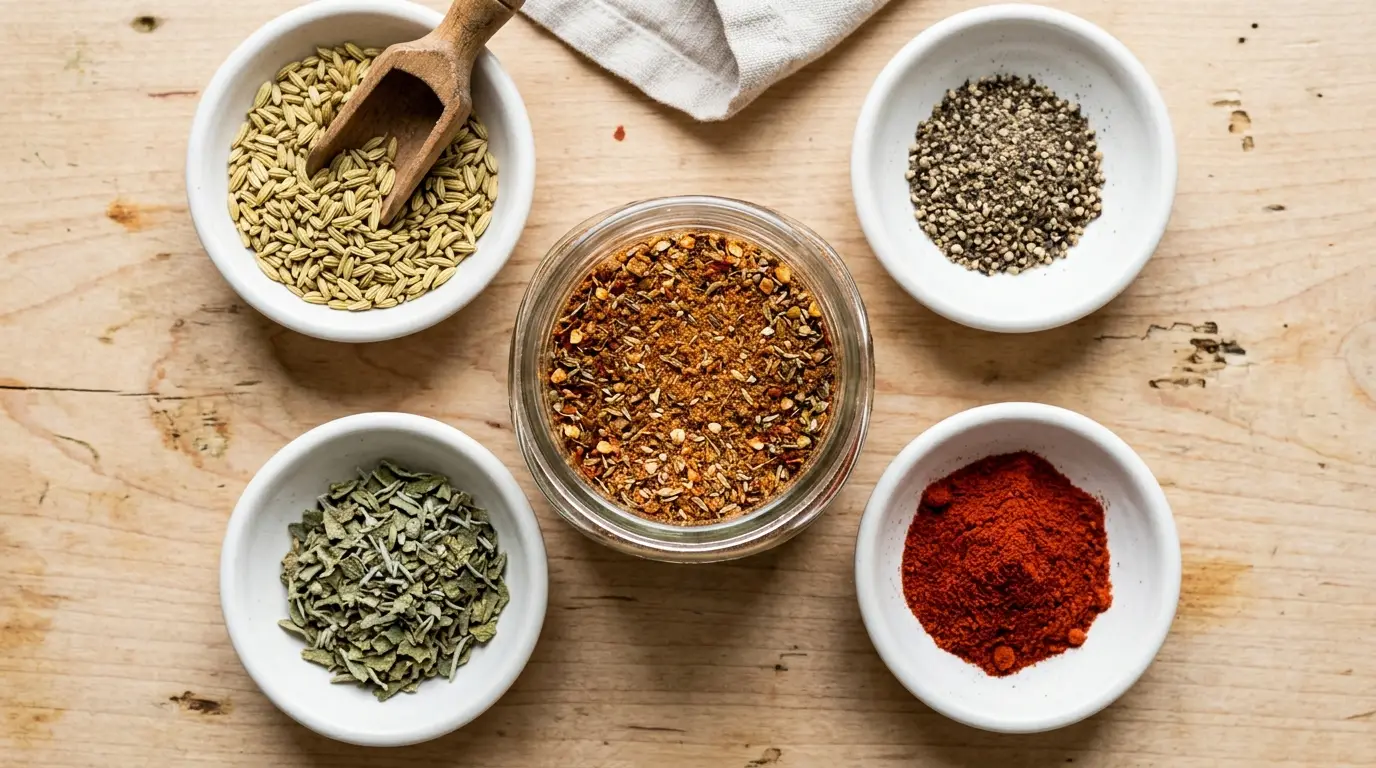
Making your own homemade sausage seasoning recipe is one of the simplest ways to take control of the flavors in your kitchen. This all-purpose blend combines the classic warmth of sage, black pepper, and fennel with a touch of sweetness and heat, giving you a versatile mix that works beautifully on ground pork, turkey, chicken, or beef.
Once you realize how much better the flavor is compared to store-bought seasoning packets, you’ll never go back.
| Quick Recipe Summary | |
|---|---|
| Prep Time | 5 minutes |
| Cook Time | 0 minutes |
| Total Time | 5 minutes |
| Servings | Seasons approximately 2 pounds (900g) of meat |
| Difficulty Level | Easy |
Use my Sausage Gravy as the perfect first test for your freshly mixed blend.

Why You’ll Love This Homemade Sausage Seasoning Recipe
This blend is the kind of recipe you make once and find yourself reaching for constantly. It takes five minutes to put together and delivers deep, layered flavor that pre-packaged mixes simply can’t match.
Here’s why this seasoning stands out:
- No fillers or preservatives. You know exactly what’s going in the jar, with nothing artificial or unnecessary.
- Completely customizable. Dial the heat up or down, swap dried herbs, or add smoked paprika for a smokier profile.
- Works with any ground meat. Ground pork, turkey, chicken, venison, or even plant-based crumbles all take this blend beautifully.
- Makes breakfast sausage incredible. Once you use this on homemade breakfast patties, store-bought breakfast sausage will feel like a step backward.
- Stores for months. Mixed in an airtight jar, this seasoning stays fresh and potent for up to six months.
- Doubles as a rub. Beyond sausage patties, this mix works as a quick rub for pork chops, chicken thighs, and meatballs.
- Budget-friendly. A small batch costs pennies compared to specialty sausage seasoning packets at the store.
- One mix, endless meals. From sausage gravy to stuffed peppers, having this seasoning on hand transforms weeknight cooking.
Read Also: Biscuits and Gravy
Ingredients
You only need a handful of dried spices and herbs for this blend. Keep them measured and ready in small bowls before mixing, so you can adjust on the fly if needed.
- 1 tablespoon (8g) dried sage
- 2 teaspoons (5g) fennel seeds (whole or lightly crushed)
- 1.5 teaspoons (4g) fine sea salt or kosher salt
- 1.5 teaspoons (4g) black pepper, freshly ground
- 1 teaspoon (2.5g) smoked paprika
- 1 teaspoon (3g) garlic powder
- 1 teaspoon (2.5g) onion powder
- 0.5 teaspoon (1.5g) dried thyme
- 0.5 teaspoon (1g) brown sugar (packed)
- 0.25 teaspoon (0.5g) red pepper flakes (optional, for heat)
- 0.25 teaspoon (0.5g) ground nutmeg
- 0.25 teaspoon (0.5g) dried marjoram or oregano
Note: This recipe seasons approximately 2 pounds (900g) of ground meat. Use 1 tablespoon (8g) of the finished blend per pound of meat, adjusting up or down to taste.
For a unique pairing idea, check out my Sausage Balls, because this homemade blend takes them to a completely new level.
Kitchen Equipment Needed
You do not need anything fancy for this recipe. A few basic tools are all it takes to get the job done in minutes.
- Small mixing bowl (for combining spices)
- Measuring spoons (for accurate portioning)
- Small whisk or fork (for blending the mix evenly)
- Spice grinder or mortar and pestle (optional, for toasting and cracking fennel seeds)
- Airtight glass spice jar or small mason jar (for storage)
- Small funnel (optional, makes transferring the blend into a jar much easier)
- Marker or label tape (for dating your jar)
You might also enjoy: Best Sausage Tortellini Soup
Recommended Products for This Recipe
These are products I personally use and trust when making and storing homemade spice blends. Each one solves a real pain point in the process.
1. Ball Mason Jars Wide Mouth Pint
A good airtight jar is the difference between a seasoning that lasts three months and one that loses potency in three weeks. The wide mouth design makes it easy to scoop the seasoning out with a measuring spoon without making a mess. I keep two on hand: one for the current batch and one for a backup.
2. Norpro Stainless Steel Spice Grinder
Freshly ground fennel seeds make a noticeable difference in the final flavor of this blend. This compact grinder handles fennel seeds, black peppercorns, and dried herbs quickly and cleanly, and it’s dishwasher safe for easy cleanup. It’s a small investment that pays off every time you reach for it.
3. OXO Good Grips Stainless Steel Measuring Spoons
Accurate measurements matter a lot in spice blends, and these OXO spoons are built to last. The long, narrow design fits perfectly into spice jars, and the etched markings never wear off. I use these daily in my kitchen and they’ve held up beautifully for years.
4. McCormick Culinary Smoked Paprika
Smoked paprika varies wildly in quality and potency between brands. McCormick’s culinary-grade version has a rich, deep smokiness that budget supermarket versions just don’t deliver, and it adds beautiful color to any sausage you make with this blend. A little goes a long way.
5. Badia Whole Fennel Seeds
Fennel seeds are the heart of a great sausage seasoning, and having whole seeds on hand lets you control how much you grind versus leave whole. Badia’s whole fennel seeds are fragrant, fresh, and sold in a size that won’t leave you with stale seeds sitting in your pantry for years. Lightly toasting them before adding to the blend is absolutely worth the extra two minutes.
Read Also: Sausage Gnocchi Soup

Step-by-Step Instructions: How to Make Homemade Sausage Seasoning
Step 1: Toast the Fennel Seeds (Optional but Recommended)
- Place a small dry skillet over medium-low heat and add the fennel seeds.
- Toast them for 1 to 2 minutes, stirring or swirling the pan constantly, until they are fragrant and just beginning to turn lightly golden. Watch them closely as they can burn quickly.
- Remove from heat immediately and transfer to a plate or small bowl to cool. Do not leave them in the hot pan or they will continue to cook.
- Once cooled completely, use a spice grinder or mortar and pestle to lightly crack them. You want them broken down but not fully powdered. Some texture is desirable for a more rustic, authentic flavor.
Step 2: Combine All Ingredients
- Add the toasted, cracked fennel seeds to a small mixing bowl.
- Measure in the dried sage, sea salt, black pepper, smoked paprika, garlic powder, onion powder, dried thyme, brown sugar, red pepper flakes (if using), ground nutmeg, and dried marjoram or oregano.
- Use a small whisk or fork to stir everything together until the blend is completely uniform in color and texture. Make sure the brown sugar is fully incorporated and there are no clumps.
Step 3: Taste and Adjust
- Before transferring to a jar, it is worth doing a quick taste test. Pinch a small amount of the dry blend between your fingers and rub it on the back of your hand, then taste.
- If you want more heat, add a little more red pepper flakes. If you prefer more earthiness, add an extra pinch of dried sage. If you want more depth and smoke, add just a touch more smoked paprika.
- Adjusting now, before the blend is stored, saves you from having to correct it later mid-recipe.
Step 4: Transfer to a Storage Jar
- Use a small funnel (or carefully spoon the blend) into a clean, airtight glass spice jar or small mason jar.
- Seal the jar tightly, then give it a gentle shake to ensure everything is evenly mixed one final time.
- Label the jar with the name and the date it was made. This helps you track freshness, as the blend is best used within 6 months for peak flavor.
Step 5: Season Your Meat
- When ready to use, add 1 tablespoon (8g) of the seasoning per 1 pound (450g) of ground meat.
- Sprinkle the seasoning evenly over the meat, then use your hands to work it in thoroughly. Squeeze, fold, and press the meat until the seasoning is fully distributed throughout.
- For the best flavor, cover and refrigerate the seasoned meat for at least 30 minutes before cooking. Overnight is even better, as the spices have more time to penetrate and bloom.
- Shape the meat into patties, crumbles, or links as desired, then cook to an internal temperature of 160°F (71°C).
I learned after a few batches that resting the seasoned meat in the fridge before cooking is not optional if you want deep flavor. The first time I cooked the patties immediately, they were good, but after I started letting them rest overnight, the difference was remarkable.
For a hearty meal idea using this blend, you might love my Slow Cooker Chicken and Sausage Gumbo.

Tips for The Best Homemade Sausage Seasoning
Getting this blend right comes down to a few small details that make a big difference. Here are the tips I’ve learned after making this seasoning dozens of times.
- Toast the fennel seeds. Even a quick 60-second toast in a dry pan wakes them up and adds a depth of flavor that raw seeds simply don’t have.
- Use whole peppercorns and grind fresh. Pre-ground black pepper loses its punch quickly. Freshly ground peppercorns make the seasoning noticeably more vibrant and aromatic.
- Don’t skip the brown sugar. It sounds unusual in a savory blend, but it provides a subtle caramel note that balances the heat and salt. It also encourages beautiful browning when sausage is pan-fried.
- Bloom the spices in fat. If you’re making sausage patties, letting the seasoned meat sit in a small amount of oil for a few minutes before cooking helps the fat-soluble compounds in the spices develop and intensify.
- Make a test patty before portioning. Always fry up one small sausage patty to check the seasoning before you shape the entire batch. It takes two minutes and saves you from adjusting the flavor after everything is already formed.
- Use cold meat. Warm or room-temperature ground meat becomes sticky and greasy when you work it. Keep your ground pork or turkey chilled right up until you mix in the seasoning.
- Double or triple the batch. This seasoning stores beautifully for up to 6 months in an airtight jar. Making a larger batch upfront means you always have it on hand.
- Adjust salt for the meat you’re using. Some ground pork blends already have salt added by the butcher. Taste the meat first and reduce the salt in the seasoning accordingly to avoid over-salting.
- Use sea salt or kosher salt, not table salt. The coarser crystals distribute more evenly through the blend, and the flavor is noticeably cleaner without the metallic edge that table salt can impart.
Read Also: Chicken and Sausage Gumbo
What to Make with Homemade Sausage Seasoning
This seasoning blend is a building block, not a finished dish. Once you have a jar ready to go, the range of recipes you can make with it is genuinely impressive.
Here are some of the best ways to put this blend to work in your kitchen:
- Breakfast Sausage Patties. Mix 1 tablespoon (8g) of the blend into 1 pound (450g) of ground pork, rest overnight, and pan-fry into golden patties. These are the most classic use for this seasoning and the one most people make first.
- Sausage Gravy. Brown seasoned ground pork in a skillet, then make a pan gravy with flour, milk, and black pepper. Serve over homemade biscuits for the ultimate Southern breakfast.
- Sausage Crumbles for Pizza Topping. Season and cook ground pork until well-browned and crumbly, then scatter over homemade pizza before baking. The fennel and smoked paprika are perfect here.
- Italian-Style Meatballs. Mix this seasoning into a combination of ground pork and beef for meatballs that have far more character than plain salted meat. Simmer in marinara sauce for a deeply flavorful result.
- Sausage Lentil Soup. Seasoned ground pork or turkey crumbled into a pot of lentil soup transforms an everyday recipe into something hearty and deeply satisfying.
- Stuffed Bell Peppers. Combine seasoned ground turkey with rice and diced tomatoes, stuff into halved peppers, and bake until tender.
- Sausage and Egg Breakfast Scramble. Season and brown a small amount of ground chicken or pork, then scramble in eggs for a high-protein breakfast that tastes like it came from a diner.
- Sausage-Stuffed Mushrooms. Mix the seasoning into ground pork with cream cheese, stuff into large mushroom caps, and bake until golden. These disappear at every party I’ve brought them to.
- Homemade Bratwurst or Links. If you have sausage casings and a meat grinder, this blend is an excellent base for homemade bratwurst. Add a little cold water to the meat mixture to keep it moist while stuffing.
- Seasoned Turkey Burgers. Mix 1 tablespoon (8g) of the blend into 1 pound (450g) of ground turkey for burgers that are far more flavorful than plain turkey patties, which tend to taste bland without help.
You might also enjoy: Breakfast Potatoes
Variations of Homemade Sausage Seasoning
One of the best things about making your own spice blend is how easy it is to tailor it to a specific style or flavor profile. Here are the most popular variations worth trying.
- Classic Italian Sausage Blend. Increase the fennel seeds to 1 tablespoon (8g), replace the smoked paprika with sweet paprika, add 1 teaspoon (1g) of dried oregano and 0.5 teaspoon (0.5g) of dried basil. Omit the brown sugar and nutmeg. This produces a faithful Italian sausage flavor that’s excellent in pasta sauces and soups.
- Hot Italian Sausage Blend. Start with the Italian variation above and add 0.5 to 1 teaspoon (1-2g) of crushed red pepper flakes and a pinch of cayenne. This is the version I use in anything that needs a little kick.
- Sweet Maple Breakfast Sausage Blend. Replace the brown sugar with 0.5 teaspoon (2g) of pure maple sugar (or add 1 teaspoon of maple extract directly to the meat). This produces a breakfast sausage with a subtle, warming sweetness.
- Smoky BBQ Sausage Blend. Double the smoked paprika, add 0.5 teaspoon (1.5g) of chipotle powder, and add 1 teaspoon (4g) of dark brown sugar. This blend is exceptional for grilling sausage patties or making a bold breakfast scramble.
- Herb-Forward Country Sausage Blend. Add 1 teaspoon (1g) each of dried rosemary and dried parsley, and reduce the fennel seeds by half. This produces a country-style blend with a more herby, less anise-forward flavor, great for biscuits and gravy.
- Sage-Free Mild Blend. If you or your family find sage overpowering, replace it with an equal amount of dried thyme and a pinch of dried rosemary. The result is milder and more universally appealing for kids.
- Turkey Sausage Blend. Since turkey has a milder flavor than pork, increase the smoked paprika to 1.5 teaspoons (4g) and add 0.5 teaspoon (1.5g) of Worcestershire powder (if you can find it) for extra umami depth.
- Chorizo-Inspired Blend. Replace the fennel with 1 teaspoon (2.5g) of cumin, increase smoked paprika to 2 teaspoons (5g), add 1 teaspoon (2.5g) of ancho chili powder, and a pinch of dried oregano. This isn’t authentic Spanish chorizo, but it’s a fantastic shortcut for tacos and breakfast burritos.
Read Also: Hashbrown Casserole
Storage and Reheating
Since this is a dry spice blend, storage is simple, but a few guidelines will help you keep it tasting fresh for as long as possible.
- Room temperature storage. Store the finished seasoning blend in an airtight glass jar at room temperature, away from direct sunlight and heat sources. A cool, dark pantry or spice drawer is ideal.
- Shelf life. The blend stays fresh and potent for up to 6 months when stored properly. After that, the spices begin to lose their essential oils and the flavor becomes noticeably flat.
- Label with the date. Always write the date you made the blend on the jar. It takes three seconds and means you’ll never have to guess whether it’s still good.
- Keep away from steam. Never shake the open jar directly over a steaming pot. The moisture will get into the spices and cause clumping and early spoilage.
- Check for freshness. To test if the blend is still good, rub a small pinch between your fingers and smell it. If it’s fragrant and pungent, it’s still good. If the smell is faint or musty, it’s time to make a fresh batch.
- Freezing is not necessary. Dry spice blends don’t need to be refrigerated or frozen. Freezing can actually introduce moisture when you bring the jar back to room temperature, which shortens the shelf life.
- Pre-mixed seasoned meat. If you’ve already mixed the seasoning into ground meat but haven’t cooked it yet, refrigerate the seasoned meat and use it within 2 days, or freeze it for up to 3 months.
This seasoning pairs wonderfully with the Pork and Apple Skillet on this site for a fall-inspired pork dinner.
Nutritional Facts
These values are approximate and refer to 1 tablespoon (8g) of the seasoning blend on its own, not including the meat it is applied to.
| Nutritional Facts (Per 1 Tablespoon / 8g Serving) | |
|---|---|
| Calories | 20 kcal |
| Total Fat | 0.5g |
| Saturated Fat | 0.1g |
| Sodium | 580mg |
| Total Carbohydrates | 3.5g |
| Dietary Fiber | 1.2g |
| Sugars | 0.8g |
| Protein | 0.7g |
| Iron | 8% DV |
| Calcium | 4% DV |
You might also enjoy: BBQ Sauce
Tips for Using Homemade Sausage Seasoning Like a Pro
This blend is a kitchen workhorse, and knowing how to use it well unlocks a lot of potential. Here are the most valuable tips I’ve picked up for getting the most out of it.
- Use the 1-tablespoon-per-pound rule as your starting point. That’s roughly 8g of seasoning per 450g of ground meat. This ratio produces a well-seasoned result without being overpowering, and you can adjust up or down from there.
- Always fry a test patty before portioning the whole batch. Cook a small piece of the seasoned meat in a dry skillet, taste it, and adjust the blend in the remaining meat if needed. This takes two minutes and eliminates guesswork.
- Let the seasoned meat rest before cooking. A minimum 30-minute rest in the fridge lets the salt begin to draw out moisture and the flavors start to meld. Overnight resting produces noticeably deeper, more cohesive flavor.
- Use cold hands and cold meat. Warm hands melt the fat in ground pork or beef, making it greasy and hard to work with. Rinse your hands in cold water before mixing the seasoning in.
- Don’t overwork the meat. Mix until the seasoning is just evenly incorporated. Over-mixing makes sausage patties dense and tough rather than tender and juicy.
- Add a splash of cold water. When making sausage patties or links, adding 1 to 2 tablespoons (15-30ml) of ice-cold water per pound of meat keeps the mixture loose and helps the seasoning distribute more evenly.
- Toast and grind the fennel fresh each batch. Pre-ground fennel loses its punch within weeks. Keeping whole seeds on hand and grinding just before you mix the blend makes a noticeable difference.
- Use the blend as a dry rub on whole cuts. This seasoning is not just for ground meat. Rub it onto pork chops, chicken thighs, or a pork tenderloin, press it in firmly, and let it rest uncovered in the fridge for at least an hour before cooking.
- Layer it into compound butter. Mix 1 teaspoon (4g) of the seasoning blend into 4 tablespoons (56g) of softened butter. Spread on toast, melt over grilled meat, or tuck under chicken skin before roasting.
- Keep a dedicated sausage seasoning jar separate from your general spice rack. Sausage seasoning gets used in large quantities, so having its own clearly labeled jar makes meal prep faster and more efficient.
For a great breakfast side to go with your sausage patties, try the Homemade Biscuit on this site.
FAQs About Homemade Sausage Seasoning
1. How much seasoning do I use per pound of meat?
The standard ratio is 1 tablespoon (8g) of this blend per 1 pound (450g) of ground meat. That’s a good starting point that produces well-seasoned sausage without being overpowering. If you prefer bolder flavor, increase it slightly to 1.5 tablespoons (12g) per pound.
2. Can I use this seasoning on meat other than pork?
Absolutely. This blend works on ground turkey, chicken, beef, venison, and even lamb. Ground turkey and chicken benefit from a slightly higher amount of seasoning since those meats have a milder base flavor than pork.
3. How long does homemade sausage seasoning last?
When stored in an airtight container away from heat and direct sunlight, this blend stays fresh for up to 6 months. To check if it’s still good, rub a pinch between your fingers and smell it. If the aroma is strong and pleasant, it’s ready to use.
4. Can I make this seasoning without fennel seeds?
You can leave fennel out if you genuinely dislike its flavor, though it is a defining note in most sausage seasonings. If you prefer a version without fennel, replace it with an equal amount of dried caraway seeds for a similar earthy note, or simply omit it and lean into the sage and thyme.
5. Can I use this blend to season sausage that will be smoked?
Yes, and it works exceptionally well. The smoked paprika in the blend complements the smoke from the smoker beautifully. For best results, season the meat, rest it refrigerated overnight, then stuff into casings and allow to dry in the smoker at a low temperature before bringing up to final cooking temperature.
I learned this technique while making my first batch of smoked breakfast links, and the result was far better than any store-bought smoked sausage I had tried.
For more hearty morning meal ideas, explore my Baked Oatmeal for a completely different but equally satisfying breakfast option.
Homemade Sausage Seasoning
Ingredients
- 1 tablespoon dried sage - 8g; packed
- 2 teaspoons fennel seeds - 5g; whole or lightly crushed; toasting recommended
- 1.5 teaspoons fine sea salt or kosher salt - 4g; do not use table salt
- 1.5 teaspoons black pepper - 4g; freshly ground preferred
- 1 teaspoon smoked paprika - 2.5g
- 1 teaspoon garlic powder - 3g
- 1 teaspoon onion powder - 2.5g
- 0.5 teaspoon dried thyme - 1.5g
- 0.5 teaspoon brown sugar - 1g; packed; balances heat and salt
- 0.25 teaspoon red pepper flakes - 0.5g; optional, for heat
- 0.25 teaspoon ground nutmeg - 0.5g
- 0.25 teaspoon dried marjoram or oregano - 0.5g
Equipment
- Small mixing bowl - For combining all spices
- Measuring spoons - For accurate portioning of each spice
- Small whisk or fork - For blending the mix evenly
- Spice grinder or mortar and pestle - (optional) For toasting and cracking fennel seeds
- Airtight glass spice jar or small mason jar - For storage; keeps seasoning fresh up to 6 months
- Small funnel - (optional) Makes transferring the blend into a jar easier
- Small dry skillet - (optional) For toasting fennel seeds before grinding
Method
- Place fennel seeds in a small dry skillet over medium-low heat and toast for 1 to 2 minutes, stirring constantly, until fragrant and just turning golden. Transfer immediately to a plate to cool, then lightly crack using a spice grinder or mortar and pestle.
- Add the cracked fennel seeds and all remaining ingredients to a small mixing bowl. Whisk or stir until the blend is completely uniform in color and texture, making sure the brown sugar is fully incorporated with no clumps.
- Rub a small pinch of the dry blend between your fingers and taste it, adjusting red pepper flakes for heat, sage for earthiness, or smoked paprika for depth as needed before storing.
- Funnel or spoon the blend into a clean airtight glass spice jar, seal tightly, give it a gentle shake to ensure even mixing, and label with the name and date made.
- Use 1 tablespoon (8g) of seasoning per 1 pound (450g) of ground meat, working it in thoroughly with your hands, then refrigerate the seasoned meat for at least 30 minutes (overnight preferred) before shaping and cooking to an internal temperature of 160°F (71°C).
Nutrition
Notes
- Toast the fennel: Even a quick 60-second toast in a dry pan significantly deepens the flavor. Do not skip this step if you have the time.
- Rest the seasoned meat: A minimum 30-minute rest in the refrigerator after mixing allows the salt to draw out moisture and the spices to bloom. Overnight resting produces noticeably richer flavor.
- Test patty first: Always fry one small sausage patty to check seasoning before shaping the entire batch. Adjust the remaining meat if needed before portioning.
- Use cold meat and cold hands: Keep ground meat chilled until ready to mix, and rinse hands in cold water beforehand to prevent fat from melting and making the mixture greasy.
- Do not overwork the meat: Mix until the seasoning is just evenly incorporated. Over-mixing results in dense, tough sausage patties rather than tender ones.
- Storage: Store the finished dry blend in an airtight jar away from heat and direct sunlight for up to 6 months. Never shake the open jar over a steaming pot, as moisture causes clumping and early spoilage.
- Freshness check: Rub a pinch between your fingers and smell it. Strong and fragrant means it is still good; faint or musty means it is time to make a fresh batch.
- Scaling: This recipe doubles or triples easily. Making a larger batch upfront saves time and ensures you always have seasoning ready.
- Salt adjustment: Some ground pork from the butcher already contains added salt. Taste the meat first and reduce the salt in the seasoning accordingly to avoid over-salting the final product.
- Italian variation: Increase fennel seeds to 1 tablespoon, replace smoked paprika with sweet paprika, add 1 teaspoon dried oregano and 0.5 teaspoon dried basil, and omit the brown sugar and nutmeg for a classic Italian sausage flavor.
Private Notes
Tried this recipe?
Let us know how it was!Final Thoughts
This homemade sausage seasoning recipe is one of those foundational blends that earns a permanent spot in your spice collection. It’s simple to make, completely customizable, and it makes everything from breakfast patties to pasta sauces taste noticeably better.
Give it a try this week with one pound of ground pork and see how much of a difference freshly mixed seasoning makes. If you do, drop a comment below and let me know which variation you tried or how you put it to work in your kitchen.
Recommended:
- Zuppa Toscana
- Breakfast Burrito
- Shakshuka
- Lasagna
- Pasta Fagioli
- Breakfast Quesadilla
- Taco Soup
- Pork Stew
- Roast Chicken