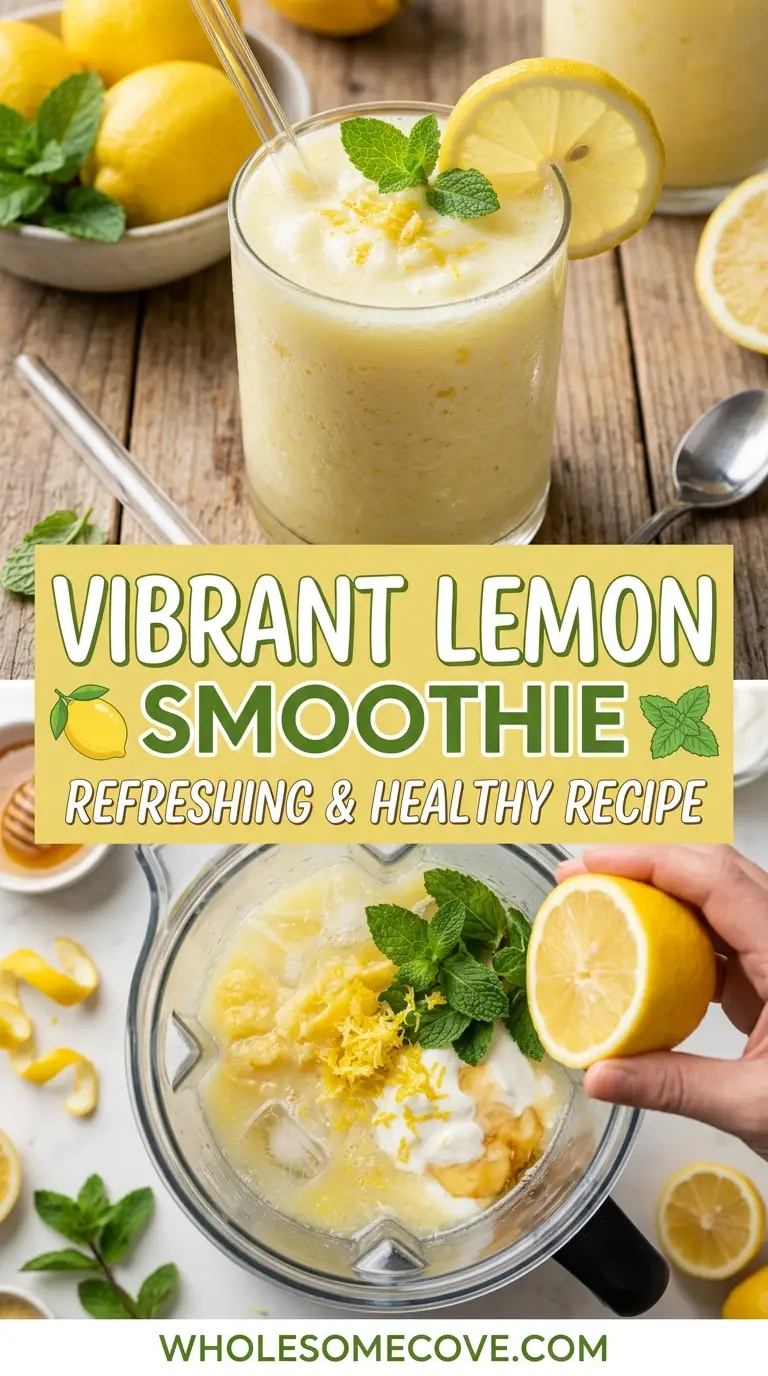
A good lemon smoothie recipe starts with the zest, not just the juice, since that’s where most of the citrus oil and flavor actually live. This one blends the zest and juice of two lemons with frozen banana, Greek yogurt, almond milk, and honey for a drink that’s thick enough to hold a straw upright and bright yellow from the zest alone.
Most homemade versions turn out thin and overly tart because they skip the zest and use a fresh, unfrozen banana. Freezing the banana ahead of time and using both the zest and juice of the lemon fixes both problems at once.
Five main ingredients, one blender, and five minutes of hands-on time is all this recipe asks for. The result is a smoothie that’s tart, a little sweet, and cold enough to sip slowly.
| Quick Recipe Summary | |
|---|---|
| Prep Time | 5 minutes |
| Cook Time | 0 minutes |
| Total Time | 5 minutes |
| Servings | 2 smoothies (16 oz / 475 ml each) |
| Difficulty Level | Easy |
This lemon smoothie recipe pairs well with a lot of other citrus and breakfast staples on the site, so if you want another cold glass to compare it to, my banana smoothie recipe uses a similar frozen-fruit base without the citrus kick.
Why You’ll Love This Lemon Smoothie Recipe
This lemon smoothie recipe earns its place in the regular breakfast rotation because it’s fast, uses ingredients most people already keep on hand, and doesn’t rely on added fruit to carry the flavor. The lemon itself is the star, which makes it a good change of pace from the usual berry or banana blends.
It also holds up well for meal prep, since the yogurt and almond milk base doesn’t separate the way water-based smoothies do.
- Ready in five minutes. No cooking, no soaking, just a blender and a few pantry staples.
- Real lemon flavor. Using both the zest and the juice means the lemon flavor doesn’t get lost next to the banana and honey.
- Naturally thick texture. The frozen banana and Greek yogurt give it a milkshake-like body without needing extra ice to bulk it up.
- Balanced tartness. Honey rounds out the sharp citrus without turning the drink into a dessert.
- Protein-forward. Greek yogurt adds a meaningful amount of protein, which is unusual for a fruit-forward smoothie.
- Easy to customize. It’s simple to swap the sweetener, the dairy, or the fruit base without changing the technique.
- Kid-friendly tartness level. Two lemons across two servings keeps the sourness noticeable but not overwhelming.
You might also enjoy: Greek Yogurt Smoothie Recipe
Ingredients
Everything below fits into a standard blender jar, and none of it needs special sourcing beyond fresh lemons. Look for lemons that feel heavy for their size, since those tend to hold more juice than lighter ones with thick, spongy skin.
- 2 medium lemons, zested and juiced (about 1 tablespoon zest and ¼ cup / 60 ml juice)
- 1 large ripe banana, sliced and frozen at least 2 hours ahead
- 1 cup (240 g) plain Greek yogurt
- 1 cup (240 ml) unsweetened almond milk
- 2 tablespoons (30 ml) raw honey
- 1 cup (140 g) ice cubes
- 1 pinch of salt
This pairs well with the same base I use for my strawberry banana smoothie, just swapped for citrus instead of berries.
Kitchen Equipment Needed
None of this requires specialty gear, but a few upgrades make the process faster and the texture smoother. If you only own basic tools, a regular blender and a fork for zesting will still get you a drinkable smoothie, just with a slightly coarser texture.
- High-speed blender
- Handheld citrus juicer
- Microplane zester
- Glass measuring cups
- Glass storage jars for leftover portions
- Freezer-safe silicone bags for pre-freezing banana slices
- Tall smoothie glasses
- Silicone spatula for scraping down the blender jar
Read Also: Almond Milk Smoothie Recipe
Recommended Products for This Recipe
These are products I’ve personally used while testing and remaking this recipe, and each one solves a specific problem that came up in the process.
1. Vitamix High-Speed Blender
A weaker blender leaves flecks of lemon zest and banana fiber floating in the drink instead of fully breaking them down, which changes the mouthfeel. A high-torque blender pulls the frozen banana and ice into the mixture in under a minute, so the texture comes out smooth instead of grainy.
2. OXO Citrus Juicer
Squeezing lemons by hand often pushes seeds and pulp into the juice, which then have to be strained out separately. This juicer catches the seeds while still letting the pulp through, which keeps the texture but skips the extra straining step.
3. Manuka Honey
Regular clover honey works fine, but I’ve found a stronger, darker honey like manuka holds its flavor better against the acidity of two whole lemons instead of getting drowned out. It also dissolves cleanly into a cold blend instead of clumping, which plain honey sometimes does straight from the fridge.
4. Reusable Silicone Freezer Trays
Freezing banana slices loose in a bag usually means they clump into one solid block, which is hard to portion later. A tray with individual compartments keeps the slices separate, so you can pull out exactly what one recipe needs.
5. Glass Smoothie Cups with Lids
Plastic cups pick up the smell of lemon zest after a few uses, even after washing. Glass cups with silicone lids don’t hold onto odors the same way, and they make the smoothie easy to grab straight from the fridge if you’ve made it ahead.
I borrowed the juicing trick above from my protein smoothie recipe, which also relies on a clean citrus juice to balance out the protein powder’s chalkiness.
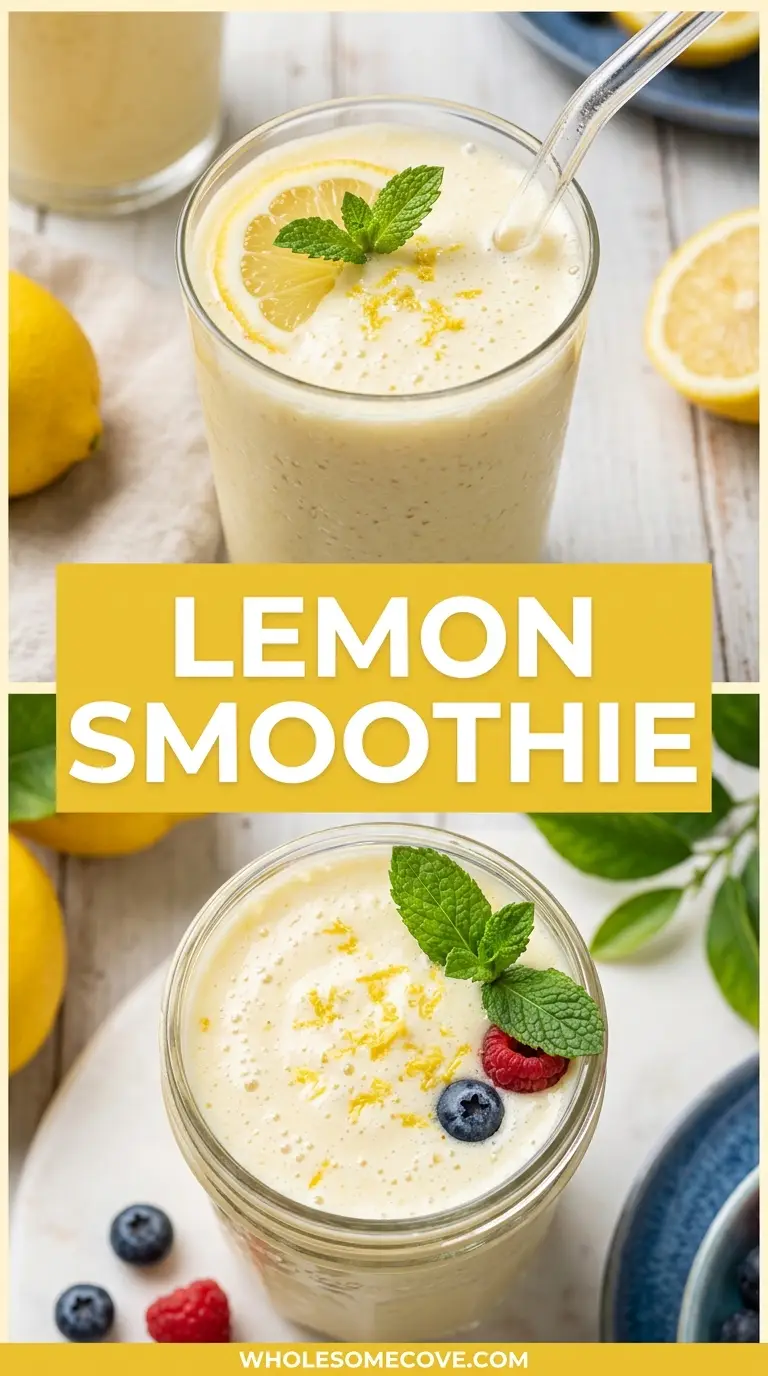
Step-by-Step Instructions: How to Make Lemon Smoothie
Follow these steps and you’ll have this lemon smoothie recipe ready before your coffee finishes brewing.
1. Zest the lemons first
- Wash both lemons under cool water and dry them with a towel.
- Using a microplane zester, remove only the bright yellow outer layer of the peel from both lemons, avoiding the bitter white pith underneath.
- Set the zest aside in a small bowl. You should end up with about 1 tablespoon of zest total.
2. Juice the lemons
- Cut each zested lemon in half.
- Juice both halves of both lemons using a handheld citrus juicer, catching the seeds as you go.
- You should have about ¼ cup (60 ml) of fresh lemon juice. Set it aside with the zest.
3. Add the wet ingredients to the blender
- Pour the almond milk into the blender jar first, followed by the Greek yogurt.
- Add the honey on top of the yogurt so it doesn’t stick to the bottom of the jar.
- This order helps the blades catch liquid immediately once you start blending.
4. Add the banana, lemon, and salt
- Add the frozen banana slices directly from the freezer, no need to thaw them first.
- Add the reserved lemon zest and lemon juice.
- Add the pinch of salt, which helps balance the sweetness and sharpen the citrus flavor.
5. Add the ice
- Add the ice cubes last, on top of the other ingredients.
- This keeps the ice from sitting directly against the blades before blending starts, which can cause uneven crushing.
6. Blend until smooth
- Start the blender on low speed for 10 to 15 seconds to break up the larger banana and ice pieces.
- Increase to high speed and blend for 45 to 60 seconds, or until the mixture looks fully smooth with no visible ice chunks.
- Stop and scrape down the sides with a spatula once, halfway through, if the blender has trouble pulling everything into the blades.
7. Taste and adjust
- Taste the smoothie directly from the blender jar.
- If it tastes too tart, blend in another teaspoon of honey. If it tastes too thick, add a splash more almond milk and blend again briefly.
8. Serve immediately
- Pour the smoothie into two tall glasses.
- Serve right away for the best texture, since the ice will begin to separate from the liquid within 15 to 20 minutes.
Read Also: Green Smoothie Recipe
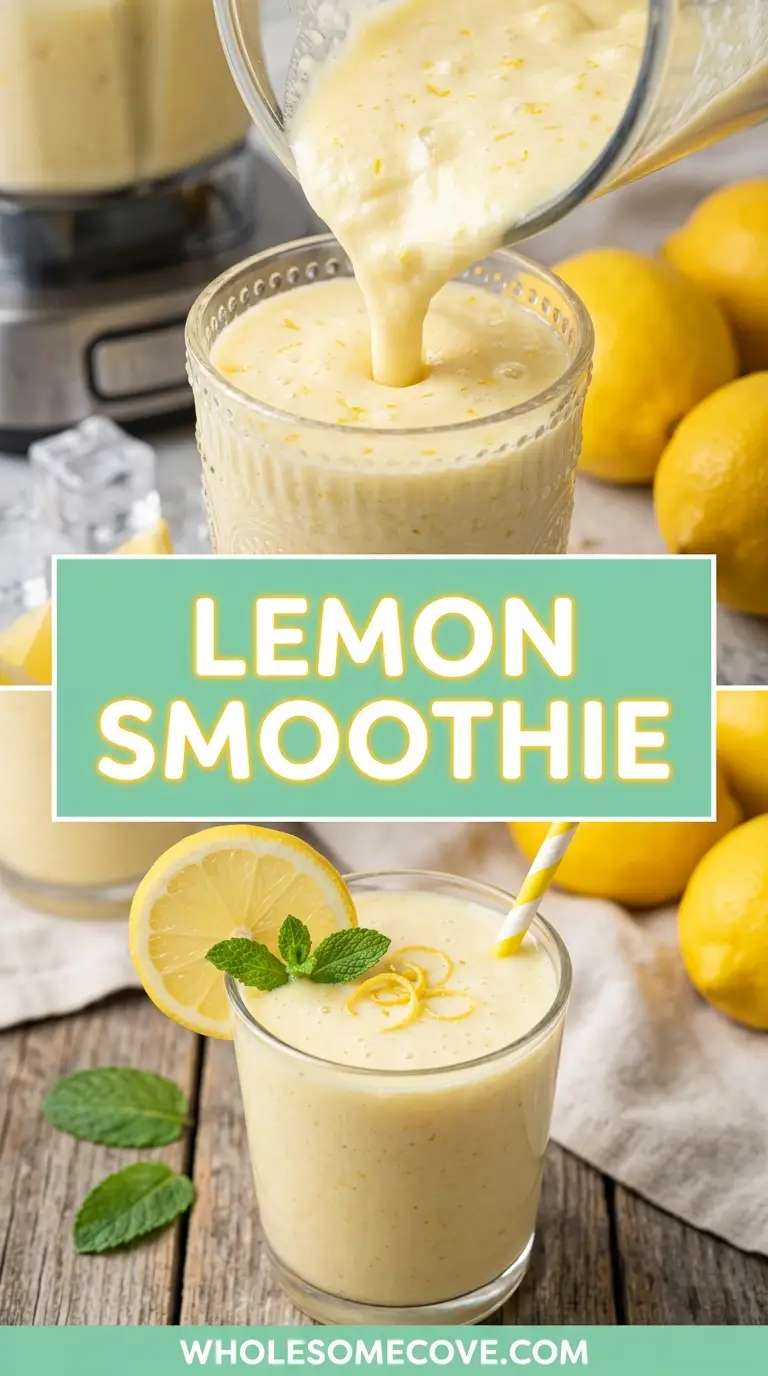
Tips for The Best Lemon Smoothie
A handful of small adjustments make a noticeable difference in how this smoothie turns out. Most of these came from remaking the recipe several times and comparing batches side by side.
- Zest before you juice. Once a lemon is cut and juiced, the peel is much harder to zest cleanly.
- Use a fully frozen banana, not a fresh one. Fresh banana blended with ice creates a slushy texture instead of a thick, milkshake-like one.
- Avoid the white pith when zesting. The pith underneath the yellow peel is bitter and will make the whole smoothie taste less bright.
- Adjust honey to your lemons, not the recipe. Lemon acidity varies a lot by season, so taste before adding the full amount.
- Chill your glasses beforehand. A cold glass keeps the smoothie from warming up as quickly while you drink it.
- Don’t over-blend. Blending past the point of smoothness starts to warm the mixture from friction, which softens the texture.
- Add liquid gradually if the blender struggles. Two extra tablespoons of almond milk usually fixes a blender that’s stalling on the frozen banana.
- Use full-fat Greek yogurt for a richer texture. Low-fat versions work, but the smoothie will be noticeably thinner.
- Rinse the blender jar right after pouring. Citrus and honey residue is much harder to scrub off once it dries onto the plastic or glass.
This pairs well with my mango smoothie recipe if you want to rotate between a citrus and a tropical option through the week.
What to Serve with Lemon Smoothie
A lemon smoothie is bright and a little tart, so it works best next to something warm, starchy, or mild that won’t compete with the citrus.
- Belgian Waffles: the crisp edges and soft center balance the smoothie’s tang.
- Banana Bread: the sweetness plays well against the lemon without overpowering it.
- Overnight Oats: a cold, make-ahead pairing for busy mornings.
- Avocado Toast: the richness of the avocado offsets the smoothie’s acidity.
- French Toast: a classic warm and cold breakfast pairing.
- Baked Oatmeal: a heartier, oven-baked option for a slower morning.
- Pancakes: simple, familiar, and easy to make alongside the smoothie.
- A handful of granola on the side: for texture and a bit of crunch between sips.
- Scrambled eggs: a savory, protein-heavy option if you want a more filling breakfast.
For a lighter option, try: Blueberry Smoothie Recipe
Variations of Lemon Smoothie
This base recipe is flexible enough to handle several easy swaps without changing the method. Each variation below keeps the same ratio of liquid to frozen fruit, so the texture stays consistent even when the flavor changes.
- Vegan Lemon Smoothie: Swap the Greek yogurt for a plant-based yogurt alternative and use maple syrup instead of honey.
- Lemon Ginger Smoothie: Add a ½-inch piece of fresh ginger, peeled, for a spicier, warming edge.
- Lemon Turmeric Smoothie: Add ¼ teaspoon of ground turmeric for color and a mild earthy flavor.
- Lemon Blueberry Smoothie: Add ½ cup of frozen blueberries for a sweeter, less sharply tart version.
- Protein-Boosted Lemon Smoothie: Add one scoop of vanilla protein powder and an extra splash of almond milk to keep the consistency from getting too thick.
- Lemon Smoothie Bowl: Use only ¾ cup of almond milk to thicken the blend, then pour it into a bowl and top with granola, fresh berries, and extra lemon zest.
- Lime Smoothie: Substitute lime juice and zest for the lemon for a sharper, slightly less sweet citrus flavor.
This pairs beautifully with the flavor profile in my coconut smoothie recipe, if you want a tropical variation that leans creamier instead of tarter.
Storage and Reheating
This smoothie is best enjoyed fresh, but leftovers can be stored for later with a small amount of texture change. The lemon flavor actually stays sharp in the fridge, it’s mostly the thickness that shifts as the ice melts fully.
- Refrigerator: Store in an airtight glass jar for up to 24 hours. Shake or stir well before drinking, since the ingredients will settle.
- Freezer: Pour leftover smoothie into an ice cube tray and freeze for up to 1 month. Blend the frozen cubes with a splash of almond milk when ready to drink.
- Do not reheat. This is a cold drink and isn’t meant to be warmed. Reheating will break the emulsion and separate the yogurt.
- Make-ahead tip: Pre-portion the banana slices, zest, and juice into a freezer bag so all you have to do in the morning is add the wet ingredients and blend.
- Avoid leaving it at room temperature for more than 30 minutes, since the dairy-based yogurt will start to warm and separate.
The same technique shows up in my pineapple smoothie recipe, where I use the same freeze-ahead trick for the fruit instead of the banana.
Nutritional Facts
| Nutrition (per serving, 1 of 2) | |
|---|---|
| Calories | 195 kcal |
| Carbohydrates | 32 g |
| Protein | 10 g |
| Fat | 3 g |
| Fiber | 3 g |
| Sugar | 24 g |
| Sodium | 75 mg |
Values are estimates and will vary depending on the specific brands of yogurt, almond milk, and honey used.
I’ve found this smoothie runs closer to 210 calories when made with full-fat yogurt instead of the standard version, so adjust your expectations if you swap it in. For a different nutrition profile in the same format, check out: Watermelon Smoothie Recipe
Health Benefits of Key Ingredients
Beyond the flavor, most of what’s in this smoothie is doing real nutritional work. None of the ingredients are here purely for texture, which is part of why this recipe holds up as a real breakfast option instead of just a treat.
- Lemon: high in vitamin C and plant compounds that support immune function, plus a small amount of fiber from the zest.
- Banana: a good source of potassium, which supports muscle and nerve function, along with natural sweetness that reduces the need for added sugar.
- Greek yogurt: provides a meaningful amount of protein and probiotics that support gut health.
- Almond milk: lower in calories than dairy milk and typically fortified with vitamin E and calcium.
- Honey: contains small amounts of antioxidants, though it should still be treated as an added sugar in moderation.
- Lemon zest specifically: carries concentrated citrus oils and a small amount of extra fiber that gets lost if you only use the juice.
This same nutritional approach carries over into my berry smoothie recipe, which leans on antioxidant-rich fruit instead of citrus.
FAQs About Lemon Smoothie
1. Can I make this lemon smoothie without a frozen banana?
You can use a fresh banana with an extra ½ cup of ice, but the texture will be icier and less creamy.
Freezing the banana ahead of time is what gives this recipe its thick, milkshake-like consistency.
2. Can I use bottled lemon juice instead of fresh?
Bottled lemon juice will work in a pinch, but it lacks the zest, which carries a lot of the actual lemon flavor.
If you use bottled juice, try adding a bit of lemon extract to compensate for the missing zest.
3. How do I make this lemon smoothie dairy-free?
Swap the Greek yogurt for a plant-based yogurt alternative, such as one made from coconut or almonds.
The texture will be slightly thinner, so you may want to reduce the almond milk by a few tablespoons.
4. Why does my lemon smoothie taste bitter instead of tart?
Bitterness usually comes from zesting too deeply into the white pith beneath the lemon peel.
Zest only the outer yellow layer, and stop as soon as you see white underneath.
5. Can I meal-prep this smoothie ahead of time?
Yes, though it’s better to prep the components separately rather than the finished smoothie.
Pre-portion the frozen banana, zest, and juice into a bag, then blend fresh with the yogurt and almond milk when you’re ready to drink it.
You might also enjoy: Peach Smoothie Recipe
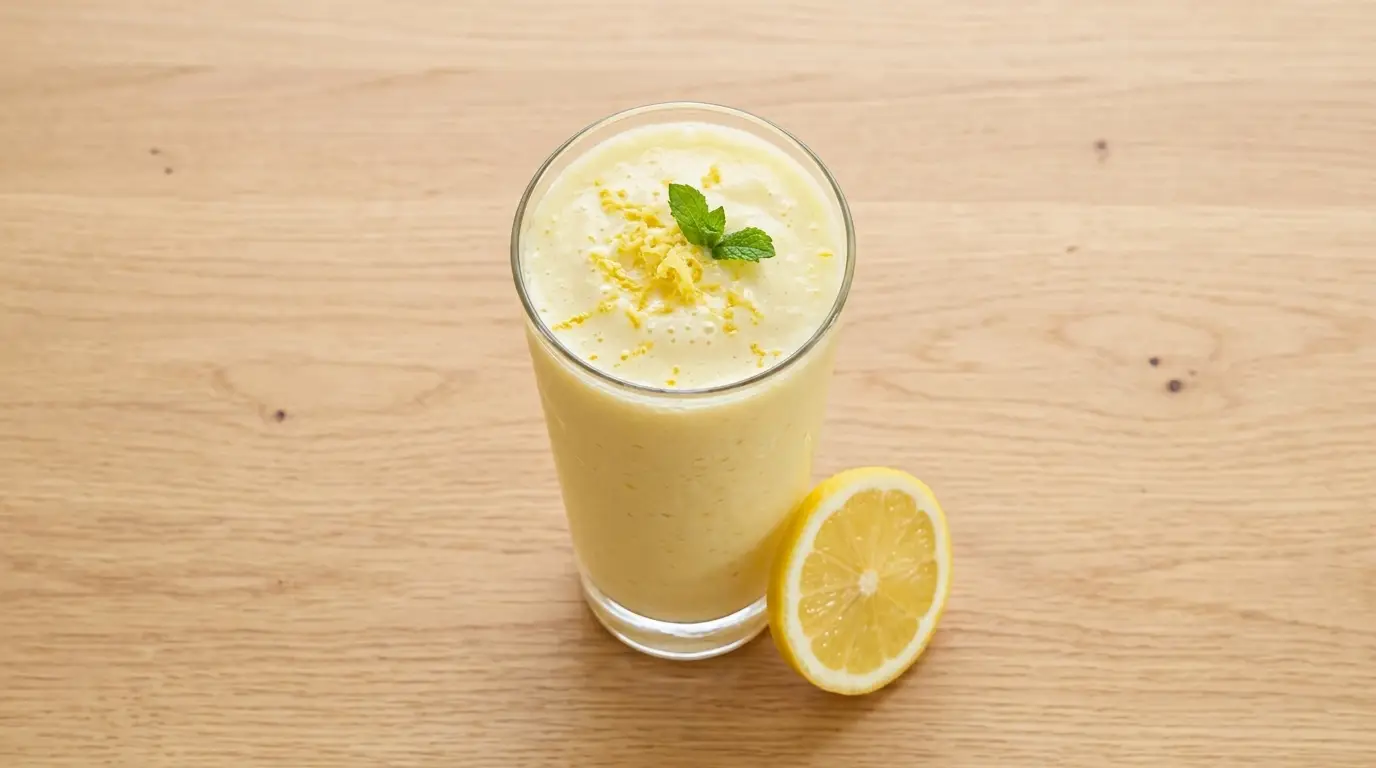
Lemon Smoothie
Ingredients
- 2 medium lemons - zested and juiced (about 1 tablespoon zest and ¼ cup or 60 ml juice)
- 1 large ripe banana - sliced and frozen at least 2 hours ahead
- 1 cup plain Greek yogurt - 240g
- 1 cup unsweetened almond milk - 240ml
- 2 tablespoons raw honey - 30ml
- 1 cup ice cubes - 140g
- 1 pinch salt
Equipment
- Microplane zester
- Glass measuring cups
- Glass storage jars - for leftover portions
- Freezer-safe silicone bags - for pre-freezing banana slices
- Tall smoothie glasses
- Silicone spatula - for scraping down the blender jar
Method
- Wash both lemons and zest the bright yellow outer layer with a microplane, avoiding the bitter white pith. Set aside about 1 tablespoon of zest.
- Cut each lemon in half and juice with a handheld citrus juicer, catching the seeds. You should have about ¼ cup (60 ml) of juice.
- Add the almond milk, Greek yogurt, and honey to the blender jar in that order so the honey doesn’t stick to the bottom.
- Add the frozen banana slices, lemon zest, lemon juice, and a pinch of salt to the blender.
- Add the ice cubes on top of the other ingredients to ensure even crushing.
- Blend on low speed for 10-15 seconds to break up larger pieces, then increase to high and blend for 45-60 seconds until fully smooth. Scrape down the sides halfway through if needed.
- Taste and adjust sweetness with extra honey or thin with more almond milk if desired.
- Pour into two tall glasses and serve immediately for the best texture.
Nutrition
Notes
- Zest the lemons before juicing them — once cut, the peel is much harder to zest cleanly.
- Use a fully frozen banana, not a fresh one, to achieve a thick, milkshake-like texture instead of a slushy one.
- Avoid the white pith when zesting, as it’s bitter and will dull the bright citrus flavor.
- Adjust honey to your lemons, not the recipe — lemon acidity varies by season, so taste before adding the full amount.
- Chill your glasses beforehand to keep the smoothie colder for longer while you drink it.
- Don’t over-blend — blending past the point of smoothness warms the mixture from friction and softens the texture.
- If your blender struggles with the frozen banana, add two extra tablespoons of almond milk to help it move.
- Use full-fat Greek yogurt for a richer, creamier texture — low-fat versions will result in a thinner drink.
- Rinse the blender jar right after pouring — citrus and honey residue is much harder to scrub once it dries.
- For a vegan version, swap the Greek yogurt for a plant-based alternative and use maple syrup instead of honey.
Private Notes
Tried this recipe?
Let us know how it was!Final Thoughts
This lemon smoothie recipe is proof that a short ingredient list doesn’t have to mean a boring drink.
The zest does most of the work here, and once you taste the difference it makes, it’s hard to go back to juice alone.
Give it a try this week, and if you make any of the variations above, I’d love to hear how it turned out in the comments. Feel free to share this recipe with anyone who could use a five-minute breakfast that isn’t another bowl of cereal.
Recommended:
- Grape Smoothie Recipe
- Apple Smoothie Recipe
- Guava Smoothie Recipe
- Acai Smoothie Recipe
- Blackberry Smoothie Recipe
- Raspberry Smoothie Recipe
- Cherry Smoothie Recipe
- Papaya Smoothie Recipe
- Dragon Fruit Smoothie Recipe