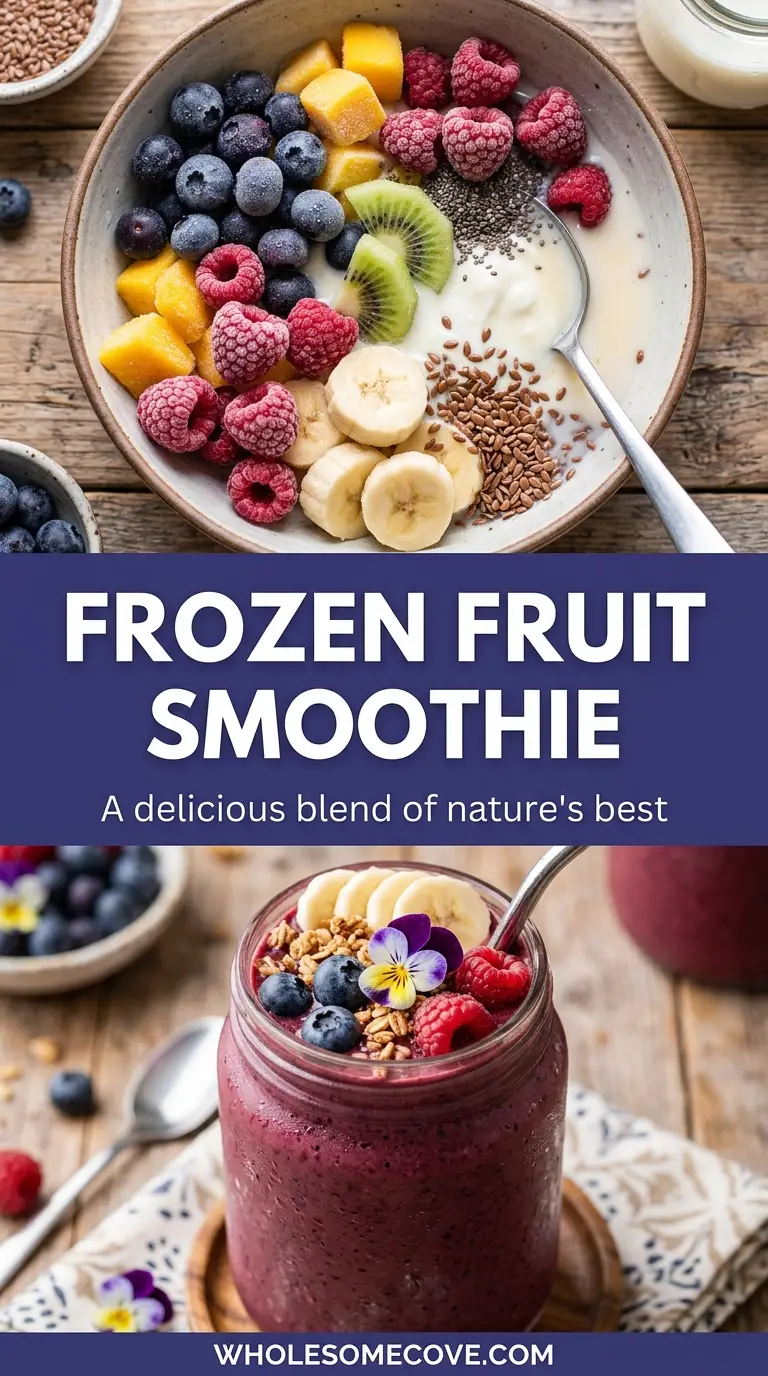
A good frozen fruit smoothie recipe is the kind of thing you come back to again and again, especially once you realize how little effort is actually involved.
You throw frozen fruit into a blender, add a liquid base, maybe some yogurt or protein powder, and in about two minutes you have a thick, cold, genuinely satisfying drink.
This recipe uses a classic mix of frozen strawberries, mango, banana, and pineapple as the fruit base, blended with orange juice and Greek yogurt for body and a touch of tartness. It covers the full spectrum of flavors you expect from a great fruit smoothie.
| Quick Recipe Summary | |
|---|---|
| Prep Time | 5 minutes |
| Cook Time | 0 minutes |
| Total Time | 5 minutes |
| Servings | 2 smoothies |
| Difficulty Level | Easy |
If you love blending up bright, fruity drinks, you might also enjoy this Breakfast Smoothie to keep your morning routine interesting.
Why You’ll Love This Frozen Fruit Smoothie Recipe
This frozen fruit smoothie recipe is one of the most forgiving things you can make in a kitchen. No cooking, no timing, no special skills, and very little cleanup.
Here’s exactly why it works so well:
- No prep work required. Frozen fruit is already washed, cut, and portioned. You skip peeling, slicing, and all the mess that comes with fresh fruit.
- Naturally thick and cold. The frozen fruit does double duty as both the main ingredient and the “ice.” Your smoothie comes out thick and cold without watering down the flavor.
- Ready in under five minutes. From walking to the freezer to sipping from a glass, you’re looking at about two to three minutes total.
- Works with what you have. The fruit mix is flexible. You can swap mango for peaches, skip the banana, or use whatever frozen fruit is sitting in your freezer.
- Naturally sweetened. There’s no need to add sugar or honey. Ripe frozen fruit has plenty of natural sweetness on its own.
- Great texture without ice cream. Greek yogurt gives the smoothie a creamy, almost milkshake-like texture without adding unnecessary calories or fat.
- Easy to customize for dietary needs. Use a dairy-free yogurt and swap orange juice for coconut water to make it completely vegan.
- Kid-friendly and adult-approved. The bright tropical flavors appeal to everyone, and the thick consistency is satisfying enough to count as a light breakfast or a post-workout drink.
For another fruit-forward option, try this Mango Smoothie that really lets the tropical flavor shine.
Ingredients
You need very few ingredients to make this work, and most of them are freezer staples. The key is using good-quality frozen fruit and a liquid base that complements the flavors rather than overpowering them.
- 1 cup (150 g) frozen strawberries
- 1 cup (165 g) frozen mango chunks
- 1 medium frozen banana, sliced (about 120 g)
- ½ cup (80 g) frozen pineapple chunks
- ¾ cup (180 ml) orange juice, freshly squeezed or store-bought
- ½ cup (120 g) plain Greek yogurt
- 1 tablespoon honey (optional, for extra sweetness)
- ½ teaspoon vanilla extract (optional)
Read Also: Greek Yogurt Smoothie Recipe
Kitchen Equipment Needed
The equipment list is short. The most important item by far is a powerful blender, since frozen fruit can be tough on weak motors.
- High-powered blender (at least 1000 watts recommended for frozen fruit)
- Measuring cups and spoons
- Blender tamper (optional but helpful for thick smoothies)
- Two tall glasses or mason jars for serving
- Reusable smoothie straws
- Spatula for scraping the blender jar
You might also enjoy: Strawberry Banana Smoothie
Recommended Products for This Recipe
I’ve made this smoothie dozens of times, and a few specific products have made a genuine difference in the result. These are items I actually use and recommend based on real experience.
1. Vitamix 5200 Blender
This blender handles frozen fruit without complaint. The variable speed control gives you full command over texture, so you can go from thick and spoonable to perfectly pourable in seconds. It’s worth every penny if you make smoothies regularly.
2. Dole Frozen Tropical Fruit Mix
A pre-mixed bag of mango, pineapple, strawberry, and peach chunks takes all the measuring guesswork out of the equation. The fruit is picked at peak ripeness, so the flavor is reliable every time. It’s the shortcut that actually works.
3. Fage Total 0% Greek Yogurt
Fage has a thicker consistency than most store-brand Greek yogurts, which means your smoothie stays thick rather than turning watery. The 0% fat version keeps things light without sacrificing texture. It’s the yogurt I always reach for in this recipe.
4. OXO Good Grips Blender Tamper
A tamper is something you don’t realize you need until your blender stops moving a pocket of frozen fruit. This OXO version is sized correctly for most blender jars and saves you from stopping to stir every thirty seconds. It’s cheap and solves a genuinely annoying problem.
For a protein-forward version, check out this Protein Smoothie.
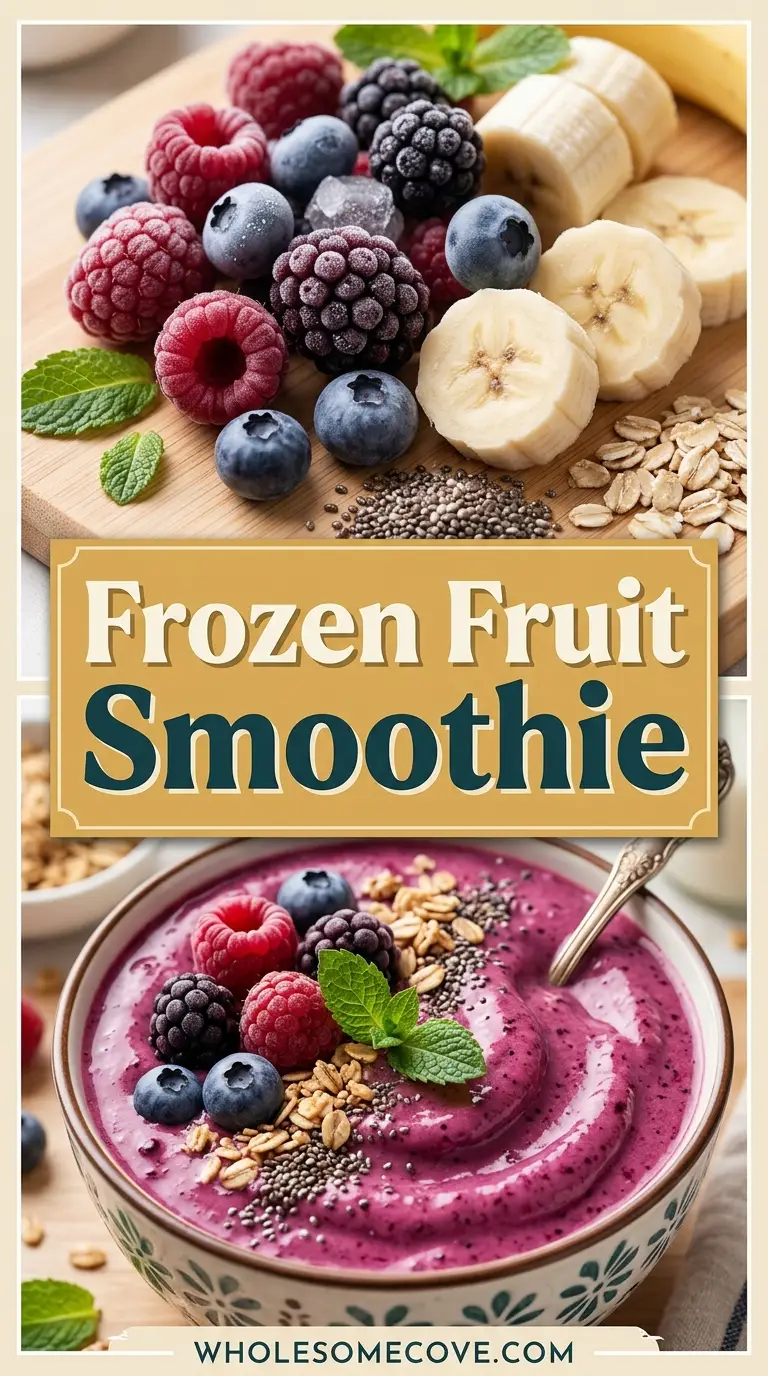
Step-by-Step Instructions: How to Make Frozen Fruit Smoothie
Follow these steps and you’ll have a thick, perfectly blended smoothie in just a few minutes.
Step 1: Measure and Add Your Liquid First
- Pour the orange juice (¾ cup / 180 ml) into the blender jar first.
- Add the Greek yogurt (½ cup / 120 g) on top of the juice.
- Adding liquid first protects the blender motor and helps the frozen fruit blend more smoothly from the start.
- If using honey or vanilla extract, add them now.
Step 2: Add the Frozen Fruit
- Add the frozen strawberries (1 cup / 150 g) directly to the blender.
- Add the frozen mango chunks (1 cup / 165 g).
- Add the frozen banana slices (1 medium banana, about 120 g).
- Add the frozen pineapple chunks (½ cup / 80 g) last, on top.
- Do not exceed the max fill line on your blender jar.
Step 3: Blend on Low, Then High
- Secure the blender lid firmly and start blending on the lowest speed setting.
- After about 10 seconds, increase to the highest speed.
- Blend on high for 30 to 45 seconds until completely smooth.
- If the smoothie stalls out, use a tamper to push fruit down toward the blade, or stop the blender and give it a stir before continuing.
Step 4: Check the Consistency
- Stop the blender and check the texture. The smoothie should be thick and pourable, not runny.
- If it’s too thick to pour, add 2 tablespoons (30 ml) of orange juice at a time and blend briefly.
- If it’s too thin, add a small handful of frozen fruit and blend again for 15 seconds.
- Taste and adjust sweetness by adding a little honey if needed, then blend for another 5 seconds.
Step 5: Pour and Serve Immediately
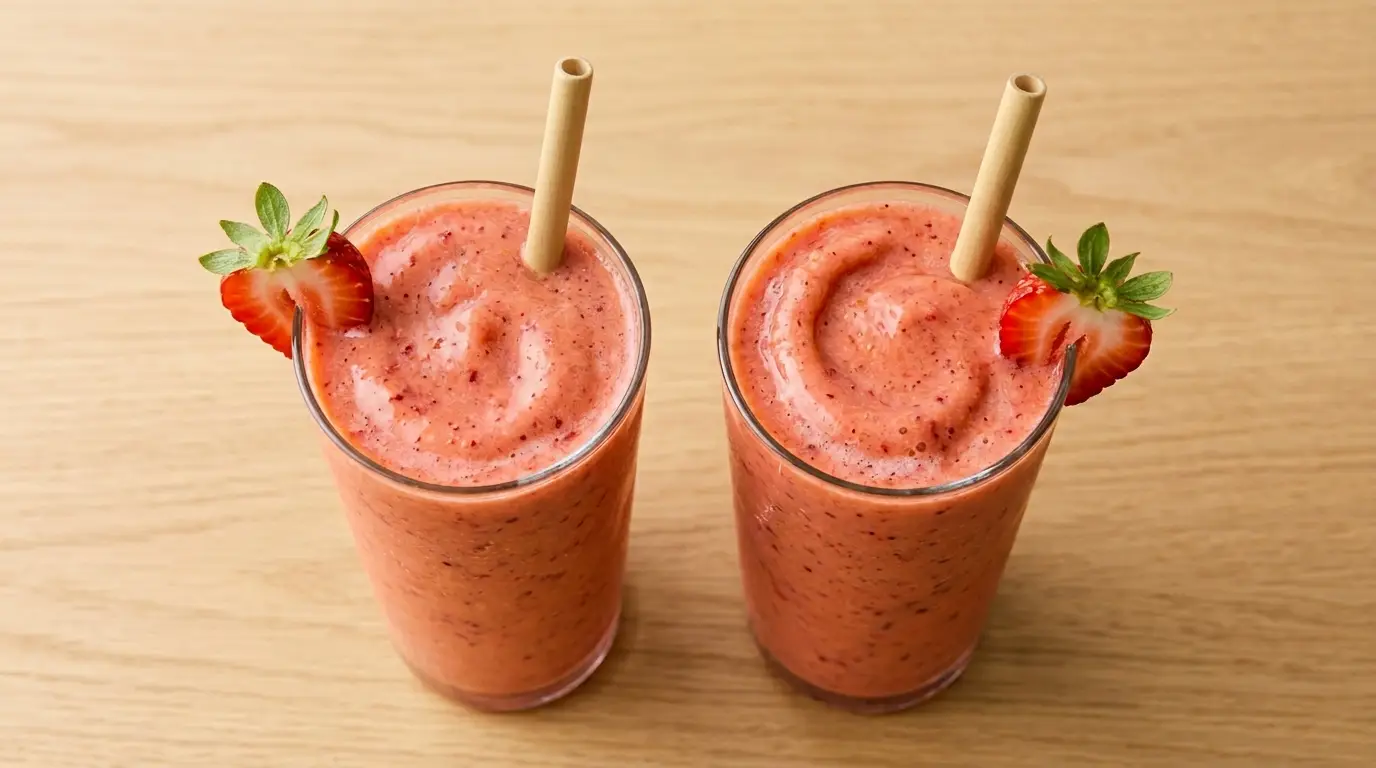
- Pour the smoothie into two tall glasses or mason jars.
- Serve immediately for the best thick, cold texture.
- Optional garnishes include a slice of fresh strawberry on the rim, a few pieces of fresh fruit on top, or a sprinkle of granola if you’re serving it as a meal.
You might also enjoy: Pineapple Smoothie
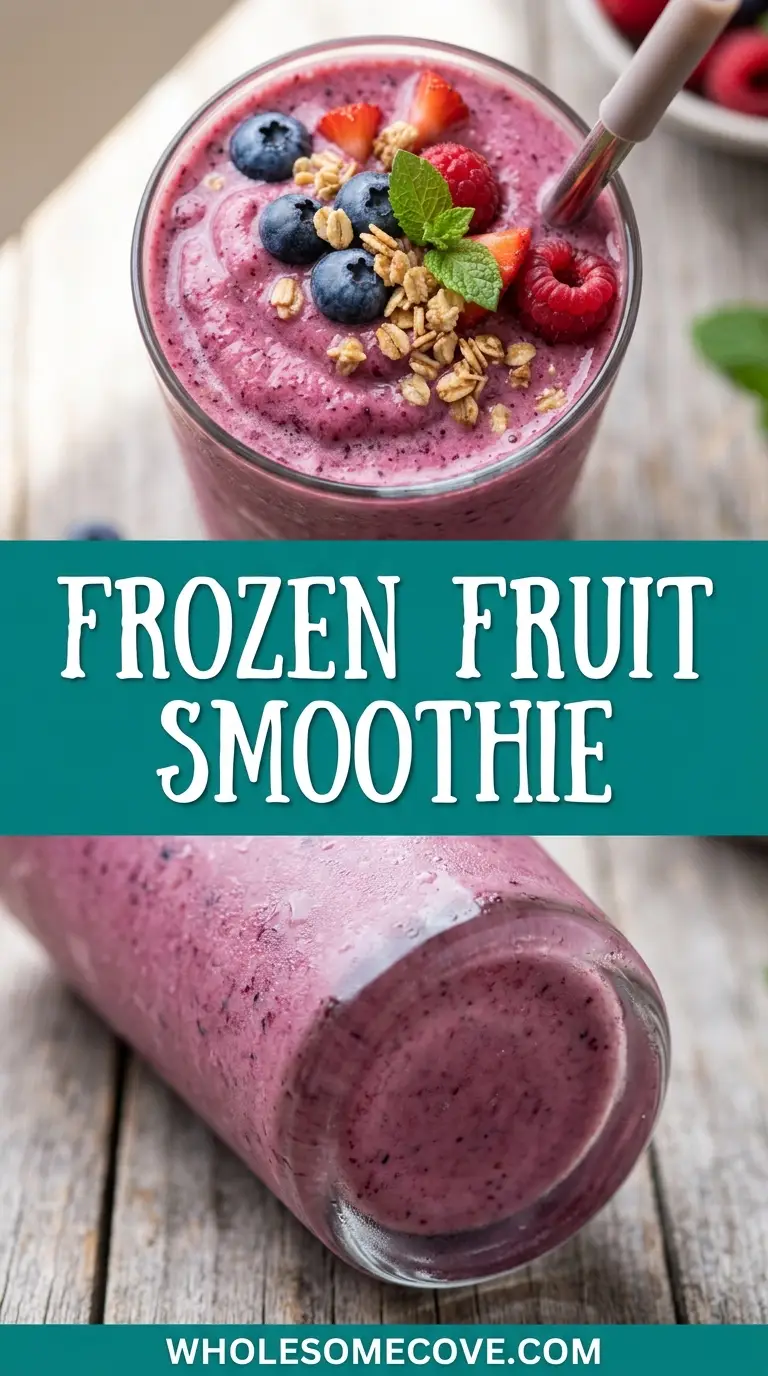
Tips for The Best Frozen Fruit Smoothie
Getting a great smoothie consistently comes down to a few small habits that make a big difference. Once you get these right, you’ll rarely need to adjust anything.
Here are the tips that actually matter:
- Freeze your banana in pieces, not whole. A whole frozen banana is nearly impossible to blend cleanly. Slice it before freezing and store it in a zip-lock bag so it’s always ready to go.
- Use liquid first, always. Putting the juice in before the fruit keeps the blade from running dry and protects your motor. It also helps the blender get traction right away.
- Don’t add ice. Frozen fruit is already cold and thick. Ice dilutes the flavor as it melts. If your smoothie isn’t cold enough, the issue is the fruit, not the ice.
- Start low, go high. Starting the blender at a lower speed before ramping up gives the blades time to break down the fruit without straining the motor.
- Don’t over-blend. Thirty to forty-five seconds on high is usually enough. Over-blending generates heat, which can thin out the smoothie and dull the flavor.
- Use ripe bananas before freezing. Yellow bananas with a few brown spots will make a noticeably sweeter smoothie than unripe ones. The ripeness is locked in when they freeze.
- Orange juice is the best base for tropical fruit. It complements mango, pineapple, and strawberry far better than plain water or even milk. The acidity also brightens the whole blend.
- Adjust to your blender. A powerful blender (1000+ watts) can handle all the frozen fruit at once. A less powerful blender may need the fruit added in batches.
- Taste before serving. Fruit varies in sweetness depending on the brand and the season. A quick taste before pouring saves you from serving a smoothie that’s more tart than you wanted.
- Serve immediately or keep it thick. A smoothie left sitting for more than 10 minutes will start to separate and thin out. If you need to wait, store it in the freezer, not the fridge.
I learned some of these tricks while making my Watermelon Smoothie, where the water content of the fruit makes texture control extra important.
What to Serve with Frozen Fruit Smoothie
A frozen fruit smoothie works as a standalone breakfast, a mid-morning snack, or a post-workout drink, but a few pairings turn it into something more complete. The trick is keeping the sides light and fresh so they don’t compete with the fruity, cold flavors of the smoothie.
Good pairings include:
- Peanut Butter Smoothie alongside for a smoothie flight with wildly different flavor profiles
- Overnight oats for a complete, high-protein breakfast combination. Try this Overnight Oats for a great base recipe.
- Granola sprinkled directly on top of the smoothie to add crunch and fiber
- Whole grain toast with almond butter for a satisfying breakfast that balances the natural sugars in the smoothie
- Avocado toast for a savory contrast that rounds out the meal well
- Scrambled eggs on the side if you need more protein to carry you through a long morning
- A small green salad with citrus dressing for a light, refreshing lunch combination
- Greek yogurt with honey as a companion snack that doubles down on the creamy, tangy flavors already in the smoothie
- Fresh fruit skewers with strawberries, grapes, and melon if you’re serving this at a brunch spread
You might also enjoy: Chocolate Peanut Butter Banana Smoothie
Variations of Frozen Fruit Smoothie
Once you have the base recipe down, it’s easy to adjust it based on what’s in your freezer, your dietary goals, or just what sounds good that day. These variations all work with the same method.
- Tropical version: Use frozen mango, pineapple, and coconut milk instead of orange juice. Add a teaspoon of coconut cream for extra richness.
- Berry blast version: Swap all the tropical fruit for frozen mixed berries, blueberries, and raspberries. Use apple juice as the base for a tarter, deeper flavor. This is essentially my Berry Smoothie.
- Green smoothie version: Add a large handful of fresh baby spinach to the base recipe. The spinach disappears into the flavor while adding iron and folate. Related recipe: Spinach Smoothie.
- Protein smoothie version: Add one scoop of vanilla protein powder to the blender along with the other ingredients. This version works well as a post-workout recovery drink.
- Keto-friendly version: Replace the banana and orange juice with frozen raspberries and unsweetened almond milk to bring down the carb count significantly.
- Vegan version: Swap the Greek yogurt for a plant-based coconut or almond yogurt alternative. Use coconut water or oat milk as the liquid base instead of orange juice.
- Peanut butter banana version: Skip the strawberries and pineapple, and add 2 tablespoons of natural peanut butter to the banana and mango base. This version is thicker and much more filling.
- Smoothie bowl version: Reduce the orange juice to ¼ cup (60 ml) so the blend is very thick, then pour it into a bowl and top with granola, sliced fresh fruit, chia seeds, and a drizzle of honey.
- Peach mango version: Replace the strawberries and pineapple with frozen peach slices for a softer, stone-fruit-forward flavor. Add a small pinch of ground ginger for extra warmth.
- Kid-friendly version: Use white grape juice instead of orange juice to reduce the tartness, and add a frozen banana plus strawberries. This version is sweet, mild, and usually a hit with young kids.
Read Also: Peach Smoothie Recipe
Storage and Reheating
A smoothie is best the moment it comes out of the blender, but it’s still worth knowing how to store leftovers without losing too much quality.
- Fridge storage: Pour leftover smoothie into an airtight jar or container and refrigerate for up to 24 hours. Give it a good stir or shake before drinking, as it will separate and thicken.
- Freezer storage: Pour leftover smoothie into ice cube trays and freeze solid. Once frozen, transfer the cubes to a zip-lock bag. They keep well for up to 3 months and can be re-blended straight from frozen with a splash of juice.
- Smoothie packs: Portion out all the fruit ingredients (without the liquid) into individual freezer bags and freeze them. When you’re ready to make a smoothie, just dump a bag into the blender, add your liquid, and blend. This is a real time-saver on busy mornings.
- Mason jar method: If you’re making smoothies ahead for the week, fill mason jars about three-quarters full (leave room for expansion) and freeze them. The night before you need one, move it to the fridge to thaw overnight.
- No reheating needed: Smoothies are always served cold, so there’s nothing to reheat. If your stored smoothie has gotten too thick after refrigeration, stir in a tablespoon or two of juice or water to loosen it.
- Texture after storage: The texture will change slightly after storing. Refrigerated smoothies can become thicker and slightly more separated, which is normal. Re-blending or stirring vigorously fixes this.
For another make-ahead drink idea, check out this Pumpkin Spice Latte.
Nutritional Facts
| Nutritional Facts (Per Serving, approx. 1.5 cups / 350 ml) | |
|---|---|
| Calories | 210 kcal |
| Total Fat | 1 g |
| Saturated Fat | 0.2 g |
| Cholesterol | 2 mg |
| Sodium | 35 mg |
| Total Carbohydrates | 46 g |
| Dietary Fiber | 4 g |
| Total Sugars | 34 g (naturally occurring) |
| Protein | 7 g |
| Vitamin C | 85% Daily Value |
| Potassium | 620 mg |
| Calcium | 10% Daily Value |
Nutritional values are estimates and will vary based on the specific brands and quantities used.
You might also enjoy: Keto Smoothie
Health Benefits of Key Ingredients
Frozen fruit smoothies are genuinely good for you, and not in a vague, marketing-speak kind of way. Each ingredient in this recipe brings something specific to the table.
Here’s what you’re actually getting:
- Frozen strawberries: Rich in vitamin C, manganese, and folate. They’re one of the best fruit sources of antioxidants, particularly anthocyanins, which are linked to reduced inflammation. Freezing preserves these nutrients better than refrigerating fresh strawberries for days.
- Frozen mango: A solid source of vitamin A in the form of beta-carotene, plus vitamin C and vitamin B6. Mango also contains enzymes that support digestion, making it a smart choice for people with sensitive stomachs.
- Frozen banana: The potassium source in this recipe. One medium banana provides roughly 422 mg of potassium, which supports muscle function and healthy blood pressure. Bananas also contribute natural pectin, which helps with the smoothie’s thick texture.
- Frozen pineapple: Contains bromelain, an enzyme with anti-inflammatory properties that may also help with muscle recovery. Pineapple is also a good source of vitamin C and manganese.
- Orange juice: A concentrated source of vitamin C, with about 93 mg per ¾ cup. It also contributes folate and potassium. Fresh-squeezed adds more phytonutrients than pasteurized store-bought versions.
- Greek yogurt: Adds protein, calcium, and probiotics that support gut health. The protein from Greek yogurt also helps keep you fuller longer compared to smoothies made with juice or milk alone.
Read Also: Green Smoothie Recipe
FAQs About Frozen Fruit Smoothie
1. Do I need to thaw frozen fruit before blending?
No. Frozen fruit goes straight into the blender from the freezer. Thawing it first defeats the purpose, because you lose the thick, cold texture that makes a frozen fruit smoothie worth making.
2. Can I use fresh fruit instead of frozen?
You can, but the result will be much thinner and less cold unless you add ice. For the best thick texture, frozen fruit is the way to go. If you only have fresh fruit available, freeze it for at least 2 to 3 hours before blending.
3. Why is my smoothie too thin?
The most common reason is too much liquid. Start with less than the recipe calls for and add more as needed rather than dumping it all in at once. Another reason is warm fruit: if your frozen fruit sat out for a while, it won’t give you the same thick result.
4. Can I make this smoothie without a high-powered blender?
You can, but you may need to reduce the amount of frozen fruit and work in batches. Let the fruit sit at room temperature for 2 to 3 minutes to soften slightly before blending. A regular blender can manage frozen fruit if you give it time and don’t overload it.
5. How do I make this smoothie vegan?
Swap the Greek yogurt for a plant-based yogurt made from coconut, almond, or oat milk. Check that your orange juice brand doesn’t add any animal-derived vitamin D3 if you want to be thorough about it. Everything else in the recipe is already completely plant-based.
For another great blended option, check out: Coconut Milk Smoothie
Frozen Fruit Smoothie
Ingredients
- 1 cup frozen strawberries - 150g
- 1 cup frozen mango chunks - 165g
- 1 medium frozen banana - about 120g, sliced
- ½ cup frozen pineapple chunks - 80g
- ¾ cup orange juice - 180ml, freshly squeezed or store-bought
- ½ cup plain Greek yogurt - 120g
- 1 tablespoon honey - optional, for extra sweetness
- ½ teaspoon vanilla extract - optional
- fresh strawberry slices - for garnish
- fresh fruit - for topping
- granola - for serving as a meal
Equipment
- High-powered blender - at least 1000 watts recommended for frozen fruit
- Blender tamper - optional but helpful for thick smoothies
- Tall glasses or mason jars - for serving
- Spatula - for scraping the blender jar
Method
- Pour the orange juice and Greek yogurt into the blender jar first, adding honey and vanilla if using.
- Add frozen strawberries, mango chunks, banana slices, and pineapple chunks to the blender, not exceeding the max fill line.
- Secure the lid, start blending on low speed for 10 seconds, then increase to high speed and blend for 30-45 seconds until completely smooth.
- Check consistency, adding more juice if too thick or more fruit if too thin. Taste and adjust sweetness if needed.
- Pour into two tall glasses or mason jars and serve immediately. Garnish with fresh fruit or granola if desired.
Nutrition
Notes
- Freeze bananas in pieces: Slice bananas before freezing to ensure smooth blending. Whole frozen bananas are difficult to blend cleanly.
- Liquid first: Adding liquid to the blender before fruit protects the motor and helps the blender get traction right away.
- No ice needed: Frozen fruit provides all the cold and thickness needed. Ice dilutes the flavor as it melts.
- Start low, go high: Beginning on low speed before ramping up gives blades time to break down fruit without straining the motor.
- Don’t over-blend: 30-45 seconds on high is usually enough. Over-blending generates heat that can thin out the smoothie.
- Use ripe bananas: Yellow bananas with brown spots freeze sweeter than unripe ones. The ripeness is locked in when frozen.
- Adjust to your blender: Less powerful blenders may need fruit added in batches or a brief thaw for 2-3 minutes.
- Storage: Refrigerate leftovers in an airtight container for up to 24 hours. For longer storage, freeze in ice cube trays and re-blend with juice.
- Make-ahead packs: Portion fruit ingredients into freezer bags without liquid for quick assembly on busy mornings.
- Vegan option: Swap Greek yogurt for plant-based yogurt and use coconut water or oat milk instead of orange juice.
Private Notes
Tried this recipe?
Let us know how it was!Final Thoughts
A frozen fruit smoothie recipe like this one is proof that fast food doesn’t have to mean bad food. Five minutes, a good blender, and whatever frozen fruit is in your freezer is all it takes.
Give this recipe a try and see how quickly it becomes part of your rotation. If you make it, drop a comment below and let me know what fruit combination you used.
Recommended:
- Almond Milk Smoothie
- Yogurt Smoothie
- Peanut Butter Banana Smoothie
- Kale and Fruit Smoothie
- Passion Fruit Smoothie
- Dragon Fruit Smoothie
- Avocado Smoothie
- Blueberry Smoothie
- Banana Smoothie
- Strawberry Smoothie