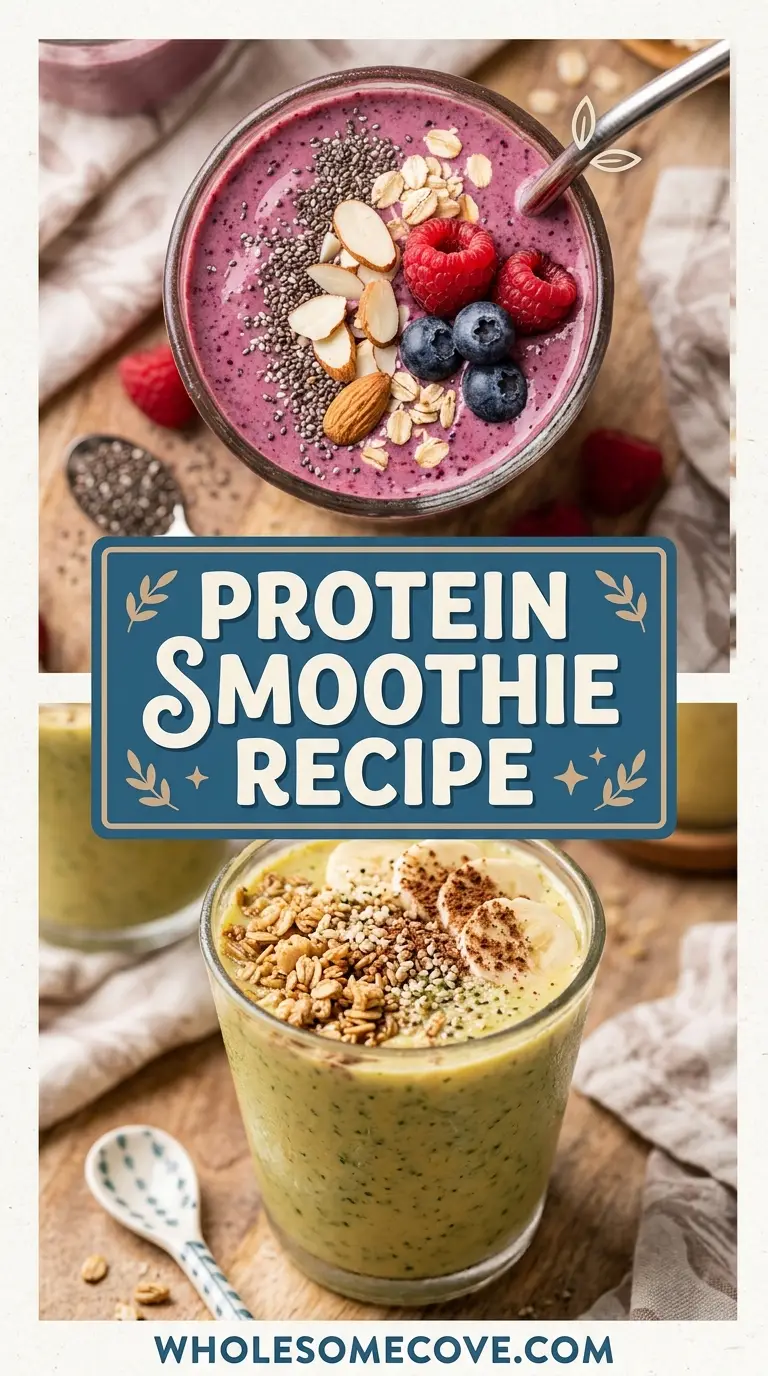
A great protein smoothie recipe delivers real nutrition without sacrificing flavor, making it one of the most efficient ways to fuel your day. Protein smoothies have become a staple for gym-goers, busy professionals, and health-conscious eaters alike because they pack a serious nutritional punch into one easy-to-make drink.
The classic version combines a protein powder base with a liquid, frozen fruit for texture, and a handful of extras like nut butter or Greek yogurt that push the protein content even higher.
| Quick Recipe Summary | |
|---|---|
| Prep Time | 5 minutes |
| Cook Time | 0 minutes |
| Total Time | 5 minutes |
| Servings | 1 smoothie |
| Difficulty Level | Easy |
If you love protein-packed blended drinks, you will also enjoy my Peanut Butter Smoothie, which is another filling option loaded with healthy fats and natural protein.
Why You’ll Love This Protein Smoothie Recipe
Protein smoothies check every box when you need something fast, filling, and genuinely good for you.
Here is exactly why this recipe deserves a permanent spot in your routine:
- Fast to make: From the freezer to the blender to your hand, this smoothie takes five minutes flat.
- Customizable protein source: Use whey, plant-based, casein, or collagen powder depending on your dietary needs and flavor preferences.
- Balanced macros: With protein, healthy fats, and natural carbohydrates from fruit, it works as a complete meal replacement or a powerful post-workout recovery drink.
- No cooking required: Blending is the only skill you need, making this accessible to anyone regardless of kitchen experience.
- Keeps you full: The combination of protein and fiber means you stay satisfied for hours rather than reaching for a snack 30 minutes later.
- Budget-friendly: A single serving costs a fraction of what a protein smoothie at a smoothie bar would set you back.
- Works any time of day: Breakfast, post-gym, or afternoon slump, this smoothie fits every moment.
- Kid-approved: Even picky eaters tend to love a sweet, creamy blended drink, making it easy to sneak in extra nutrition.
For a veggie-forward take on a nutrient-packed blended drink, my green smoothie is well worth bookmarking.
Ingredients
You only need a handful of simple ingredients to build a protein smoothie that tastes great and actually fills you up.
- 1 scoop (30 g / 1 oz) vanilla or chocolate protein powder
- 1 medium ripe banana, fresh or frozen (about 120 g / 4.2 oz)
- 1 cup (240 ml / 8 fl oz) unsweetened almond milk or milk of choice
- ½ cup (120 g / 4.2 oz) plain Greek yogurt
- 2 tablespoons (32 g / 1.1 oz) natural peanut butter or almond butter
- 1 cup (about 150 g / 5.3 oz) ice cubes
- 1 tablespoon (20 g / 0.7 oz) honey or maple syrup (optional, for extra sweetness)
- 1 tablespoon (7 g / 0.25 oz) ground flaxseed or chia seeds (optional, for added fiber and omega-3s)
You might also enjoy my berry smoothie if you want to swap in mixed berries for the banana and get a burst of antioxidants instead.
Kitchen Equipment Needed
Having the right tools makes blending faster, smoother, and more consistent every single time.
- High-powered blender (1000 watts or more for the smoothest result)
- Measuring cups and spoons
- Kitchen scale (optional, but useful for accurate protein measurements)
- Blender tamper (to push ingredients down if using a Vitamix or similar)
- Tall smoothie glass or mason jar
- Drinking straw (wide-mouth preferred for thick smoothies)
- Rubber spatula for scraping down the blender sides
I fell in love with my Banana Smoothie after I finally upgraded to a high-powered blender, and the difference in texture was absolutely dramatic.
Recommended Products for This Recipe
These are the tools and ingredients I personally reach for every time I make a protein smoothie, and they have made a real difference in consistency and flavor.
1. Vitamix 5200 Blender
The Vitamix 5200 is the blender I use every single morning, and nothing else has come close to its ability to pulverize ice into a silky smooth texture without any gritty chunks. It handles frozen fruit, nut butter, and dense Greek yogurt with absolutely no effort, giving you that perfectly creamy result every time. It is an investment, but it will outlast five cheap blenders combined.
2. Orgain Organic Protein Powder
Orgain is my go-to protein powder for smoothies because it blends smoothly without clumping, tastes genuinely good, and uses clean ingredients without a long list of artificial additives. The vanilla bean flavor works with almost every fruit combination, which means I do not have to buy multiple tubs to stay versatile. Both whey and plant-based versions are available, making it easy to match your dietary needs.
3. Nutiva Organic Chia Seeds
Adding chia seeds to your protein smoothie is one of the quickest ways to boost fiber, omega-3 fatty acids, and staying power without changing the flavor at all. Nutiva’s organic chia seeds are my favorite because they are consistently fresh and never have that stale, slightly rancid taste I have noticed with cheaper brands. One bag lasts a long time, making it an extremely cost-effective nutrition upgrade.
4. Glass Meal Prep Smoothie Cups with Lids
Prepping smoothies in individual glass cups the night before is one of the best habits I have built for busy mornings. These glass cups with tight-fitting lids keep everything fresh overnight, and they go straight from the freezer to the blender in seconds without any plastic smell or leaching. They also look great on the counter and encourage you to actually drink your smoothie rather than forget it in the fridge.
5. NOW Foods Organic Flaxseed Meal
Ground flaxseed is one of my favorite ways to quietly add omega-3s, fiber, and a subtle nutty flavor to a protein smoothie without anyone noticing. NOW Foods makes a reliably fresh, finely milled version that blends completely smooth so you never get that gritty residue at the bottom of your glass. A single tablespoon per smoothie is all it takes to meaningfully improve the nutritional profile.
For a chocolate-forward protein smoothie you can also use as inspiration for this recipe, check out my Chocolate Peanut Butter Banana Smoothie.
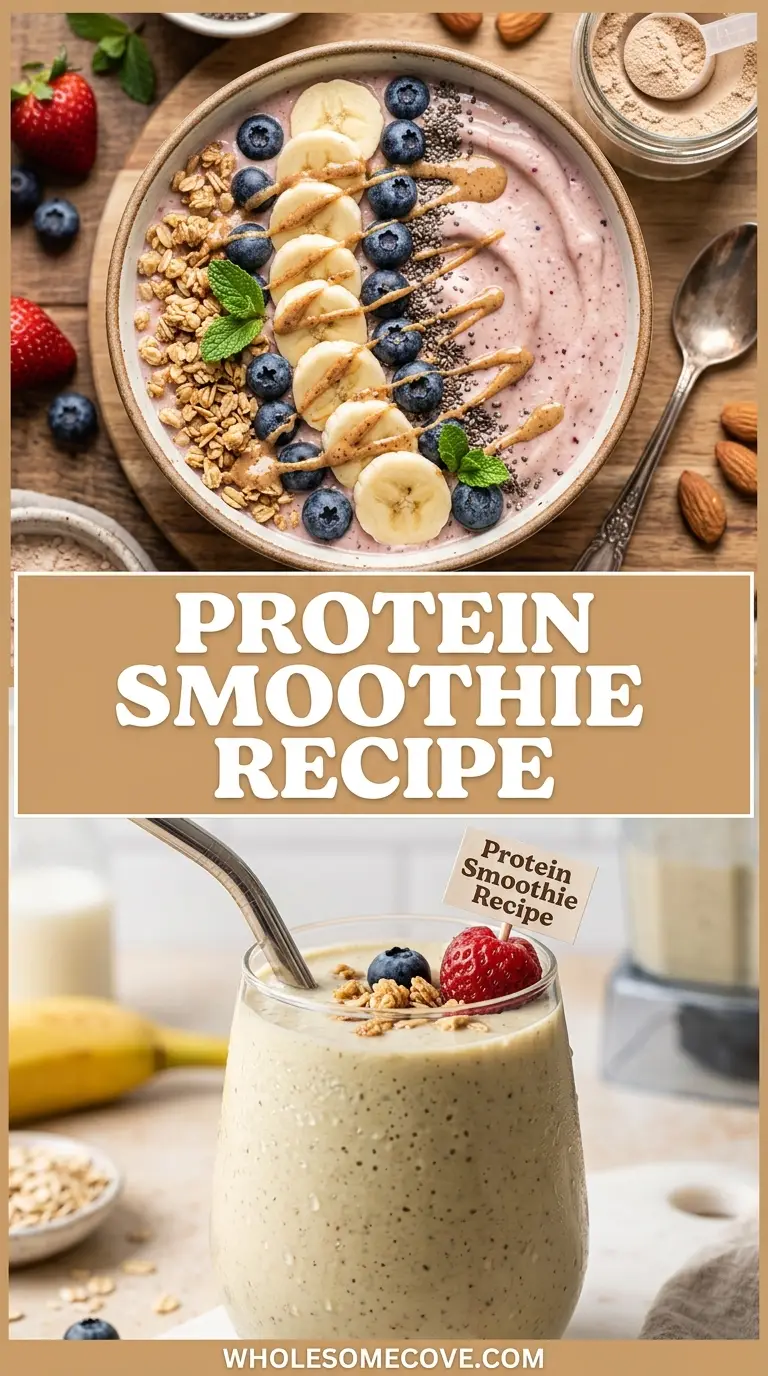
Step-by-Step Instructions: How to Make Protein Smoothie
Follow these simple steps and you’ll have a thick, creamy protein smoothie ready in about five minutes.
Step 1: Prepare Your Ingredients
- Peel the banana and break it into two or three pieces if fresh, or pull it from the freezer if you prepped it ahead of time.
- Measure out 1 cup (240 ml) of almond milk or your preferred milk and pour it into the blender first. Adding liquid first protects the blender blades and helps everything blend more smoothly.
- Measure 1 scoop (30 g) of protein powder and set it aside.
- Measure 2 tablespoons (32 g) of peanut butter or almond butter.
- Measure ½ cup (120 g) of Greek yogurt.
- If using honey or maple syrup, measure out 1 tablespoon (20 g).
Step 2: Load the Blender in the Correct Order
- Pour the almond milk into the blender jar first. This ensures the blades are never running dry and protects the motor.
- Add the Greek yogurt directly on top of the liquid.
- Add the banana pieces.
- Add the peanut butter or almond butter.
- Sprinkle in the protein powder.
- Add the optional honey, maple syrup, ground flaxseed, or chia seeds at this stage if using.
- Add the ice cubes last, on top of everything else. Placing ice on top allows the liquid and softer ingredients to move freely under the blades, which creates better blending action.
Step 3: Blend Until Completely Smooth
- Secure the lid firmly on the blender and hold it down with your hand for the first few seconds if your blender lid tends to pop.
- Start blending on low speed for about 10 seconds to break down the larger chunks without splashing.
- Increase to high speed and blend for an additional 30 to 45 seconds until the smoothie is completely smooth with no visible ice chunks or lumps.
- If the smoothie is too thick and the blender is struggling, add a splash more almond milk, about 2 tablespoons (30 ml) at a time, and blend again.
- If the smoothie seems too thin, add a few more ice cubes and blend for another 15 seconds.
Step 4: Taste and Adjust
- Remove the blender lid and taste the smoothie.
- If you want it sweeter, add an additional teaspoon (7 g) of honey and blend for 5 more seconds.
- If you want a stronger peanut butter flavor, add another half tablespoon (8 g) and blend again.
- If you want more thickness, add two or three more ice cubes and blend until smooth.
Step 5: Pour and Serve Immediately
- Pour the smoothie into a tall glass or large mason jar.
- Serve immediately for the best texture and temperature.
- If you are taking it on the go, pour it into a lidded insulated cup and drink within 30 minutes for optimal freshness and texture.
- Optional toppings: a light dusting of protein powder, a drizzle of peanut butter, or a sprinkle of granola for crunch.
My Spinach Smoothie uses this same blending order and step sequence, and it is a great recipe to alternate with this one if you want to add more greens to your rotation.
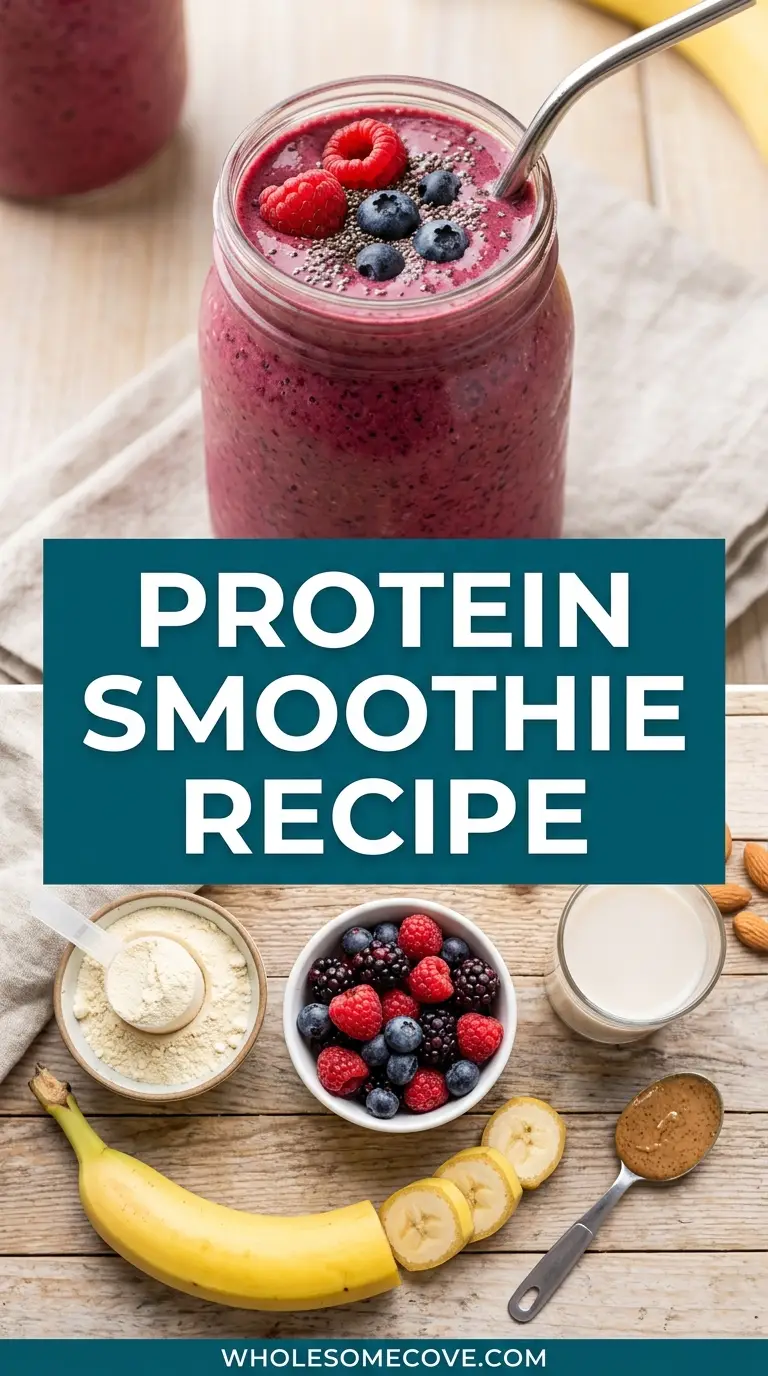
Tips for The Best Protein Smoothie
Getting consistently great results from a protein smoothie comes down to a few key habits and techniques that make a real difference.
- Use frozen banana instead of fresh. Frozen banana creates a much thicker, creamier texture and eliminates the need for as much ice, which dilutes flavor. I peel ripe bananas, break them into chunks, freeze them on a baking sheet, and then transfer to a zip-lock bag so I always have some ready to go.
- Add liquid first, always. This protects your blender blades and ensures the motor is never straining against dry ingredients from the start.
- Do not over-blend. Blending for too long on high speed heats up the smoothie slightly and breaks down the texture. Thirty to forty-five seconds on high is all you need.
- Use a high-quality protein powder. Cheap protein powders often have a chalky, artificial aftertaste that is hard to mask even with fruit. Spend a little more on a brand with clean ingredients and you will taste the difference immediately.
- Balance your protein with fat and fiber. Protein alone without fat or fiber digests quickly and leaves you hungry again within an hour. The Greek yogurt, nut butter, and optional flaxseed in this recipe solve that problem.
- Taste before pouring. Every batch of protein powder, every banana, and every nut butter varies slightly in sweetness. Always taste and adjust before committing to the final pour.
- Chill your glass beforehand. Storing your glass in the freezer for five minutes before pouring keeps your smoothie colder for longer, which improves the drinking experience significantly.
- Prep ingredients the night before. Measure out your protein powder, chia seeds, and flaxseed into a small container the night before. In the morning, you simply dump everything into the blender and you are done in under two minutes.
- Clean your blender immediately. Fill the blender halfway with warm water, add one drop of dish soap, and run it on high for 15 seconds. Rinse thoroughly. This simple habit prevents protein powder from cementing itself to the blades and sides.
For a thick, creamy blended drink that also happens to pack in healthy fats, my Avocado Smoothie is a recipe I return to again and again.
What to Serve with Protein Smoothie
A protein smoothie works brilliantly as a standalone drink, but pairing it with the right foods makes it an even more satisfying and complete meal.
These are the best foods and occasions to pair alongside your protein smoothie:
- Overnight oats: A small portion of overnight oats alongside your smoothie provides complex carbohydrates and extra fiber for sustained energy without tipping you into a carb overload.
- Hard-boiled eggs: Two hard-boiled eggs add another protein hit and make your smoothie feel more like a complete breakfast spread.
- Blueberry Smoothie swapped in as a second drink option on high-training days when you need more antioxidants and carbohydrates to fuel recovery.
- Whole grain toast with avocado: The healthy fats in avocado toast complement the protein in your smoothie and keep you full all the way to lunch.
- A small bowl of granola: Serving granola on the side (or as a topping) adds satisfying crunch and a dose of whole grains that the smoothie itself lacks.
- Fresh fruit plate: Sliced melon, strawberries, or kiwi on the side increases micronutrient variety and adds a light, refreshing contrast to the creamy smoothie.
- Post-workout snack board: Pair your smoothie with a few rice cakes, a small handful of almonds, and a piece of dark chocolate for a well-rounded recovery spread.
- Breakfast burrito (lighter version): If you are particularly hungry, a small breakfast burrito or wrap alongside your smoothie turns it into a fully satisfying meal rather than just a drink.
Variations of Protein Smoothie
Once you nail the base recipe, there are endless ways to switch up your protein smoothie and keep things interesting throughout the week.
- Chocolate Protein Smoothie: Use chocolate protein powder, 1 tablespoon of cocoa powder, 1 frozen banana, and almond milk. Skip the honey since the chocolate already adds richness.
- Strawberry Protein Smoothie: Swap the banana for 1 cup (150 g) of frozen strawberries and use vanilla protein powder for a classic flavor combination.
- Tropical Protein Smoothie: Use mango chunks, pineapple, coconut milk, and a scoop of vanilla or unflavored protein powder for a refreshing island-inspired blend.
- Coffee Protein Smoothie: Add ½ cup (120 ml) of cold brew coffee or one shot of chilled espresso to the base recipe. This is my favorite pre-workout version on mornings when I need an extra push.
- Green Protein Smoothie: Add 1 large handful of baby spinach to the base recipe. The banana and peanut butter mask the spinach flavor entirely, making it an easy way to eat your greens.
- Peanut Butter Chocolate Protein Smoothie: Use chocolate protein powder, 3 tablespoons (48 g) of peanut butter, 1 frozen banana, and chocolate almond milk for a dessert-level treat that still hits your macros.
- High-Calorie Bulking Smoothie: Add 2 tablespoons of oats, an extra banana, a full cup (240 g) of Greek yogurt, and 3 tablespoons of nut butter to significantly increase the calorie and protein content for hard-training athletes.
- Dairy-Free Protein Smoothie: Use a plant-based protein powder, coconut yogurt instead of Greek yogurt, and oat milk instead of almond milk. The result is just as creamy and satisfying.
- Low-Sugar Protein Smoothie: Replace the banana with half an avocado, use unsweetened protein powder, skip the honey, and add a few drops of liquid stevia if needed. This version suits those following a lower-carbohydrate eating plan.
You might also love my Strawberry Smoothie as a companion recipe when you want something light and fruity without the protein powder.
Storage and Reheating
Protein smoothies are best consumed immediately, but there are smart ways to prep and store them without sacrificing too much quality.
- Best consumed fresh: A protein smoothie is at its absolute best the moment it leaves the blender. Drink it within 15 to 20 minutes for optimal texture, flavor, and temperature.
- Short-term refrigeration: If you must save it for later, pour the smoothie into an airtight jar, seal it tightly, and refrigerate for up to 24 hours. It will separate slightly, so give it a good shake or stir before drinking.
- Freezing smoothie packs: Add all the solid ingredients (banana, protein powder, nut butter, seeds) to a zip-lock bag or silicone freezer pack and freeze. In the morning, simply dump the contents into the blender, add your milk, and blend. This method is the closest thing to fresh.
- Freezer storage time: Pre-packed smoothie packs stay fresh in the freezer for up to 3 months without any quality loss.
- Do not reheat: Protein smoothies are cold drinks and should never be heated. Heat degrades the protein powder and ruins the texture entirely.
- Blender jar pre-blend trick: If you find the smoothie too thick after refrigerating, pour it back into the blender with a splash of fresh milk and blend for 10 seconds to restore the texture.
- Glass jars with tight lids work best: Plastic containers can absorb the smell of protein powder over time. A glass mason jar with a metal lid keeps odors neutral and preserves flavor better.
- Label and date your freezer packs: If prepping multiple days at once, label each bag with the date and the flavor variation so you are never guessing what is inside.
Read Also: Mango Smoothie
Nutritional Facts
| Nutritional Facts (Per Serving) | |
|---|---|
| Calories | 420 kcal |
| Total Fat | 14 g |
| Saturated Fat | 3 g |
| Trans Fat | 0 g |
| Cholesterol | 15 mg |
| Sodium | 230 mg |
| Total Carbohydrates | 42 g |
| Dietary Fiber | 5 g |
| Total Sugars | 22 g |
| Protein | 38 g |
| Potassium | 620 mg |
| Calcium | 25% DV |
| Iron | 8% DV |
Nutritional values are estimates based on specific brands used. They will vary depending on your protein powder, nut butter, and milk choice.
For another protein-rich breakfast option that complements this smoothie perfectly, my Protein Overnight Oats is one of the most popular recipes on the site.
Health Benefits of Key Ingredients
Every ingredient in this protein smoothie serves a real nutritional purpose, making it more than just a tasty drink.
- Protein Powder: Provides a concentrated source of amino acids that repair and build muscle tissue after exercise. Most single-scoop servings deliver between 20 and 30 grams of protein, which meets a significant portion of the average adult’s daily requirement in one drink.
- Greek Yogurt: Adds another substantial protein hit along with beneficial probiotics that support gut health and digestion. It also contributes calcium for bone strength and a creamy texture that protein powder alone cannot replicate.
- Banana: Supplies natural sugars for quick energy alongside potassium, which is essential for proper muscle function and preventing post-workout cramps. Frozen banana also acts as a natural thickener, improving smoothie texture without adding ice.
- Peanut Butter or Almond Butter: Delivers heart-healthy monounsaturated fats, vitamin E, magnesium, and additional protein. The fat content slows digestion, which means you stay full far longer than you would from a protein-only drink.
- Almond Milk: Provides a low-calorie, dairy-free liquid base that adds vitamin D and calcium without significantly increasing the calorie count. It has a mild, neutral flavor that does not compete with the other ingredients.
- Ground Flaxseed: Offers plant-based omega-3 fatty acids, soluble fiber, and lignans that have antioxidant properties. Just one tablespoon meaningfully boosts the fiber content of the smoothie, which helps regulate blood sugar and supports cardiovascular health.
- Chia Seeds: Pack in omega-3s, fiber, and protein in a tiny, easy-to-use form. They also absorb liquid and expand slightly, which contributes to the thick, pudding-like consistency that makes this smoothie so satisfying.
- Honey (optional): Provides natural sugars with trace amounts of antioxidants and antimicrobial compounds. It is a better sweetener choice than refined sugar, though it should still be used sparingly.
Read Also: Kale and Fruit Smoothie
FAQs About Protein Smoothie
1. Can I make a protein smoothie without protein powder?
Absolutely. You can skip the protein powder entirely and still make a high-protein smoothie by doubling the Greek yogurt to 1 cup (240 g) and adding 3 tablespoons (48 g) of nut butter. Cottage cheese is another excellent protein-dense substitute that blends smoother than you might expect.
2. What type of protein powder works best in smoothies?
Whey protein isolate tends to blend the most smoothly and has the mildest flavor, making it a popular choice. Plant-based blends made from pea protein or a pea and rice combination also work very well and are a great option for anyone avoiding dairy.
3. Can I make a protein smoothie the night before?
You can, but the texture will not be quite as thick and creamy after a night in the fridge. For the best result, prep your freezer smoothie pack the night before and blend fresh in the morning, which takes less than two minutes.
4. How much protein is in a typical protein smoothie?
This recipe delivers approximately 38 grams of protein per serving, which is a significant portion of the average adult’s daily goal. The Greek yogurt contributes about 10 to 12 grams, the protein powder adds 20 to 25 grams, and the peanut butter chips in with another 4 to 7 grams depending on the brand.
5. Can I use water instead of milk in a protein smoothie?
You can use water, but the texture will be noticeably thinner and less creamy. If you want to reduce calories without sacrificing creaminess, unsweetened almond milk is a better choice because it contributes minimal calories while still producing a smooth, rich consistency.
For a protein-forward breakfast that pairs beautifully with this smoothie, you will enjoy my Protein Waffle.
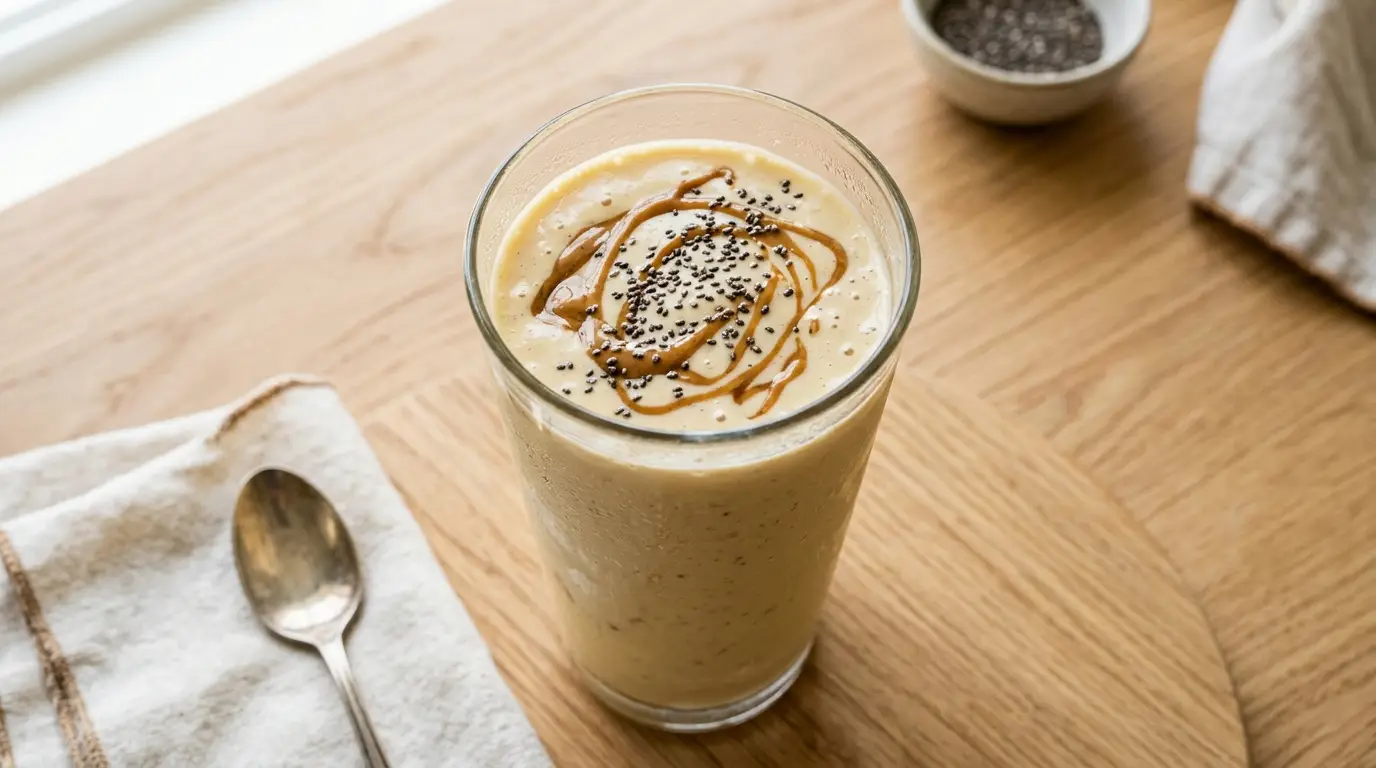
Protein Smoothie
Ingredients
- 1 scoop protein powder - 30g / 1oz; vanilla or chocolate flavor recommended
- 1 ripe banana - about 120g / 4.2oz; fresh or frozen — frozen preferred for thicker texture
- 1 cup unsweetened almond milk - 240ml / 8fl oz; or milk of your choice
- 1/2 cup plain Greek yogurt - 120g / 4.2oz
- 2 tablespoons natural peanut butter or almond butter - 32g / 1.1oz
- 1 cup ice cubes - about 150g / 5.3oz
- 1 tablespoon honey or maple syrup - 20g / 0.7oz; omit for less sweetness
- 1 tablespoon ground flaxseed or chia seeds - 7g / 0.25oz; adds fiber and omega-3s
Equipment
- High-powered blender - 1000 watts or more for the smoothest result
- Kitchen scale - (optional) useful for accurate protein powder measurements
- Blender tamper - (optional) to push ingredients down when using a Vitamix or similar
- Tall smoothie glass or mason jar
- Drinking straw - Wide-mouth preferred for thick smoothies
- Rubber spatula - For scraping down the blender sides
Method
- Peel and break the banana into 2-3 pieces (or use frozen chunks), then measure out the almond milk, protein powder, Greek yogurt, and nut butter so everything is ready to go.
- Pour the almond milk into the blender first, then layer in the Greek yogurt, banana, nut butter, protein powder, and any optional add-ins, finishing with the ice cubes on top.
- Start on low speed for 10 seconds to break down the larger pieces, then increase to high and blend for 30-45 seconds until completely smooth with no ice chunks. Add a splash of milk if too thick, or a few extra ice cubes if too thin.
- Taste the smoothie and adjust as needed — add a teaspoon of honey for more sweetness, an extra half tablespoon of nut butter for more richness, or 2-3 more ice cubes for extra thickness, then blend for 5 more seconds.
- Pour into a tall glass or mason jar and serve immediately for the best texture; optionally top with a drizzle of peanut butter or a sprinkle of chia seeds.
Nutrition
Notes
- Always add the liquid to the blender first to protect the blades and help everything blend smoothly from the start.
- Frozen banana creates a much thicker, creamier texture than fresh banana and reduces the amount of ice needed, which prevents dilution of flavor.
- Use a high-quality protein powder — cheap brands often leave a chalky, artificial aftertaste that is difficult to mask even with fruit.
- Do not over-blend. Thirty to forty-five seconds on high is all you need; blending longer can slightly heat the smoothie and break down the texture.
- To prep ahead, measure all solid ingredients into a zip-lock freezer bag and freeze for up to 3 months. In the morning, dump the bag into the blender, add milk, and blend fresh.
- If storing in the fridge, pour into a sealed glass jar and refrigerate for up to 24 hours. Shake well before drinking as the smoothie will separate slightly.
- To make dairy-free, use a plant-based protein powder, coconut yogurt instead of Greek yogurt, and oat or coconut milk instead of almond milk.
- To boost calories for bulking, add 2 tablespoons of oats, an extra banana, and increase the nut butter to 3 tablespoons.
- Clean your blender immediately after use by filling it halfway with warm water and a drop of dish soap, blending on high for 15 seconds, and rinsing thoroughly.
- Chill your glass in the freezer for 5 minutes before pouring to keep the smoothie colder for longer.
Private Notes
Tried this recipe?
Let us know how it was!Final Thoughts
A good protein smoothie recipe is one of those kitchen staples that pays you back every single day in energy, recovery, and time saved. This version hits the sweet spot between genuinely delicious and properly nutritious, without requiring any fancy technique or unusual ingredients.
Give it a try tomorrow morning and see how it changes the way you feel going into your day. If you make it, I would love to hear your favorite variation in the comments below.
Recommended:
- Peanut Butter Banana Smoothie
- Strawberry Banana Smoothie
- Passion Fruit Smoothie
- Papaya Smoothie
- Dragon Fruit Smoothie
- Peach Smoothie
- Watermelon Smoothie
- Pineapple Smoothie
- Beet Smoothie
- Easy Healthy Homemade Granola