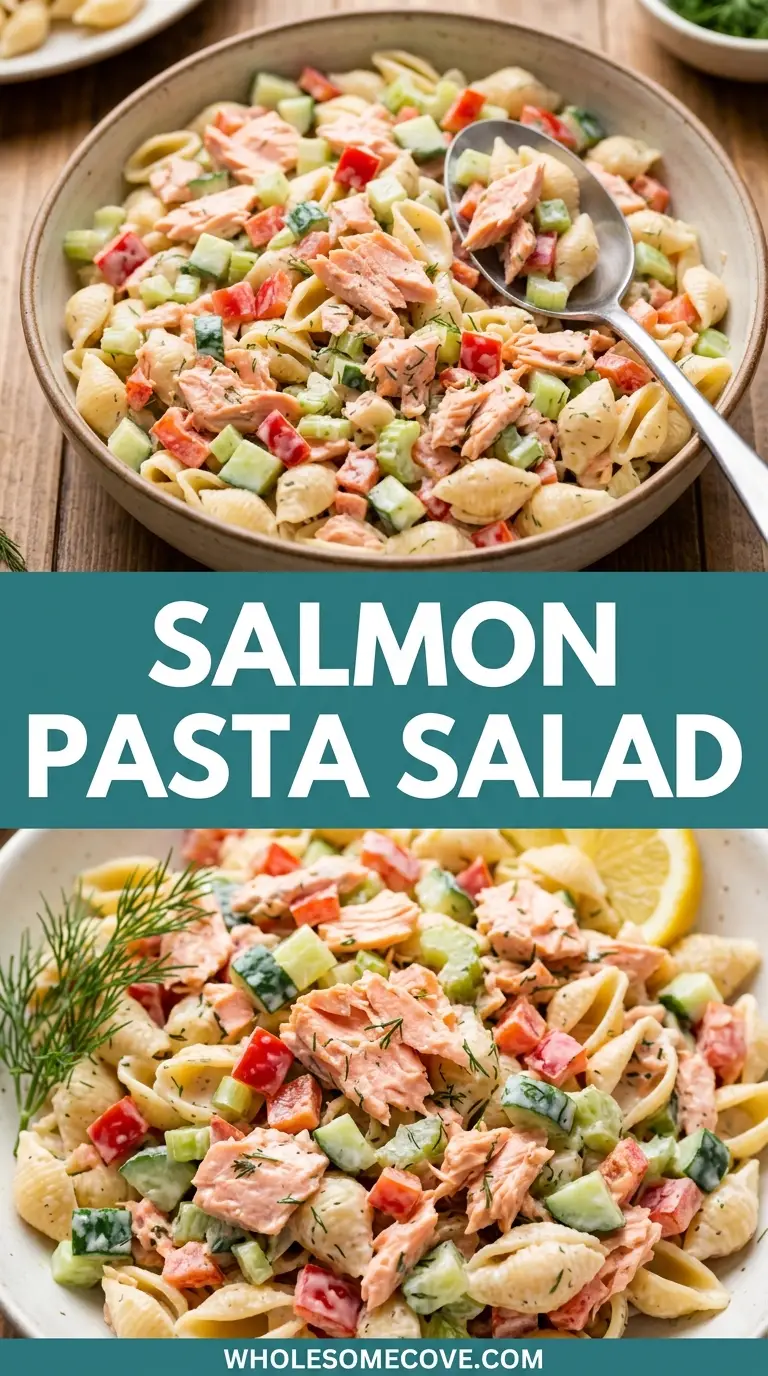
This salmon pasta salad recipe combines flaked salmon, short pasta, and crisp vegetables in a creamy dill dressing. It comes together with one pound of salmon, twelve ounces of pasta, and about a dozen pantry and produce staples, all tossed in a bowl and chilled before serving.
The dressing is what separates a good version from a bland one. Mayonnaise alone can taste flat, so this recipe blends it with sour cream and a spoonful of Dijon mustard, which adds just enough tang to cut through the richness of the salmon.
Fresh dill is non-negotiable here. Dried dill works in a pinch, but the fresh version brings a grassy, slightly citrusy note that plays off the salmon in a way dried herbs can’t quite match.
| Quick Recipe Summary | |
|---|---|
| Prep Time | 20 minutes |
| Cook Time | 15 minutes |
| Chill Time | 1 hour |
| Total Time | 1 hour 35 minutes |
| Servings | 6 servings |
| Difficulty Level | Easy |
This pairs nicely with a seafood-forward spread, and if you want another cold seafood pasta option to rotate through the summer, my shrimp pasta salad uses a similar approach with a lighter dressing.
Why You’ll Love This Salmon Pasta Salad Recipe
This isn’t a fussy recipe, and it doesn’t ask for anything you can’t find at a regular grocery store. It’s also flexible enough to work with baked salmon, grilled salmon, or canned salmon, depending on what you have on hand.
- Uses leftover or canned salmon. No need to cook fish from scratch if you already have some in the fridge or pantry.
- Make-ahead friendly. It actually tastes better after a few hours in the fridge, which makes it ideal for meal prep or potlucks.
- Balanced texture. Crunchy celery, cucumber, and red bell pepper keep every bite from feeling heavy or one-note.
- Protein-packed. A single serving delivers a solid dose of protein and heart-healthy omega-3s from the salmon.
- Naturally gluten-free adaptable. Swap in gluten-free pasta and the rest of the recipe stays exactly the same.
- No oven needed if using canned salmon. You can make the whole thing on the stovetop with zero baking required.
You might also enjoy: Classic Pasta Salad, which uses a similar mayo-based dressing without the fish.
Ingredients
Everything here is easy to find, and most of it is probably already in your kitchen. Measurements are given in both imperial and metric so you can use whichever system you’re more comfortable with.
For the Pasta Salad:
- 12 oz (340g) medium pasta shells or rotini
- 1 lb (450g) cooked salmon, flaked (baked, grilled, or 2 cans of canned wild pink salmon, 14.75 oz/418g each, drained and flaked)
- 1 cup (120g) diced celery
- 1 cup (120g) diced English cucumber
- 1/2 cup (75g) diced red bell pepper
- 1/2 cup (60g) finely diced red onion
- 1/2 cup (70g) frozen peas, thawed
For the Dressing:
- 3/4 cup (170g) mayonnaise
- 1/4 cup (60g) sour cream
- 2 tbsp fresh lemon juice
- 1 tbsp Dijon mustard
- 3 tbsp fresh dill, finely chopped (or 1 tbsp dried dill)
- 1/2 tsp garlic powder
- 1/2 tsp salt, plus more to taste
- 1/4 tsp black pepper, plus more to taste
If you’d rather skip the fresh fish step entirely, my old fashioned salmon patties uses the same canned salmon shortcut this recipe relies on.
Kitchen Equipment Needed
Nothing exotic is required, just a few basics that make the process quicker and cleaner.
- Large pot for boiling pasta
- Baking sheet, if baking fresh salmon
- Large mixing bowl
- Medium mixing bowl for the dressing
- Sharp chef’s knife
- Cutting board
- Colander
- Measuring cups and spoons
- Rubber spatula or large spoon for folding
- Airtight storage container
Read Also: Pasta Salad Dressing Recipe
Recommended Products for This Recipe
These are tools and ingredients I’ve come to rely on after making this salad more times than I can count. None of them are required, but each one solves a specific problem I ran into while testing.
1. OXO Good Grips Salad Spinner
Rinsing and drying cucumber, celery, and herbs by hand always left the salad slightly watery, which thinned out the dressing. A salad spinner gets the moisture off quickly so the dressing stays thick instead of separating in the bowl.
2. Wild Planet Wild Pink Salmon
For the days I don’t have leftover salmon, this canned option flakes cleanly and doesn’t carry the strong fishy smell some canned brands have. It also comes boneless and skinless, which saves a genuinely annoying step.
3. Microplane Fresh Herb Mincer
Chopping dill by hand with a regular knife tends to bruise it and turn it gray. This mincer keeps the herb bright green and cuts prep time on the dressing down to under a minute.
4. Pyrex Glass Mixing Bowl Set
Metal bowls hold onto fishy odors even after washing, which I didn’t notice until I used the same bowl for a fruit salad the next day. Glass bowls rinse completely clean and don’t hold onto smells the way metal or plastic can.
5. Rubbermaid Brilliance Food Storage Containers
This salad needs to chill in an airtight container to keep the pasta from drying out, and these containers seal tightly enough that nothing leaks if you’re packing it for lunch. The clear sides also make it easy to see how much is left without opening the lid.
I often turn to my air fryer salmon method when I want to cook the fish for this dish without heating up the whole oven.
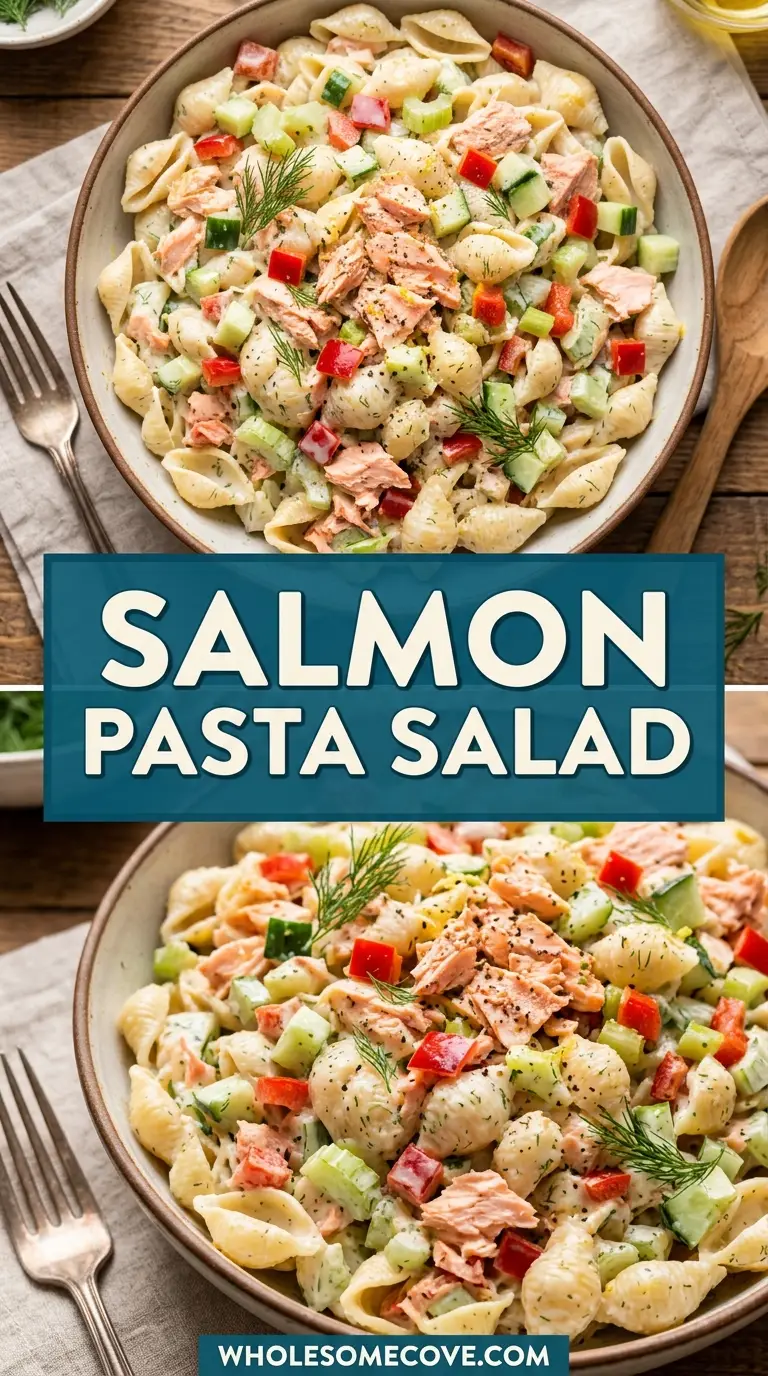
Step-by-Step Instructions: How to Make Salmon Pasta Salad
Follow these simple steps and you’ll have a delicious salmon pasta salad ready with minimal effort.
1. Cook the Pasta
- Bring a large pot of salted water to a boil over high heat.
- Add the 12 oz (340g) of pasta shells or rotini and cook according to the package directions until al dente, usually 8 to 10 minutes.
- Drain the pasta in a colander and rinse briefly under cold water to stop the cooking and cool it down.
- Set the pasta aside to drain fully while you prepare the other ingredients.
2. Prepare the Salmon
- If using fresh salmon, preheat the oven to 400°F (200°C) and line a baking sheet with parchment paper.
- Pat the salmon dry, season with a pinch of salt and pepper, and bake for 12 to 15 minutes, until it flakes easily with a fork.
- Let the salmon cool slightly, then use two forks to break it into bite-sized flakes, removing any skin or stray bones.
- If using canned salmon, drain it well and flake it with a fork, checking for and removing any bones or skin.
3. Make the Dressing
- In a medium mixing bowl, combine the 3/4 cup (170g) mayonnaise, 1/4 cup (60g) sour cream, 2 tbsp lemon juice, and 1 tbsp Dijon mustard.
- Add the 3 tbsp fresh dill, 1/2 tsp garlic powder, 1/2 tsp salt, and 1/4 tsp black pepper.
- Whisk everything together until smooth and fully combined.
- Taste and adjust the salt, pepper, or lemon juice to your preference.
4. Prep the Vegetables
- Dice the 1 cup (120g) celery, 1 cup (120g) cucumber, and 1/2 cup (75g) red bell pepper into small, even pieces.
- Finely dice the 1/2 cup (60g) red onion so it distributes evenly through the salad.
- Measure out the 1/2 cup (70g) thawed peas and set everything aside together.
5. Combine the Salad
- In a large mixing bowl, add the cooled, drained pasta.
- Add the celery, cucumber, red bell pepper, red onion, and peas to the bowl with the pasta.
- Pour the dressing over the pasta and vegetables.
- Toss gently with a rubber spatula until everything is evenly coated.
6. Fold in the Salmon
- Add the flaked salmon to the bowl last, since it’s the most delicate ingredient.
- Fold gently with a spatula, turning the salad over on itself rather than stirring hard.
- Stop folding as soon as the salmon is distributed to avoid breaking it into tiny pieces.
7. Chill Before Serving
- Cover the bowl tightly with plastic wrap or transfer the salad to an airtight container.
- Refrigerate for at least 1 hour to let the flavors come together and the dressing thicken slightly.
- Give the salad one more gentle toss right before serving, since the dressing can settle at the bottom.
I’ve found that letting this sit overnight instead of just an hour makes a noticeably bigger difference in flavor than it does with most pasta salads, since the dill has more time to infuse the dressing.
You might also enjoy: Greek Pasta Salad, which follows a similar cook-toss-chill process.
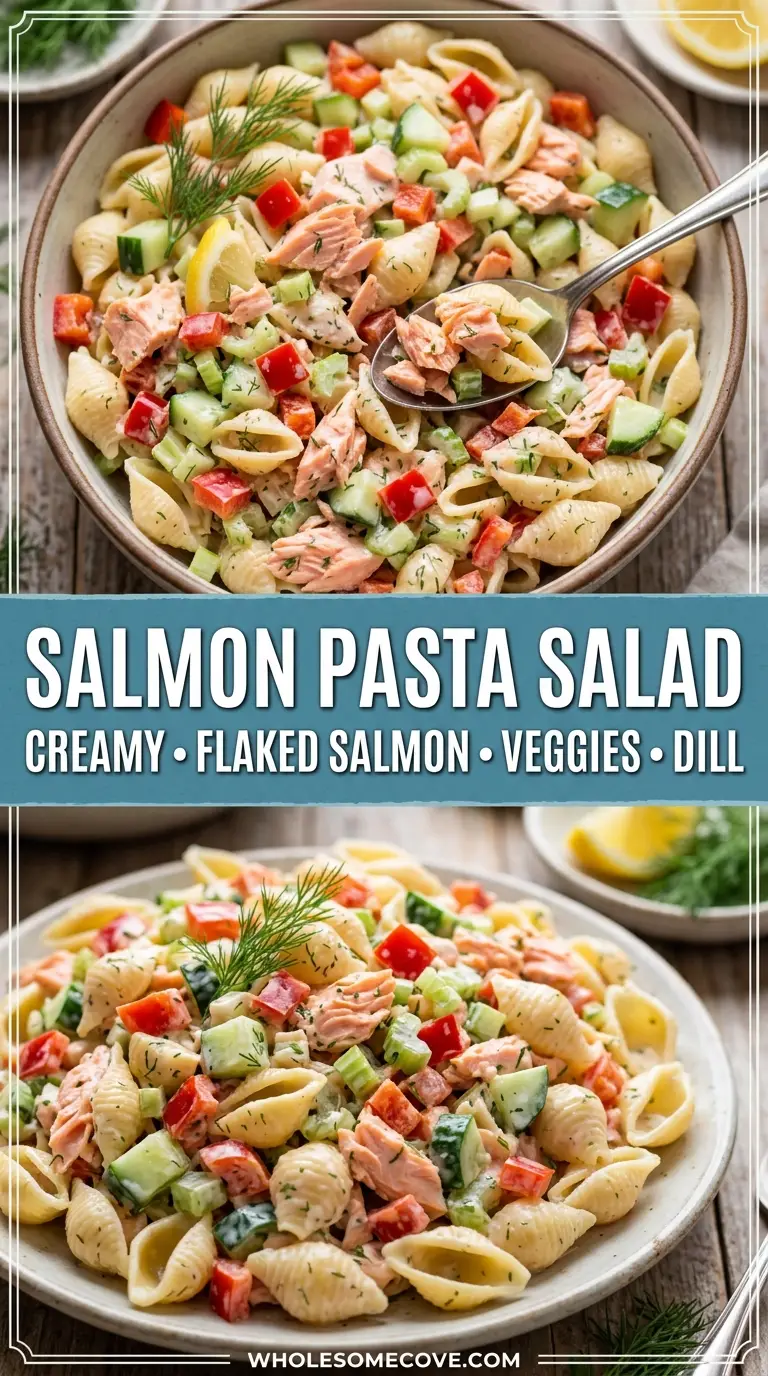
Tips for The Best Salmon Pasta Salad
A few small adjustments make a real difference in how this salad turns out.
- Rinse the pasta in cold water. This stops the cooking process and keeps the noodles from turning mushy once the dressing is added.
- Pat the cucumber dry. Excess moisture from cucumber is the most common reason this salad turns watery after a day in the fridge.
- Don’t skip the chill time. Serving it warm or straight after mixing means the dressing hasn’t had time to bind everything together.
- Use full-fat mayo and sour cream. Light versions tend to release water as the salad sits, which thins out the dressing.
- Flake the salmon by hand. A food processor or aggressive chopping turns the salmon into a paste instead of distinct flakes.
- Season the dressing before adding the pasta. It’s much easier to taste and adjust seasoning in a small bowl than in a full batch of salad.
- Save a spoonful of dill for garnish. A sprinkle on top right before serving makes the dish look freshly made.
I ruined my first batch by adding the salmon before the pasta had fully cooled, which caused the dressing to break and turn oily. Letting the pasta cool completely before combining fixed the problem every time after that.
The same roasting method shows up in my baked salmon with asparagus and lemon, if you want another way to use that oven time.
What to Serve with Salmon Pasta Salad
Since this salad is rich and creamy, it pairs well with lighter, brighter sides that balance it out. It also holds up well next to other cold dishes at a potluck or barbecue spread.
- Crusty bread or a baguette for scooping up extra dressing
- Deviled Eggs for a classic potluck pairing
- Watermelon Feta Salad with Mint for something sweet and cooling
- Grilled corn on the cob brushed with butter
- Coleslaw for extra crunch on the side
- Iced tea or sparkling lemonade
- Cheese Ball with crackers as a starter before the main salad
- A simple green salad with a light vinaigrette
- Broccoli Salad for another creamy, crunchy side dish option
Read Also: Mediterranean Pasta Salad Recipe
Variations of Salmon Pasta Salad
This recipe is easy to adjust depending on what you have in the fridge or what flavors you’re craving.
- Greek-style: Swap the mayo dressing for olive oil, lemon juice, and crumbled feta, and add kalamata olives and cherry tomatoes.
- Spicy version: Stir in a tablespoon of sriracha or a pinch of cayenne to the dressing for heat.
- Avocado swap: Replace half the mayo with mashed avocado for a lighter, dairy-reduced version.
- Smoked salmon twist: Use flaked smoked salmon instead of baked or canned for a deeper, smokier flavor.
- Extra veggie version: Add shredded carrots, halved cherry tomatoes, or chopped artichoke hearts for more texture.
- Herb swap: Substitute fresh tarragon or chives for the dill if you want a different herbal note.
- Whole grain pasta: Use whole wheat or chickpea pasta for added fiber without changing the method.
I switched to whole wheat shells one week when that’s all I had, and the nuttier flavor actually complemented the dill better than I expected.
The tiny rice-shaped pasta in my orzo pasta salad also works well here if you want a different bite than shells or rotini give you.
Storage and Reheating
This salad is meant to be served cold, so there’s no reheating involved, just proper storage to keep it fresh. Because the pasta and salmon sit in a mayo-based dressing, temperature control matters more here than with an oil-based salad, so keep it chilled until you’re ready to serve.
- Store leftovers in an airtight container in the refrigerator for up to 3 days.
- Keep the salad covered at all times to prevent the pasta from absorbing other fridge odors.
- If the dressing looks dry after a day or two, stir in a spoonful of mayo or a splash of lemon juice to loosen it back up.
- Do not freeze this salad, since the mayo-based dressing separates and turns grainy once thawed.
- If packing for lunch, use a container with a tight seal and keep it in a cooler bag if it will sit out for more than an hour.
- Give the salad a quick stir before serving leftovers, since the dressing tends to settle at the bottom of the container.
You might also enjoy: Caprese Pasta Salad for another chilled pasta option built around fresh herbs.
Nutritional Facts
Values are approximate and calculated per serving, based on 6 total servings.
| Nutrition Per Serving | |
|---|---|
| Calories | 420 kcal |
| Protein | 24g |
| Carbohydrates | 32g |
| Fat | 22g |
| Saturated Fat | 4g |
| Fiber | 3g |
| Sugar | 4g |
| Sodium | 480mg |
| Cholesterol | 65mg |
This pairs well with the numbers in my grilled salmon with dill sauce recipe, if you’re comparing salmon dishes for a meal plan.
Health Benefits of Key Ingredients
Beyond tasting good, several ingredients in this salad bring real nutritional value to the table.
- Salmon: A strong source of omega-3 fatty acids, which support heart and brain health, plus a high amount of complete protein per serving.
- Celery: Low in calories and a good source of vitamin K and dietary fiber, which supports digestion.
- Cucumber: Mostly water, which helps with hydration, along with small amounts of vitamin K and potassium.
- Red bell pepper: One of the richest vegetable sources of vitamin C, even more than citrus fruit by weight.
- Red onion: Contains antioxidants called anthocyanins, which are linked to reduced inflammation.
- Peas: Provide plant-based protein and fiber, along with vitamins A, C, and K.
- Dill: Contains small amounts of antioxidants and has traditionally been used to support digestion.
Salmon is the ingredient doing the most nutritional heavy lifting here, and it’s part of why this salad works as a main dish rather than just a side.
You might also enjoy: Chicken Caesar Pasta Salad for a poultry-based take on the same format.
FAQs About Salmon Pasta Salad
1. Can I use canned salmon instead of fresh?
Yes, canned salmon works well in this recipe and cuts down on prep time significantly. Just make sure to drain it thoroughly and check for any small bones or skin before flaking it in.
2. How long does salmon pasta salad last in the fridge?
It stays fresh for up to 3 days when stored in an airtight container. The flavor actually improves after the first few hours as the dressing soaks into the pasta.
3. Can I make this salad ahead of time for a party?
This is one of the best make-ahead dishes for exactly that reason. Make it the night before and give it a quick stir before serving to redistribute the dressing.
4. Why did my dressing turn watery?
This usually happens when the cucumber isn’t patted dry before adding it to the salad. Using light mayo or sour cream instead of full-fat versions can also cause the dressing to separate over time.
5. Can I substitute a different pasta shape?
Any short pasta with ridges or curves works well, since it holds onto the dressing better than long noodles. Rotini, farfalle, and medium shells are all good options here.
Read Also: Salmon Croquettes Soul Food Recipe
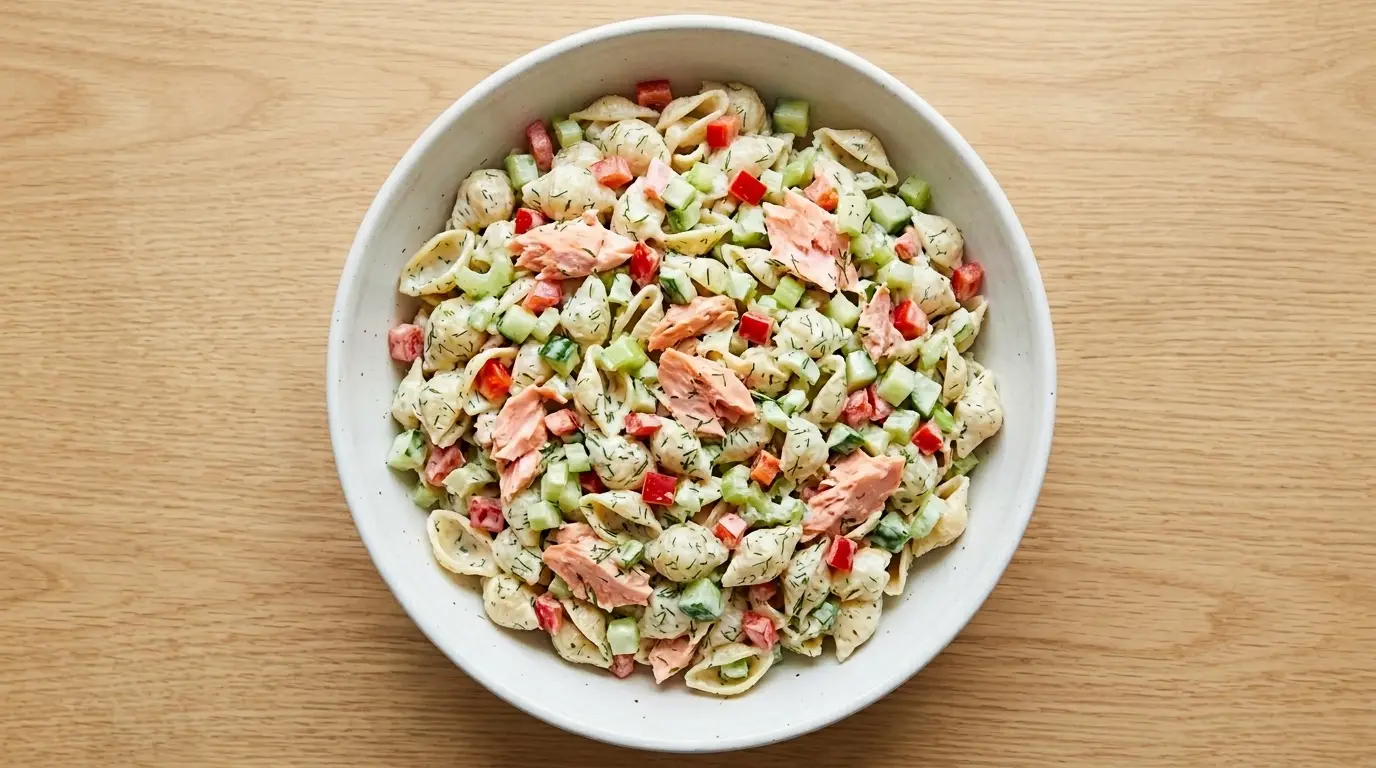
Salmon Pasta Salad
Ingredients
- 12 oz medium pasta shells or rotini - 340g
- 1 lb cooked salmon - 450g, flaked (baked, grilled, or 2 cans of canned wild pink salmon, 14.75 oz/418g each, drained and flaked)
- 1 cup celery - 120g, diced
- 1 cup English cucumber - 120g, diced
- 1/2 cup red bell pepper - 75g, diced
- 1/2 cup red onion - 60g, finely diced
- 1/2 cup frozen peas - 70g, thawed
- 3/4 cup mayonnaise - 170g, full-fat preferred
- 1/4 cup sour cream - 60g, full-fat preferred
- 2 tbsp fresh lemon juice
- 1 tbsp Dijon mustard
- 3 tbsp fresh dill - finely chopped (or 1 tbsp dried dill)
- 1/2 tsp garlic powder
- 1/2 tsp salt - plus more to taste
- 1/4 tsp black pepper - plus more to taste
Equipment
- Large pot - for boiling pasta
- Baking sheet - if baking fresh salmon
- Large mixing bowl - glass preferred to avoid retaining odors
- Medium mixing bowl - for the dressing
- Rubber spatula or large spoon - for folding
- Airtight storage container - for chilling
- OXO Good Grips Salad Spinner - (optional) for drying vegetables
- Microplane Fresh Herb Mincer - (optional) for mincing dill
Method
- Bring a large pot of salted water to a boil and cook the pasta shells or rotini according to package directions until al dente. Drain in a colander and rinse briefly under cold water to stop cooking, then set aside to drain fully.
- If using fresh salmon, preheat the oven to 400°F (200°C), pat the salmon dry, season with salt and pepper, and bake for 12-15 minutes until it flakes easily. Let cool slightly, then flake into bite-sized pieces with two forks. If using canned salmon, drain well and flake with a fork, removing any bones or skin.
- In a medium mixing bowl, whisk together the mayonnaise, sour cream, lemon juice, Dijon mustard, fresh dill, garlic powder, salt, and pepper until smooth and fully combined. Taste and adjust seasoning as needed.
- Dice the celery, cucumber, red bell pepper, and red onion into small, even pieces. Measure out the thawed peas and set all the vegetables aside together.
- In a large mixing bowl, combine the cooled, drained pasta with the celery, cucumber, red bell pepper, red onion, and peas. Pour the dressing over the pasta and vegetables, then toss gently with a rubber spatula until everything is evenly coated.
- Add the flaked salmon to the bowl and fold gently with a spatula, turning the salad over on itself rather than stirring hard. Stop folding as soon as the salmon is distributed to avoid breaking it into tiny pieces.
- Cover the bowl tightly with plastic wrap or transfer the salad to an airtight container. Refrigerate for at least 1 hour to let the flavors come together and the dressing thicken. Give the salad one more gentle toss right before serving.
Nutrition
Notes
- Rinse the pasta in cold water: This stops the cooking process and keeps the noodles from turning mushy once the dressing is added.
- Pat the cucumber dry: Excess moisture from cucumber is the most common reason this salad turns watery after a day in the fridge. Use a salad spinner or paper towels to remove excess moisture.
- Don’t skip the chill time: Serving it warm or straight after mixing means the dressing hasn’t had time to bind everything together. For best flavor, chill overnight.
- Use full-fat mayo and sour cream: Light versions tend to release water as the salad sits, which thins out the dressing.
- Flake the salmon by hand: A food processor or aggressive chopping turns the salmon into a paste instead of distinct flakes.
- Season the dressing before adding the pasta: It’s much easier to taste and adjust seasoning in a small bowl than in a full batch of salad.
- Save a spoonful of dill for garnish: A sprinkle on top right before serving makes the dish look freshly made.
- Let the pasta cool completely: Adding salmon to warm pasta can cause the dressing to break and turn oily. Cool the pasta fully before combining.
- Storage: Store leftovers in an airtight container in the refrigerator for up to 3 days. If the dressing looks dry, stir in a spoonful of mayo or a splash of lemon juice.
- Make it your own: Try Greek-style with feta and olives, spicy with sriracha, or smoky with smoked salmon. Whole wheat or chickpea pasta also work well.
Private Notes
Tried this recipe?
Let us know how it was!Final Thoughts
This salmon pasta salad recipe is one I keep coming back to whenever I need something quick that still feels like a real meal.
It’s forgiving enough to adjust based on what’s in your fridge, and it holds up well for a few days in the fridge without losing its texture.
Give it a try this week and let me know in the comments how you customized it. If you make it, I’d love to see your version, so feel free to share a photo or tag it if you post it online.
Recommended:
- Shrimp and Avocado Salad
- Salmon Chowder Recipe
- Lemon Garlic Shrimp Over Couscous
- Tortellini Pasta Salad
- Italian Pasta Salad
- Pesto Pasta Salad
- Shrimp Macaroni Salad
- Tuna and White Bean Salad
- Seafood Chowder Recipe
- Dill Pickle Pasta Salad