
My love for a good potato soup recipe goes way back to cold Saturday afternoons at my grandma’s kitchen table. She’d make this big pot of thick, creamy soup from scratch, ladling it into chunky ceramic bowls and topping it with shredded cheddar and crispy bacon like it was nothing.
I tried to recreate her soup for years and kept ending up with either something too thin and watery, or a gluey mess that stuck to the spoon like cement. It took many batches and a few hard-won lessons before I landed on this version, and now it’s on regular rotation in my house from October through March.
This recipe is everything a classic potato soup should be: rich, filling, and deeply comforting. It uses simple, affordable ingredients that you probably already have at home.
| Quick Recipe Summary | |
|---|---|
| Prep Time | 15 minutes |
| Cook Time | 35 minutes |
| Total Time | 50 minutes |
| Servings | 6 servings |
| Difficulty Level | Easy |
If you love hearty potato dishes, you’ll also want to check out the collection of Best Potato Recipes on this site for even more inspiration.

Why You’ll Love This Potato Soup Recipe
This soup is the kind of meal that makes everyone at the table go quiet for a few minutes — in the best possible way. It’s thick without being heavy, and creamy without needing a ton of cream.
It comes together in under an hour using one pot, which means less mess and less time cleaning up. The ingredients are budget-friendly, making it a great weeknight dinner option.
You can dress it up with all the classic loaded potato toppings or keep it simple. The base recipe is incredibly versatile and easy to customize.
- One pot simplicity — Everything comes together in a single Dutch oven or large pot, which makes cleanup fast and easy.
- Budget-friendly ingredients — Russet potatoes, broth, onion, and a few pantry staples are all you need.
- Comforting and filling — This is the kind of soup that genuinely satisfies. A bowl of this alongside some crusty bread is a full meal.
- Kid-approved — My picky eater cleans the bowl every single time, especially with the cheese and bacon toppings.
- Naturally thickened — Part of the potatoes get mashed right in the pot, so the soup thickens up beautifully without needing cornstarch or heavy cream.
- Great for meal prep — This soup reheats like a dream and tastes even better the next day once the flavors have had time to meld.
- Endlessly customizable — Add sour cream, swap the cheese, stir in veggies, or make it a loaded baked potato soup version. The possibilities are wide open.
Another favorite in our house when potato soup isn’t on the menu: Potato Leek Soup.
Ingredients
For this recipe, I stick with russet potatoes because they break down beautifully and give the soup that thick, starchy body. Yukon Golds work too and will produce a slightly creamier, more buttery result — both are great options. The chicken broth is the backbone of the flavor here, so use a good quality one if you can.
- Russet potatoes — 2.5 lbs (about 1.1 kg), peeled and cut into 1/2-inch (1.25 cm) cubes
- Bacon — 6 slices, chopped (about 150g); cook extra for topping
- Yellow onion — 1 medium, diced (about 1 cup / 150g)
- Garlic — 4 cloves, minced
- Chicken broth — 4 cups (950 ml); use a good quality low-sodium broth for better control of saltiness
- Whole milk — 1 cup (240 ml)
- Heavy cream — 1/2 cup (120 ml), adds richness and a velvety texture
- All-purpose flour — 3 tablespoons (24g), for thickening
- Unsalted butter — 2 tablespoons (28g)
- Sour cream — 1/2 cup (115g), stirred in at the end for tang and creaminess
- Sharp cheddar cheese — 1 cup (115g), shredded; use freshly shredded for best melt
- Salt — 1 teaspoon (6g), plus more to taste
- Black pepper — 1/2 teaspoon (1g), freshly ground
- Garlic powder — 1/2 teaspoon (1.5g)
- Paprika — 1/4 teaspoon (0.5g), smoked or sweet, for subtle depth
Optional toppings:
- Extra shredded cheddar
- Crumbled cooked bacon
- Sliced green onions or chives
- A dollop of sour cream
Read Also: Cheeseburger Soup Recipe
Kitchen Equipment Needed
You don’t need any fancy tools for this recipe — just a solid pot and a few basics. That said, a good Dutch oven makes a real difference here because it holds heat evenly and prevents the bottom from scorching when you’re simmering.
- Large Dutch oven or heavy-bottomed pot (at least 6 quarts / 5.7 liters) — the main vessel for cooking everything; essential for even heat distribution
- Immersion blender — for partially blending the soup directly in the pot; a potato masher works too if you prefer a chunkier texture
- Sharp chef’s knife — for dicing the onion and cubing the potatoes
- Cutting board — large enough for peeling and chopping potatoes
- Wooden spoon or silicone spatula — for stirring without scratching the pot
- Ladle — for serving
- Measuring cups and spoons — for accurate quantities
- Box grater — for shredding fresh cheese from a block; pre-shredded cheese has anti-caking agents that affect melt
You might also enjoy: Corn Chowder Recipe
Recommended Products for This Recipe
These are tools and ingredients I genuinely use and recommend based on years of making this soup. They make the process smoother and the result noticeably better.
1. Lodge Enameled Cast Iron Dutch Oven
I’ve been making soups and stews in my Lodge Dutch oven for years, and the difference in heat distribution compared to a thin stainless pot is remarkable. The heavy base prevents any scorching when the soup is simmering, which was a problem I constantly ran into with cheaper pots. It also goes from stovetop to table beautifully for serving.
2. KitchenAid Corded Hand Blender
Partially blending the soup right in the pot is what gives it that perfect creamy-yet-chunky texture, and this immersion blender handles it effortlessly. It’s easy to clean, powerful enough to smooth out the potatoes quickly, and saves you from the dangerous step of transferring hot soup to a countertop blender. I use mine for everything from soups to smoothies.
3. Cabot Sharp Cheddar Cheese Block
Pre-shredded bagged cheese is coated in powders that prevent it from melting smoothly, and in a soup like this you really notice the difference. I always buy a block of Cabot sharp cheddar and shred it myself right before adding it to the pot. The melt is silkier and the flavor is sharper and more distinct.
4. OXO Good Grips Stainless Steel Potato Masher
If you prefer a chunkier soup without using an immersion blender, a solid potato masher is the way to go. This one from OXO is sturdy, comfortable to grip, and mashes efficiently without leaving big lumpy chunks behind. It’s also great for making mashed potatoes and other dishes.
Read Also: Scalloped Potatoes Recipe

Step-by-Step Instructions: How to Make Potato Soup
Step 1: Cook the Bacon
- Place your Dutch oven or large heavy-bottomed pot over medium heat. There is no need to add oil — the bacon will render its own fat.
- Add the 6 chopped bacon slices in a single layer to the cold pot, then turn the heat to medium. Starting in a cold pot helps the fat render out gradually without burning.
- Cook the bacon, stirring occasionally, for about 6 to 8 minutes until it is crispy and the fat has rendered out fully.
- Use a slotted spoon to transfer the cooked bacon to a plate lined with paper towels. Set aside to drain. Leave about 2 tablespoons of bacon drippings in the pot and discard the rest (or save it for other cooking).
Step 2: Sauté the Aromatics
- With the pot still over medium heat and the bacon drippings in the bottom, add the 2 tablespoons of unsalted butter. Let it melt into the drippings — this combination of fat creates a flavorful base.
- Add the diced yellow onion to the pot. Stir to coat the onion in the fat.
- Cook the onion for about 5 minutes, stirring occasionally, until it becomes soft and translucent. You are not trying to brown it; you just want it to soften and lose its raw bite.
- Add the 4 minced garlic cloves to the pot. Stir and cook for about 1 minute until fragrant. Watch carefully here — garlic burns quickly and will turn bitter if it goes too long.
Step 3: Make a Simple Roux
- Sprinkle the 3 tablespoons of all-purpose flour directly over the onion and garlic mixture in the pot.
- Stir continuously for about 1 to 2 minutes, coating the vegetables with the flour and cooking out the raw flour taste. The mixture will look clumpy and paste-like, which is exactly what you want.
- This roux is what helps thicken the soup to a creamy, spoonable consistency. Do not skip this step.
Step 4: Add the Broth and Potatoes
- Slowly pour in the 4 cups (950 ml) of chicken broth while stirring constantly to prevent lumps from forming. Whisk if needed to smooth out any flour clumps.
- Add the cubed russet potatoes (2.5 lbs / 1.1 kg) to the pot and stir to combine everything.
- Season with 1 teaspoon salt, 1/2 teaspoon black pepper, 1/2 teaspoon garlic powder, and 1/4 teaspoon paprika. Stir to distribute the seasonings.
- Increase the heat to medium-high and bring the soup to a boil, which should take about 5 to 7 minutes.
Step 5: Simmer Until Potatoes Are Tender
- Once the soup reaches a boil, reduce the heat to medium-low to maintain a gentle, steady simmer.
- Cover the pot with a lid, leaving it slightly ajar to allow steam to escape and prevent the soup from boiling over.
- Simmer for 15 to 20 minutes, or until the potatoes are completely fork-tender. You should be able to pierce a potato cube easily with a fork with no resistance.
Step 6: Partially Blend the Soup
- Remove the pot from the heat momentarily. Use your immersion blender to partially blend the soup directly in the pot.
- Blend just a portion of the soup — aim to blend about one-third to one-half of the mixture. This is what creates that classic thick, creamy texture while still leaving plenty of potato chunks throughout.
- If you do not have an immersion blender, use a potato masher and press it into the pot several times to break down some of the potatoes. Alternatively, scoop out about 2 cups of the soup into a regular blender, blend until smooth, then return it to the pot.
- Return the pot to low heat after blending.
Step 7: Stir in the Dairy
- Pour in the 1 cup (240 ml) of whole milk and 1/2 cup (120 ml) of heavy cream while stirring gently.
- Stir in the 1/2 cup (115g) of sour cream. Add it gradually and stir well to incorporate fully so it does not curdle.
- Add the 1 cup (115g) of freshly shredded sharp cheddar cheese a small handful at a time, stirring after each addition until fully melted and incorporated.
- Keep the heat on low — do not let the soup boil after adding the dairy or the cheese may separate and the soup will look grainy.
Step 8: Taste and Adjust Seasoning
- Taste the soup and adjust the seasoning as needed. Add more salt and pepper if it tastes flat, or a pinch more paprika for depth.
- If the soup is thicker than you prefer, stir in a splash of additional warm chicken broth or milk until you reach the desired consistency.
- If the soup is thinner than you prefer, let it simmer uncovered on low heat for an additional 5 to 10 minutes, stirring occasionally, to reduce and thicken.
Step 9: Serve with Toppings
- Ladle the hot soup into bowls using a ladle.
- Top each bowl with crumbled cooked bacon, additional shredded cheddar, sliced green onions or chives, and an extra dollop of sour cream.
- Serve immediately while hot with crusty bread, dinner rolls, or crackers on the side.
You might also enjoy: Chicken Chowder Recipe
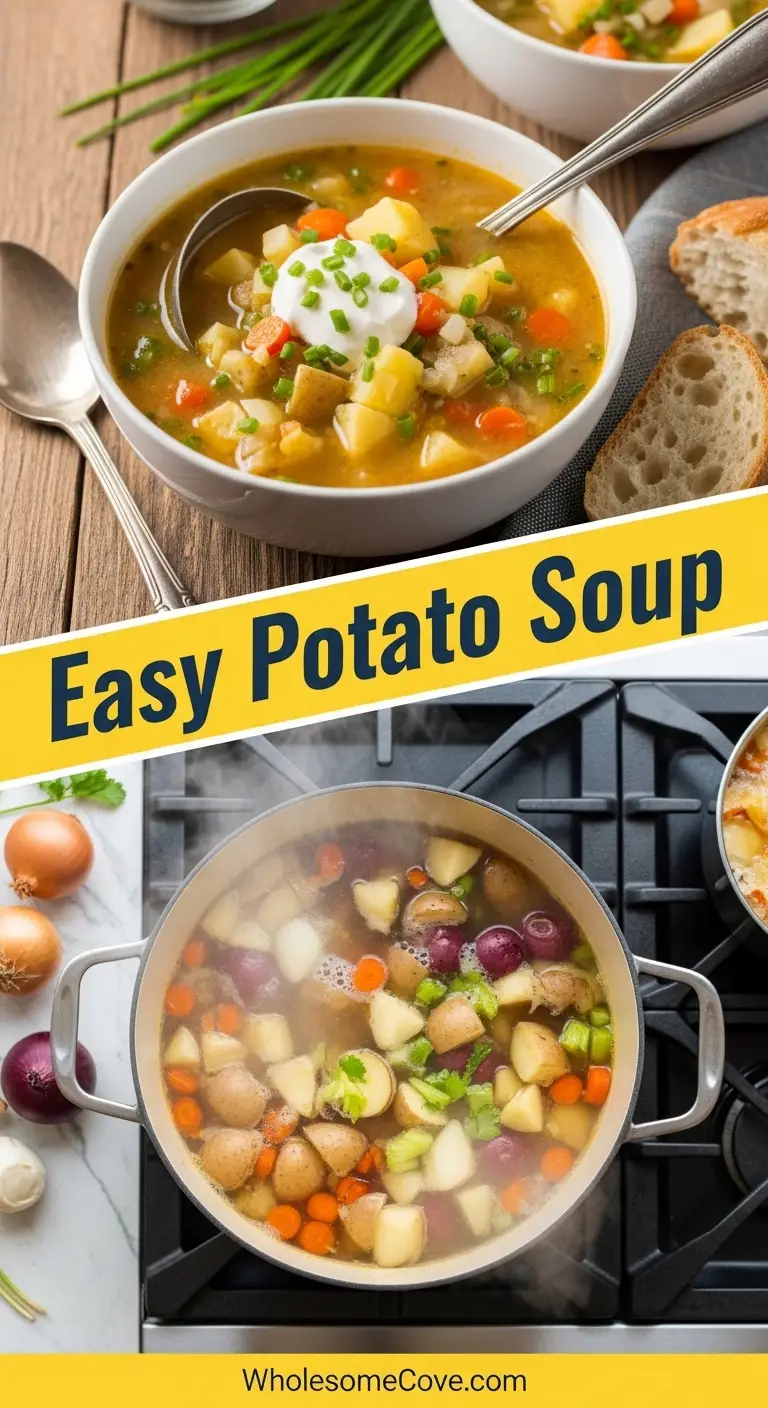
Tips for The Best Potato Soup
Getting the most out of this recipe comes down to a few technique-based details that took me some trial and error to figure out. These tips are the difference between a good soup and a genuinely great one.
- Don’t skip the roux. The flour step is crucial for thickening. If you skip it, your soup will be thin and brothy rather than creamy and spoonable. Cook the flour in the fat for at least a minute to remove the raw flour taste.
- Use freshly shredded cheese. Pre-shredded cheese from bags contains anti-caking agents like cellulose that prevent it from melting smoothly. Always shred your own cheese from a block for the silkiest texture.
- Cut the potatoes evenly. Aim for consistent 1/2-inch (1.25 cm) cubes so that every piece cooks at the same rate. Uneven pieces mean some will be mushy while others are still firm.
- Don’t boil after adding dairy. Once the milk, cream, sour cream, and cheese go in, keep the heat low. A hard boil will cause the dairy to curdle and the cheese to break into a greasy, grainy mess.
- Partial blending is key. Blending all of it makes the soup too smooth and uniform, like baby food. Leaving about half of the potato chunks gives you the perfect texture — creamy base with hearty bites.
- Taste and season at the end. Broth varies in saltiness, so always taste before adding more salt. The cheese and bacon also contribute saltiness, so season gradually.
- Warm your dairy first. If you have a minute, gently warm the milk and cream in a small saucepan or microwave before adding to the pot. Adding cold dairy to hot soup can shock the mixture and cause it to separate.
- Add a splash of apple cider vinegar. A tiny splash (just 1/4 teaspoon) stirred in at the very end brightens all the flavors without being detectable as vinegar. I started doing this recently and it really does make a difference.
Read Also: Zuppa Toscana Recipe
What to Serve with Potato Soup

Potato soup is hearty enough to stand on its own, but pairing it with the right sides takes the meal to a whole new level. I almost always serve it with something crusty to dip and a simple salad or light veggie on the side.
Here are some of my favorite pairings:
- Homemade Biscuits — Warm, buttery biscuits are the ultimate companion to a creamy bowl of potato soup. They’re perfect for soaking up every last drop.
- Dinner Rolls — Soft dinner rolls work beautifully alongside this soup, especially if you’re serving a crowd.
- Broccoli Salad — The crisp, tangy contrast of a broccoli salad cuts through the richness of the soup and makes the meal feel more balanced.
- Coleslaw — A creamy or vinegar-based coleslaw adds a refreshing crunch that works really well alongside the soft, thick soup.
- Deviled Eggs — Great for serving soup as part of a larger spread, like a Sunday lunch or a casual gathering.
- Roasted Brussels Sprouts with Bacon — Roasted vegetables add a slightly charred, savory note that pairs naturally with the smoky bacon in the soup.
- Green Bean Casserole — A classic comfort food combination that works especially well during fall and winter months.
- Crusty sourdough bread — Thick slices of toasted sourdough are my personal go-to. They hold up to dipping without falling apart in the bowl.
Another favorite soup for those cold weeknight dinners: Creamy Tomato Basil Soup
Variations of Potato Soup
The base recipe is wonderful as-is, but part of what makes potato soup so great is how easily it adapts to different moods, diets, and pantry situations. Here are some of my favorite ways to switch things up.
The core technique stays the same across all of these variations — you’re just swapping or adding a few ingredients.
- Loaded Baked Potato Soup — Double the bacon and cheese, stir in more sour cream, and top generously with green onions and extra shredded cheddar. It tastes like a loaded baked potato in soup form. This is hands-down the most popular version I make.
- Slow Cooker Potato Soup — Add the potatoes, broth, onion, garlic, and seasonings to your slow cooker. Cook on low for 6 to 8 hours or high for 3 to 4 hours. Partially mash or blend, then stir in the dairy and cheese at the end. Super hands-off.
- Broccoli Cheddar Potato Soup — Add 2 cups of small-cut broccoli florets in the last 10 minutes of simmering. It’s similar in spirit to the Panera Broccoli Cheddar Soup but with hearty potato chunks throughout.
- Ham and Potato Soup — Swap the bacon for 1 to 2 cups of diced cooked ham. This is a great way to use up leftover holiday ham and gives the soup a slightly sweeter, meatier profile.
- Vegan Potato Soup — Use vegetable broth instead of chicken broth, substitute full-fat coconut milk or unsweetened cashew cream for the dairy, and skip the bacon and cheese (or use vegan alternatives). Top with crispy chickpeas and chopped chives.
- Potato Leek Soup — Skip the yellow onion and replace it with 3 large leeks, sliced and washed thoroughly. Leeks add a subtle, sweet onion flavor that is more refined and elegant. Think classic French bistro style.
- Spicy Jalapeño Potato Soup — Add 1 to 2 finely diced jalapeños along with the onion, and use pepper jack cheese instead of cheddar. A pinch of cayenne in with the other spices doesn’t hurt either.
- Sausage and Potato Soup — Brown 1/2 lb (225g) of Italian sausage or kielbasa in the pot before starting the recipe, then build the soup on top of that base. The sausage makes the soup even heartier and more filling.
Read Also: Kale and Sweet Potato Soup Recipe
Storage and Reheating
Potato soup stores and reheats beautifully, which makes it ideal for batch cooking and meal prep. A few simple guidelines will keep it tasting just as good on day three as it did fresh from the pot.
- Refrigerator storage — Let the soup cool completely to room temperature before transferring it to an airtight container. Store in the refrigerator for up to 4 days.
- Freezer storage — Potato soup can be frozen, but the dairy (milk, cream, sour cream) can separate and the texture may turn slightly grainy when thawed. If you plan to freeze it, add the dairy after reheating rather than before. Freeze in airtight freezer-safe containers for up to 2 months.
- Thawing — Move frozen soup to the refrigerator overnight to thaw. Do not thaw at room temperature.
- Stovetop reheating (recommended) — Pour the soup into a pot over medium-low heat. Stir frequently and heat gently until warmed through. Add a splash of broth or milk to loosen it if it has thickened in the fridge.
- Microwave reheating — Transfer a single serving to a microwave-safe bowl. Heat in 60-second intervals, stirring between each interval, until heated evenly throughout.
- Toppings — Always add fresh toppings (bacon, cheese, green onions, sour cream) after reheating, not before storing. This keeps the toppings crispy and fresh.
- Do not boil during reheating — Just as when making the soup, heating it too aggressively after the dairy is added can cause the cheese to break and the soup to become grainy. Gentle, low heat is the goal.
You might also enjoy: Slow Cooker Chili Recipe
Nutritional Facts
The following nutrition information is an estimate based on one serving (approximately 1.5 cups / 360ml) with no additional toppings. Actual values will vary depending on specific brands used and optional toppings added.
| Nutrient | Amount Per Serving |
|---|---|
| Calories | 390 kcal |
| Total Fat | 21g |
| Saturated Fat | 11g |
| Cholesterol | 60mg |
| Sodium | 780mg |
| Total Carbohydrates | 38g |
| Dietary Fiber | 3g |
| Sugars | 5g |
| Protein | 13g |
| Vitamin C | 18mg |
| Potassium | 820mg |
| Calcium | 220mg |
| Iron | 2mg |
Note: These figures are approximations. For precise dietary tracking, use a nutritional calculator with your exact ingredient brands and quantities.
Read Also: Roasted Butternut Squash Soup Recipe
Health Benefits of Key Ingredients
This soup is indulgent comfort food, but several of its core ingredients do bring some solid nutritional value to the table. It is not a diet food by any means, but it is far from empty calories either.
Here is a closer look at what the key ingredients contribute:
- Russet Potatoes — Potatoes are an excellent source of potassium, vitamin C, and vitamin B6. They also contain a good amount of dietary fiber (especially in the skin), which supports digestive health and helps you feel full longer. Potatoes have gotten an unfair reputation over the years — on their own, they are a nutrient-dense whole food.
- Garlic — Fresh garlic is rich in allicin, a sulfur compound studied for its anti-inflammatory and antimicrobial properties. It adds more than just flavor — it actively supports immune health.
- Yellow Onion — Onions are packed with antioxidants, particularly quercetin, which has been linked to reduced inflammation. They also contribute prebiotic fiber that feeds beneficial gut bacteria.
- Chicken Broth — A good quality chicken broth provides collagen-building amino acids, especially if it is made from bone-in chicken. It also adds minerals like phosphorus and sodium in moderate amounts.
- Sharp Cheddar Cheese — Cheese is a concentrated source of calcium and protein. While it is calorie-dense, the calcium and phosphorus it provides support bone health and the protein contributes to satiety.
- Sour Cream — Sour cream contains probiotics that support a healthy gut microbiome. It also provides calcium and fat-soluble vitamins like A, D, and K2.
- Bacon — While not exactly a health food, a modest amount of quality bacon provides protein and fat that contribute to fullness and flavor. Using it as a topping rather than stirring it throughout keeps the quantity controlled.
Read Also: Beef Barley Soup Recipe
FAQs About Potato Soup
1. What type of potato is best for potato soup?
Russet potatoes are the most common choice for potato soup because of their high starch content, which helps naturally thicken the soup and gives it a fluffy, creamy texture when cooked. Yukon Gold potatoes are a great alternative — they are naturally buttery and hold their shape a bit better, which is ideal if you prefer more distinct potato chunks in your soup.
2. How do I thicken potato soup if it’s too thin?
The easiest fix is to let the soup simmer uncovered on low heat for 10 to 15 minutes to reduce and concentrate. You can also use your immersion blender to blend more of the soup, which will thicken it without adding any extra ingredients. Another option is to mix 1 tablespoon of cornstarch with 2 tablespoons of cold water, stir it into the simmering soup, and let it cook for a few minutes.
3. Can I make potato soup ahead of time?
Absolutely, and in fact the soup often tastes even better the next day once the flavors have had more time to develop. Make it a day ahead and store it covered in the refrigerator. Reheat gently on the stovetop over medium-low heat, adding a splash of broth or milk to loosen it up if needed, and add fresh toppings just before serving.
4. Can I freeze potato soup?
You can freeze it, but be aware that dairy-based soups can separate and become grainy when thawed and reheated. To get the best result, freeze the soup before adding the milk, cream, sour cream, and cheese. When you are ready to serve, thaw the soup overnight in the refrigerator, reheat it gently on the stovetop, and then stir in the fresh dairy and cheese at the end.
5. How do I fix potato soup that turned out too salty?
If your soup is over-salted, add a raw peeled potato cut into chunks and let it simmer in the soup for 10 to 15 minutes — the potato will absorb some of the excess salt. Remove the potato pieces before serving. You can also add a splash of unsalted broth, a bit more cream or milk, or a squeeze of lemon juice to balance and dilute the saltiness.
Another hearty and satisfying soup to bookmark for chilly nights: Sausage Lentil Soup

Creamy Potato Soup
Ingredients
- 2.5 lbs russet potatoes - about 1.1 kg, peeled and cut into 1/2-inch (1.25 cm) cubes
- 6 bacon slices - about 150g, chopped; cook extra for topping
- 1 medium yellow onion - diced, about 1 cup or 150g
- 4 garlic cloves - minced
- 4 cups chicken broth - 950 ml, low-sodium preferred
- 1 cup whole milk - 240 ml
- 1/2 cup heavy cream - 120 ml
- 3 tablespoons all-purpose flour - 24g
- 2 tablespoons unsalted butter - 28g
- 1/2 cup sour cream - 115g
- 1 cup sharp cheddar cheese - 115g, freshly shredded from a block
- 1 teaspoon salt - 6g, plus more to taste
- 1/2 teaspoon black pepper - 1g, freshly ground
- 1/2 teaspoon garlic powder - 1.5g
- 1/4 teaspoon paprika - 0.5g, smoked or sweet
- shredded cheddar cheese - extra, for topping
- crumbled cooked bacon - for topping
- green onions or chives - sliced, for topping
- sour cream - extra dollop for topping
Equipment
- Large Dutch oven or heavy-bottomed pot (at least 6 quarts) - Essential for even heat distribution
- Immersion blender - For partially blending the soup; a potato masher can be used instead for a chunkier texture
- Sharp chef’s knife
- Cutting board
- Wooden spoon or silicone spatula
- Ladle - For serving
- Measuring cups and spoons
- Box grater - For shredding fresh cheese from a block
- Slotted spoon - For transferring cooked bacon
- Paper towels - For draining cooked bacon
Method
- Add the chopped bacon to a cold Dutch oven over medium heat and cook for 6 to 8 minutes, stirring occasionally, until crispy and the fat has fully rendered. Transfer the bacon to a paper towel-lined plate using a slotted spoon, leaving about 2 tablespoons of drippings in the pot.
- Melt the butter into the bacon drippings over medium heat, then add the diced onion and cook for about 5 minutes until soft and translucent. Add the minced garlic and cook for 1 minute until fragrant.
- Sprinkle the flour over the onion and garlic mixture and stir continuously for 1 to 2 minutes until the vegetables are coated and the raw flour smell cooks off. The mixture will look clumpy — that is correct.
- Slowly pour in the chicken broth while stirring constantly to prevent lumps, then add the cubed potatoes and all the seasonings (salt, pepper, garlic powder, and paprika). Stir to combine, then increase the heat to medium-high and bring to a boil.
- Reduce the heat to medium-low, cover the pot with the lid slightly ajar, and simmer for 15 to 20 minutes until the potatoes are completely fork-tender.
- Remove the pot from heat and use an immersion blender to blend about one-third to one-half of the soup, leaving the rest chunky for texture. Alternatively, mash some potatoes with a potato masher or blend 2 cups separately and return to the pot.
- Return the pot to low heat and stir in the whole milk, heavy cream, sour cream, and shredded cheddar cheese (added in small handfuls), stirring after each addition until smooth and fully melted. Do not let the soup boil after adding the dairy.
- Taste the soup and adjust salt and pepper as needed; add a splash of broth to thin or simmer uncovered to thicken. Serve hot, topped with crumbled bacon, extra shredded cheddar, sliced green onions, and a dollop of sour cream.
Nutrition
Notes
- Use freshly shredded cheese from a block for the smoothest melt — pre-shredded bagged cheese contains anti-caking agents that prevent it from melting properly.
- Do not let the soup boil after adding the milk, cream, sour cream, or cheese; high heat will cause the dairy to curdle and the cheese to separate.
- Partial blending is key to the ideal texture — blending all of it makes the soup too smooth, while leaving some chunks gives it a hearty, satisfying bite.
- Cut potatoes into even 1/2-inch (1.25 cm) cubes so they all cook at the same rate and no pieces end up mushy while others are underdone.
- For a loaded baked potato version, double the bacon and cheese, and top generously with sour cream and green onions.
- To freeze, omit the dairy before freezing; reheat the base from frozen, then stir in fresh milk, cream, sour cream, and cheese before serving.
- Refrigerate leftovers in an airtight container for up to 4 days. Reheat gently on the stovetop over medium-low heat with a splash of broth or milk to loosen.
- Yukon Gold potatoes can be substituted for russets — they produce a slightly butterier, creamier texture and hold their shape a bit better.
- To fix an over-salted soup, add a peeled raw potato cut into chunks and simmer for 10 to 15 minutes, then remove the pieces before serving.
- A tiny splash (1/4 teaspoon) of apple cider vinegar stirred in at the very end brightens all the flavors without being detectable.
Private Notes
Tried this recipe?
Let us know how it was!Final Thoughts
If you have been searching for a potato soup recipe that actually delivers on that thick, creamy, comfort-food promise, this is it. It is simple enough for a weeknight but satisfying enough to serve to guests.
I hope this recipe brings as much warmth to your kitchen as it has brought to mine over the years. Whether you make it exactly as written or add your own twist in the Variations section, I know you are going to love it.
Give it a try this week, and when you do, drop a comment below to let me know how it went. I would love to hear what toppings you used and if you made any fun variations!
Recommended:
- Chicken Gnocchi Soup
- Sausage Gnocchi Soup
- Lasagna Soup
- Italian Wedding Soup
- Tomato Soup
- Carrot Ginger Soup
- New England Clam Chowder
- Lentil and Vegetable Soup
- Mashed Potatoes
- Twice Baked Potatoes