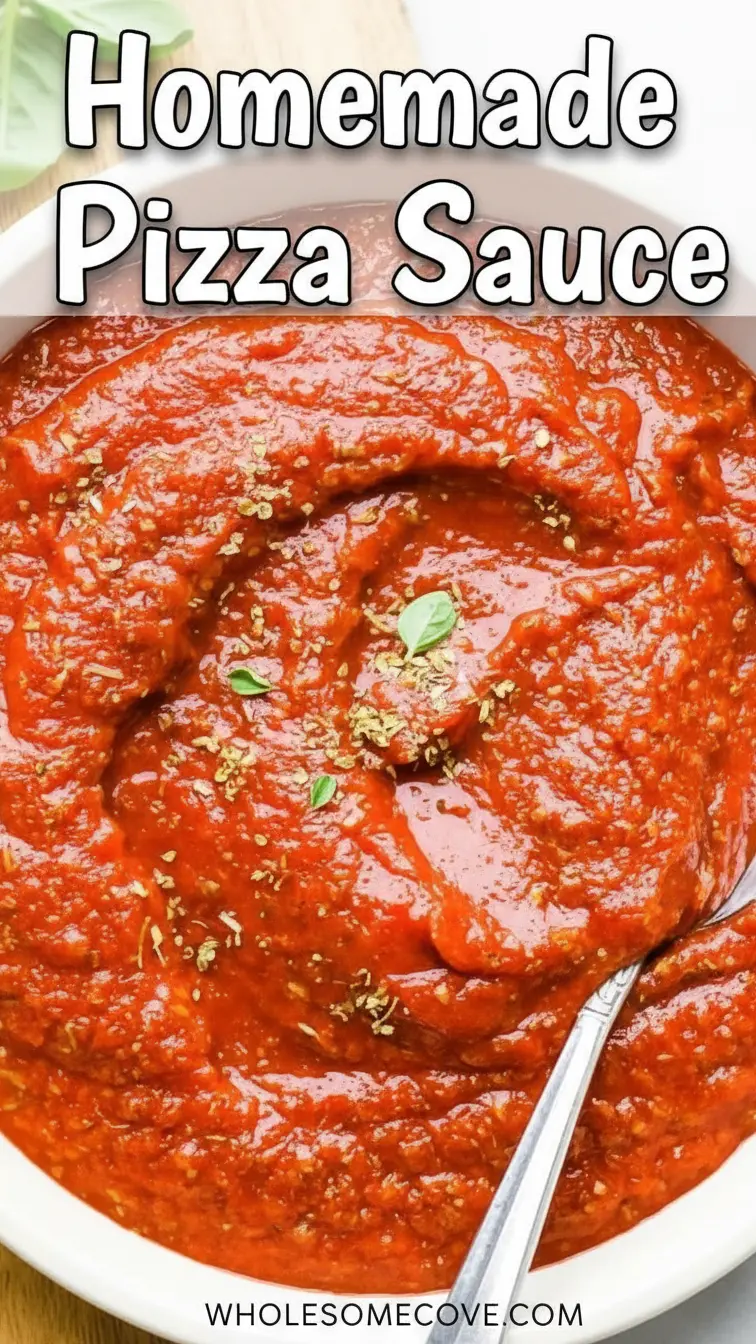
I learned how to make this pizza sauce recipe completely by accident one Friday night when I was craving homemade pizza but realized I had run out of jarred sauce.
With a few cans of San Marzano tomatoes in my pantry and some basic herbs, I decided to give it a shot. That first batch turned out so much better than anything I’d ever bought from the store that I haven’t looked back since.
The beauty of making your own pizza sauce is that you have complete control over the flavors. You can adjust the garlic to your liking, bump up the herbs, or add a pinch of red pepper flakes for some heat.
Plus, this recipe comes together in about 30 minutes from start to finish, and you’ll have enough sauce for several pizzas. I always make a double batch and freeze half for those busy weeknights when homemade pizza sounds perfect but time is tight.
| Quick Recipe Summary | |
|---|---|
| Prep Time | 10 minutes |
| Cook Time | 20 minutes |
| Total Time | 30 minutes |
| Servings | Enough for 4-6 pizzas (about 3 cups) |
| Difficulty Level | Easy |
Why You’ll Love This Pizza Sauce Recipe
This homemade pizza sauce beats store-bought versions in every way, and once you try making it yourself, you’ll understand why. The flavors are brighter, fresher, and more balanced than anything that comes in a jar.
I’ve tested this recipe dozens of times, adjusting the seasonings and cooking times until I found the perfect combination. The result is a sauce that’s rich without being heavy, garlicky without being overpowering, and herbaceous in all the right ways.
Here’s what makes this pizza sauce so special:
- Takes just 30 minutes: No need to simmer for hours like traditional pasta sauces. This quick-cook method preserves the bright tomato flavor.
- Uses simple ingredients: Everything you need is probably already in your pantry. No hunting down specialty items.
- Freezes beautifully: Make a big batch and freeze individual portions in freezer bags for up to 3 months. Pull one out whenever the pizza craving hits.
- Incredibly versatile: While it’s perfect for pizza, I’ve also used it as a dipping sauce for breadsticks and even stirred it into pasta in a pinch.
- Budget-friendly: A batch costs less than two jars of decent pizza sauce, and it tastes infinitely better.
- No sugar needed: Unlike many store-bought sauces, this doesn’t need added sugar. The natural sweetness of quality tomatoes shines through.
Another favorite of mine is this marinara sauce recipe, which offers a similar simplicity with its own distinct flavor profile.
Ingredients
The ingredient list for this pizza sauce is refreshingly short, but quality matters here. Since there are so few components, each one plays a starring role in the final flavor.
I always reach for San Marzano tomatoes when I can find them. They’re sweeter and less acidic than regular canned tomatoes, which means you get a sauce that tastes rich and balanced without any bitterness.
Here’s everything you’ll need:
- 28 oz (794g) crushed tomatoes: San Marzano are ideal, but any good-quality crushed tomatoes work. Avoid diced tomatoes as they don’t break down smoothly.
- 2 tablespoons (30ml) extra virgin olive oil: This adds richness and helps the sauce coat the pizza better.
- 4 cloves garlic, minced: Fresh garlic is essential here. Don’t substitute jarred or powdered.
- 2 teaspoons (4g) dried oregano: Italian oregano has the best flavor for pizza sauce.
- 1 teaspoon (2g) dried basil: You can use fresh if you have it (about 2 tablespoons chopped), but add it at the end.
- 1/2 teaspoon (1g) salt: Start with this amount and adjust to taste.
- 1/4 teaspoon (0.5g) black pepper: Freshly ground tastes best.
- 1/4 teaspoon (0.5g) red pepper flakes: Optional, but adds a subtle warmth.
- 1 tablespoon (15ml) tomato paste: This deepens the tomato flavor and adds body to the sauce.
Kitchen Equipment Needed
You don’t need any fancy equipment to make excellent pizza sauce, just a few basic kitchen tools that you probably already own. I’ve made this sauce in everything from a small saucepan to a large skillet, and it turns out great every time.
The most important thing is using a pot with a heavy bottom that distributes heat evenly. This prevents scorching, which can give the sauce a bitter taste.
Here’s what you’ll need:
- Medium saucepan (2-3 quart capacity): A heavy-bottomed pan prevents burning.
- Wooden spoon: For stirring without scratching your pan.
- Garlic press or sharp knife: To mince the garlic finely.
- Measuring spoons and cups: For accurate measurements.
- Immersion blender: Optional but helpful if you prefer a completely smooth sauce.
- Airtight containers or freezer bags: For storing leftover sauce.
- Ladle: Makes it easier to portion the sauce onto pizza dough.
Recommended Products for This Recipe
These are products I personally use and recommend based on years of making homemade pizza sauce. Each one genuinely improves either the process or the final result.
1. Cento San Marzano Certified Peeled Tomatoes
San Marzano tomatoes from the Campania region of Italy are protected by D.O.P. certification, meaning they must meet strict quality standards. I’ve tried dozens of tomato brands, and these consistently deliver the sweetest, most balanced flavor with low acidity. They transform this pizza sauce from good to restaurant-quality.
2. Cuisinart Smart Stick Hand Blender
This immersion blender has been in my kitchen for over five years, and I use it at least twice a week. For pizza sauce, it lets you blend directly in the pot to your desired consistency without transferring hot liquid to a countertop blender. The variable speed control means you can pulse for a chunkier sauce or blend smooth.
3. All-Clad Stainless Steel Saucepan
This is admittedly an investment piece, but a quality heavy-bottomed saucepan makes such a difference when cooking tomato-based sauces. The even heat distribution prevents hot spots that can scorch your sauce and ruin the flavor. I’ve had mine for a decade and it still looks nearly new.
4. California Olive Ranch Extra Virgin Olive Oil
Not all olive oils are created equal, and since this sauce is so simple, the quality of your oil really comes through. This California oil has a fruity, peppery flavor that enhances the tomatoes without overpowering them. It’s also more affordable than imported options while still being genuinely extra virgin.
5. Ziploc Freezer Bags
These heavy-duty freezer bags are perfect for portioning and freezing pizza sauce. I fill each bag with enough sauce for two pizzas, flatten them for easy stacking, and they keep the sauce fresh for months. The double zipper prevents freezer burn better than regular storage bags.
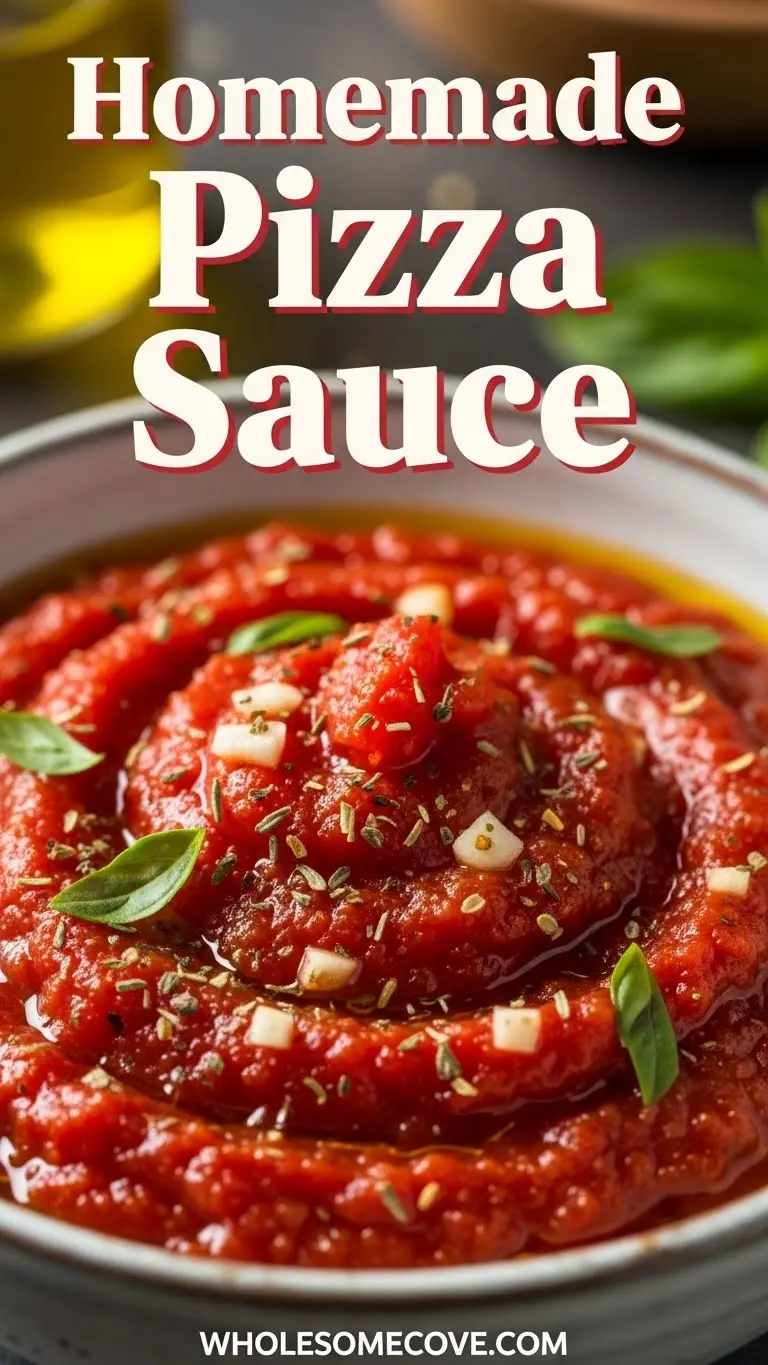
Step-by-Step Instructions: How to Make Pizza Sauce
Making homemade pizza sauce is one of those satisfying cooking projects where you can actually see and smell the transformation happening. The process is straightforward, but I’ll walk you through every detail so your sauce turns out perfect the first time.
1. Prepare Your Ingredients
- Open your can of crushed tomatoes and set it aside within easy reach.
- Peel and mince the garlic cloves as finely as possible. I like using a garlic press for this because it creates a paste that distributes evenly throughout the sauce.
- Measure out all your dried herbs and spices into a small bowl. This way, you can add them all at once when needed.
- Have your tomato paste measured and ready to go.
2. Heat the Olive Oil and Sauté the Garlic
- Place your saucepan over medium heat and add the olive oil.
- Let the oil heat for about 30 seconds until it shimmers slightly but doesn’t smoke.
- Add the minced garlic to the pan and stir constantly with your wooden spoon.
- Sauté for 30 to 45 seconds until the garlic becomes fragrant and just barely starts to turn golden. Watch carefully here because garlic can burn quickly and turn bitter.
- If you see the garlic browning too fast, immediately remove the pan from the heat and proceed to the next step.
3. Add the Crushed Tomatoes
- Pour the entire can of crushed tomatoes into the pan with the garlic.
- Stir well to combine, making sure to scrape up any garlic from the bottom of the pan.
- The sauce will bubble up initially, so be careful of splatters.
- Once combined, reduce the heat to medium-low to maintain a gentle simmer.
4. Stir in the Tomato Paste and Seasonings
- Add the tablespoon of tomato paste directly to the sauce.
- Stir vigorously to break up the paste and incorporate it completely. This might take a minute or two.
- Add all your dried herbs (oregano and basil), salt, black pepper, and red pepper flakes if using.
- Stir everything together thoroughly so the seasonings are evenly distributed throughout the sauce.
You might also enjoy my spaghetti sauce recipe, which uses a similar base but simmers longer for a deeper flavor.
5. Simmer the Sauce
- Let the sauce simmer uncovered over medium-low heat for 15 to 20 minutes.
- Stir every 3 to 4 minutes to prevent sticking and ensure even cooking.
- As it cooks, you’ll notice the sauce thickening and the flavors melding together. The raw tomato smell will transform into that rich, cooked tomato aroma.
- If the sauce seems too thick, add a tablespoon or two of water. If it’s too thin, let it simmer a few minutes longer.
6. Adjust Seasoning and Consistency
- After the sauce has simmered for 15 minutes, taste it carefully (it’ll be hot!).
- Add more salt if needed, usually about 1/4 teaspoon at a time.
- If you want more herb flavor, this is the time to add it.
- For a completely smooth sauce, use an immersion blender right in the pot and blend for 10 to 15 seconds. For a chunkier texture, leave it as is.
- If you’re using fresh basil instead of dried, stir it in now and remove the pan from heat.
7. Cool and Store
- Remove the pan from heat and let the sauce cool to room temperature if you’re not using it immediately.
- Once cool, transfer to an airtight container or freezer bag.
- The sauce will thicken slightly as it cools, which is completely normal.
- Label your container with the date so you know when you made it.
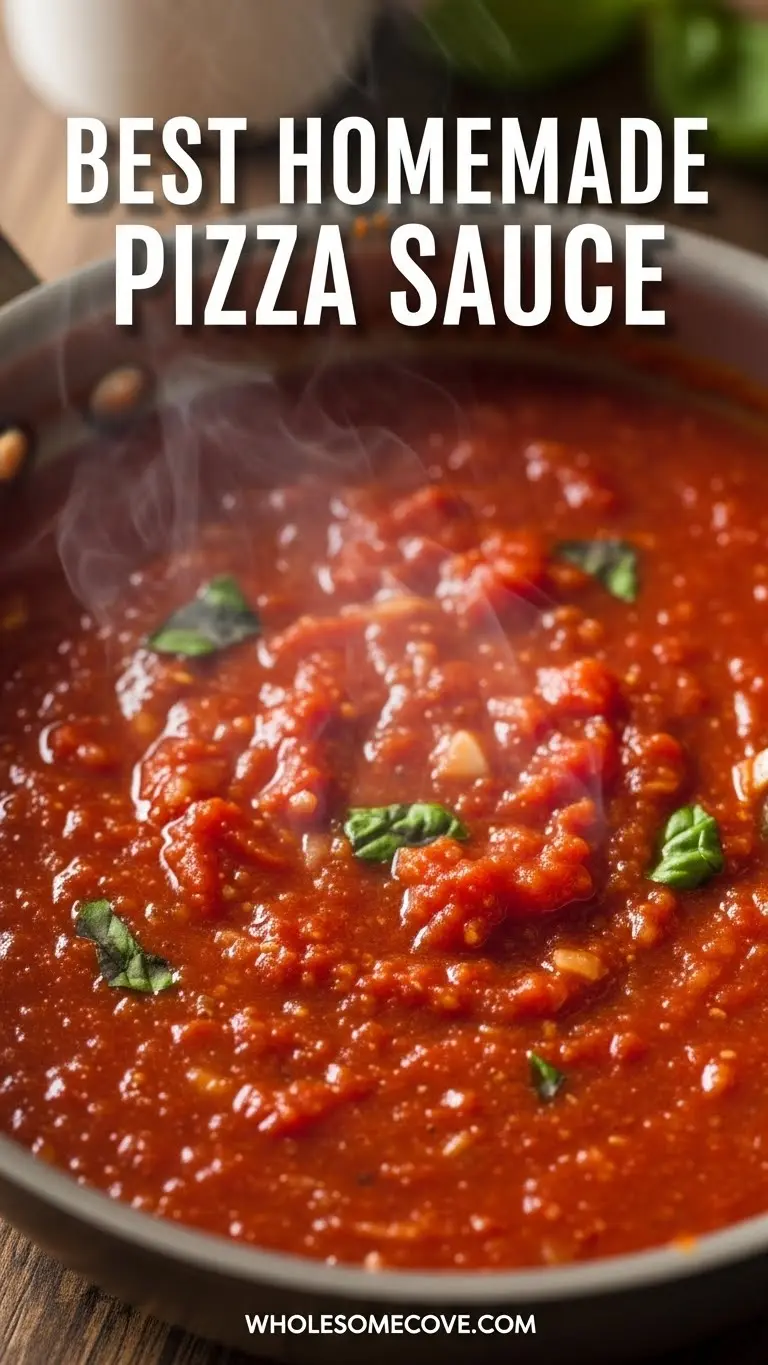
Tips for The Best Pizza Sauce
After making countless batches of this sauce, I’ve learned some tricks that consistently produce the best results. These tips will help you avoid common mistakes and elevate your pizza sauce from good to extraordinary.
The single biggest mistake I see people make is overcooking the garlic at the beginning, which creates a bitter undertone throughout the sauce. Keep that heat moderate and watch it closely.
- Don’t skip the tomato paste: It might seem like an extra ingredient, but it adds concentrated tomato flavor and helps thicken the sauce to the perfect consistency.
- Use quality canned tomatoes: This isn’t the place to save money. San Marzano or other premium crushed tomatoes make a noticeable difference in sweetness and acidity.
- Adjust thickness for your preference: If you like your pizza with less sauce, make it thicker by simmering longer. For a lighter coating, thin it with a bit of water.
- Taste and adjust: Every brand of tomatoes has different salt levels. Always taste your sauce before storing and adjust seasonings accordingly.
- Let it cool completely before freezing: Hot sauce in a freezer bag creates condensation and ice crystals, which can affect texture when thawed.
- Freeze flat: Pour sauce into freezer bags, press out the air, seal, and lay flat in your freezer. They stack beautifully and thaw faster than a solid block.
- Make it ahead: The flavors actually improve after a day in the fridge as the herbs have time to infuse into the sauce.
- Don’t add sugar unless needed: Taste first. Quality tomatoes are naturally sweet enough for most people.
- Fresh basil goes in at the end: If using fresh herbs, add them after cooking to preserve their bright flavor.
- Save the olive oil from the top: When storing, that layer of oil on top actually helps preserve the sauce and prevent oxidation.
Serving Suggestions
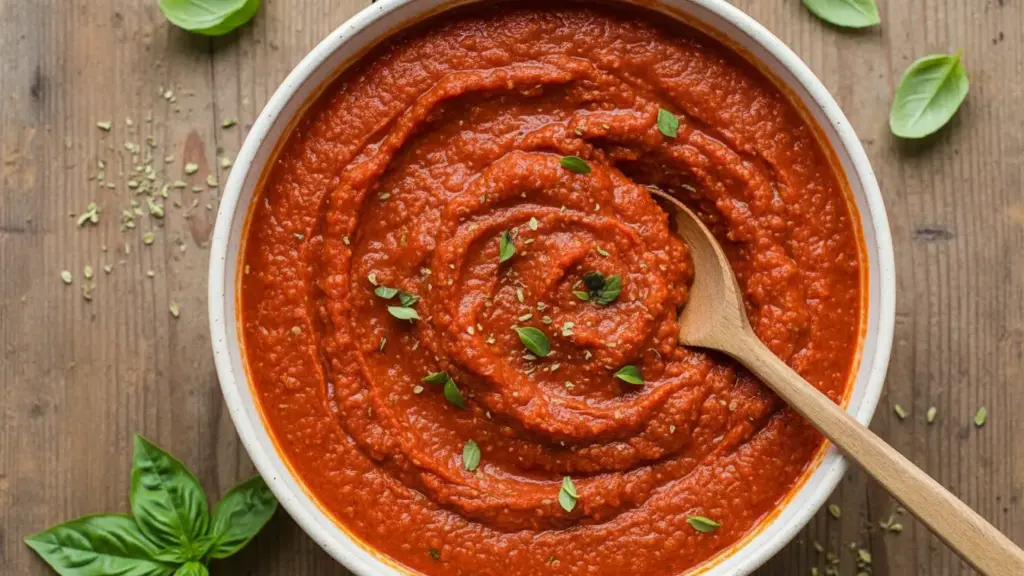
This versatile pizza sauce works perfectly on any style of pizza, from thin and crispy to thick and chewy. I usually spread about 1/2 to 3/4 cup of sauce on a 12-inch pizza, but you can adjust based on how saucy you like it.
Beyond traditional pizza, this sauce has become my go-to for so many dishes. I keep a container in my fridge pretty much all the time because it’s endlessly useful.
Here’s how I love to use it:
- Classic Margherita pizza: Spread the sauce on pizza dough, top with fresh mozzarella and basil leaves, then bake until bubbly and golden.
- Dipping sauce for breadsticks: Warm it up and serve alongside homemade garlic breadsticks or my dinner rolls for an appetizer.
- Calzone filling: Use it as the base sauce inside calzones before adding cheese and your favorite fillings.
- Flatbread topping: Spread on naan or pita bread for quick personal pizzas.
- Shakshuka base: Simmer eggs directly in the sauce for a pizza-inspired shakshuka.
- Meatball sub sauce: Pour over meatballs in a sub sandwich for extra flavor.
- Baked pasta sauce: Mix with cooked pasta, top with cheese, and bake for an easy casserole.
- Eggplant parmesan: Layer between breaded eggplant slices and mozzarella.
Variations of Pizza Sauce
One of the best things about making your own pizza sauce is how easily you can customize it to match your mood or the toppings you’re using. I’ve experimented with dozens of variations over the years, and these are my favorites.
Each variation changes the character of the sauce just enough to keep your pizza nights interesting without requiring a completely different recipe.
- Spicy arrabbiata style: Double the red pepper flakes to 1/2 teaspoon or add a minced fresh jalapeño with the garlic for serious heat.
- Garlic lover’s version: Increase the garlic to 6 cloves and add 1/4 teaspoon of garlic powder for extra punch.
- Fresh herb upgrade: Replace dried herbs with 2 tablespoons fresh oregano and 3 tablespoons fresh basil, adding them at the end of cooking.
- White pizza sauce: Replace the tomatoes with 1 cup of heavy cream, add 1/2 cup grated Parmesan, and proceed with the garlic and herbs.
- Pesto fusion: Stir 2 tablespoons of basil pesto into the finished sauce for a unique flavor combination.
- Roasted garlic version: Use roasted garlic instead of raw for a sweeter, mellower garlic flavor.
- Vodka pizza sauce: Add 1/4 cup vodka when you add the tomatoes and let it cook off for 2 extra minutes, then stir in 1/4 cup heavy cream.
- Smoky BBQ pizza: Mix in 2 tablespoons of your favorite BBQ sauce for a sweet and smoky twist.
- Mediterranean style: Add 1 teaspoon dried thyme, 1/2 teaspoon dried rosemary, and 2 tablespoons capers.
- Meat lover’s enhancement: Stir in 1 teaspoon of Italian sausage seasoning to complement meat-topped pizzas.
Another favorite: teriyaki sauce for an Asian-inspired pizza variation.
Storage and Reheating
Proper storage is key to keeping your homemade pizza sauce fresh and flavorful. I’ve learned through trial and error that how you store it makes a big difference in how long it lasts and how good it tastes when you use it.
The good news is that this sauce stores beautifully both in the refrigerator and freezer, so you can always have homemade pizza sauce on hand.
Here’s everything you need to know:
- Refrigerator storage: Transfer cooled sauce to an airtight container and store for up to 7 days. Pour a thin layer of olive oil on top to prevent oxidation.
- Freezer storage: Portion sauce into freezer bags (I do about 1.5 cups per bag for two pizzas) and freeze flat for up to 3 months. Label with the date.
- Freezer containers: You can also use rigid freezer-safe containers, but leave 1 inch of headspace as the sauce expands when frozen.
- Ice cube tray method: Freeze sauce in ice cube trays, then transfer cubes to a freezer bag. Perfect for when you need just a small amount.
- Thawing: Move frozen sauce to the fridge 24 hours before using, or defrost in the microwave on 50% power in 30-second intervals.
- Reheating: Warm sauce gently in a small saucepan over low heat, stirring occasionally. Add a splash of water if it’s thickened too much.
- Don’t refreeze: Once thawed, use the sauce within 3 days and don’t refreeze it.
- Check for freshness: If the sauce develops an off smell, changes color significantly, or shows any mold, discard it.
- Bring to room temperature for pizza: Cold sauce straight from the fridge can make your pizza dough soggy. Let it sit out for 15 minutes before spreading.

Nutritional Facts
Here’s the approximate nutritional information per 1/2 cup serving (125ml), which is enough sauce for one 12-inch pizza:
- Calories: 85
- Total Fat: 5g
- Saturated Fat: 0.7g
- Cholesterol: 0mg
- Sodium: 380mg
- Total Carbohydrates: 10g
- Dietary Fiber: 3g
- Sugars: 6g
- Protein: 2g
- Vitamin A: 15% DV
- Vitamin C: 25% DV
- Calcium: 4% DV
- Iron: 8% DV
This sauce is naturally low in calories and fat while providing good amounts of vitamins A and C from the tomatoes. It’s also cholesterol-free and contains beneficial lycopene, a powerful antioxidant found in cooked tomatoes.
Keep in mind that these values don’t include any cheese or toppings you add to your pizza, just the sauce itself.
Health Benefits of Key Ingredients
While pizza sauce might seem like a simple condiment, it’s actually packed with beneficial nutrients thanks to its whole food ingredients. I find it reassuring that something so delicious is also genuinely good for you.
The cooking process actually increases some of the nutritional benefits, particularly when it comes to tomatoes.
- Tomatoes are rich in lycopene: This powerful antioxidant is actually more bioavailable in cooked tomatoes than raw ones. Lycopene has been linked to heart health and may help reduce the risk of certain cancers.
- Garlic supports immune function: Fresh garlic contains allicin, a compound with antimicrobial and anti-inflammatory properties. Regular consumption may help support cardiovascular health.
- Olive oil provides healthy fats: Extra virgin olive oil is loaded with monounsaturated fats and antioxidants. It helps your body absorb fat-soluble vitamins from the tomatoes.
- Oregano has antimicrobial properties: This herb contains compounds that may help fight bacteria and reduce inflammation.
- Basil supports digestion: Beyond its wonderful flavor, basil has traditionally been used to support digestive health and contains beneficial essential oils.
- Low in calories and sodium: Compared to store-bought sauces, homemade versions let you control sodium content while keeping calories in check.
For another healthy homemade sauce option, try my healthy alfredo sauce recipe.
FAQs About Pizza Sauce
1. Can I use fresh tomatoes instead of canned?
Yes, but you’ll need to adjust the recipe. Use about 2 pounds of fresh Roma tomatoes, blanch them to remove skins, and blend until smooth. Fresh tomatoes have more water content, so you’ll need to simmer the sauce longer (30 to 40 minutes) to achieve the right consistency. I honestly prefer canned tomatoes for this recipe because they’re picked and processed at peak ripeness, giving you consistent results year-round.
2. How do I prevent my pizza sauce from making the crust soggy?
The key is using the right amount and consistency. Your sauce should be thick enough to coat the back of a spoon without running off. Spread a thin, even layer leaving a 1/2-inch border around the edges. Also, don’t overload the pizza with sauce. About 1/2 cup per 12-inch pizza is plenty. Finally, bake your pizza at high heat (450°F to 500°F) to cook the crust quickly before moisture can make it soggy.
3. Can I make pizza sauce without cooking it?
Absolutely! For a fresh, no-cook pizza sauce, simply blend your canned tomatoes with garlic, olive oil, herbs, and seasonings until smooth. This creates a brighter, more acidic sauce that some people prefer, especially on Neapolitan-style pizzas. Just be aware that the flavors won’t be as deep or mellow as the cooked version. I recommend this method when using San Marzano tomatoes since their quality really shines through.
4. Why does my pizza sauce taste bitter?
Bitterness usually comes from one of three sources: burned garlic, over-reduced sauce, or naturally acidic tomatoes. Make sure you’re not cooking the garlic too long or at too high a temperature. If your sauce tastes bitter despite careful cooking, try adding 1/2 to 1 teaspoon of sugar or a pinch of baking soda to neutralize the acidity. Some people also find that adding a small pat of butter at the end helps round out harsh flavors.
5. What’s the difference between pizza sauce and pasta sauce?
Pizza sauce is typically thicker, less cooked, and more concentrated than pasta sauce. It’s designed to spread easily and hold up to high-heat baking without making the crust soggy. Pasta sauce, like my marinara sauce, usually simmers longer and has a looser consistency since it needs to coat noodles. Pizza sauce also tends to have a brighter, fresher tomato flavor while pasta sauce develops deeper, more complex notes from longer cooking.
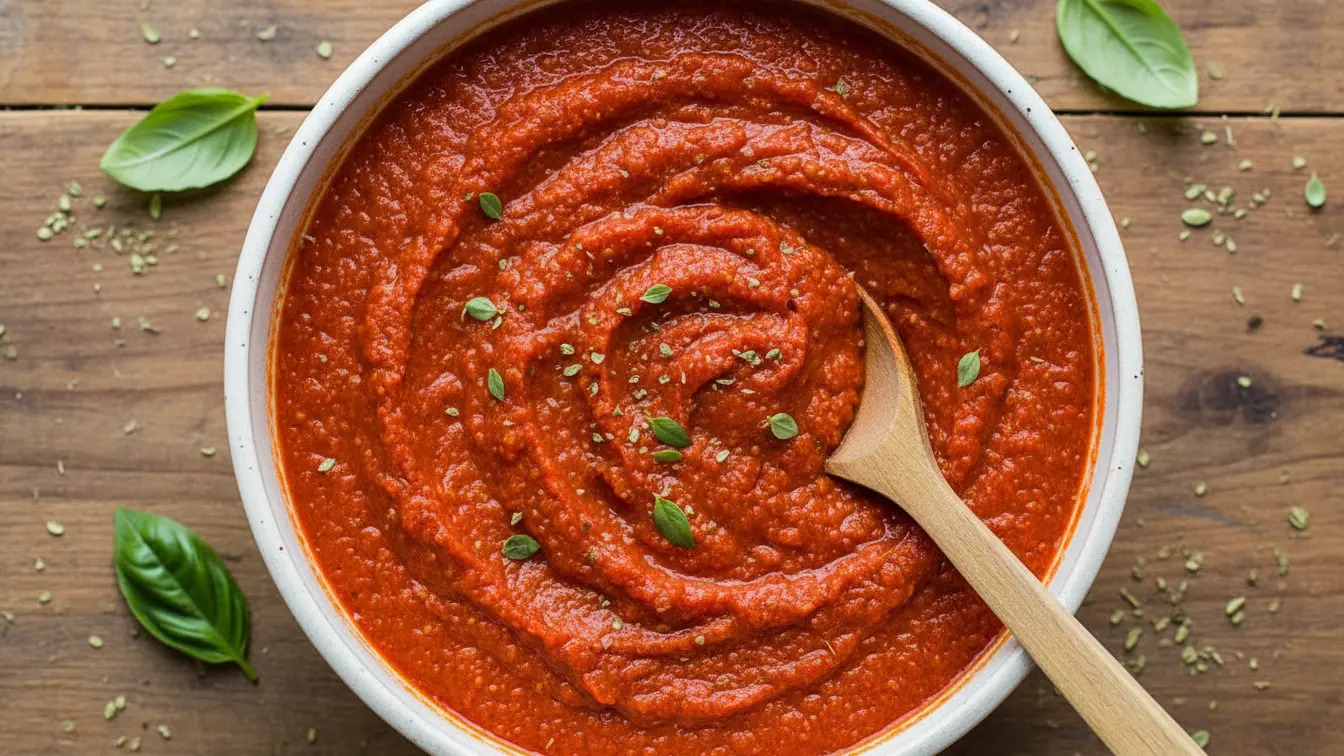
Homemade Pizza Sauce
Ingredients
- 28 oz crushed tomatoes - 794g, San Marzano preferred
- 2 tablespoons extra virgin olive oil - 30ml
- 4 cloves garlic - minced finely
- 2 teaspoons dried oregano - 4g, Italian oregano preferred
- 1 teaspoon dried basil - 2g, or 2 tablespoons fresh added at end
- 1/2 teaspoon salt - 1g, adjust to taste
- 1/4 teaspoon black pepper - 0.5g, freshly ground
- 1/4 teaspoon red pepper flakes - 0.5g, optional
- 1 tablespoon tomato paste - 15ml
Equipment
- Medium saucepan - 2-3 quart capacity, heavy-bottomed
- Garlic press or sharp knife
- Immersion blender - Optional, for smooth sauce
- Airtight containers or freezer bags - For storage
Method
- Open crushed tomatoes, mince garlic finely, and measure all dried herbs and spices into a small bowl.
- Heat olive oil in medium saucepan over medium heat for 30 seconds. Add minced garlic and cook for 30-45 seconds, stirring constantly, until fragrant and just barely golden.
- Pour crushed tomatoes into pan with garlic, stir well to combine and scrape up any garlic from bottom. Reduce heat to medium-low for gentle simmer.
- Stir in tomato paste, oregano, basil, salt, black pepper, and red pepper flakes. Mix thoroughly until tomato paste is fully incorporated and seasonings are evenly distributed.
- Let sauce simmer uncovered for 15-20 minutes, stirring every 3-4 minutes to prevent sticking. Sauce will thicken and flavors will meld together.
- Taste sauce carefully and add more salt if needed. For smooth sauce, use immersion blender for 10-15 seconds. If using fresh basil, stir in now and remove from heat.
- Remove from heat and let cool to room temperature. Transfer to airtight container or freezer bag, label with date.
Nutrition
Notes
- Use 1/2 to 3/4 cup sauce per 12-inch pizza
- San Marzano tomatoes provide the best flavor but any quality crushed tomatoes work well
- Refrigerate up to 7 days or freeze up to 3 months
- Freeze sauce flat in freezer bags for easy storage and quick thawing
- Don’t add sugar unless your tomatoes taste particularly acidic
- Fresh basil should be added at the end of cooking to preserve bright flavor
- Let sauce come to room temperature before spreading on pizza dough to prevent sogginess
- Watch garlic carefully to prevent burning which creates bitter undertone
- Flavors improve after a day in fridge as herbs infuse into sauce
- Pour thin layer of olive oil on top when storing to prevent oxidation
Private Notes
Tried this recipe?
Let us know how it was!Final Thoughts
Making your own pizza sauce really is one of those small kitchen victories that delivers big satisfaction. Once you taste the difference, those jars on the grocery store shelf start looking pretty lackluster.
I hope this recipe becomes as useful in your kitchen as it has in mine. There’s something special about pulling a homemade pizza out of the oven knowing you made every component from scratch, and the sauce is where it all begins.
Give this pizza sauce a try on your next pizza night, and feel free to experiment with the variations to make it your own. I’d love to hear how it turns out for you, what toppings you paired it with, or any creative twists you discovered. Drop a comment below or share your pizza creations with me!
Recommended:
- Enchilada Sauce Recipe
- Homemade Biscuit Recipe
- Chicken Parmesan Recipe
- Stuffed Shells Recipe
- French Toast Recipe
- Healthy Pizza Dough Recipe
- Meatloaf Recipe
- Coleslaw Recipe
- Creamed Spinach Recipe
- Avocado Toast Recipe