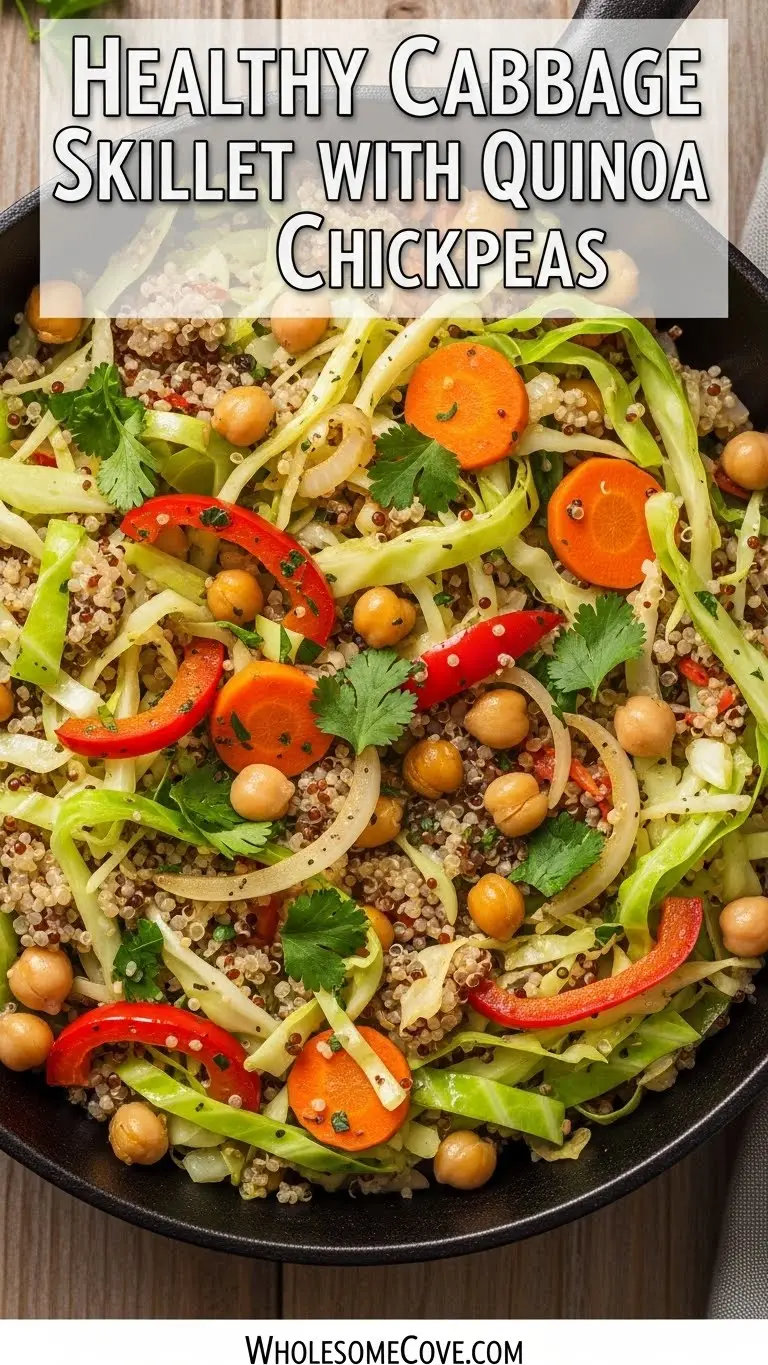
I fell into cooking this Healthy Cabbage Skillet with Quinoa and Chickpeas Recipe on one of those nights when my fridge was looking pretty bare, but I still wanted something nutritious and satisfying.
What started as a “let’s throw together whatever vegetables I have” experiment turned into one of my favorite weeknight dinners. The combination of tender cabbage, fluffy quinoa, and protein-packed chickpeas creates a meal that’s both comforting and incredibly good for you.
I love how this dish comes together in just one pan, making cleanup a breeze. Plus, it’s naturally vegan and gluten-free, so it works for just about any dietary preference without feeling like you’re missing out on flavor.
| Quick Recipe Summary | |
|---|---|
| Prep Time | 10 minutes |
| Cook Time | 20 minutes |
| Total Time | 30 minutes |
| Servings | 4 servings |
| Difficulty Level | Easy |
For more wholesome one-pan meals, try my Chickpea and Spinach Curry for another satisfying plant-based dinner.
Why You’ll Love This Healthy Cabbage Skillet with Quinoa and Chickpeas Recipe
This dish checks all the boxes when it comes to healthy, easy weeknight cooking. It’s packed with fiber, plant-based protein, and tons of vegetables, but it doesn’t taste like health food at all.
The flavors are warm and comforting, with just the right amount of seasoning to make each bite interesting. I’ve made this for friends who claimed they didn’t like cabbage, and they all went back for seconds.
Here’s what makes this recipe so special:
- Budget-friendly ingredients: Cabbage, quinoa, and canned chickpeas are all affordable staples that won’t break the bank
- One-pan simplicity: Everything cooks in a single skillet, which means less time washing dishes and more time relaxing
- Meal prep champion: This recipe holds up beautifully in the fridge for up to 5 days, making it perfect for weekly meal prep
- Naturally vegan and gluten-free: No special substitutions needed to accommodate different dietary needs
- Incredibly versatile: You can easily customize the vegetables and spices based on what you have on hand
- Packed with nutrients: Each serving delivers protein, fiber, vitamins, and minerals to keep you energized
This Healthy Fried Rice offers similar one-pan convenience with Asian-inspired flavors.
Ingredients
This recipe uses simple, wholesome ingredients that you probably already have in your pantry. The key is using quality spices and fresh vegetables to build layers of flavor.
- 1 cup (185g) uncooked quinoa, rinsed
- 2 cups (480ml) vegetable broth
- 2 tablespoons (30ml) olive oil
- 1 medium yellow onion (about 200g), diced
- 3 cloves garlic, minced
- 1 small head green cabbage (about 800g), cored and thinly sliced
- 1 can (15 oz/425g) chickpeas, drained and rinsed
- 1 teaspoon (2g) ground cumin
- 1 teaspoon (2g) smoked paprika
- ½ teaspoon (1g) ground turmeric
- ½ teaspoon (3g) sea salt, plus more to taste
- ¼ teaspoon (0.5g) black pepper
- ¼ teaspoon (0.5g) red pepper flakes (optional)
- 2 tablespoons (30ml) soy sauce or tamari
- 1 tablespoon (15ml) apple cider vinegar
- 2 tablespoons (8g) fresh parsley, chopped
- Lemon wedges for serving
Kitchen Equipment Needed
Having the right tools makes cooking this dish even easier. You don’t need anything fancy, just a few basic kitchen essentials.
- Large skillet or sauté pan with lid (12-inch/30cm works perfectly)
- Medium saucepan for cooking quinoa
- Sharp chef’s knife for slicing cabbage
- Cutting board
- Wooden spoon or spatula
- Measuring cups and spoons
- Fine-mesh strainer for rinsing quinoa and chickpeas
- Can opener
For another healthy skillet meal, check out my Pork and Apple Skillet.
Recommended Products for This Recipe
After making this recipe countless times, I’ve found a few products that genuinely make the process easier and the results even better.
1. Lodge Cast Iron Skillet
I switched to using a cast iron skillet for this recipe about a year ago, and the difference is noticeable. The even heat distribution helps the cabbage caramelize beautifully without burning, and it holds heat so well that everything stays warm while you’re serving. Plus, it goes from stovetop to oven if you want to add a crispy topping.
2. Premium Organic Quinoa
Not all quinoa is created equal, and I learned this the hard way after a few batches turned out mushy and bitter. Investing in organic, pre-rinsed quinoa makes a huge difference in both texture and flavor. It cooks up fluffy every time with a pleasant, nutty taste.
3. Spanish Smoked Paprika
Regular paprika just doesn’t deliver the same depth of flavor that smoked paprika brings to this dish. I use Spanish pimentón, which adds a rich, smoky complexity that makes the whole skillet taste like it’s been simmering for hours. A little goes a long way, so one tin lasts forever.
4. High-Quality Extra Virgin Olive Oil
Since olive oil is one of the first flavors you taste in this dish, using a good-quality extra virgin olive oil really elevates everything. I look for cold-pressed varieties with a fruity, peppery finish that adds another layer of flavor to the vegetables.
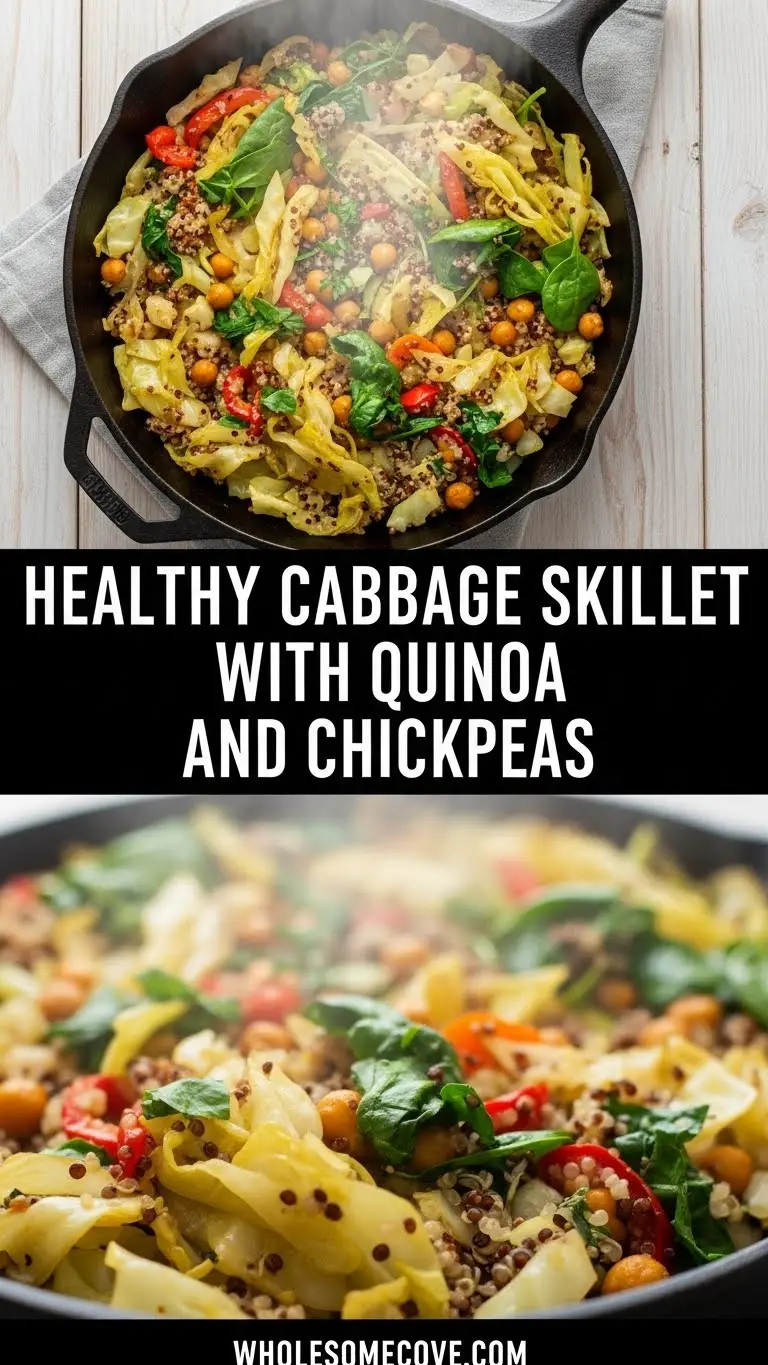
Step-by-Step Instructions: How to Make Healthy Cabbage Skillet with Quinoa and Chickpeas
Follow these detailed steps to create a perfectly balanced, flavorful skillet dinner. I’ve included all the little tricks I’ve learned along the way to help you avoid common mistakes.
1. Cook the Quinoa
- Rinse 1 cup (185g) of quinoa thoroughly under cold running water in a fine-mesh strainer for about 30 seconds, rubbing the grains gently with your fingers to remove any bitter coating called saponin
- In a medium saucepan, combine the rinsed quinoa with 2 cups (480ml) of vegetable broth
- Bring the mixture to a boil over high heat, which should take about 5 minutes
- Once boiling, reduce the heat to low, cover the pan with a tight-fitting lid, and simmer for 15 minutes without lifting the lid
- After 15 minutes, remove the pan from heat but keep it covered for an additional 5 minutes to allow the quinoa to steam and absorb any remaining liquid
- Fluff the quinoa gently with a fork, separating the grains, and set aside
2. Prepare Your Vegetables
- While the quinoa is cooking, peel and dice 1 medium yellow onion into ¼-inch (6mm) pieces
- Peel and mince 3 cloves of garlic finely, or use a garlic press for convenience
- Remove the outer leaves from the cabbage head and discard any wilted or damaged portions
- Cut the cabbage in half through the core, then cut each half in half again
- Remove the tough core from each quarter by cutting it out at an angle
- Place each cabbage quarter flat-side down on your cutting board and slice it thinly into ¼-inch (6mm) strips
- Drain and rinse the chickpeas in a fine-mesh strainer, shaking off excess water
- Pat the chickpeas dry with a clean kitchen towel or paper towels to help them crisp up slightly during cooking
- Chop 2 tablespoons (8g) of fresh parsley leaves, discarding the stems
3. Sauté the Aromatics
- Heat a large 12-inch (30cm) skillet or sauté pan over medium heat for about 1 minute
- Add 2 tablespoons (30ml) of olive oil and swirl it around to coat the bottom of the pan evenly
- Once the oil is shimmering but not smoking, add the diced onion to the pan
- Sauté the onion for 4-5 minutes, stirring occasionally with a wooden spoon, until it becomes translucent and begins to soften
- Add the minced garlic to the pan and stir constantly for 30-60 seconds until fragrant but not browned (burnt garlic tastes bitter)
- If the garlic starts to brown too quickly, reduce the heat slightly
4. Add the Cabbage and Chickpeas
- Add the sliced cabbage to the skillet in batches if necessary, as it will be quite voluminous at first
- Stir the cabbage to coat it with the oil and aromatics, allowing it to wilt slightly before adding more if needed
- Once all the cabbage is in the pan, add the dried chickpeas on top
- Sprinkle 1 teaspoon (2g) of ground cumin, 1 teaspoon (2g) of smoked paprika, ½ teaspoon (1g) of ground turmeric, ½ teaspoon (3g) of sea salt, ¼ teaspoon (0.5g) of black pepper, and ¼ teaspoon (0.5g) of red pepper flakes (if using) evenly over the vegetables
- Stir everything together thoroughly to distribute the spices evenly and coat all the vegetables
- Continue cooking for 8-10 minutes, stirring every 2-3 minutes, until the cabbage has wilted significantly and reduced in volume by about half
- The edges of the cabbage should start to turn golden and slightly caramelized
5. Combine Everything and Season
- Add the cooked quinoa to the skillet with the cabbage and chickpeas
- Pour in 2 tablespoons (30ml) of soy sauce or tamari, distributing it evenly over the mixture
- Drizzle 1 tablespoon (15ml) of apple cider vinegar over everything
- Using your wooden spoon or spatula, fold all the ingredients together gently but thoroughly, making sure the quinoa, chickpeas, and cabbage are well combined
- Continue cooking for 2-3 minutes, stirring occasionally, to allow all the flavors to meld together
- Taste the mixture and adjust the seasoning with additional salt, pepper, or soy sauce if needed (I usually add an extra pinch of salt at this stage)
6. Finish and Serve
- Remove the skillet from the heat and sprinkle the chopped fresh parsley over the top
- Gently fold the parsley into the mixture
- Divide the cabbage skillet among four serving bowls or plates
- Serve each portion with lemon wedges on the side for squeezing fresh lemon juice over the top
- The acidity from the lemon brightens all the flavors and adds a fresh, zesty finish
You might also enjoy my Sweet Potato and Black Bean Bowls for another balanced grain bowl option.
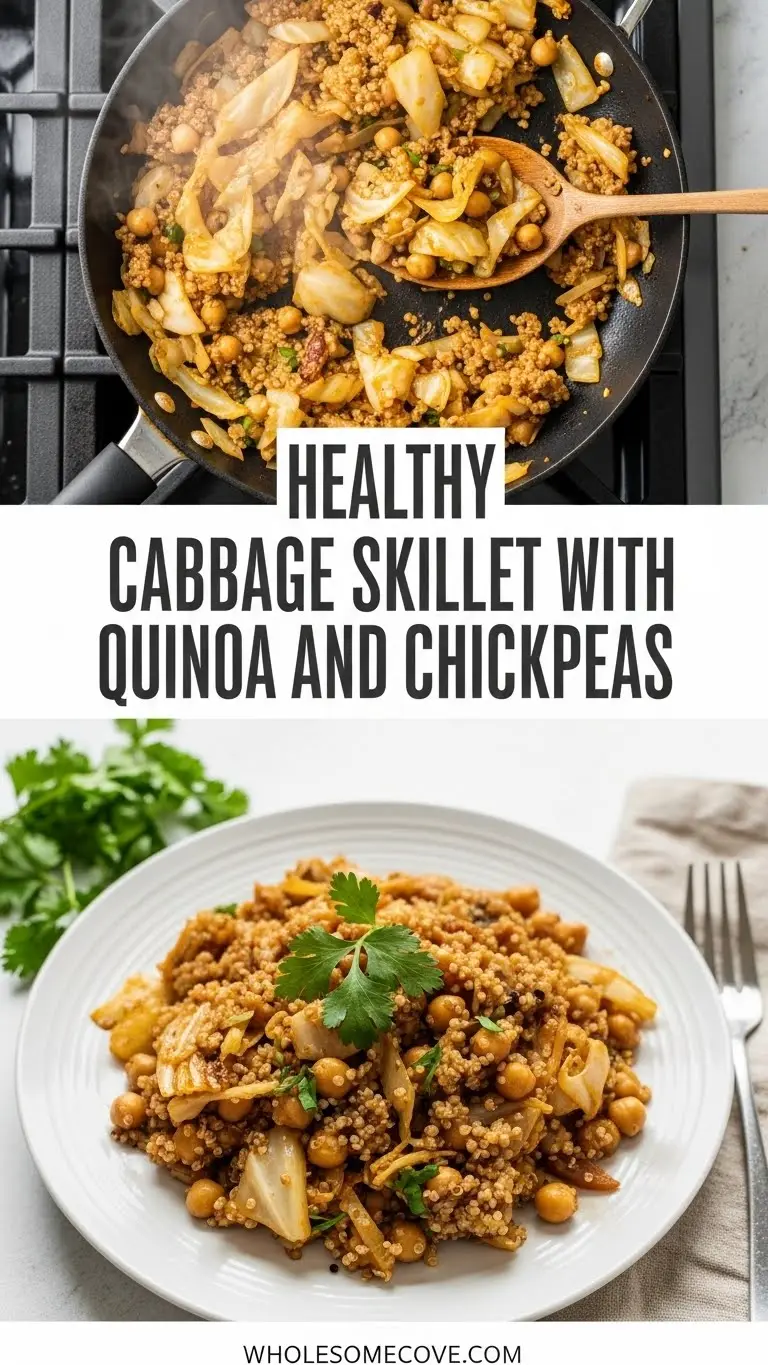
Tips for The Best Healthy Cabbage Skillet with Quinoa and Chickpeas
These tips will help you achieve perfect results every time and avoid some of the mistakes I made when I was first developing this recipe.
- Don’t skip rinsing the quinoa: Even if your package says it’s pre-rinsed, a quick rinse removes any residual saponin, which can make quinoa taste bitter or soapy. It only takes 30 seconds and makes a noticeable difference.
- Cut cabbage uniformly: Try to slice your cabbage into even, thin strips so everything cooks at the same rate. Thick pieces will stay crunchy while thin pieces might get mushy.
- Let cabbage caramelize: Resist the urge to stir constantly once you’ve added the cabbage. Letting it sit for 2-3 minutes between stirs allows those beautiful golden-brown edges to develop, which adds incredible flavor.
- Dry your chickpeas thoroughly: Patting the chickpeas dry with a towel before adding them helps them get slightly crispy on the outside rather than staying soft and mushy.
- Use vegetable broth for quinoa: Cooking quinoa in vegetable broth instead of water adds an extra layer of flavor that really makes a difference in the final dish.
- Add acid at the end: The apple cider vinegar brightens everything, but adding it too early can make the cabbage turn an unappetizing gray color. Wait until the last few minutes of cooking.
- Adjust spices to your taste: If you’re not a fan of heat, skip the red pepper flakes. If you love smoky flavors, add an extra ½ teaspoon of smoked paprika.
- Don’t overcook the cabbage: You want it tender but still with a bit of texture. Overcooked cabbage becomes mushy and releases a sulfurous smell.
For more one-pan vegetable dishes, try my Tofu and Veggie Stir Fry with Brown Rice.
What to Serve with Healthy Cabbage Skillet with Quinoa and Chickpeas
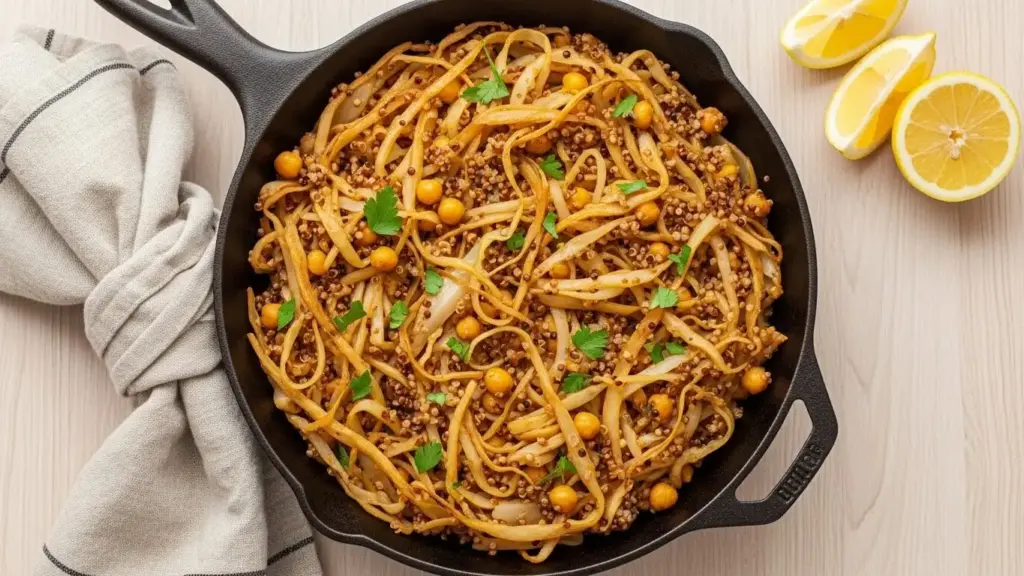
This dish is hearty enough to serve on its own, but these sides and accompaniments make it even more satisfying and help round out the meal.
This skillet is incredibly versatile and pairs beautifully with both light and hearty sides. I usually serve it as a main course, but it also works wonderfully as a side dish for grilled proteins.
- Grilled Lemon Herb Chicken: The bright citrus flavors complement the earthy vegetables perfectly
- Air Fryer Salmon: Add omega-3s to this already nutritious meal
- Healthy Hummus: A dollop on top adds creaminess and extra protein
- Avocado Toast: Serve the skillet on top of crusty toast for a more substantial meal
- Fresh cucumber salad: A cool, crisp salad with vinegar and dill balances the warm, spiced vegetables
- Tzatziki Sauce: The creamy, tangy yogurt sauce is a perfect cooling contrast
- Warm pita bread: Perfect for scooping up every last bite
- Steamed broccoli: Double up on your vegetable intake with another nutritious side
Another favorite pairing is my Lentil and Vegetable Soup served alongside for a complete plant-based feast.
Variations to Try
One of my favorite things about this recipe is how adaptable it is to different flavors and dietary needs. I’ve experimented with countless variations over the years.
- Mediterranean version: Replace the cumin and paprika with oregano and thyme, add sun-dried tomatoes and olives, and finish with crumbled feta cheese and fresh lemon juice
- Mexican-inspired: Use black beans instead of chickpeas, add corn, cumin, and chili powder, and top with avocado, cilantro, and lime
- Asian fusion: Swap the spices for ginger and sesame oil, add edamame instead of chickpeas, and finish with soy sauce and toasted sesame seeds
- Protein boost: Add cooked chicken breast, ground turkey, or crumbled tempeh during the last few minutes of cooking
- Grain swap: Try brown rice, farro, or bulgur instead of quinoa for different textures and flavors
- Different legumes: White beans, black beans, or lentils work just as well as chickpeas
- Add greens: Stir in a few handfuls of fresh spinach or kale during the last 2 minutes of cooking
- Nutty crunch: Top with toasted almonds, cashews, or pumpkin seeds for added texture and healthy fats
- Creamy version: Stir in a few tablespoons of tahini or cashew cream for a richer, more indulgent dish
- Spicy kick: Add diced jalapeños with the onions or drizzle with sriracha before serving
If you love bowl-style meals like this, don’t miss my Mediterranean Quinoa Salad with Grilled Chicken.
Storage and Reheating
This is one of those recipes that actually tastes even better the next day as the flavors have time to meld together. I make a big batch every Sunday for easy weekday lunches.
- Refrigerator: Store cooled leftovers in an airtight container in the refrigerator for up to 5 days. The quinoa will absorb more liquid as it sits, so you may want to add a splash of vegetable broth when reheating.
- Freezer: This dish freezes beautifully for up to 3 months. Portion it into individual freezer-safe containers or bags, removing as much air as possible. Thaw overnight in the refrigerator before reheating.
- Reheating on stovetop: Add the leftovers to a skillet with 2-3 tablespoons of water or vegetable broth, cover, and heat over medium-low heat for 5-7 minutes, stirring occasionally until warmed through.
- Reheating in microwave: Place a portion in a microwave-safe bowl, add a tablespoon of water, cover loosely, and microwave on high for 2-3 minutes, stirring halfway through. Add an extra 30-60 seconds if needed.
- Meal prep tip: Divide into individual portions before refrigerating so you can grab and go throughout the week. I like using glass containers that can go straight from fridge to microwave.
- Freshness boost: When reheating, add a squeeze of fresh lemon juice and a sprinkle of fresh herbs to brighten up the flavors.
For more meal prep friendly recipes, try my Baked Chicken Meatballs with Spaghetti Squash.
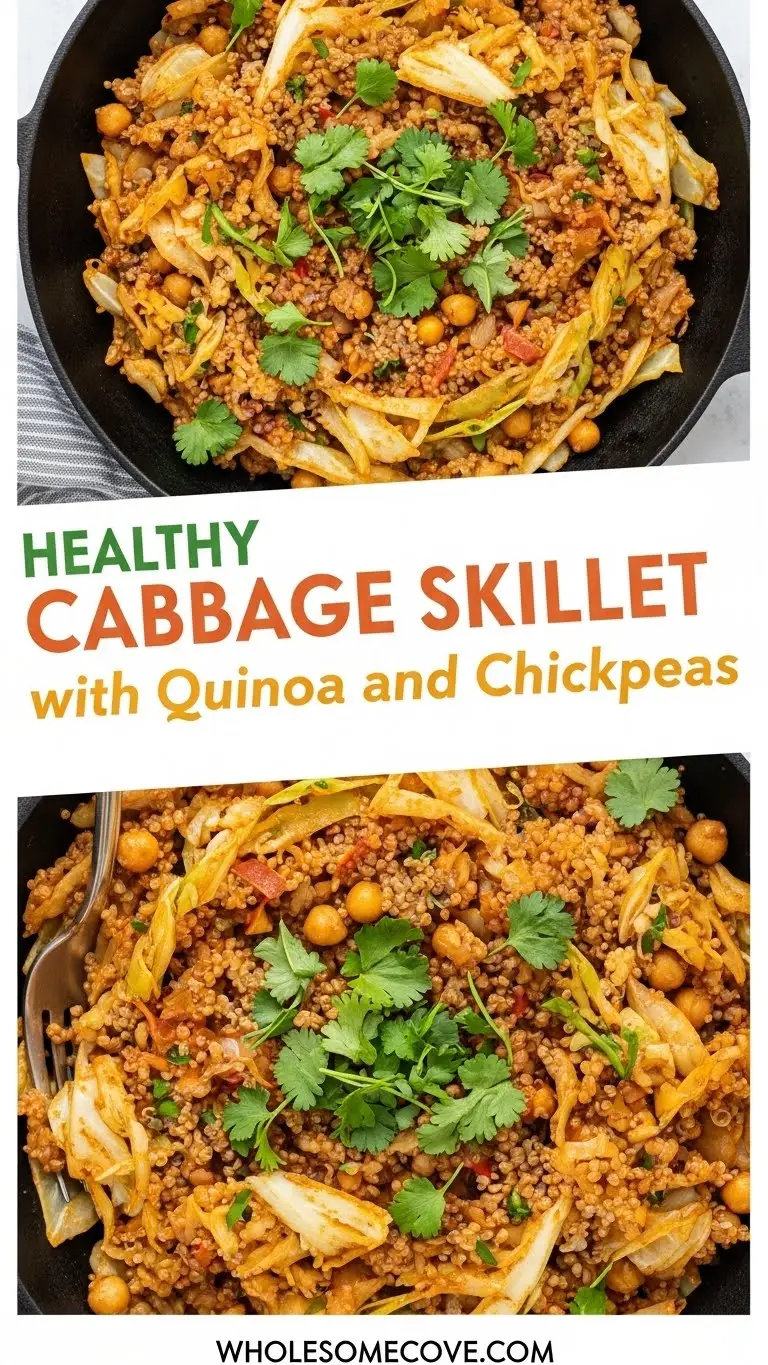
Nutritional Facts
Per serving (approximately 1½ cups):
- Calories: 315
- Total Fat: 9g
- Saturated Fat: 1g
- Trans Fat: 0g
- Cholesterol: 0mg
- Sodium: 685mg
- Total Carbohydrates: 48g
- Dietary Fiber: 11g
- Sugars: 7g
- Protein: 12g
- Vitamin A: 15% DV
- Vitamin C: 85% DV
- Calcium: 10% DV
- Iron: 25% DV
- Potassium: 18% DV
This recipe is naturally low in fat, high in fiber, and packed with plant-based protein. Each serving provides nearly half your daily vitamin C needs and a quarter of your iron requirements, making it a nutritional powerhouse.
Health Benefits of Key Ingredients
Every ingredient in this dish was chosen not just for flavor but for its impressive nutritional profile. I love knowing that something this delicious is also nourishing my body.
The combination of ingredients in this skillet creates a nutritionally balanced meal that supports overall health and wellbeing. Here’s what makes each component so beneficial:
- Cabbage: Rich in vitamin C, vitamin K, and fiber, cabbage supports immune function, bone health, and digestive health. It’s also packed with antioxidants that help fight inflammation and may reduce cancer risk.
- Quinoa: A complete protein containing all nine essential amino acids, quinoa is also high in magnesium, iron, and fiber. It’s gluten-free and helps stabilize blood sugar levels.
- Chickpeas: Loaded with plant-based protein and fiber, chickpeas support digestive health, help control blood sugar, and keep you feeling full longer. They’re also rich in folate and manganese.
- Olive oil: Contains heart-healthy monounsaturated fats and powerful antioxidants. Regular consumption of olive oil is linked to reduced inflammation and lower risk of heart disease.
- Turmeric: Contains curcumin, a compound with powerful anti-inflammatory and antioxidant properties that may help reduce the risk of chronic diseases.
- Garlic: Known for its immune-boosting properties, garlic also supports heart health and may help lower cholesterol and blood pressure.
If you’re interested in more nutrient-dense recipes, check out my Kale and Sweet Potato Soup.
FAQs About Healthy Cabbage Skillet with Quinoa and Chickpeas
1. Can I use red cabbage instead of green cabbage?
Absolutely! Red cabbage works wonderfully in this recipe and adds a beautiful purple color. Keep in mind that red cabbage is slightly sweeter and takes a bit longer to cook, so you may need to add an extra 2-3 minutes to the cooking time. The apple cider vinegar will help maintain the vibrant color.
2. Is this recipe gluten-free?
Yes, this recipe is naturally gluten-free as long as you use tamari instead of regular soy sauce. Tamari is a gluten-free alternative that tastes nearly identical to traditional soy sauce. Always check your labels to ensure your vegetable broth is also gluten-free, as some brands contain gluten-based additives.
3. Can I make this recipe ahead of time?
This dish is perfect for meal prep and actually tastes even better the next day. You can cook the entire recipe up to 3 days in advance and store it covered in the refrigerator. I don’t recommend assembling it more than a day ahead without cooking, as the raw cabbage will release moisture and make everything soggy.
4. What can I substitute for quinoa?
You can use any grain you prefer or have on hand. Brown rice, white rice, farro, bulgur, or even cauliflower rice work well. Keep in mind that cooking times will vary depending on your grain choice, so cook it separately according to package directions before adding to the skillet.
5. How do I make this recipe more filling?
While this dish is quite satisfying on its own, you can easily boost the protein by adding cooked chicken, shrimp, tofu, or tempeh. I also sometimes add a fried or poached egg on top of each serving, which adds richness and extra protein. Adding avocado slices or a dollop of hummus also increases the healthy fat content and makes it more satiating.
Read Also: Cauliflower Fried Rice with Tofu
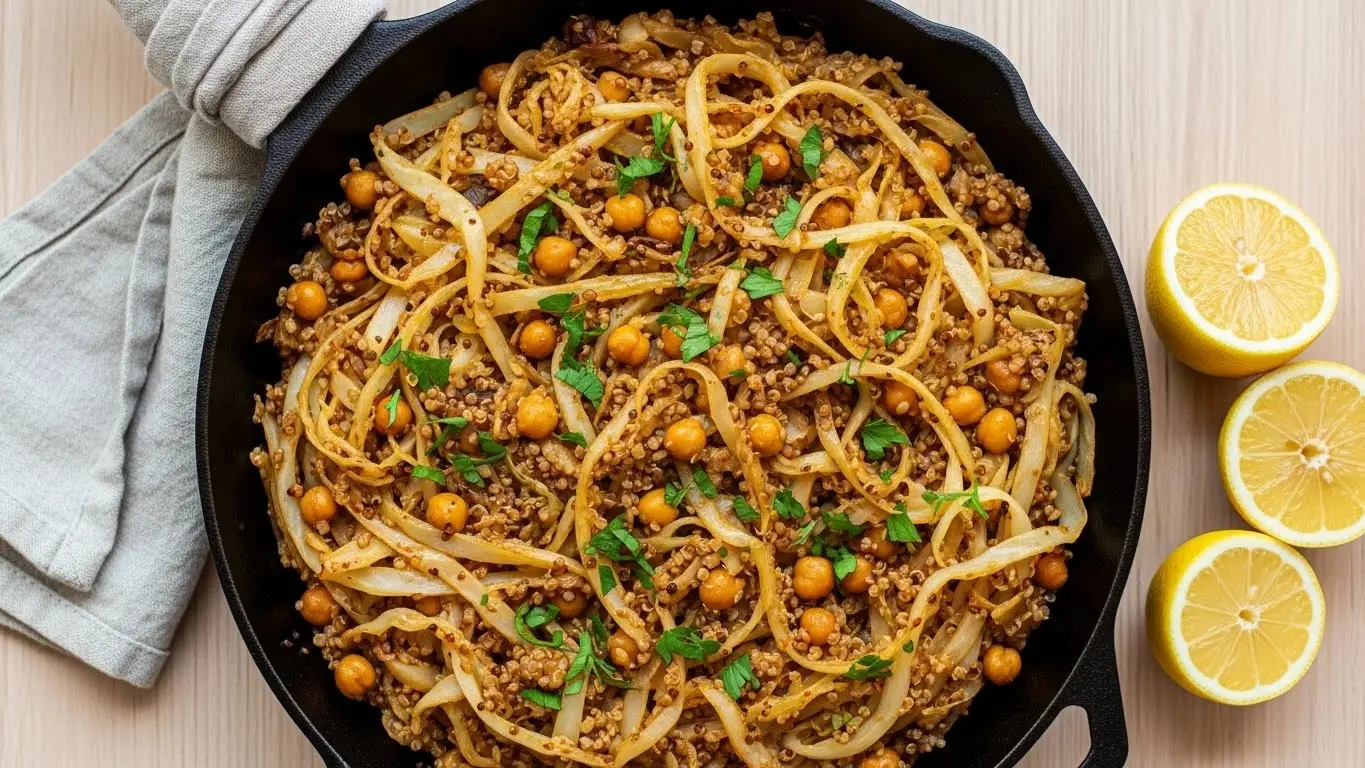
Healthy Cabbage Skillet with Quinoa and Chickpeas
Ingredients
- 1 cup quinoa - 185g, uncooked and rinsed
- 2 cups vegetable broth - 480ml
- 2 tbsp olive oil - 30ml, extra virgin preferred
- 1 medium yellow onion - about 200g, diced
- 3 cloves garlic - minced
- 1 small head green cabbage - about 800g, cored and thinly sliced
- 1 can chickpeas - 15 oz/425g, drained and rinsed
- 1 tsp ground cumin - 2g
- 1 tsp smoked paprika - 2g, Spanish pimentón recommended
- ½ tsp ground turmeric - 1g
- ½ tsp sea salt - 3g, plus more to taste
- ¼ tsp black pepper - 0.5g
- ¼ tsp red pepper flakes - 0.5g, optional
- 2 tbsp soy sauce or tamari - 30ml; use tamari to keep gluten-free
- 1 tbsp apple cider vinegar - 15ml
- 2 tbsp fresh parsley - 8g, chopped
- lemon wedges - for serving
Equipment
- Large skillet or sauté pan with lid - 12-inch/30cm recommended
- Medium saucepan - For cooking quinoa
- Sharp chef’s knife - For slicing cabbage
- Fine-mesh strainer - For rinsing quinoa and chickpeas
Method
- Rinse quinoa under cold water for 30 seconds, then combine with vegetable broth in a medium saucepan. Bring to a boil, reduce heat to low, cover, and simmer for 15 minutes; remove from heat and rest covered for 5 minutes, then fluff with a fork.
- Dice the onion, mince the garlic, and thinly slice the cabbage into ¼-inch strips after removing the core. Drain, rinse, and pat the chickpeas dry, then chop the parsley.
- Heat olive oil in a large skillet over medium heat, add the onion, and sauté for 4–5 minutes until translucent. Add garlic and stir for 30–60 seconds until fragrant but not browned.
- Add the sliced cabbage and chickpeas to the skillet, then sprinkle all spices evenly over the top and stir to coat. Cook for 8–10 minutes, stirring every 2–3 minutes, until the cabbage is wilted and the edges are golden.
- Fold the cooked quinoa into the skillet along with the soy sauce and apple cider vinegar, and cook for 2–3 minutes until everything is well combined. Taste and adjust seasoning with additional salt, pepper, or soy sauce as needed.
- Remove from heat, fold in the fresh parsley, and divide among four bowls. Serve with lemon wedges for squeezing over the top.
Nutrition
Notes
- Always rinse quinoa before cooking — even pre-rinsed varieties benefit from a quick rinse to remove any residual saponin that causes bitterness.
- Pat chickpeas thoroughly dry before adding them to the skillet; this helps them develop a lightly crispy exterior rather than staying mushy.
- Let the cabbage sit undisturbed for 2–3 minutes between stirs to encourage caramelization and deeper flavor.
- Add the apple cider vinegar in the last 2–3 minutes of cooking only — adding it too early can turn the cabbage an unappetizing gray color.
- Cook quinoa in vegetable broth instead of water for an extra layer of savory flavor throughout the dish.
- For a gluten-free version, swap regular soy sauce for tamari and verify that your vegetable broth is certified gluten-free.
- Store leftovers in an airtight container in the refrigerator for up to 5 days; the quinoa will absorb liquid as it sits, so add a splash of broth when reheating.
- This dish freezes well for up to 3 months — portion into individual containers, thaw overnight, and reheat with a tablespoon of water or broth.
- Boost protein by stirring in cooked chicken, crumbled tempeh, or a fried egg on top of each serving.
- Swap quinoa for brown rice, farro, or bulgur, and swap chickpeas for white beans, black beans, or lentils based on what you have on hand.
Private Notes
Tried this recipe?
Let us know how it was!Final Thoughts
This Healthy Cabbage Skillet with Quinoa and Chickpeas has earned its place as a weekly staple in my kitchen, and I hope it becomes one of yours too.
It’s proof that healthy eating doesn’t have to be complicated, expensive, or boring. The combination of textures, flavors, and nutrients makes every bite satisfying, and the fact that it comes together in one pan makes it perfect for busy weeknights.
I’d love to hear how this recipe turns out for you! Drop a comment below with your favorite variations or serving suggestions, and don’t forget to share a photo if you make it.
Recommended:
- Turkey and Quinoa Stuffed Peppers
- Grilled Chicken and Veggie Skewers
- Zucchini Noodles with Pesto and Shrimp Bowls
- Baked Cod with Mango Salsa
- Eggplant Parmesan with Zucchini
- Beef and Broccoli Stir Fry
- Healthy Homemade Pesto
- Easy Healthy Crockpot Chili
- Healthy Nachos
- Healthy Coleslaw