I’ll never forget the first time I made my own enchilada sauce recipe from scratch. I was hosting a Mexican feast for my family, and I’d always relied on those little cans from the store.
But that day, I was one can short and decided to just wing it with what I had in my pantry. Best kitchen emergency ever.
My family couldn’t stop raving about how much better the enchiladas tasted, and my sister-in-law literally asked me for the recipe before dessert even hit the table. Since then, I haven’t bought a single can of store-bought sauce.
This homemade version is ridiculously easy, uses simple ingredients you probably already have, and tastes infinitely better than anything you’ll find in a can. Plus, you can adjust the heat level to your liking, which is a total bonus when you’re feeding picky eaters or spice lovers at the same table.
| Quick Recipe Summary | |
|---|---|
| Prep Time | 5 minutes |
| Cook Time | 15 minutes |
| Total Time | 20 minutes |
| Servings | 2 cups (enough for 8-10 enchiladas) |
| Difficulty Level | Easy |
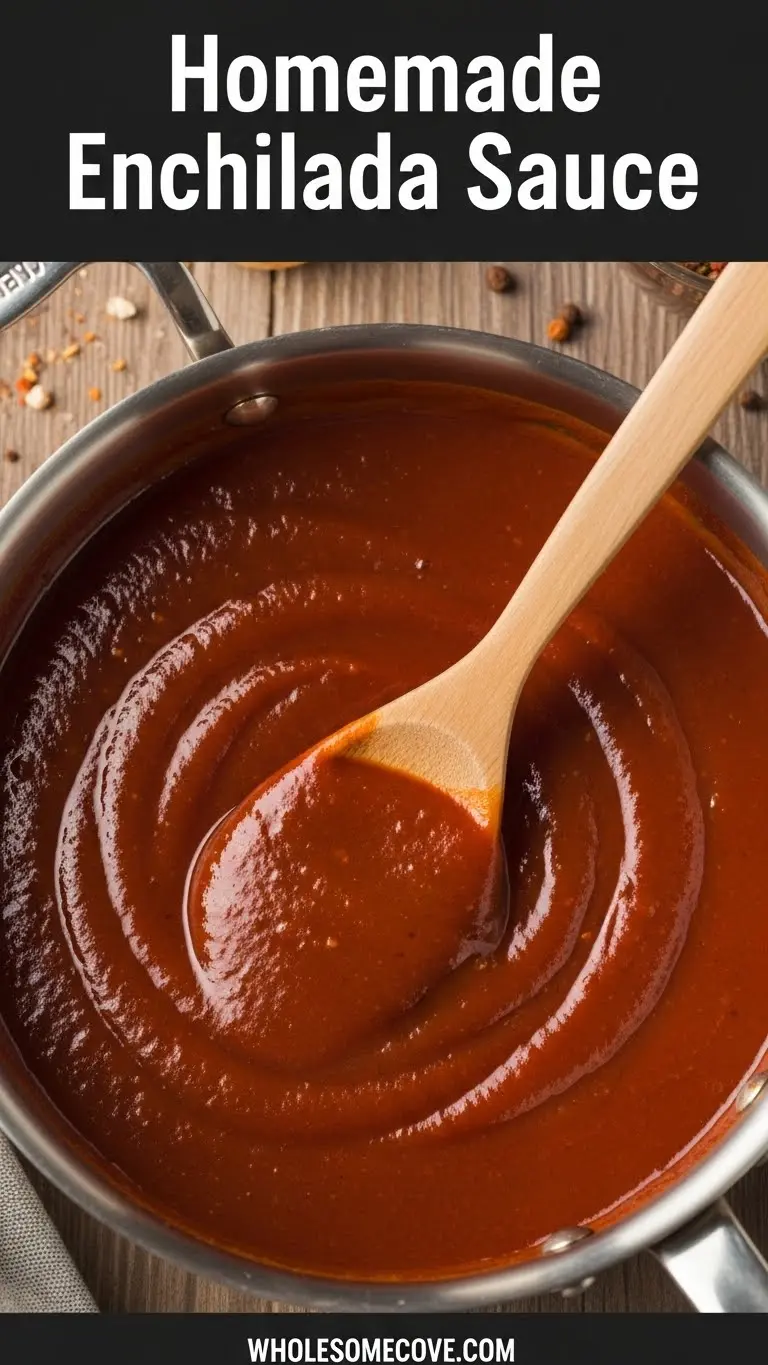
Why You’ll Love This Enchilada Sauce Recipe
This sauce has become my go-to for enchiladas, burritos, and even as a topping for scrambled eggs. It’s incredibly versatile and stores beautifully in the fridge for up to a week.
The depth of flavor you get from toasting the spices is unmatched. I learned this trick from a Mexican friend who told me that blooming the spices in oil is the secret to authentic flavor, and she was absolutely right.
- Budget-friendly: Costs a fraction of store-bought sauce and uses pantry staples
- Customizable heat level: Add more or less cayenne pepper depending on your preference
- No preservatives or additives: You know exactly what’s going into your sauce
- Ready in 20 minutes: Faster than running to the store
- Freezer-friendly: Make a double batch and freeze for later
- Rich, complex flavor: Tastes like you simmered it for hours
For an even bolder Mexican spread, serve this with my slow cooker chili recipe.
Ingredients
This enchilada sauce comes together with just a handful of simple ingredients. I always keep these on hand because I make this sauce at least twice a month.
- 3 tablespoons (45ml) vegetable oil or olive oil
- 3 tablespoons (24g) all-purpose flour for thickening
- 3 tablespoons (21g) chili powder (not the spice blend, but pure chili powder)
- 1 teaspoon (2g) ground cumin
- 1/2 teaspoon (1g) garlic powder
- 1/2 teaspoon (1g) onion powder
- 1/4 teaspoon (0.5g) cayenne pepper (adjust to taste)
- 1/4 teaspoon (1.5g) salt (plus more to taste)
- 2 cups (480ml) chicken broth or vegetable broth
- 1 tablespoon (15ml) tomato paste
- 1 teaspoon (5ml) apple cider vinegar (this adds brightness)
Kitchen Equipment Needed
You don’t need any fancy equipment for this recipe, which is part of what makes it so accessible. Here’s what I use every single time.
- Medium saucepan (2-3 quart capacity)
- Whisk for smooth blending
- Measuring cups and spoons
- Fine mesh strainer (optional, for ultra-smooth sauce)
- Glass storage container for leftovers
Recommended Products for This Recipe
I’ve tested this recipe dozens of times, and these specific products have made a noticeable difference in both the cooking process and final results.
1. All-Clad Stainless Steel Saucepan
A quality saucepan with even heat distribution is crucial for preventing the roux from burning. I’ve been using my All-Clad for years, and it consistently produces a smooth, lump-free sauce. The heavy bottom ensures your spices toast evenly without scorching.
2. Simply Organic Chili Powder
Not all chili powders are created equal. I switched to Simply Organic after noticing the incredible depth of flavor it adds compared to grocery store brands. It’s pure, vibrant, and makes a massive difference in the final taste.
3. OXO Good Grips Fine Mesh Strainer
If you want restaurant-quality smooth sauce, this strainer is worth every penny. I use it to strain out any lumps or bits of spice that didn’t fully incorporate. The fine mesh catches everything while the handle makes it easy to work with.
4. Better Than Bouillon Chicken Base
I always keep this in my fridge instead of regular broth. It delivers richer, more concentrated flavor than boxed broth, and you can control the strength. One jar lasts forever and takes up way less space.
Another favorite: taco casserole.
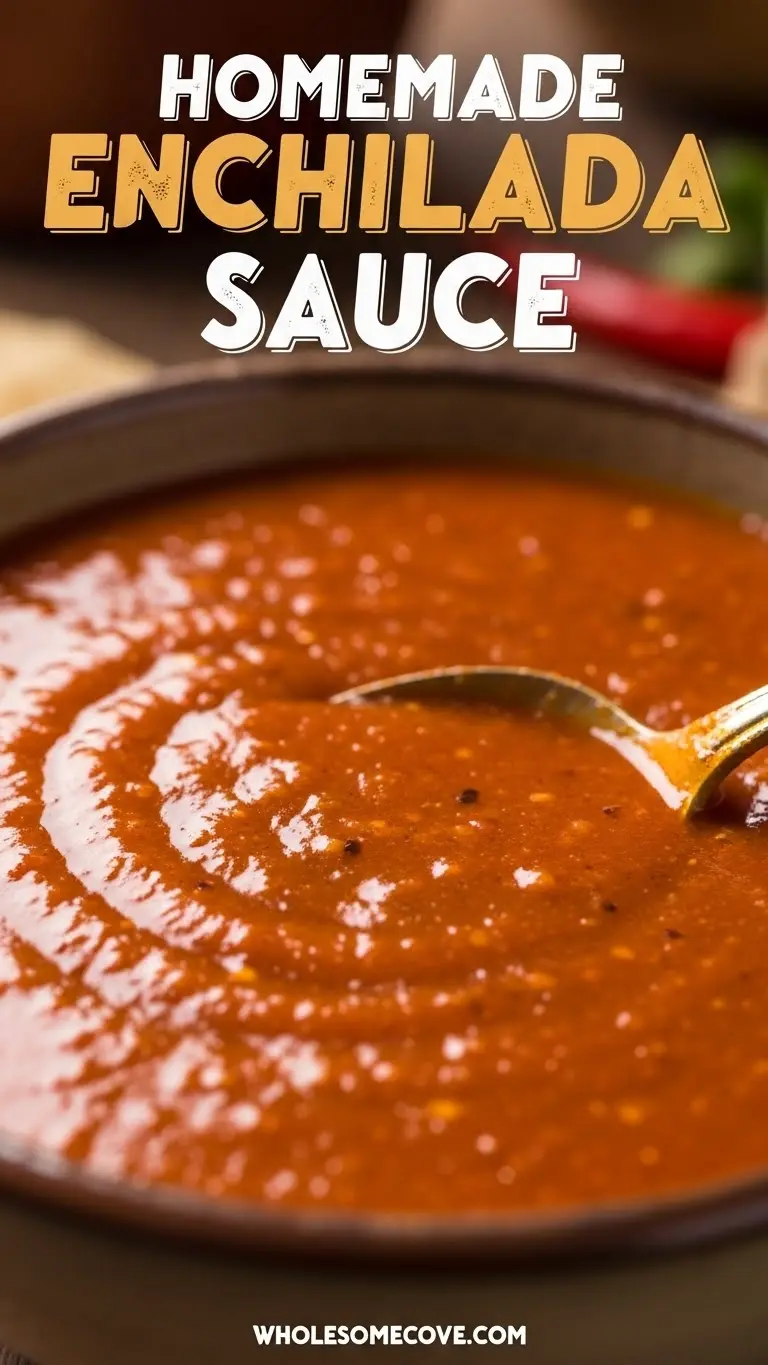
Step-by-Step Instructions: How to Make Enchilada Sauce
I’ve perfected this method after making countless batches. Follow these detailed steps for foolproof results every time.
1. Toast the Spices in Oil
- Heat the vegetable oil in your medium saucepan over medium heat until it shimmers slightly (about 1-2 minutes)
- Add the flour and whisk continuously for 1-2 minutes until the mixture forms a smooth paste (called a roux) and turns a light golden color
- Add the chili powder, cumin, garlic powder, onion powder, cayenne pepper, and salt directly into the roux
- Stir constantly with your whisk for 30-60 seconds until the spices become incredibly fragrant and darken slightly (this step is crucial for developing deep flavor, but watch carefully to avoid burning)
- The mixture will be thick and paste-like at this stage, which is exactly what you want
2. Add the Liquid Gradually
- Slowly pour in about 1/4 cup of the chicken broth while whisking vigorously to prevent lumps from forming
- Once the first addition is fully incorporated and smooth, add another 1/4 cup and whisk again
- Continue adding the broth in small increments, whisking constantly, until you’ve added about half of the total broth (this gradual method ensures a silky-smooth sauce)
- Once the sauce is fairly thin and smooth, you can add the remaining broth all at once
- Whisk in the tomato paste until fully dissolved with no red streaks remaining
3. Simmer and Thicken
- Bring the sauce to a gentle boil over medium-high heat, whisking occasionally to prevent sticking on the bottom
- Once it reaches a boil, immediately reduce the heat to medium-low
- Let the sauce simmer gently for 10-12 minutes, stirring every 2-3 minutes to prevent burning
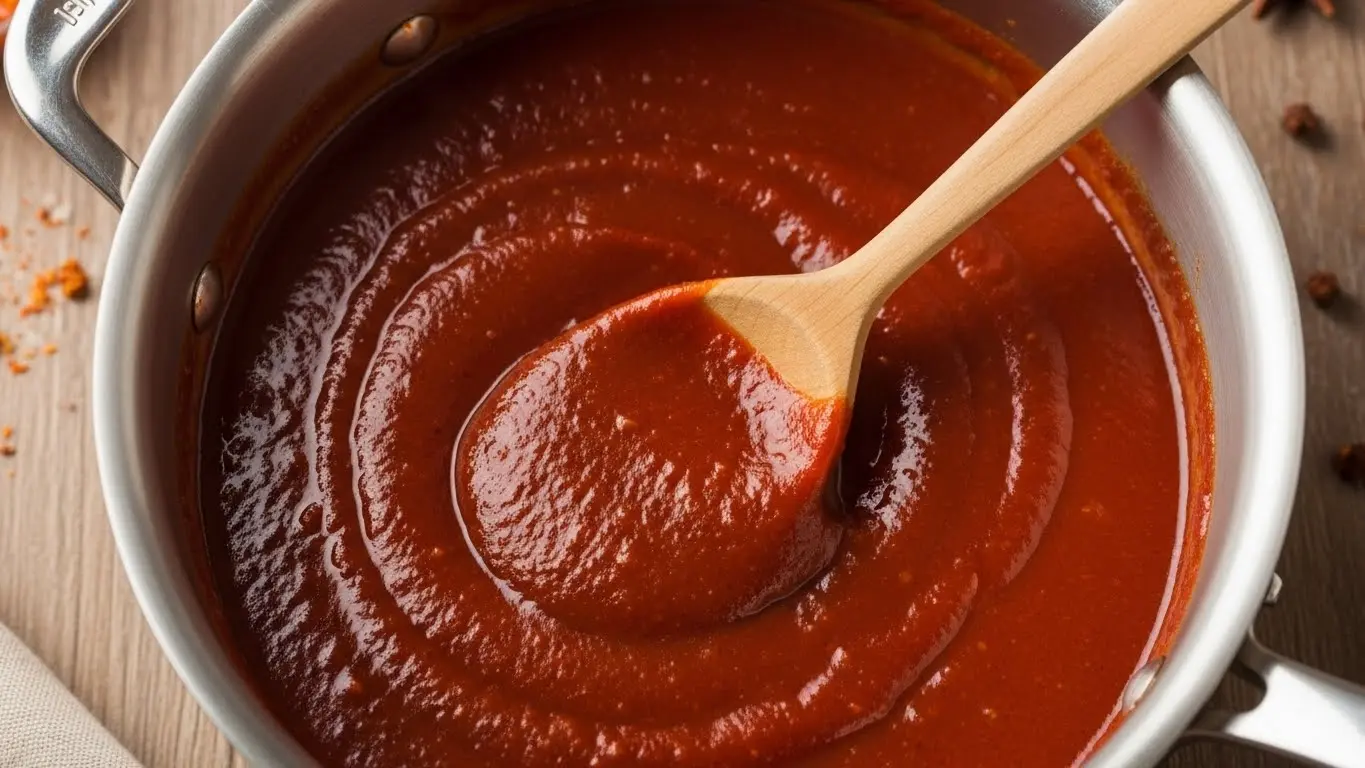
- The sauce should thicken noticeably and coat the back of a spoon (it will continue to thicken slightly as it cools)
- If the sauce becomes too thick, add a few tablespoons of broth to thin it out
4. Finish and Season
- Remove the saucepan from the heat and stir in the apple cider vinegar (this brightens all the flavors and balances the richness)
- Taste the sauce and adjust the seasoning with additional salt if needed (I usually add another pinch)
- If you prefer a smoother texture, pour the sauce through a fine mesh strainer into a bowl, using a spoon to press it through
- Let the sauce cool for 5 minutes before using (it will thicken to the perfect consistency as it cools)
You might also love: chipotle burrito recipe.
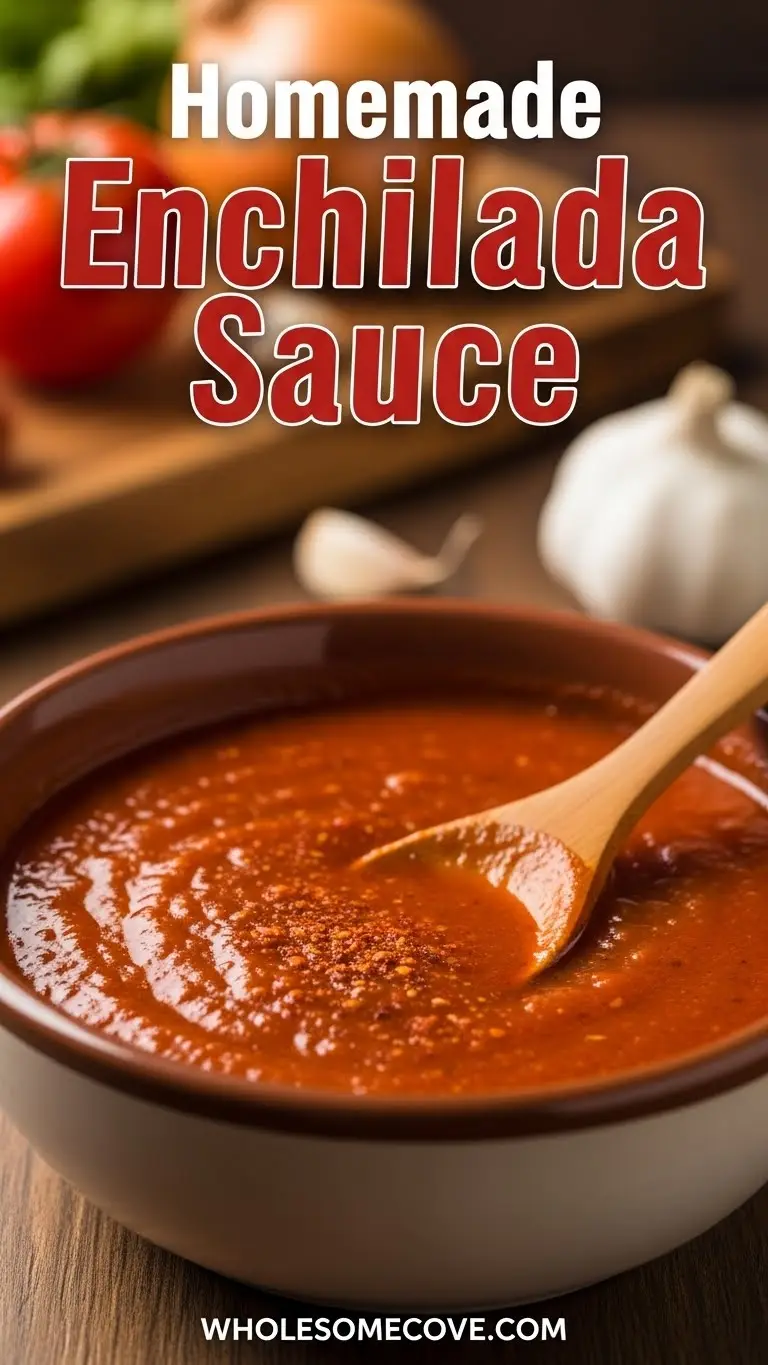
Tips for The Best Enchilada Sauce
I’ve learned these tricks through trial and error, and they make all the difference between good sauce and great sauce.
- Don’t skip toasting the spices: This step develops the complex, deep flavors that make this sauce taste authentic and not flat
- Use the gradual liquid addition method: Adding broth slowly prevents lumps and creates a silky texture every single time
- Watch the heat carefully: If your roux or spices burn even slightly, you’ll need to start over because the burnt flavor permeates the entire sauce
- Adjust consistency with broth: I prefer my sauce on the thicker side for enchiladas, but you can thin it out for use as a topping or dipping sauce
- Quality chili powder matters: Invest in good chili powder because it’s the star ingredient and dramatically affects the final flavor
- Let it cool before judging: The sauce thickens considerably as it cools, so don’t add more flour thinking it’s too thin
- Taste and adjust: Every batch of spices varies slightly in intensity, so always taste and adjust salt and cayenne to your preference
- Make it ahead: The flavors actually improve after sitting overnight in the fridge as the spices continue to meld
Serving Suggestions
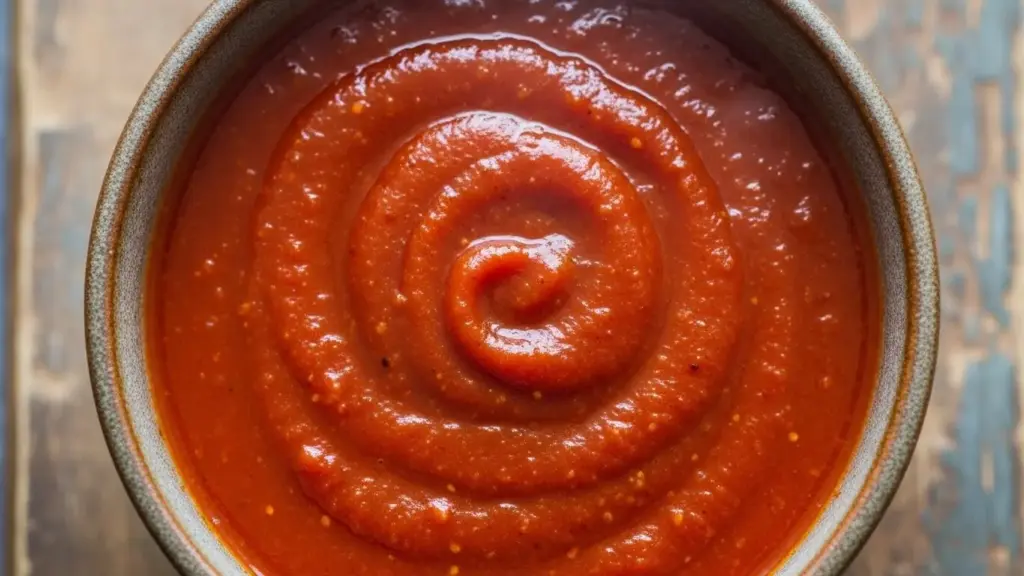
This versatile sauce works beautifully in so many dishes beyond traditional enchiladas. I find new uses for it all the time.
Once you’ve got a batch of this sauce ready, the possibilities are endless. I use it at least three different ways every week in my kitchen.
- Classic enchiladas: Dip corn tortillas in the warm sauce, fill with shredded chicken, cheese, and roll up
- Breakfast burritos: Drizzle over scrambled eggs, potatoes, and cheese wrapped in a flour tortilla
- Wet burritos: Pour generously over stuffed burritos and top with melted cheese
- Chilaquiles: Toss with fried tortilla chips for a traditional Mexican breakfast
- Huevos rancheros: Spoon over fried eggs and refried beans
- Taco topping: Use as a sauce for tacos instead of salsa
- Rice bowl base: Mix into rice for instant Spanish-style rice
- Soup starter: Add to chicken broth for a quick tortilla soup base
This pairs wonderfully with Mexican chicken salad.
Variations of Enchilada Sauce
One of my favorite things about this recipe is how easily you can customize it. Here are the variations I make most often depending on what I’m craving.
- Green enchilada sauce: Replace half the chili powder with ground dried green chiles and add 1/4 cup chopped fresh cilantro at the end
- Smoky chipotle version: Add 1-2 tablespoons of chipotle peppers in adobo (pureed) for a smoky, spicy kick
- Extra spicy: Double the cayenne pepper and add 1/4 teaspoon of crushed red pepper flakes
- Mild version: Omit the cayenne entirely and use mild chili powder
- Vegan enchilada sauce: Simply swap chicken broth for vegetable broth (I do this all the time)
- Richer sauce: Use half broth and half Mexican crema for an extra creamy texture
- Chocolate mole-style: Add 1 tablespoon of cocoa powder and a pinch of cinnamon for depth
- Roasted tomato version: Add 1/2 cup of pureed roasted tomatoes along with the tomato paste
Read Also: BBQ Sauce Recipe
Storage and Reheating
Proper storage keeps this sauce fresh and flavorful for days. I always make extra because it’s so convenient to have on hand.
- Refrigerator storage: Transfer cooled sauce to an airtight container and refrigerate for up to 7 days (mine has never lasted that long before being used up)
- Freezer storage: Pour into freezer-safe containers or ice cube trays for portioned amounts, freeze for up to 3 months (ice cube portions are perfect for single servings)
- Reheating from fridge: Transfer to a saucepan and warm over medium-low heat, stirring frequently, adding a splash of broth if it’s too thick (usually 3-5 minutes)
- Reheating from frozen: Thaw overnight in the refrigerator first, then reheat as above, or microwave in 30-second intervals, stirring between each
- Quick microwave method: Heat in a microwave-safe bowl in 30-second bursts, stirring between each, until steaming hot
- Preventing skin formation: Press plastic wrap directly onto the surface of the sauce before sealing the container
- Using frozen cubes: Pop out 2-3 cubes directly into your cooking for instant enchilada flavor in any dish
For another delicious sauce option, try my teriyaki sauce recipe.
Nutritional Facts
Per 1/4 cup serving (approximately):
- Calories: 65
- Total Fat: 5g
- Saturated Fat: 0.5g
- Cholesterol: 0mg
- Sodium: 320mg
- Total Carbohydrates: 5g
- Dietary Fiber: 1g
- Sugars: 1g
- Protein: 1g
Nutritional values are approximate and will vary based on specific ingredients used.
Health Benefits of Key Ingredients
Beyond tasting incredible, this enchilada sauce actually contains several ingredients with notable health properties. I love when delicious food is also good for you.
Chili powder is packed with capsaicin, which has anti-inflammatory properties and may boost metabolism. I’ve read studies showing it can help with pain relief and improving circulation.
- Cumin: Aids digestion, rich in iron, and may help regulate blood sugar levels
- Garlic powder: Contains antioxidants, supports immune function, and has antimicrobial properties
- Cayenne pepper: Boosts metabolism, reduces appetite, and contains vitamin A
- Tomato paste: Concentrated source of lycopene (a powerful antioxidant), vitamin C, and potassium
- Apple cider vinegar: May help stabilize blood sugar, supports digestion, and contains beneficial acids
Another crowd-pleaser: spaghetti sauce recipe.
FAQs About Enchilada Sauce
1. Can I make this enchilada sauce without flour?
Yes, you can make a gluten-free version by substituting cornstarch or arrowroot powder for the flour. Use 2 tablespoons of cornstarch mixed with 2 tablespoons of cold water to create a slurry, then whisk it into the sauce after adding the broth and simmer until thickened.
2. Why is my enchilada sauce bitter?
Bitter sauce usually means the spices or roux were burned during the toasting step. The key is to toast them just until fragrant (30-60 seconds) over medium heat, stirring constantly. If you see any dark brown or black bits, the spices have burned and you’ll need to start fresh.
3. Can I use this sauce for chicken enchiladas?
Absolutely! This red enchilada sauce is perfect for chicken enchiladas. I use it for chicken, beef, cheese, or vegetable enchiladas interchangeably. Just dip your tortillas in the warm sauce before filling and rolling, then pour extra sauce over the top before baking.
4. How do I make my enchilada sauce thicker?
If your sauce is too thin, return it to the heat and simmer uncovered for an additional 5-10 minutes until it reaches your desired consistency. Alternatively, whisk together 1 tablespoon of cornstarch with 2 tablespoons of cold water and stir it into the simmering sauce. Remember, the sauce will thicken as it cools.
5. What’s the difference between red and green enchilada sauce?
Red enchilada sauce (like this recipe) is made with dried red chili peppers and has a deeper, earthier flavor. Green enchilada sauce uses green chilis or tomatillos and has a tangier, brighter taste. Both are delicious, but red sauce is more traditional for many classic enchilada recipes.
Read Also: Marinara Sauce Recipe
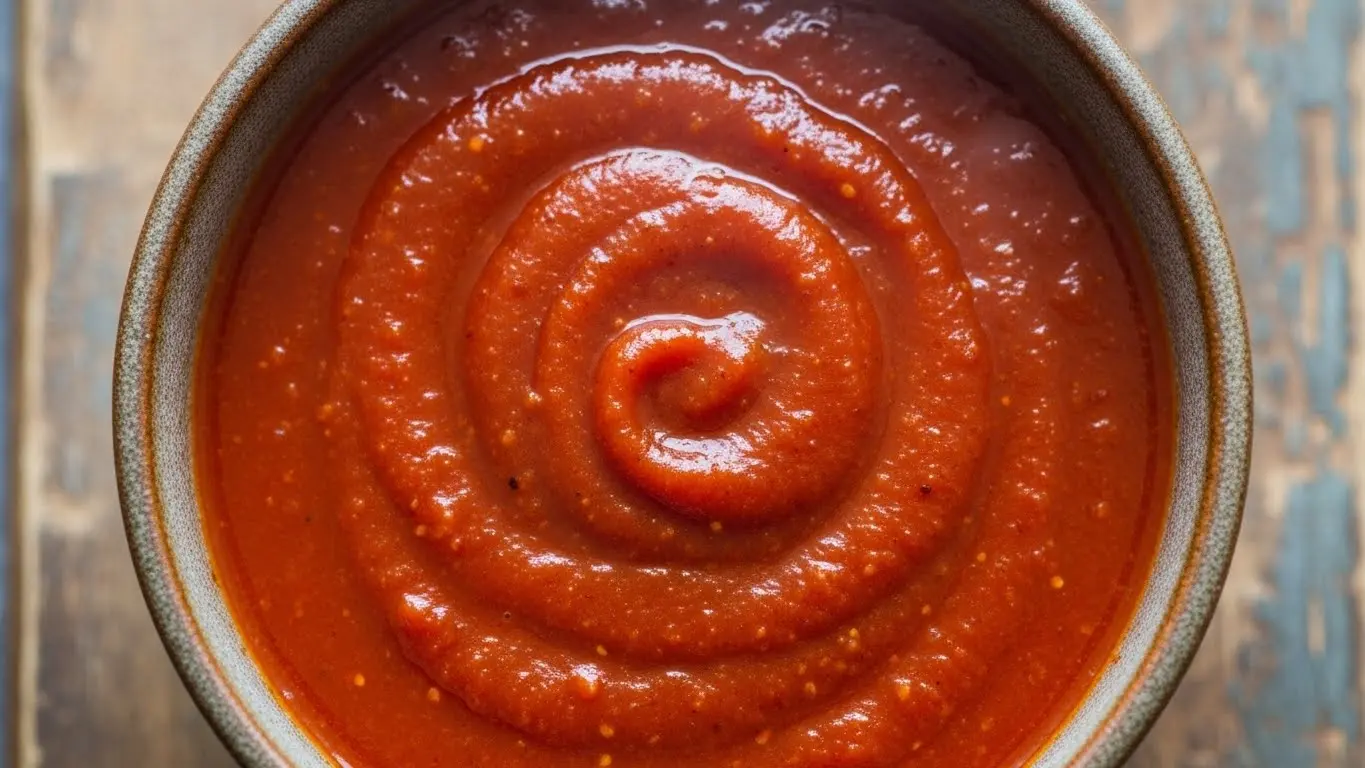
Homemade Enchilada Sauce
Ingredients
- 3 tablespoons vegetable oil or olive oil - 45ml
- 3 tablespoons all-purpose flour - 24g, for thickening
- 3 tablespoons chili powder - 21g, pure chili powder not spice blend
- 1 teaspoon ground cumin - 2g
- 1/2 teaspoon garlic powder - 1g
- 1/2 teaspoon onion powder - 1g
- 1/4 teaspoon cayenne pepper - 0.5g, adjust to taste
- 1/4 teaspoon salt - 1.5g, plus more to taste
- 2 cups chicken broth or vegetable broth - 480ml
- 1 tablespoon tomato paste - 15ml
- 1 teaspoon apple cider vinegar - 5ml, adds brightness
Equipment
- Medium saucepan - 2-3 quart capacity
- Whisk - For smooth blending
- Measuring cups and spoons
- Fine-mesh strainer - Optional, for ultra-smooth sauce
- Glass storage container - For leftovers
Method
- Heat oil in medium saucepan over medium heat until shimmering. Add flour and whisk continuously for 1-2 minutes until smooth and light golden. Add all spices to the roux and stir constantly for 30-60 seconds until fragrant and darkened.
- Slowly add broth in small increments (1/4 cup at a time), whisking vigorously after each addition to prevent lumps. Once smooth and half the broth is added, pour in remaining broth and whisk in tomato paste until no red streaks remain.
- Bring to a gentle boil over medium-high heat, then reduce to medium-low. Simmer for 10-12 minutes, stirring every 2-3 minutes, until sauce thickens and coats the back of a spoon.
- Remove from heat and stir in apple cider vinegar. Taste and adjust seasoning with additional salt if needed. For ultra-smooth texture, strain through fine mesh strainer. Let cool 5 minutes before using.
Nutrition
Notes
- Don’t skip toasting the spices – this develops the complex, authentic flavors that make this sauce special.
- Add broth gradually to prevent lumps and ensure a silky-smooth texture every time.
- Watch the heat carefully – burnt spices will ruin the entire batch with a bitter flavor.
- For gluten-free version, substitute 2 tablespoons cornstarch mixed with 2 tablespoons cold water for the flour roux.
- Adjust consistency by adding more broth to thin or simmering longer to thicken. Sauce will thicken as it cools.
- Quality chili powder makes a huge difference – invest in pure chili powder, not a spice blend.
- Store in airtight container in refrigerator for up to 7 days or freeze for up to 3 months.
- For extra spicy version, double the cayenne and add 1/4 teaspoon crushed red pepper flakes.
- For smoky chipotle version, add 1-2 tablespoons pureed chipotle peppers in adobo.
- Flavors improve after sitting overnight as the spices continue to meld together.
Private Notes
Tried this recipe?
Let us know how it was!Final Thoughts
Making your own enchilada sauce truly transforms your Mexican cooking from good to restaurant-quality. The difference in flavor is so dramatic that my husband now refuses to let me use store-bought sauce, even when I’m tempted to take the shortcut.
This recipe has become one of my most-used pantry staples, right up there with homemade salsa and guacamole. The best part is watching my kids devour enchiladas made with this sauce when they usually pick at their dinner. I hope it becomes a staple in your kitchen too, and that you find as many creative uses for it as I have.
Give this enchilada sauce recipe a try this week and let me know what you think in the comments below. I’d love to hear about your favorite ways to use it or any fun variations you create!
Recommended:
- Breakfast Burrito Recipe
- Taco Soup Recipe
- Stuffed Shells Recipe
- Lasagna Recipe
- Chicken Parmesan Recipe
- Meatloaf Recipe
- Sloppy Joe Recipe
- Healthy Orange Chicken Recipe
- Baja Fish Tacos Recipe
- Greek Chicken Gyros Recipe